Day 7 – April 5, 2026 - D Day
World War II started on September 1, 1939 when Hitler Invaded Poland but, the Treaty of Versailles ending The Great War set the stage for . . .
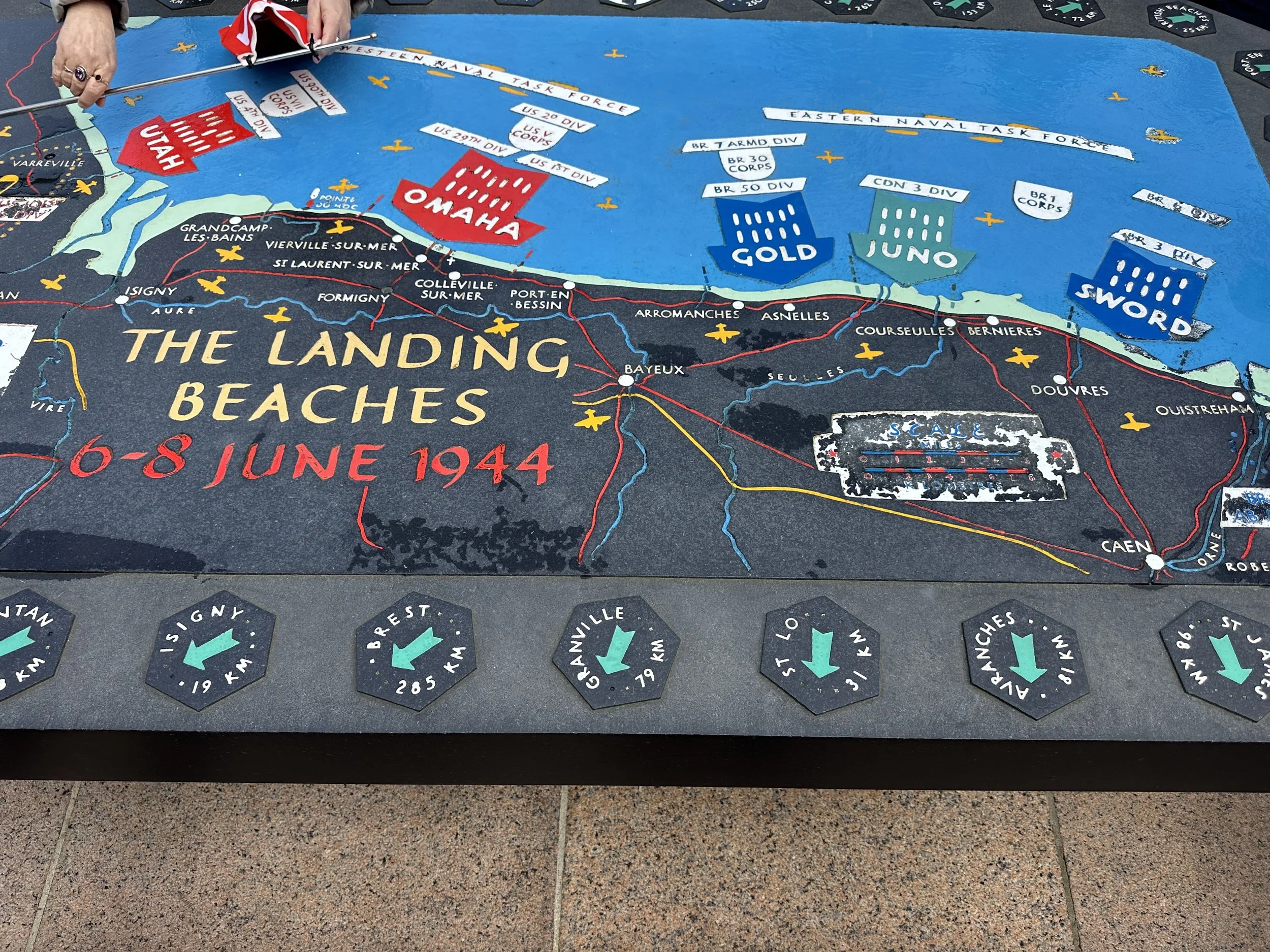
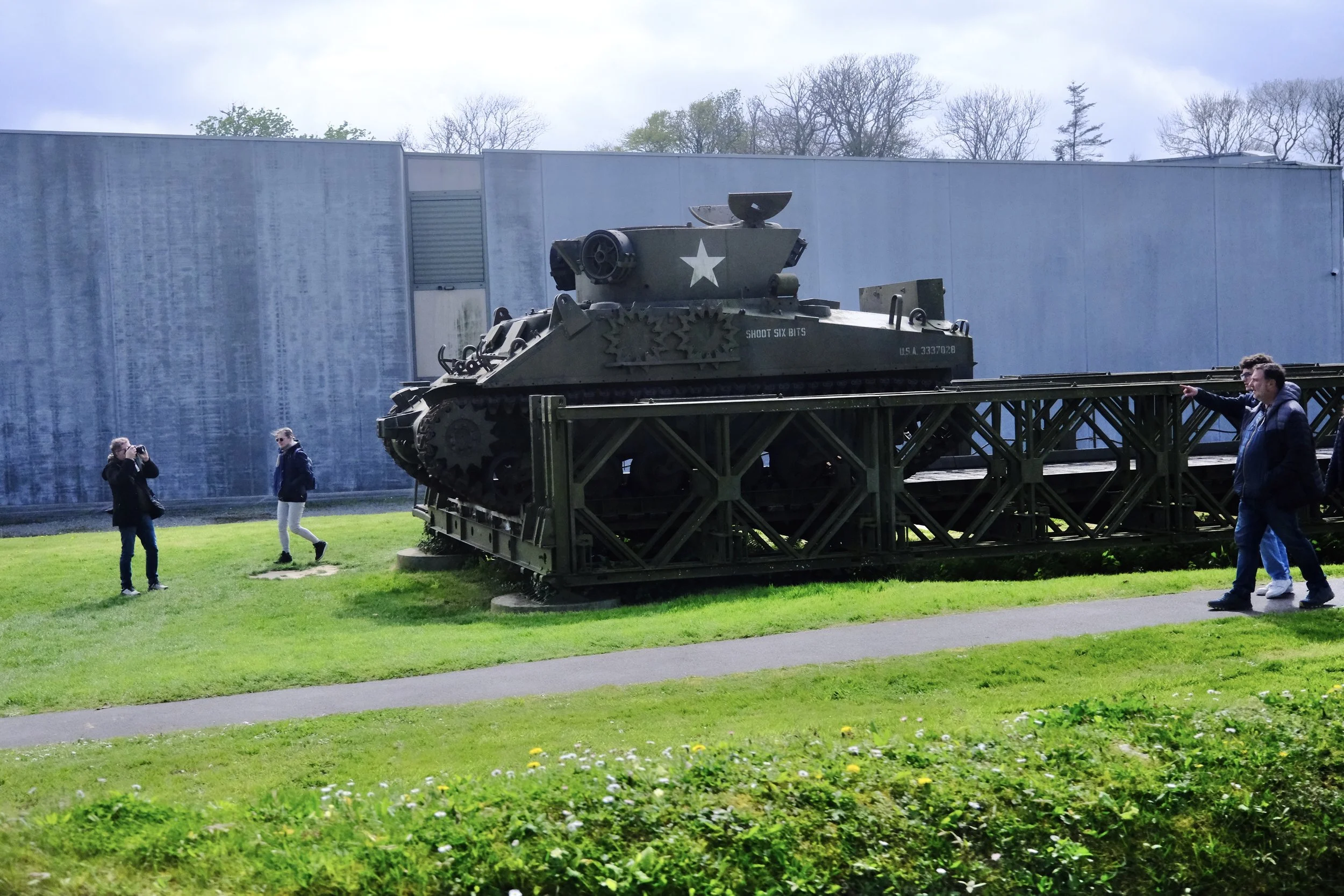
Wait a minute. You want a history of WWII? Buy a book. I’m sitting up here on the top deck of the Tapestry II in the first sunny, warmish weather we’ve had so far. And I’m not going to waste my time and yours with a half-baked recitation of facts I dimly remember from our trip to the Beached of Normandy and D Day yesterday.
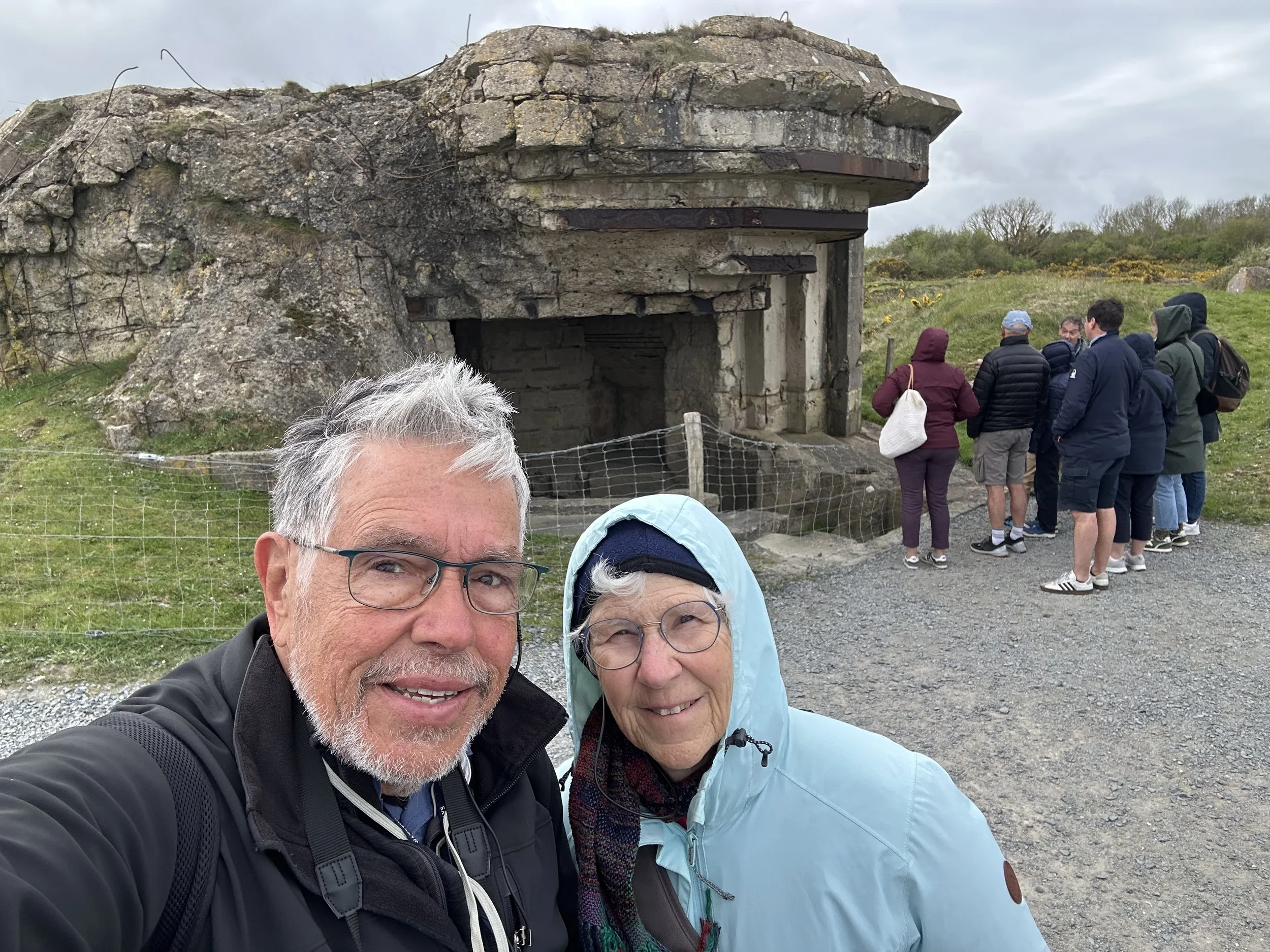
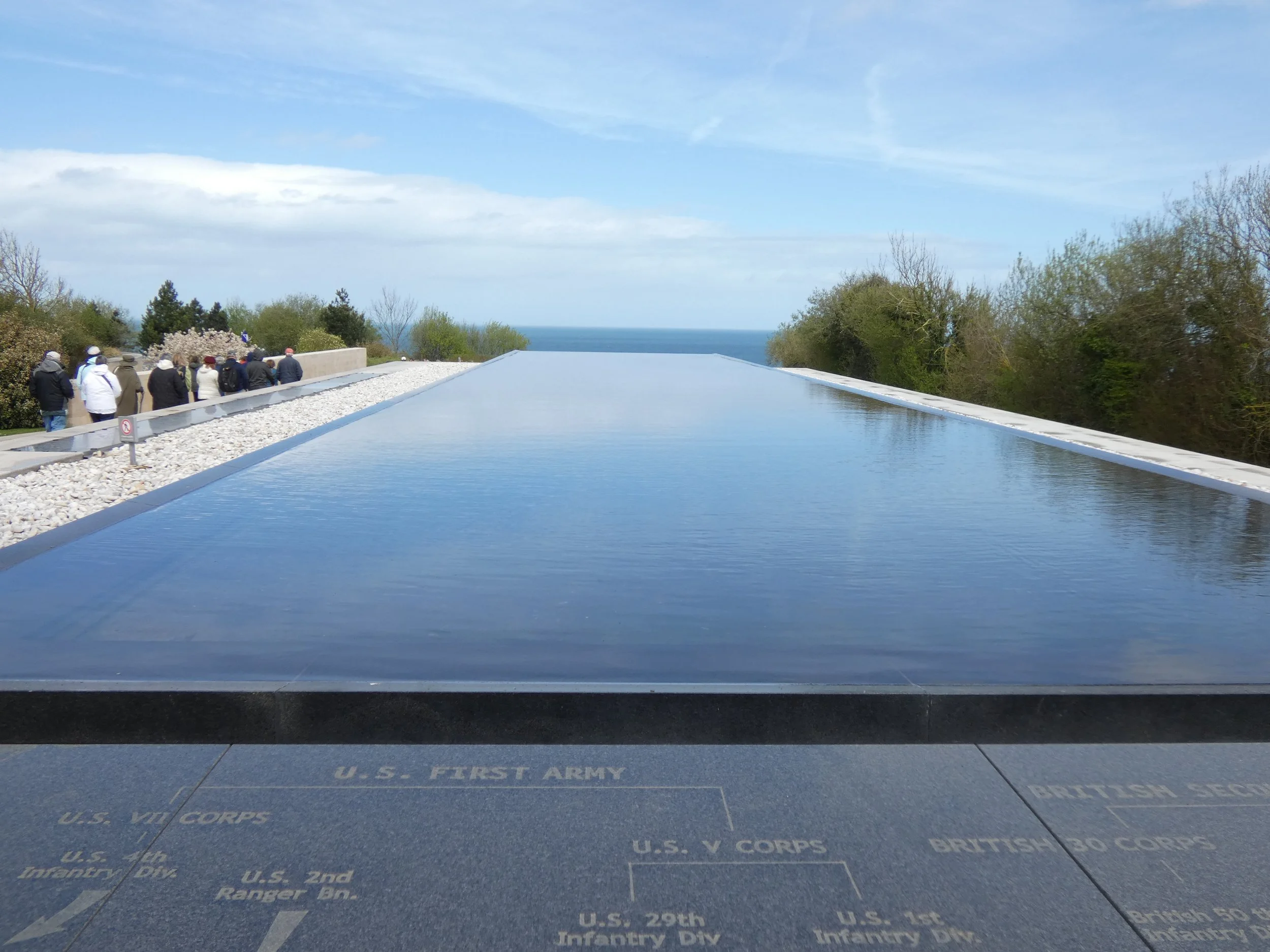
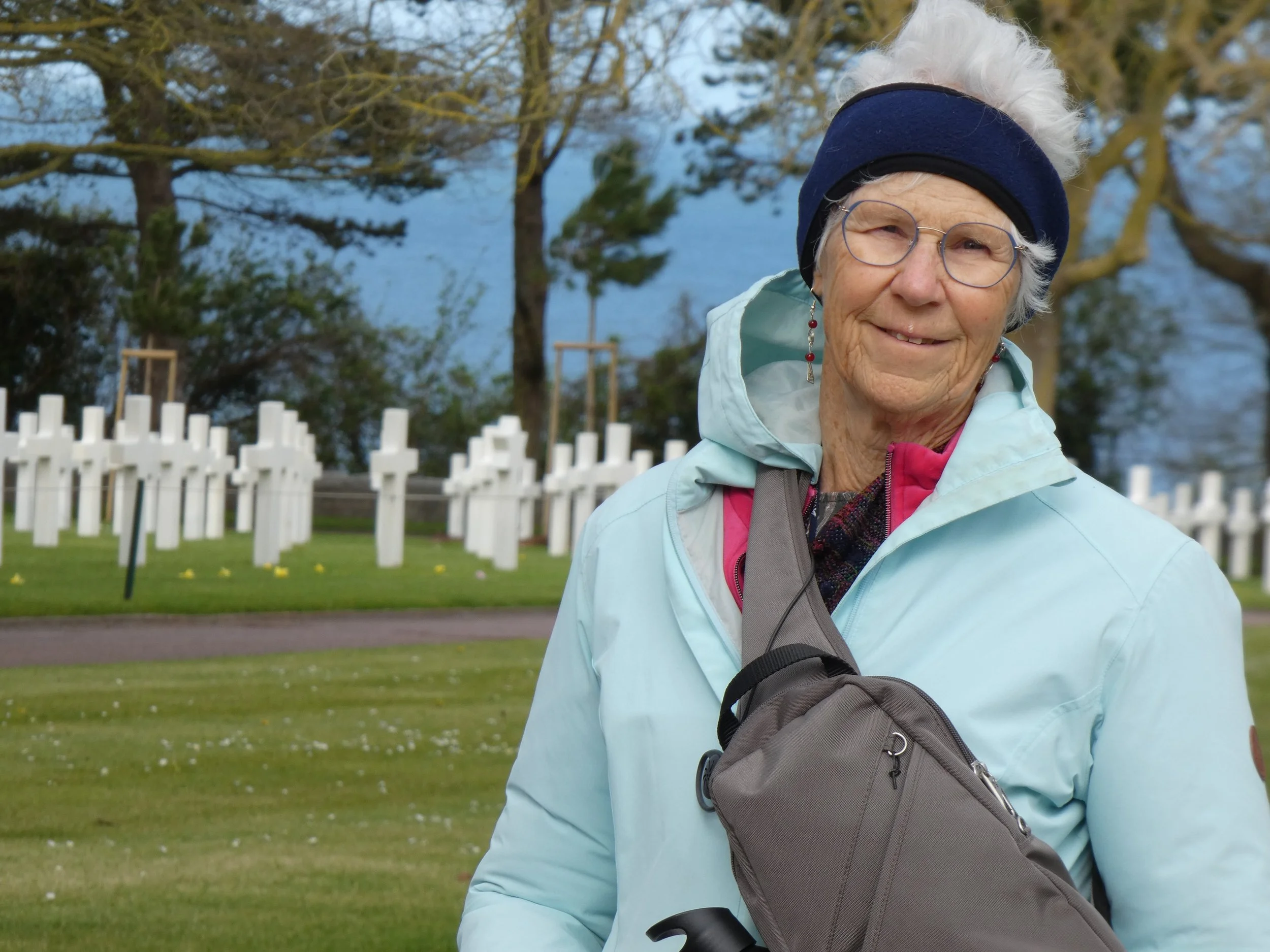
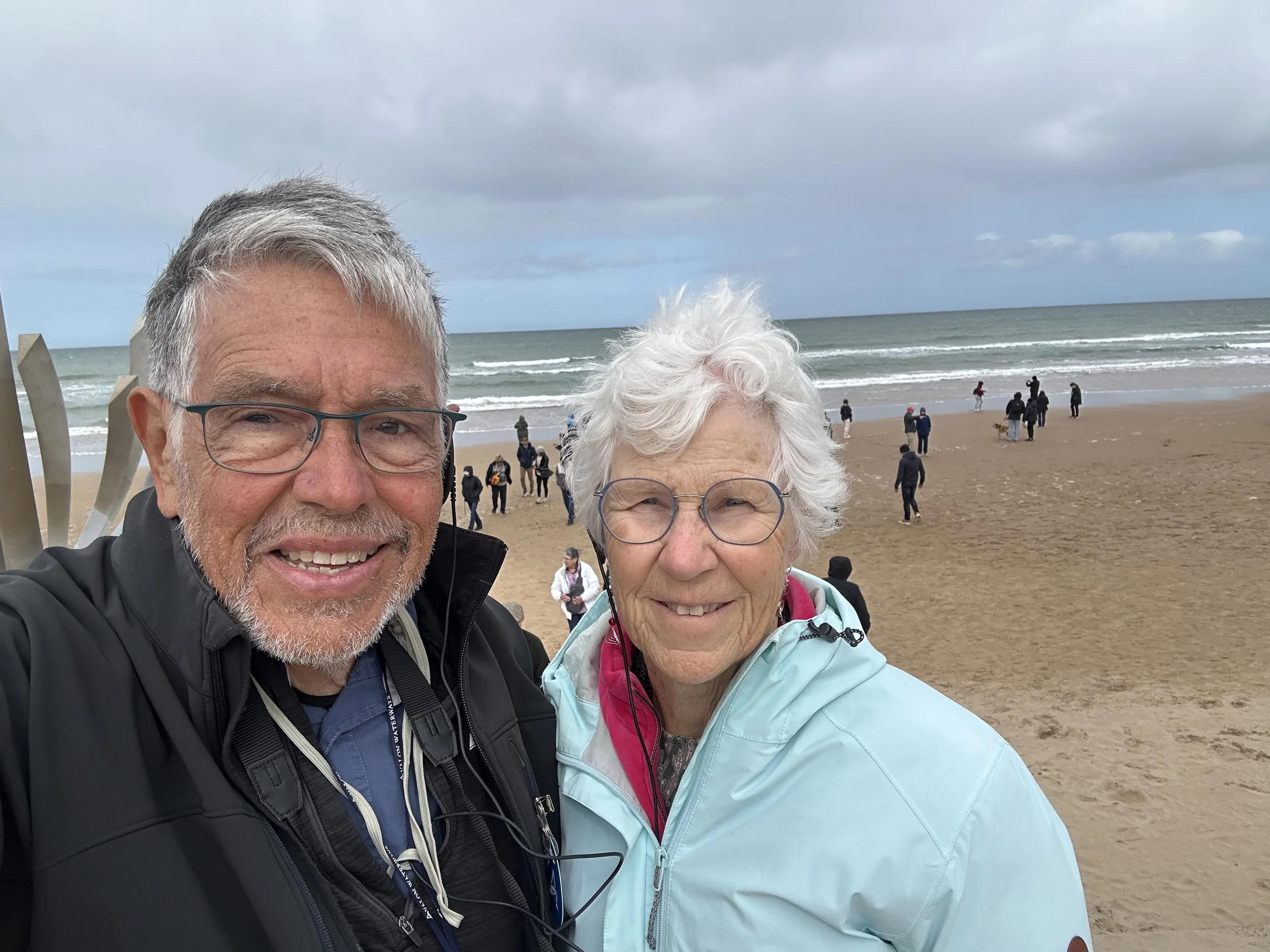
For Judy and me it was a trip down memory lane. Ten years ago, we visited the same spots with Reagan. We spent our time remembering what we did with her.
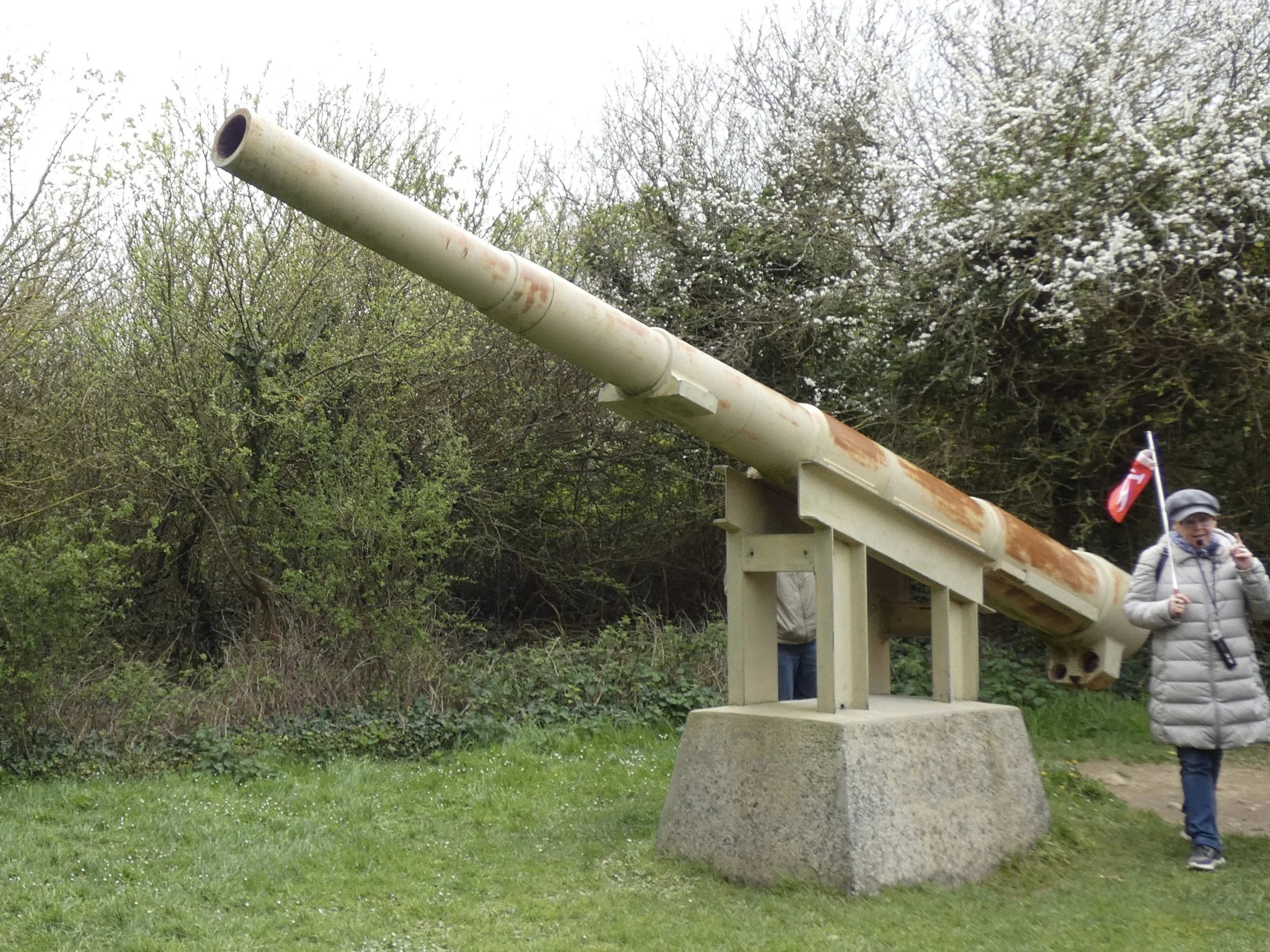
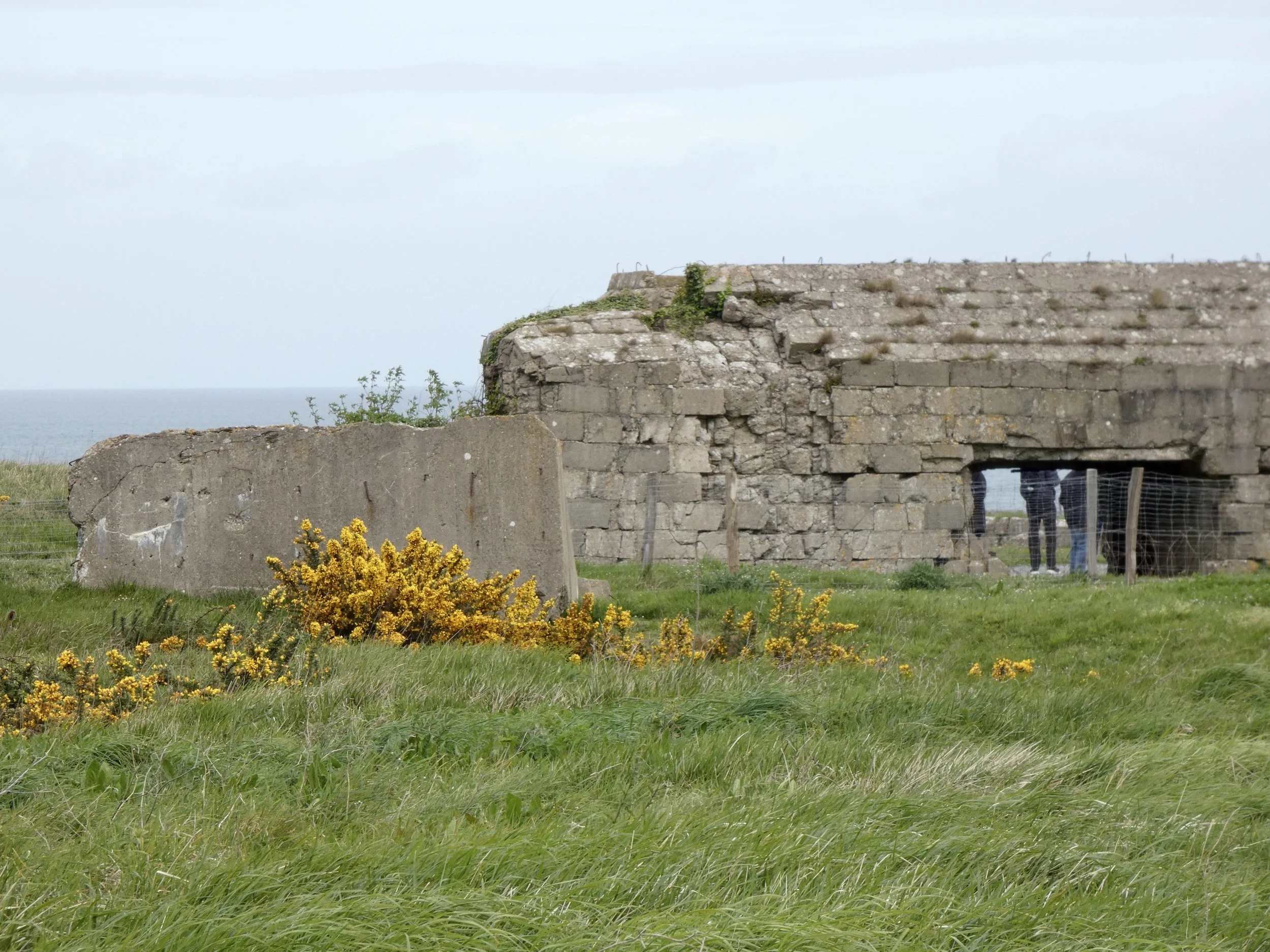
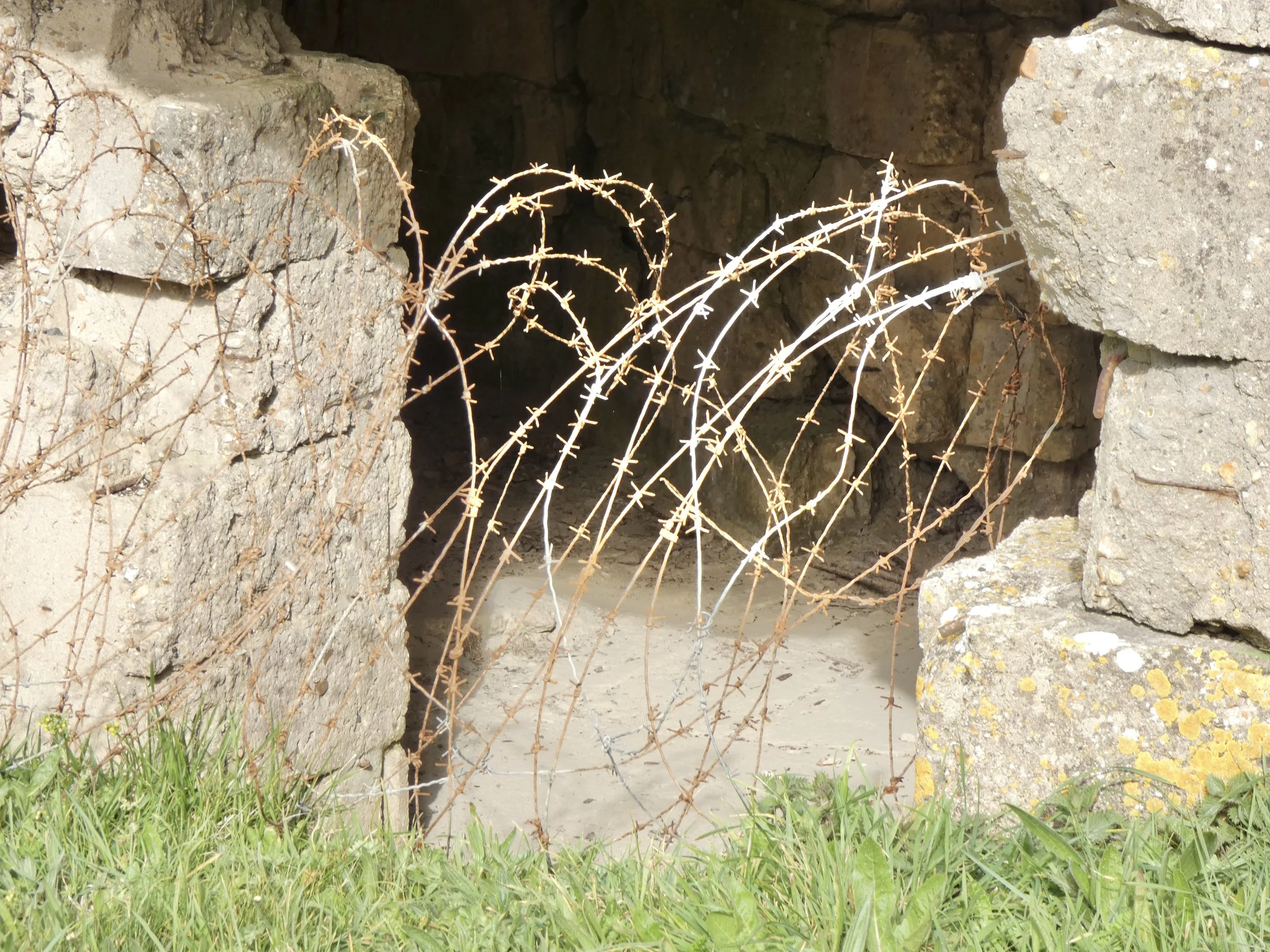
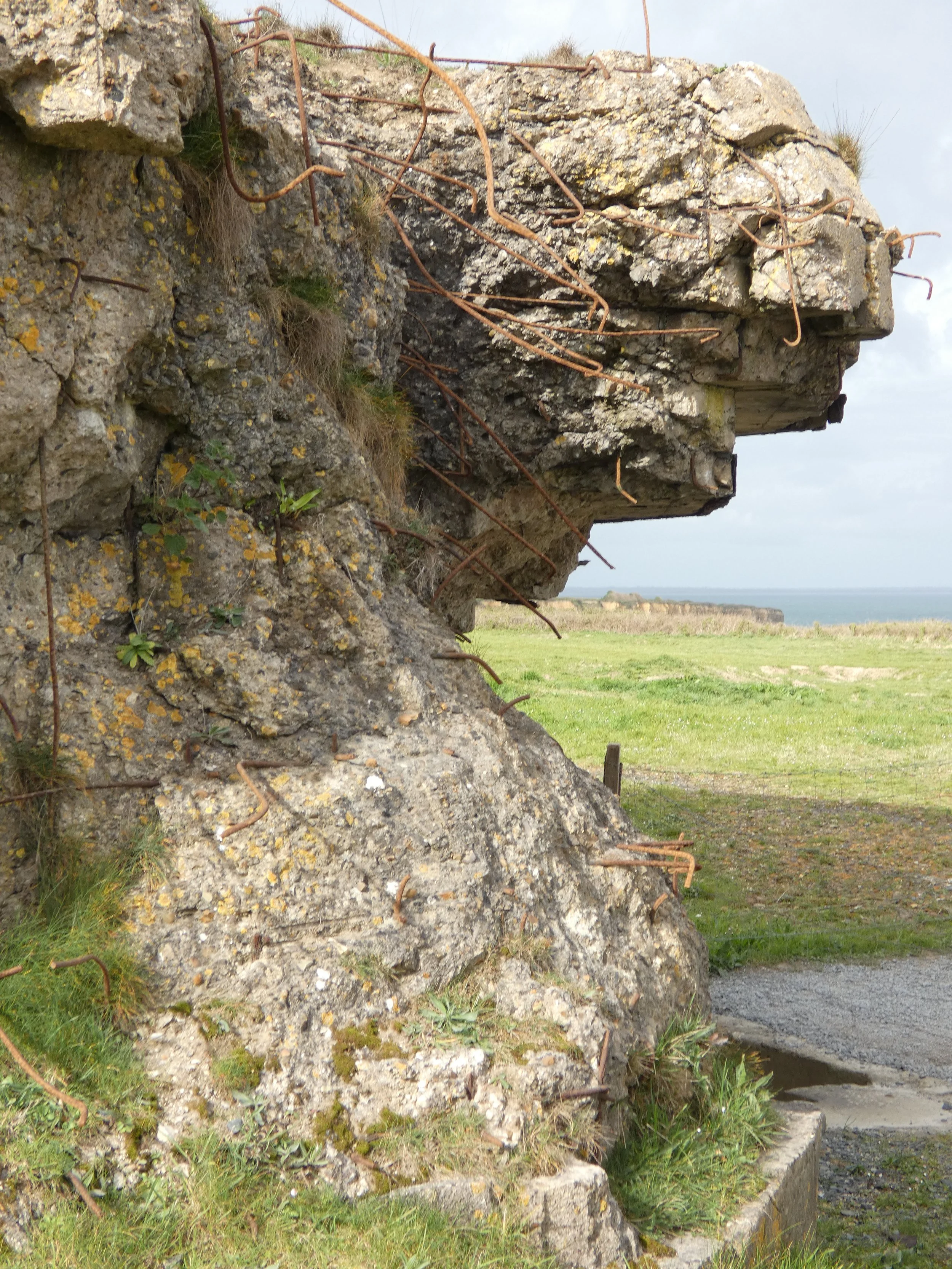
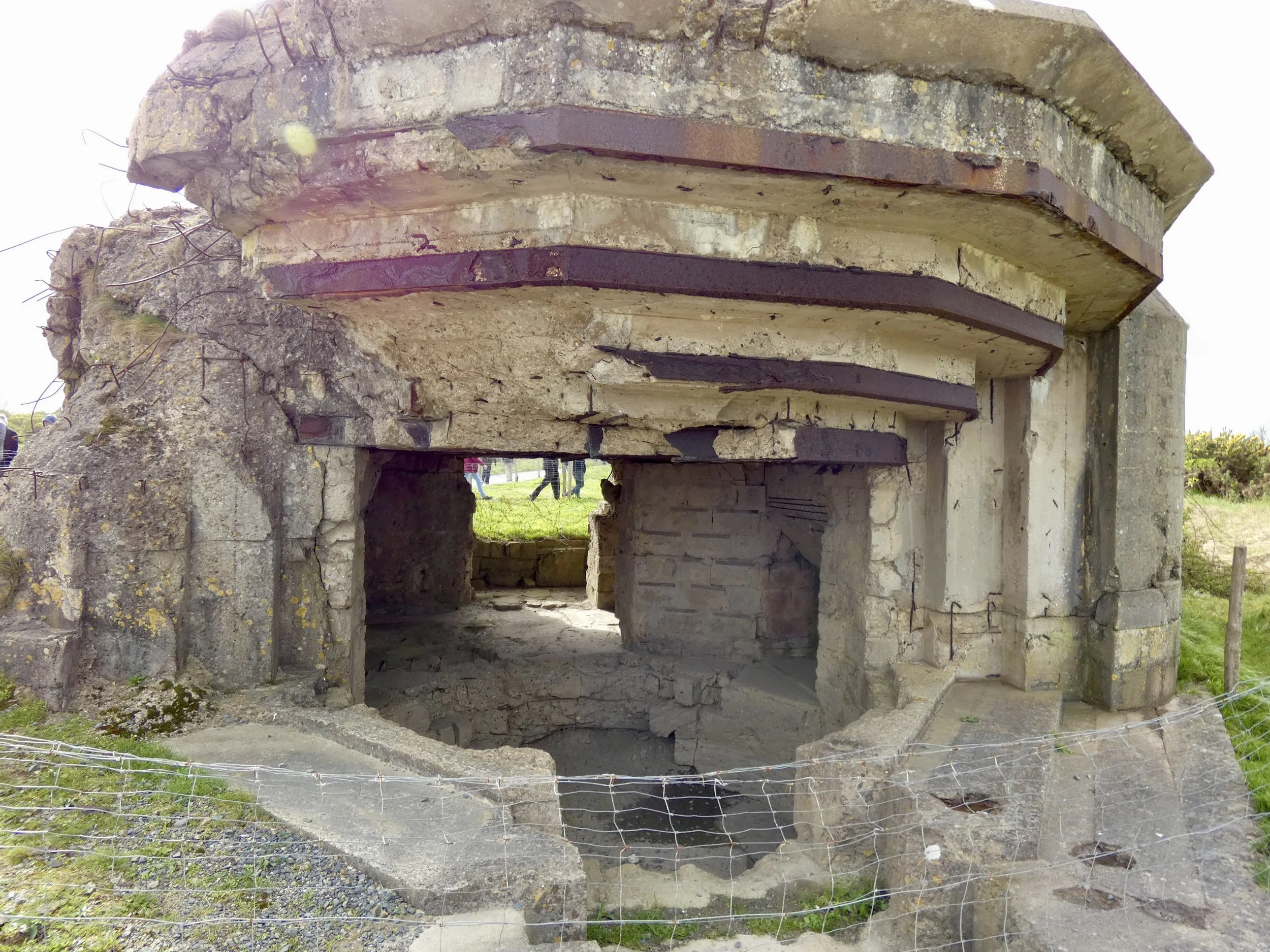
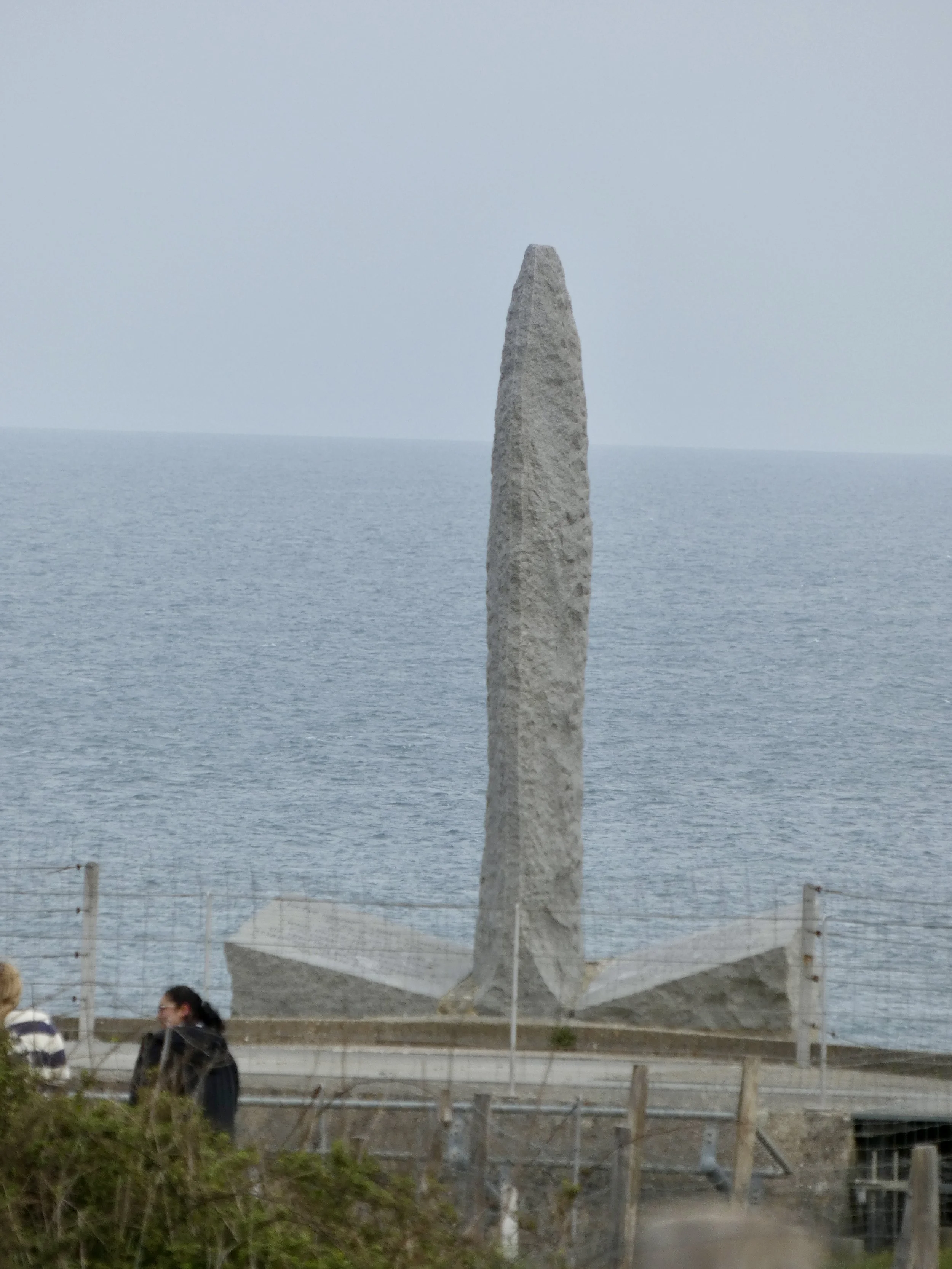
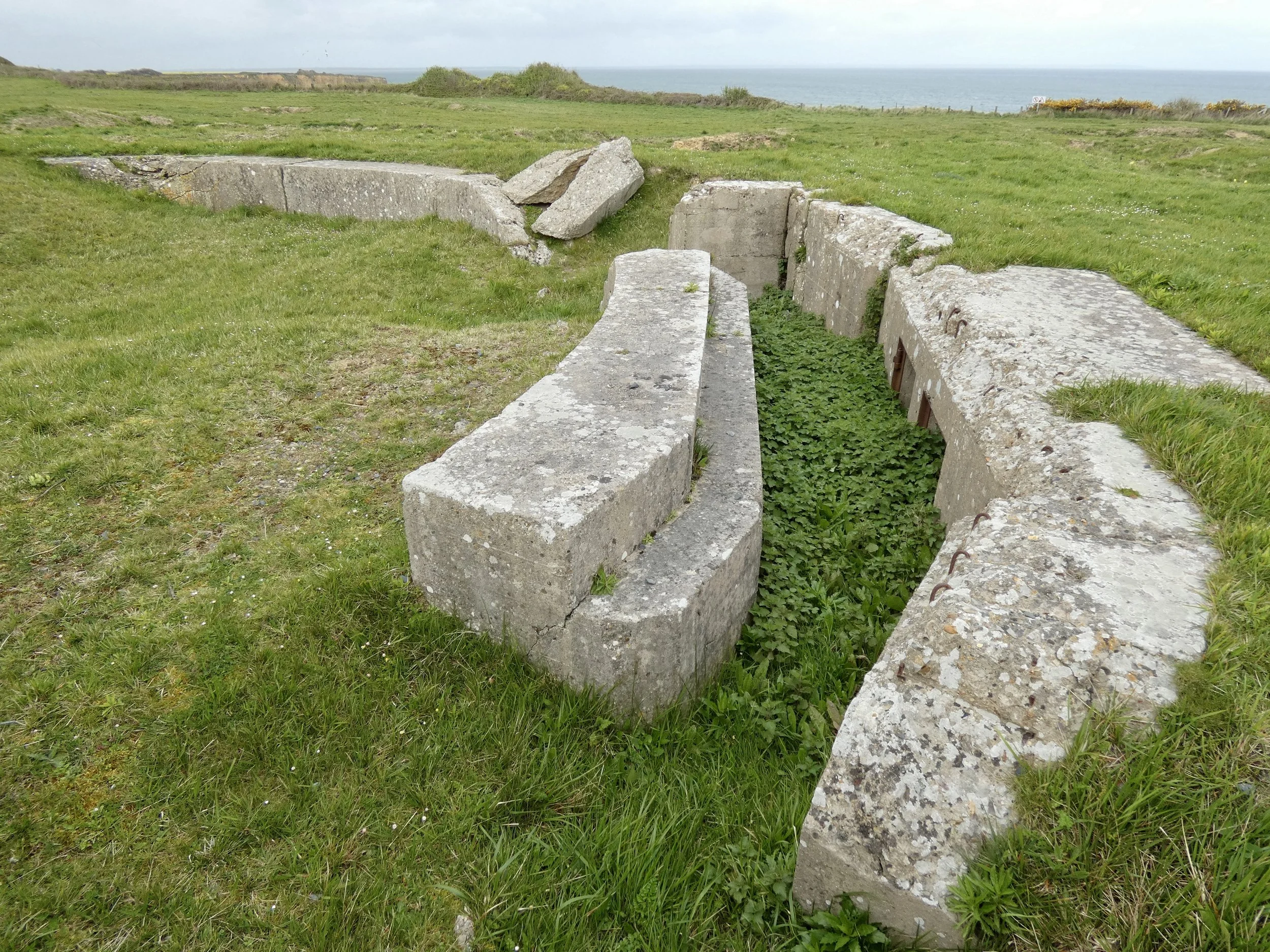
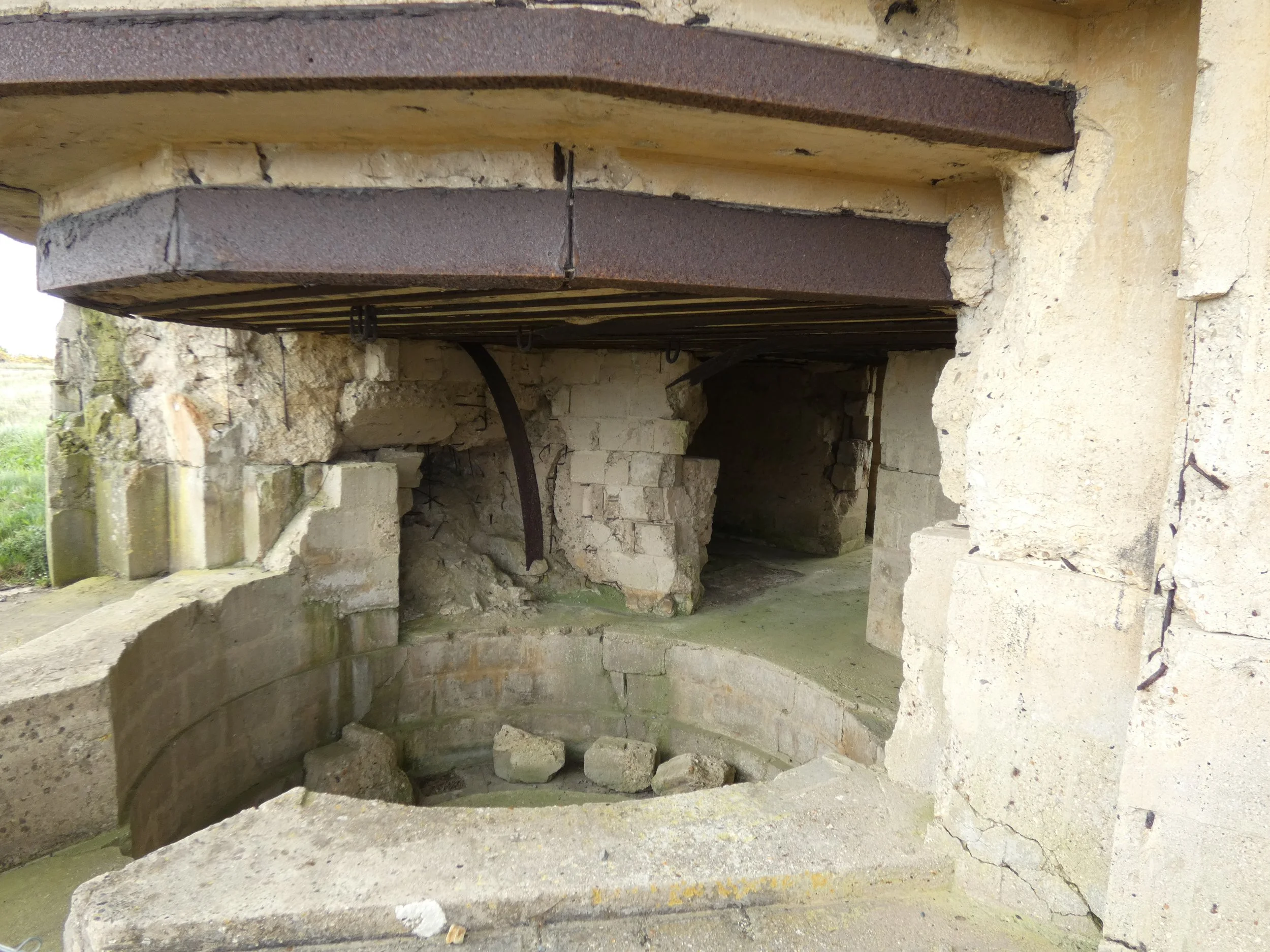
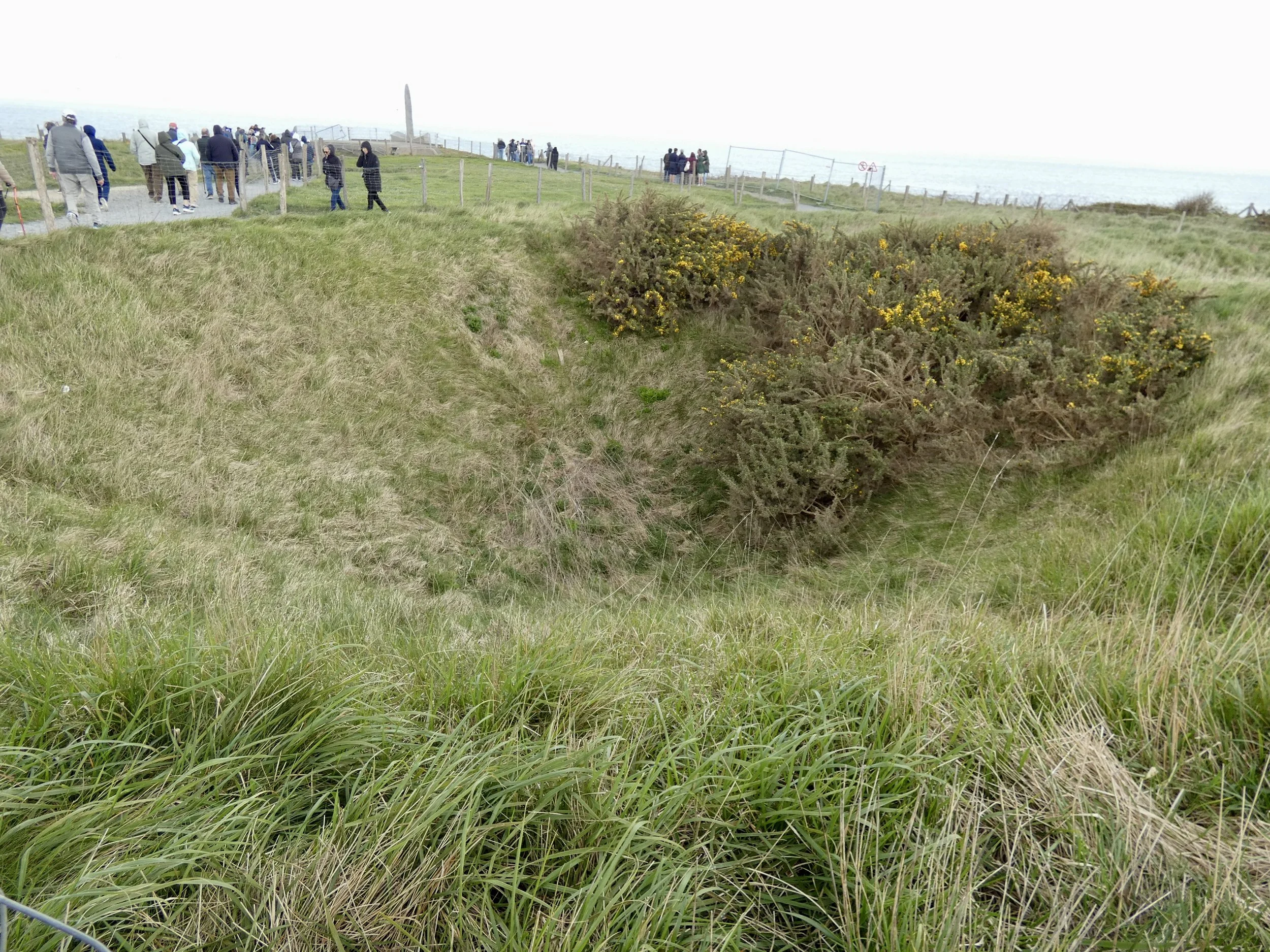
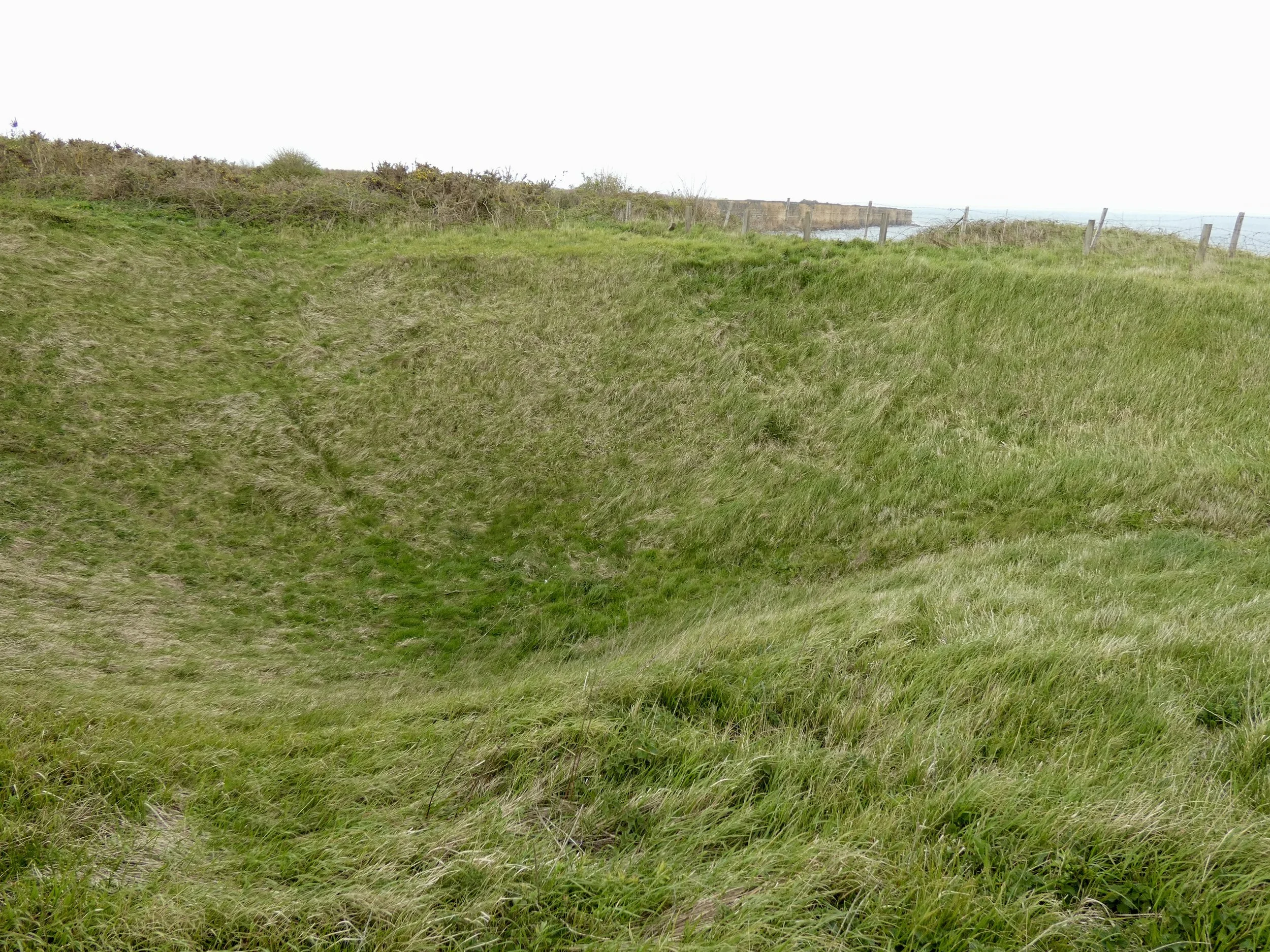
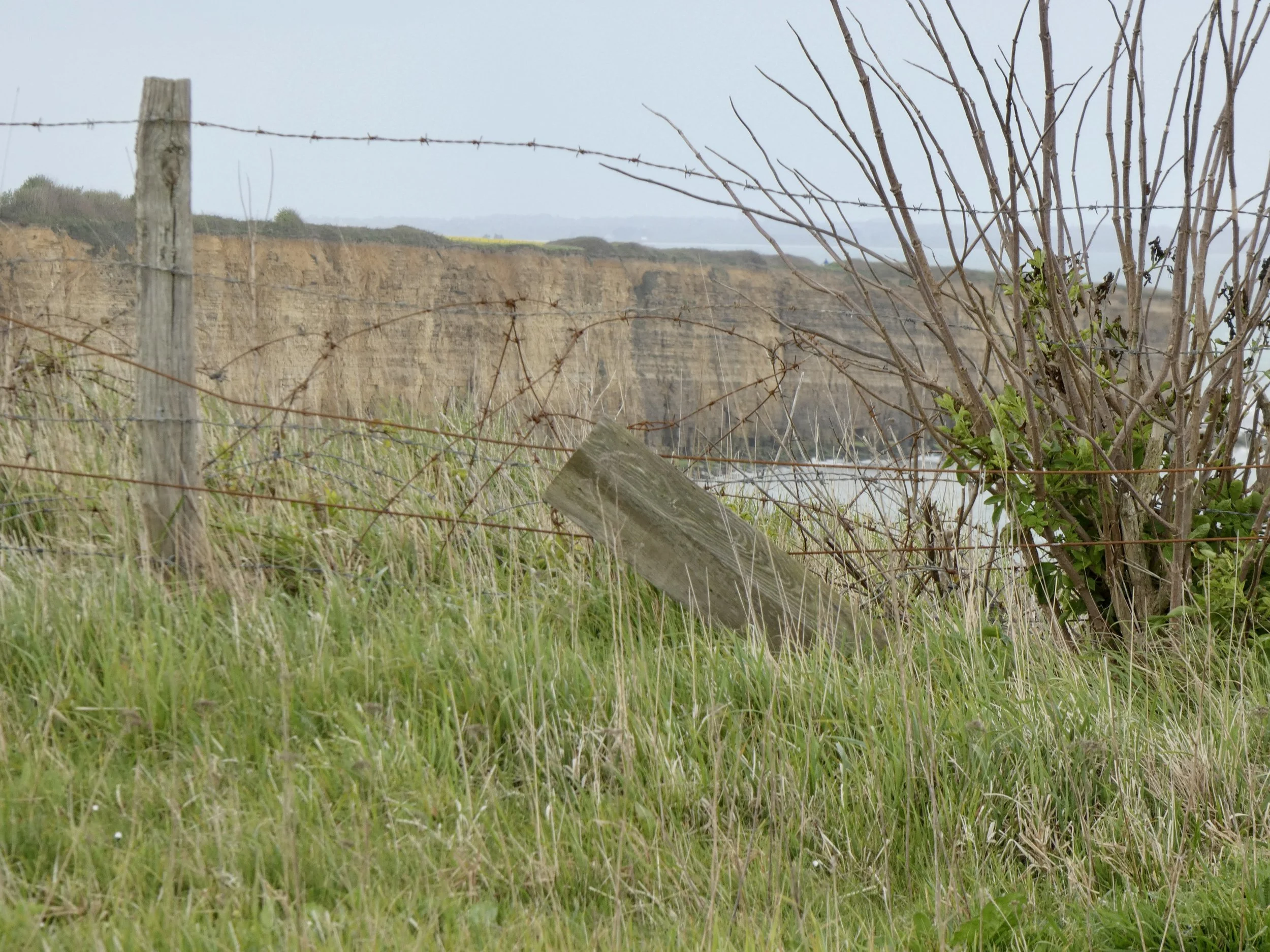
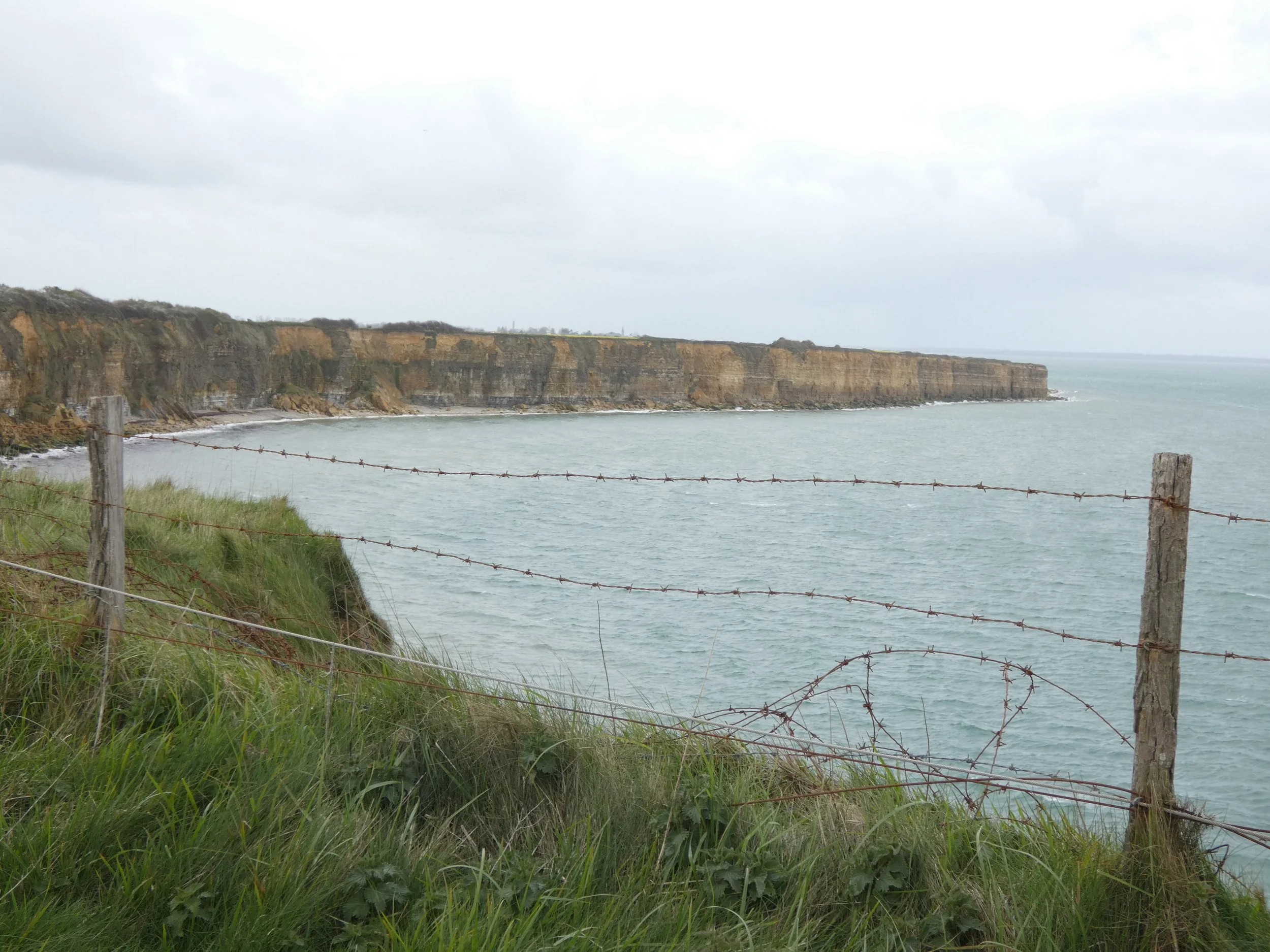
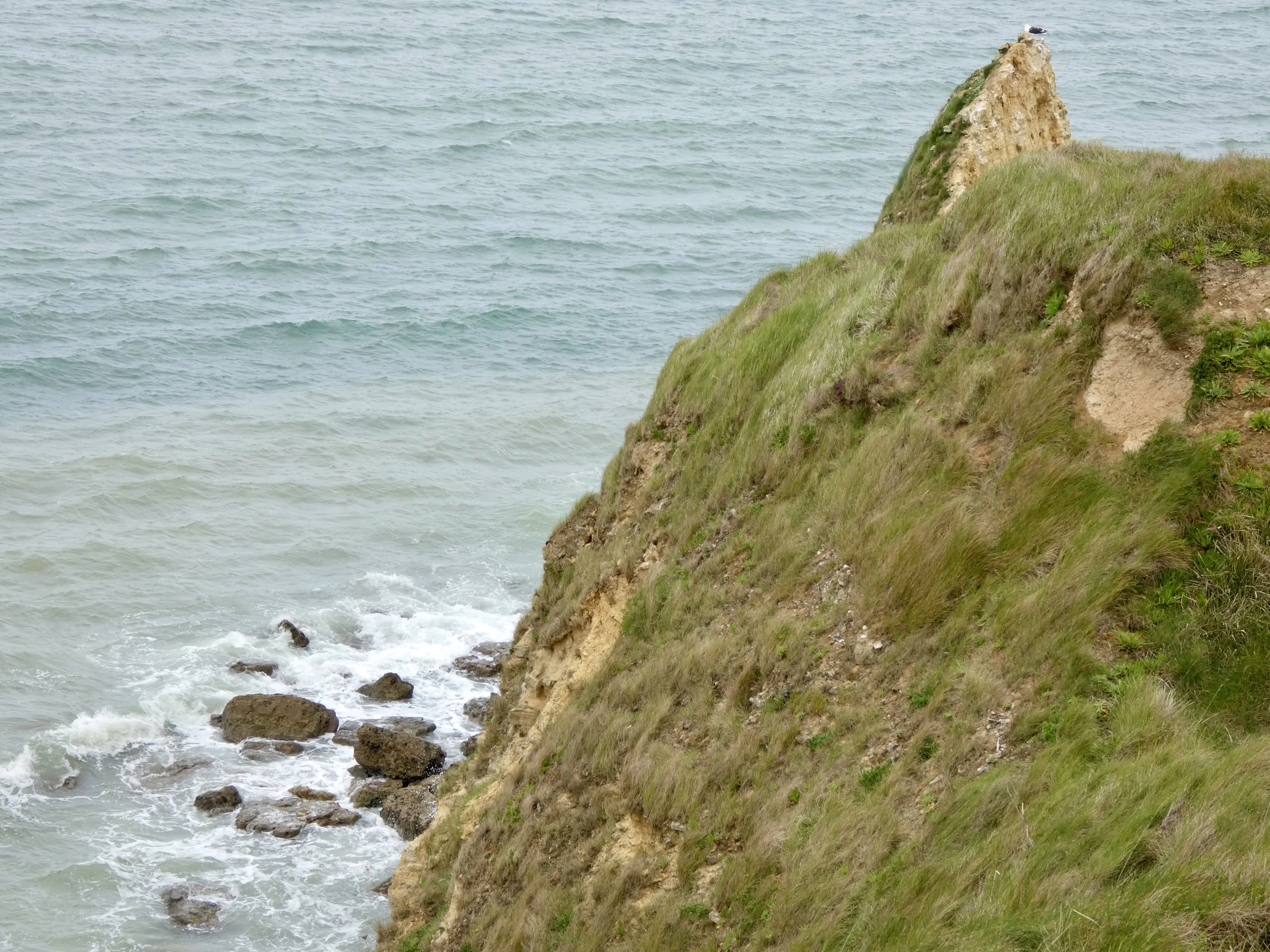
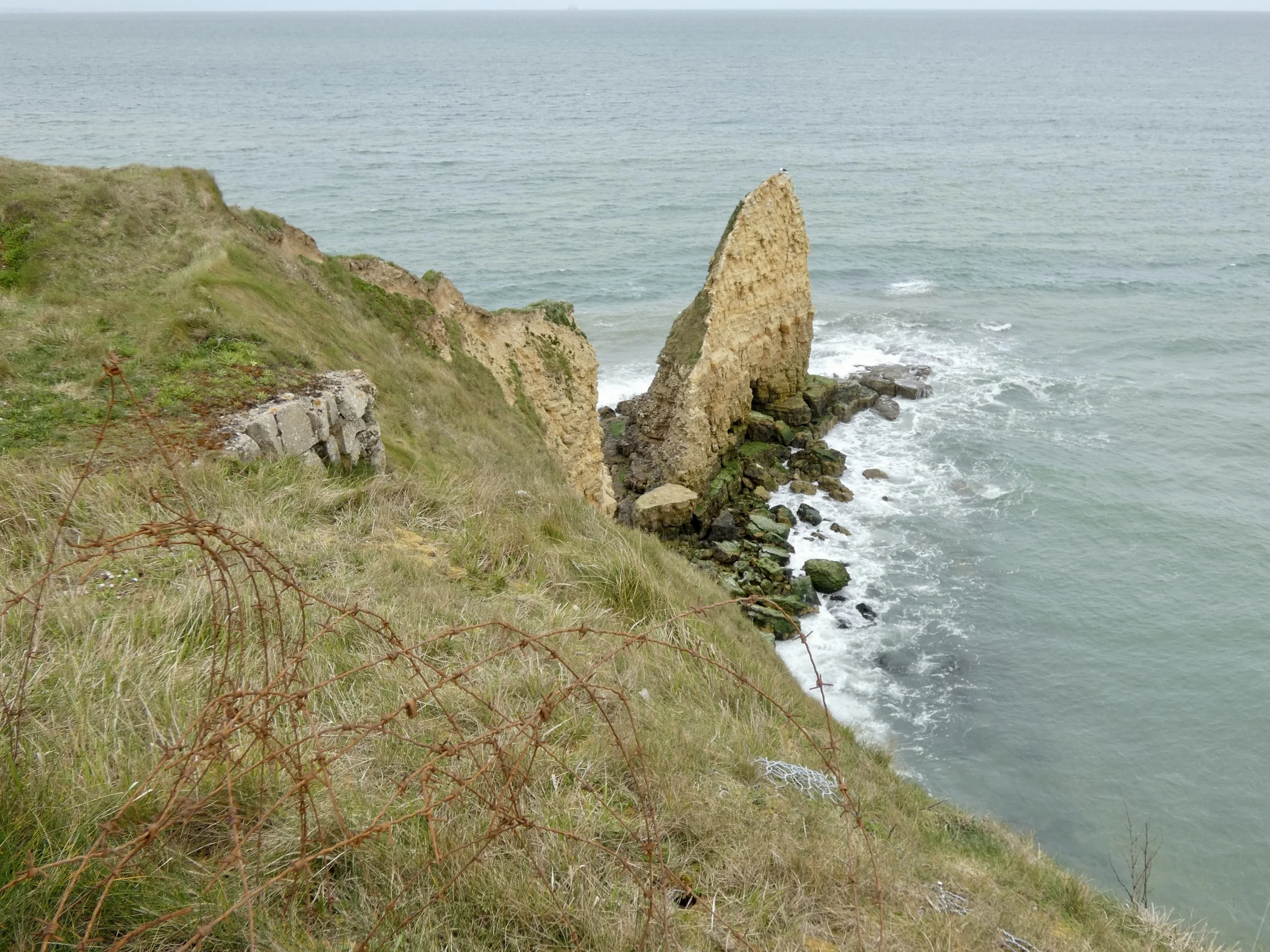
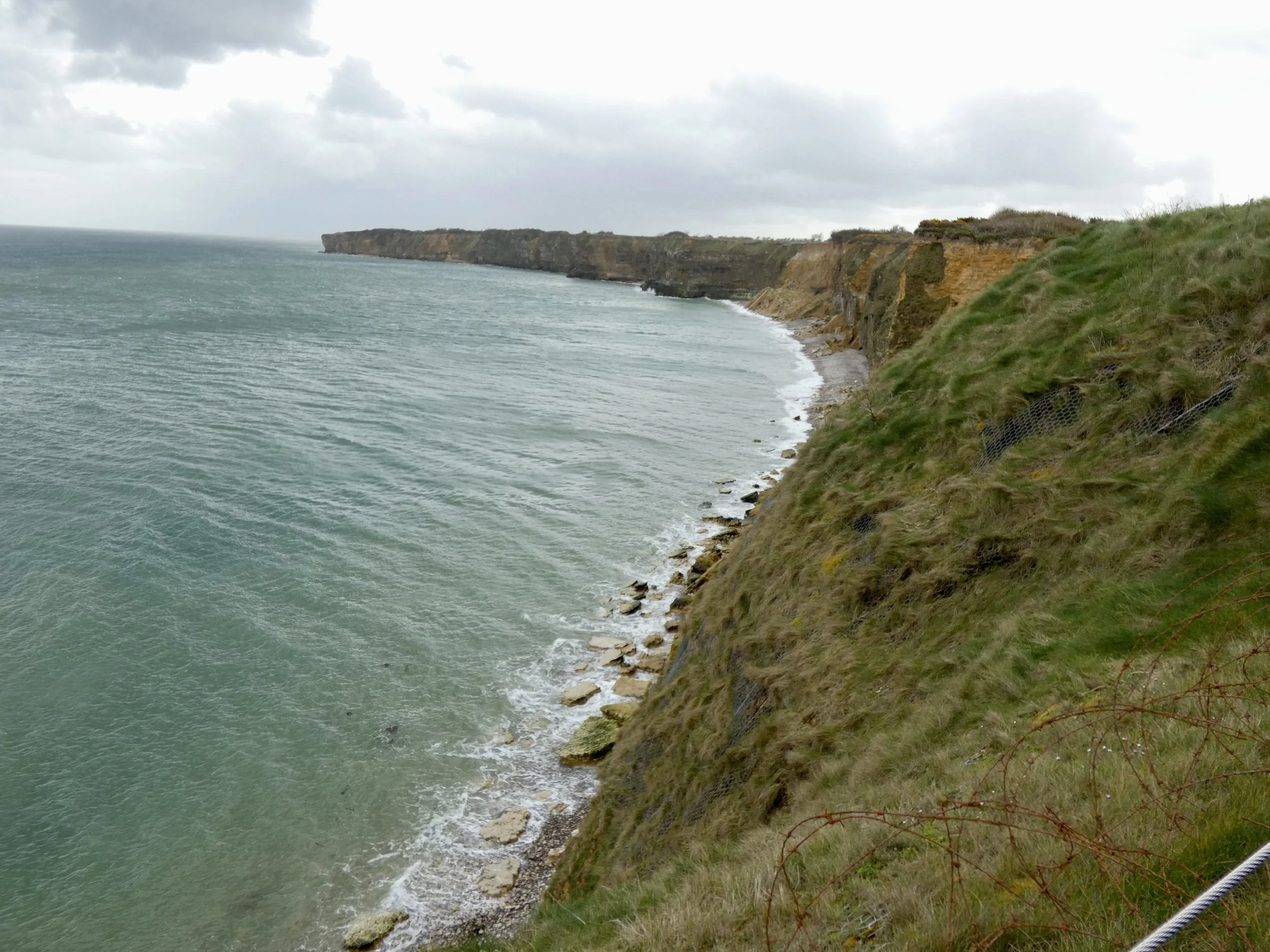
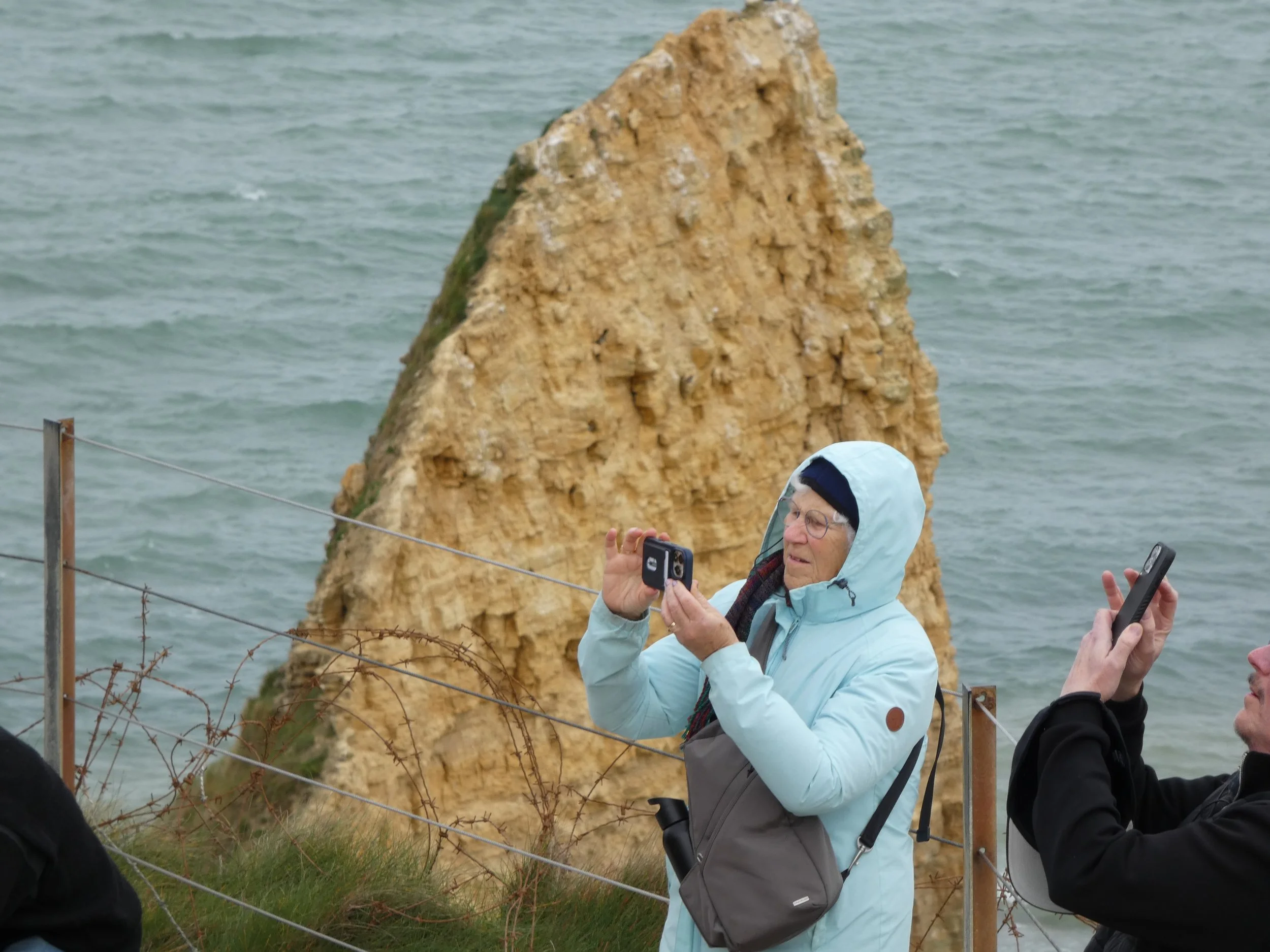
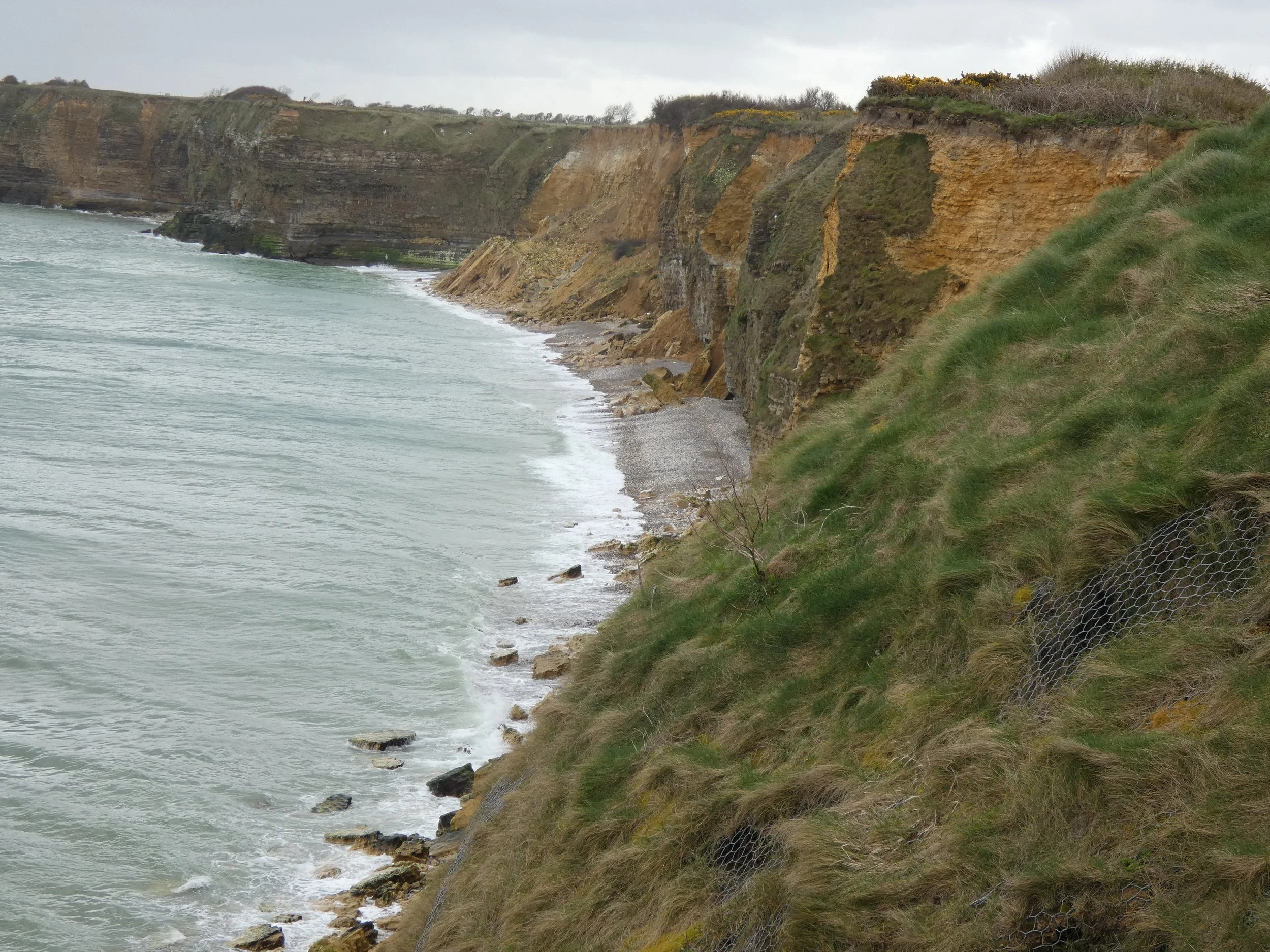
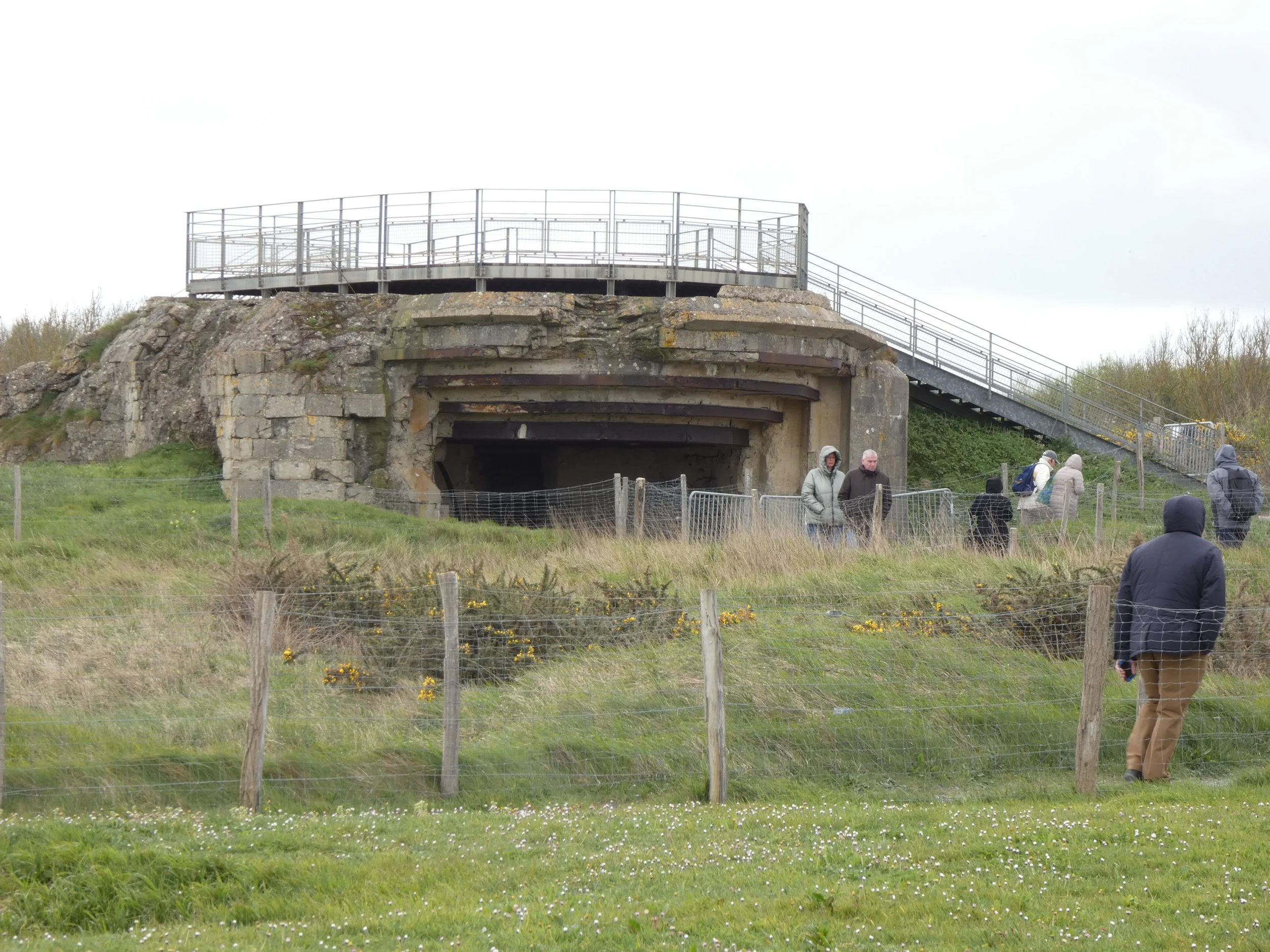
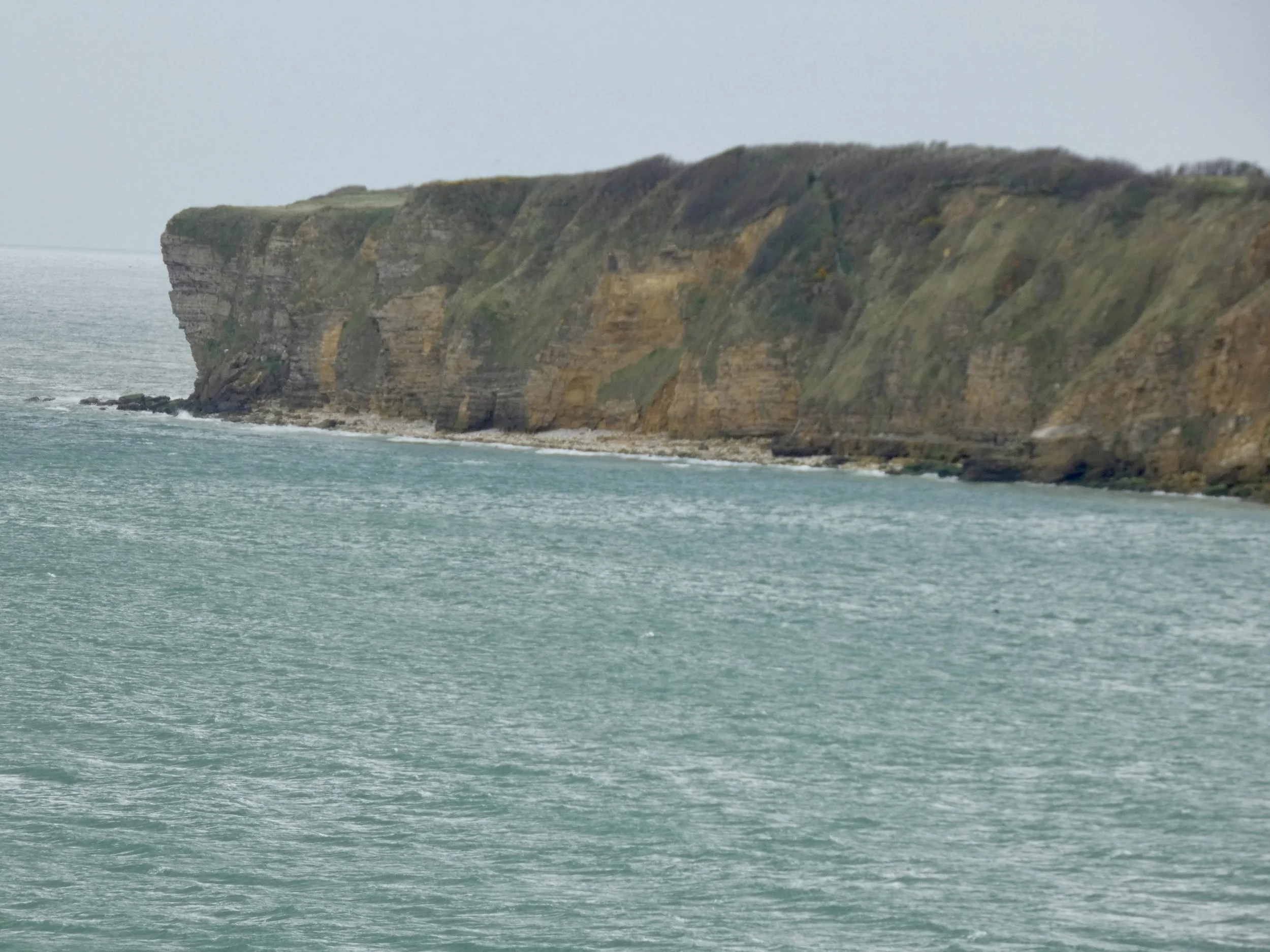
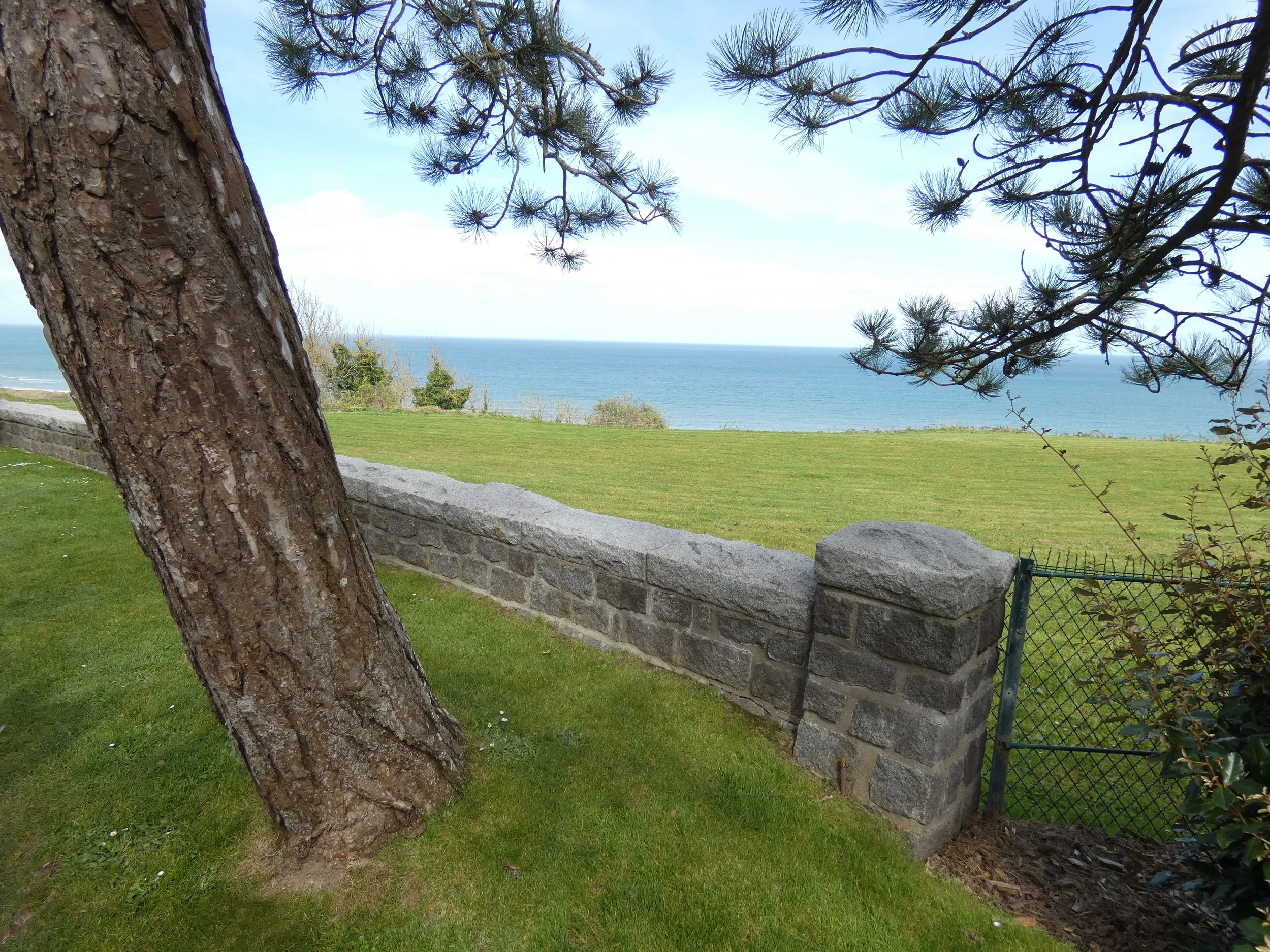
At Pointe du Hoc we remembered chasing her down the slopes of huge bomb craters. What was gravel and sand back then is now grass and gorse covered, protected behind a fence.
BTW, I read Dog Company: The Boys of Pointe du Hoc by Patrick K. O’Donnell before our first trip. It’s based on interviews with the actual members of Dog Company. Highly recommended.
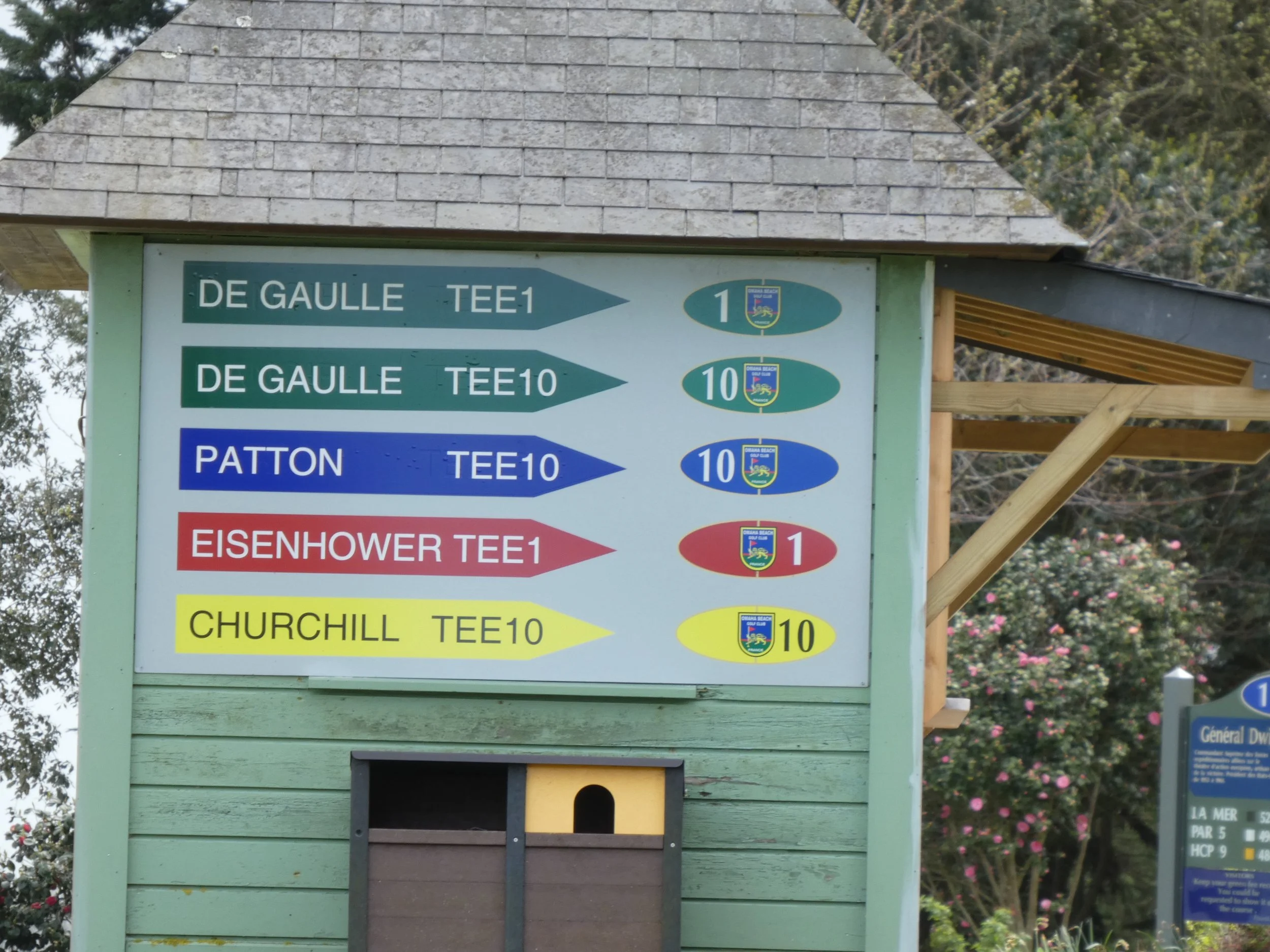
Lunch was at the Omaha Beach Golf Club where there was a nice bottle of Bordeaux open on the table. How very French, don’t you think?
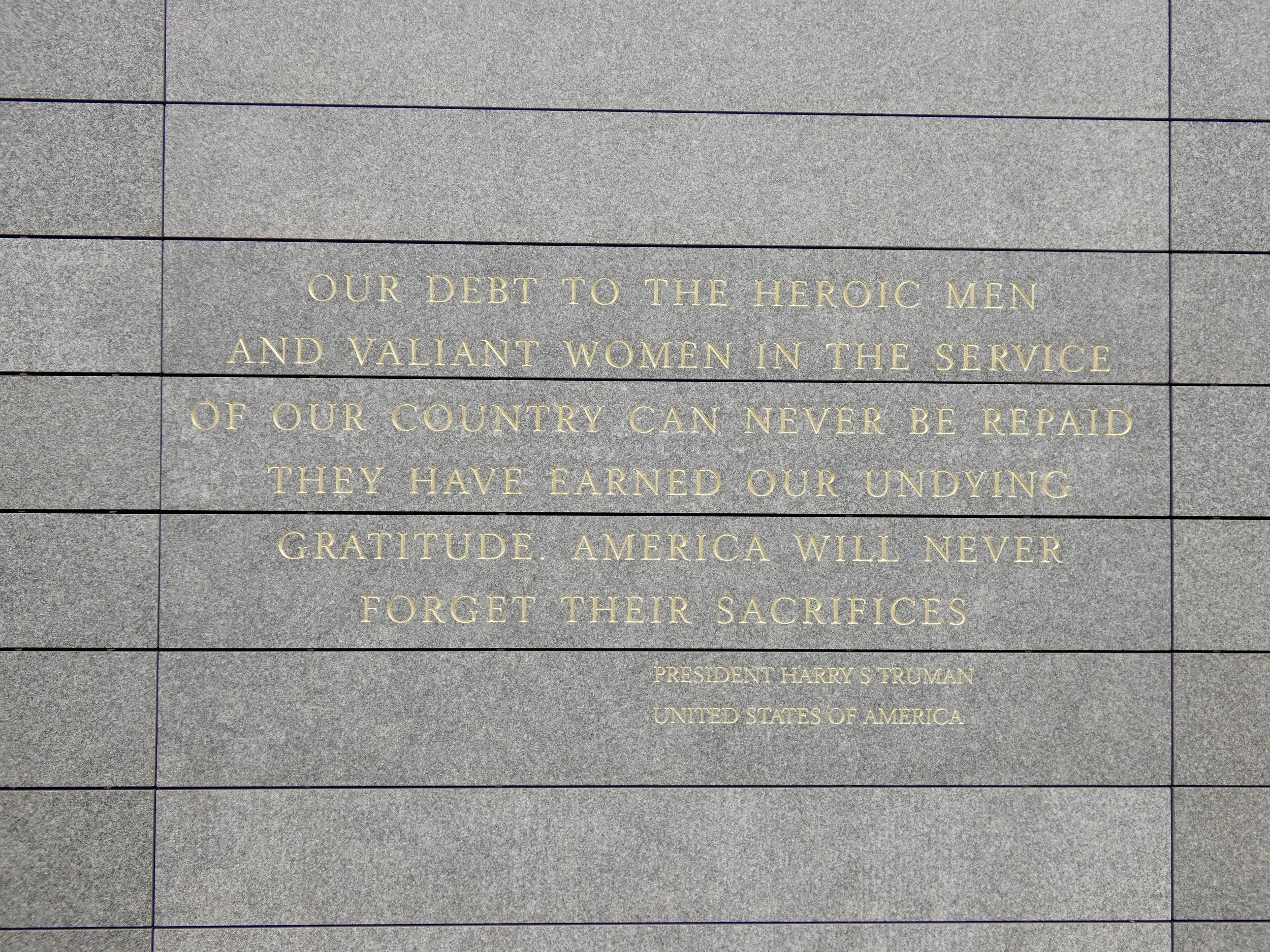
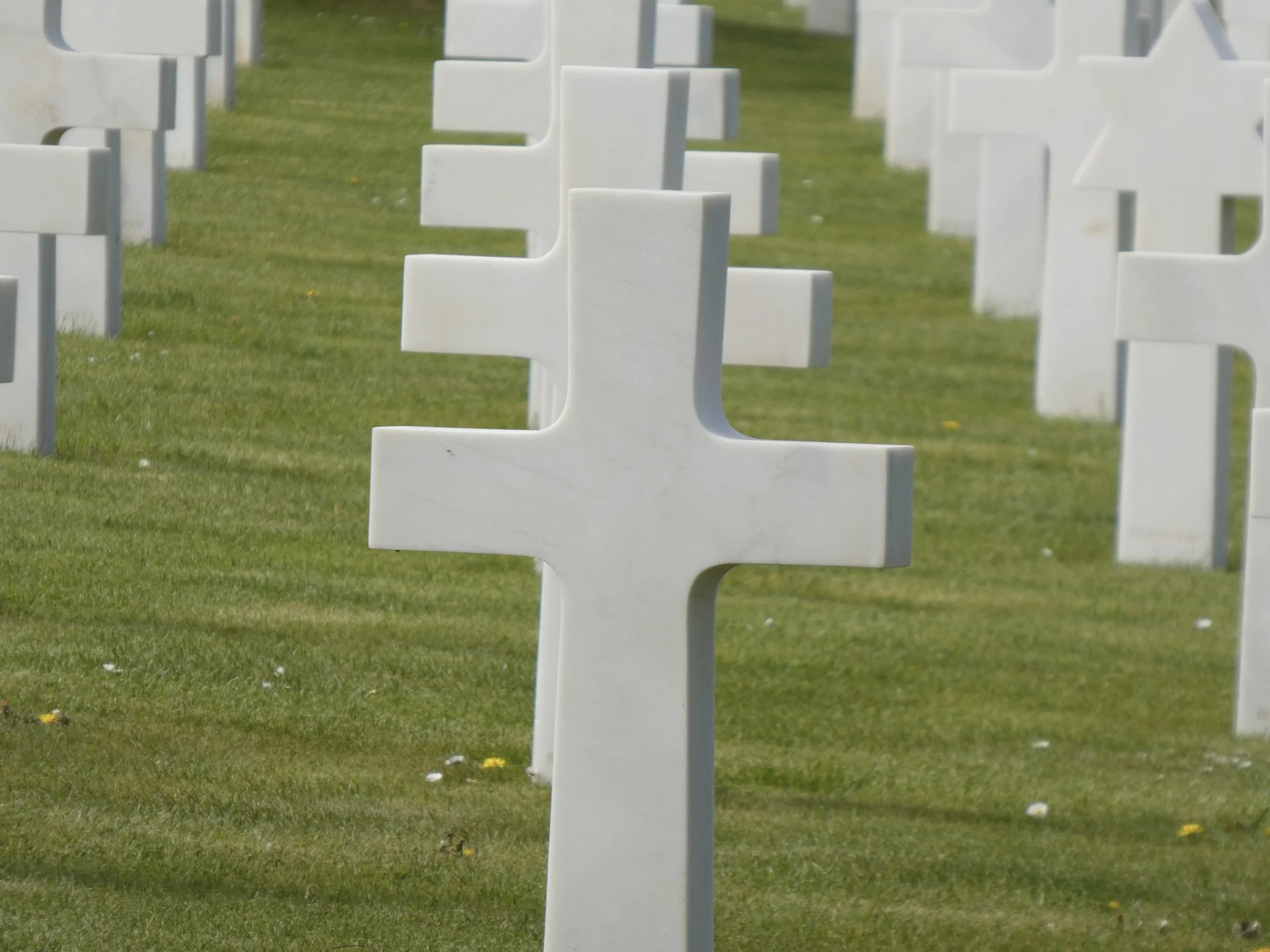
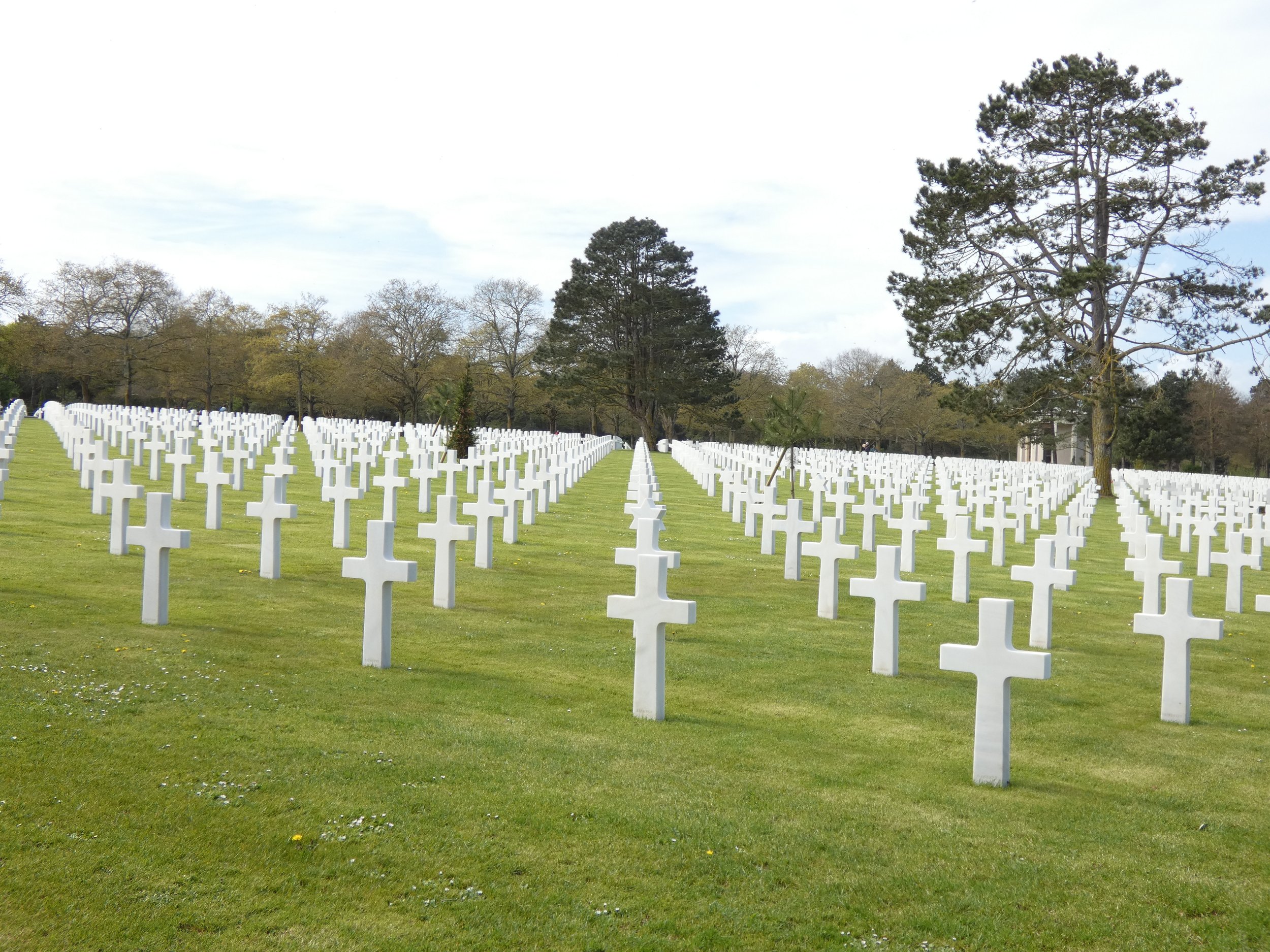
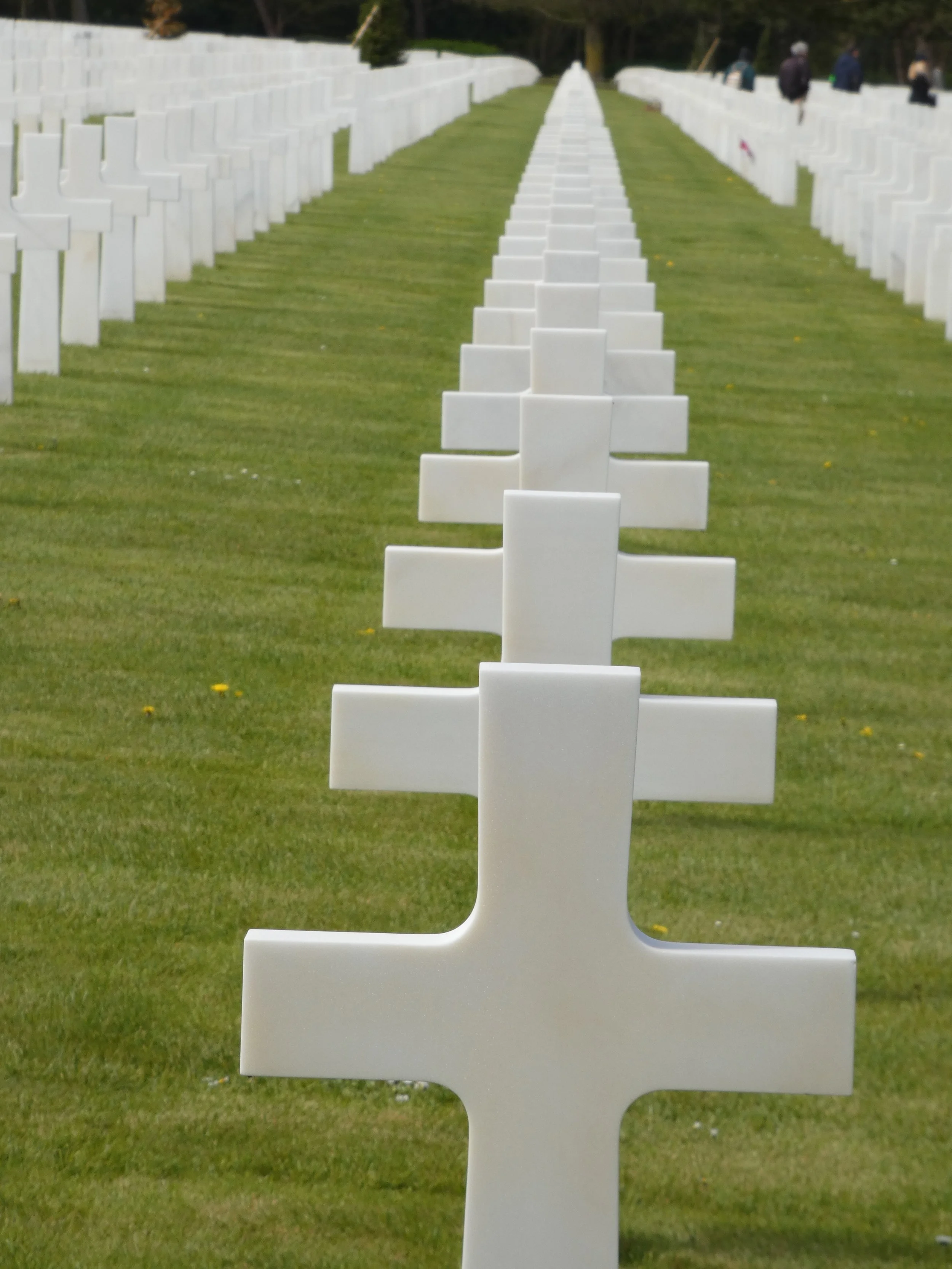
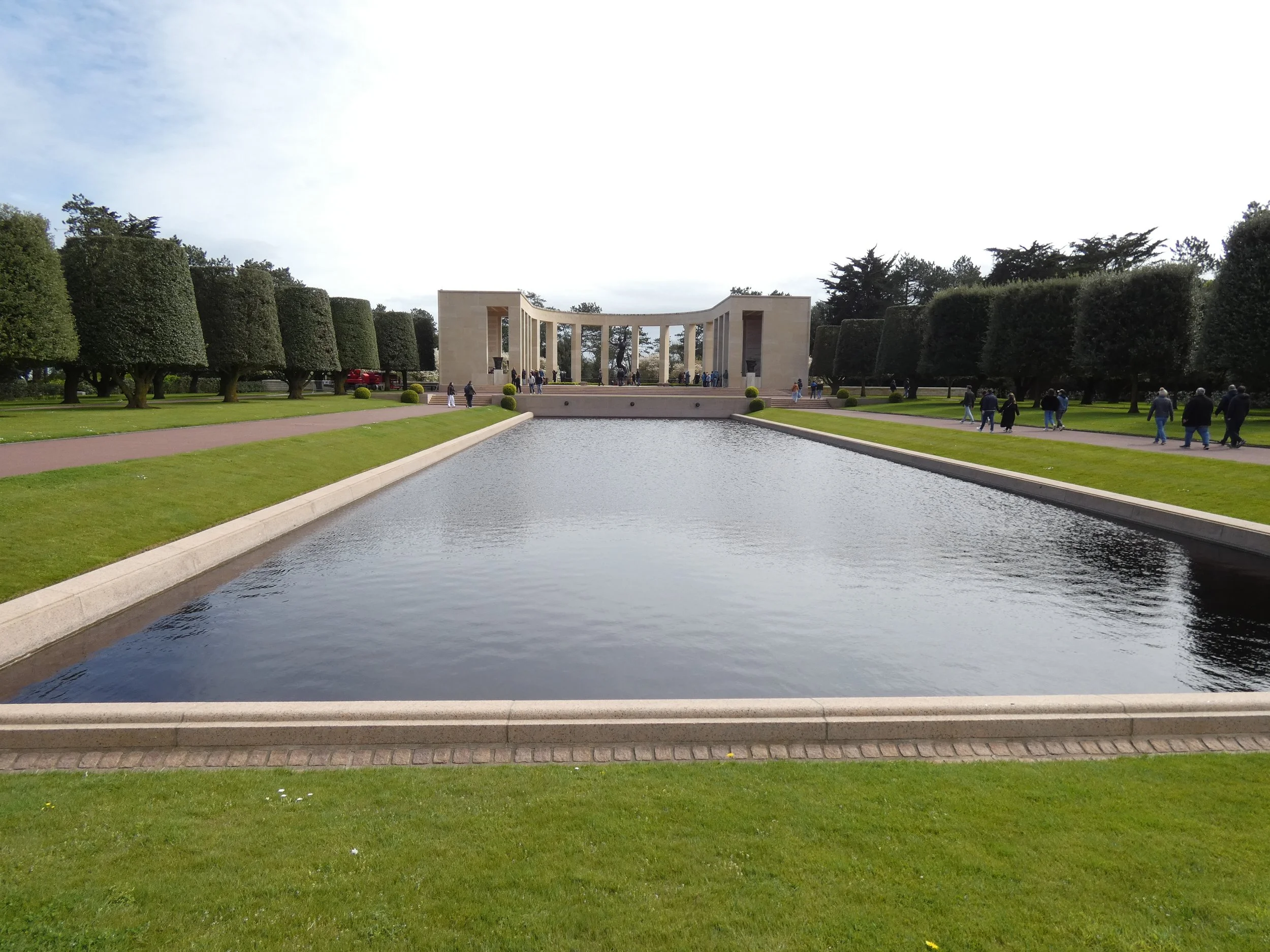
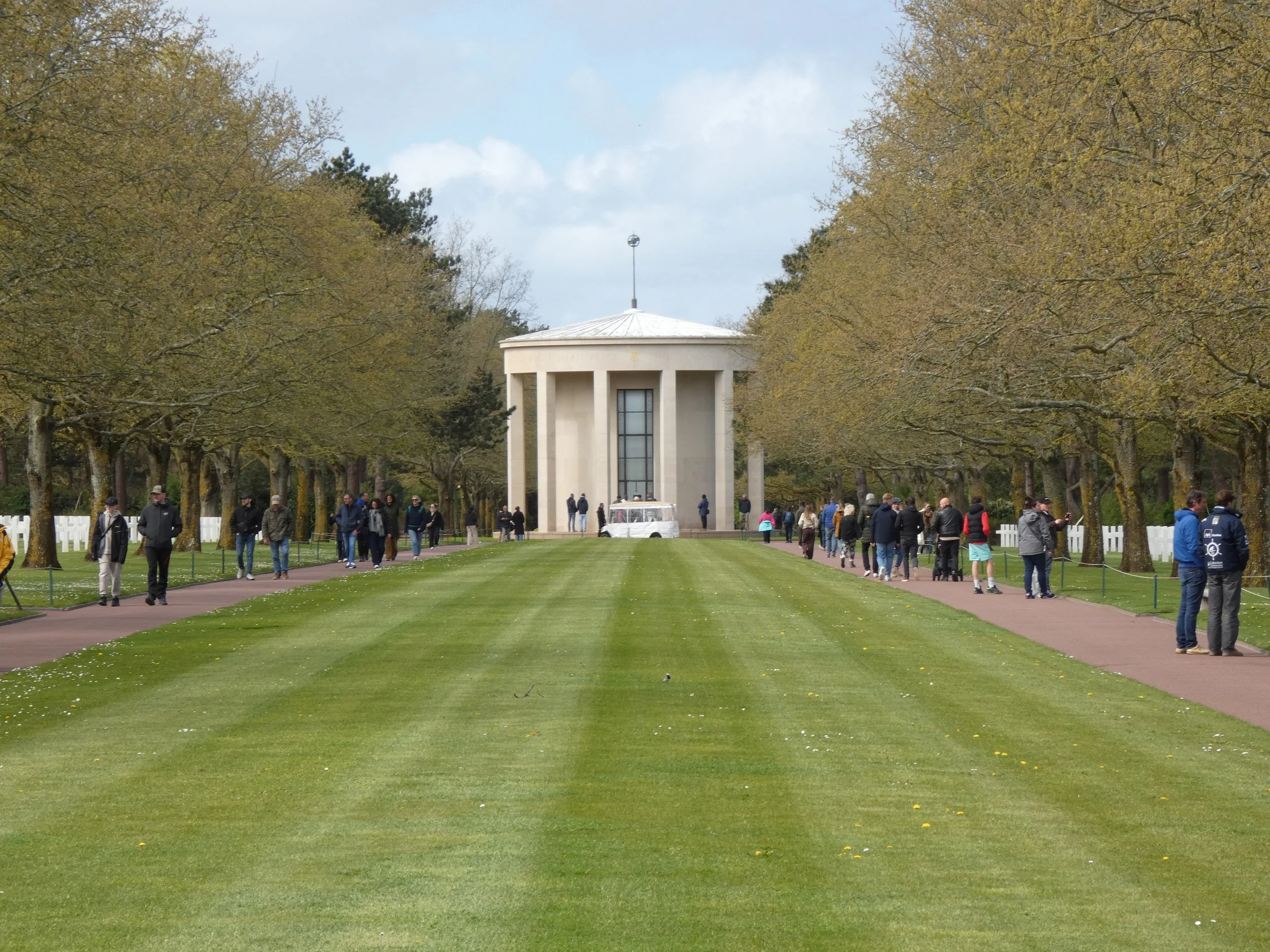
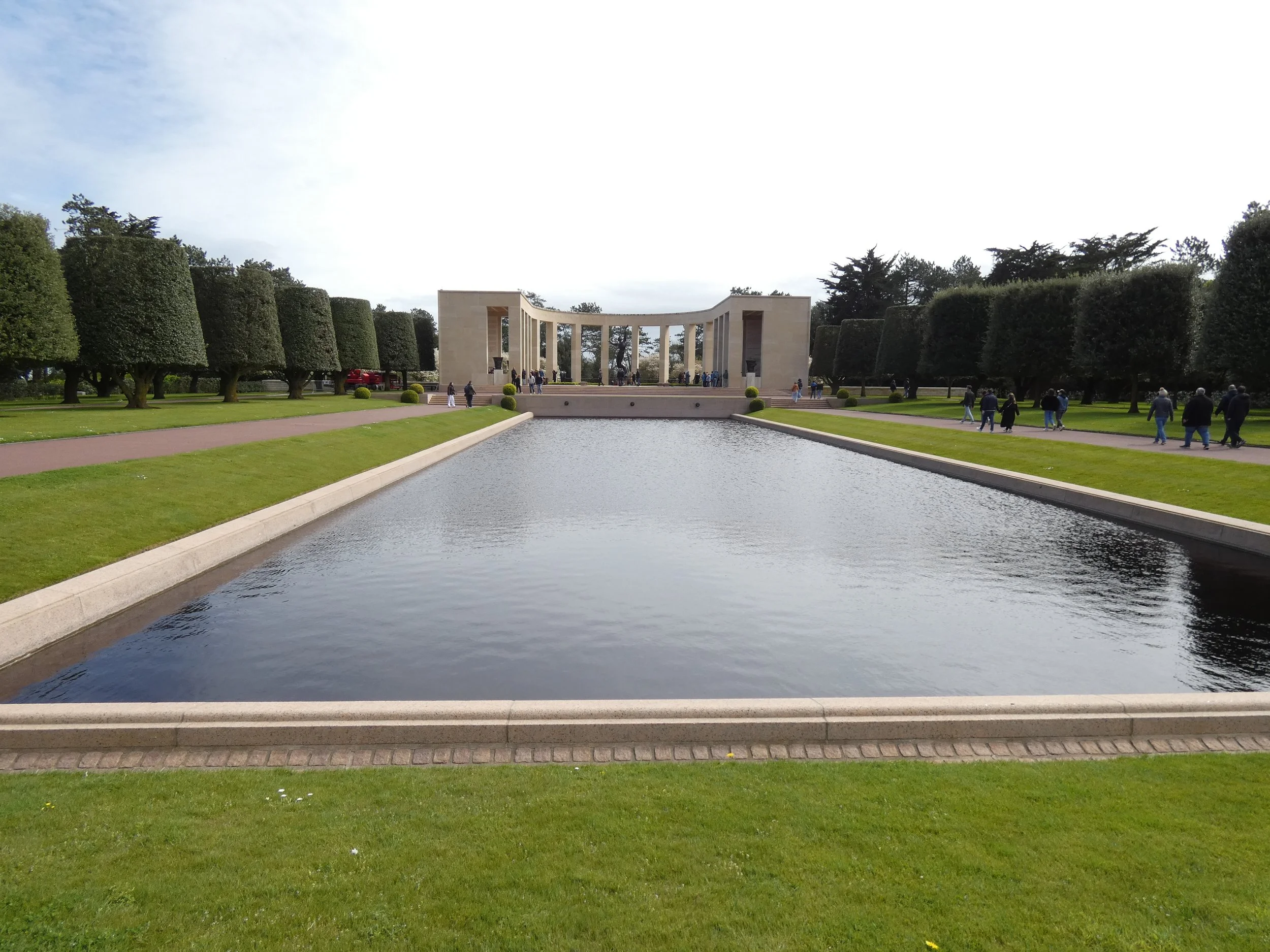
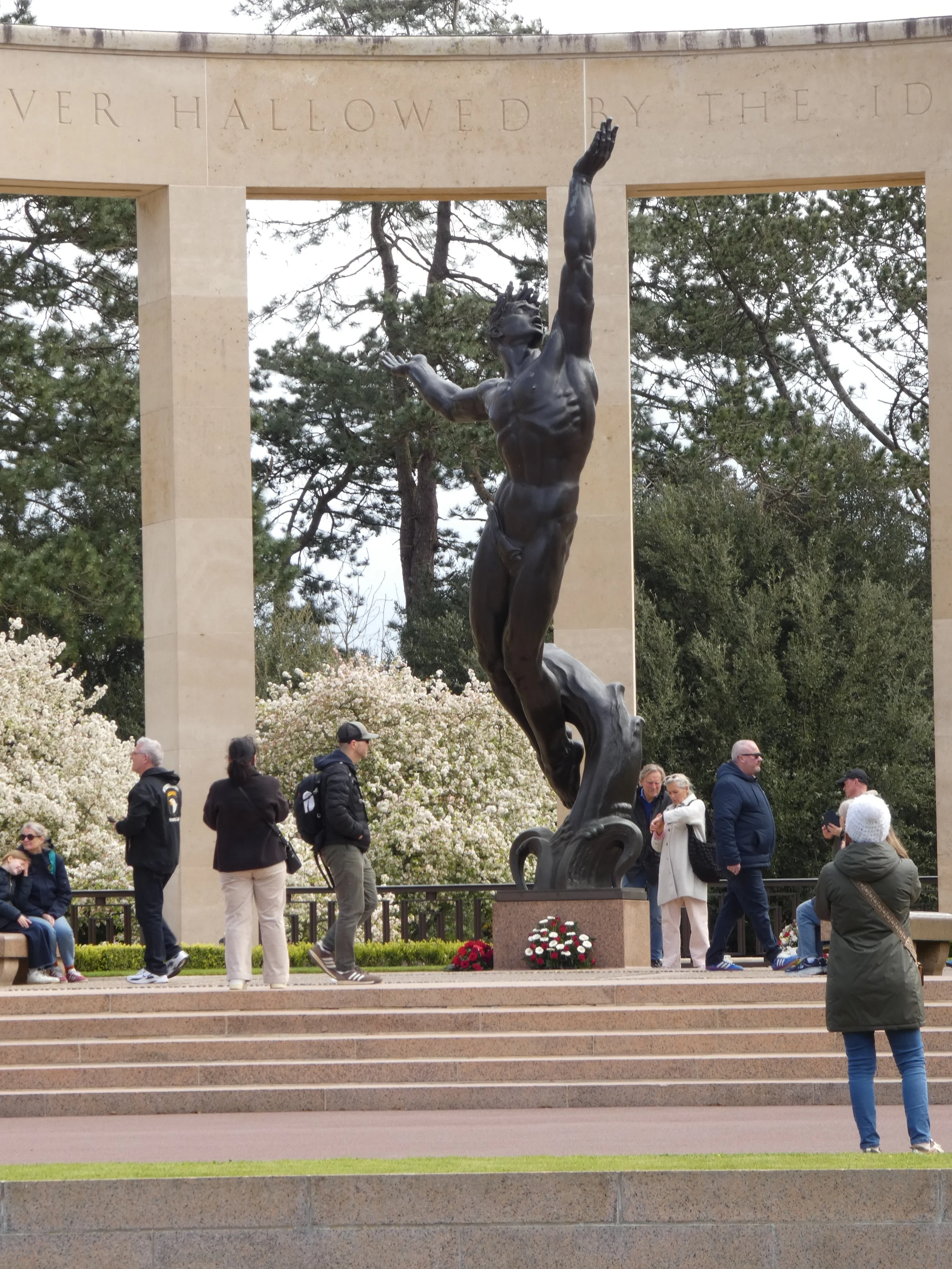
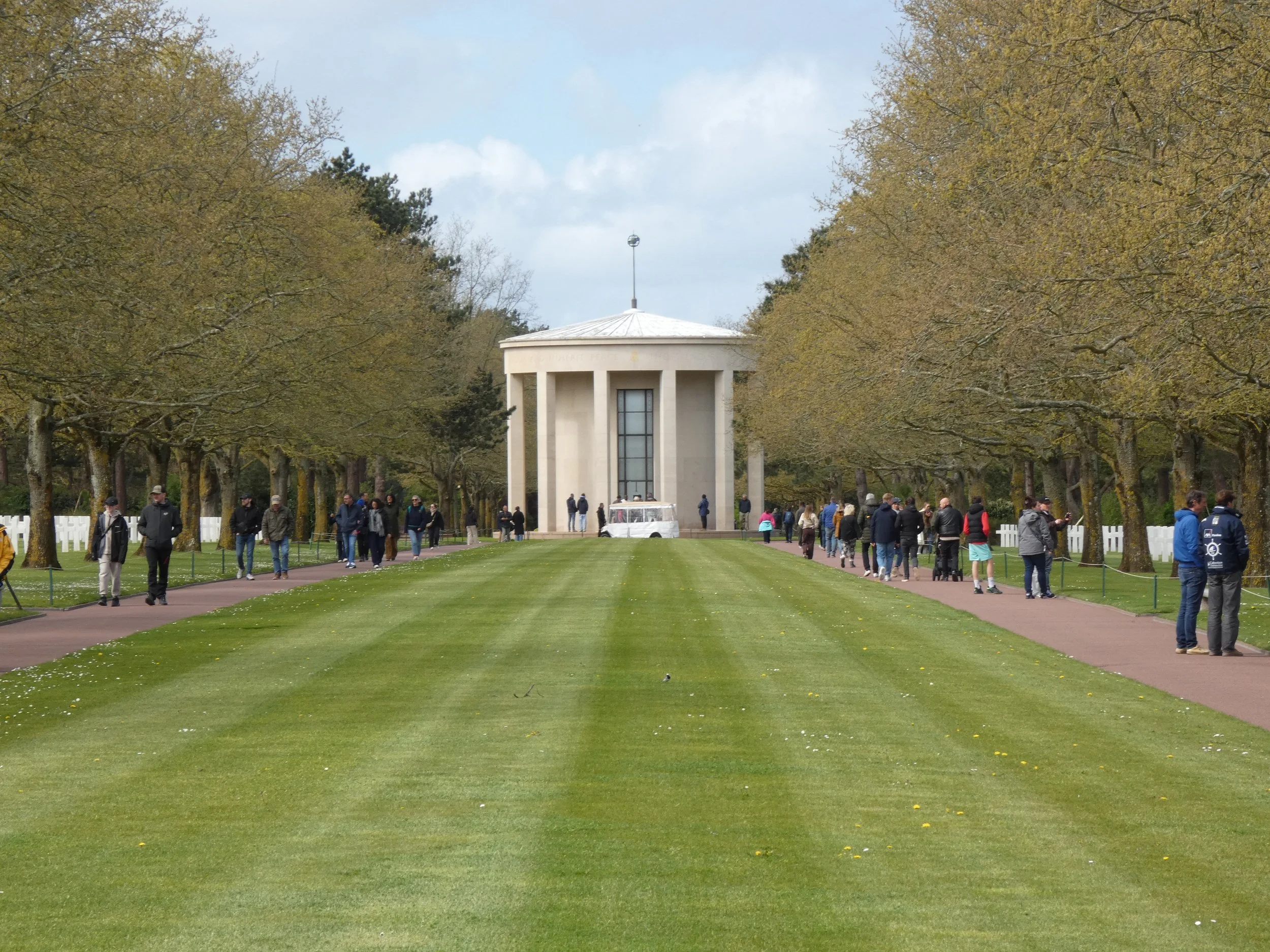
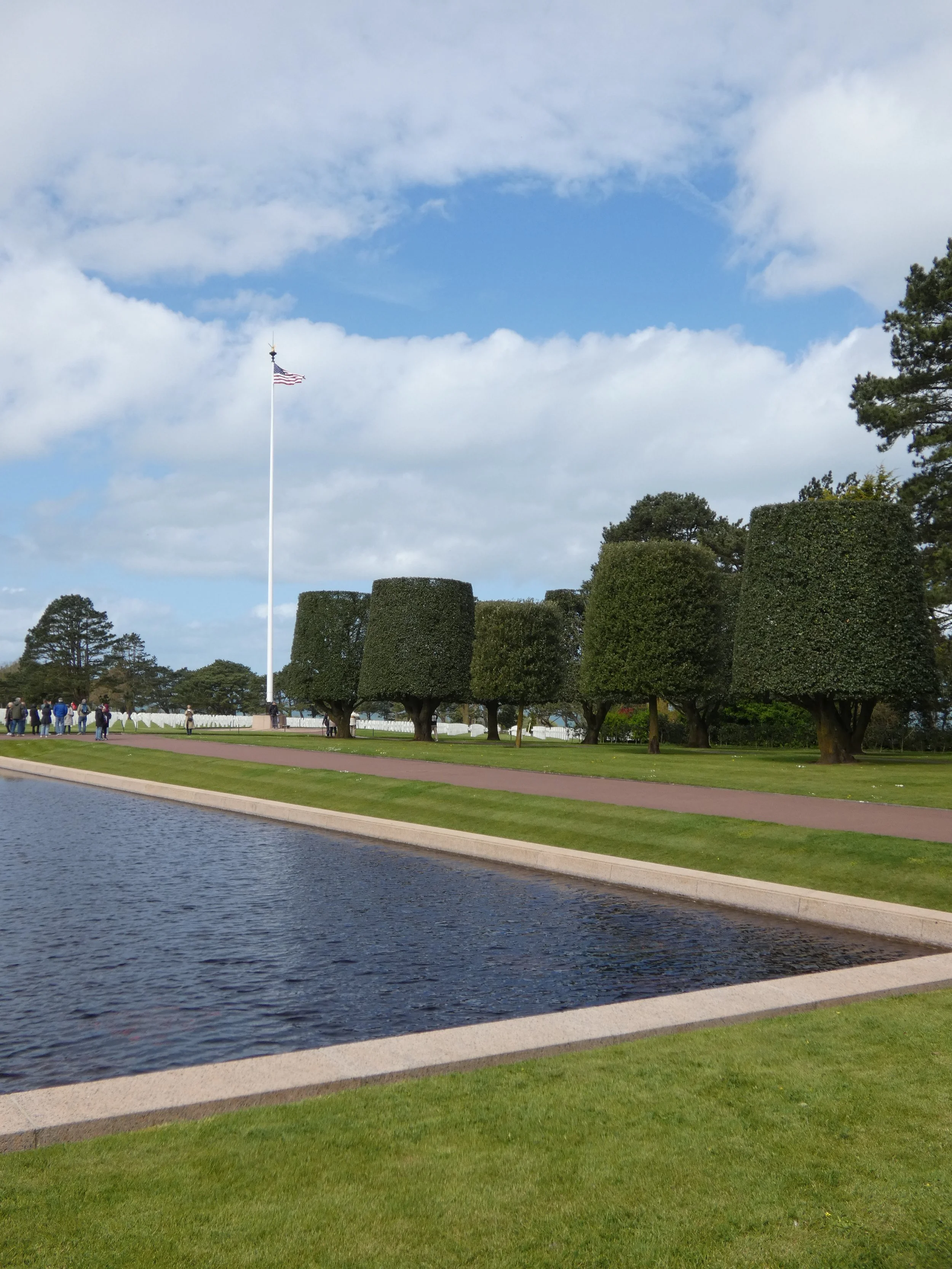
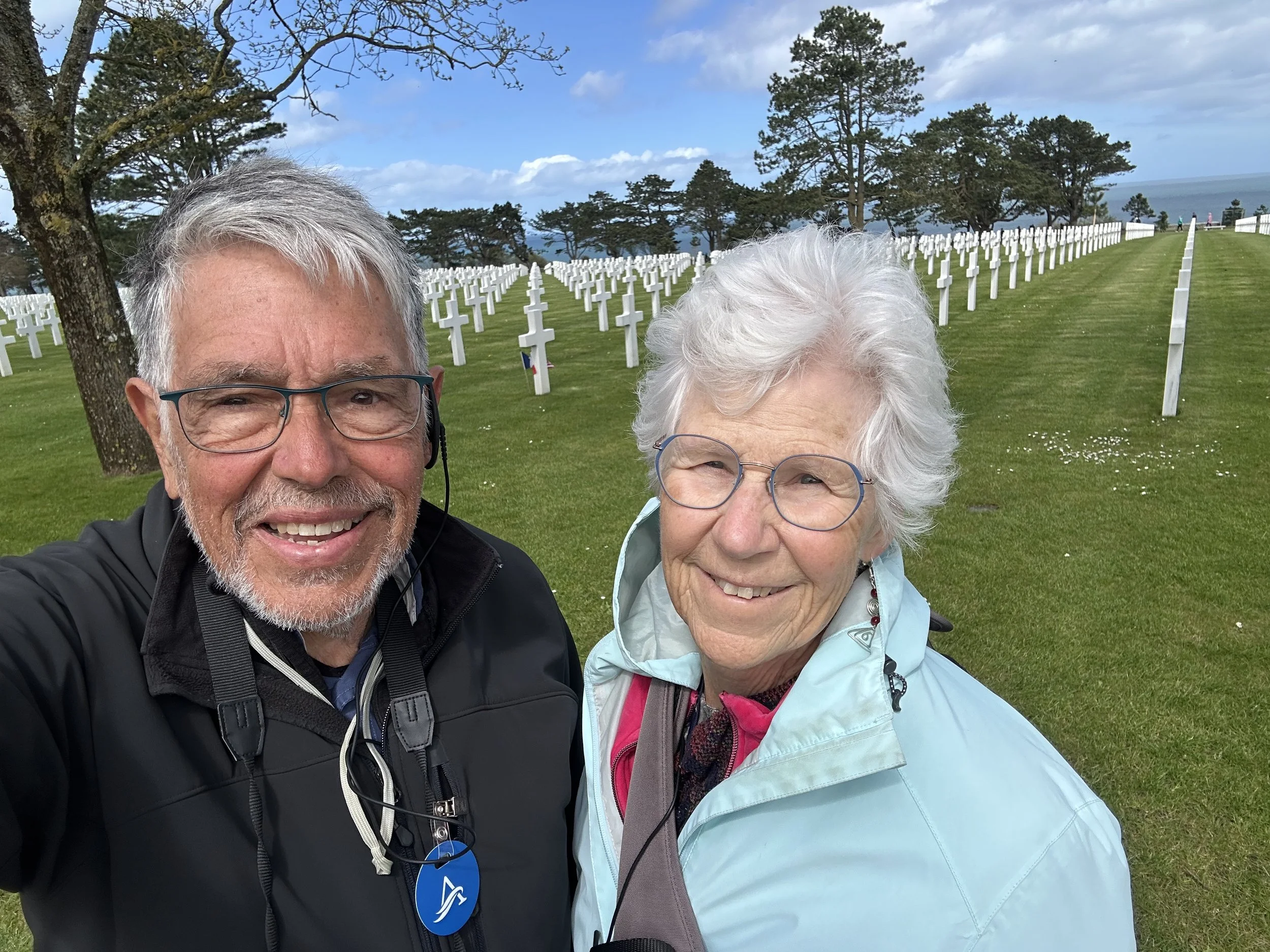
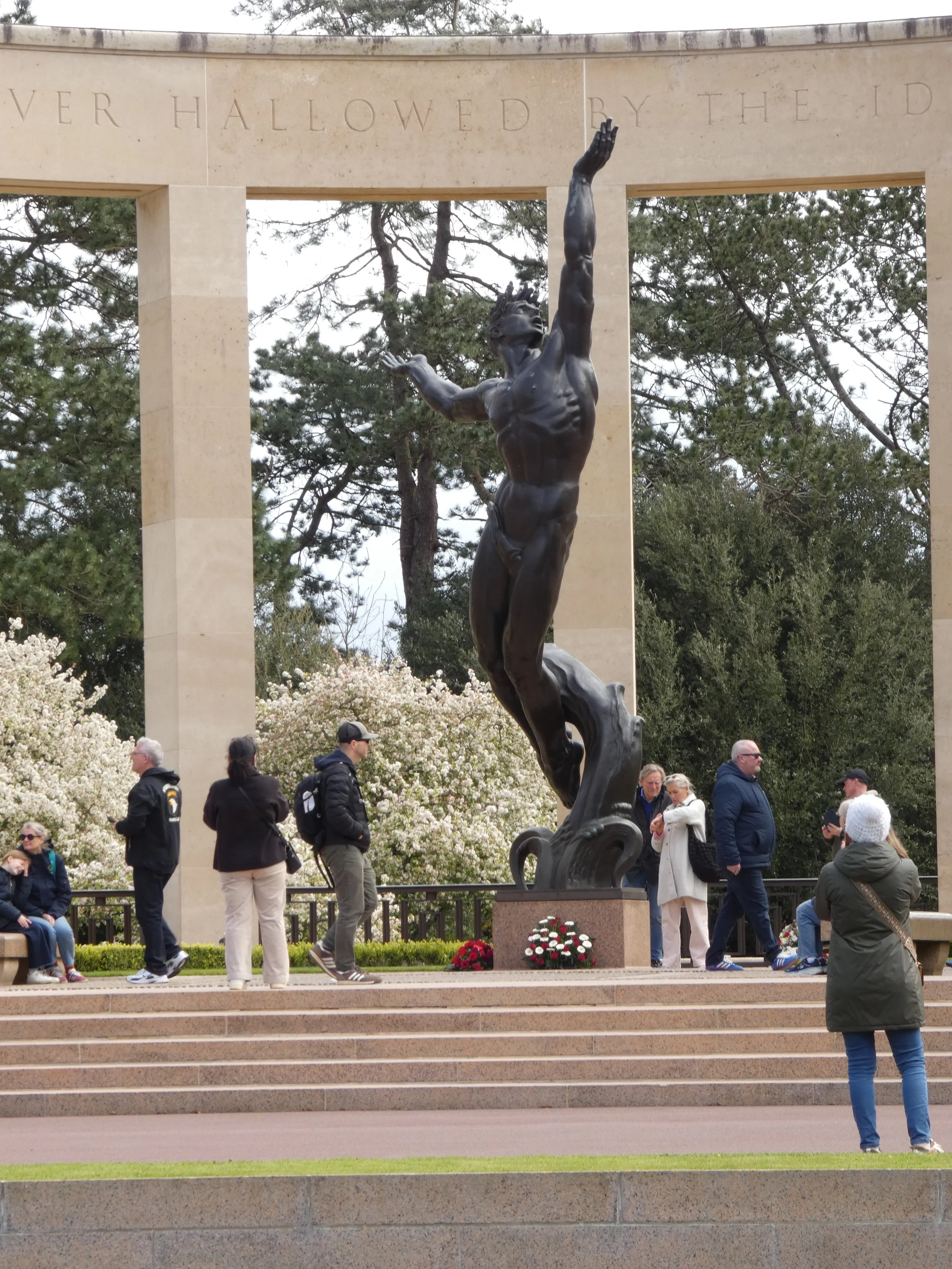
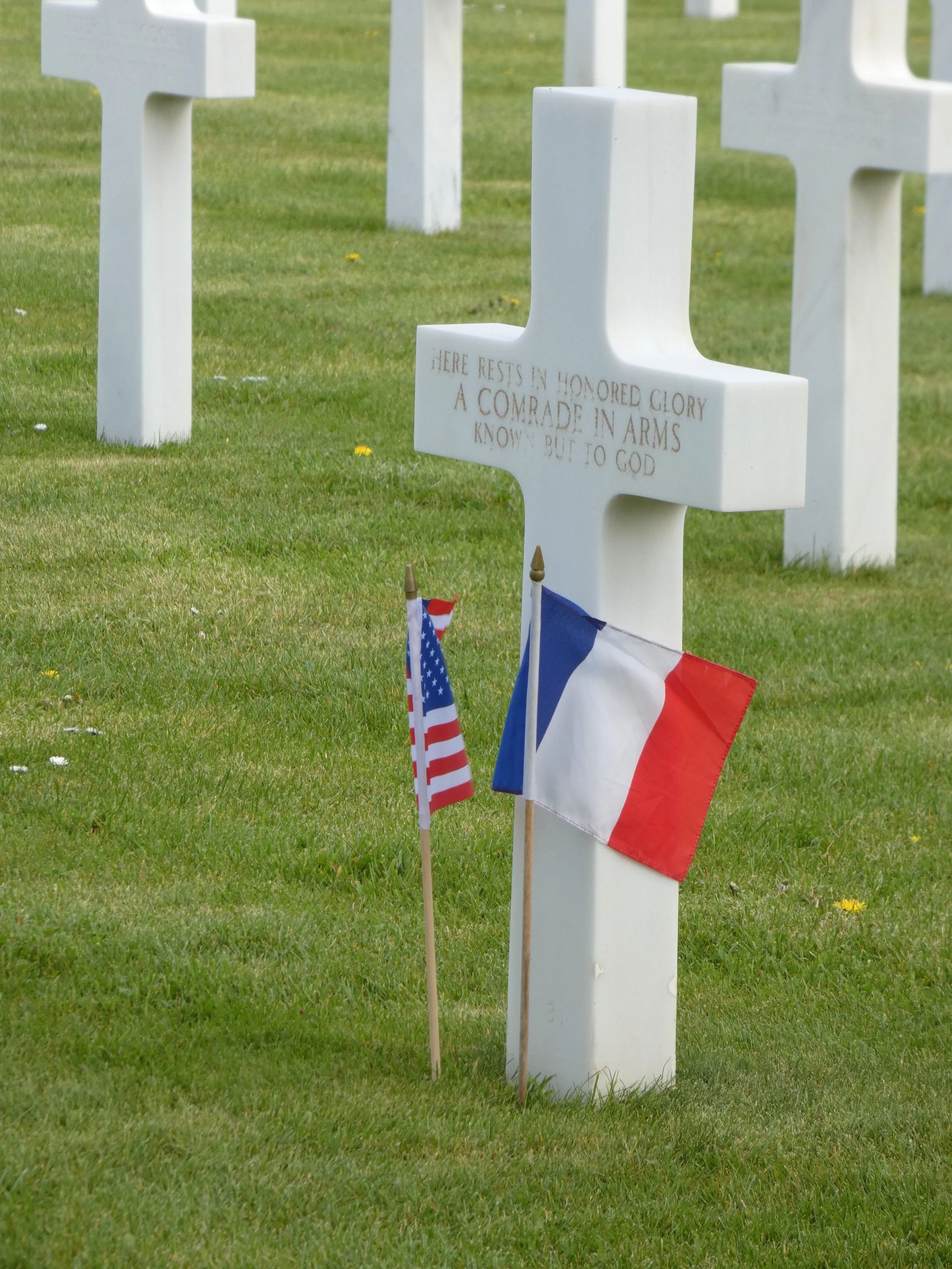
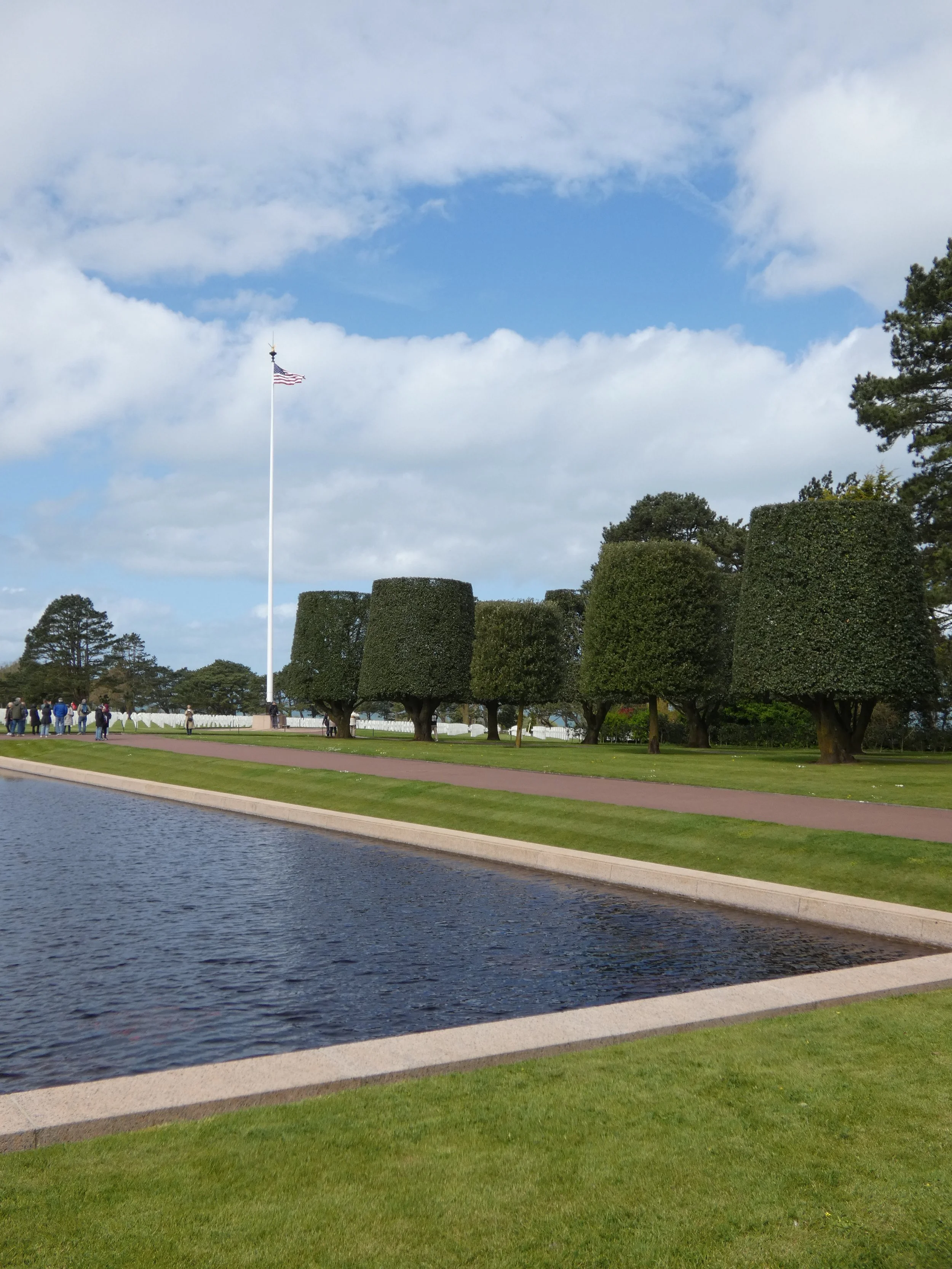
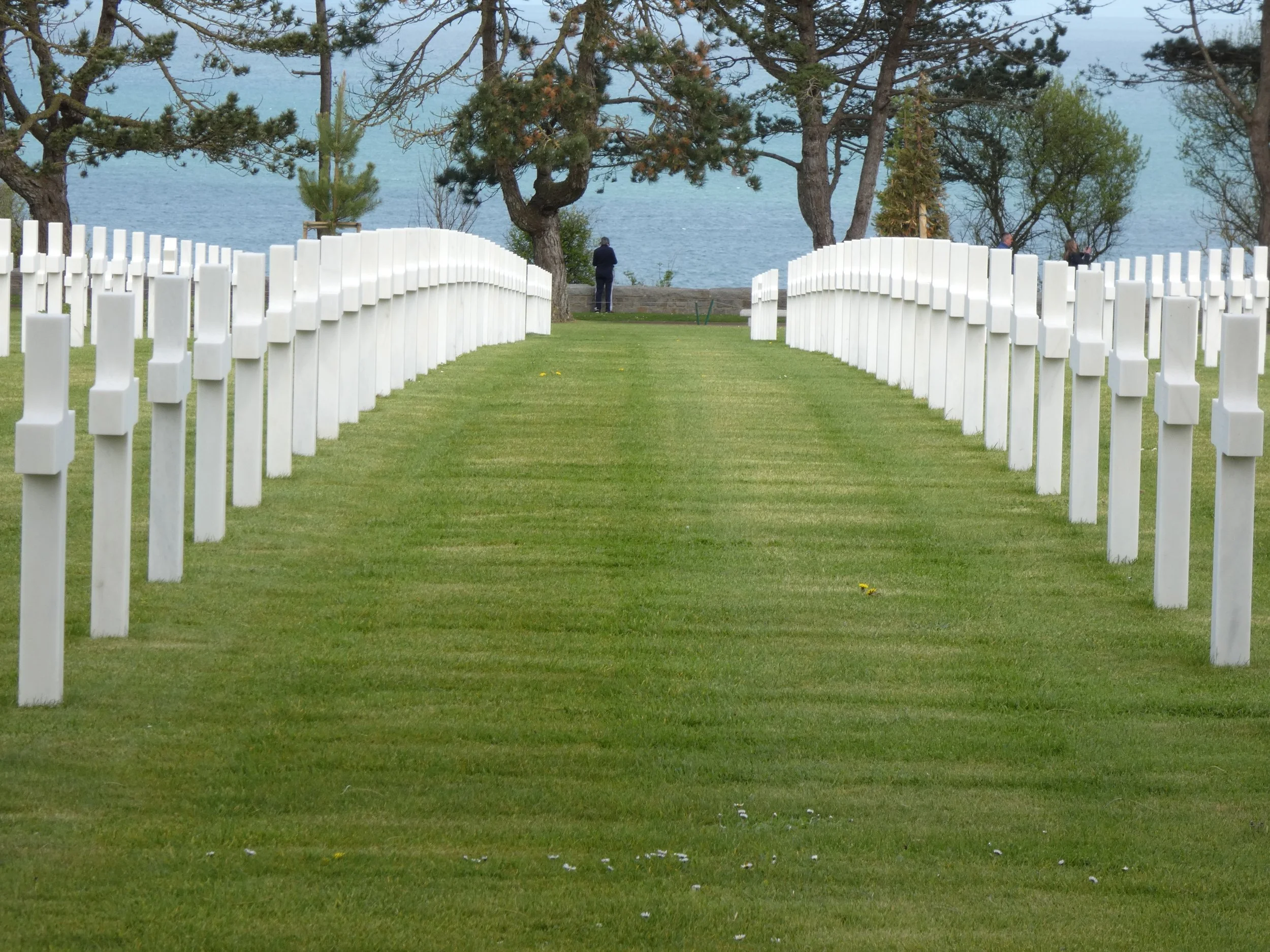
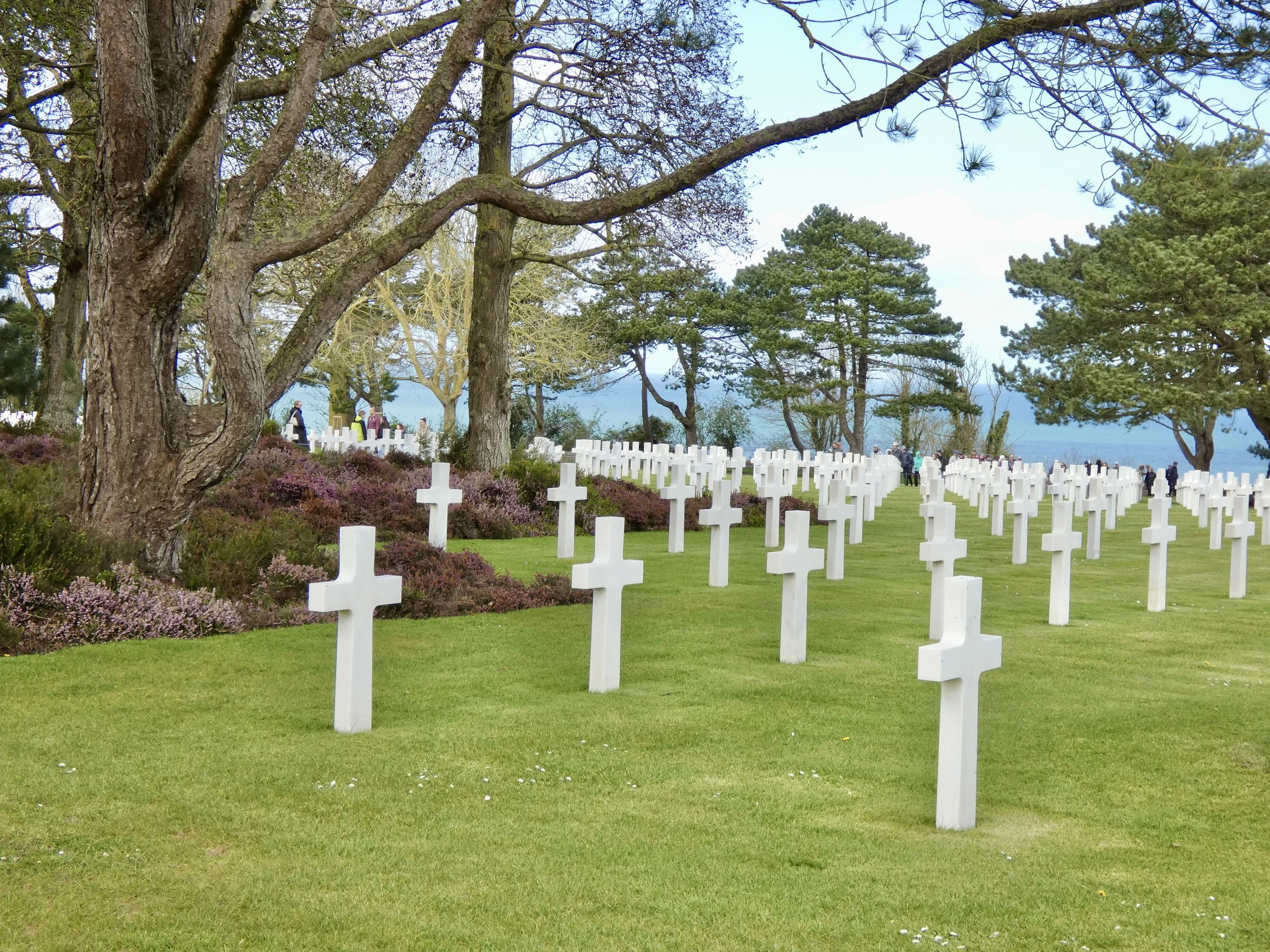
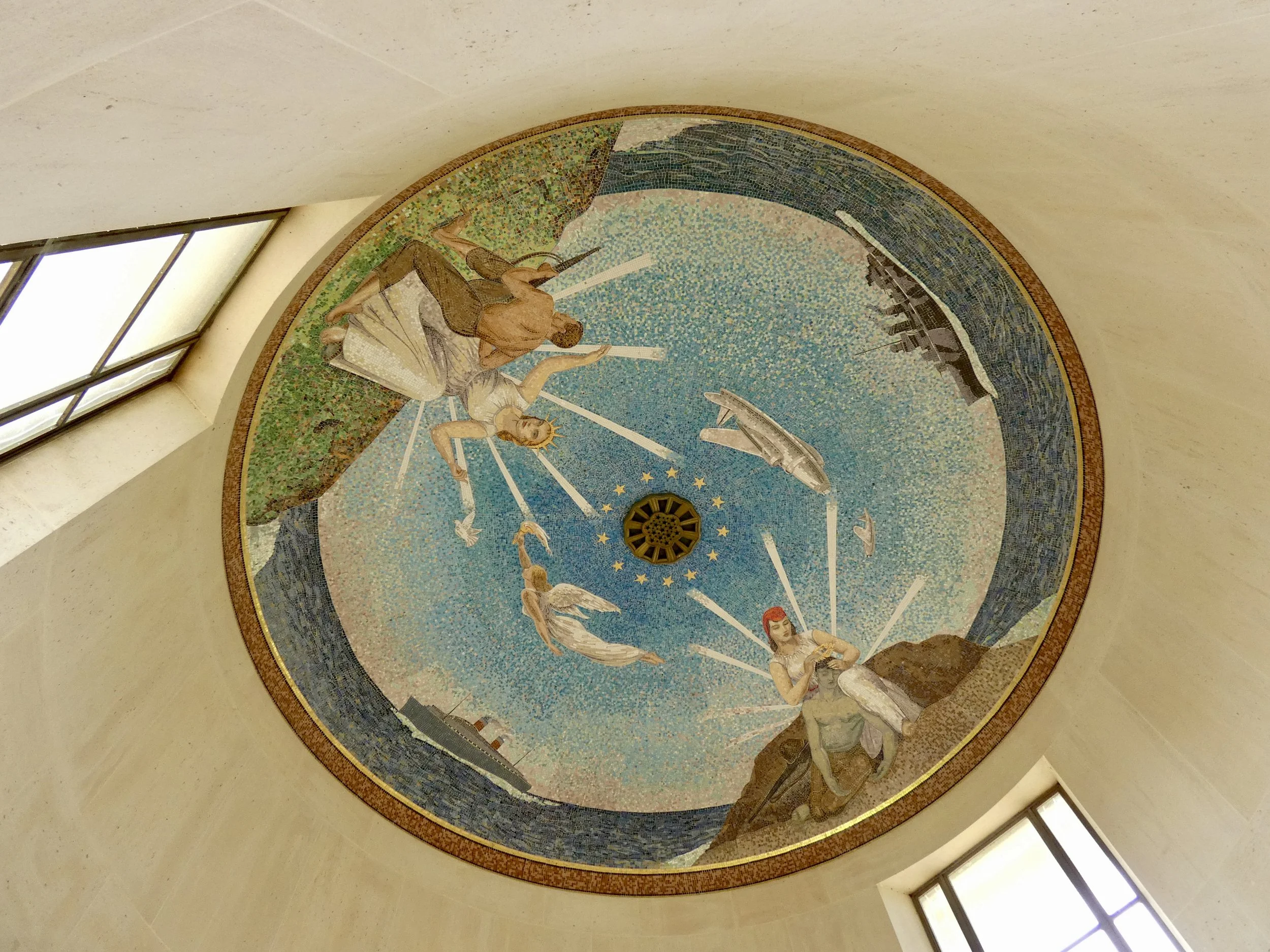
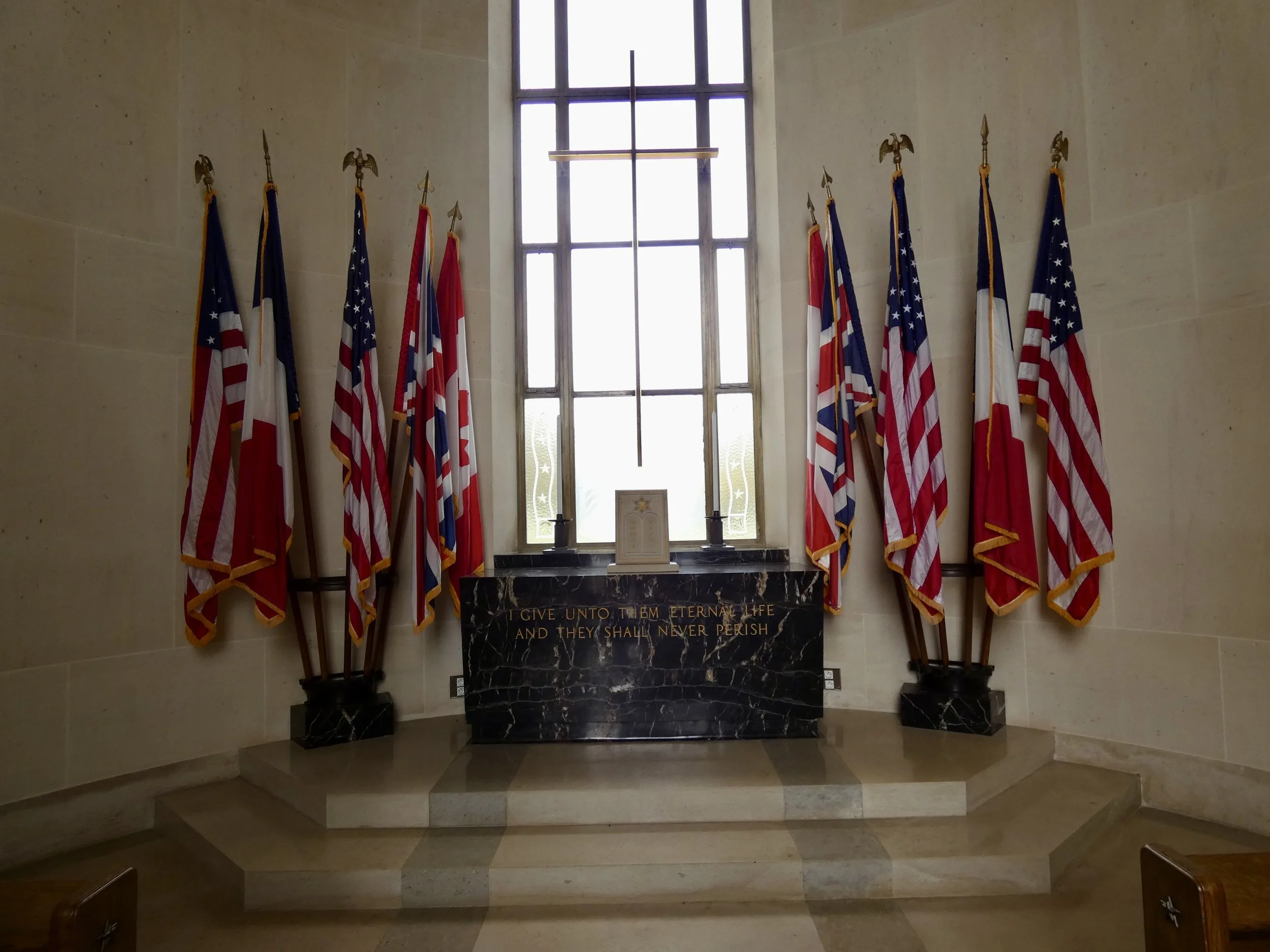
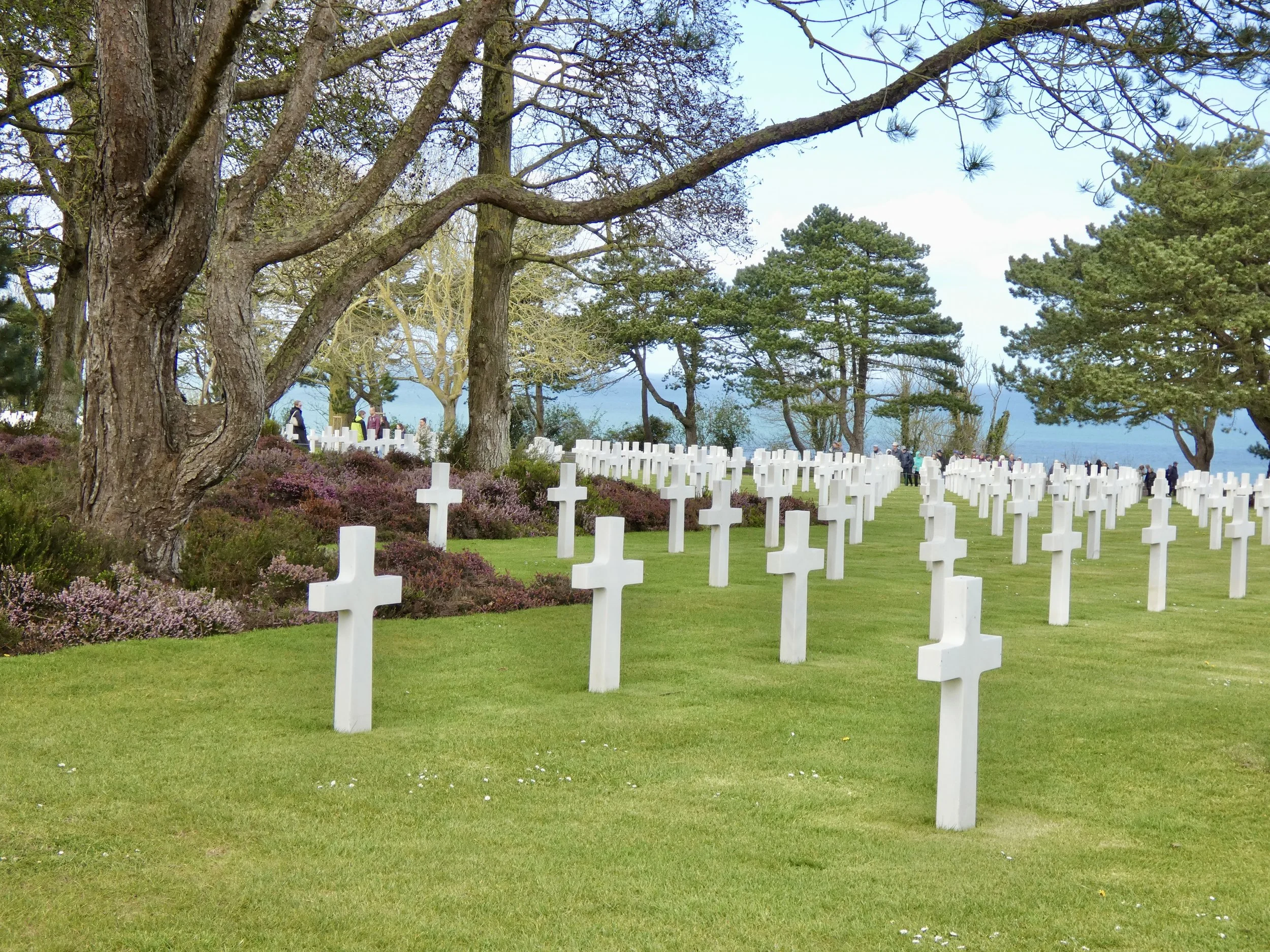
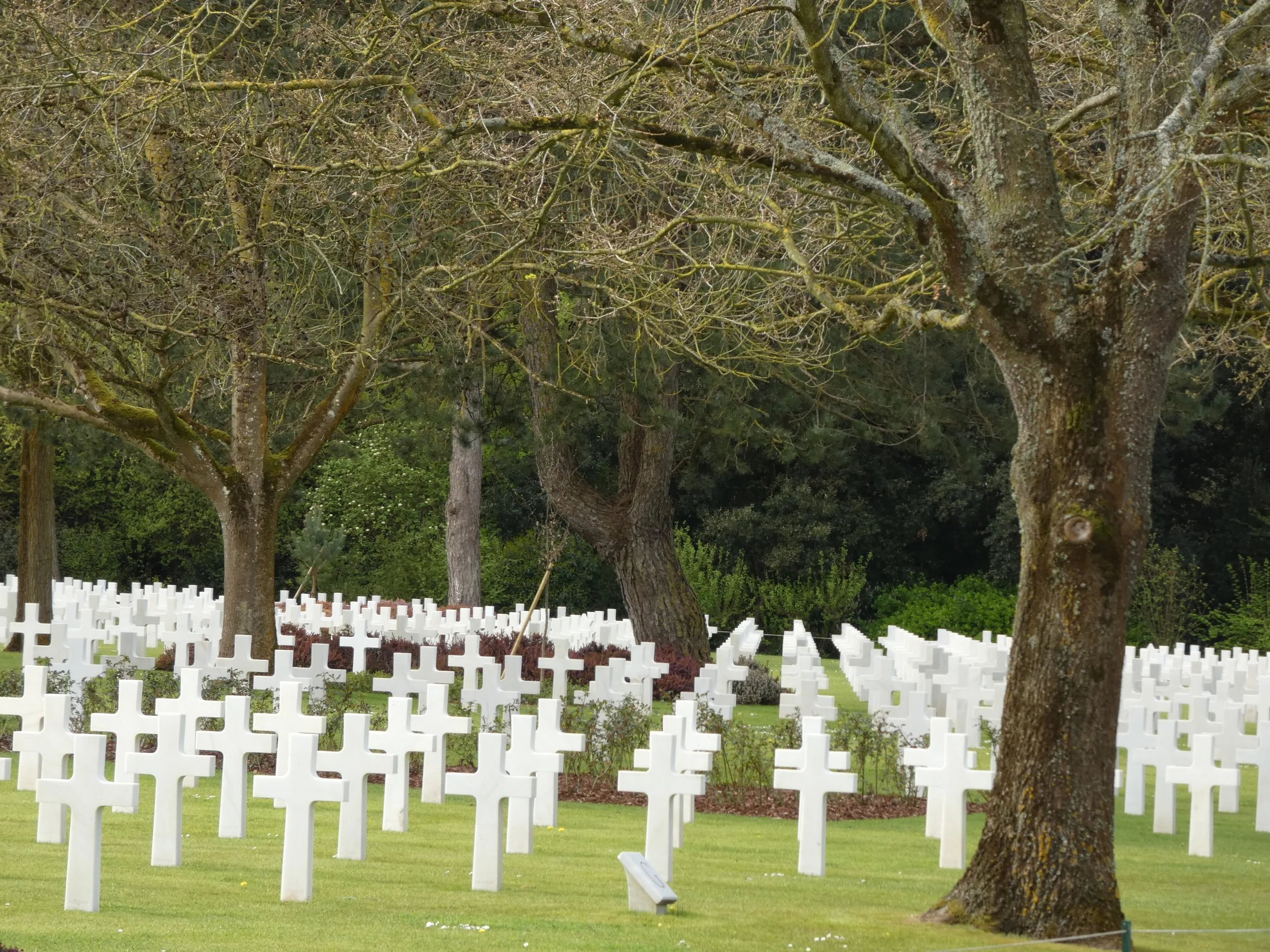
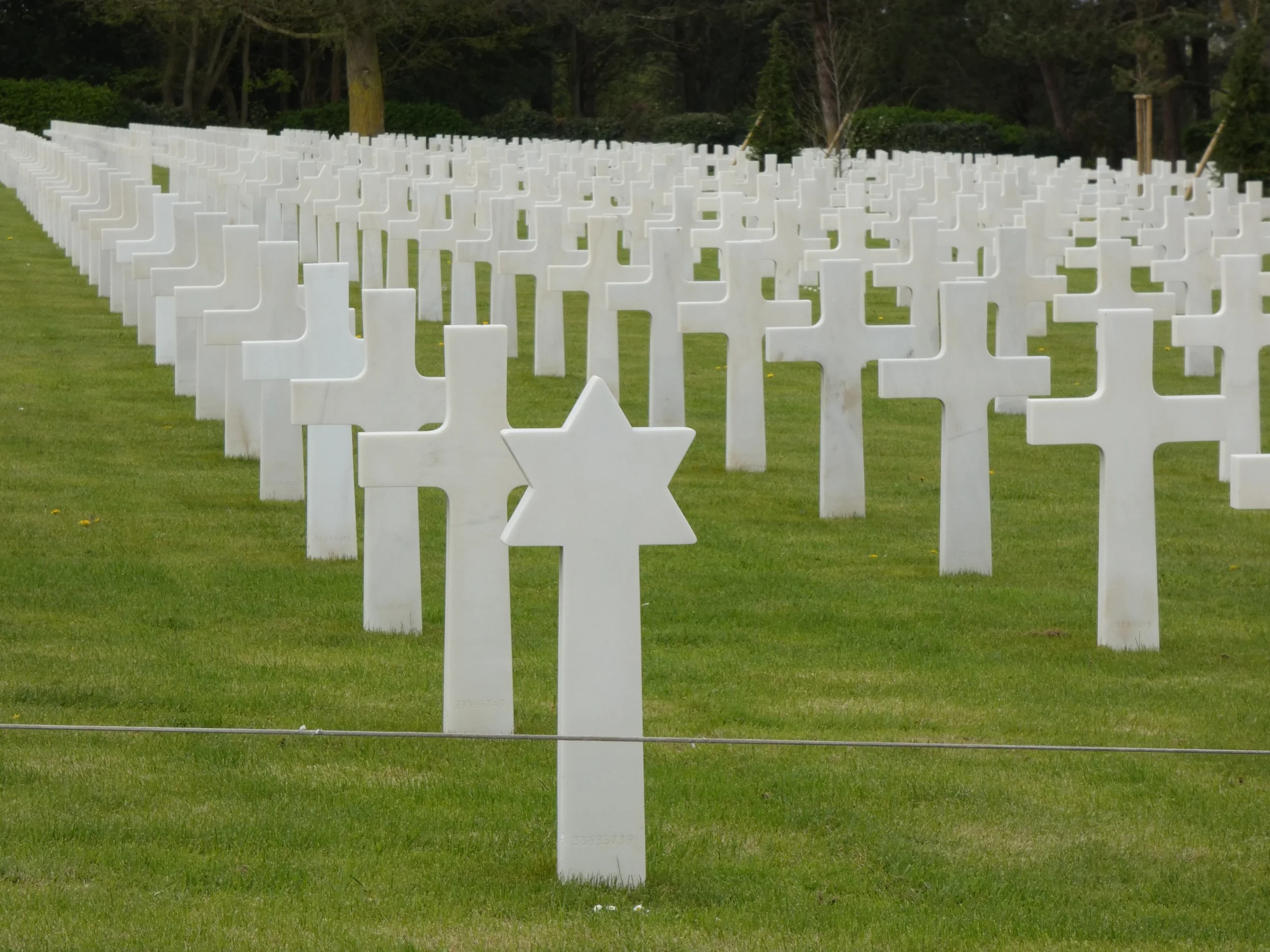
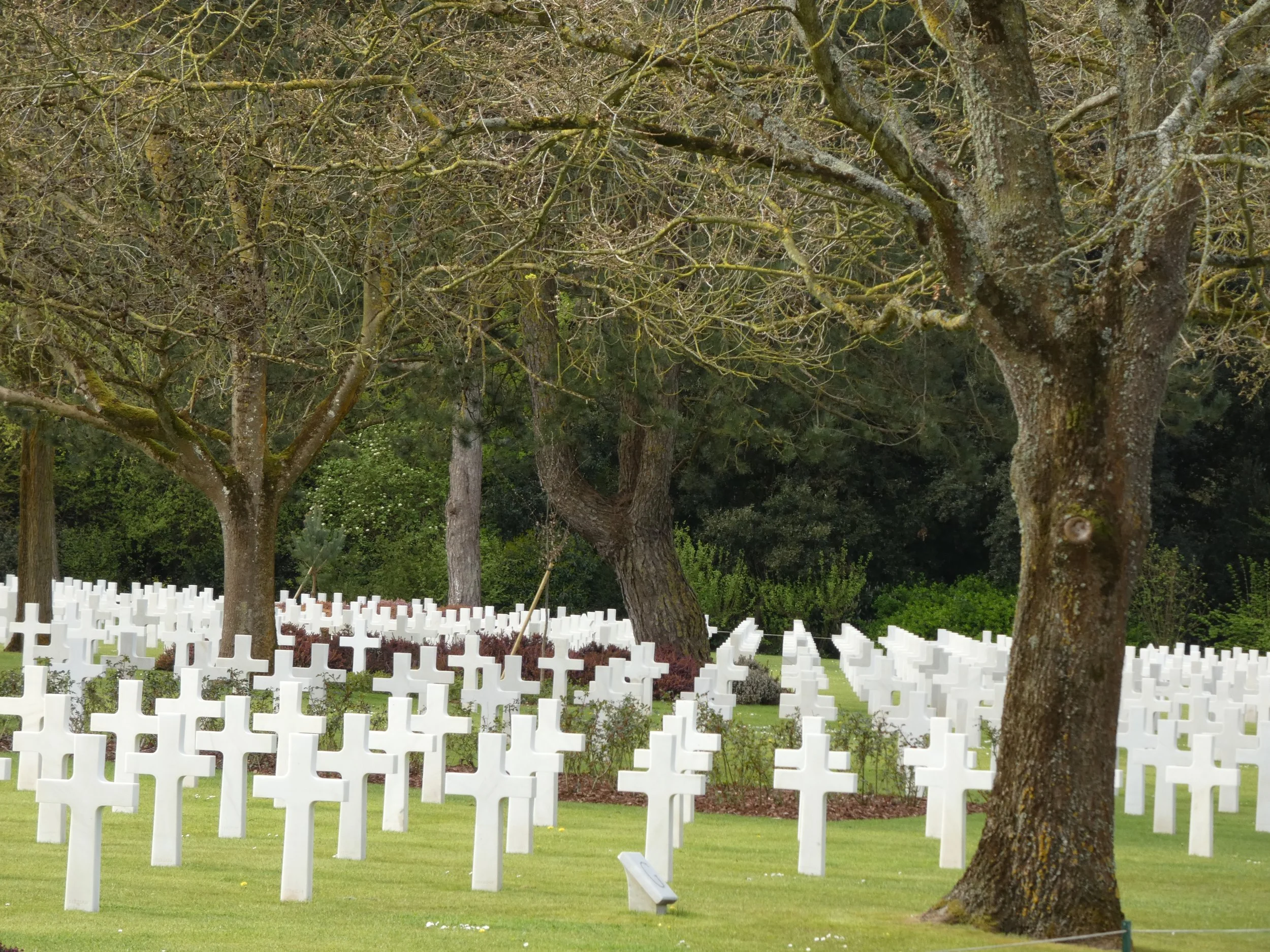
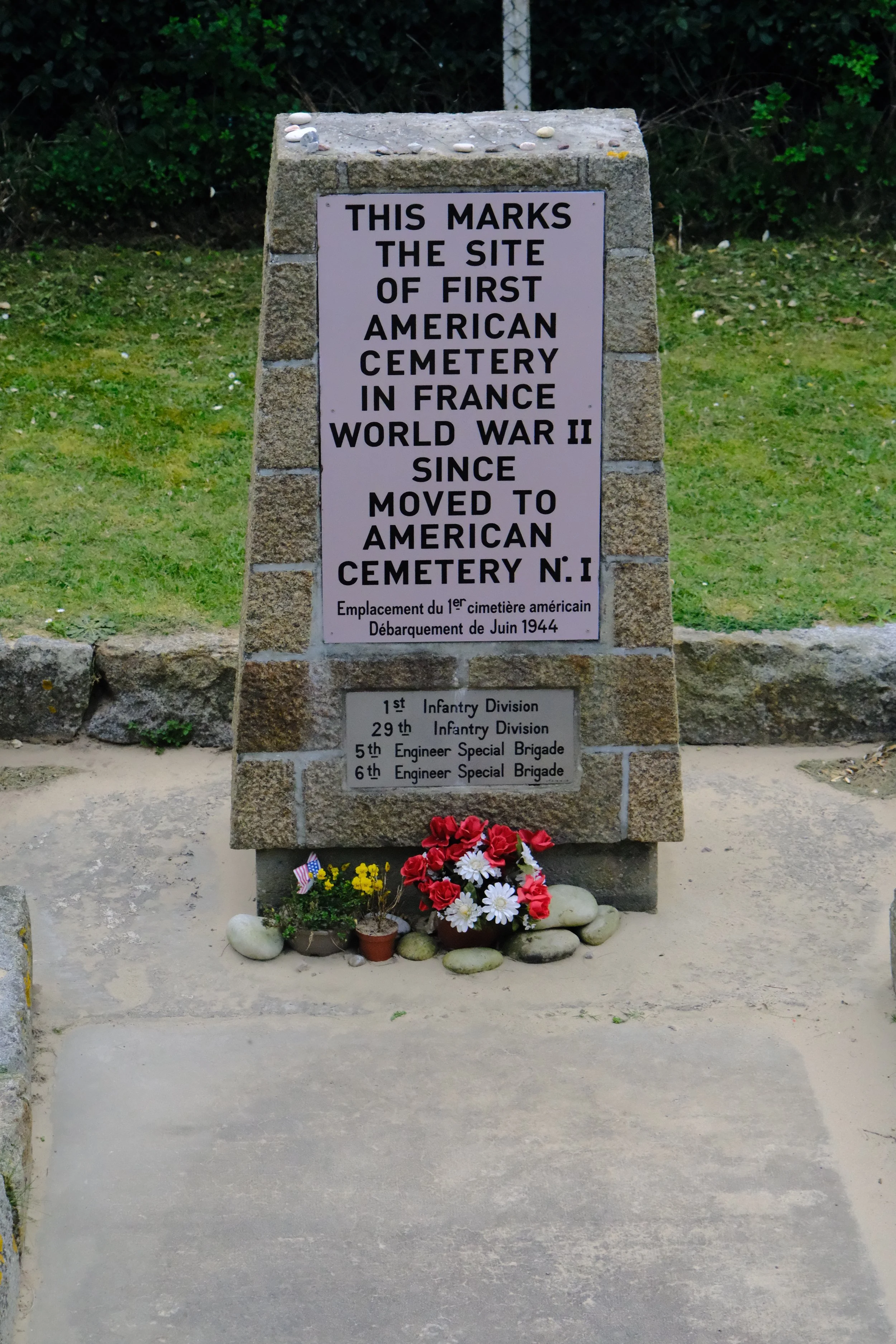
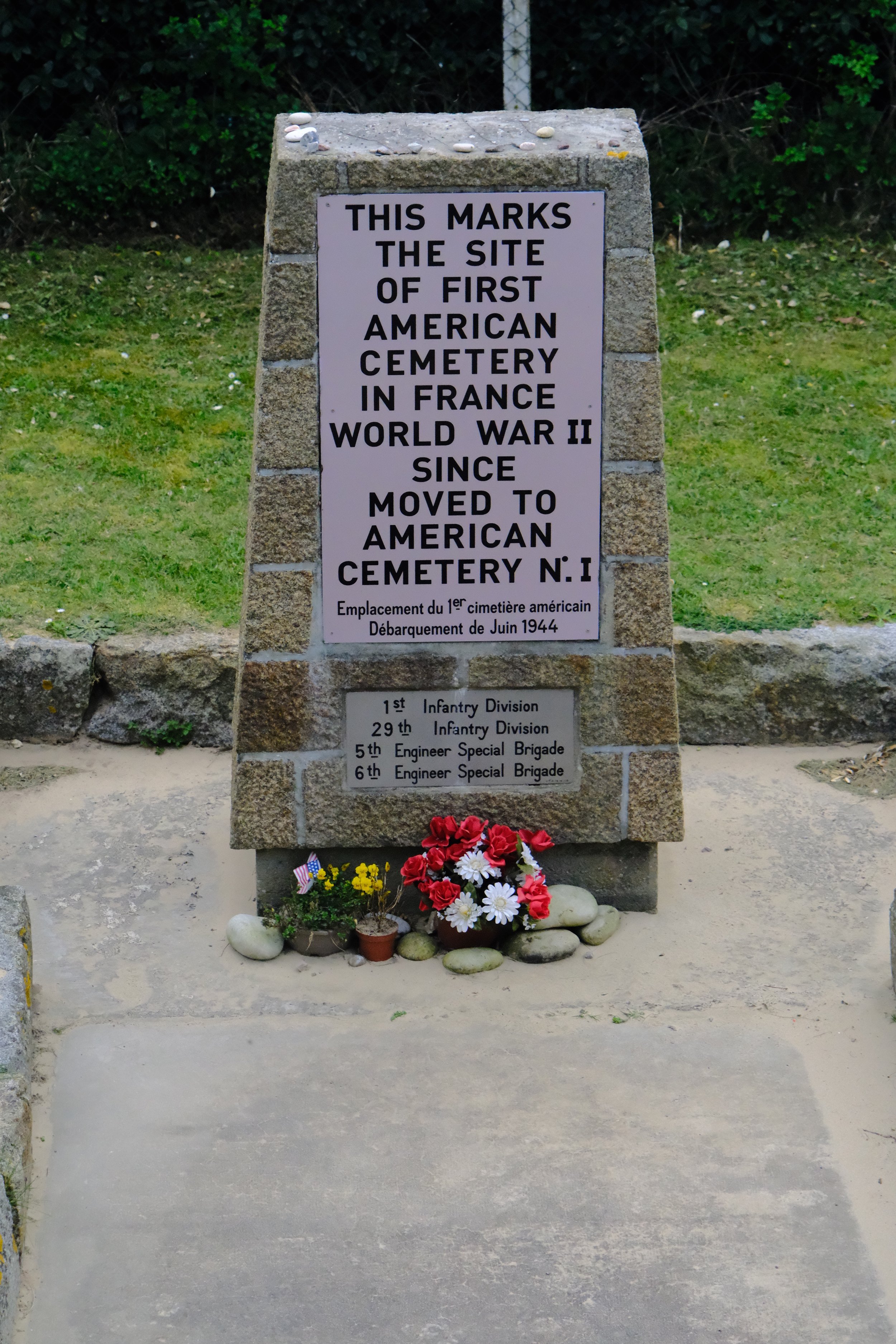
At home we have a picture of Reagan wandering through the crosses at the American cemetery. This time we learned that the almost 10,000 soldiers buried there are about 40% of the total. The rest were repatriated. All Commonwealth dead were buried in France.
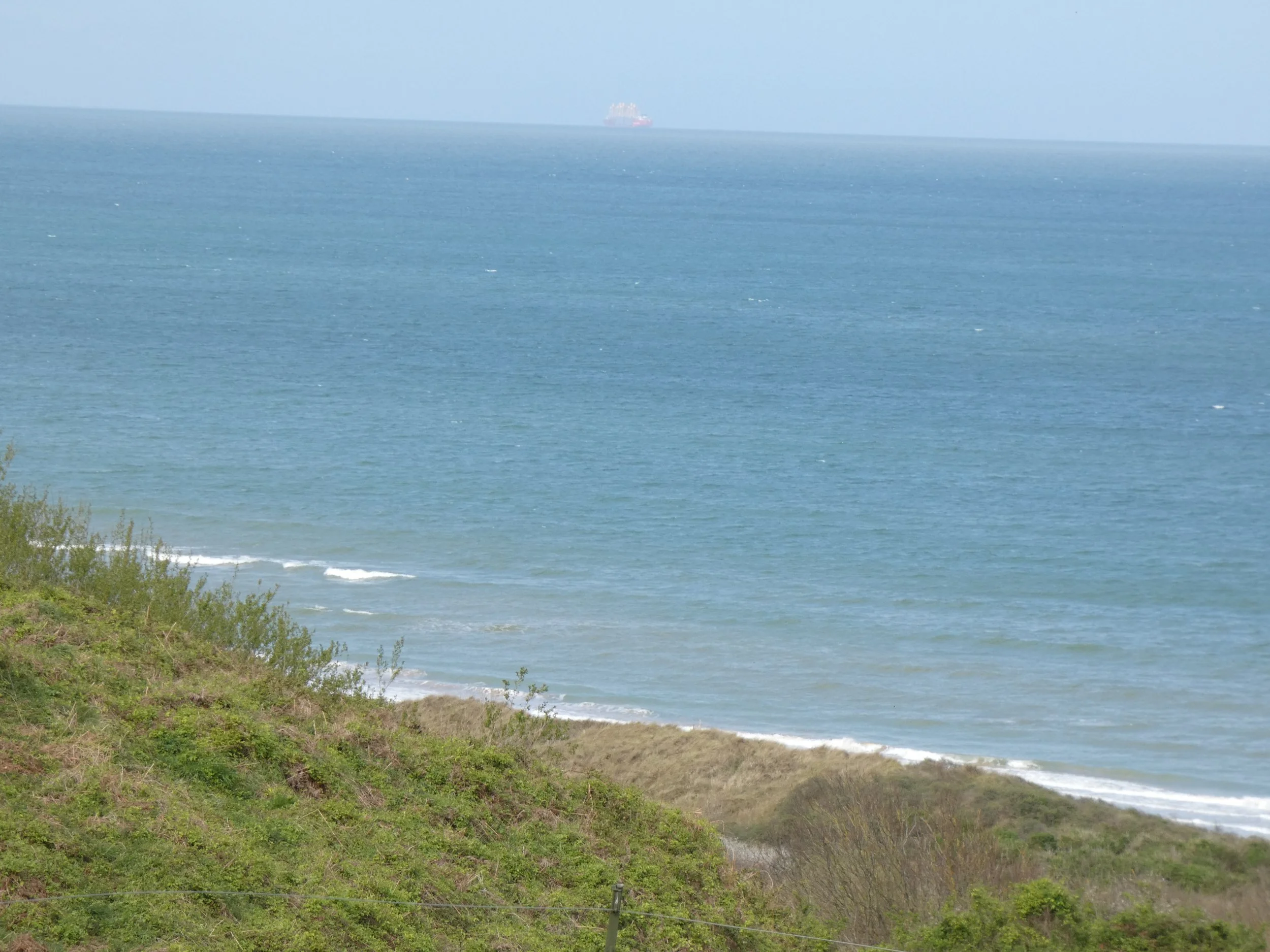
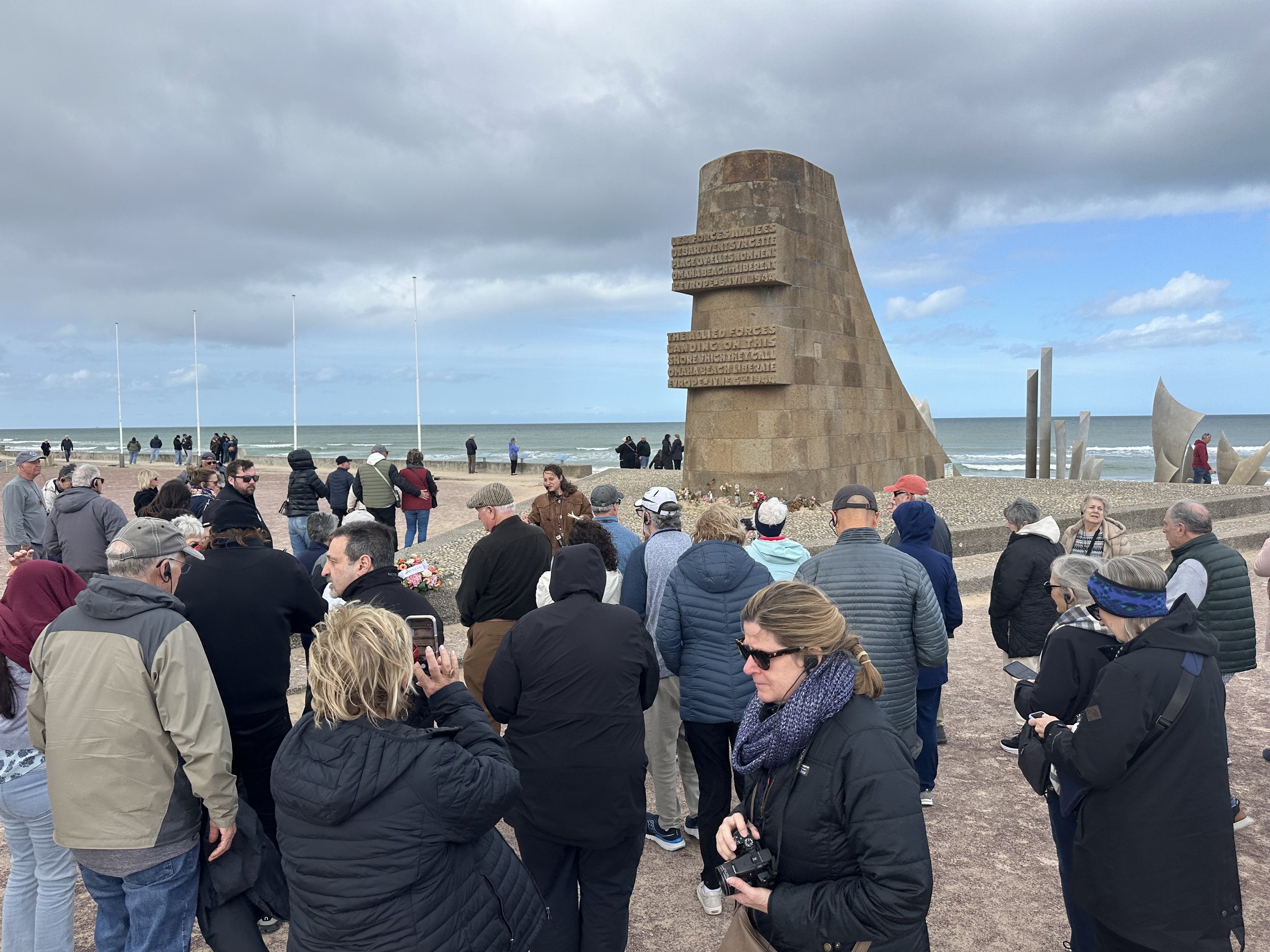
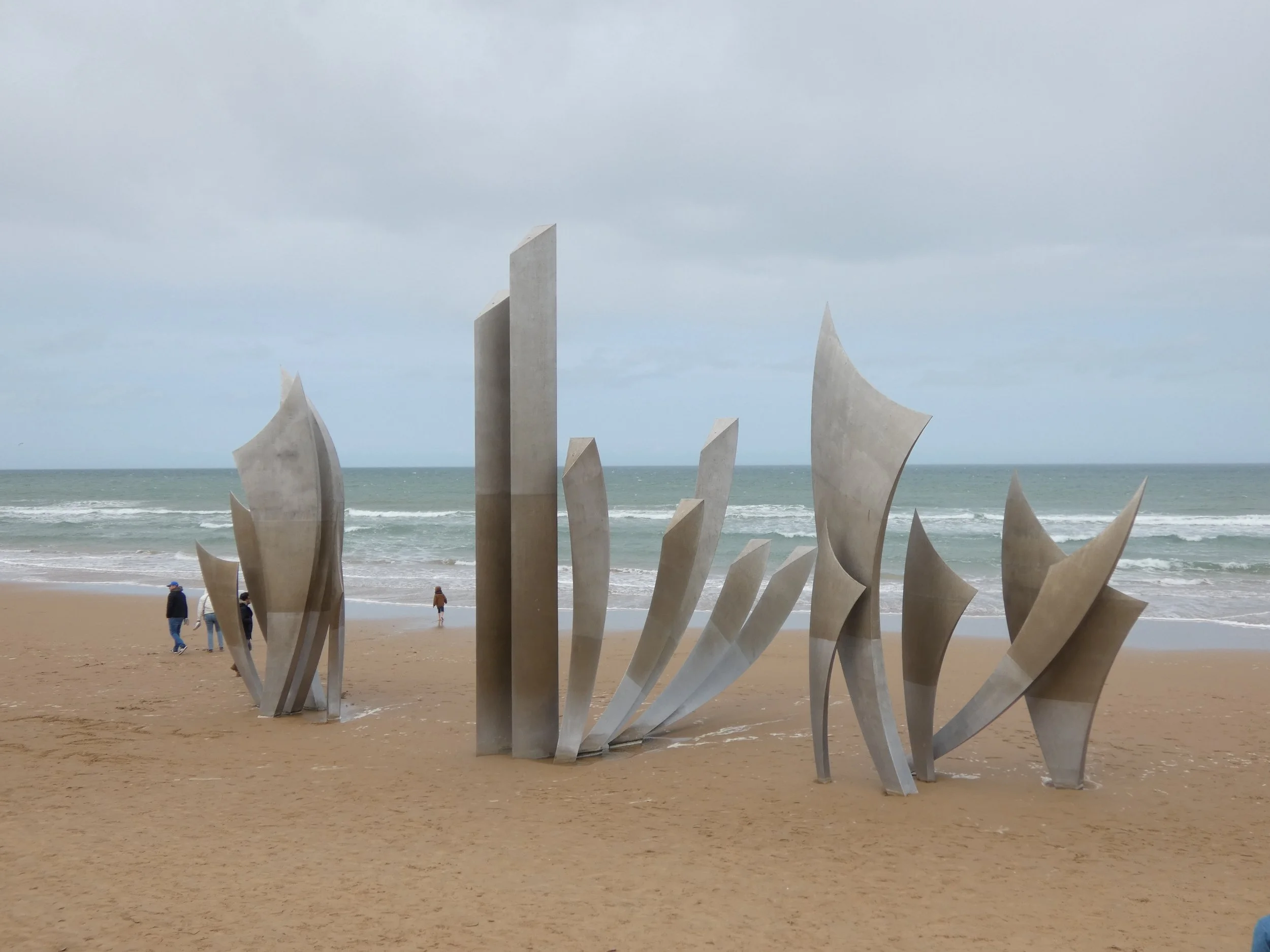
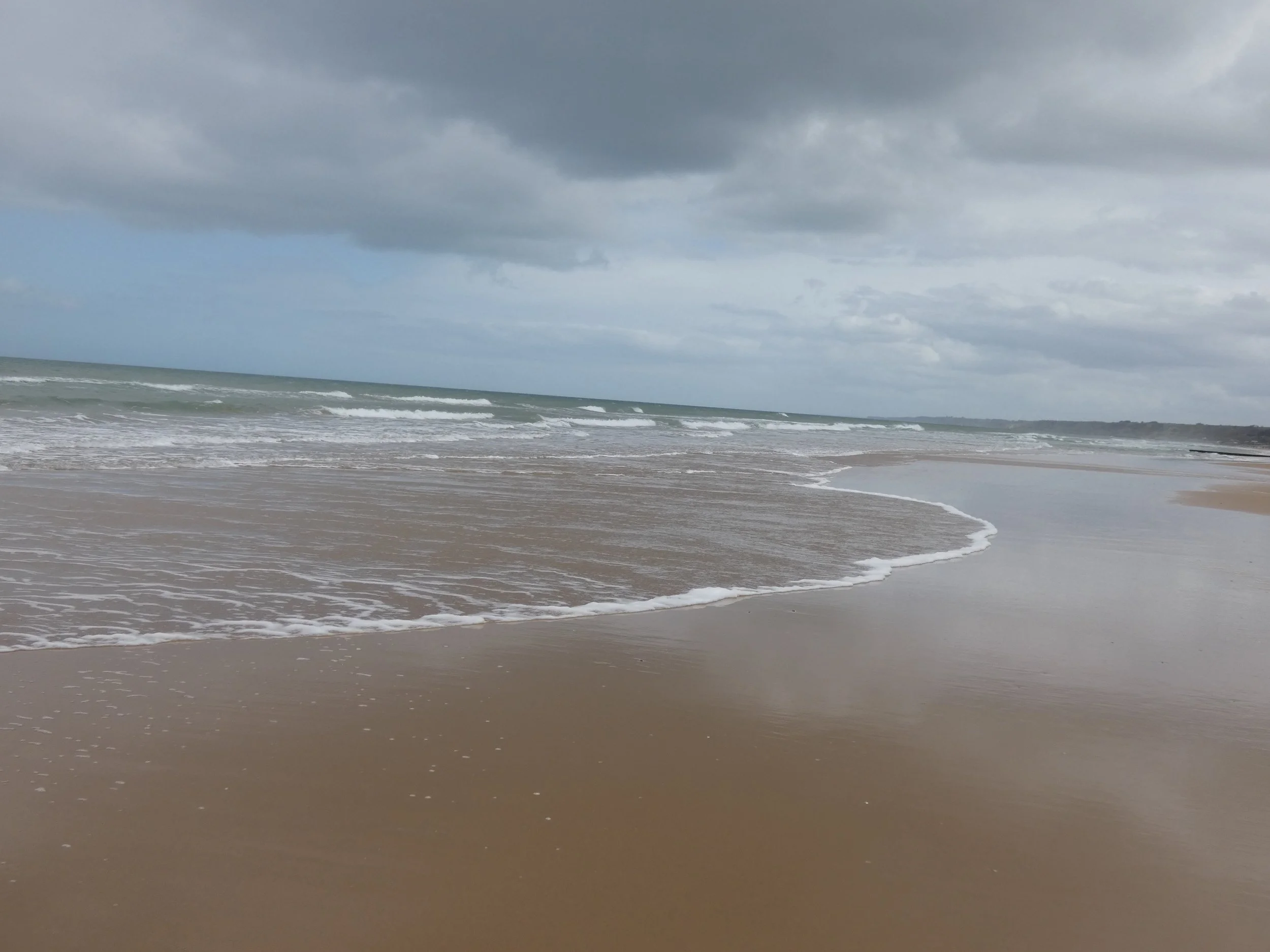
And at Omaha beach we remember walking on the sand and getting our feet wet in the surf. Because it was July, there were lots of sun bathers and swimmers out, just like any resort beach.
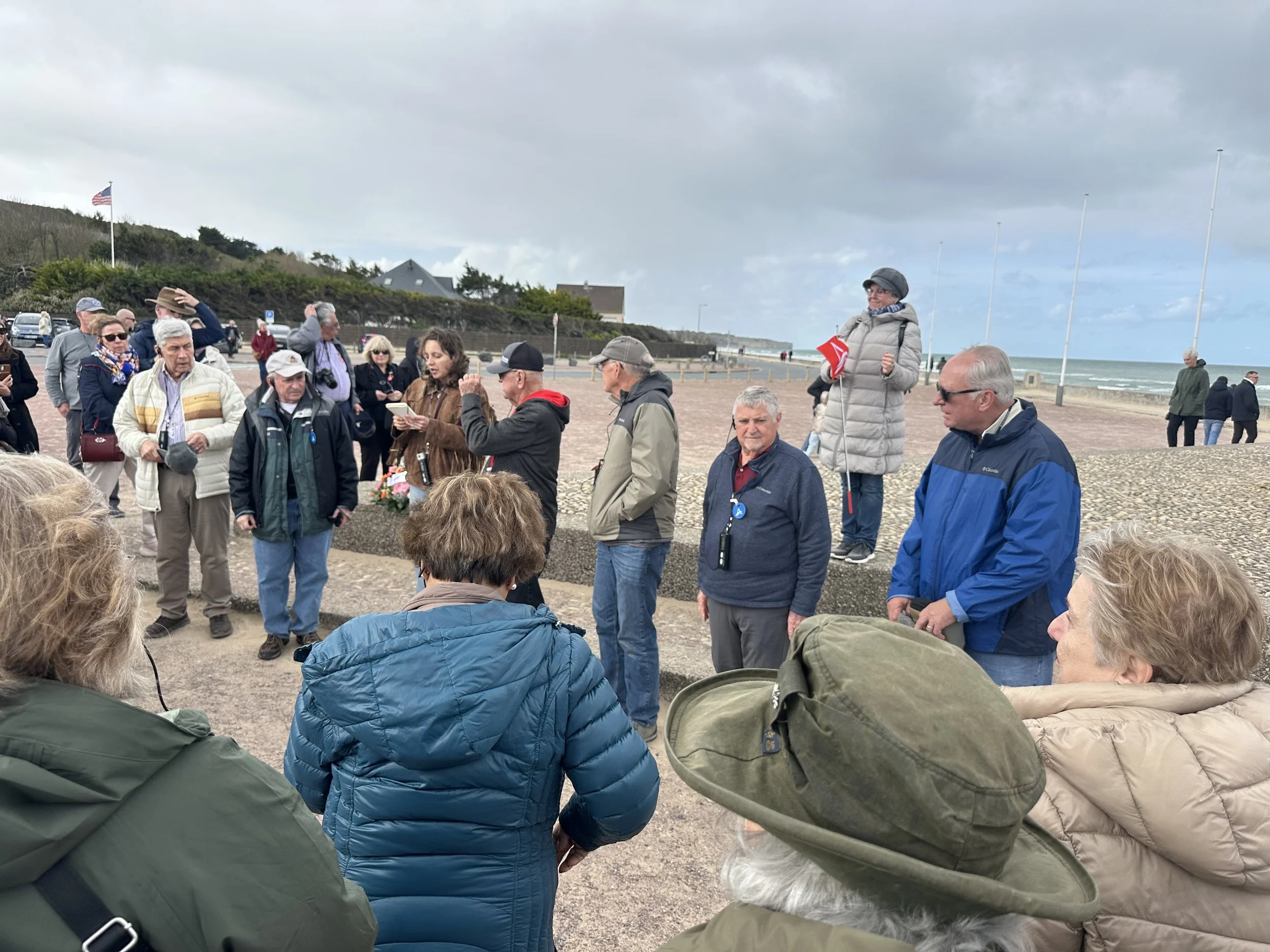
I mentioned that experience to Adele, our guide. She agreed. That it seemed disrespectful of the hundreds who died on that sand not that long ago. “But,” she said, “They died to make it possible for us to enjoy that beach.”
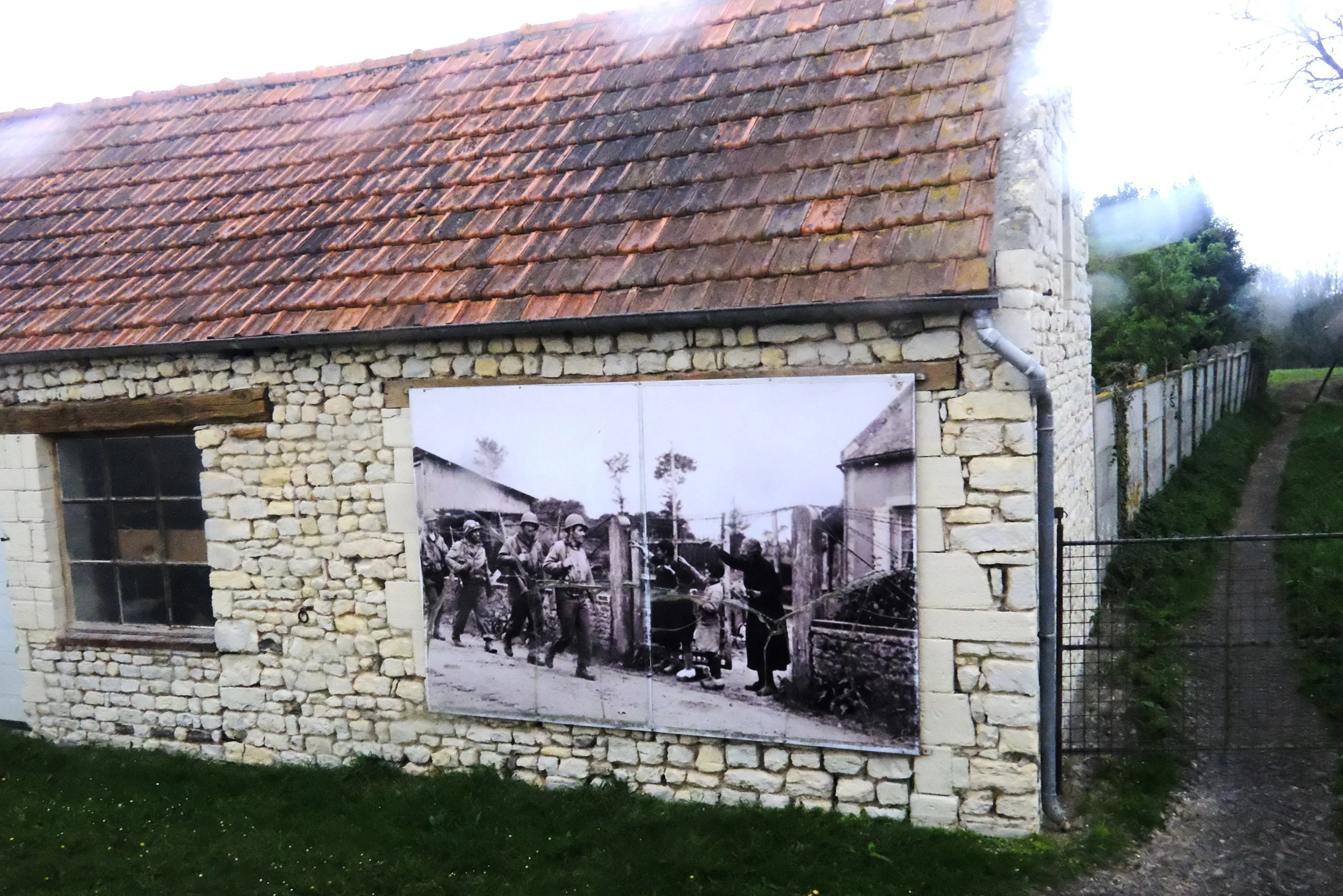
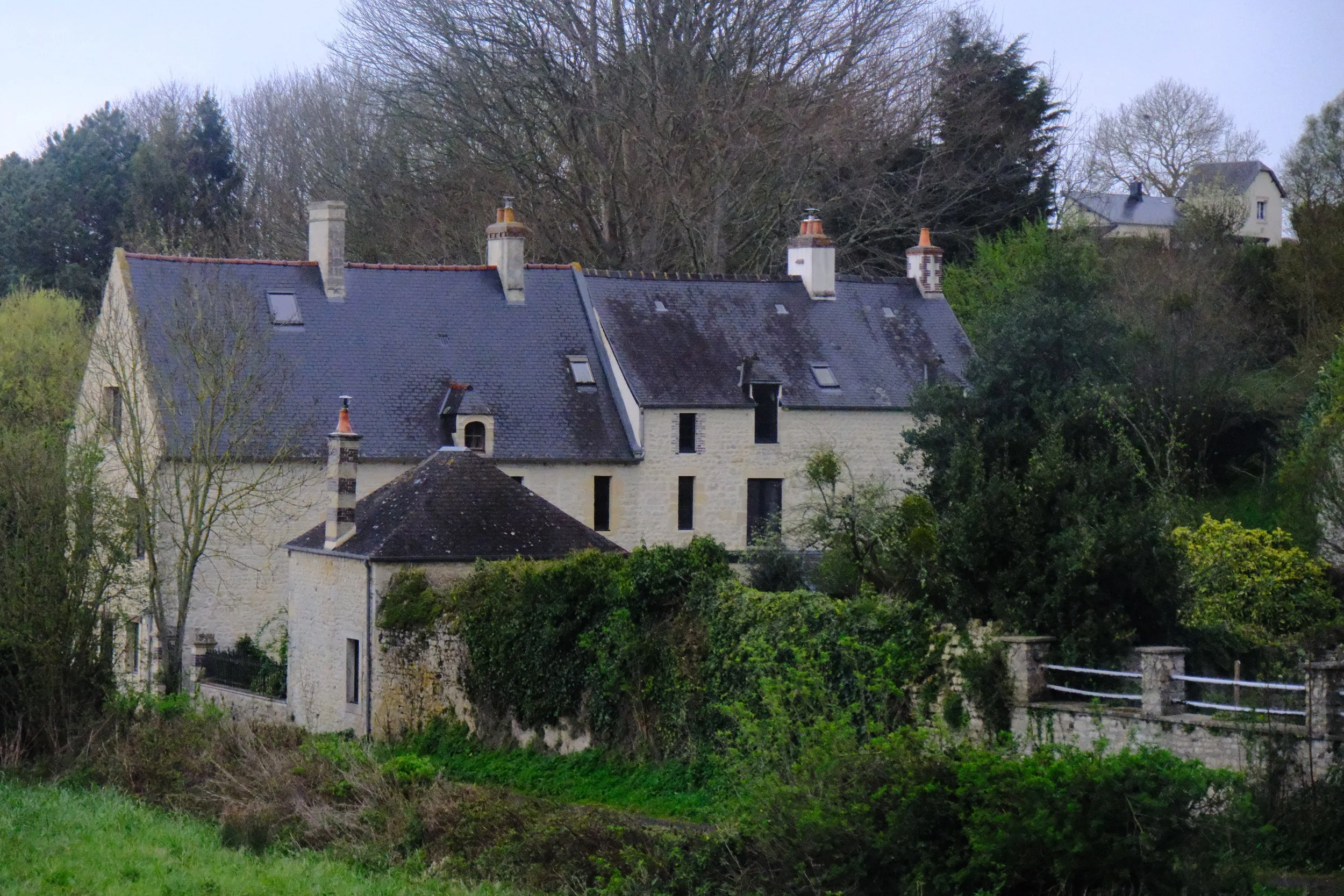
Adele related some family history about D Day. Her grandfather was born in 1942, which, gasp, makes me old enough to be her grandfather. He told Adele of his parents who were forced to put up a German lieutenant in their house for four years. The father was taken into custody by the Gespato. Seems he had dug outposts the Germans had planted in his fields to thwart Allied paratroopers and gliders – Rommel’s Spears they were called . He acted not as a member of the resistance but as an irate farmer. The results of his action could have been dire, but the lieutenant spoke on his behalf and he was released. They hadn’t formed a friendship but certainly a level of respect.
Her grandfather, two years old at the time of D Day, had a serious lung infection. He was treated with antibiotics brought to Normandie by the Allies. Today he’s allergic to penicillin but back then it saved his life.
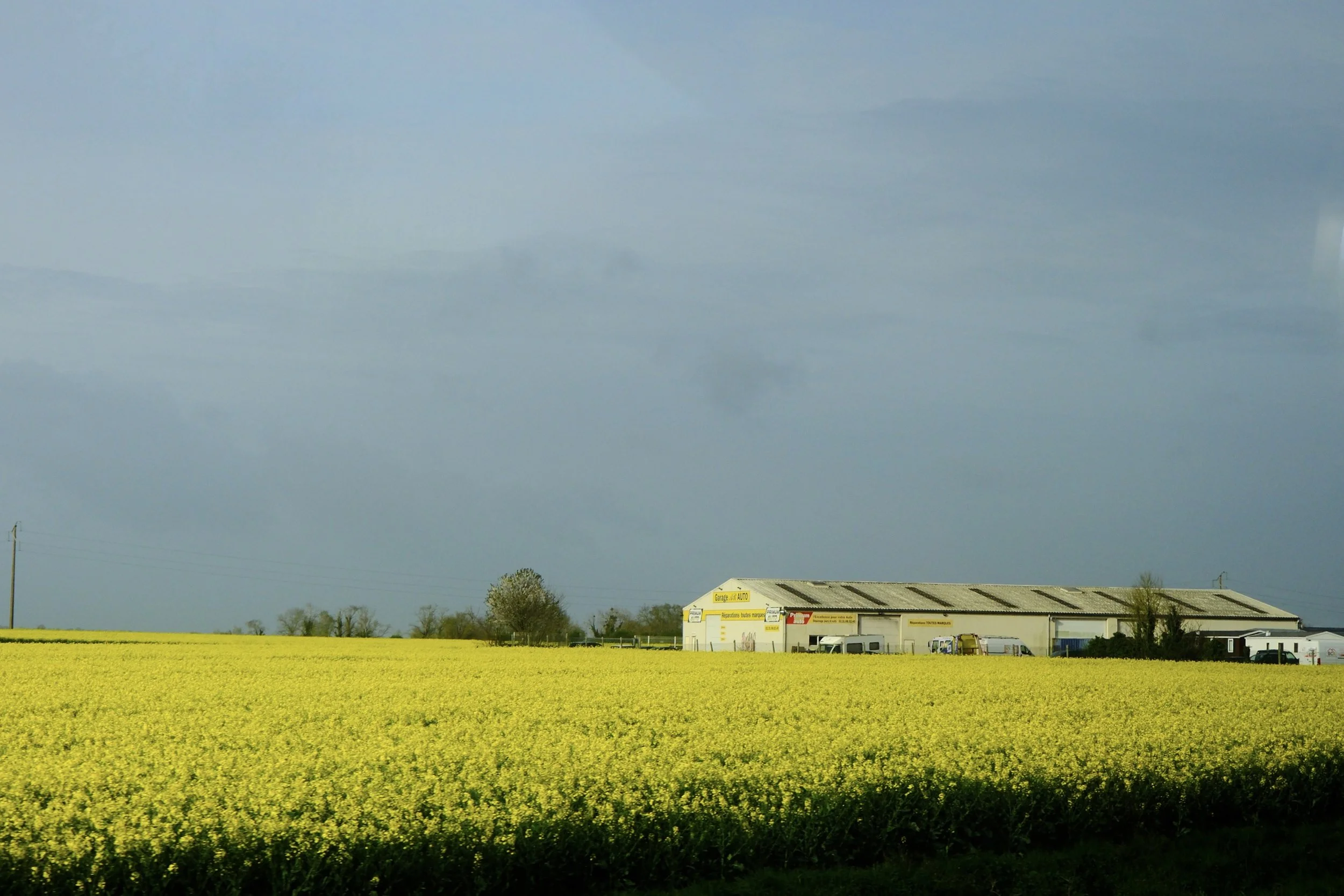
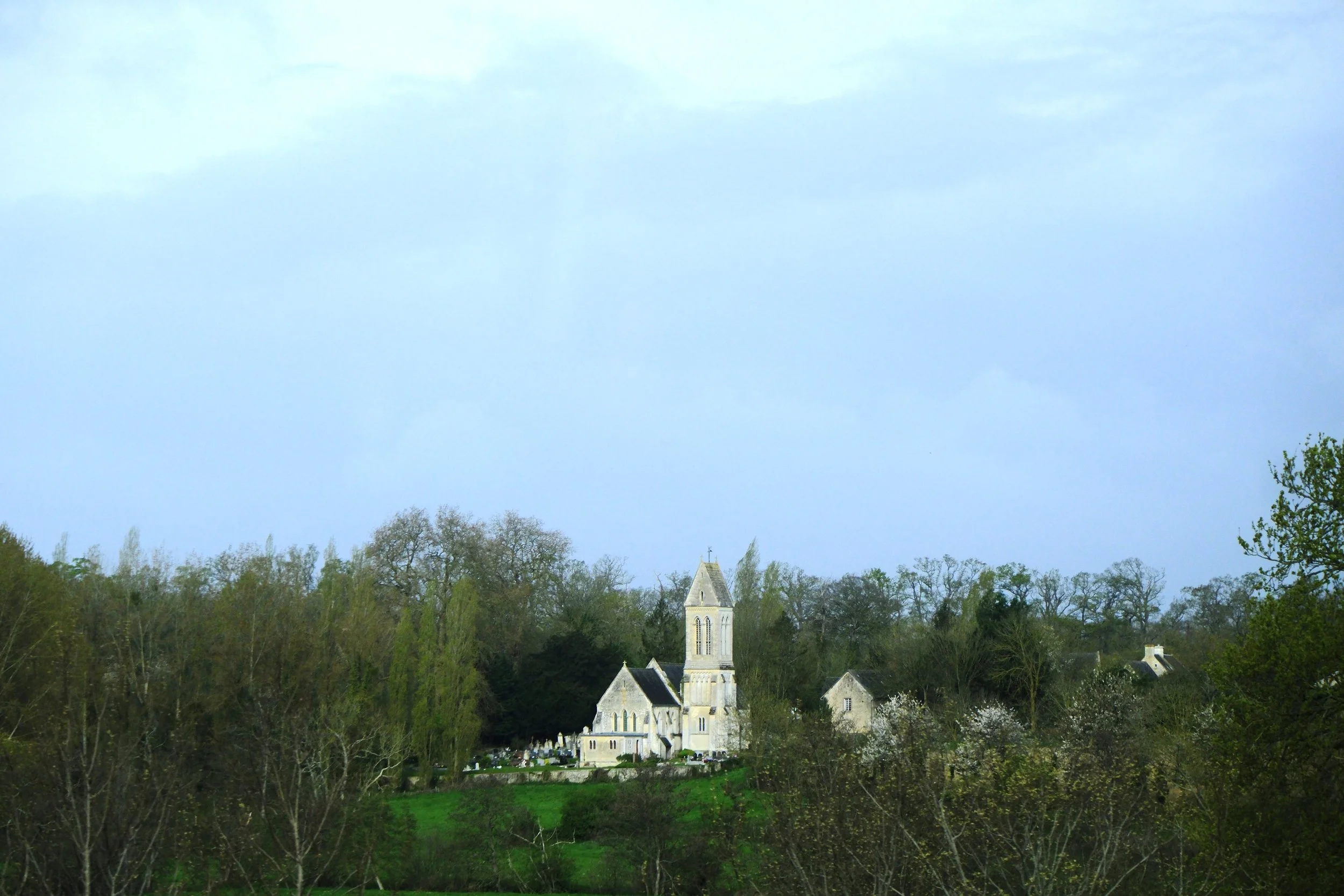
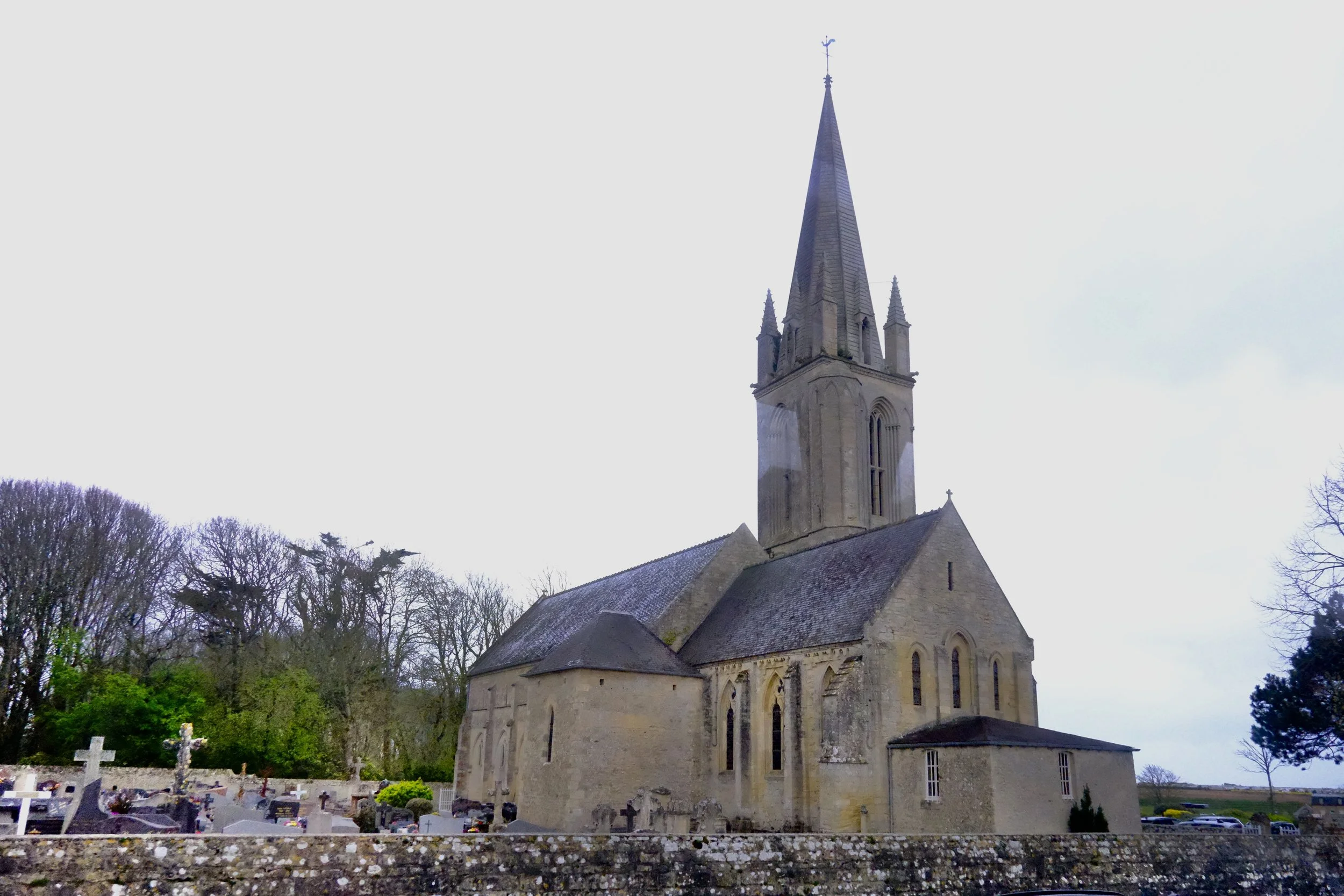
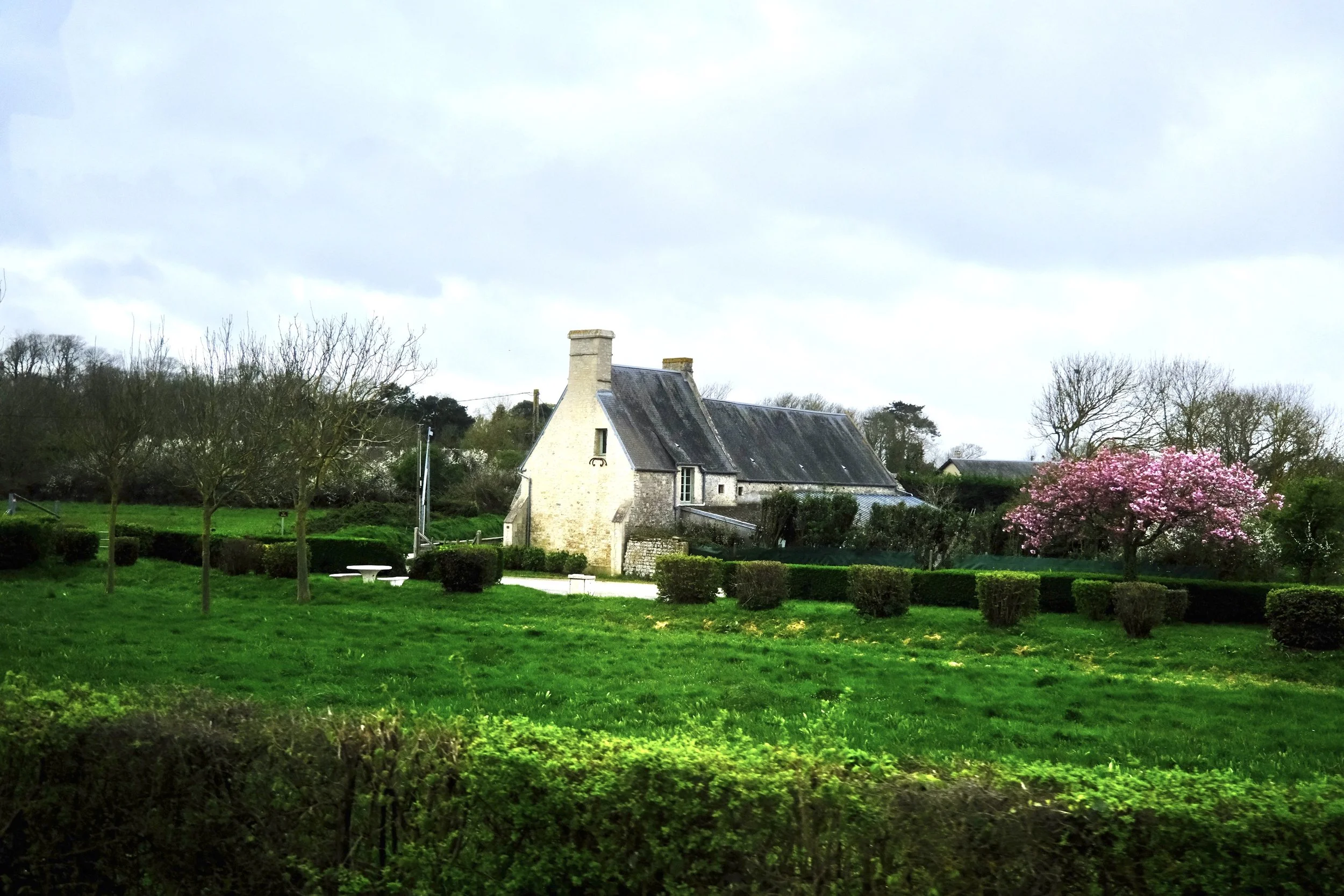
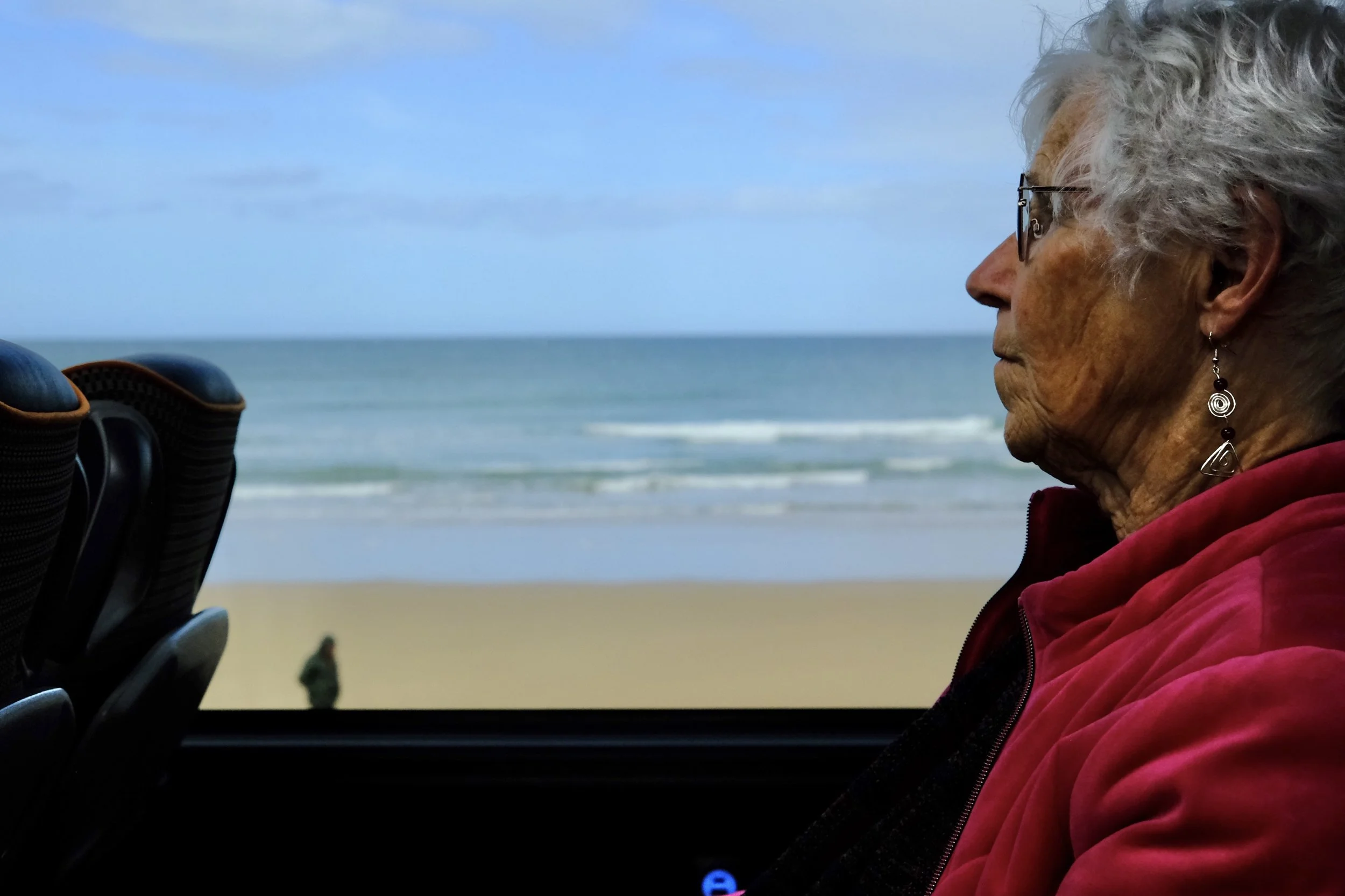
So was 10 hours on the bus worth it? You bet. Great memories, and I can’t get enough of the Normandy scenery.