Day 5 - Itilleq August 25, 2026
I was wrong.
Not for the first time, that’s for sure. But today I learned that the Inuit did not come cross the Berring Straits land bridge during the last ice age. That’s when, 50,000 years ago (give or take) what we now know as American Indians (and South American indigenous peoples) arrived. Inuit themselves started 1,000 years ago. The Inuit and their ancestors came across much later, starting only 5,000 years ago. Who needs a land bridge when you’ve got a canoe? As recently as the 1930s Inuit (Inuk is singular, Inuit is plural) crossed from the Soviet Union to Alaska to visit kinfolk and friends, much to the consternation of the political authorities who were powerless to stop them. The last wave of migration was the Thule, from whom today’s Inuit evolved.
In Alaska, Native Americans build totem poles. Inuit don’t; they live farther north.
Incidentally, for Inuit, and many Alaskan native Americans, the “E” word his highly offensive, equivalent to the “N” word.
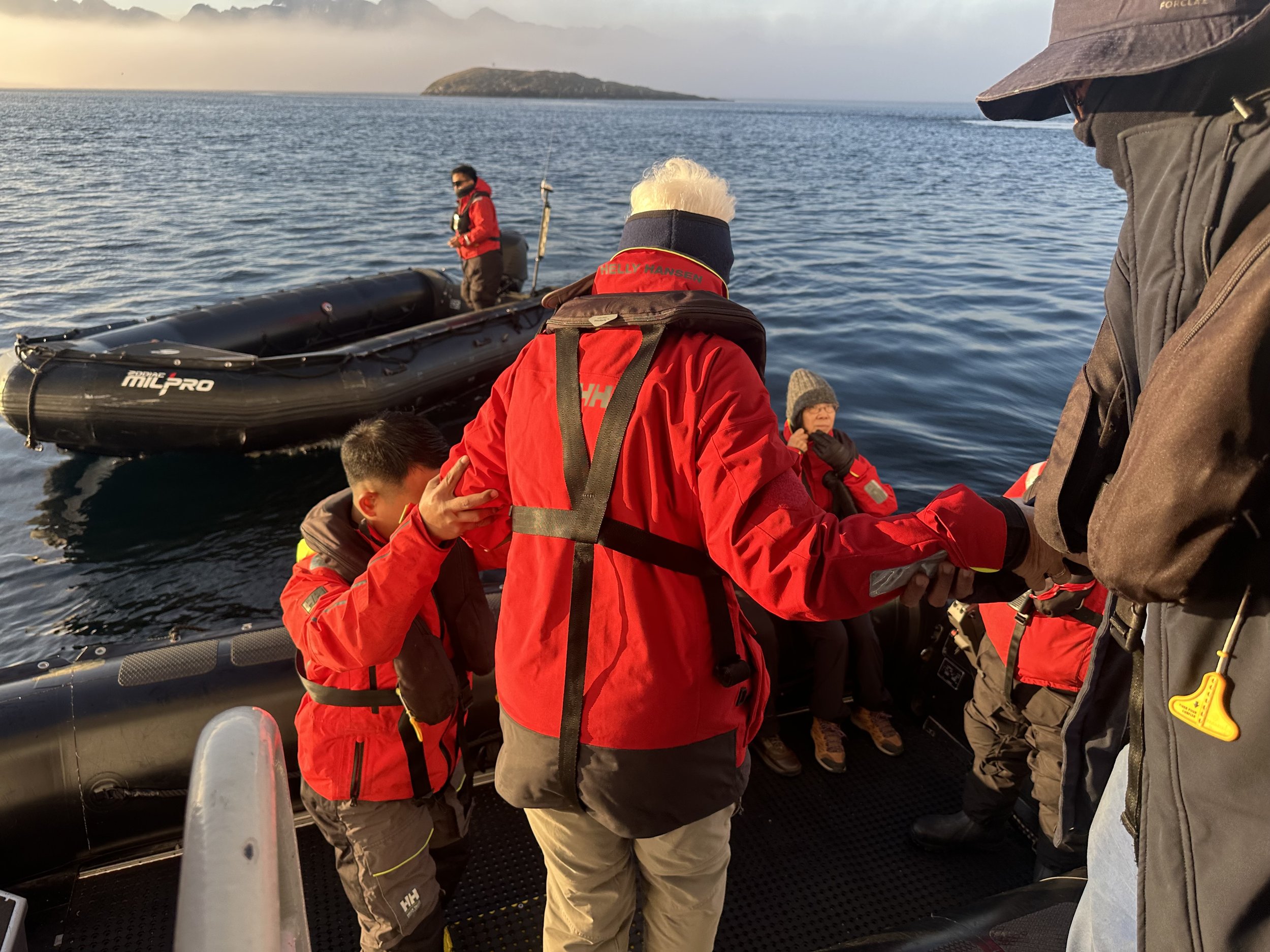
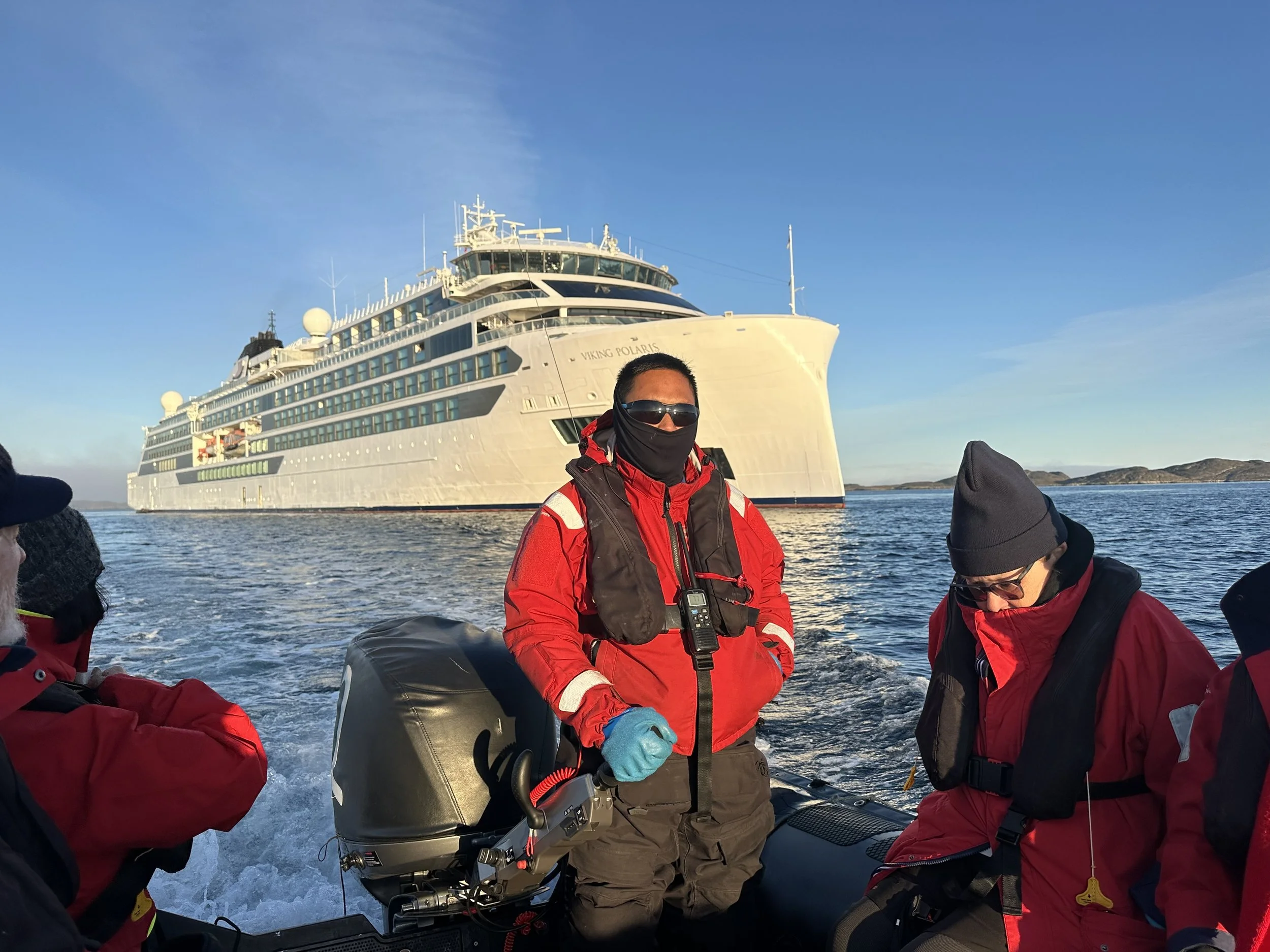
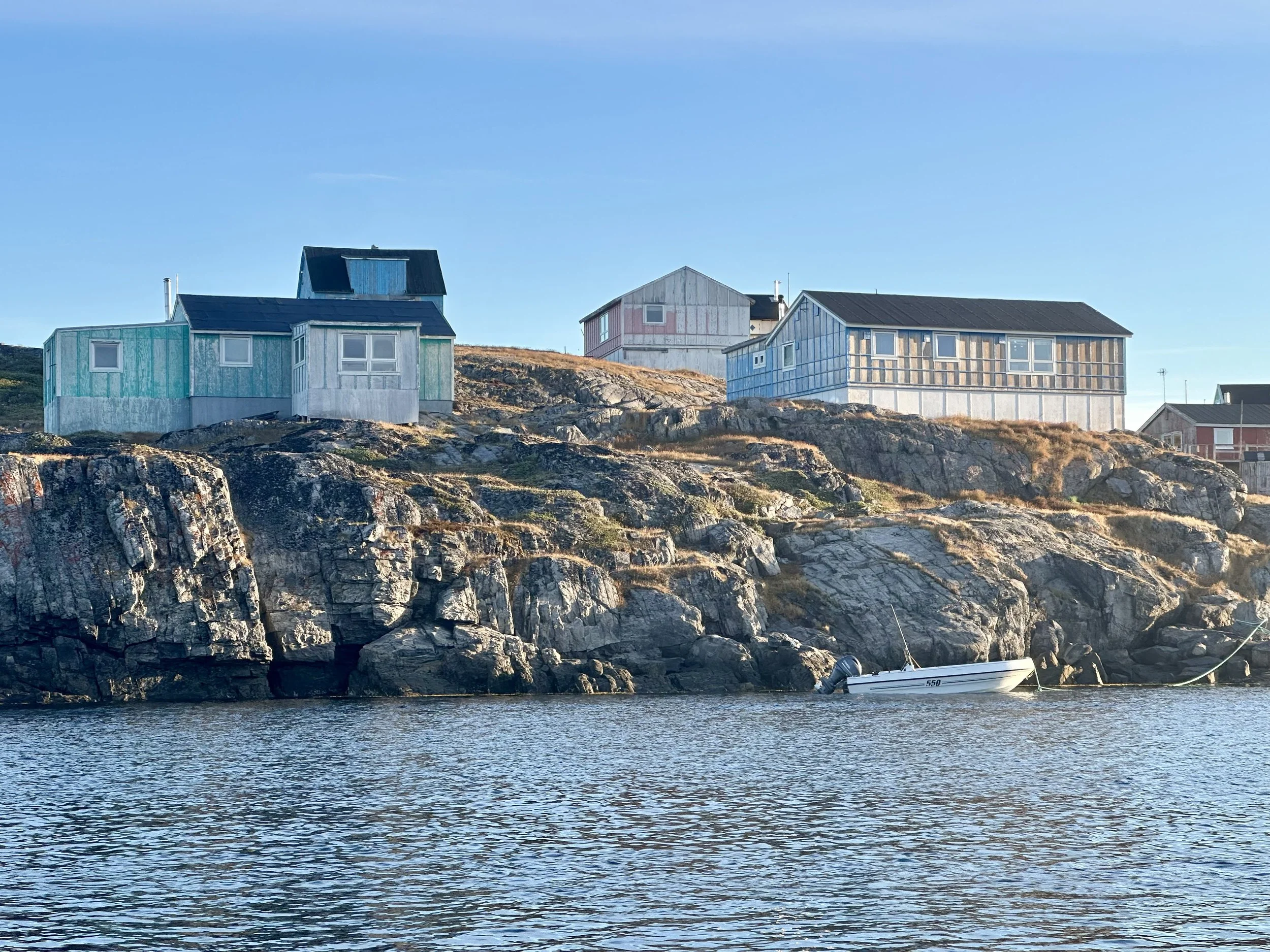
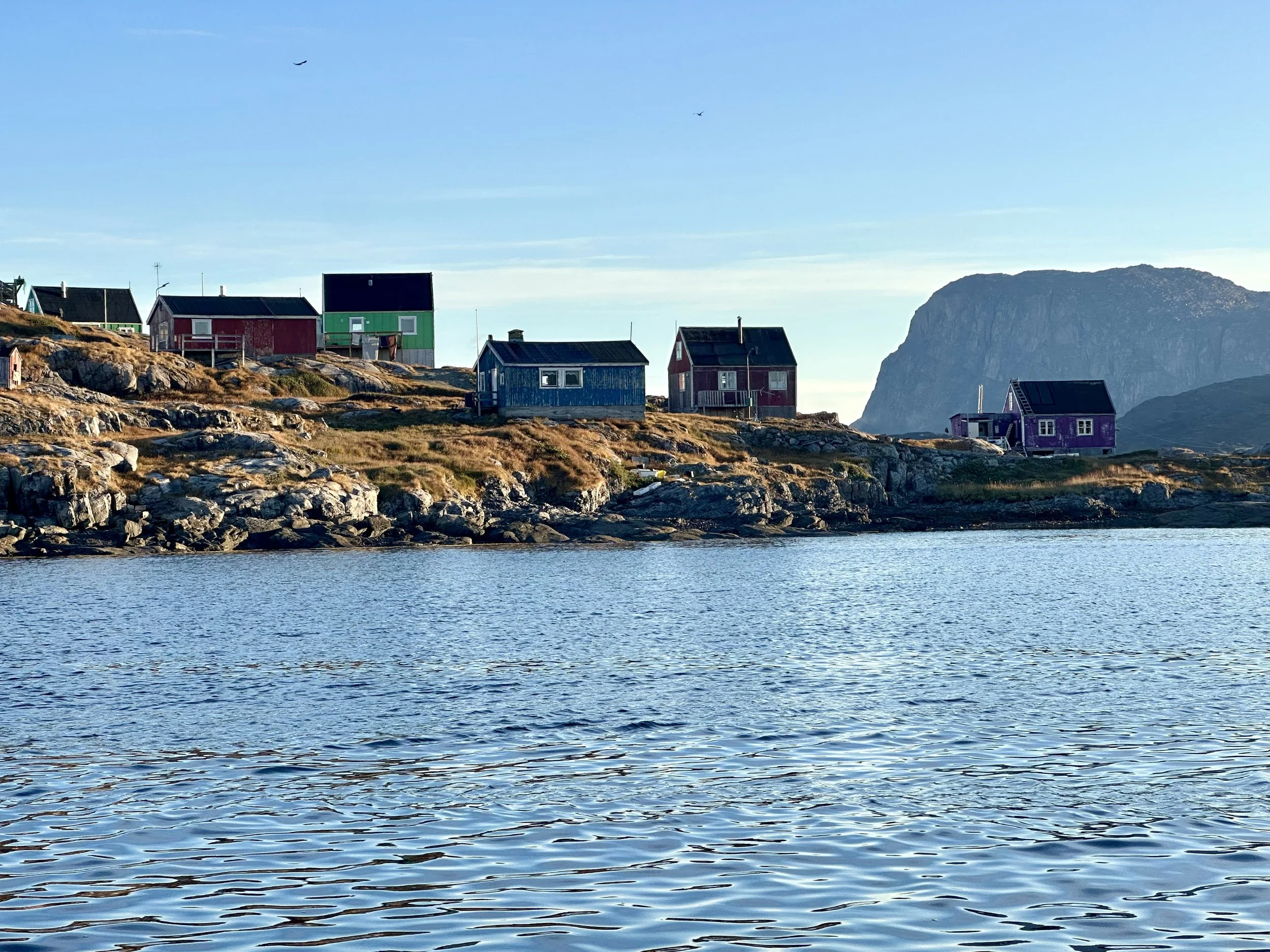
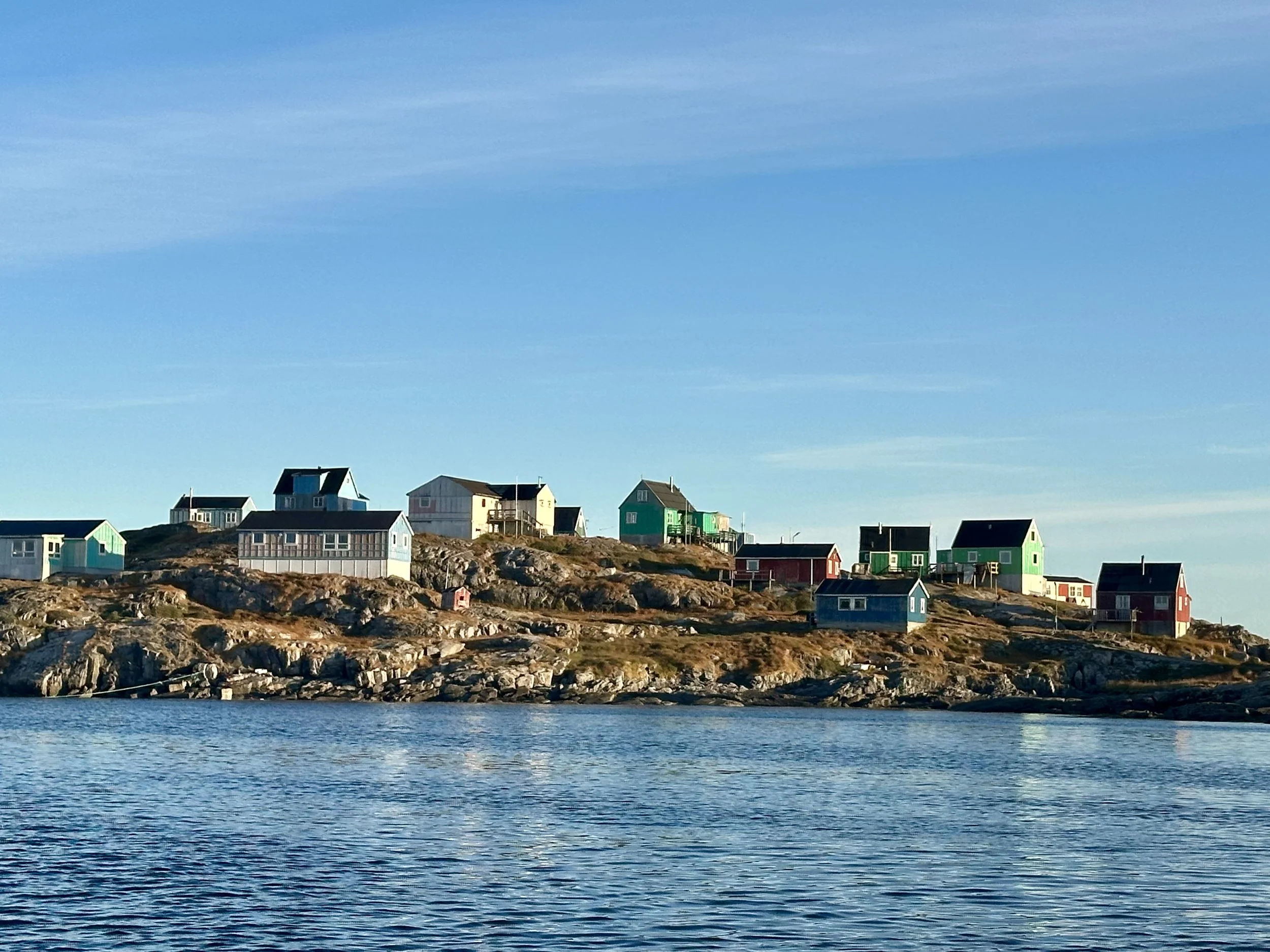
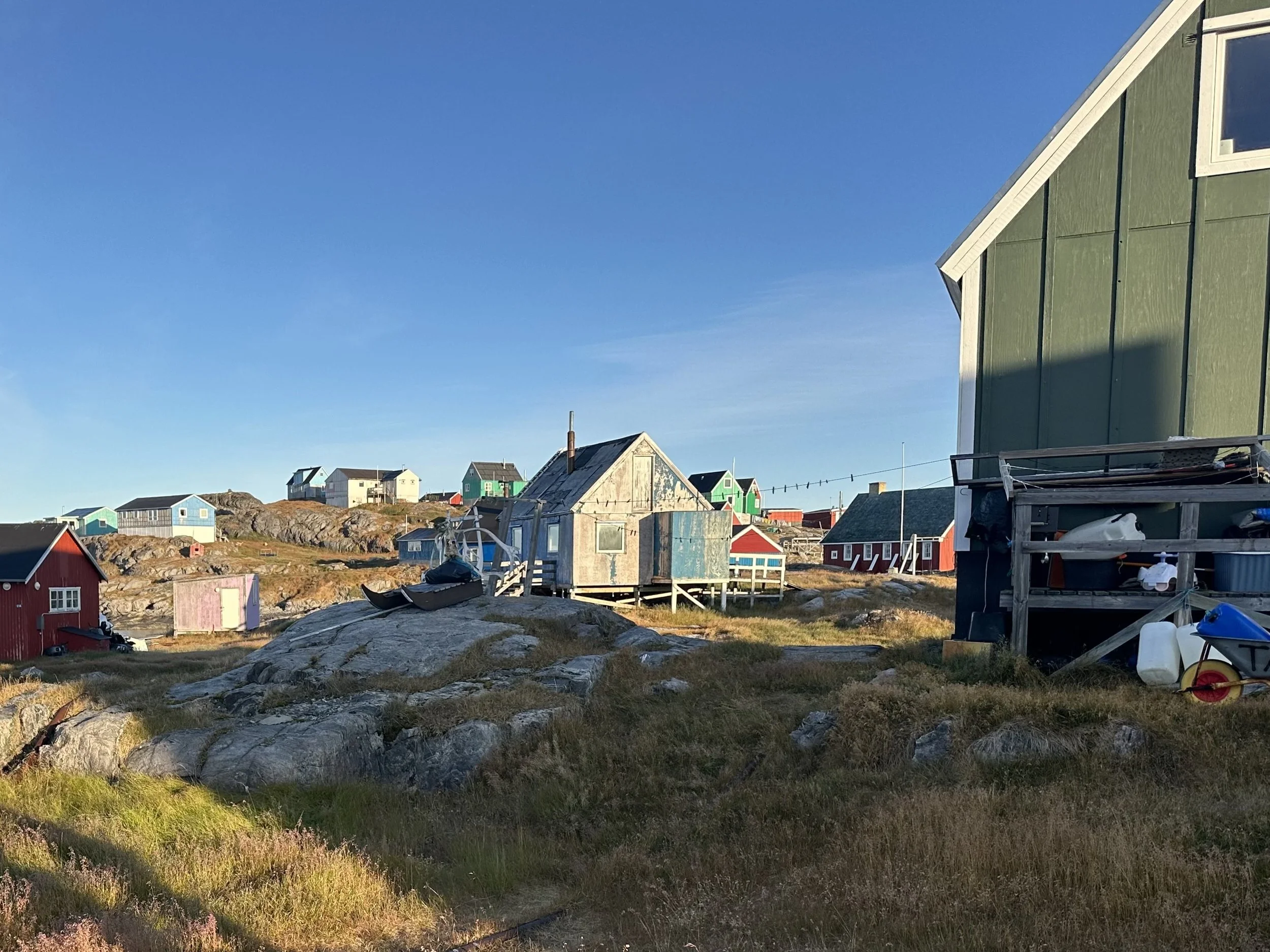
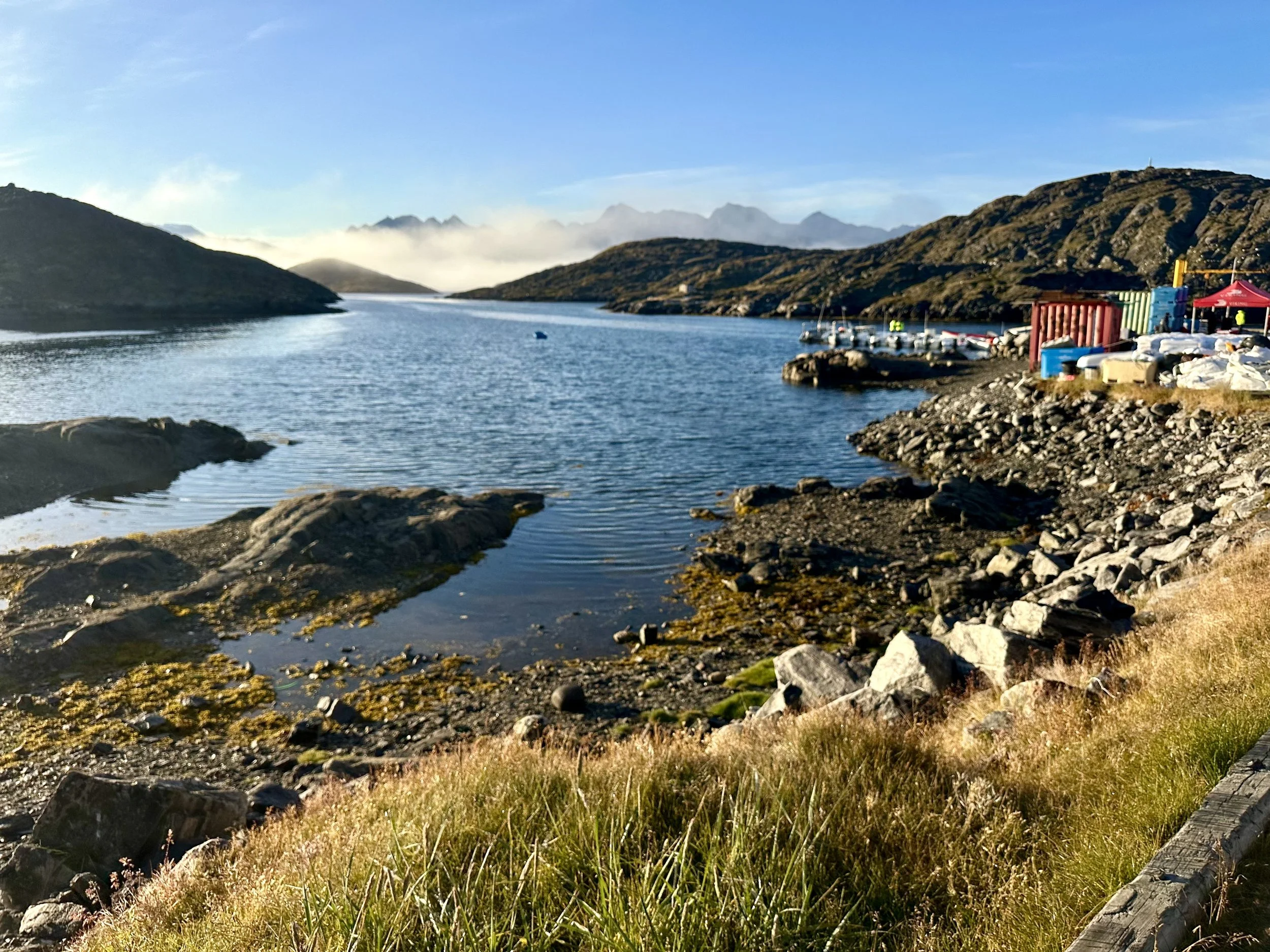
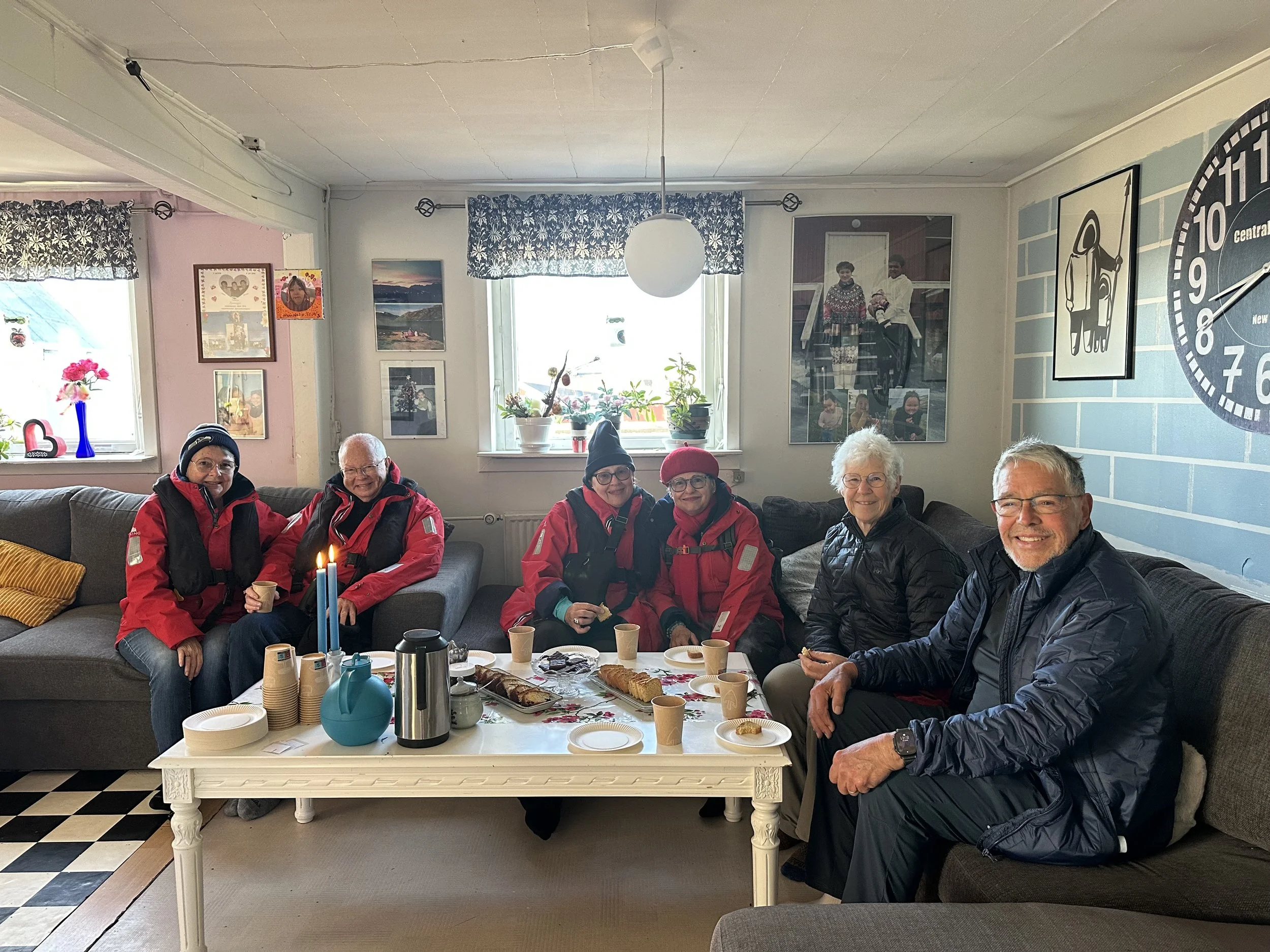
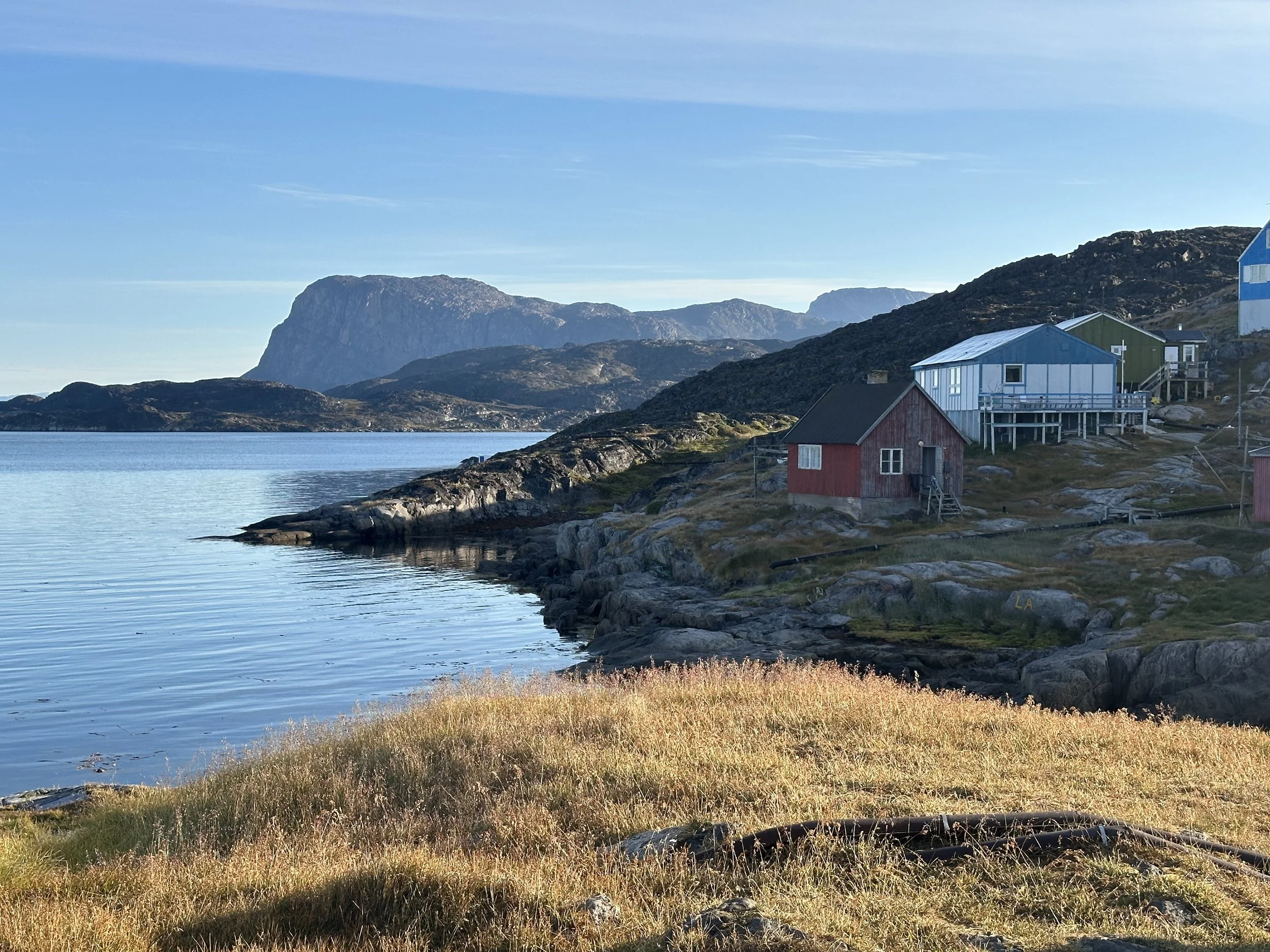
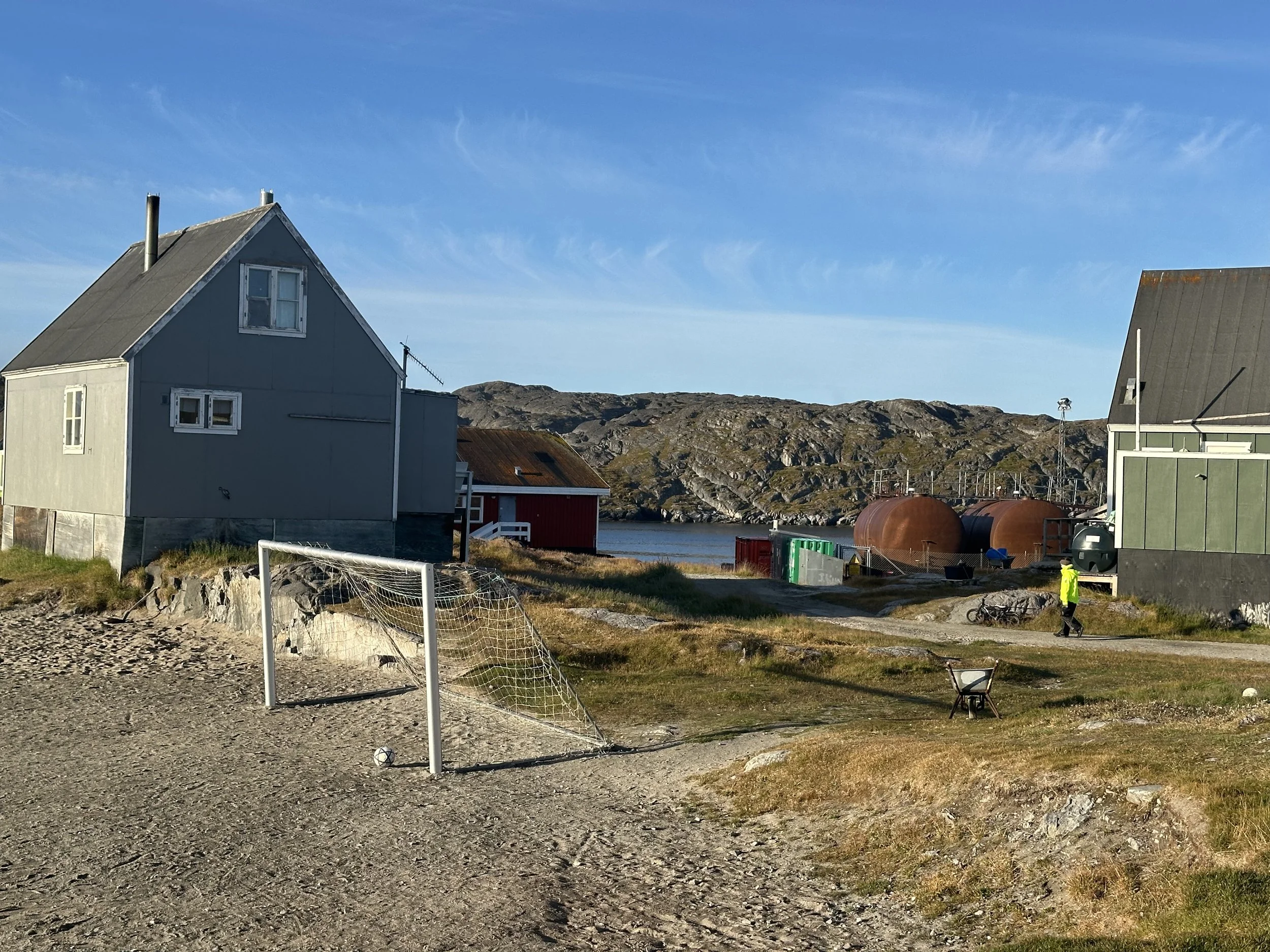
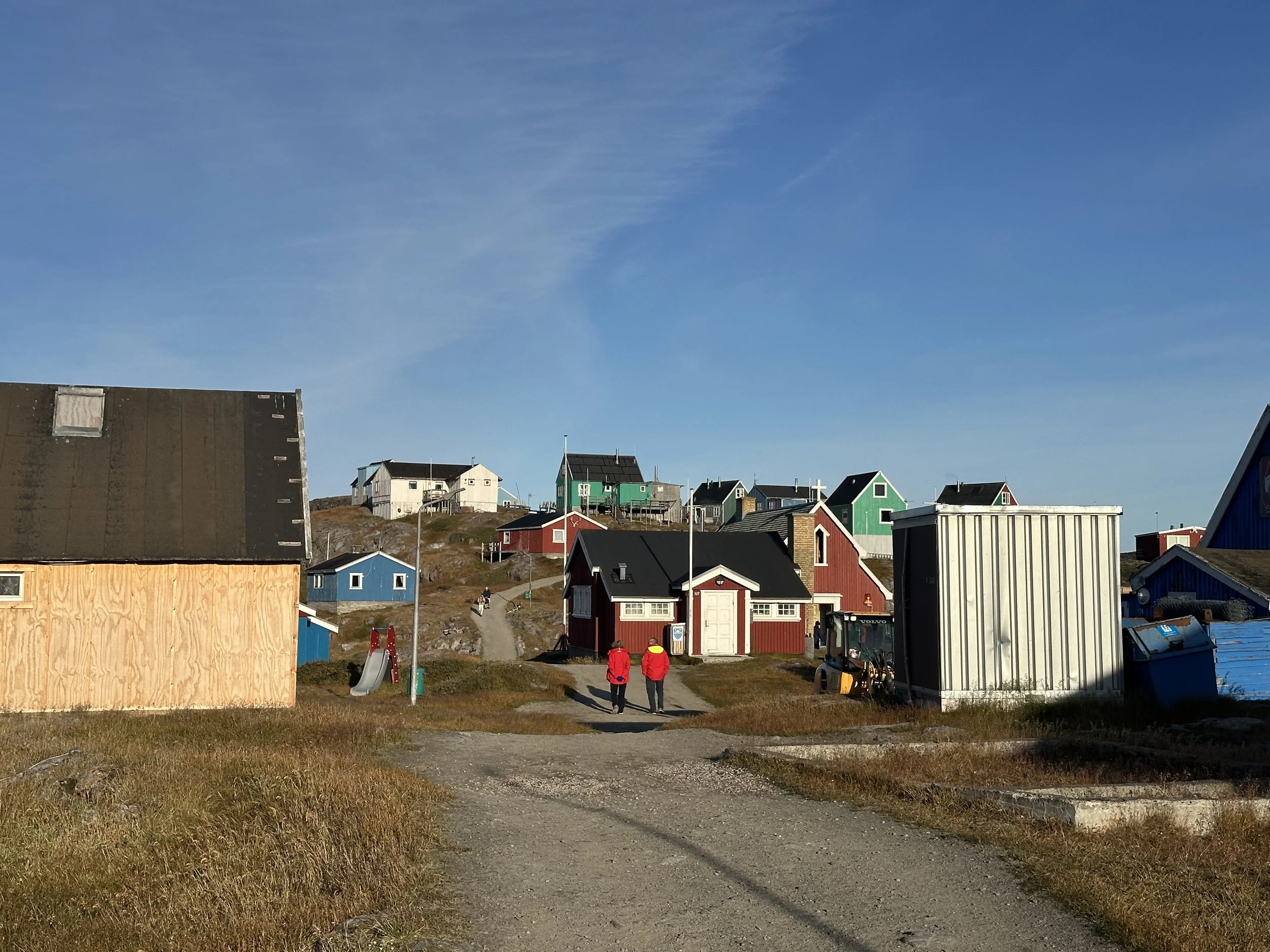
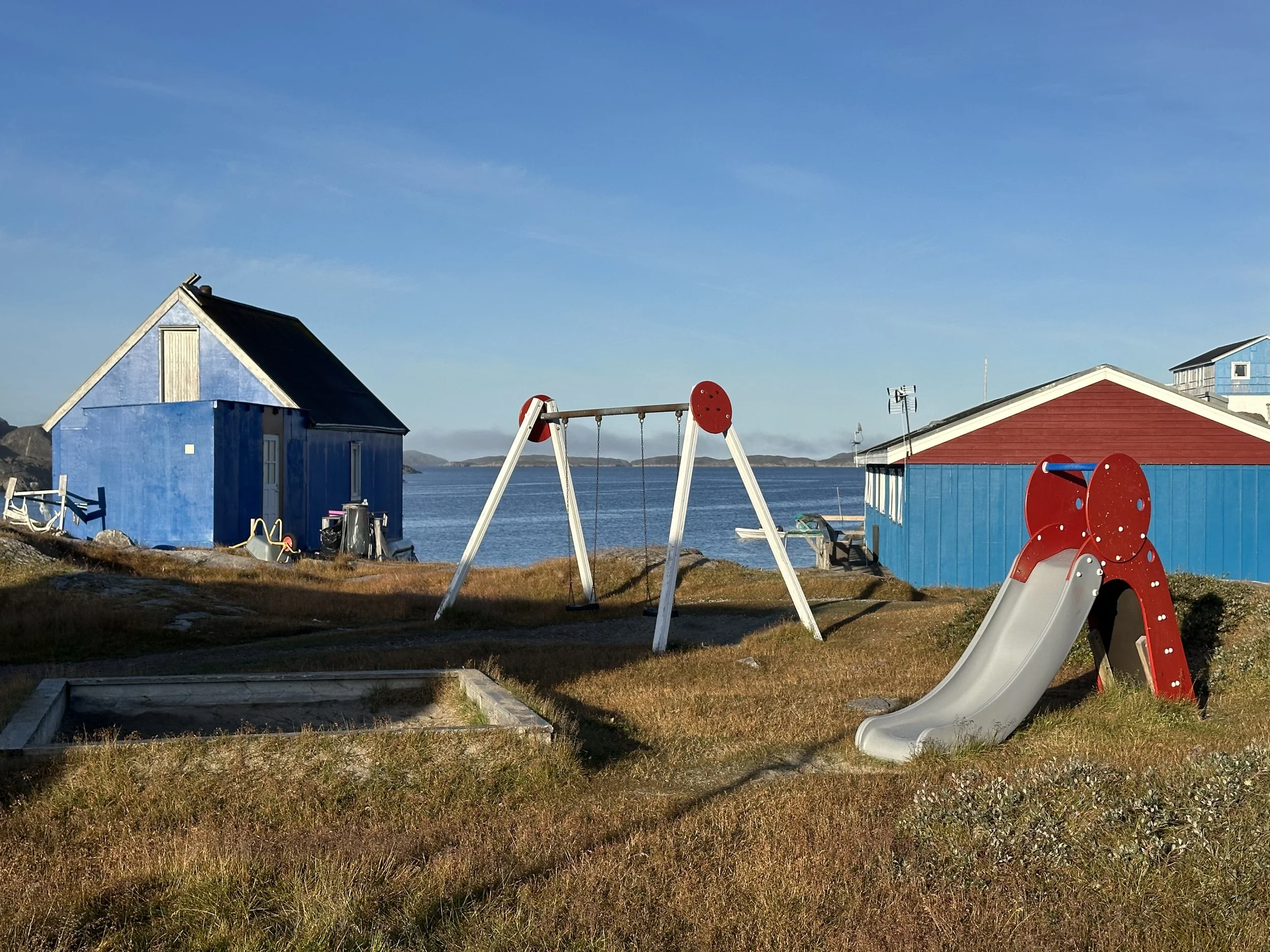
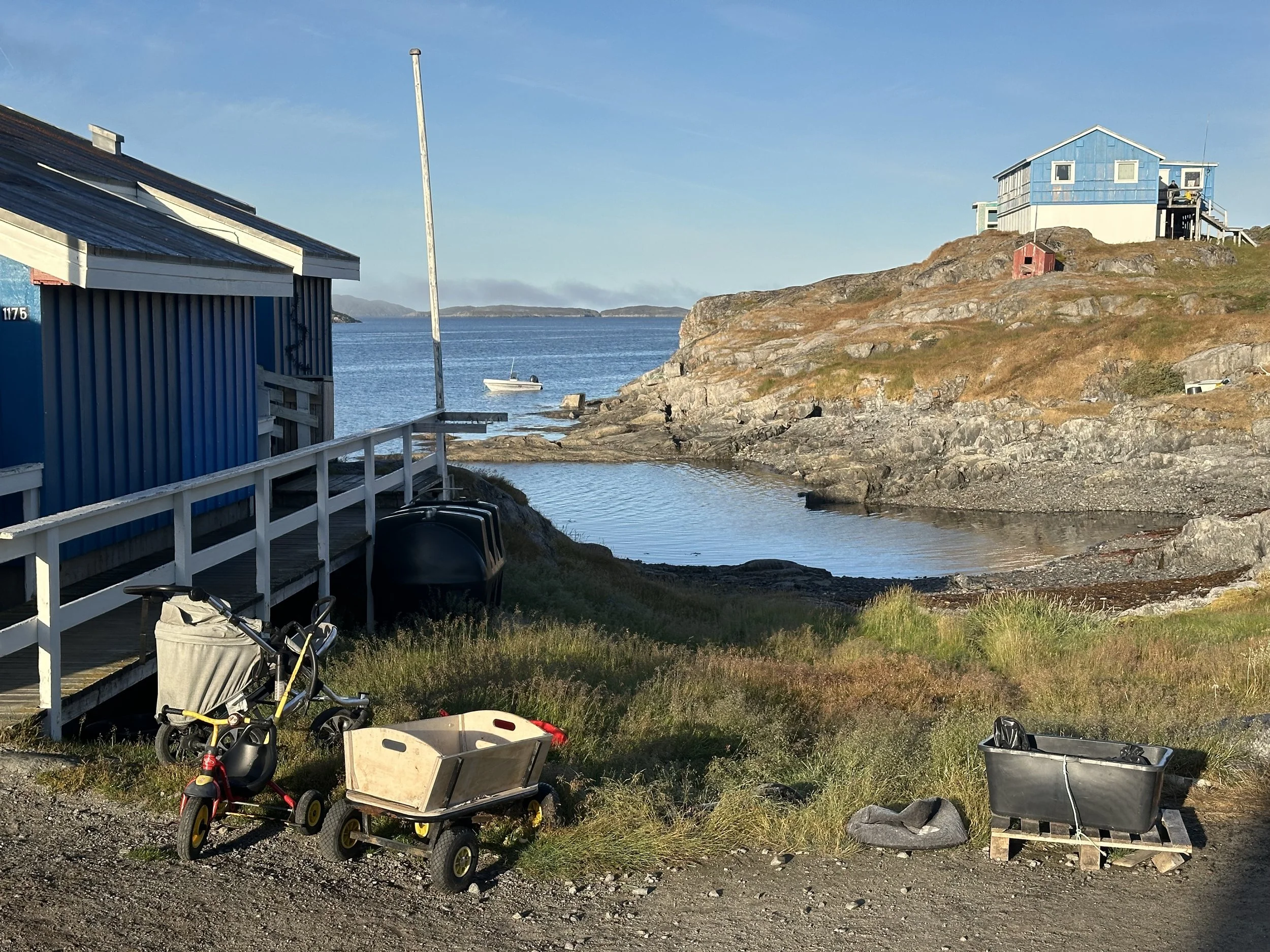
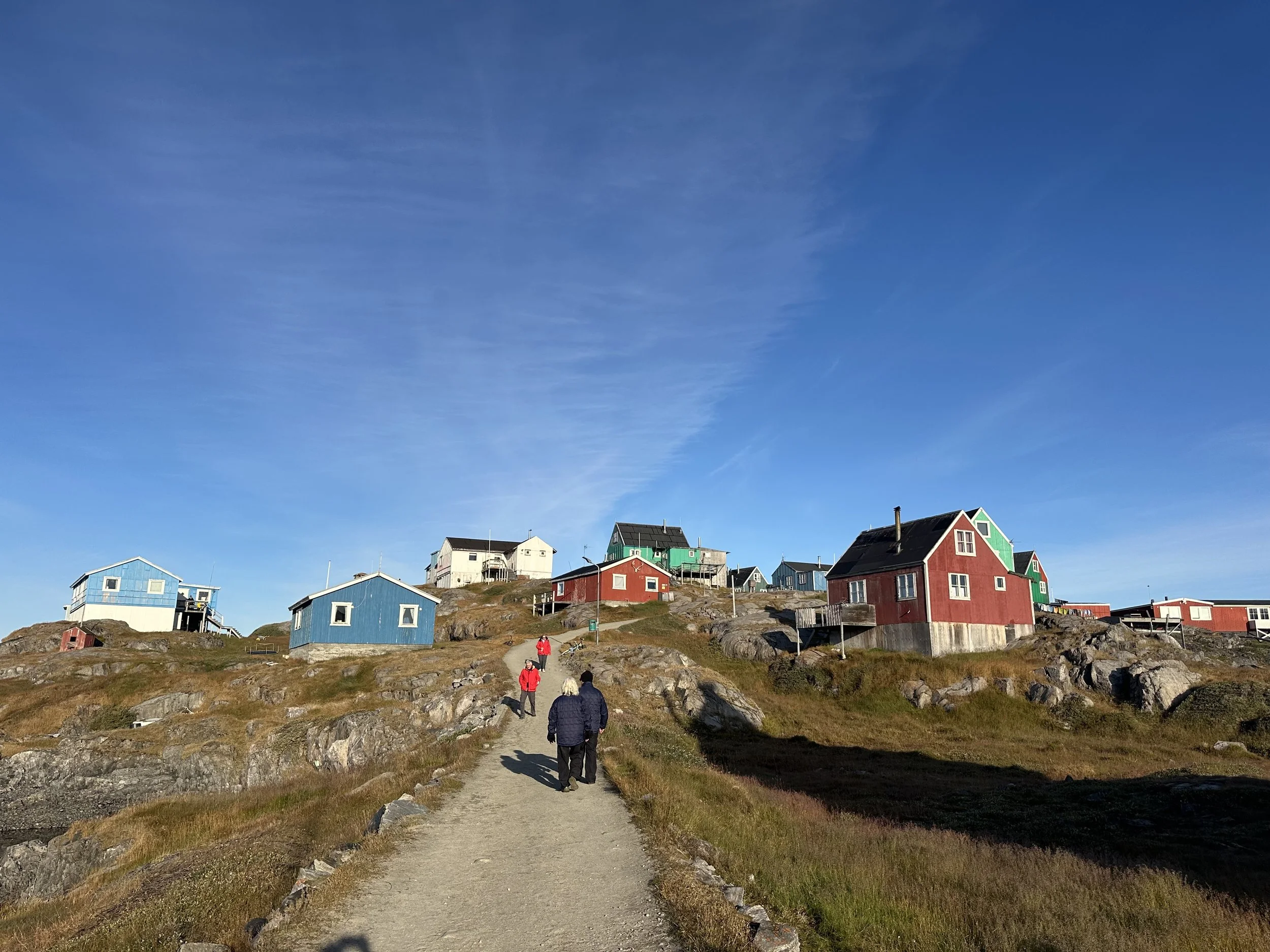
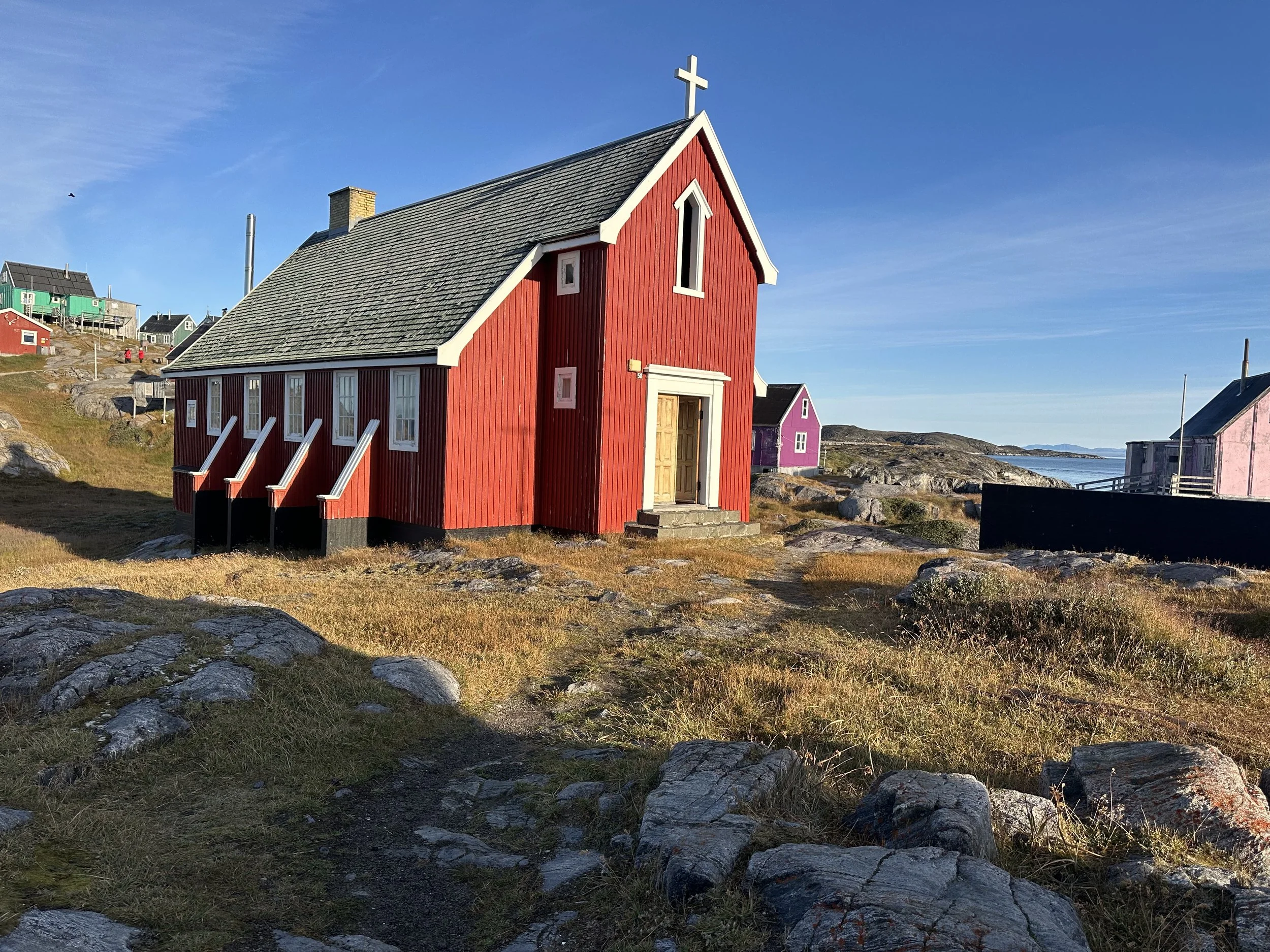
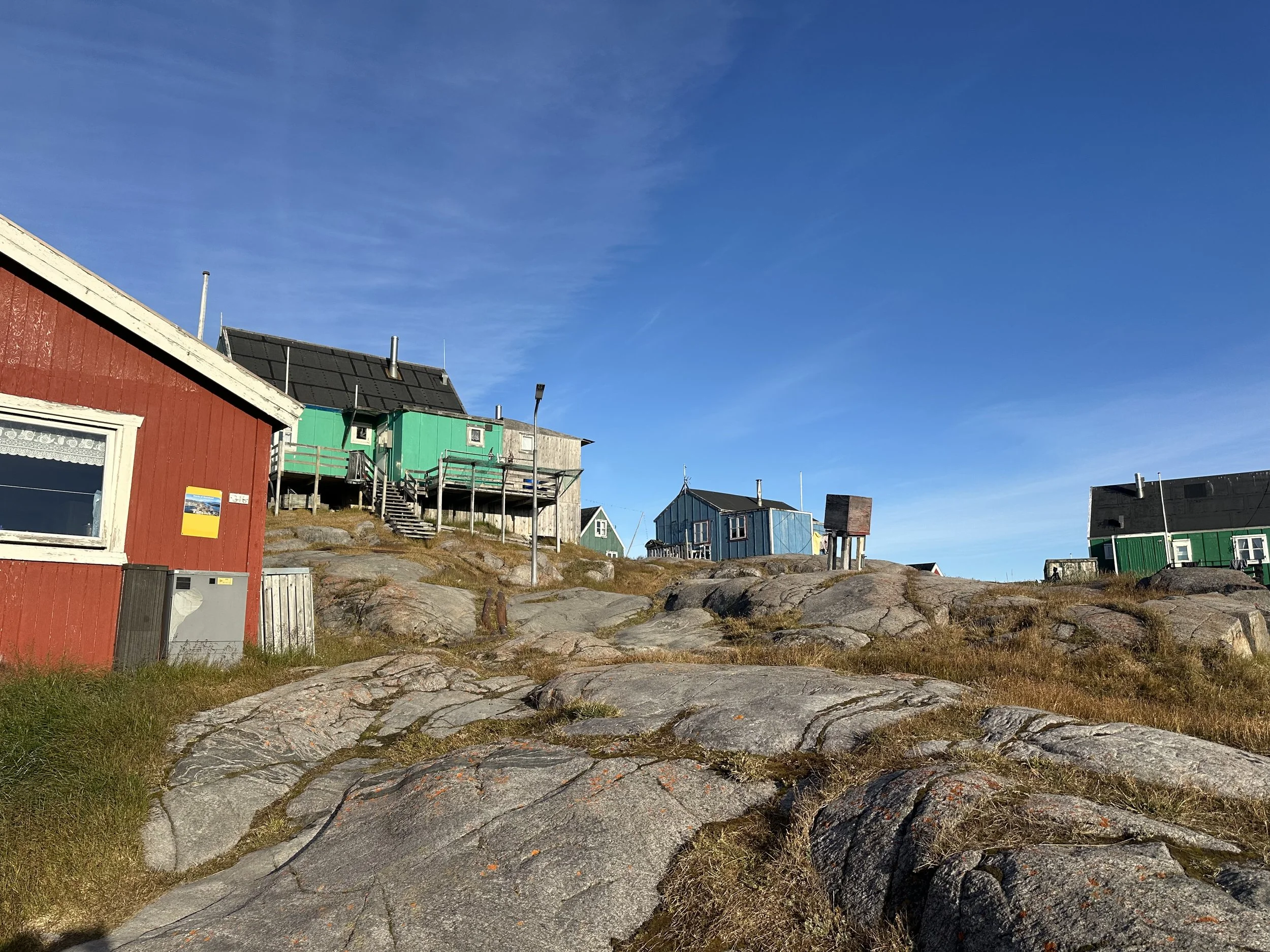
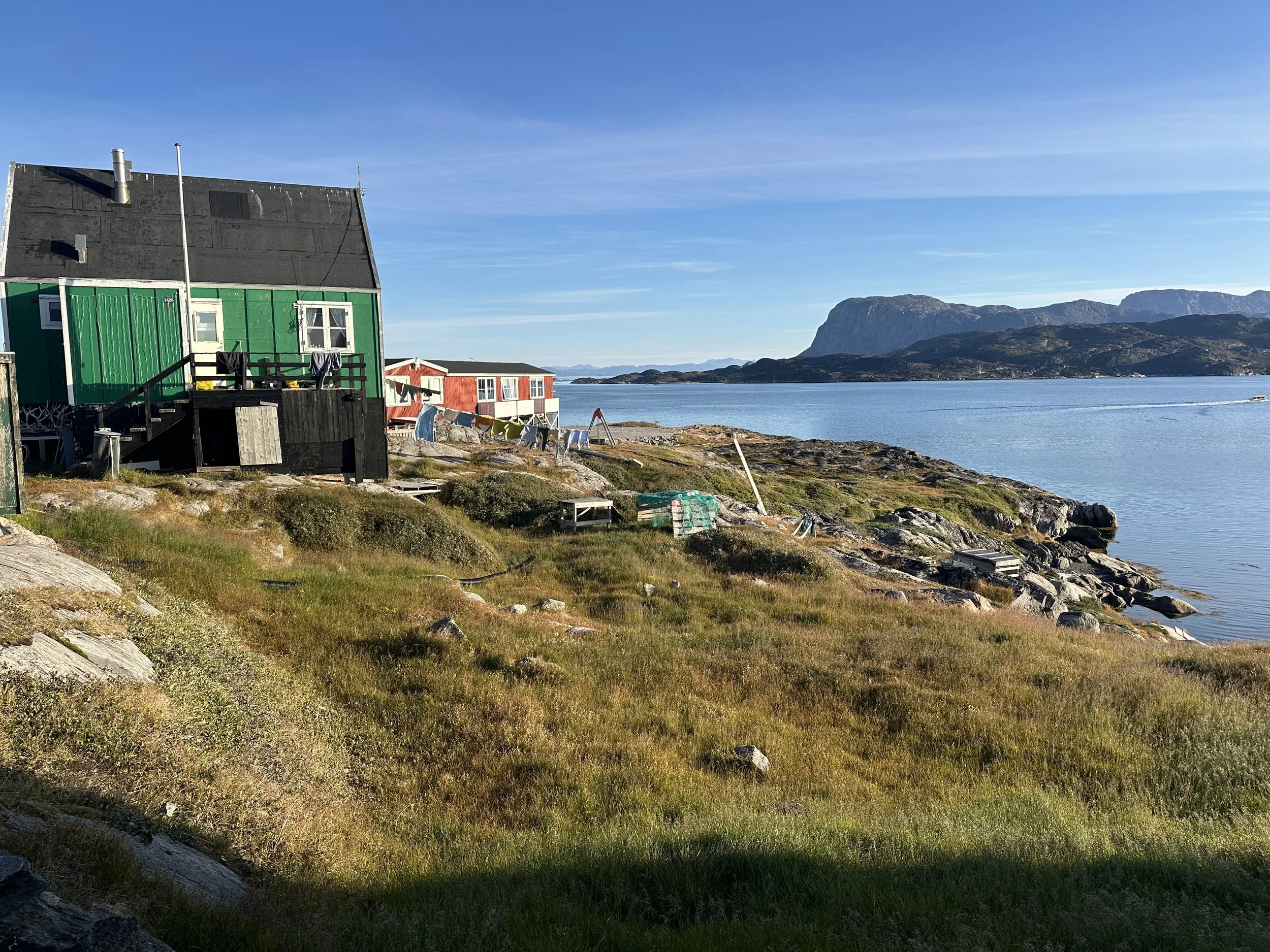
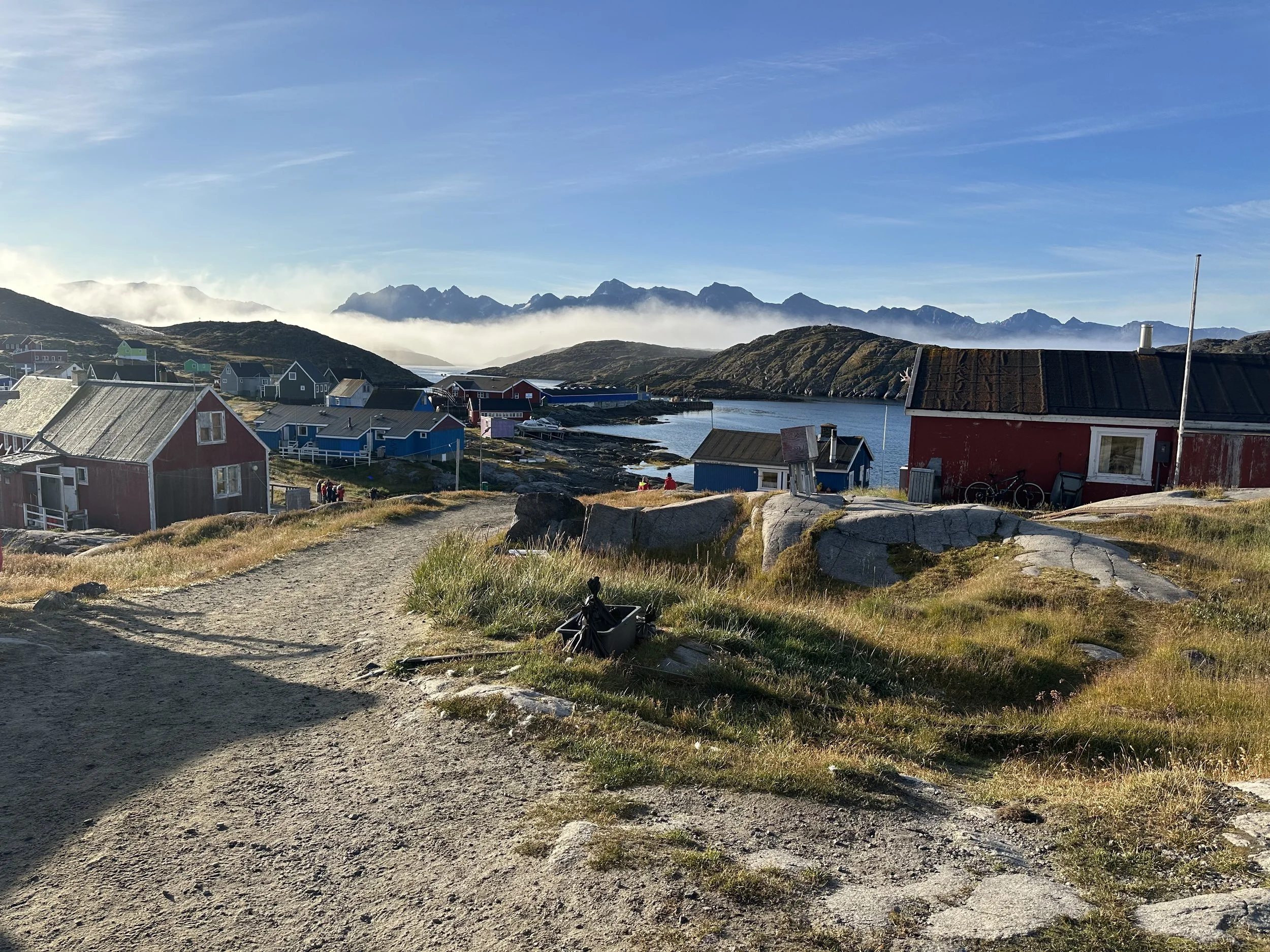
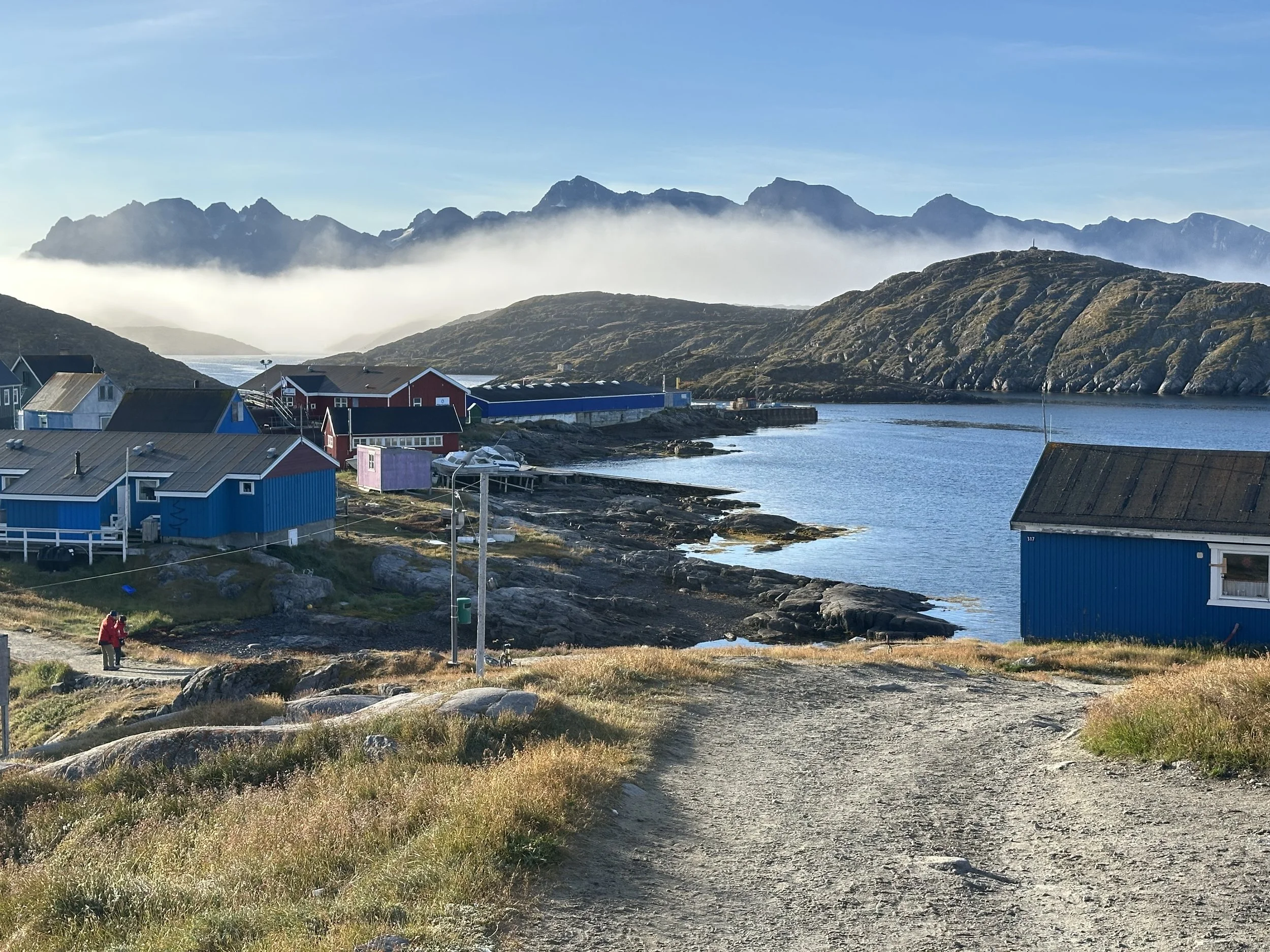
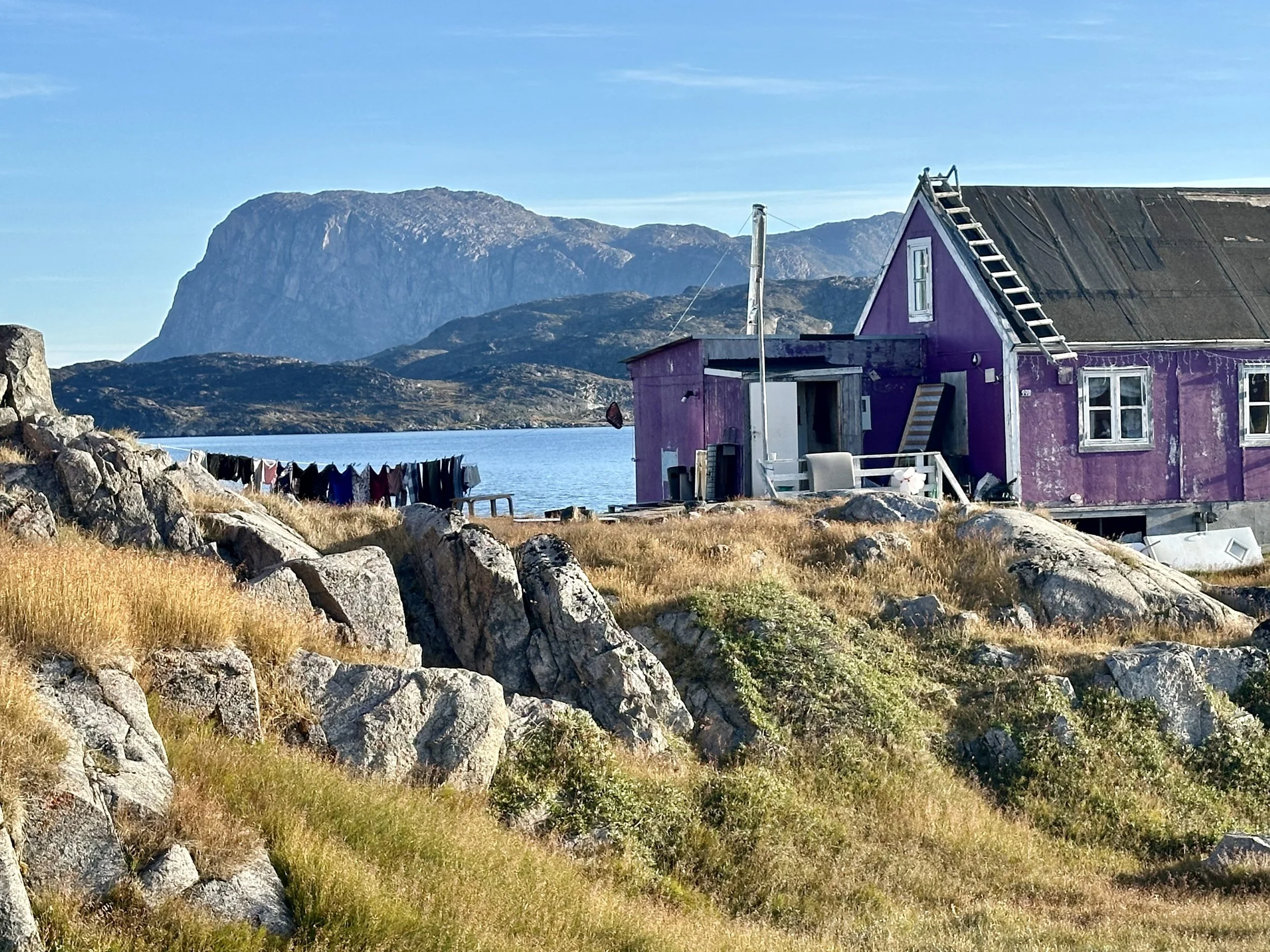
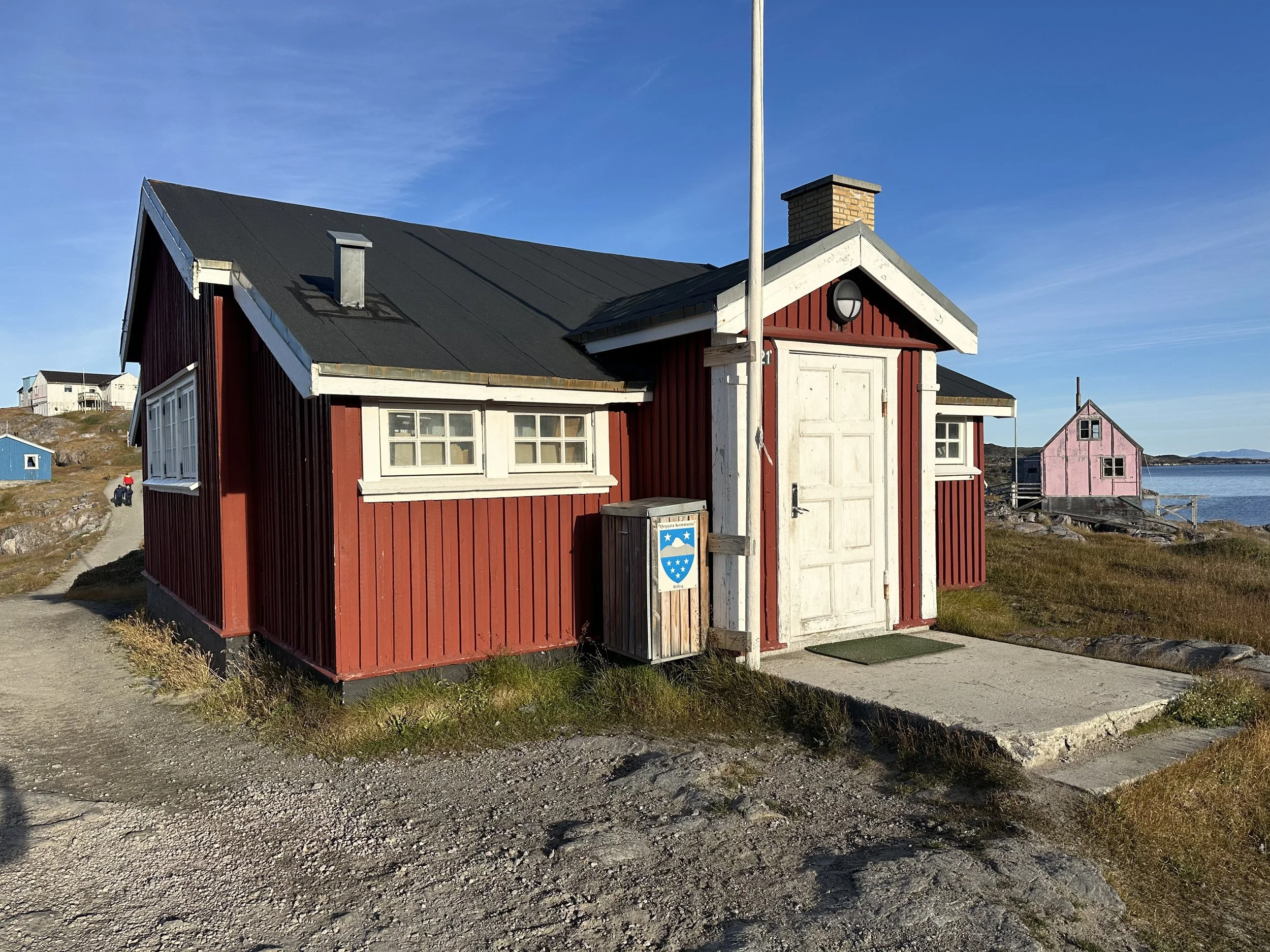
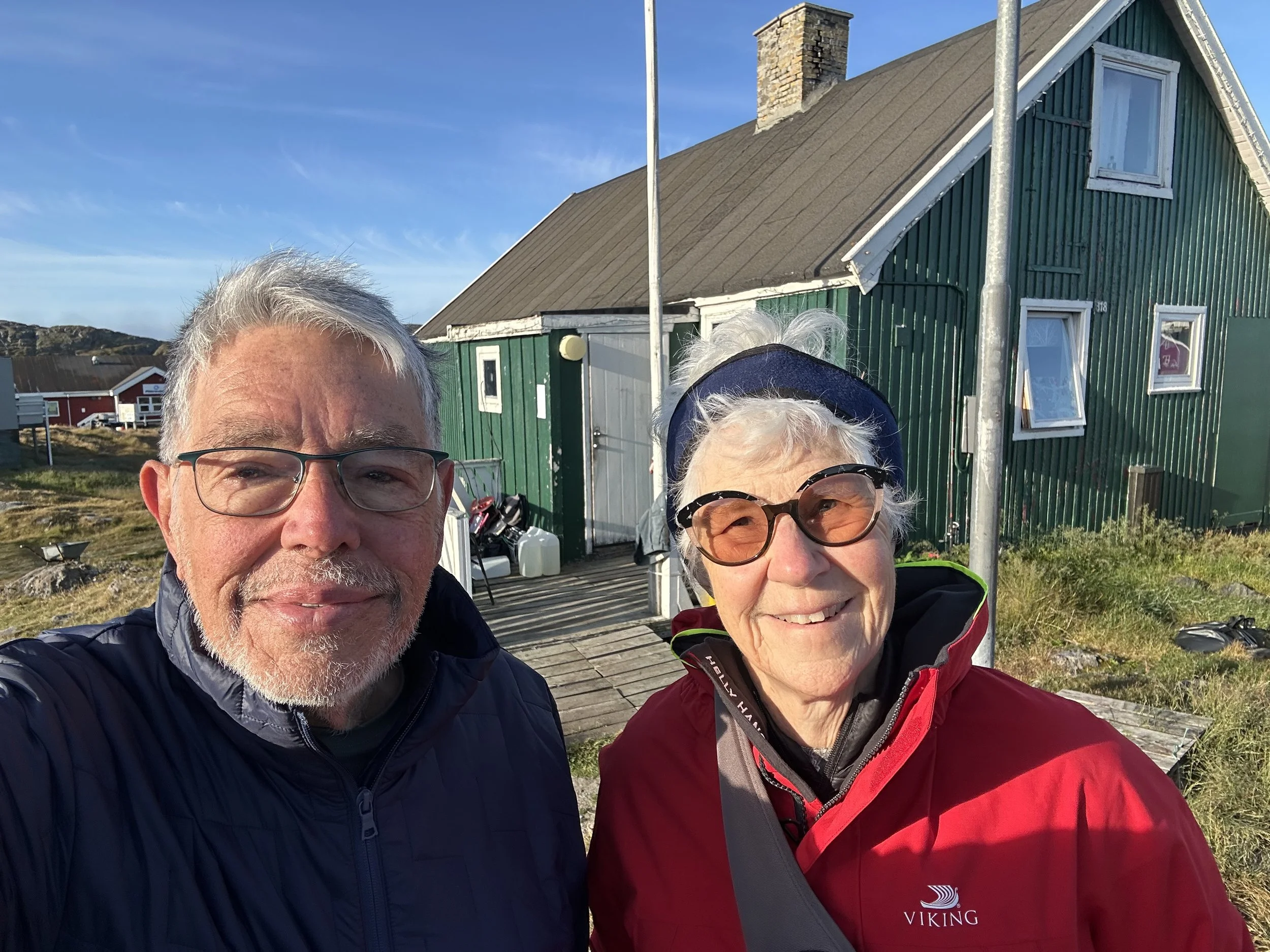
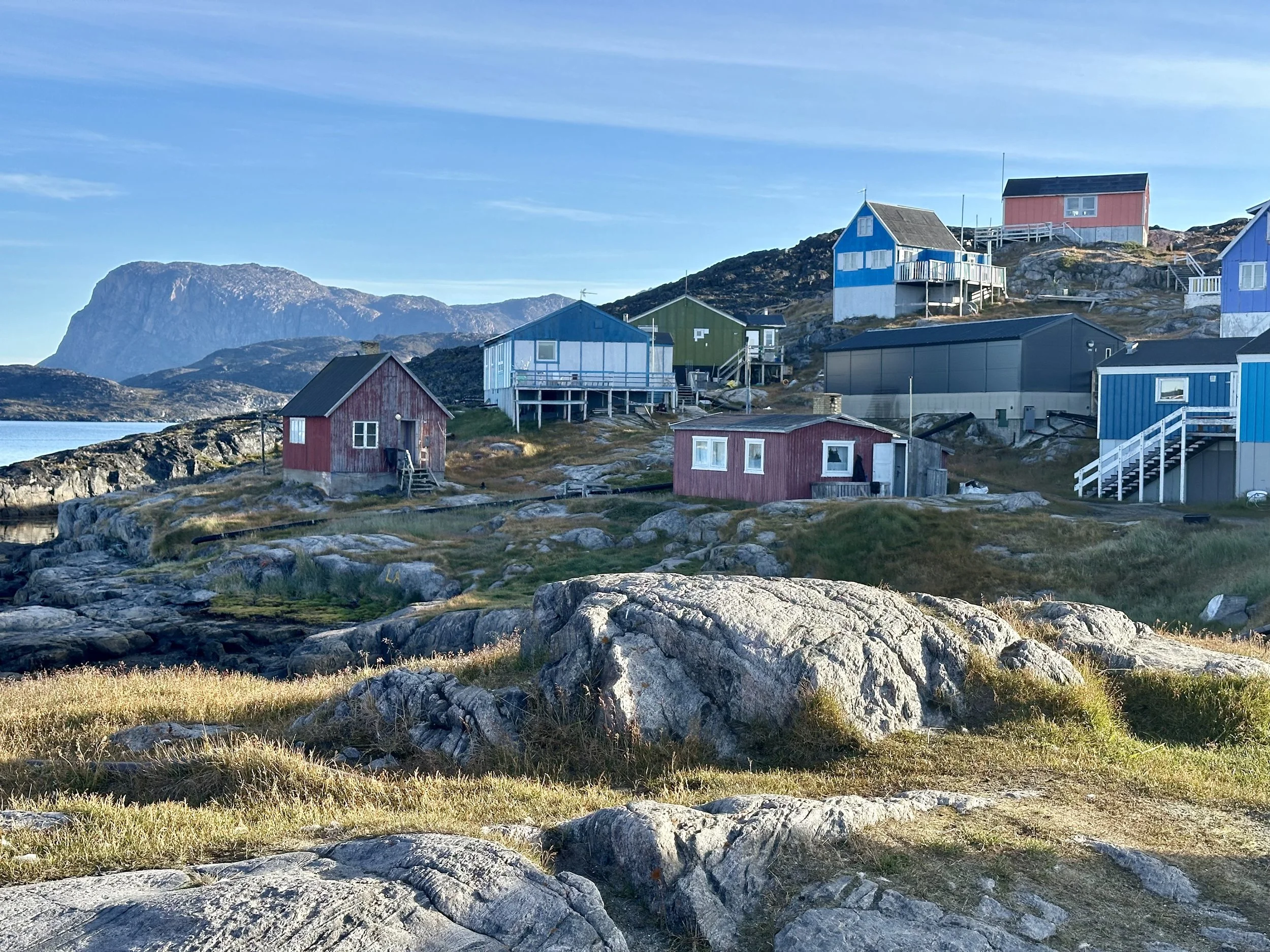
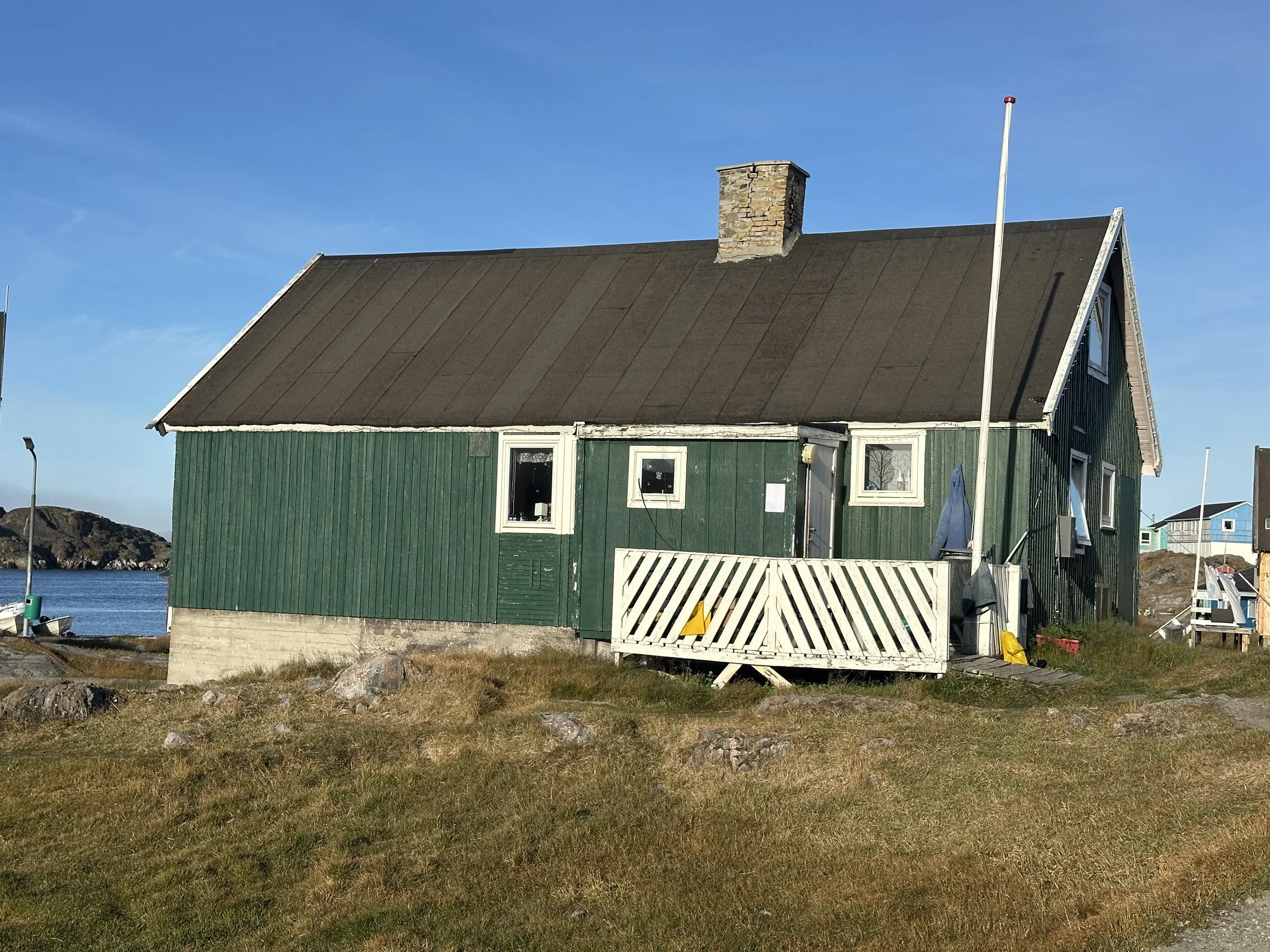
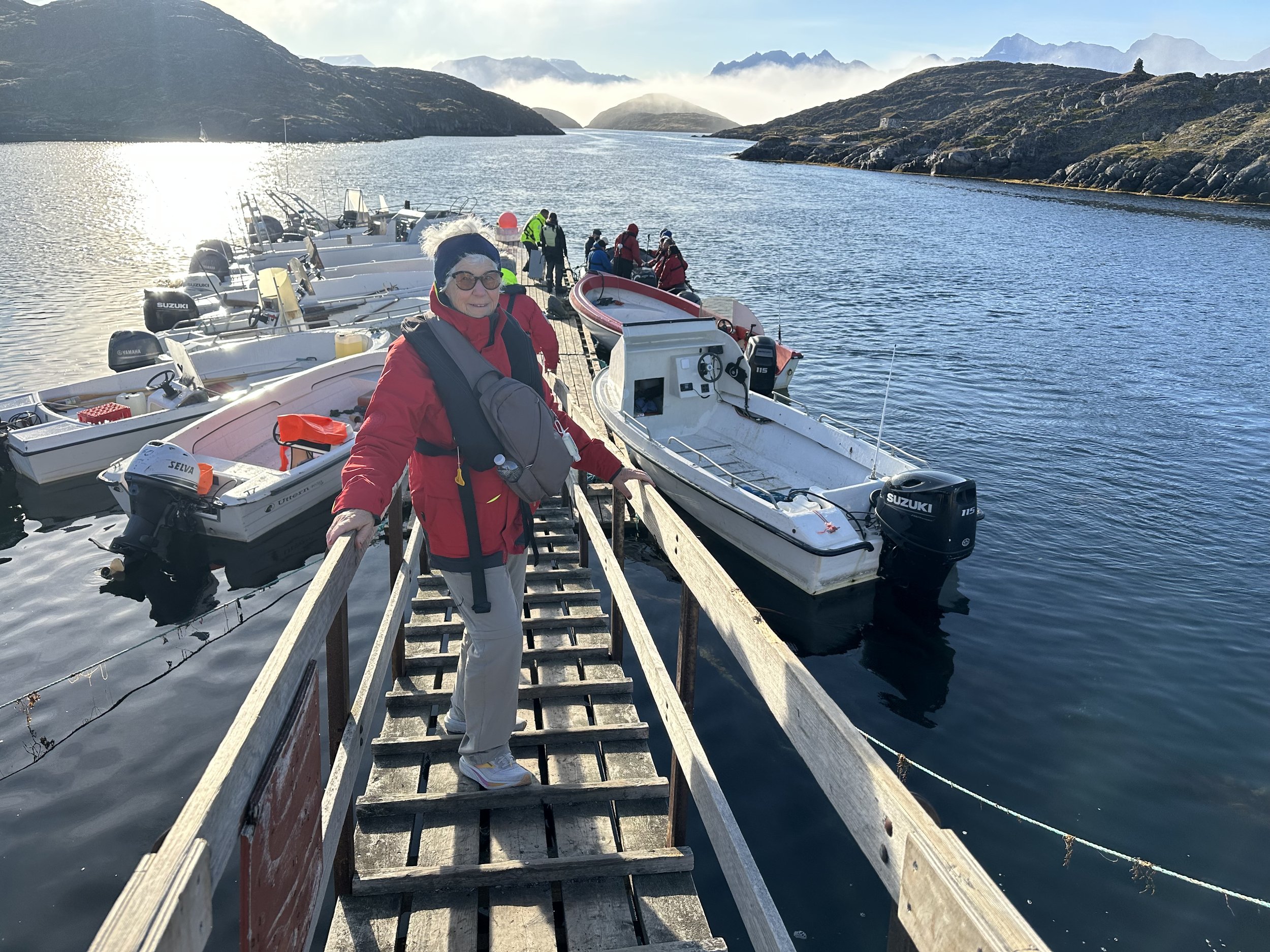
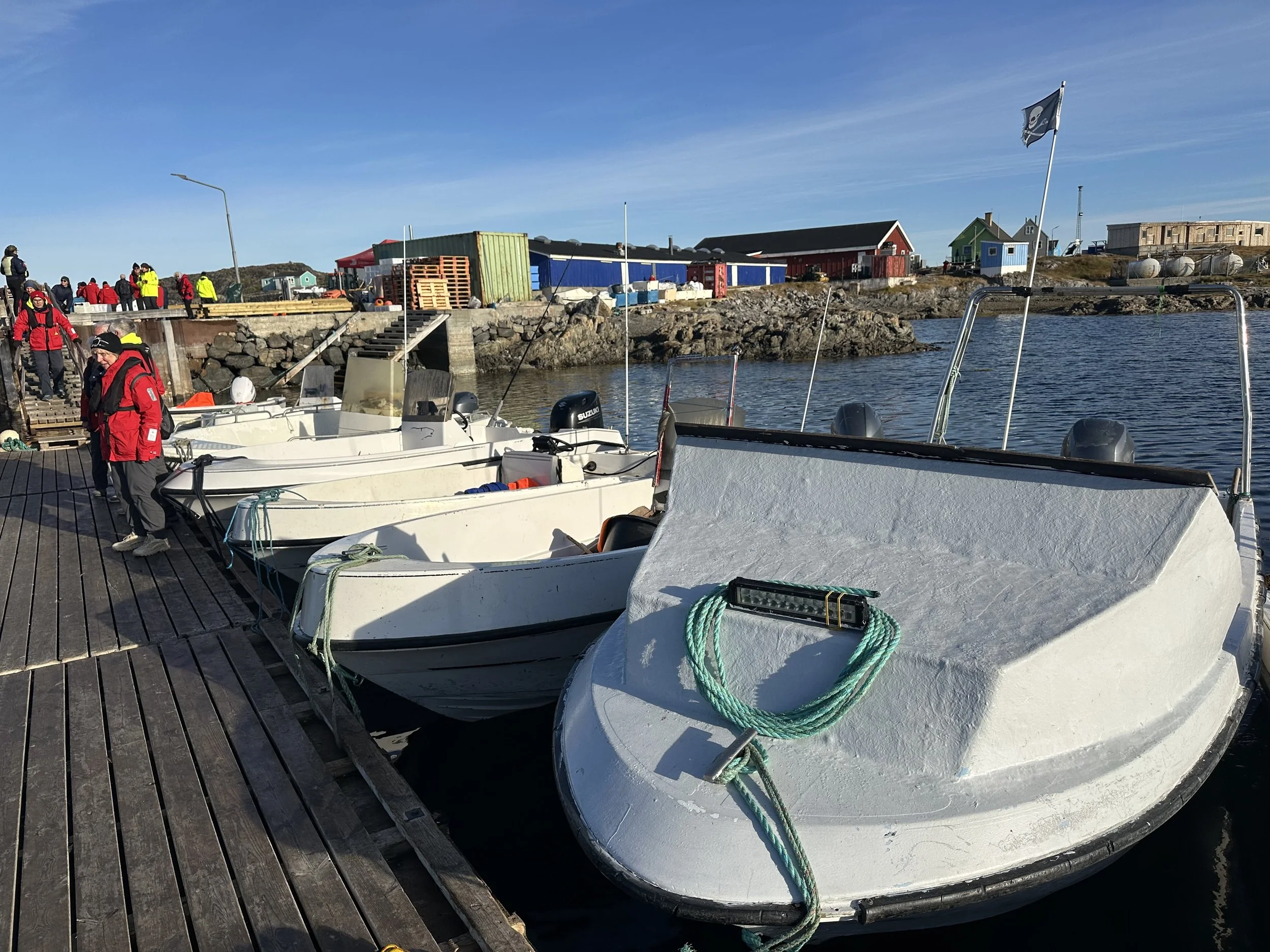
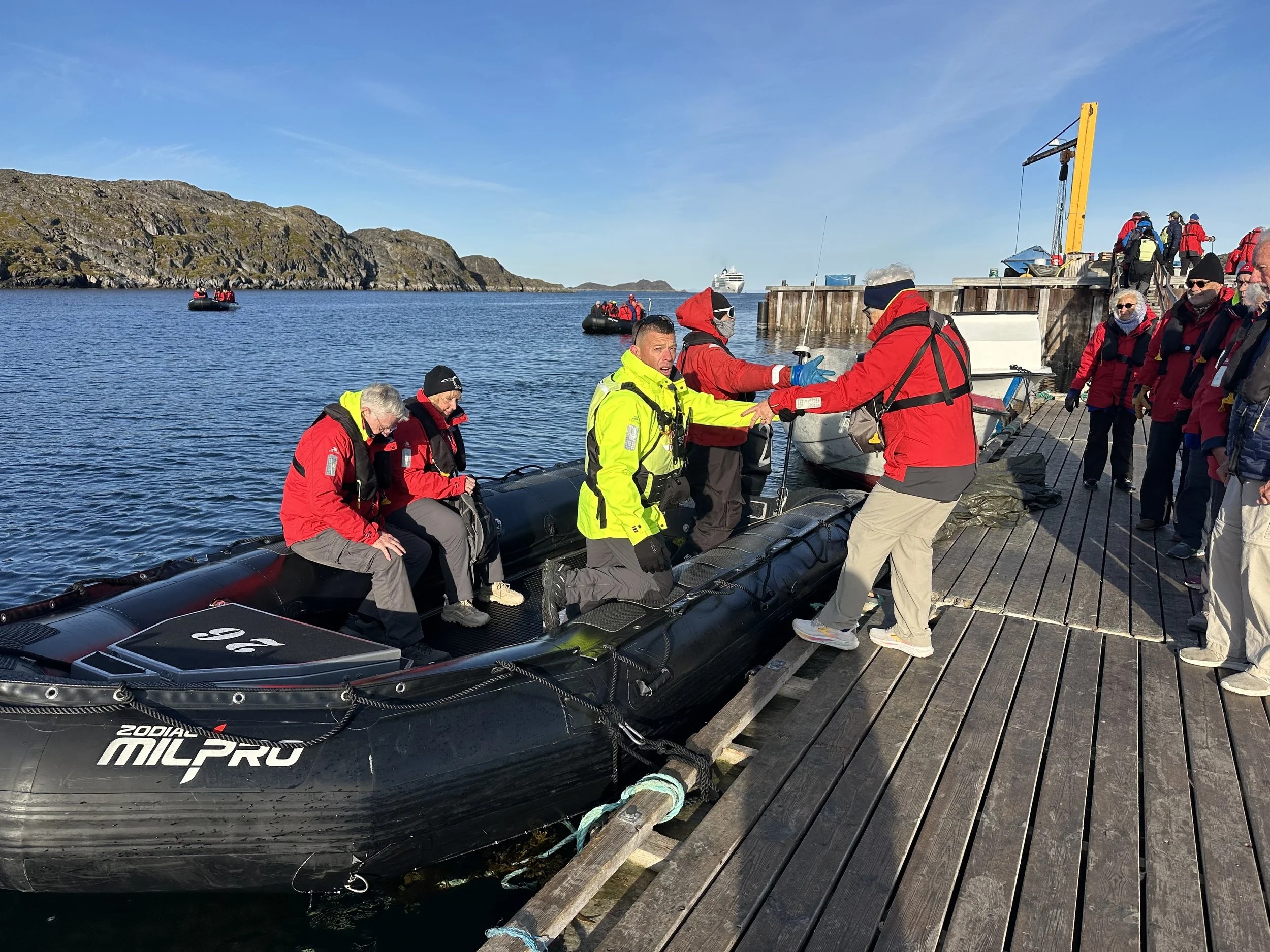
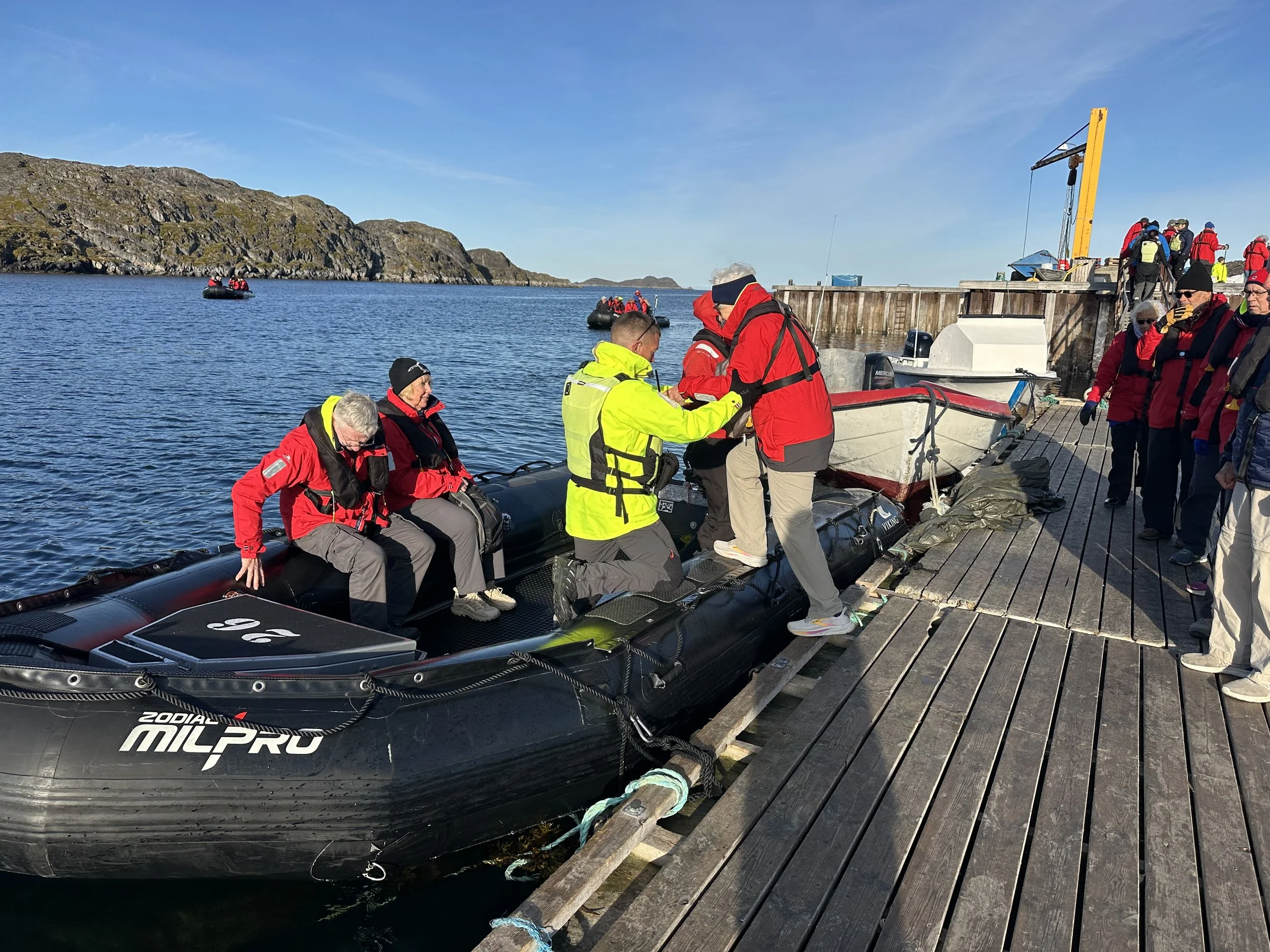
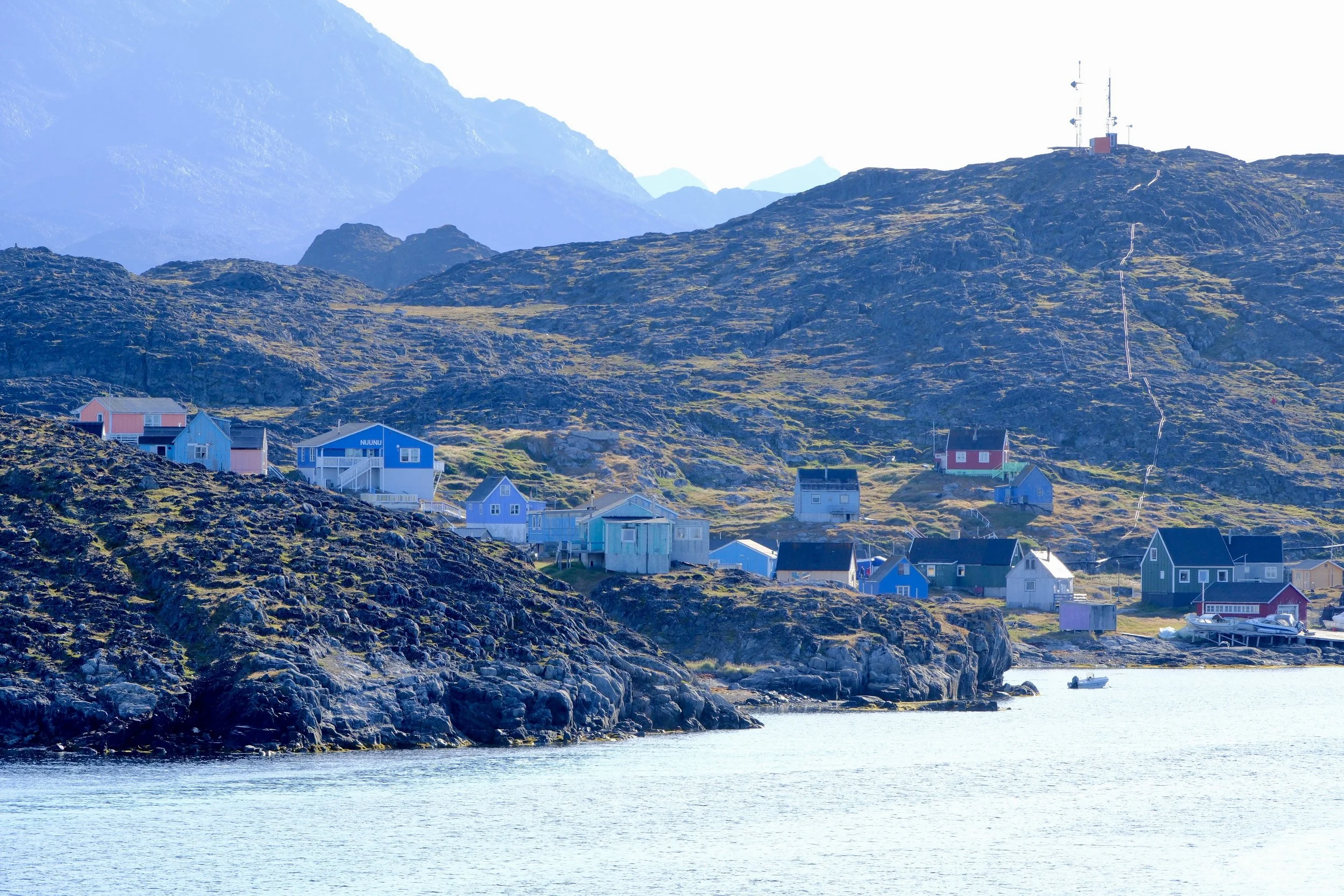
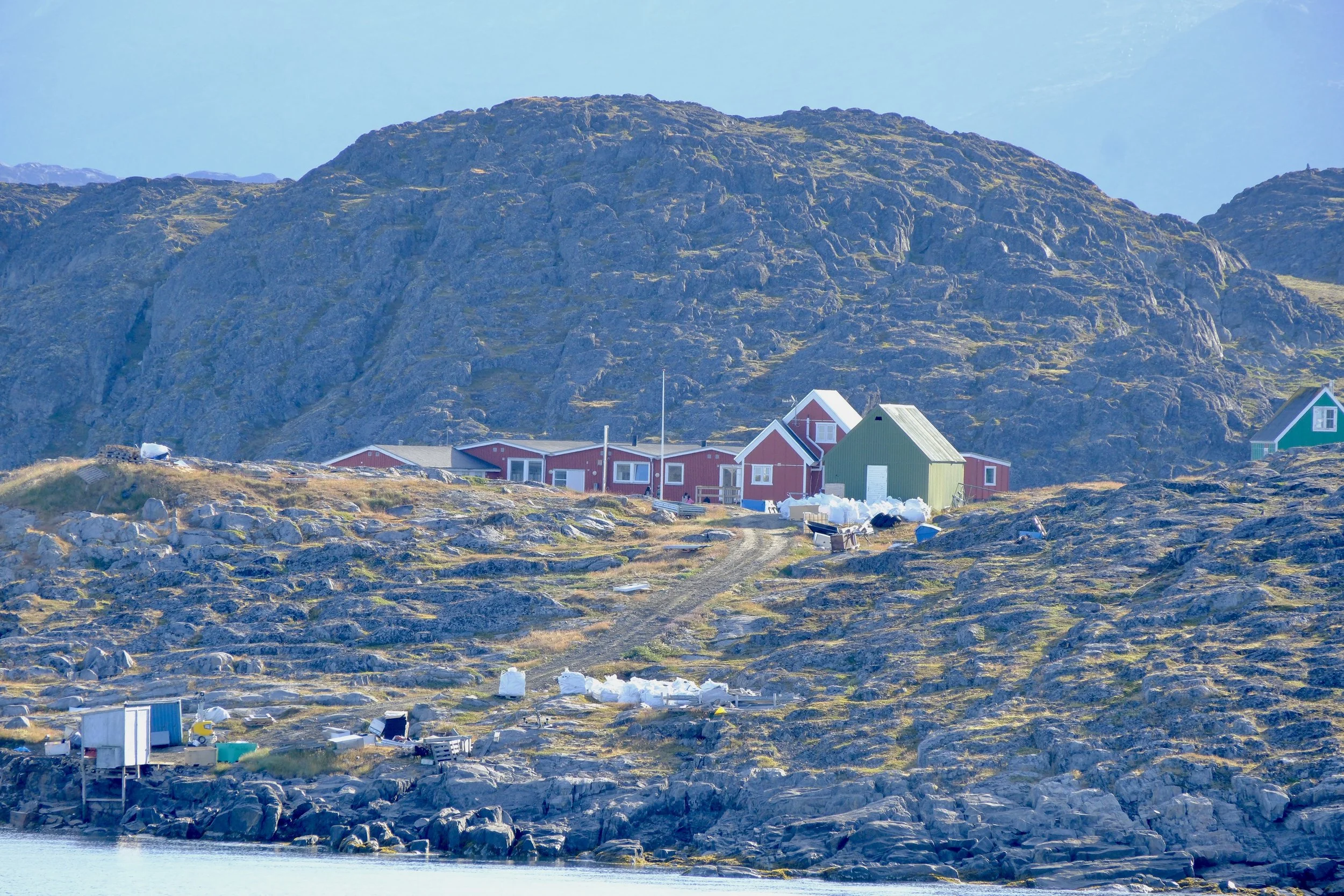
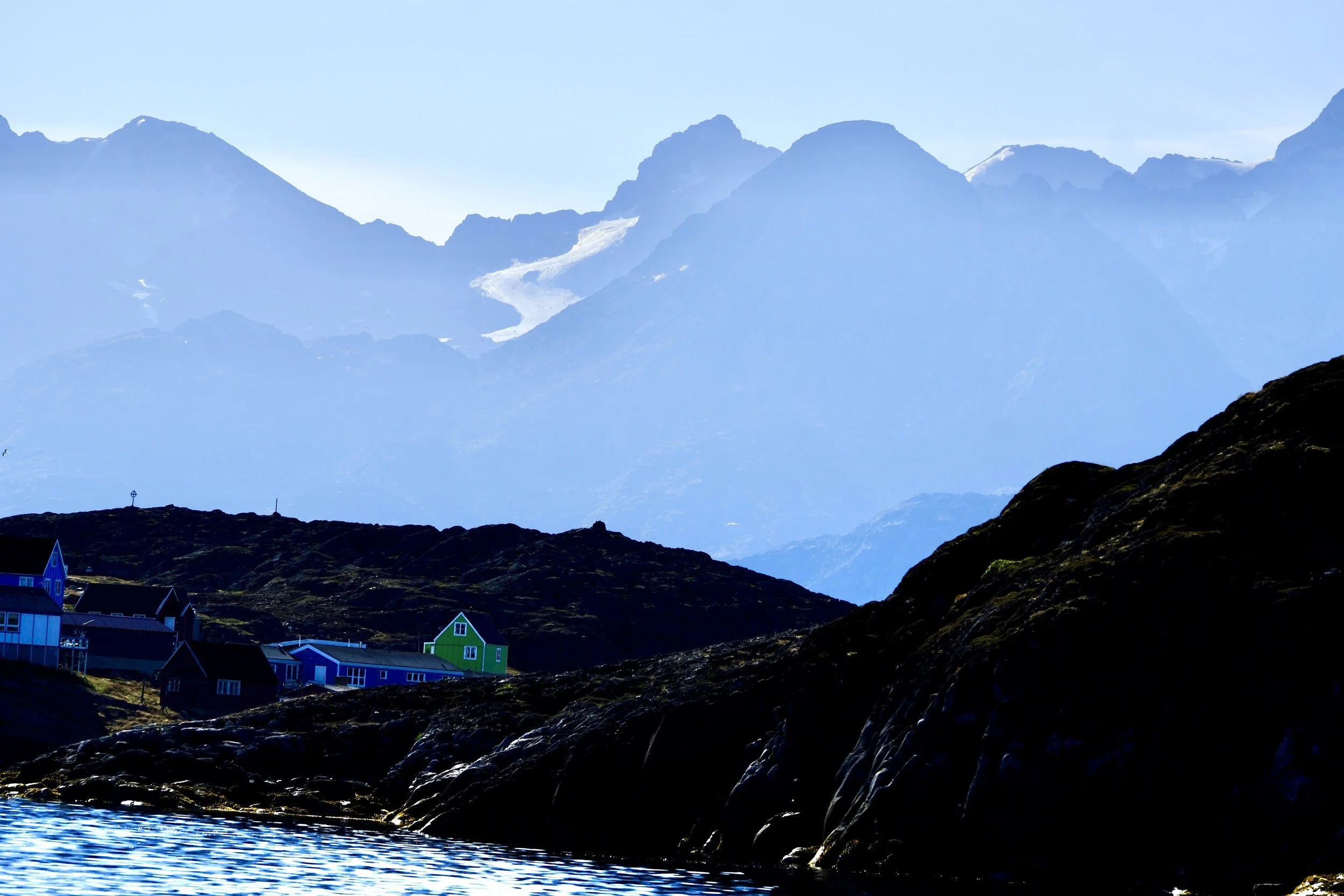
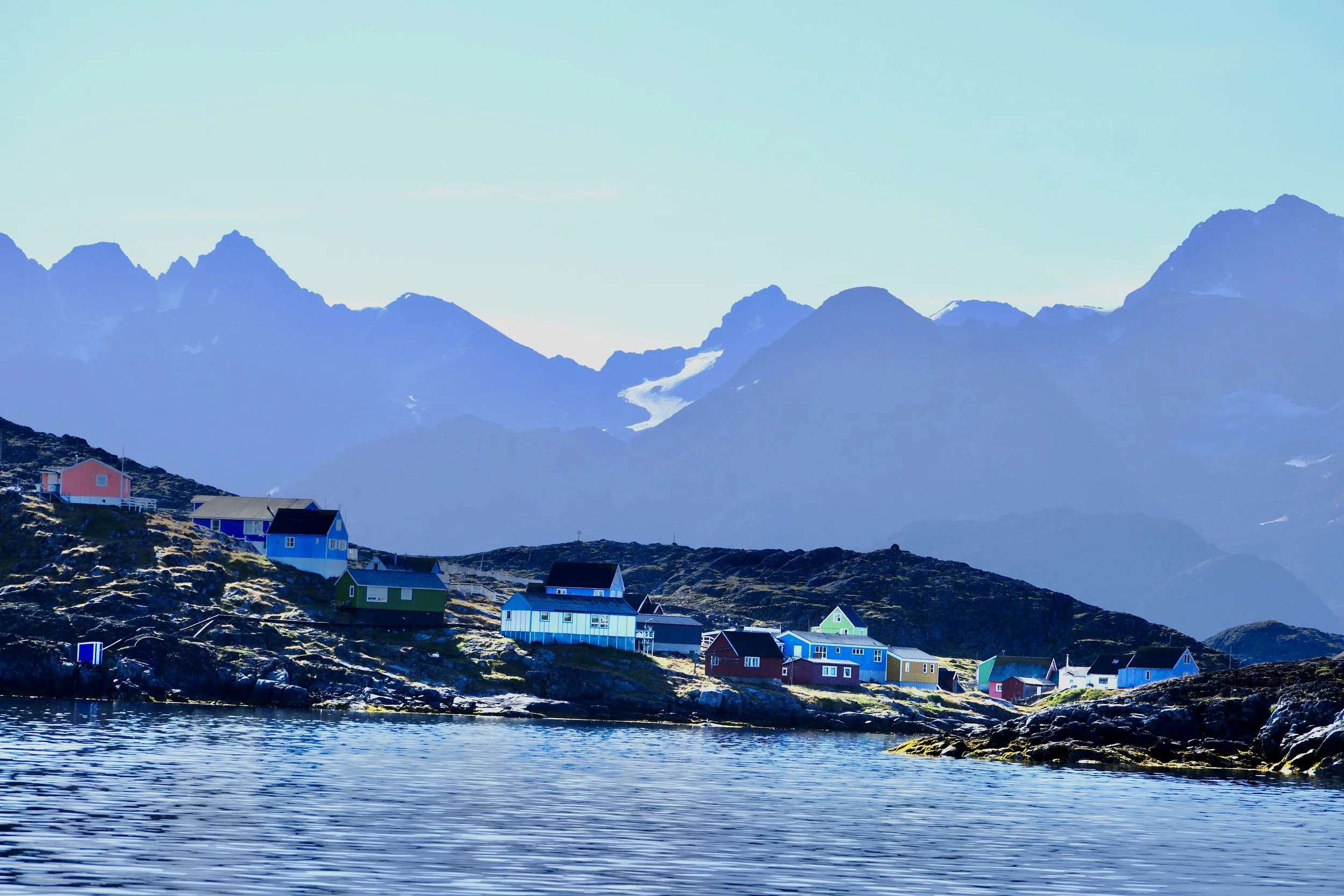
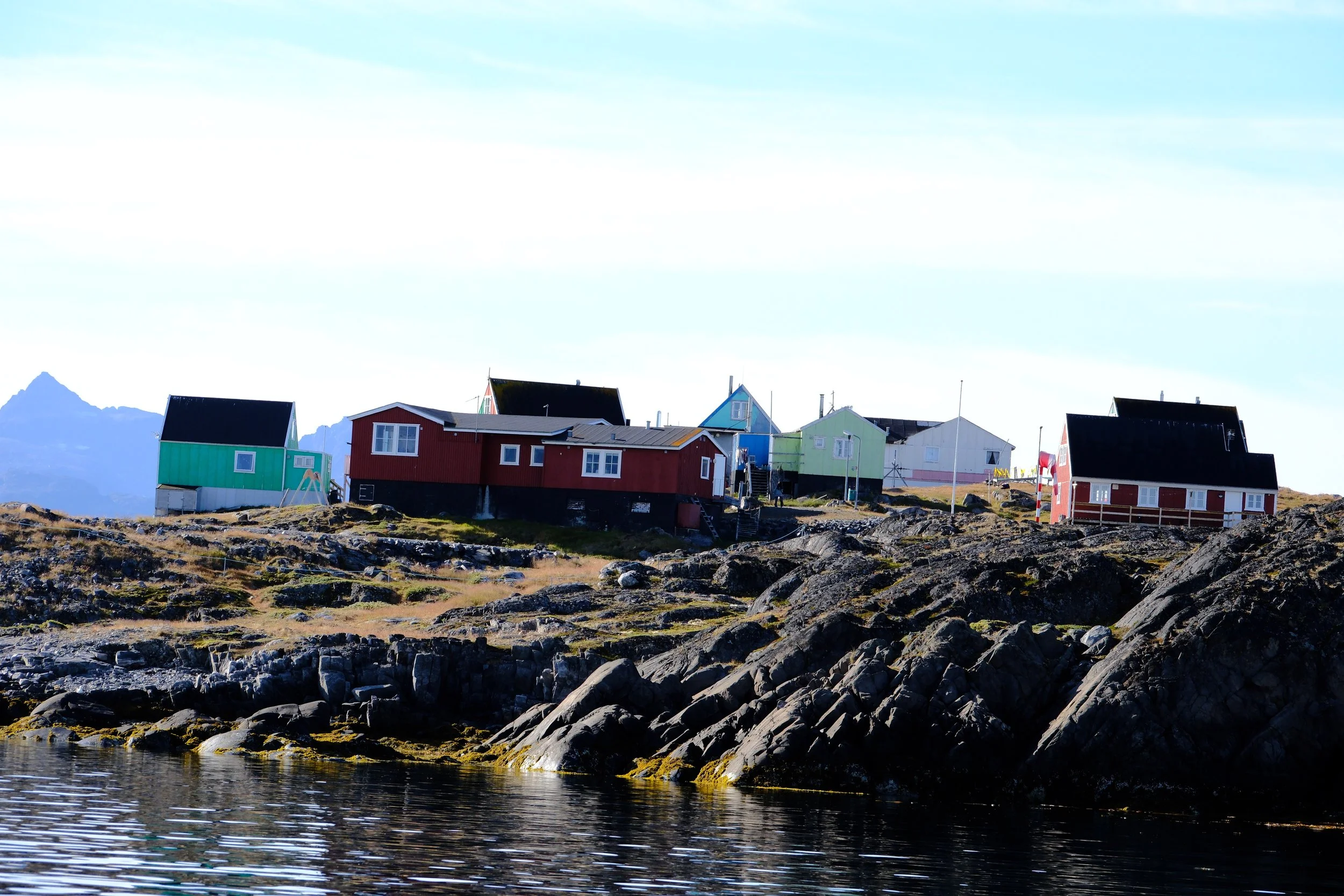
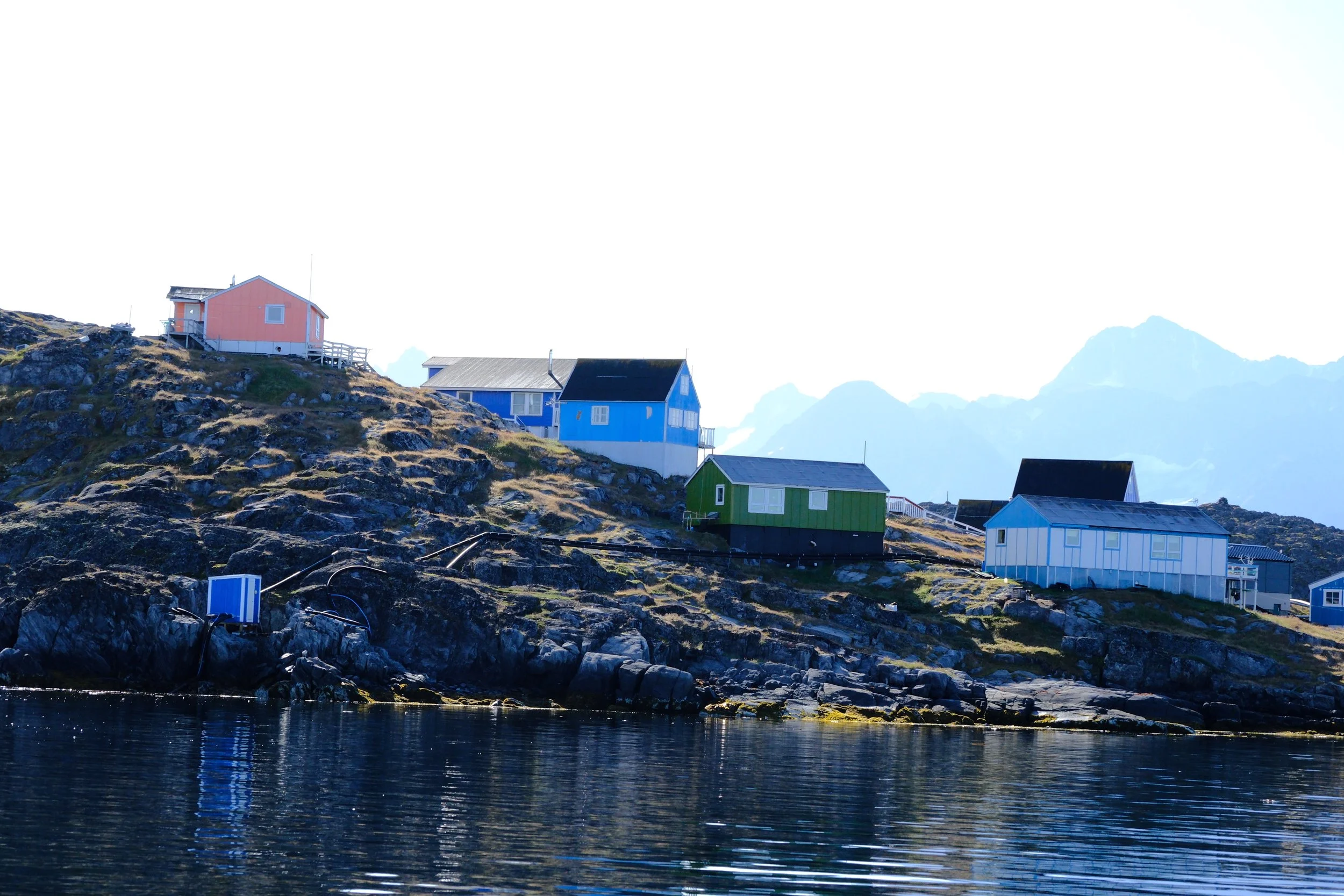
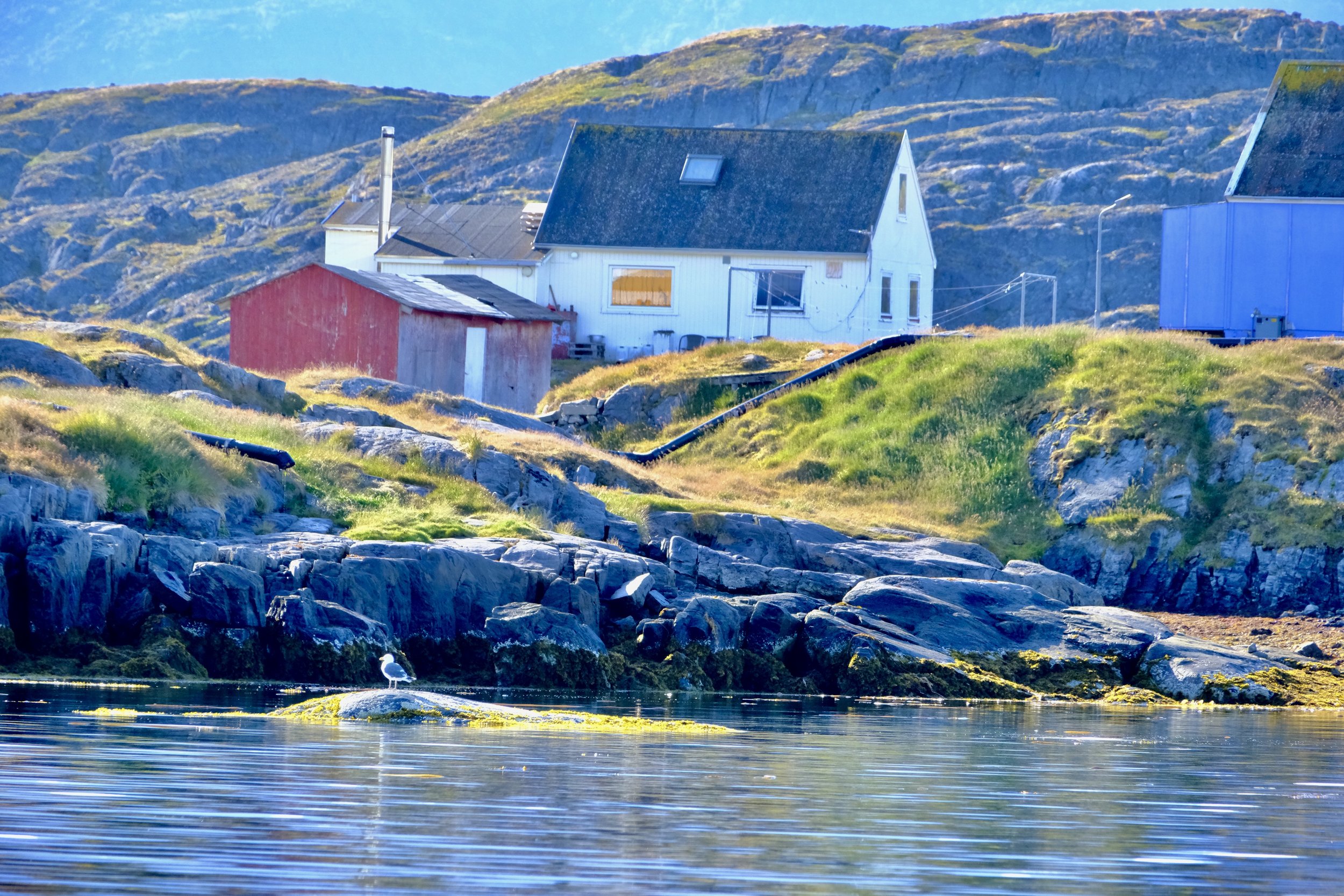
The big event today was a visit to the small village of Itilleq, population 104. It’s the first village of 55 small villages in Greenland to host visits by cruise ships. We landed by zodiac boats and were hosted for tea and bread by the lady of the house. She spoke no English, nor did her husband or son(?), so we didn’t learn much. Judy did ask a question that caused the lady to go outside and bring back an English-speaking man.
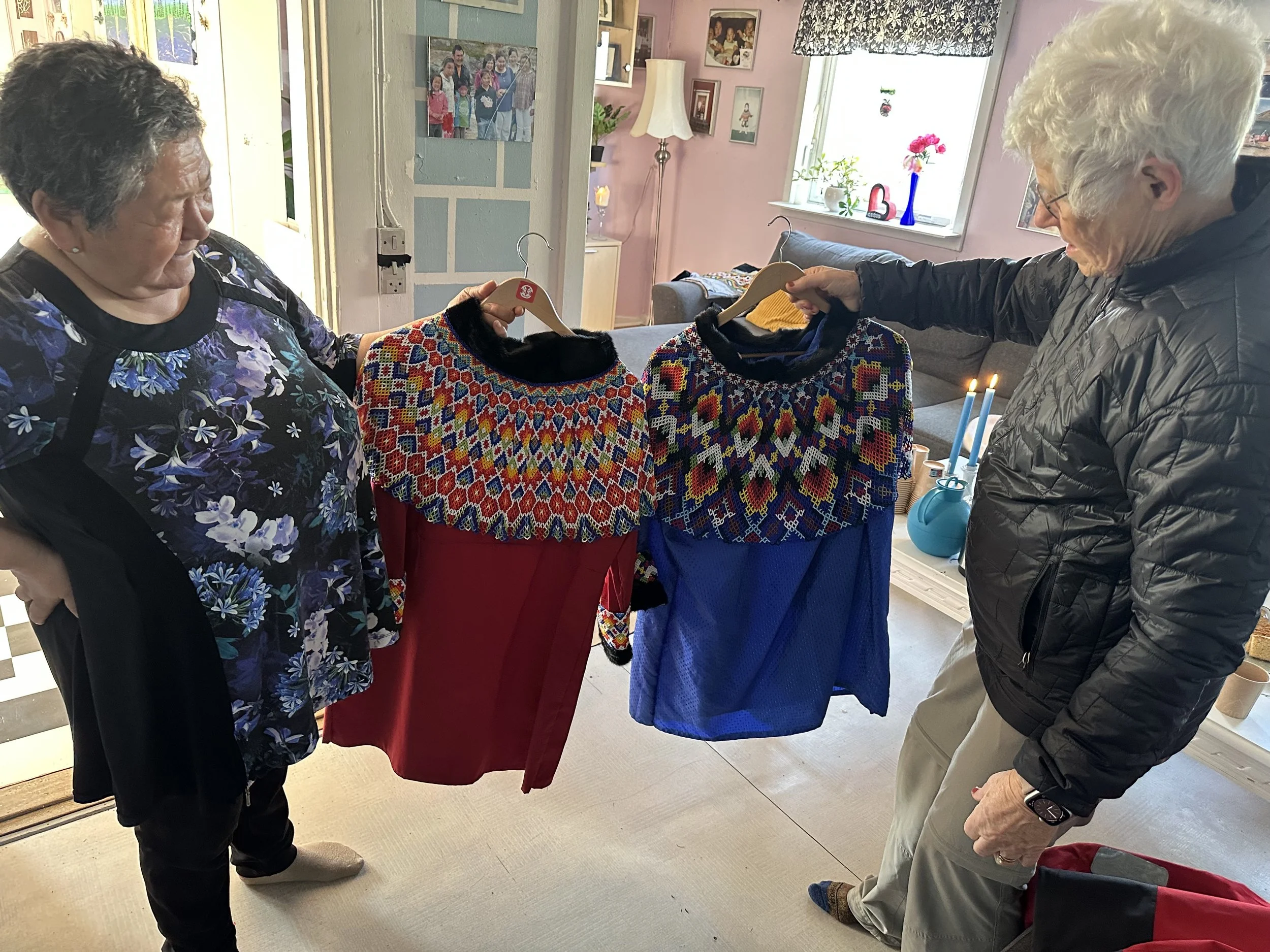
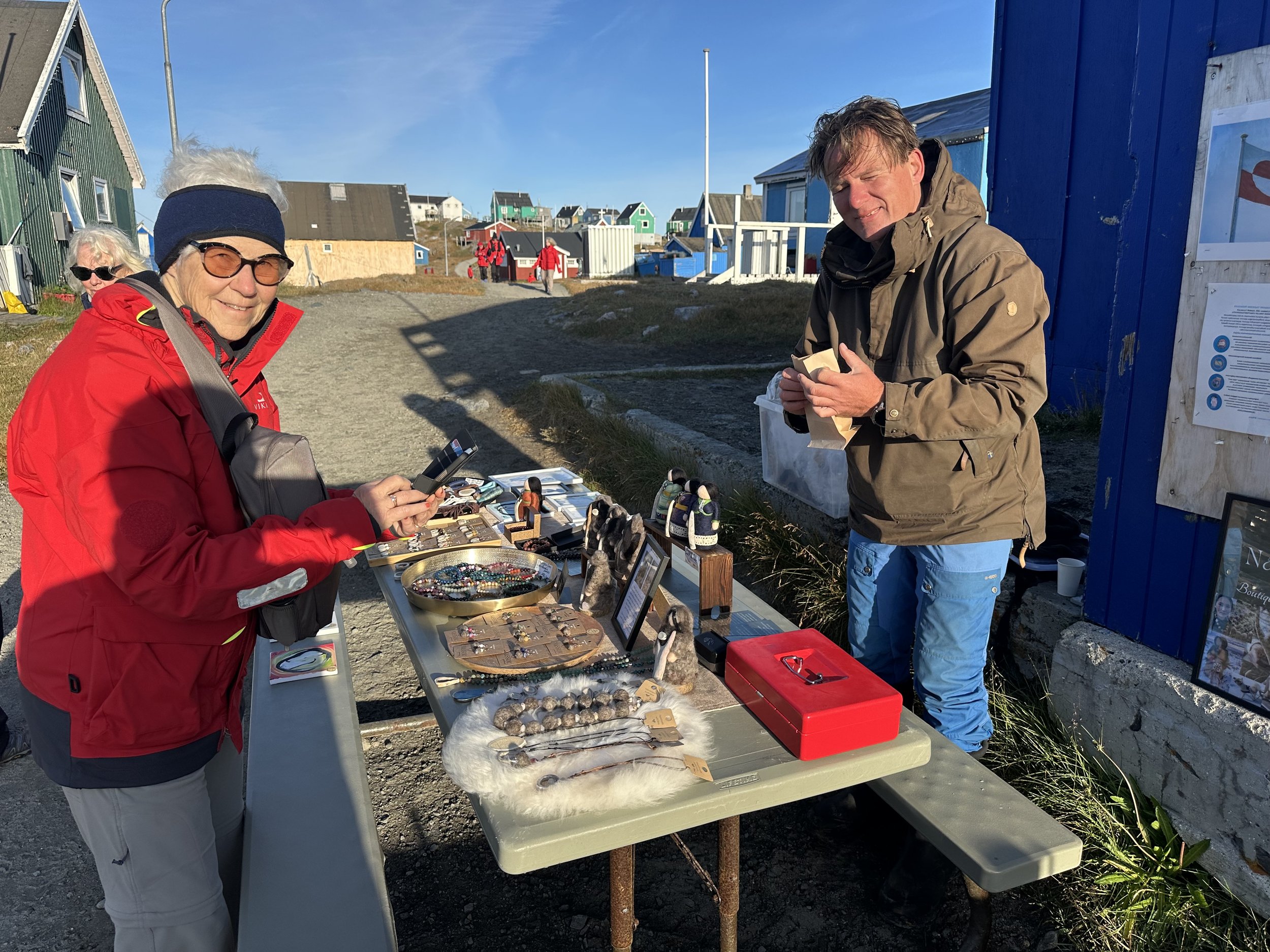
The man is, I’m guessing, Danish, and for seven years was the principal of the local school. Today, three years later, he works for the government in Sisimut, a few kilometers from Itilleq, reachable only by boat. He told us the lady of the house is the town nurse, her husband is retired and the other man is a house painter. The lady also makes some sort of decorative clothing (see the pictures). Judy and she had a hand waving conversation admiring her handiwork.
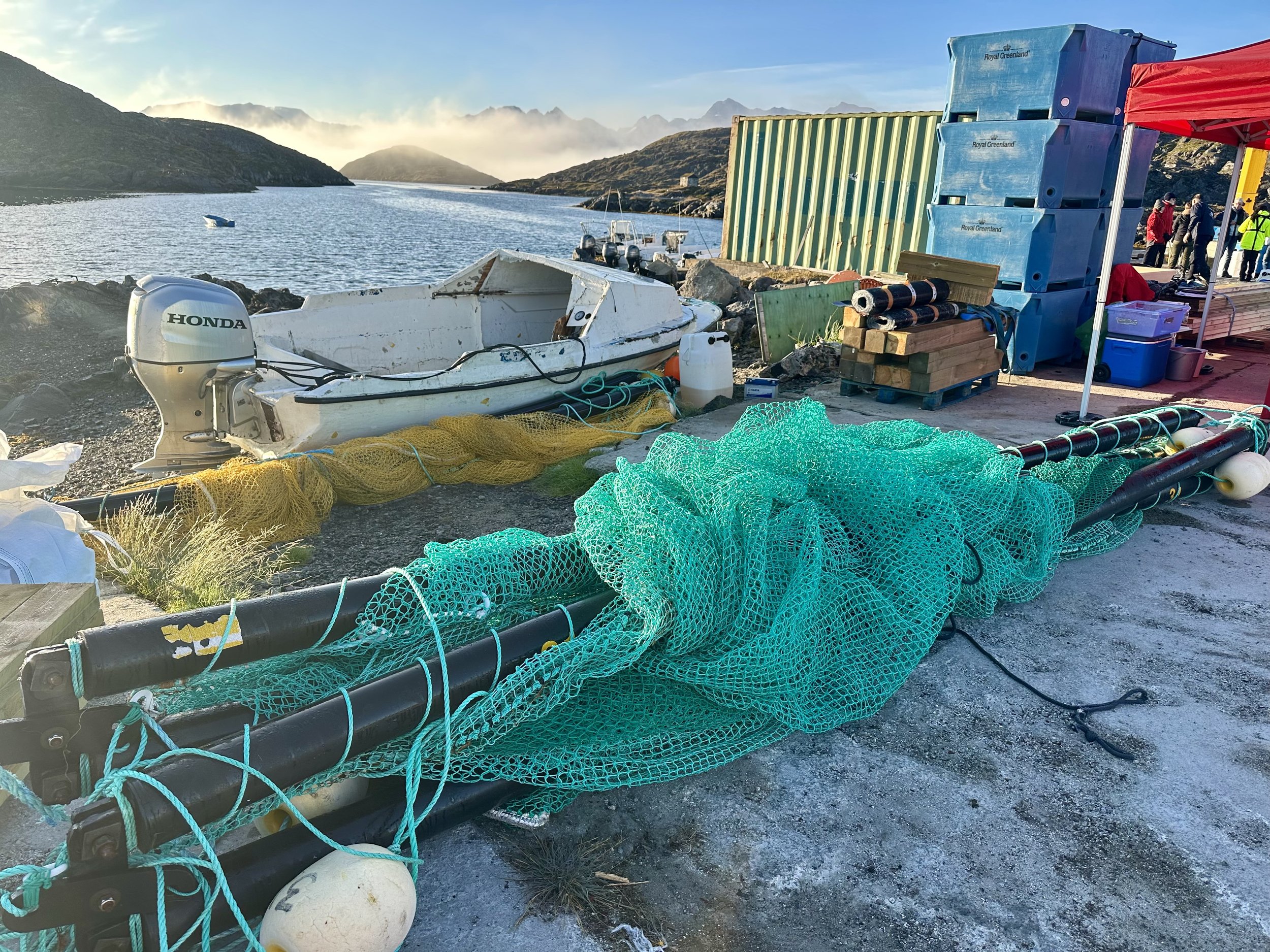
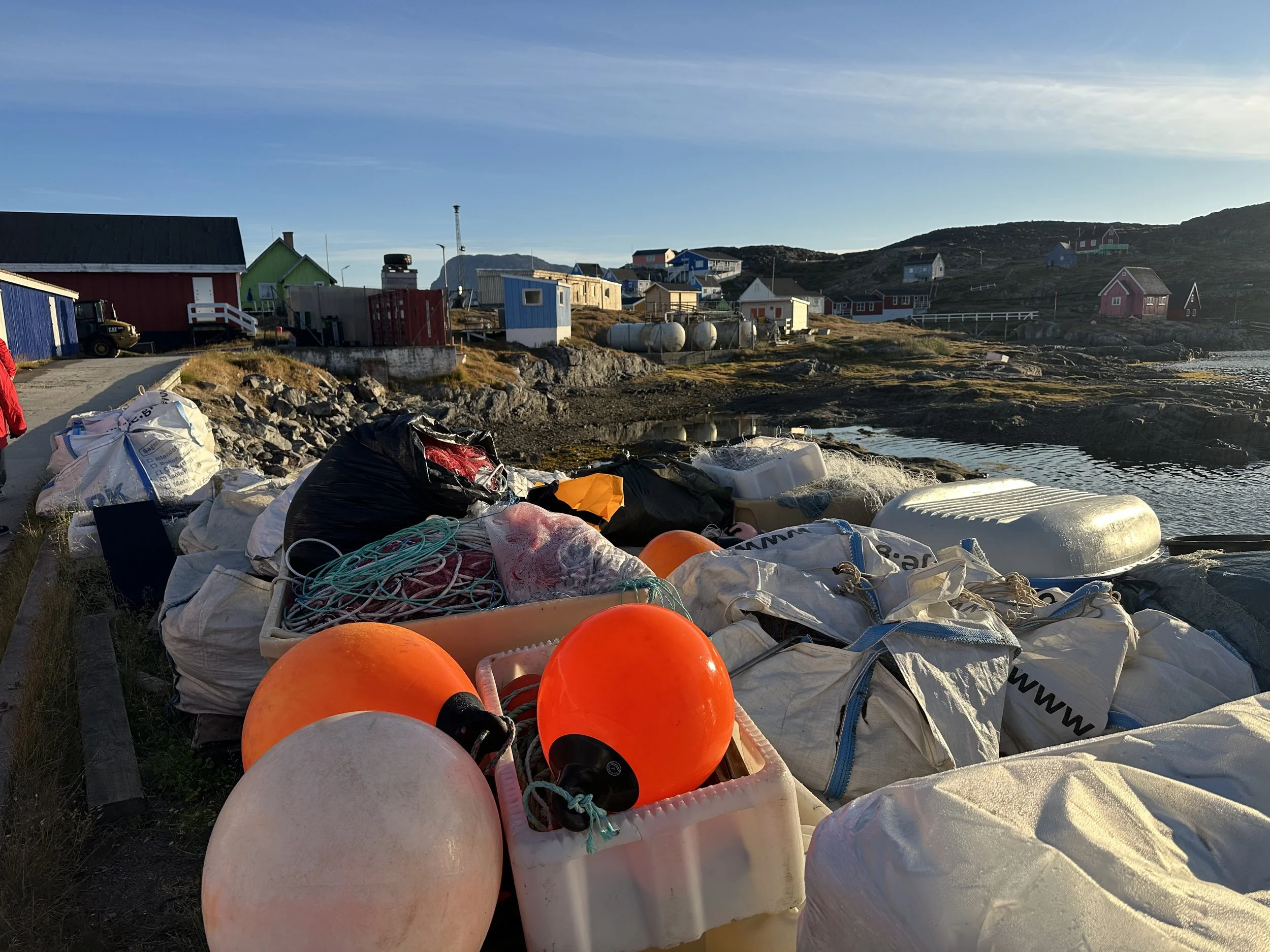
There is a fishing operation in town that employs some of the people. Others fish and hunt. We saw a man walking home with two caribou haunches over his shoulders. Subsistence hunting and fishing is a significant part of this town’s economy.
Before going, we were given strict instructions for our visit:
- Take your shoes off before entering the home
- Don’t take pictures of kids unless parents give permission
- Don’t take pictures of anyone unless they agree
- Make sure the person’s “yes” is genuine. Inuit don’t like to say no
- Don’t take pictures of dogs. They are someone’s property
- Don’t approach dogs. They are hunters and will attack someone who is not their owner. A dog that harms a human is put down. In some places, a dog who sees another dog attack a human is put down. This can destroy a person’s source of livelihood.
- Don’t take pictures inside their church
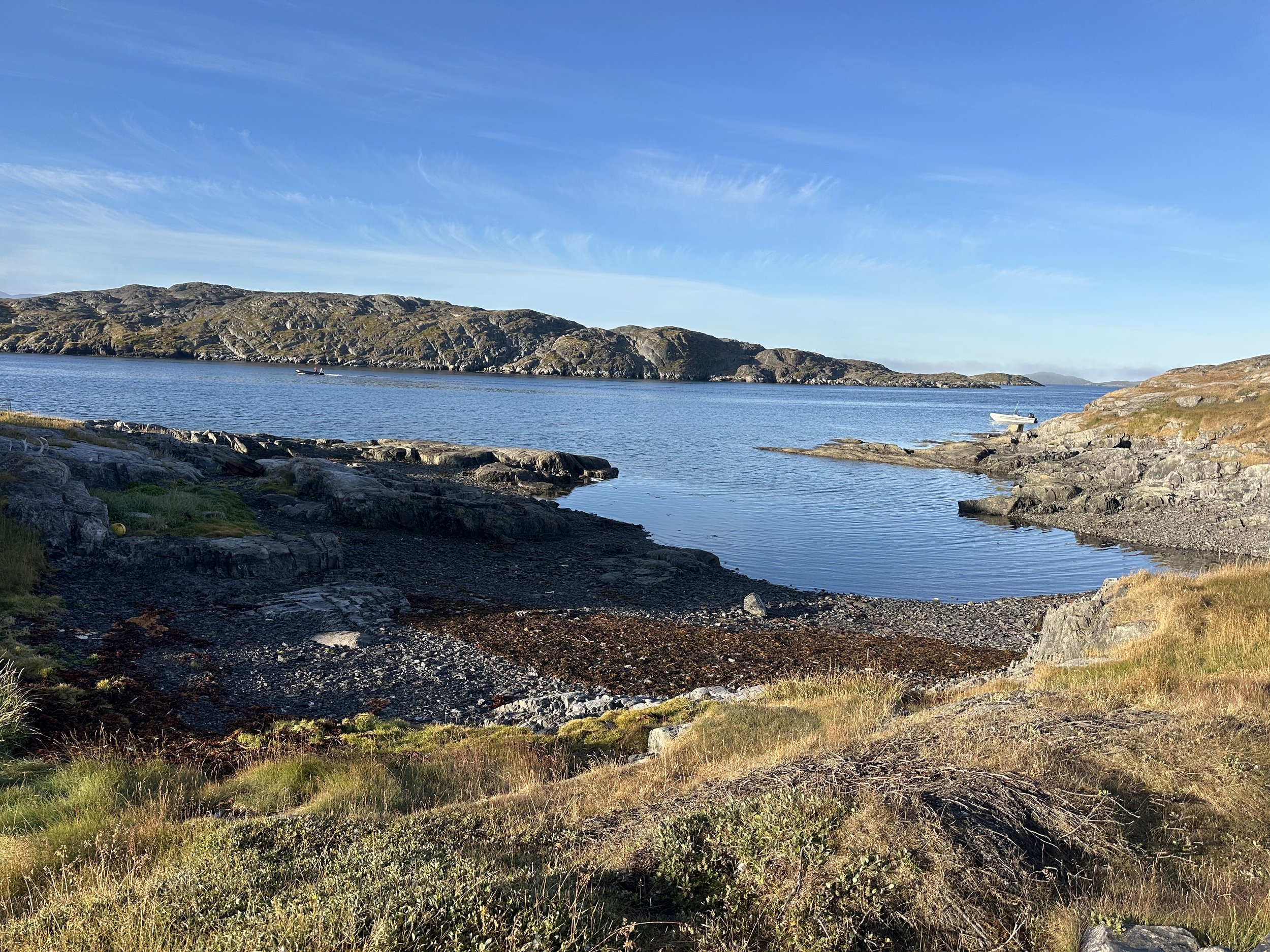
It’s a beautiful place. The principle we talked with said he and his wife lived there for seven years, raising their kids. “People asked me what I did to deserve such a fate. It turned out to be the best place we could have picked. A beautiful place with great people.”
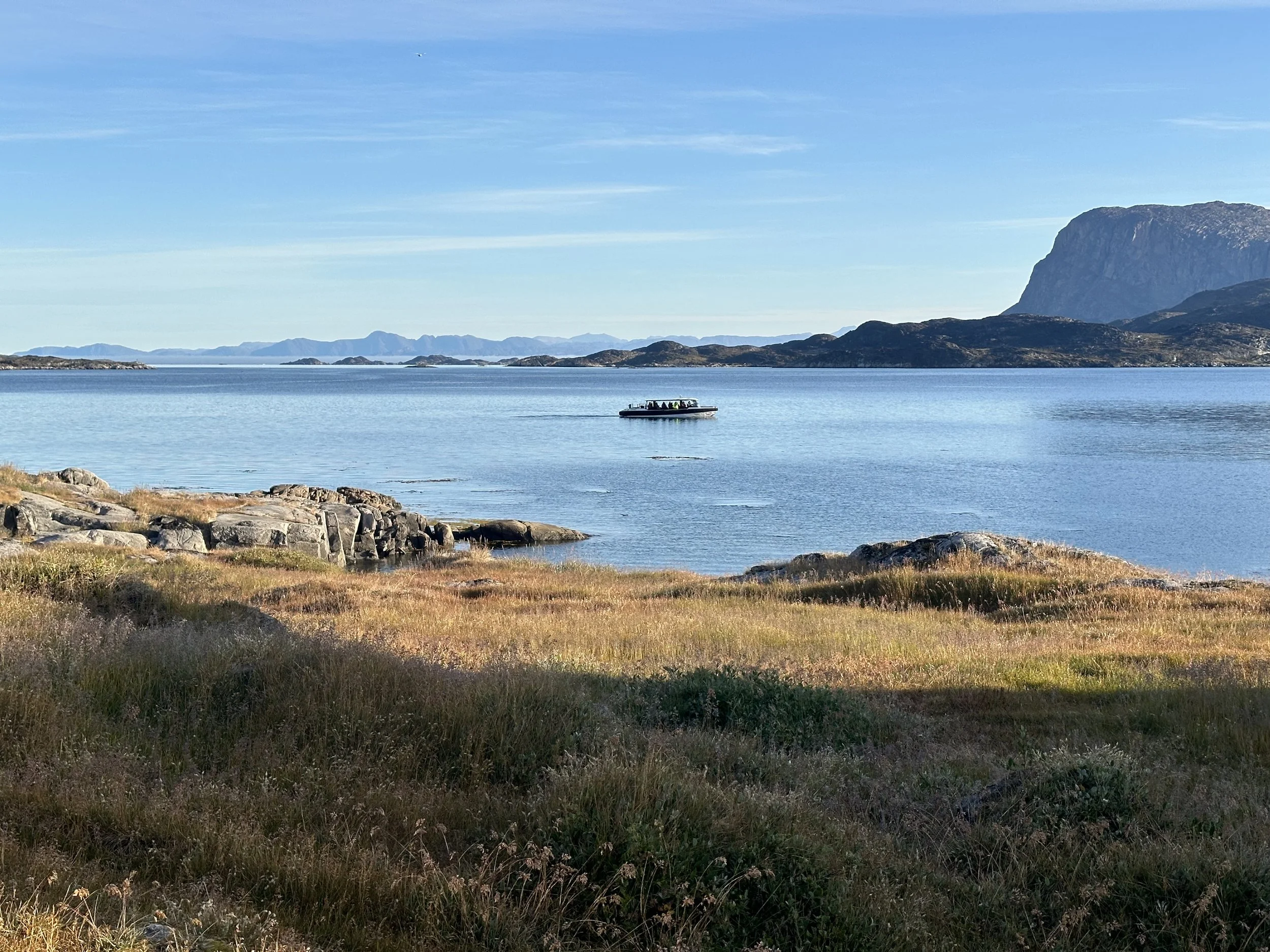
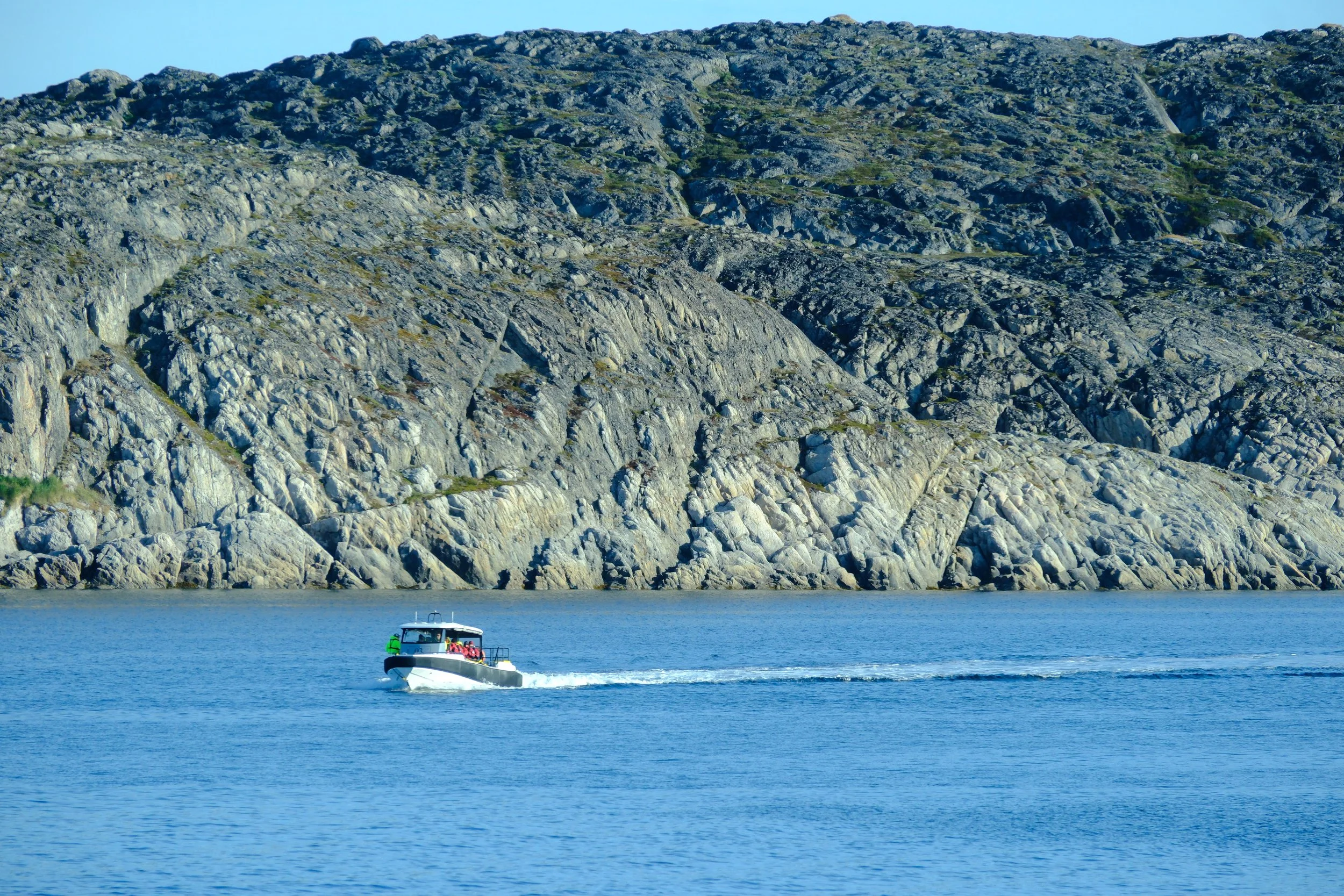
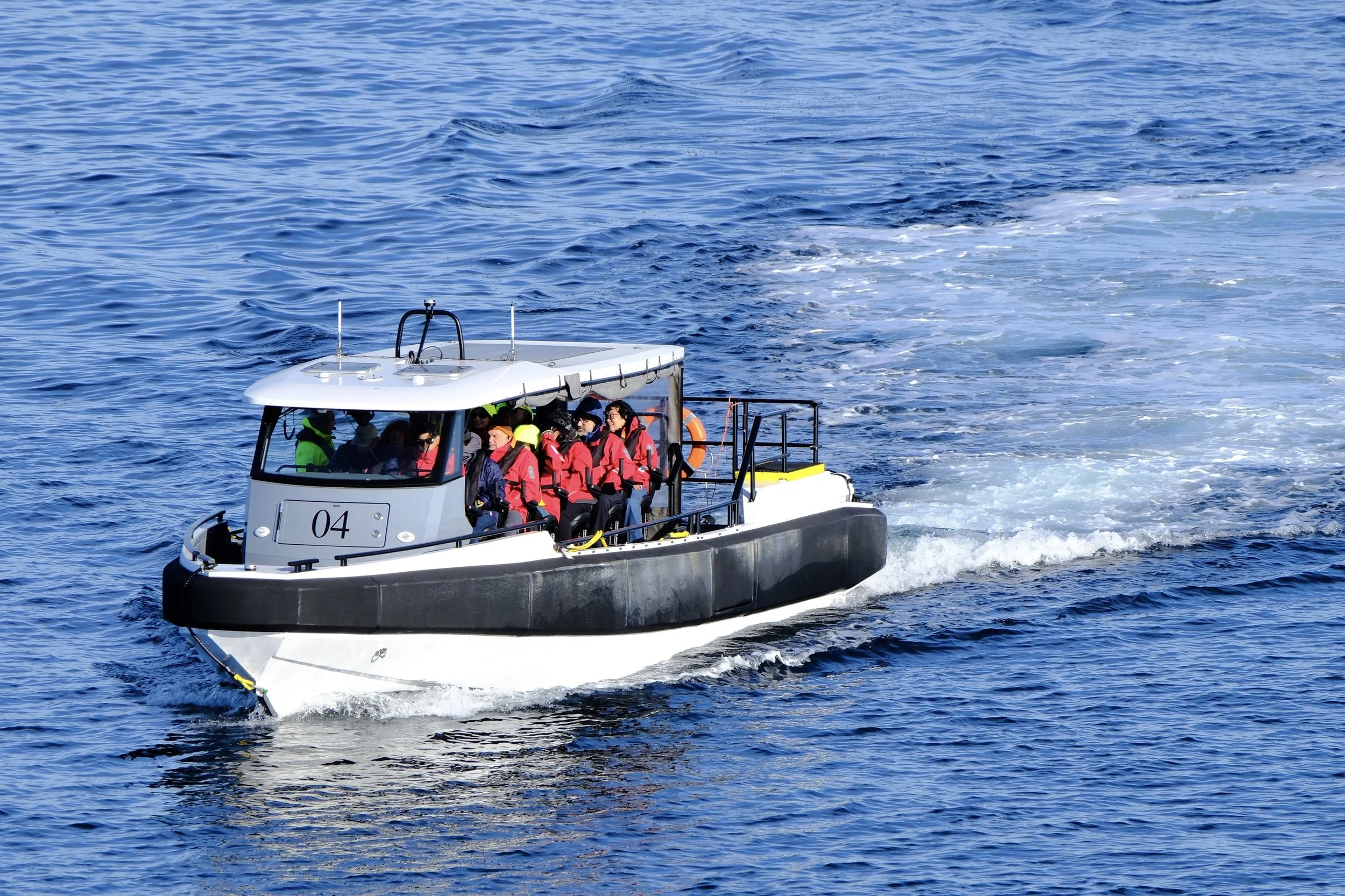
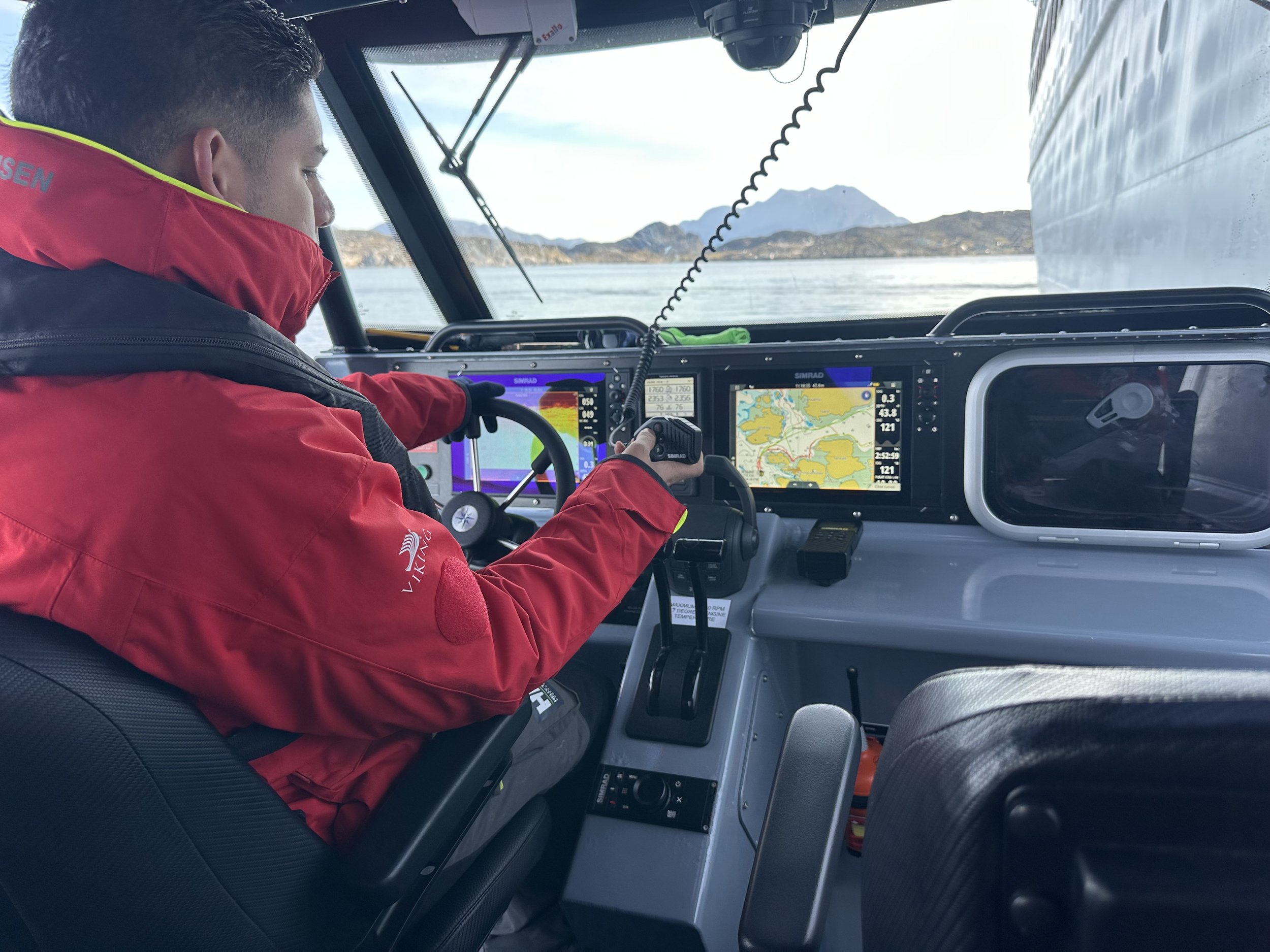
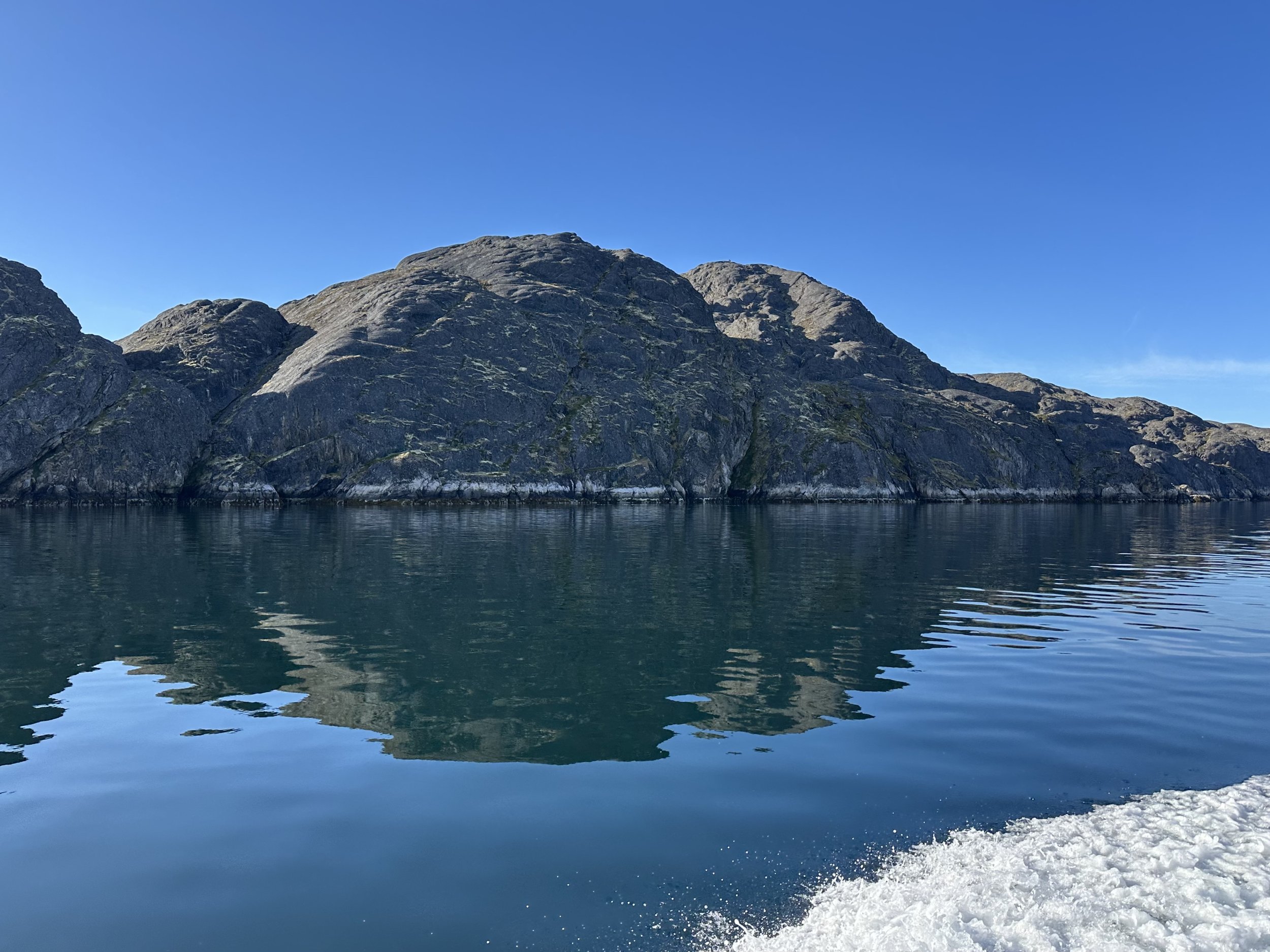
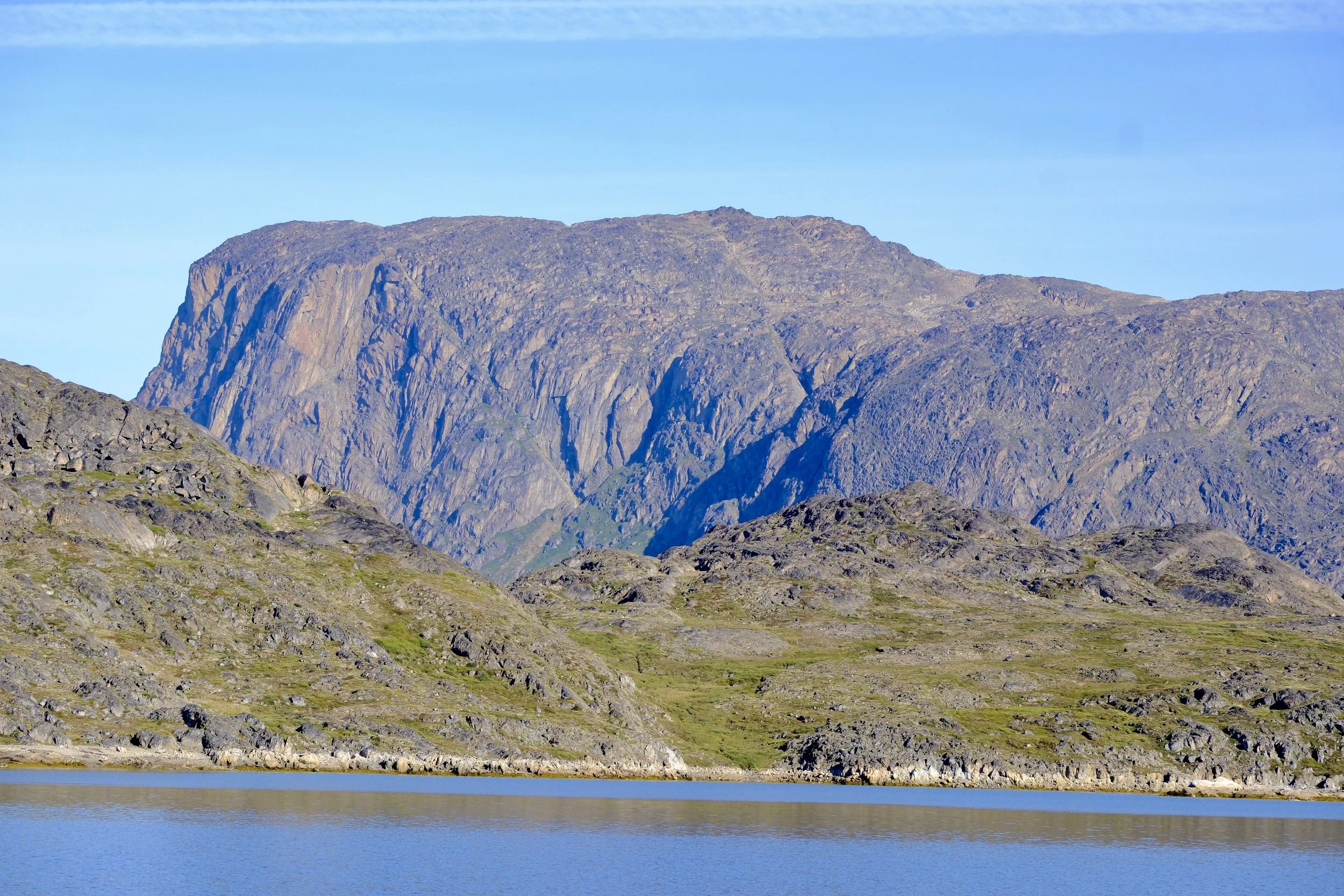
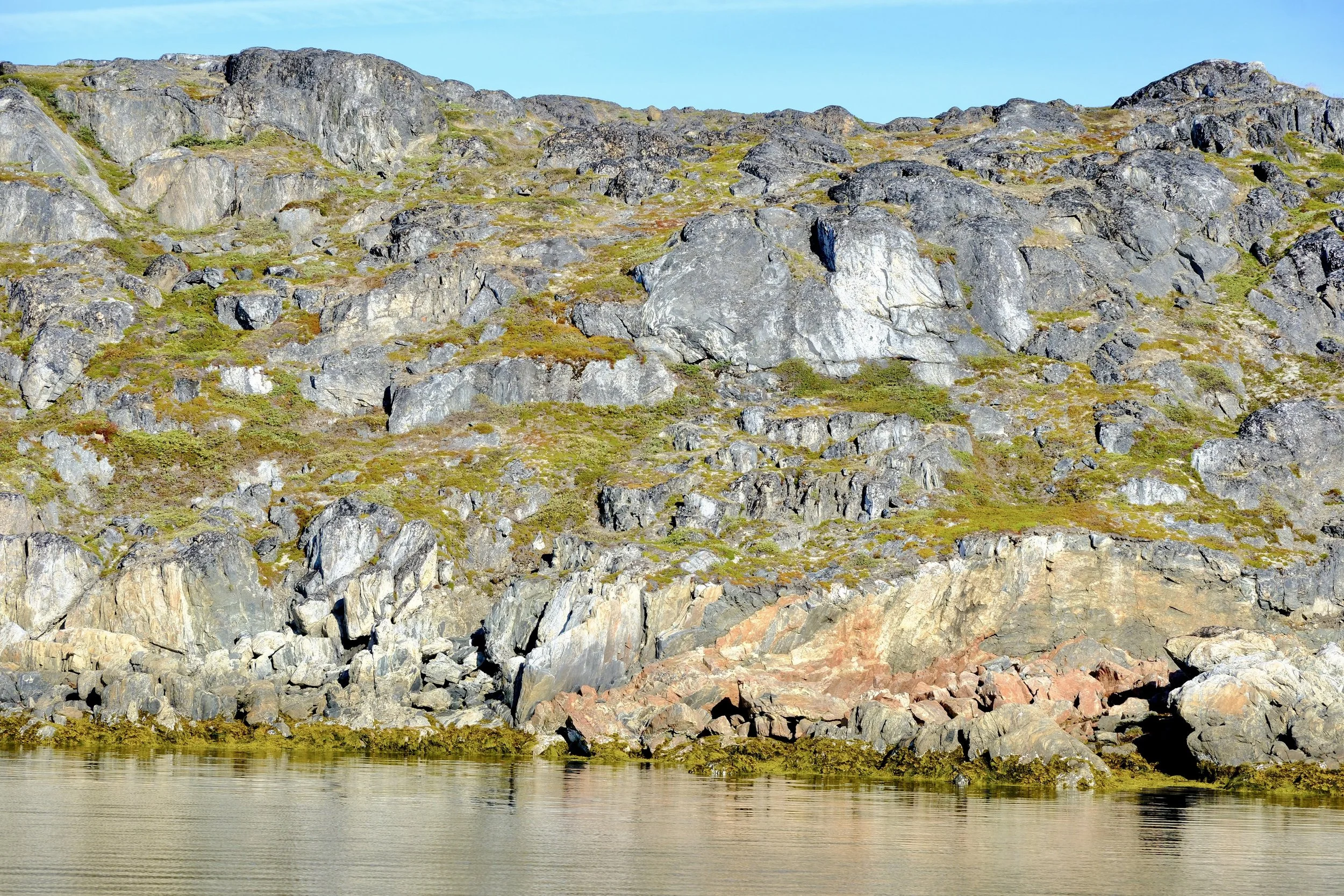
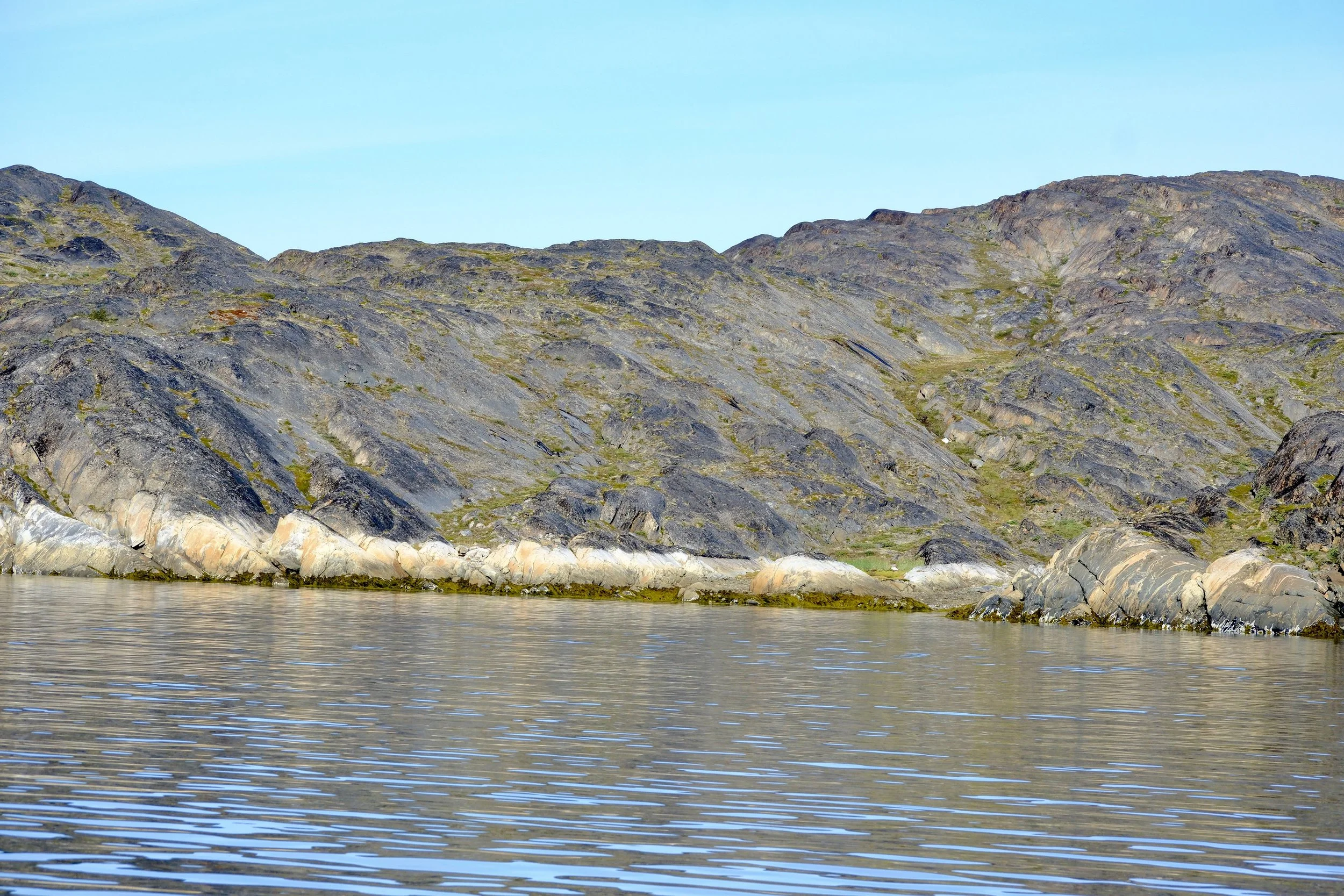
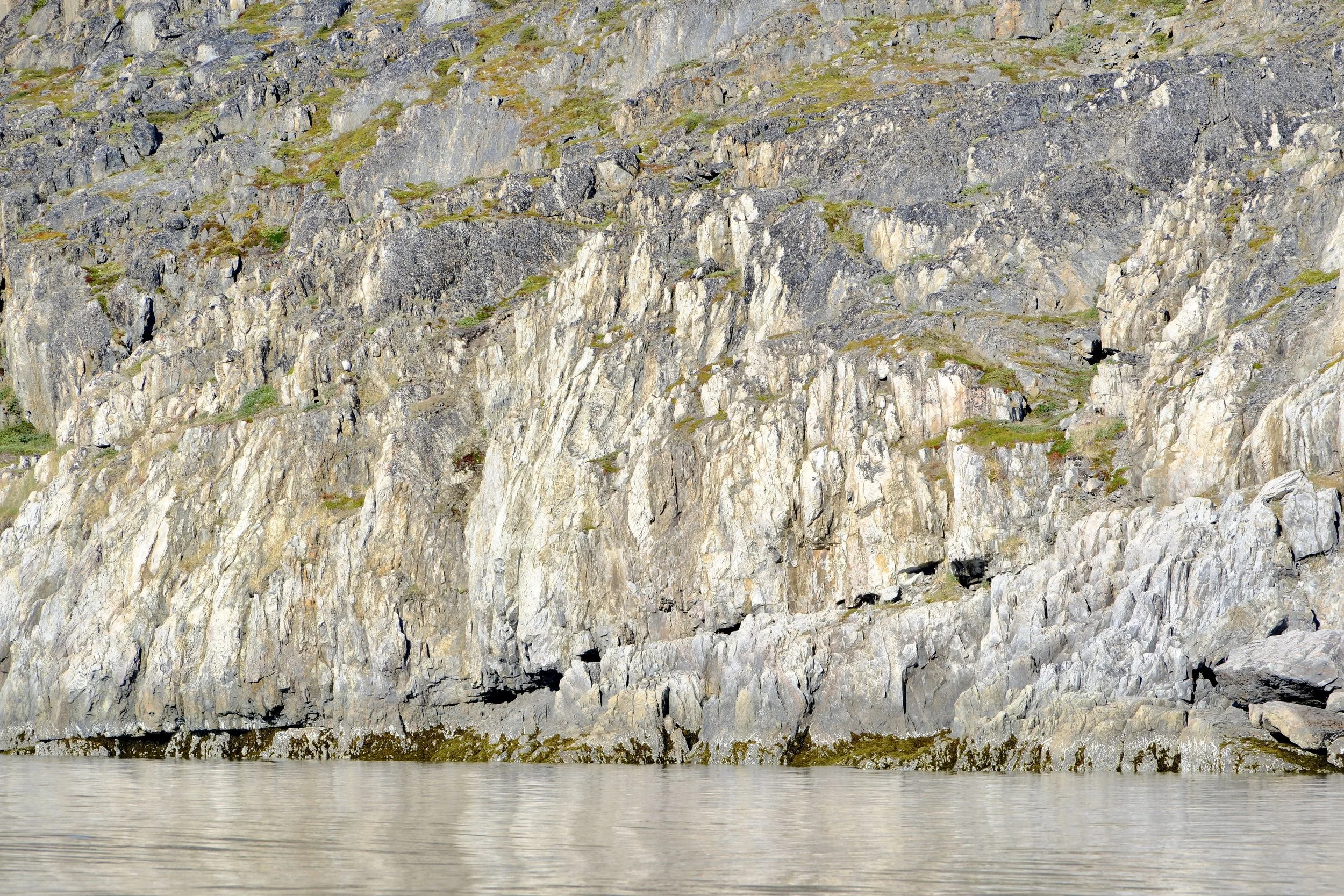
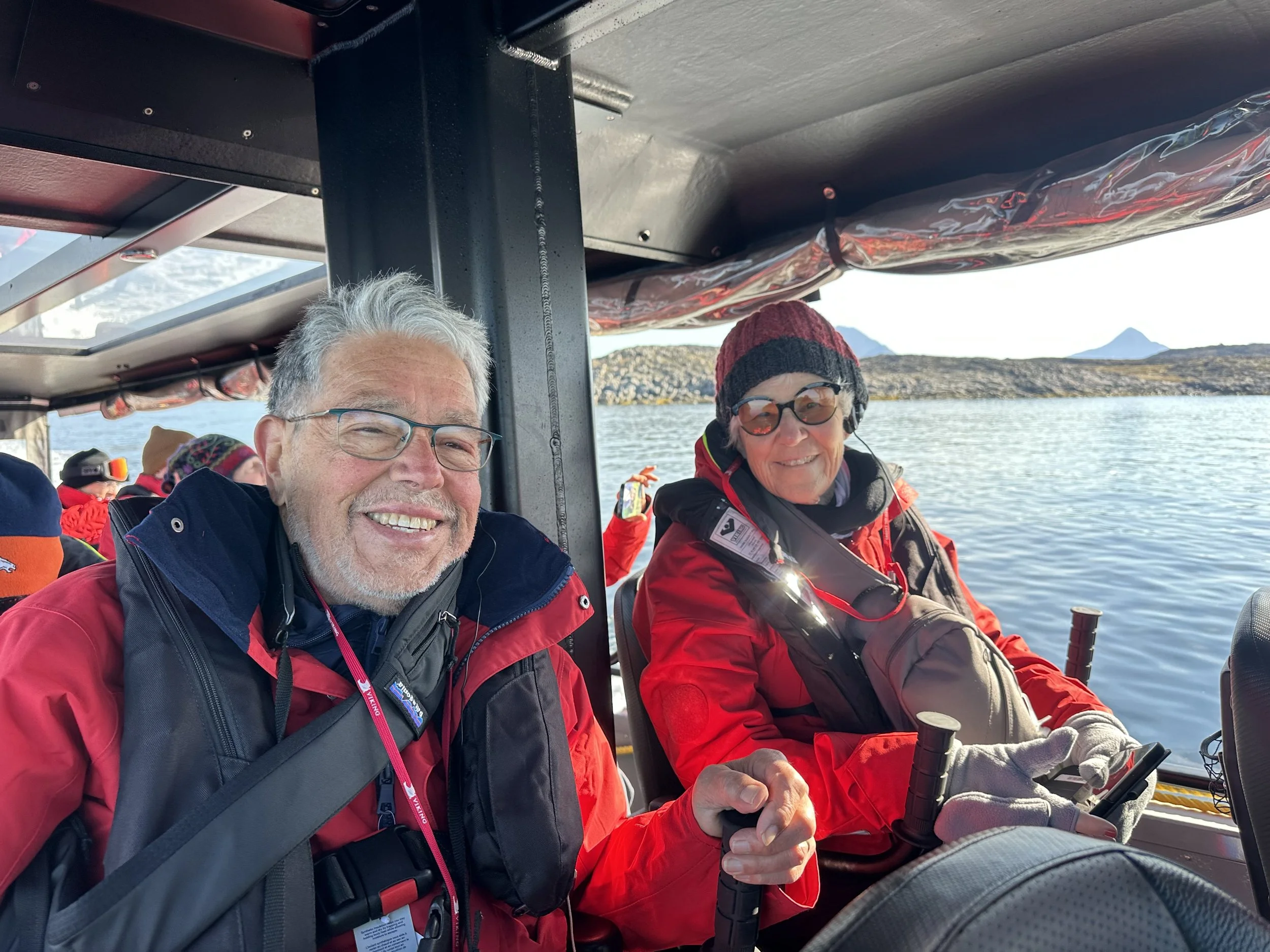
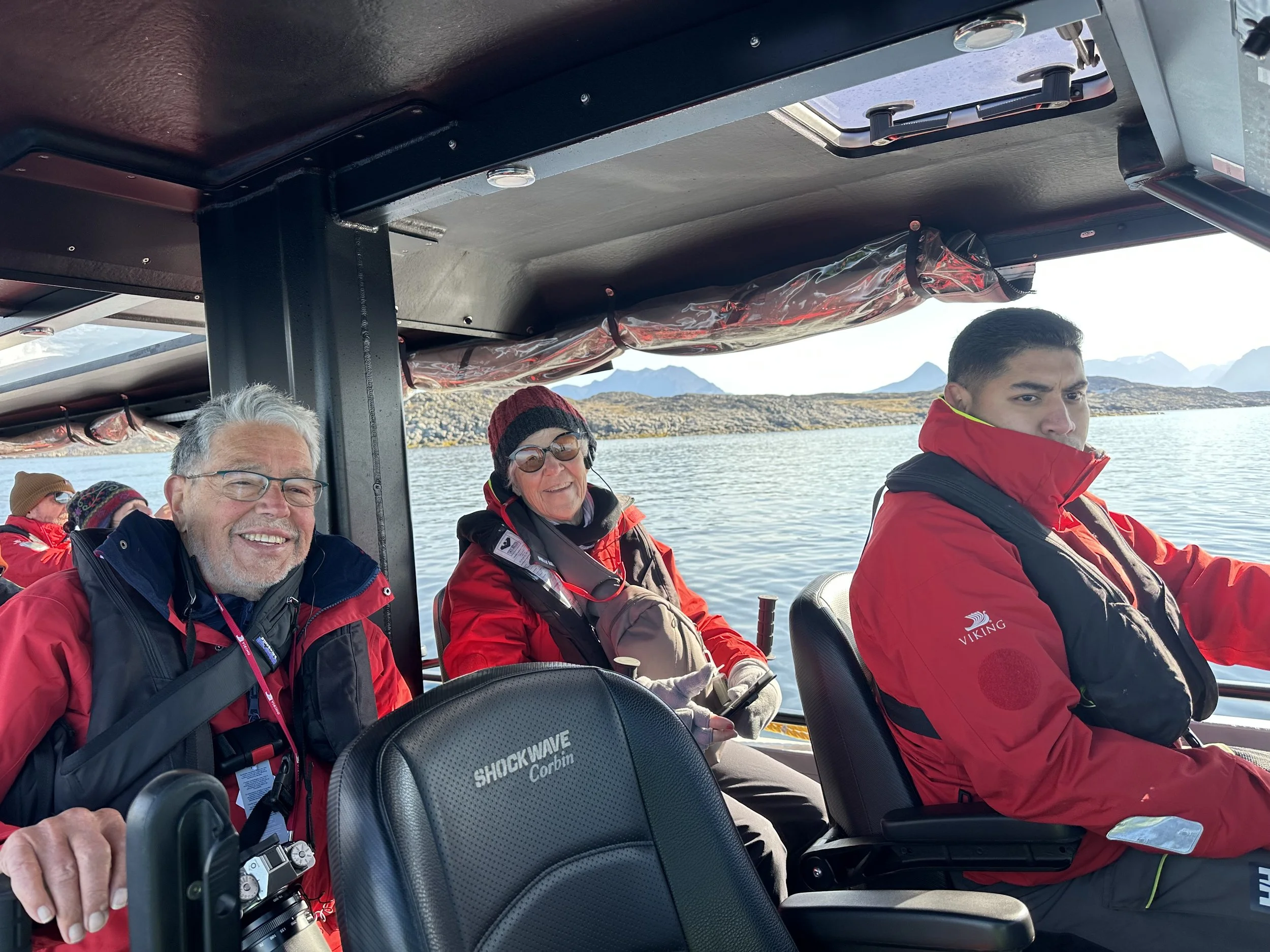
This morning we had our scheduled Special Operations Boat. Designed as a landing craft for the Norwegian military, it holds a dozen or so passengers. The idea is we can visit close-in locations where wildlife might be seen.
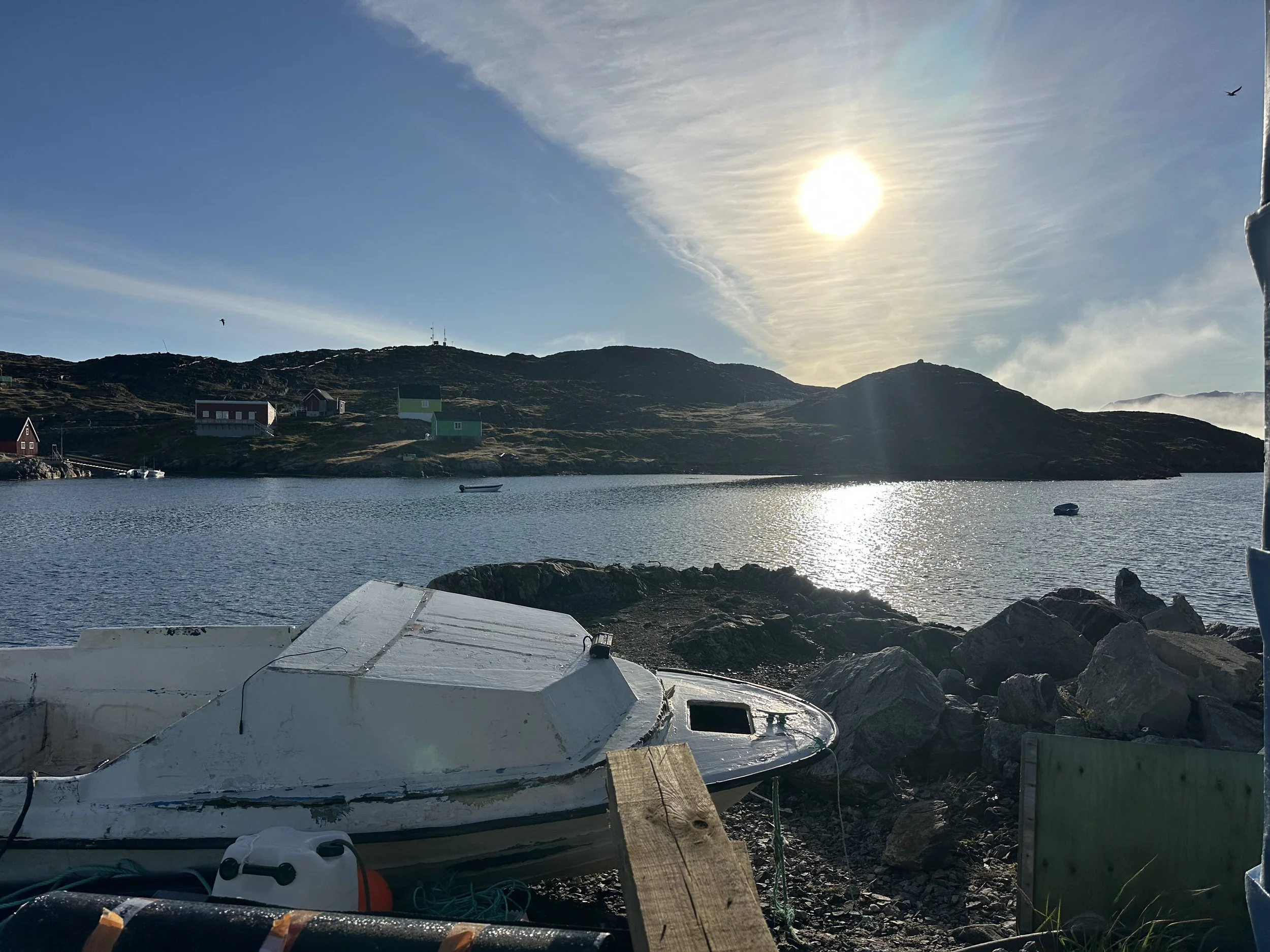
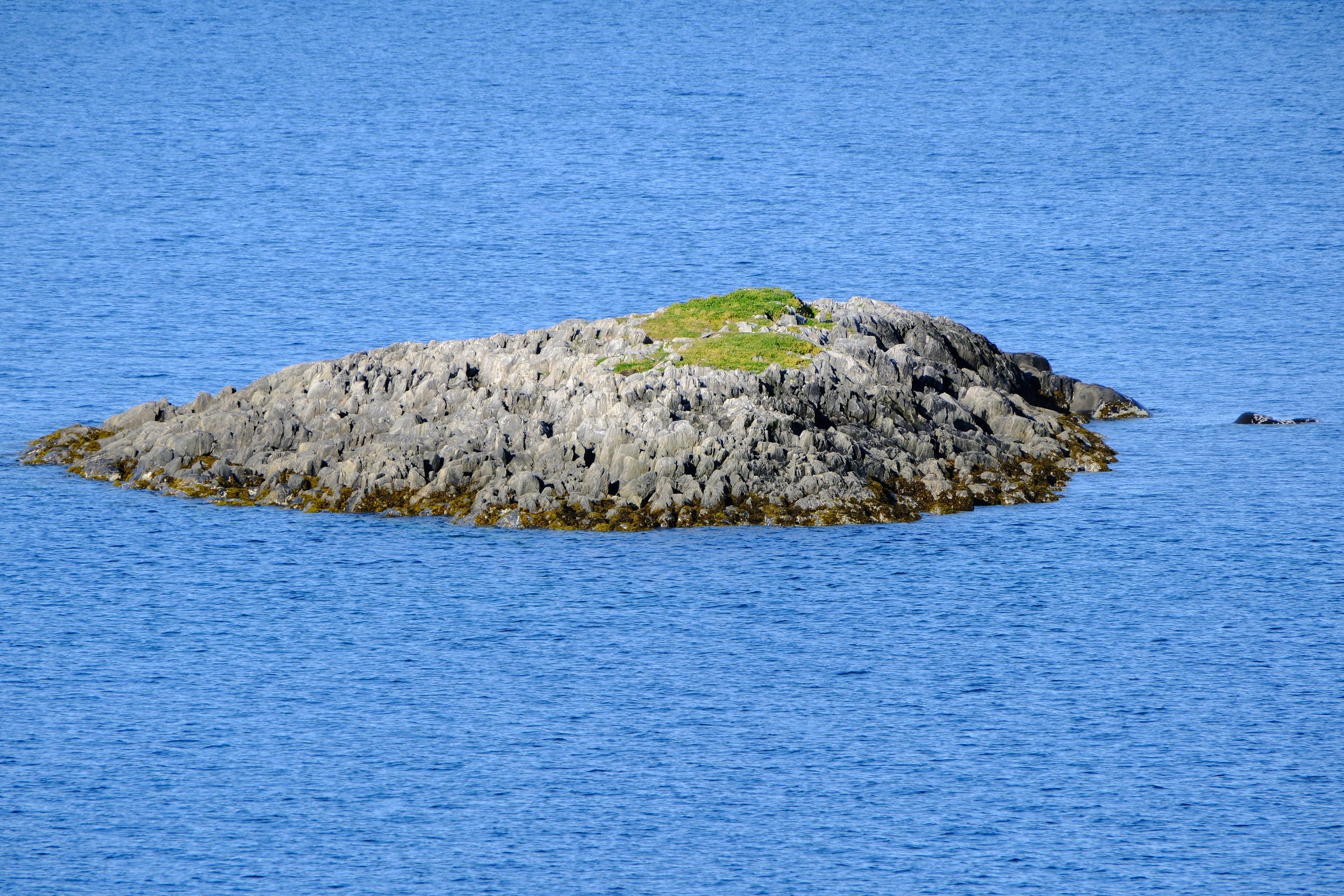
Today, we saw maybe three gulls sitting on distant rocks. Beautiful day and great scenery but no wildlife. In a way that was fortunate, because our guide is a history professor and knows little about wildlife. He did give an interesting history lesson, correcting my misconceptions as per above.
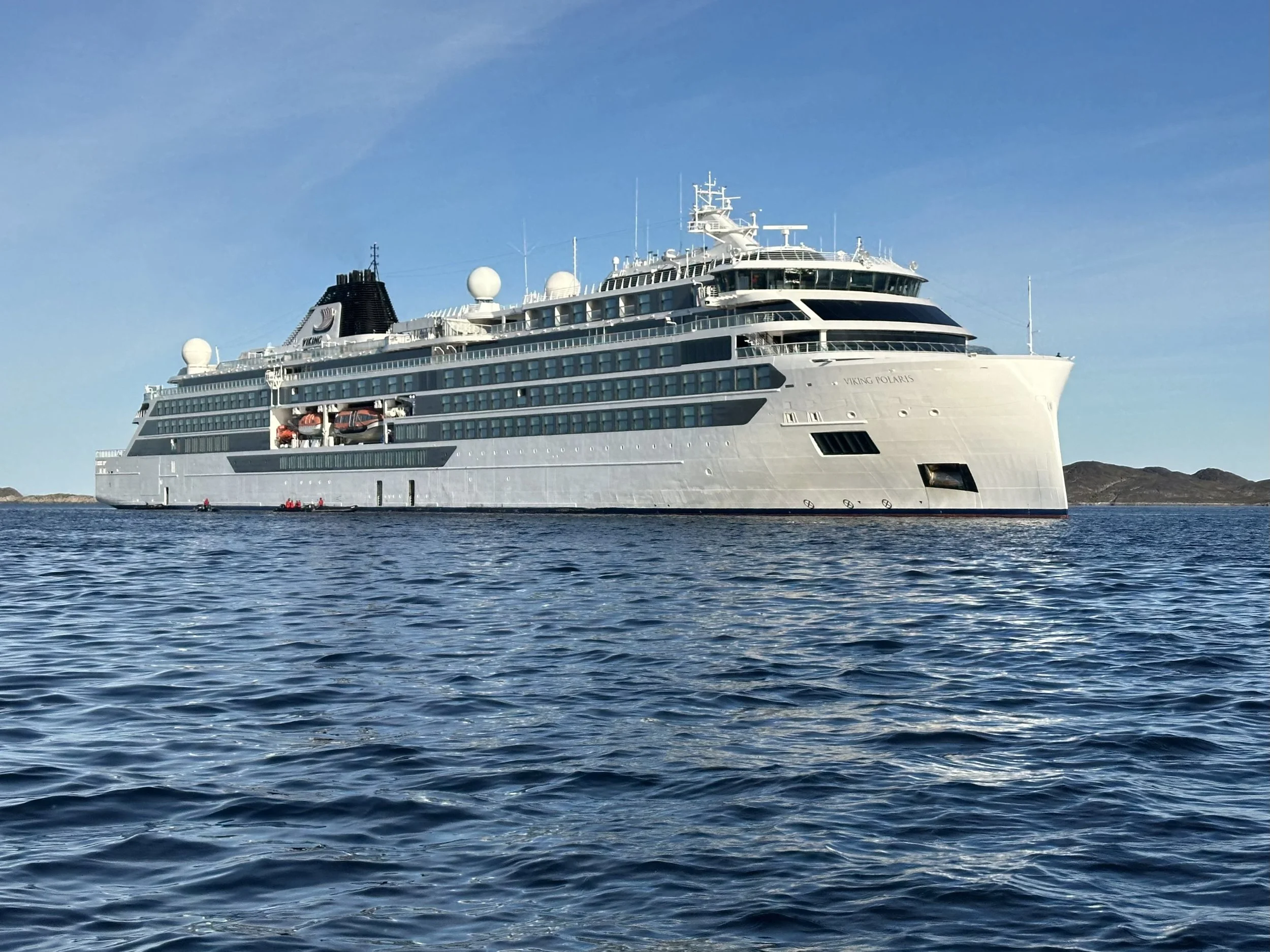
After our return Judy went for a dip in the onboard pool while I tended to some business while lying in the warm sun beaming through our stateroom window.
Before dinner we had a talk by one of the “cultural guides,” an Inuit who told us about life in Greenland, not just the flora and fauna. This 25-year-old gal talked about what it’s like to grow up and live in Greenland. She talked about the education system, not too terribly different from what we’re used to, except that three years of high school are optional. Greenland has a couple of post-secondary trade schools and one university. Tuition is free and the government pays students a stipend while studying.
The one catch is that kids from smaller communities must board in one of the bigger cities (Nuuk, for example) to attend high school. Recently, however, Zoom instruction has been successful in allowing students to complete high school while living at home.
She gave a detailed calculation of a base-income wage earner’s finances: a nurse or carpenter, for example. The bottom line is that the cost of housing and imported food isn’t covered by wages paid to such workers. The 42% income tax, coupled with a mandatory 20% pension contribution, leaves little for living. Subsistence living – from hunting and fishing – is a partial supplement to address this problem.
One big issue is the disparity of income between Danish workers in Greenland compared to Inuit. A Danish nurse on a three-month contract earns around $7,000 per month and pays little in the way of taxes. A Greenlandic nurse might receive $3,500 before taxes, etc.
After dinner we heard a presentation from another cultural guide who talked about the role of hunting for the Inuit. Her first hunting trip was at age two months and she’s been hunting and fishing with her family ever since. She showed a picture of her son, then 12 years old, when he shot his first caribou.
Hunting is both a means of subsistence but today perhaps more so a spiritual and cultural experience. Inuit believe that all creatures, big and small, have a spirit and are exactly equal in importance as humans. If one is hunting and game appears, it is meant to be taken. It is important to use all portions of the animal – food, hide for protection, etc.
The traditional Inuit religion has been partially lost since colonialization 300 years ago. There is a strong movement today to revive traditional beliefs. I wonder if one can be a Lutheran and believe in the spirit world of Inuit religion. I hope to learn more.
She owns a pack of Greenland dogs. There are about 17,000 pure bred Qimmeqs in Greenland, all north of the Arctic Circle. Crossbreeding is prohibited. It’s the oldest dog breed in the world and they have been in human contact for 9,000 years.
Inuit hunt the following species
- Caribou (reindeer)
- Musk Ox
- Arctic Hare
- Ptarmigan
- Seals
- Arctic Char
- Salmon
- Whale
I know that there’s a lot more to the Inuit story and I’m anxious to learn more and correct my latest misunderstandings. I’m beginning to think that cultural experience will be greater than wildlife or scenery experiences on this trip.
The Port Talk covered tomorrow’s visit to Ilulissat, a somewhat larger town and home to the Icefjord Centre. Ilulissat is situated on the fastest moving glaciers around so icebergs-are-us will be the name of the game.