Day 4 - Nuuk August 25, 2026
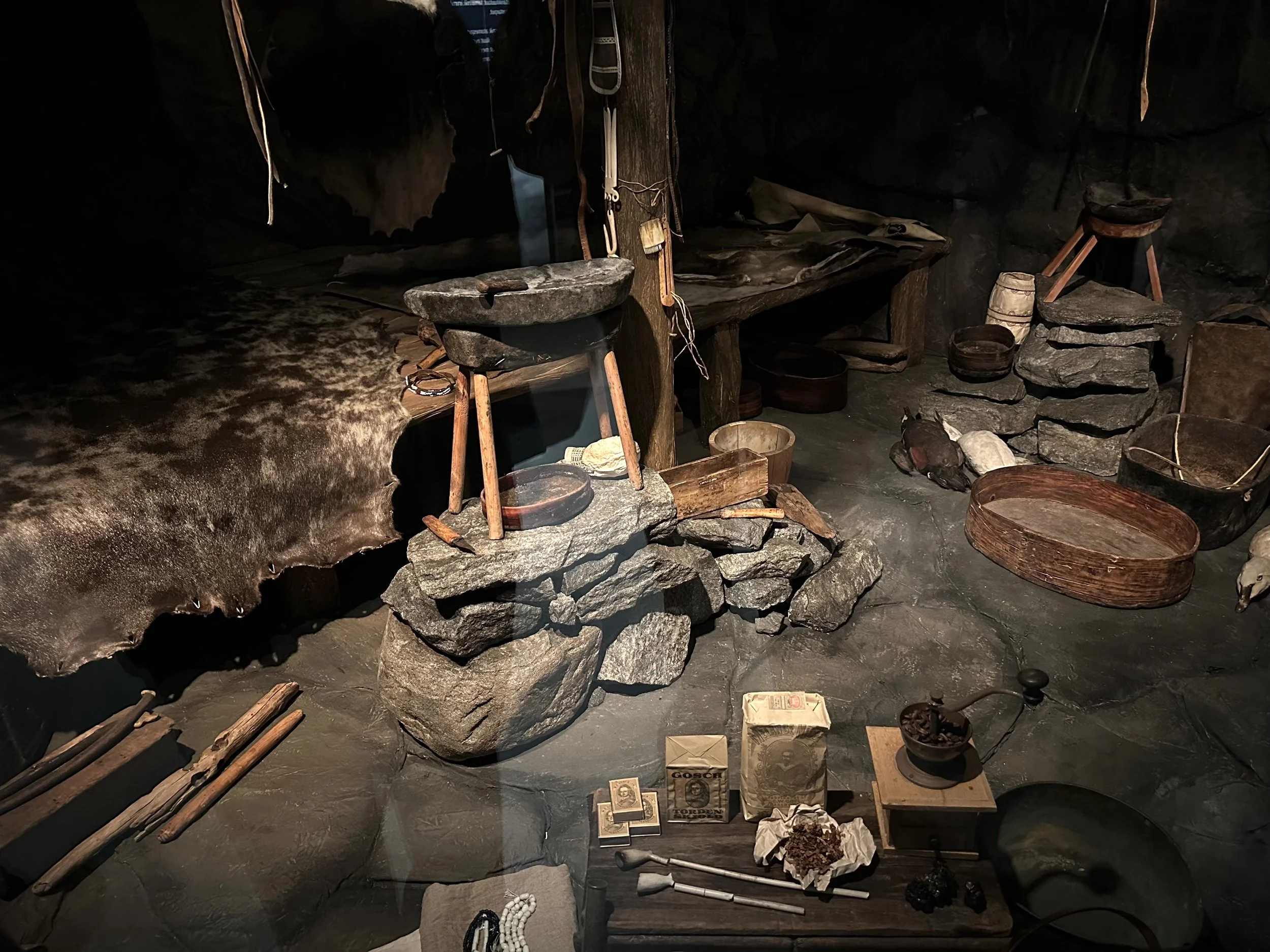
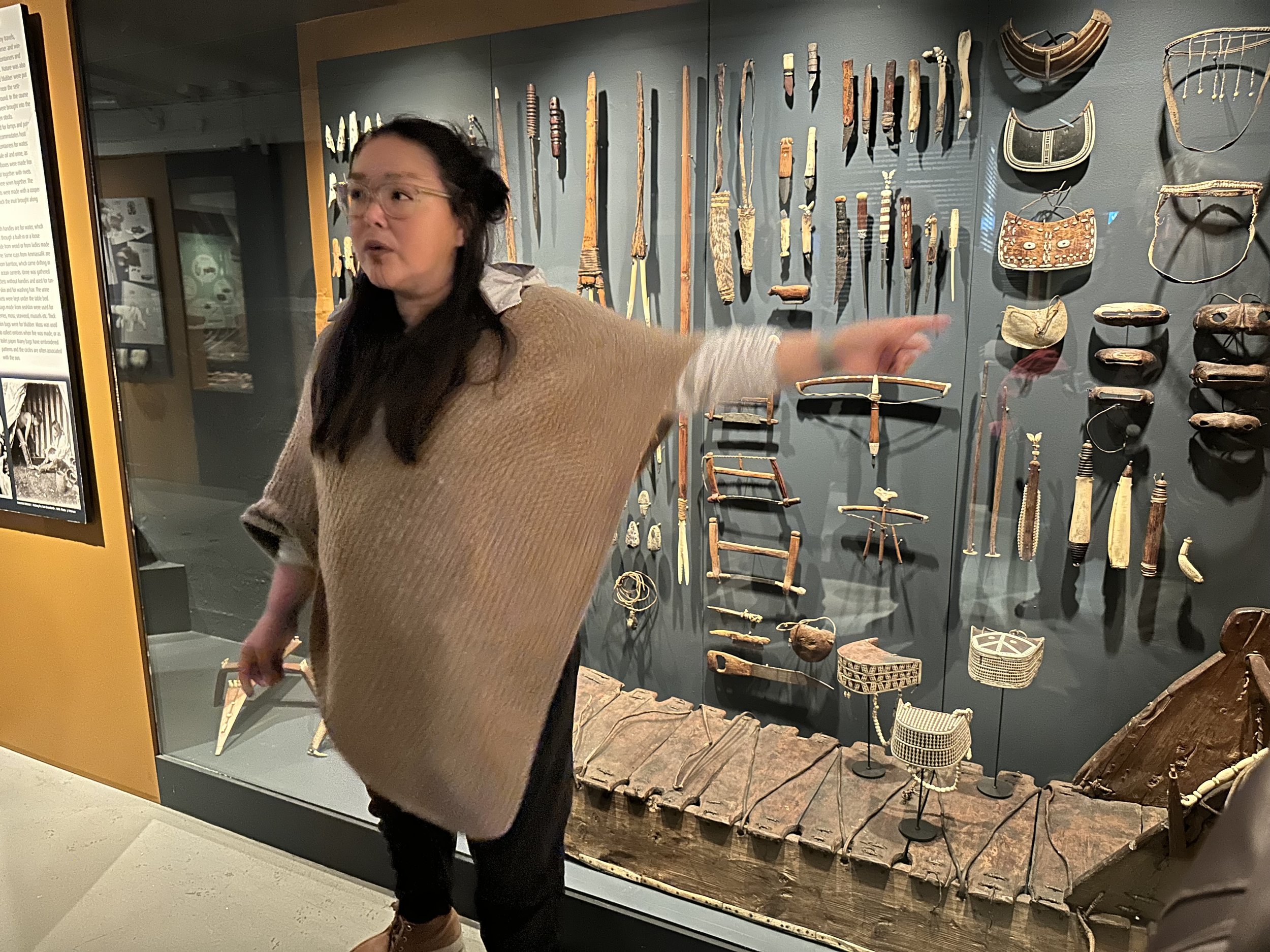
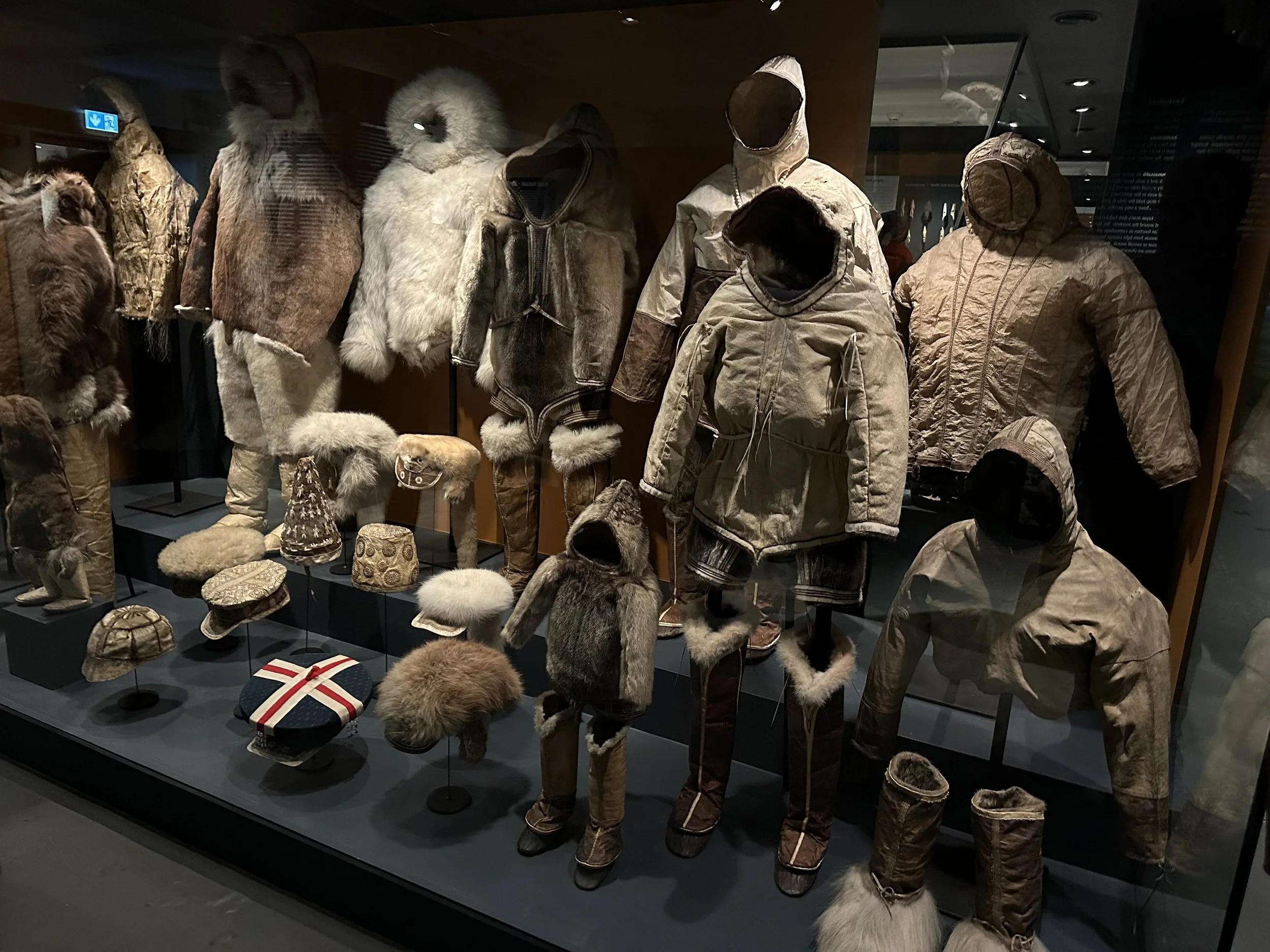
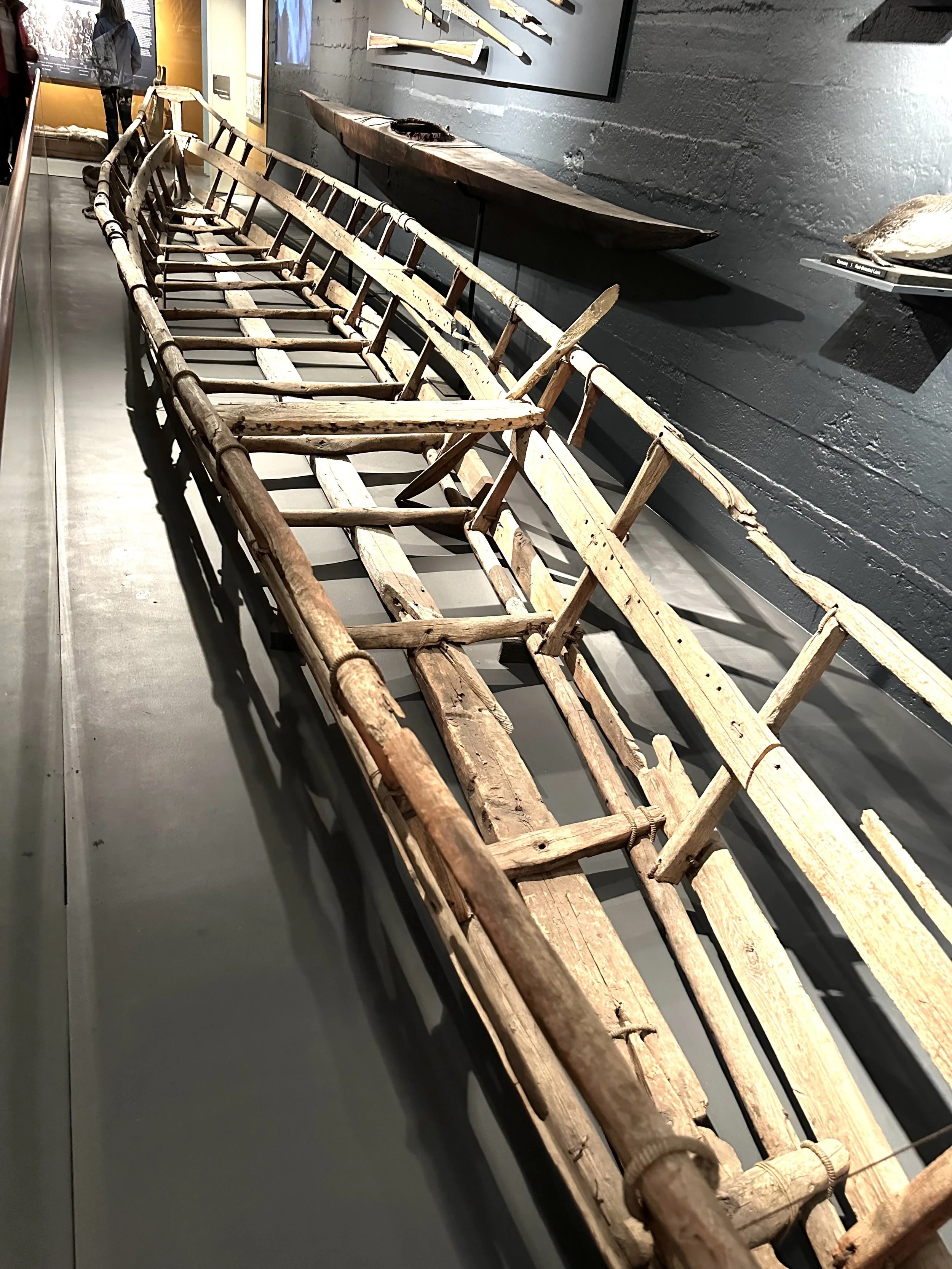
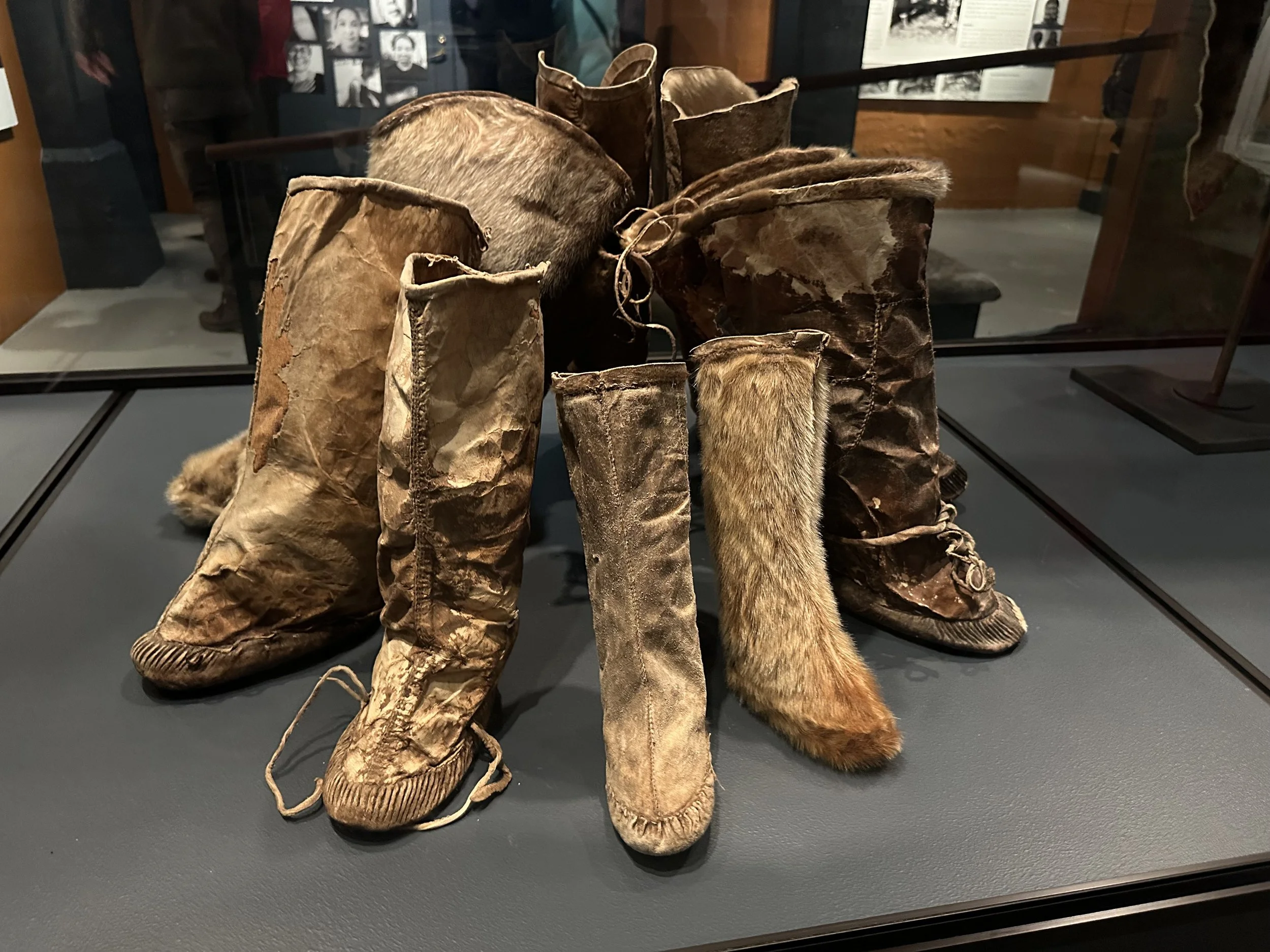
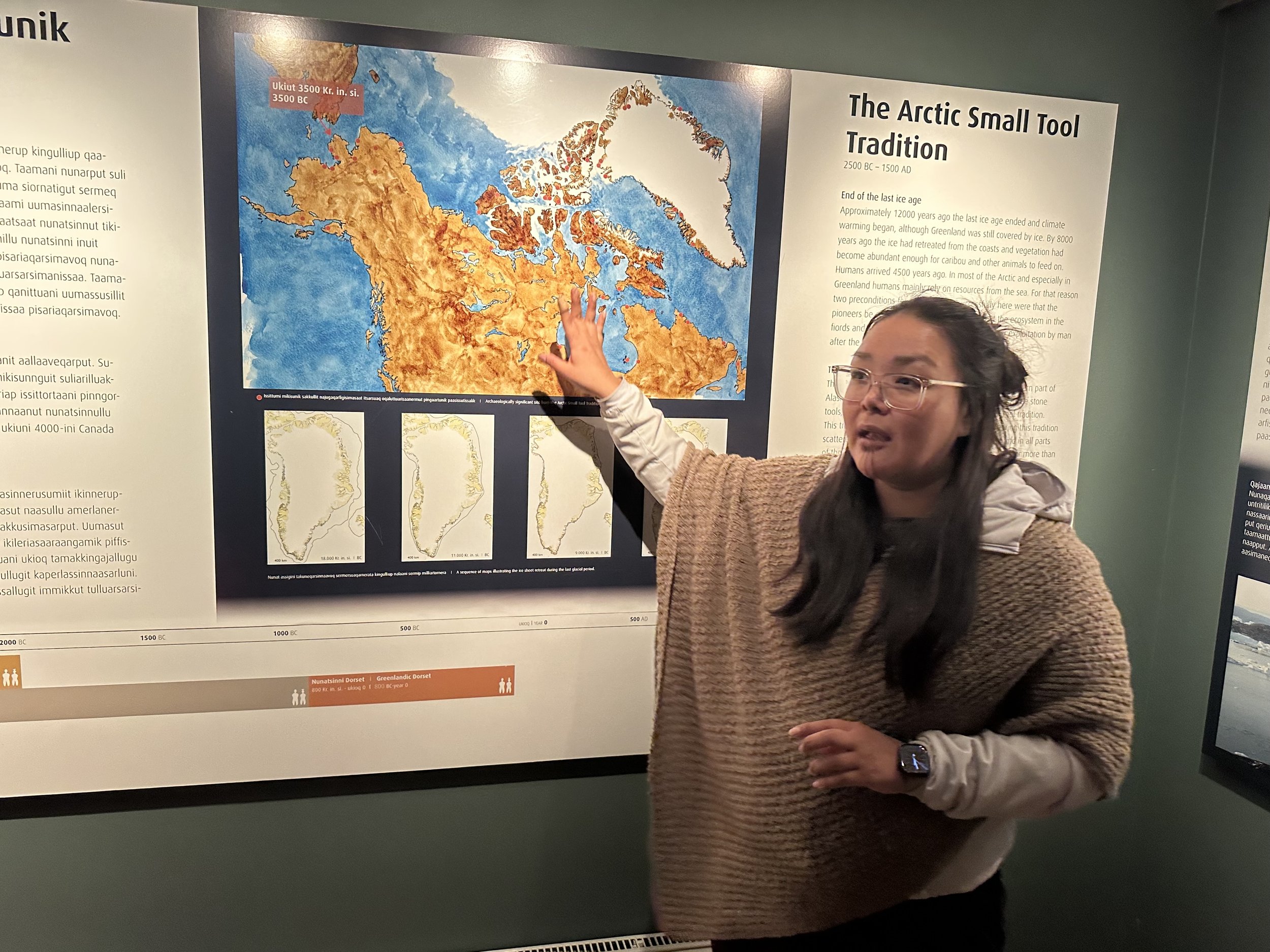
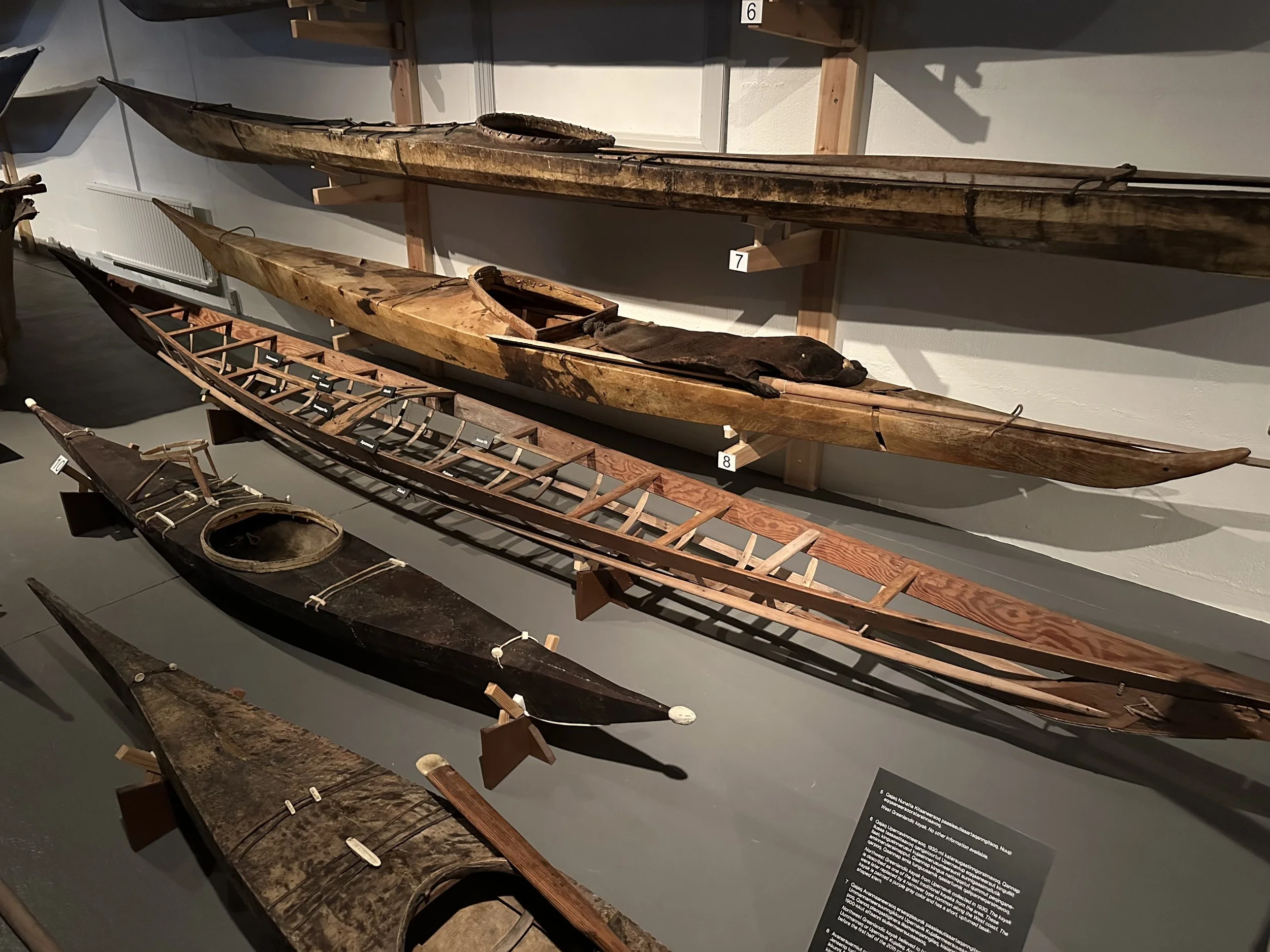
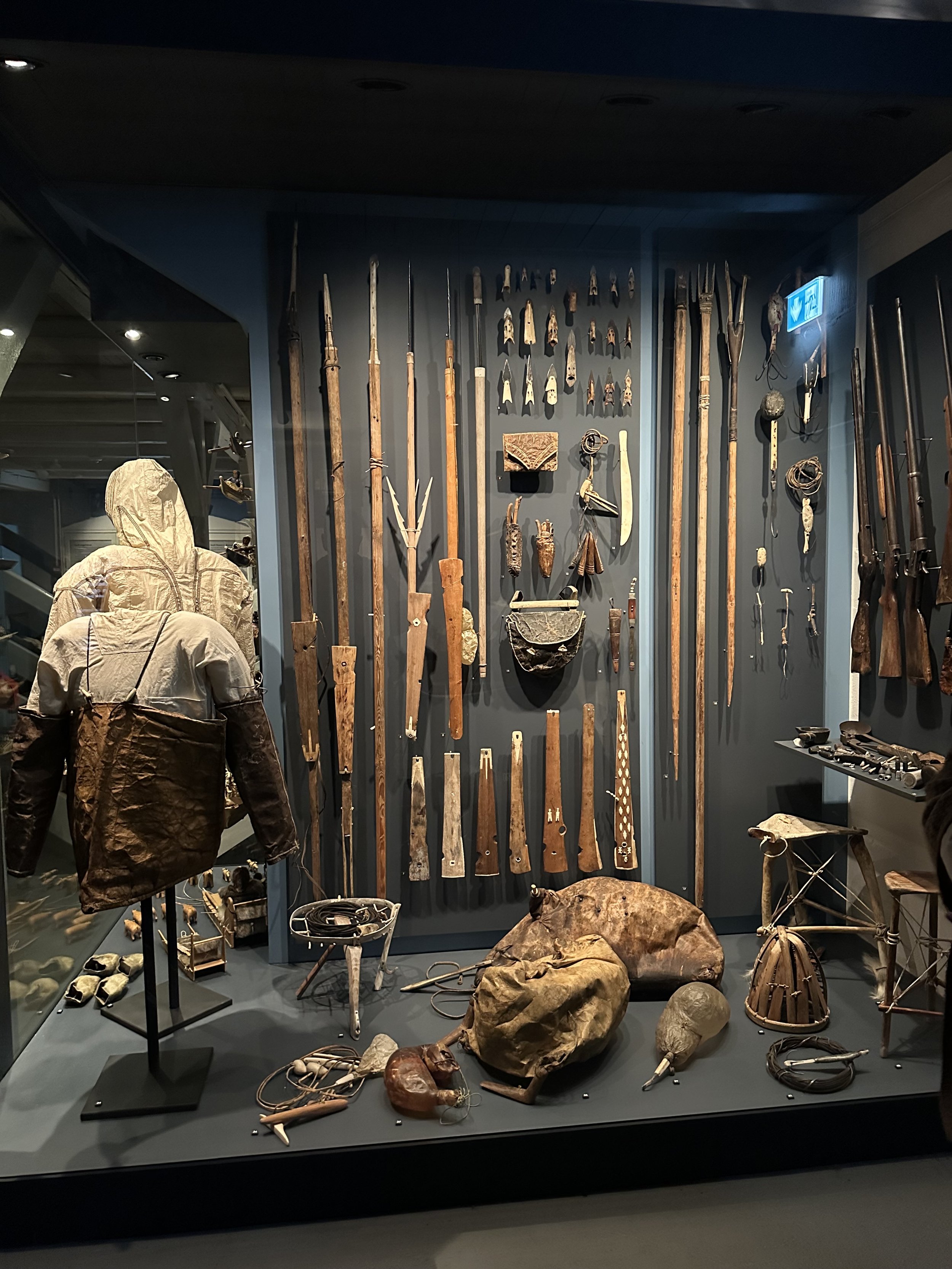
“I just want other people to know about us.” That’s what our guide, Tina, said today as we toured the Greenland National Museum and Archives in Nuuk. She’s an Inuit and a researcher who spent two hours explaining the various exhibits in the excellent museum, covering the life and culture of various groups who have populated the Arctic over the past 4,000 years or so.
The Arctic today is divided by political boundaries: Canada, the U.S., Russia, Greenland and Norway. But indigenous peoples have migrated across the region following food sources over land, sea and ice formations for thousands of years.
Inuit people, like most (all?) indigenous people in the Western Hemisphere, trace their ancestry to those people who crossed the land bridge from Asia (Russia) to North America (Alaska) during the last ice age. The Inuits are descendants of the Thule people, moved from west to east, arriving in Greenland around 1000 AD. Warming climates and increasing population levels and need for new food supplies (seals, whales, caribou, etc.) were possible reasons for the relatively fast migration.
Norsemen (the Vikings) arrived around 1100 AD and lived as farmers alongside the Inuit. No one knows why for sure, but around 1400 AD Norse culture disappeared from Greenland. Tina, our guide, said she carries within her the story of a disagreement between an Inuit person and a Norseman that led to war and the victory of the Inuit. She carries the story as an oral tradition, passed from her grandparents who in turn received it from their ancestors.
Inuits adapted to a diet of largely protein from seals, whales, caribou and birds. It turns out that seal and whale meat are excellent sources of vitamin C, thereby eliminating scurvy as a problem (something the 19th century explorers never learned, much to their peril).
“I’ve never met an Inuit who doesn’t love whale meat and skin,” said Tina. “I don’t live a pure Inuit lifestyle. I drive a car, eat steaks and watch Netflix. But I love whale meat and especially whale skin.”
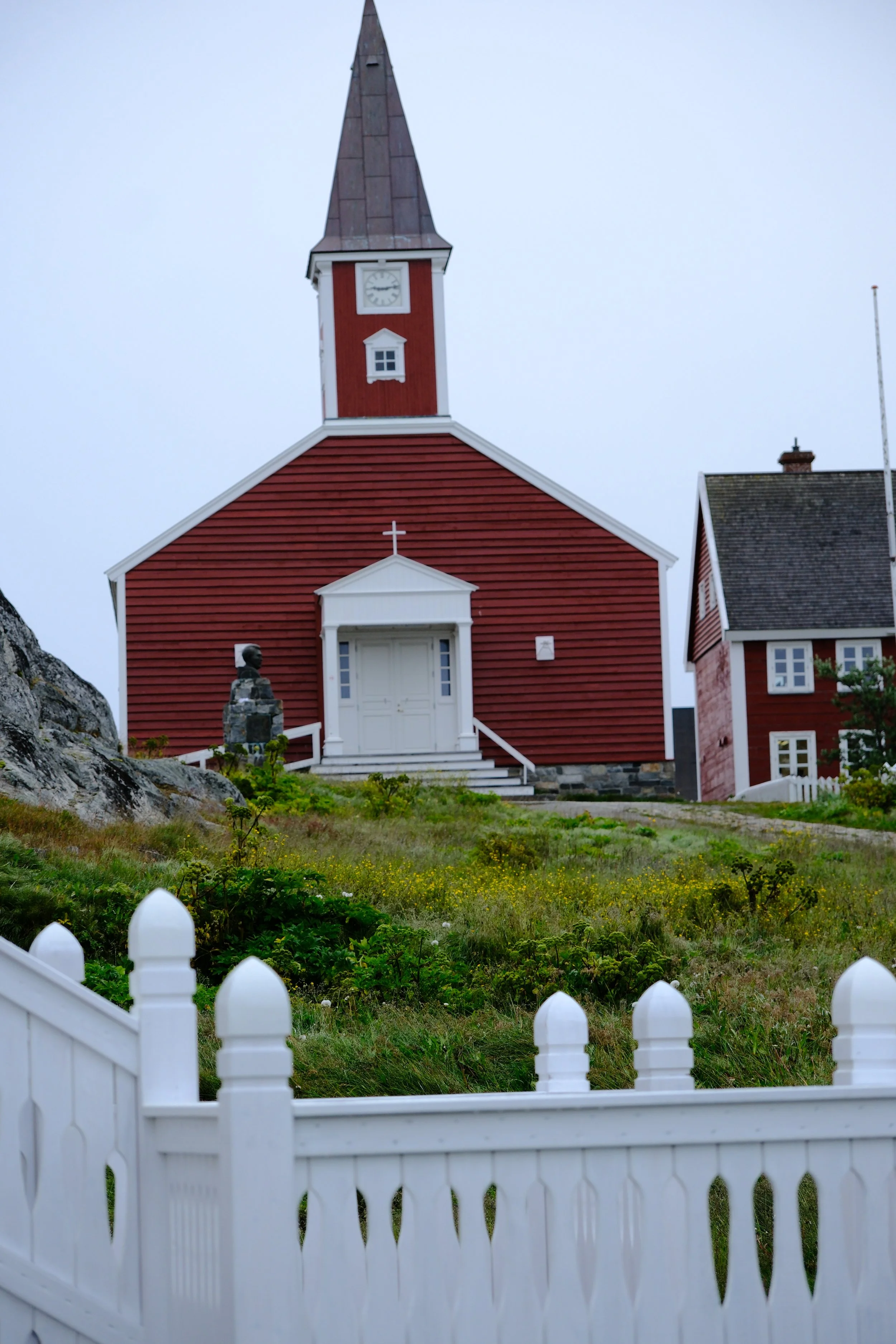
The Danes came to Greenland in 1721 by way of Lutheran missionaries, given the charter to spread Protestantism to the indigenous people who worshiped as Catholics, thanks to the Catholic Norsemen, or native spirit-based religions. Denmark, in one way or another, have ruled Greenland ever since. Eventually, the UN abolished colonialism and Denmark granted Greenland self rule. Today Greenland is an autonomous territory of Denmark. Greenlanders are Danish citizens.
Tina said this political decision was made without Inuit input. Not until the 1970s did Inuit people realize that they could have been independent. She believes Greenland will someday achieve independence. But the total population of Greenland is only 55,000, 20,000 of whom live in Nuuk. How can such a small population thrive in today’s world? “We Inuit have lived in this environment for thousands of years. We know how to do it,” said Tina. About 90% of the population is Greenlandic Inuit. Per-capita GDP is on a par with other European countries. Income tax is about 42%, on its way to 50% or more. Many services, including health care and education, are free.
Danes and Inuit lived separate lives until the mid 20th century. An Inuit wishing to buy Danish goods – flour, sugar, sweets, etc. – did so by barter-trading seal skins or whale blubber. Currency – folding money and coins – wasn’t given to Inuit until 1952. As a result, many Inuit have not learned how to live in a monetary economy. The concept of saving is foreign to them.
The Inuit language, Greenlandic or Kalaallisut, is an official language and is taught in schools along side Danish and English. But Tina said that some of her Inuit friends have lost the language. She can only talk to them in English.
Out guide on the bus tour this morning wasn’t of the same caliber as Tina but had an interesting slant nonetheless. He’s been doing tour guiding for 21 years, is a preschool teacher and coaches grammar school badminton. He’s divorced and has had custody of his daughter since she was 1 year old. Recently, the eight-year-old has asked to spend time with her mother, which he has willfully granted. He showed us the pond where he first went skinny-dipping – at age 5. That kind of tour.
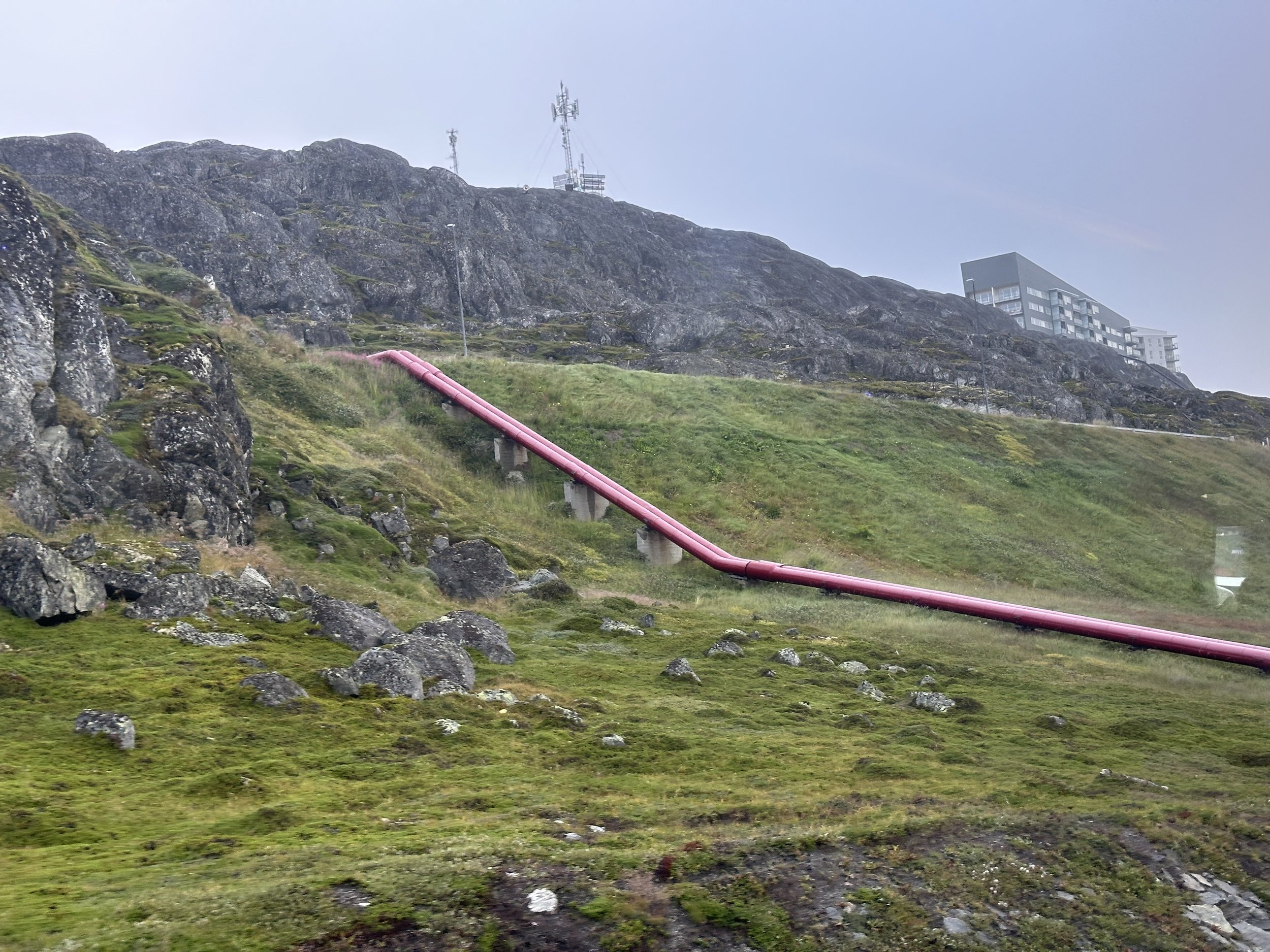
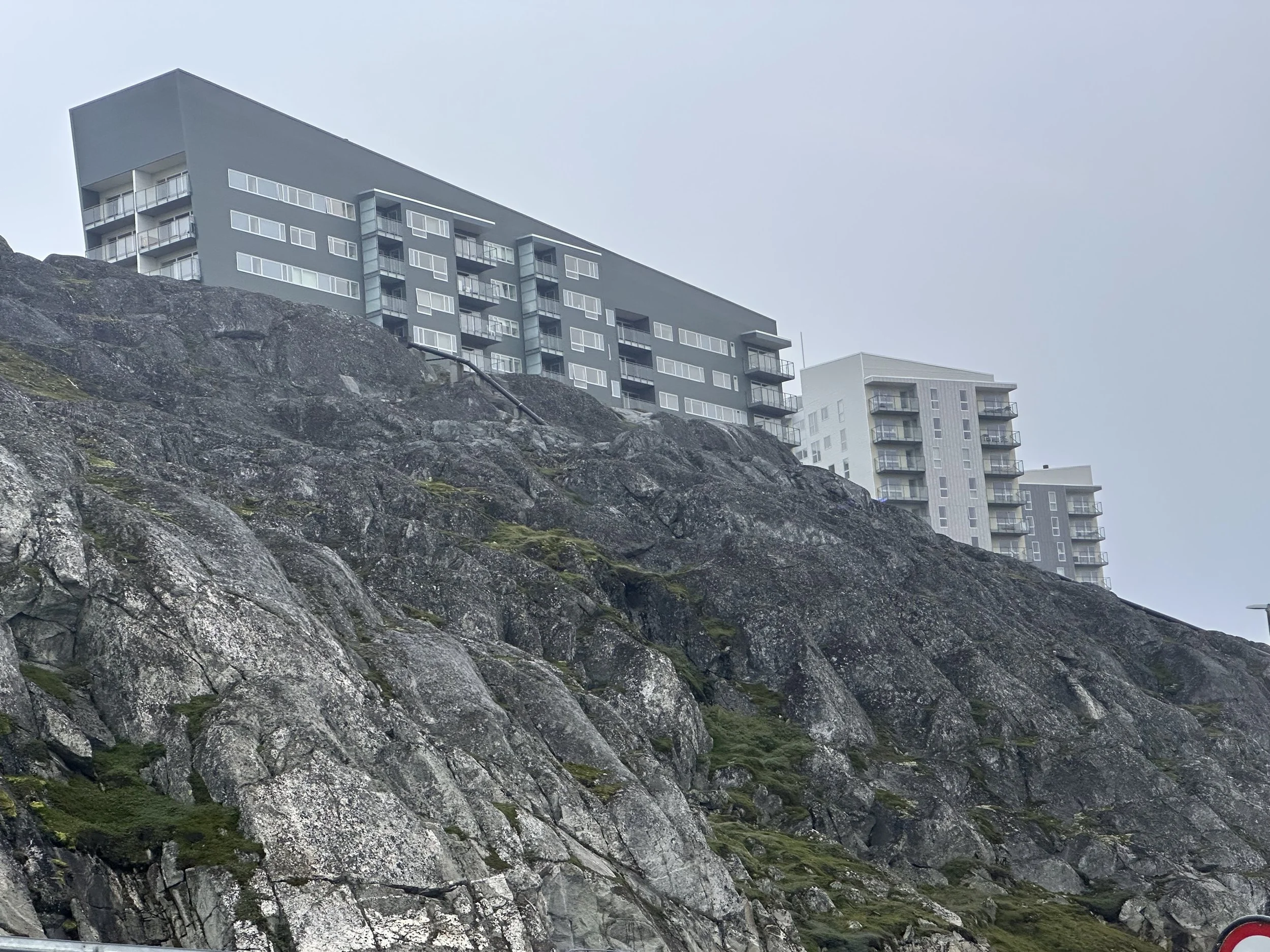
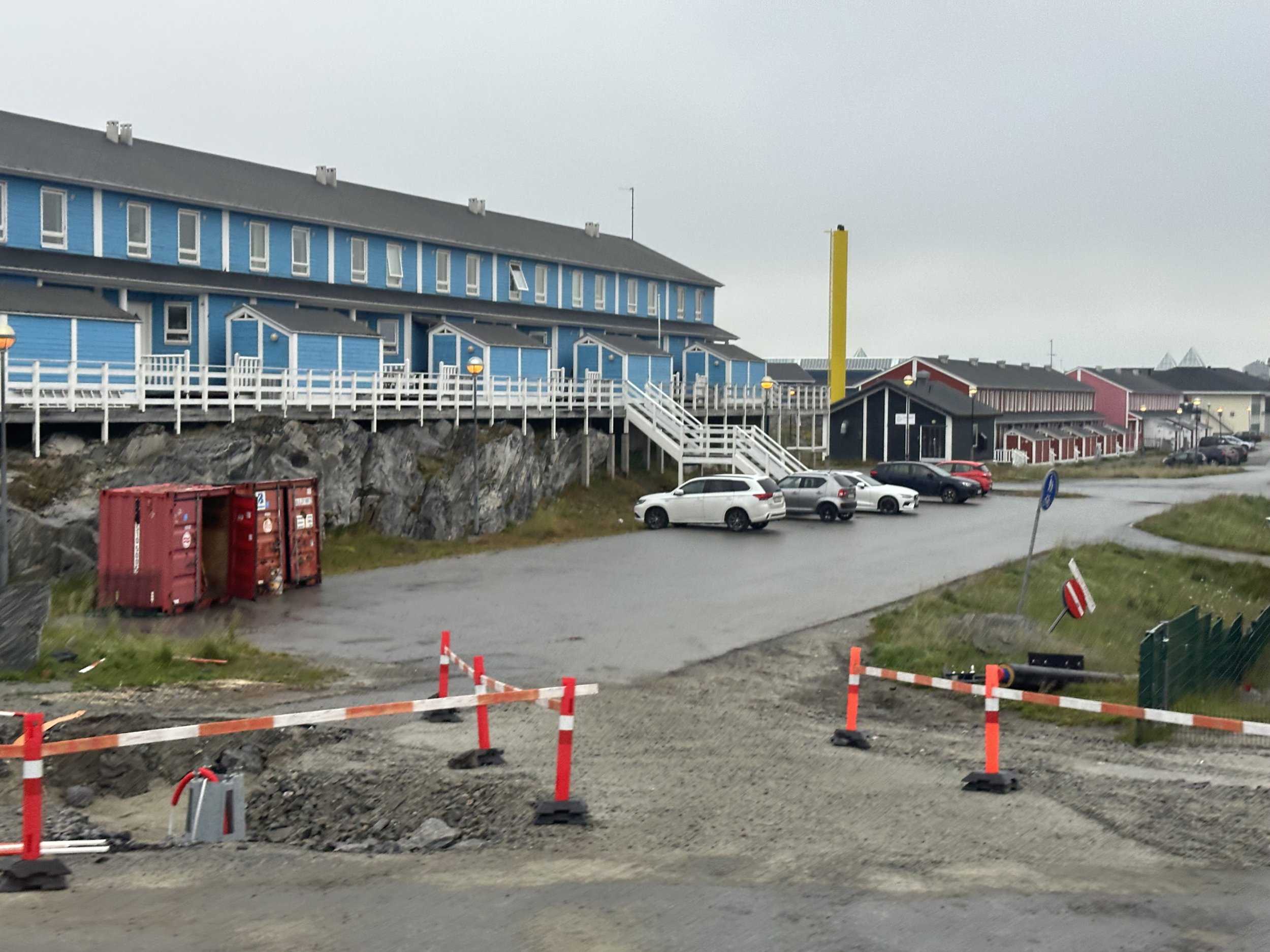
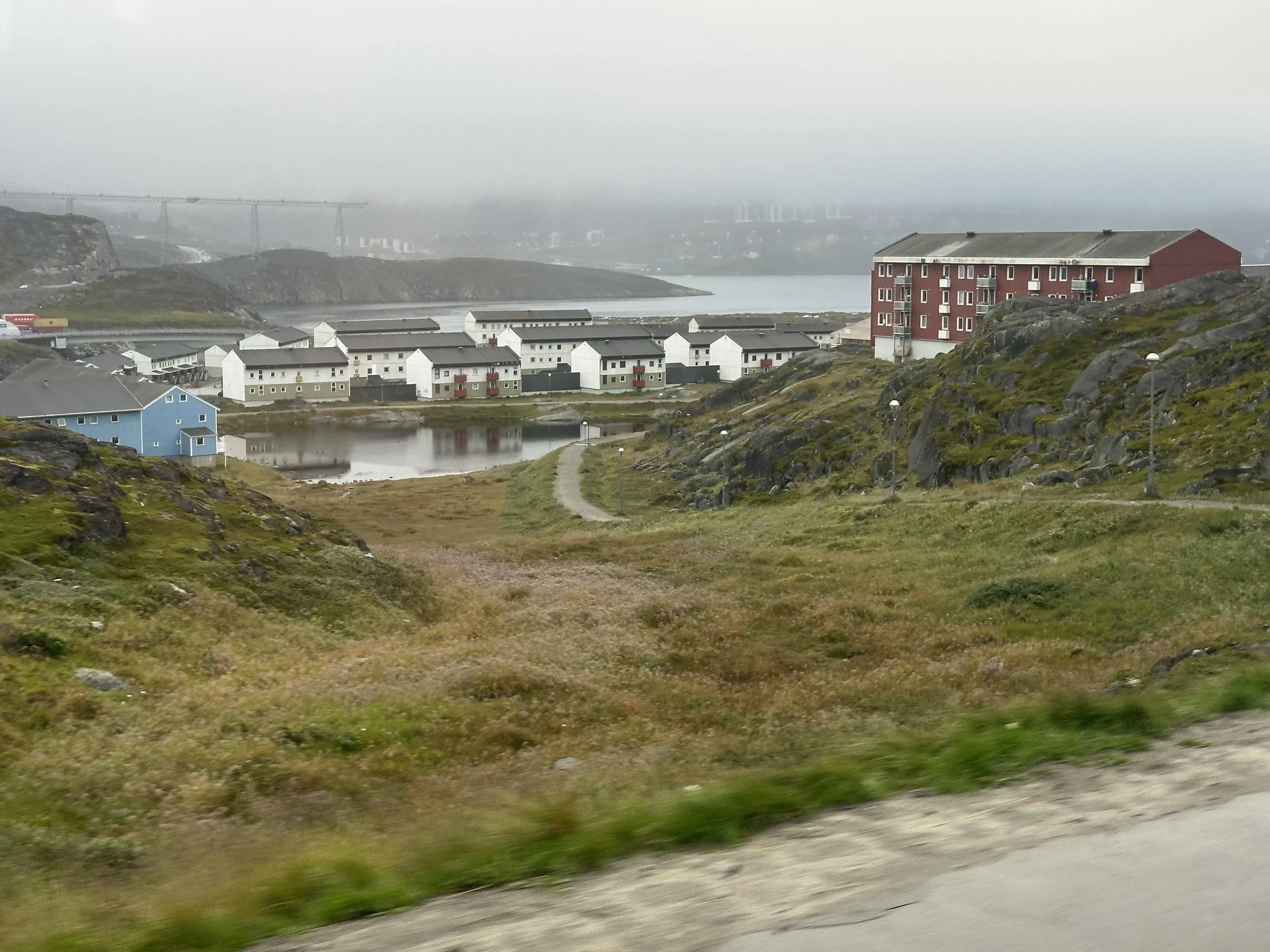
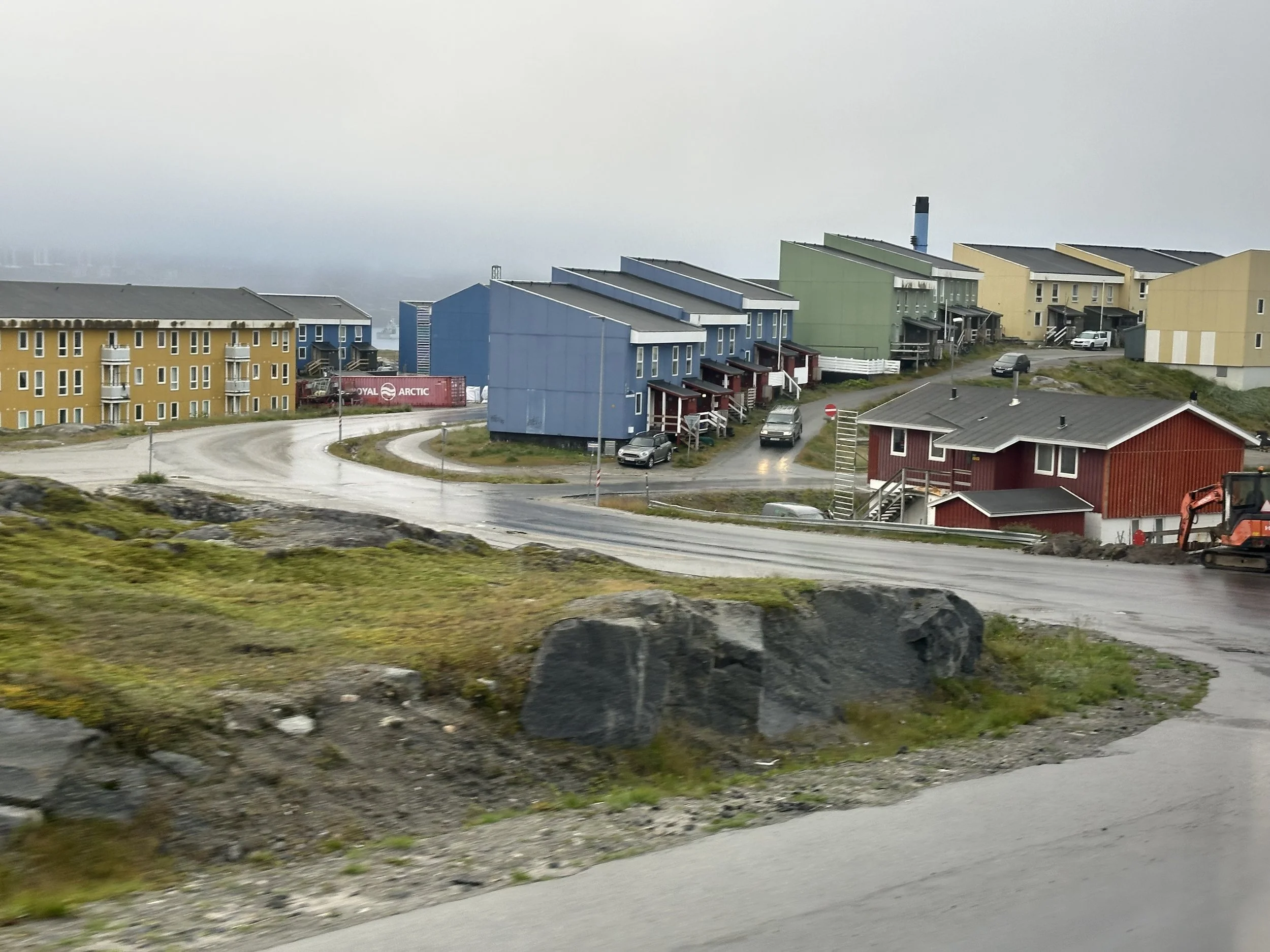
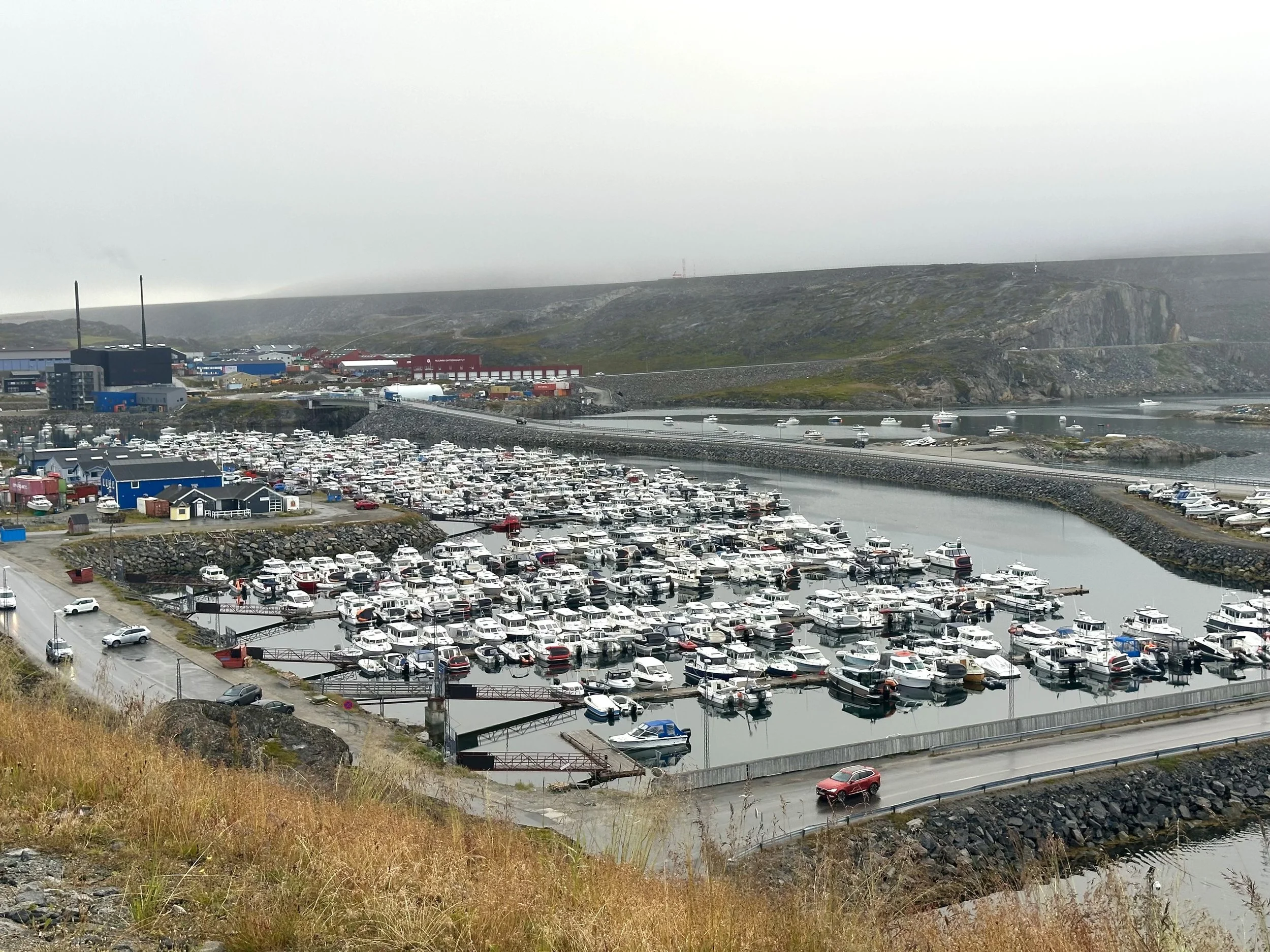
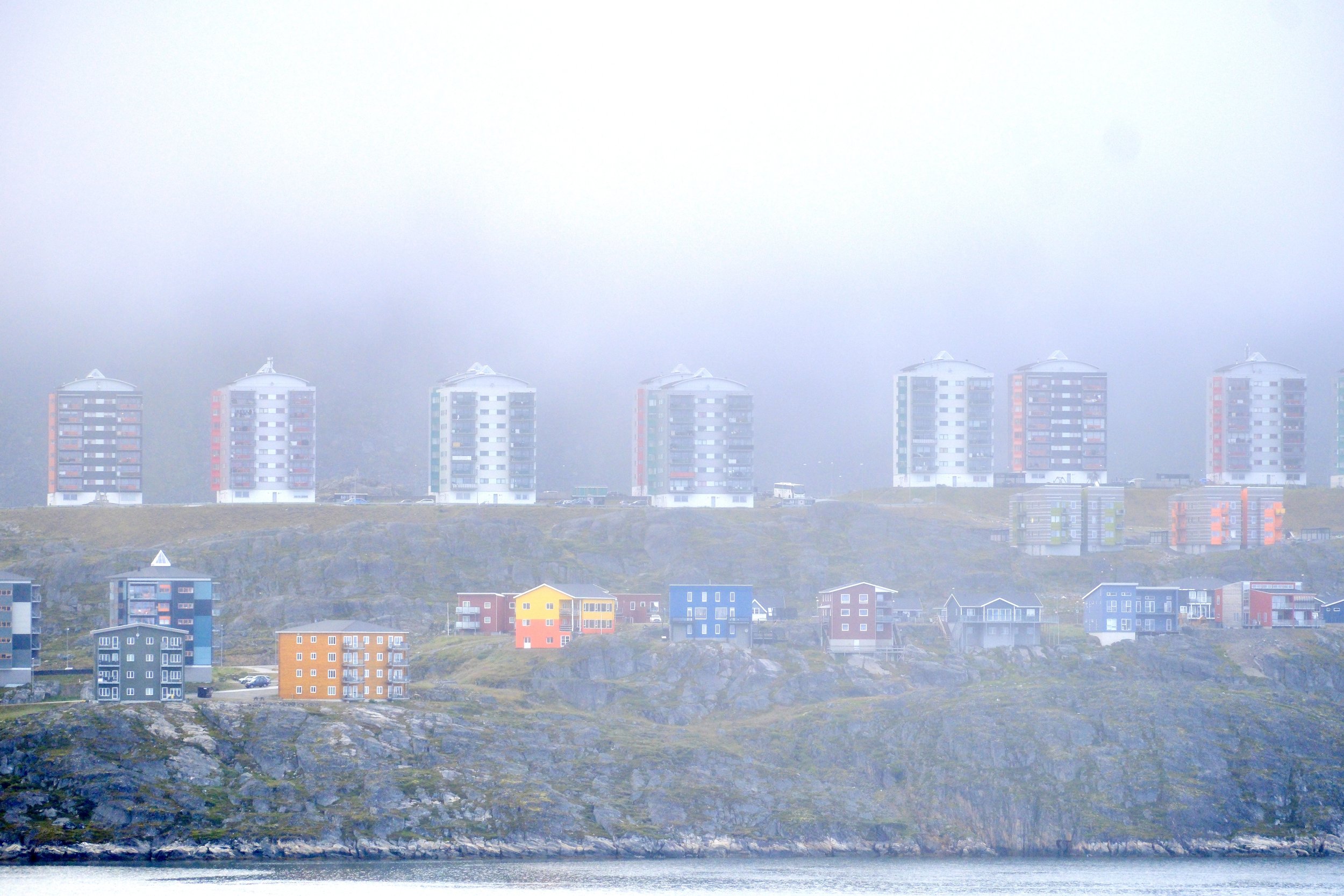
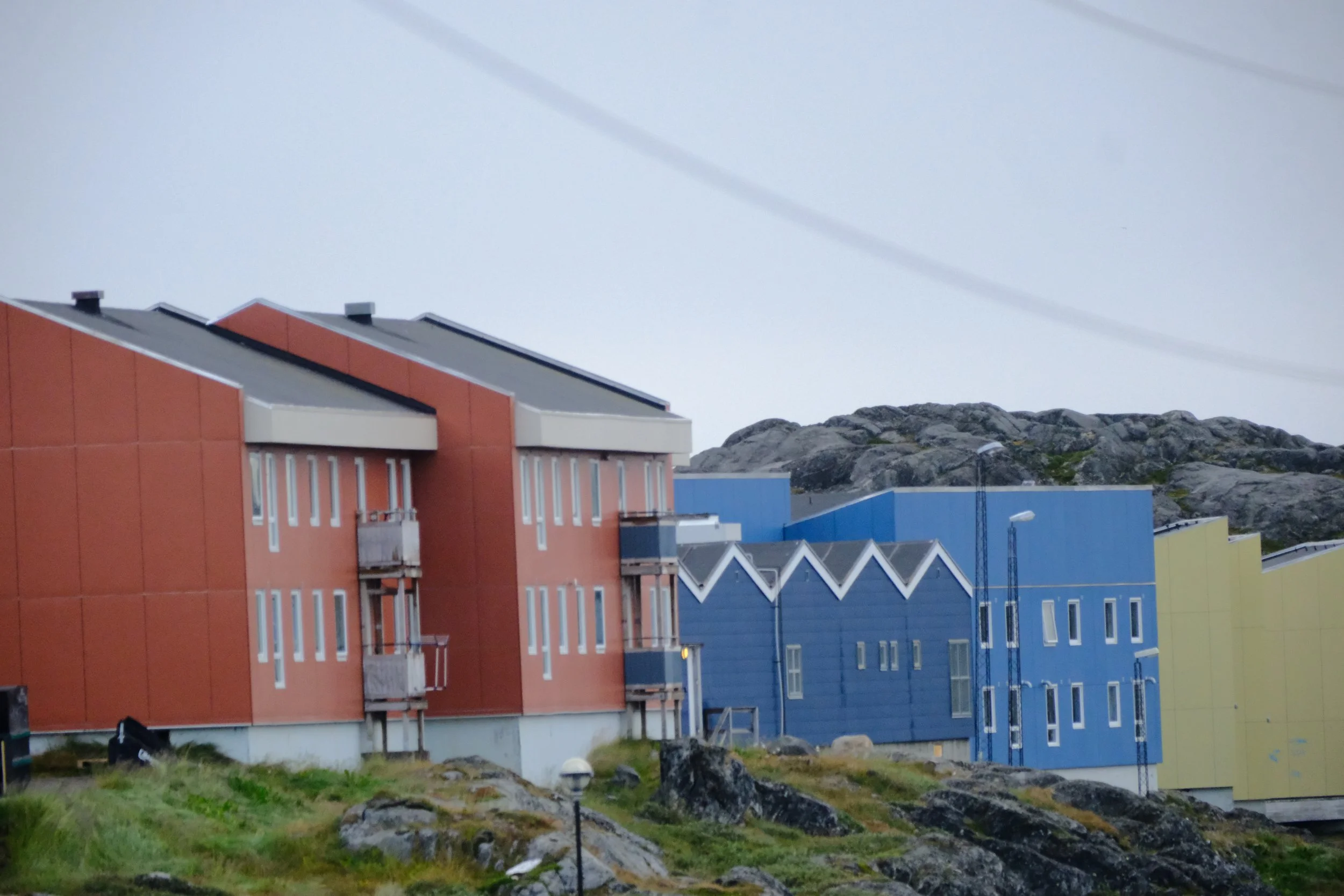
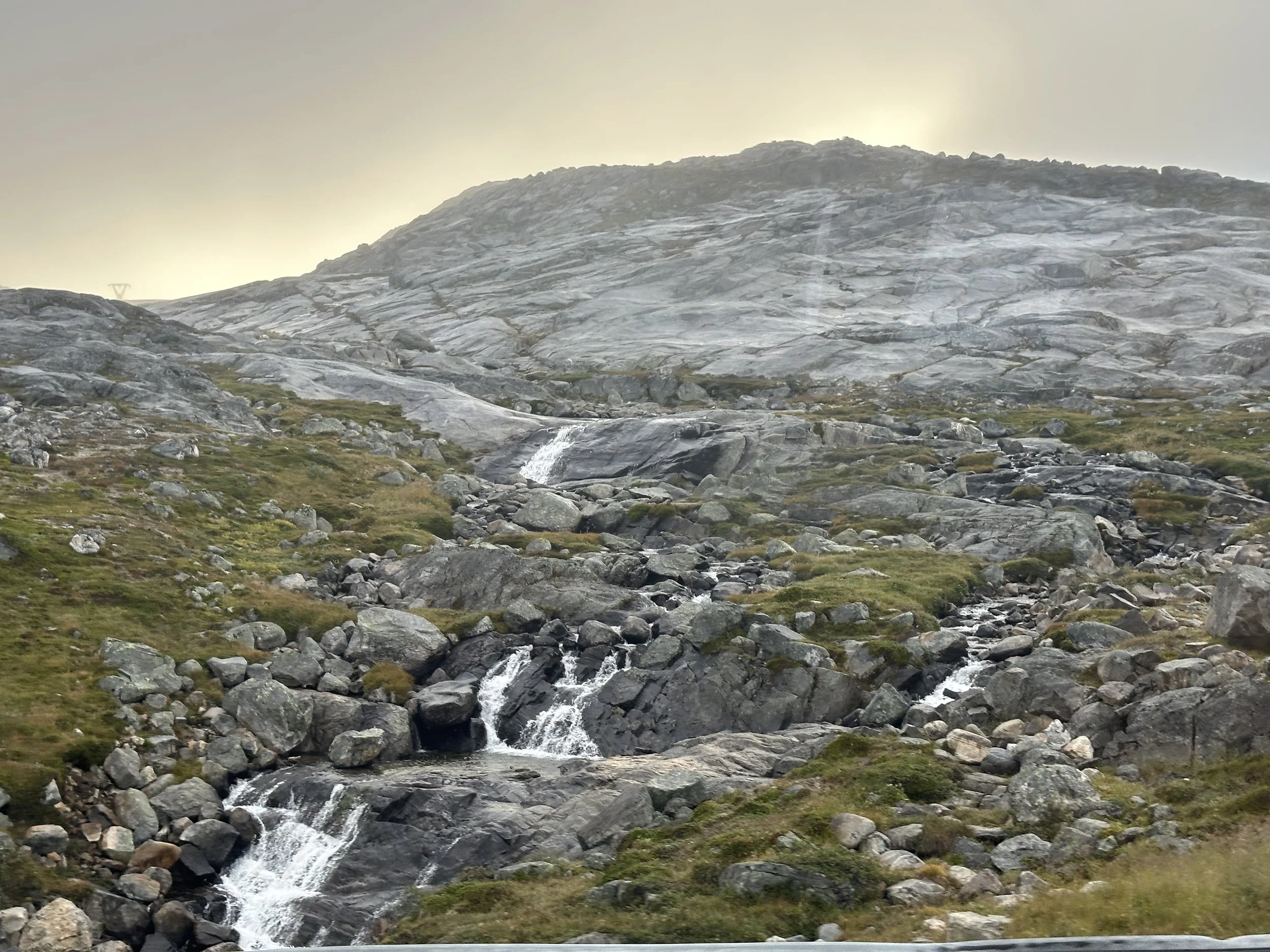
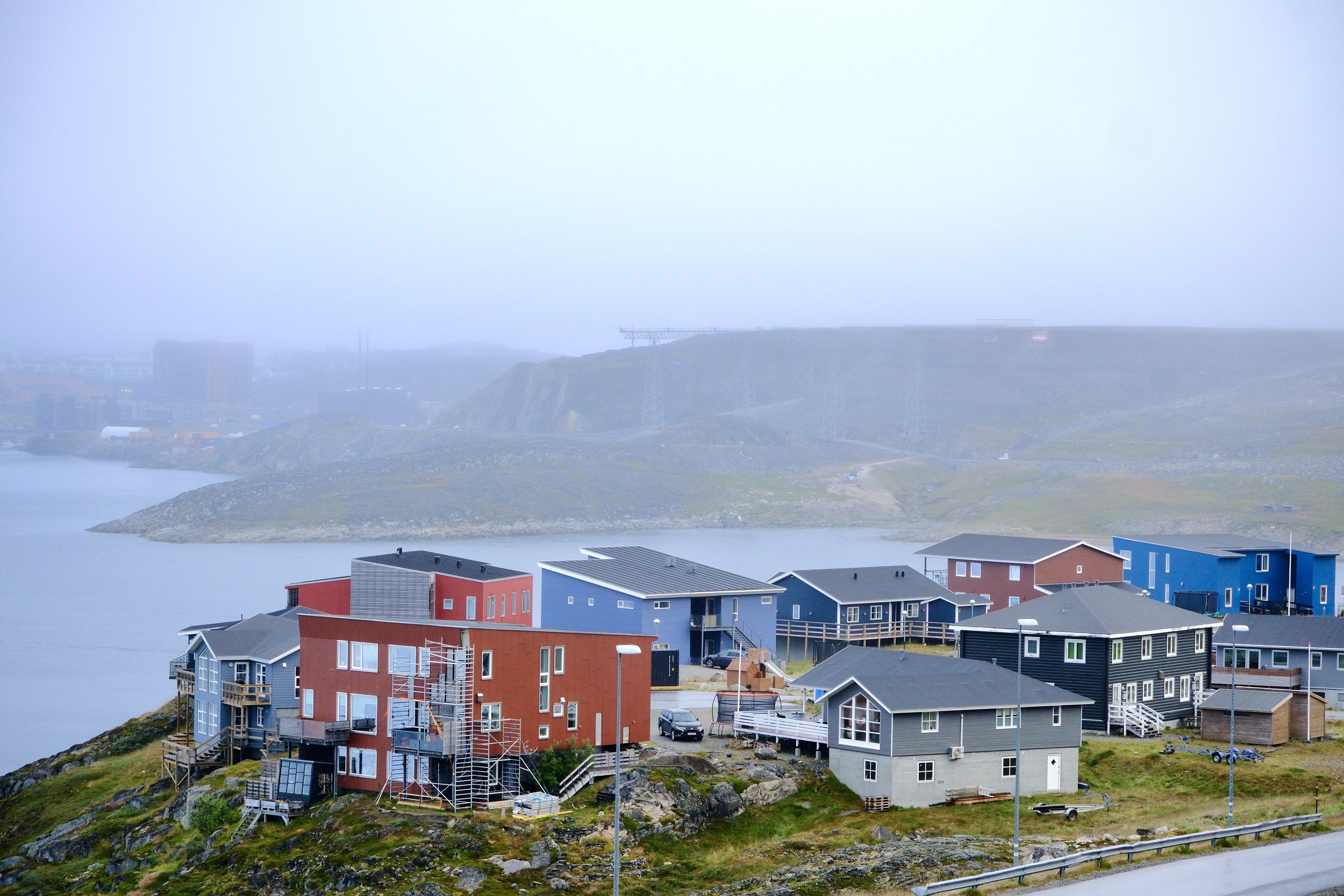
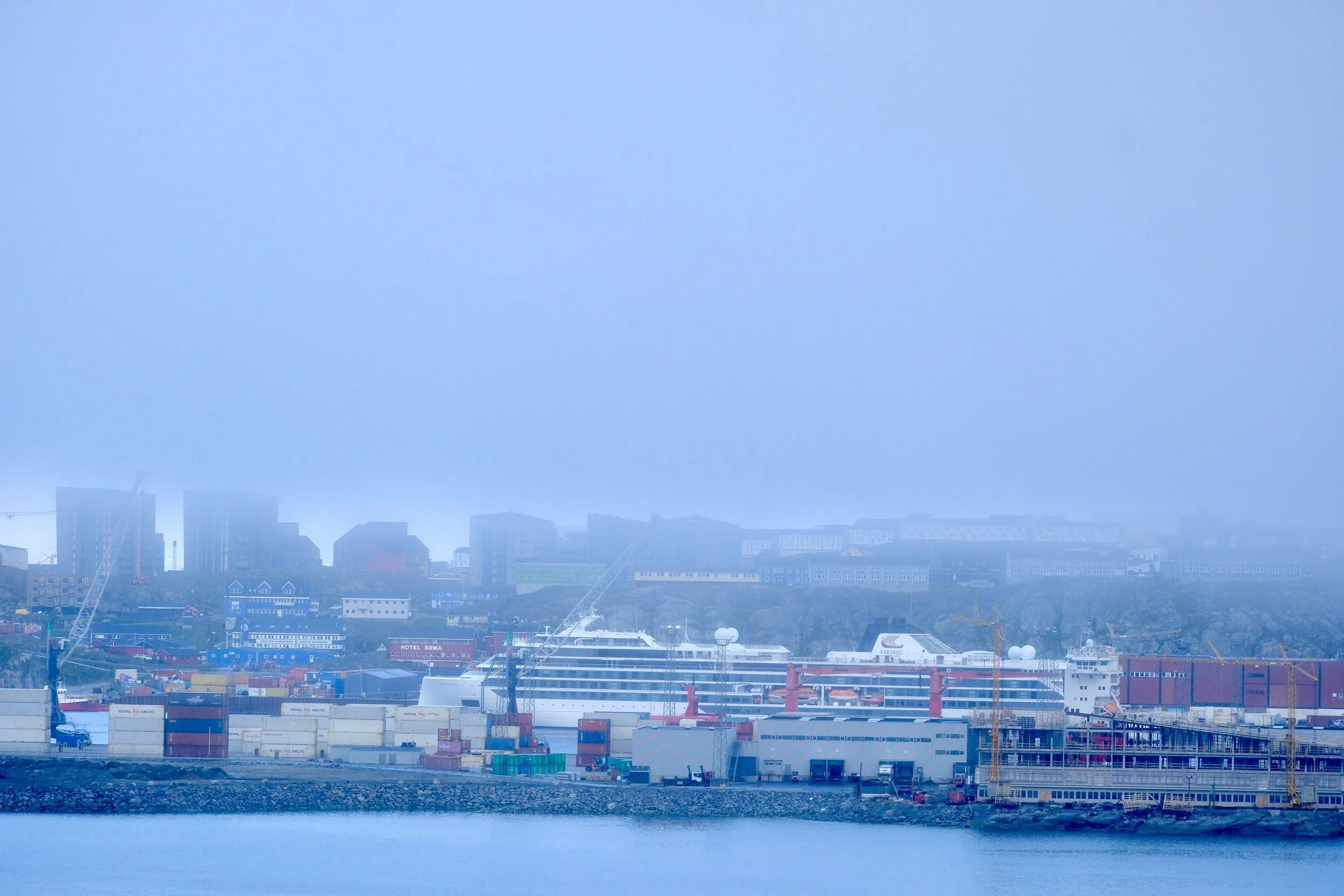
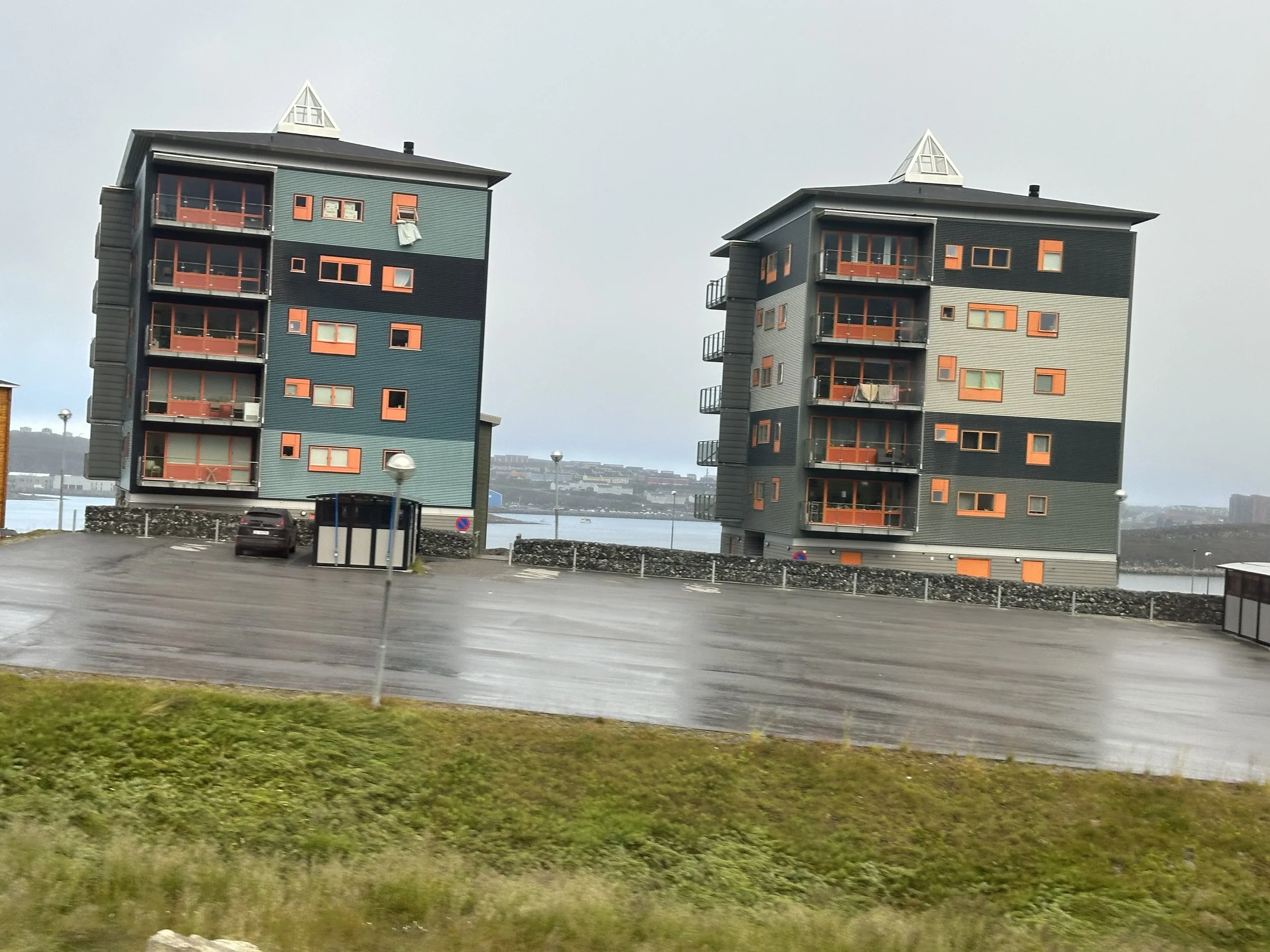
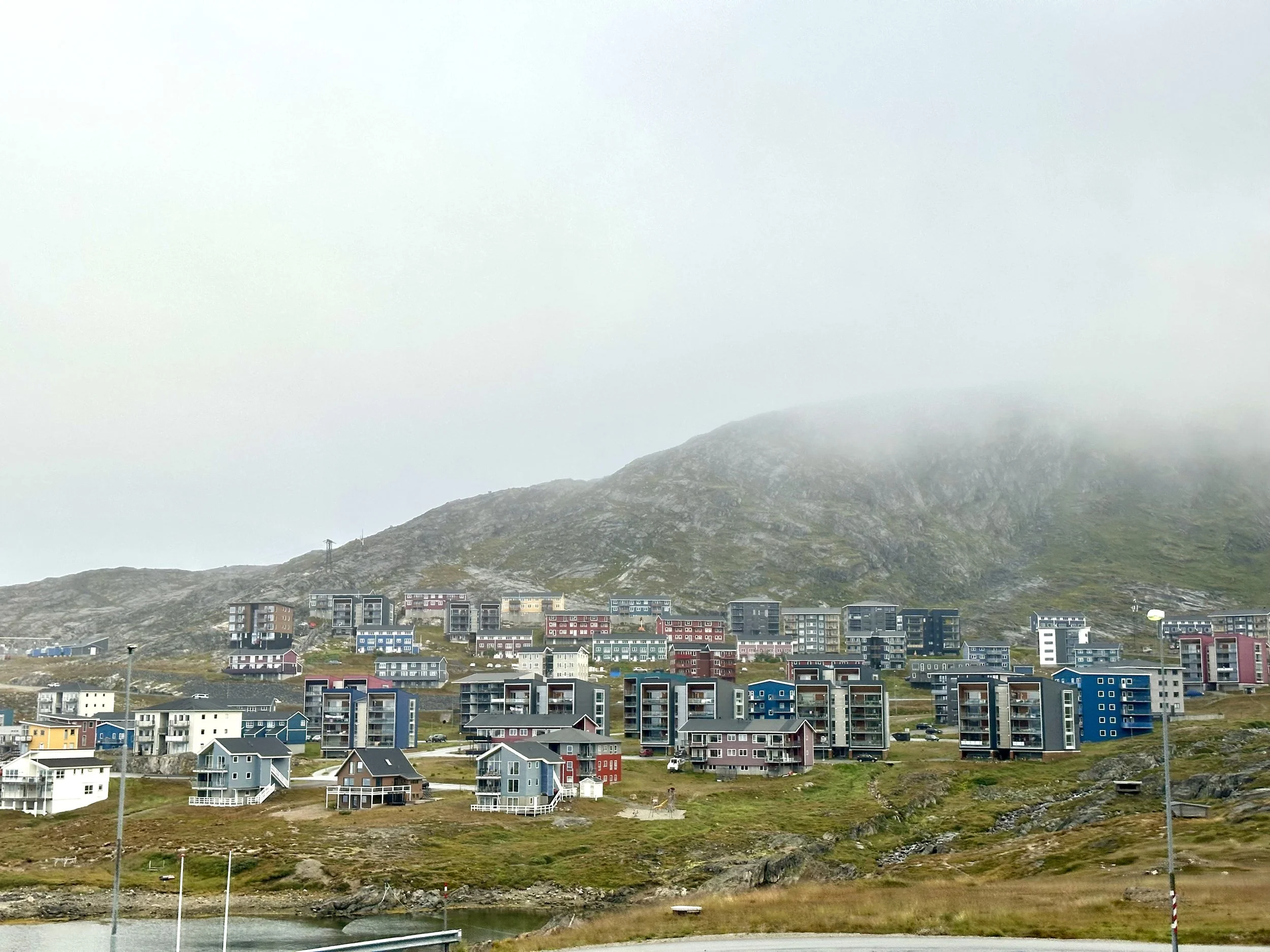
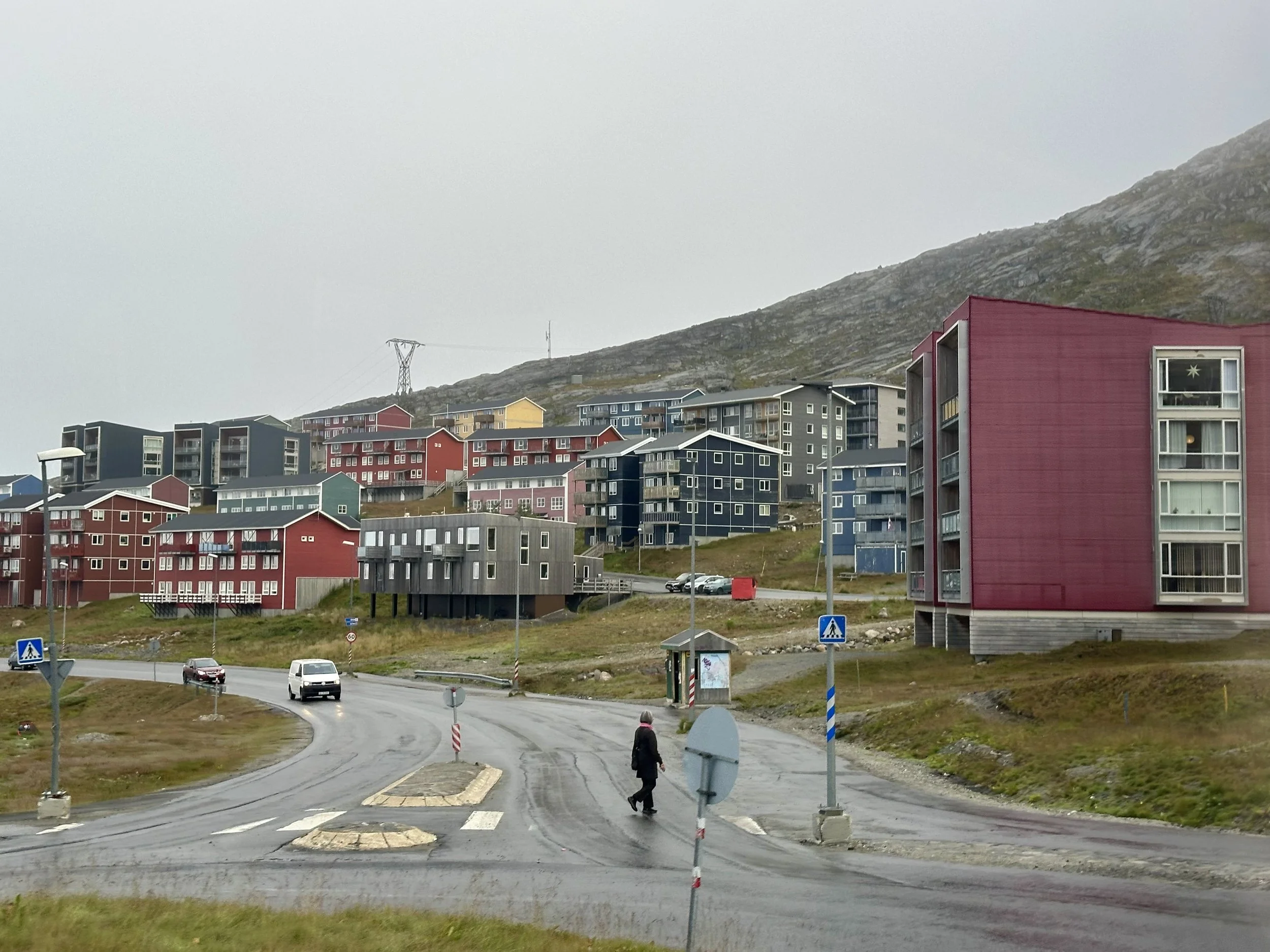
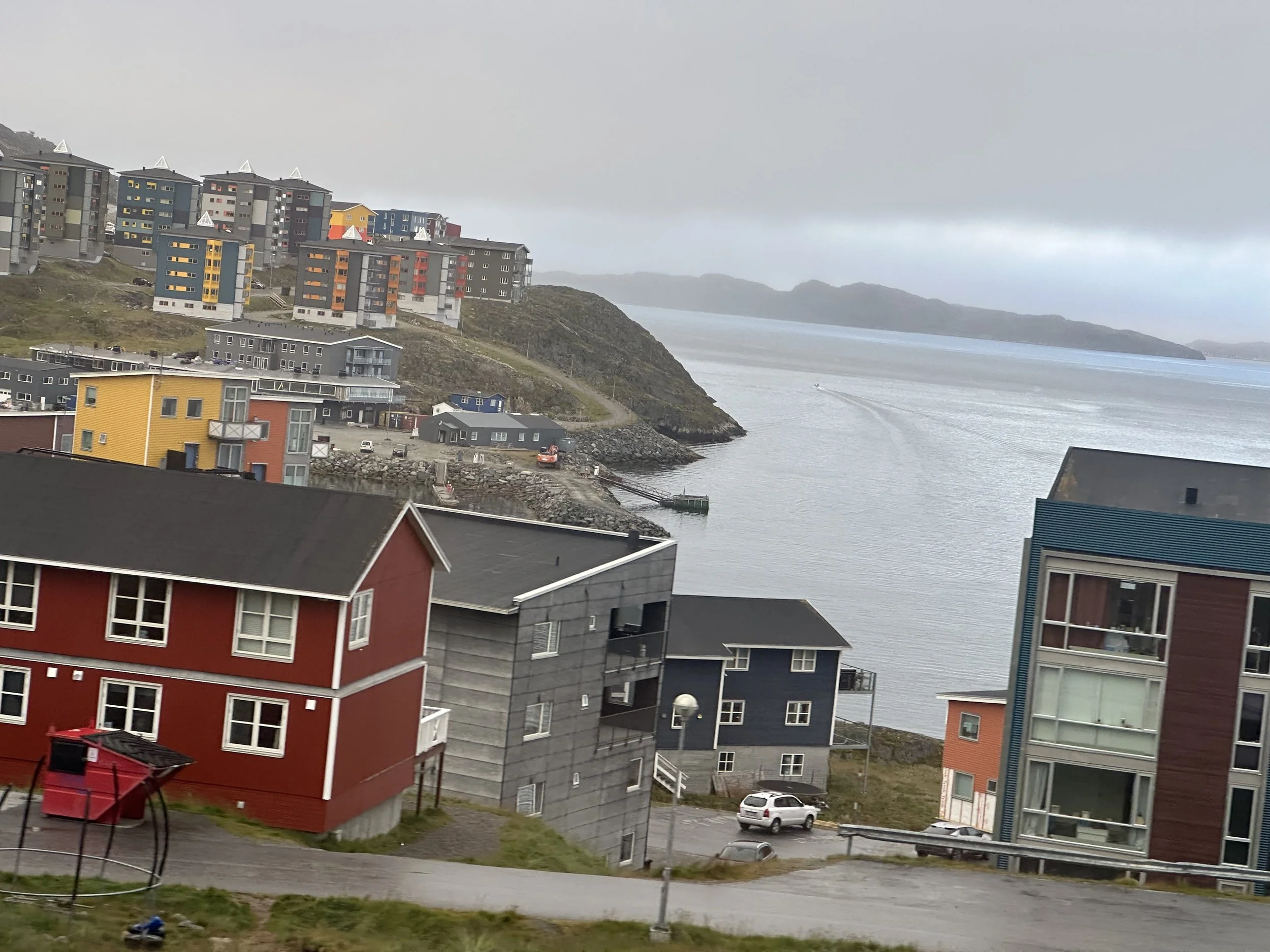
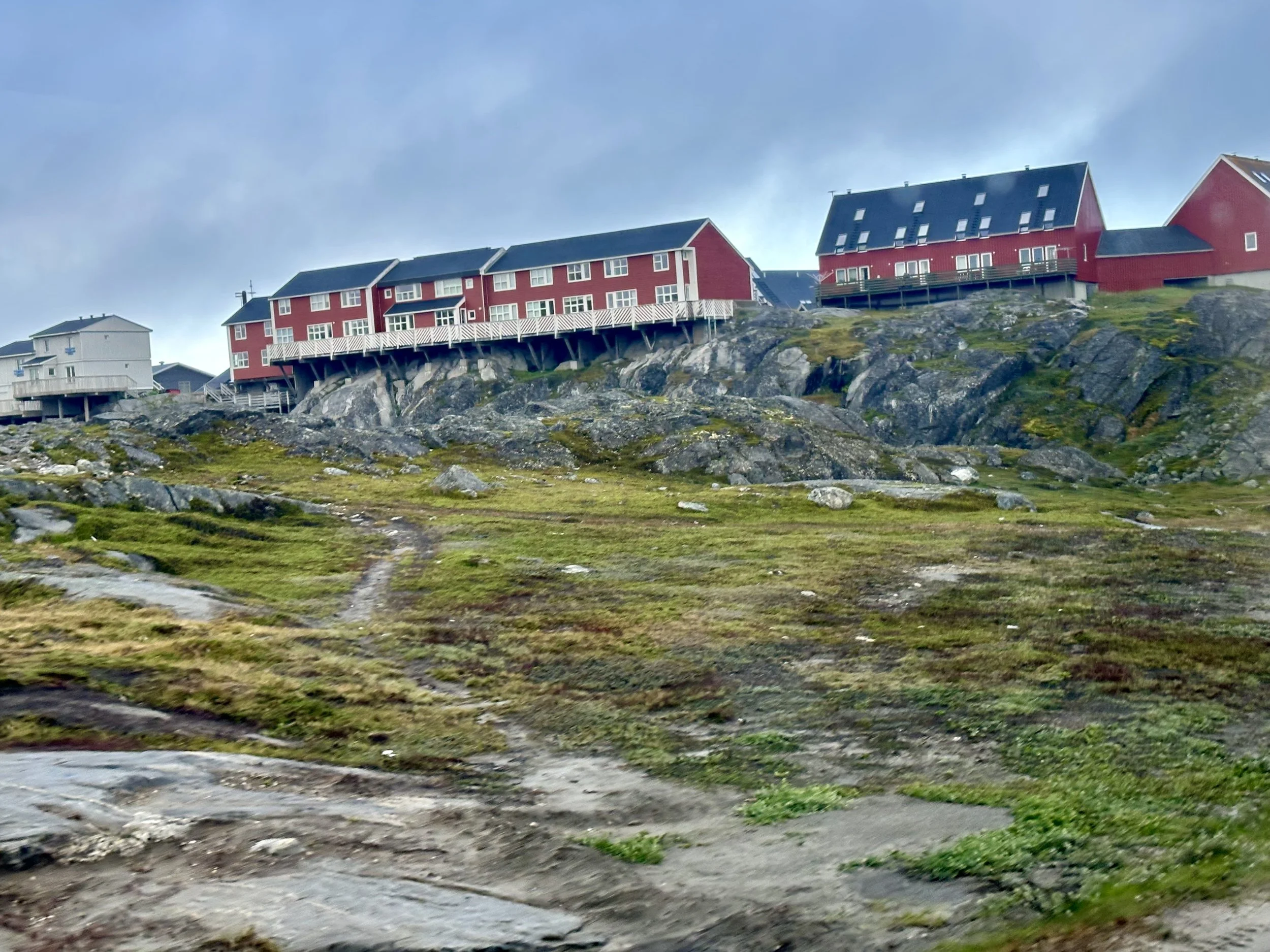
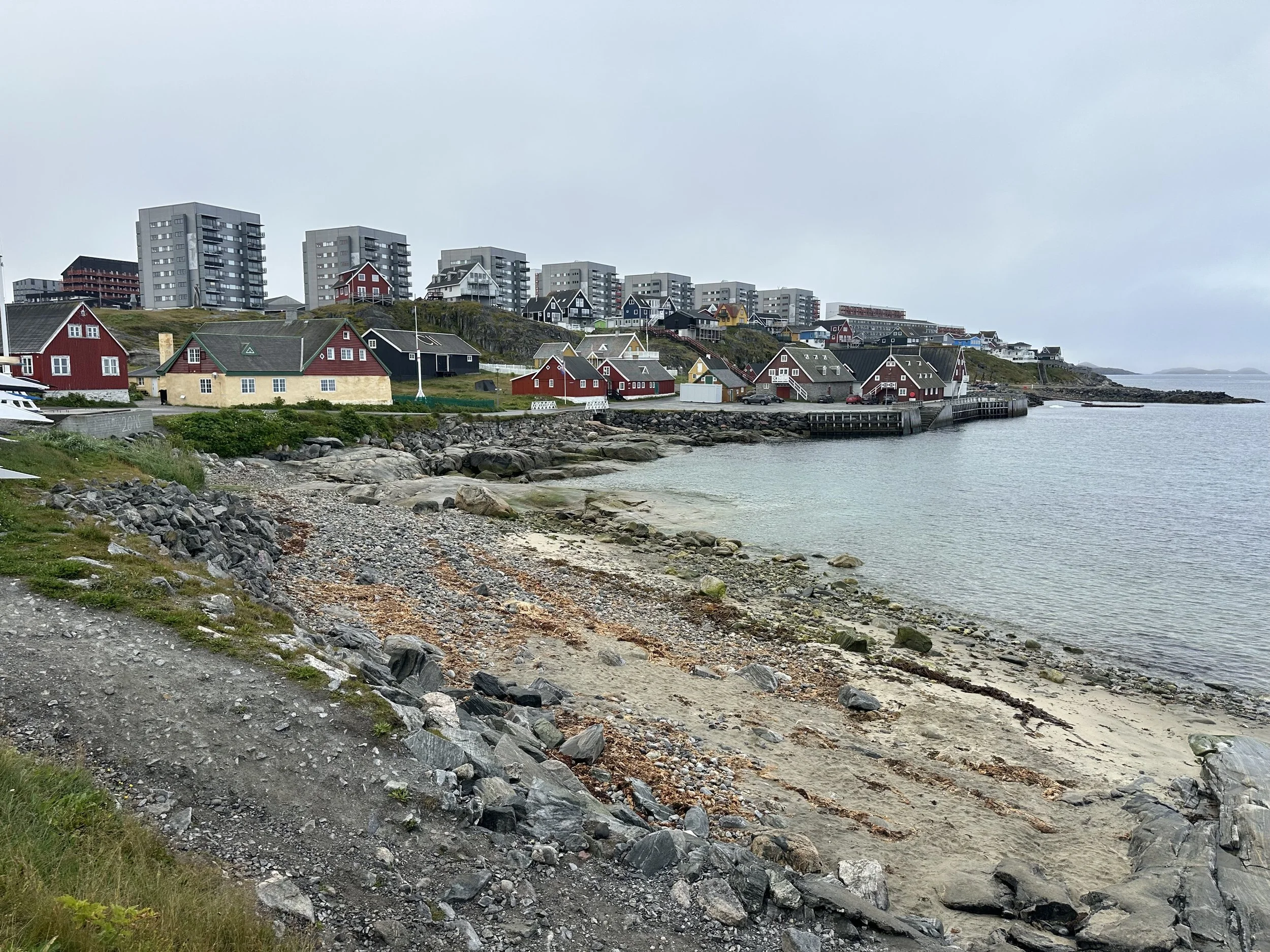
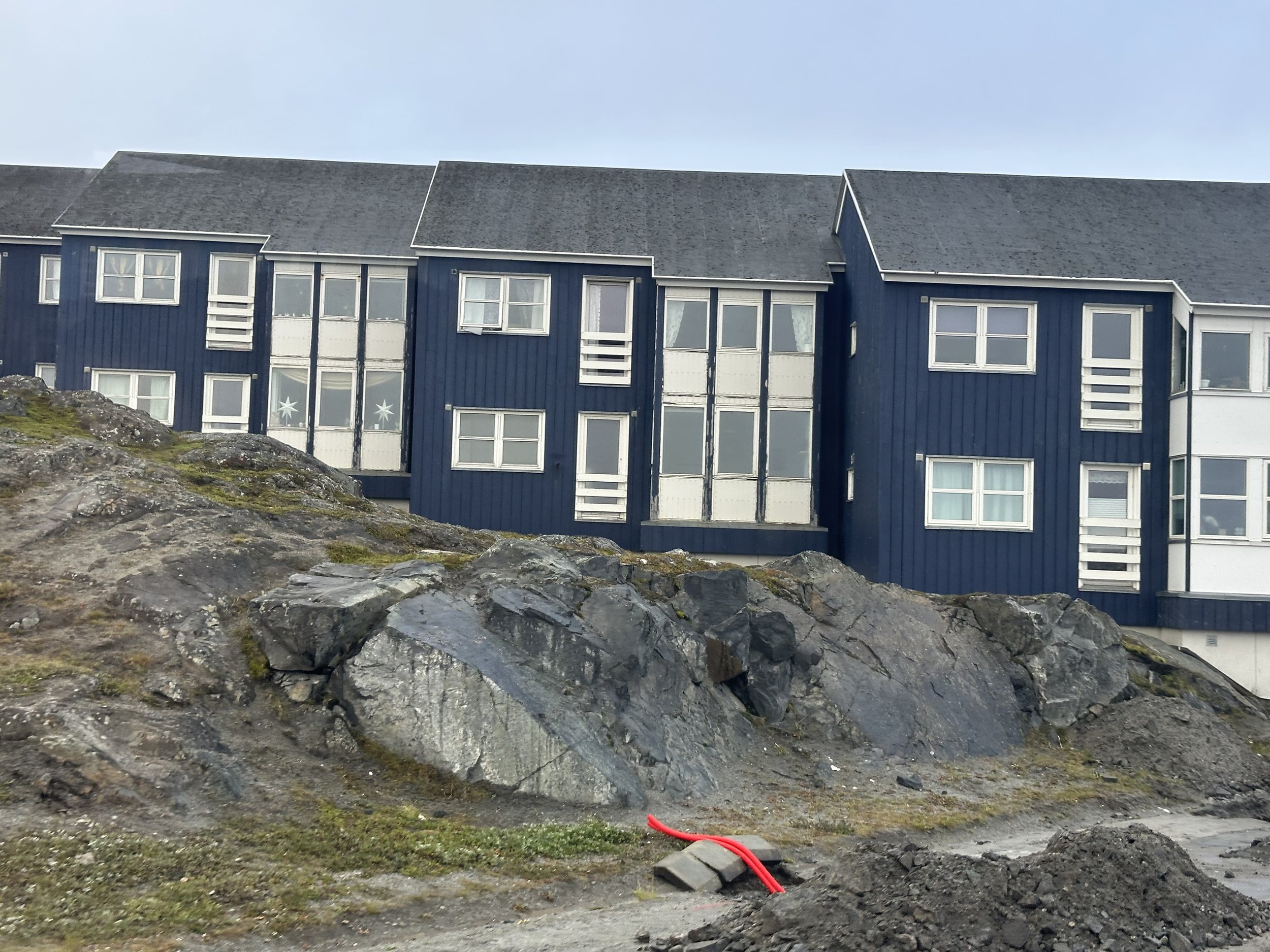
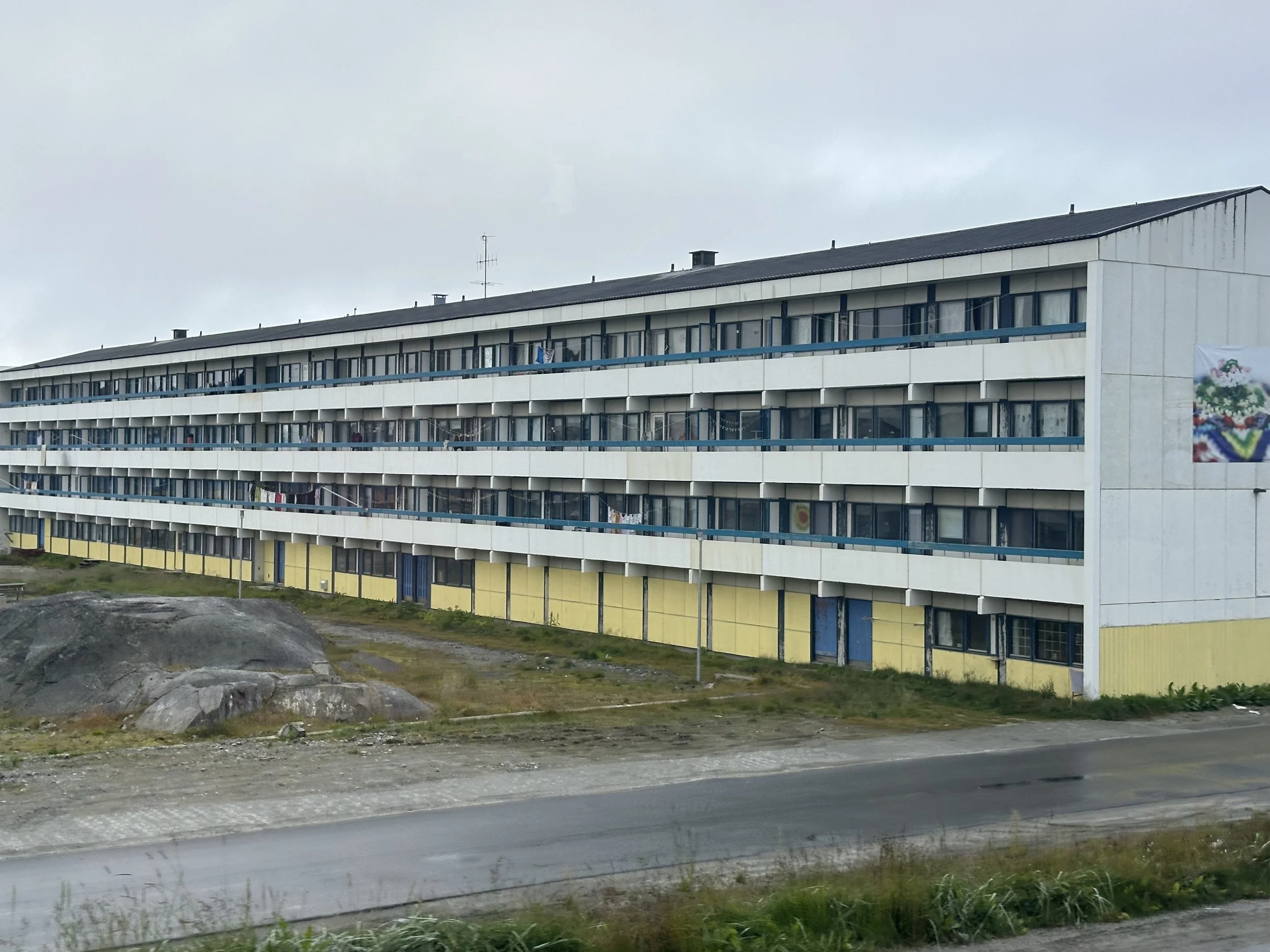
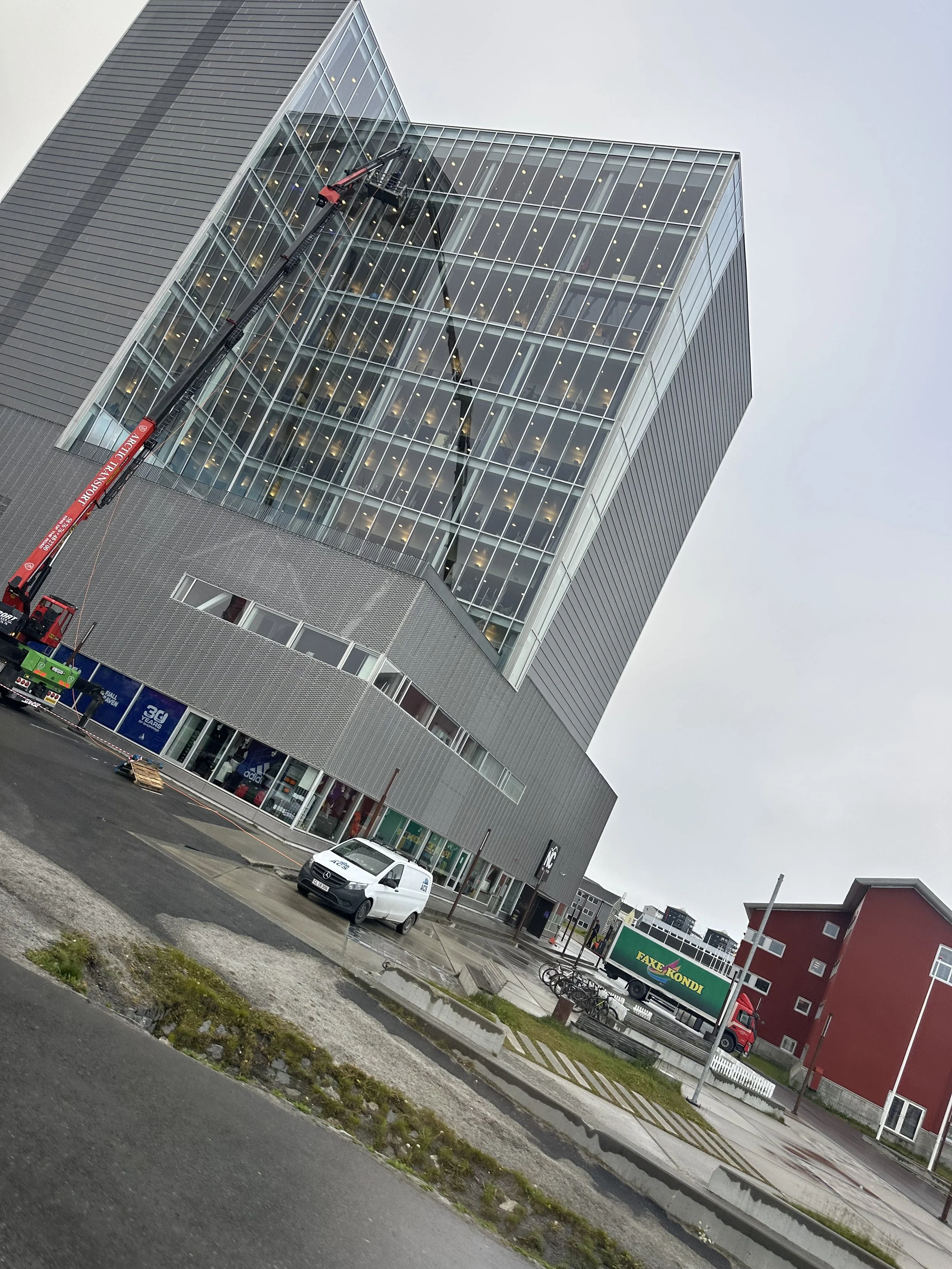
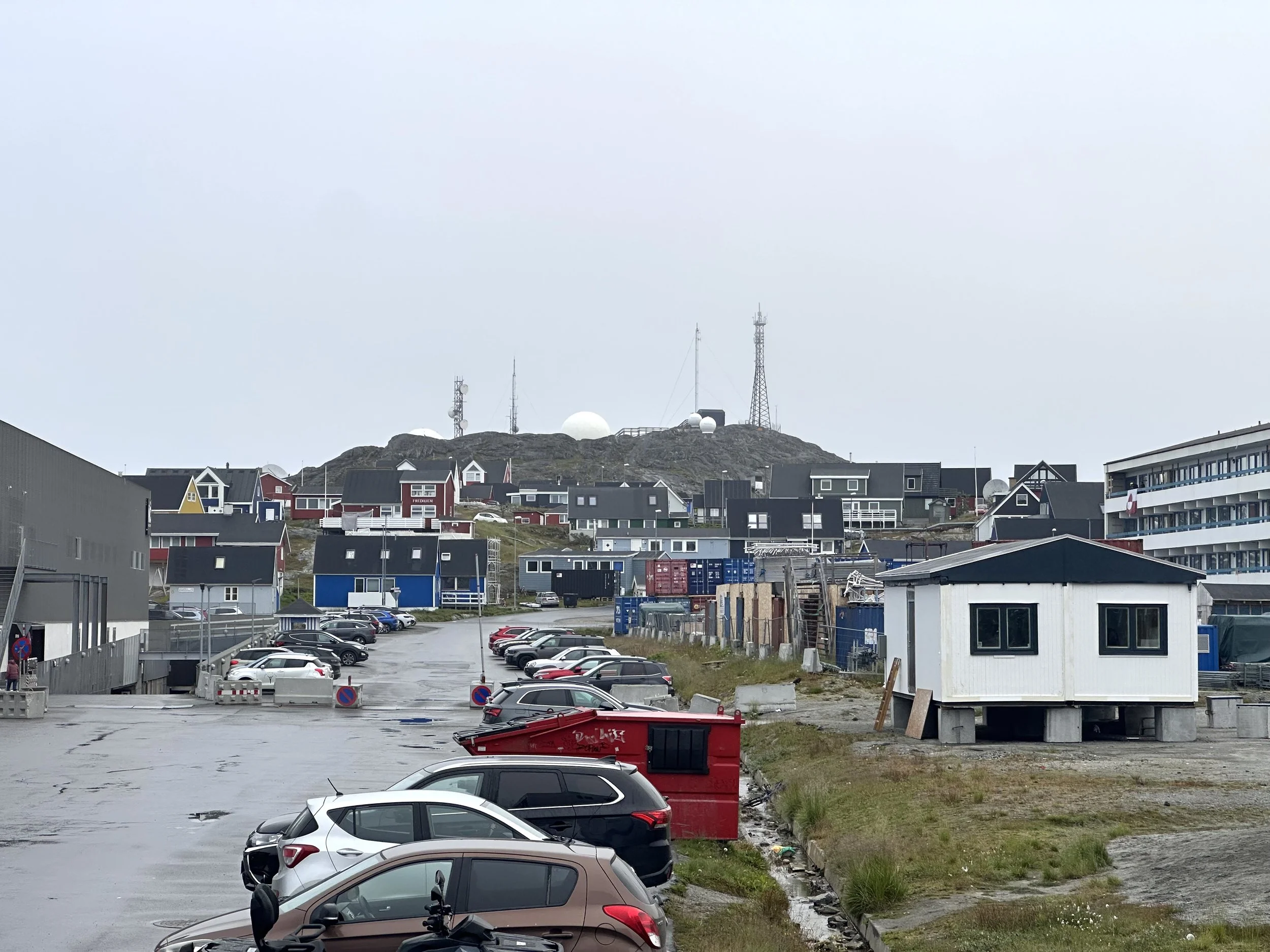
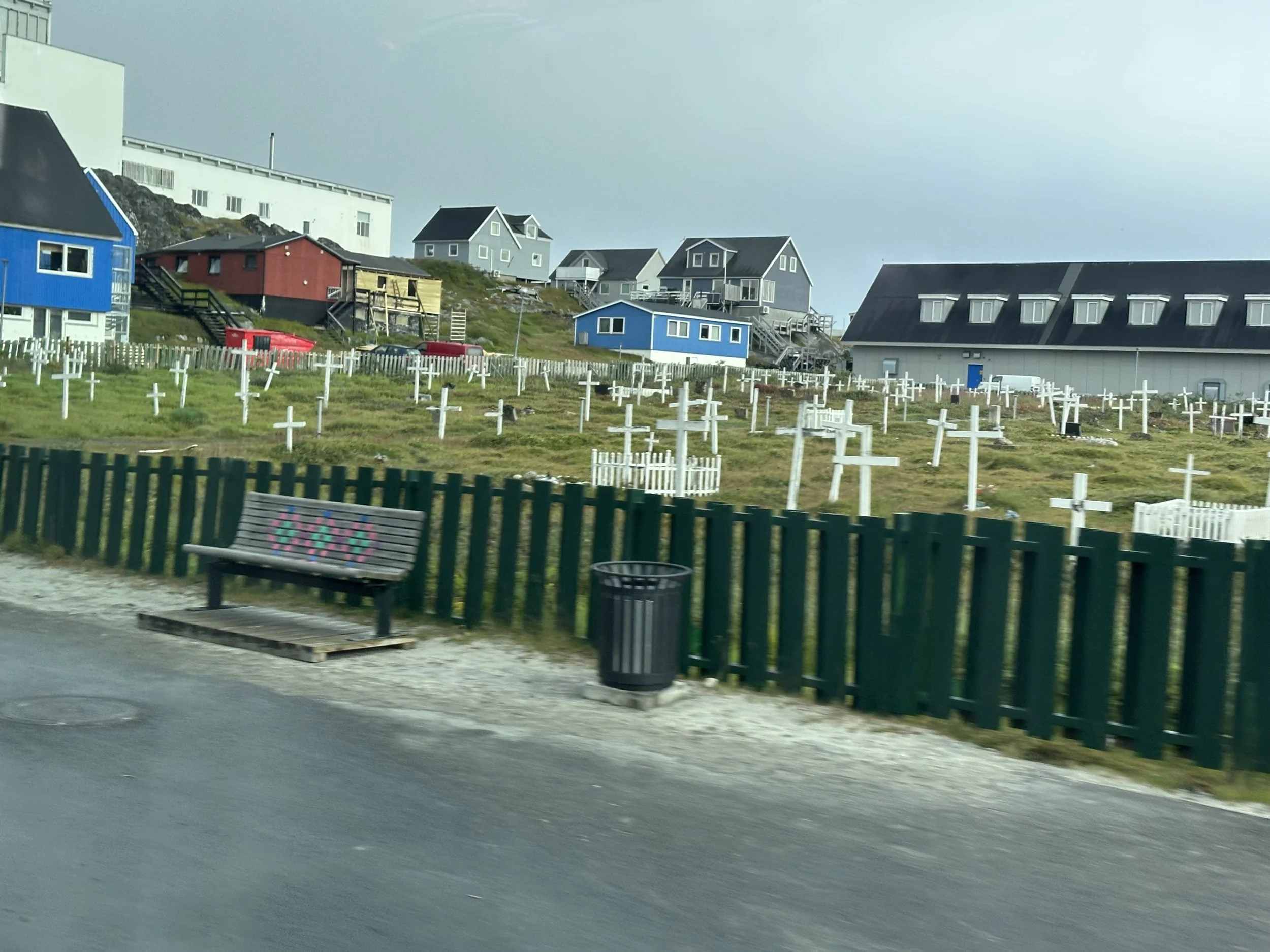
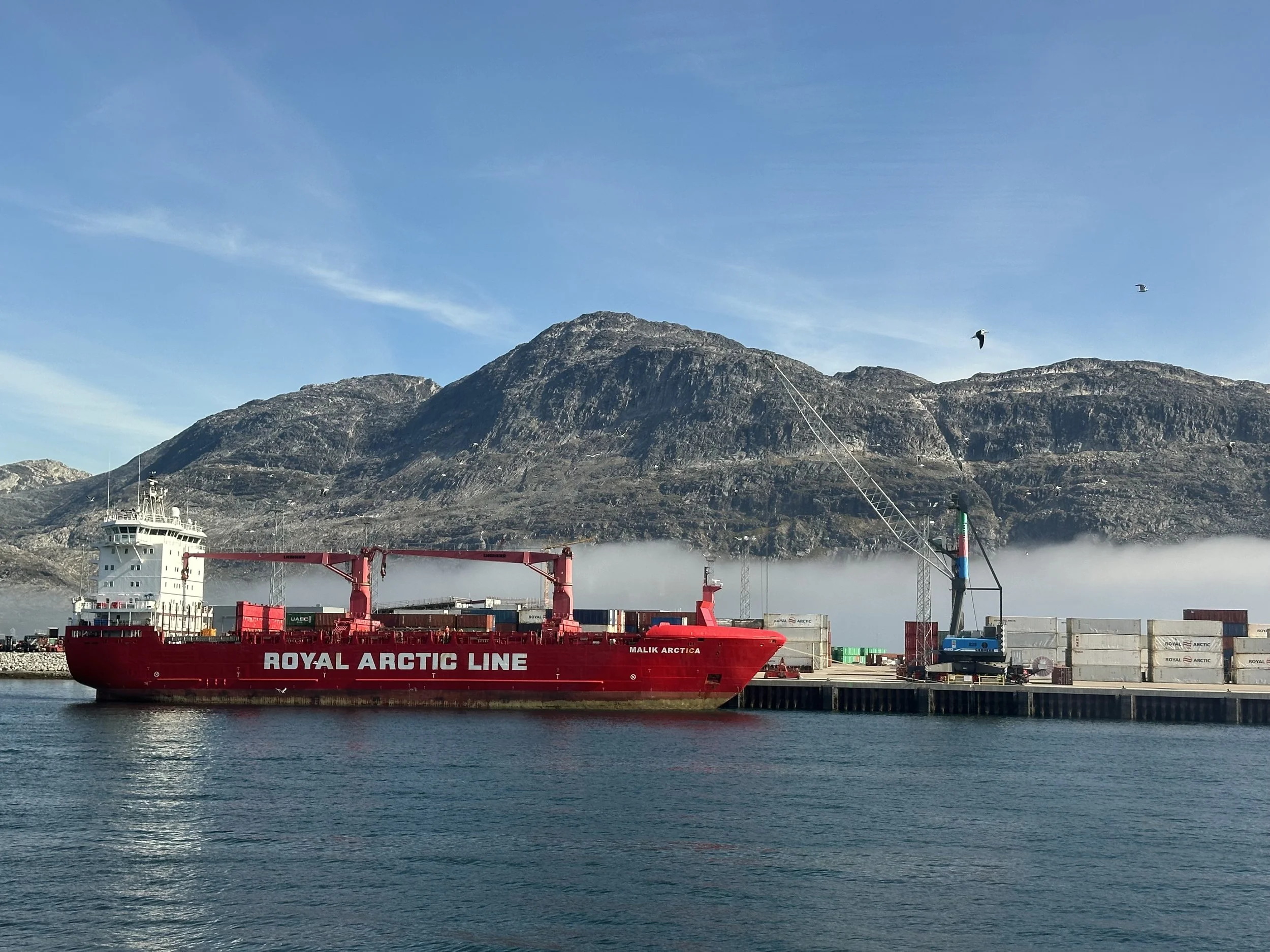
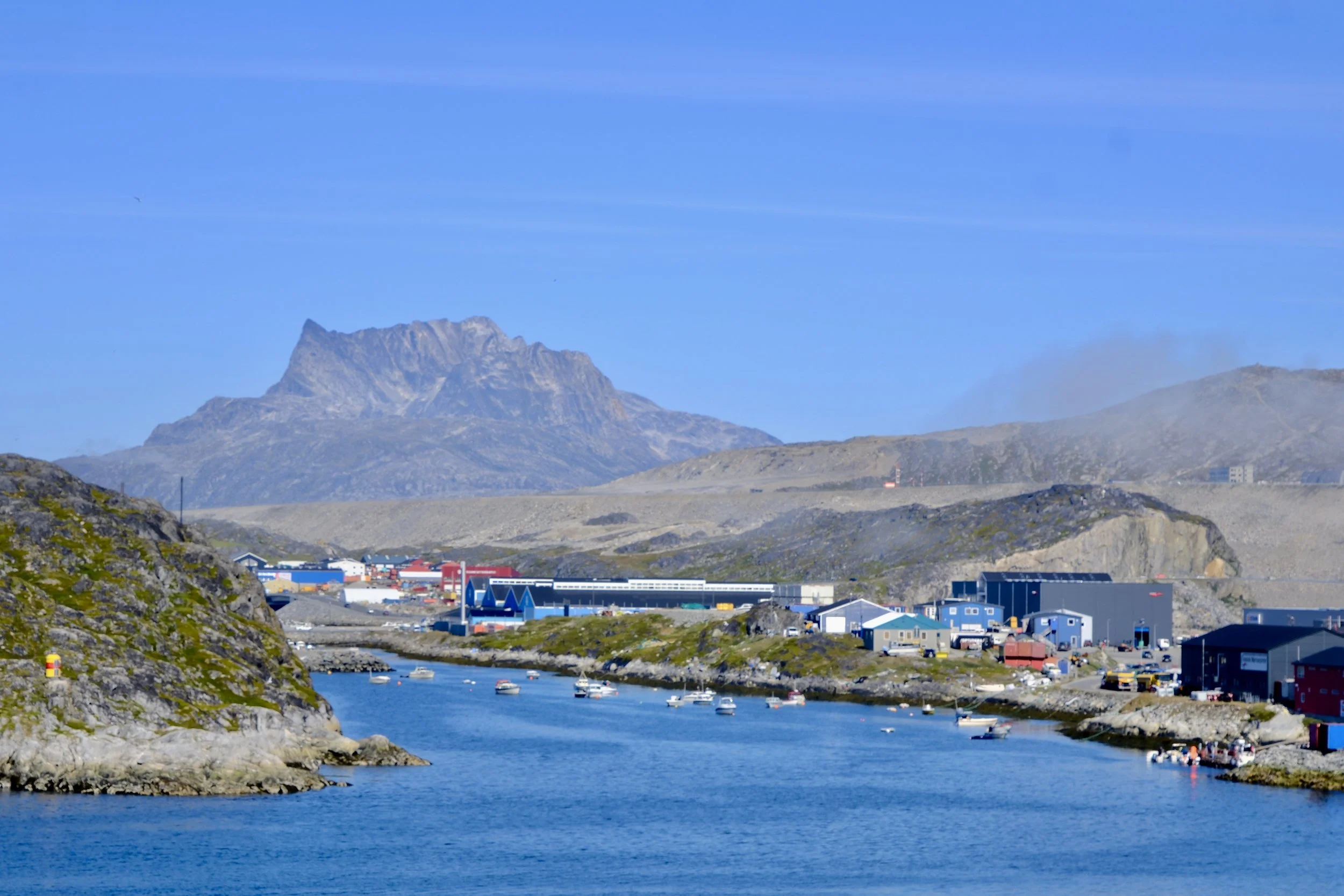
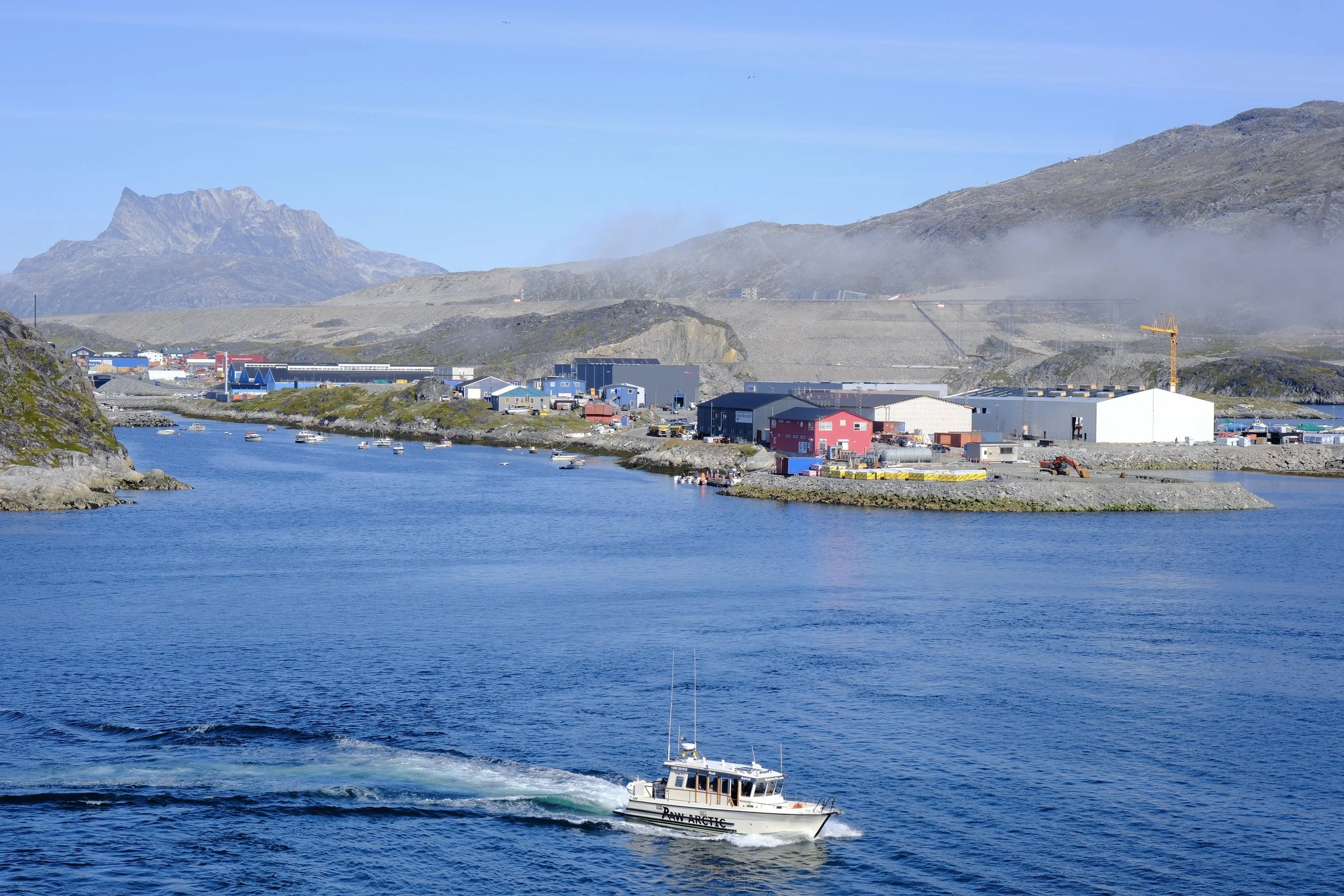
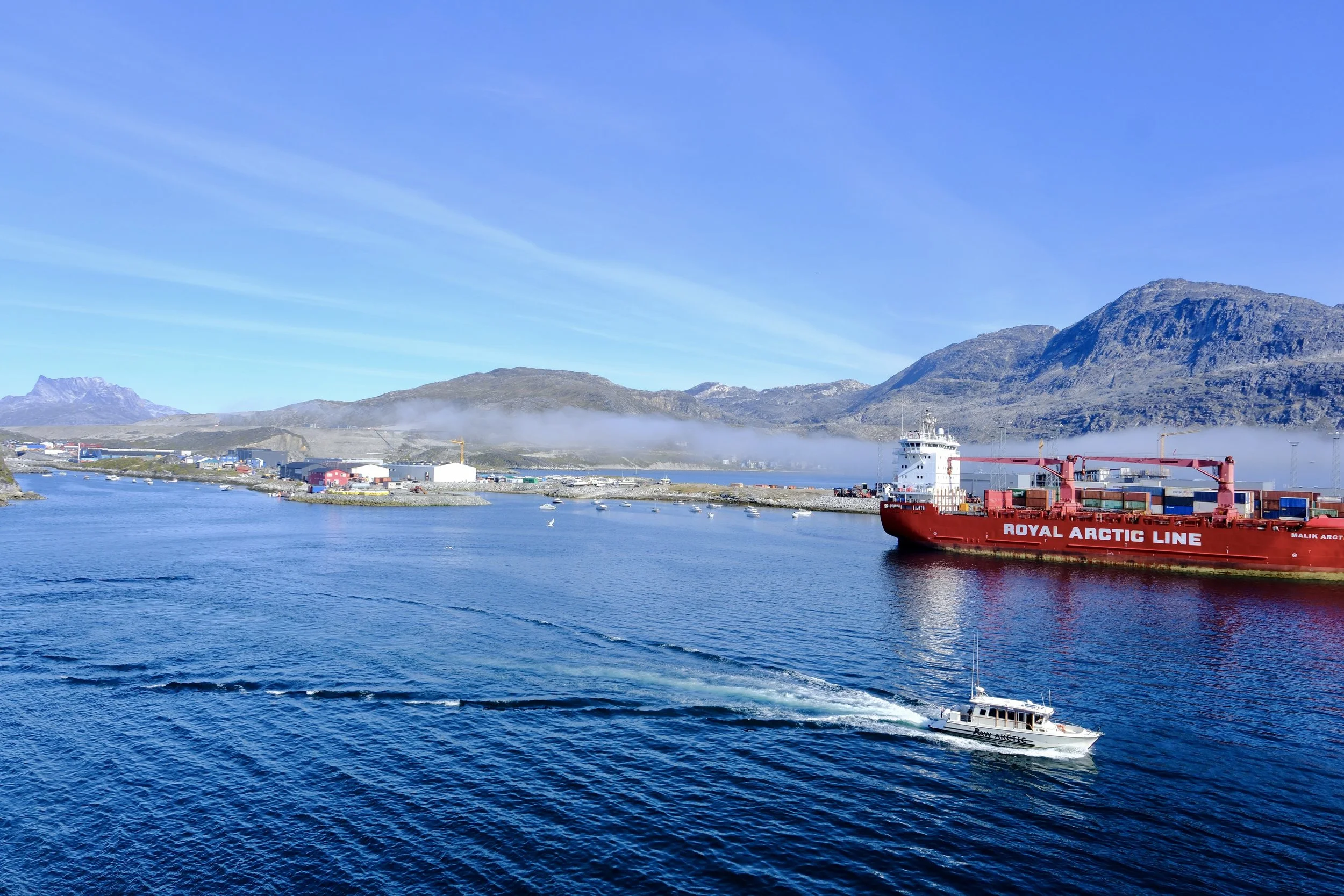
The bus tour involved driving though the three neighborhoods of Nuuk. You can’t say that Nuuk is quaint, picturesque or charming. It’s a town that shows the effect of long, cold winters. Much of the apartment housing is government provided, built in the 1960s and showing its age. Other apartment buildings are privately owned. There must be some single-family homes but we didn’t see any. It’s hard to find any flat, unencumbered land to build on. There is significant building going on int Nuuk, but all of it involves big rock moving effort.
Drugs and alcoholism are big problems in Nuuk and elsewhere in Greenland. About 17% of Greenlanders live below the poverty line. The maximum security prison next door to the airport is featured in the Netflix program “Inside the World’s Toughest Prisons.”
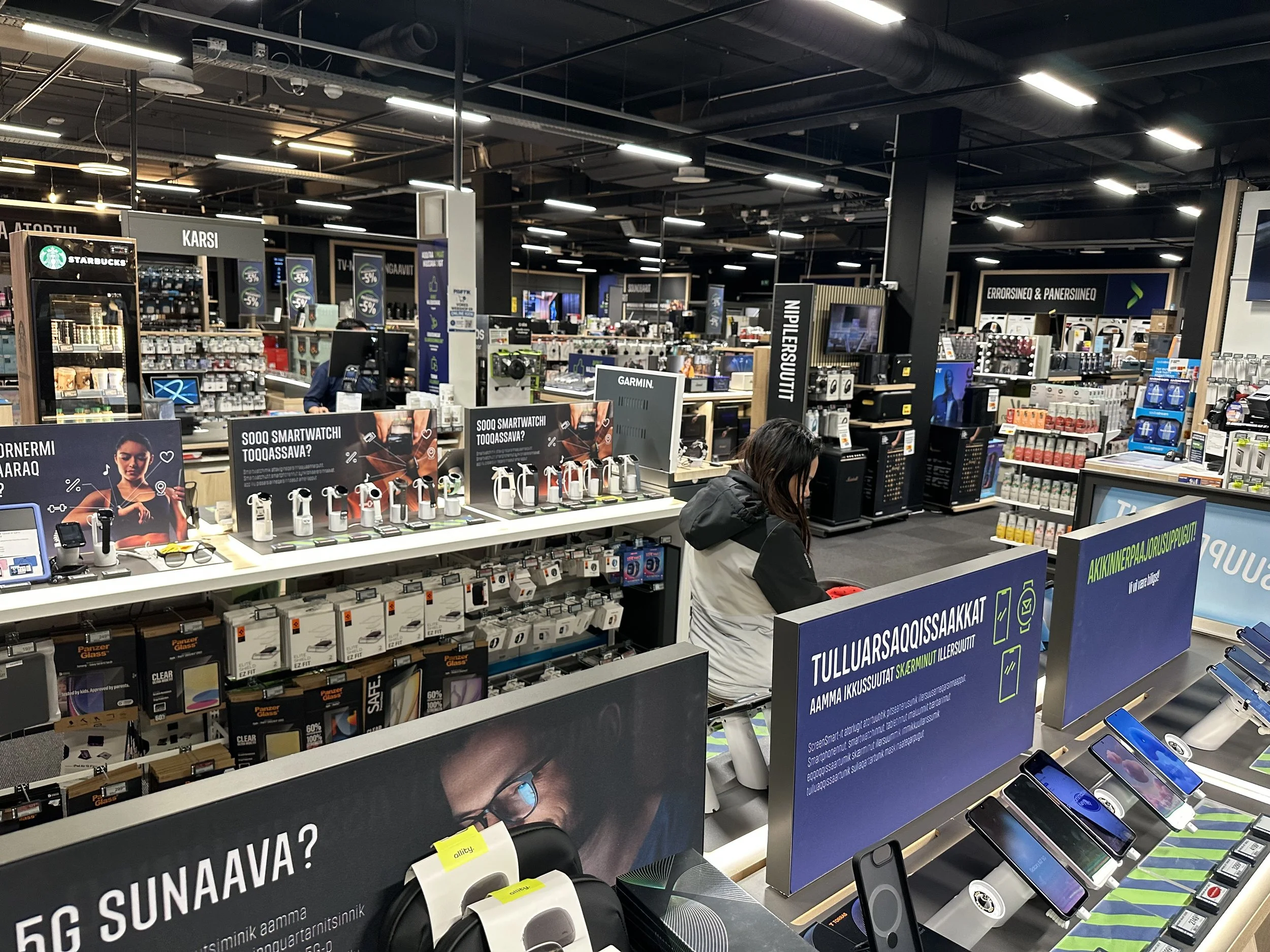
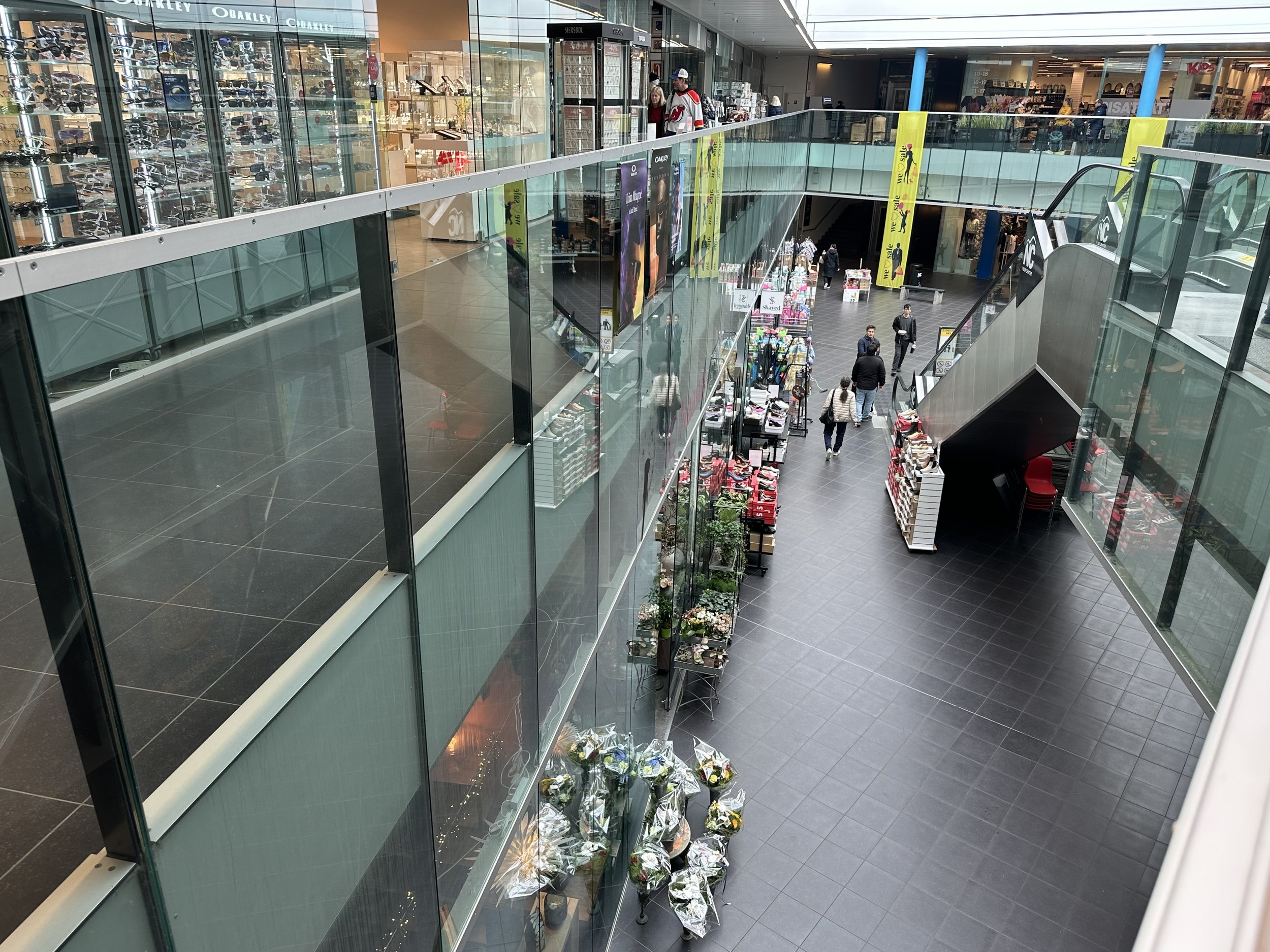
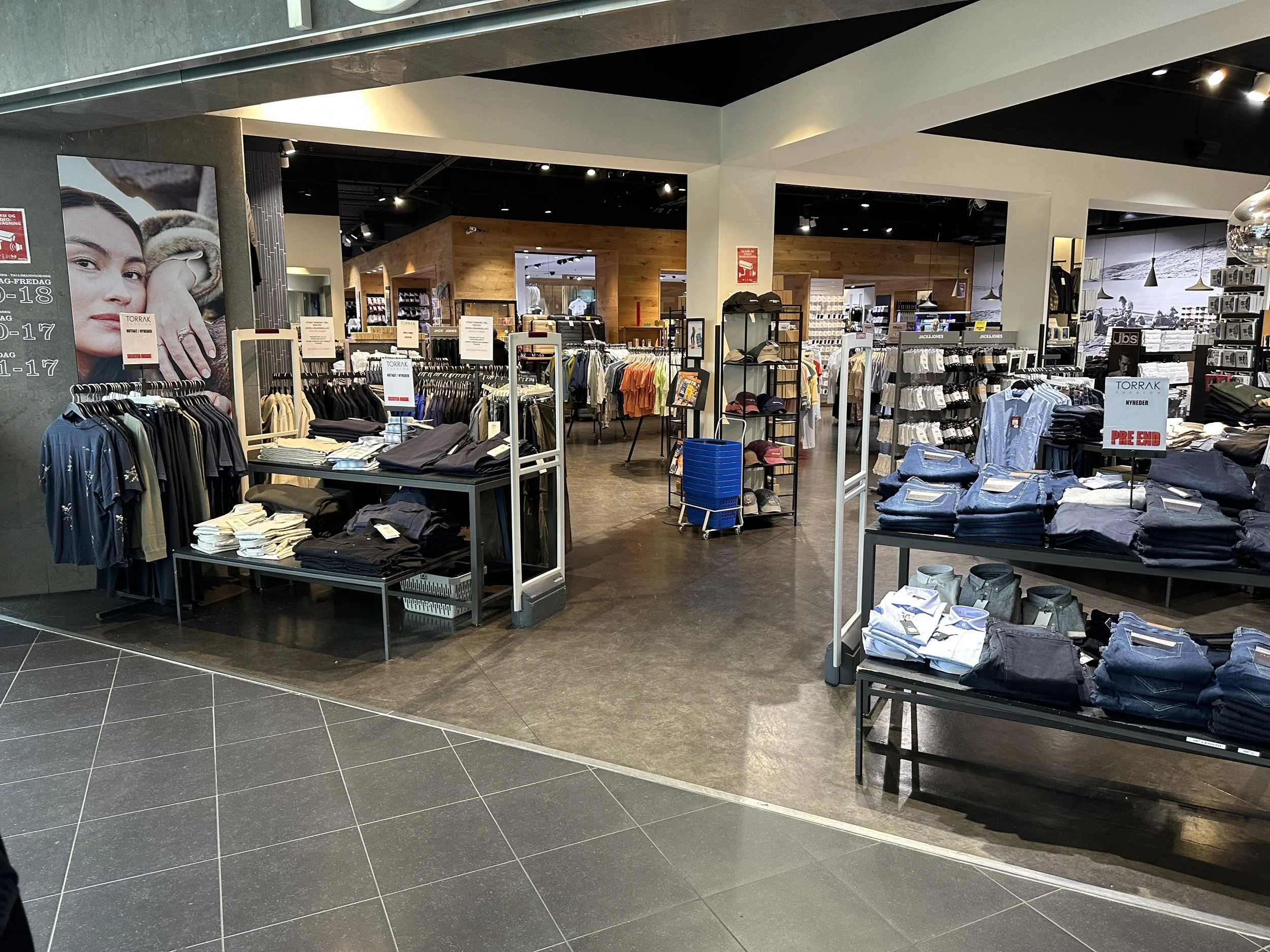
After the museum tour, which ended at about 12:30, we stayed in town to shop and have lunch. We went to the local shopping mall – a two-story building with amazingly complete and interesting stores. After our travails in Copenhagen looking for Judy’s iPhone case, lo and behold, the clerk in the electronics store here took us right to the perfect product.
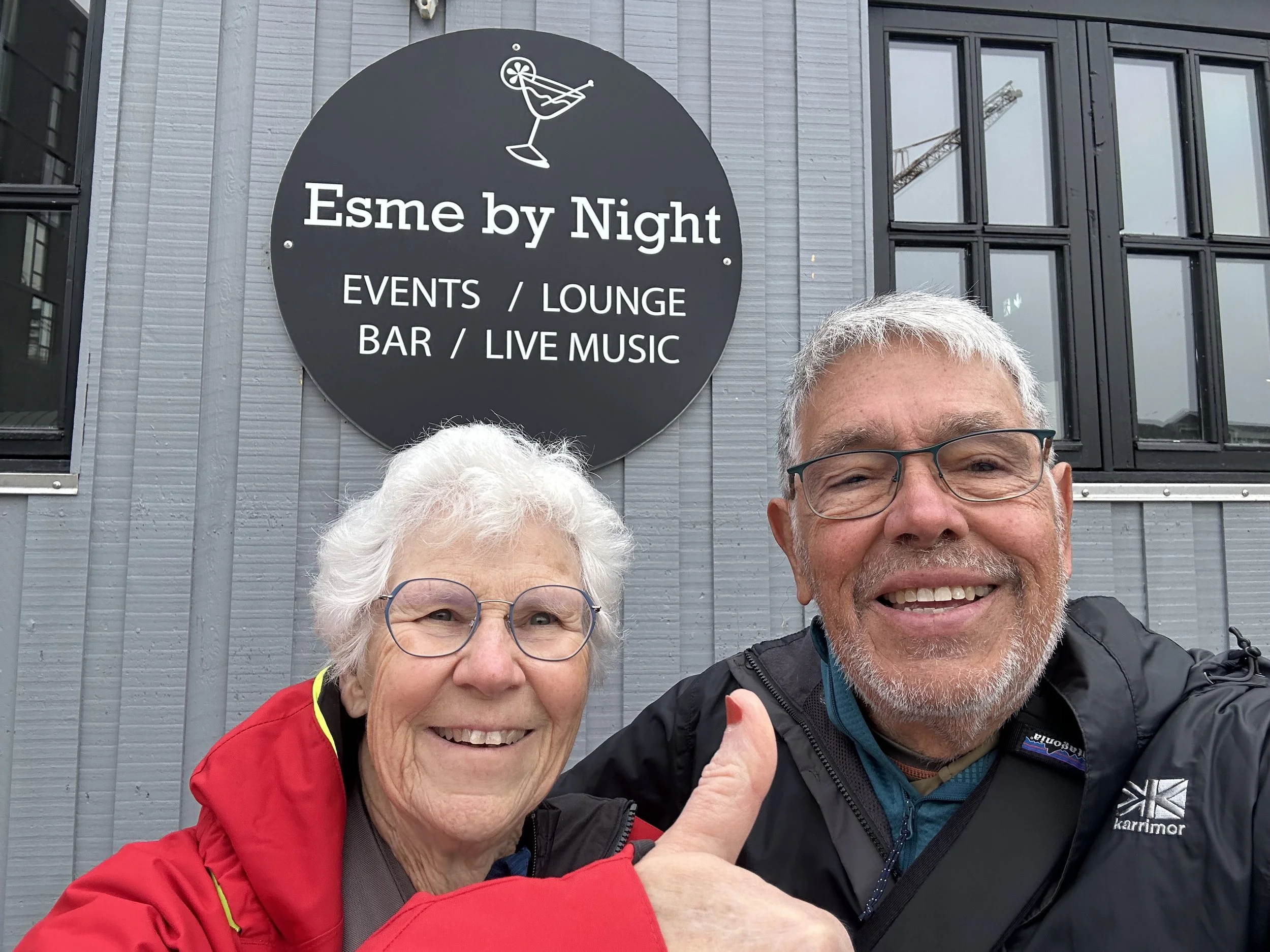
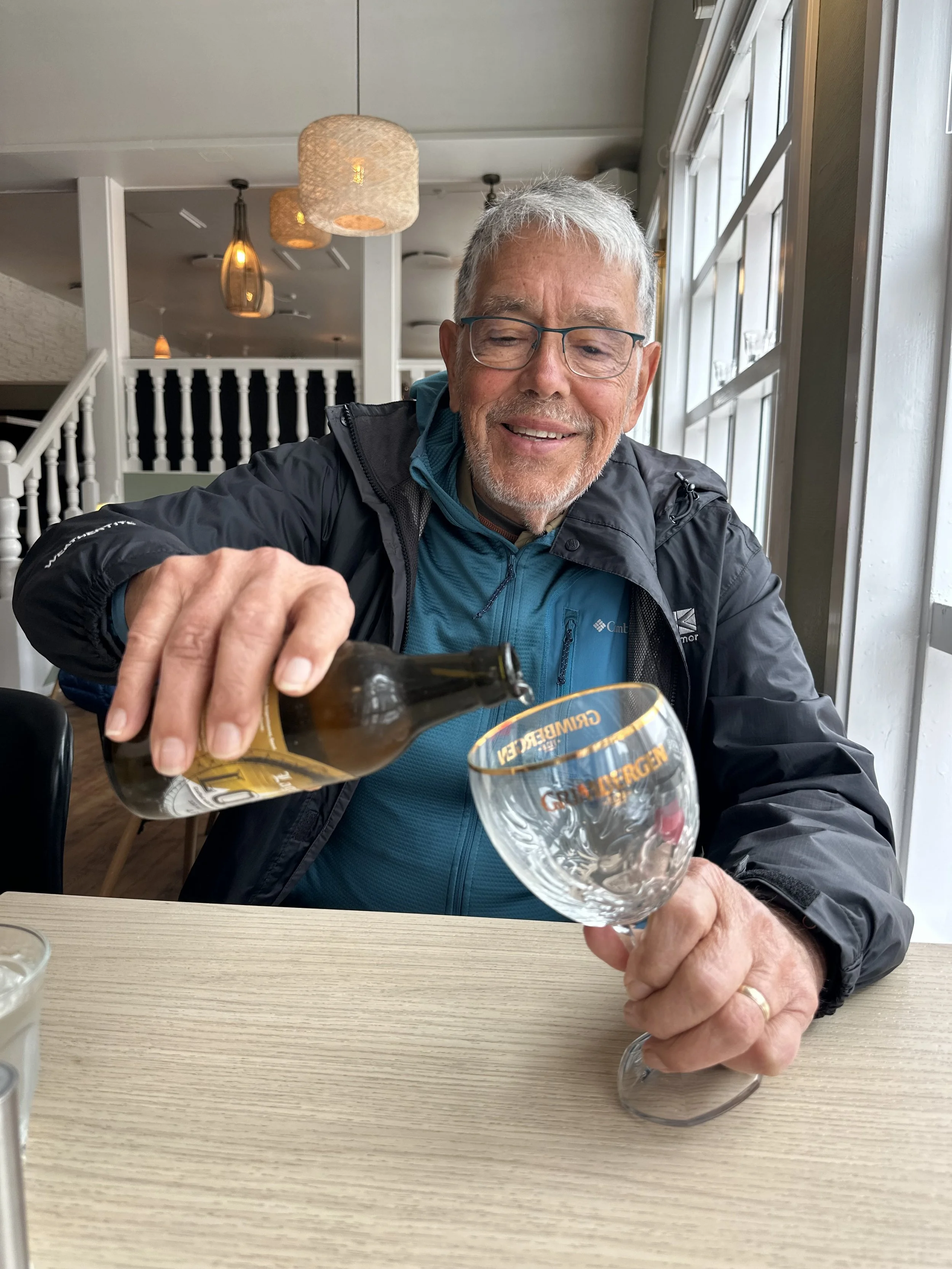
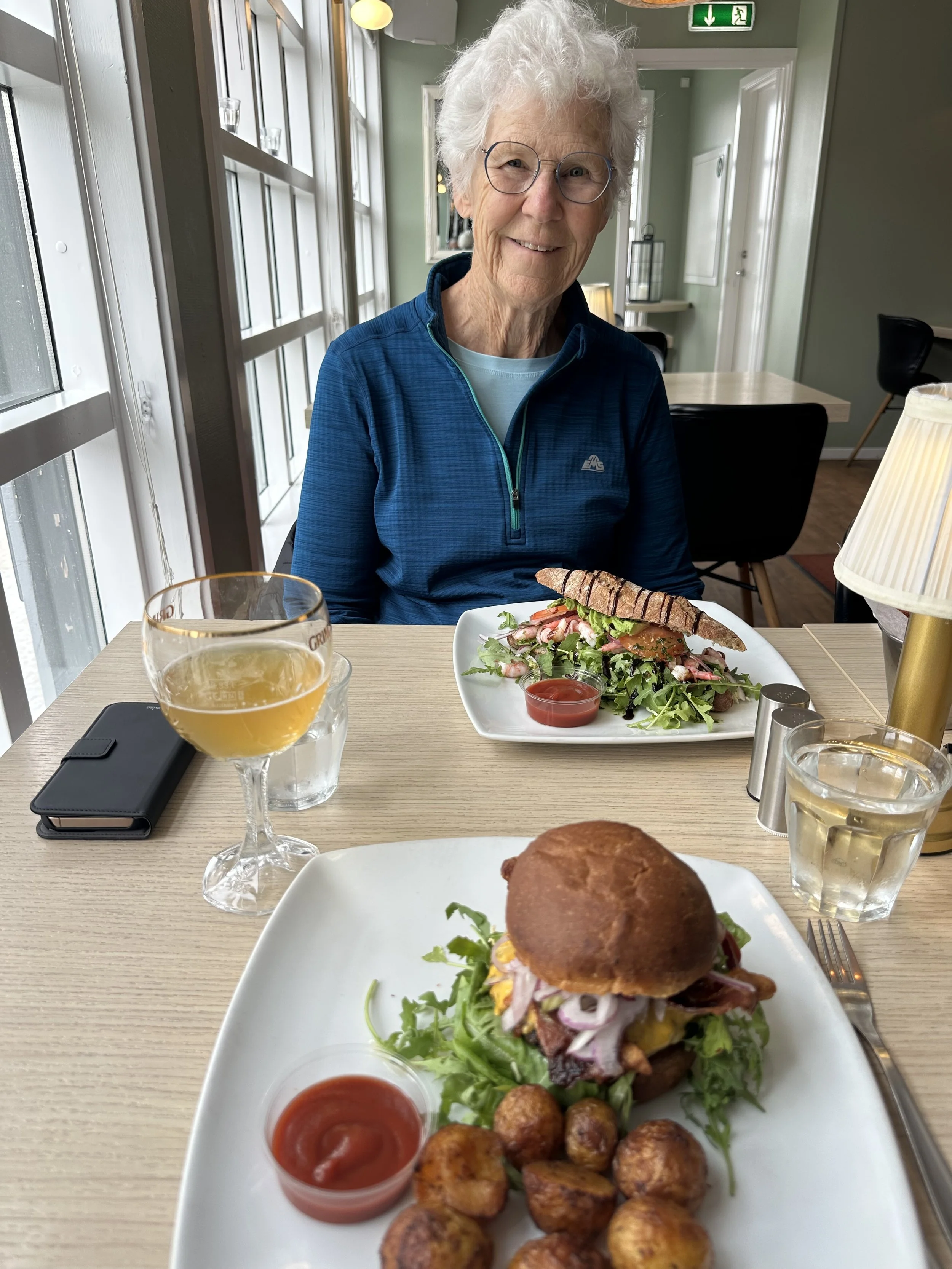
We’d seen a café called Esmeralda, which has a lounge called Esme. No questions: that’s where I ordered my Esme burger and Judy a big shrimp sandwich. Great food and a welcome change from Viking shipboard grub, which, while nice, get’s a little tiresome, if you ask me.
Back on board by 2:30, a nice nap and a fitting for our expedition boots, followed by a briefing on dos-and-don’ts in the Arctic. Then dinner.
We cast off from Nuuk about 3:30 PM, headed for Itilleq, just a few miles north of the Arctic Circle. We’ll get there about 7 AM. We’re booked for a land tour and a Special Operations Boat tour. Should be fun.