Day 15, April 14, 2026 – Arles and Home
Judy has been under the weather for several days now, and she’s not improving so we decided to cut our trip short and get her home. It’s probably the flu, but who knows with certainty. She’s in no shape to be out and about, that’s for sure.
So today, rather than leave the ship and head for Cannes for two days of touring by bus as originally planned, we got a car service to take us to the Sheraton here in Nice, right across the street from the airport. We’ll leave tomorrow, one day earlier than planned. Judy did fine with the trip this morning and has been resting all day. I went to a pharmacy and got her some anti-nausea medication and some Powerade to get her fluid level up.
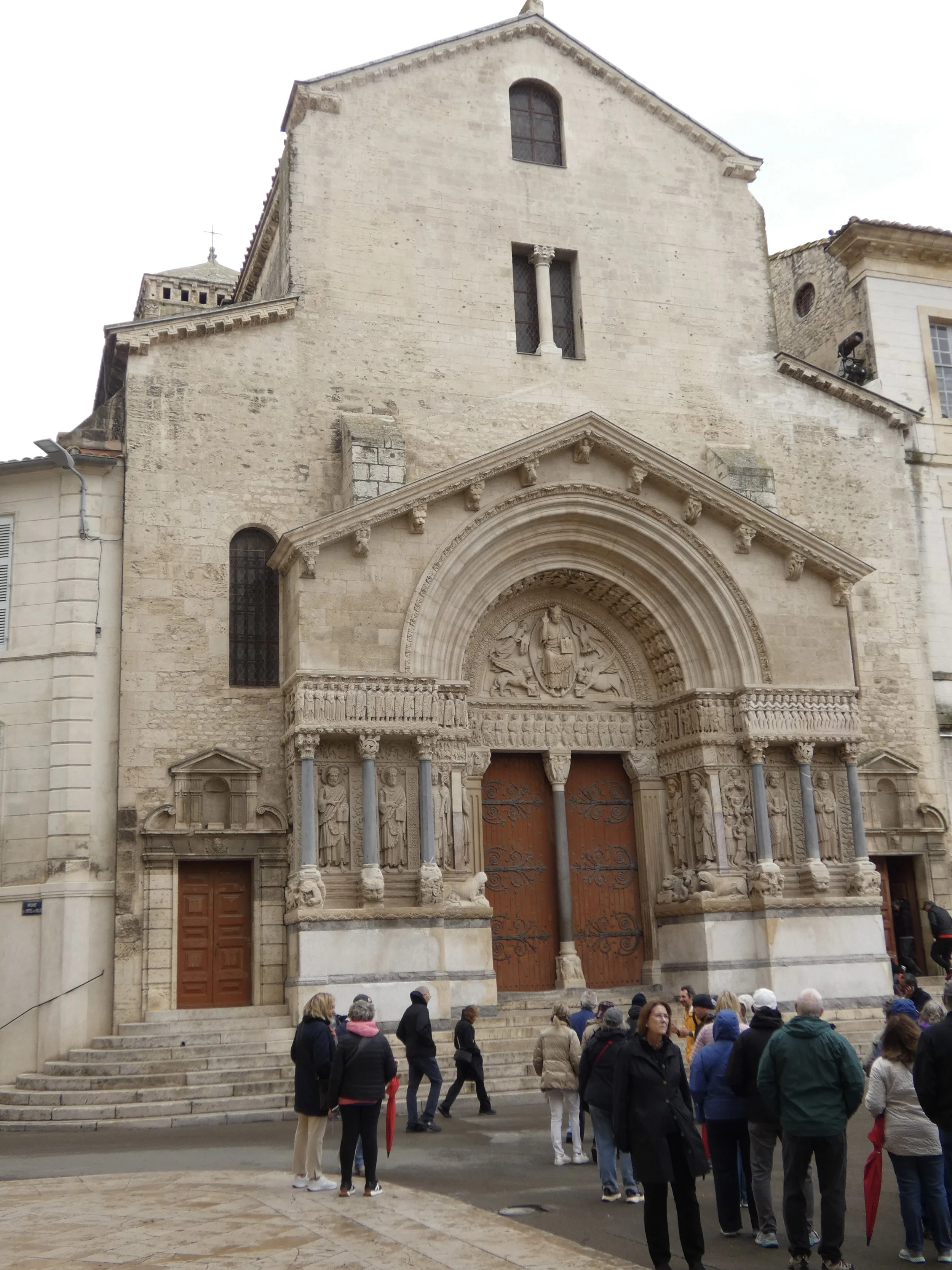
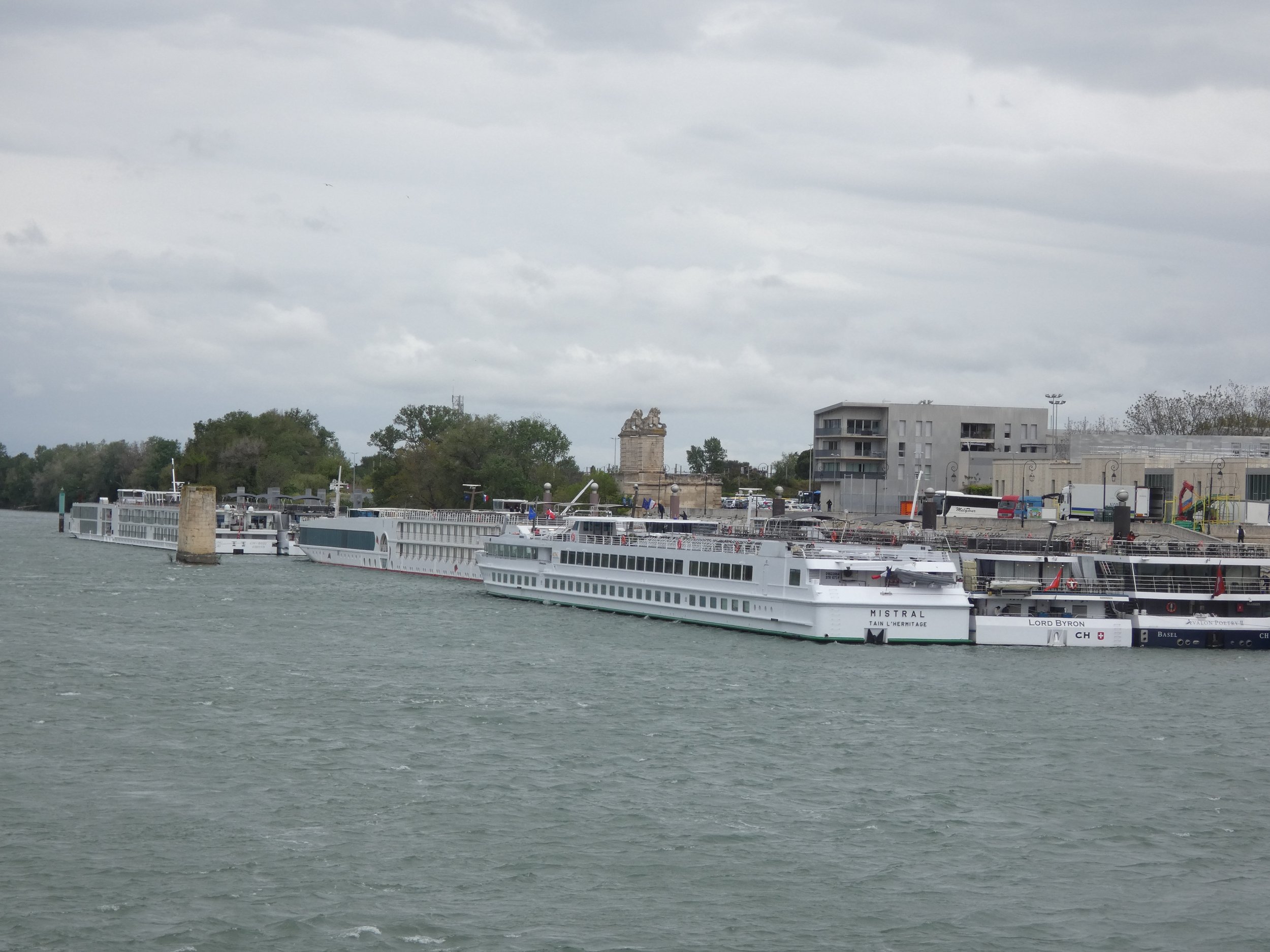
Yesterday, while hoping she’d turn the corner, I went out to see Arles and do an olive oil tasting.
Sunny, balmy, warm and inviting? That’s what they tell you in the French Riviera brochures, but yesterday was the coldest and windiest day of our entire trip. Temps were in the 50s but a steady gale-force wind chilled me to the bone.
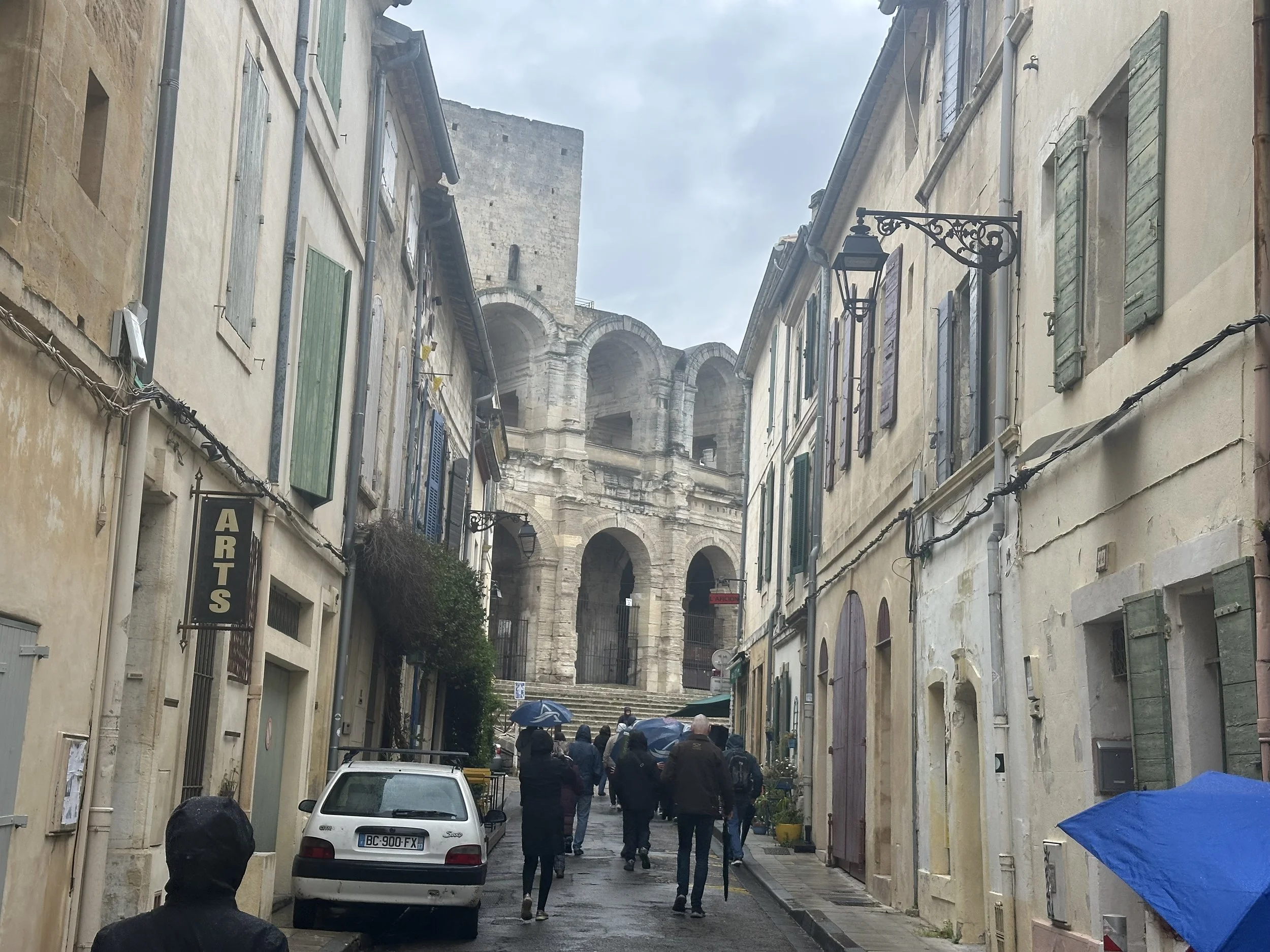
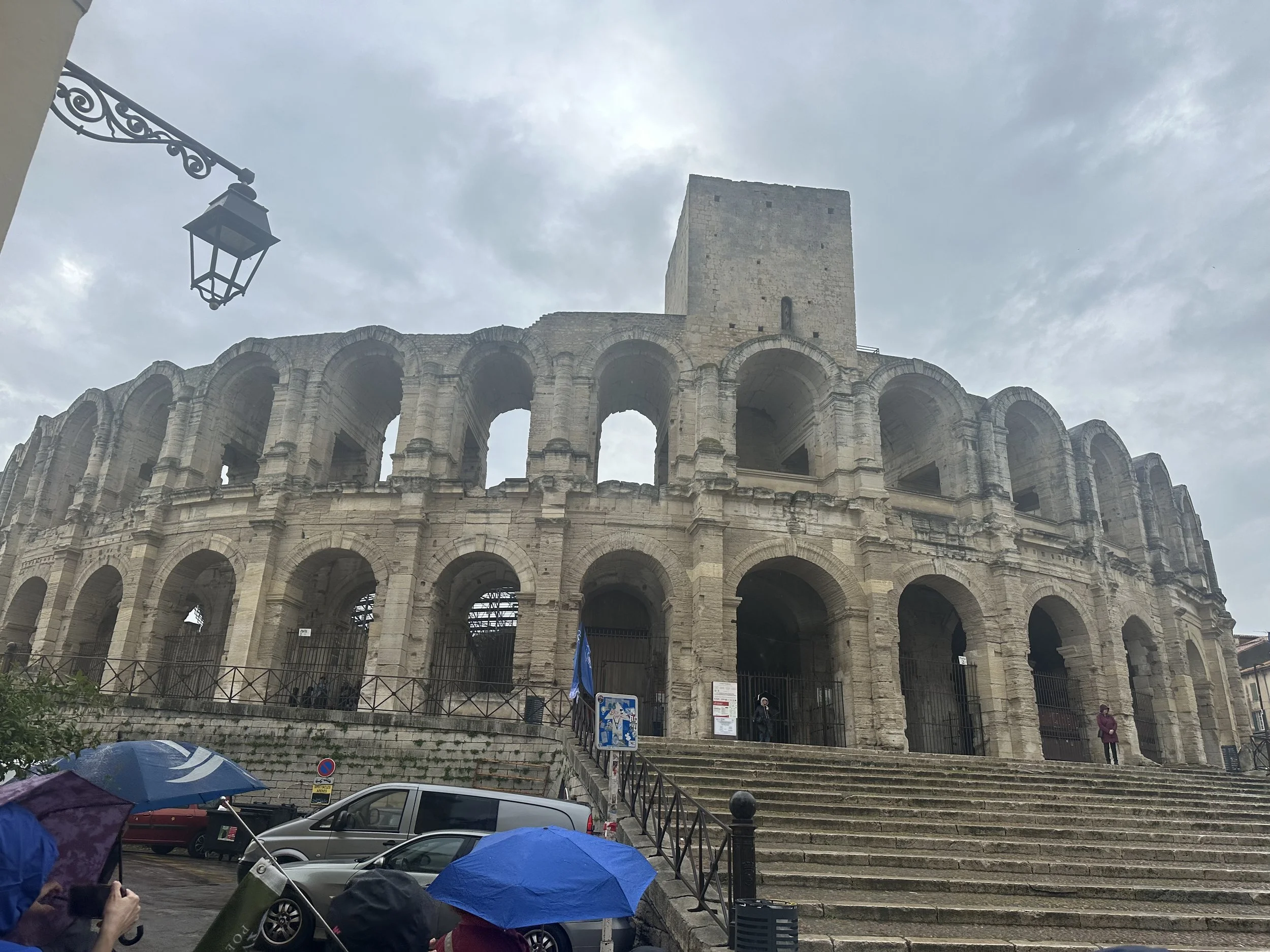
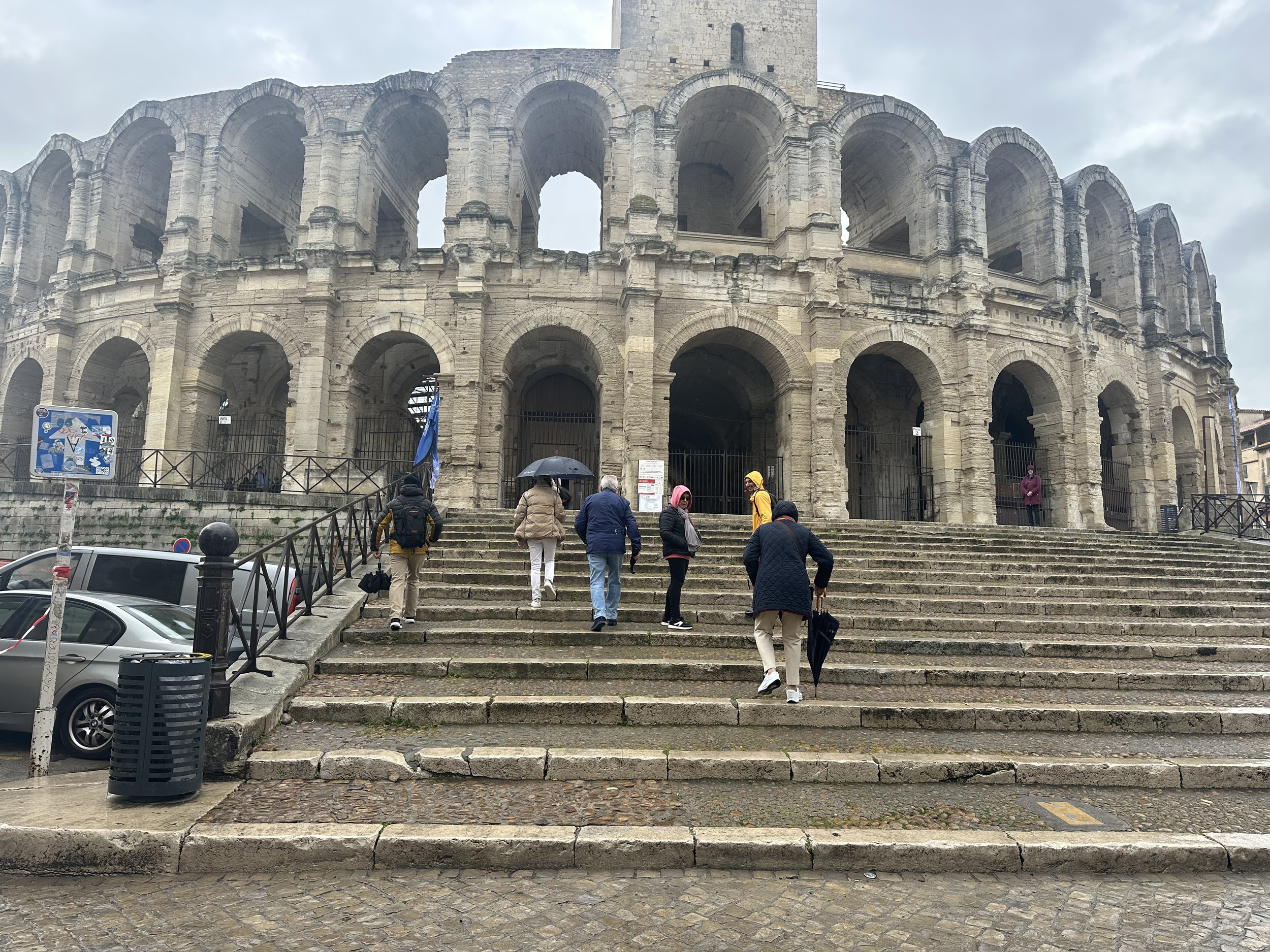
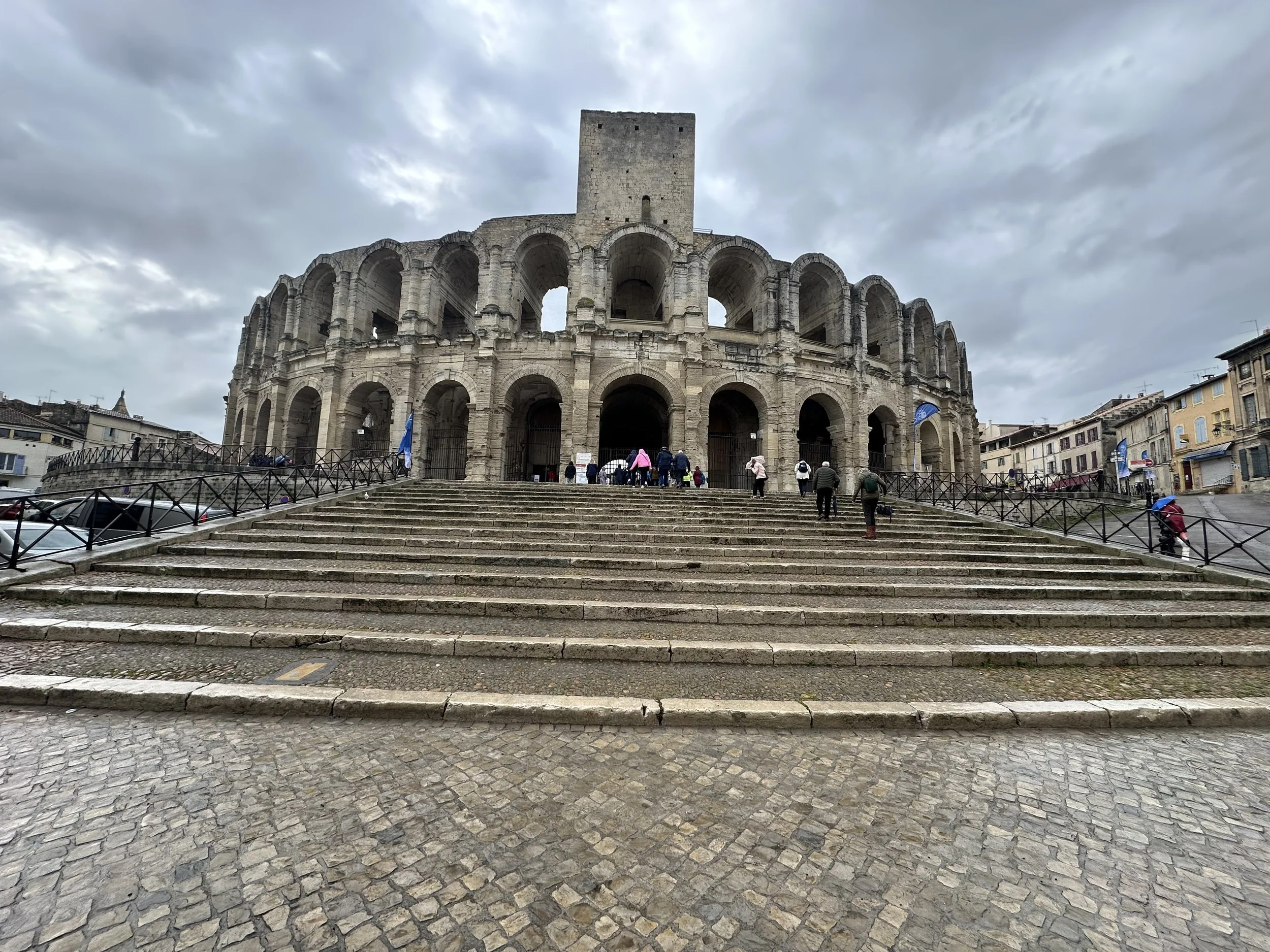
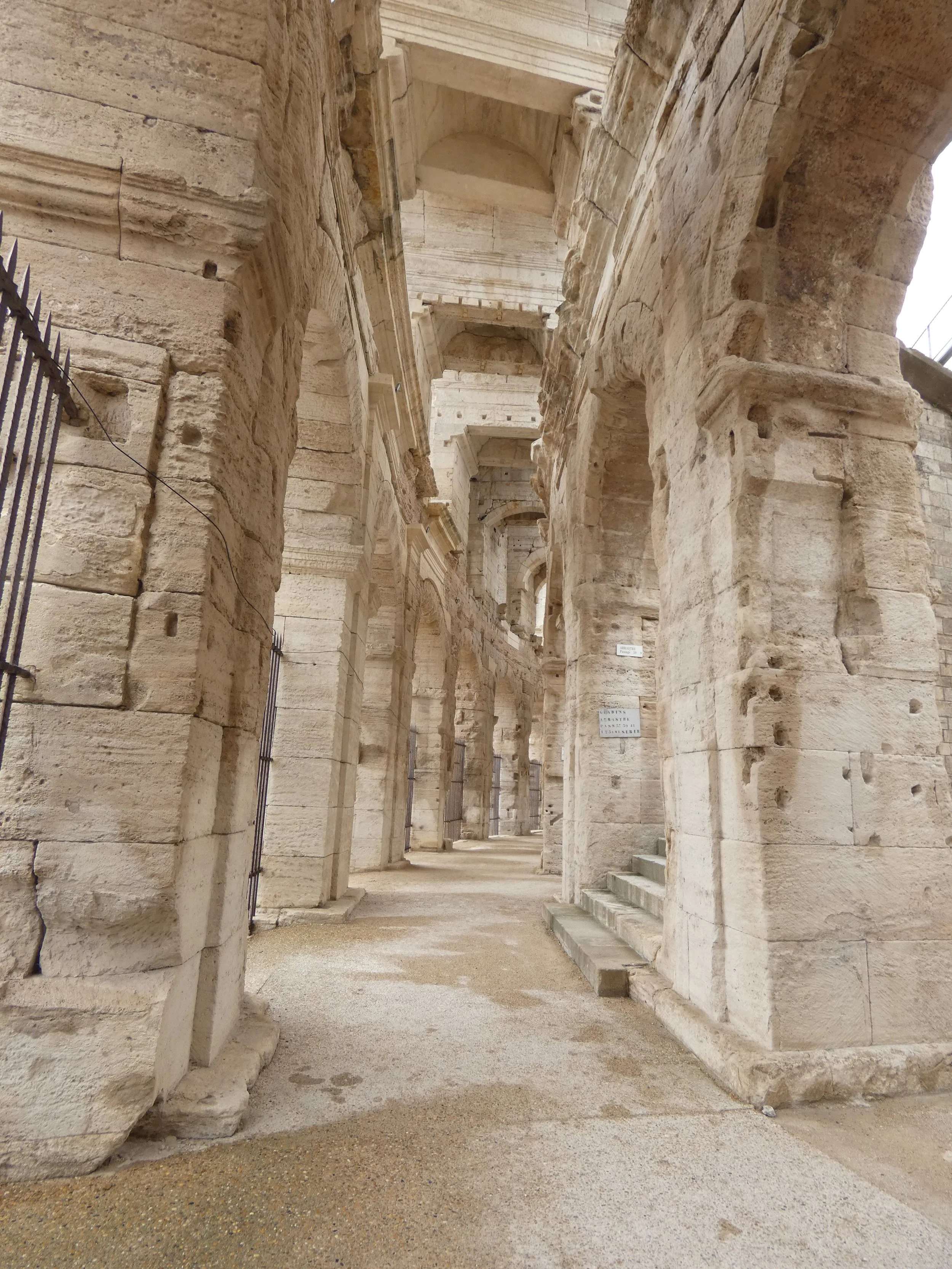
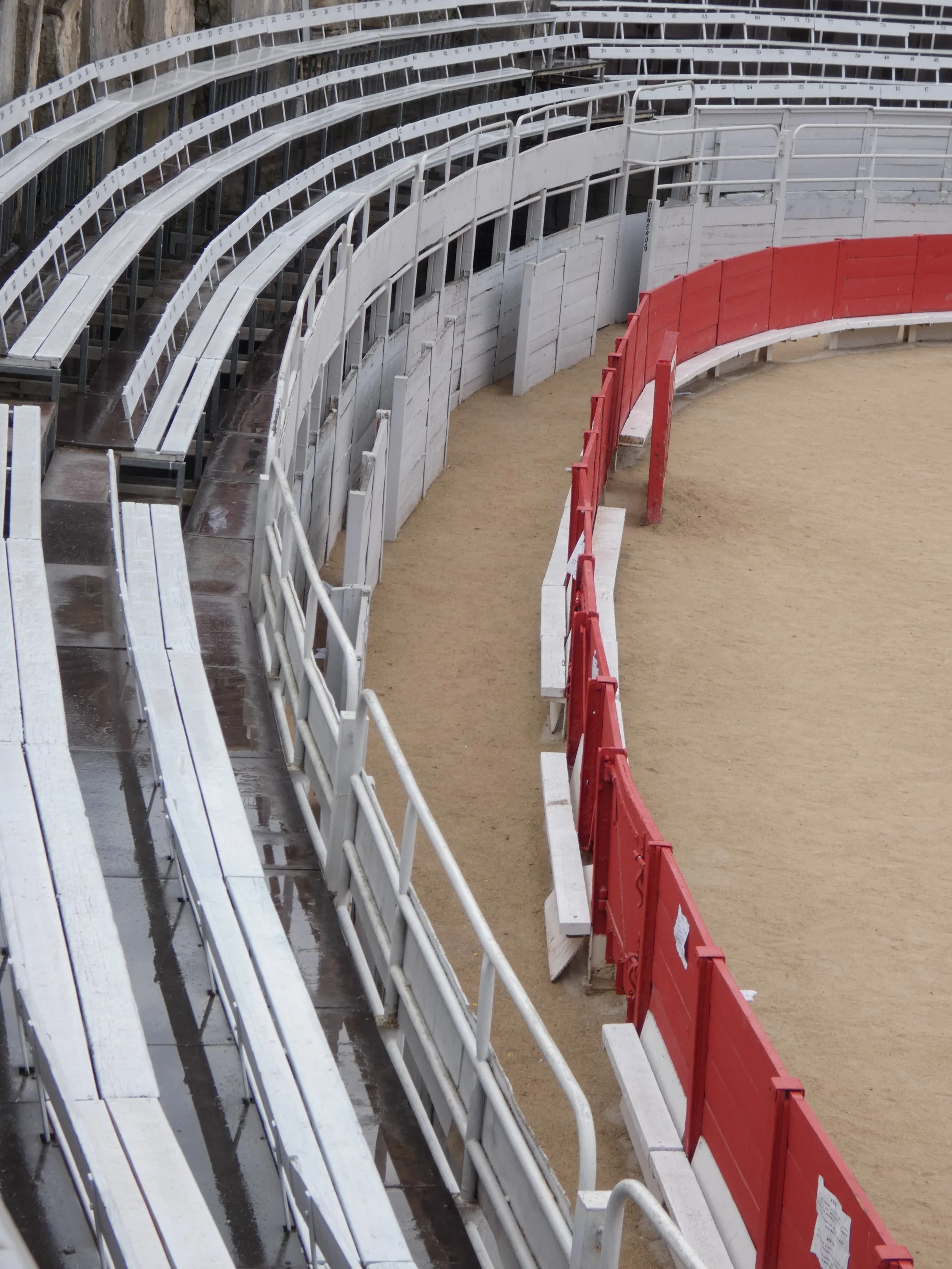
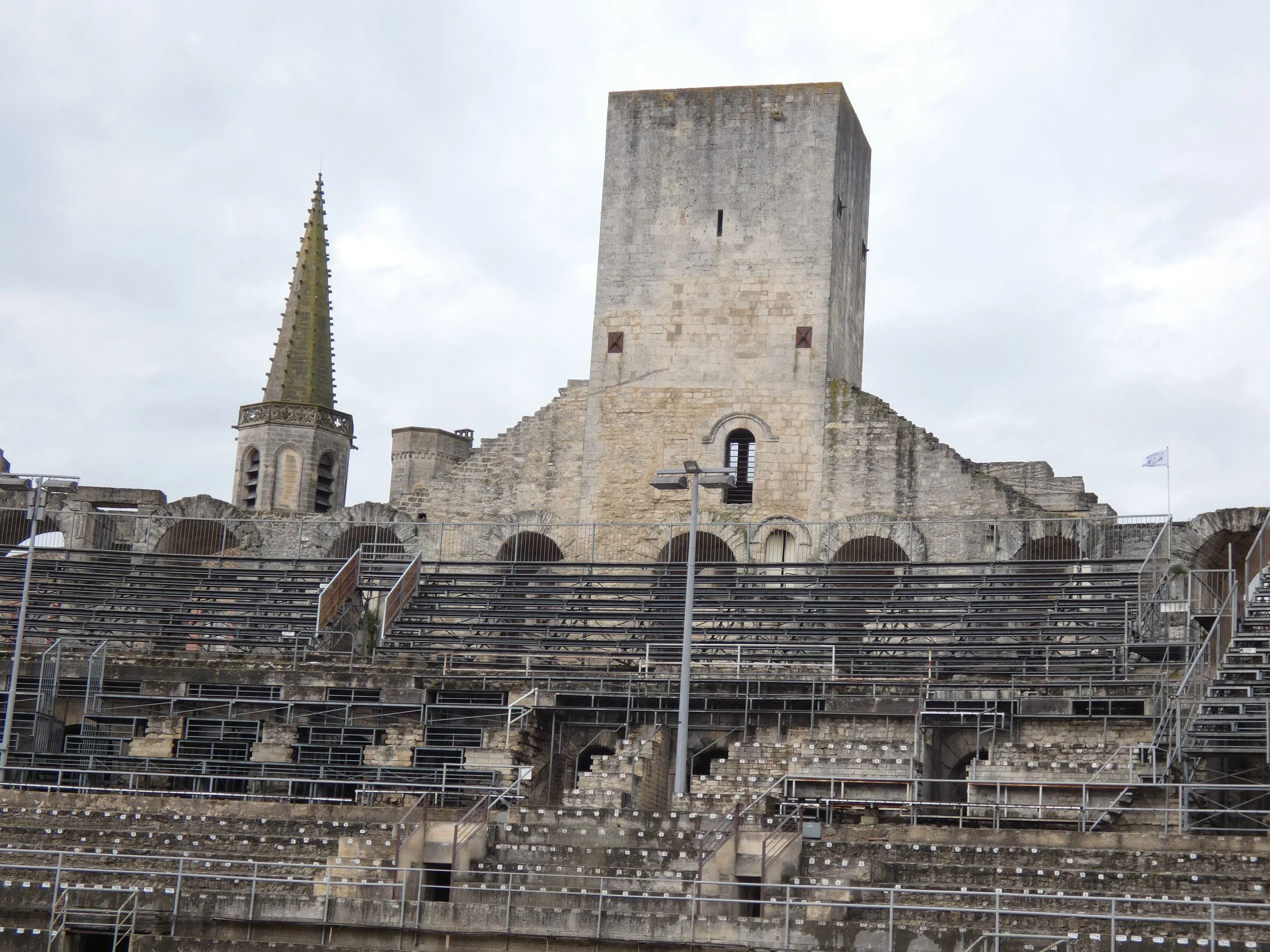
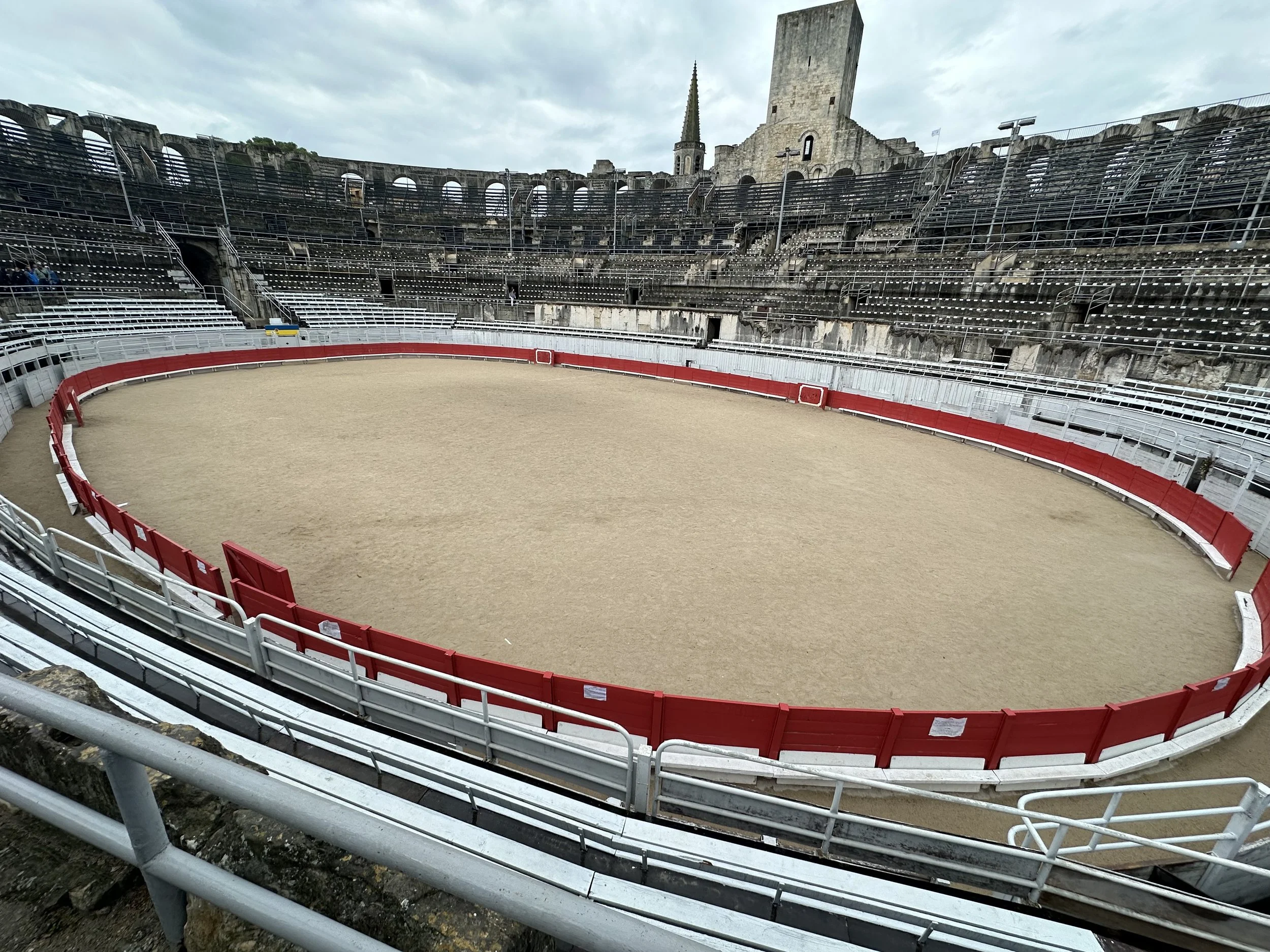
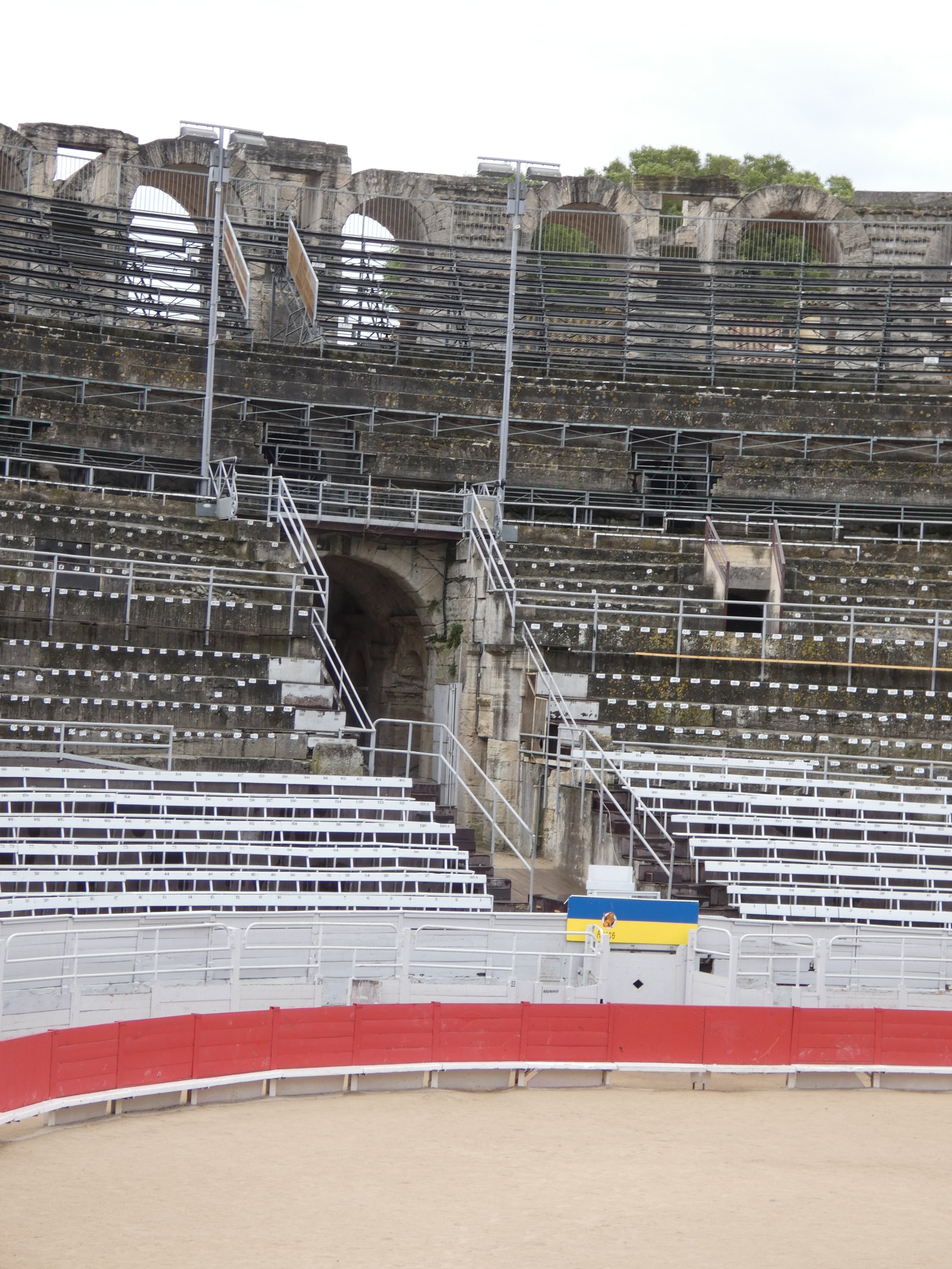
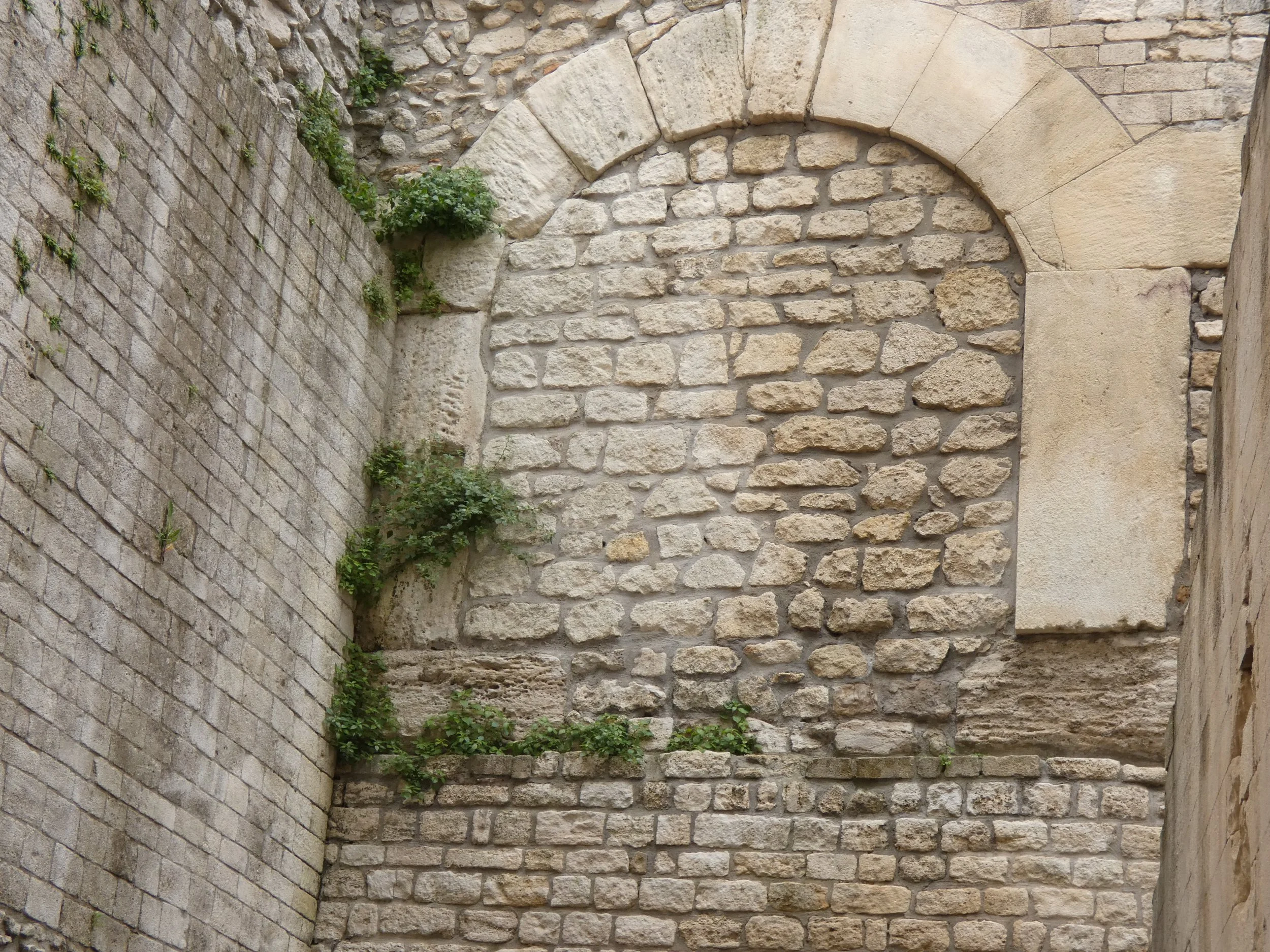
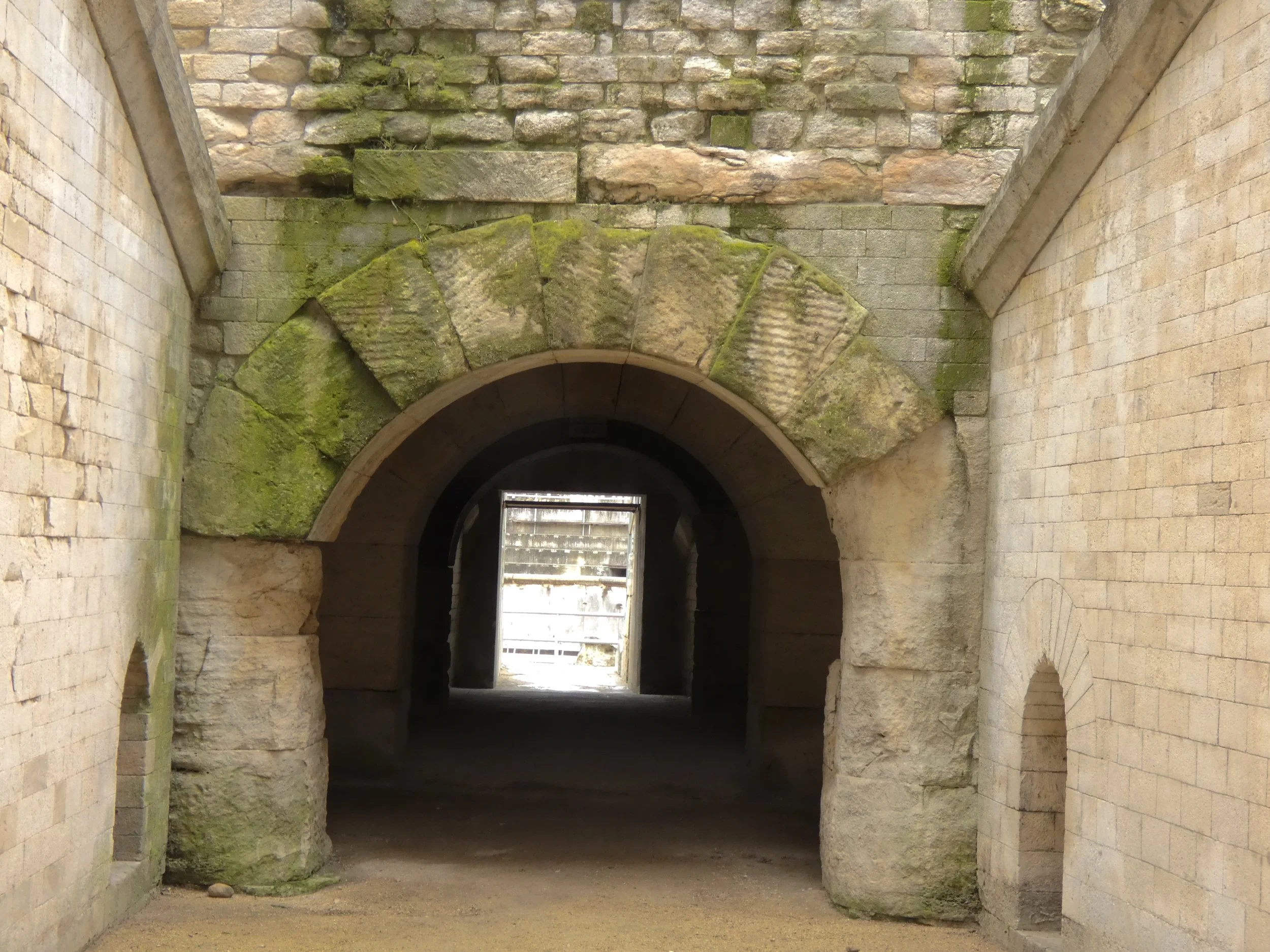
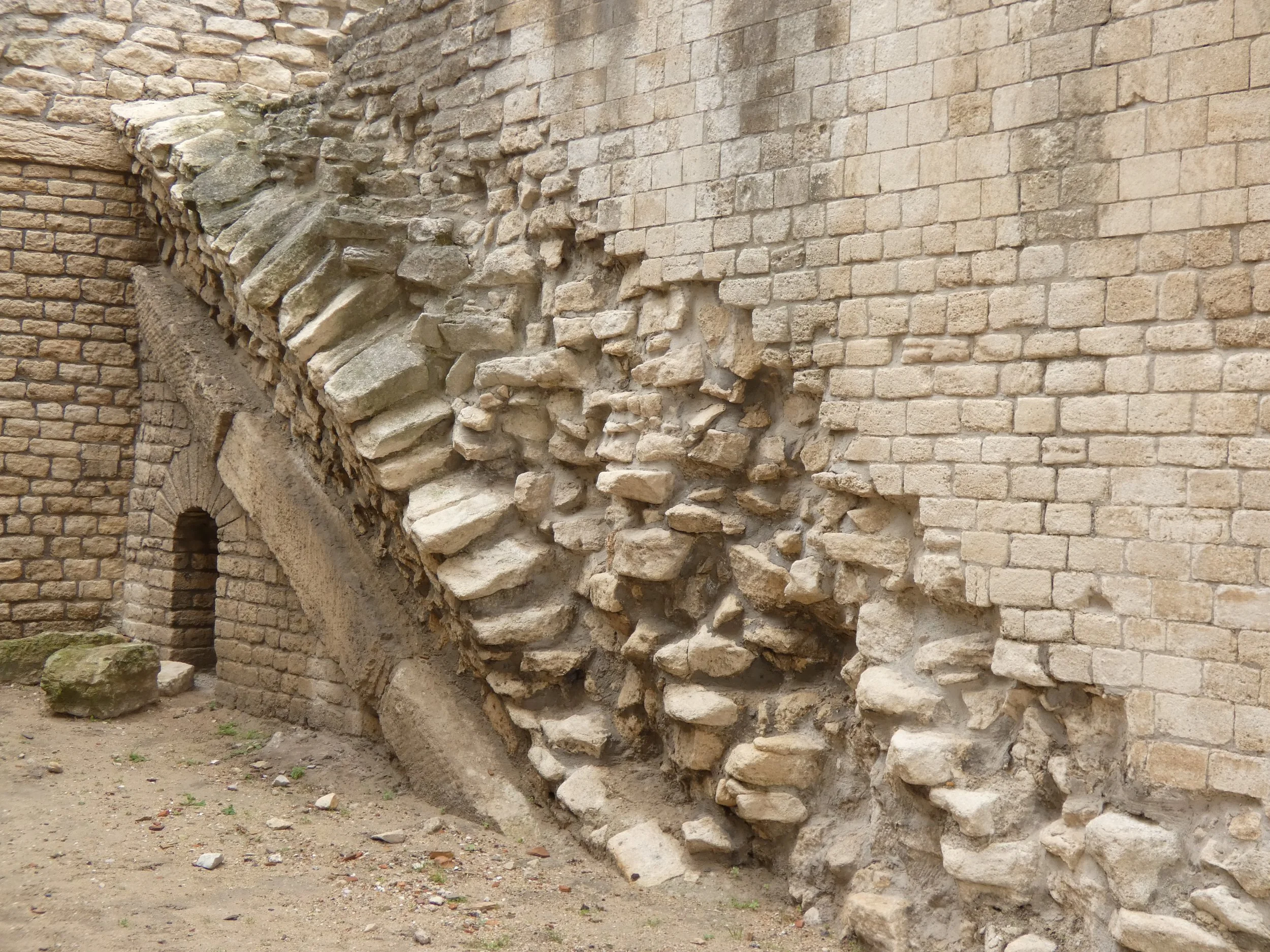
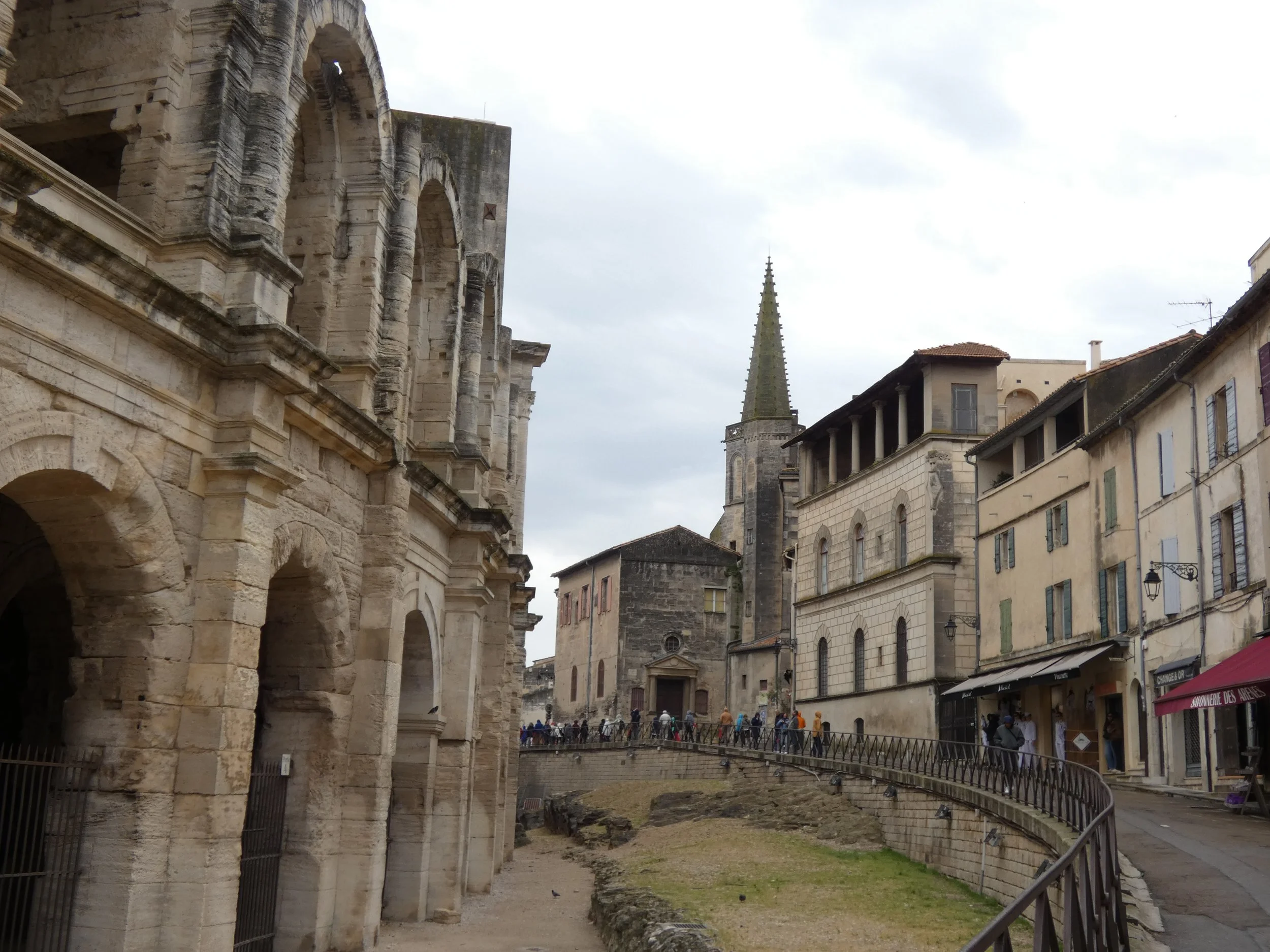
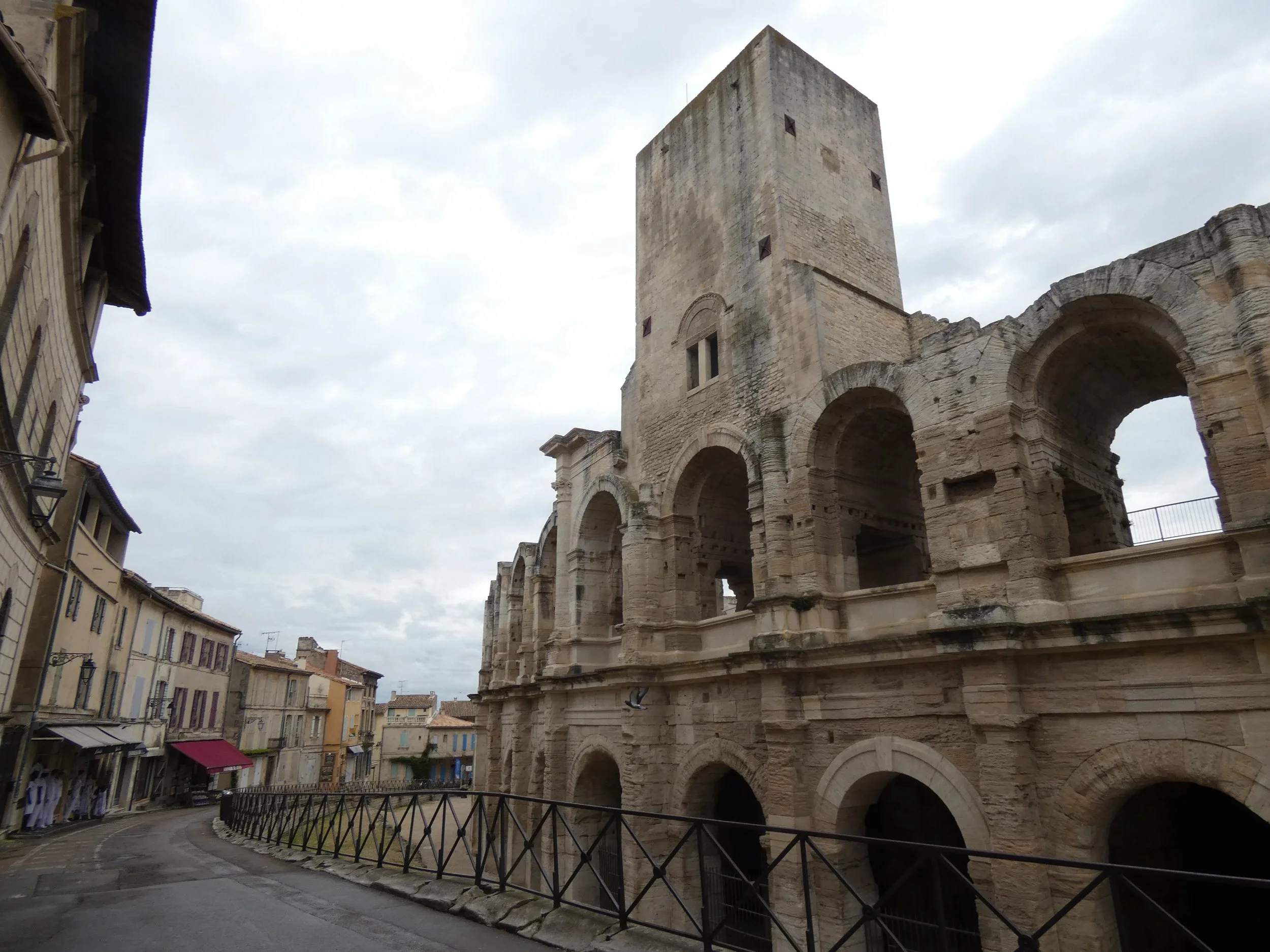
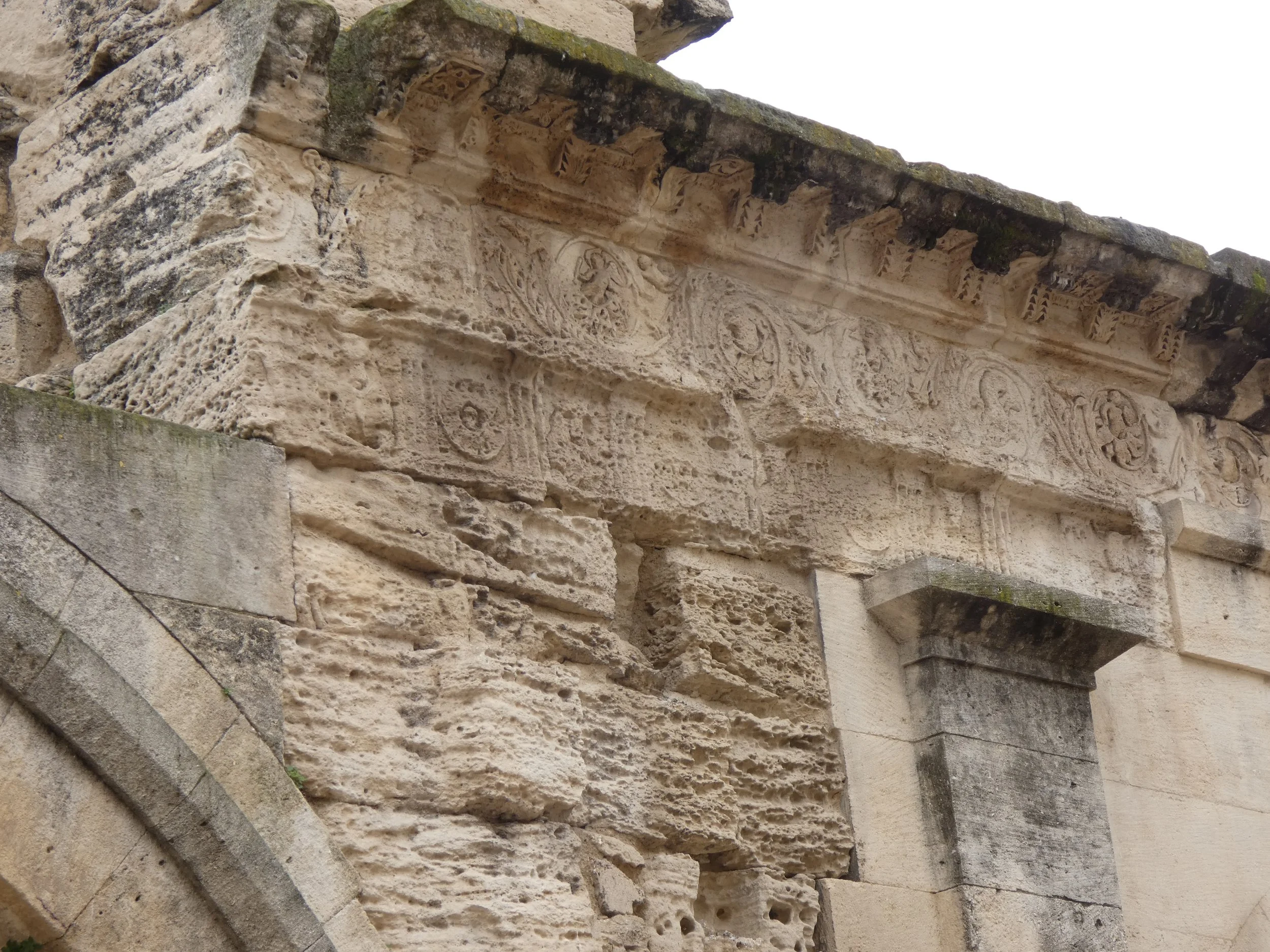
Arles is the city with the most Roman ruins of any we’ve visited. There’s a Roman colosseum, smaller than the one in Rome but still, in its day, capable of seating 20,000. Today it’s 10,000 for the twice-annual bull fights.
Bull fights? That’s what I said. But yes, at Easter and in September bulls fall on the matador’s sword, Spanish style. It’s still legal here and we’re not that far from Spain. It’s just a five-hour drive to Barcelona.
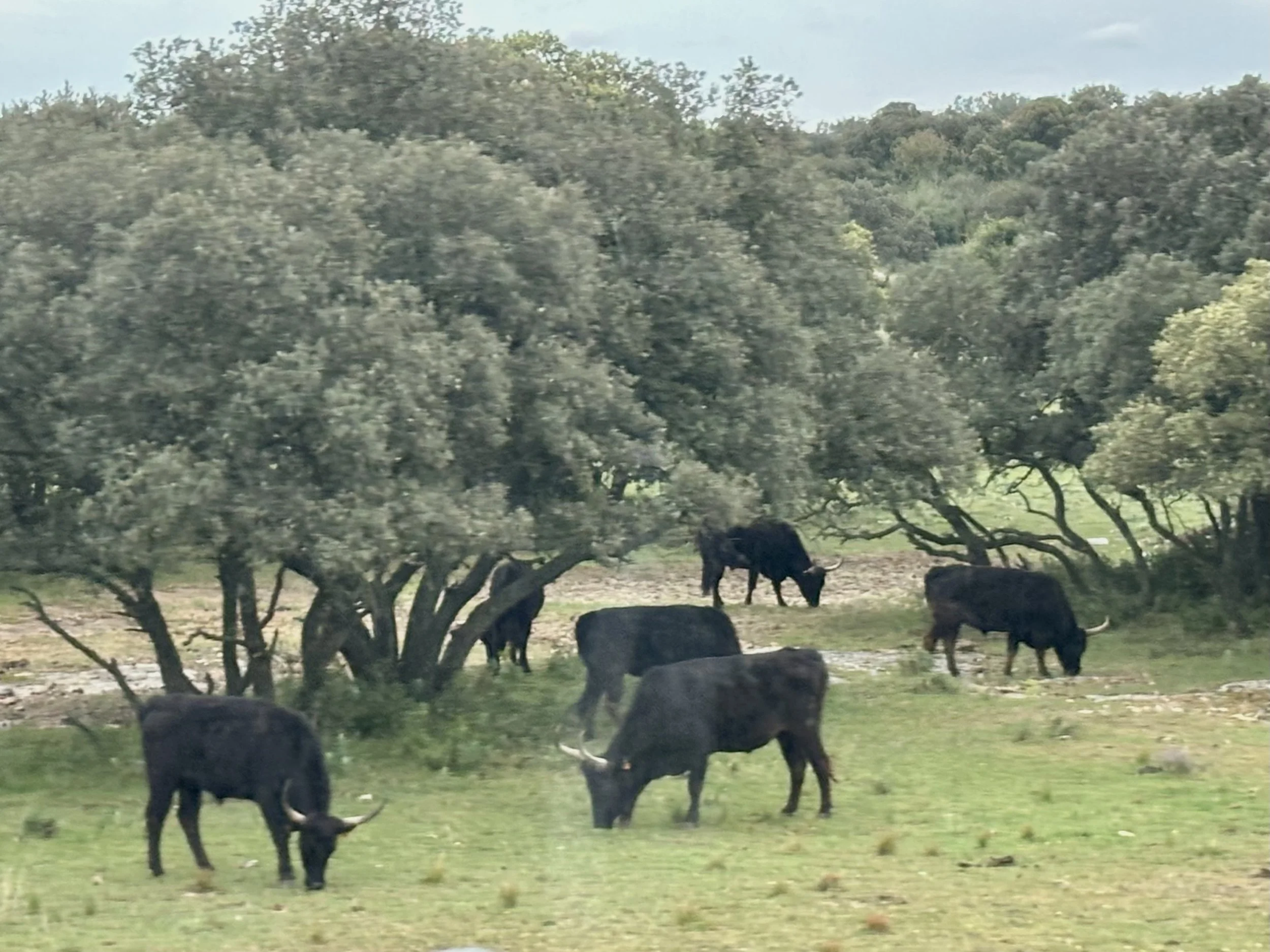
It’s not all doom and gloom for the bulls, though. Course Camarguaises are held several times a year in which the bull, not the men, are the stars of the show. Ribbons are tied to the bulls’ horns and those young enough and stupid enough brave enough try to pull the ribbons off the horns. No one pays attention to the men. The bulls are called by name and idolized .
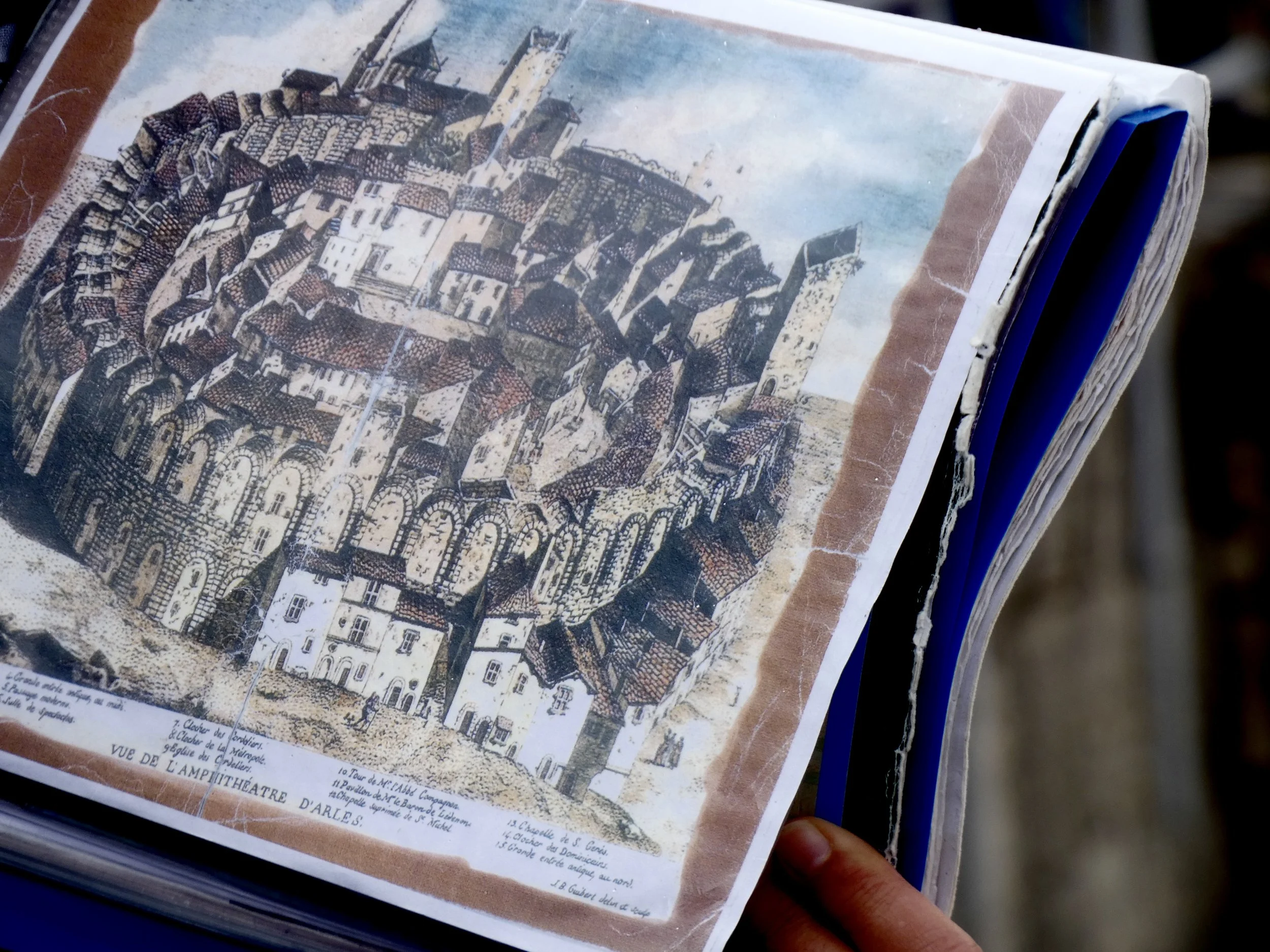
The ring itself is partially reconstructed. Apparently in the 1600s, local citizens used stones from the colosseum to build houses – in the middle of the ring. A city grew up where the Christians and Roman soldiers fought the lions.
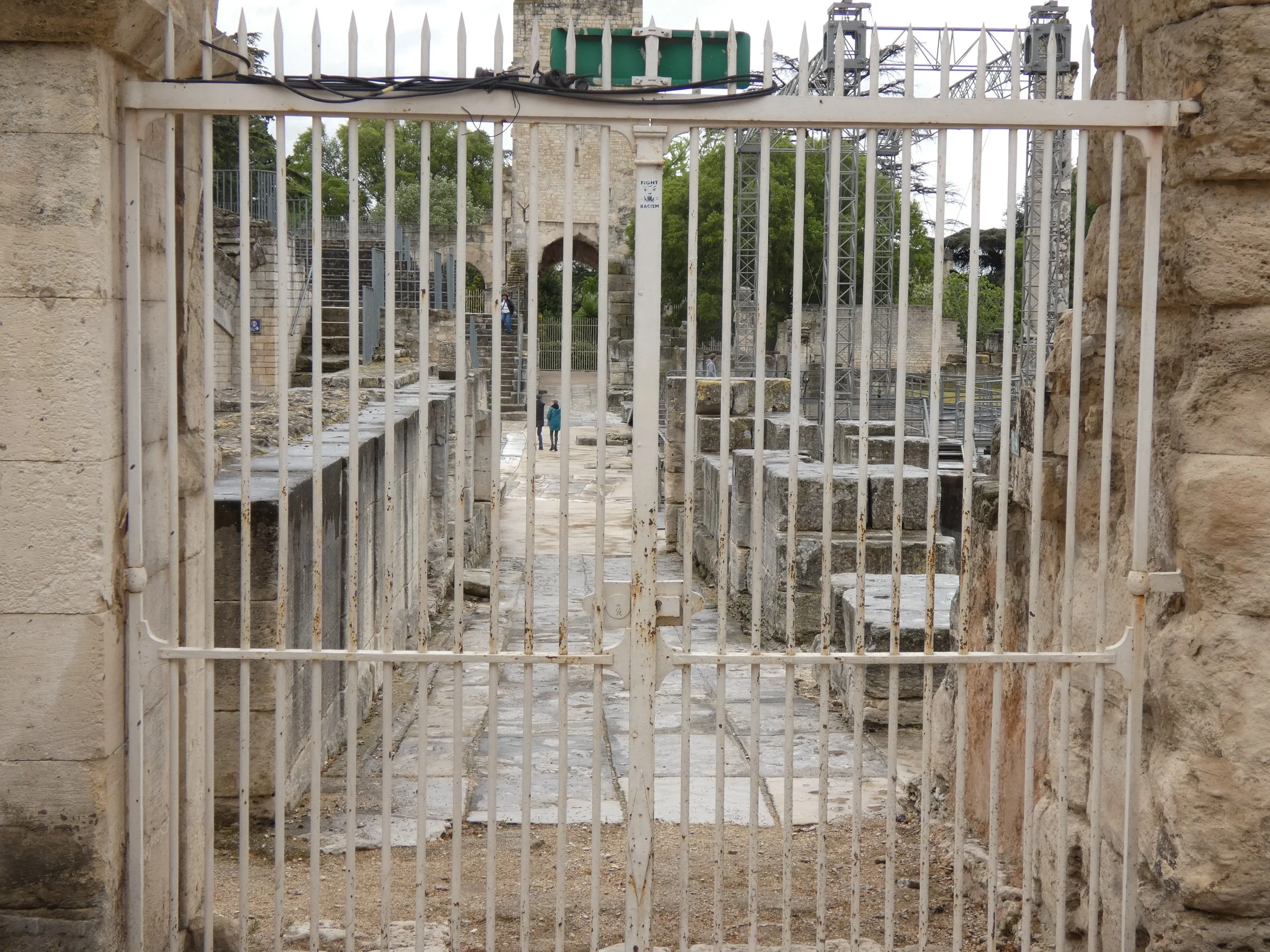
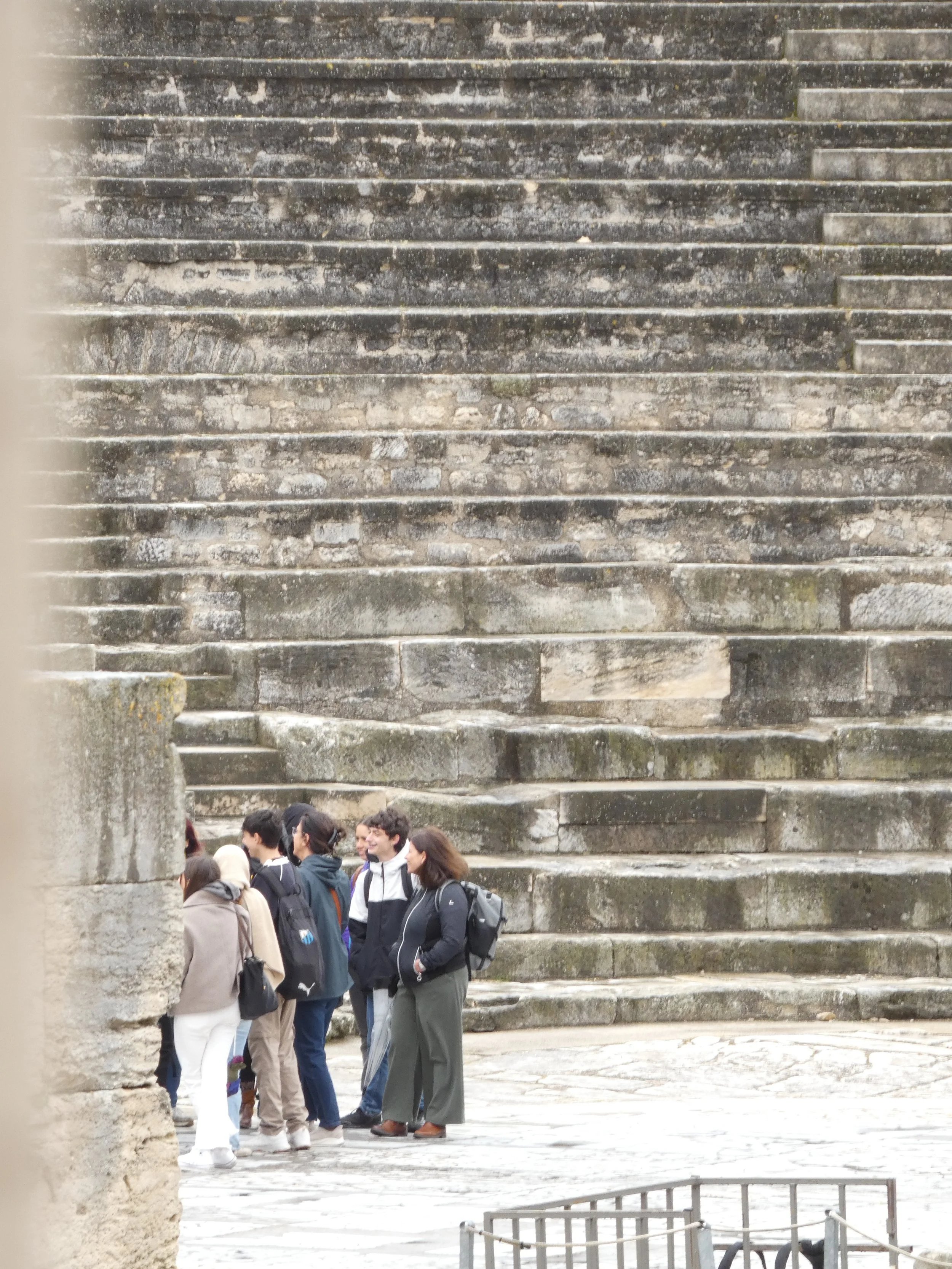
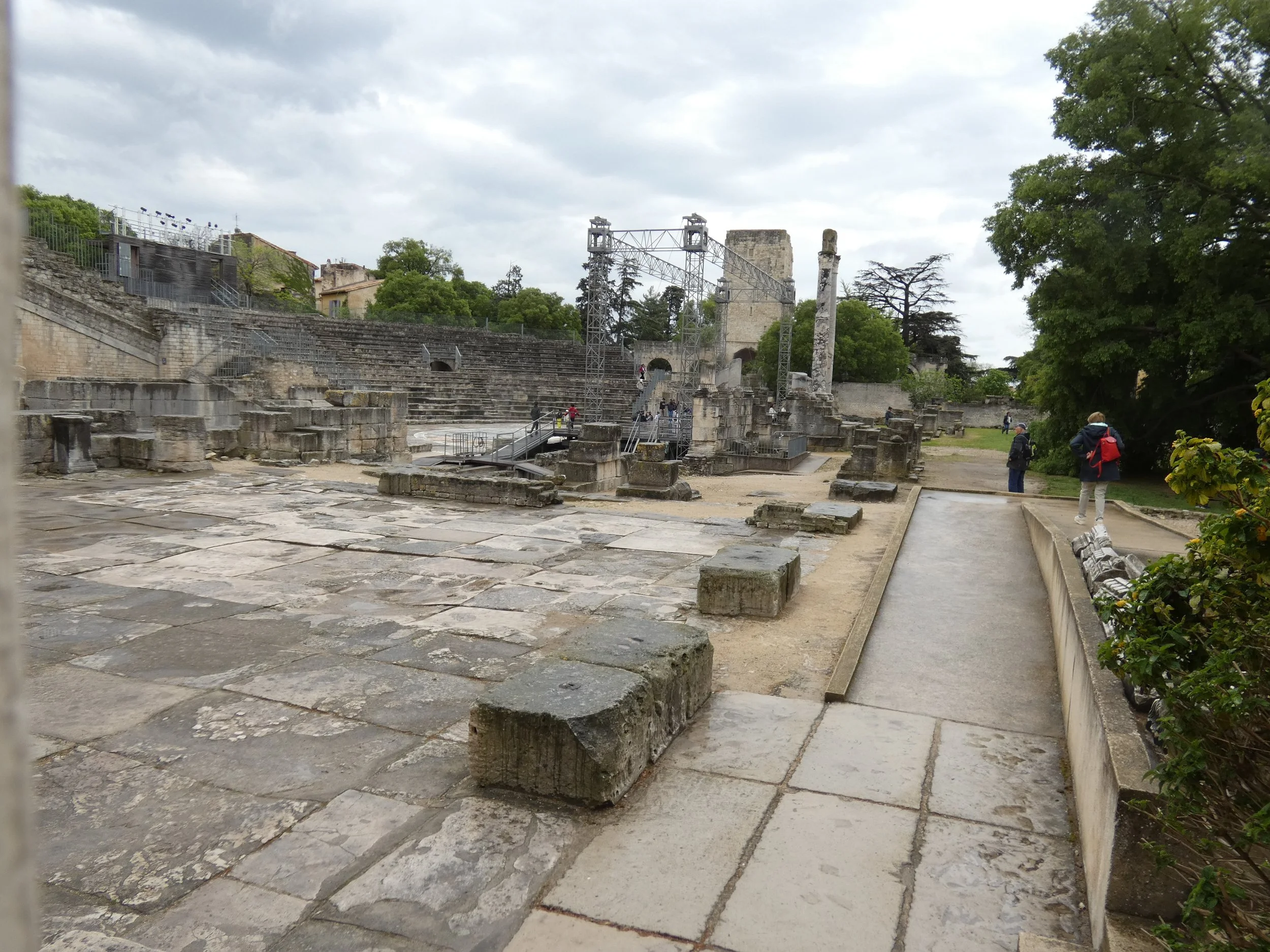
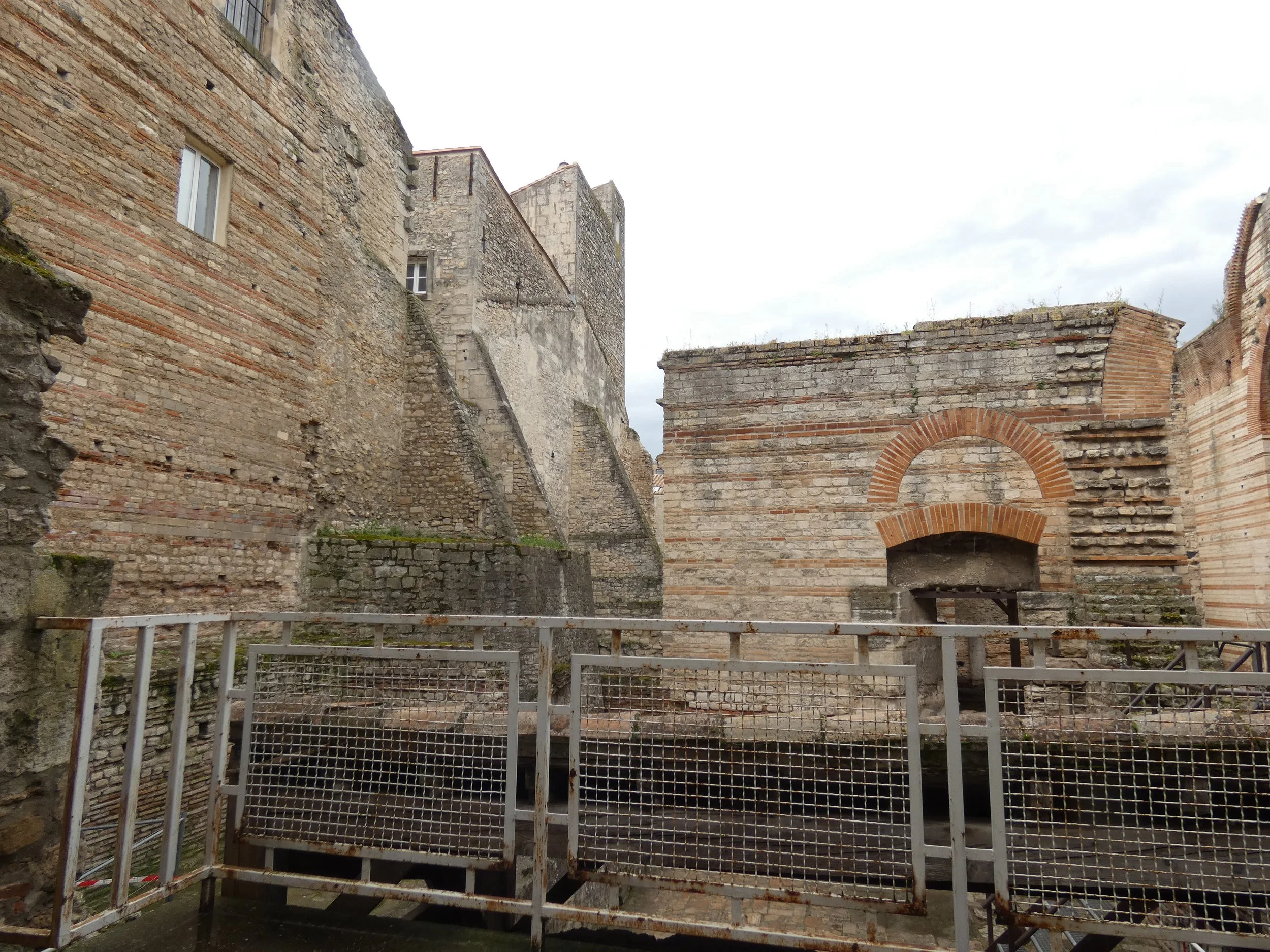
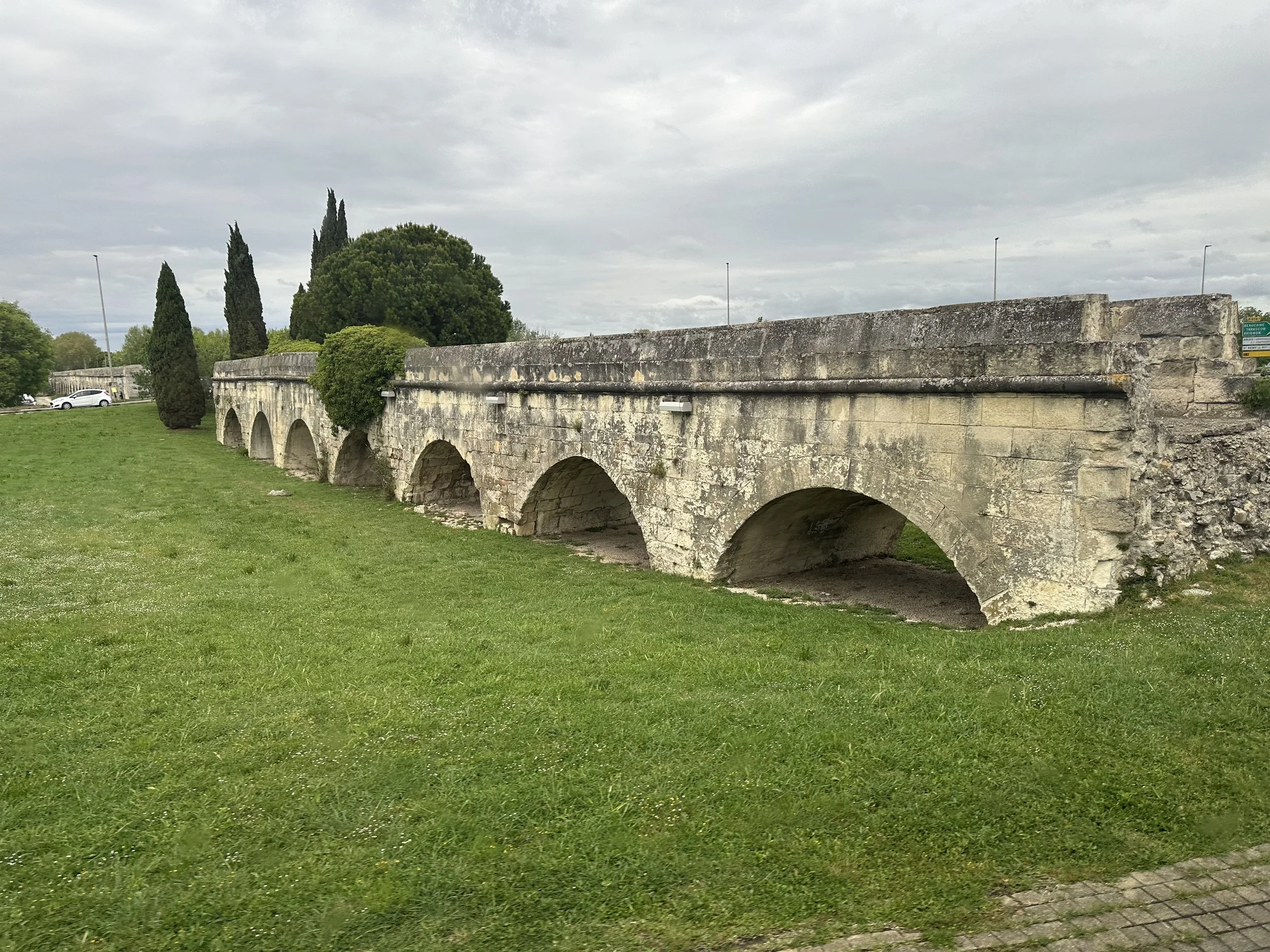
Arles also has a Roman theatre and Roman bathes complex, both in much less reconstructed state. There are remains of a 50-odd Km aqueduct too.
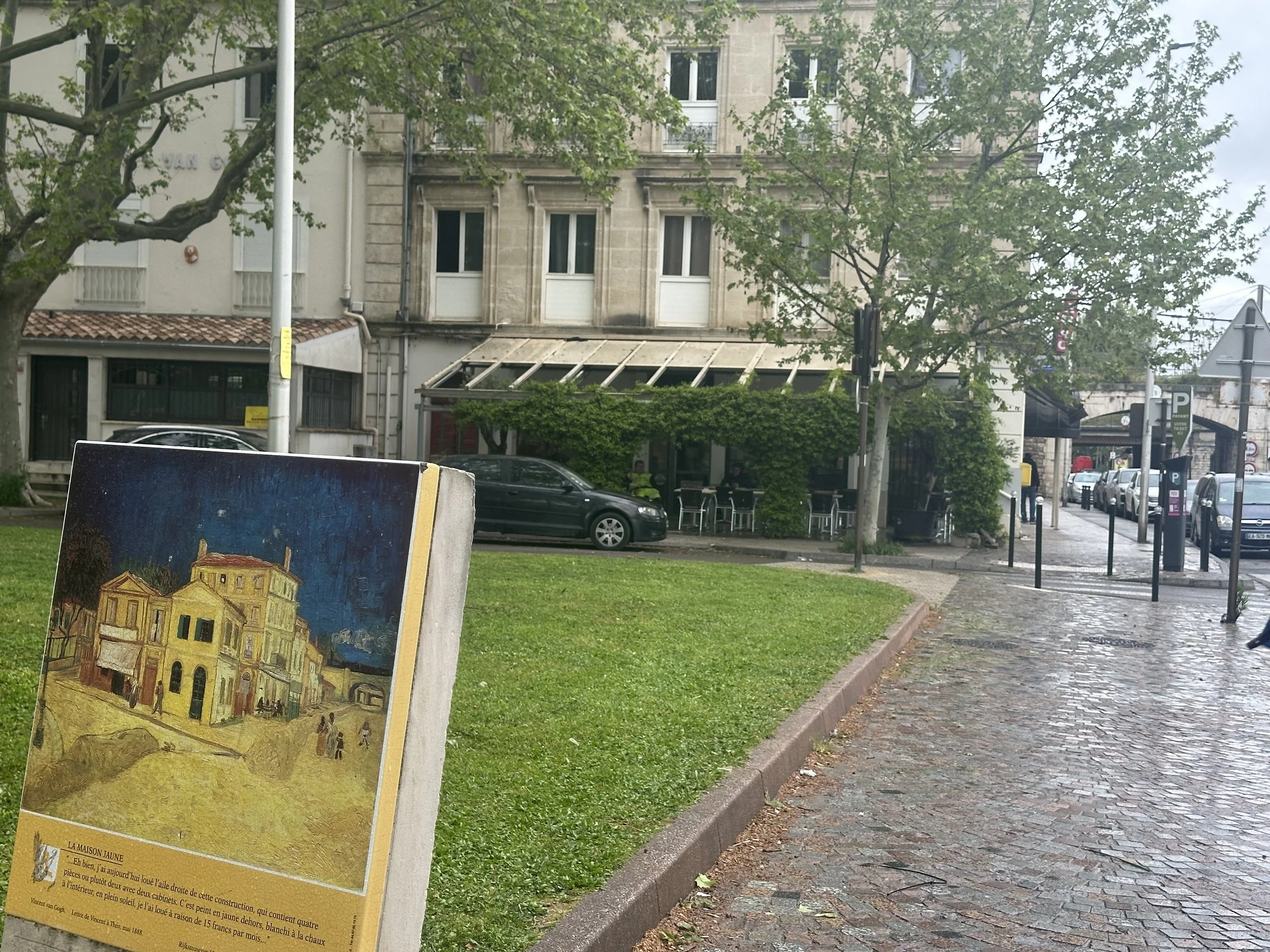
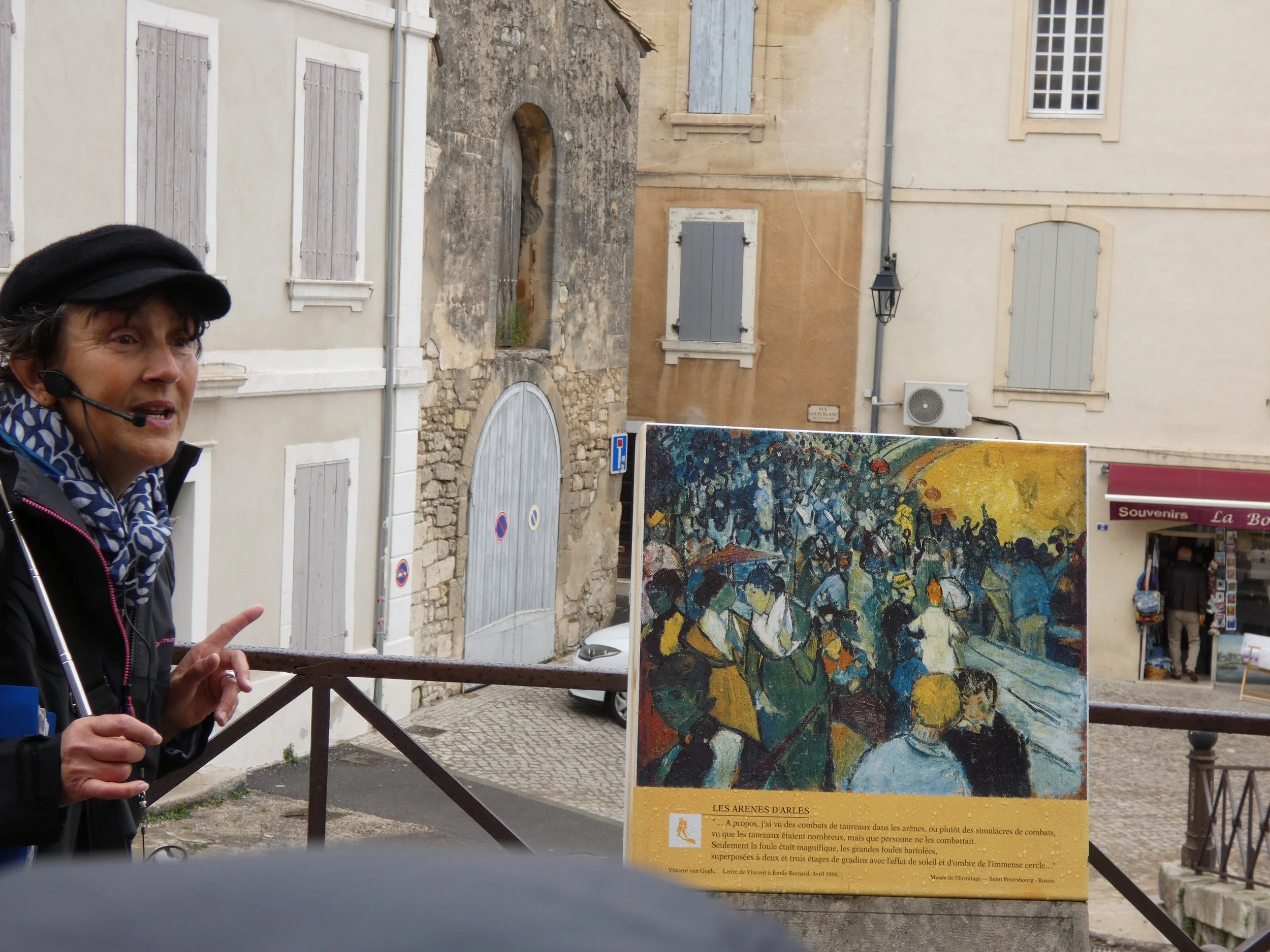
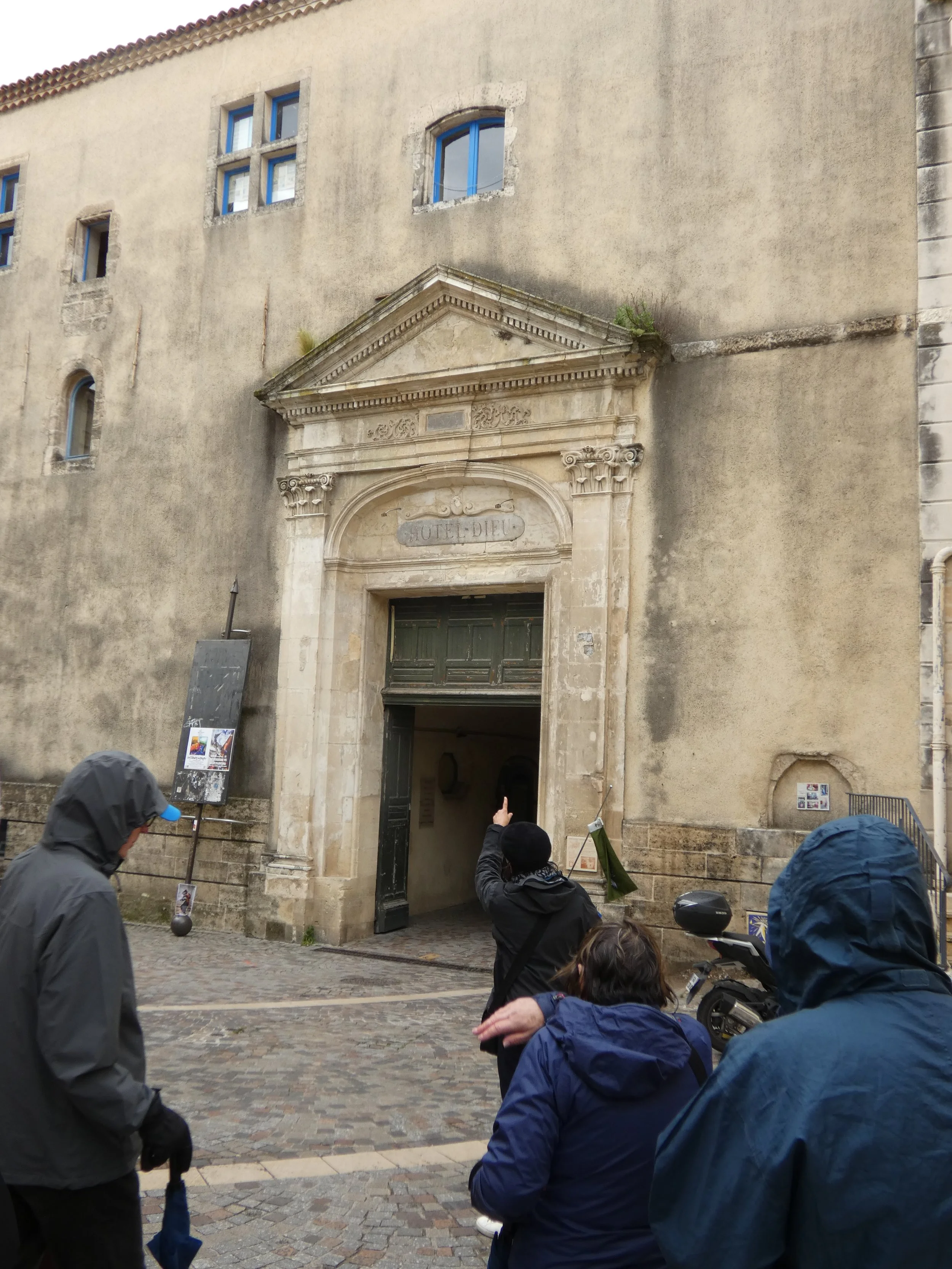
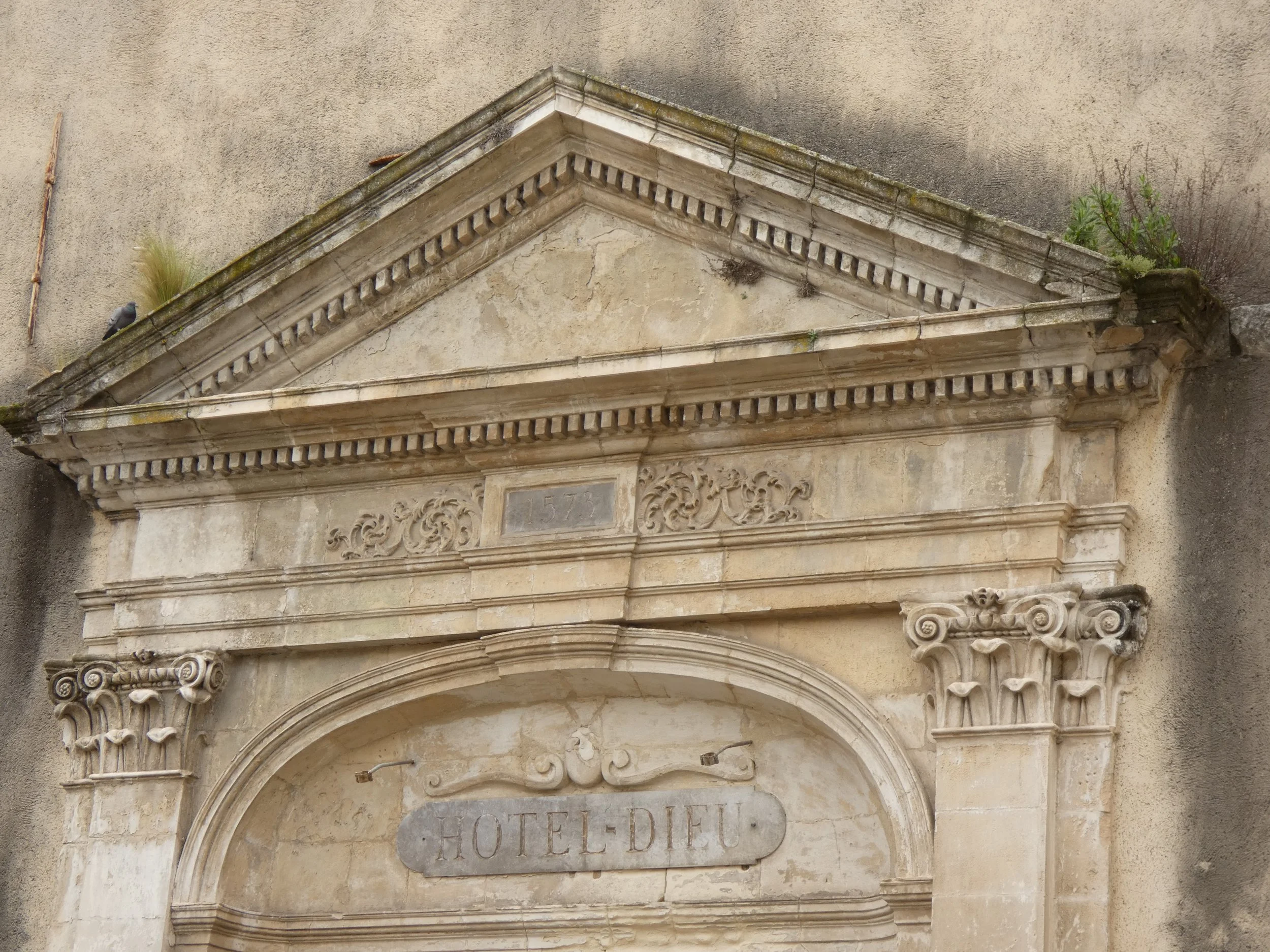
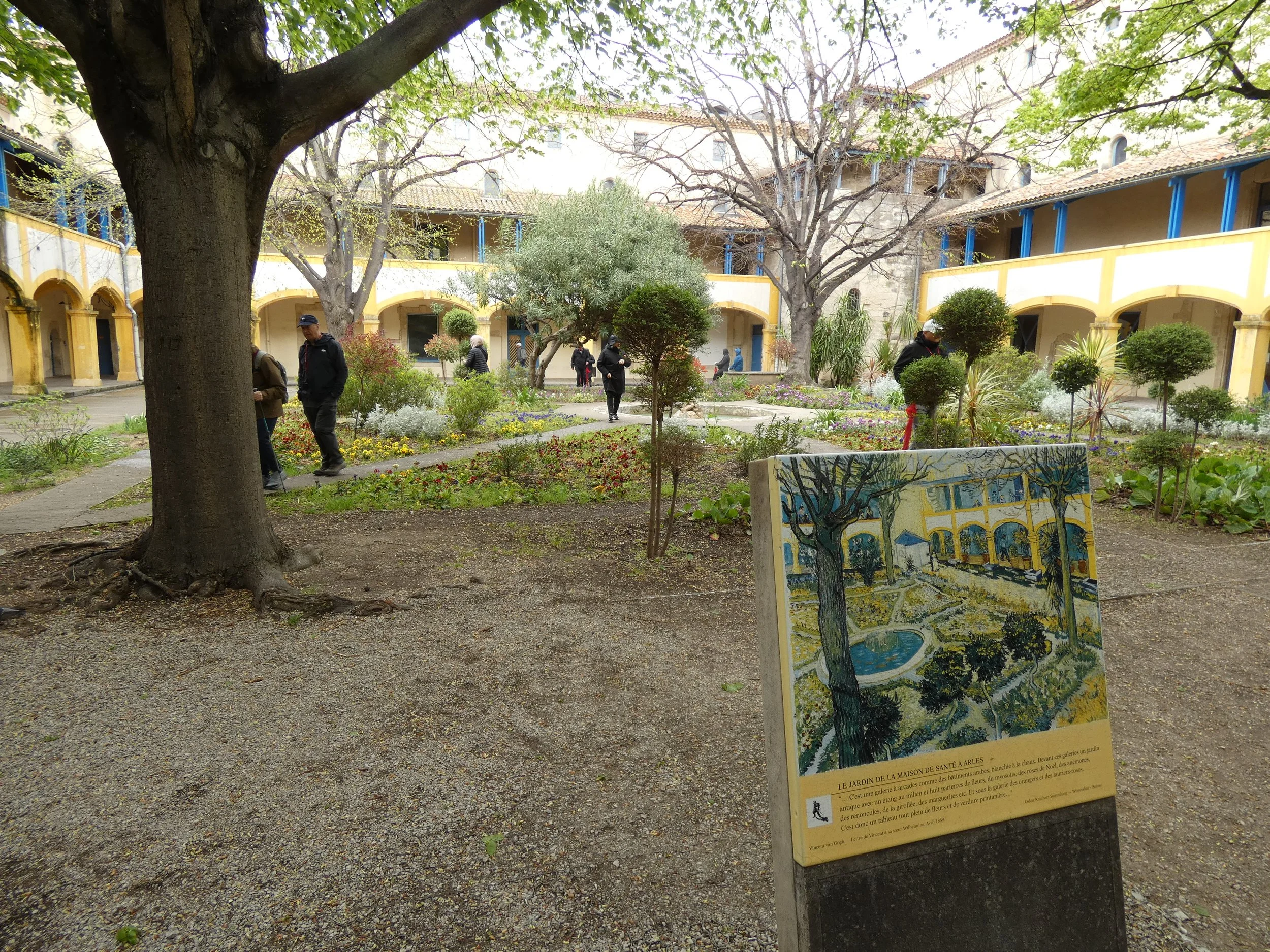
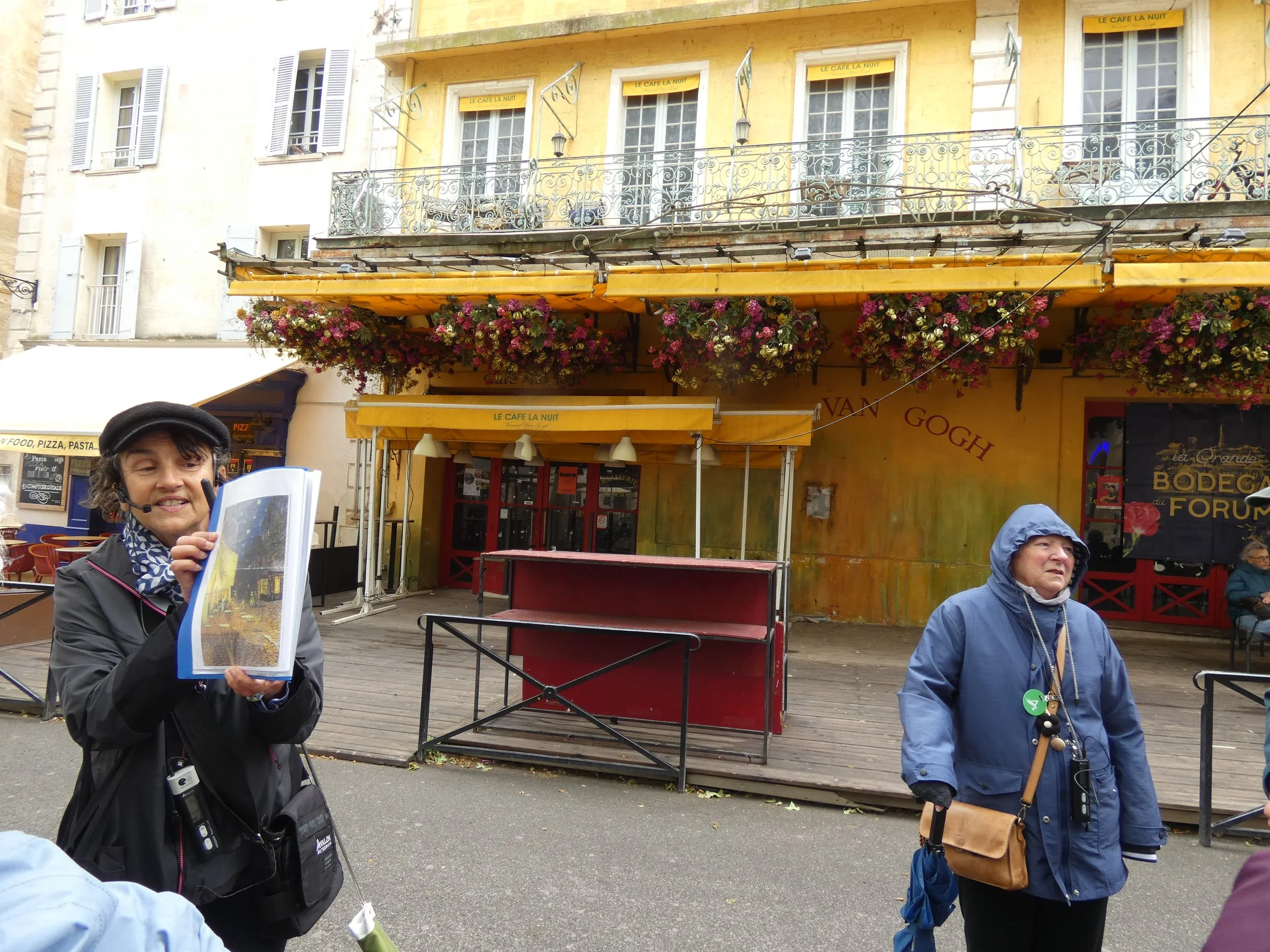
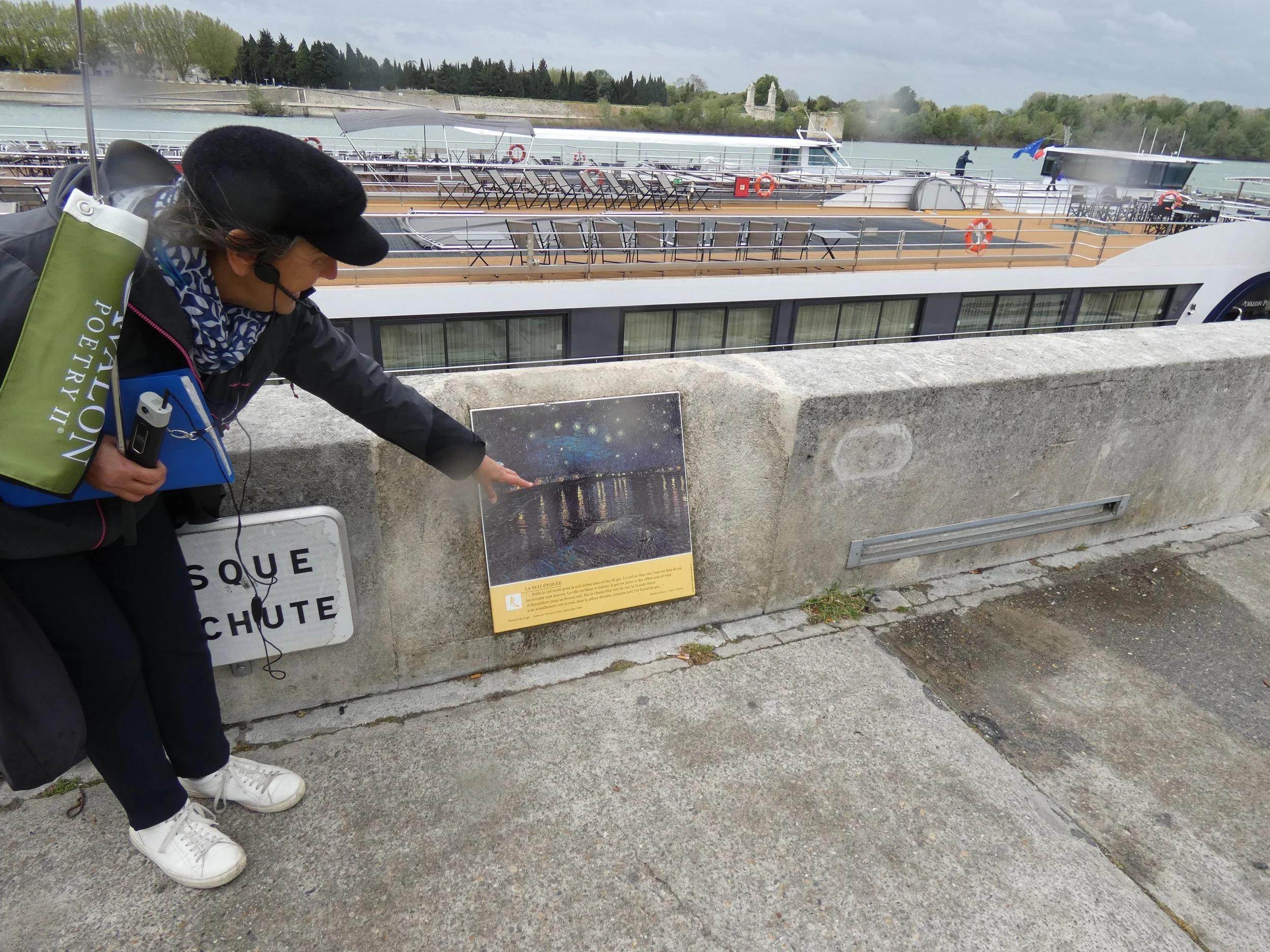
Vincent Van Gogh spent 15 months in Arles with his fellow painter Paul Gauguin. It was a productive time for Van Gogh – 200 works including the Yellow House and Starry night. But he and Gauguin had a falling out, Van Gogh cut off his ear and later committed himself to a insane asylum in Provence. We saw the house, the place where the starry night was painted and the hospital where he was treated after cutting off his ear.
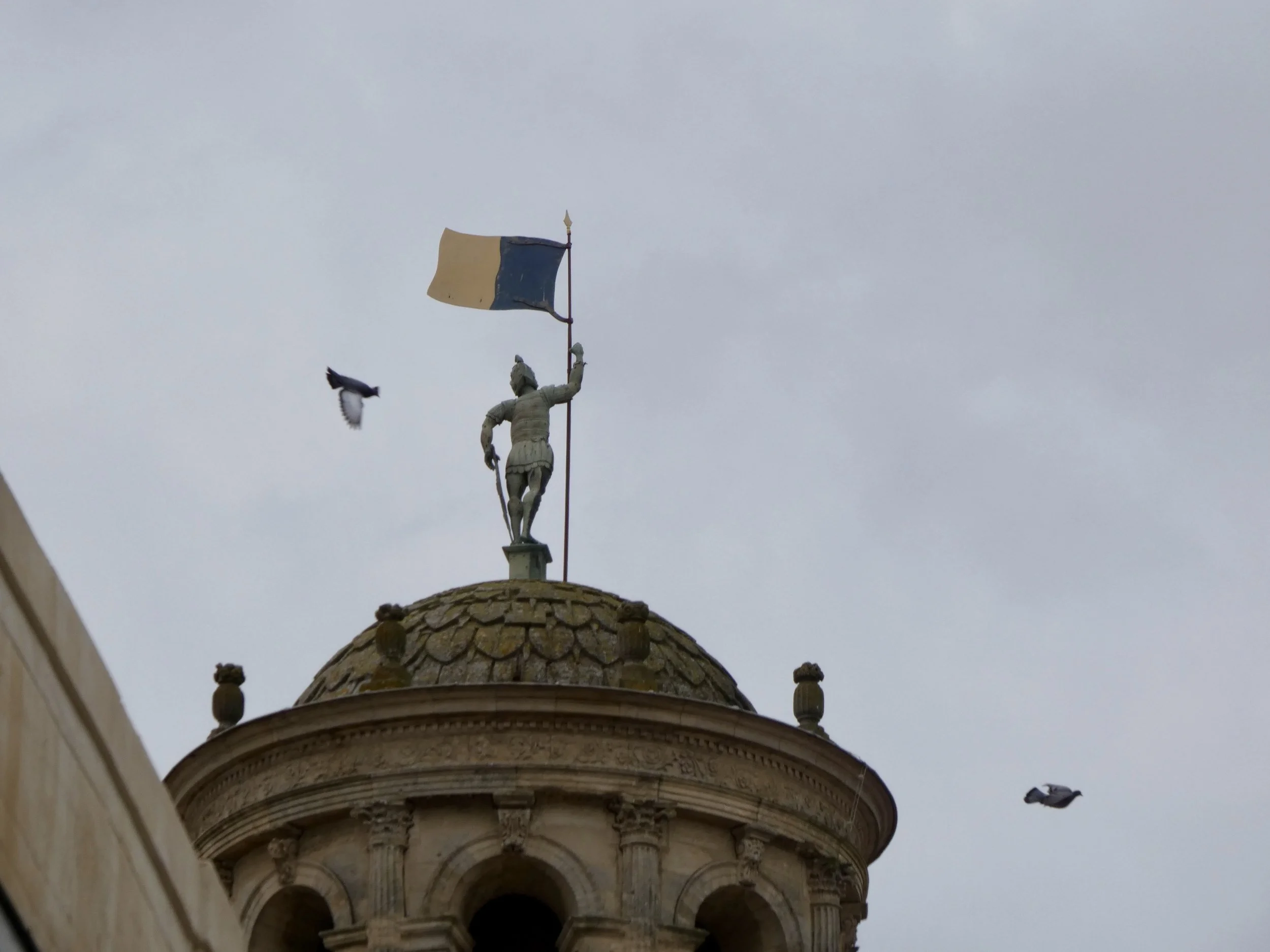
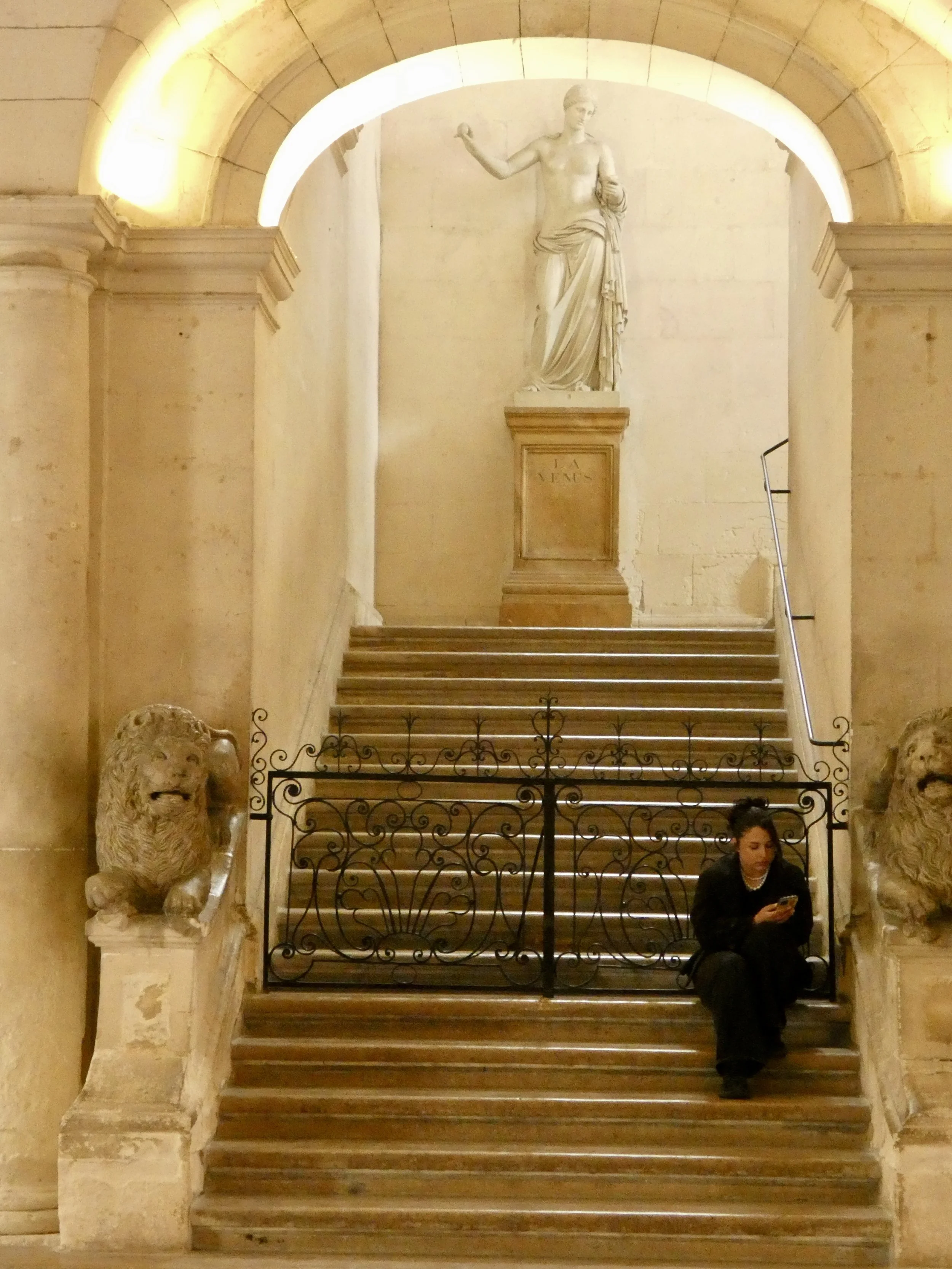
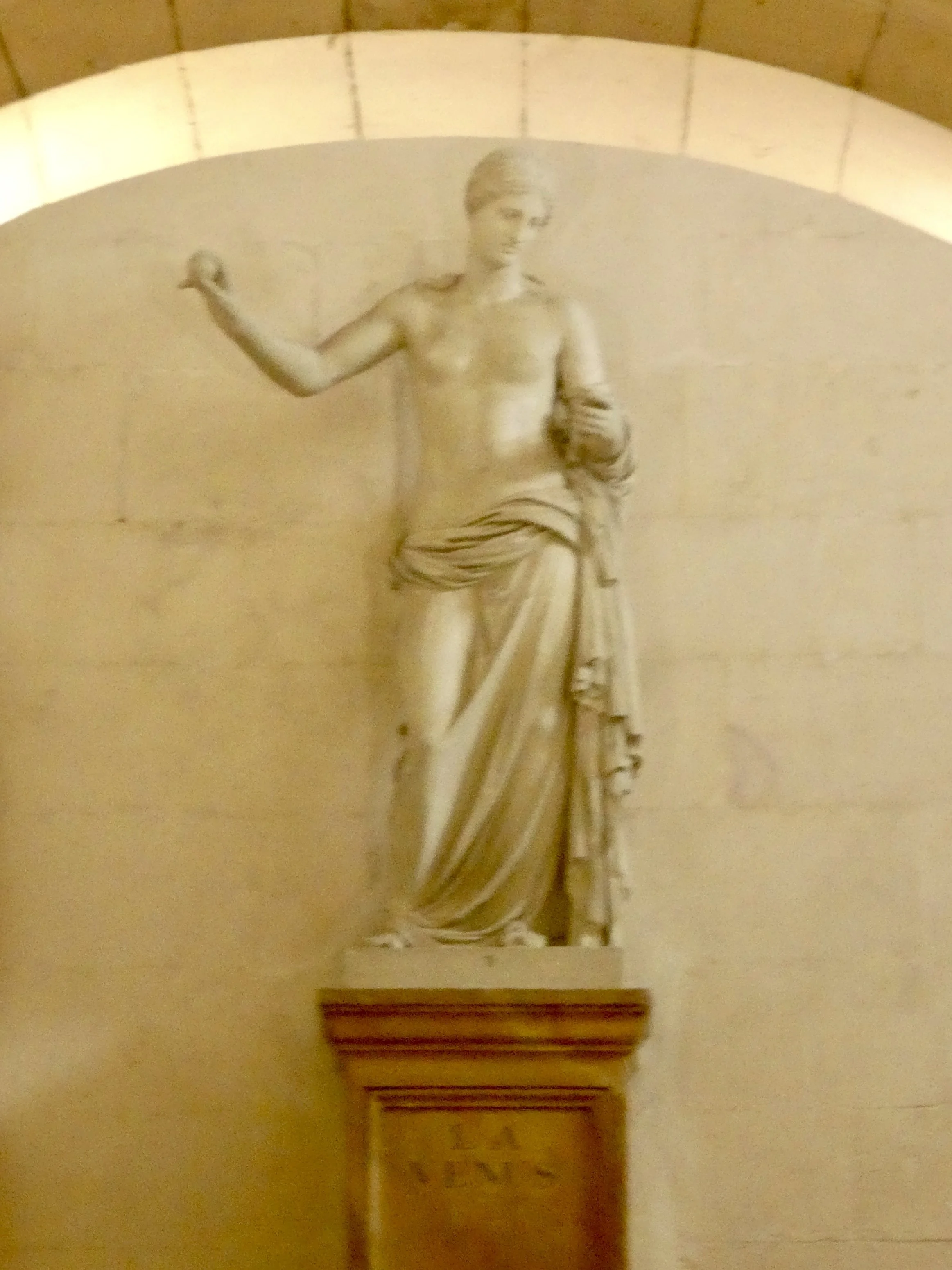
The Venus de Arles is a statue now at the Louvre, absent its arms. Since the Revolution it left Arles, where a copy, complete with arms, is now displayed at the Hotel de Ville. The original is coming back to Arles for a brief visit. Locals want it permanently, but chances are not great.
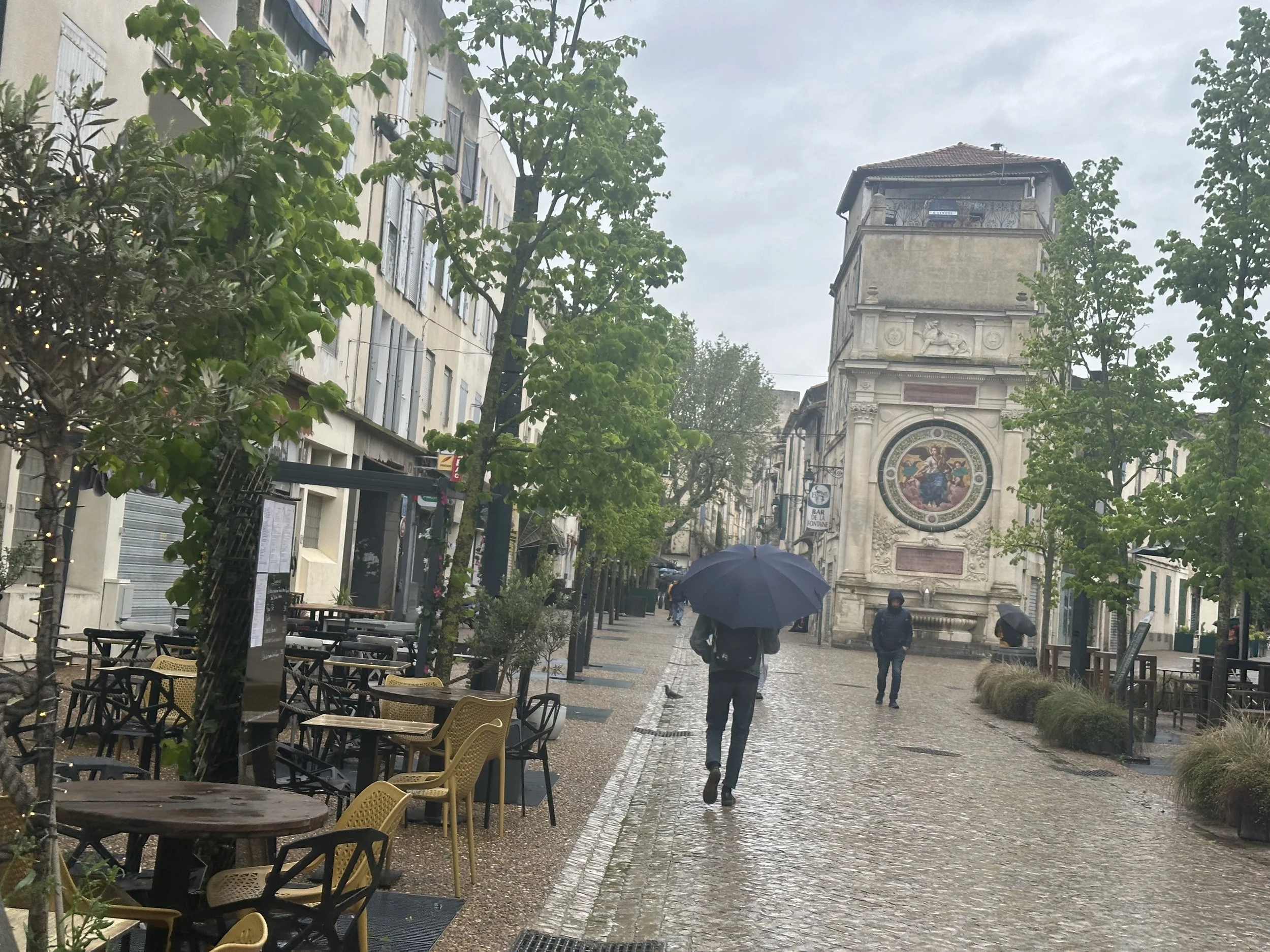
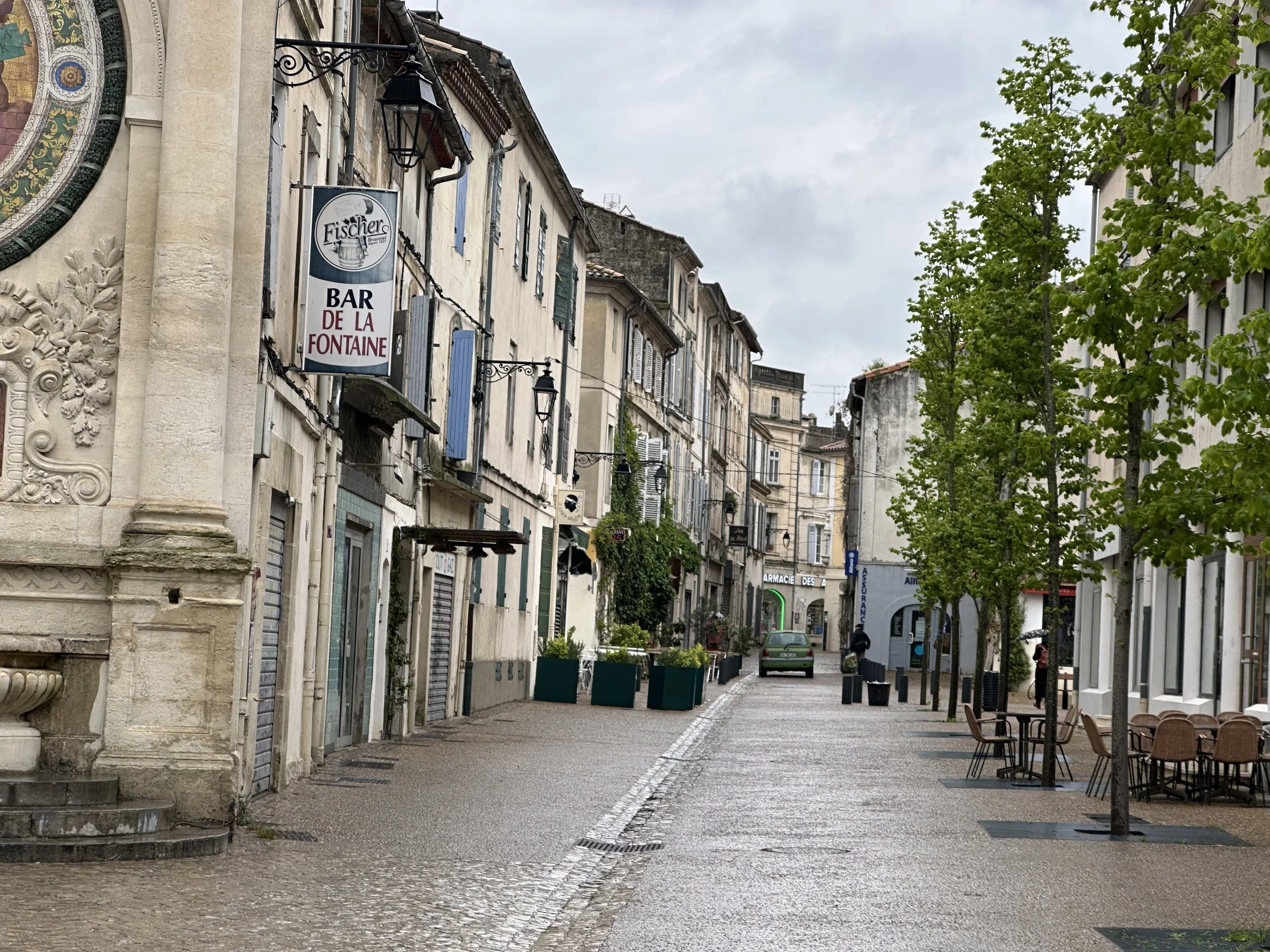
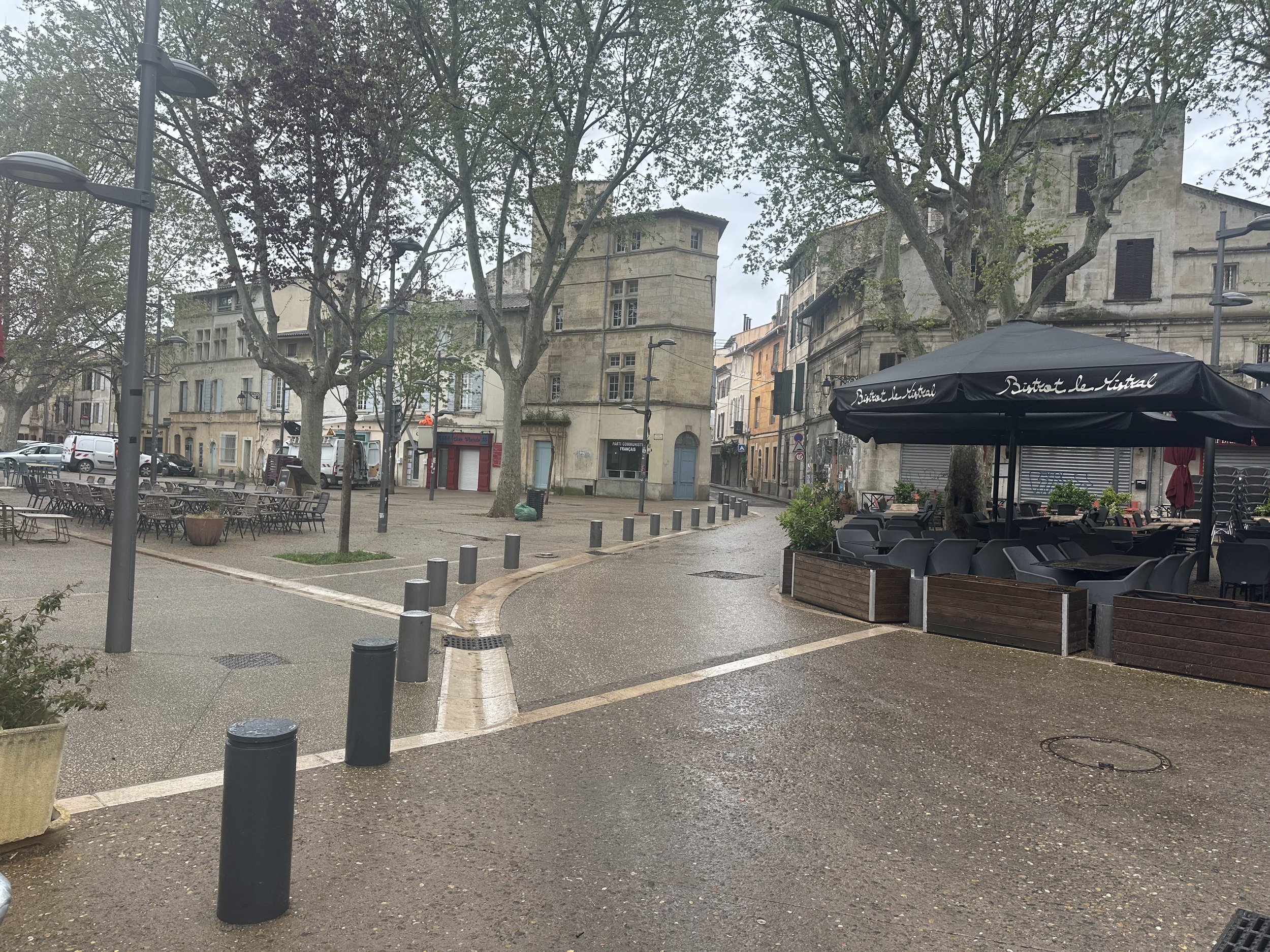
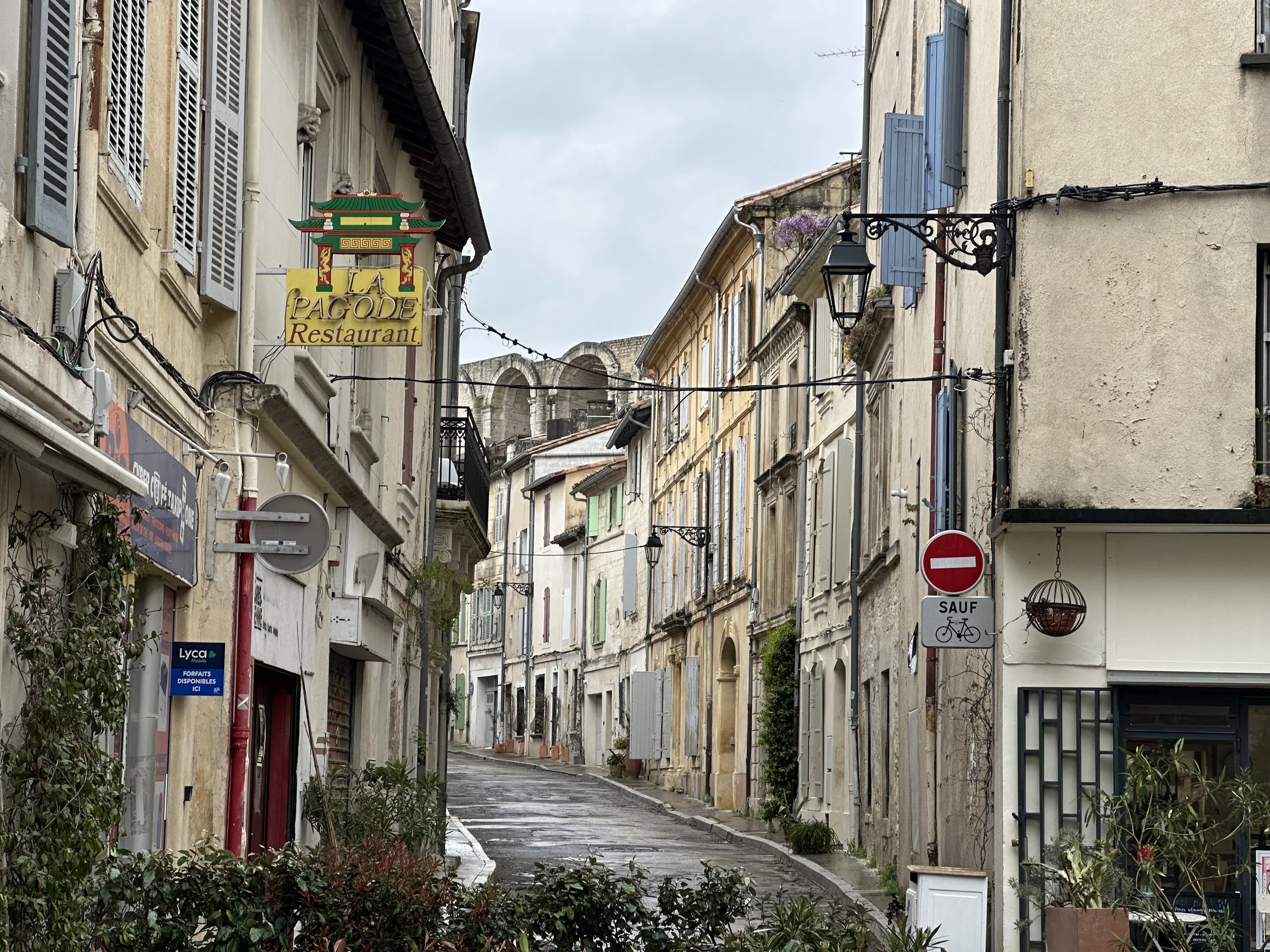
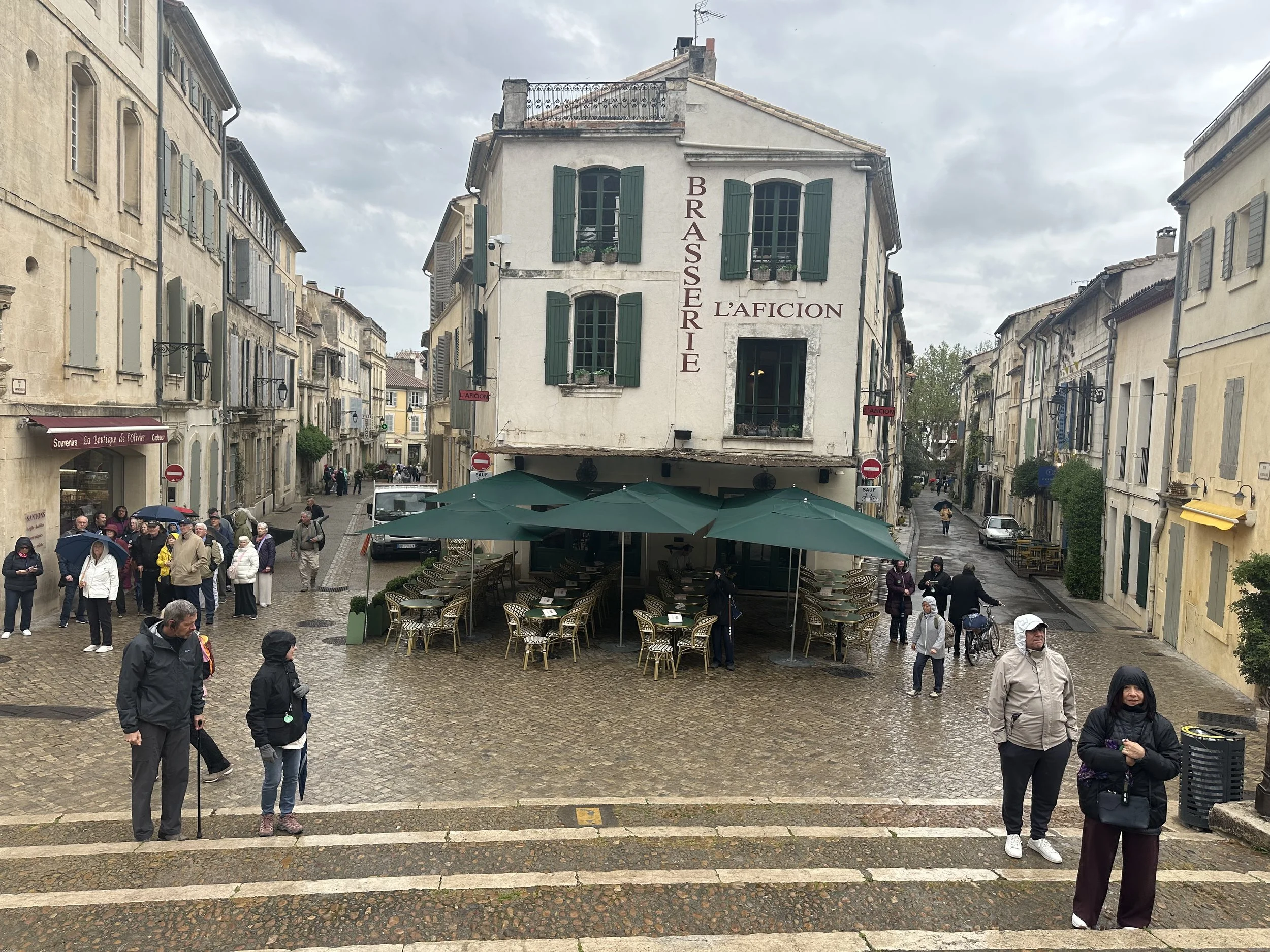
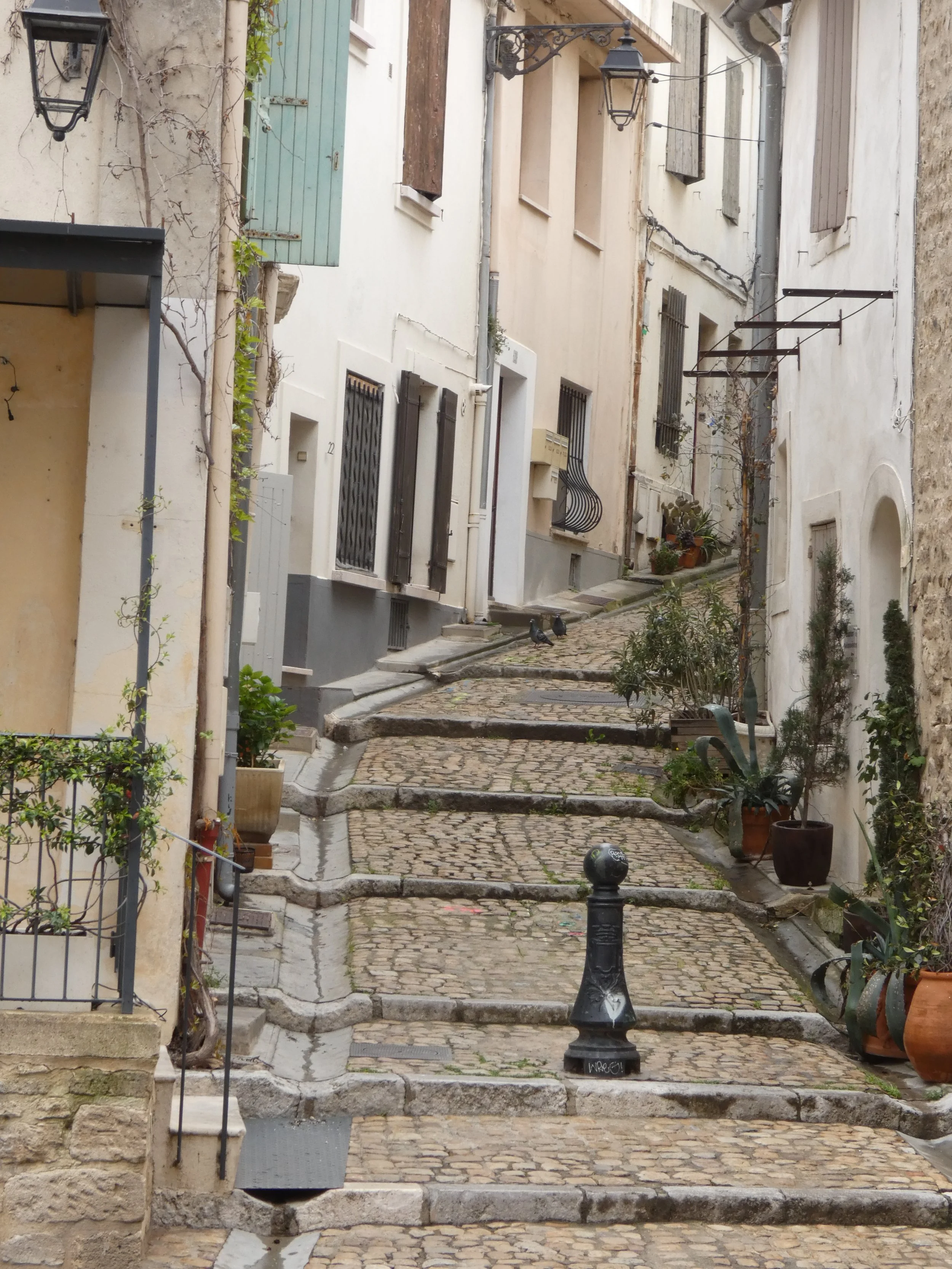
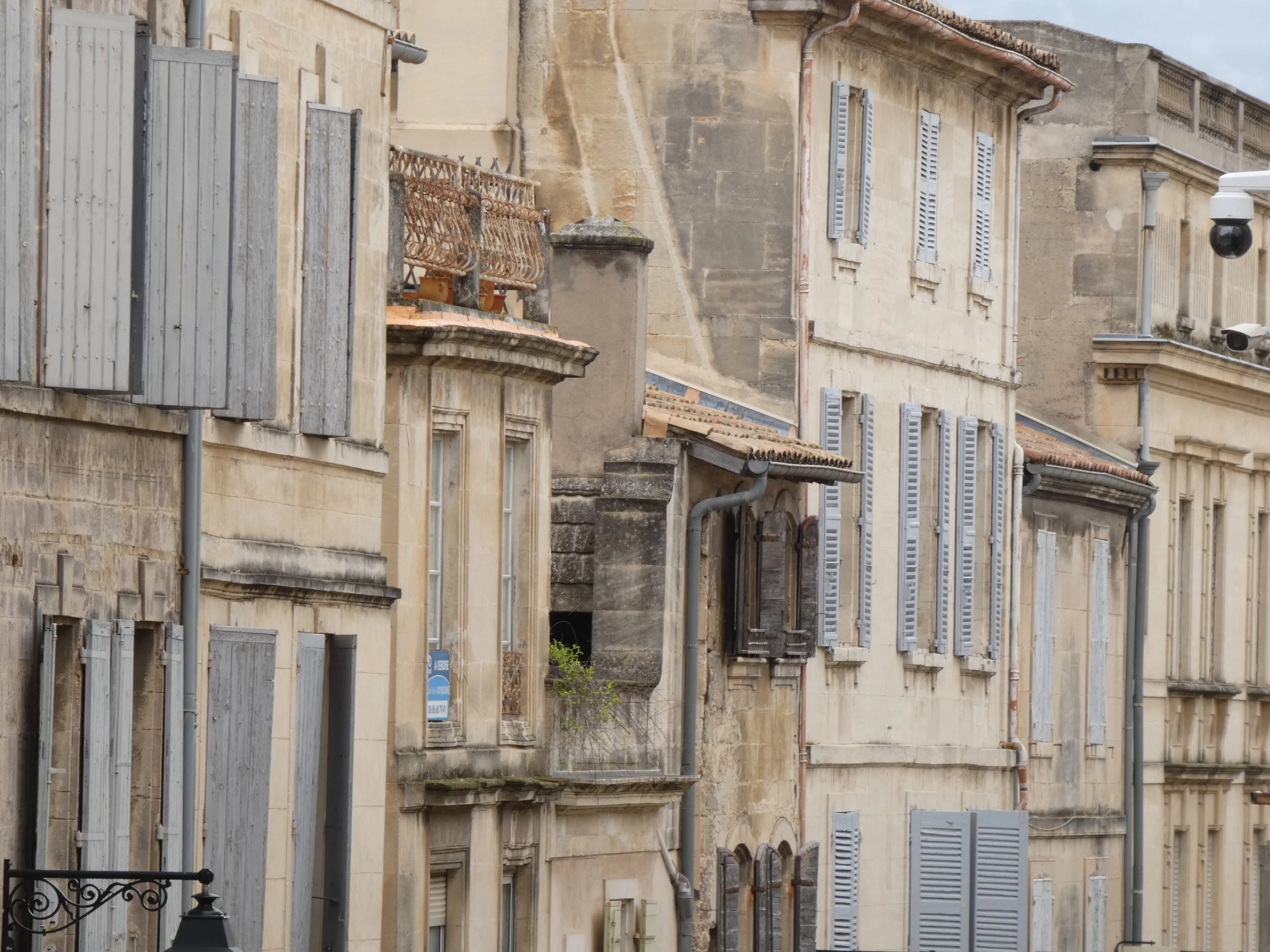
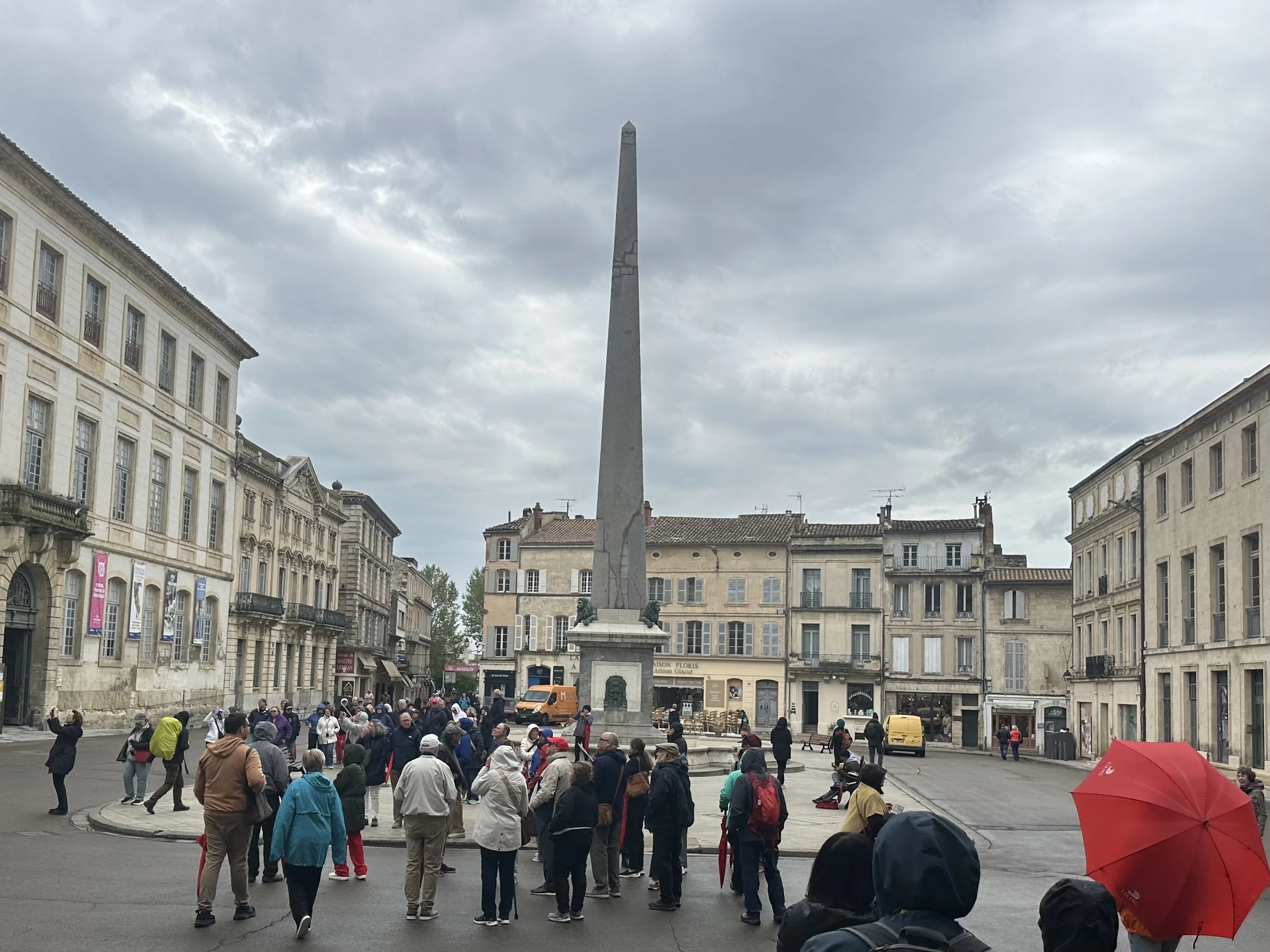
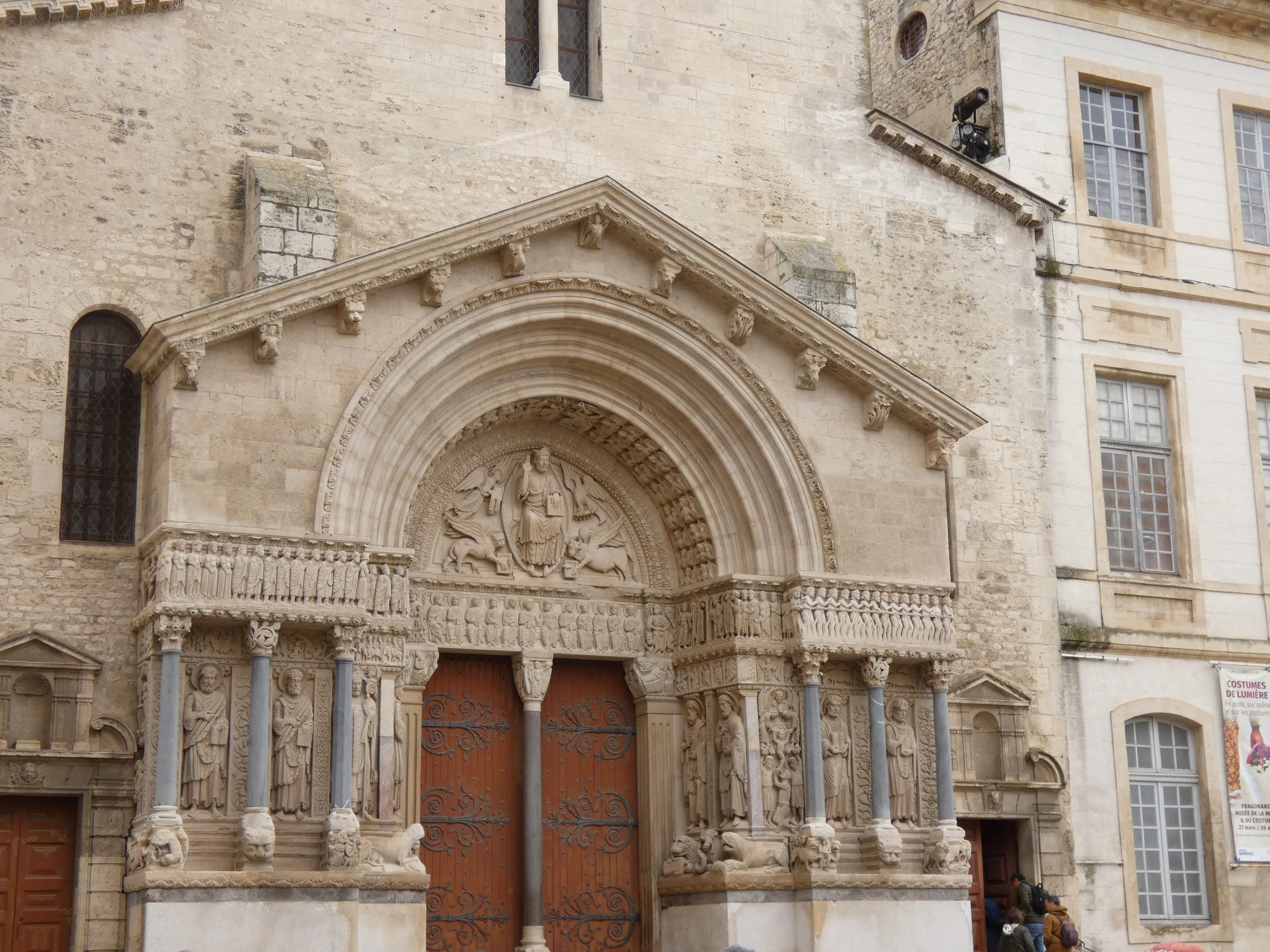
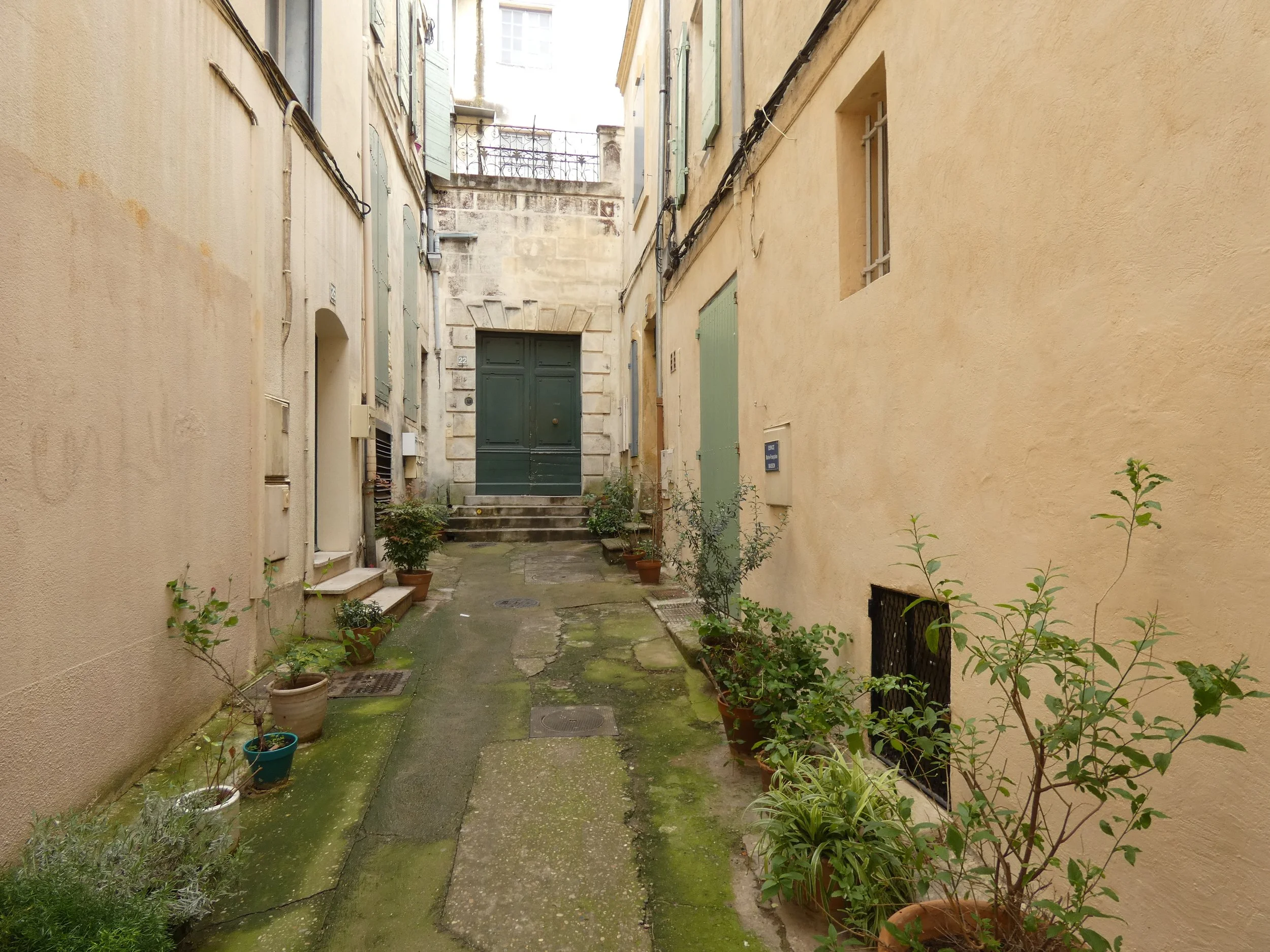
The town itself is nice enough, a typical medieval town with lots of shopping. Being Monday, however, all but a few restaurants and tourist shops were closed.
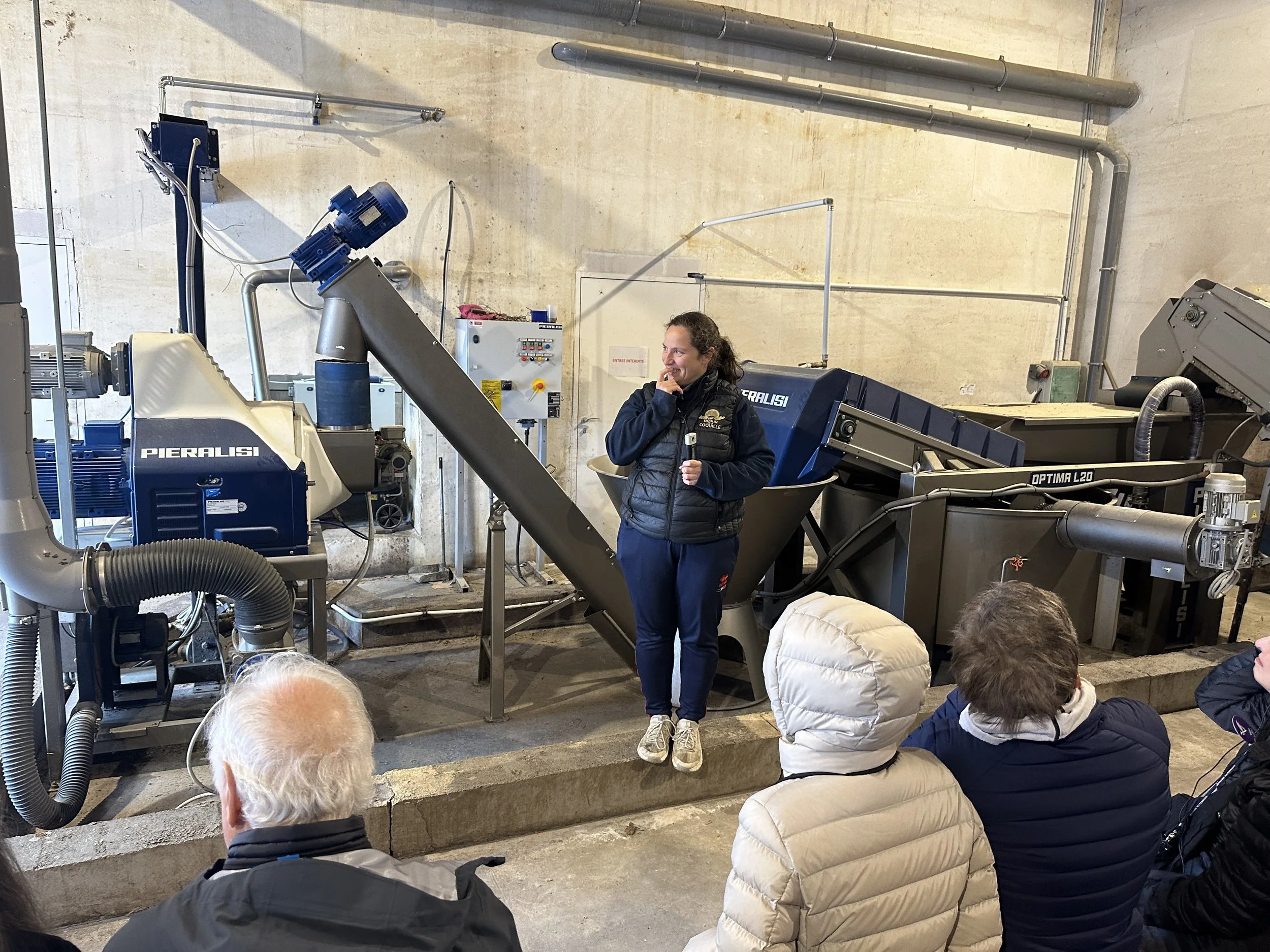
The olive oil tasting in the afternoon was interesting. Bottom line: only buy extra virgin olive oil because it has lower acidic content; buy cold pressed olive oil since heating extracts more oil but lowers its quality; store your olive oil in glass or tin, not plastic; don’t keep olive oil for more than two years, preferably shorter.
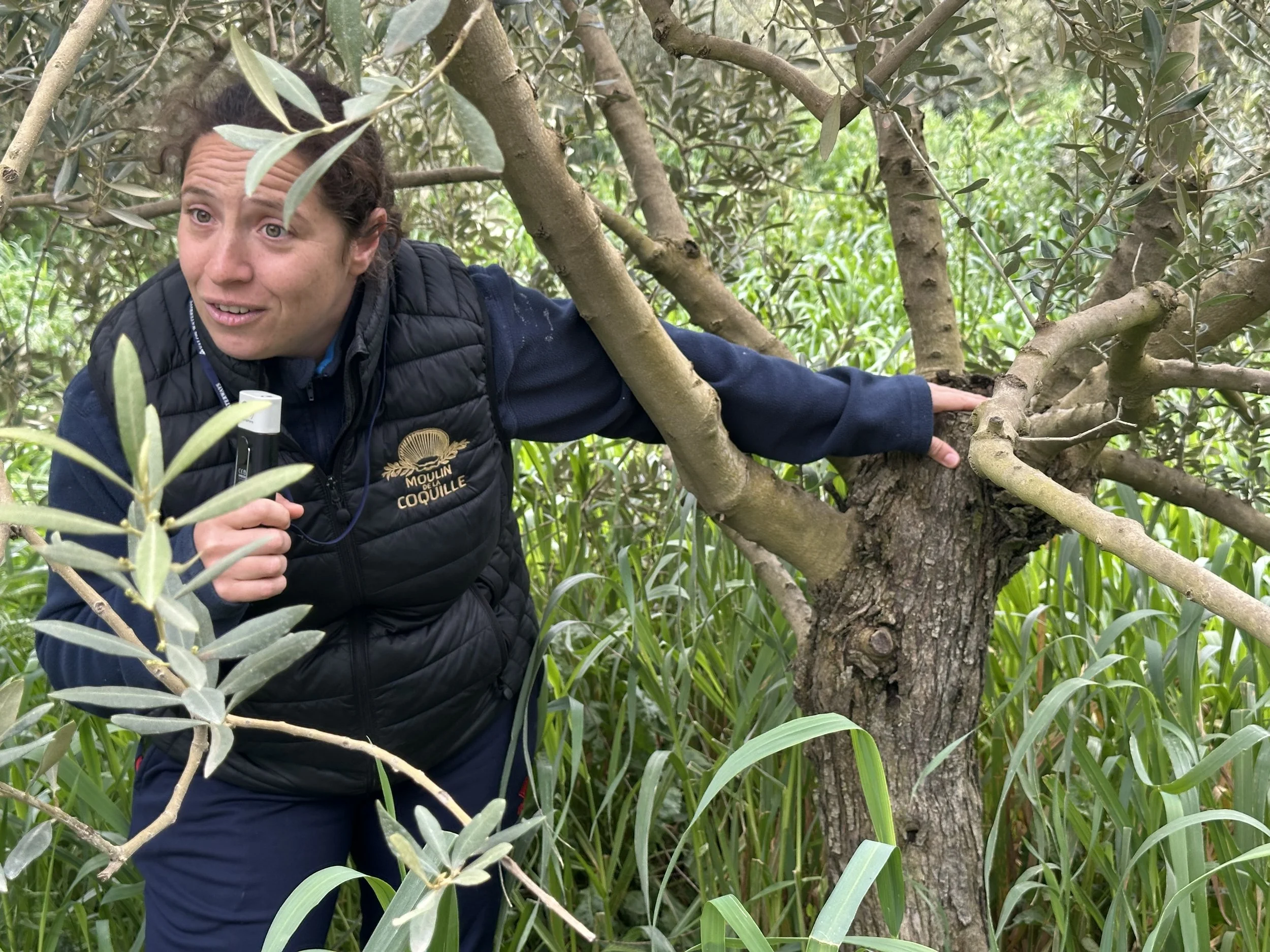
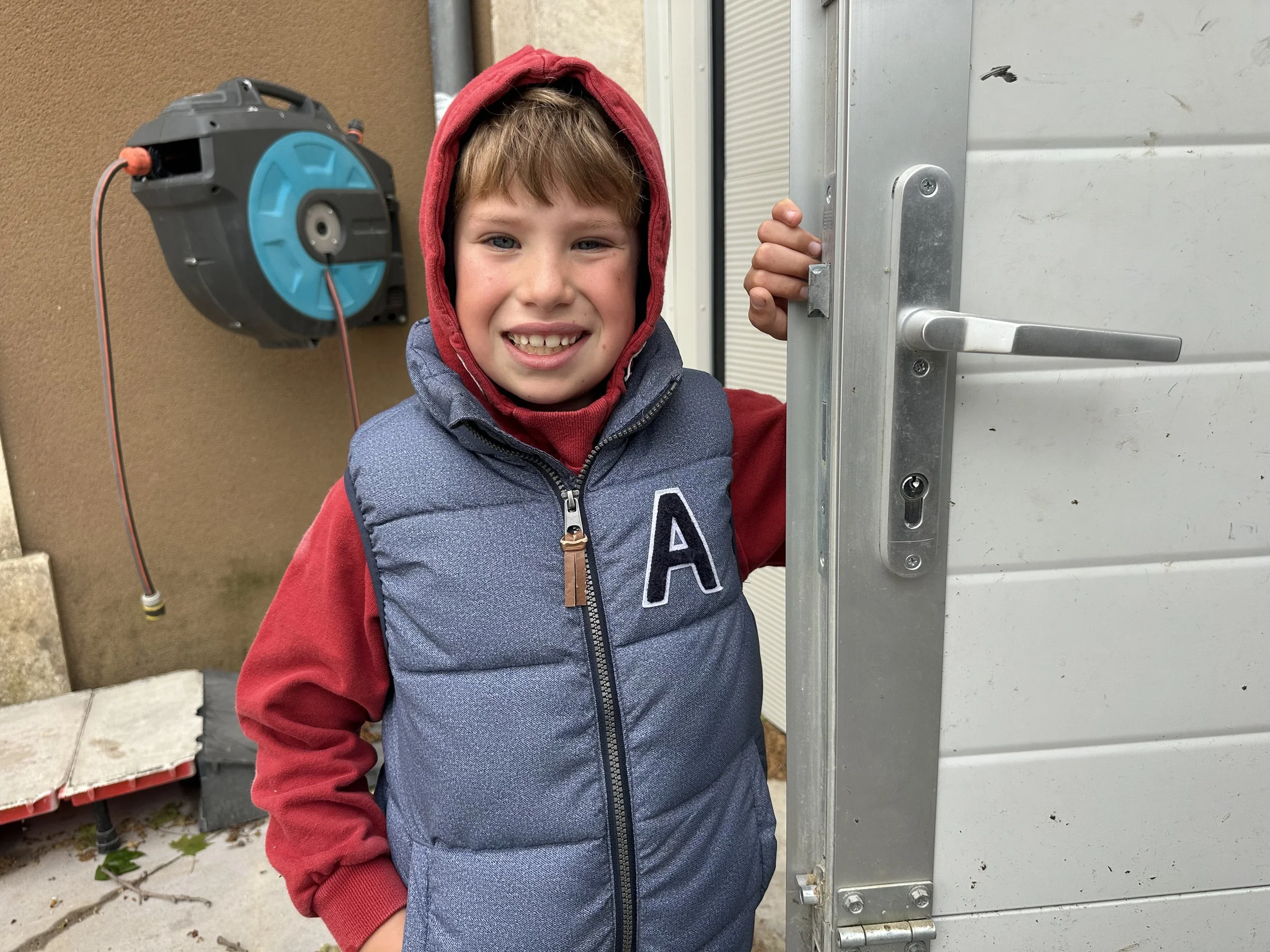
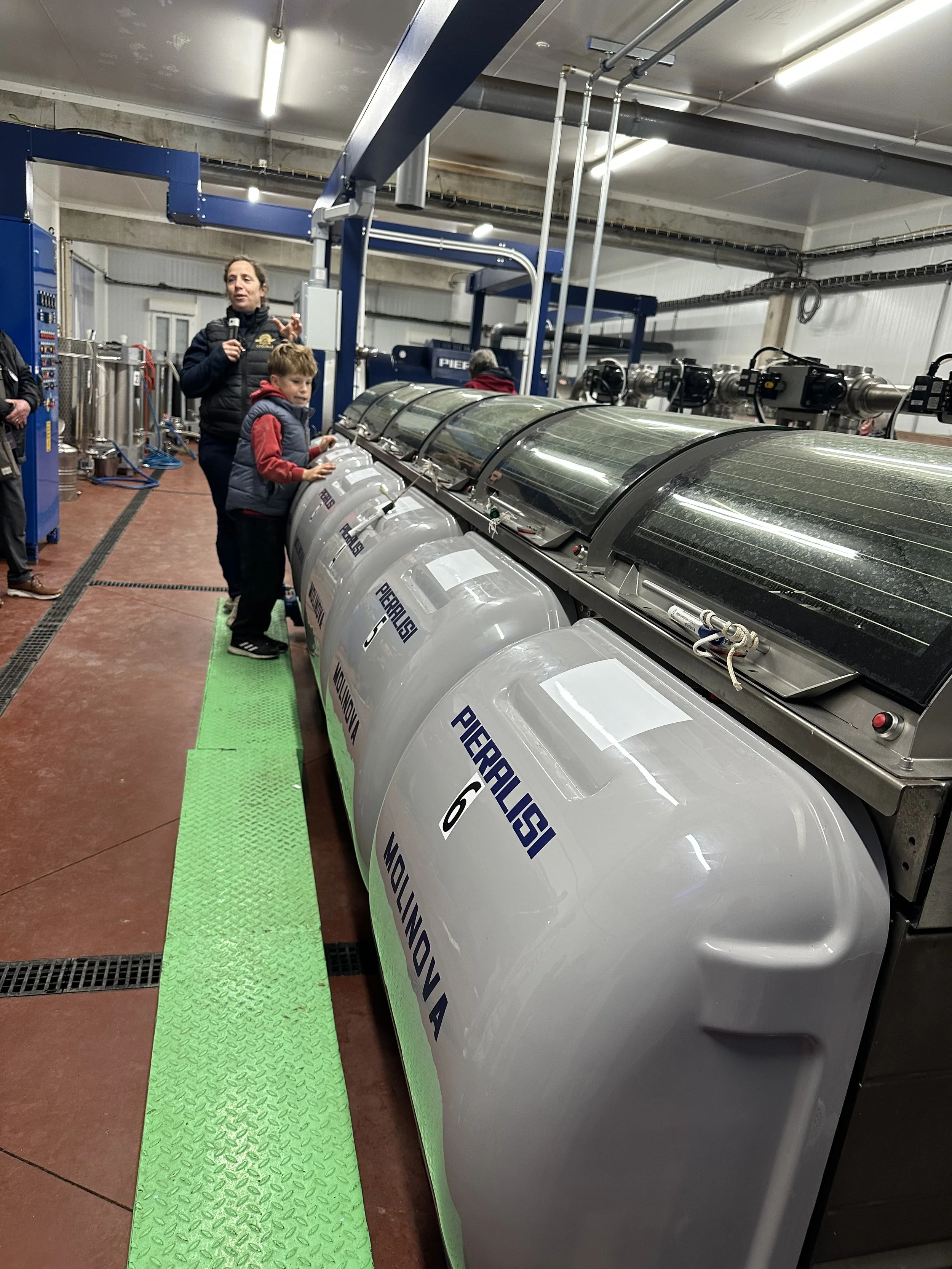
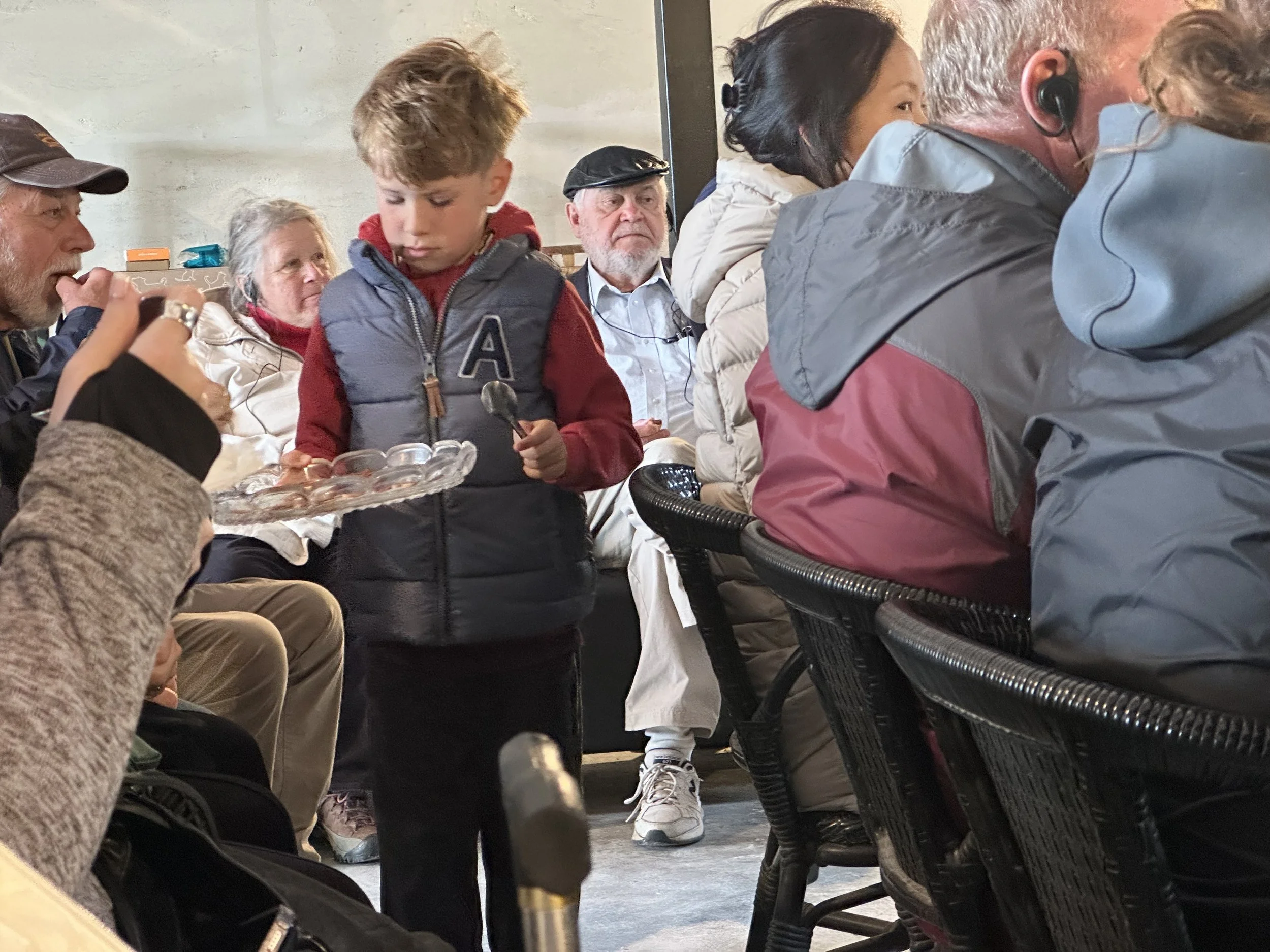
The most interesting part was the woman who owns the operation. I believe she’’s the second generation, but it’s a big operation that must represent a significant investment. Her seven-year-old son assisted with the tour. She has a five and two-year-old too. She’s adding on a restaurant too.
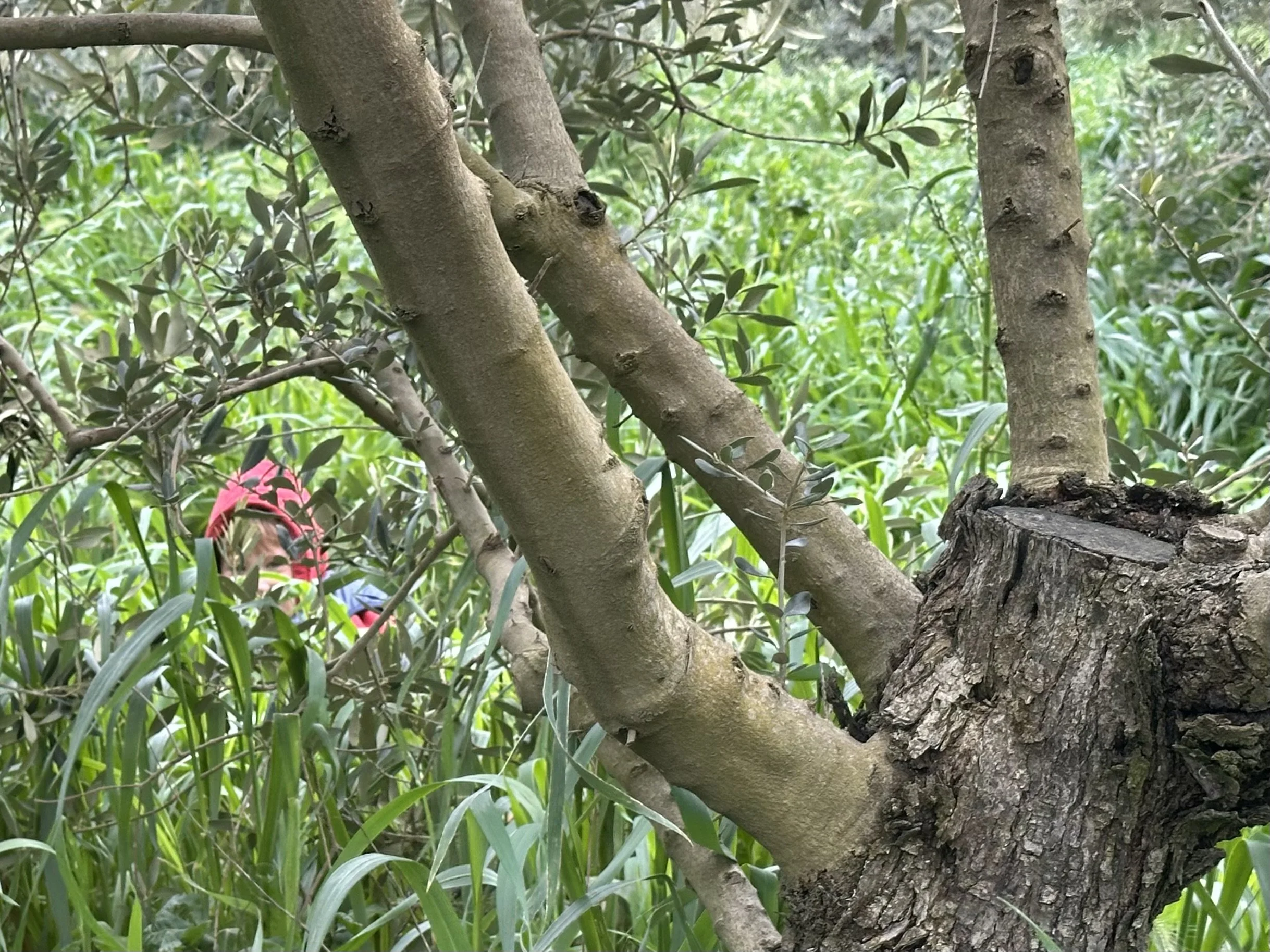
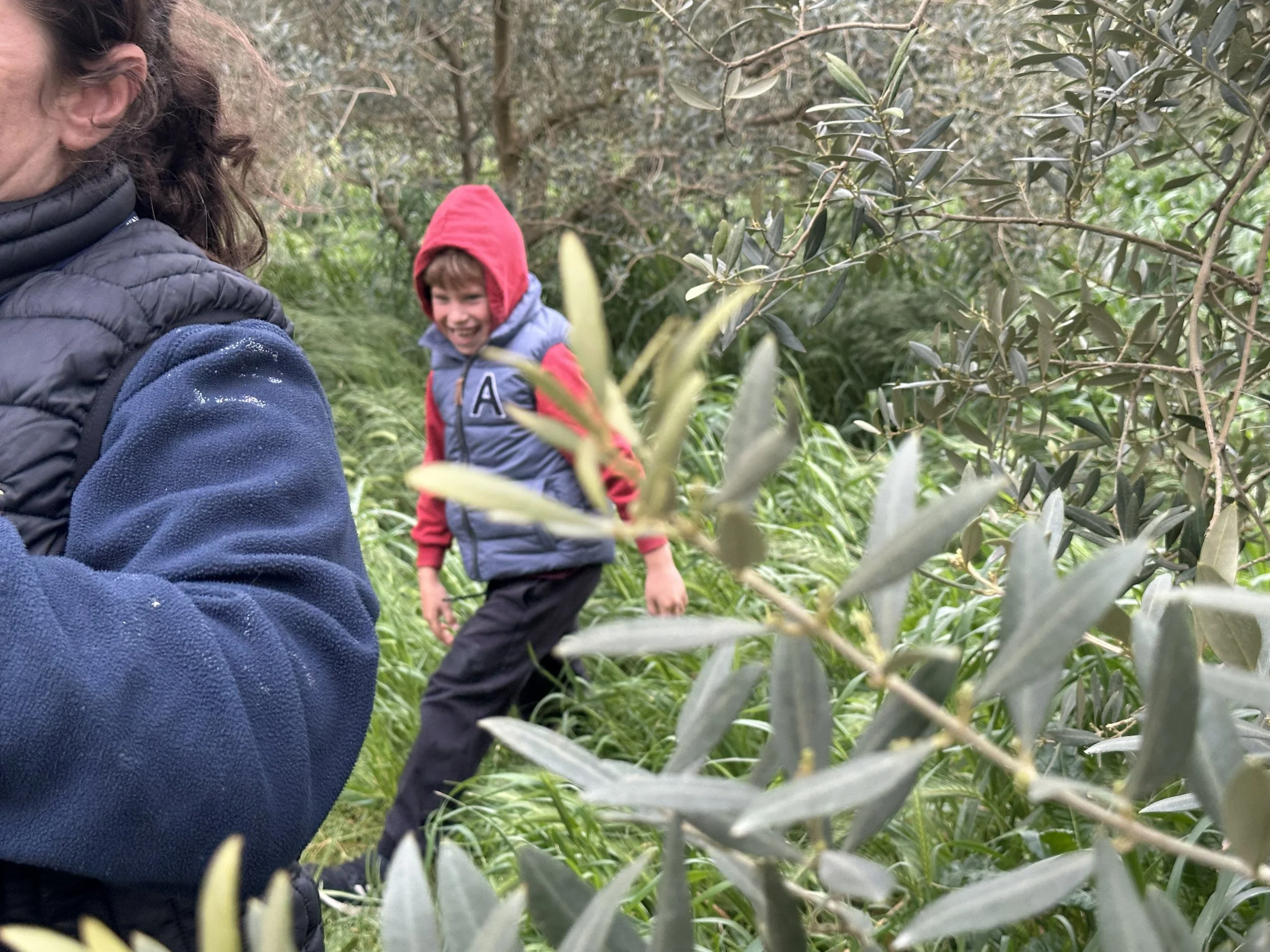
The seven-year-old played hide-and-seek, hiding behind the trees, as his mother talked. He tried to avoid my camera. Great fun. Cute kid.
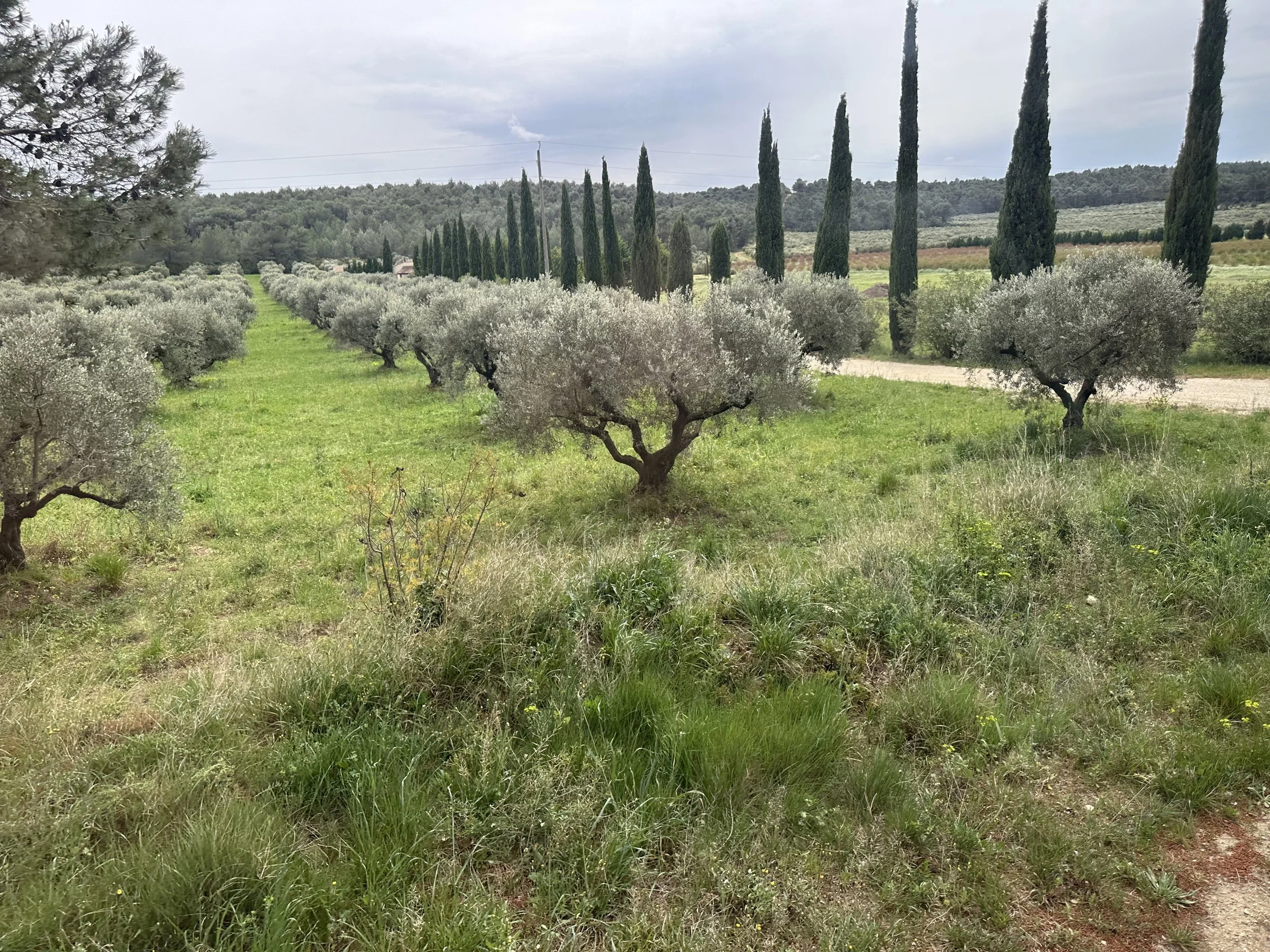
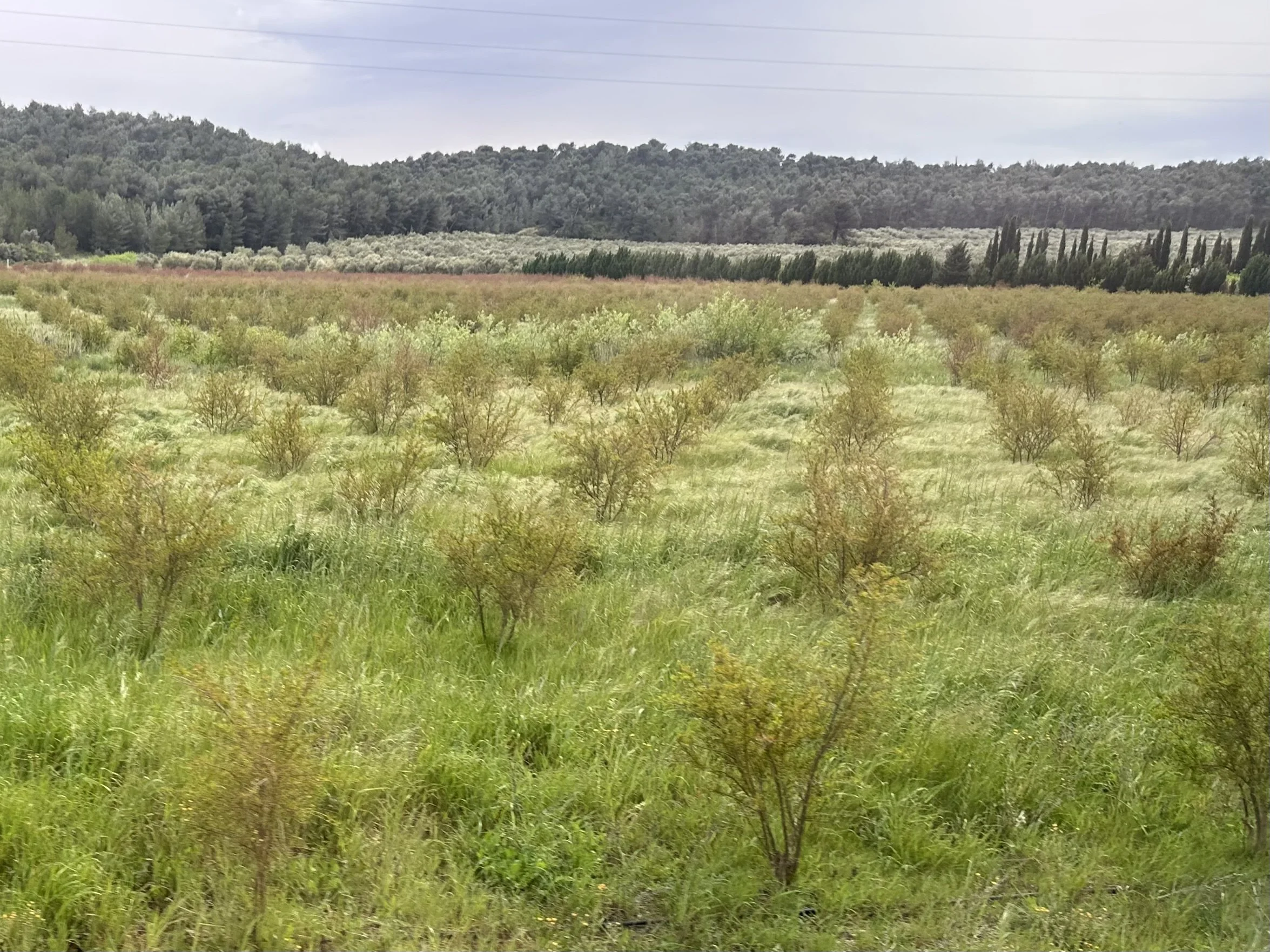
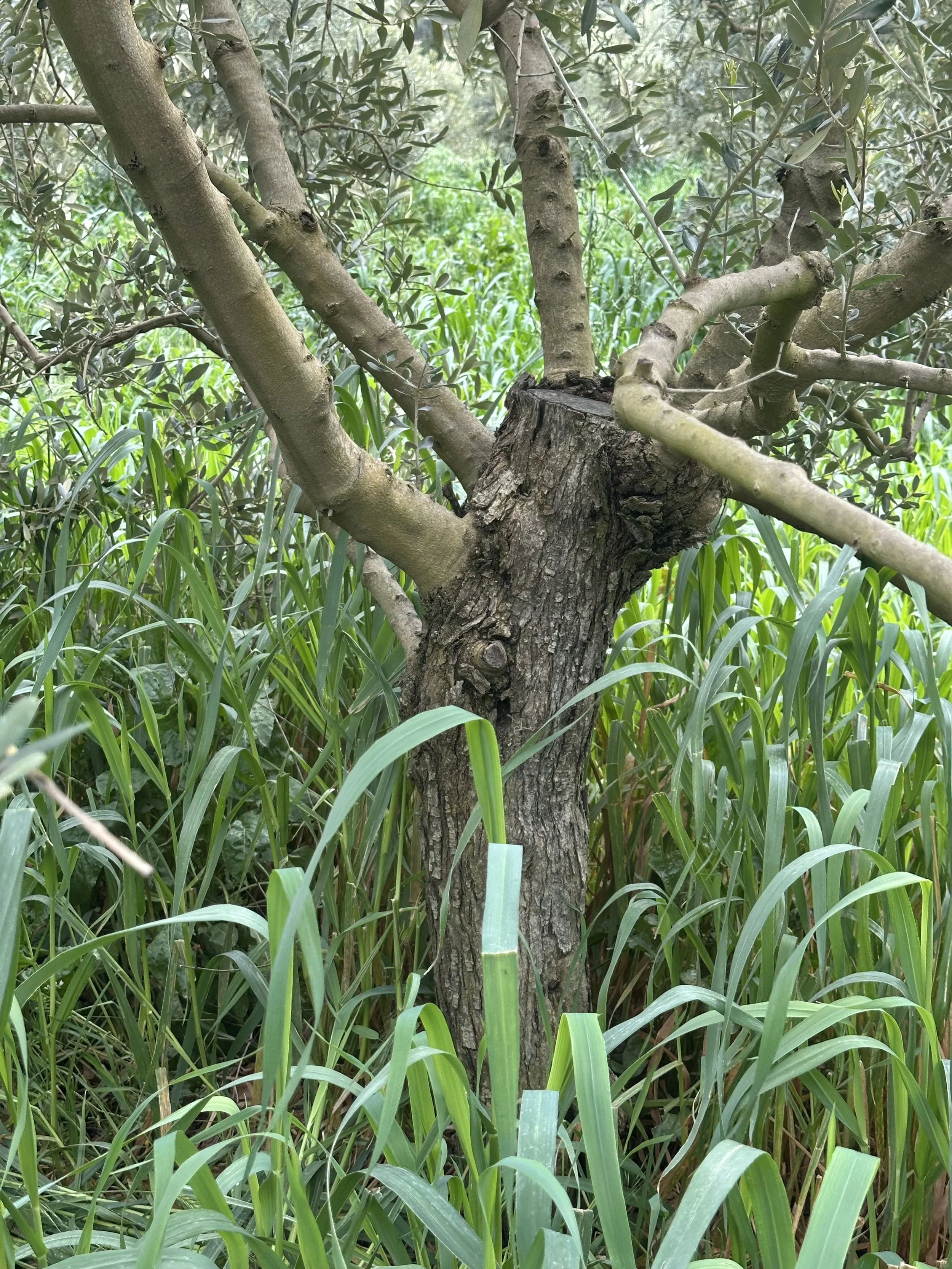
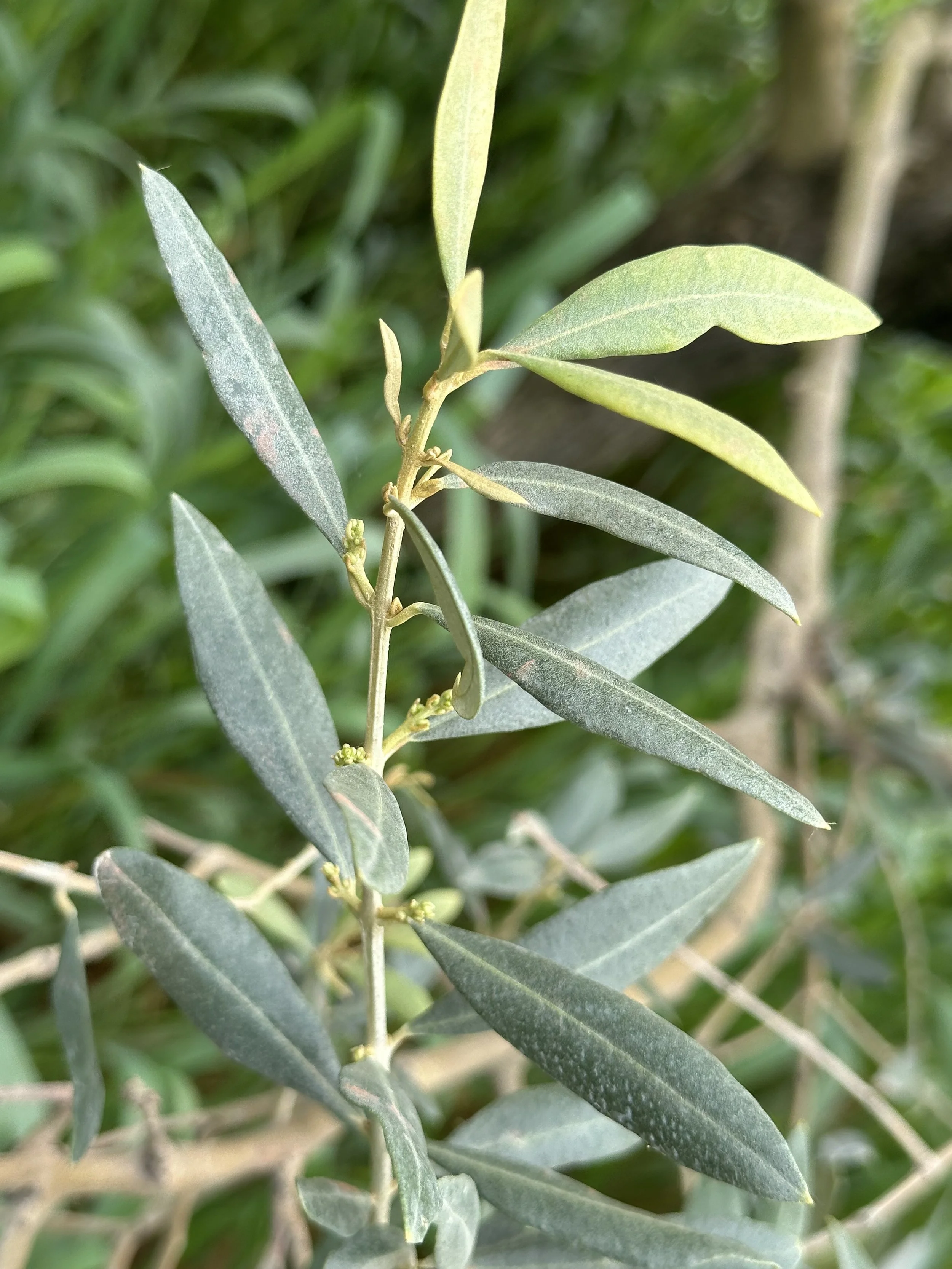
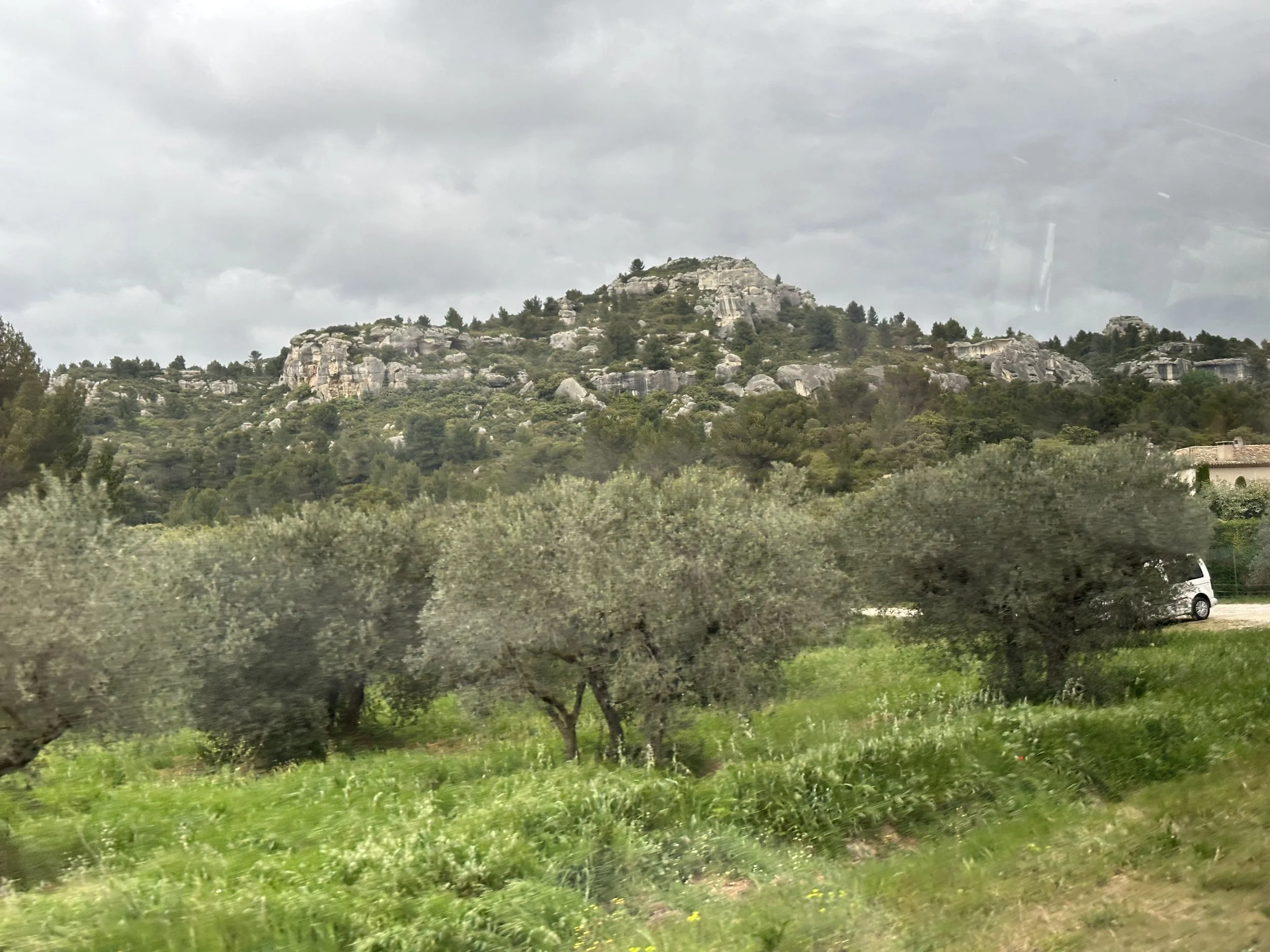
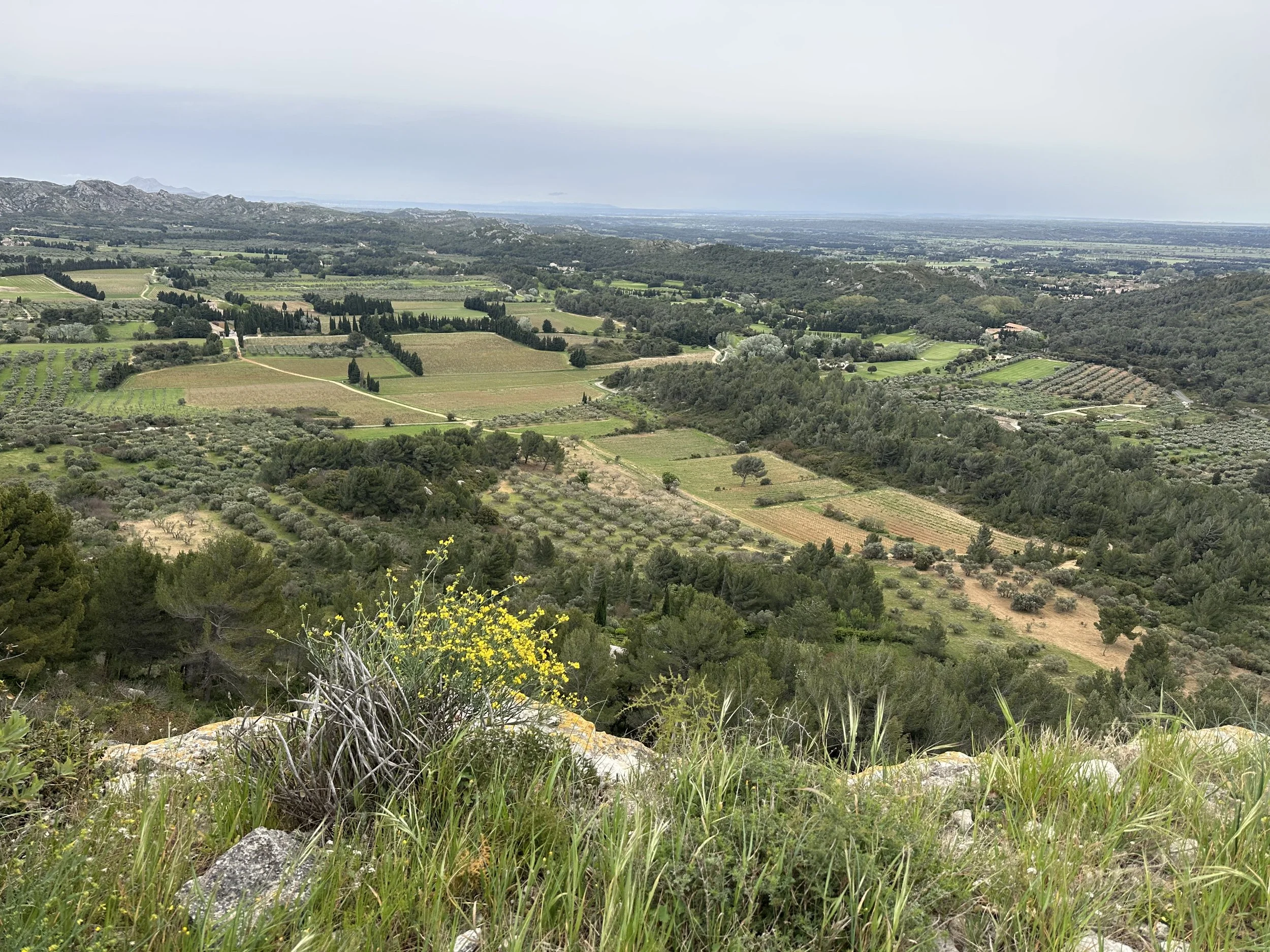
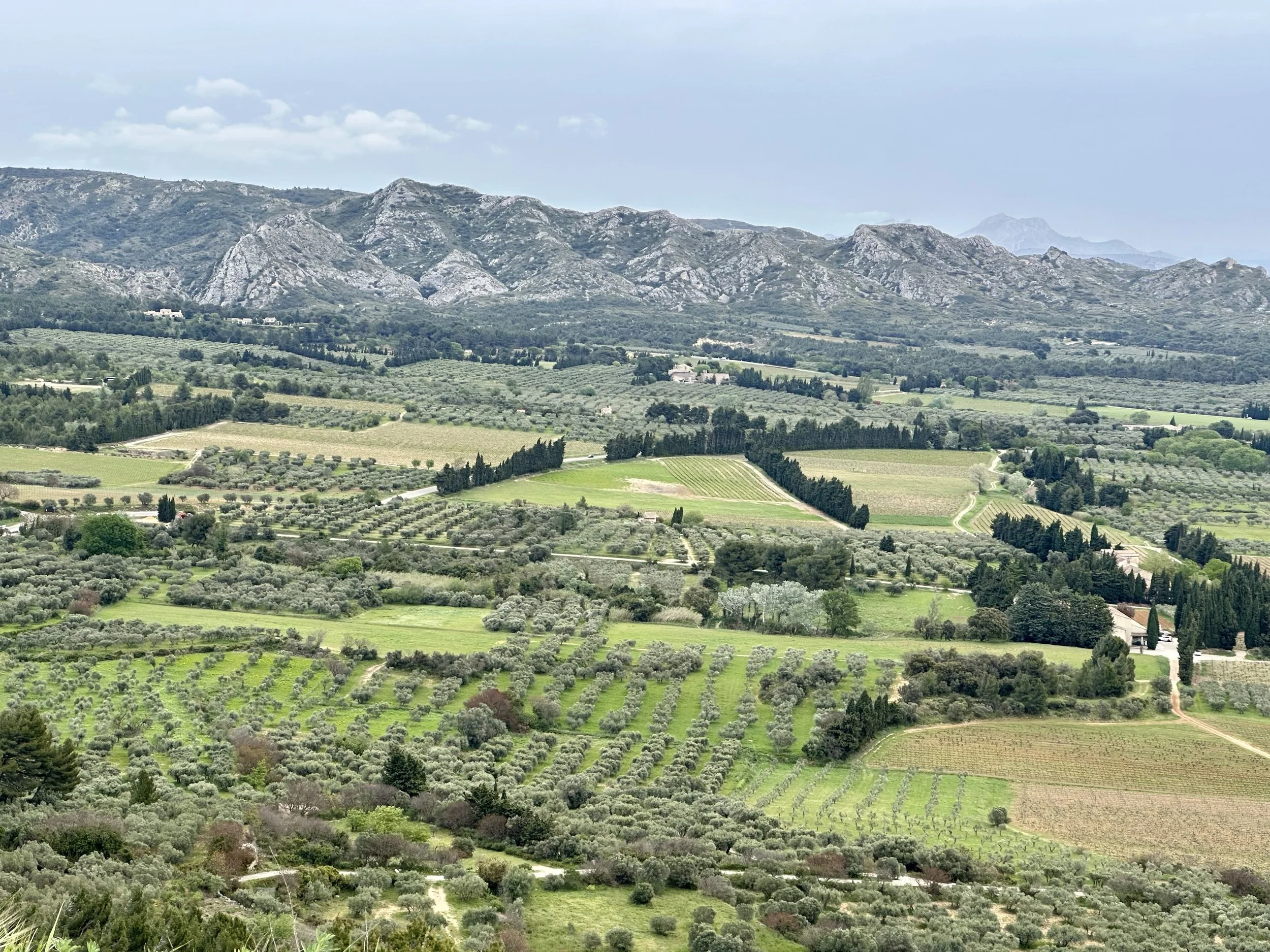
The vines are spread across several fields, with different varieties of olives. Back in 1956 there was a terrible frost that killed off most of the olive trees in France and this area of southern France in particular. Farmers found, however, that the root systems, which can be 80 or more years old, sent up multiple shoots. The question then is whether to let multiple shoots mature or to keep all but one shoot and plant it elsewhere. Her operation has done both. We observed plants that had been nurtured as a single tree. It didn’t start producing until nine years ago.
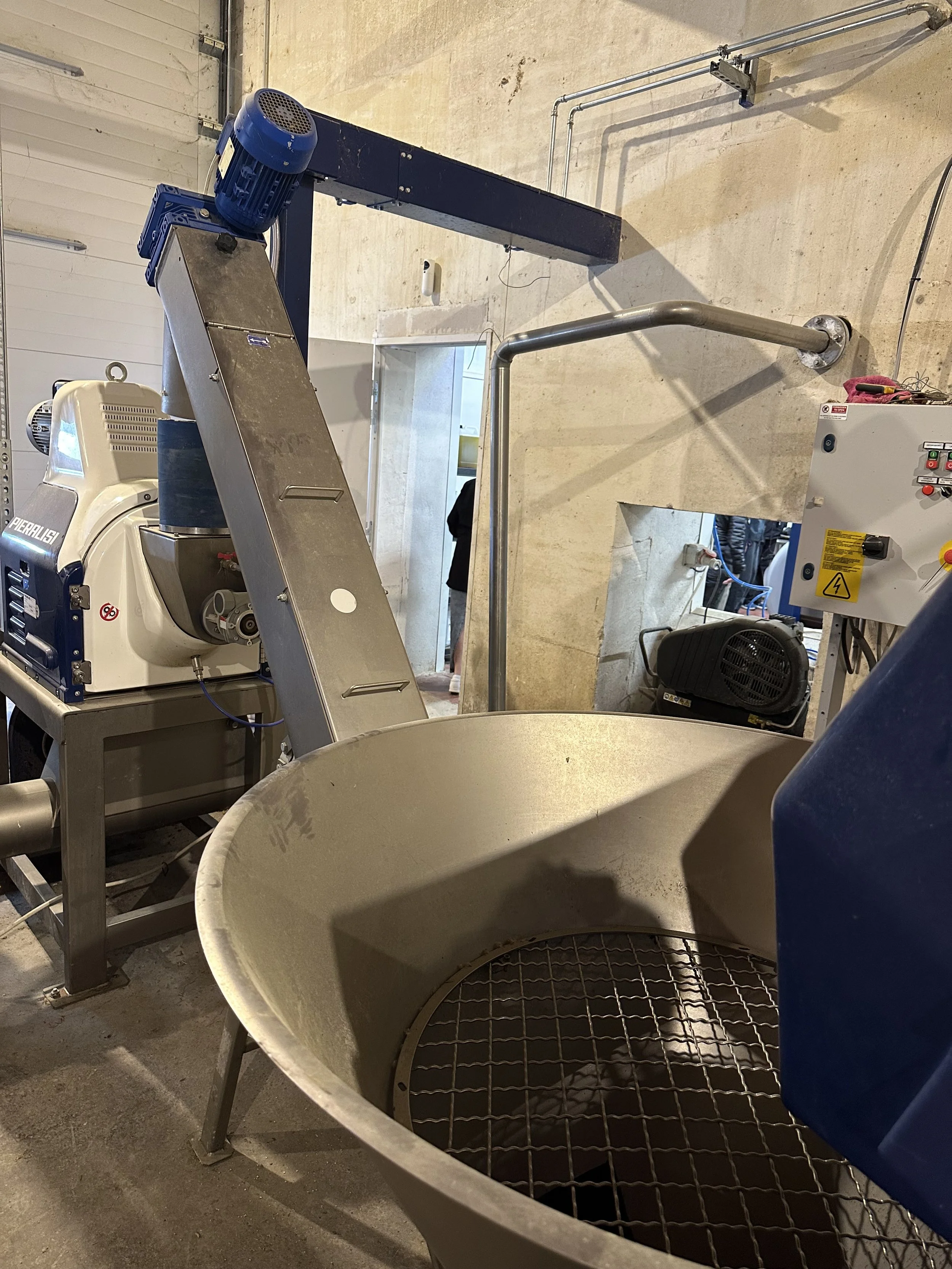
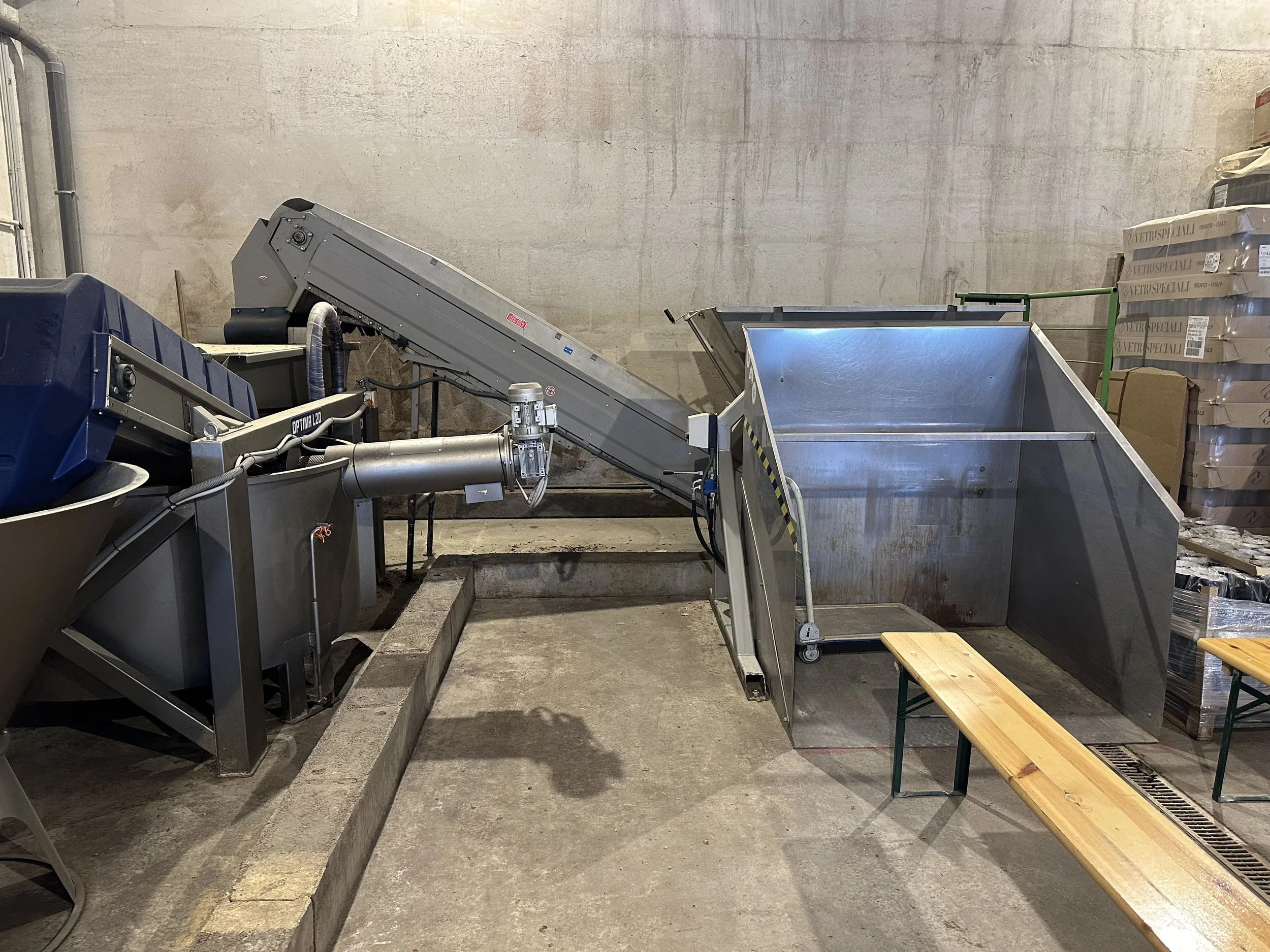
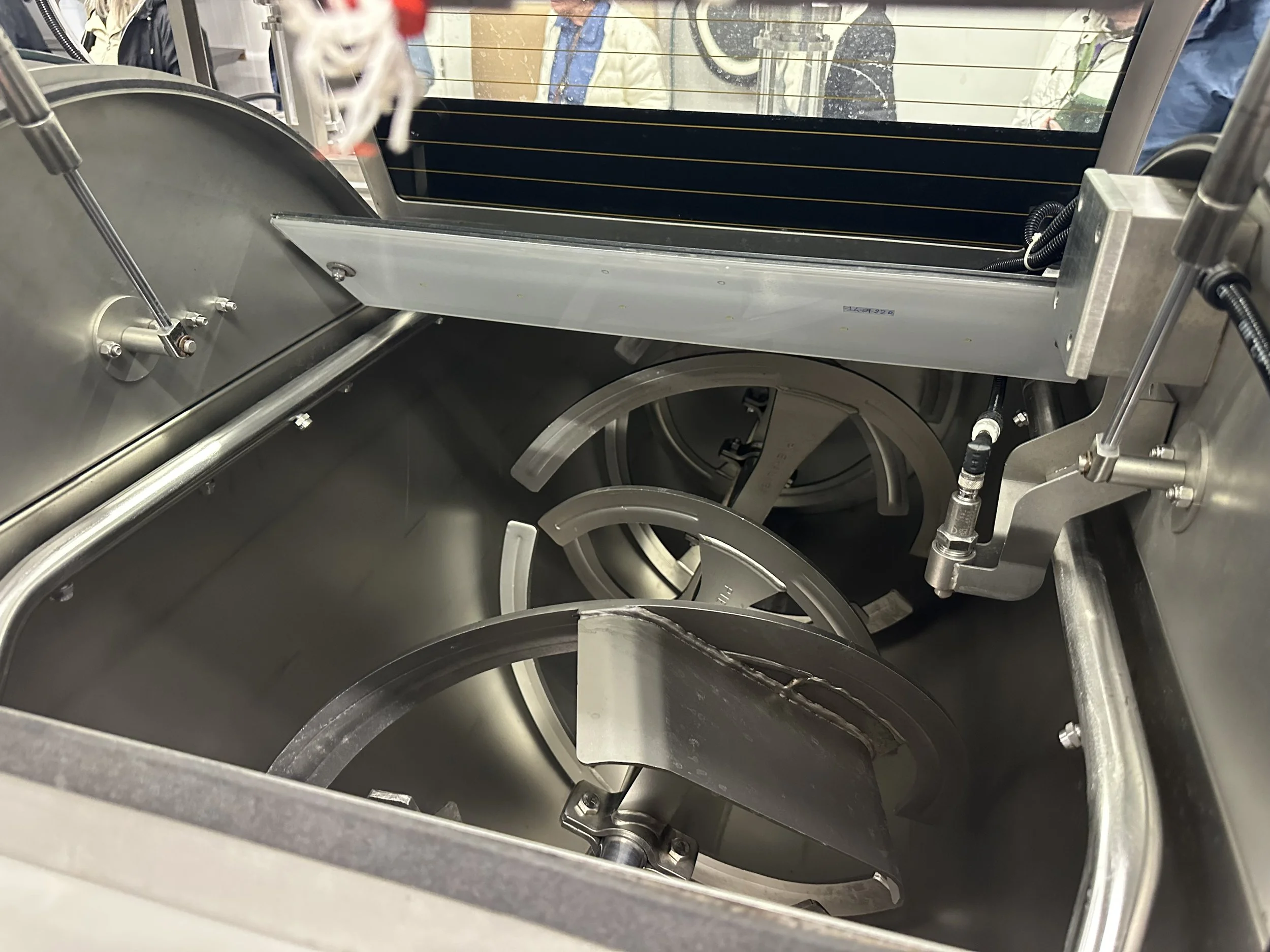
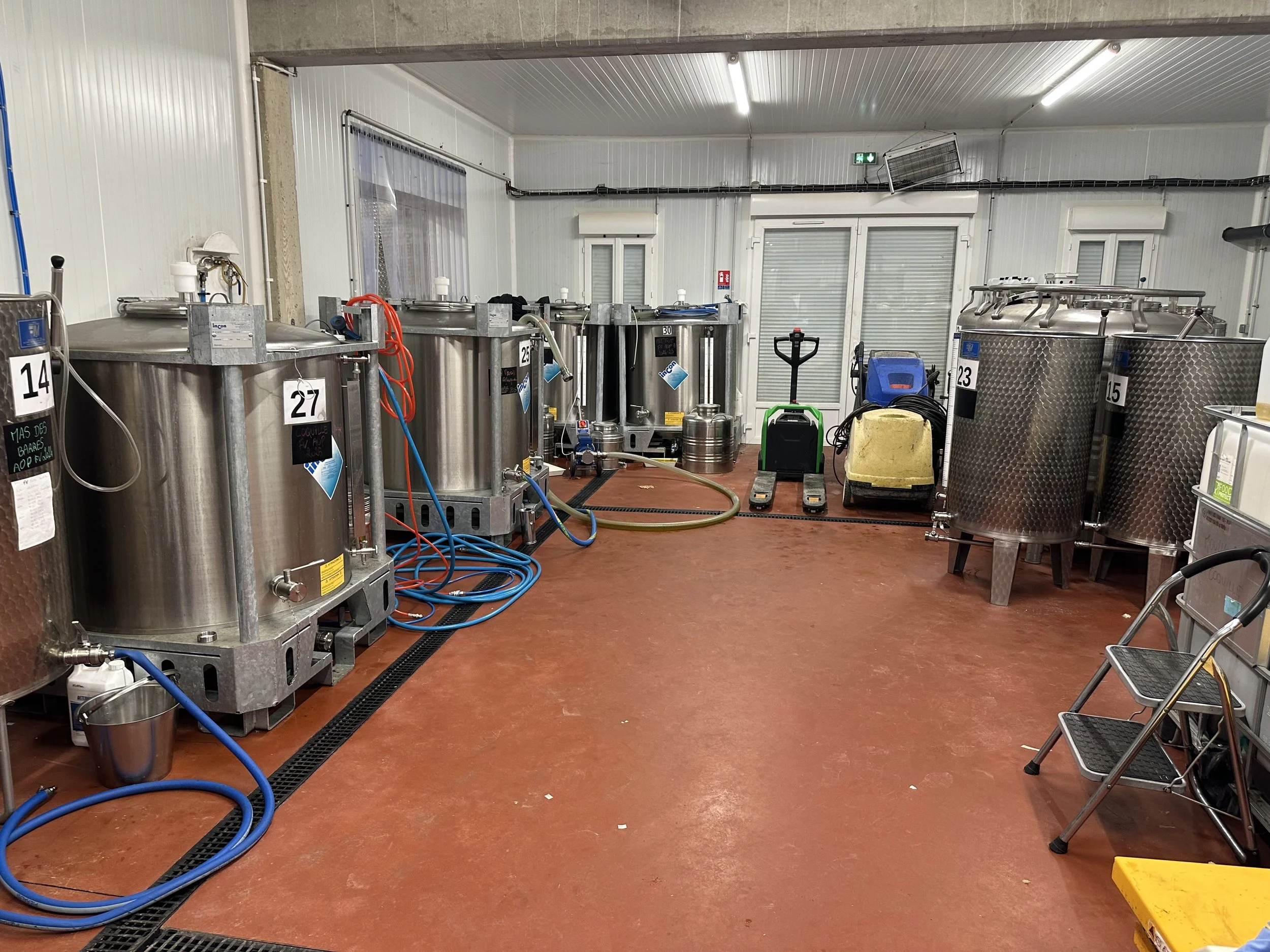
The pressing and filtering equipment is stainless steel, rather than stone and wood like in the olden days. She’s very proud of the quality of her products. She produces straight olive oil and flavored oil – fruits and herbs, etc.
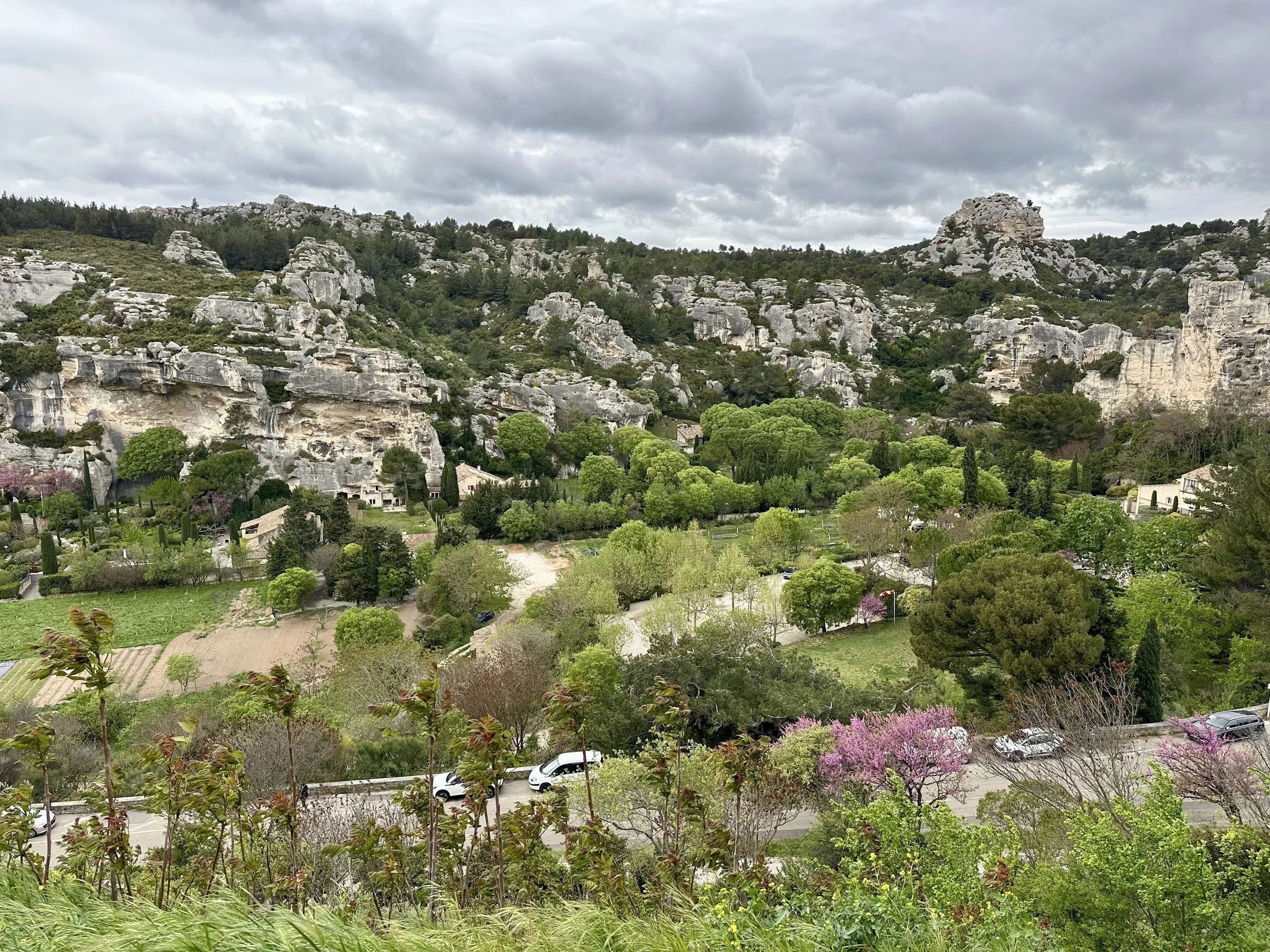
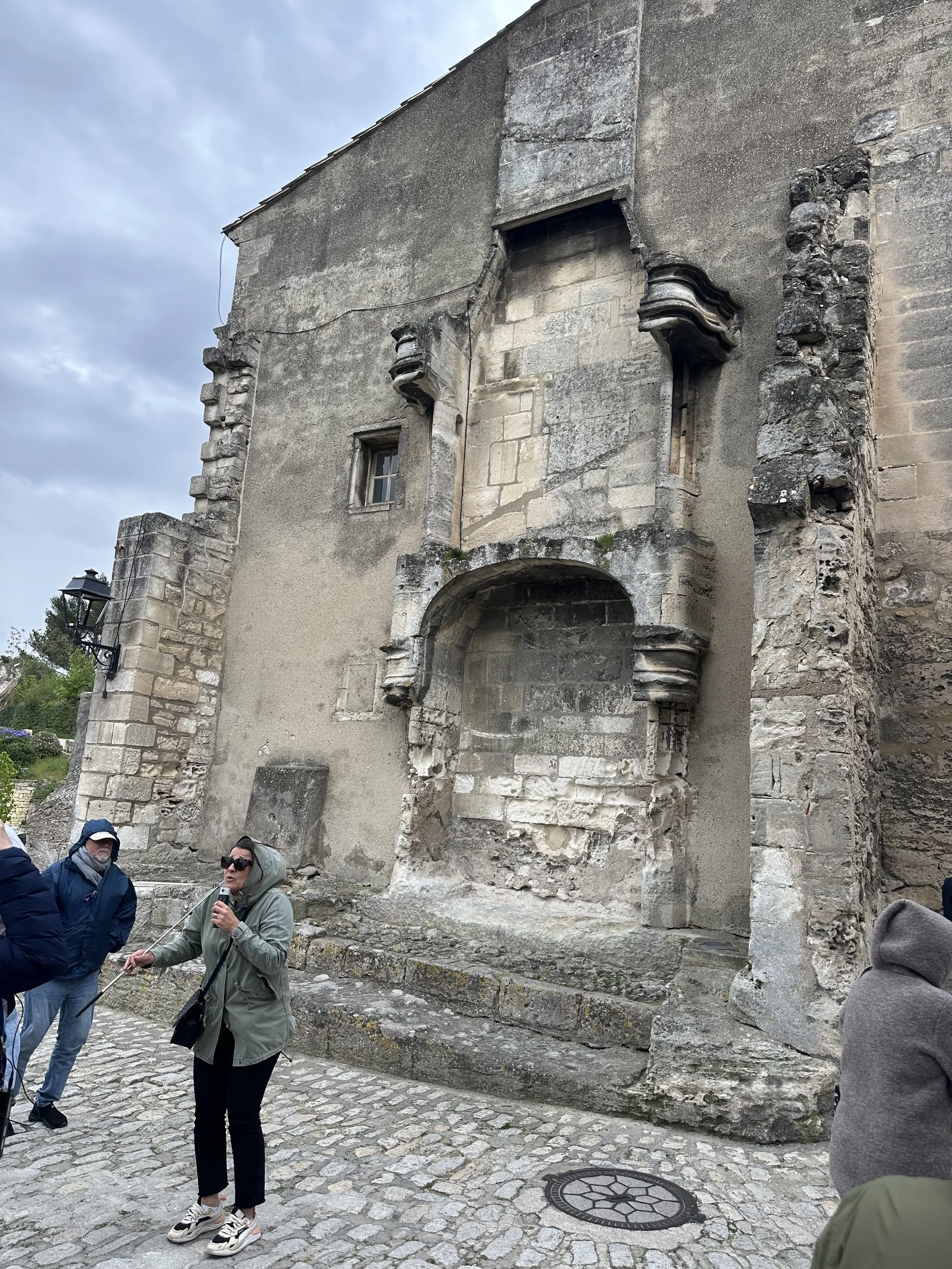
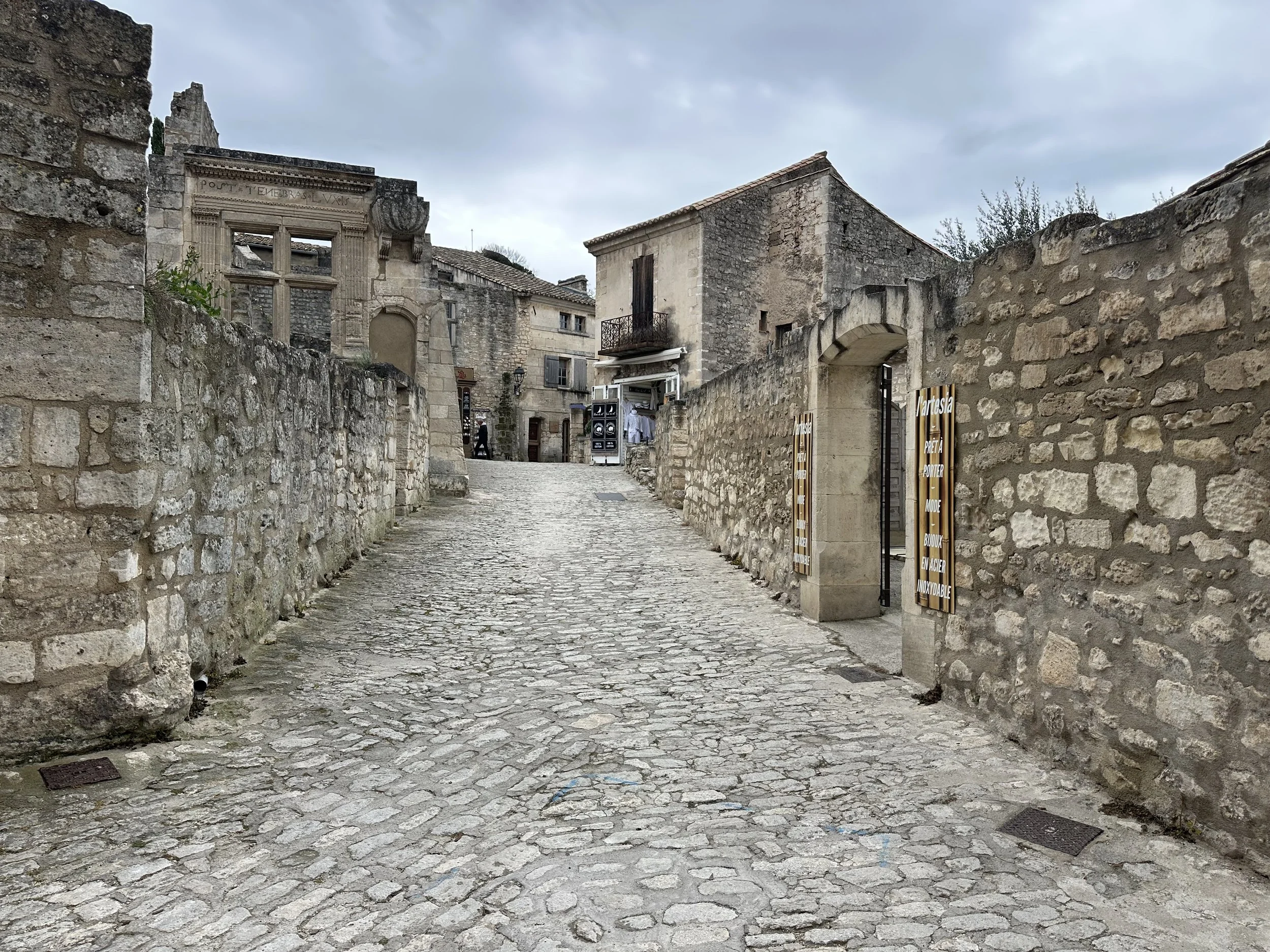
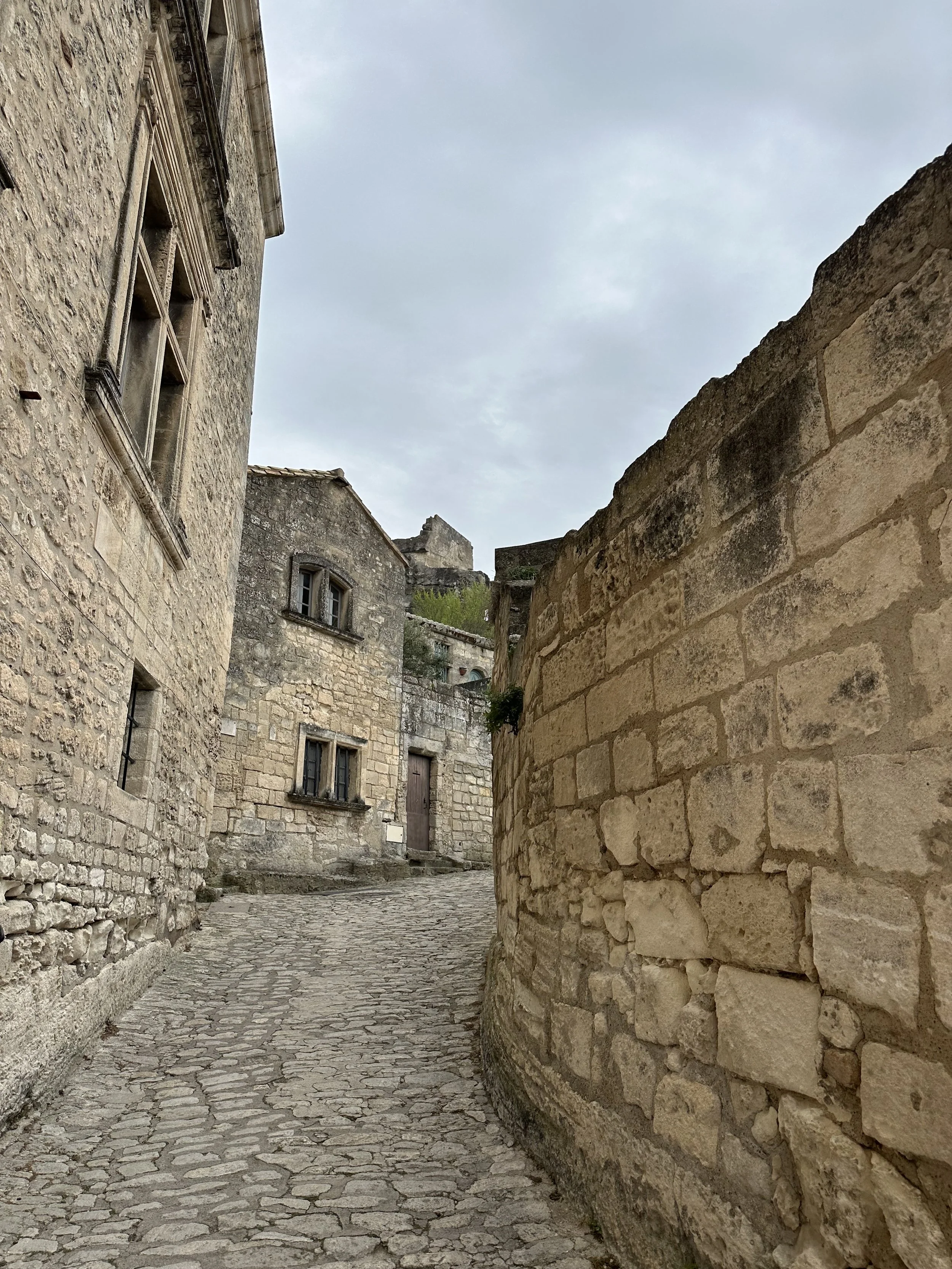
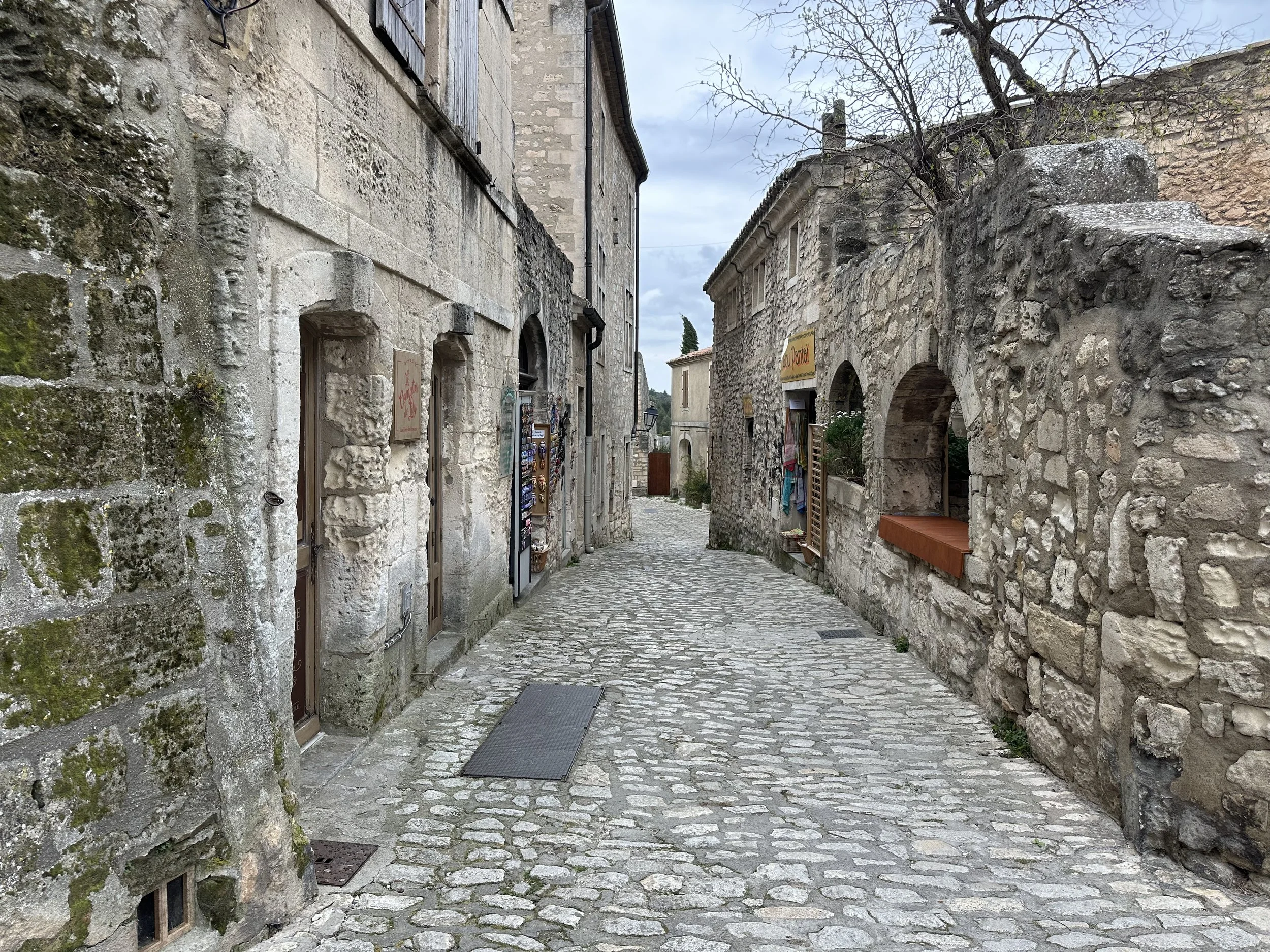
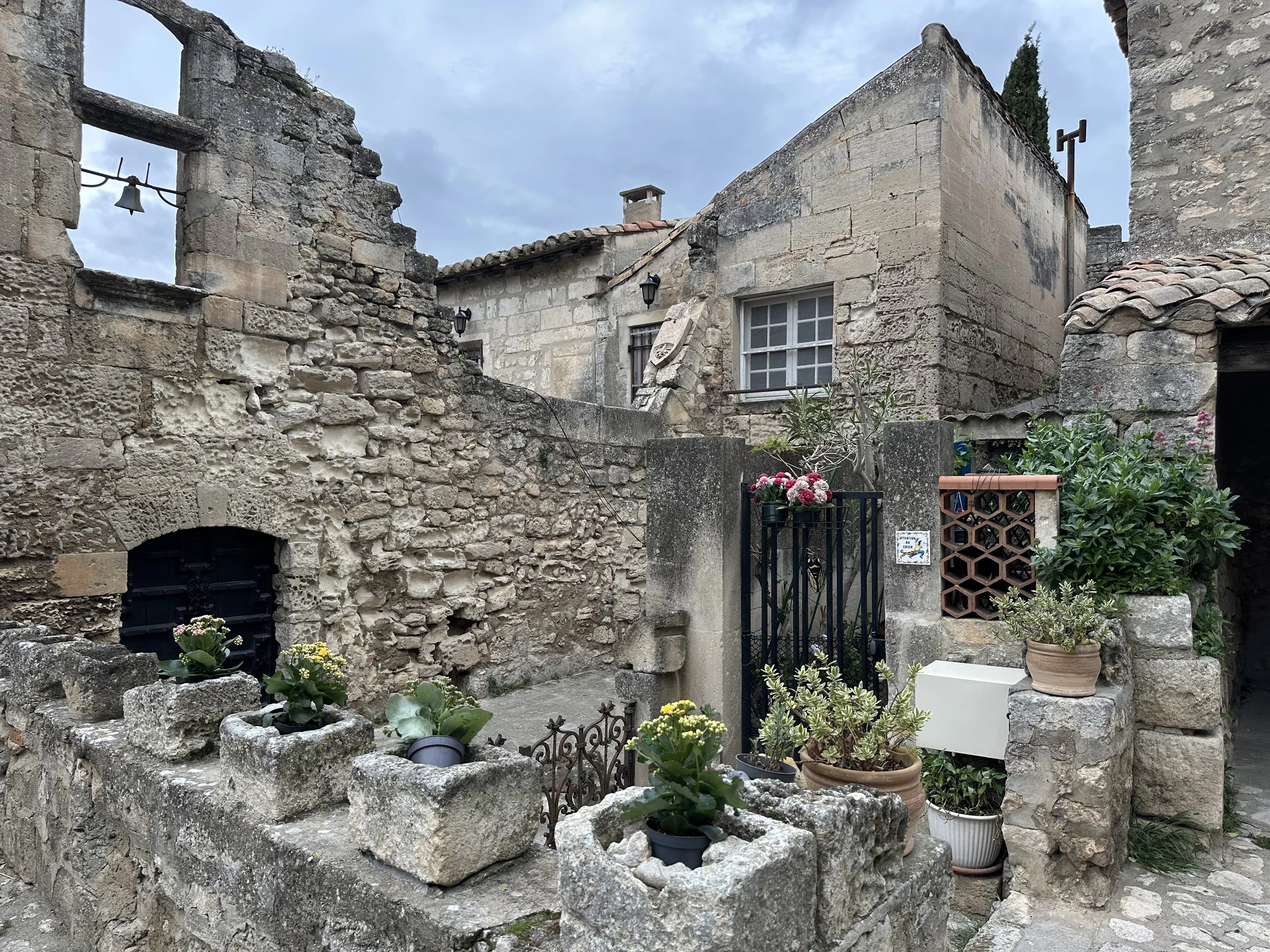
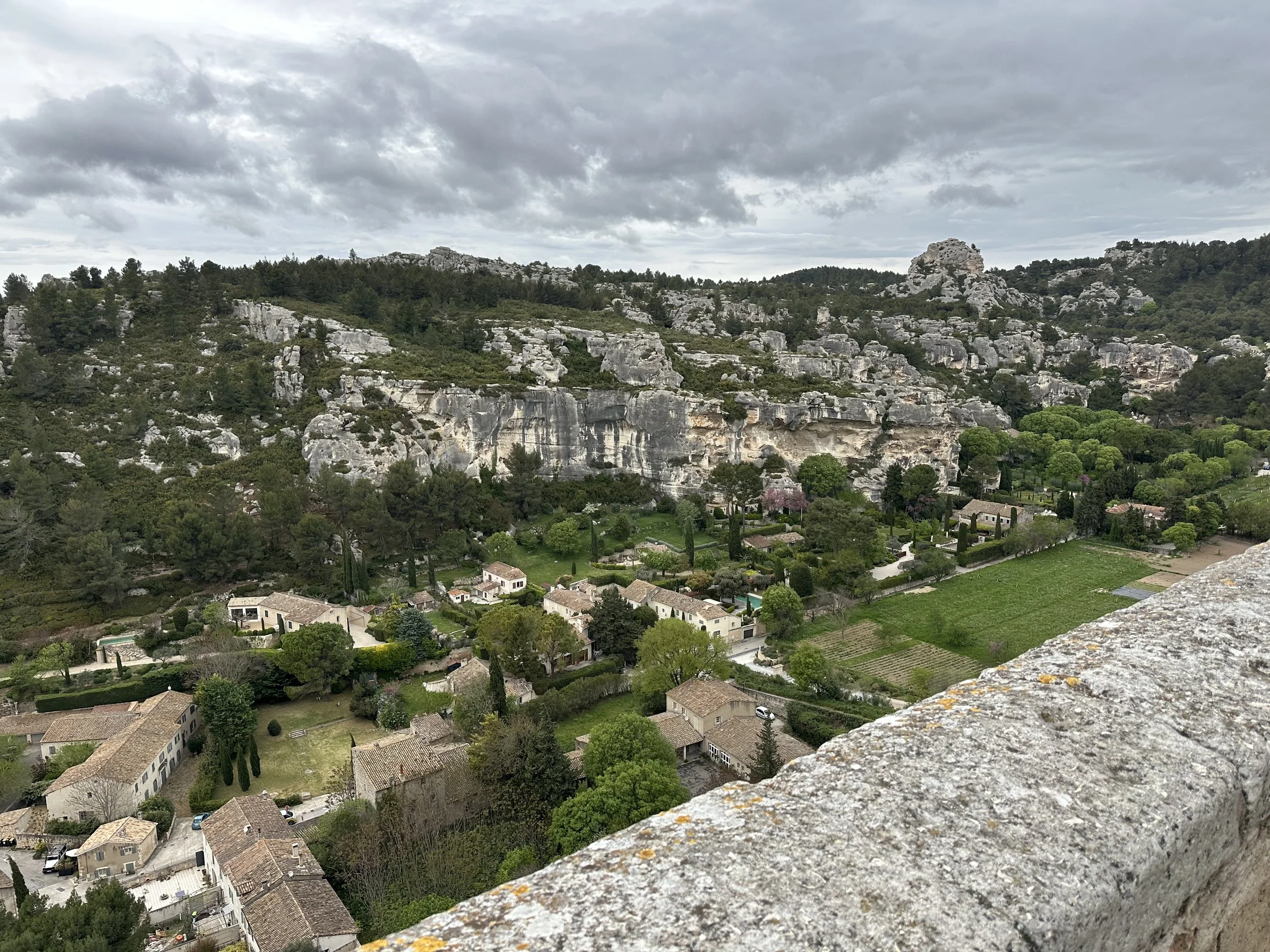
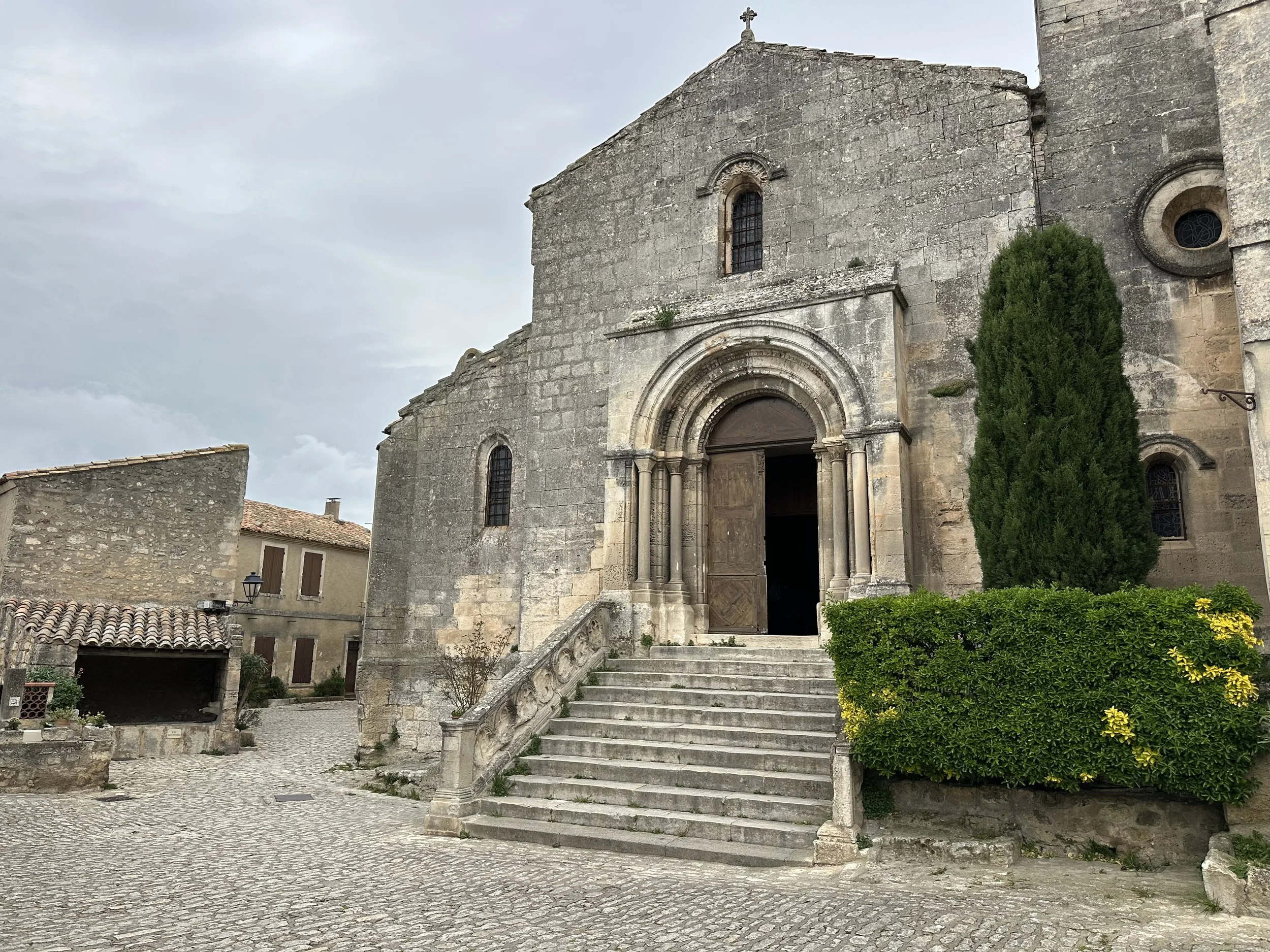
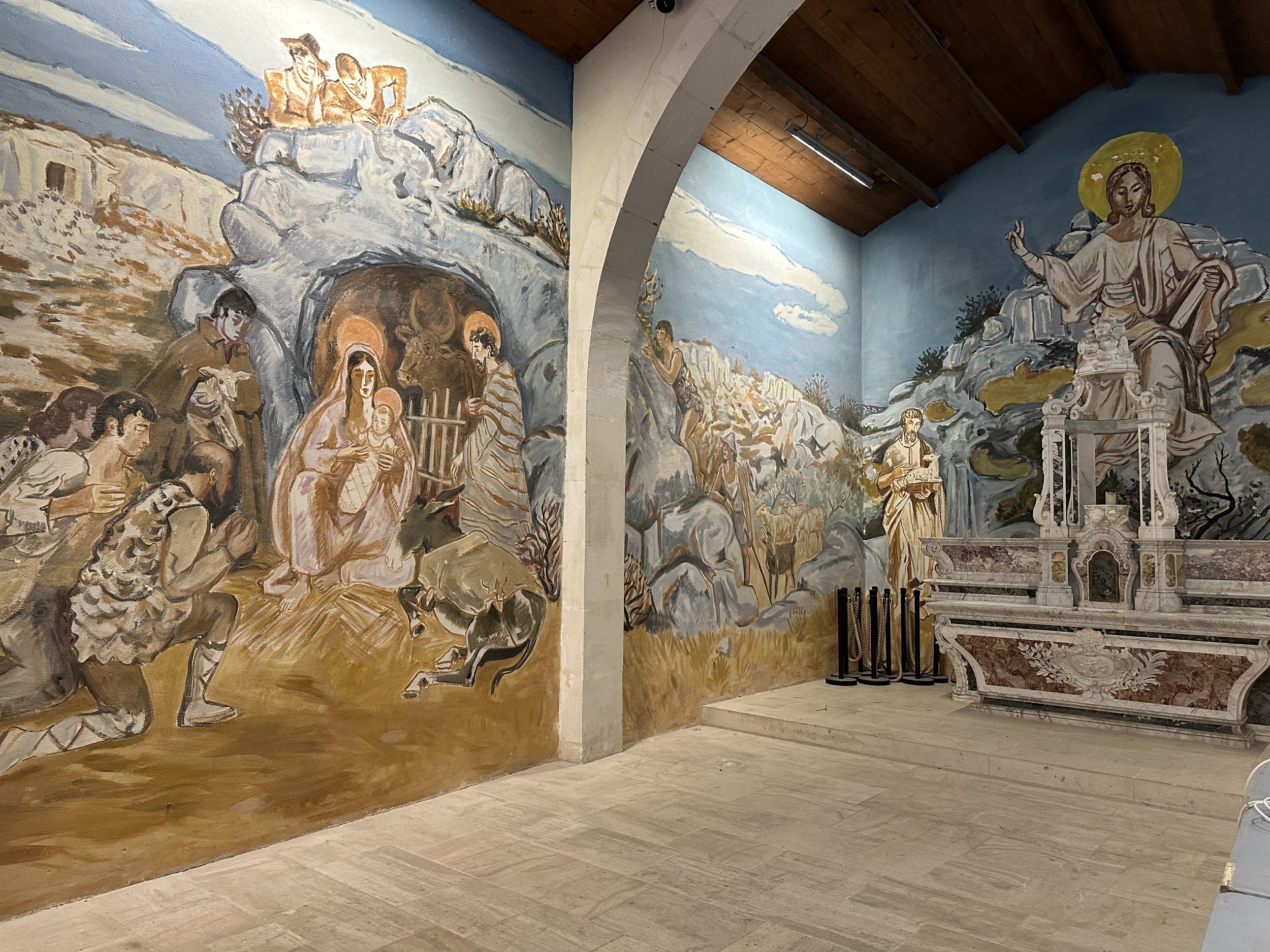
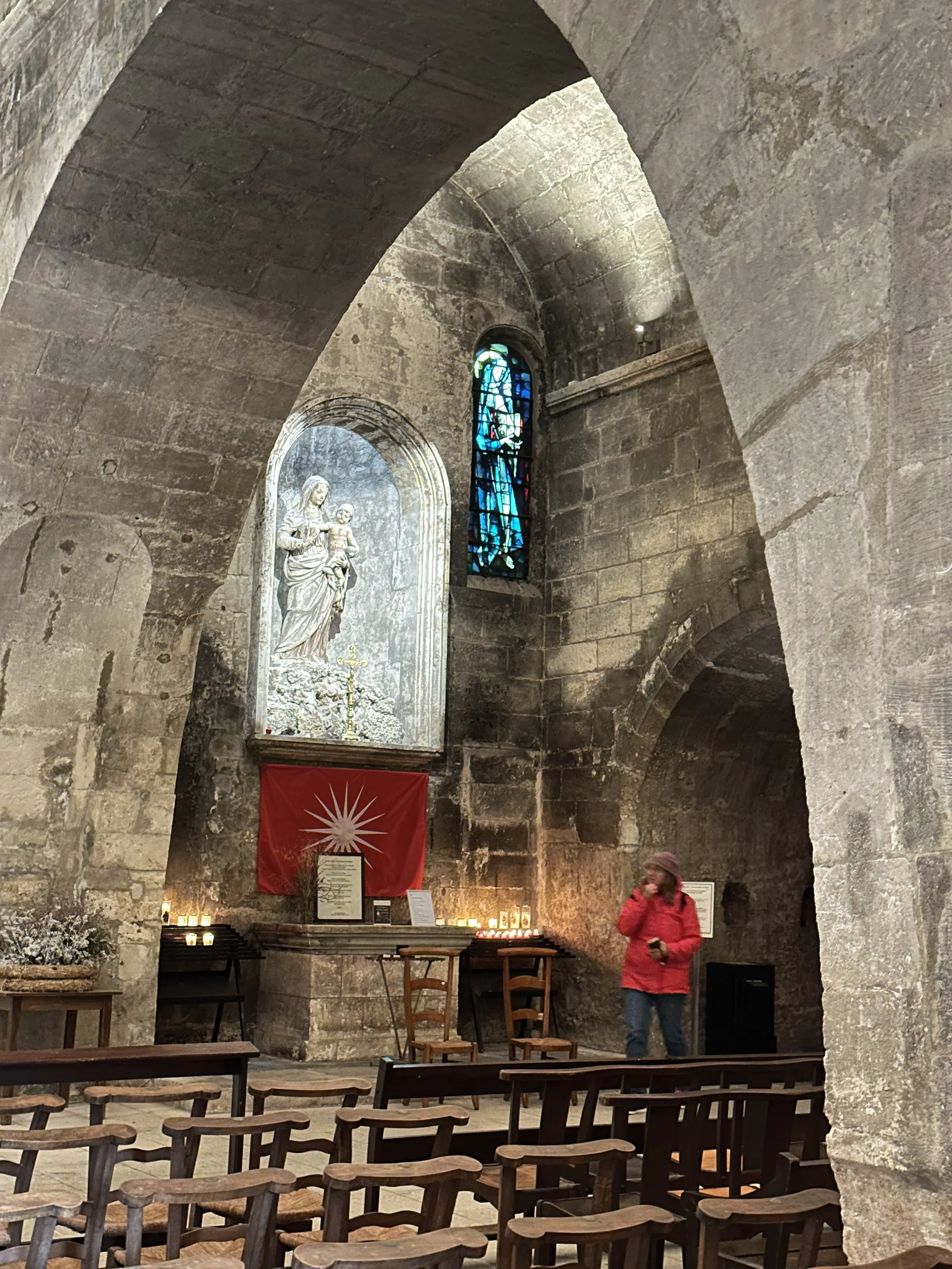
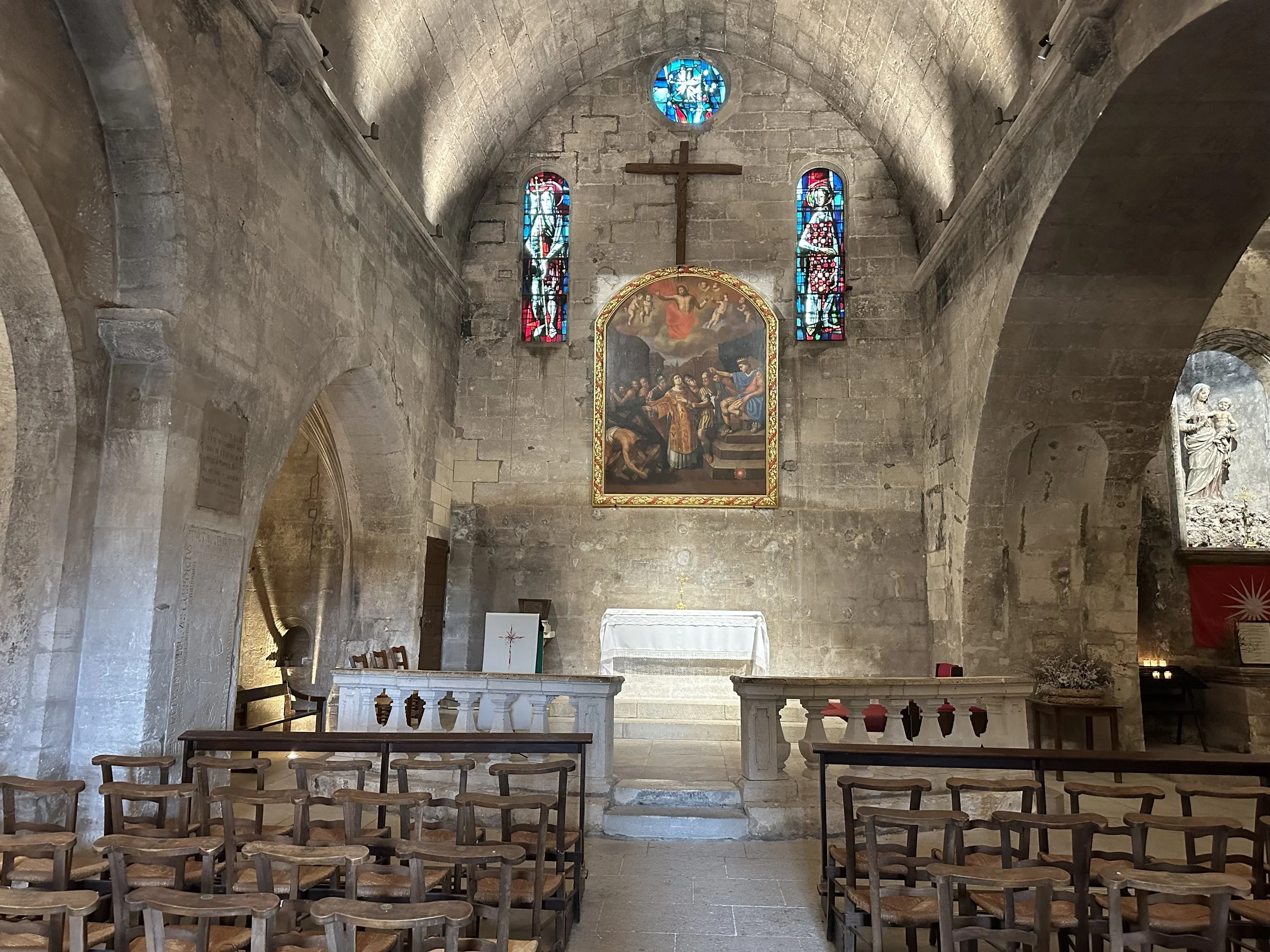
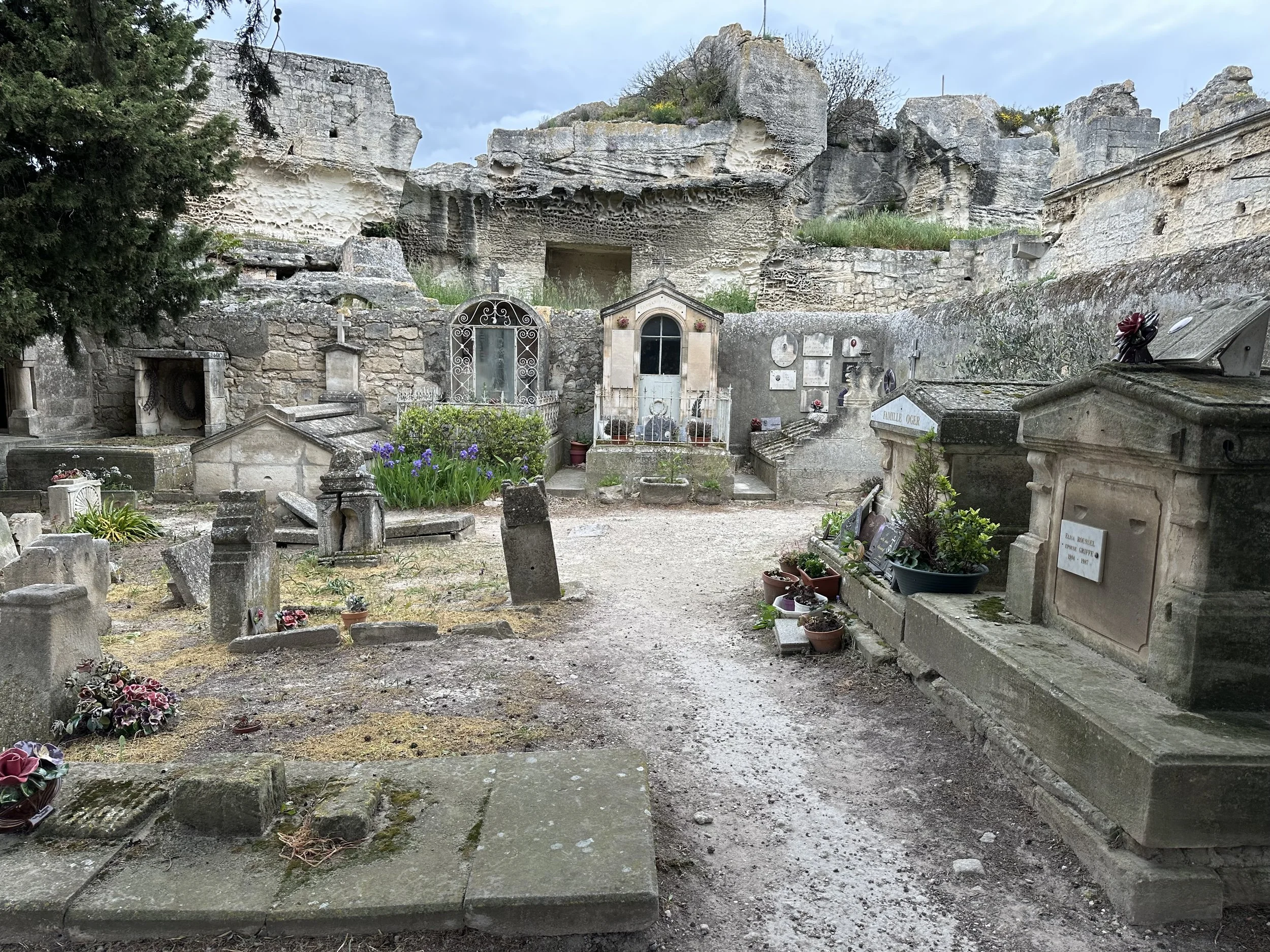
The pièce de résistance was a visit to a mountain village, Les Baux de Provence, where the wind blew with even greater intensity. And every single dwelling was used by a tourist shop or restaurant. The town has 16 full-time residents. None of them work in the shops. Nice views and pretty buildings but the only reason for doing it is to lay claim to having survived. I told Chris, our tour director, “I hardly ever say this, but I can’t wait to visit a souvenir shop.”
So that’s it. An early end to our trip but a trip we’ve enjoyed very much. Next up: Griffin in Italy, beginning the last week of June. Hopefully all three of us can stay healthy for that one!