Day 14 – April 12, 2026 – Avignon
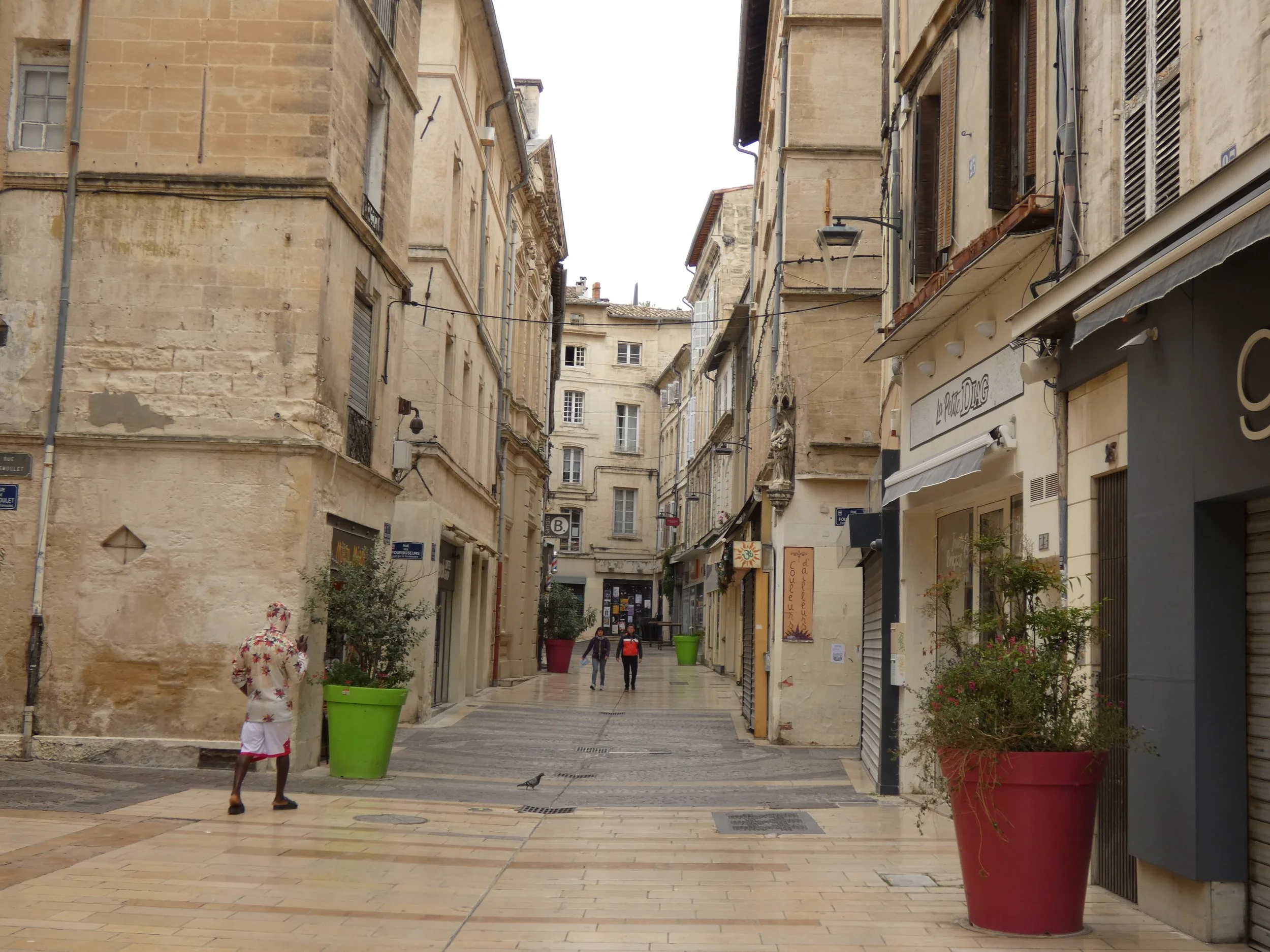
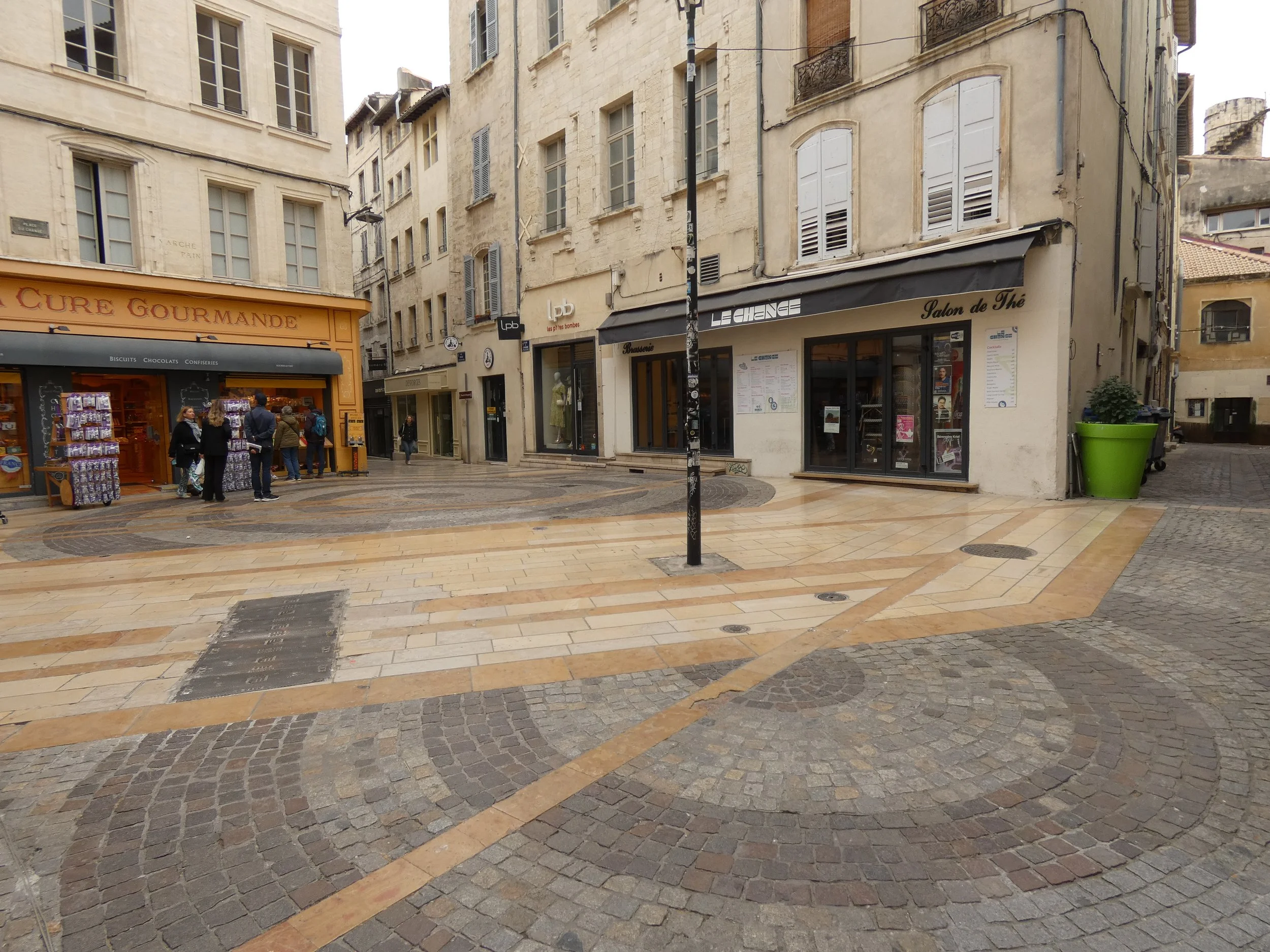
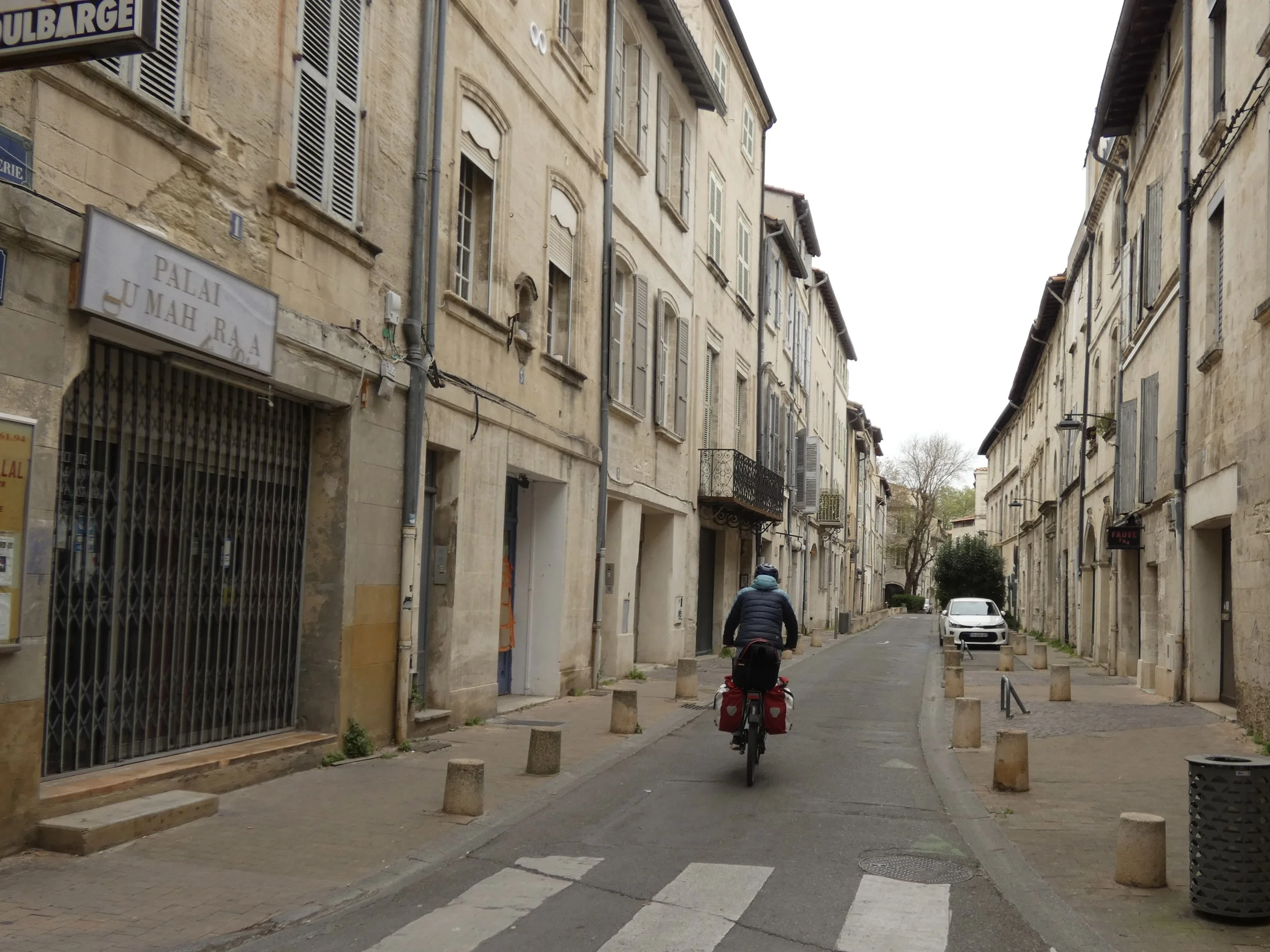
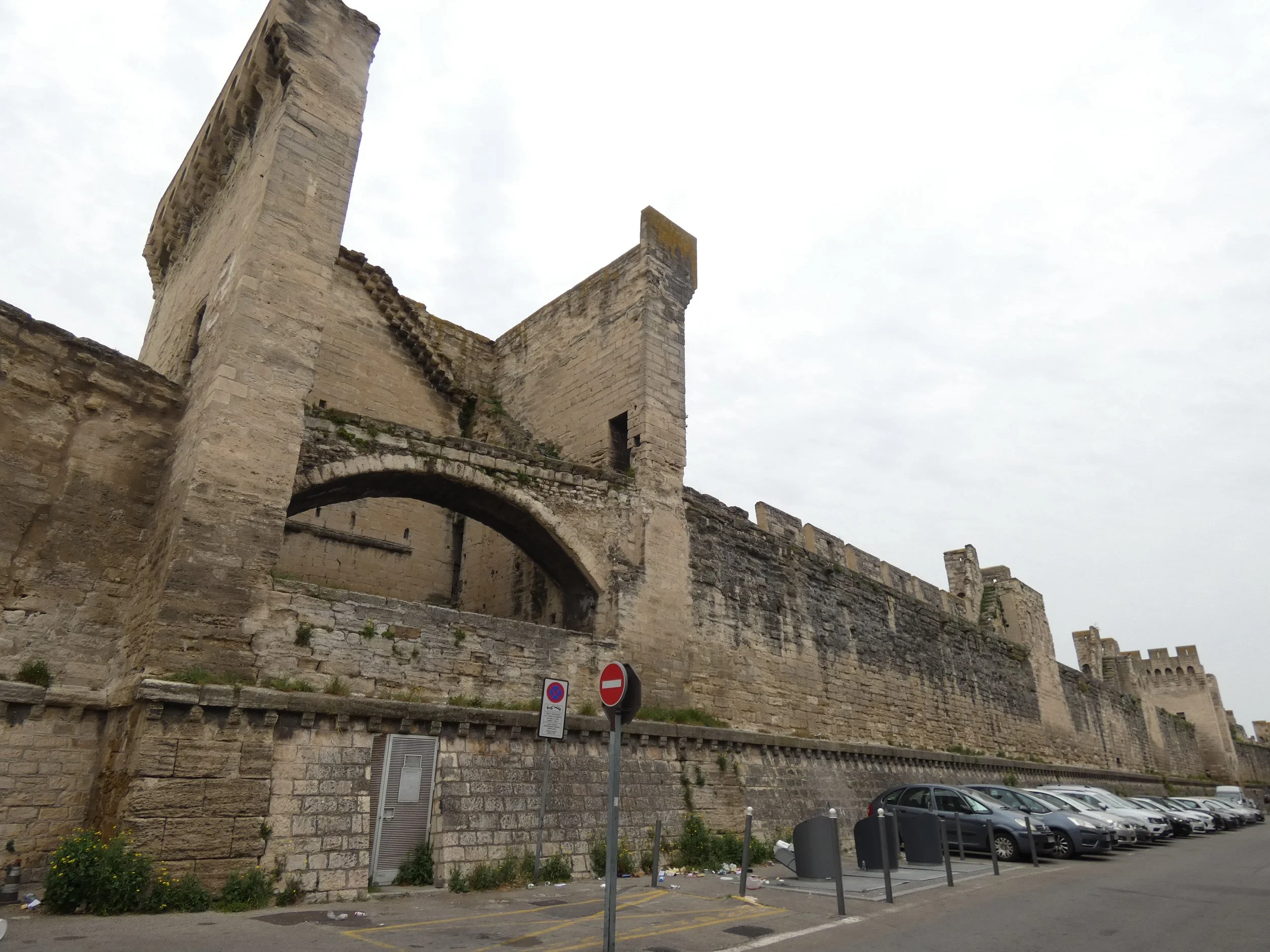
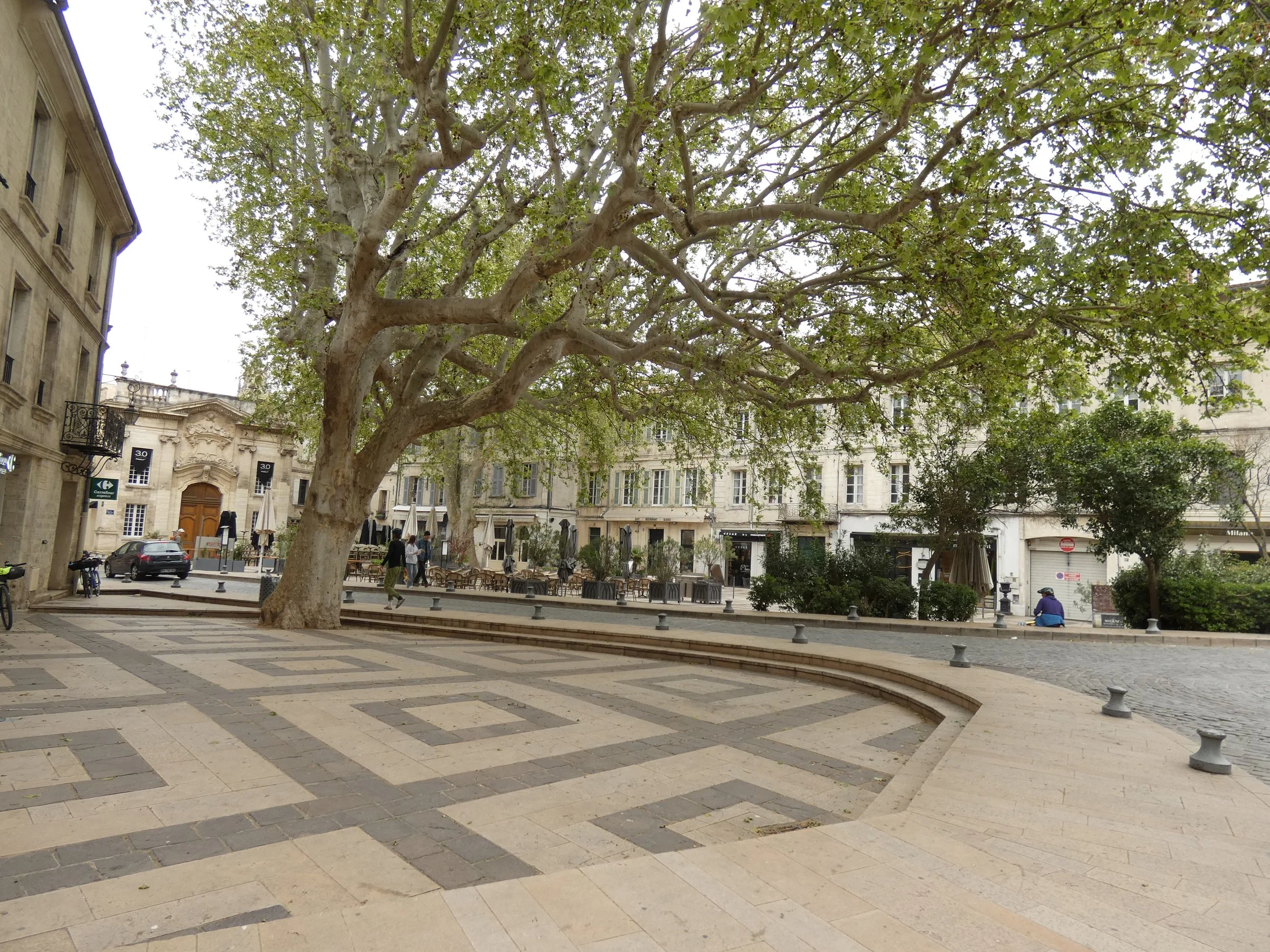
Maybe its because we’ve seen too many palaces and cathedrals in the past two weeks, or maybe it’s because I came with unrealistic expectations, but somehow I was disappointed in Avignon.
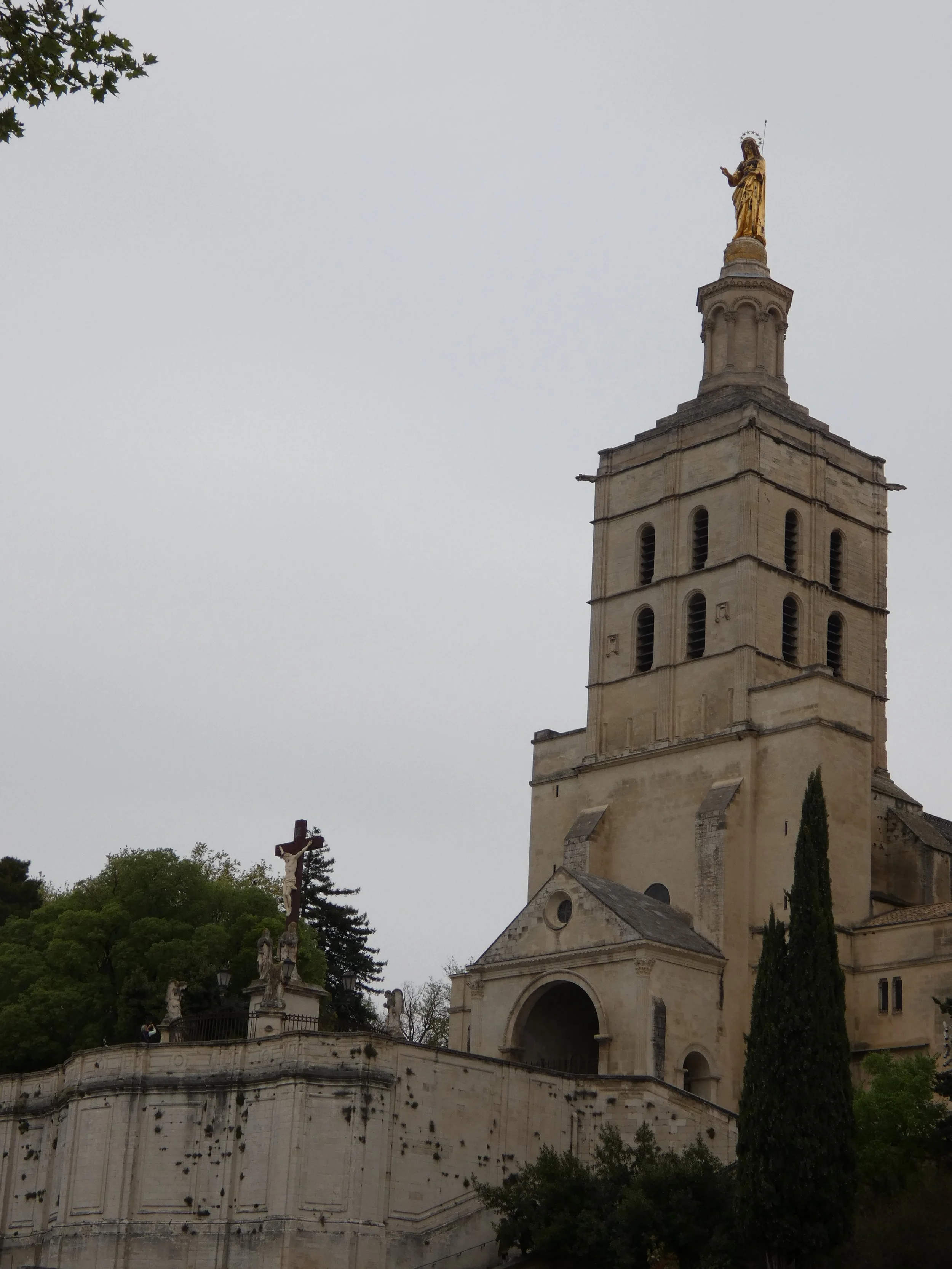
My interest was Avignon’s importance historically – the Avignon Papacy, during which seven popes had Avignon as their headquarters from 1309 through 1376. It’s a long story, but basically, the King of France, Philip IX if you’re keeping score at home, wanted control of the Roman Catholic Church. He eventually pressured the Council of Cardinals to elect a Frenchman to be Pope – Clemens V. Clemens didn’t want to move to Rome – too much political tension between Philip and the Italian branch of the church, too much pasta, terrible traffic. Instead, he moved his papacy to Avignon where he, and the next six French Popes, resided.
The seventh, Pope Gregory XI, moved operations back to Rome in 1367 but schisms developed and two more popes came to Avignon. They were declared illegitimate and that was the end of Avignon as a seat of the Papacy.
Avignon’s history includes the usual suspects: you’ve got your Greeks, Romans, Goths, Franks and, at the time of the Avignon Papacy, the Holy Roman Empire. Avignon and the surrounding region didn’t officially become part of France until the time of the French Revolution.
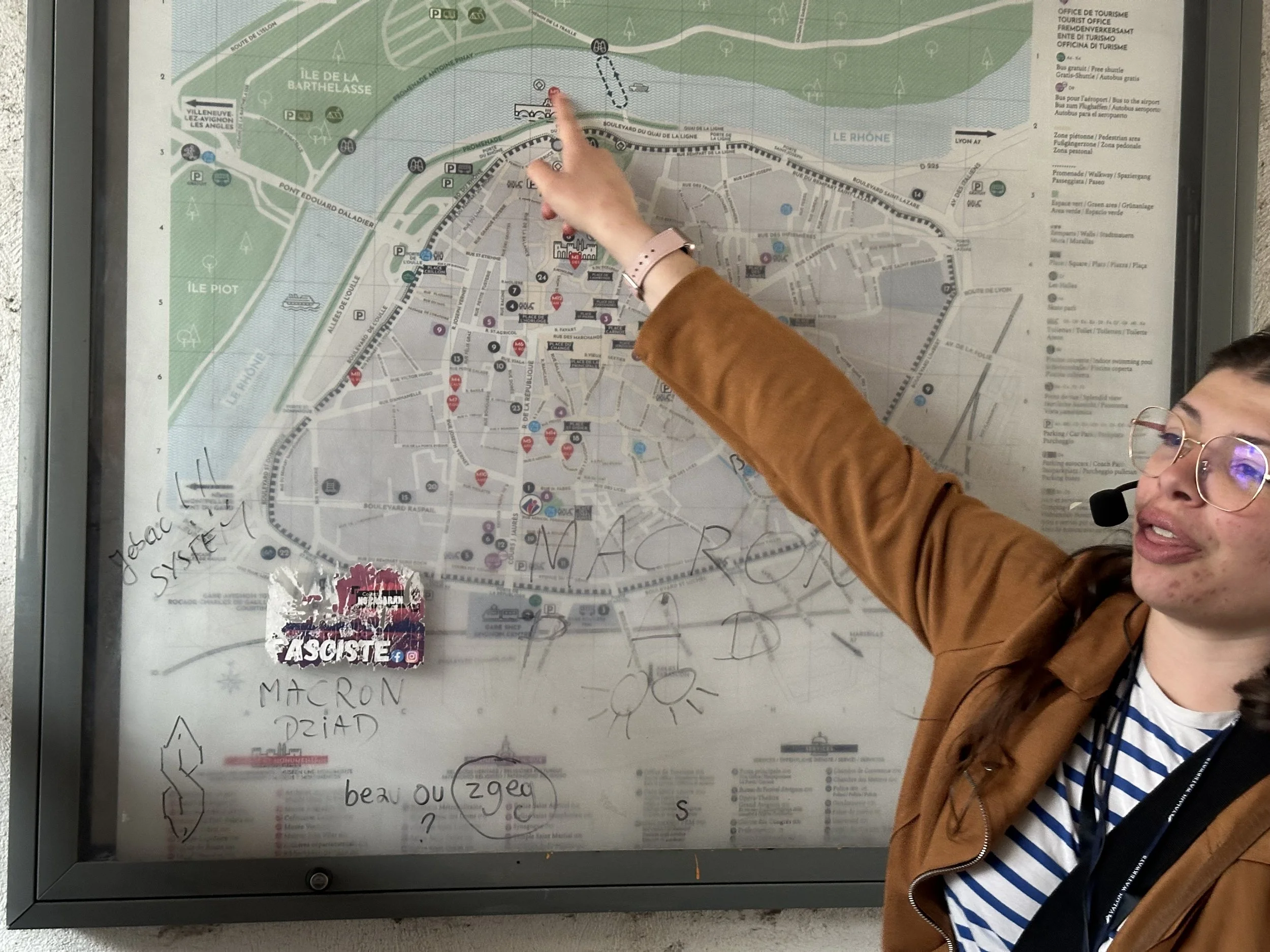
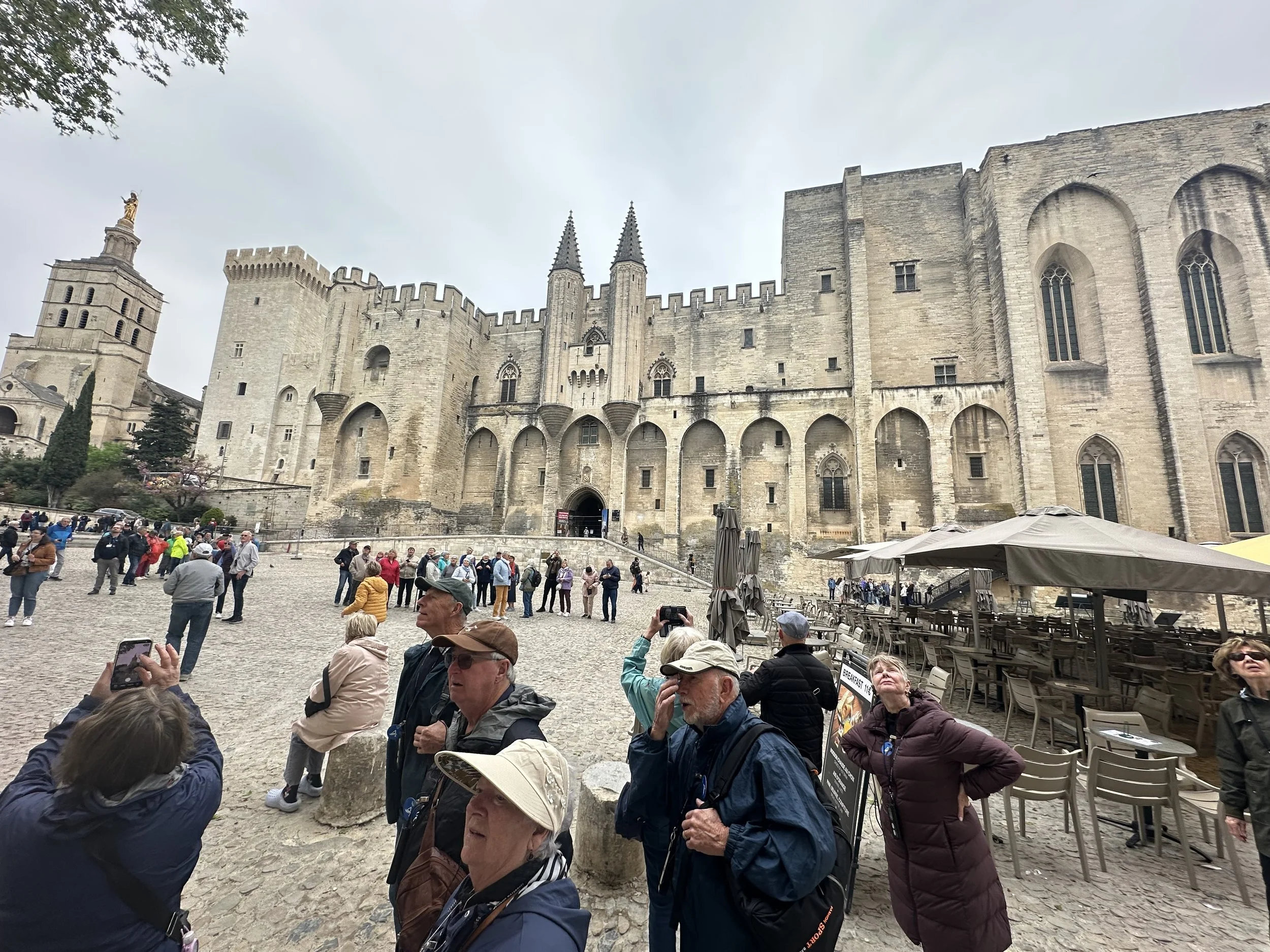
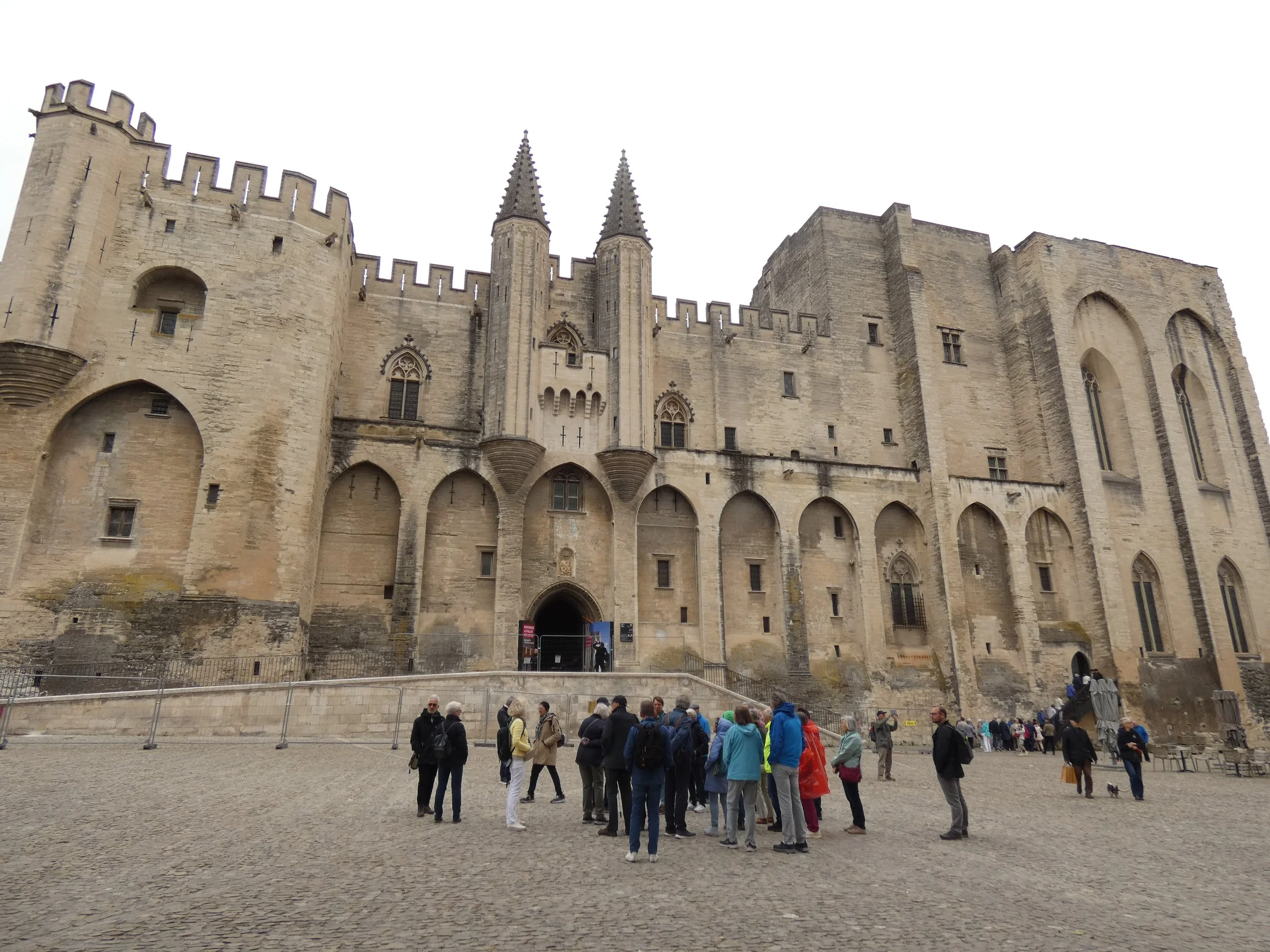
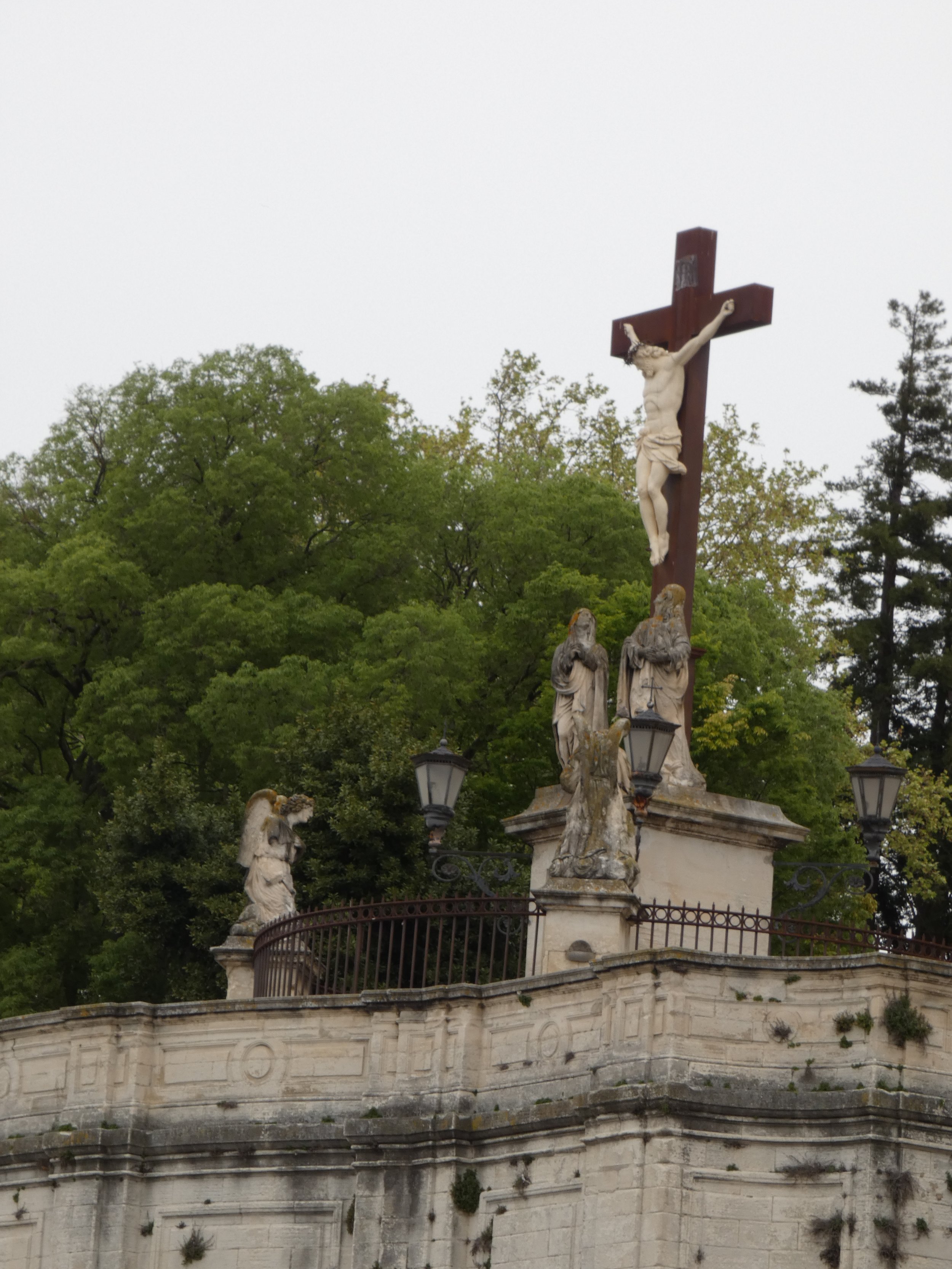
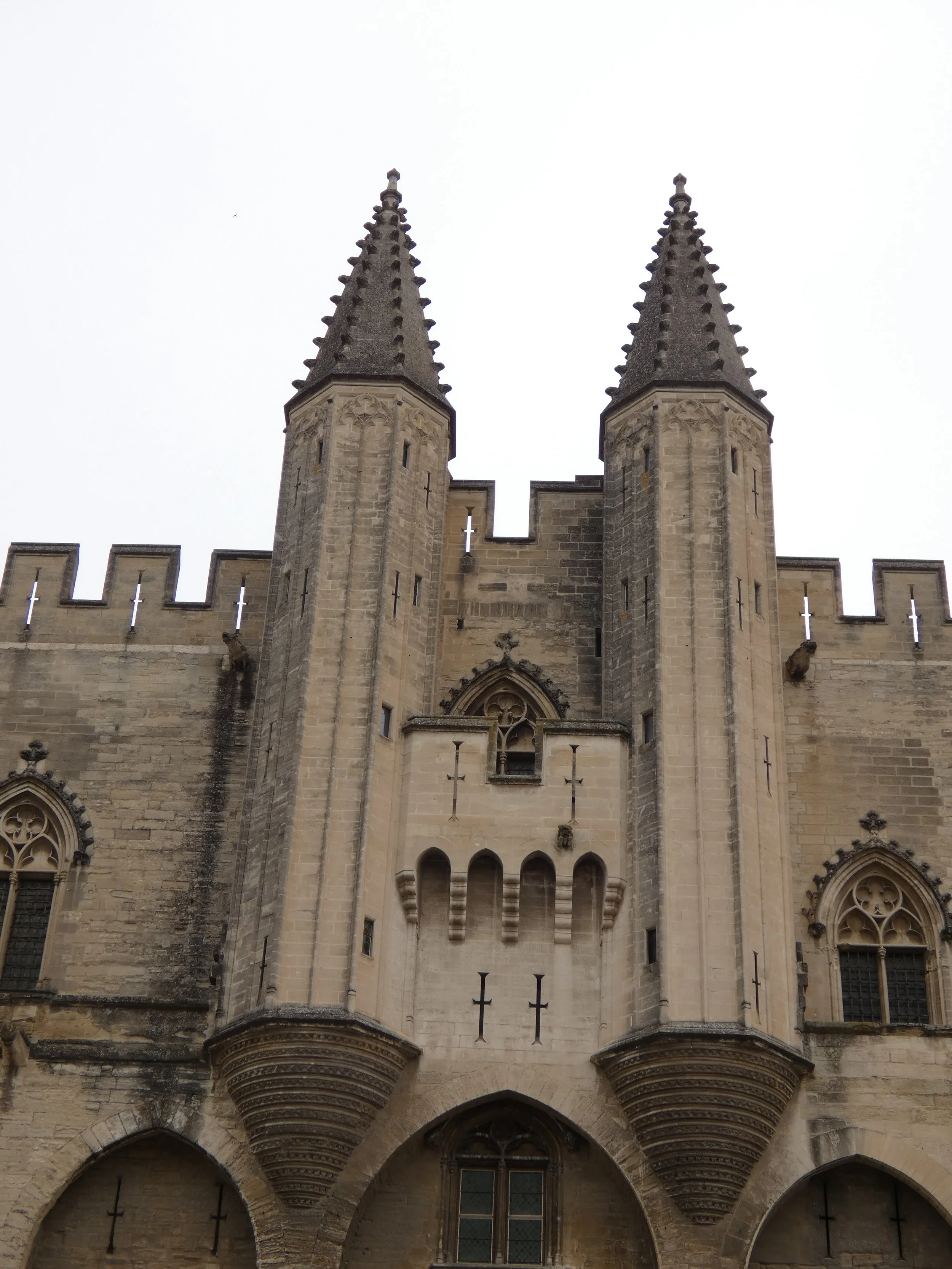
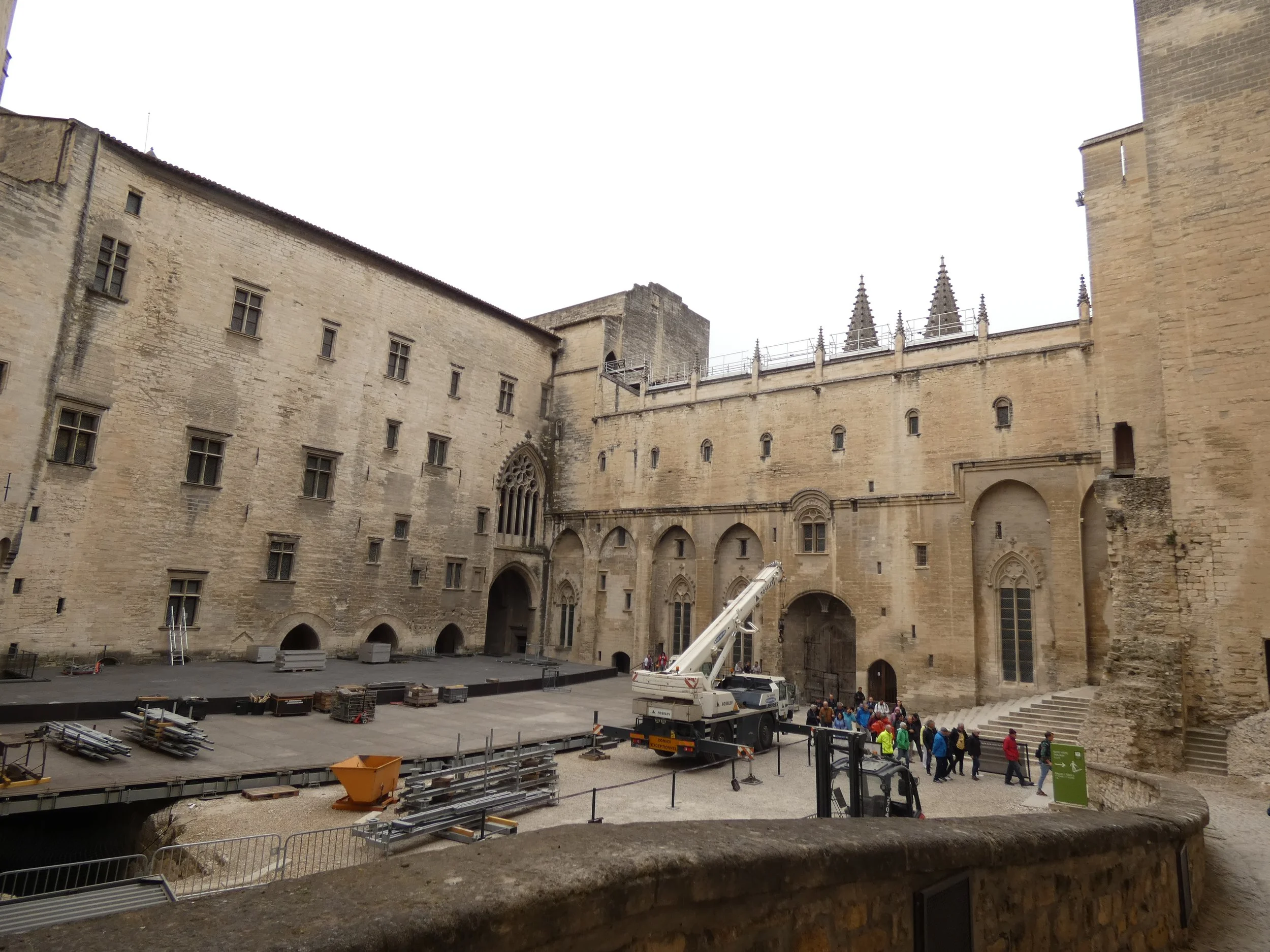
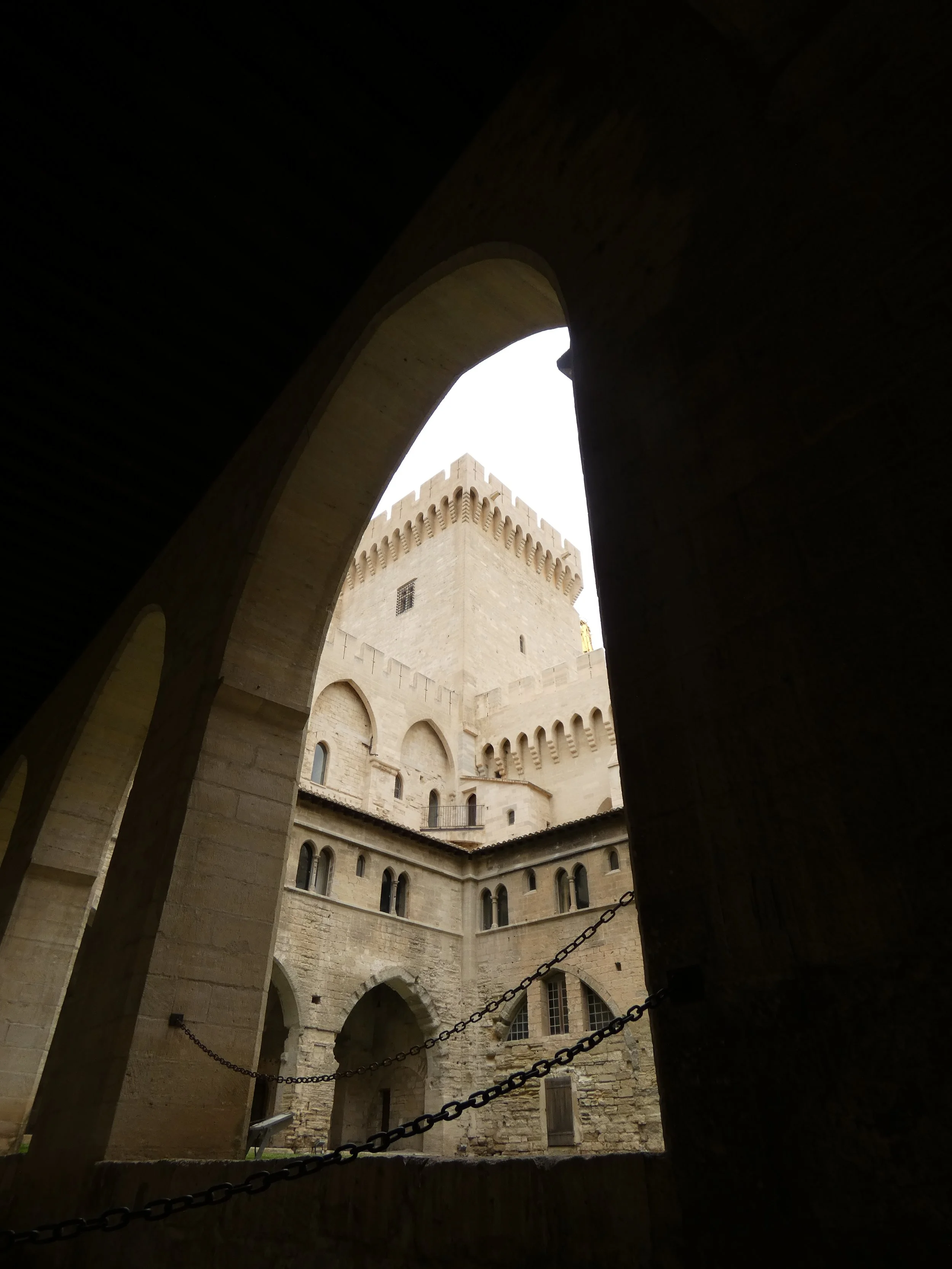
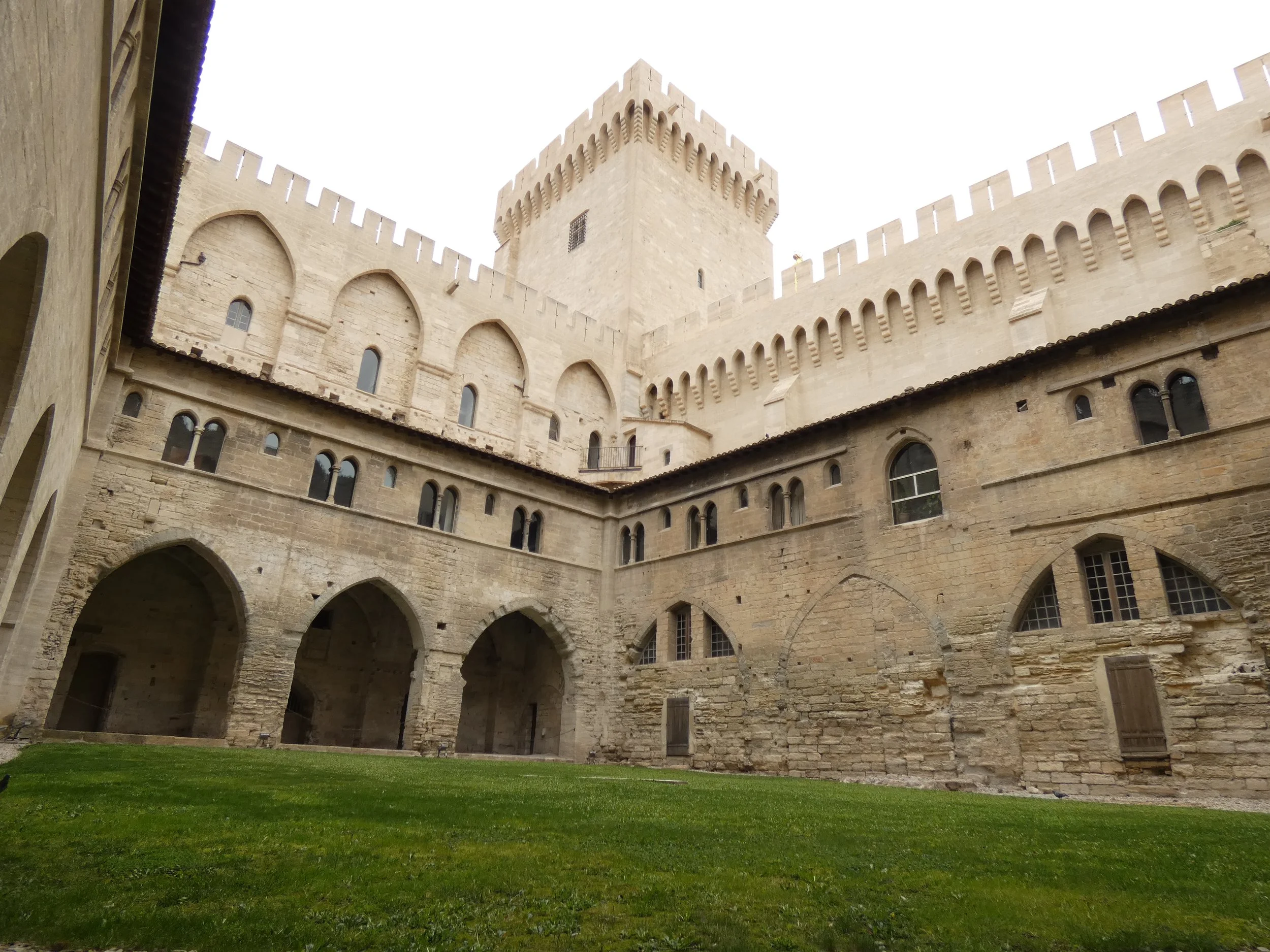
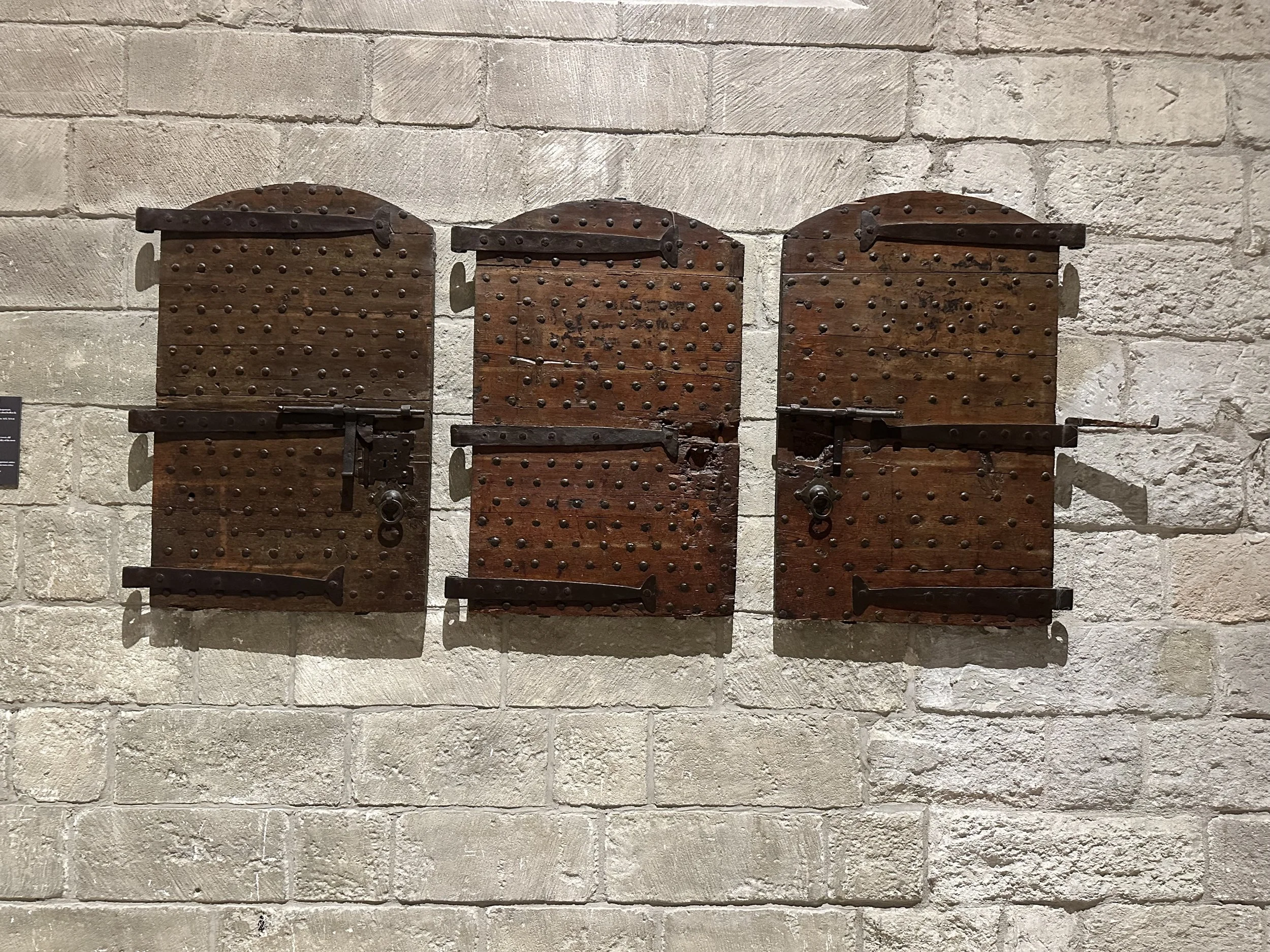
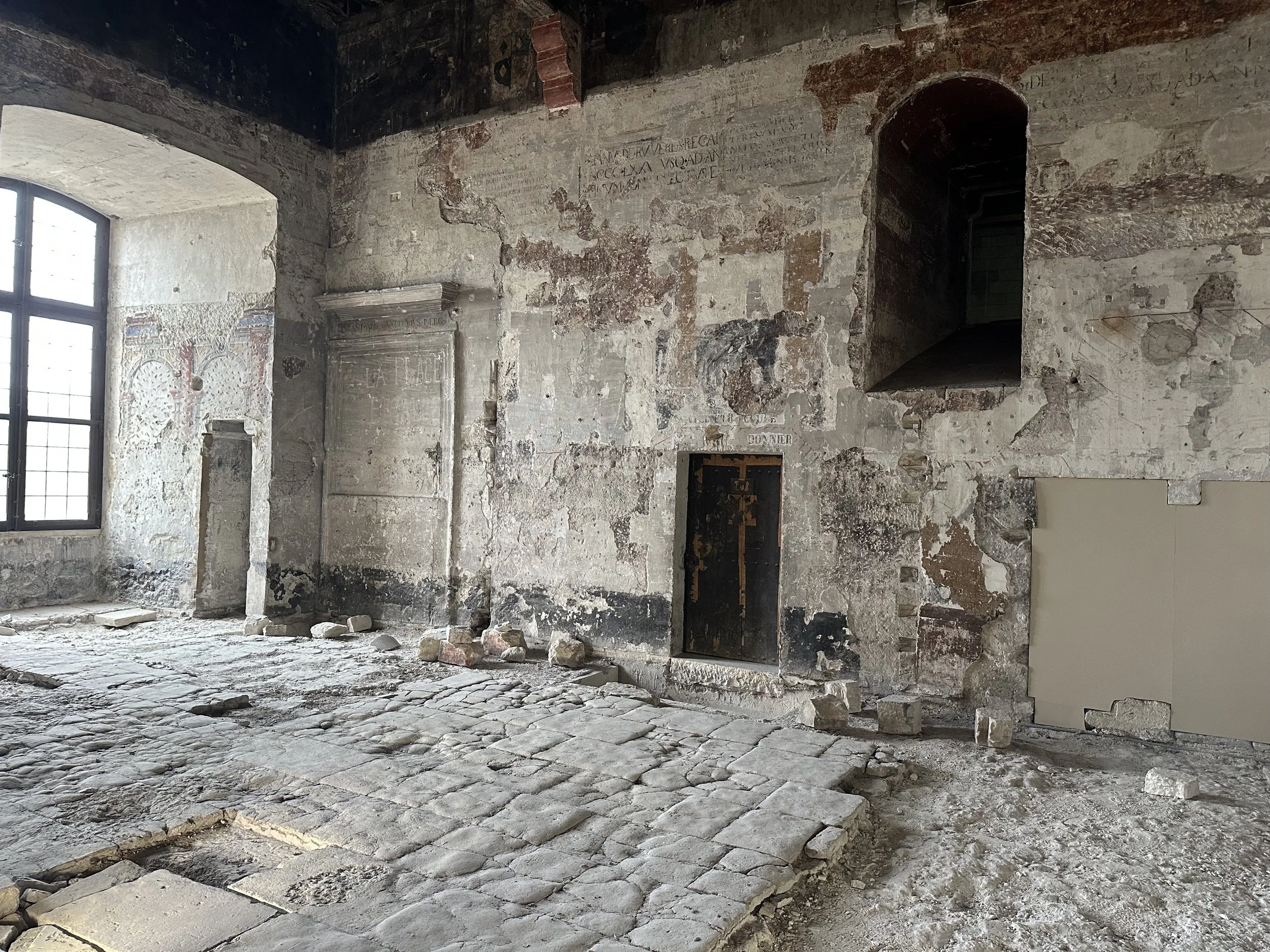
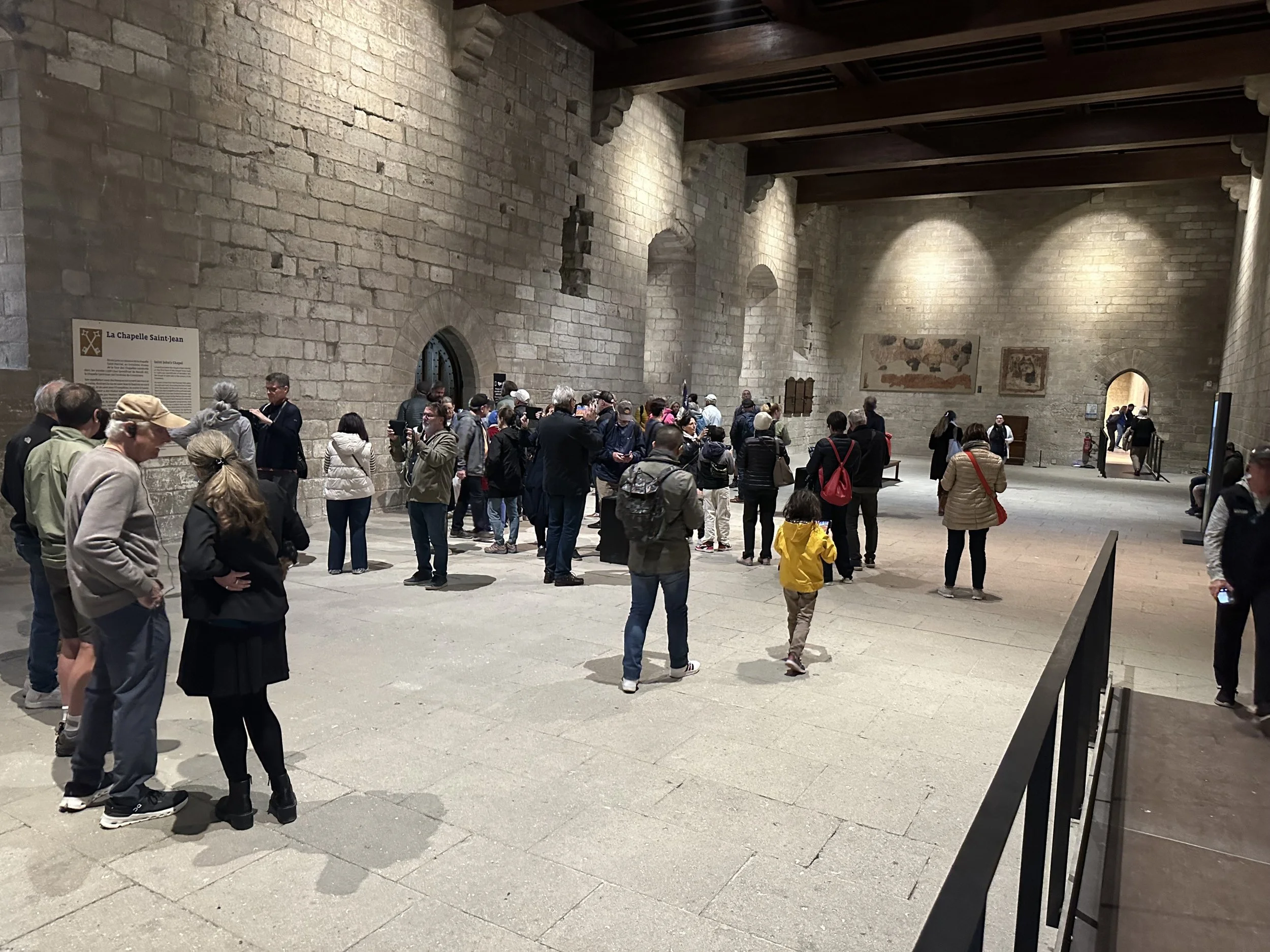
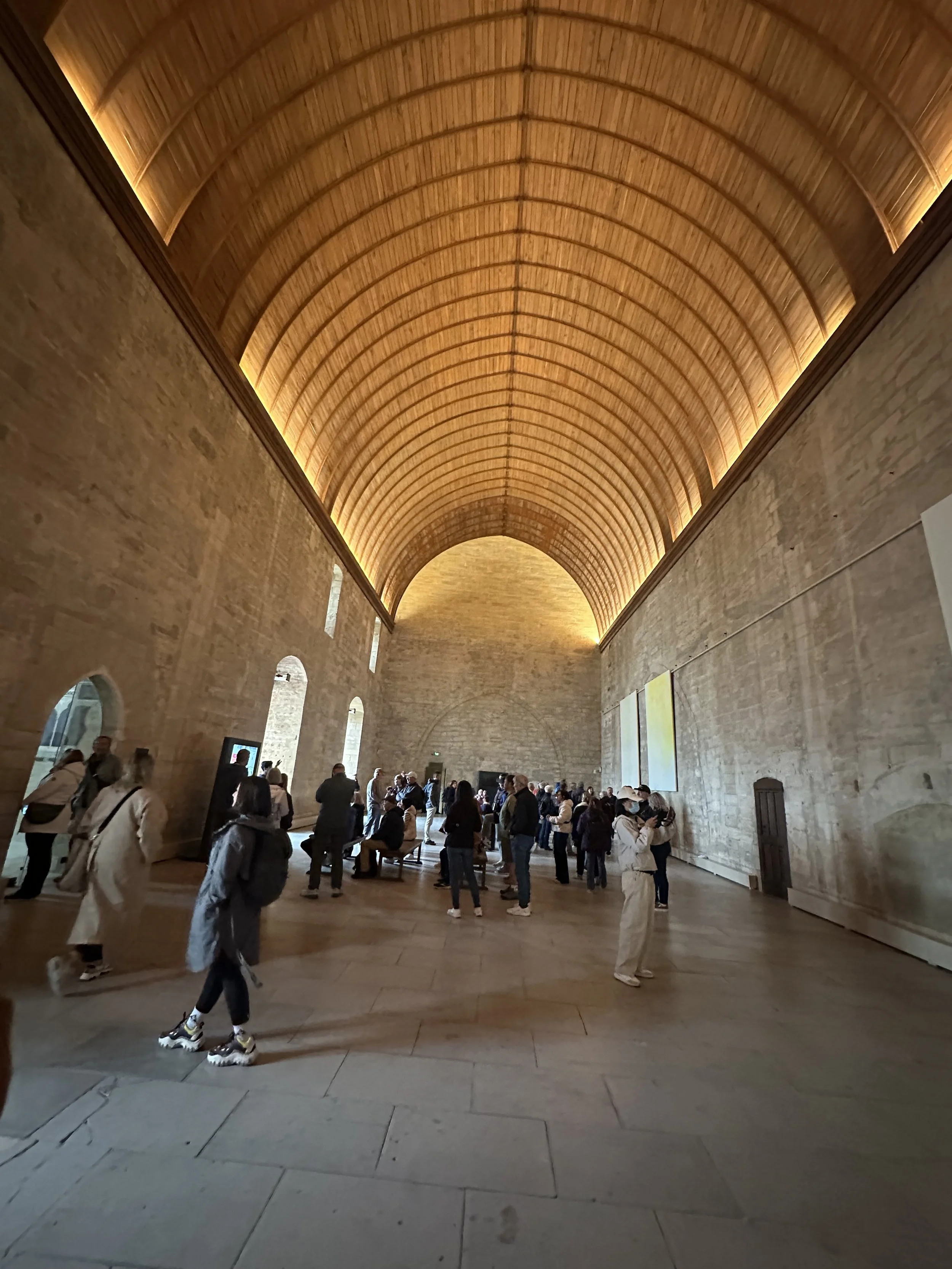
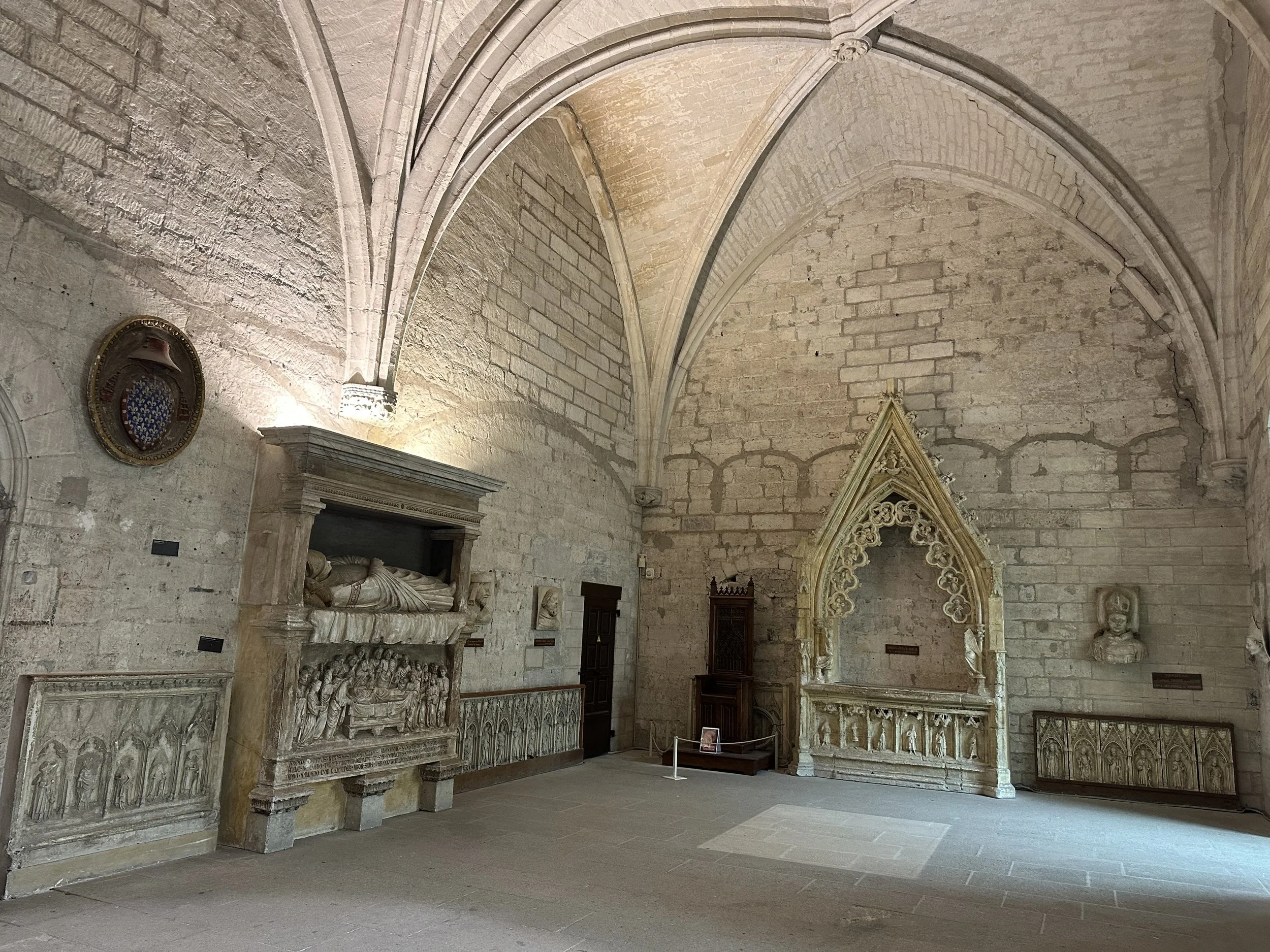
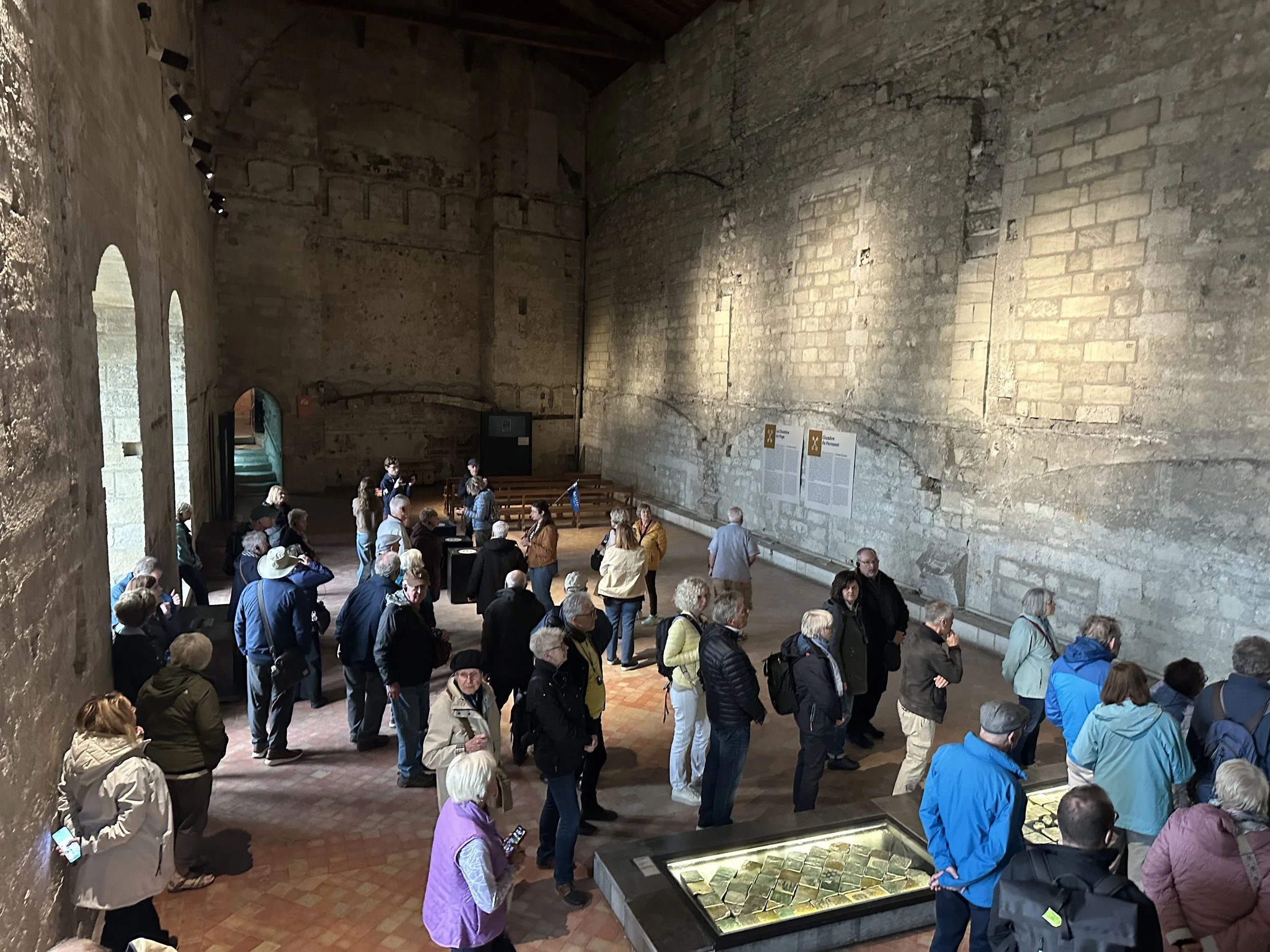
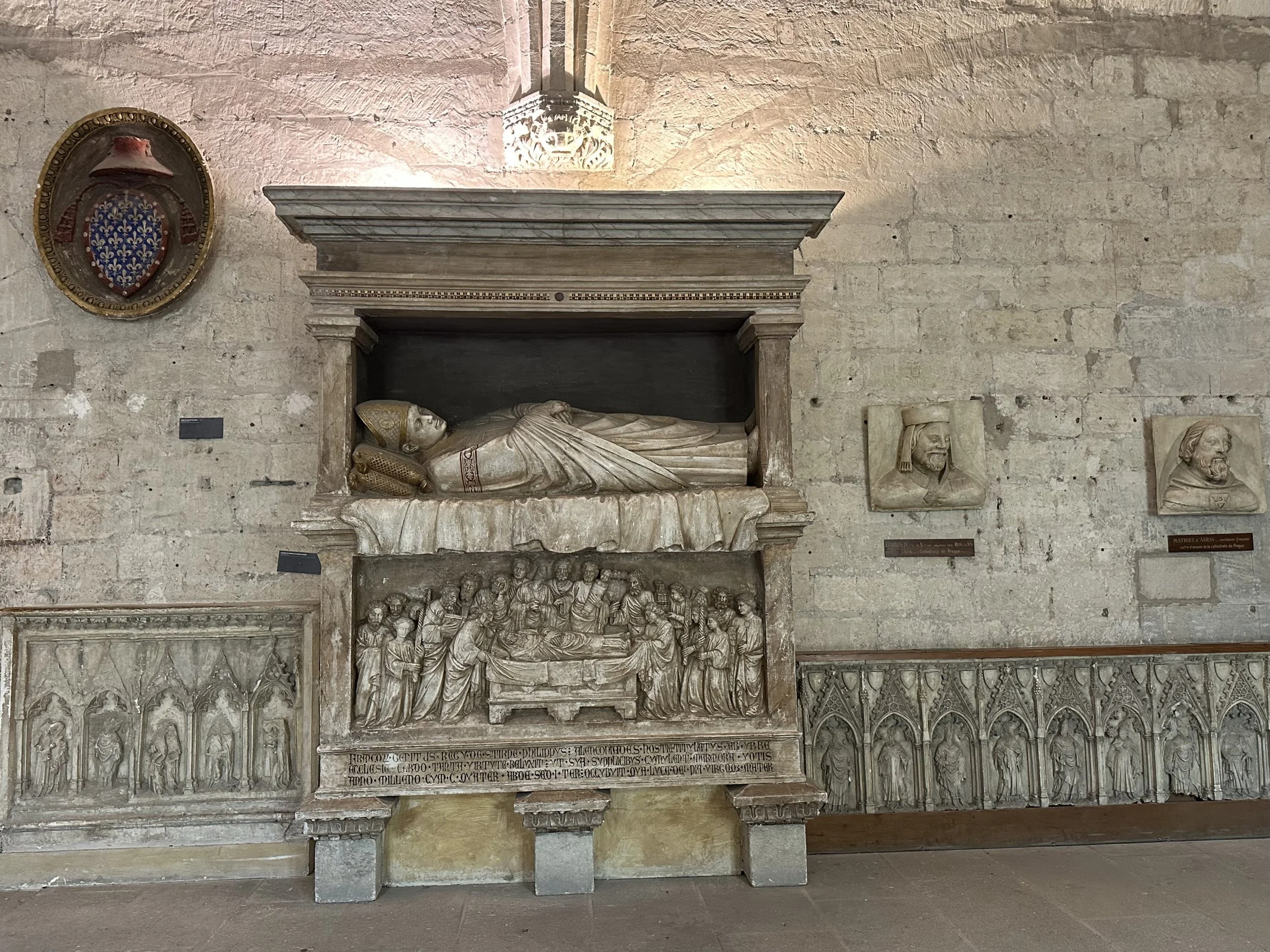
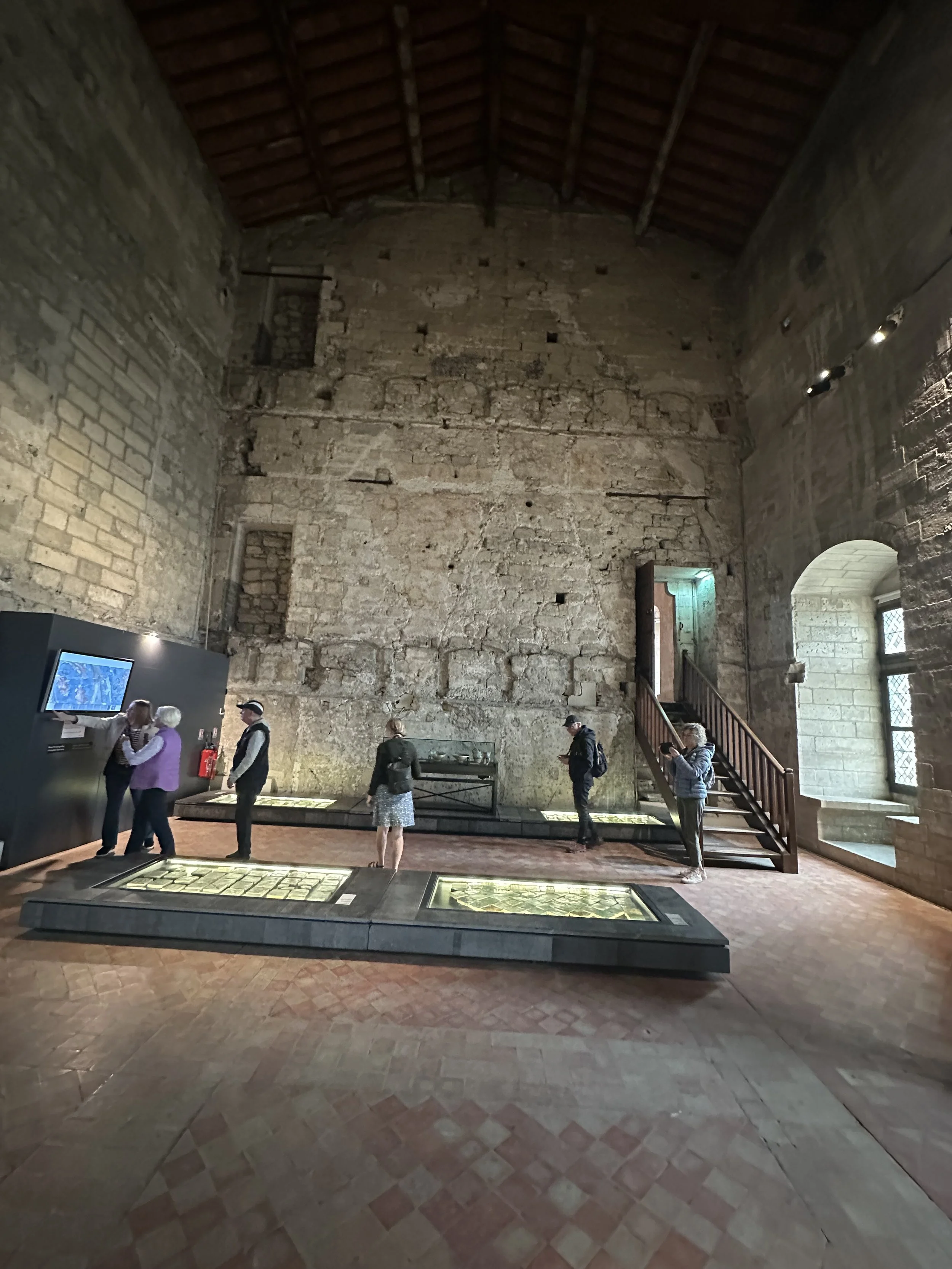
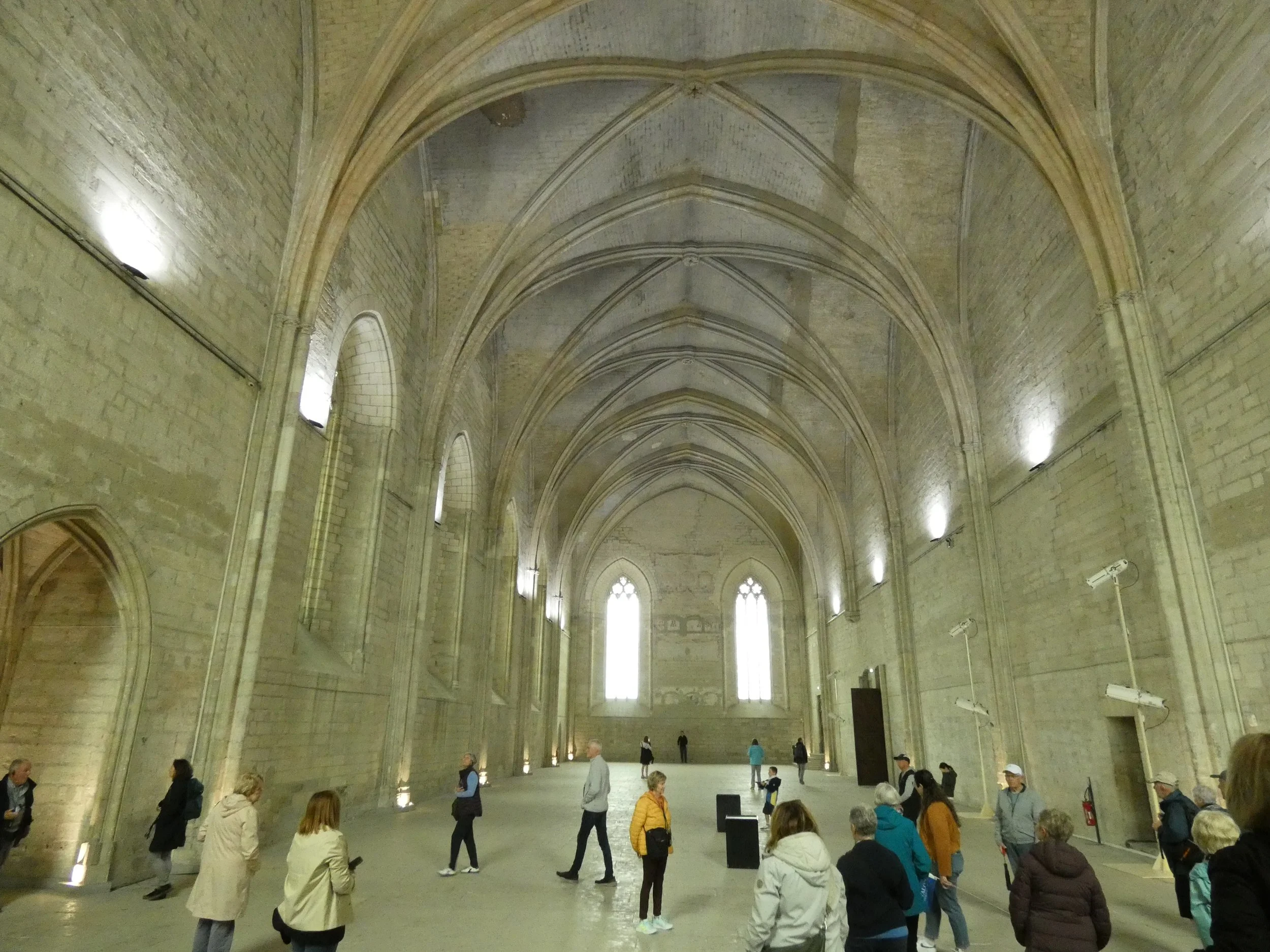
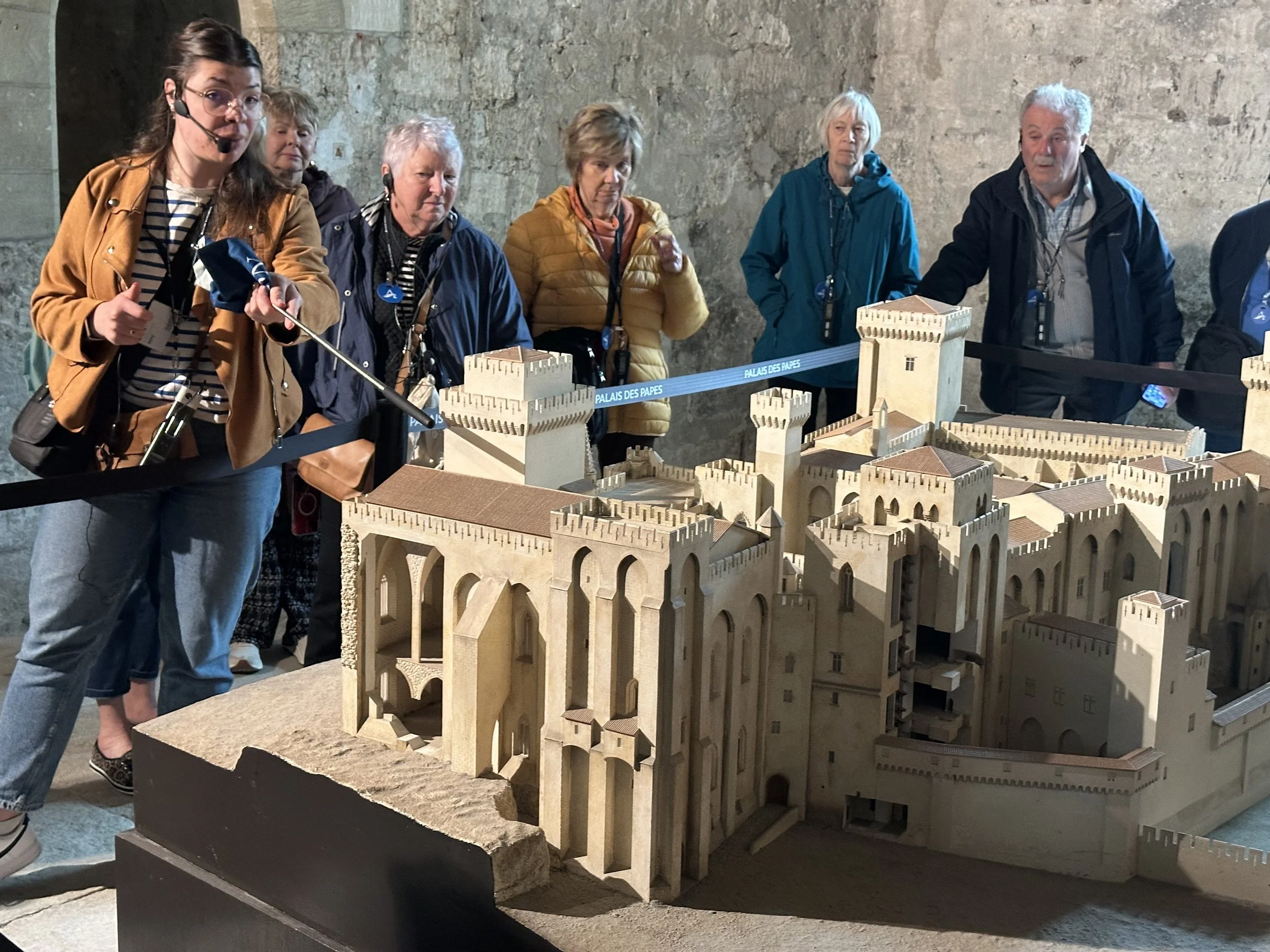
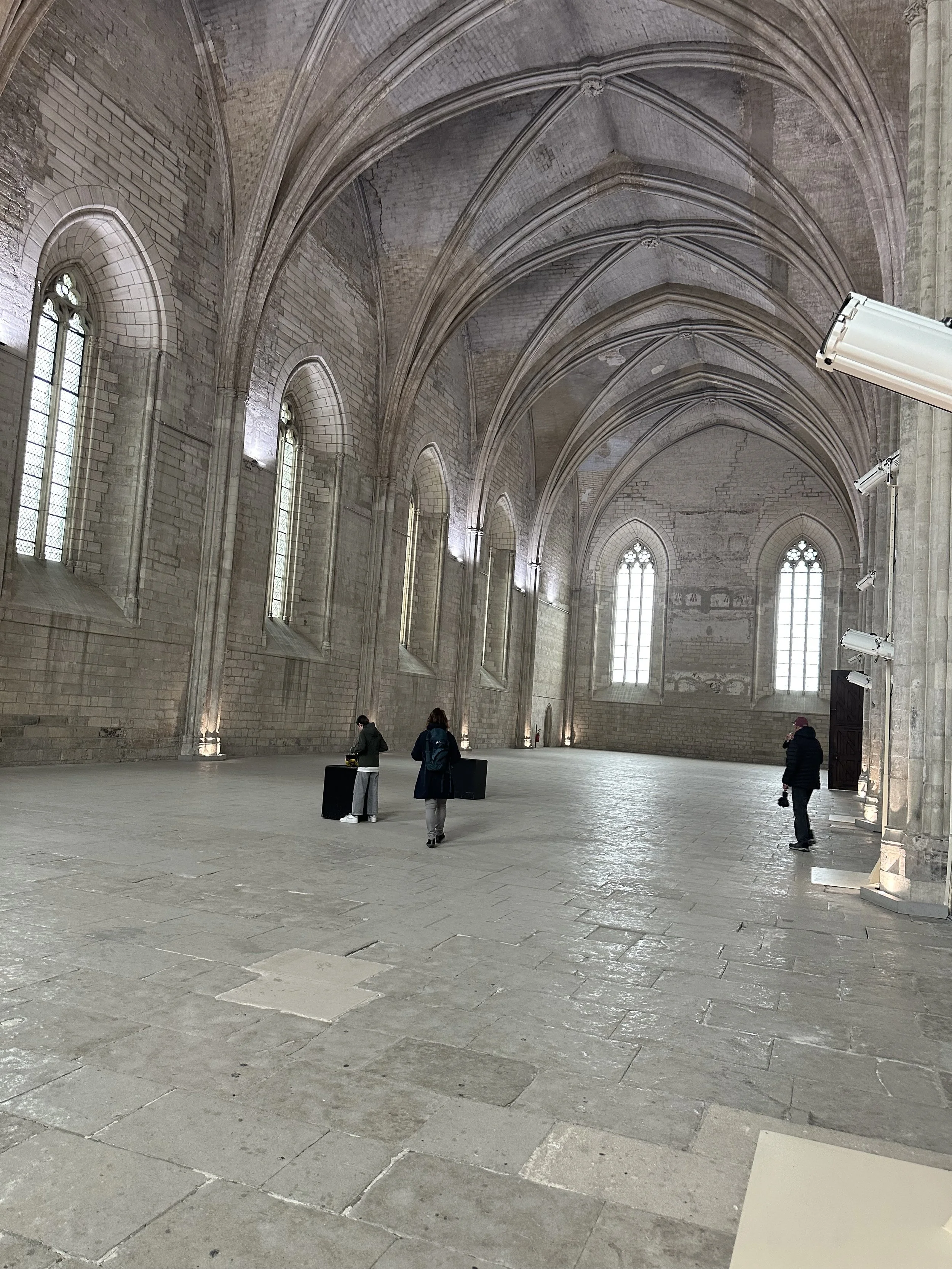
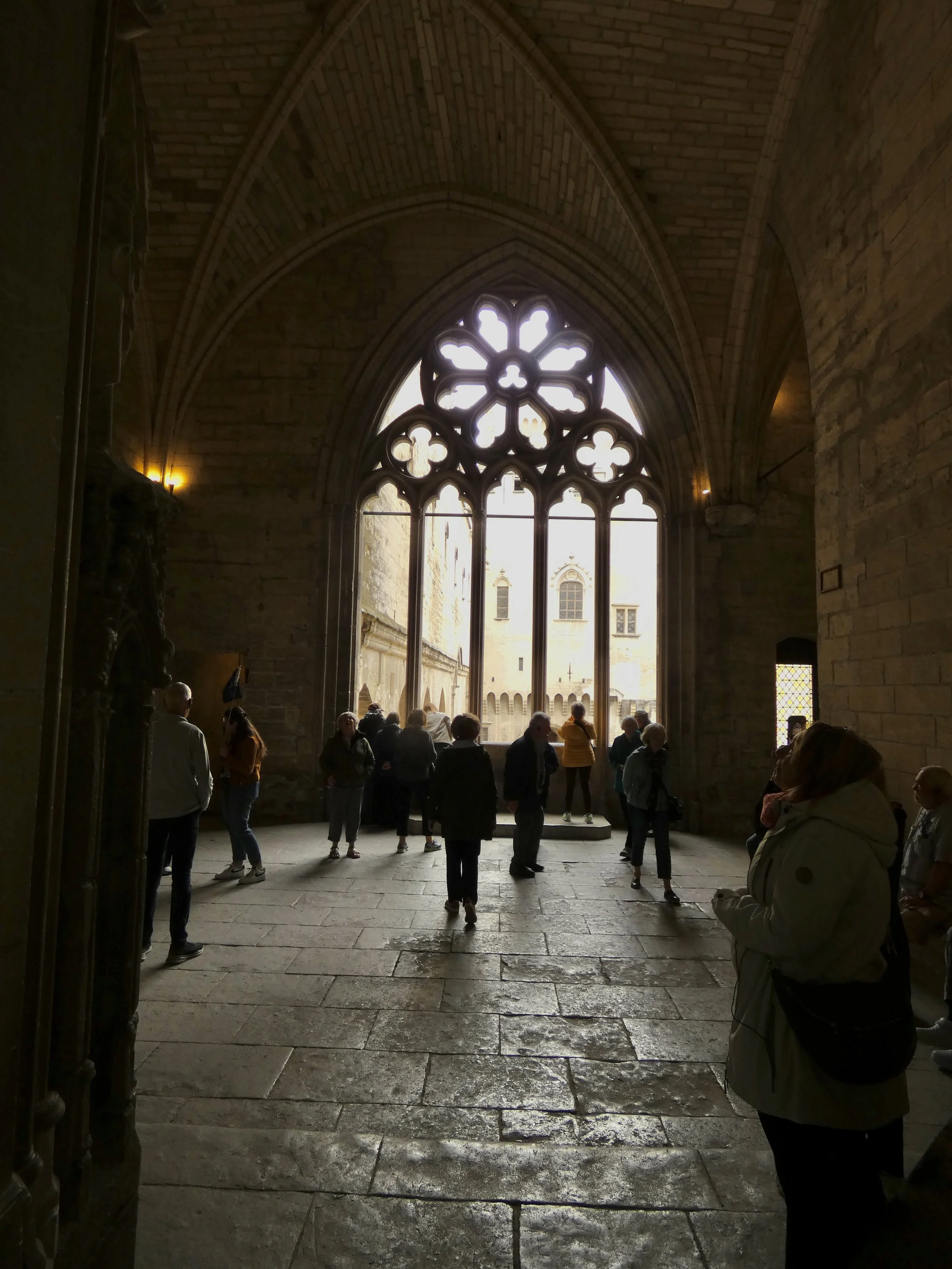
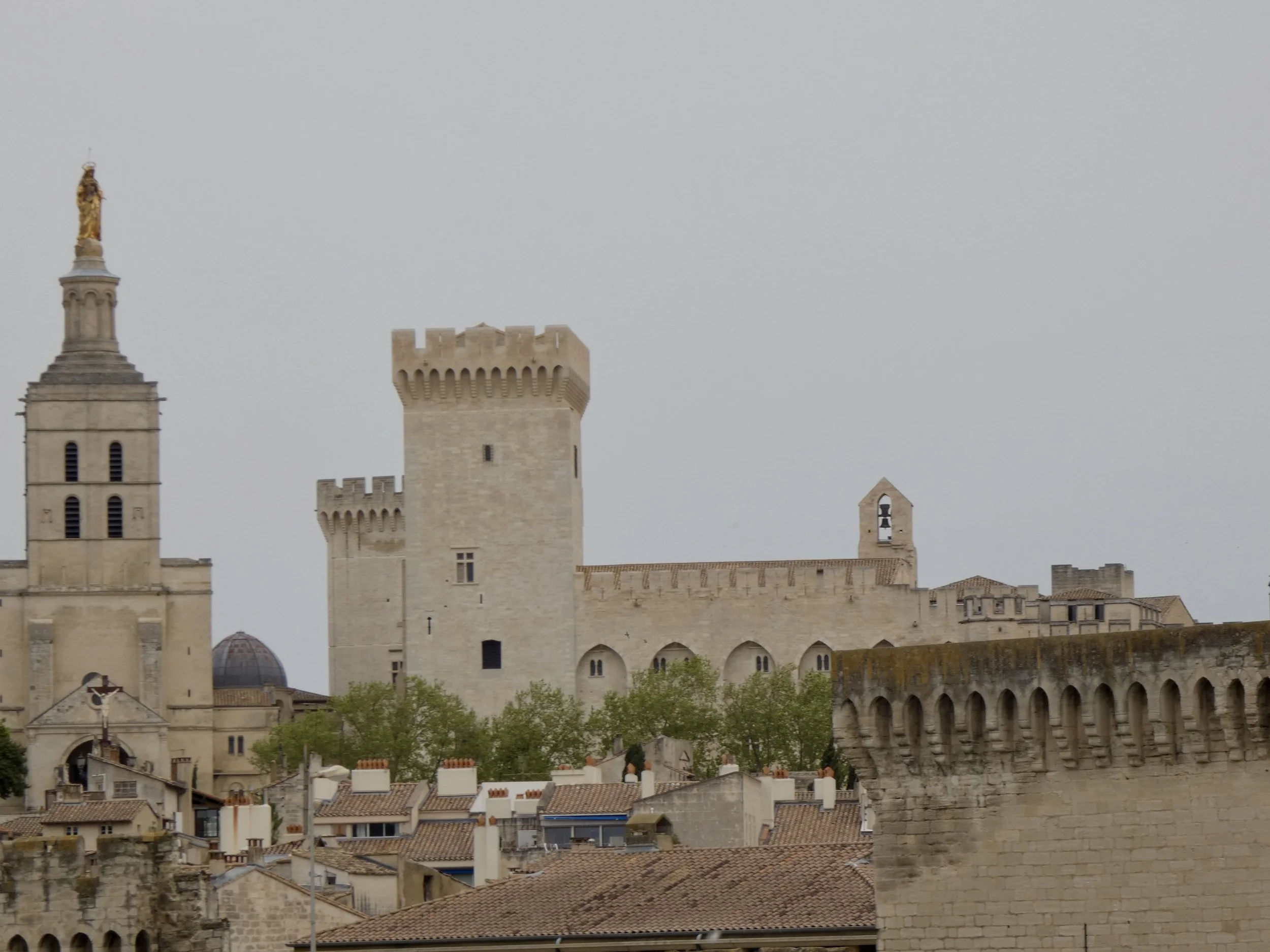
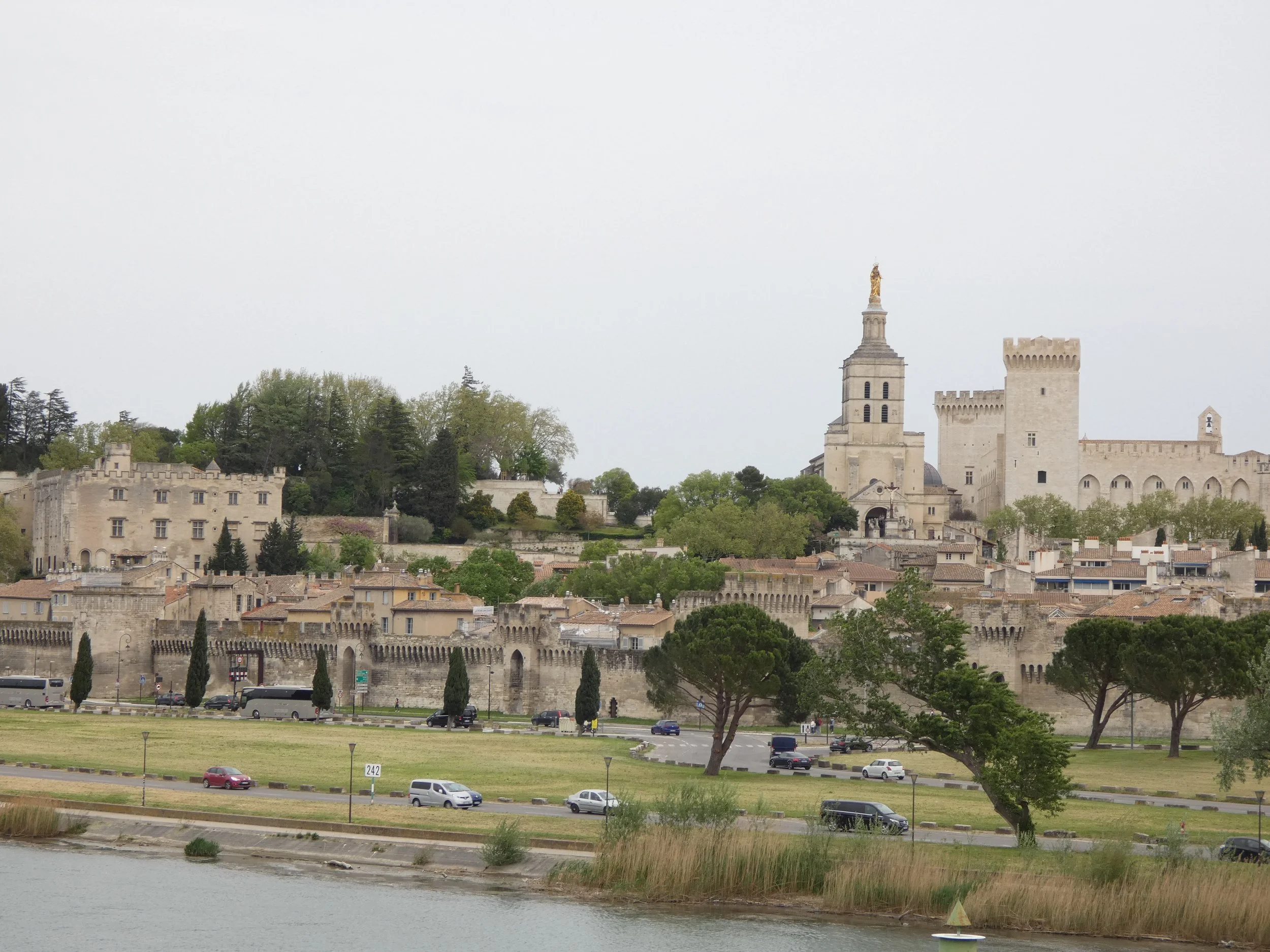
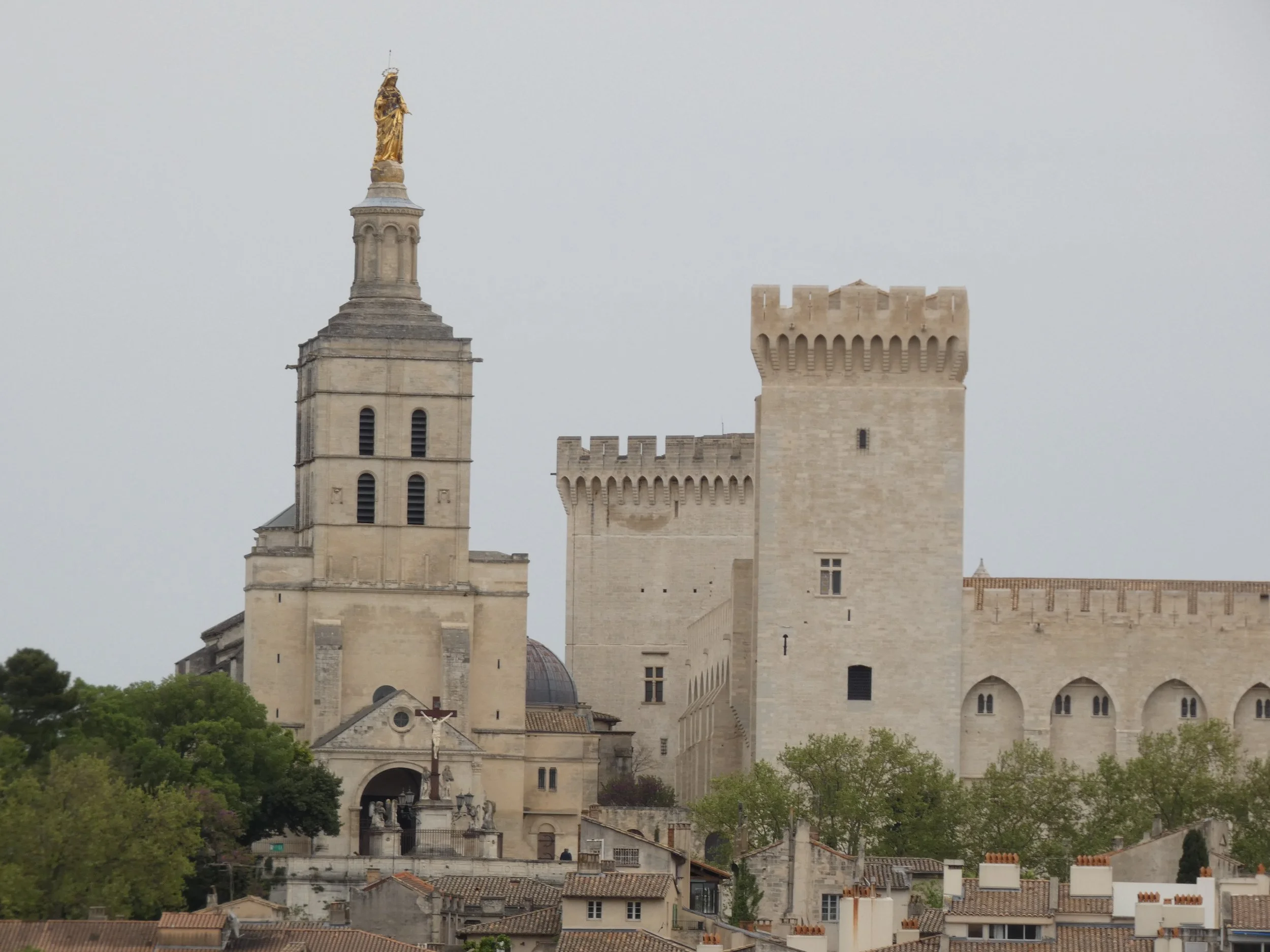
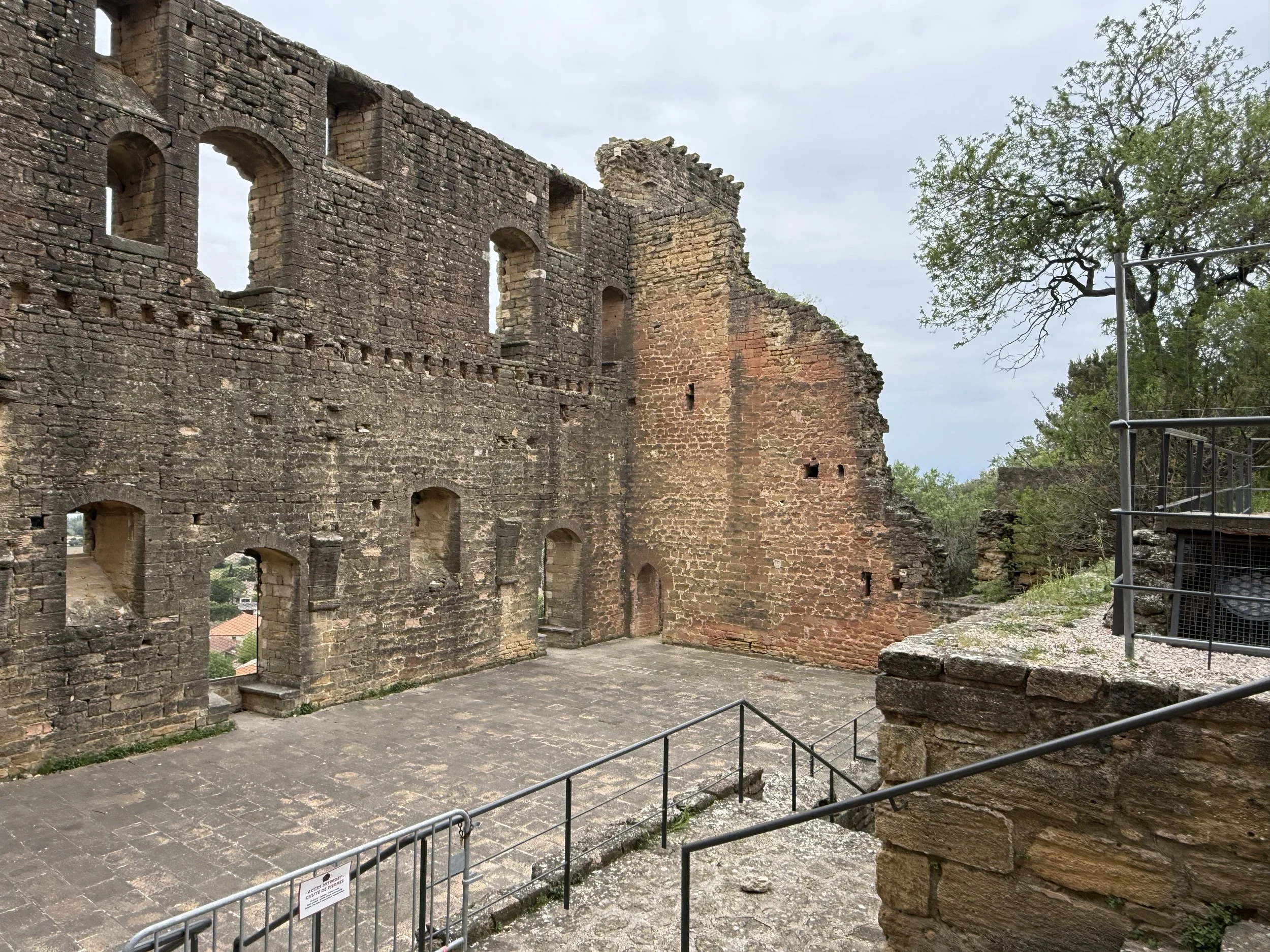
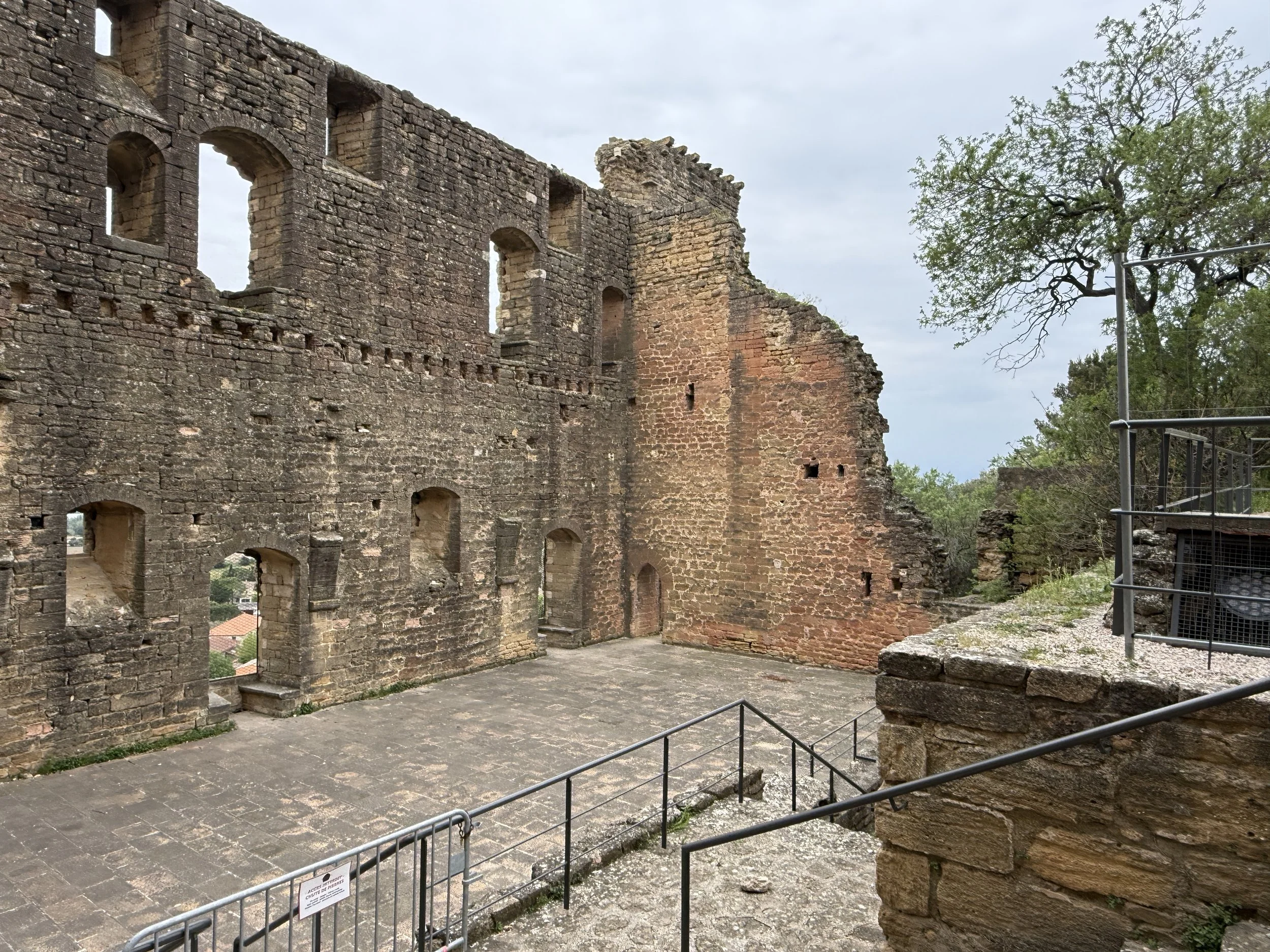
Our morning tour was focused on the Papal Palace, or rather palaces. One pope built the modest (but beautiful) Old Palace. The next pope built the New Palace which, while grander in size, doesn’t match the style of the Old.
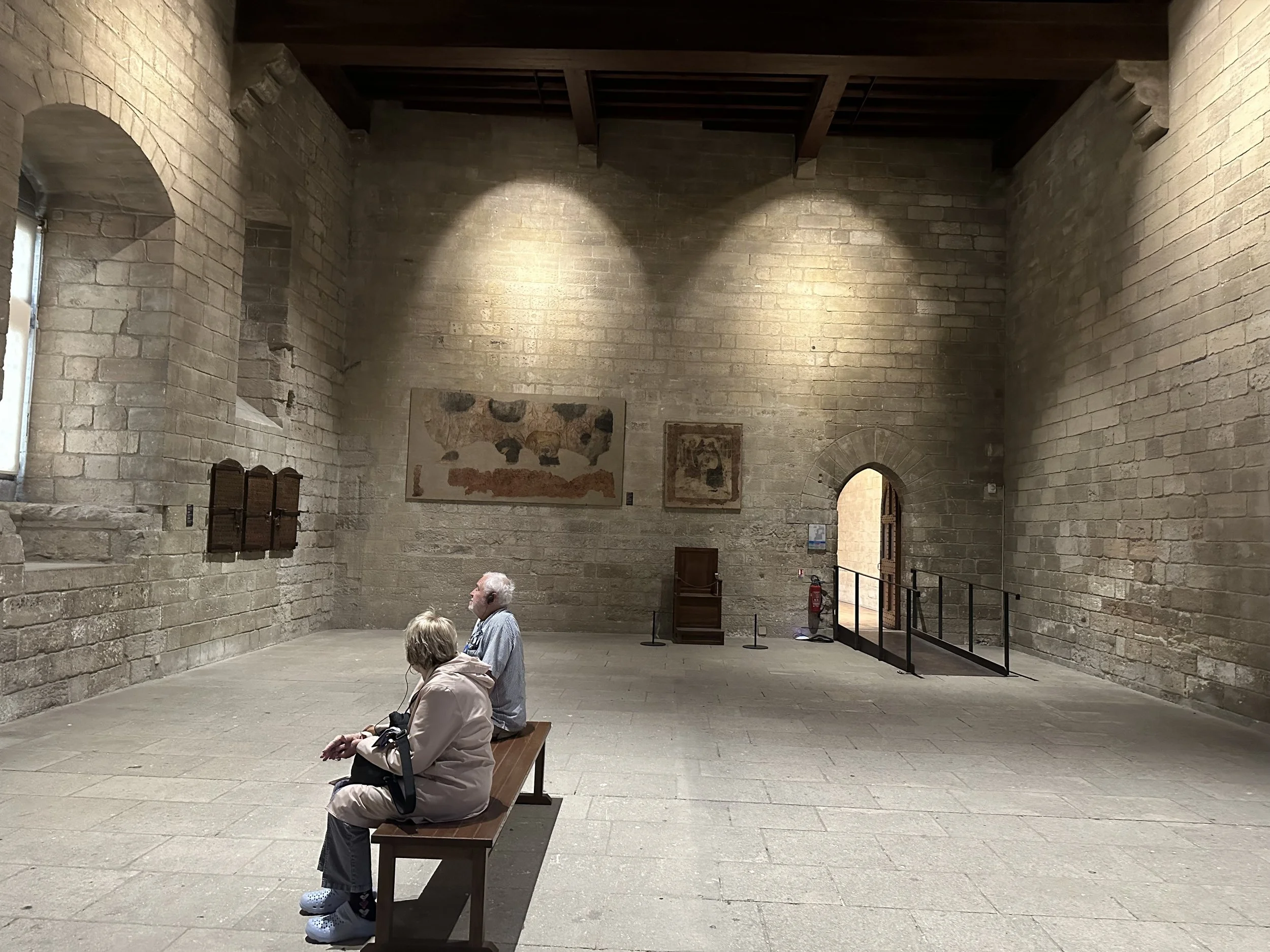
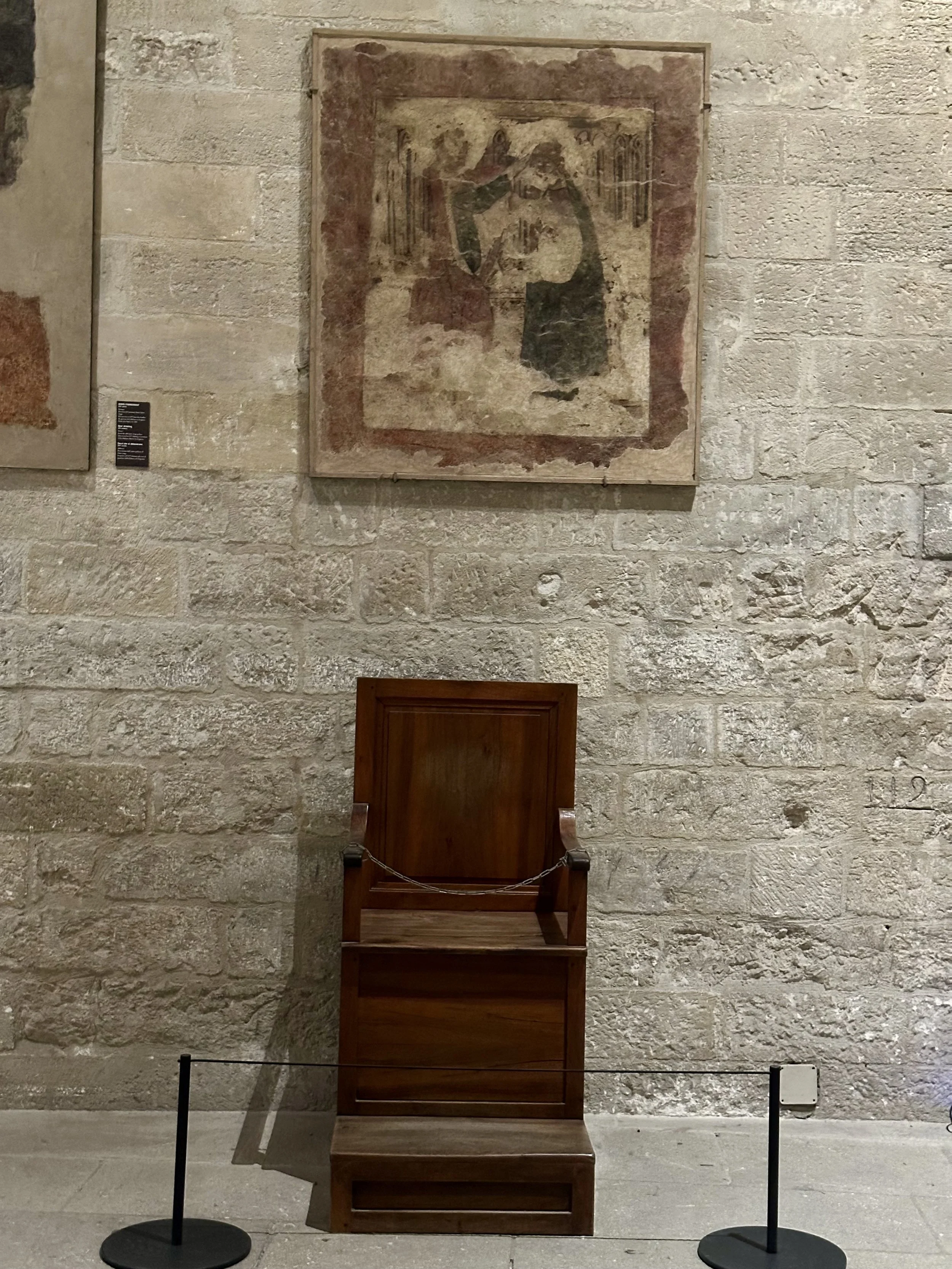
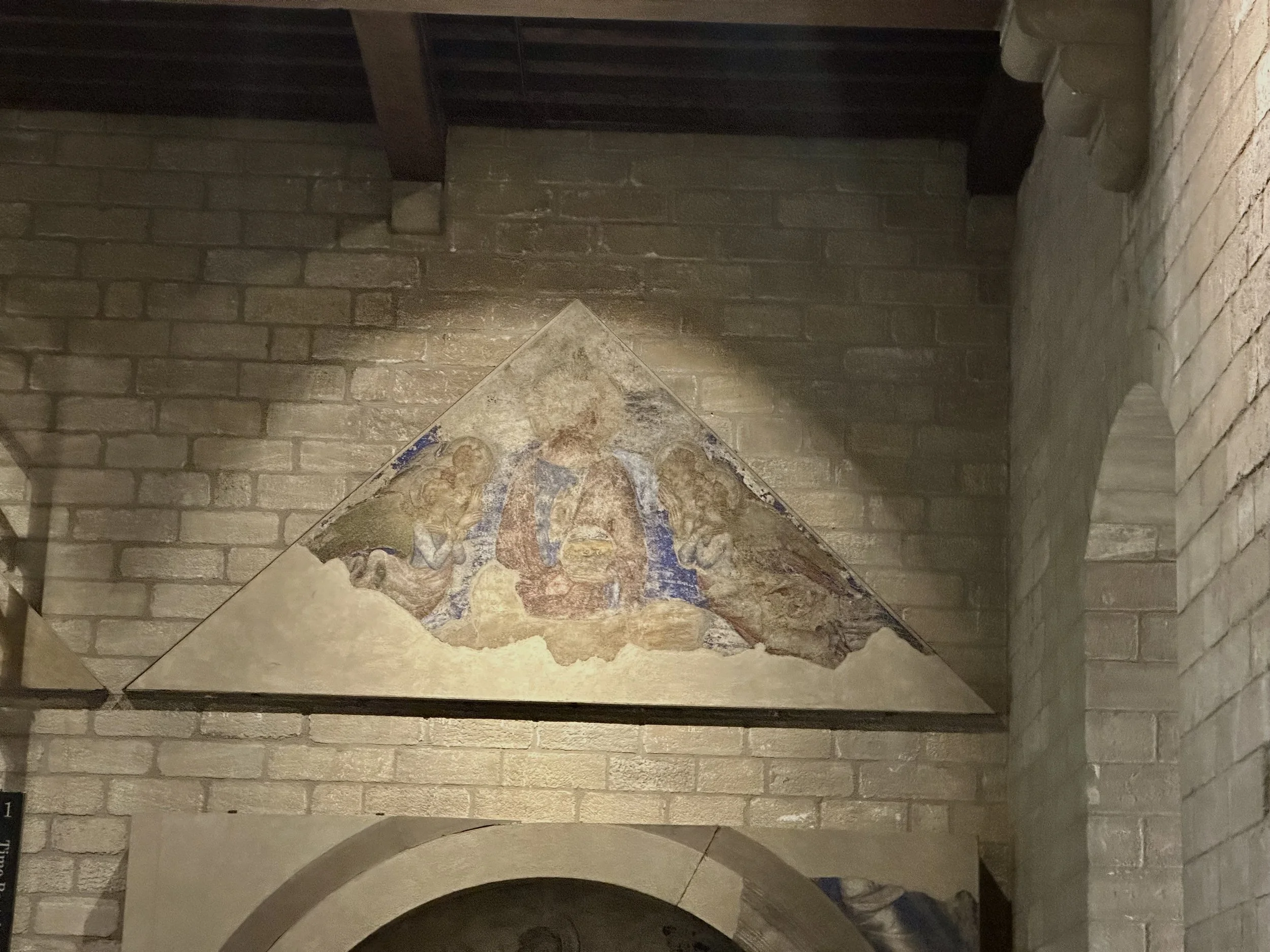
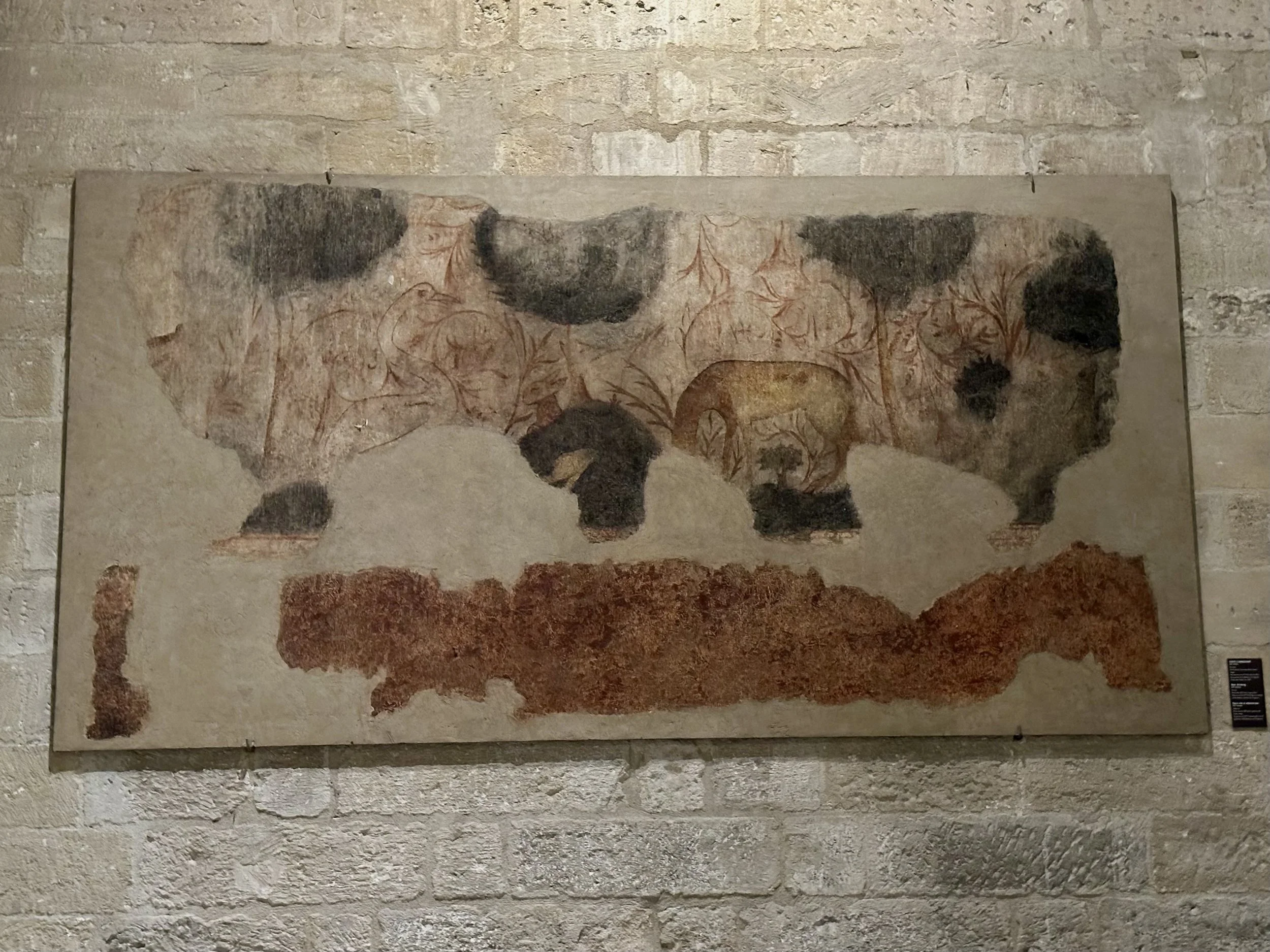
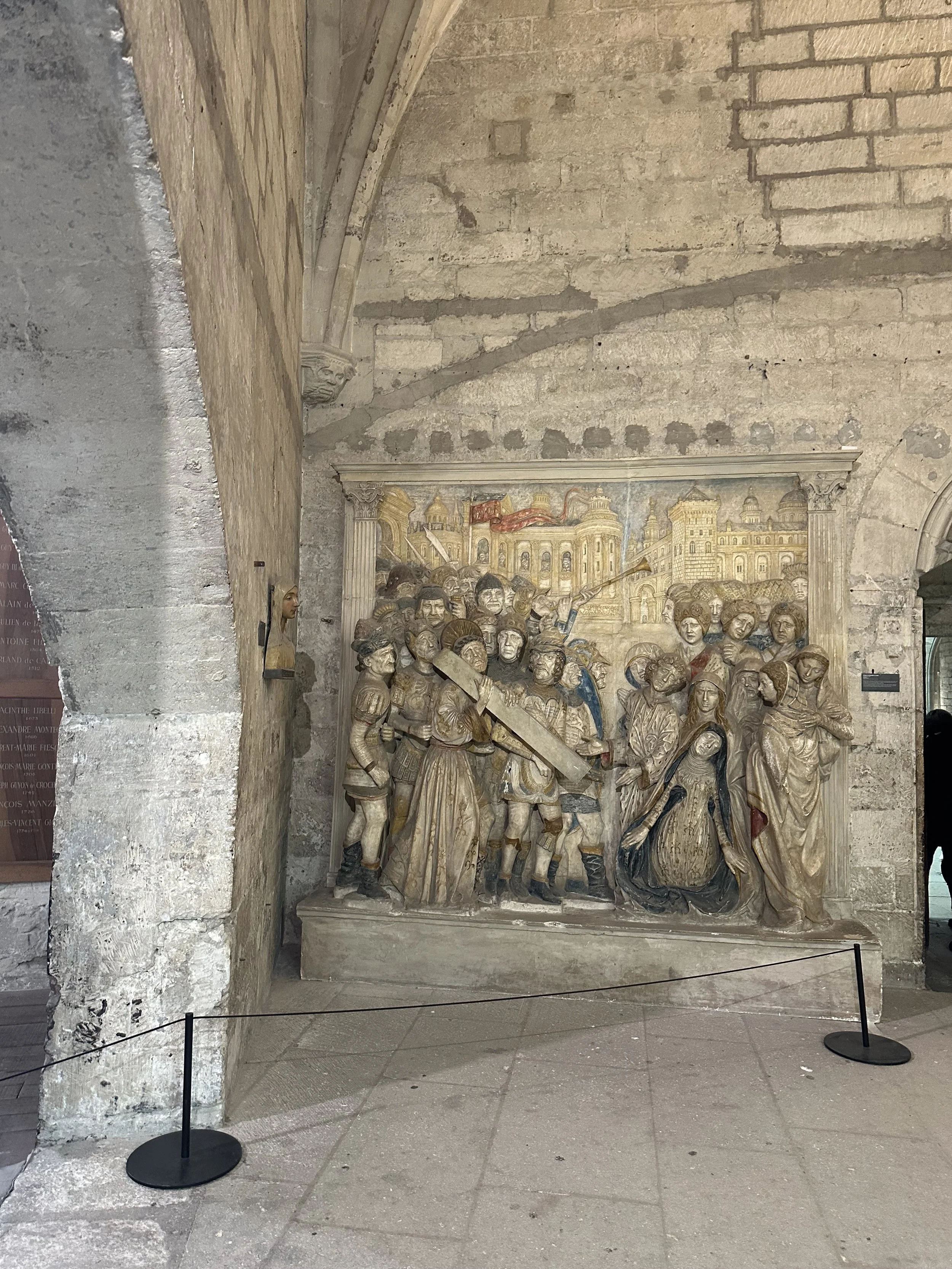
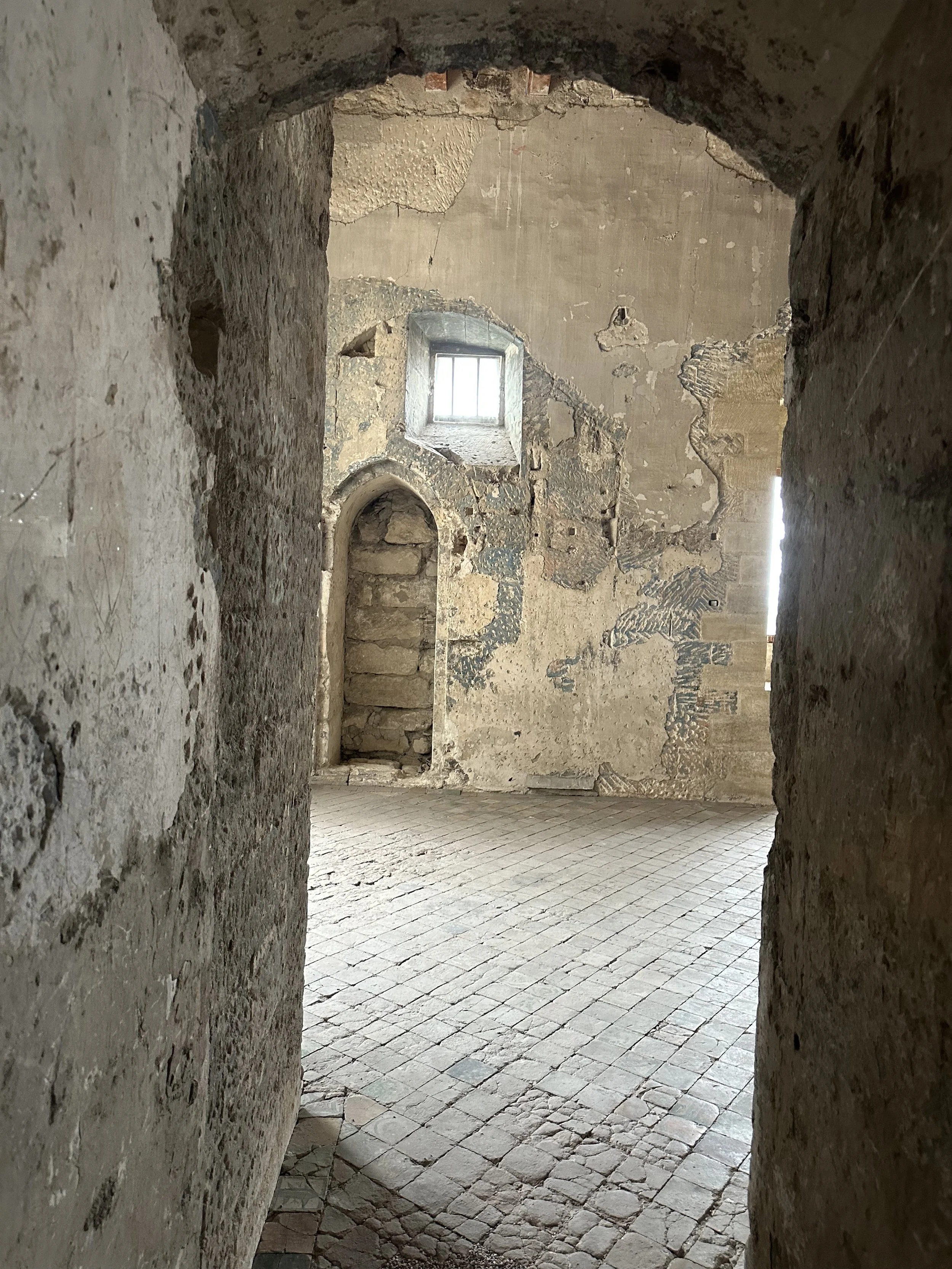
The palaces were damaged by soldiers during the Revolution. Significant renovation has been carried out, There are some wall paintings and frescos remaining from the 14th century. Most of the written records of the period were moved to Rome when Gregory left town.
Maybe one disappointment for me is that all this turmoil results not from theological differences but from money. The church was a source of great wealth and King Philip went after control of the church for that reason. The Popes were wealthy enough to build the grand edifices we saw today and even buy the whole town of Avignon.
No wonder a little more than 100 years later, Martin Luther got out his hammer and nails to protest this sort of financial avarice.
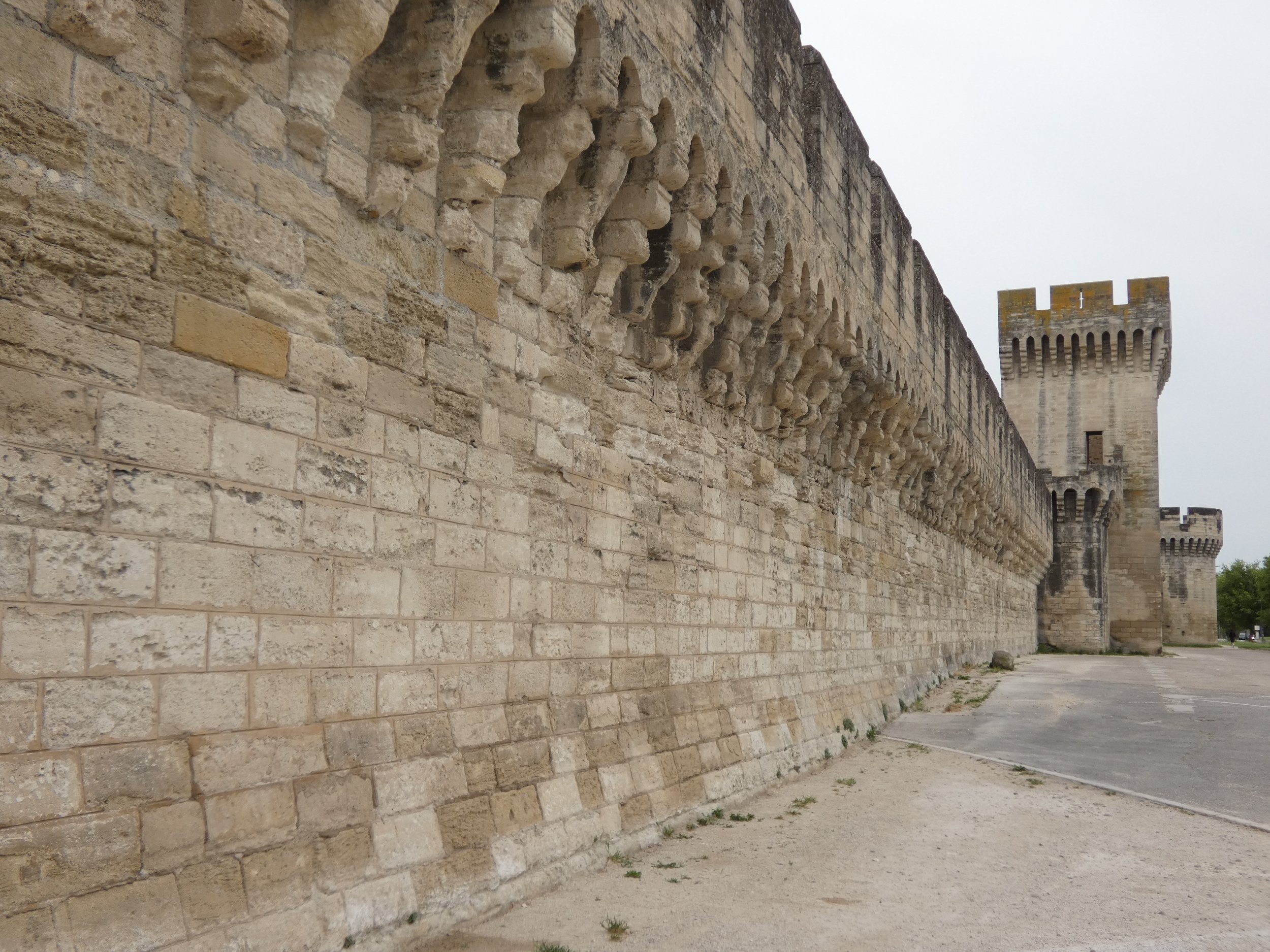
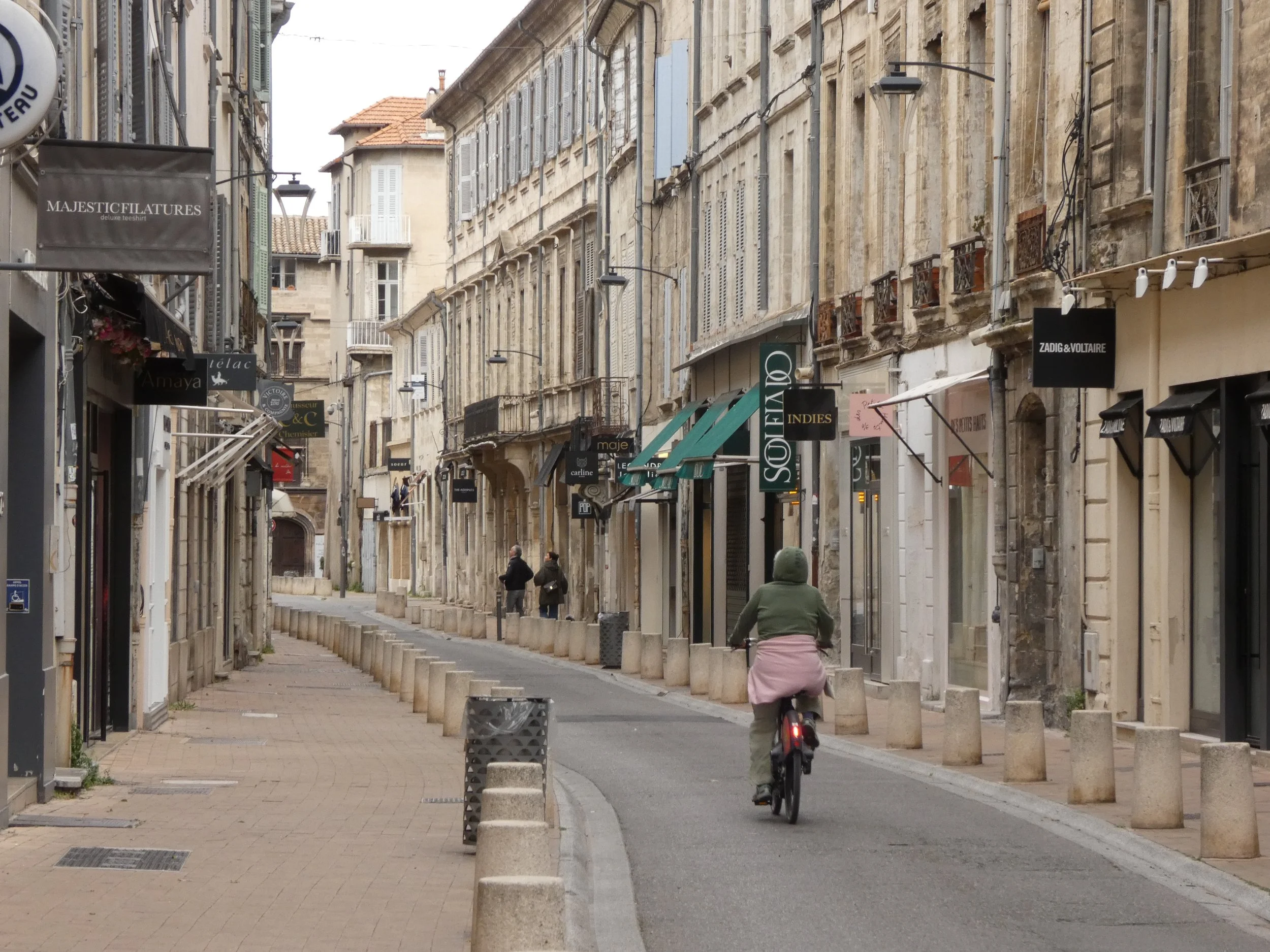
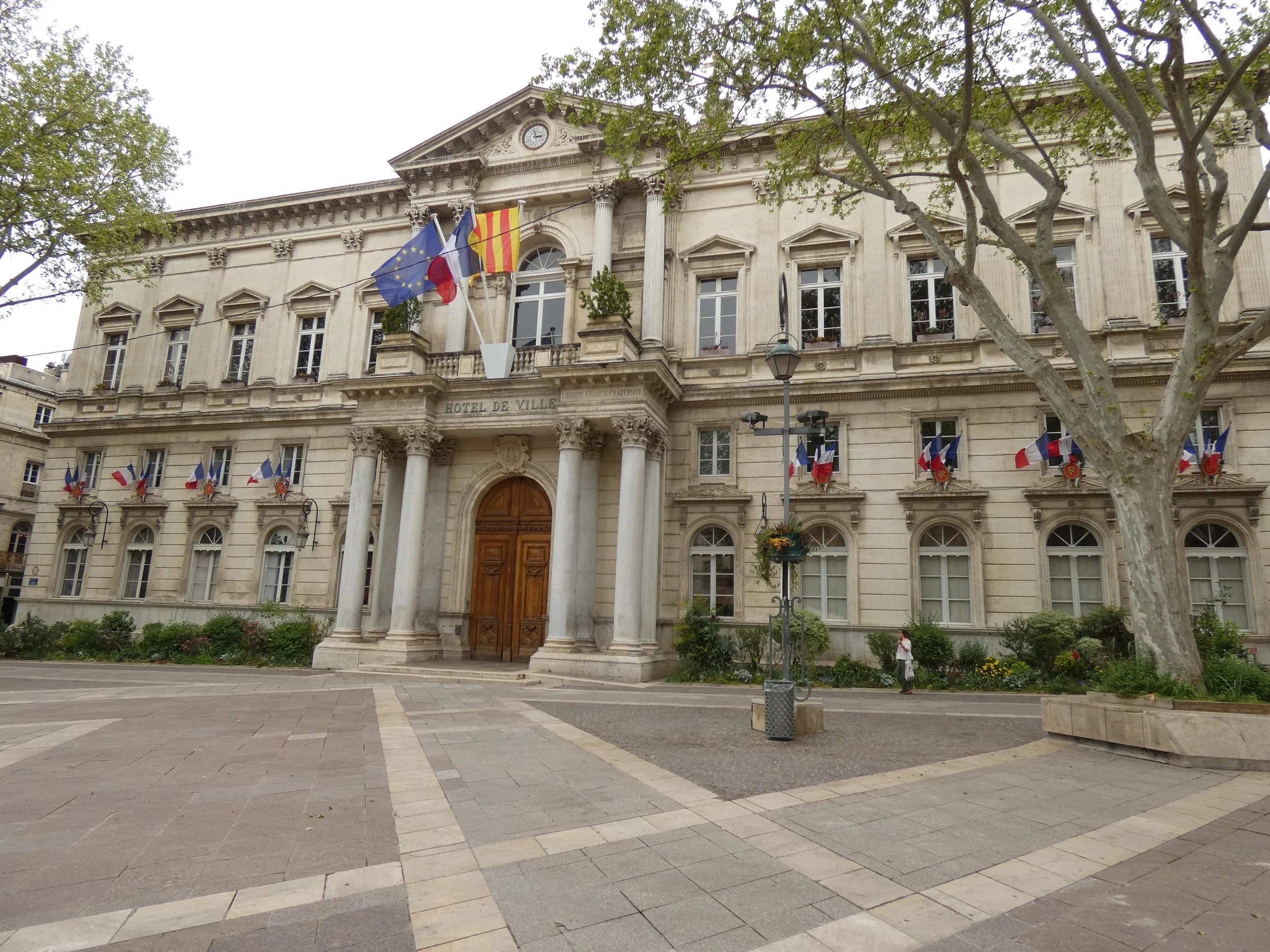
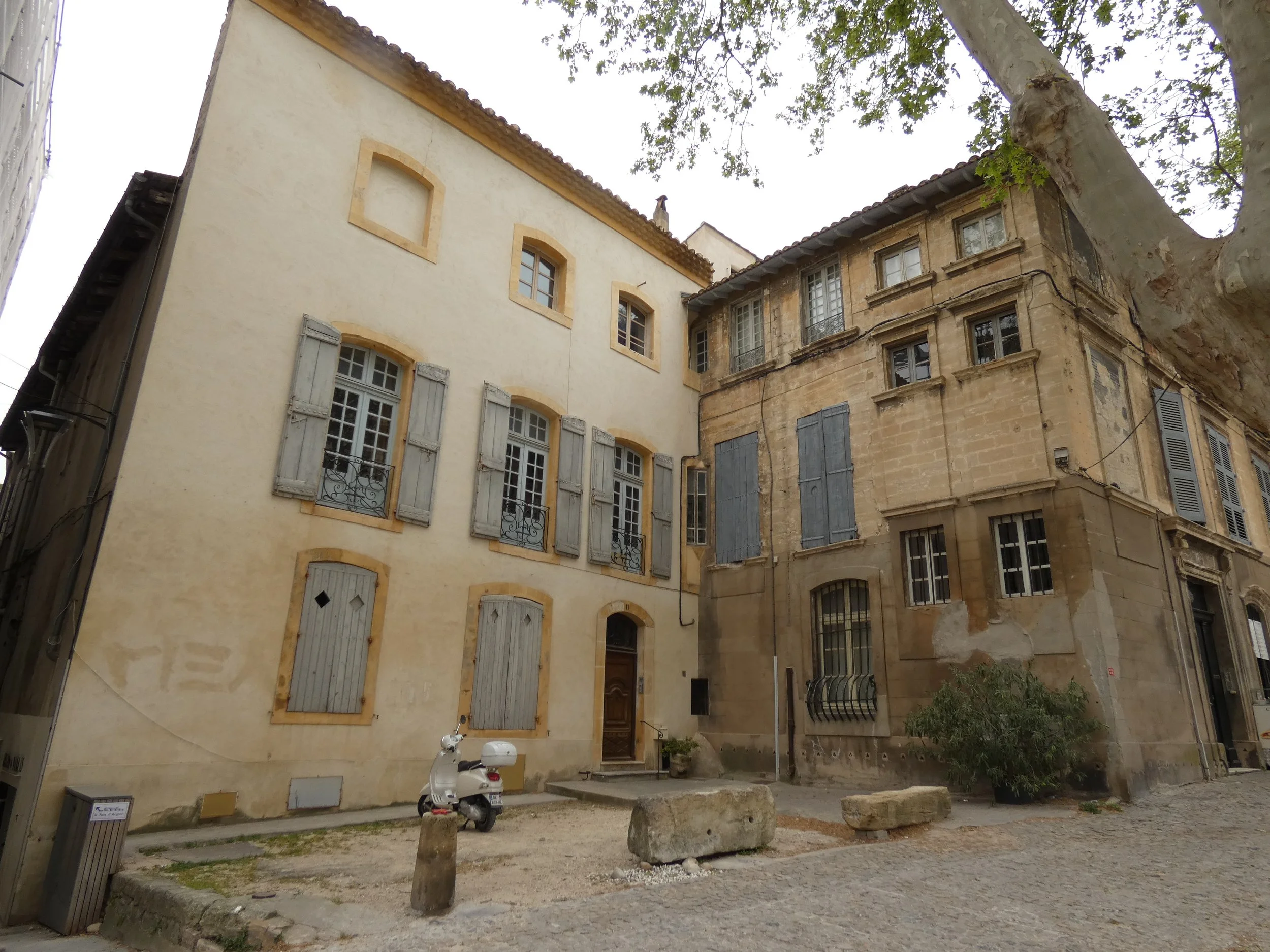
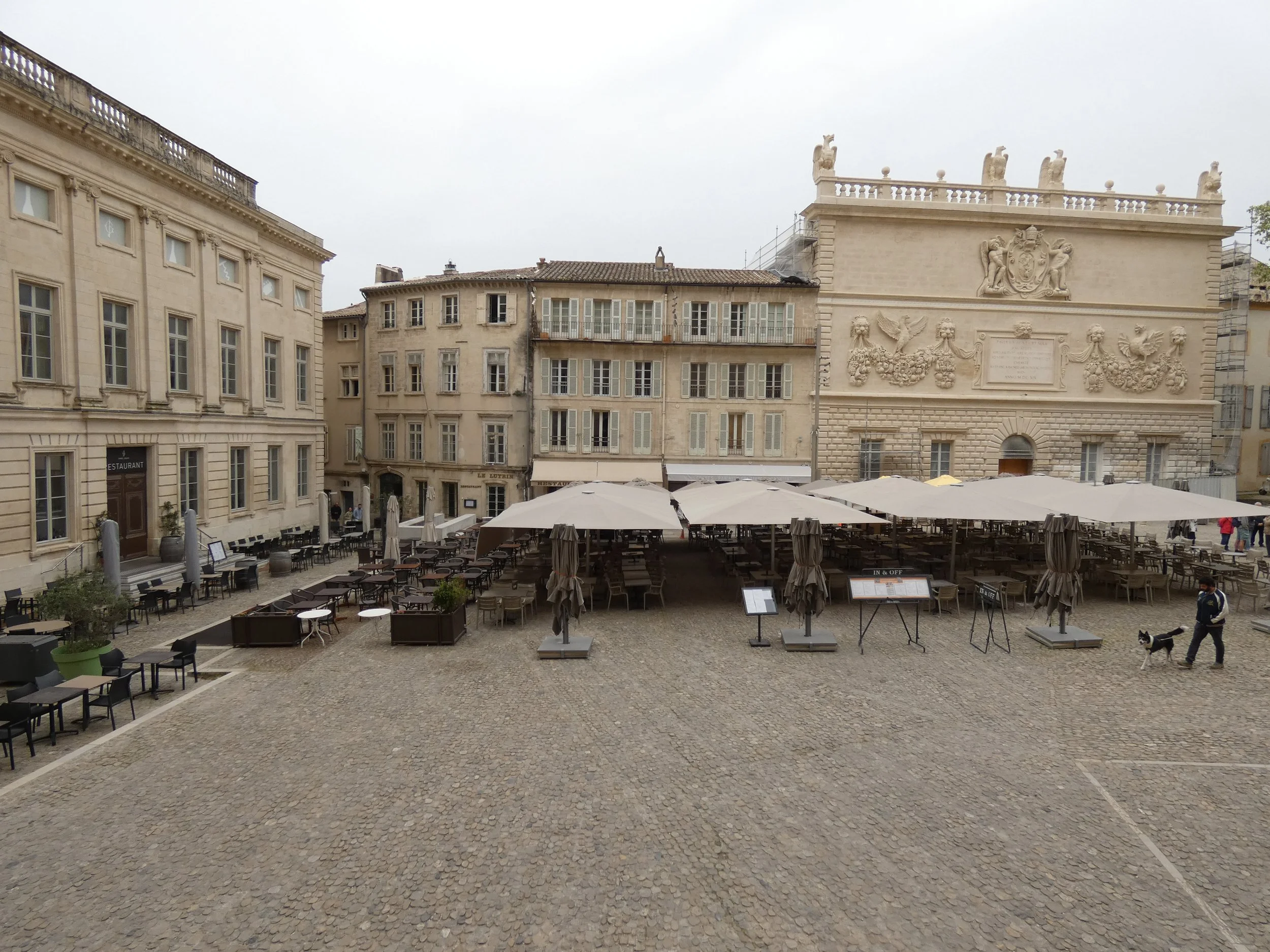
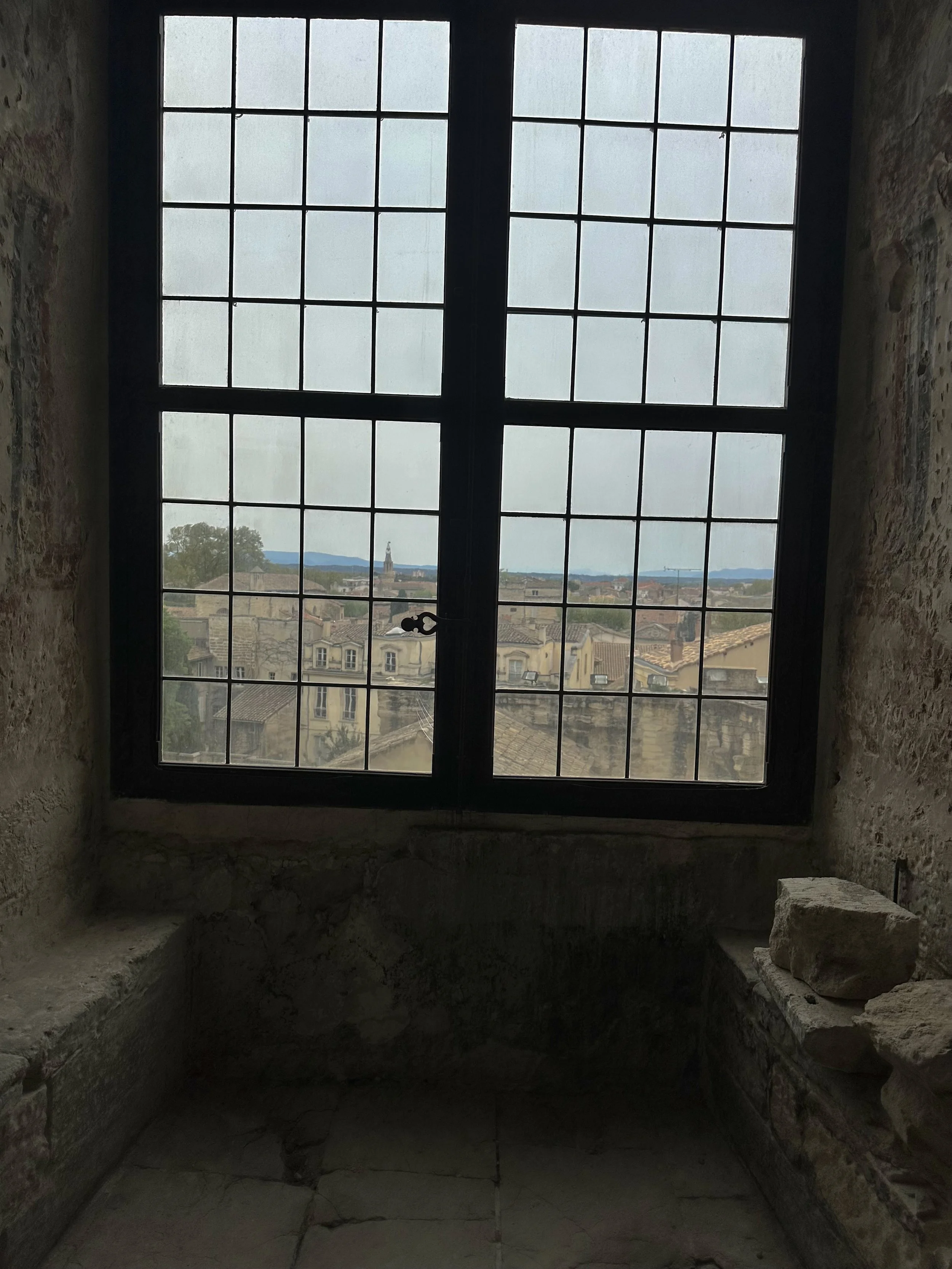
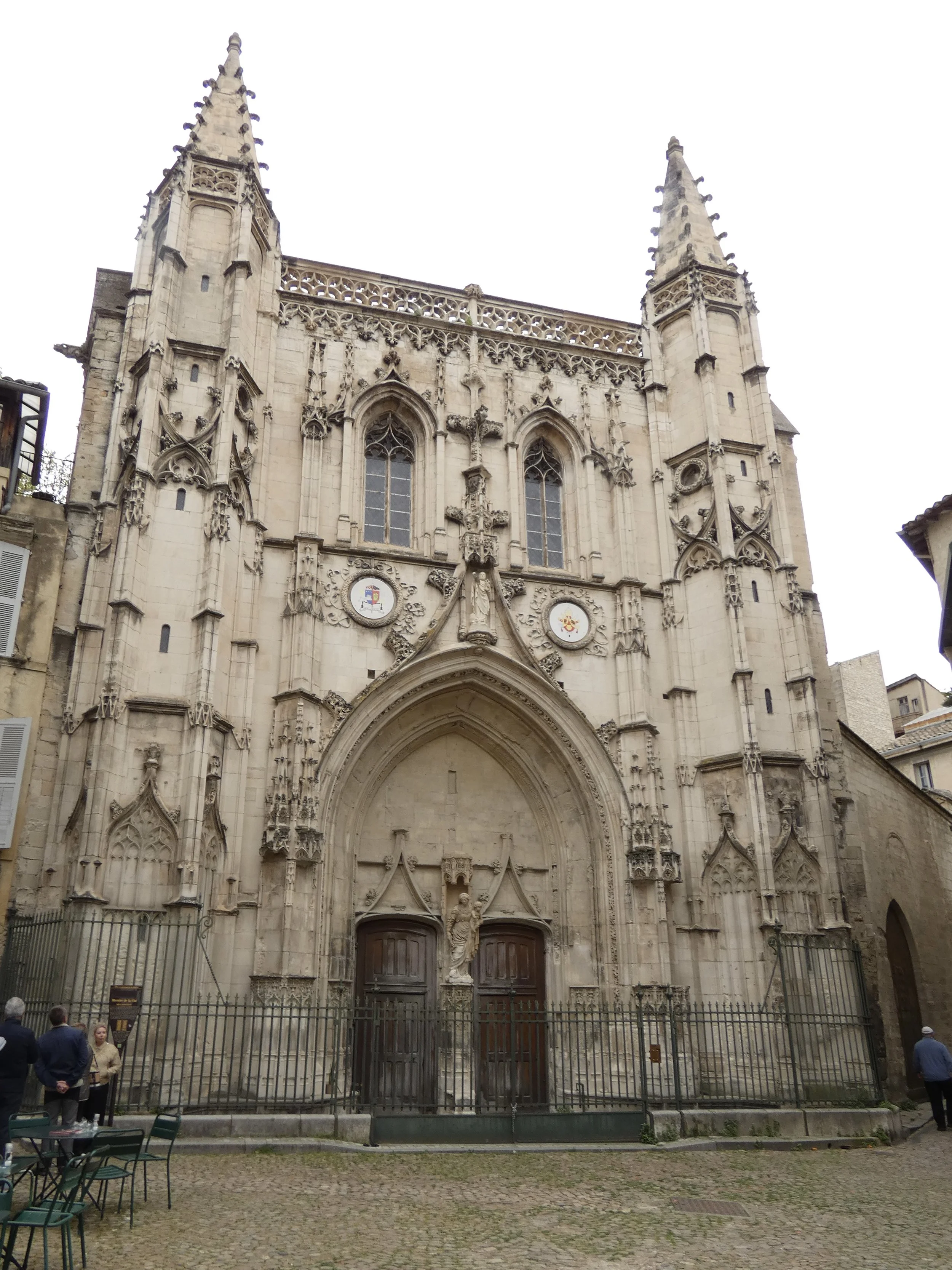
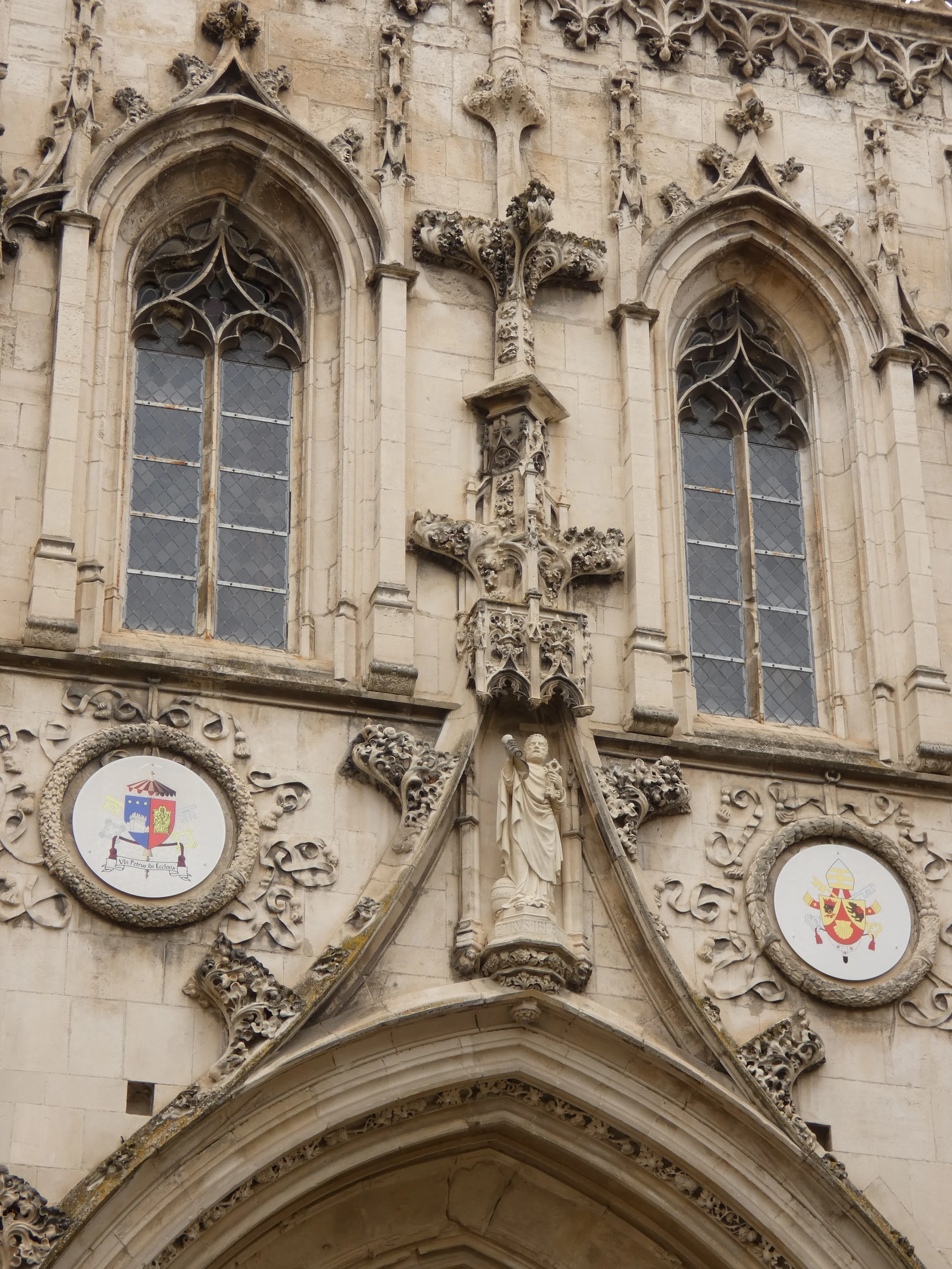
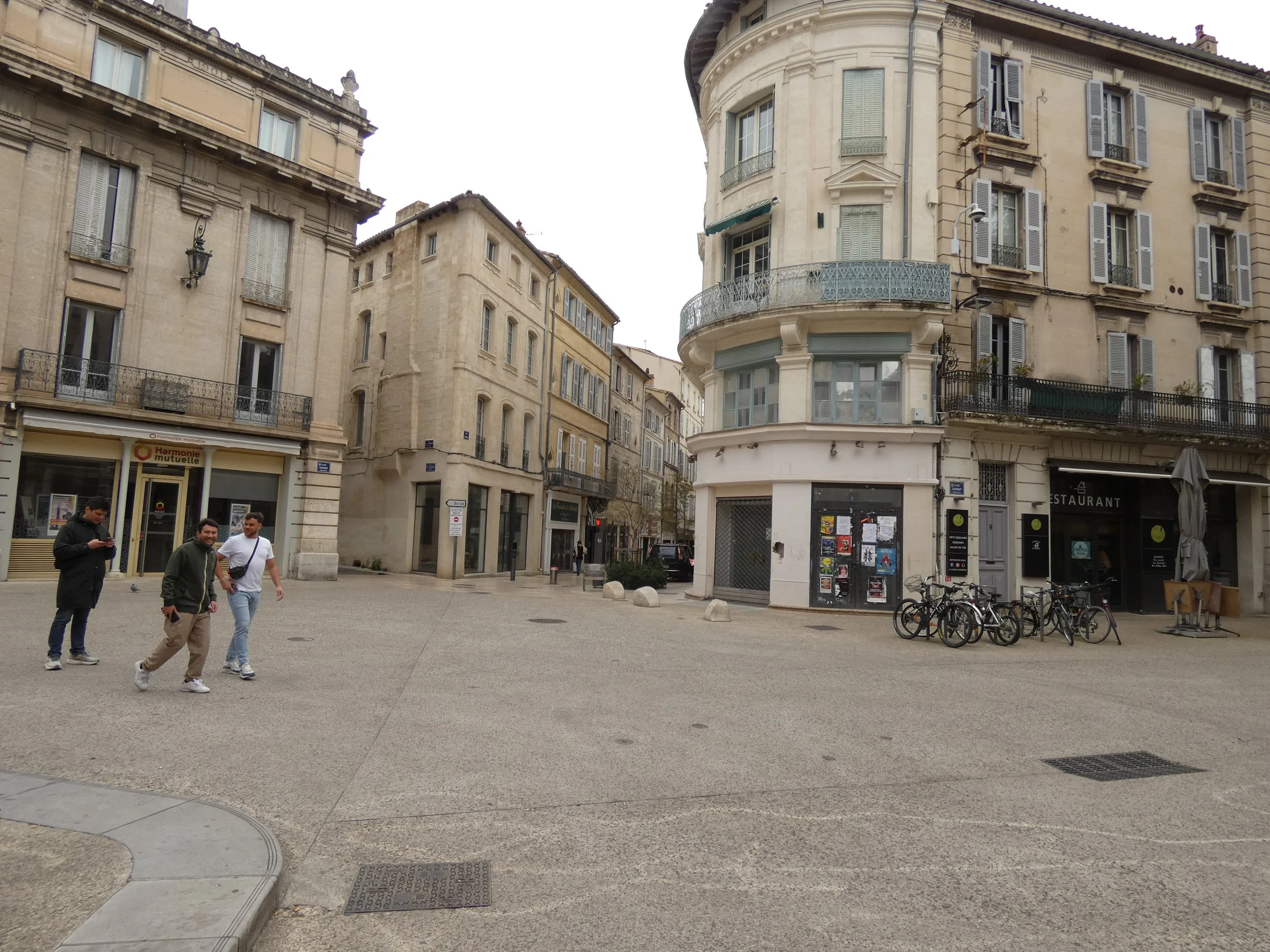
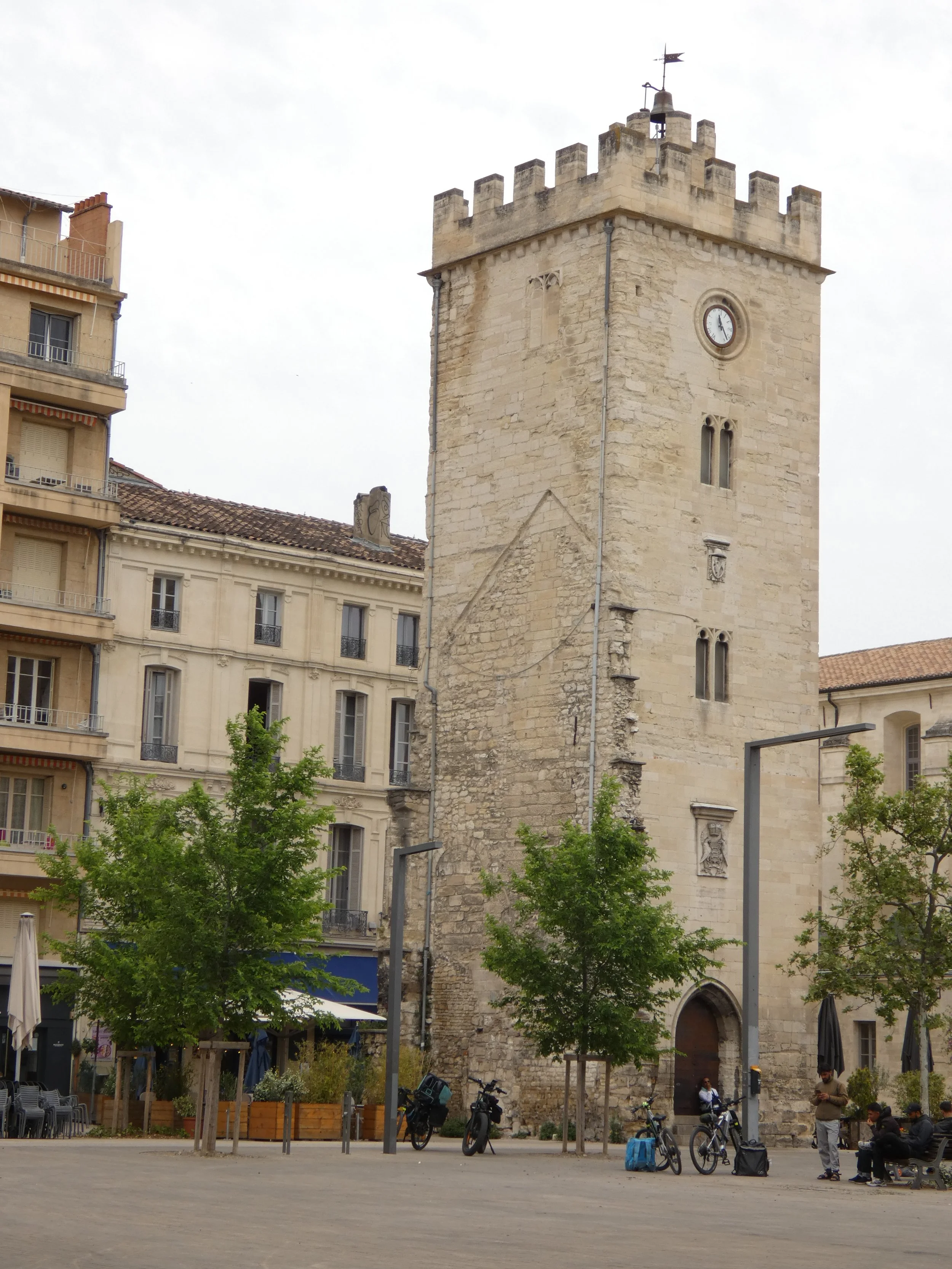
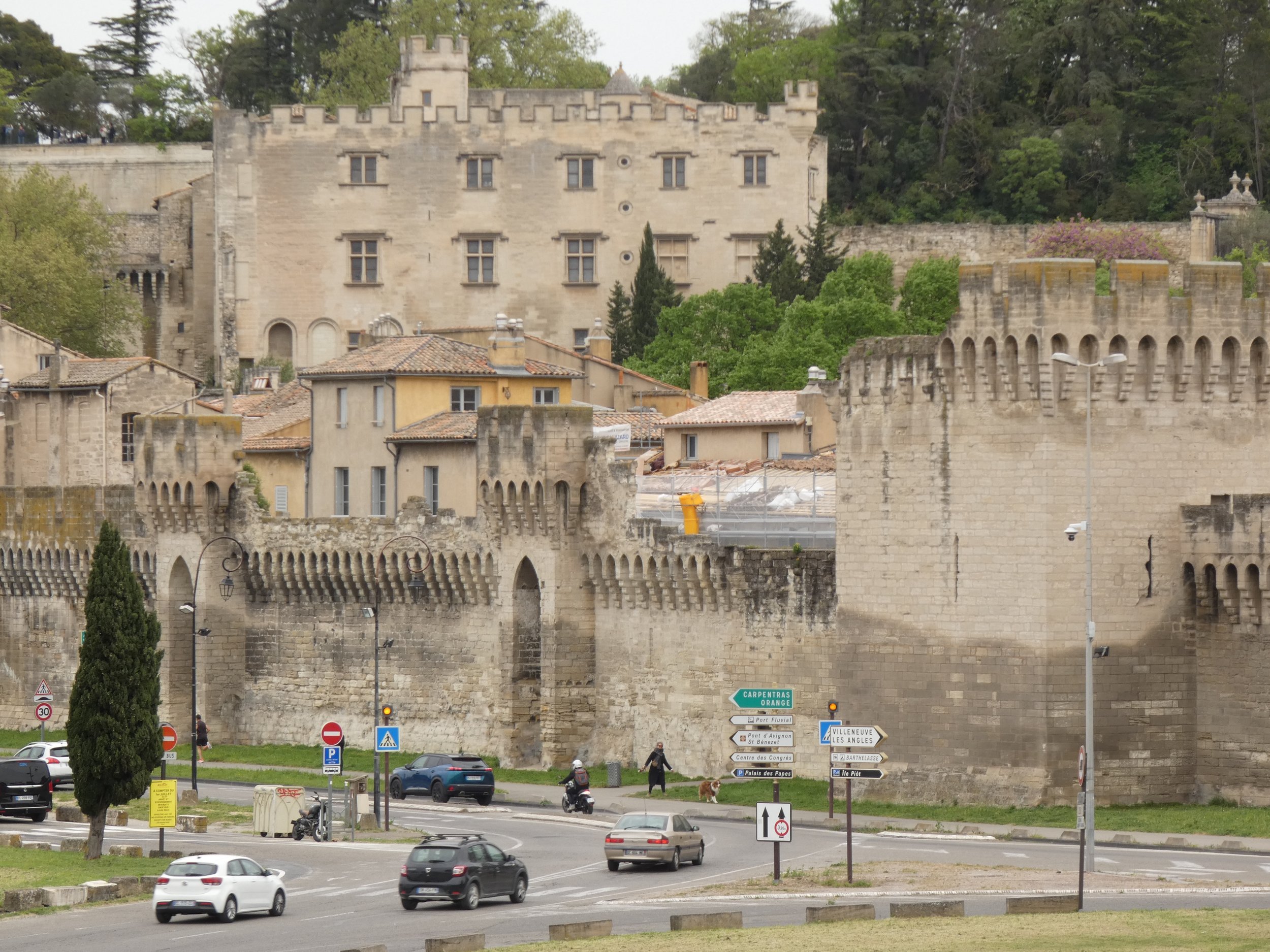
I noticed that all of the buildings in Avignon – the historic and modern alike – lack any color other than the natural hues of limestone. Since Leon, we’ve become accustomed to the beginnings of Mediterranean colors.
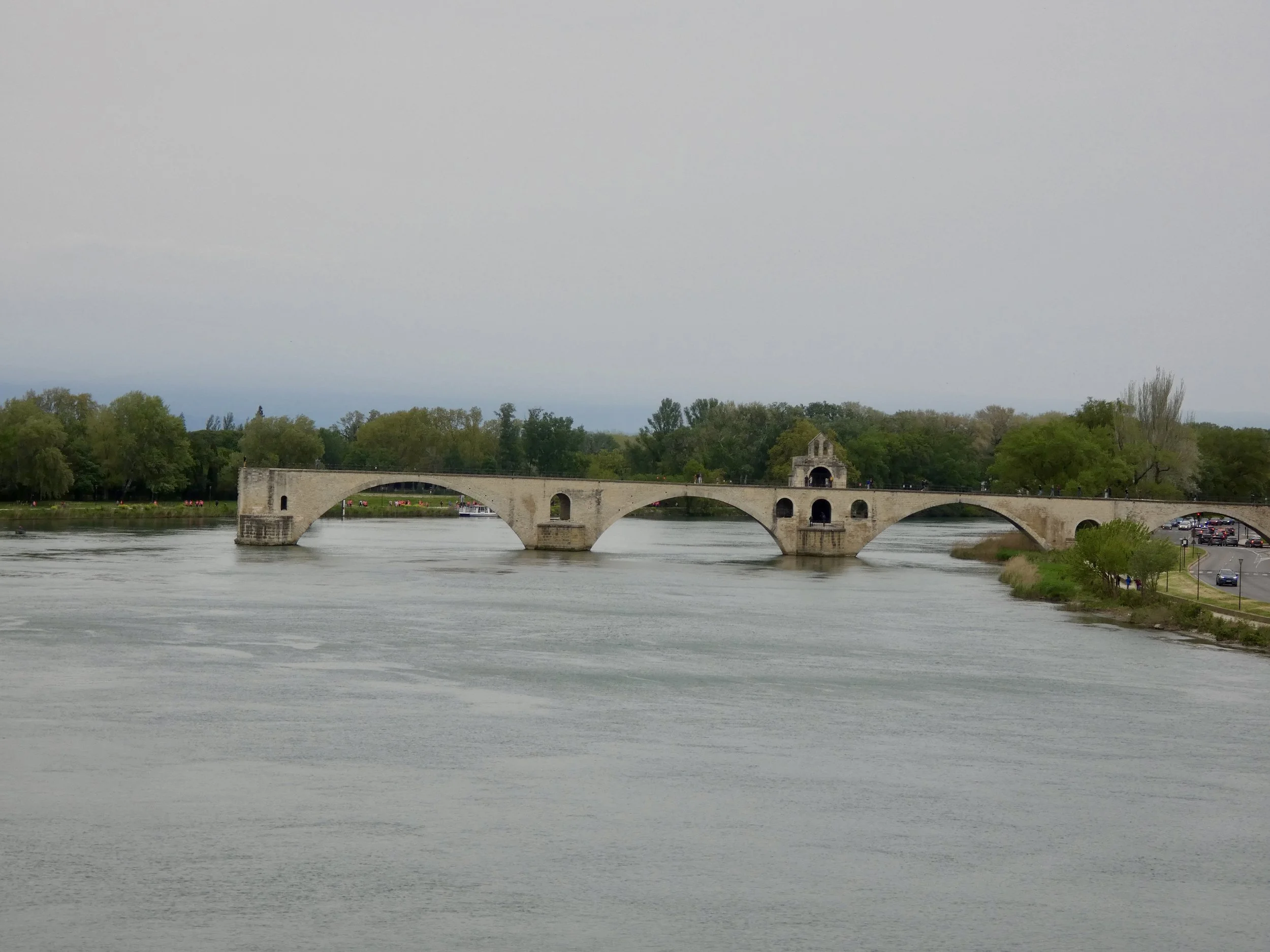
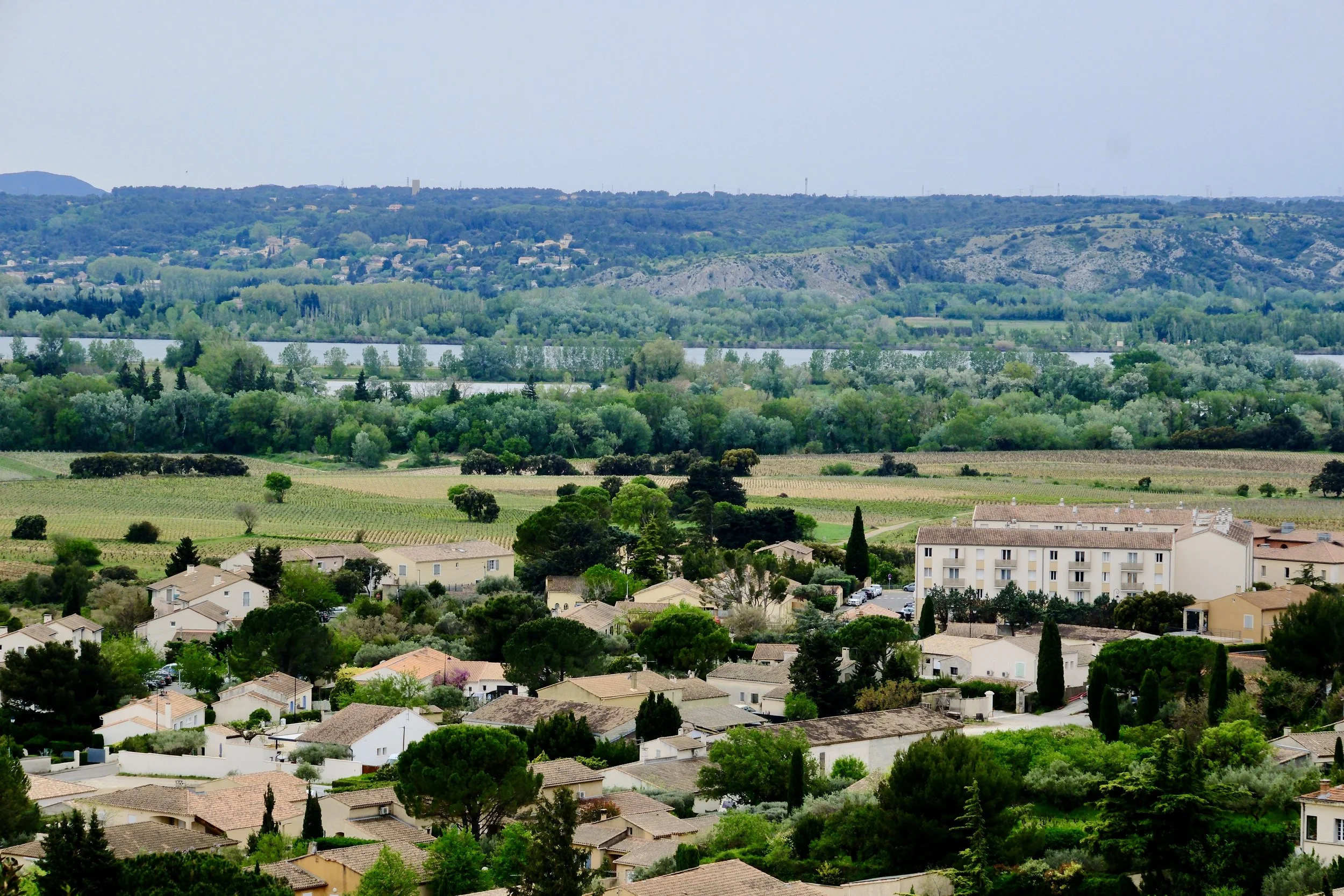
I walked across the bridge near our ship – not the one that only goes halfway – to get a better view of the city.
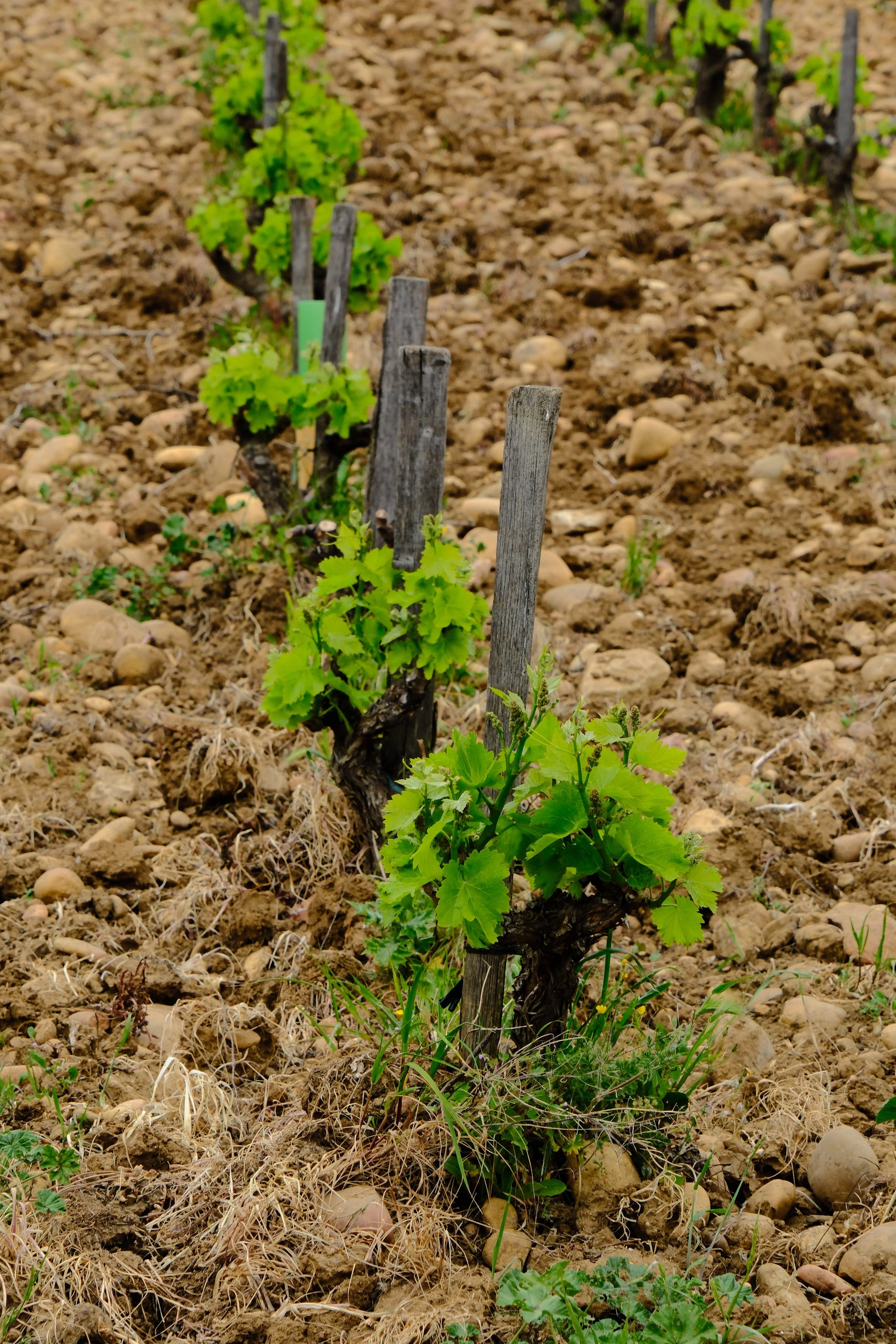
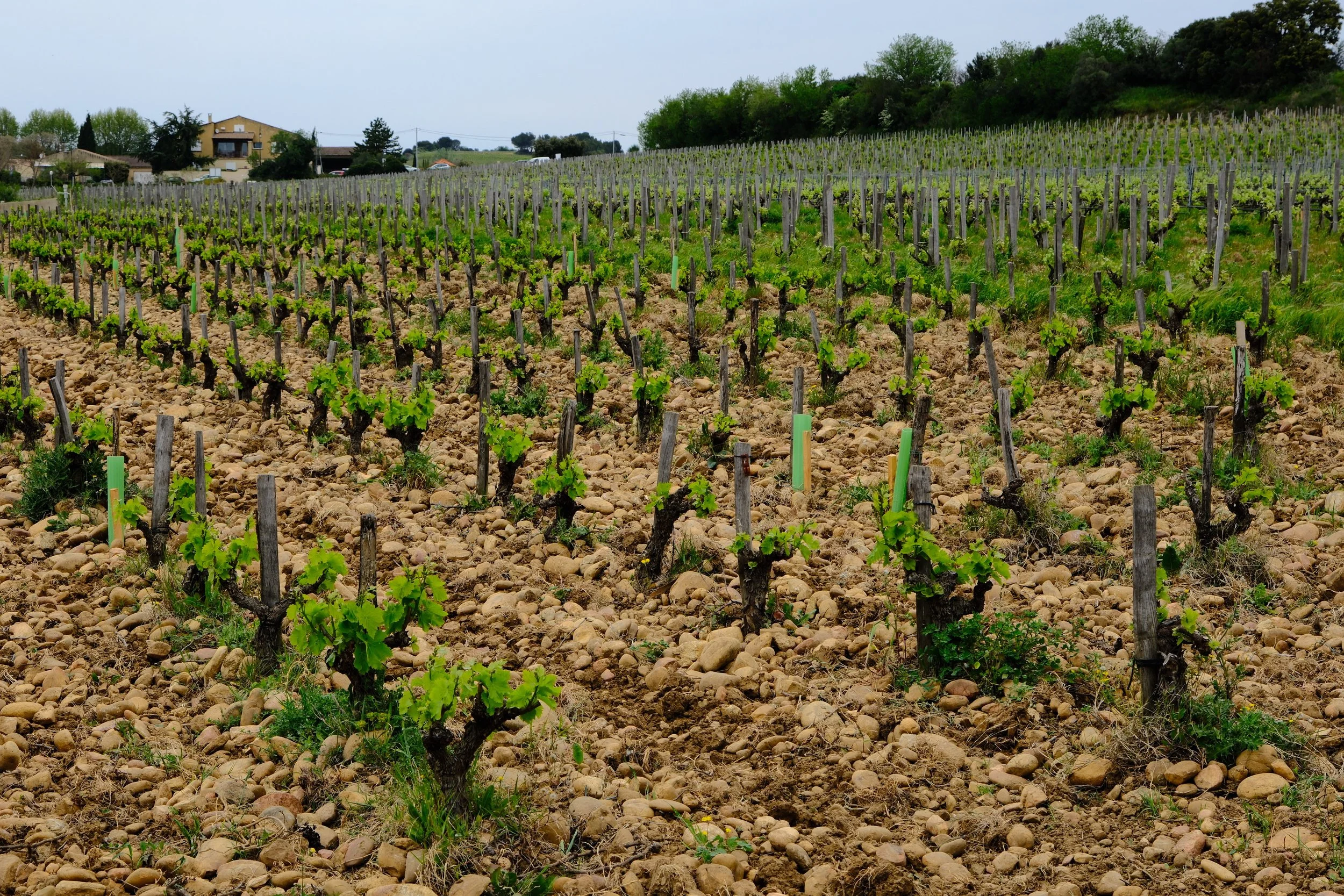
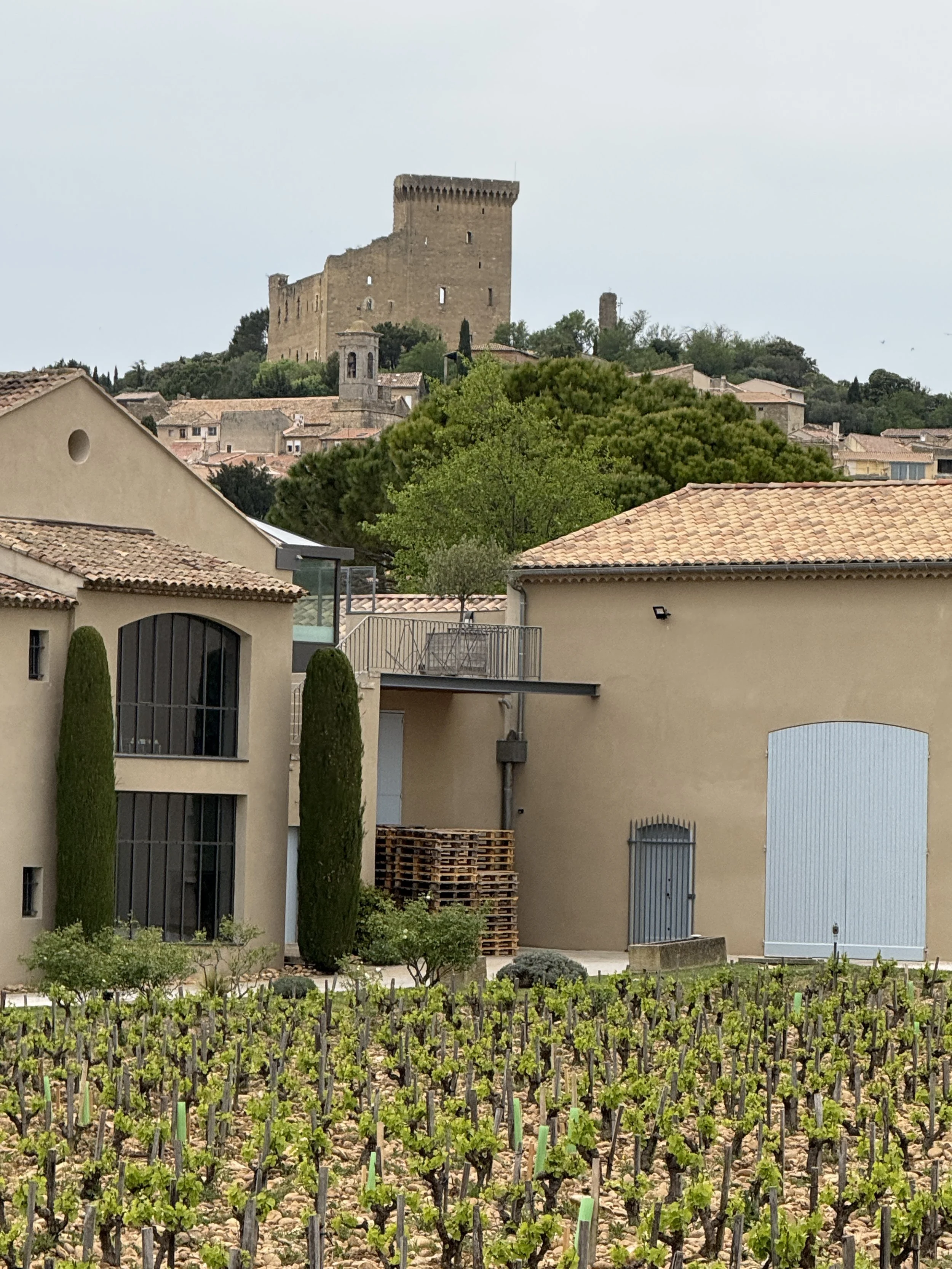
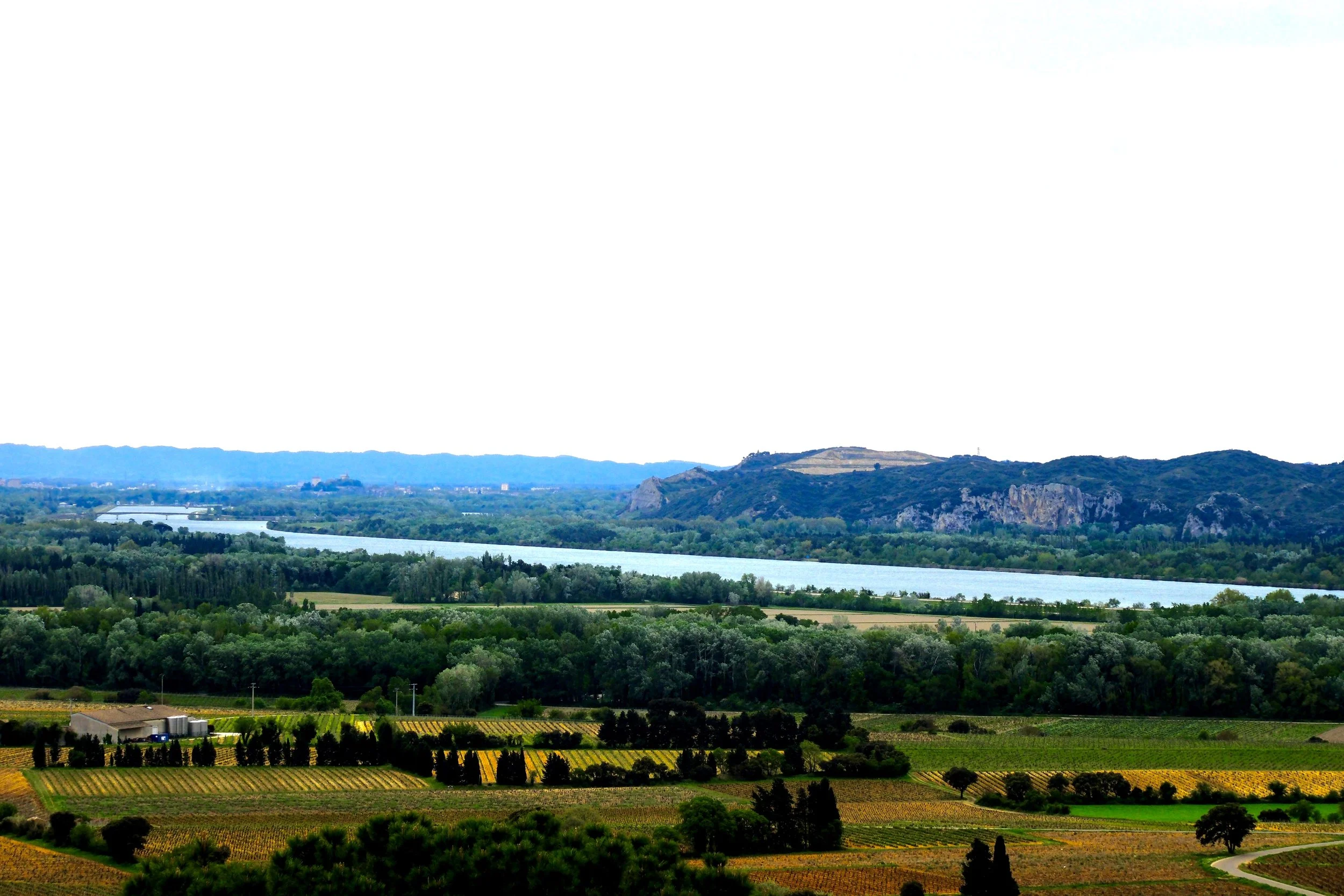
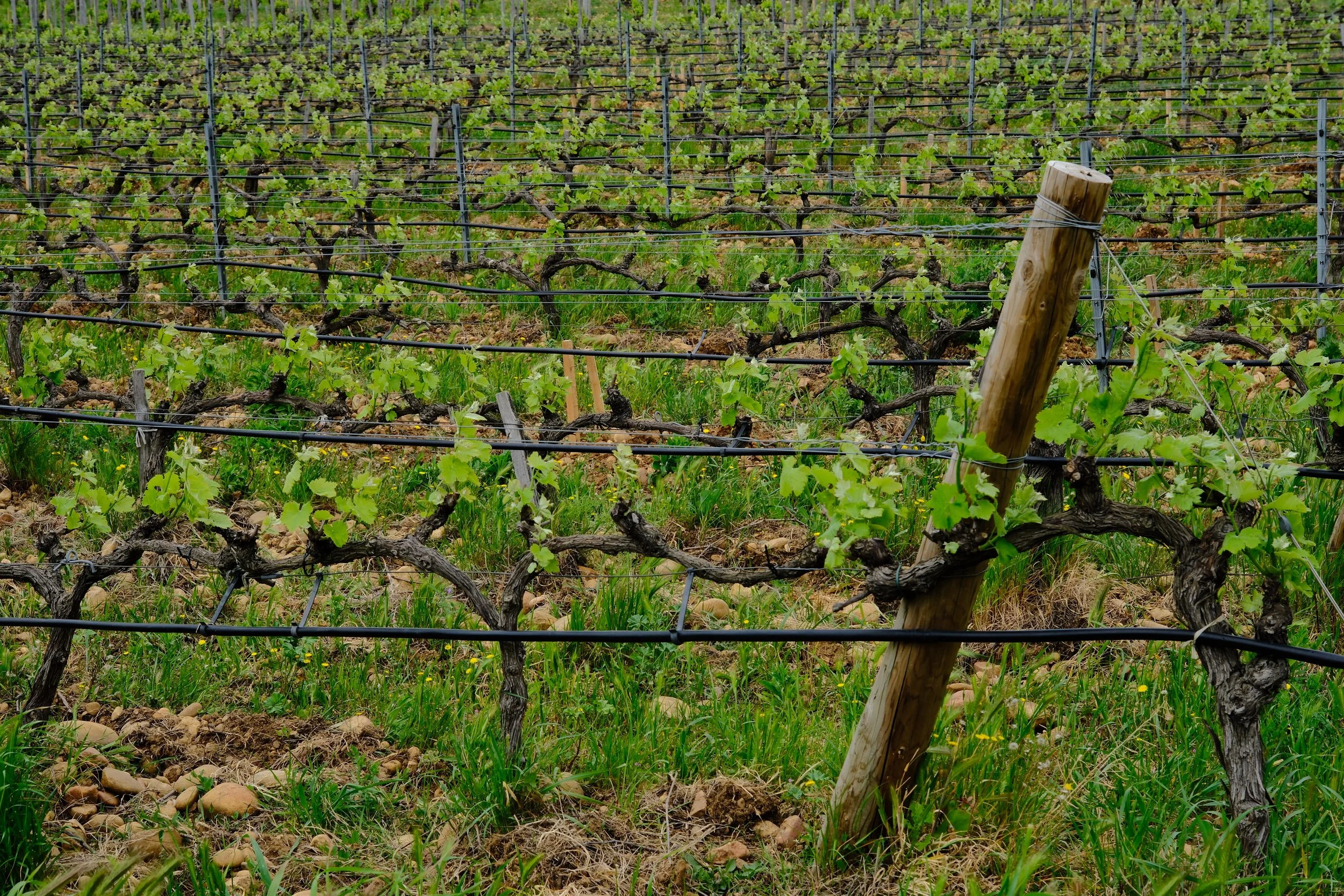
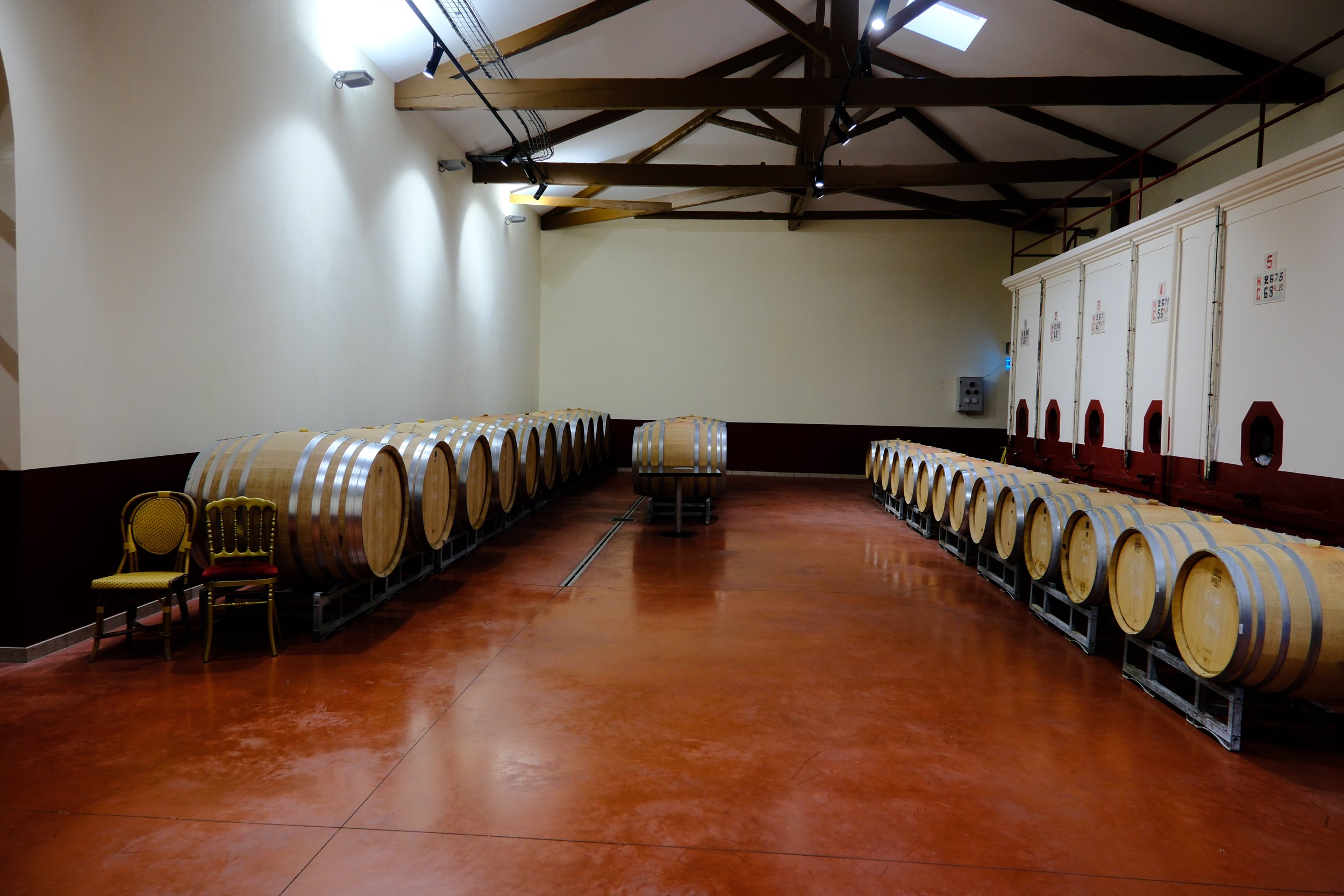
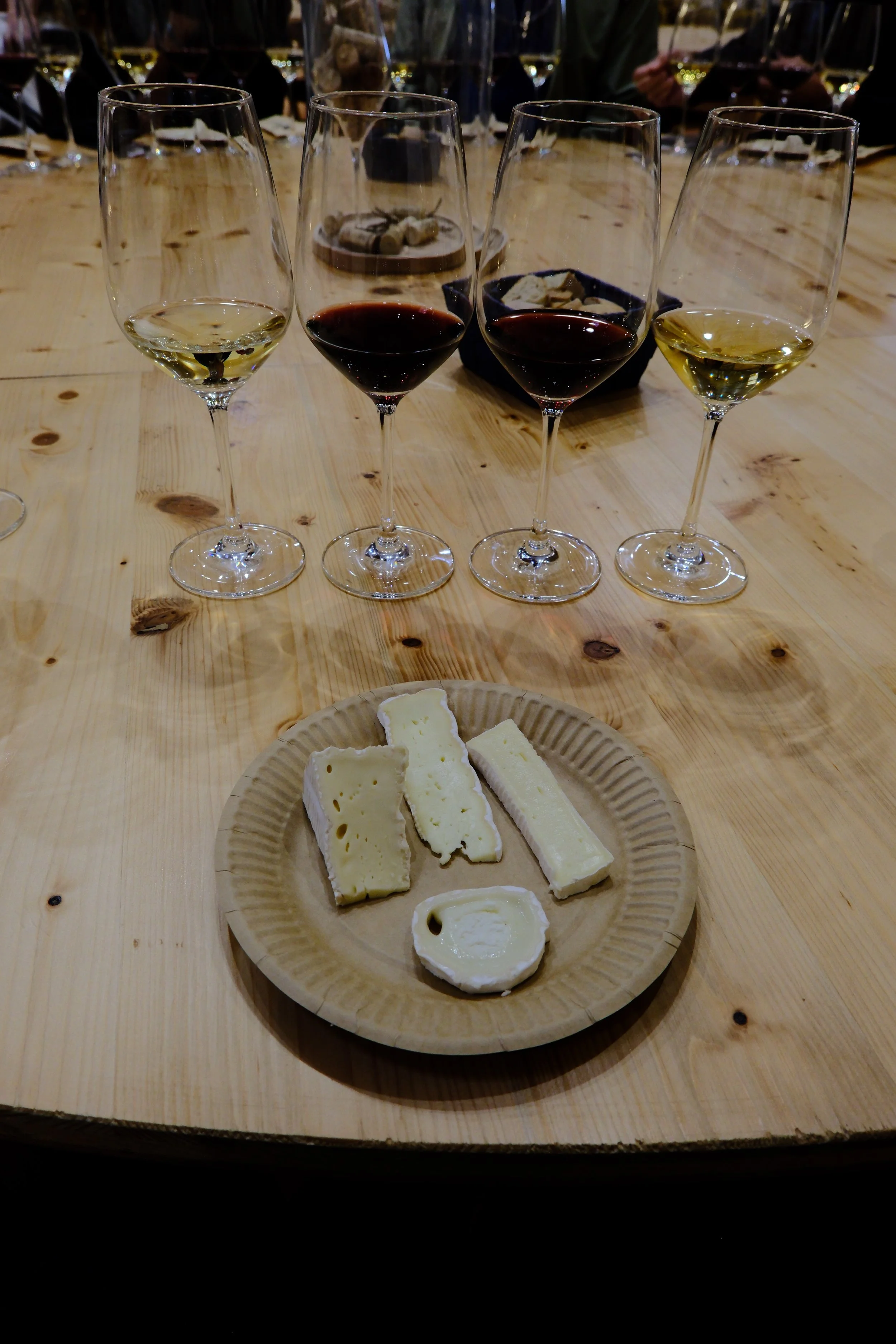
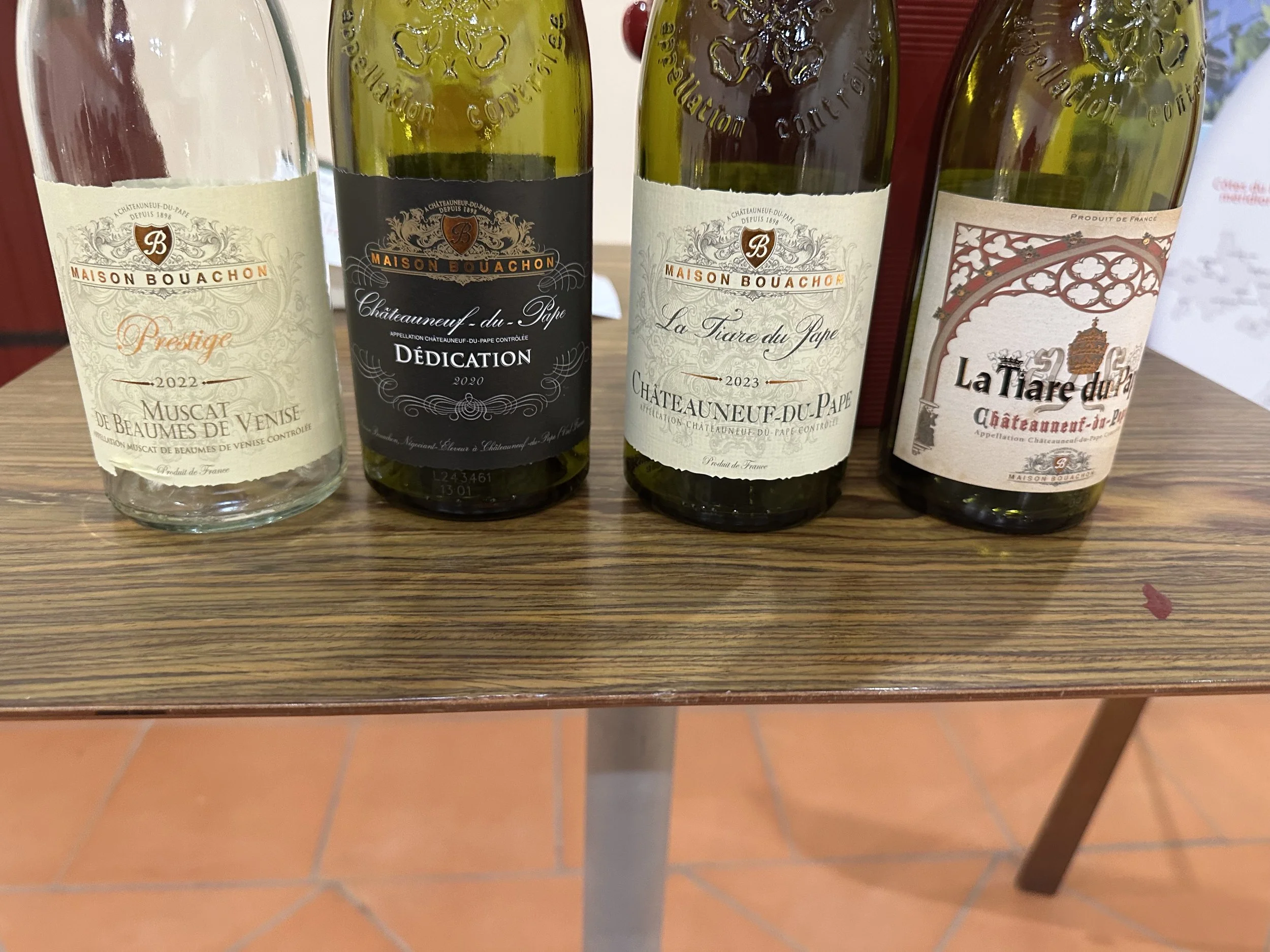
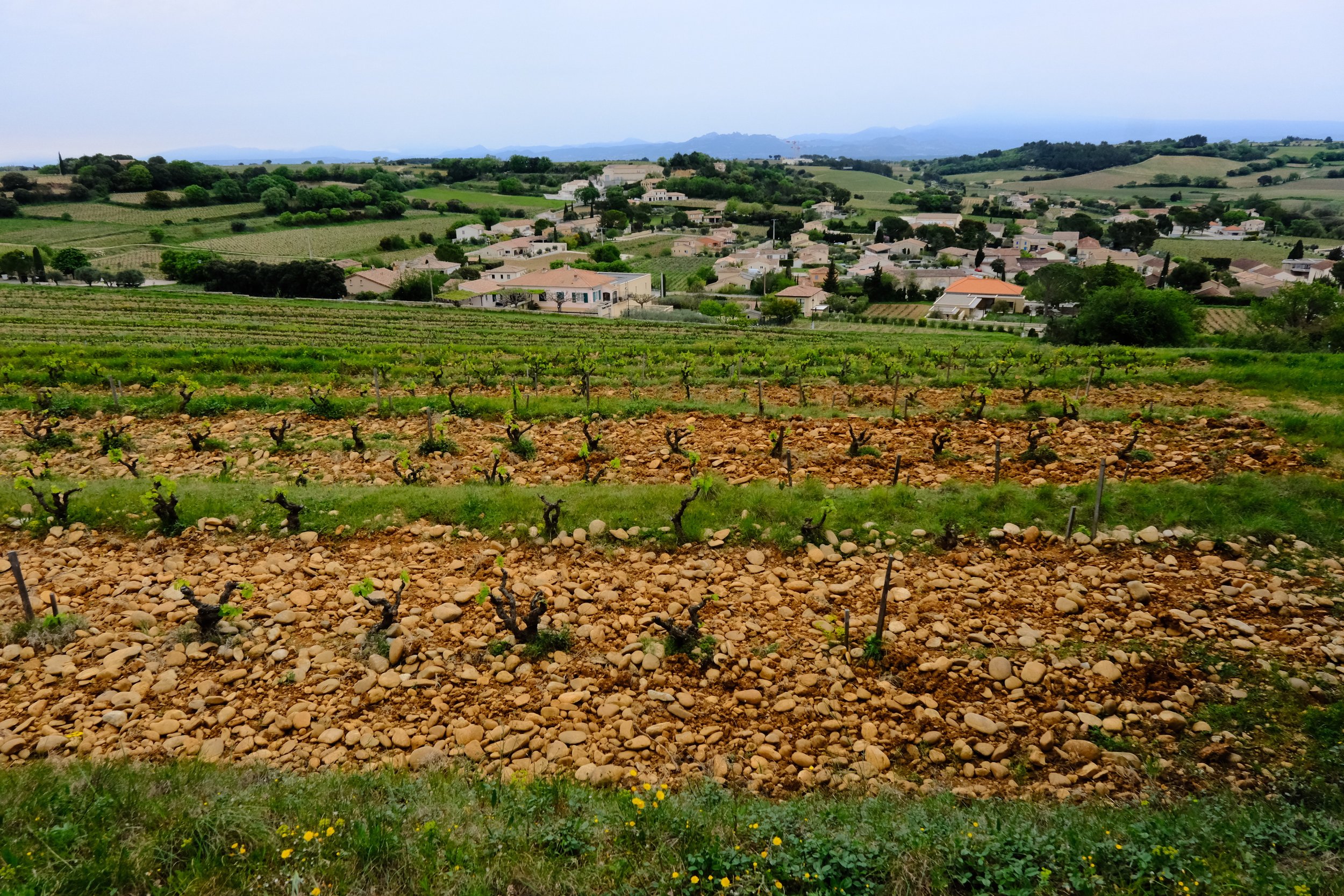
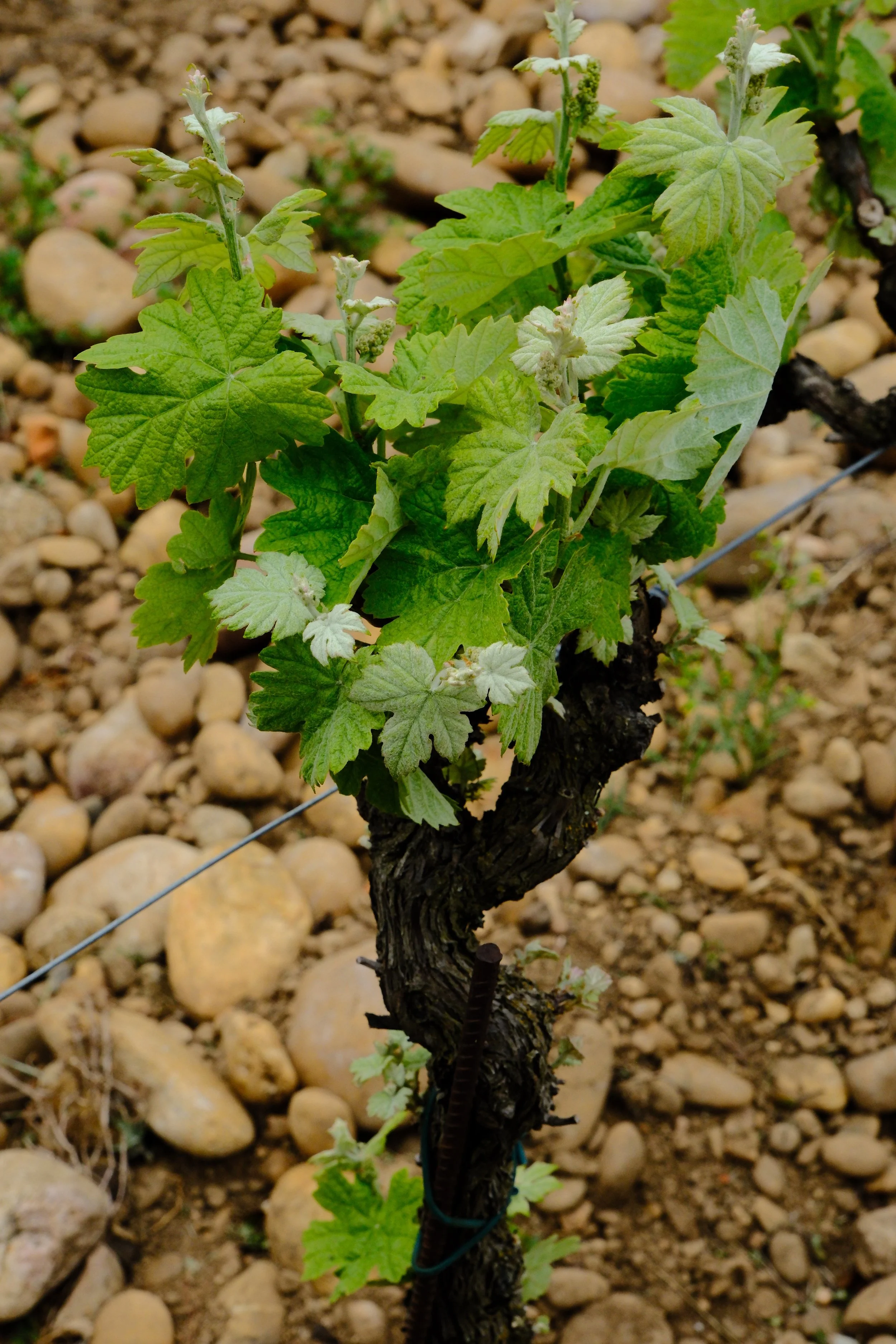
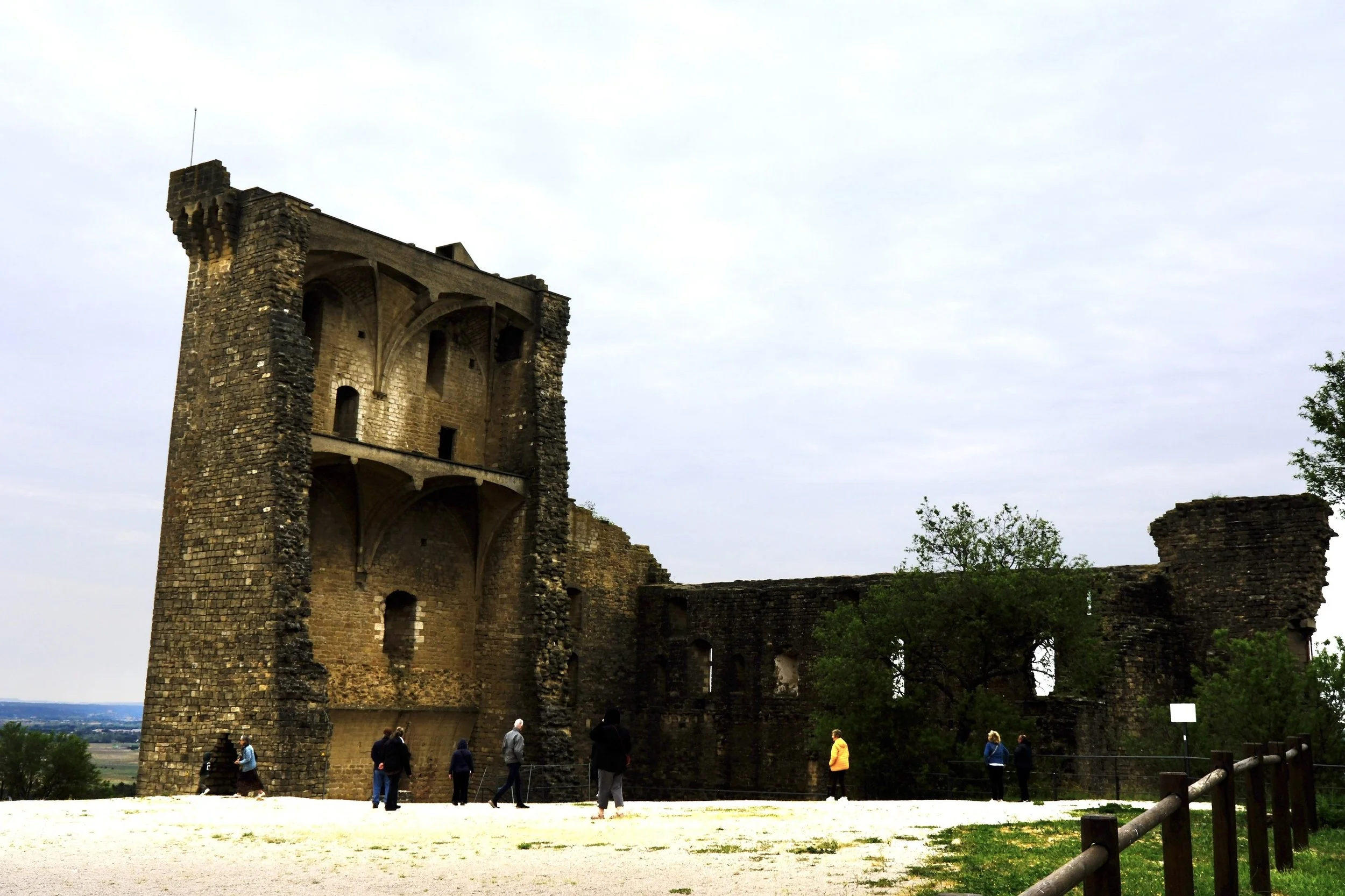
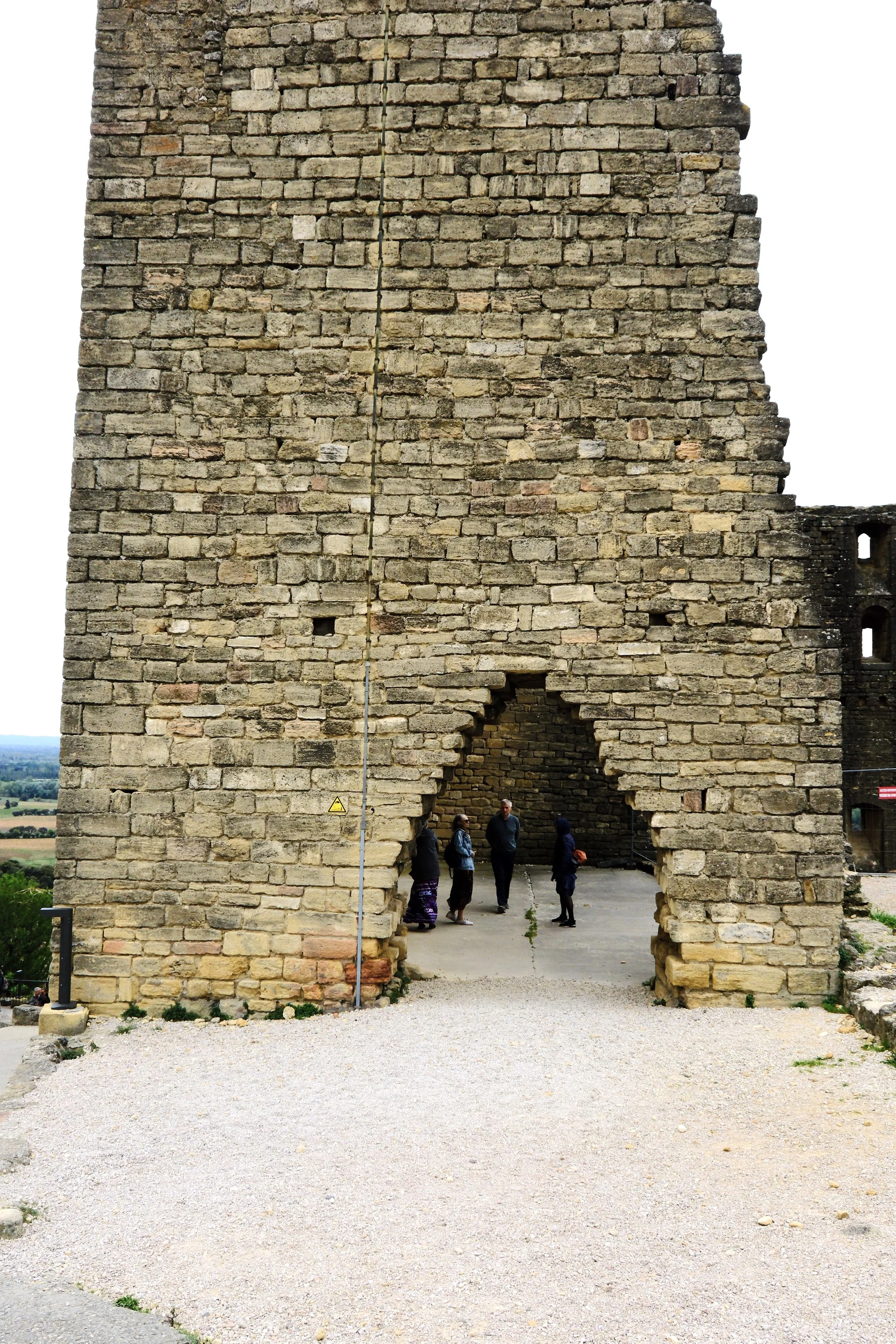
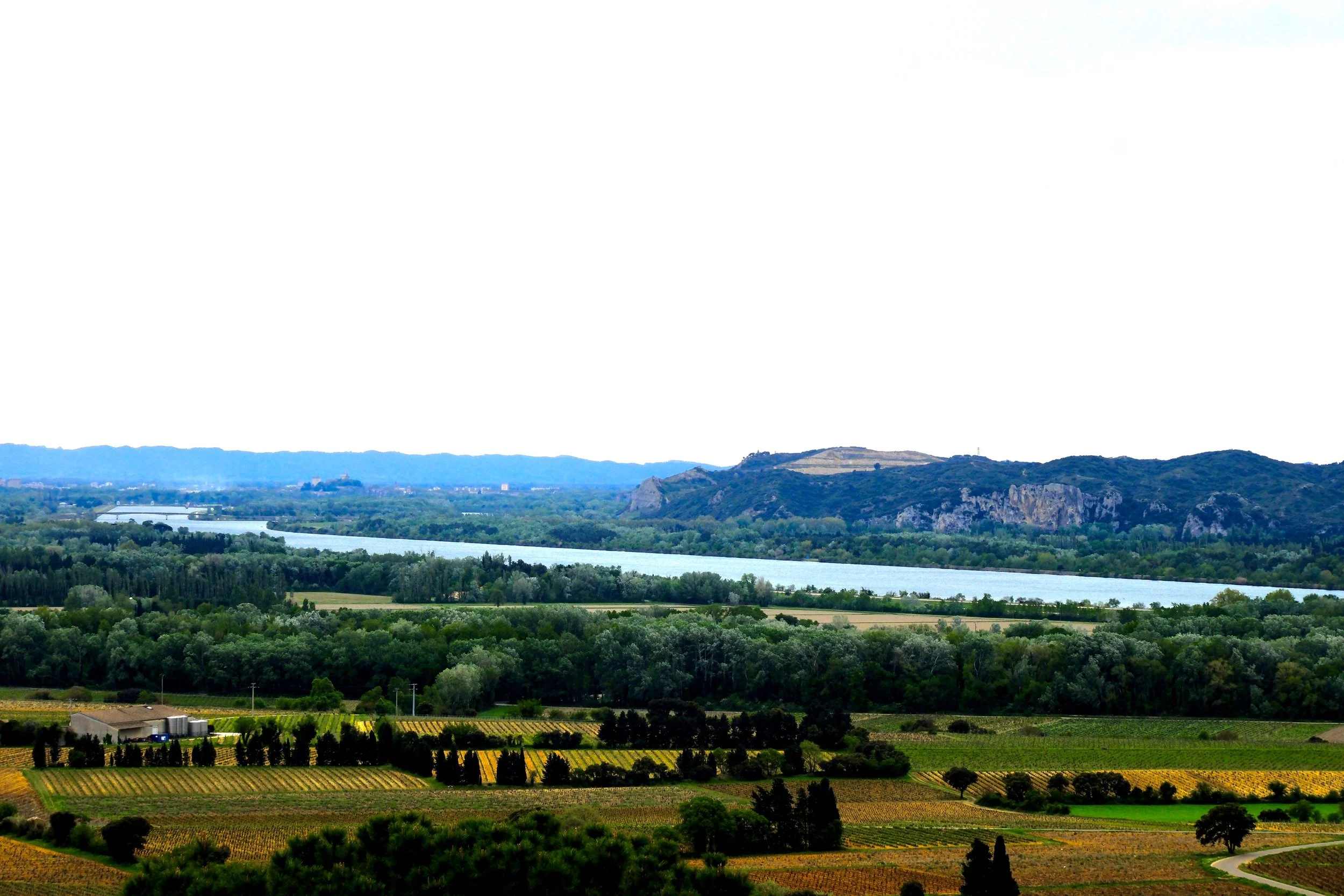
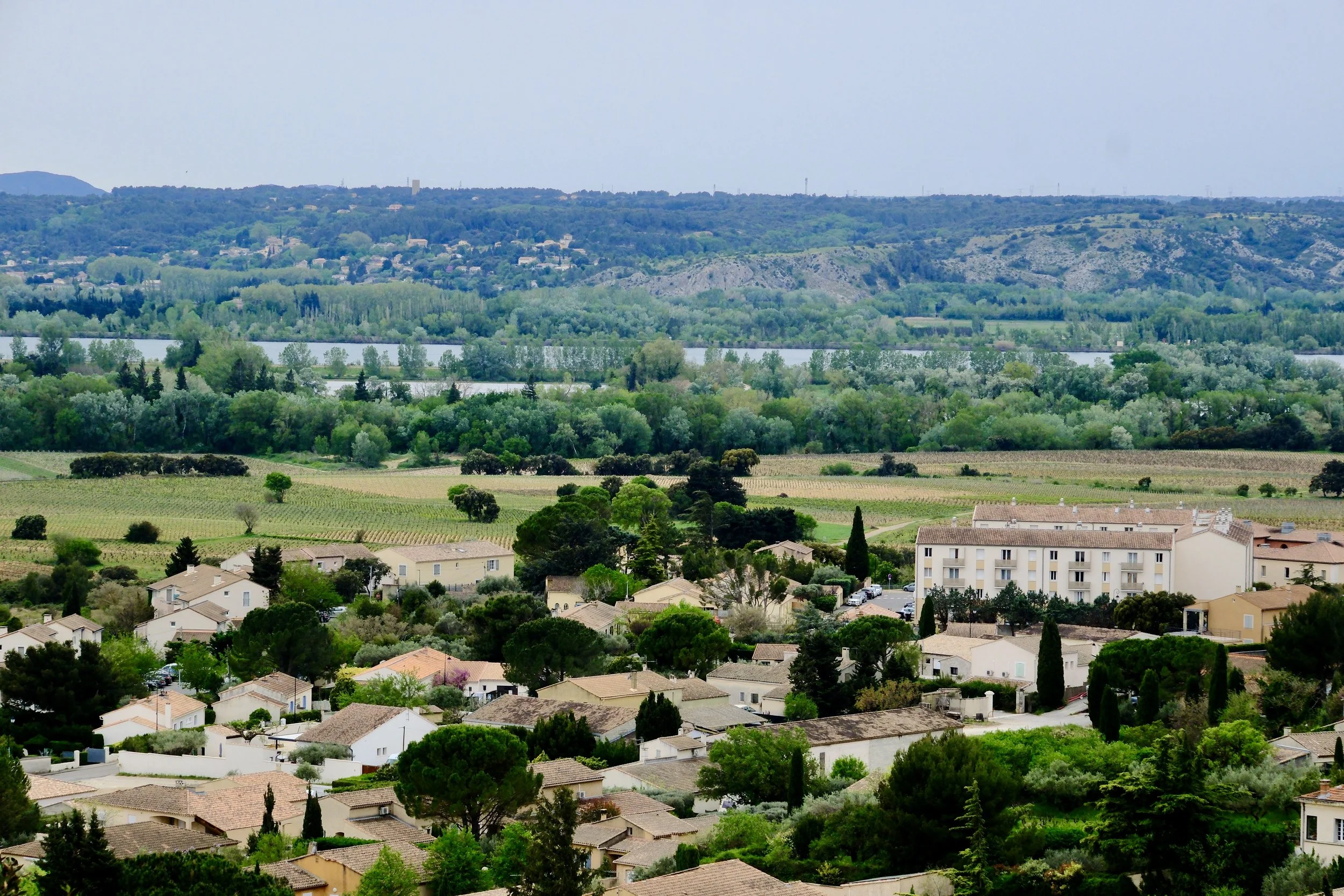
The afternoon was a bus trip to the famous Chateauneuf de Pape, a big name in wine from Provence. It’s a big commercial operation, not the mom-and-pop Beaujolais winery we visited the other day. The white was good, the first red quite strong, the second red was better. The fourth sweet wine made me think of pouring it over ice cream. Maybe it was the corporate feel, but the Beaujolais was our winner.
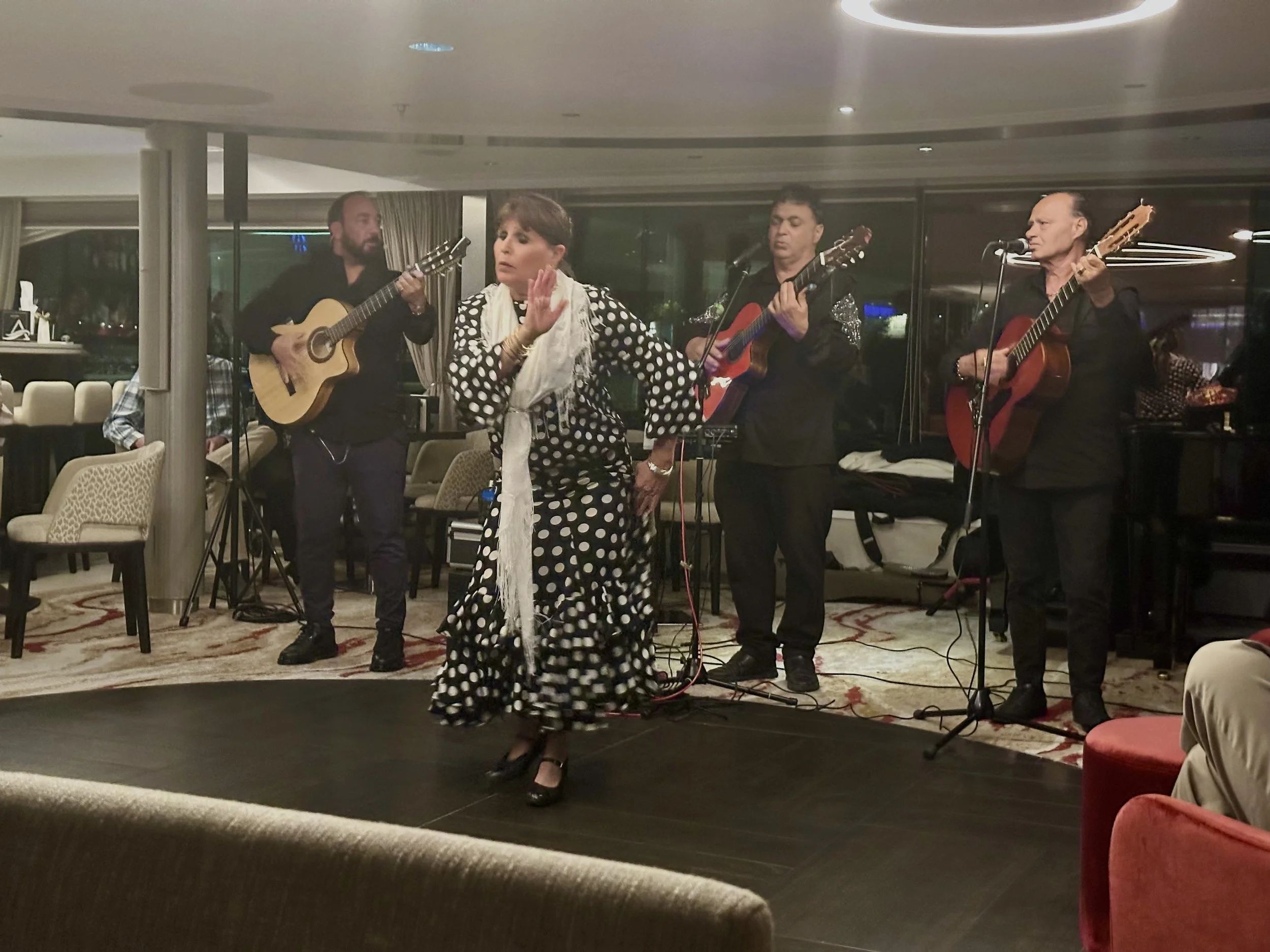
The after-dinner entertainment was a guitar trio, all men, who sang in Spanish, French and English. A lady dancer did traditional dances – long, flowing skirts, dramatic, slow-motion moves, etc. I wouldn’t call by it Flamenco- no fan involved. But the performance reminded us that Provence is not that far from the Spanish border. Pretty close to Italy, too
Tomorrow, we end our Poetry II voyage in Arles.