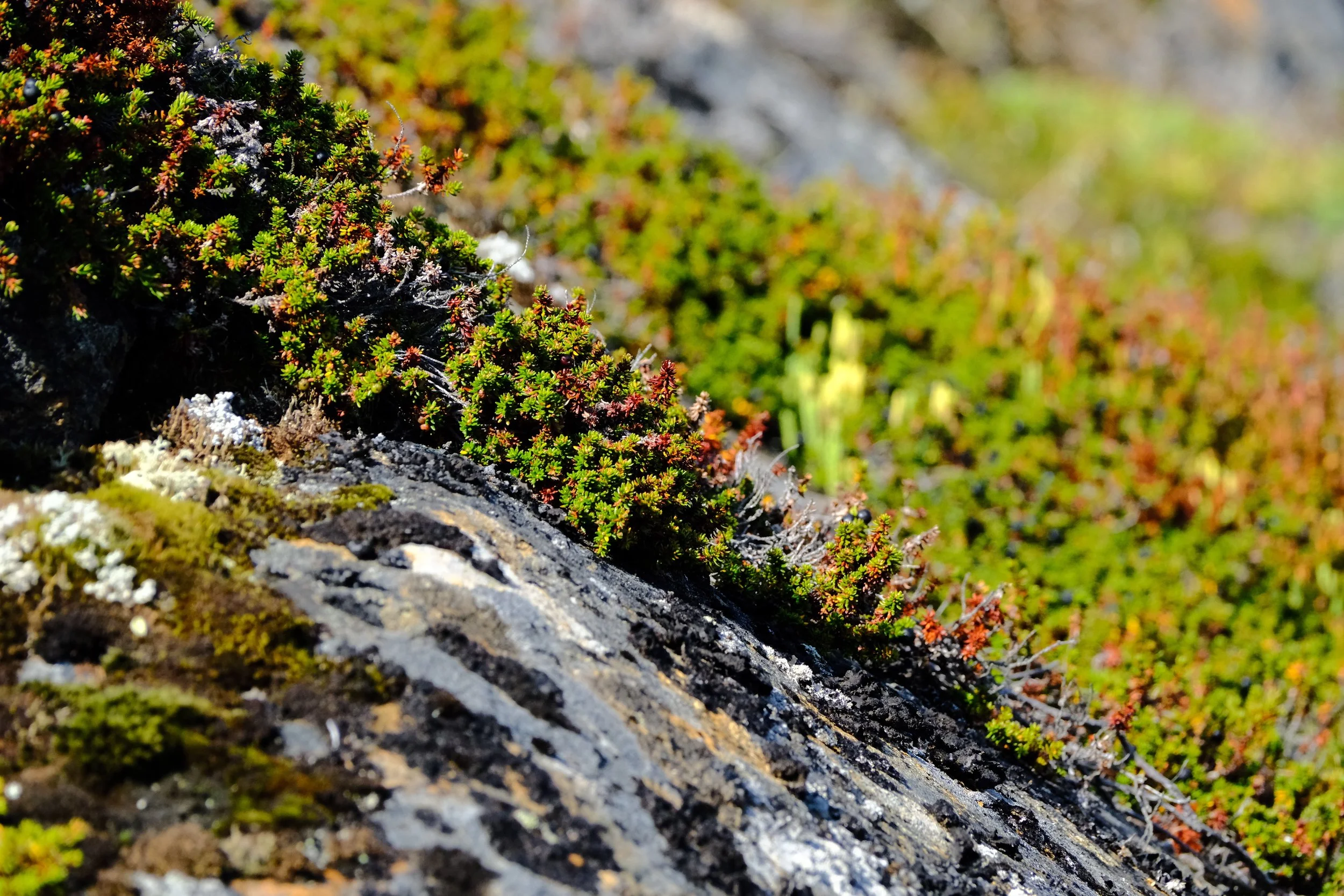
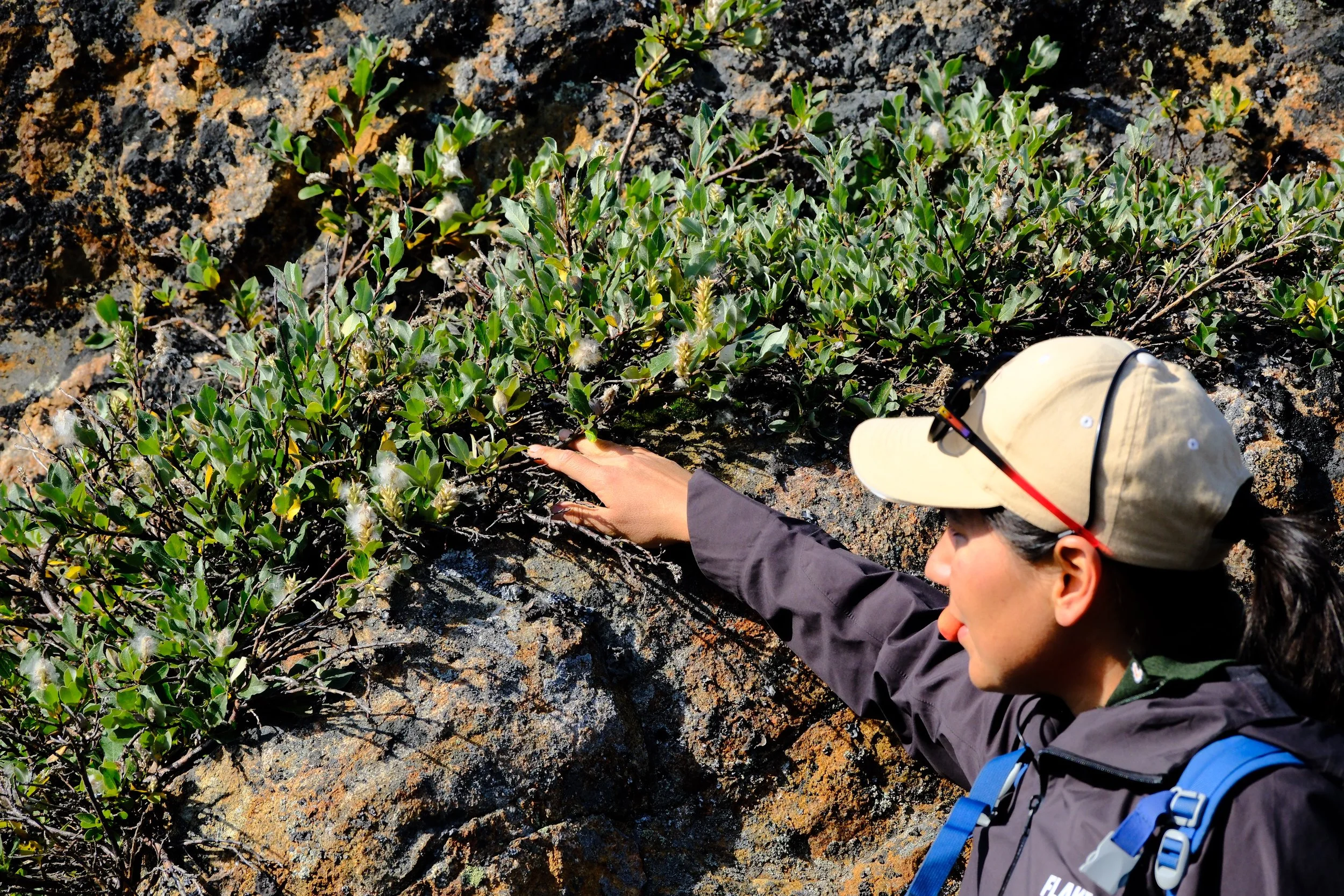
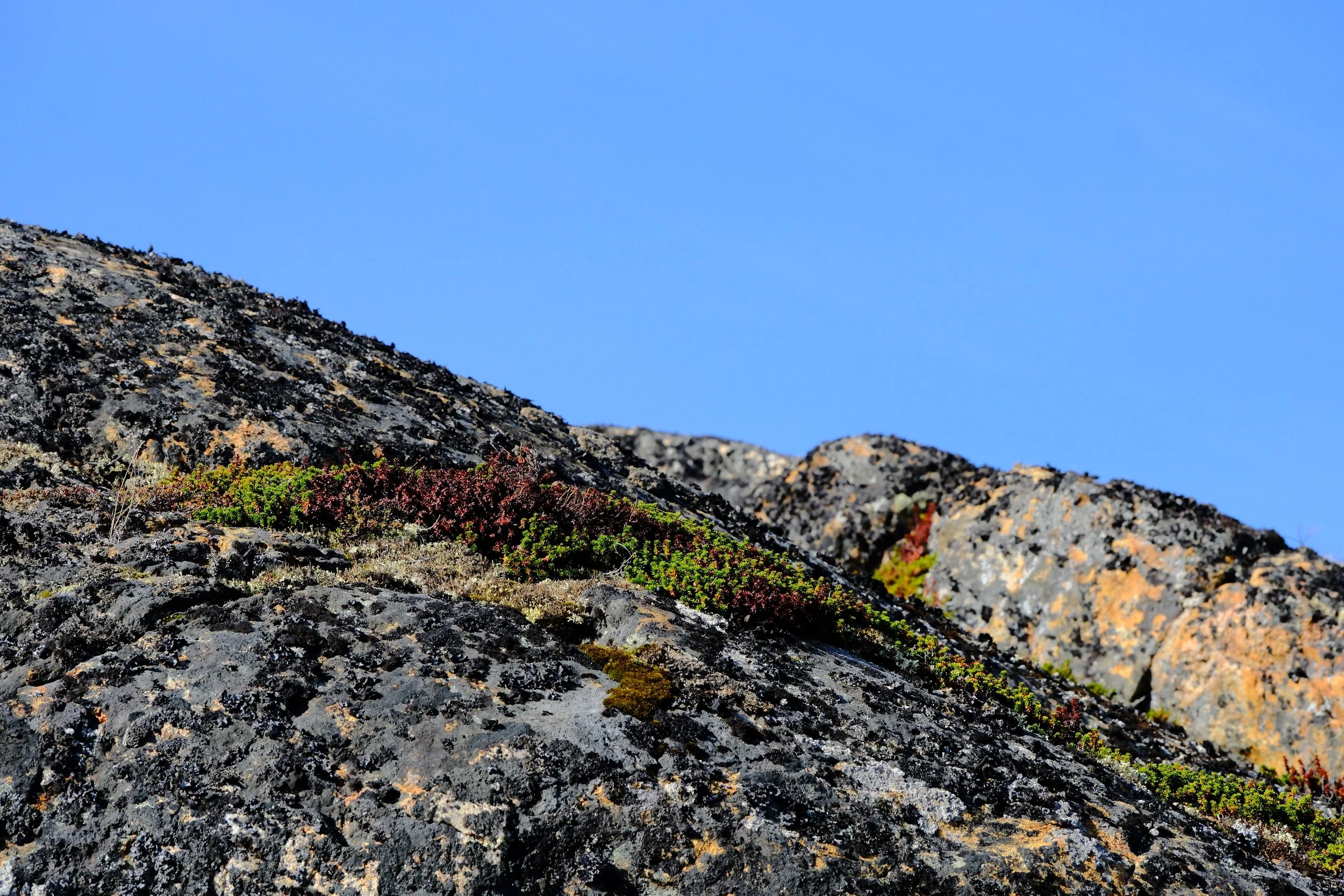
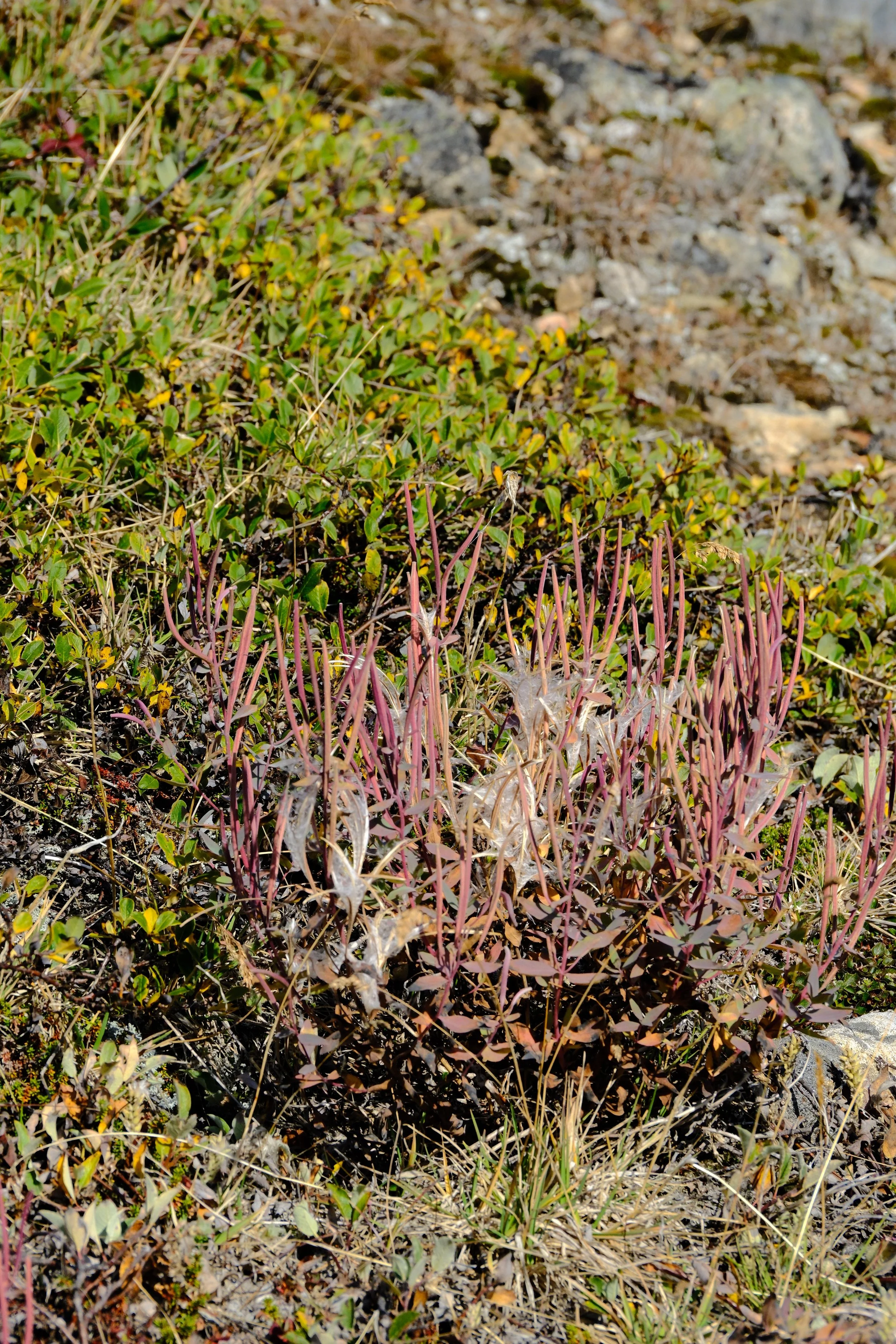
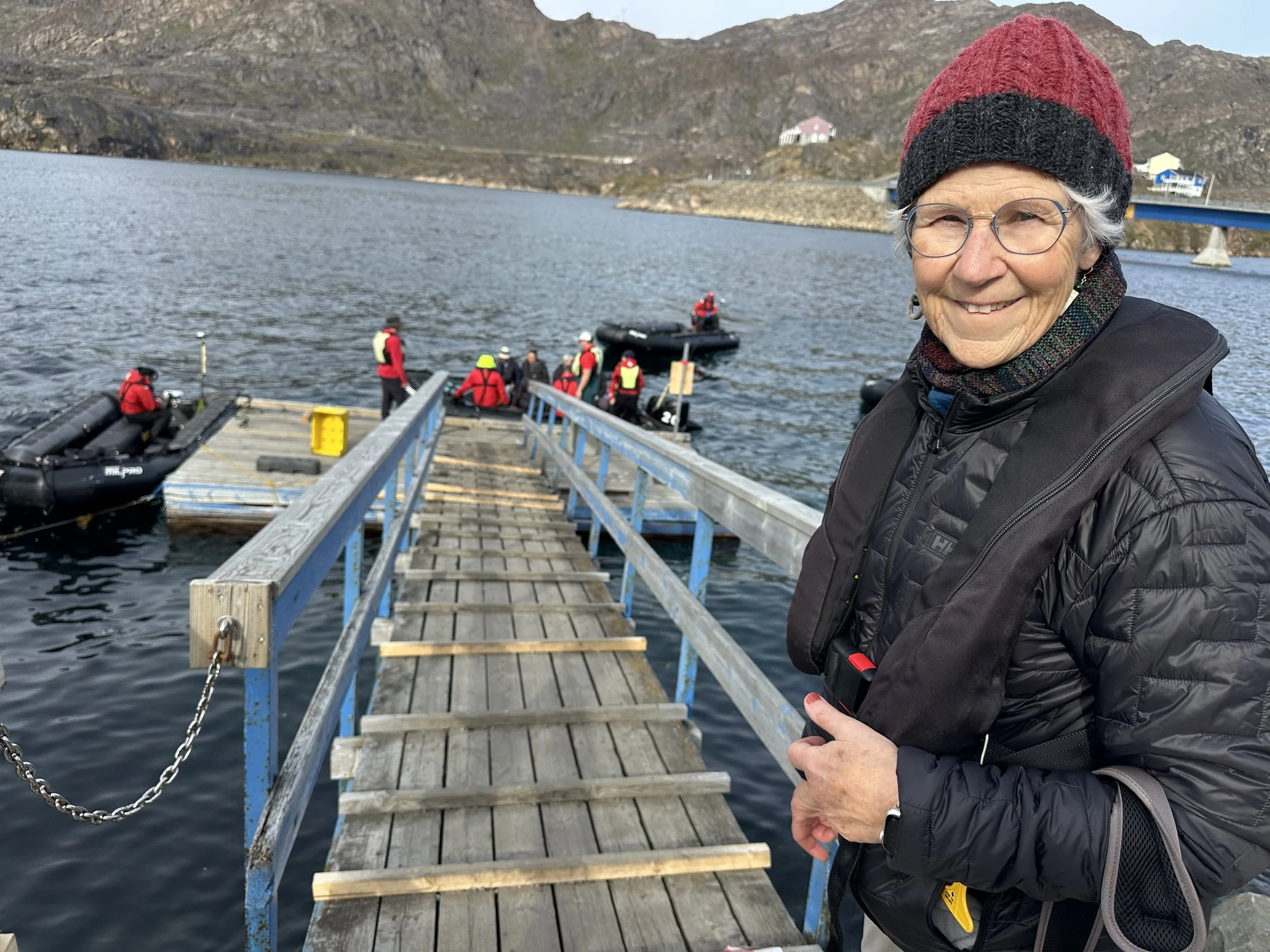
Our final port of call and a day of exploring nature in a truly picturesque fishing town and, as usual, a day overpowered by the cultural aspects of what we saw and learned.
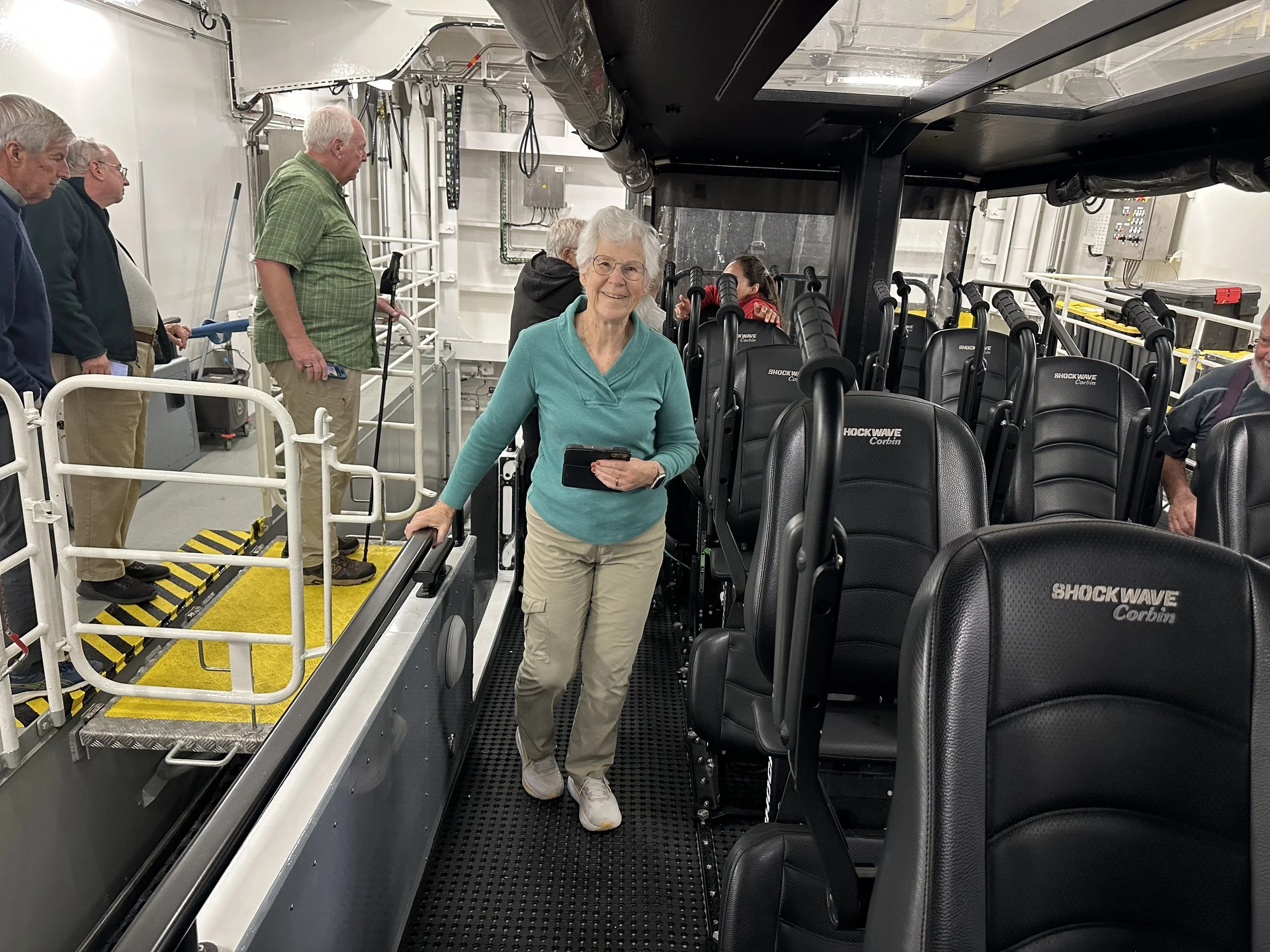
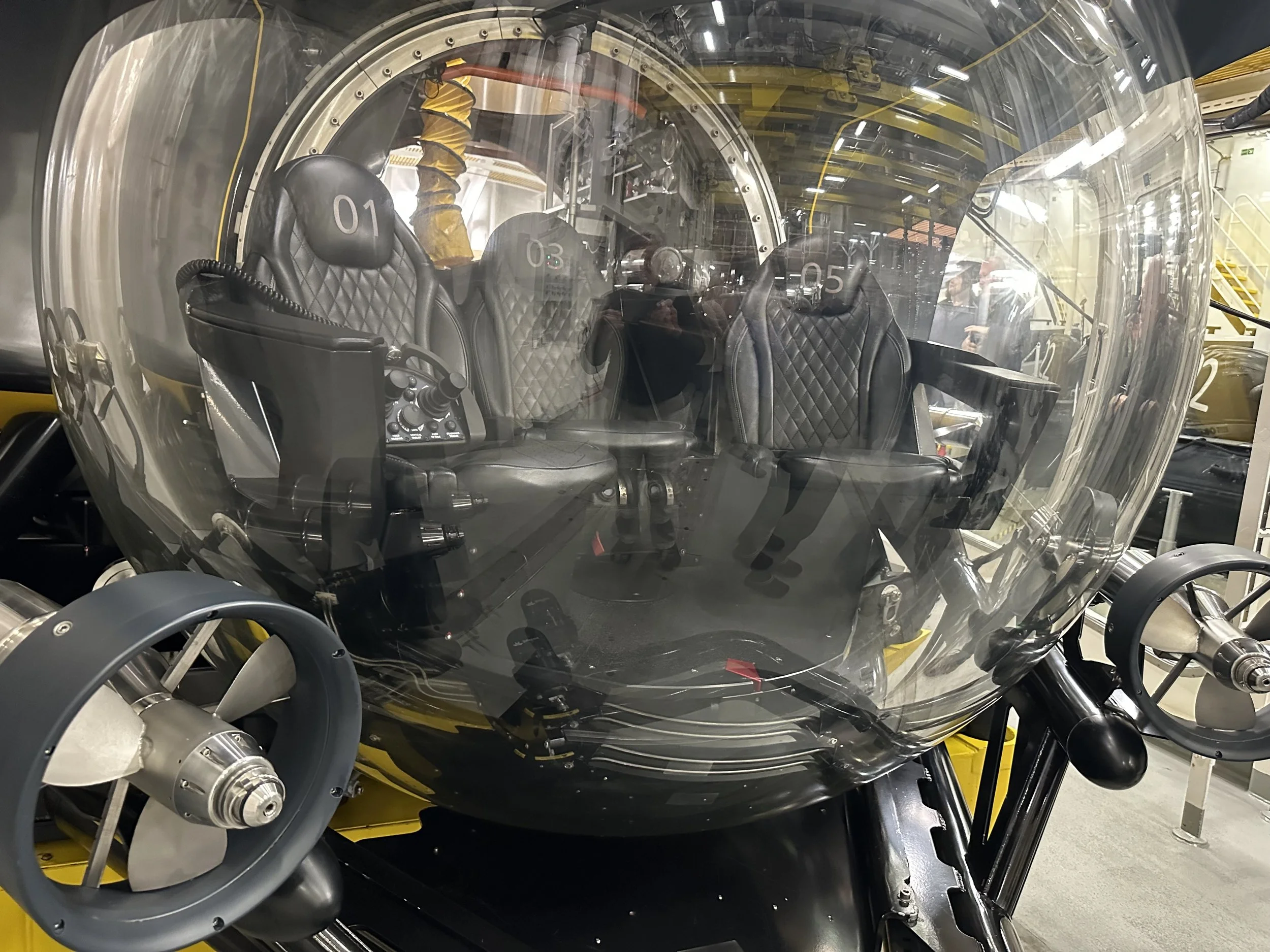
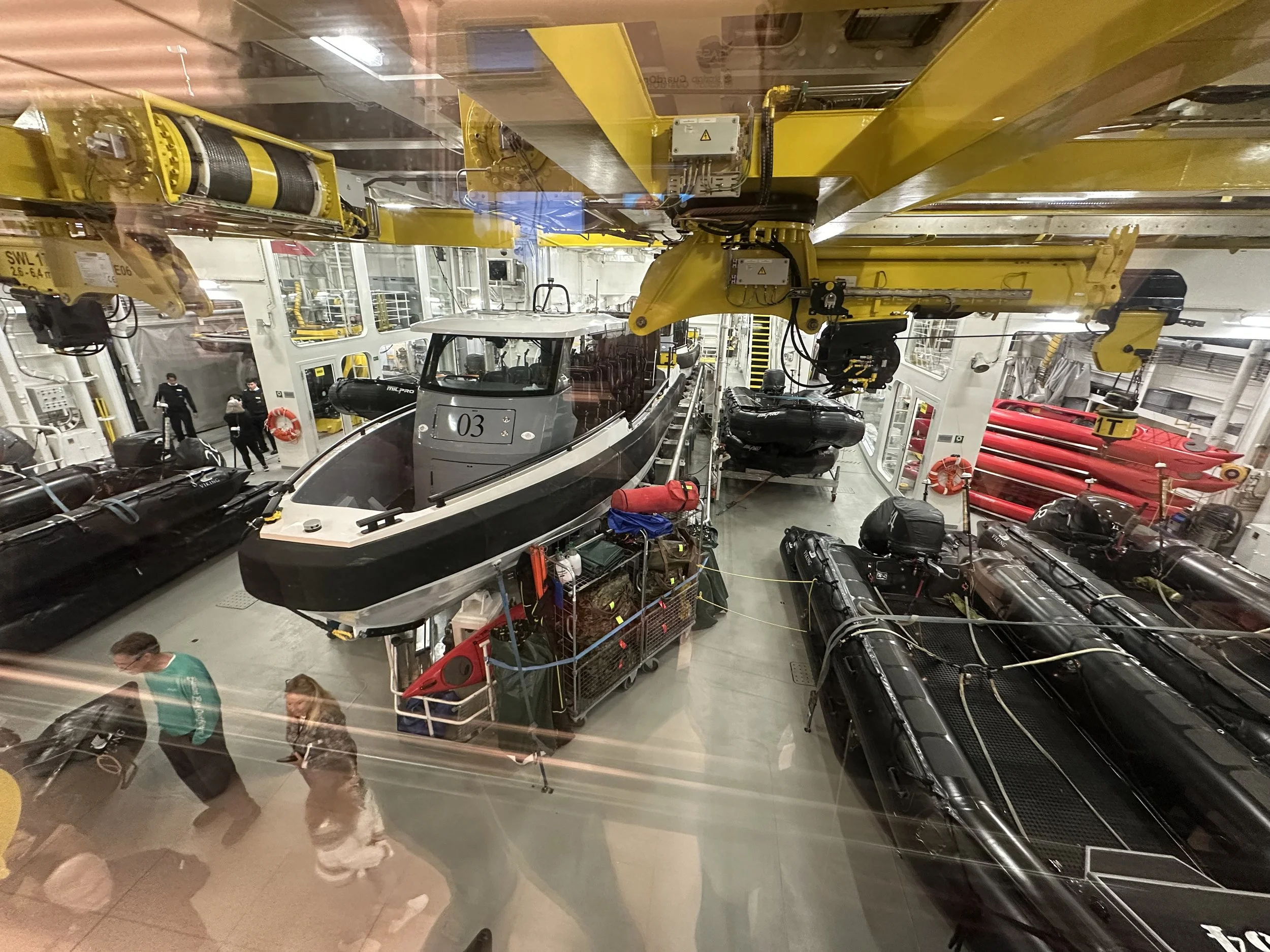
Yesterday, our day at sea, featured a tour of the “hanger” – the place all the expedition boats are stored. We got a chance to see the equipment, the mechanisms used to launch and retrieve them and to talk with the people who operate them.
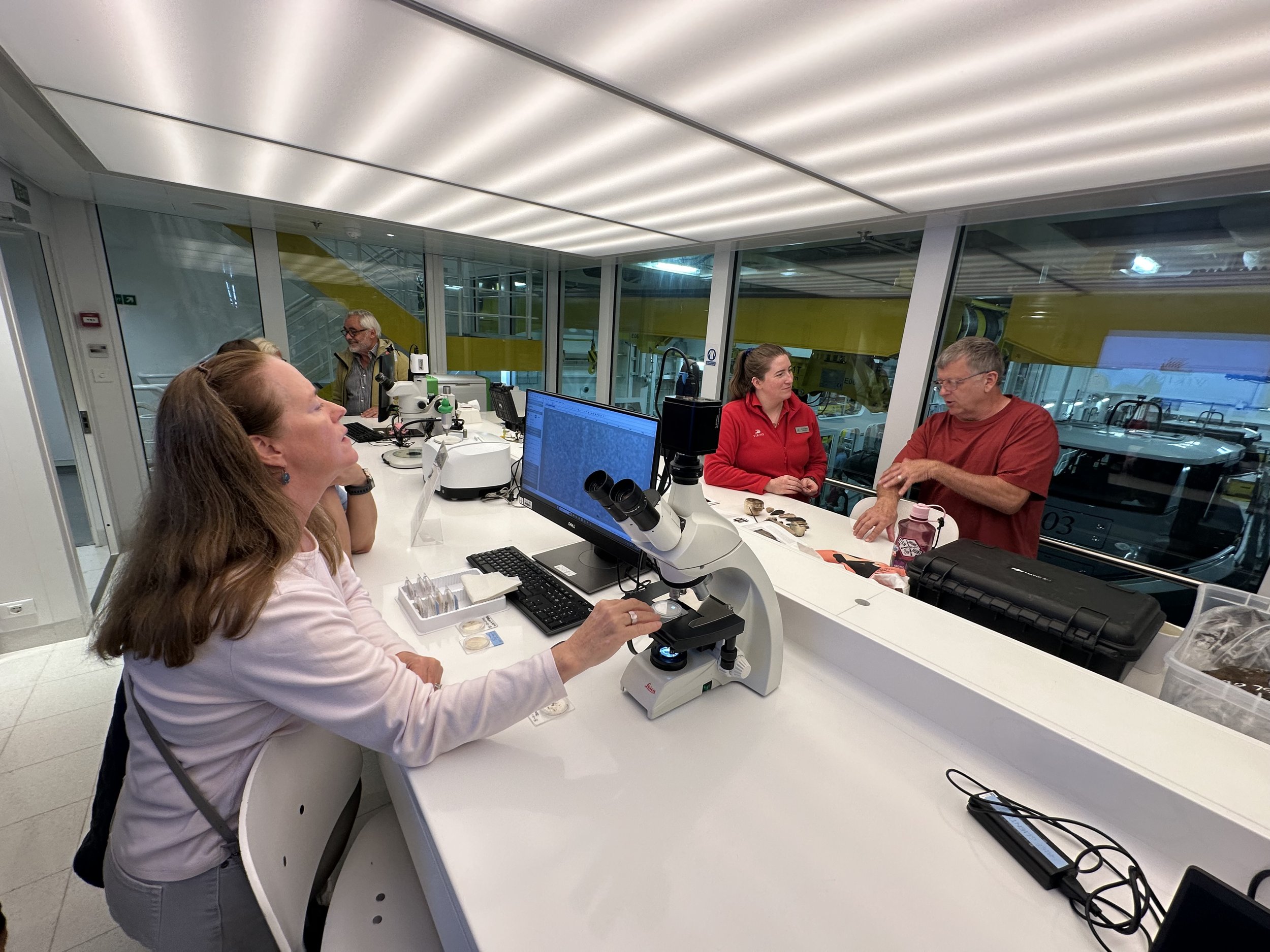
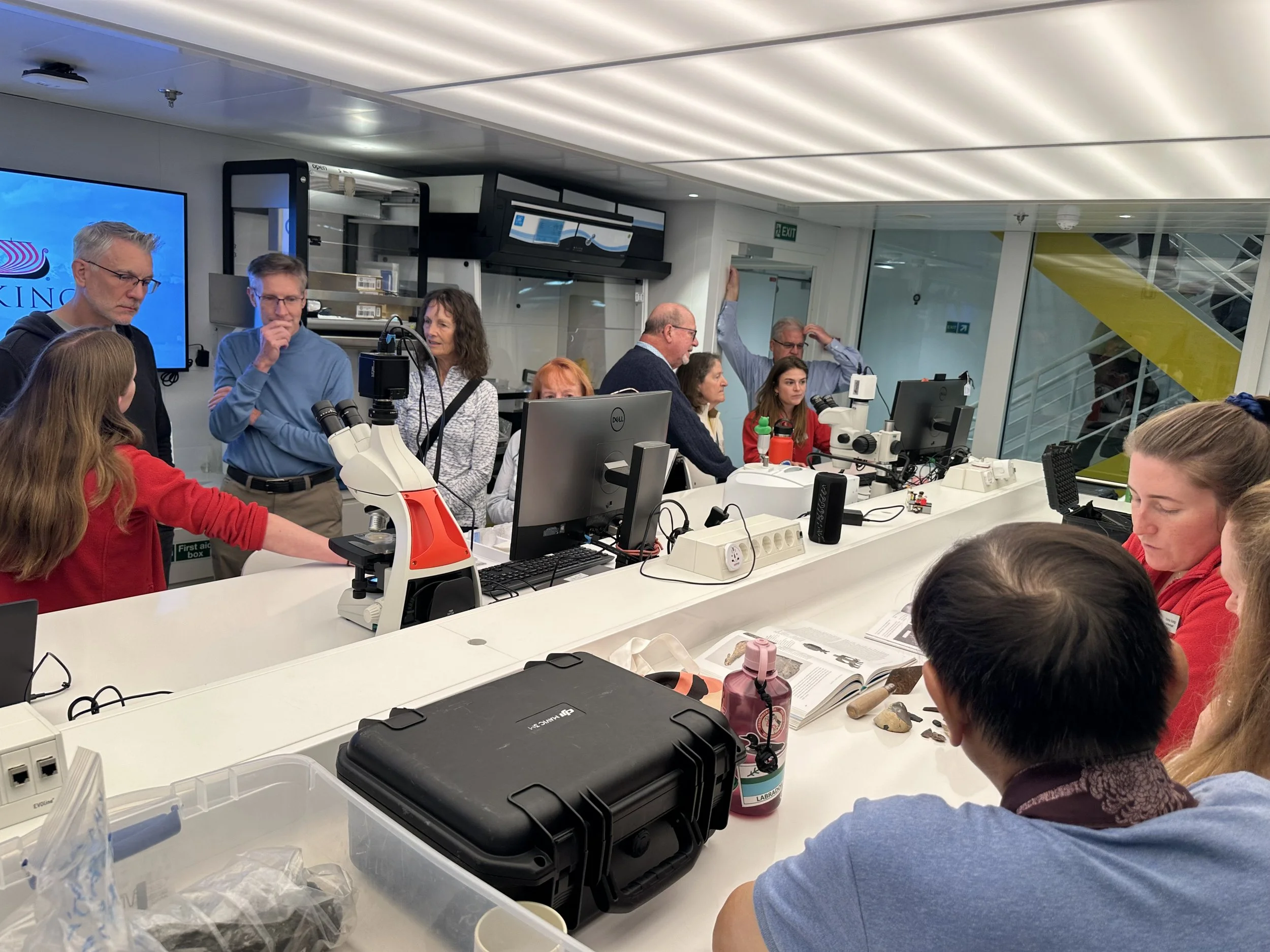
We also got a tour of the lab where Viking scientists gather data about ocean ecosystems and the creatures who live therein. Their data are shared with other research organizations to create a bigger data set on which analysis and scientific conjectures can be formed.
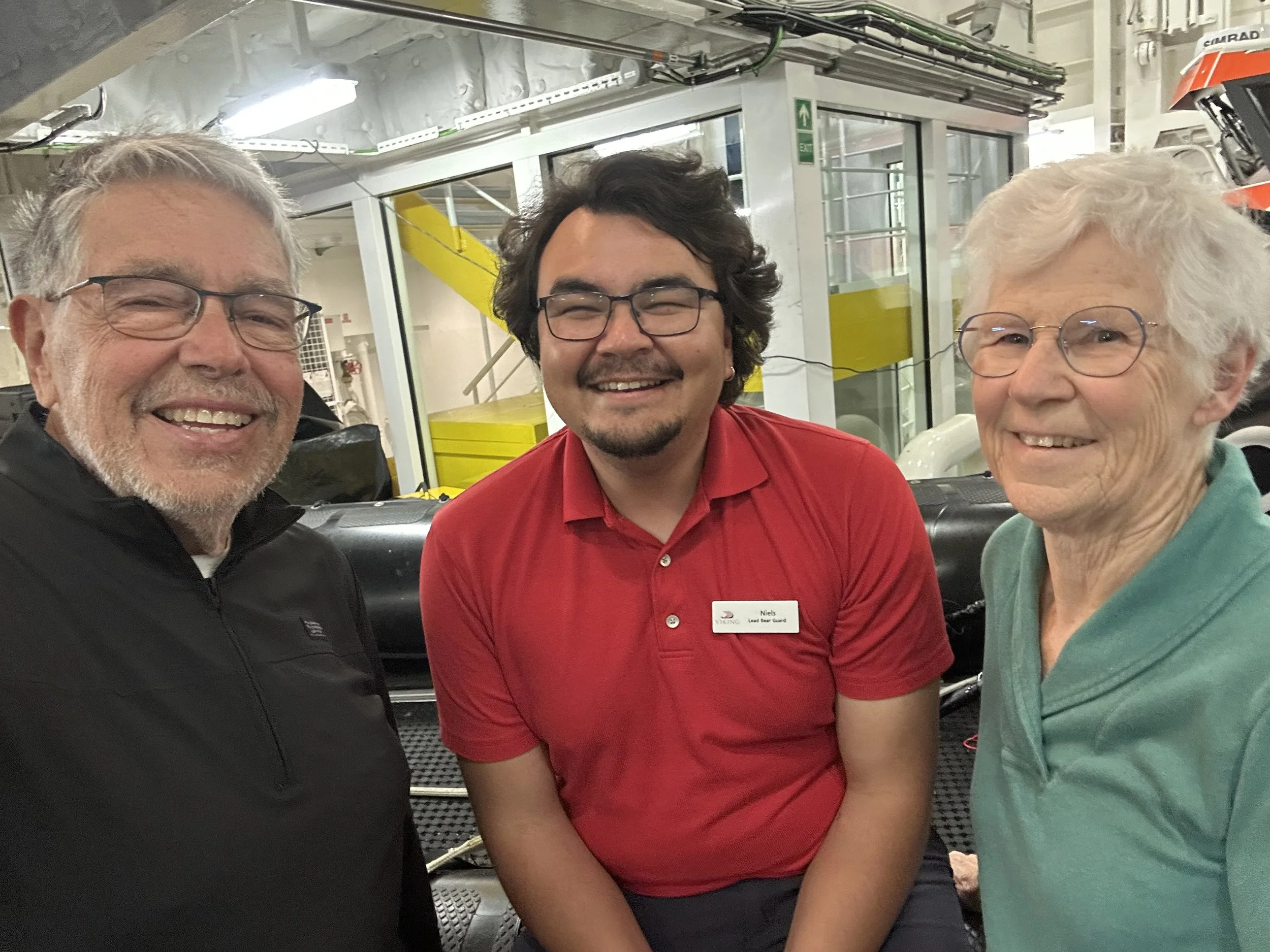
We had a fairly lengthy discussion about Greenland with Niels, the “Lead Bear Guard,” and the relationship between Greenland and Denmark. “Decolonialization” occurred in early 1979. Full home rule autonomy came in 2008. “While relationships with Denmark could be better, and there are still scars from the colonial period, it’s not a bad balance today,” he said.
I suggested to him that Greenland seems to be doing much better than the Nunavut Territory in Canada. He said that Greenland’s process of being on its own started much earlier than Nunavut, which didn’t start until 2000. Its colonial experience was perhaps more troublesome and it is further north, experiencing a colder, more severe climate.
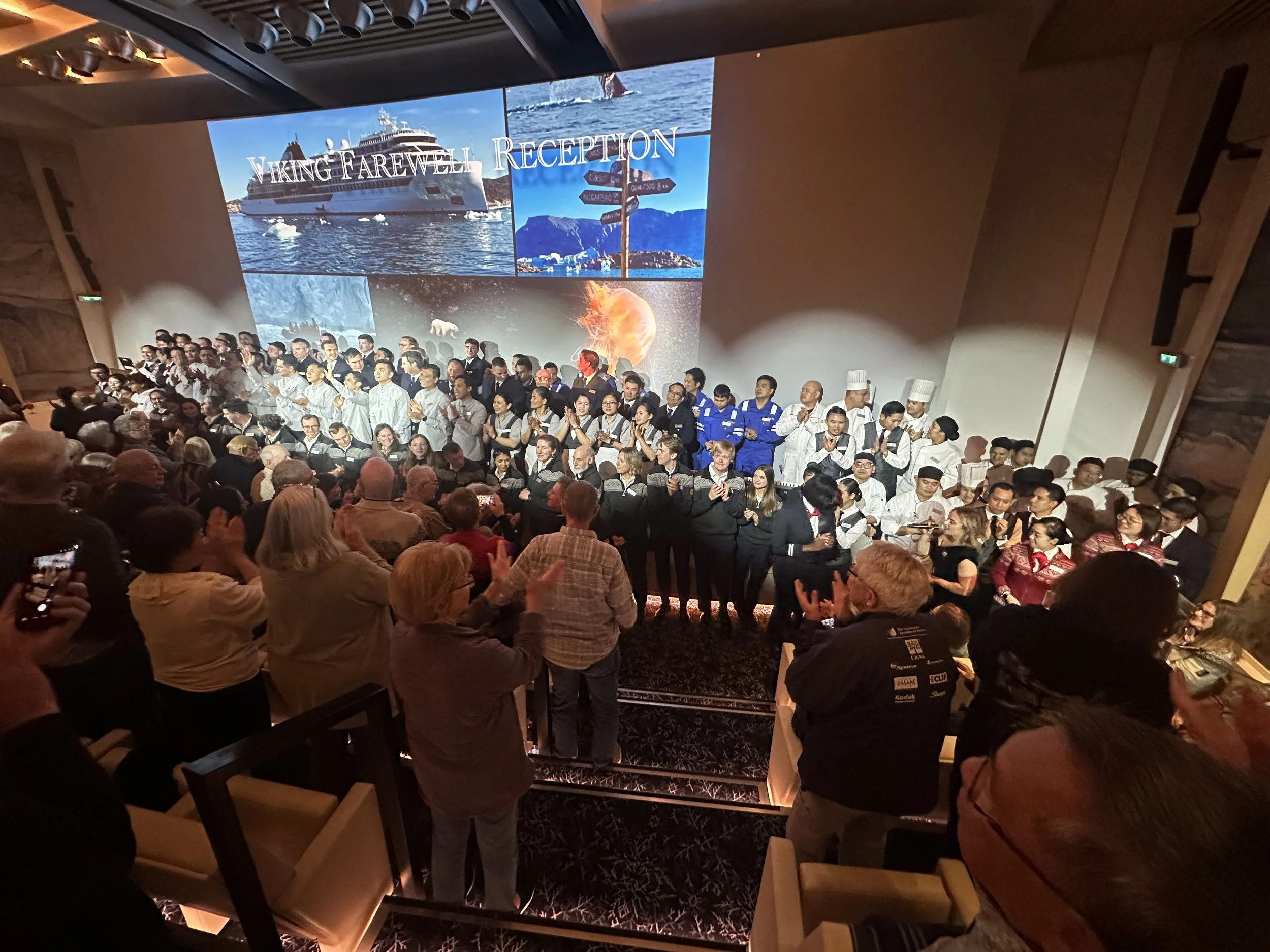
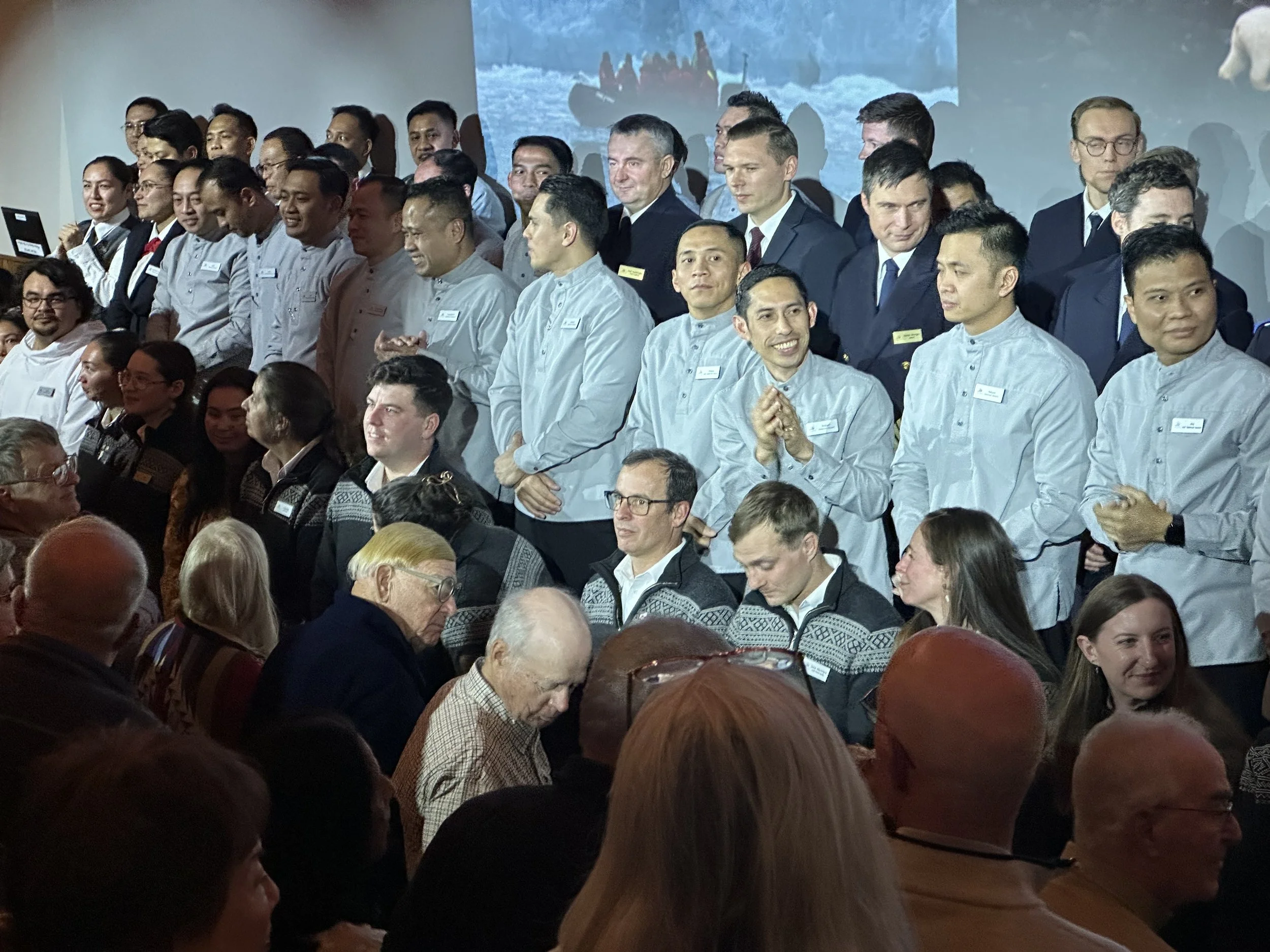
The farewell event brought out most of the crew on stage for us to thank (some were still sailing the ship, thank goodness).
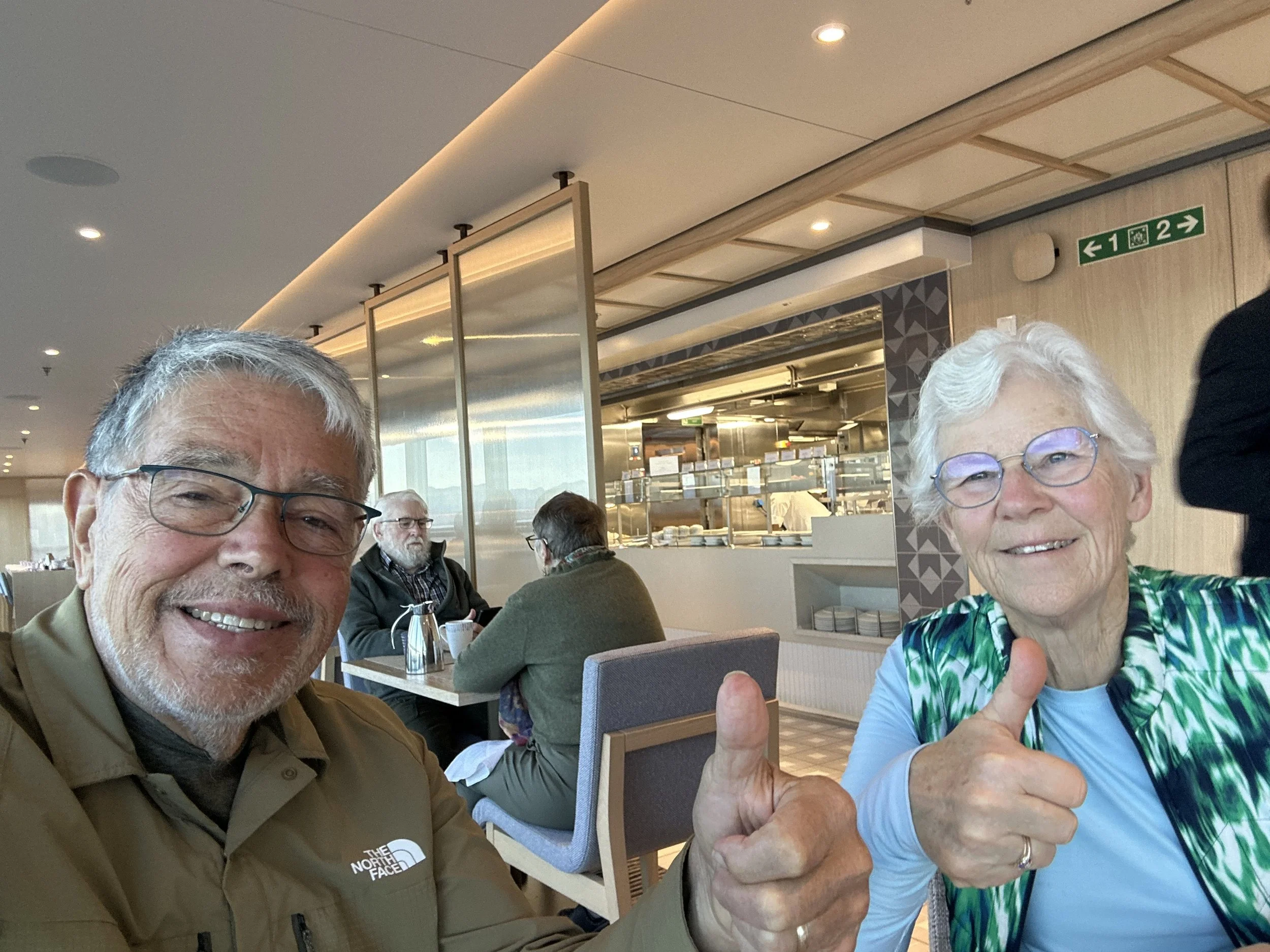
Today started at breakfast with a “Happy Birthday” text and photo for Griffin as he celebrated his 13th birthday today. We now have no grandkids who aren’t teenagers or beyond. Sad, but we love and are amazed by what each of them do and accomplish.
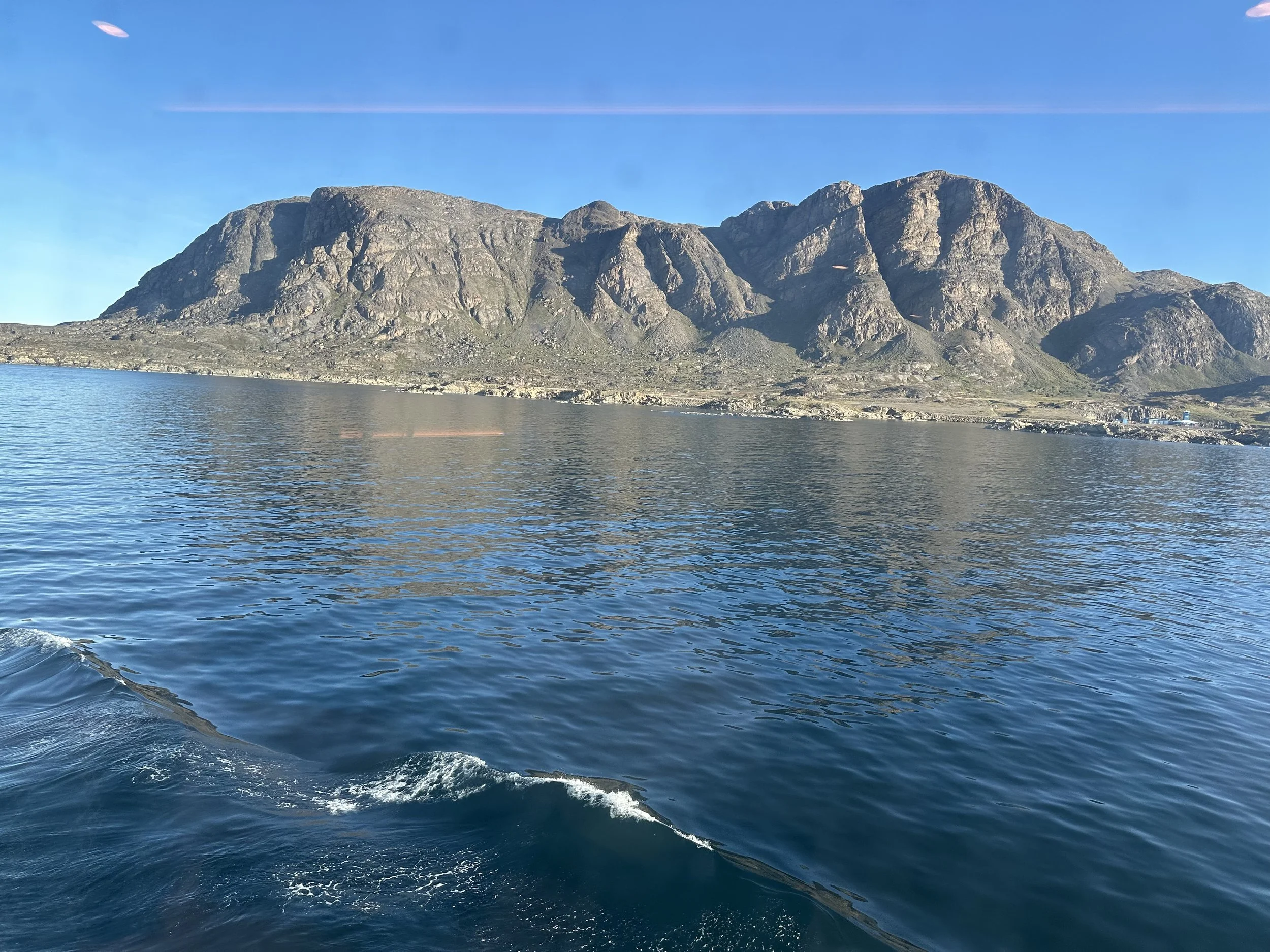
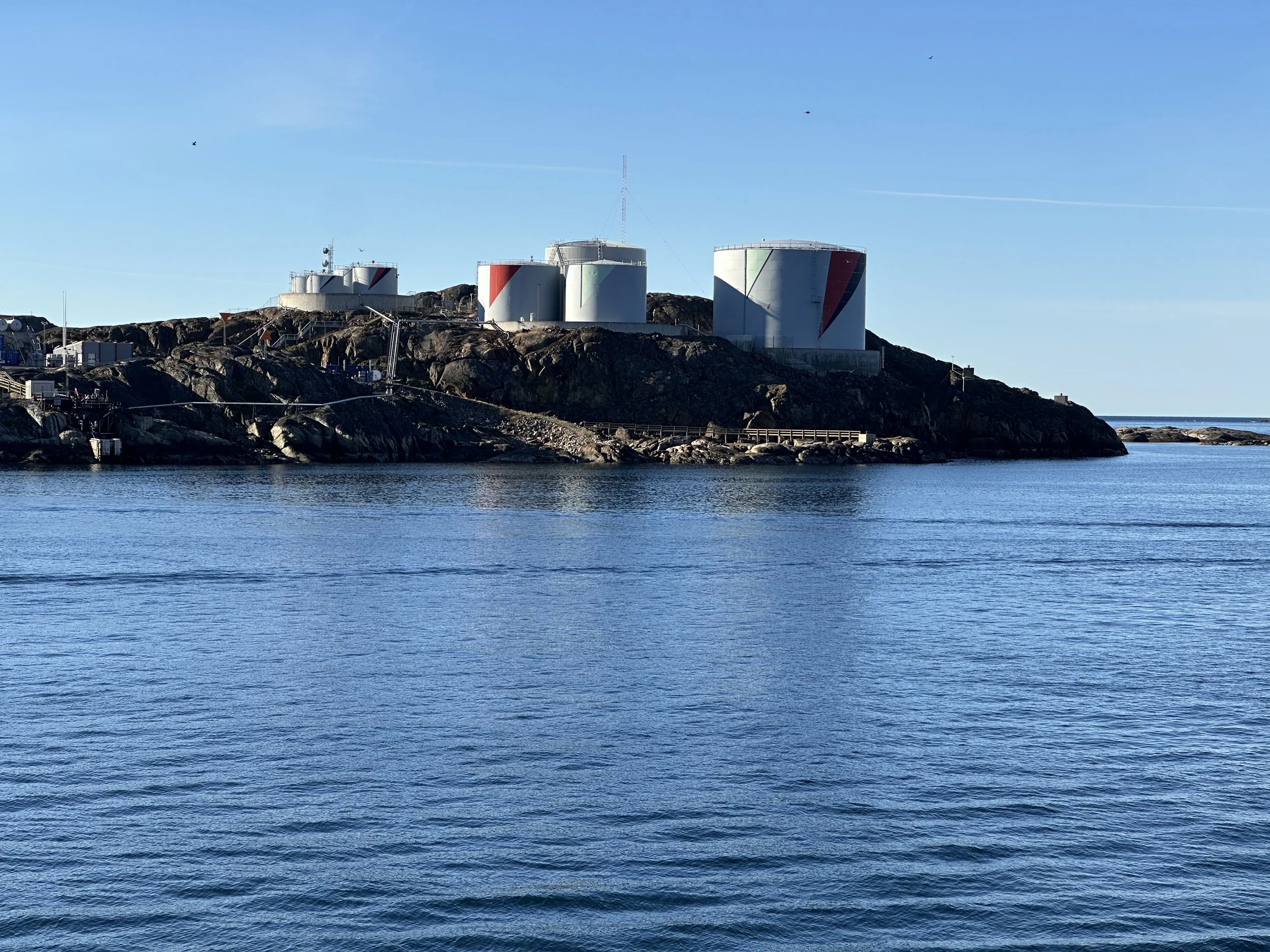
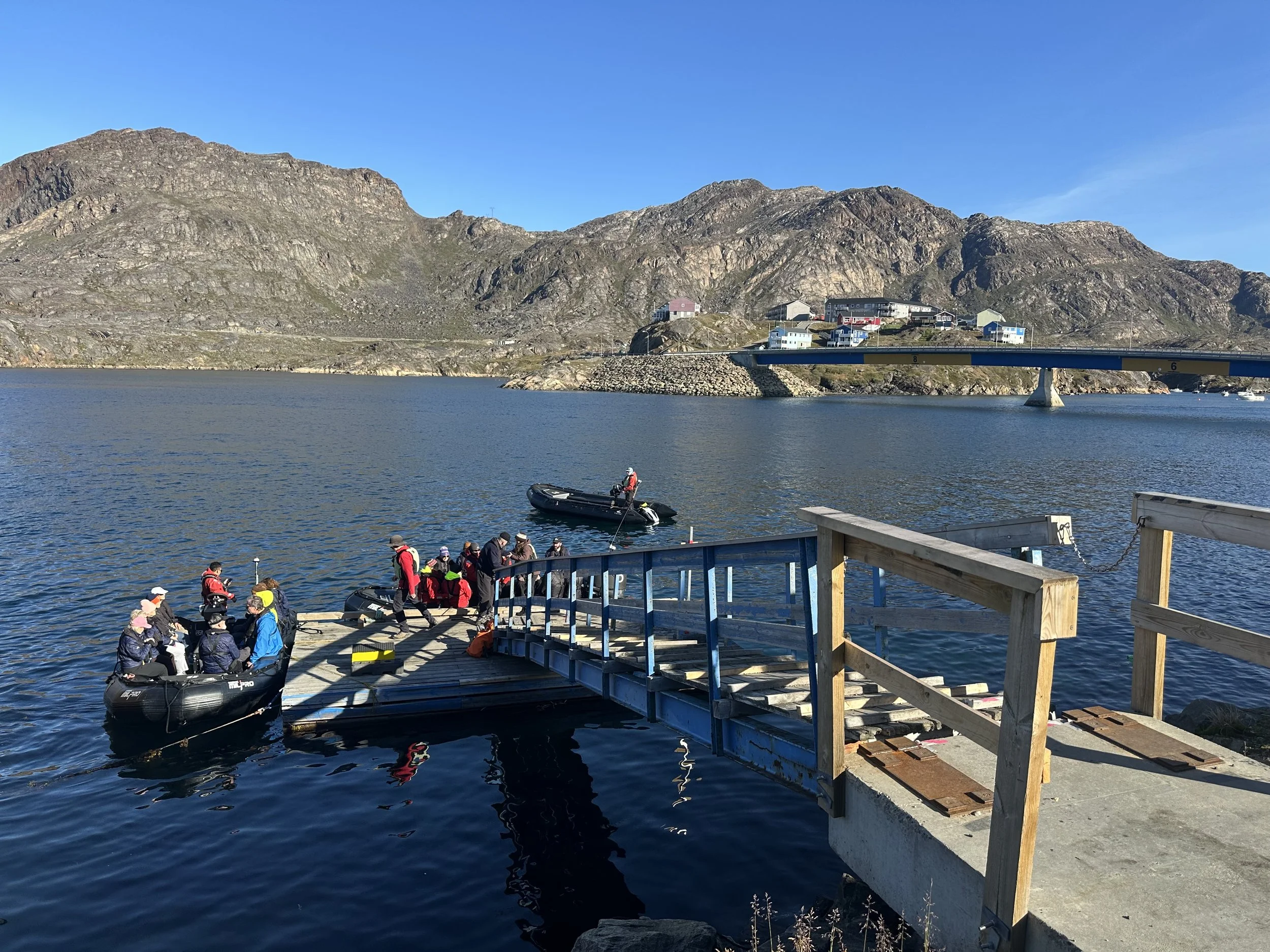
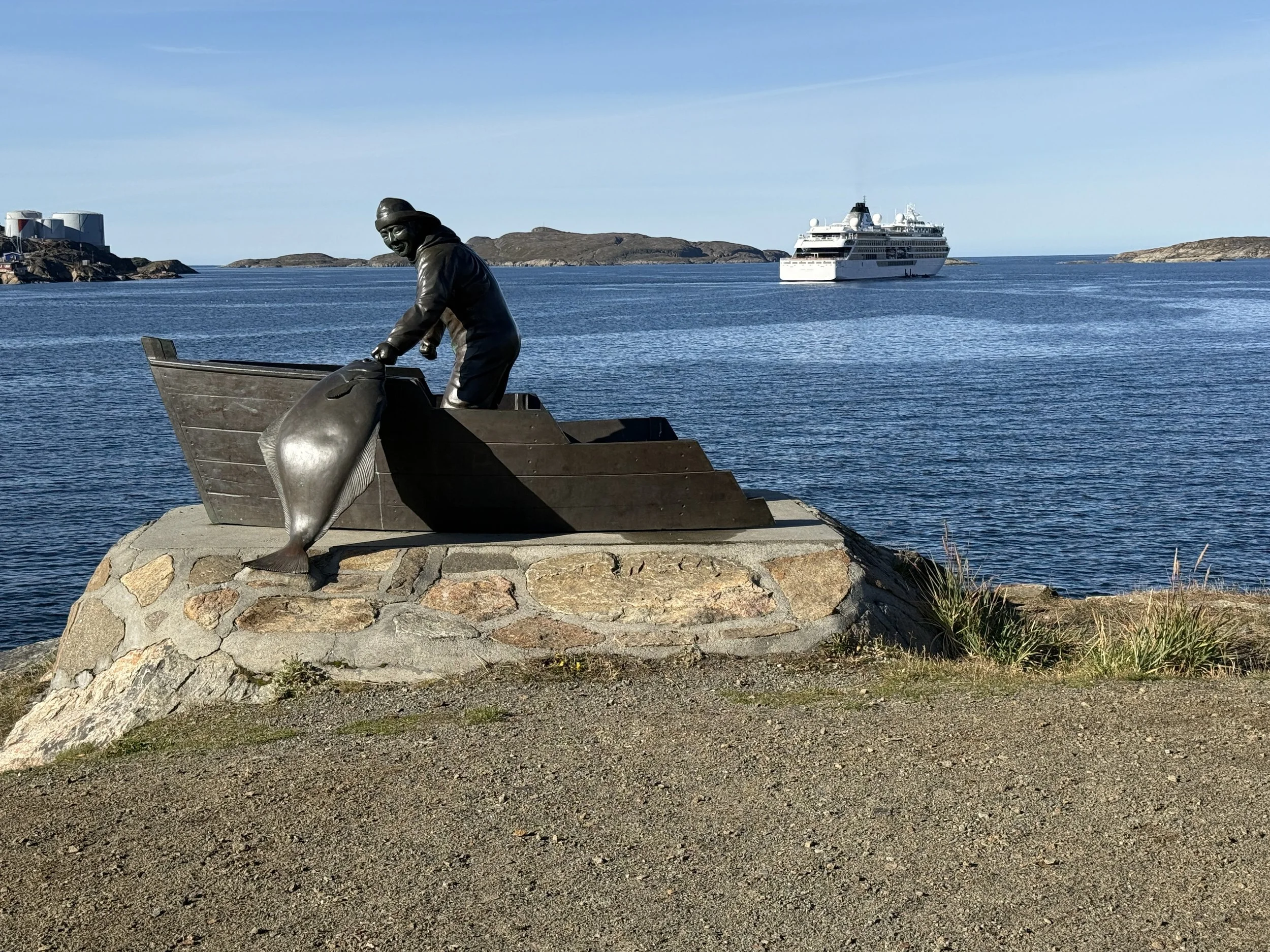
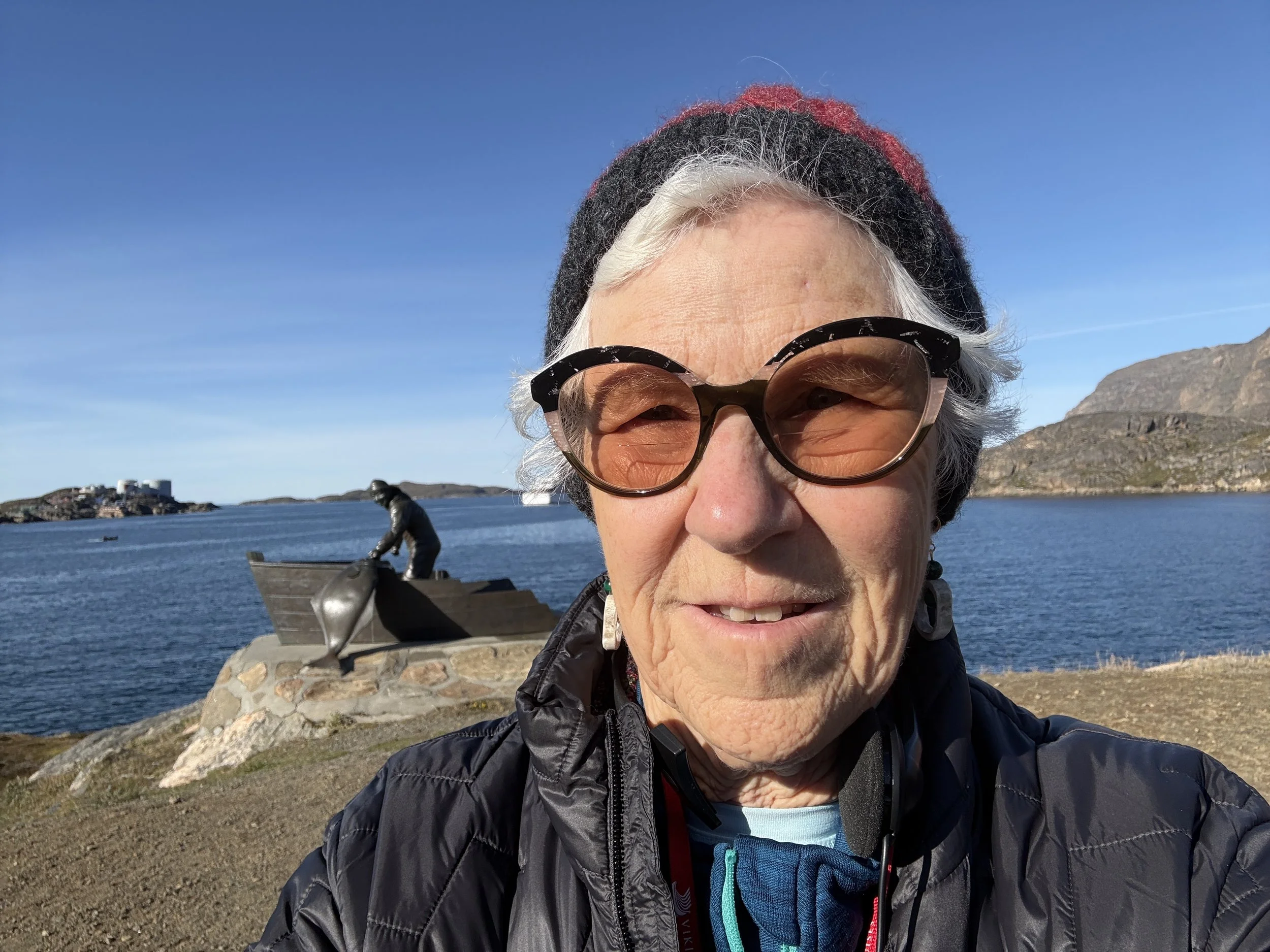
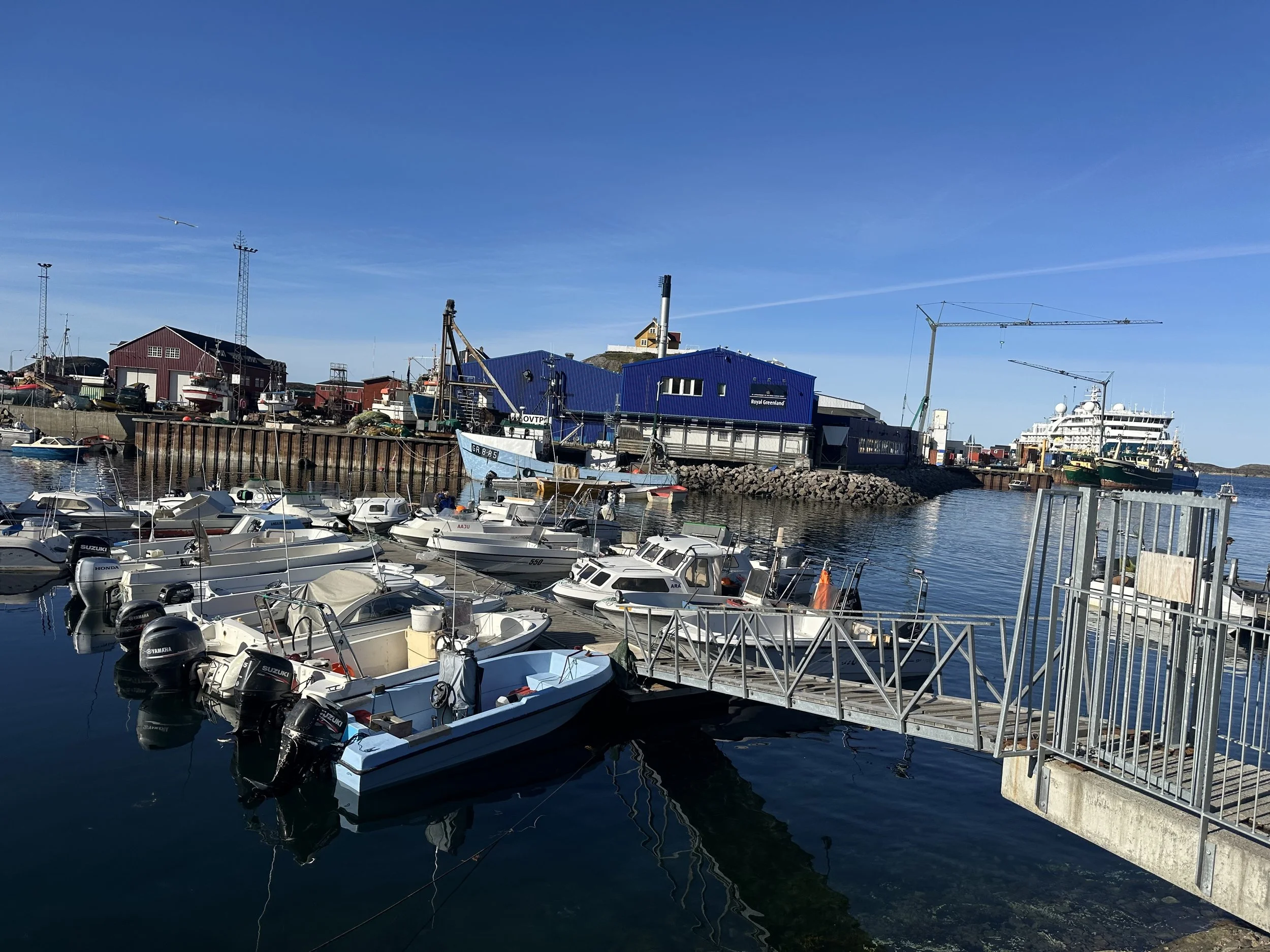
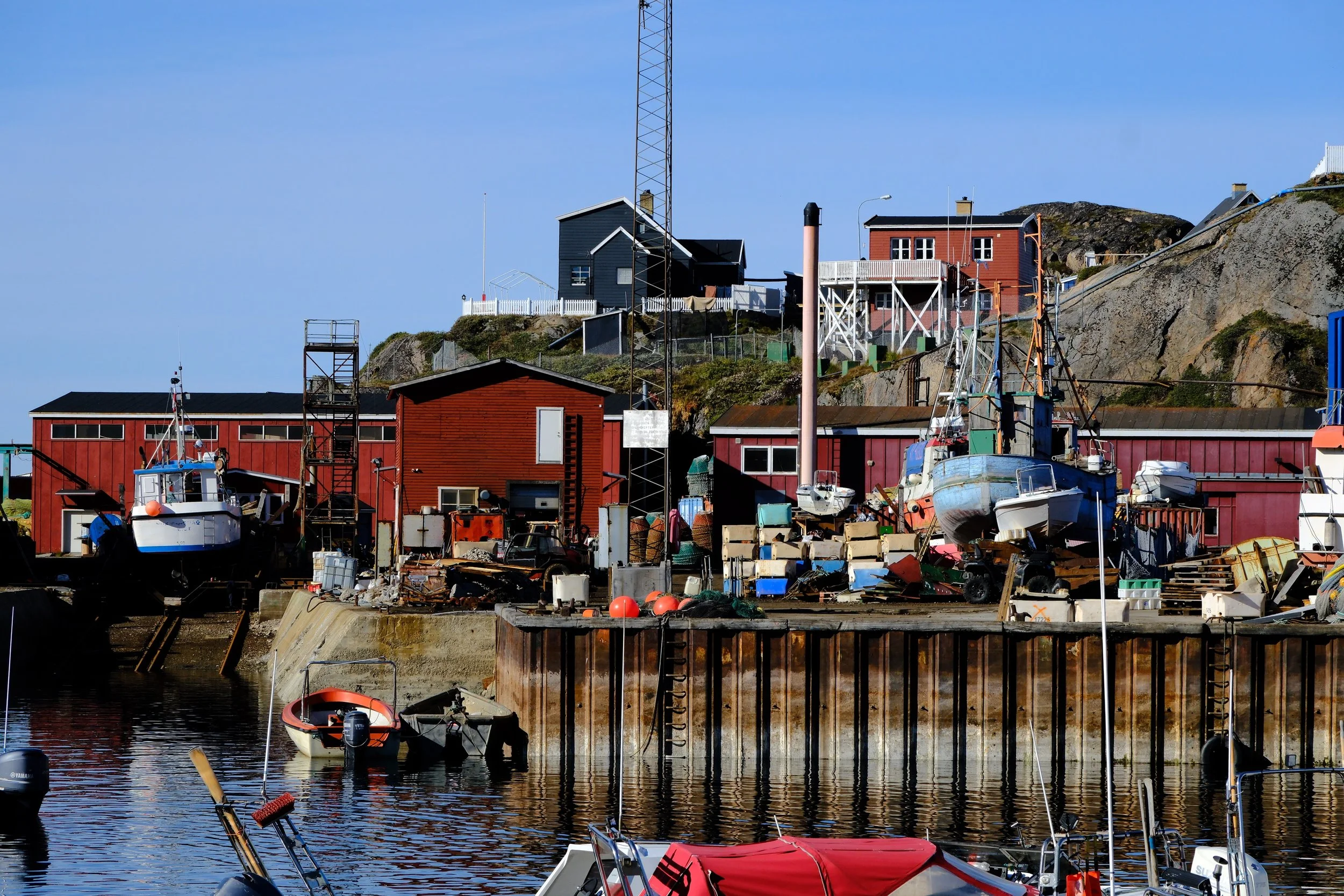
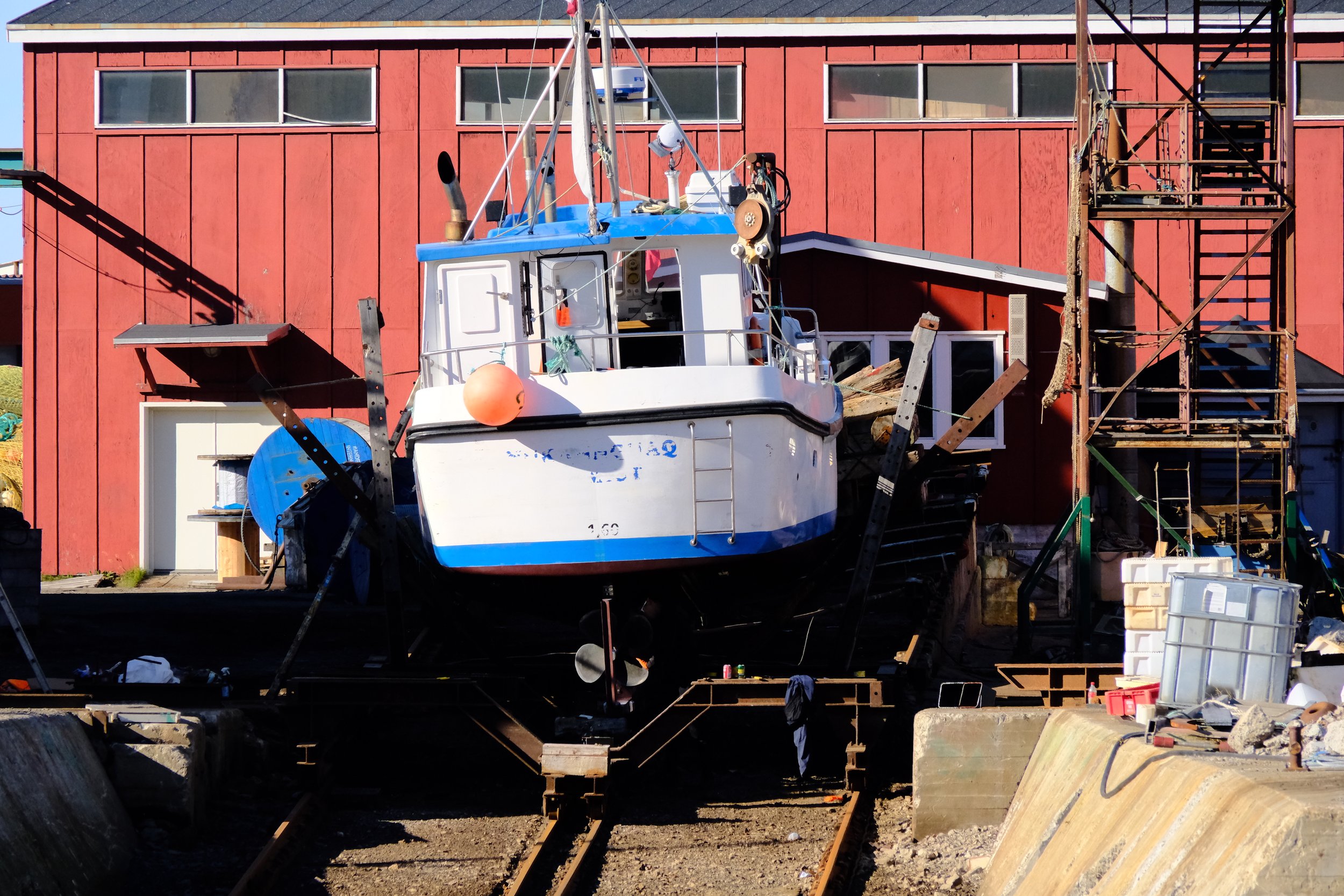
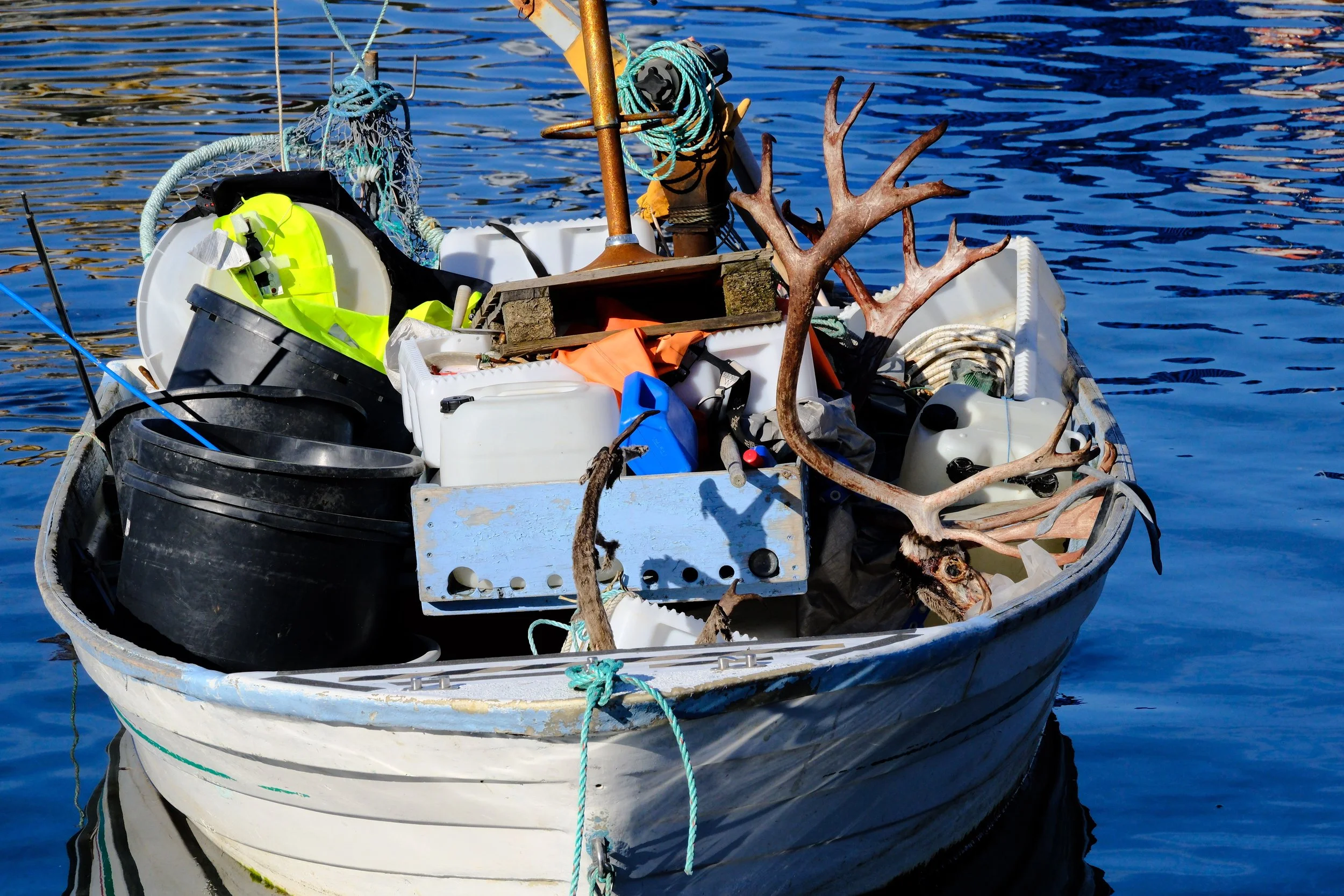
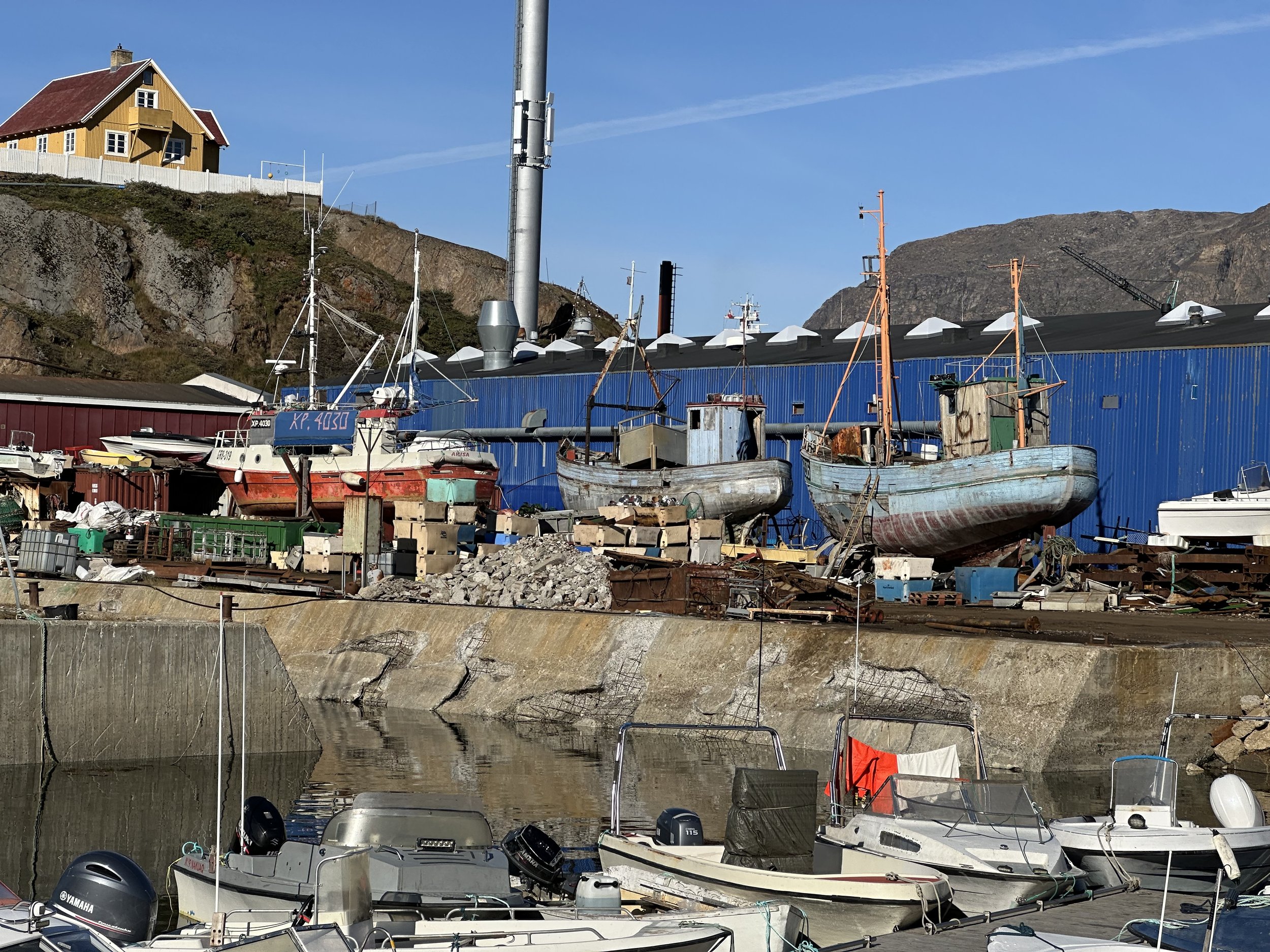
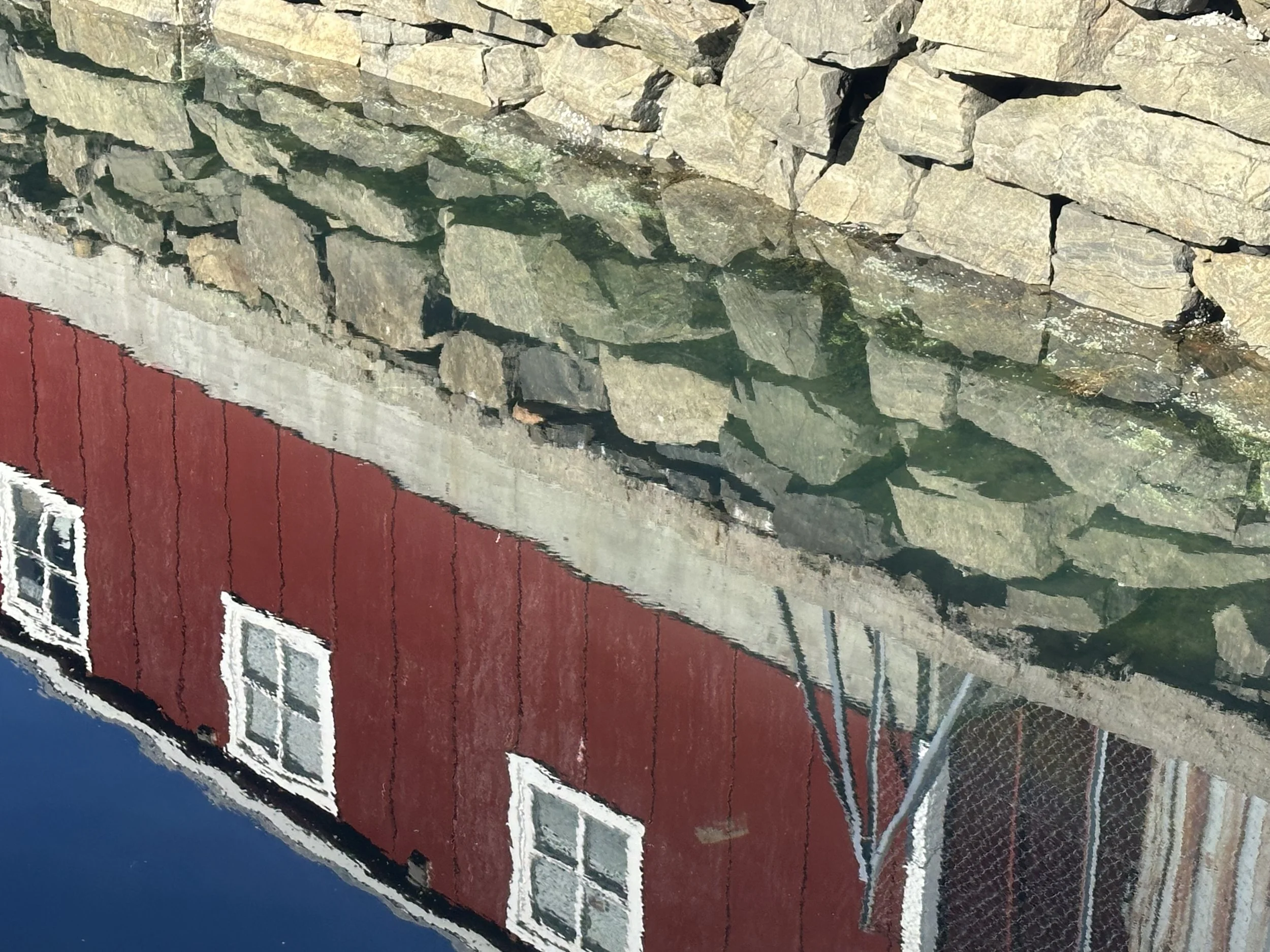
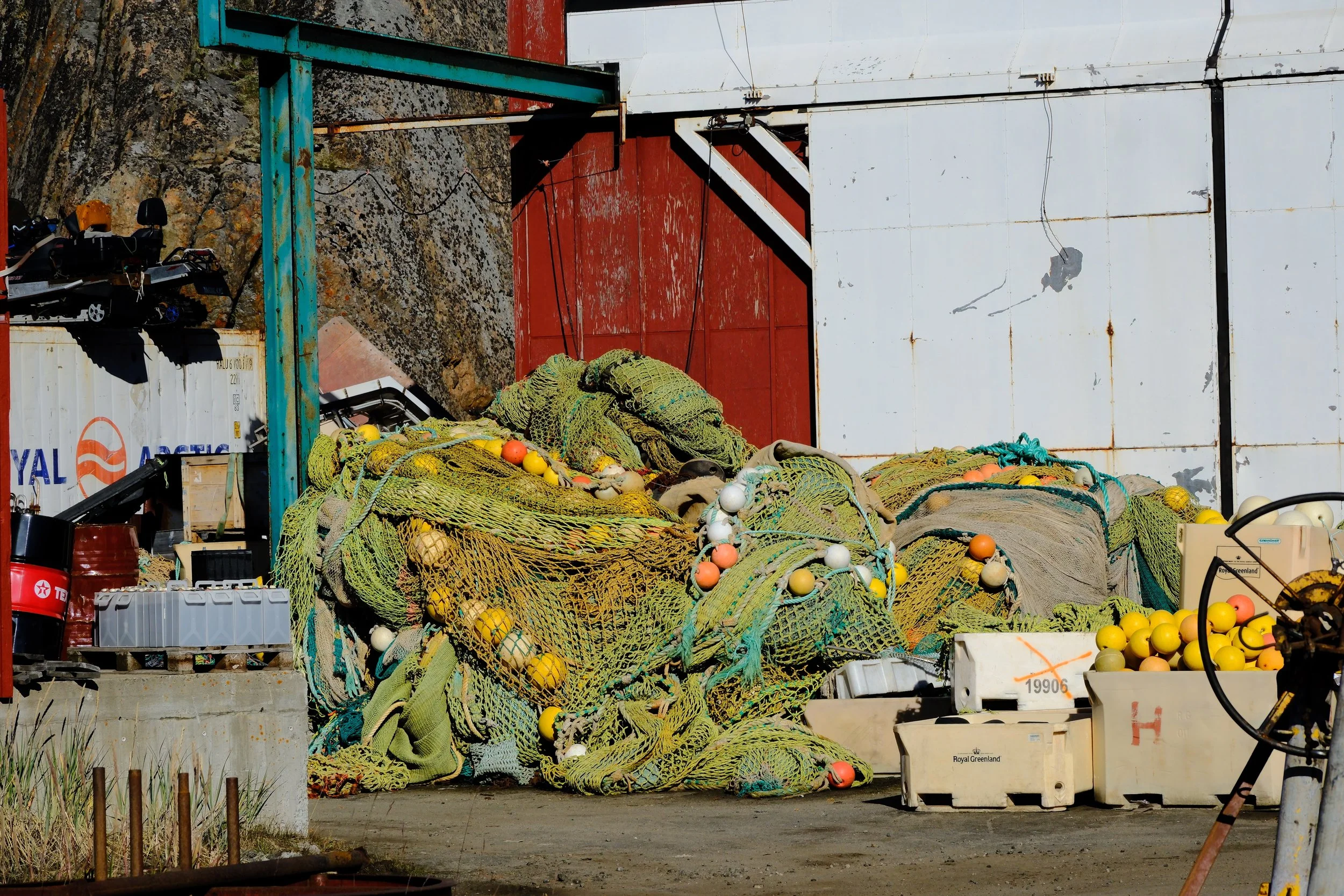
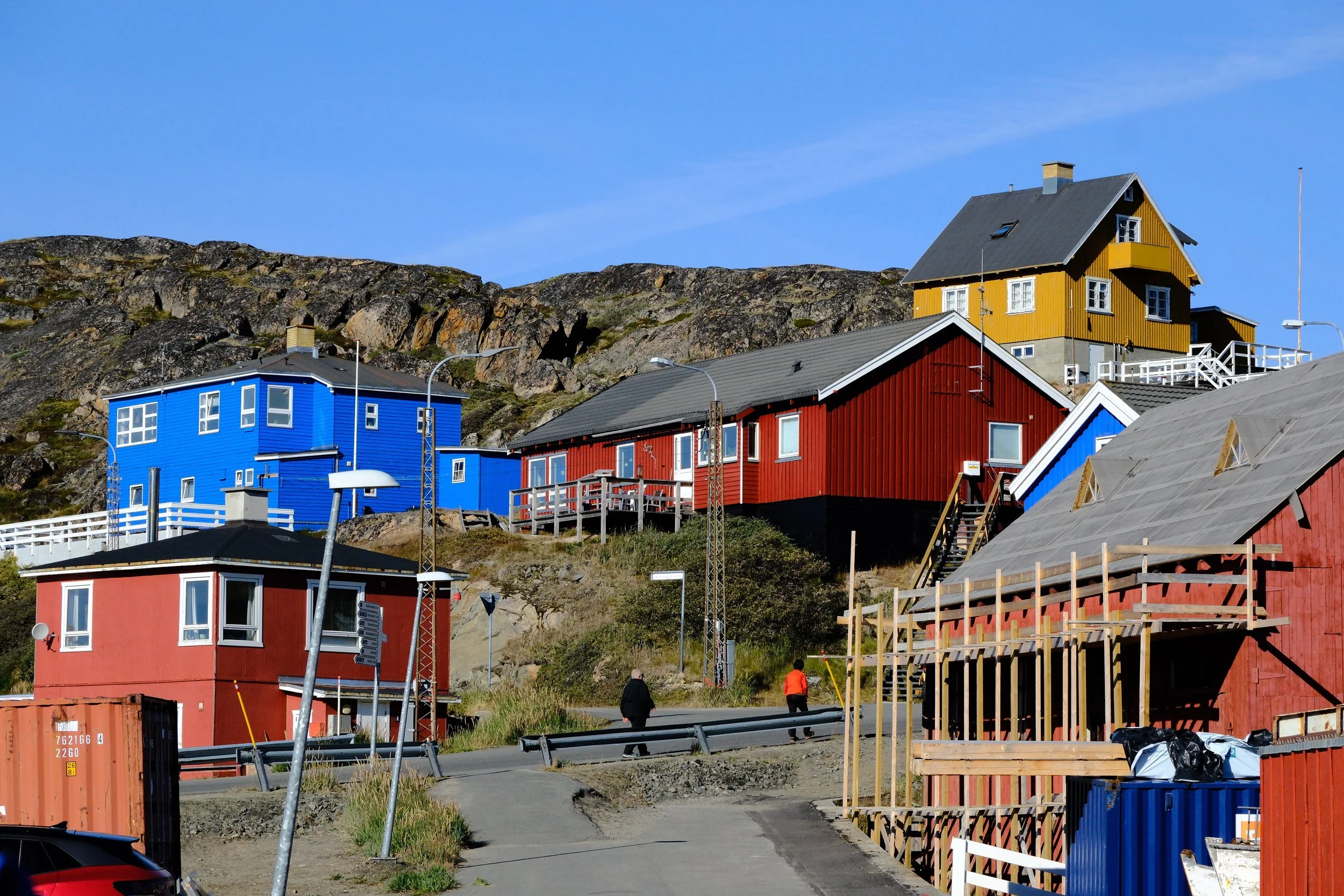
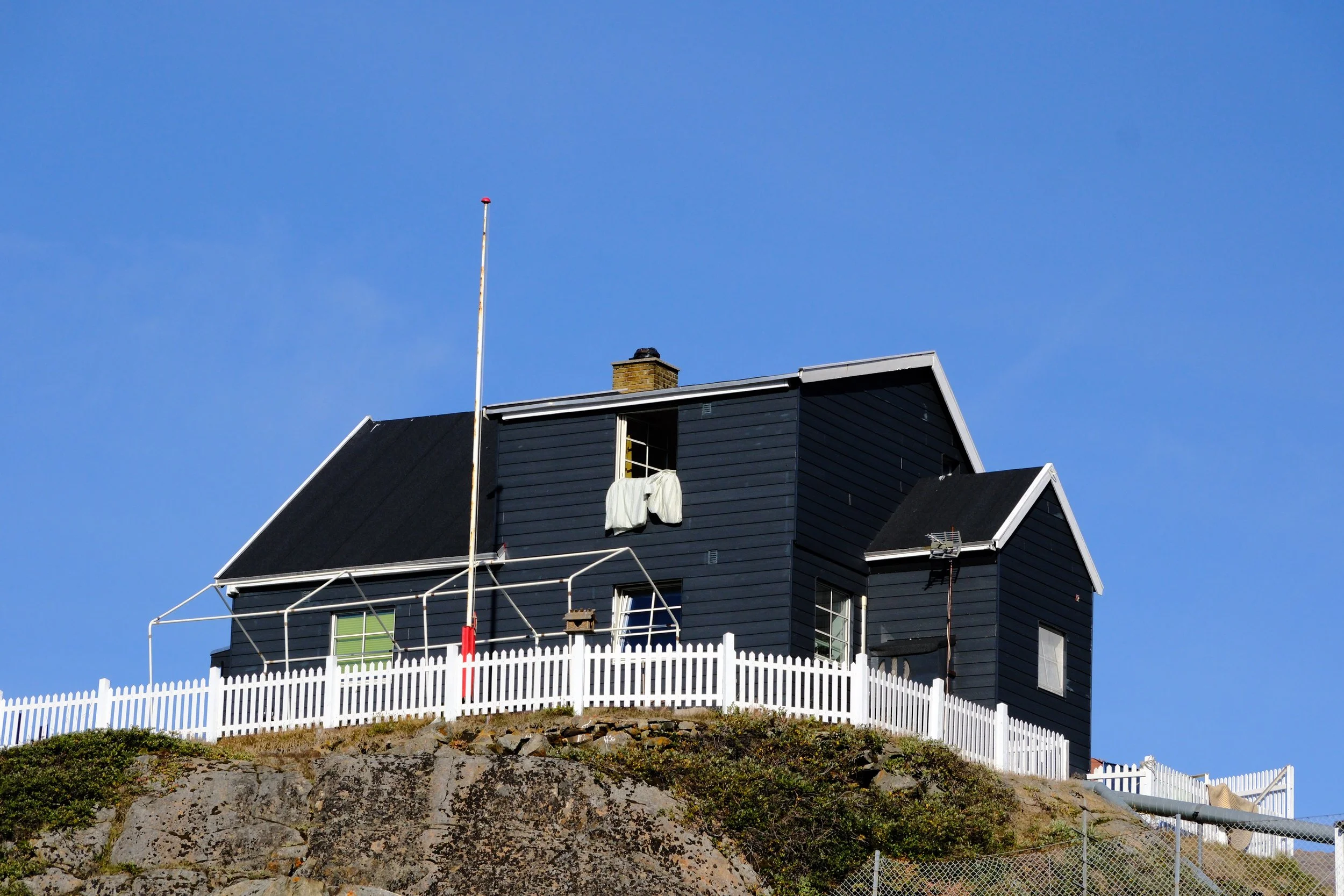
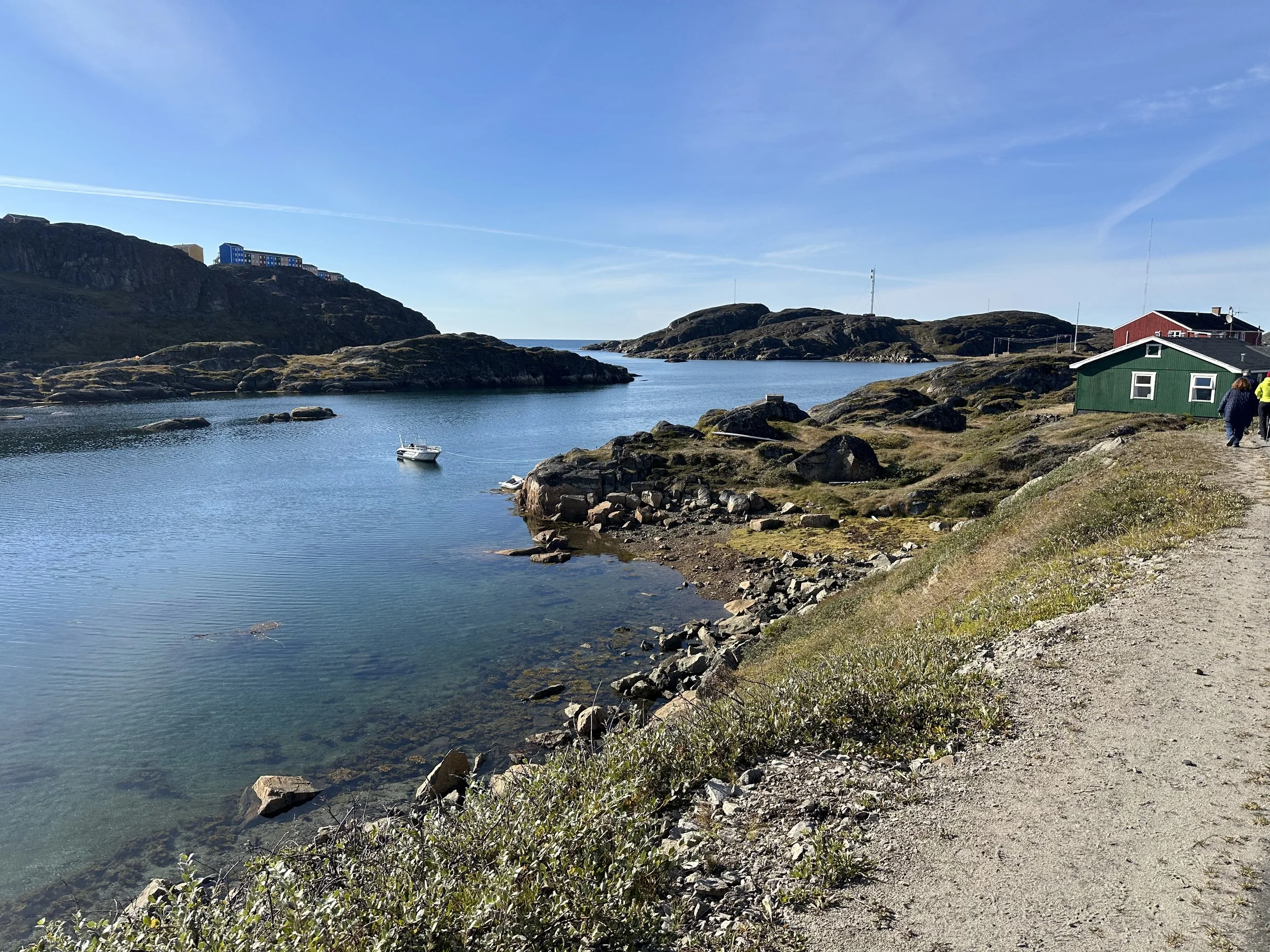
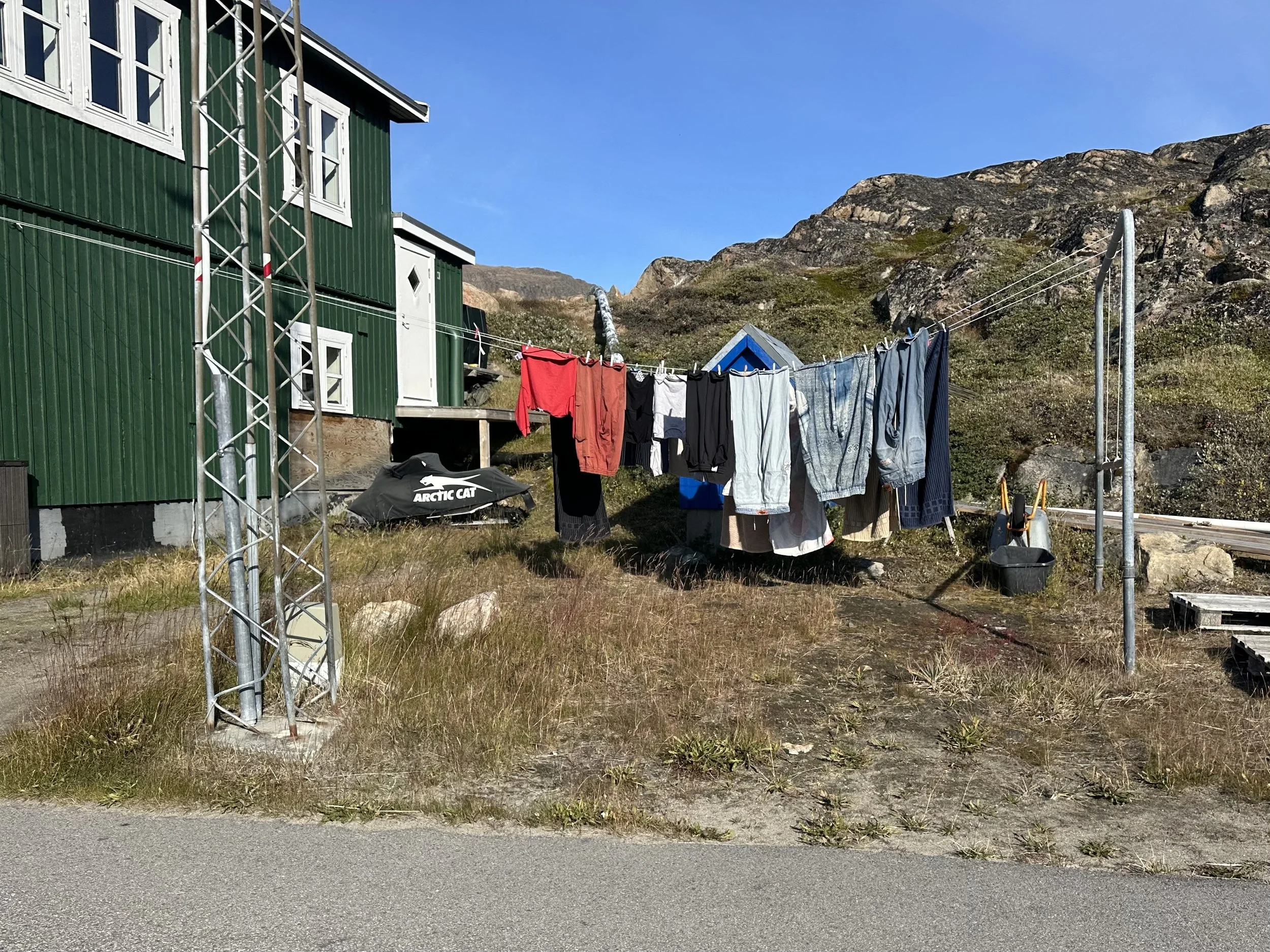
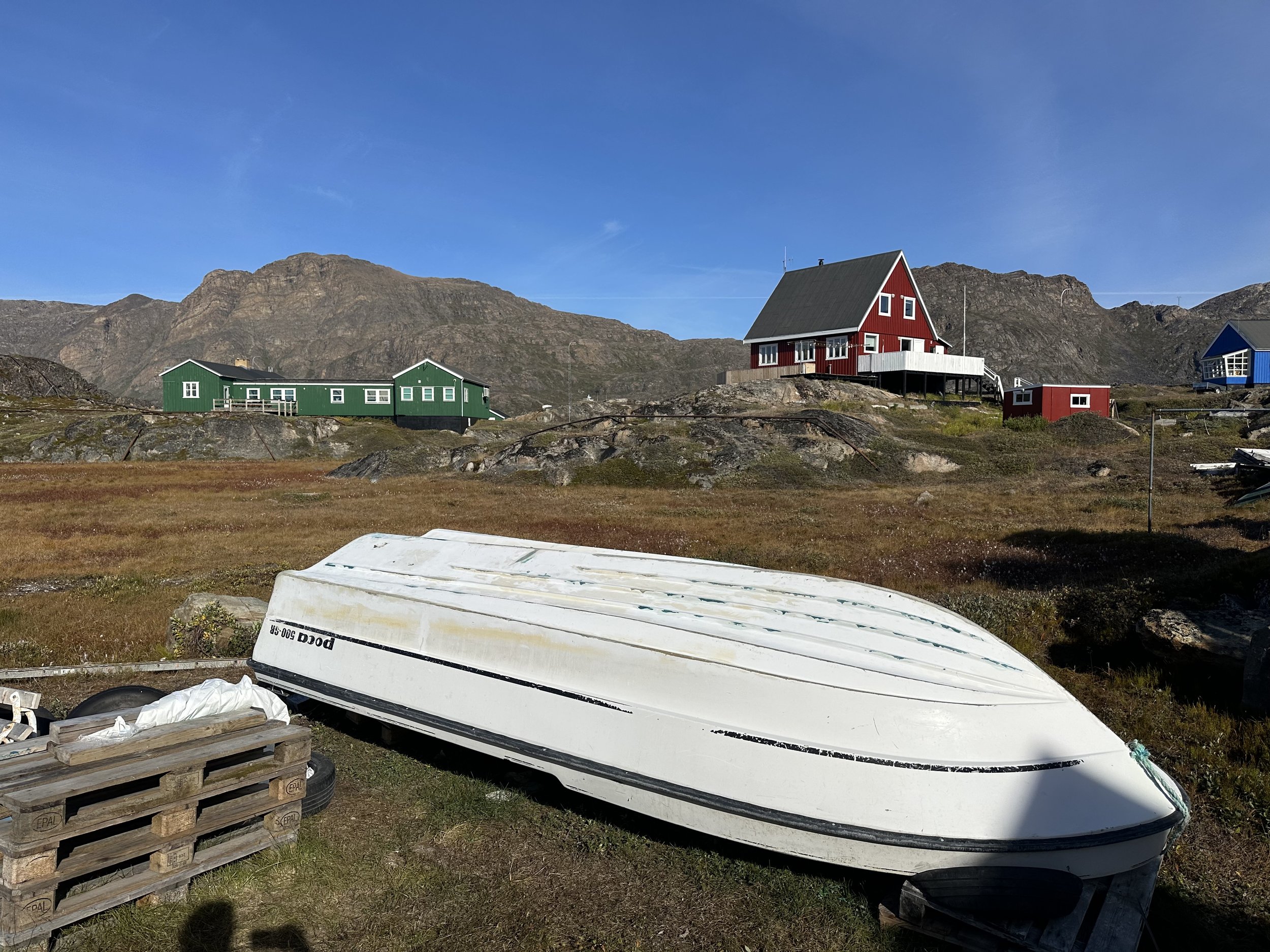
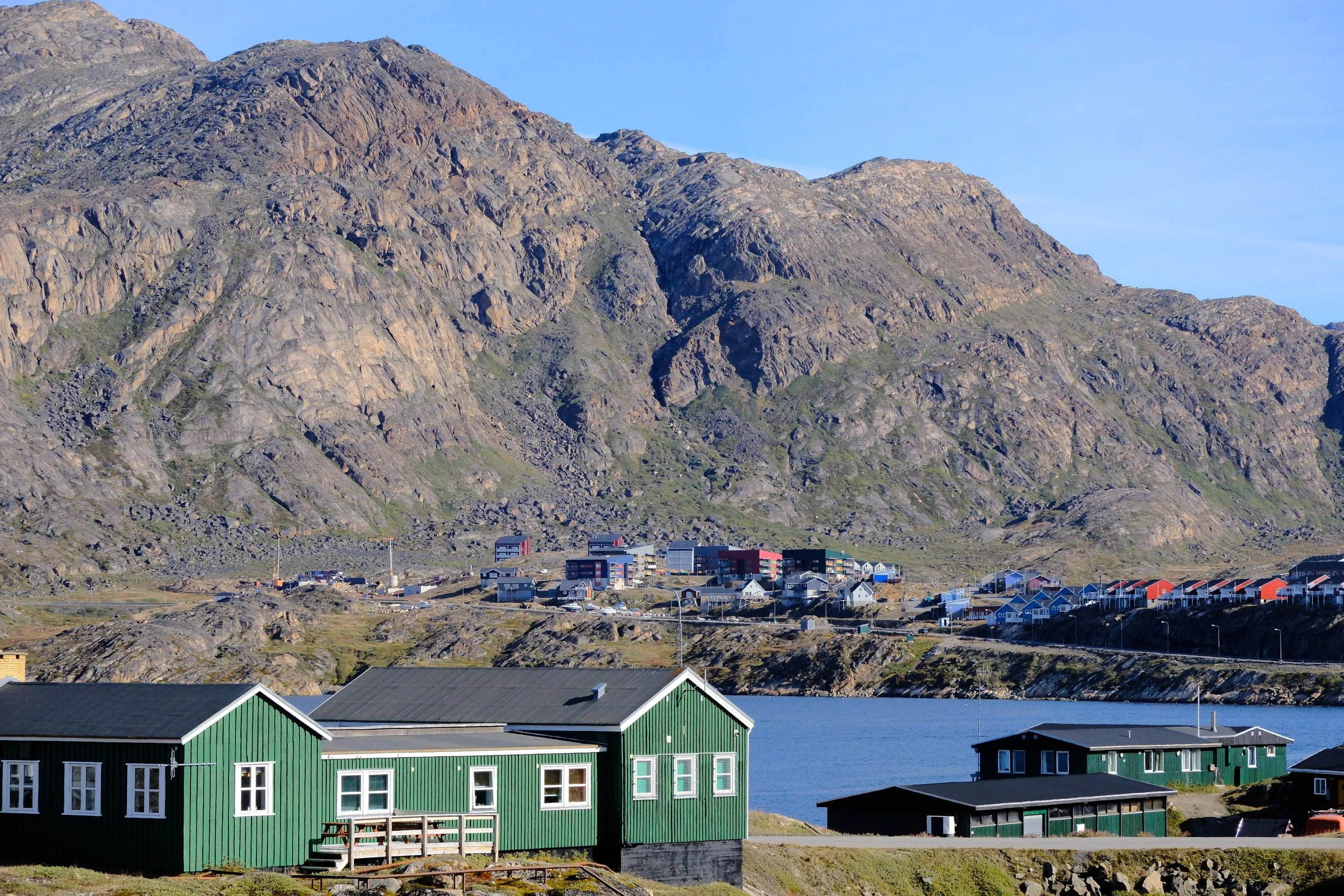
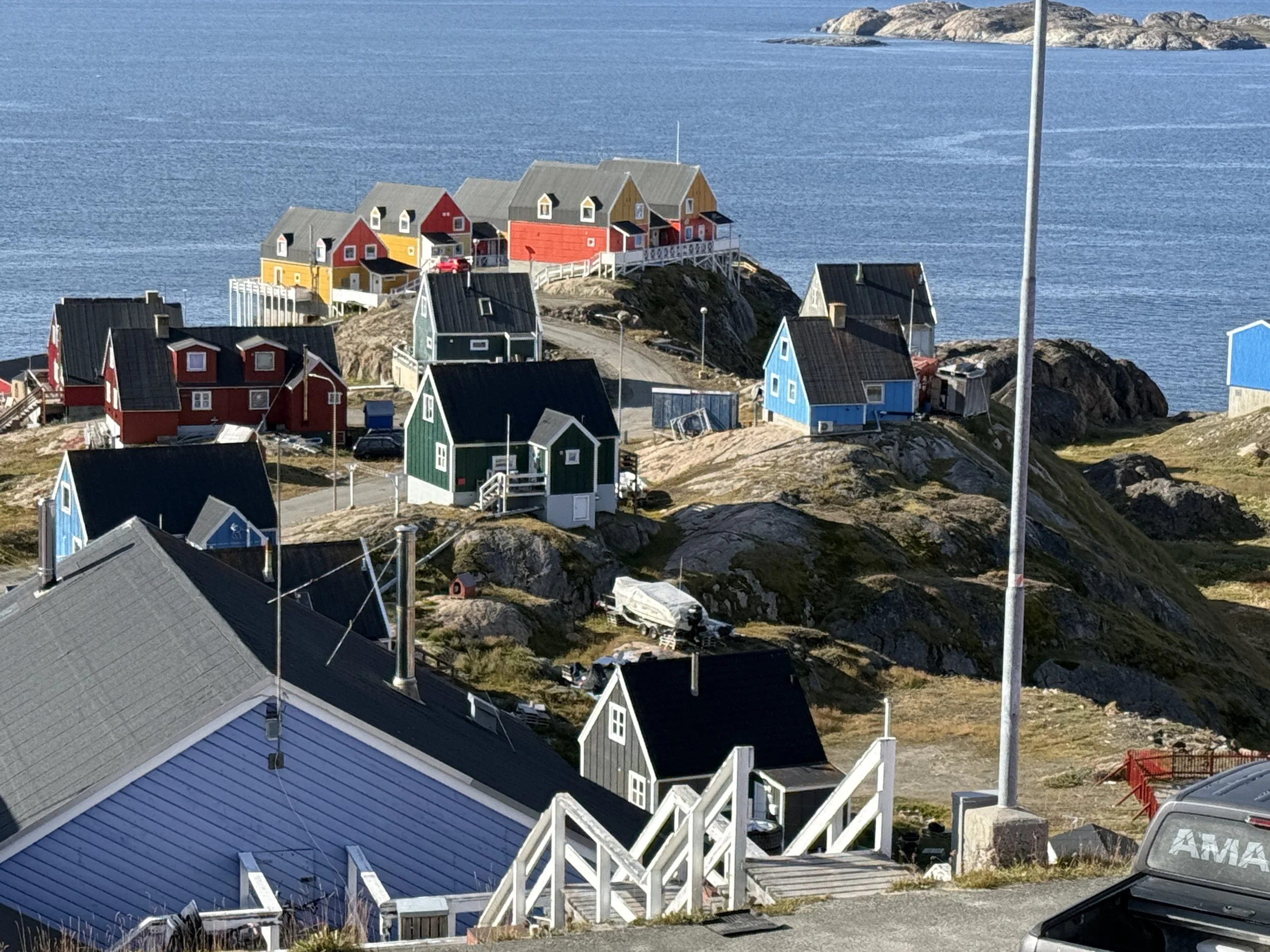
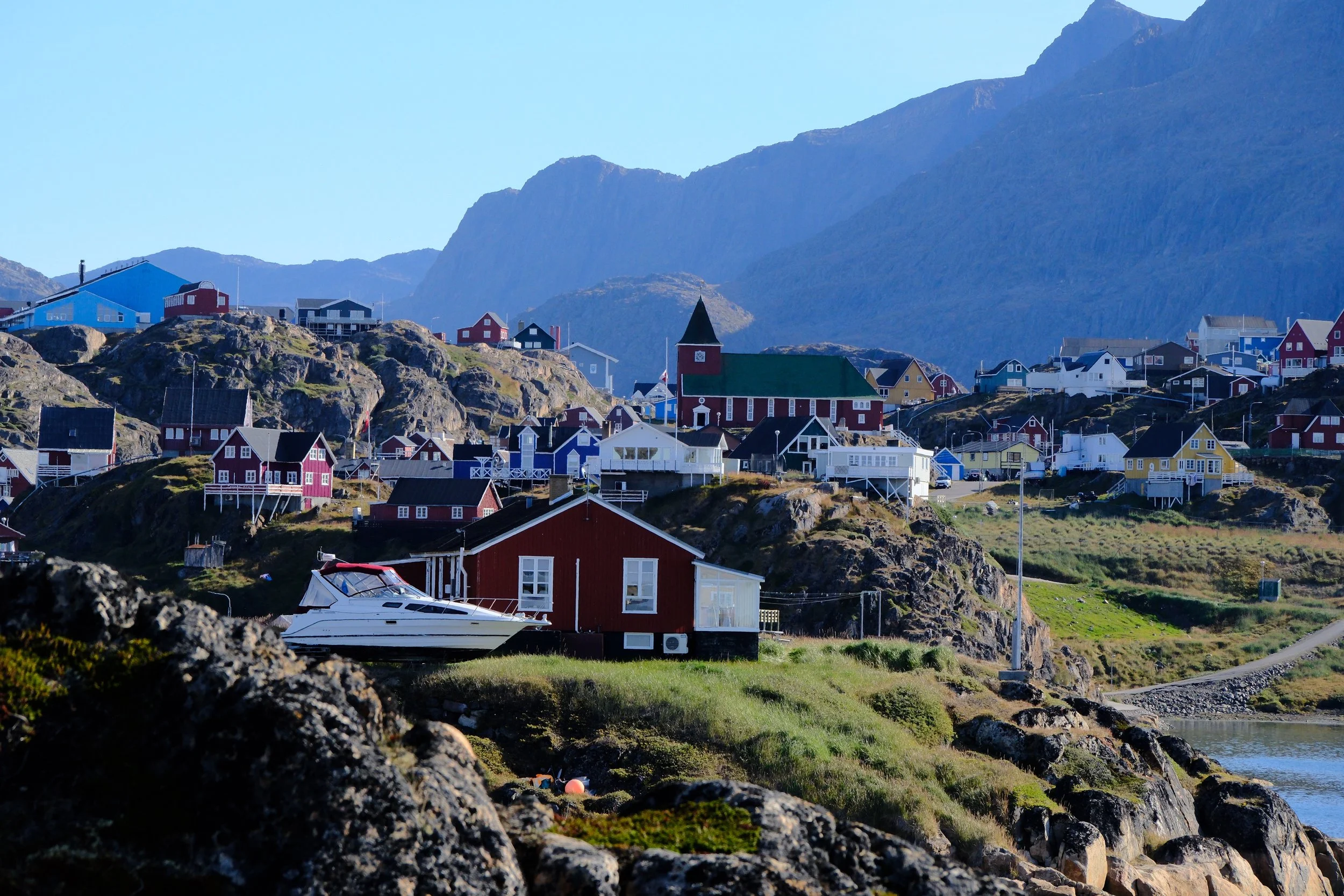
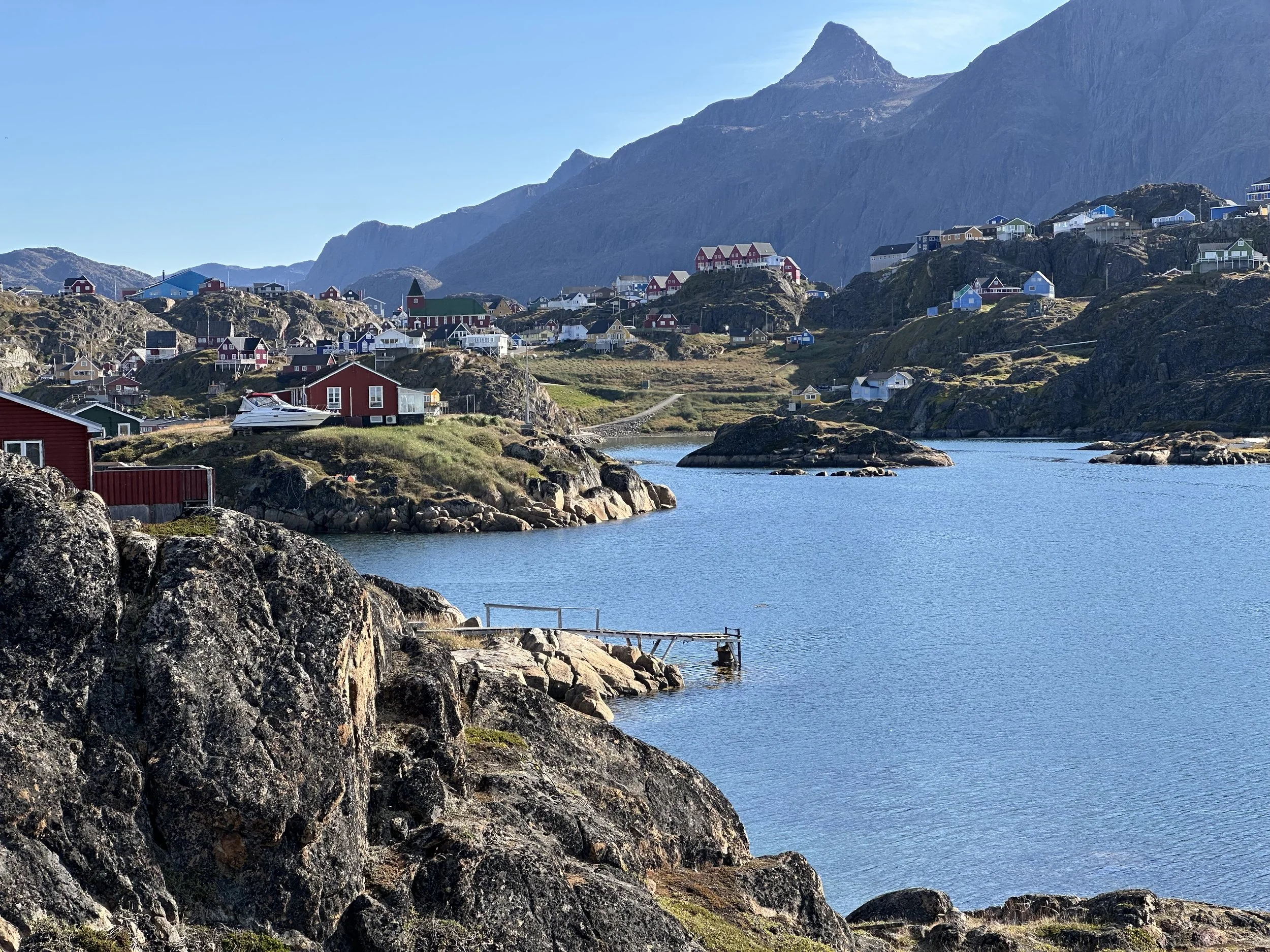
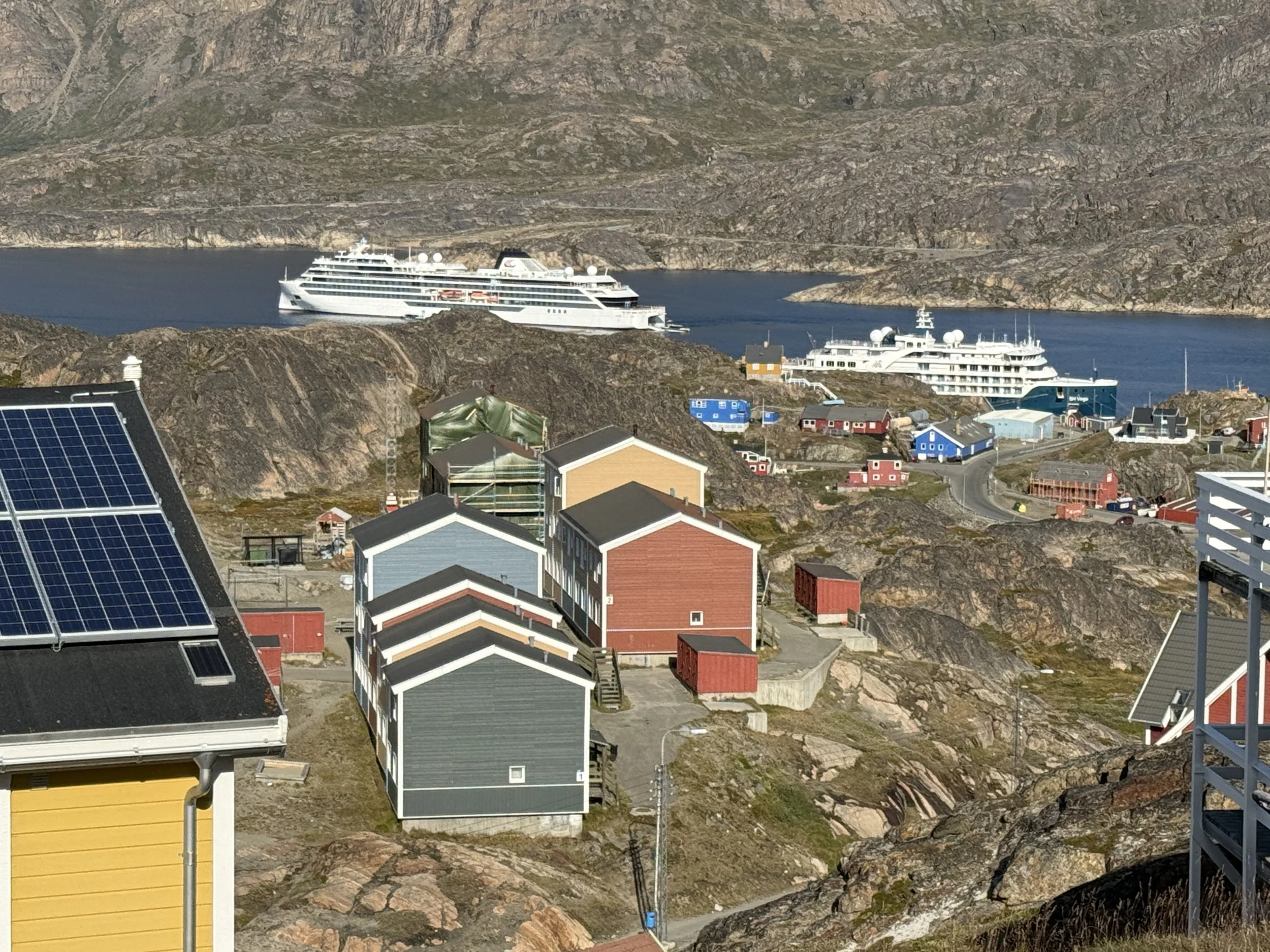
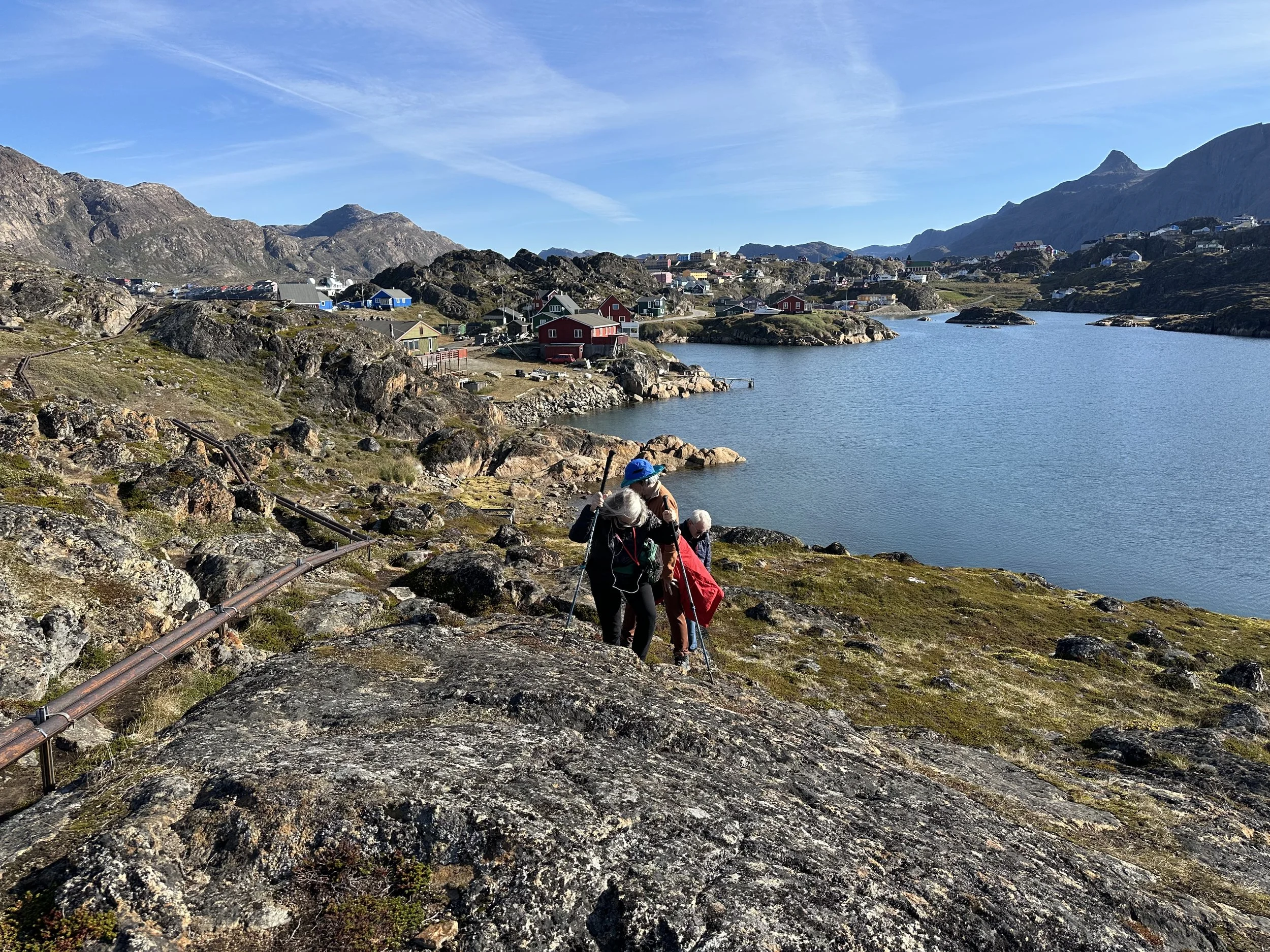
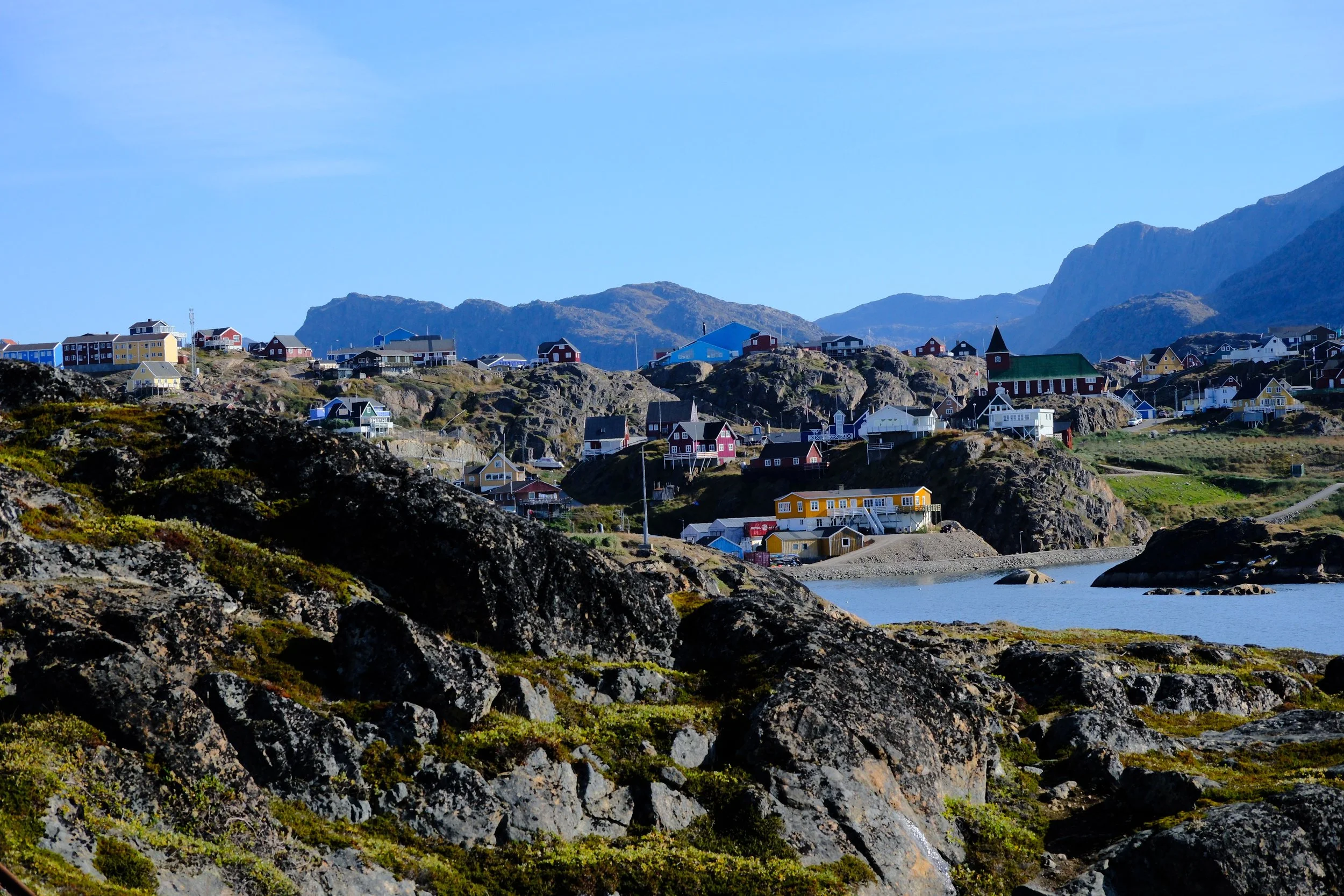
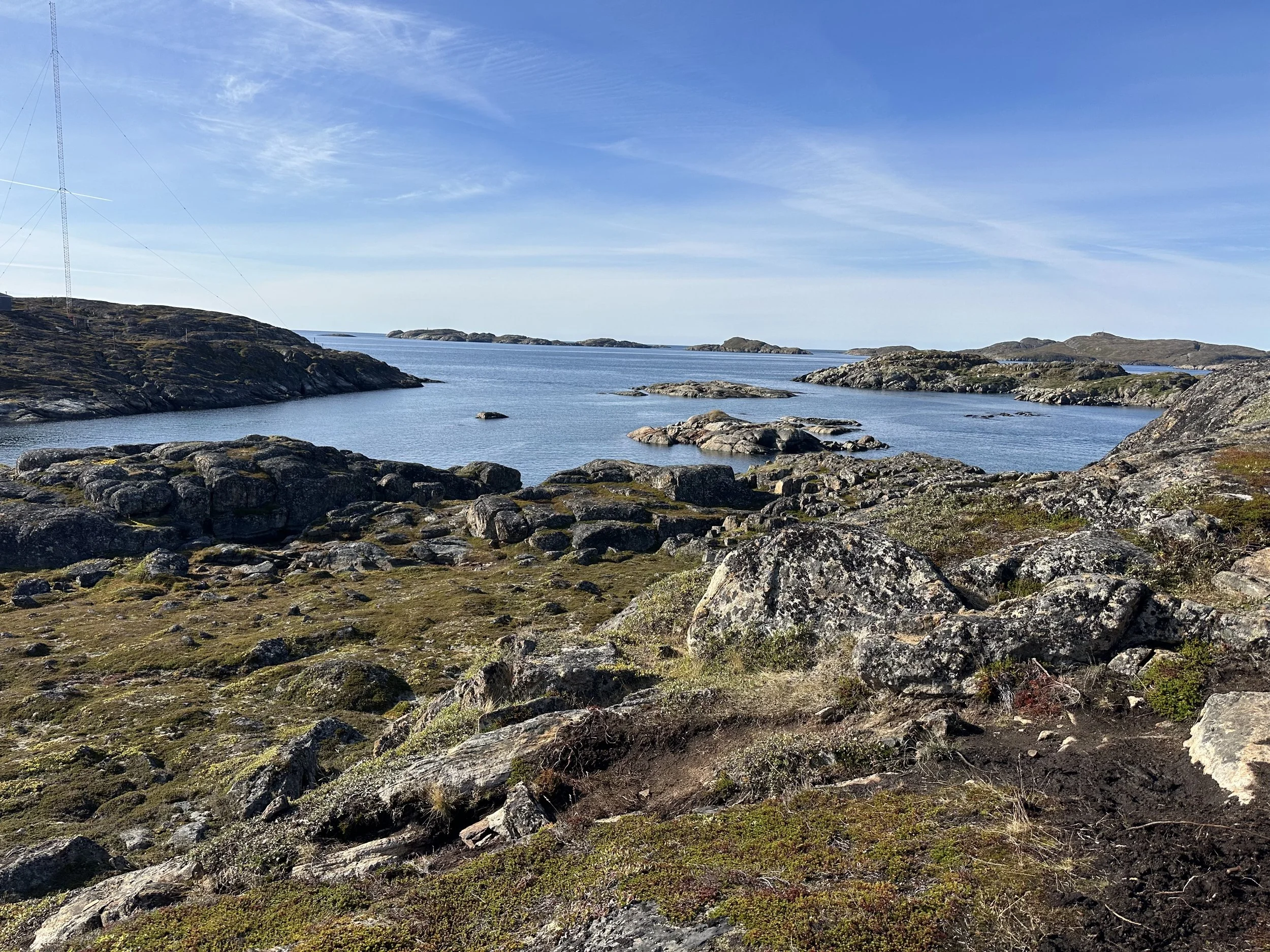
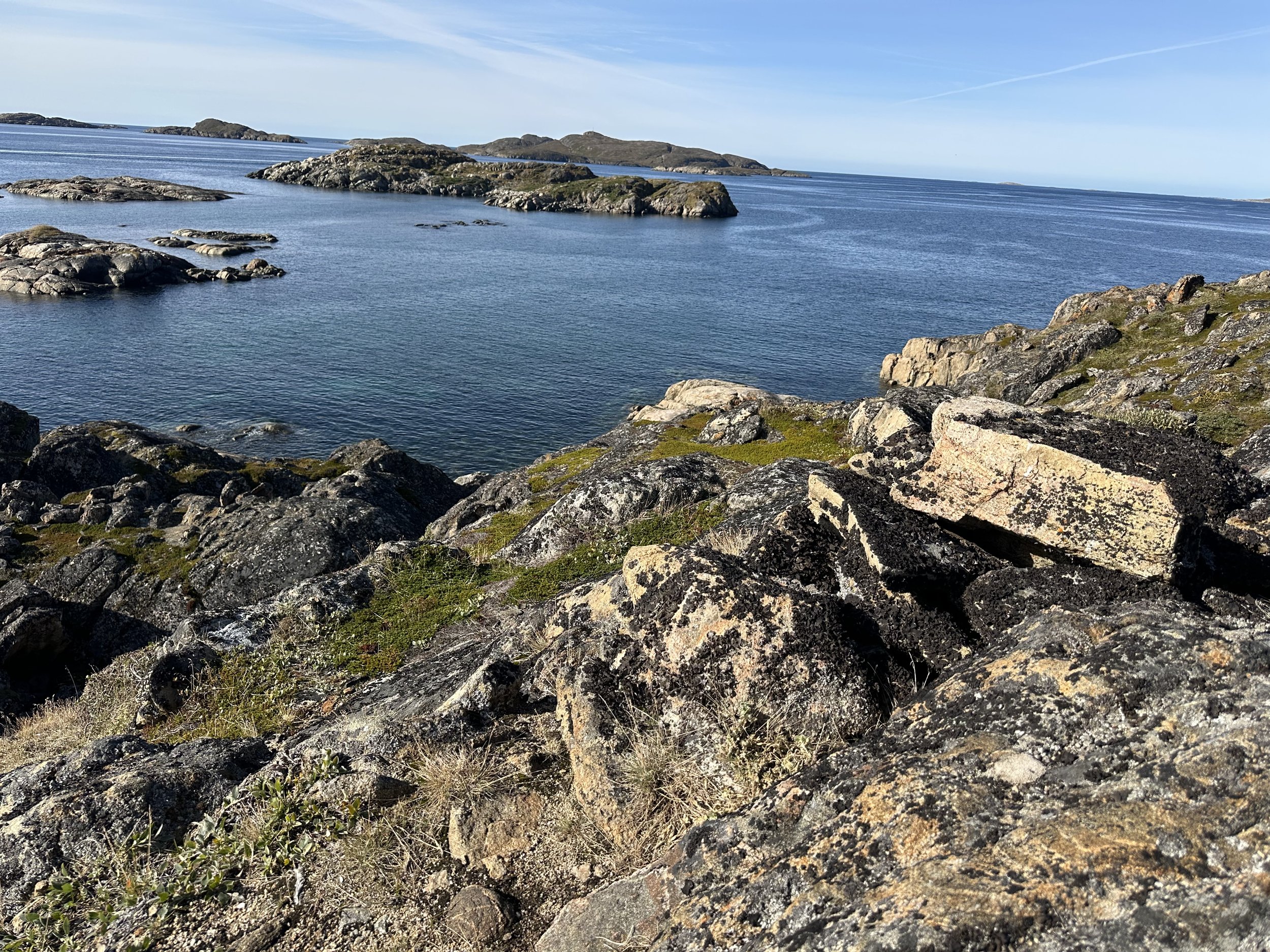
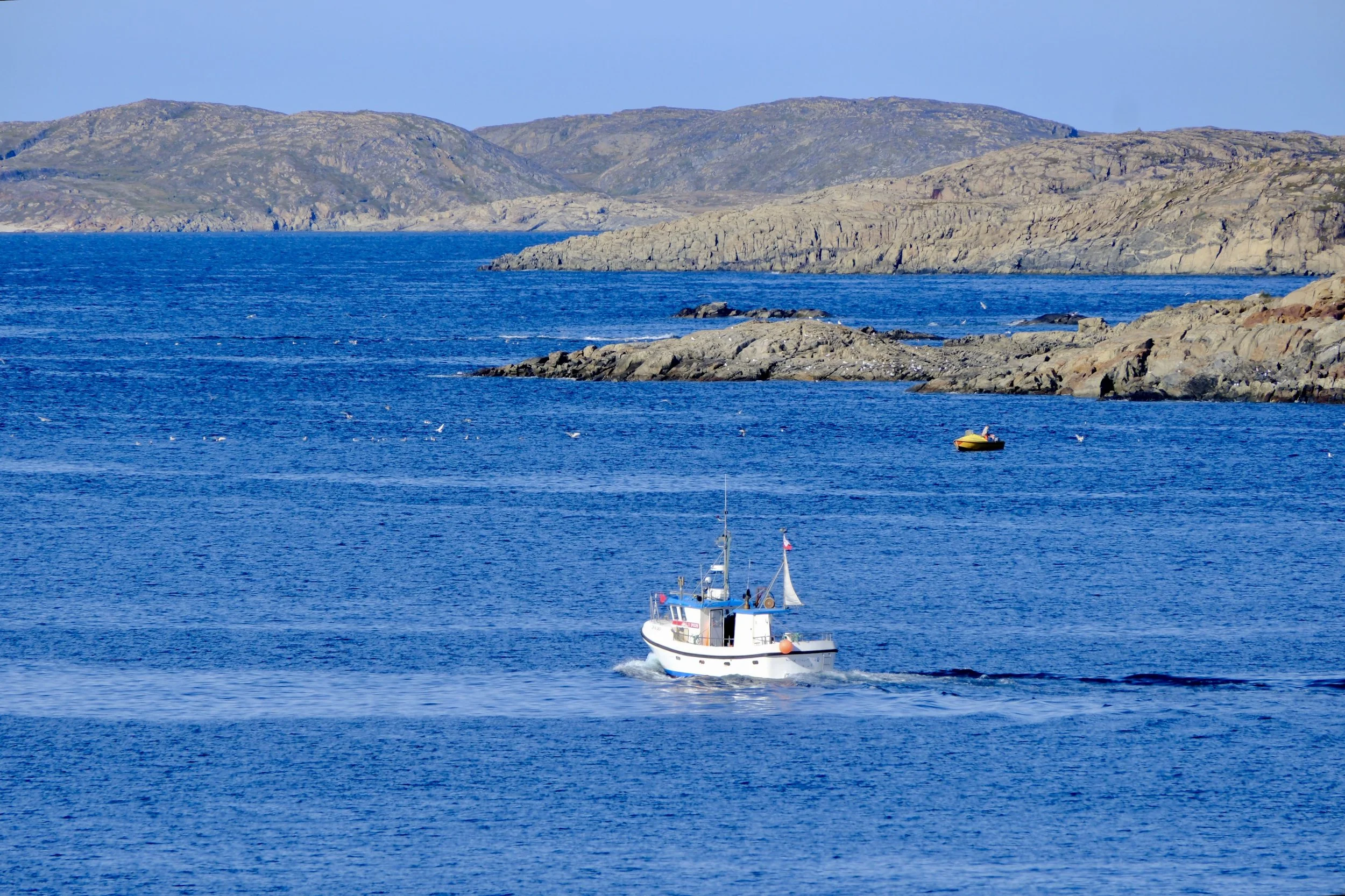
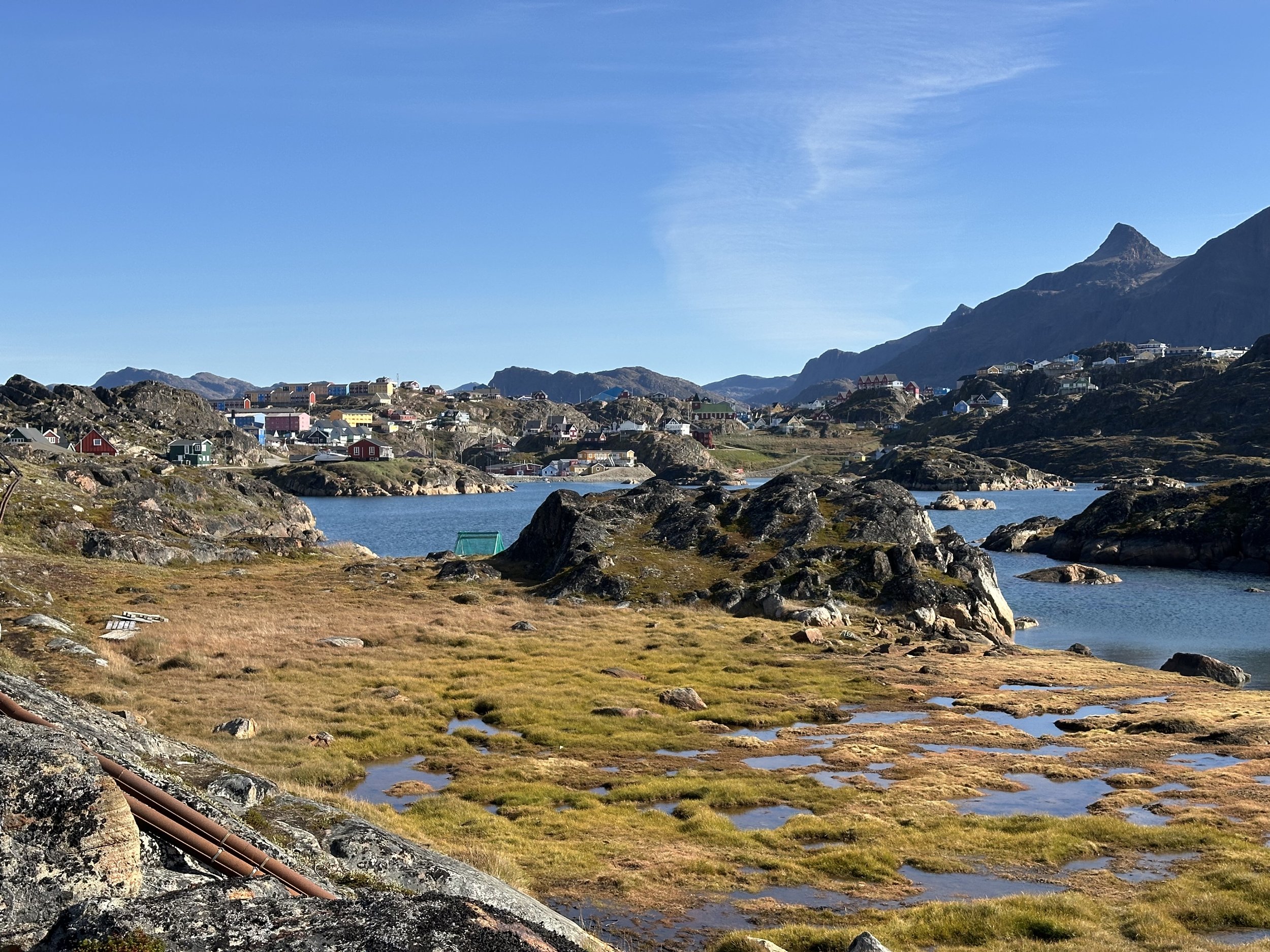
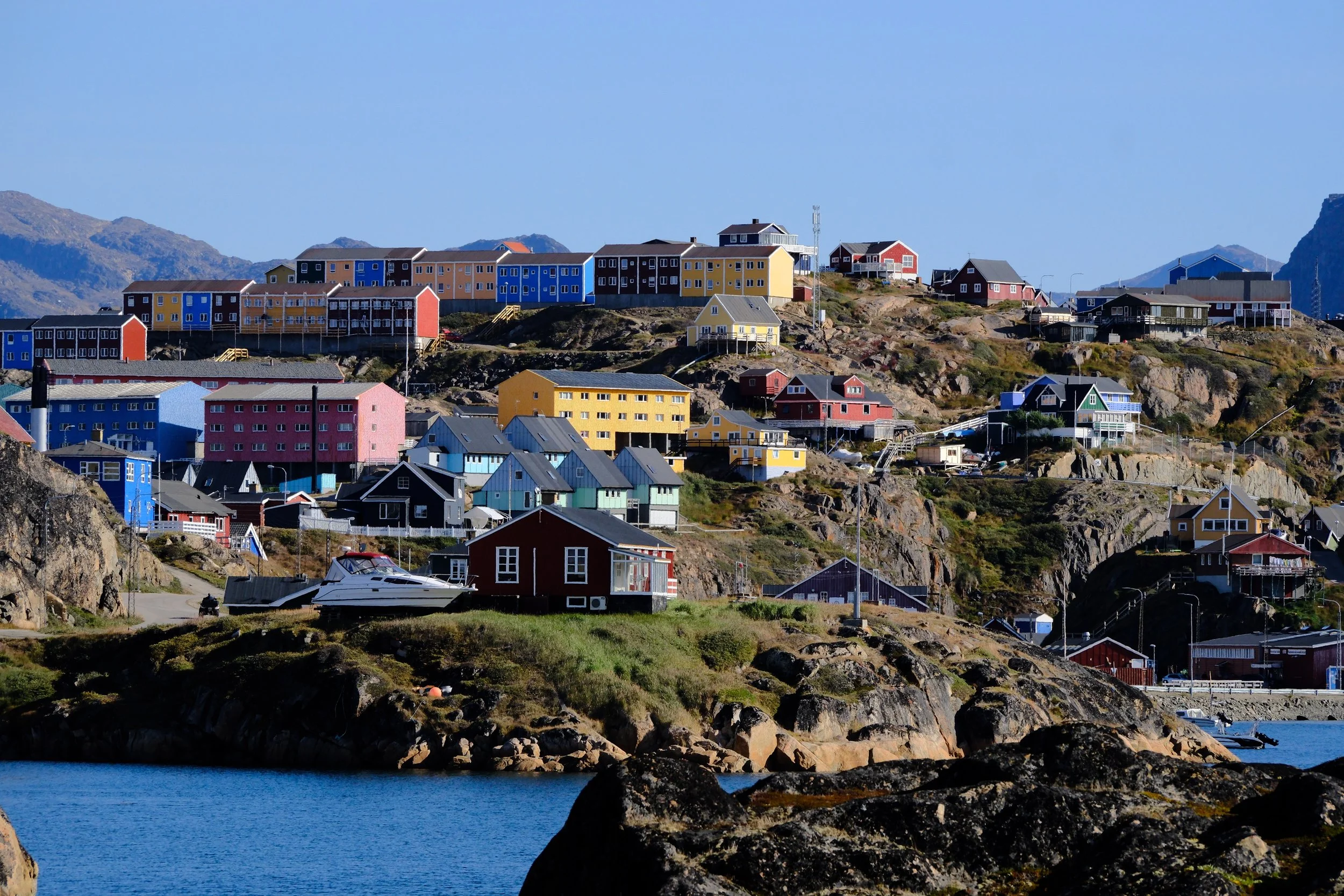
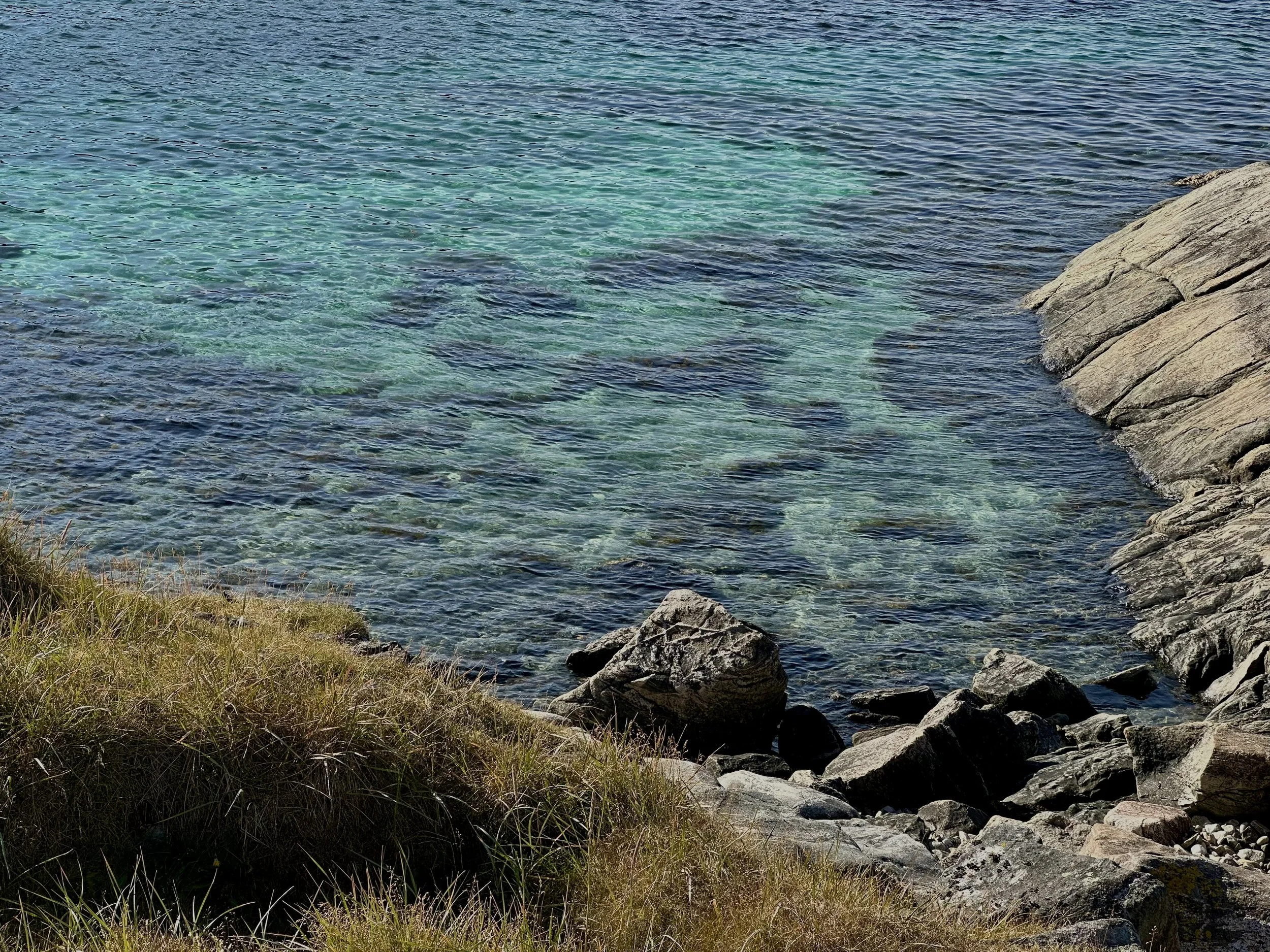
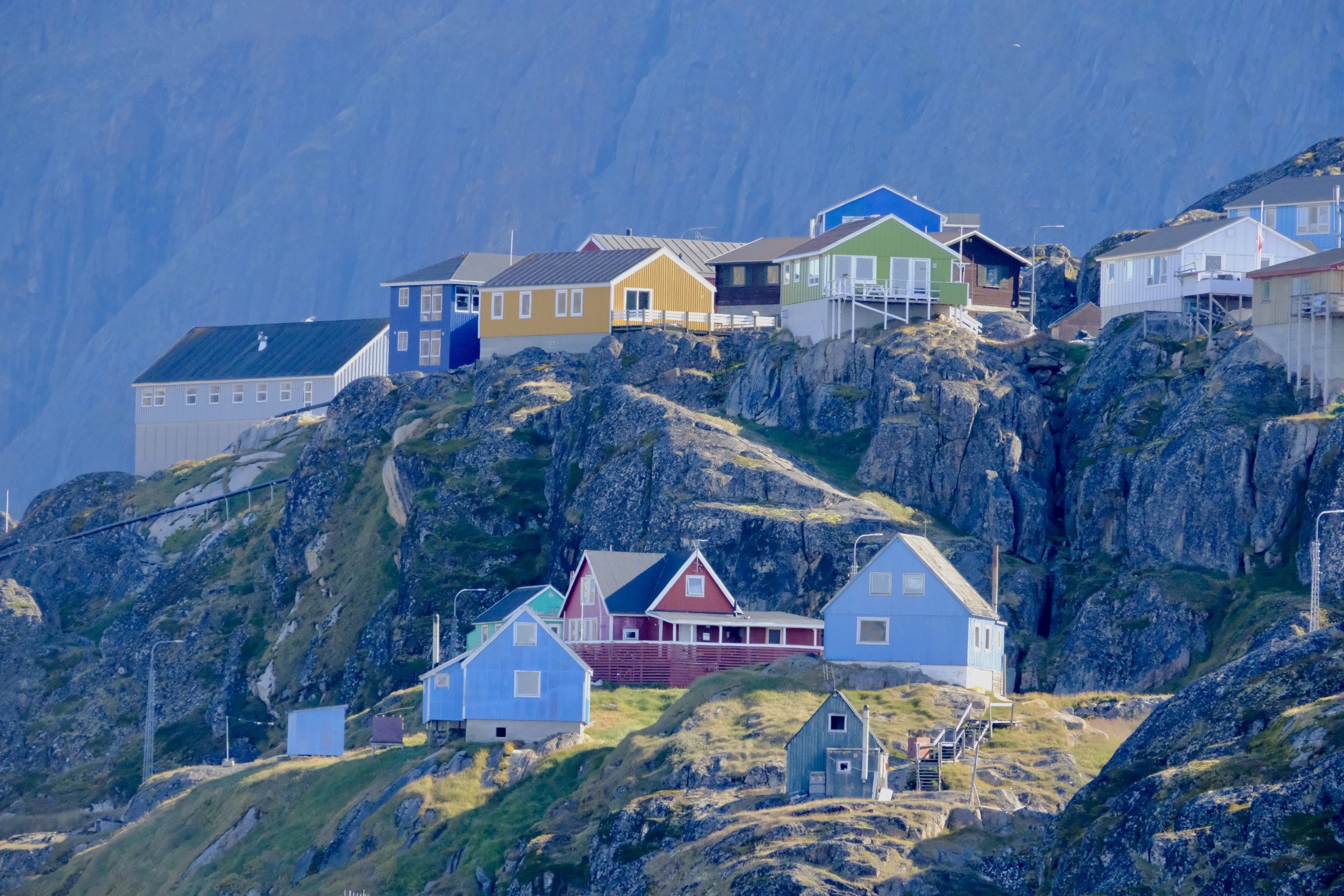
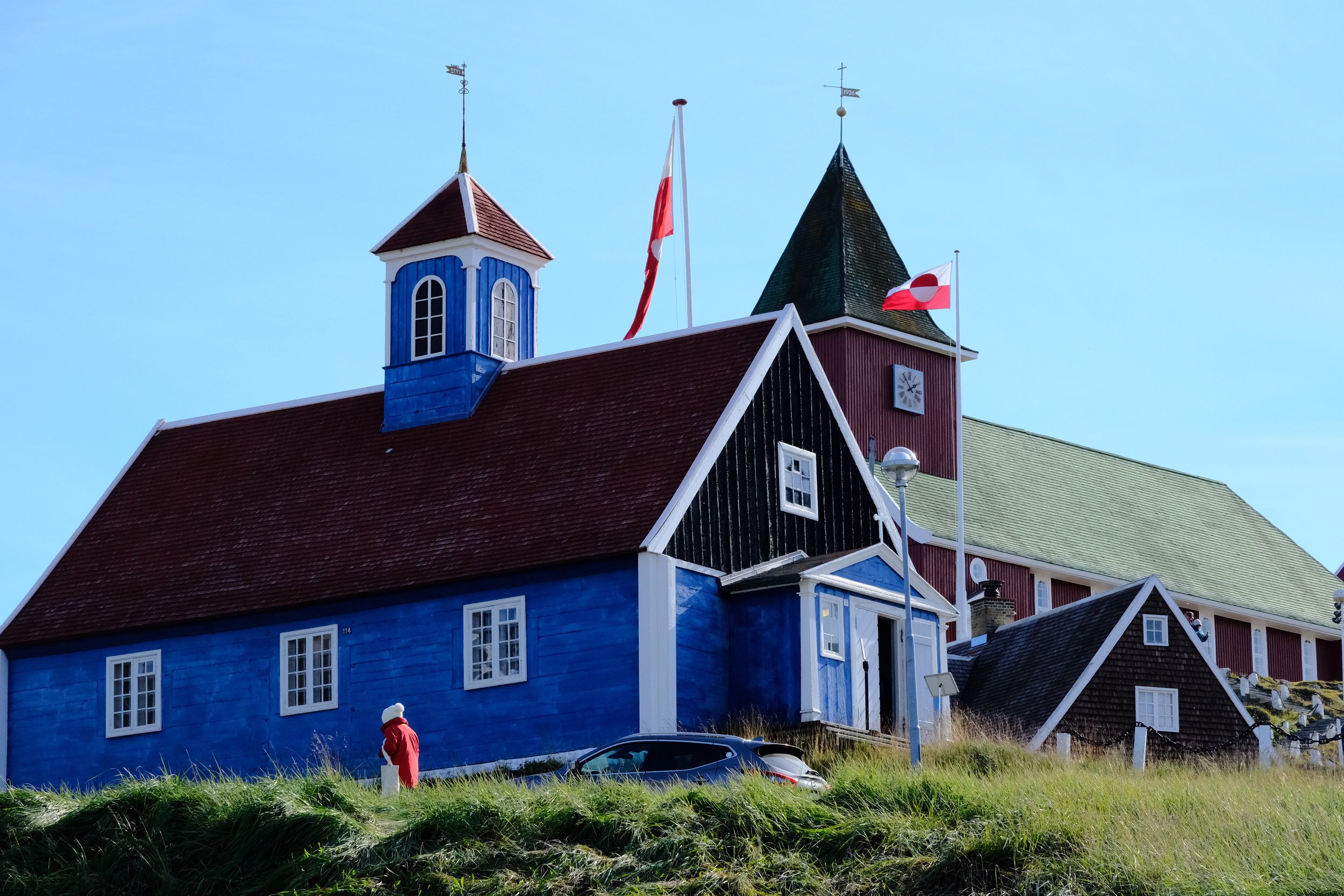
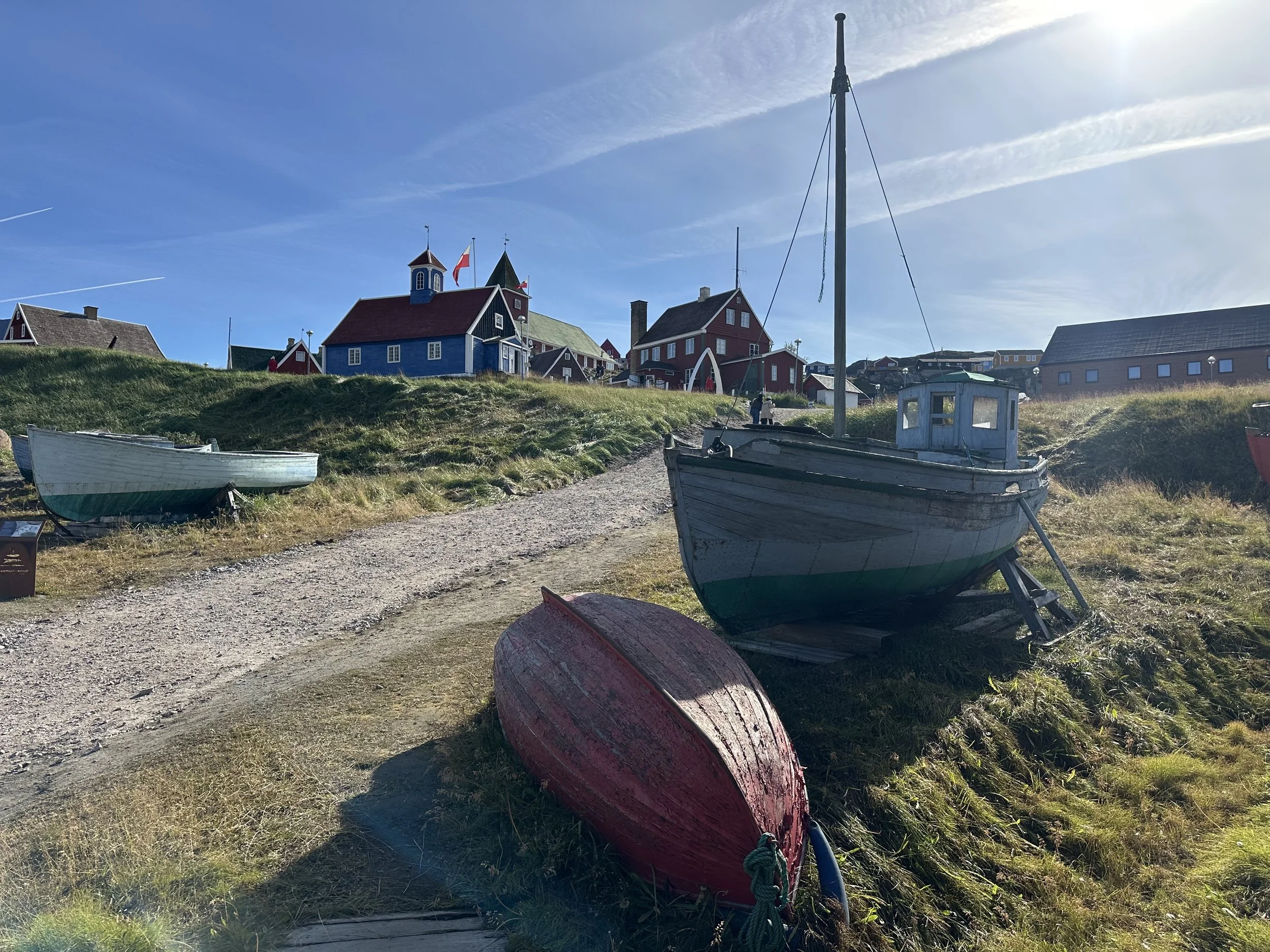
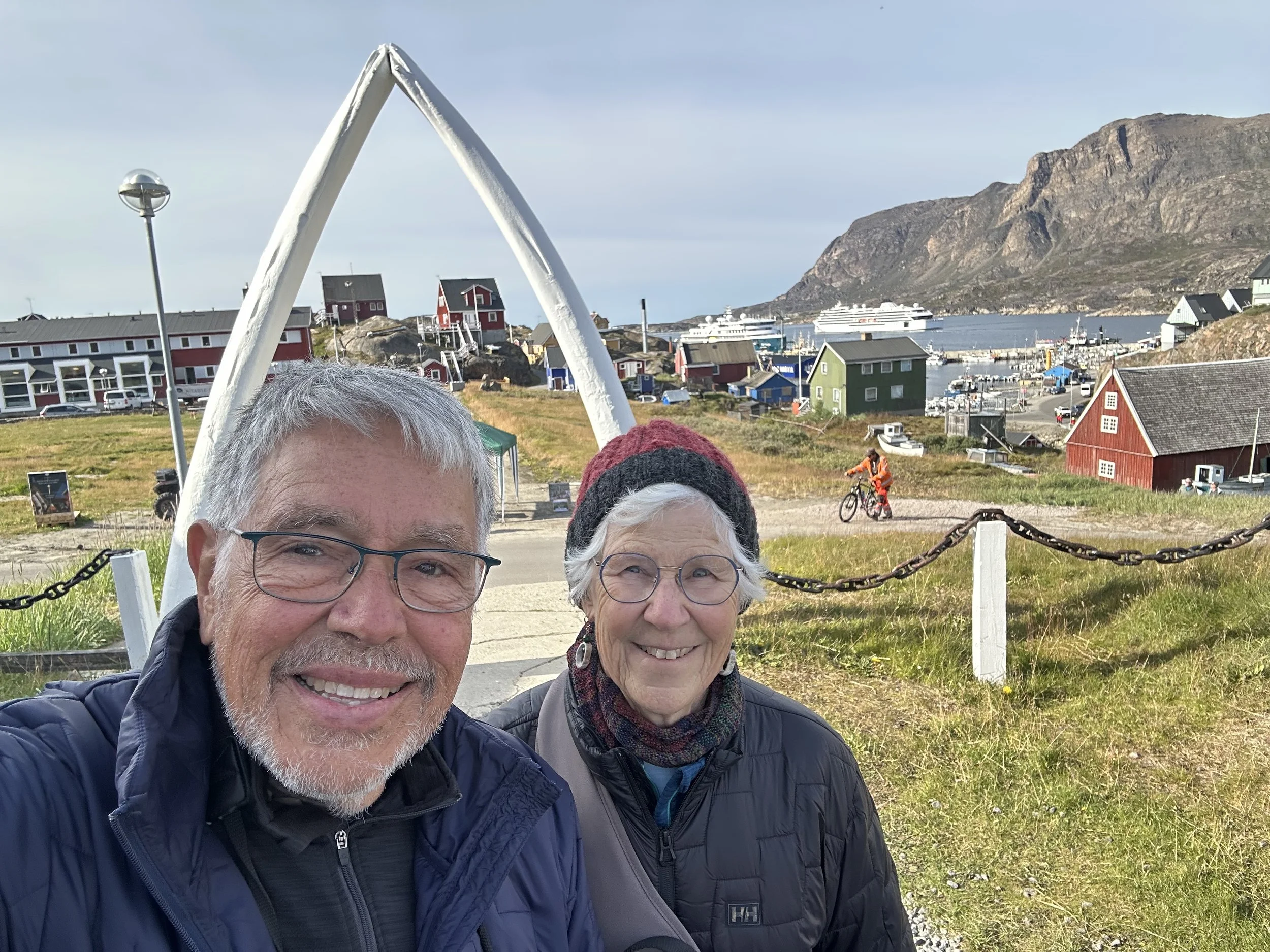
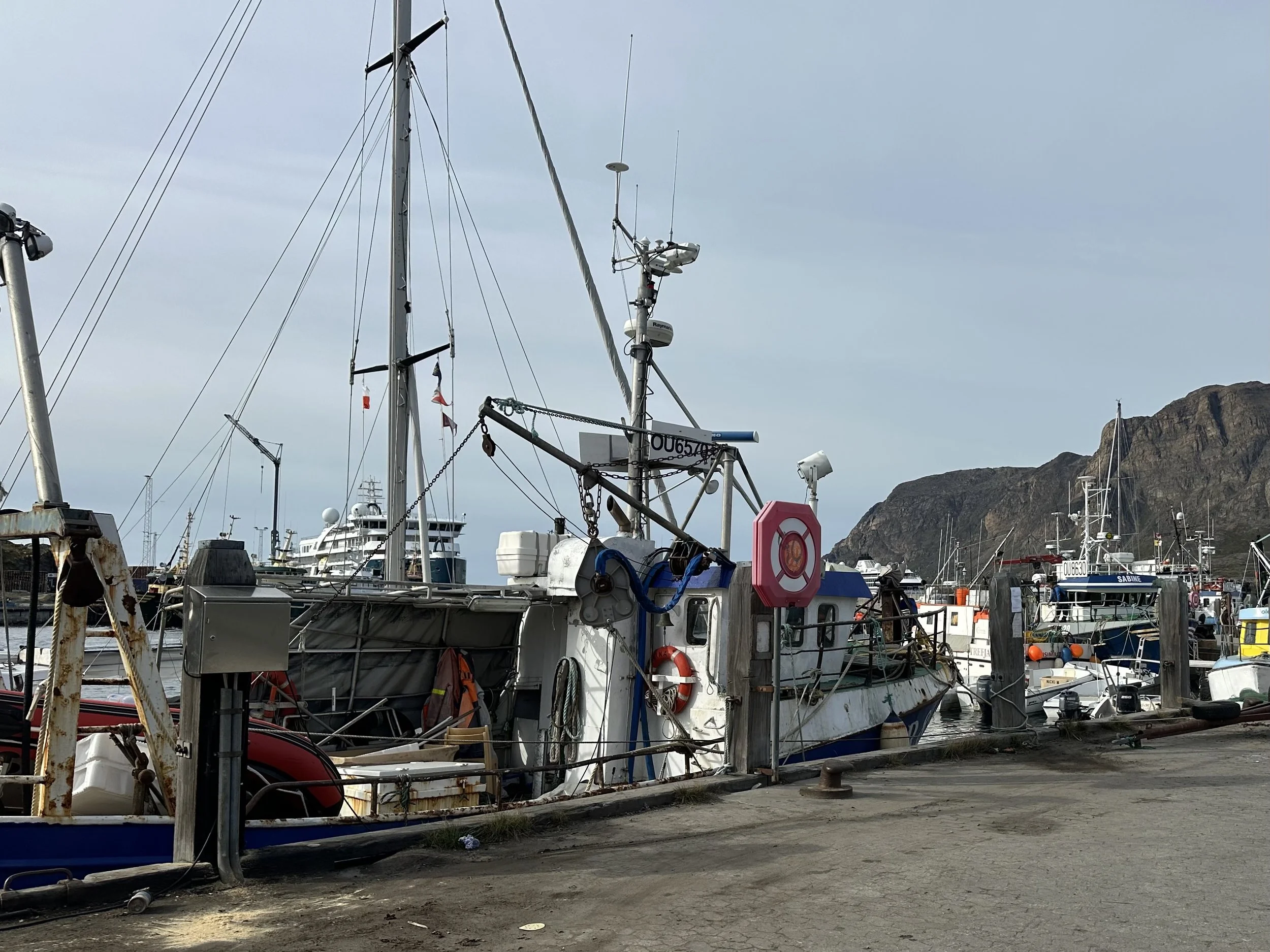
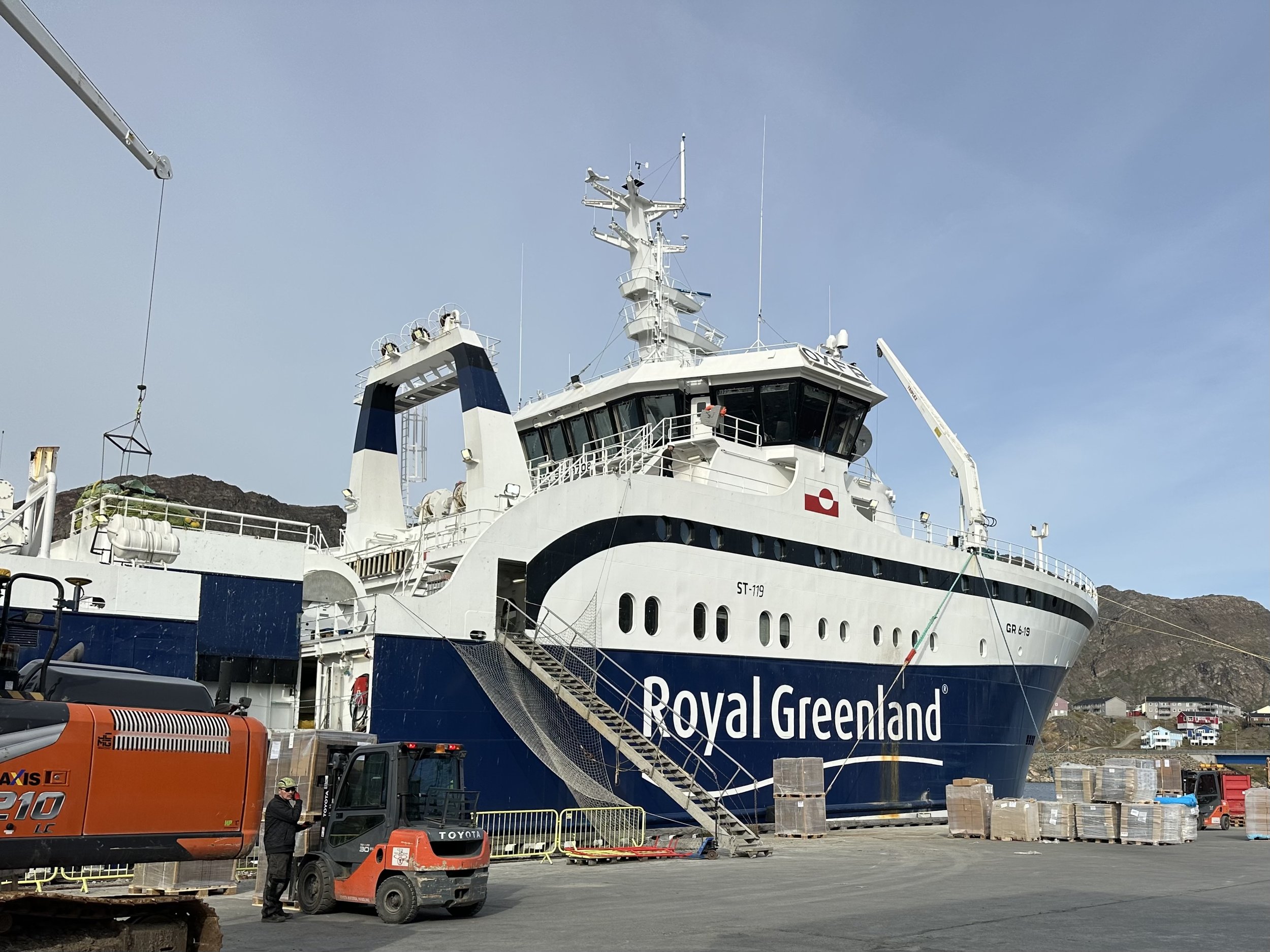
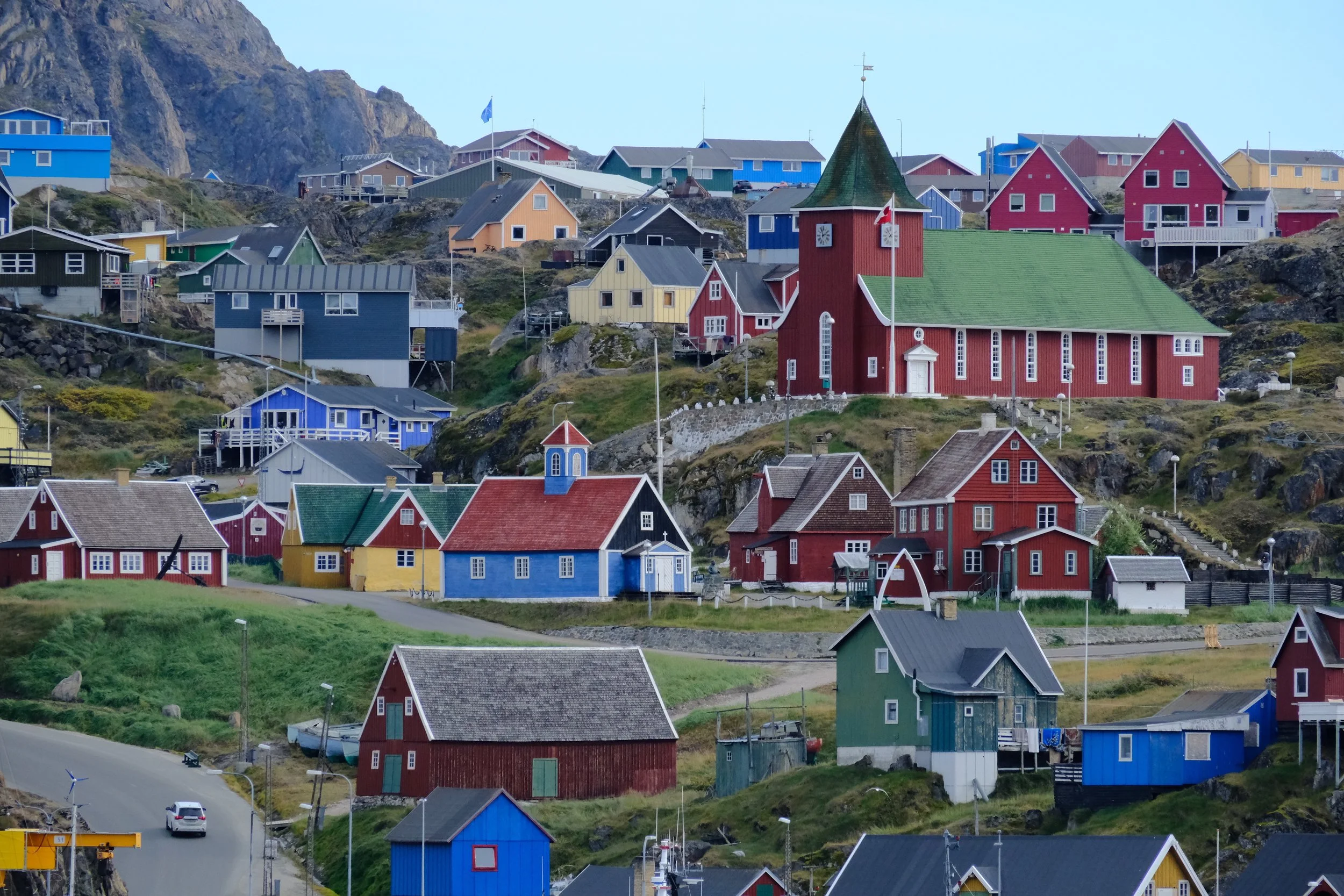
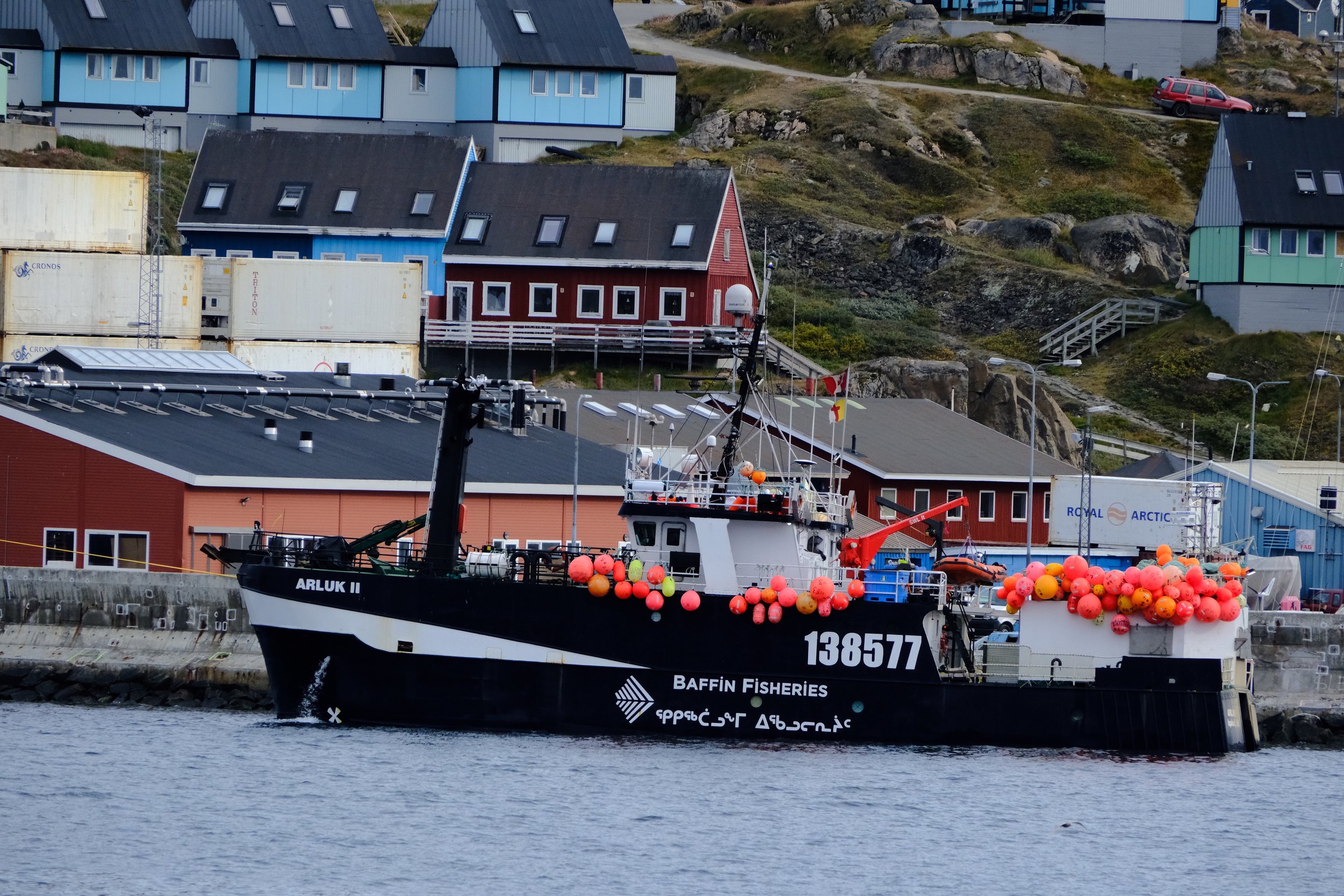
Sisimiut is Greenland’s second largest town with 5,500 residents. Its beauty comes from a combination of its natural setting on a harbor festooned by a number of small islands and the hills and mountains on which the town is perched. Colorful, well maintained houses and buildings add to the scene. There’s an active fishing business on the waterfront, including a fish processing facility. Shrimp and halibut are the main species.
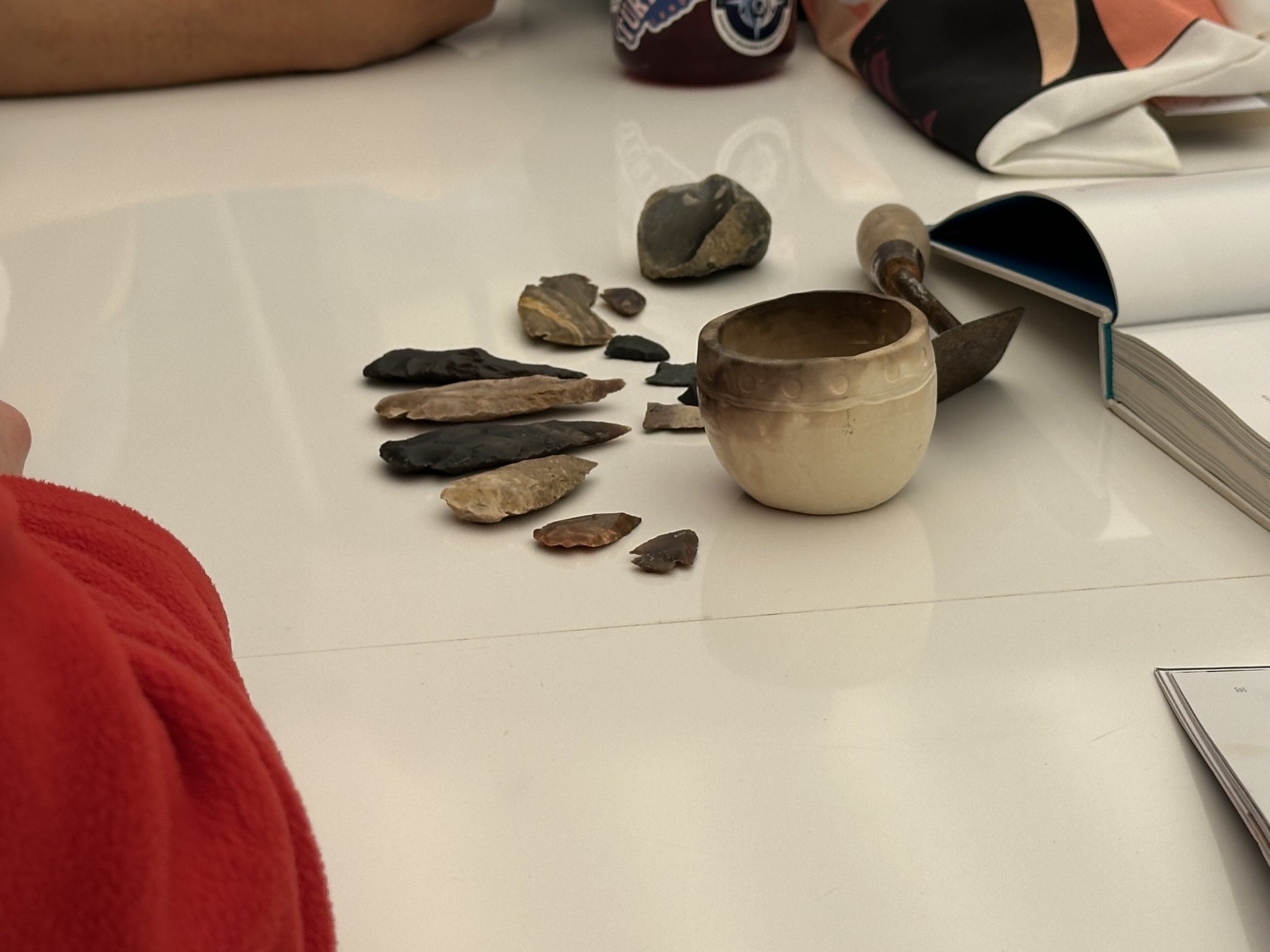
There is evidence of proto-Inuit settlements here as long ago as 2,400 BCE. The Thule culture moved in after the Dorset and Norse civilizations disappeared, generally by 1500 AD. From the Thules emerged the Inuits of today. Europeans came with the whaling industry in the 18th century.
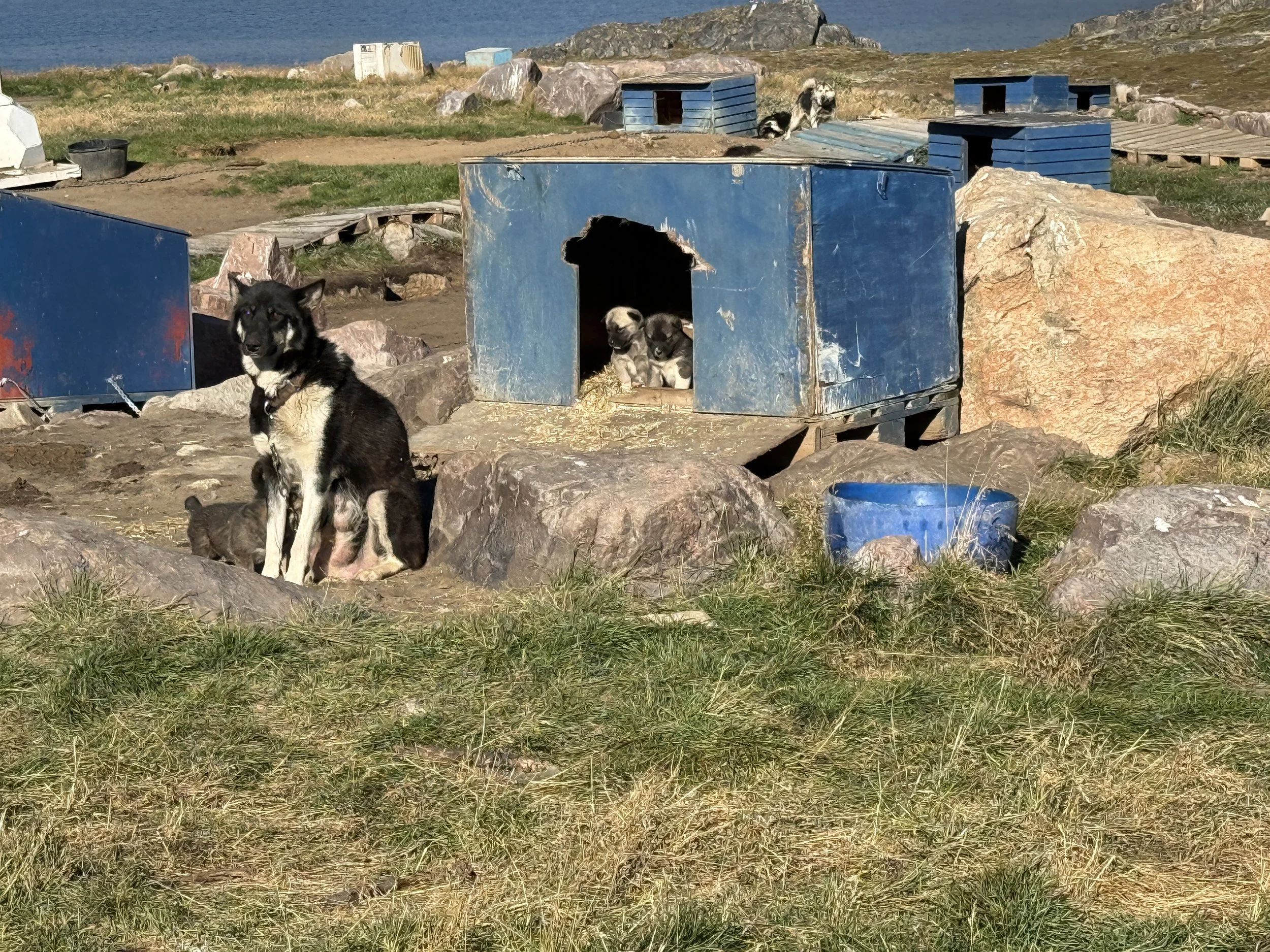
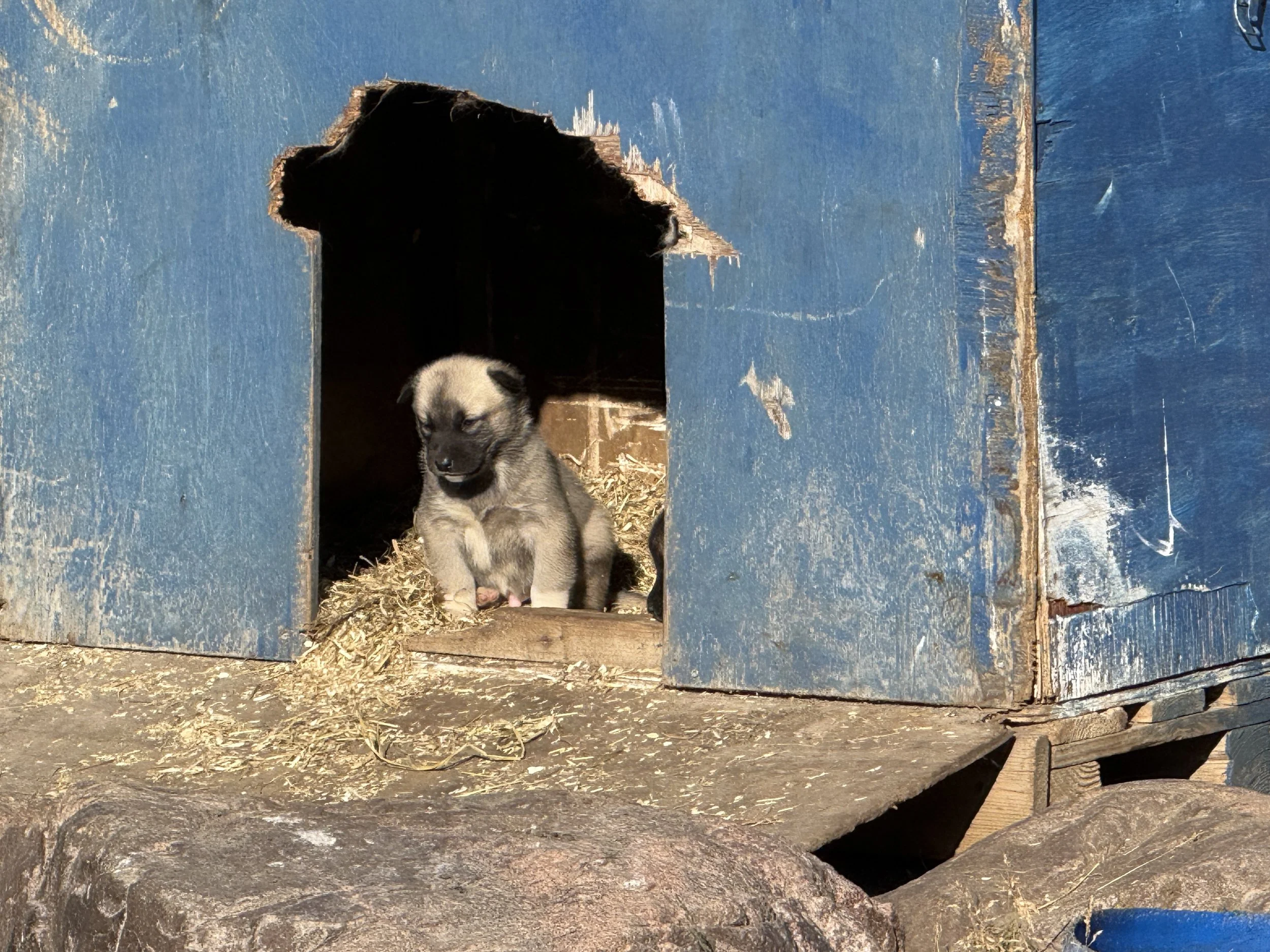
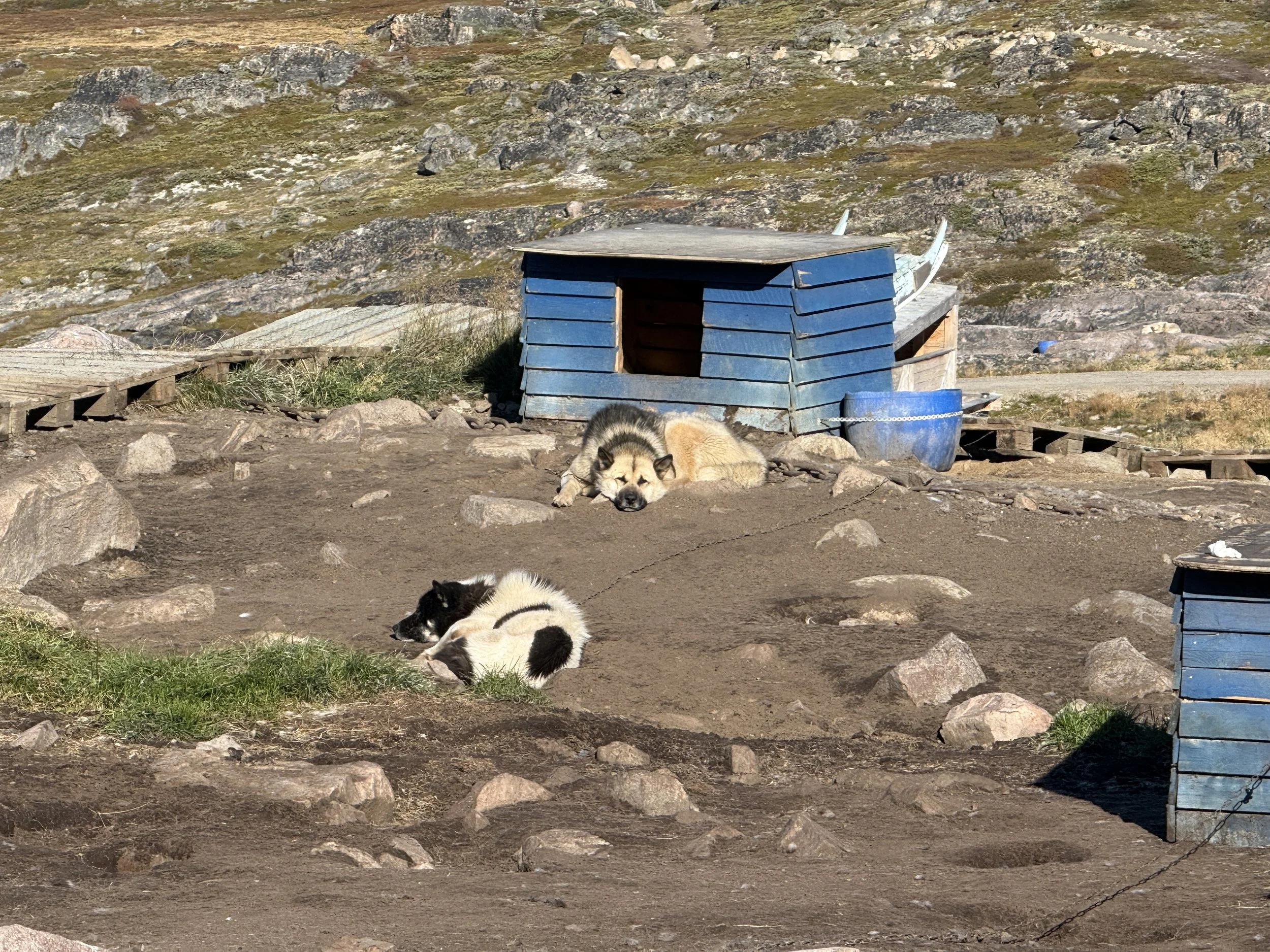
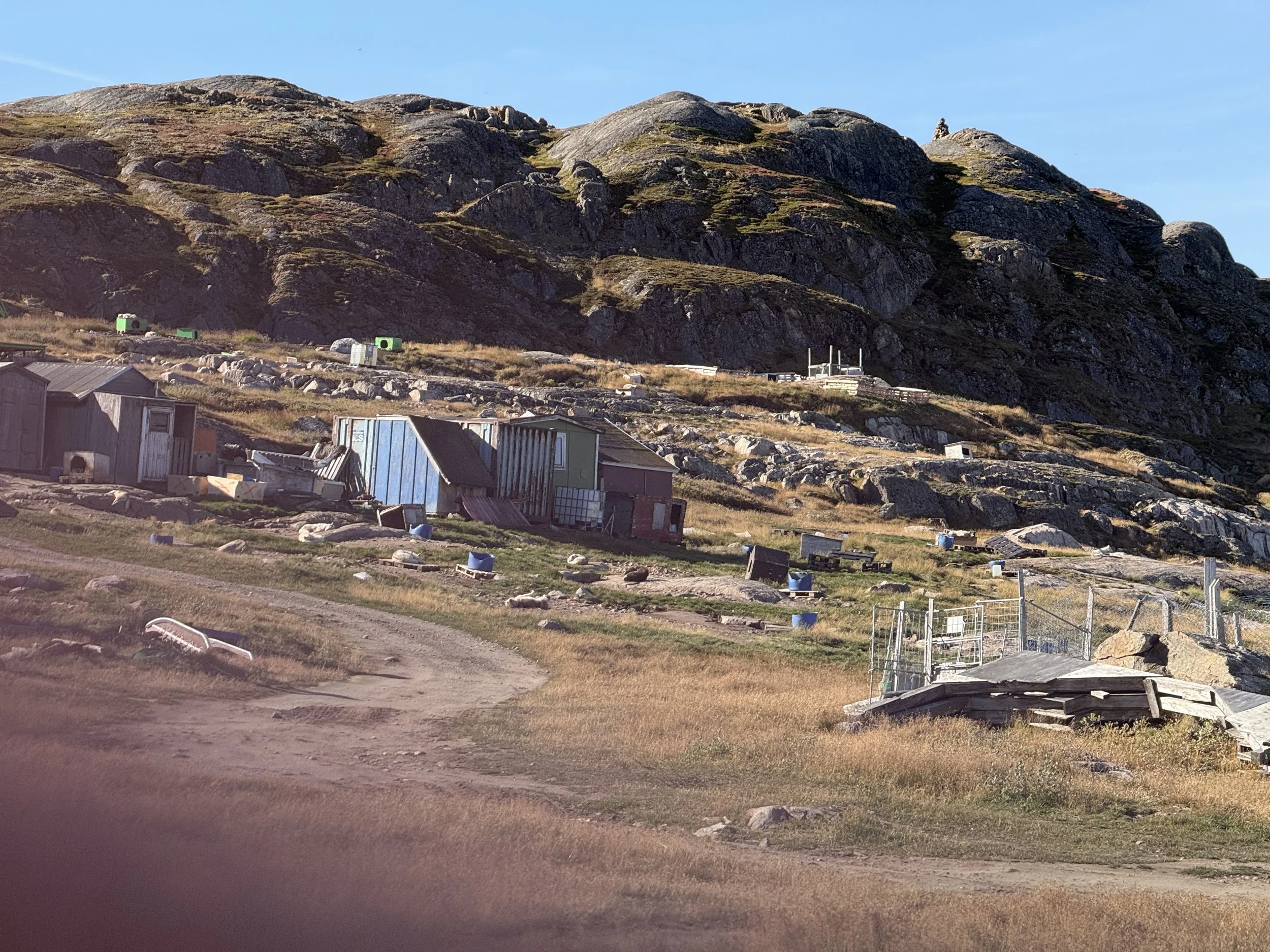
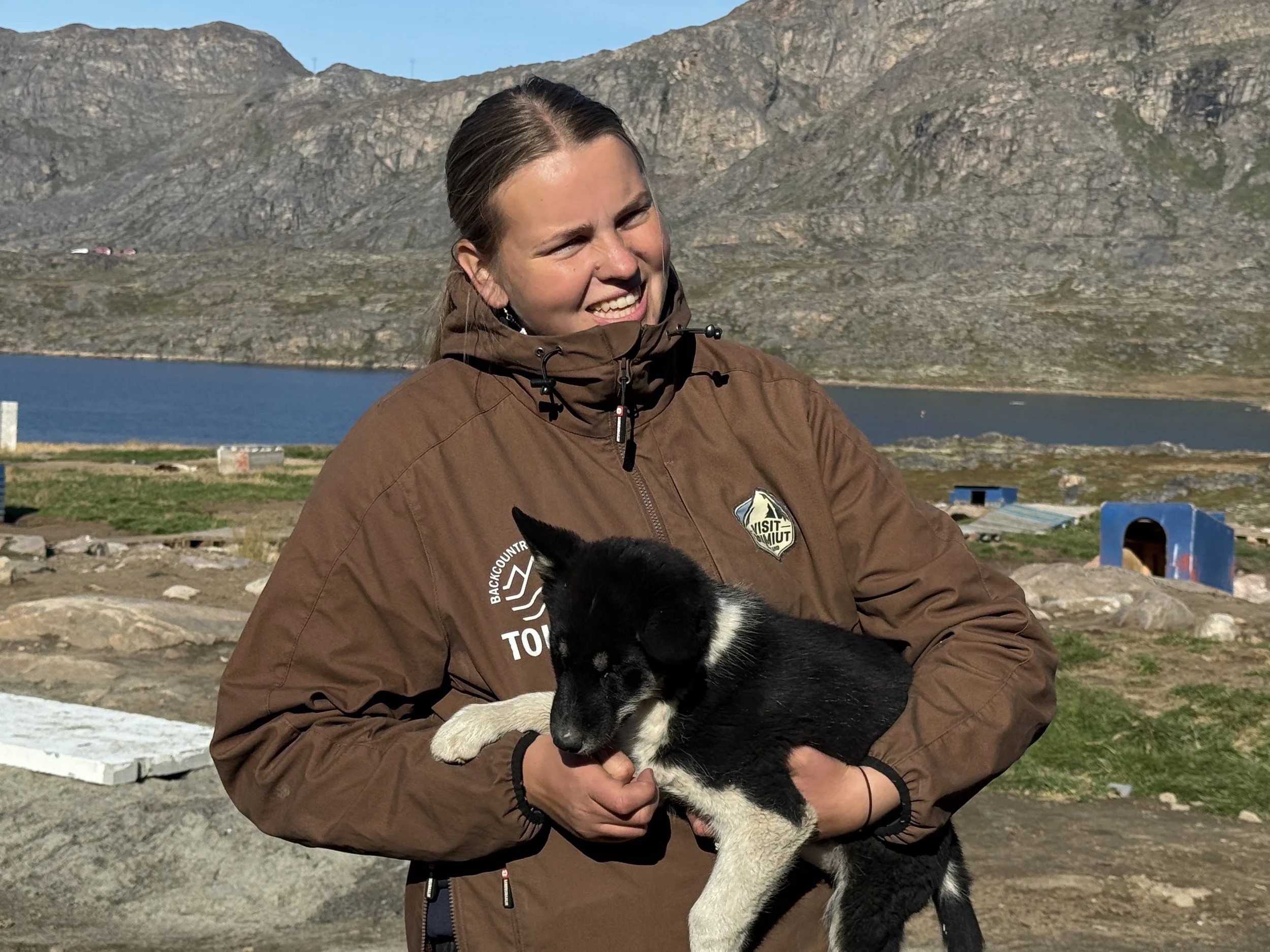
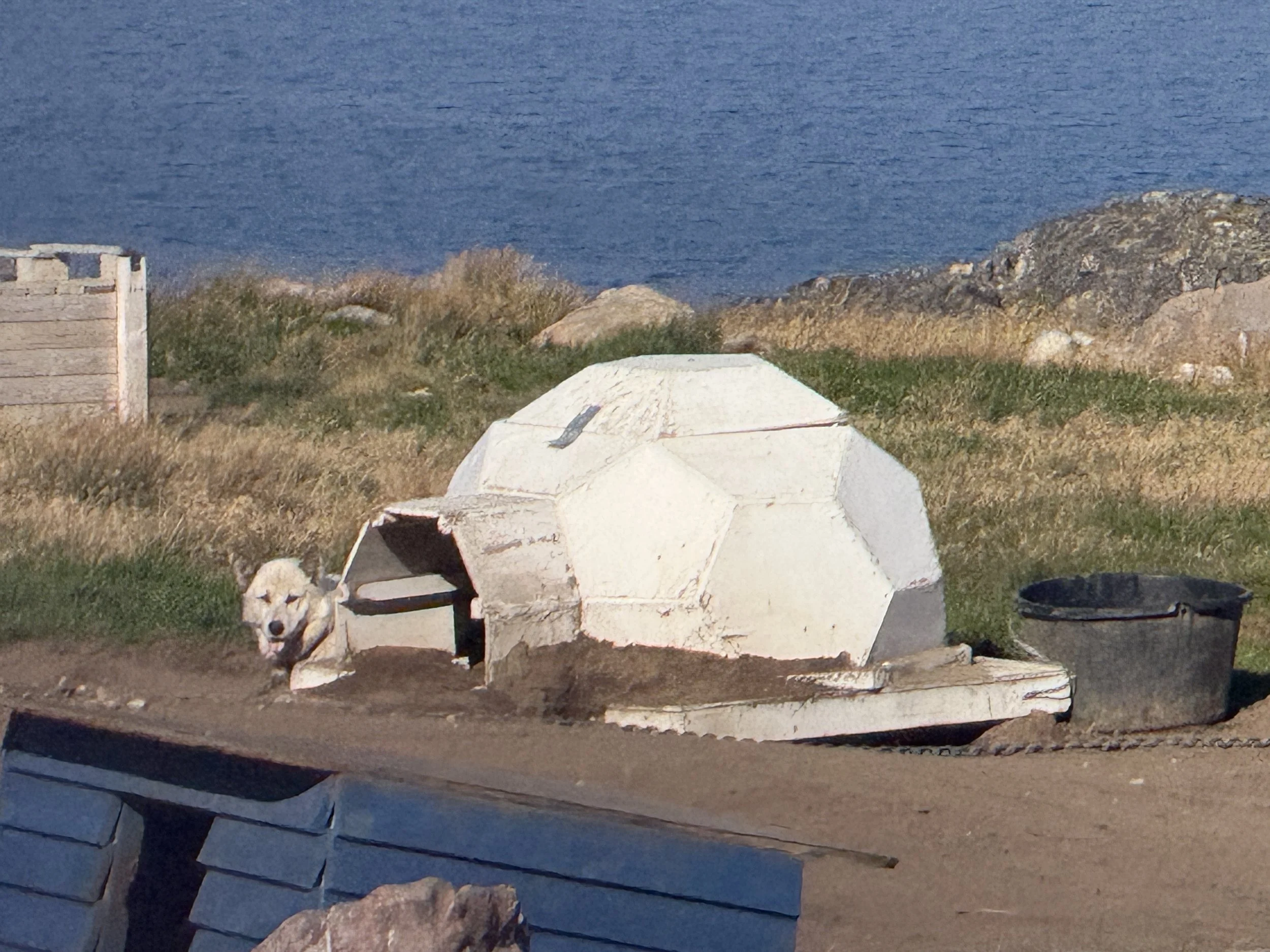
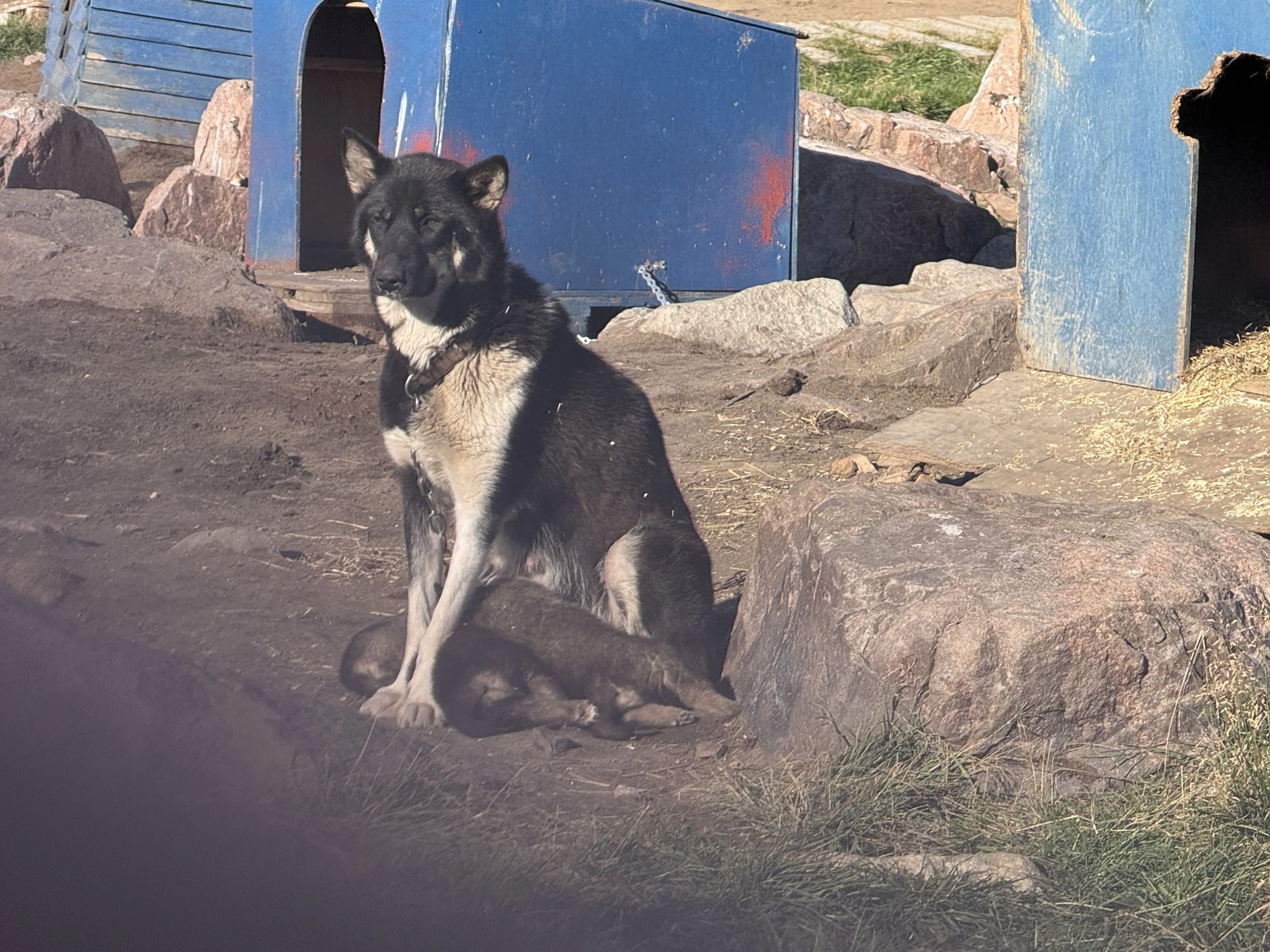
Judy and I divided to conquer today. She took a bus tour of the town, the high point of which was a visit outside of the town to where the Greenlandic dogs live. Remember, they prefer the winter and being outside. They have a double layer of fur and are very comfortable outside in the winter. Jon saw an island where some owners let their dogs run wild all summer. “That way, they can sort out their pecking order by themselves,” the guide explained.
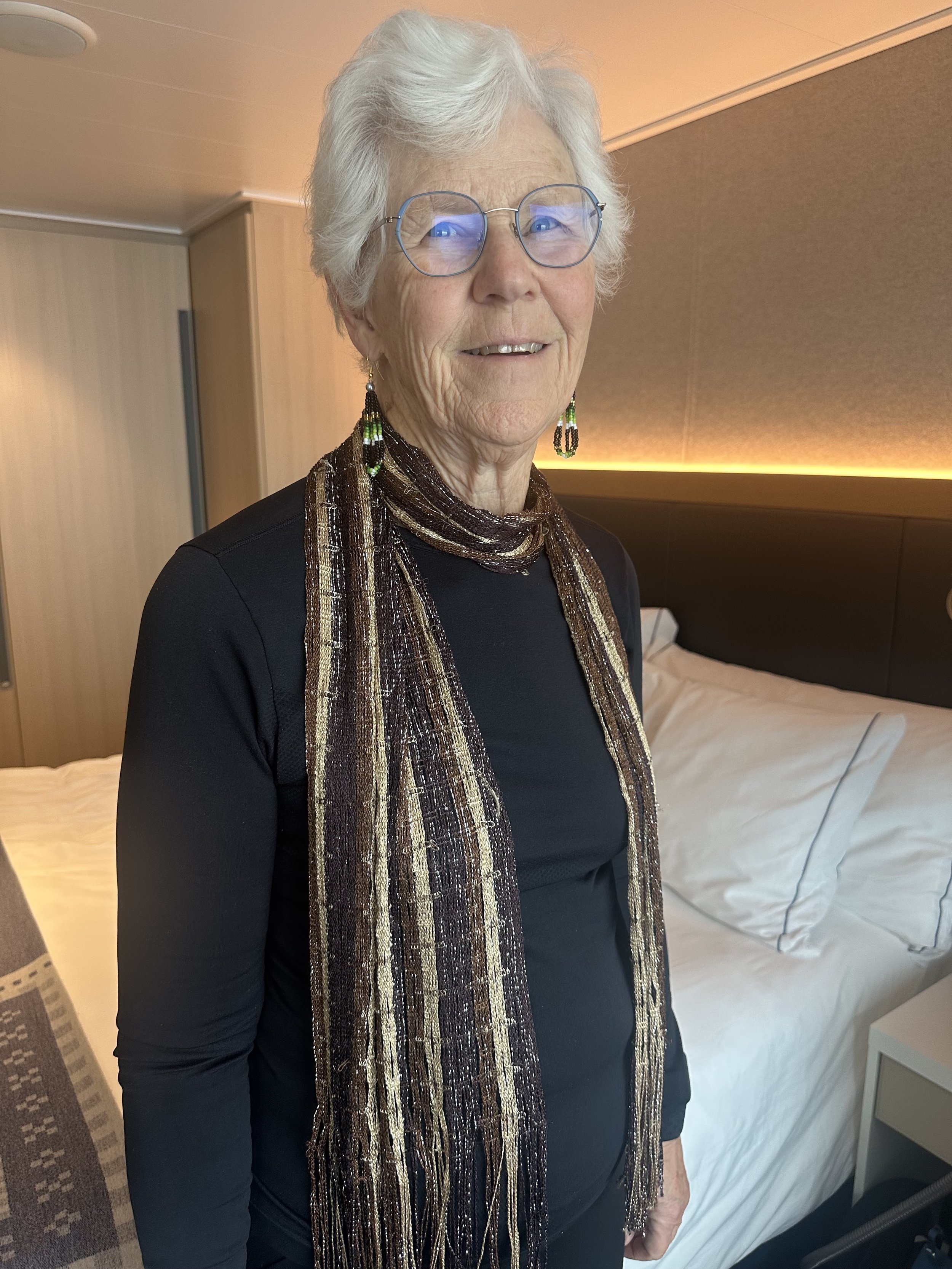
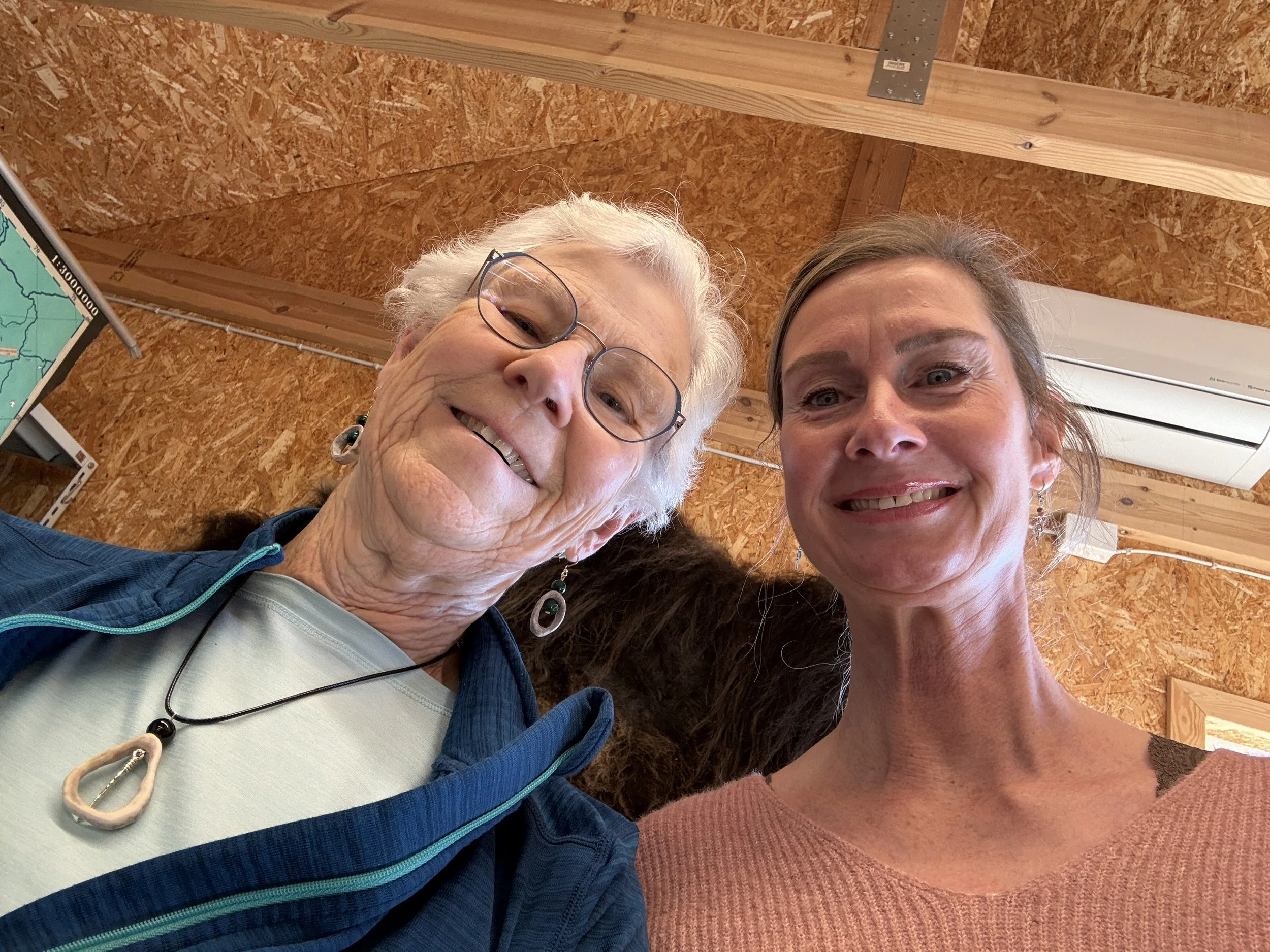
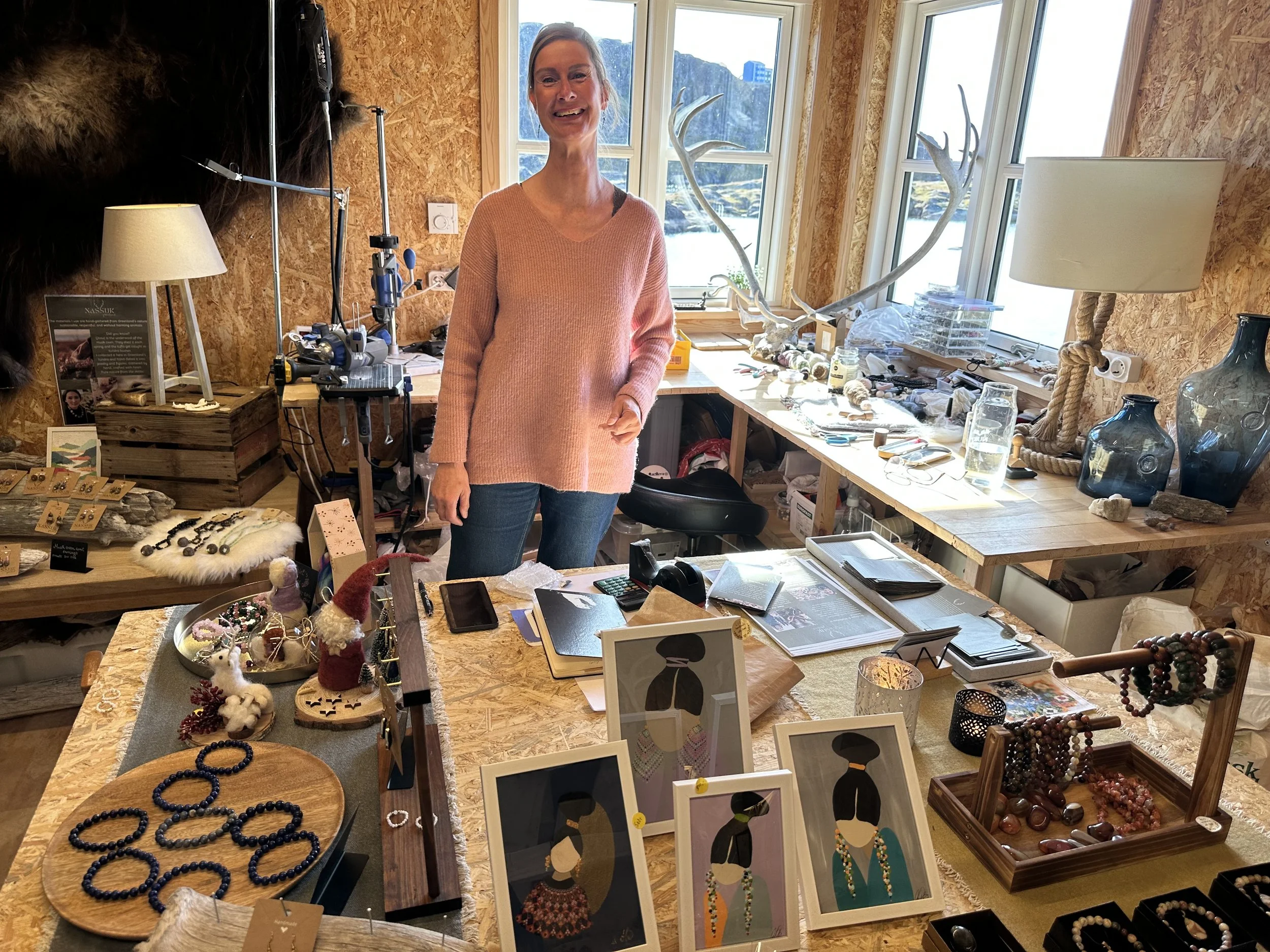
Judy also found the lady whose jewelry we bought from her husband on our way northbound up the coast of Greenland. A very nice necklace and another set of earrings were added to the collection.
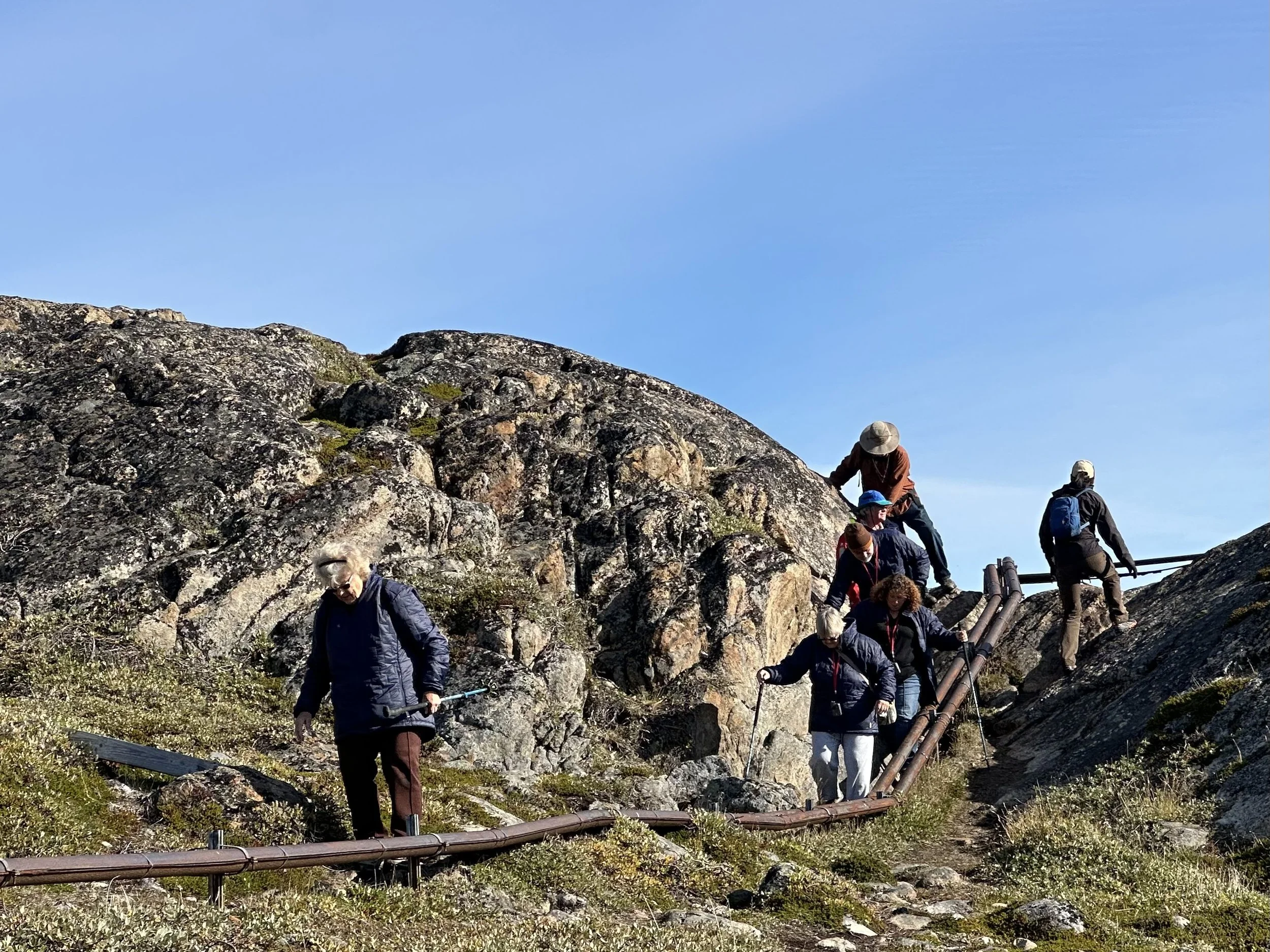
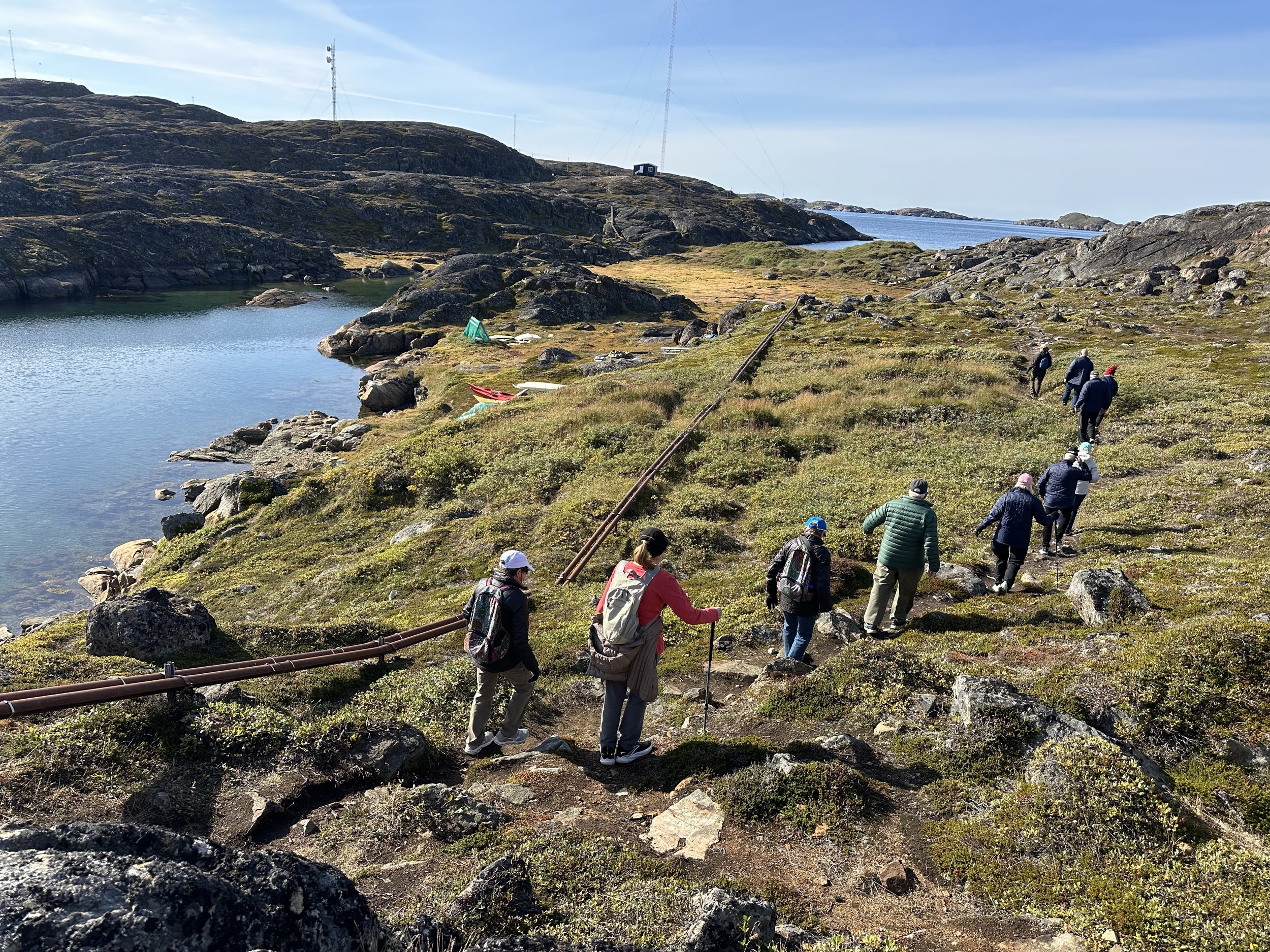
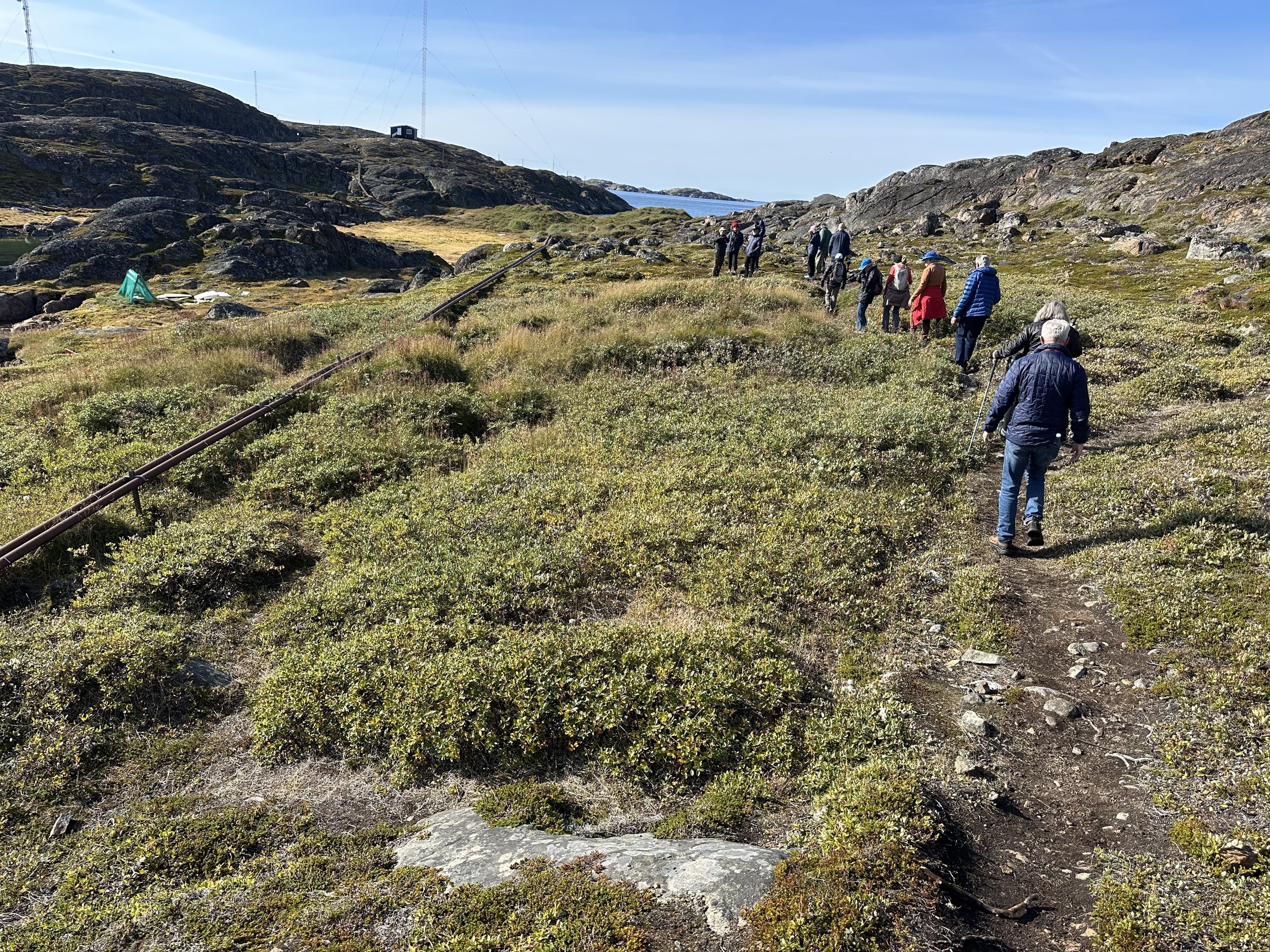
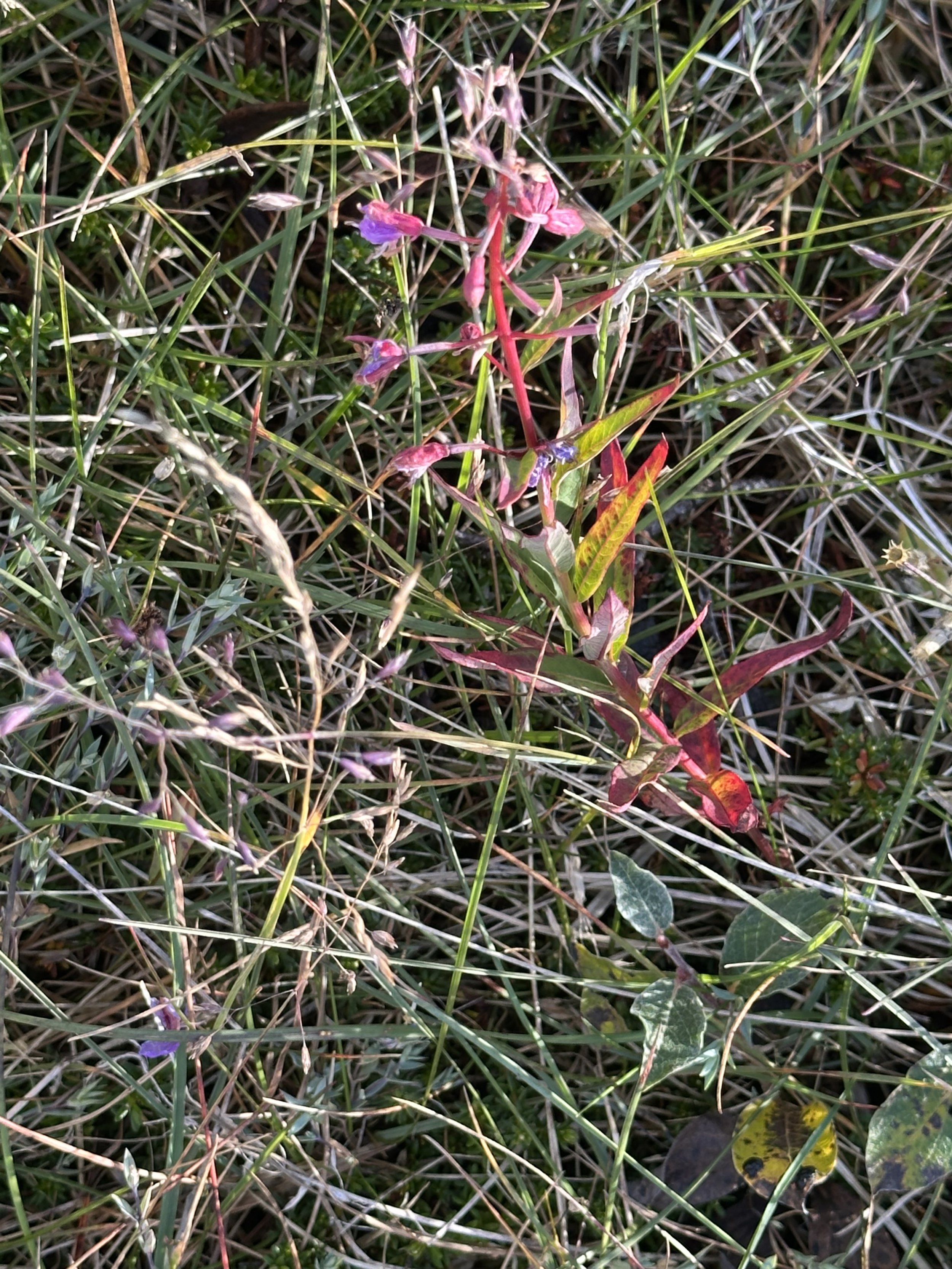
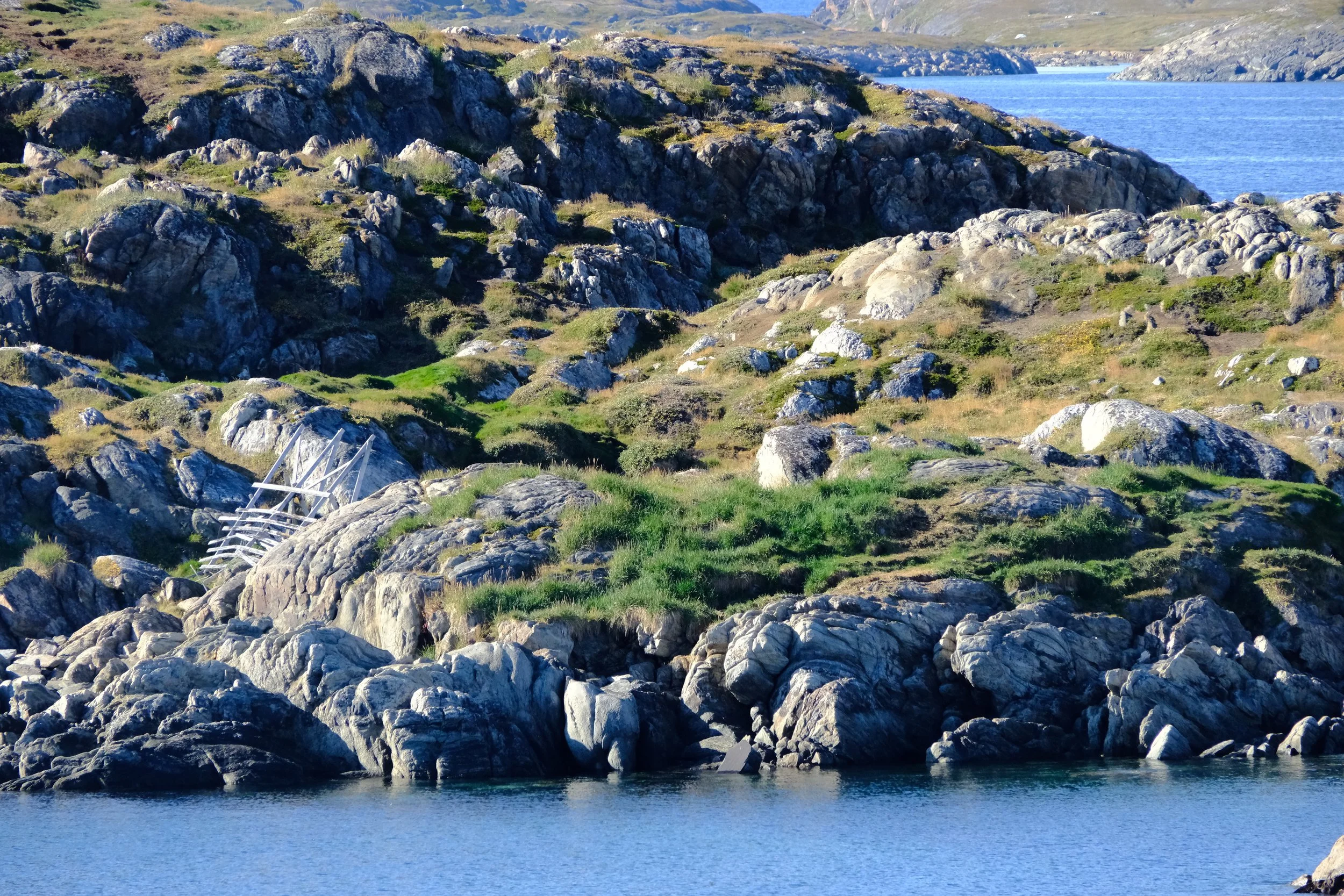
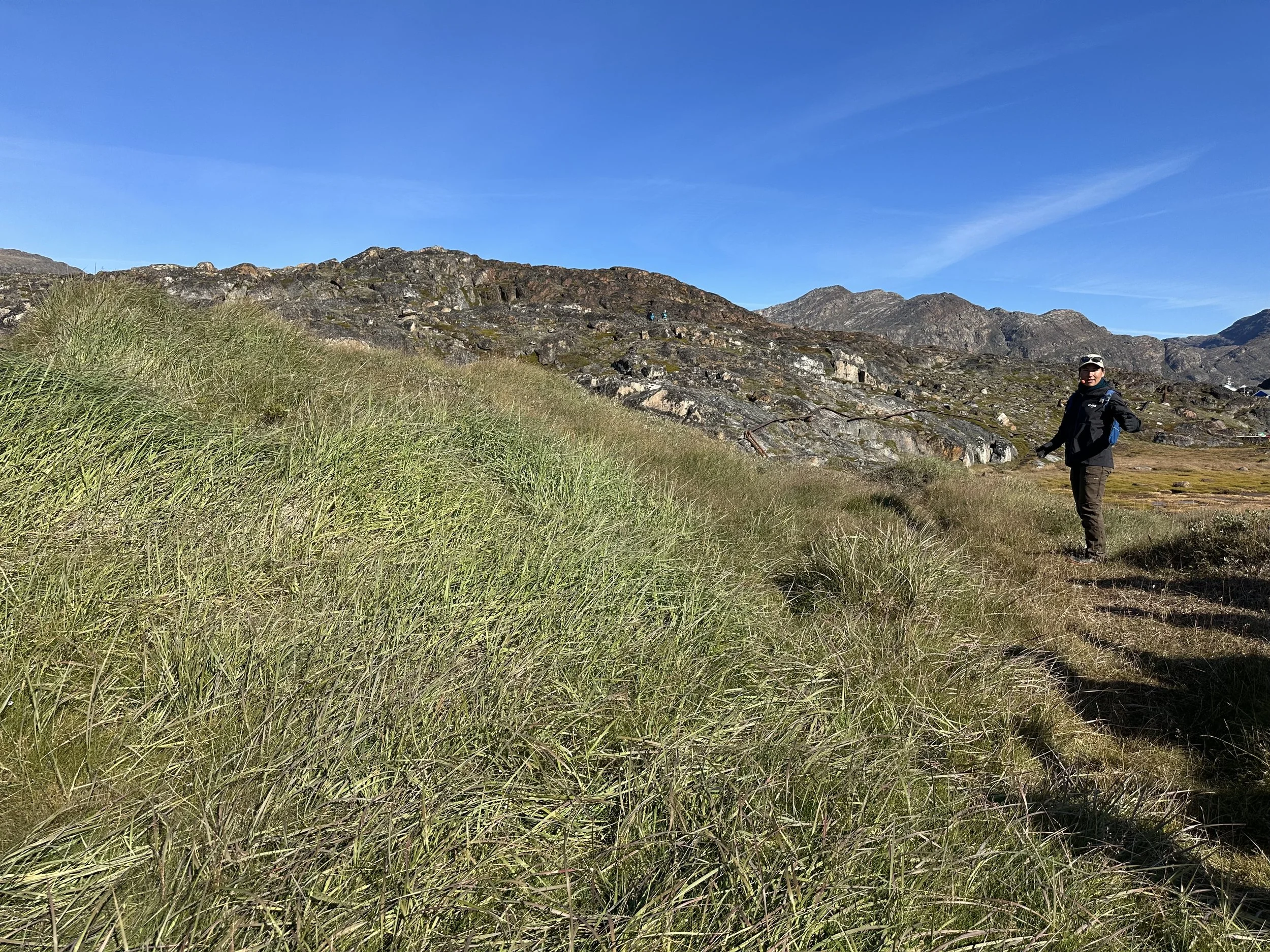
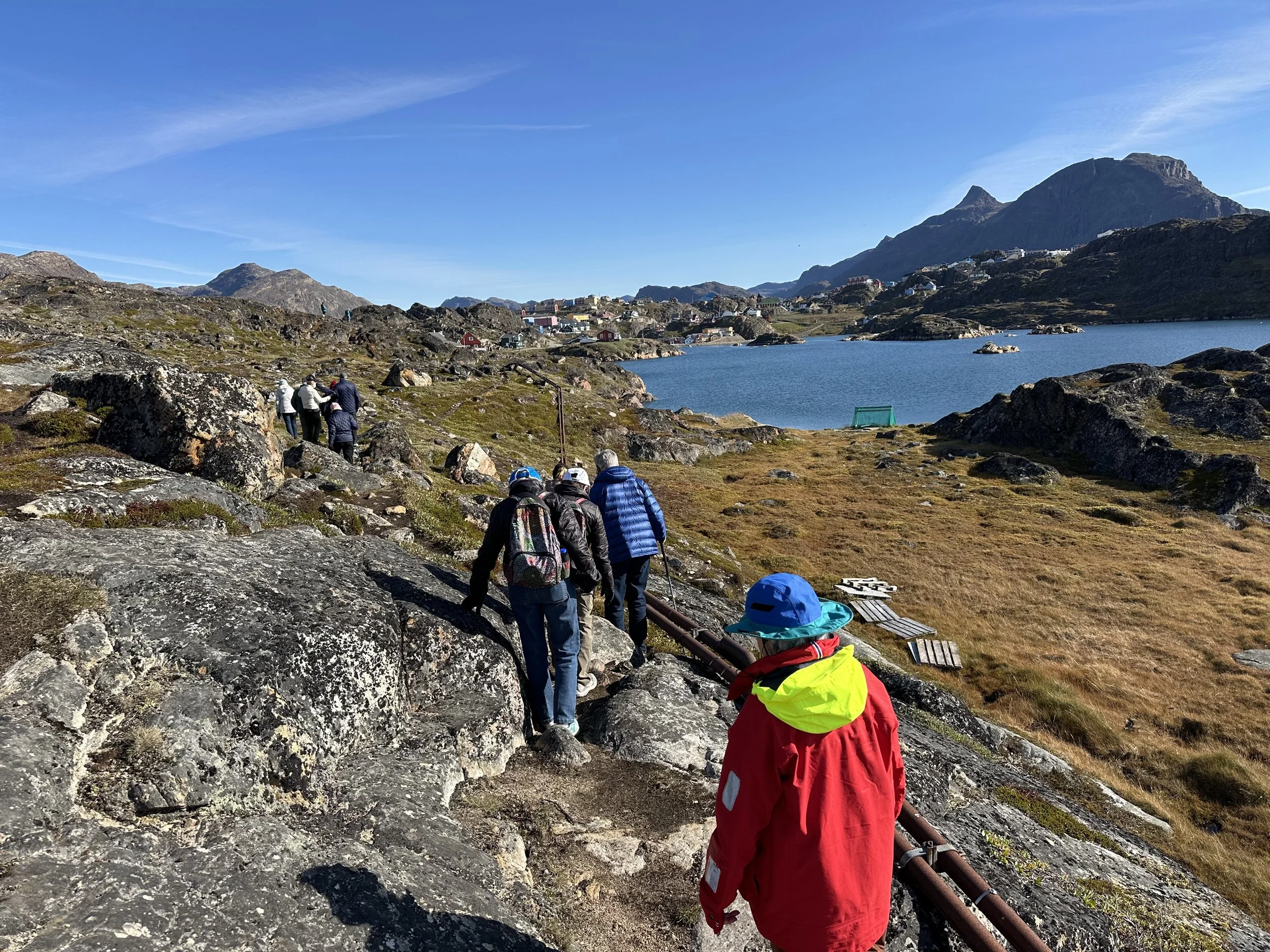
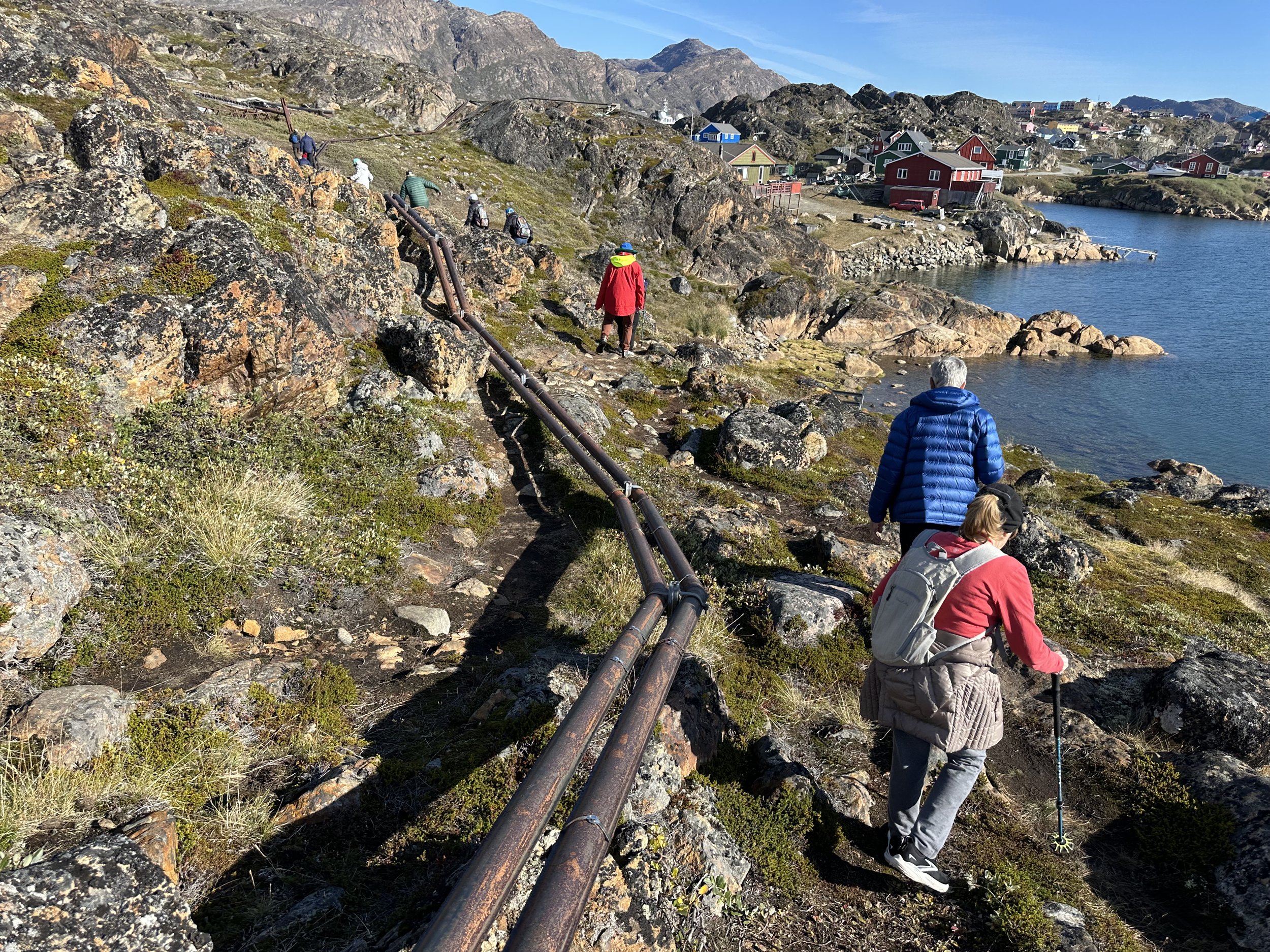
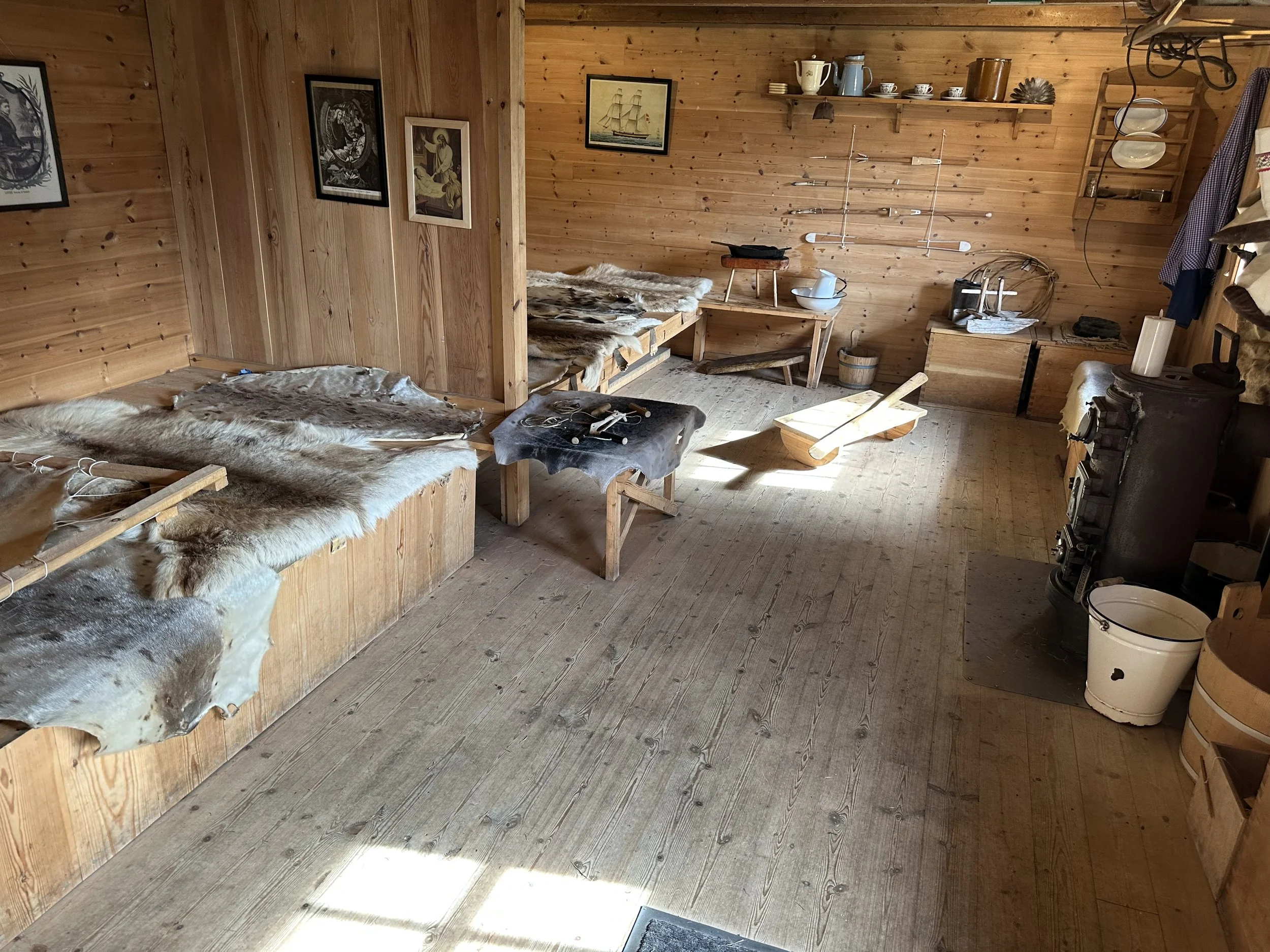
I took a “history hike,” leaving town and crossing over to a peninsula that used to be an island. It was home to a number of Inuit families. We could see the remains of several Inuit houses – faint outlines in the grass – probably dating from the 18th, 19th and early 20th centuries. All were probably stone and moss construction. Roofs were made of driftwood and whale bones. Later ones during the time of the Europeans may have had glass windows procured from passing whalers.
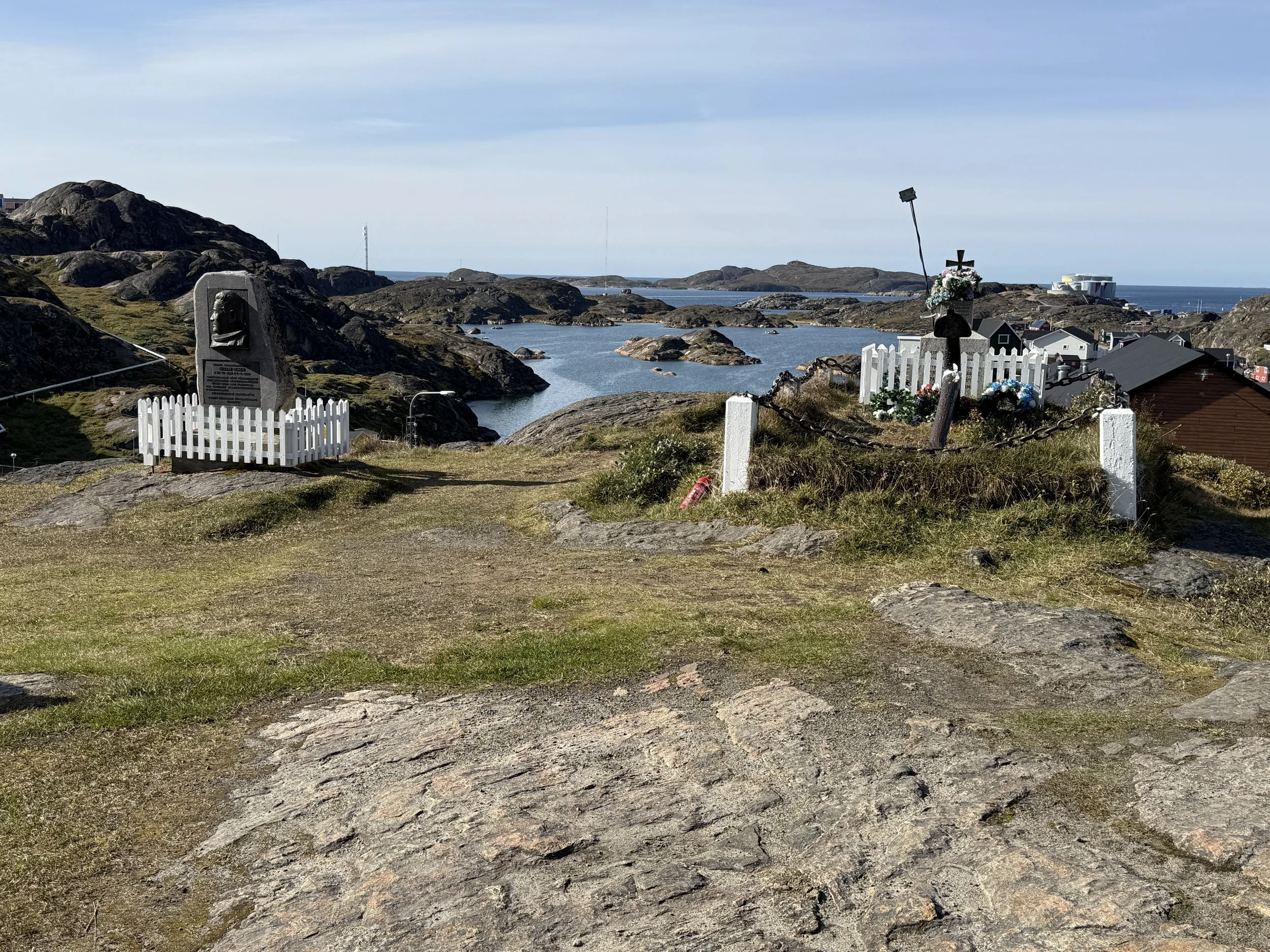
We also saw two Inuit graves, probably from the 19th century. Our guide explained that they were buried with a view of the sea so that their spirits would have ready access to the bounties of the ocean in the next life. Others might be buried with a view to the mountains for a similar reason.
She explained that Inuit belief is that all things – objects, animals, the wind, the land – everything – has a spirit and that it is important to honor the spirits of everything we encounter. I asked if it was possible to hold Christian beliefs alongside traditional spirit beliefs. She said it is possible and that many Inuit do.
Inuit had no concept of Hell until the European missionaries arrived. Now, Inuit believe that men who are poor hunters or lazy will go to Hell. Women who are bad seamstresses and who have inappropriate tattoos are in for it.
The hike was labeled as “demanding” and I was a bit concerned that I’d be able to keep up with some of the young ‘uns in our group. The trail wasn’t terribly steep but very uneven with rocks and areas of water that had to be navigated. A half dozen left the hike when the going got rough. I of course, toughed it out and did OK. This old grey stallion ain’t what he used to be not that many long years ago.
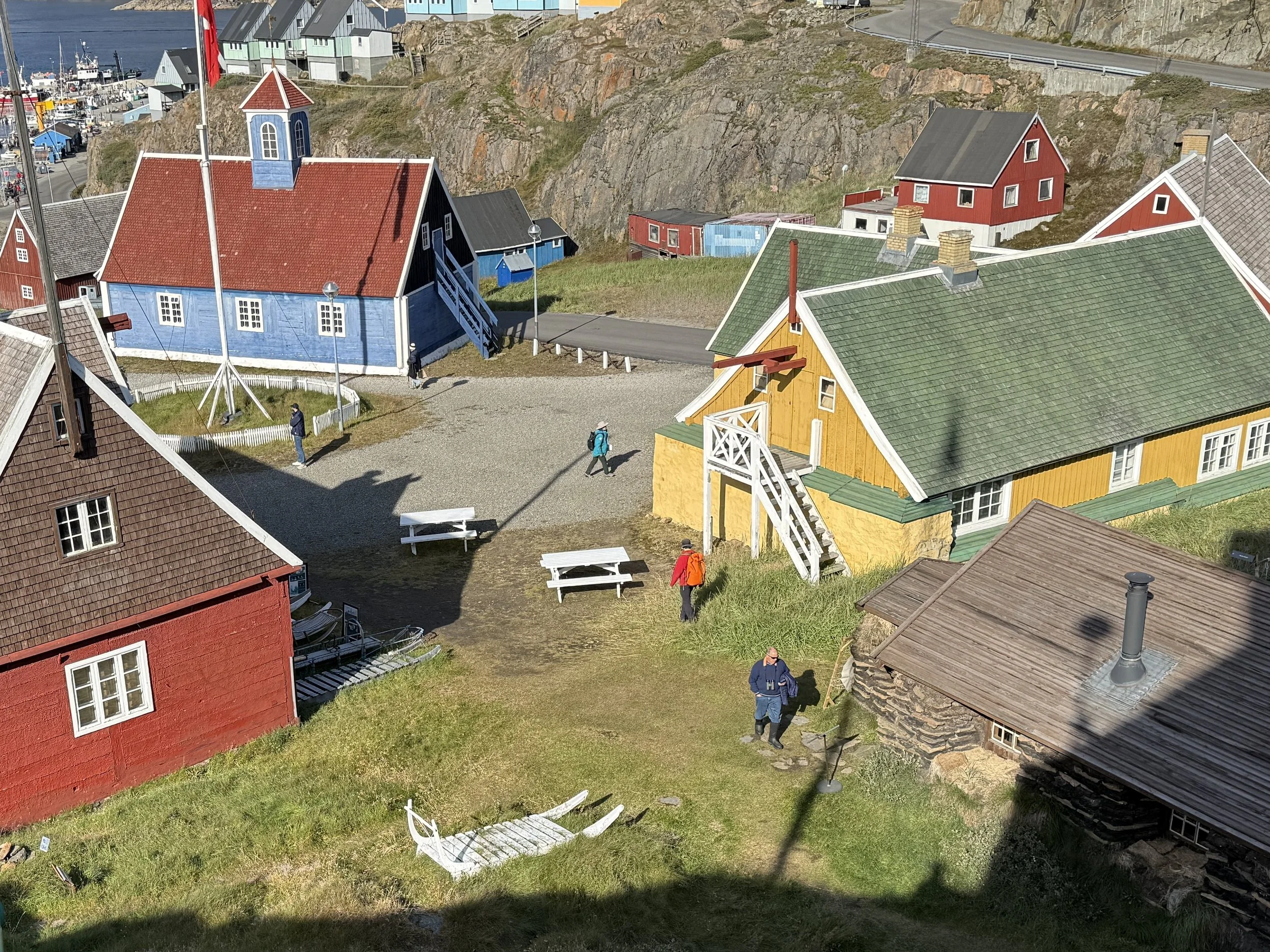
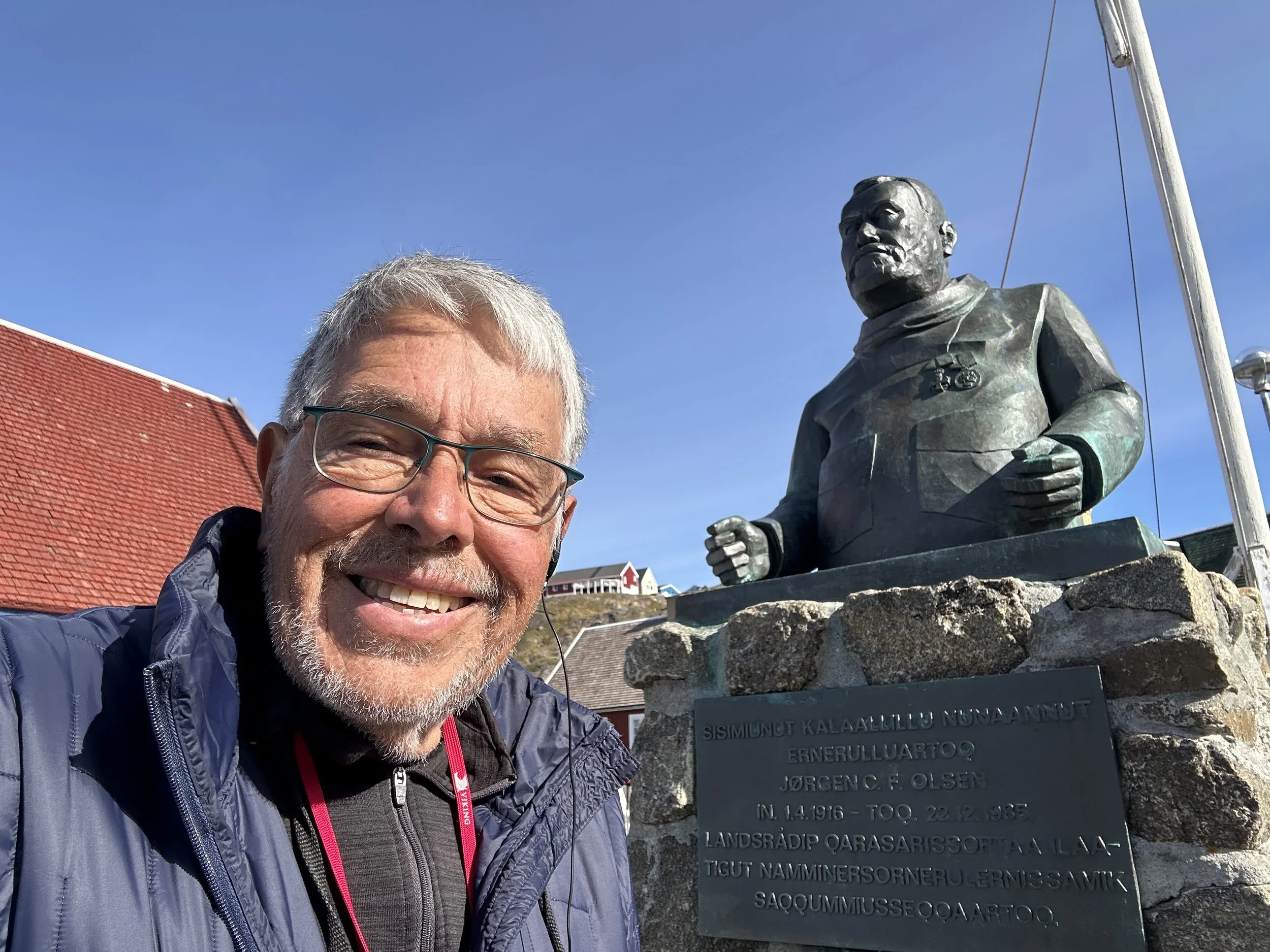
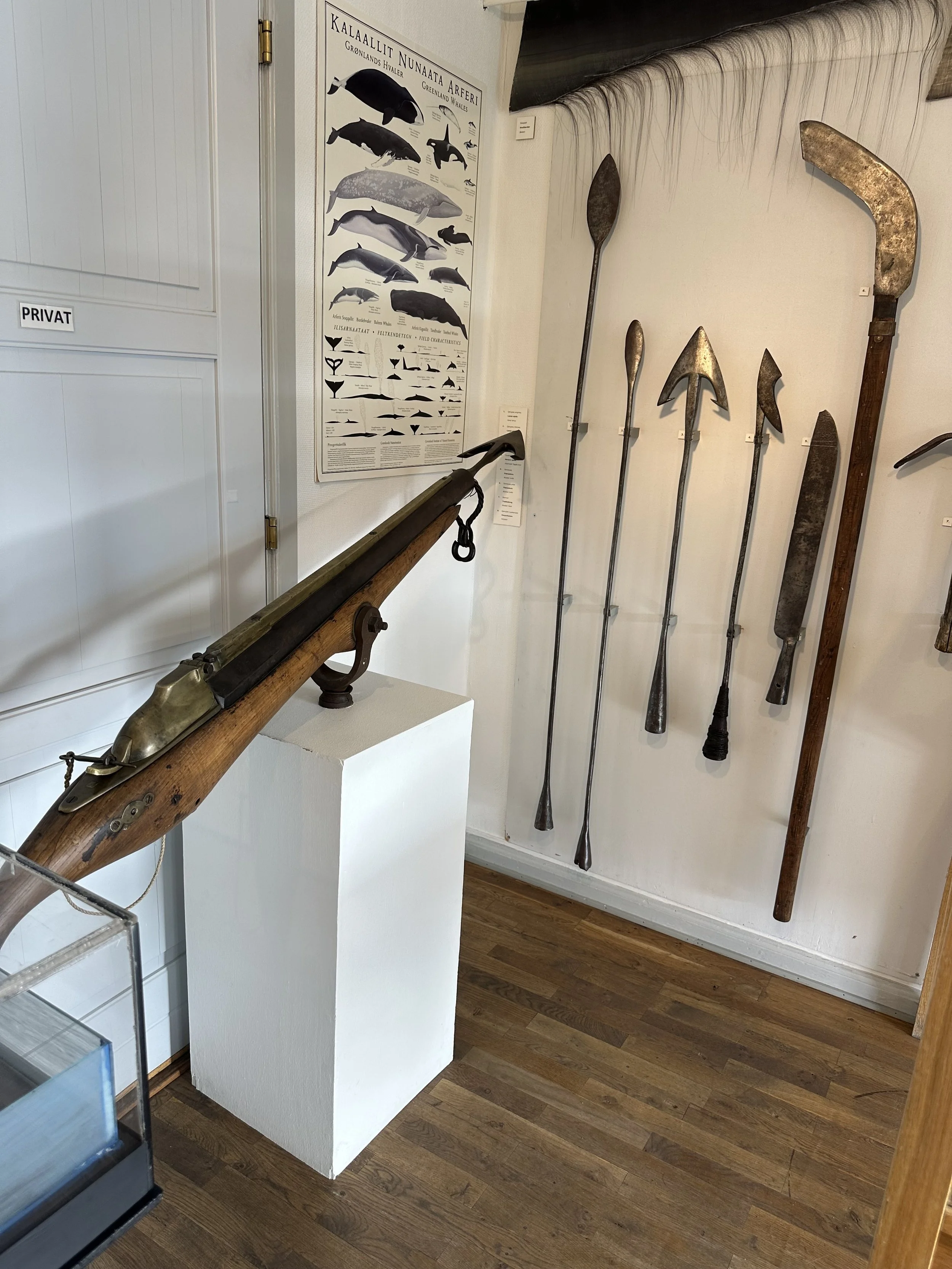
We finally met up for a quick latte (we missed lunch) and toured a very nice little museum at the top of a hill. Two churches and a lot of pictures and history, mostly from the colonial period.
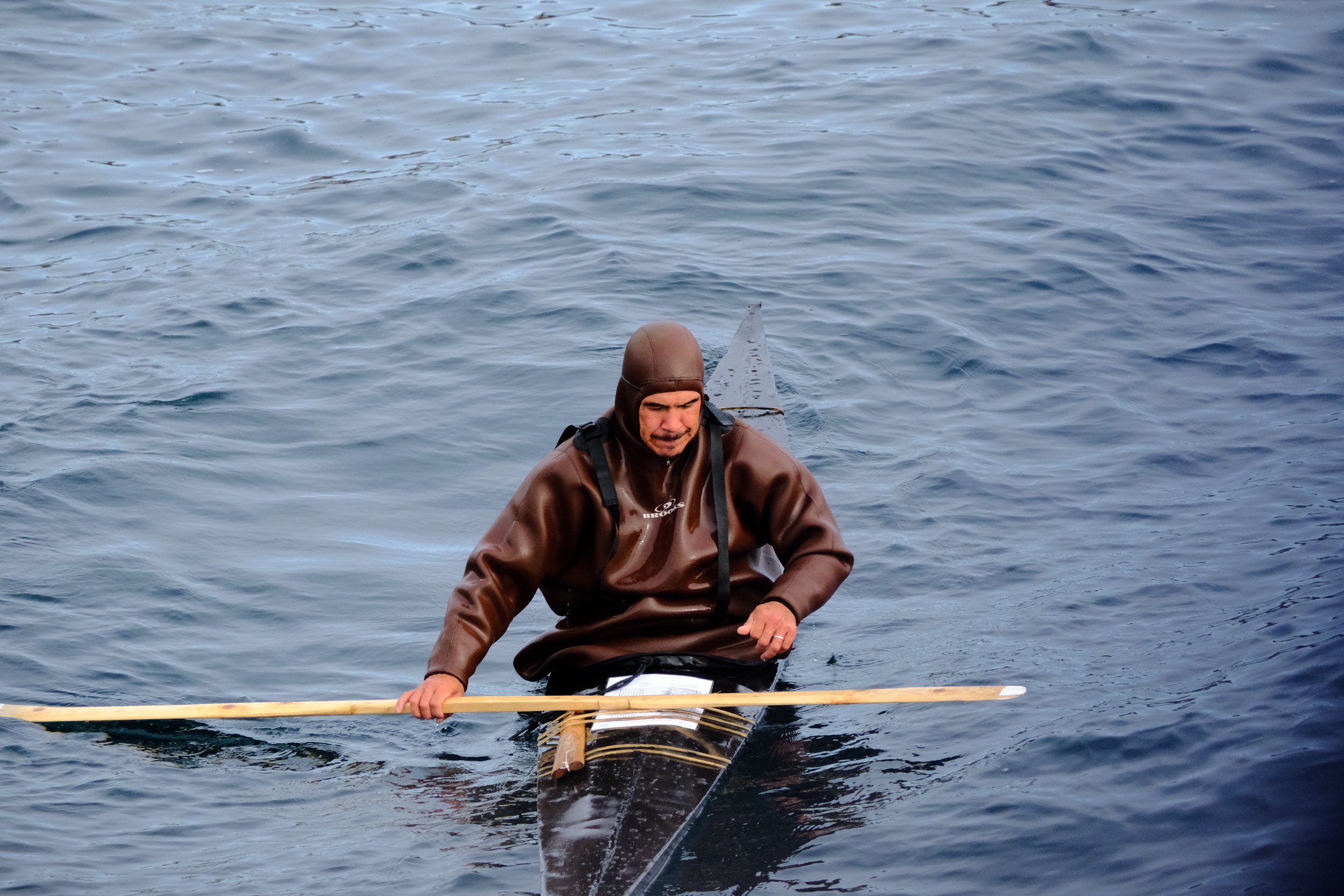
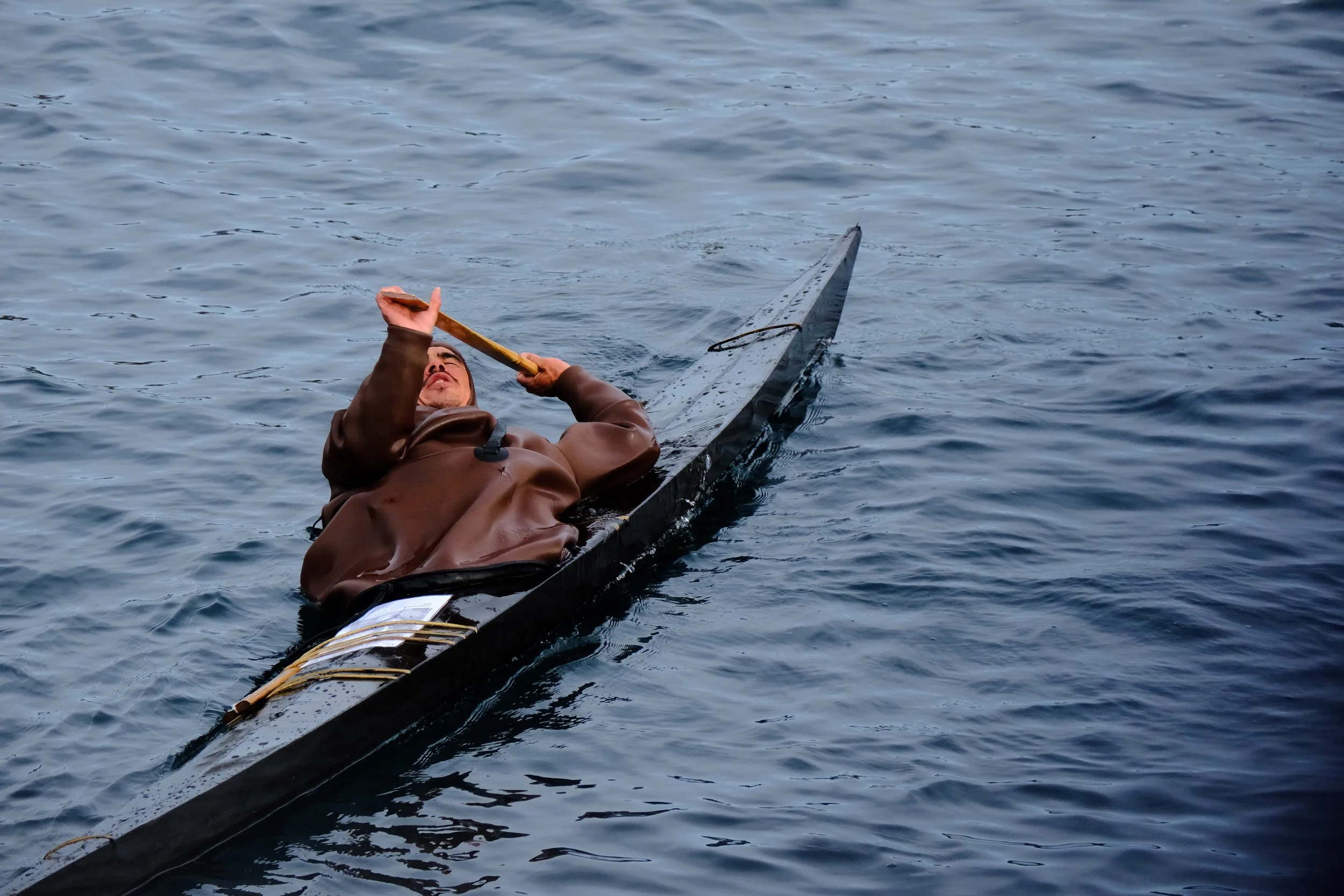
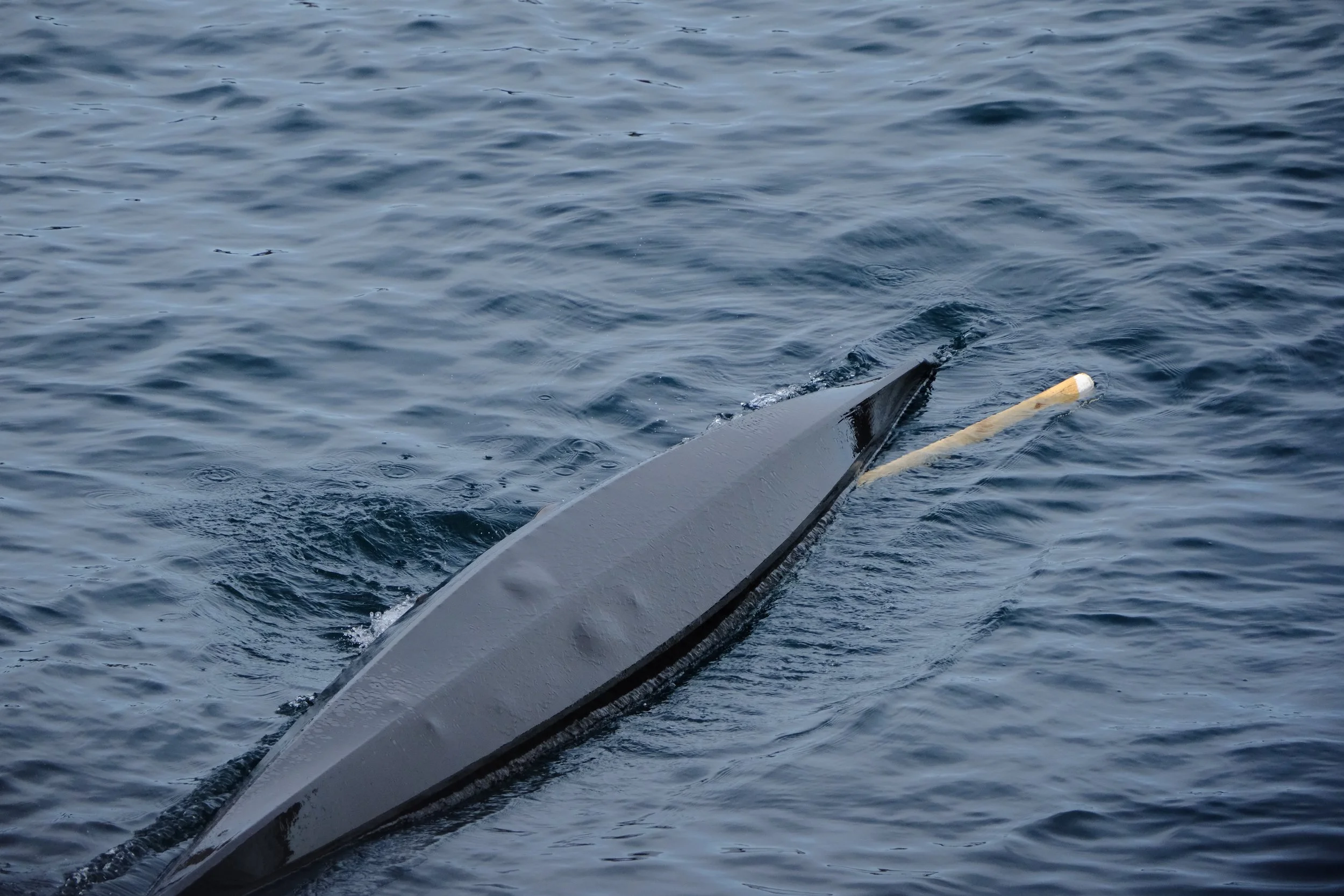
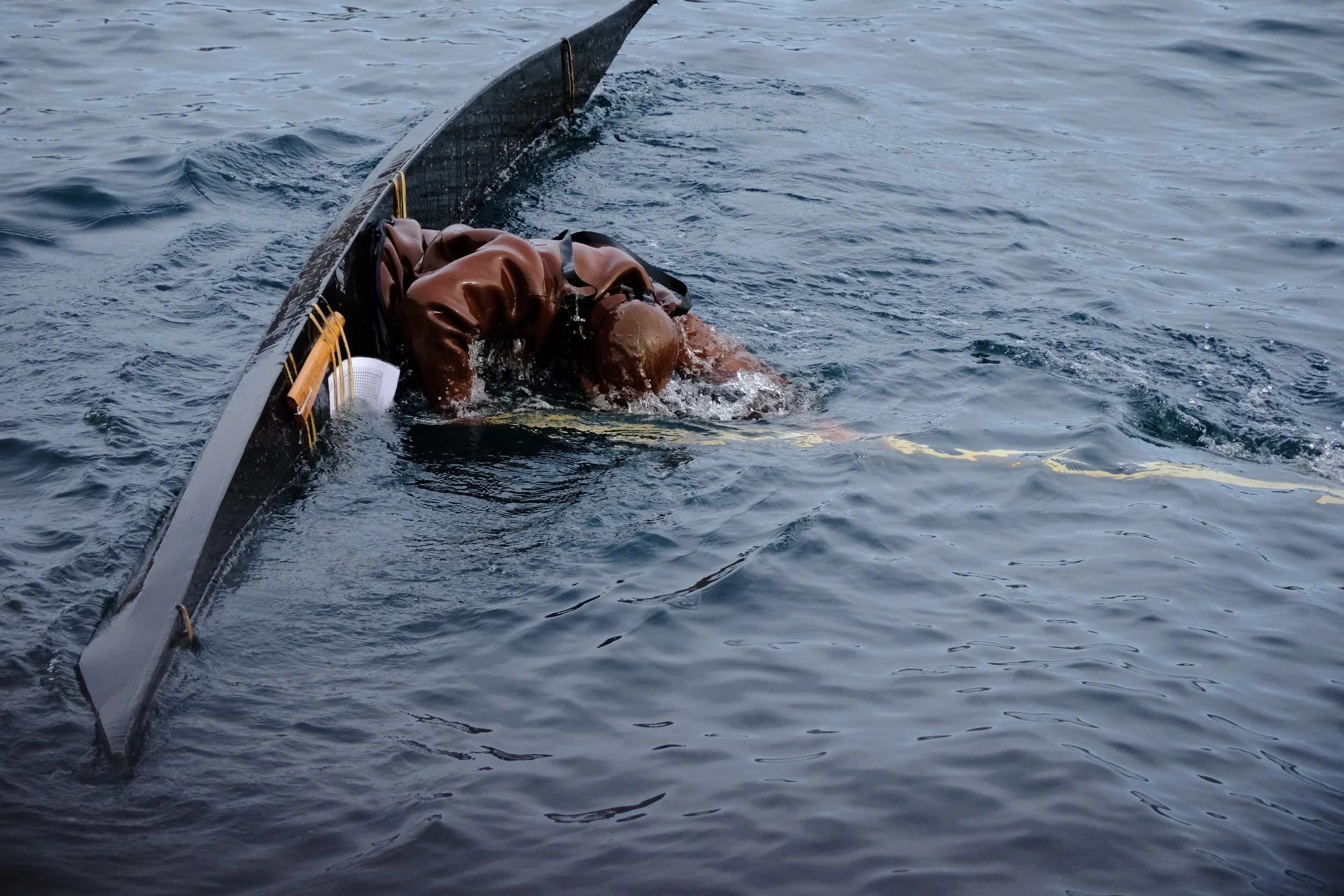
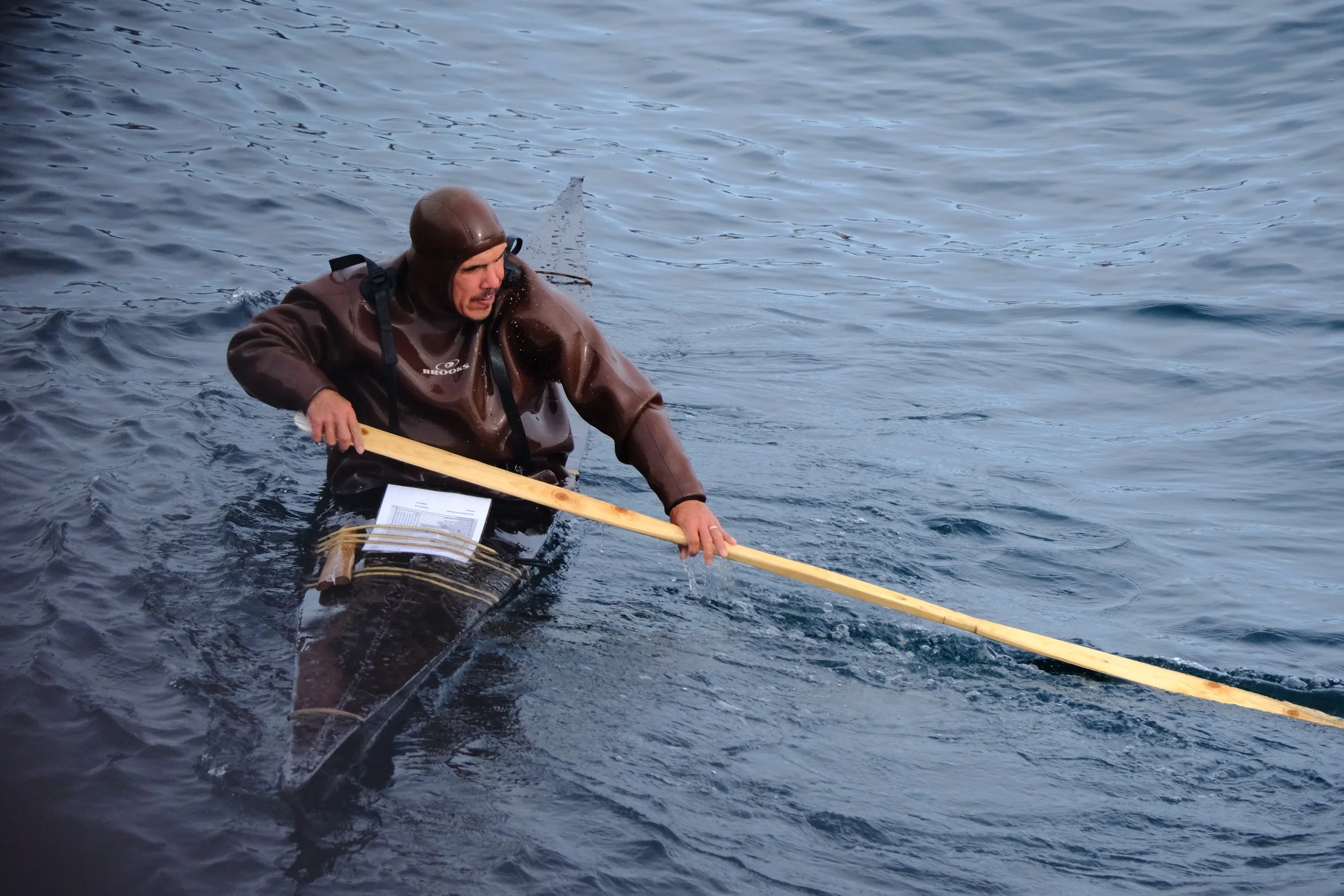
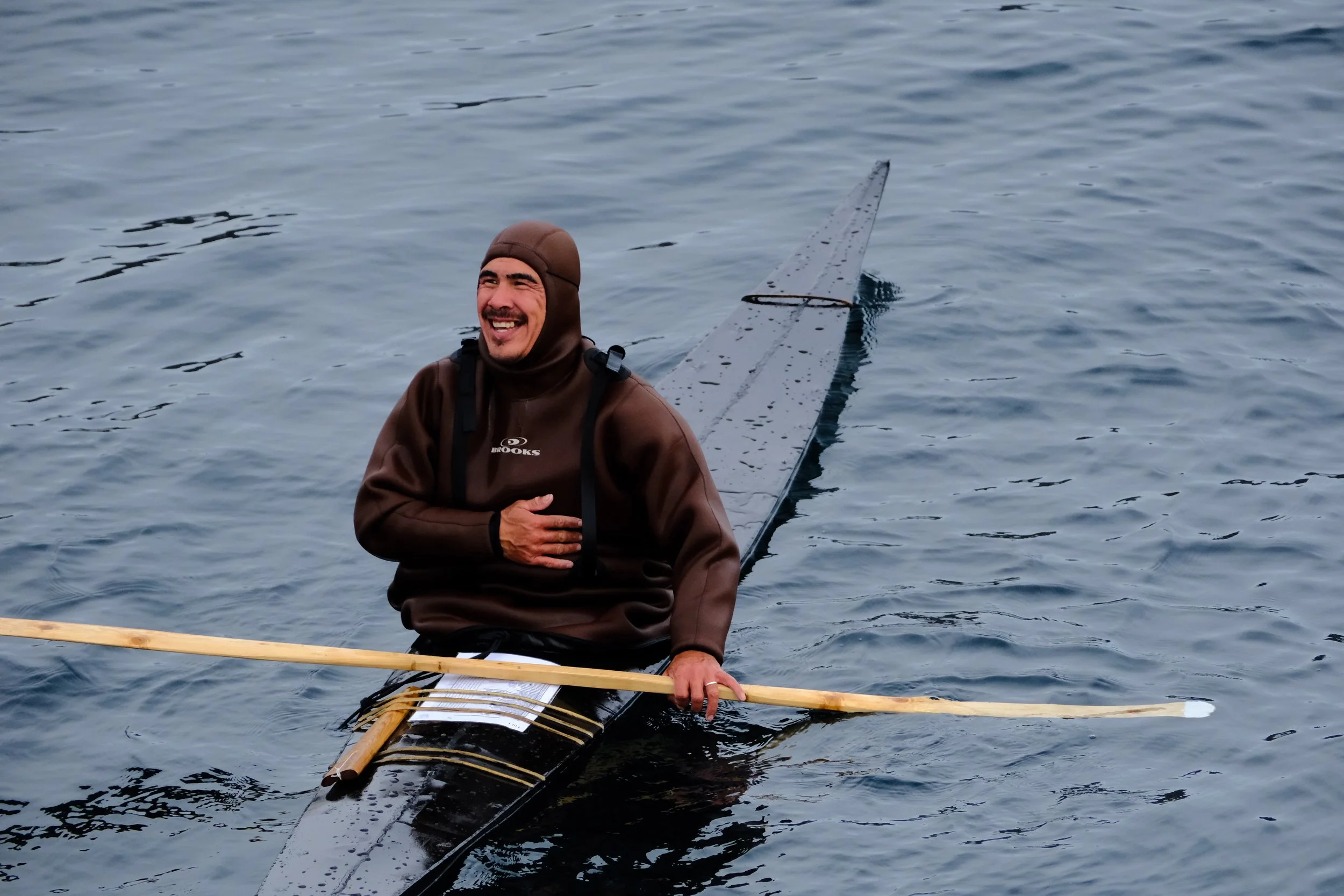
Back on board a local kayaker gave a demonstration of kayak rolling, a skill important to have in case your kayak flips over. Kayaking has become a sport here, partially because people fear that the skill of building and operating a traditional kayak will be lost in this modern age that threatens traditional ways. Sisimiut was the site of the Greenland national competition year before last. This fellow competes and does quite well. He’s also engaged to one of our cultural guides on this trip.
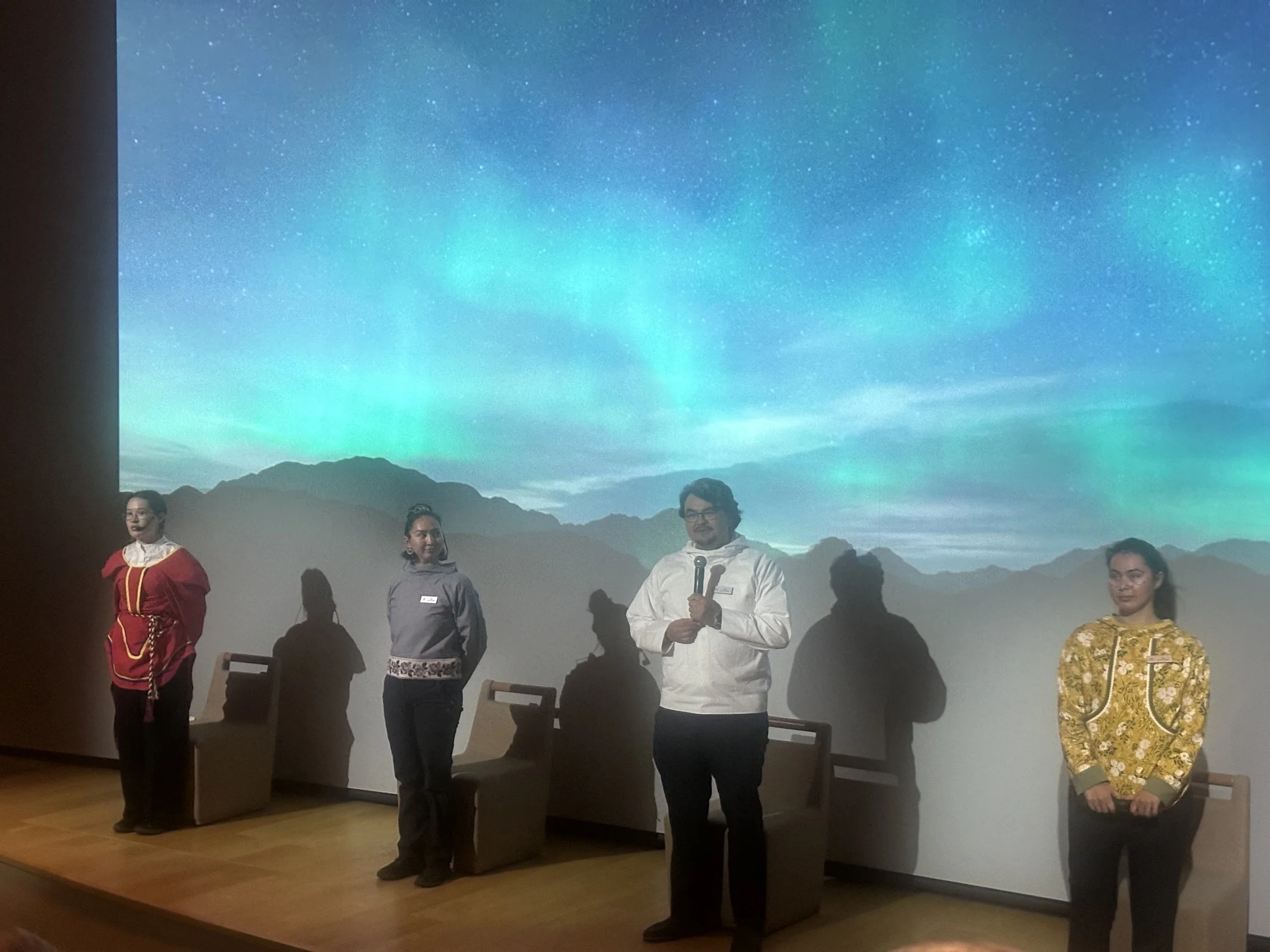
The final event was a presentation by our four Inuit cultural guides. All are young (well, who isn’t from our vantage point?) and come from different parts of the Arctic – North, South and East Greenland and Nunavut in Canada. While the details of their cultural stories are different, they share a common basis.
For instance, Sedna is the sea goddess who, when she fell into the ocean, lost one finger that became the seal, one finger that became a whale, etc. While she survived as a goddess, she set down taboos and rules for humans to follow. If those rules were violated – for instance, if parts of wild game were wasted – she would become angry and all the fishes and game would be tangled in her hair. Starvation would result. The cure was for a shaman to go into a trance, travel into the sea to comb Sedna’s hair, making it beautiful again and thereby releasing the game and ending starvation.
Two of the representatives told of ways in which disputes could be resolved. One, from Nunavut, was the drum dance we saw the other day in Pond Inlet. Last dancer standing (two days is the record) wins. A gal from the north of Greenland sang a song that was used to resolve a dispute between a young man and an elder. Both sang songs stating their case. “No one can resort to violence when they are singing,” she explained.
Niel taught us an Inuit song in the native language, one that says “thank you” for the bounties of the world.
So, bags are out and tomorrow we’ll disembark in Nuuk at 9:45. Our charter flight doesn’t leave until 6:30 PM, we’ll overnight in Baltimore, get to Boston Sunday morning in time for a farewell dinner with Jeff and friends as he leaves for Kathmandu Sunday evening.
Judy has been working on several videos, but the internet has not been sufficient to download them onto Zenfolio. She will download when we get home and we will send an email with the link at that time. They will be of Copenhagen, all the towns we visited in Greenland and Canada along with some entertainment clips, the polar bear we saw and a tour of our ship.
Thanks for coming along with us. Your comments were greatly appreciated. See you next time!