Day 11 – April 9, 2026 – Lyon
Spending the morning sailing was indeed pleasant, a treat from the two-a-day shore excursion schedule we’ve been keeping.
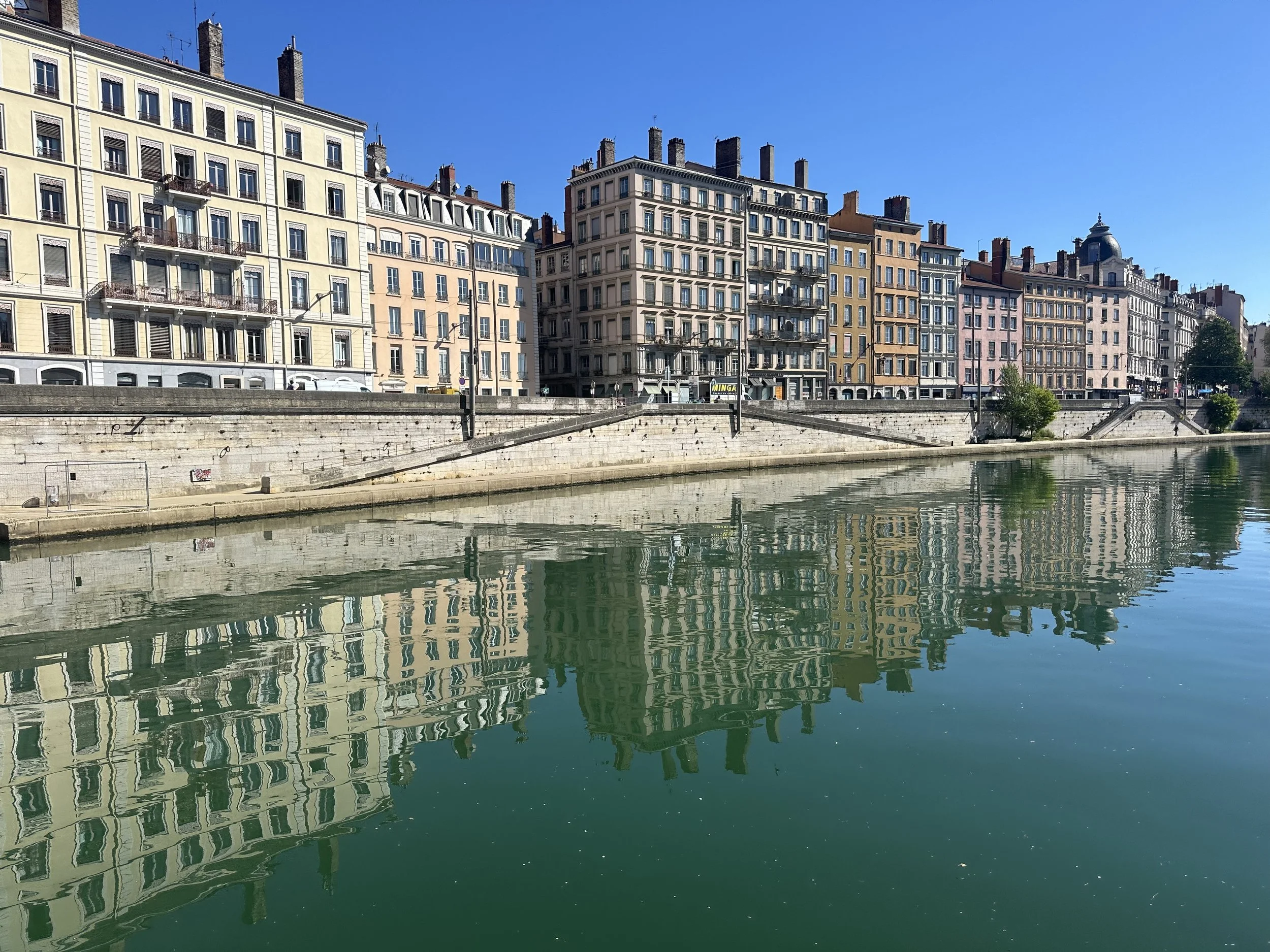
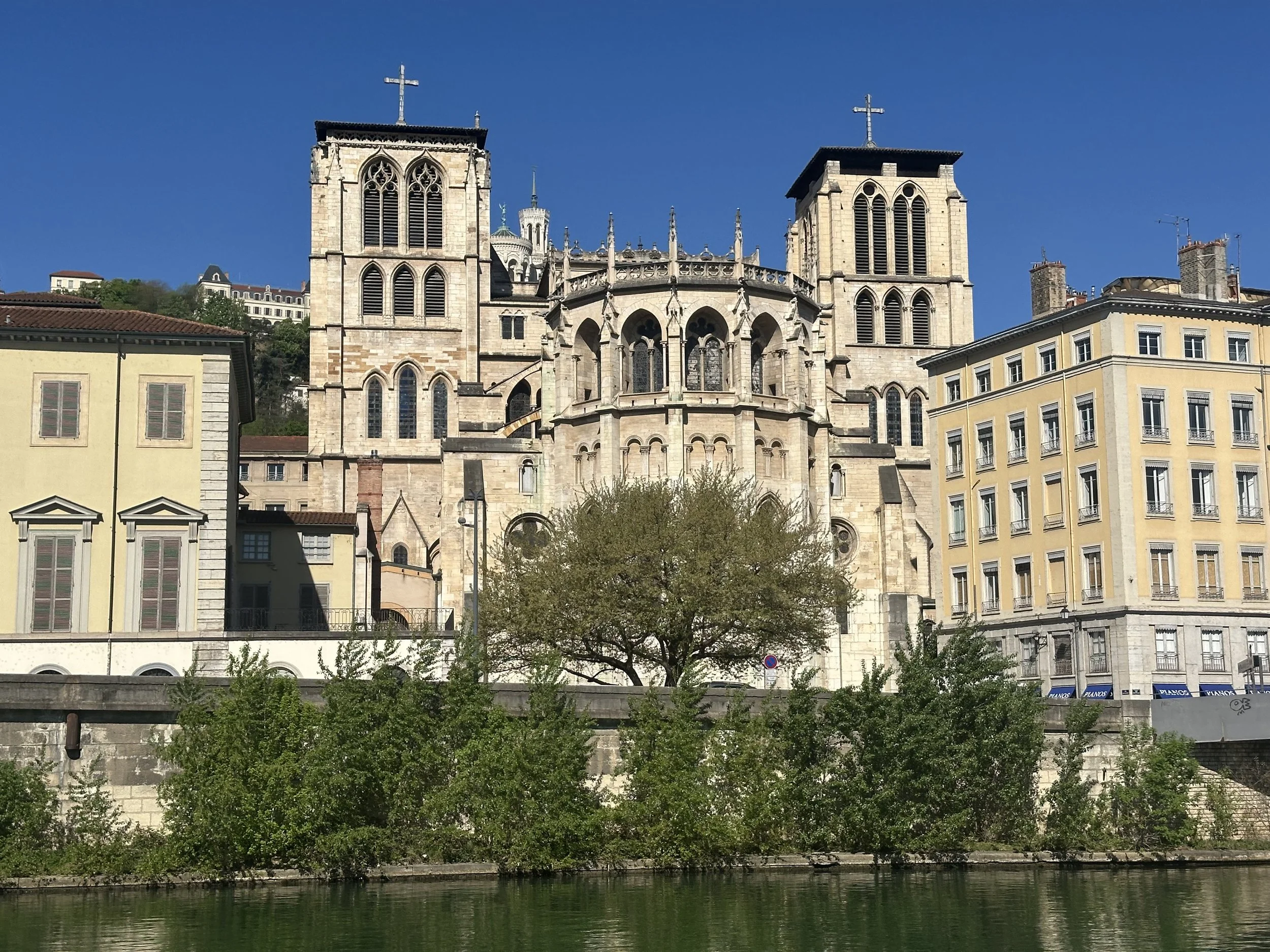
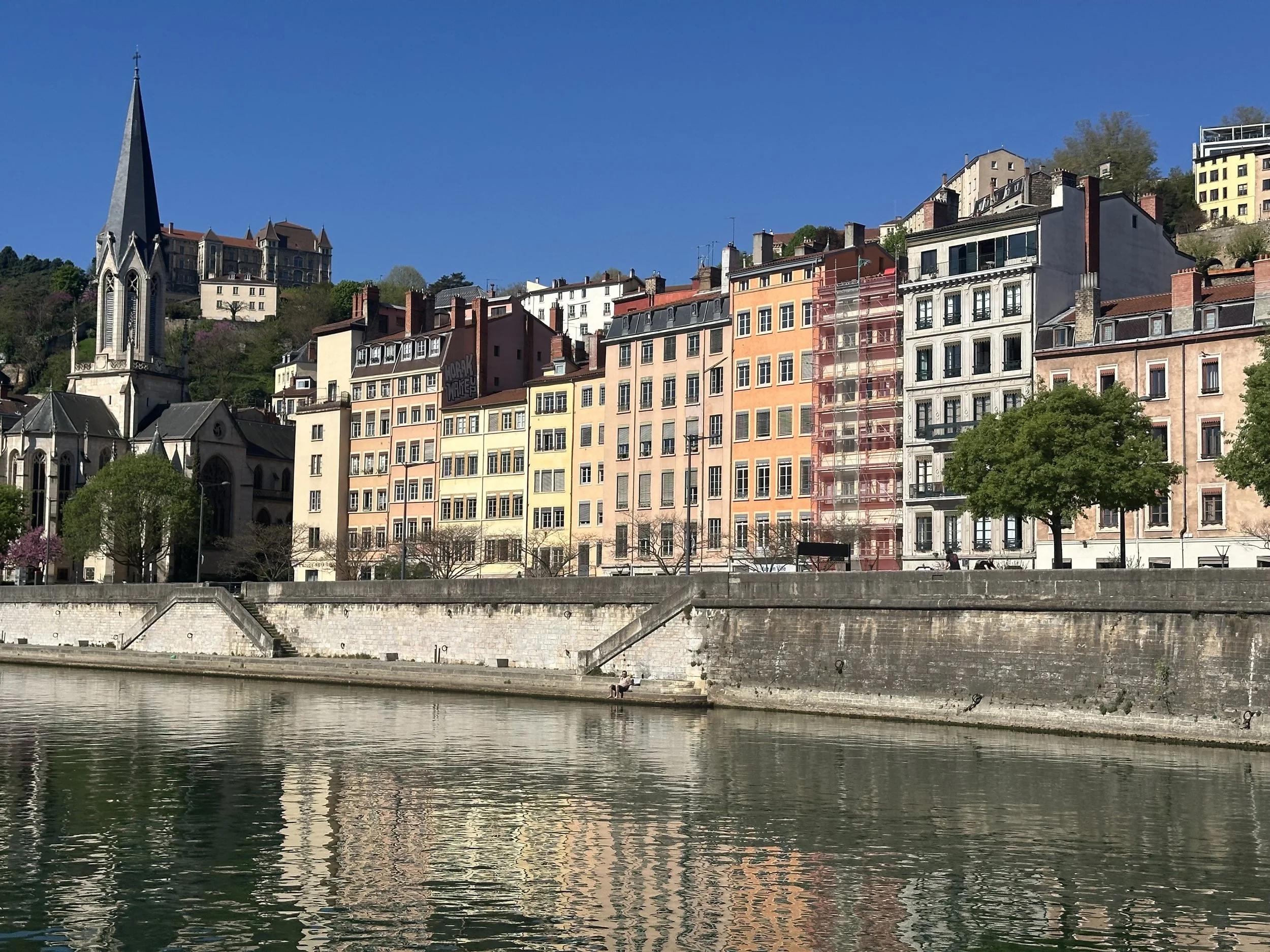
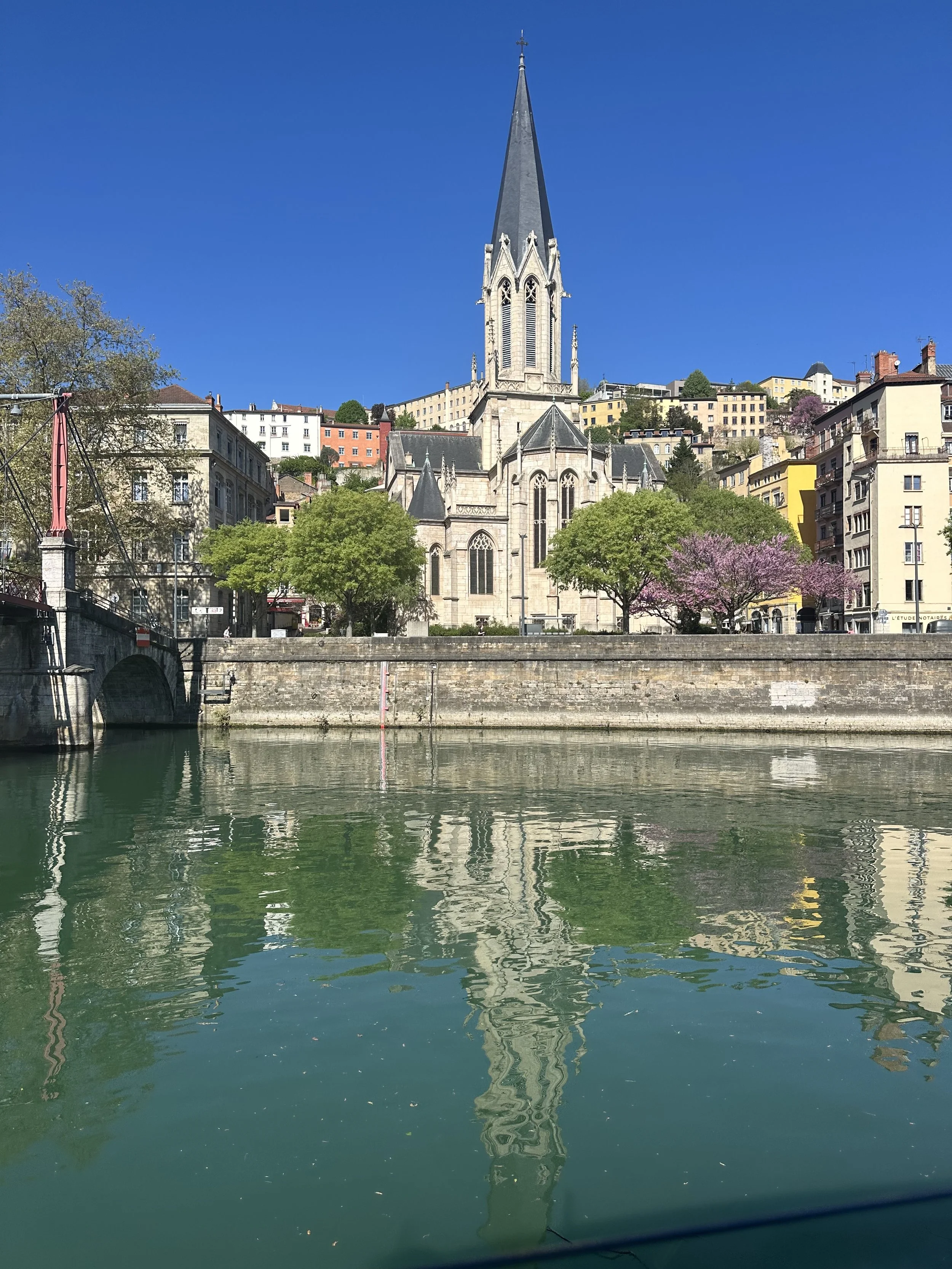
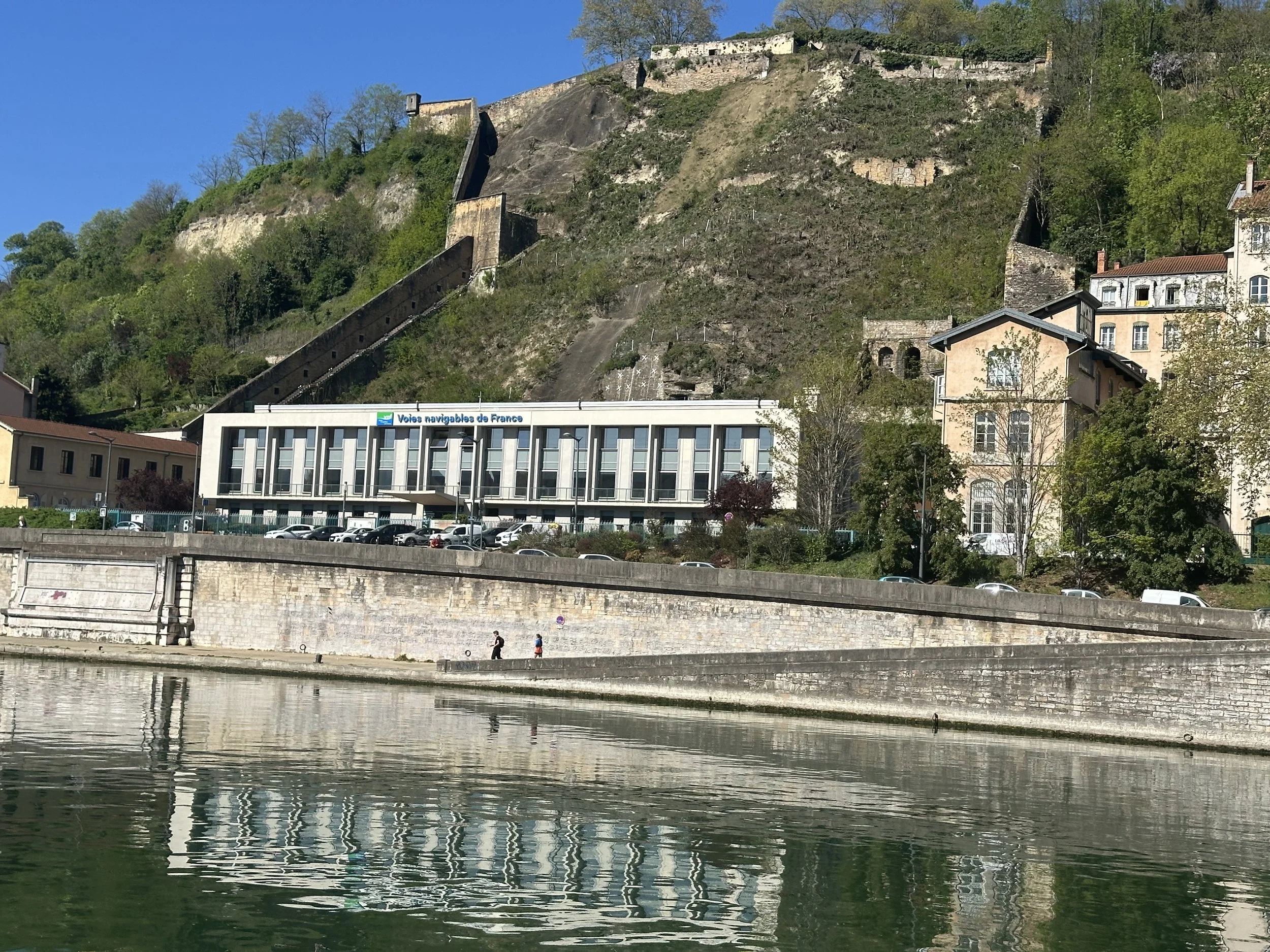
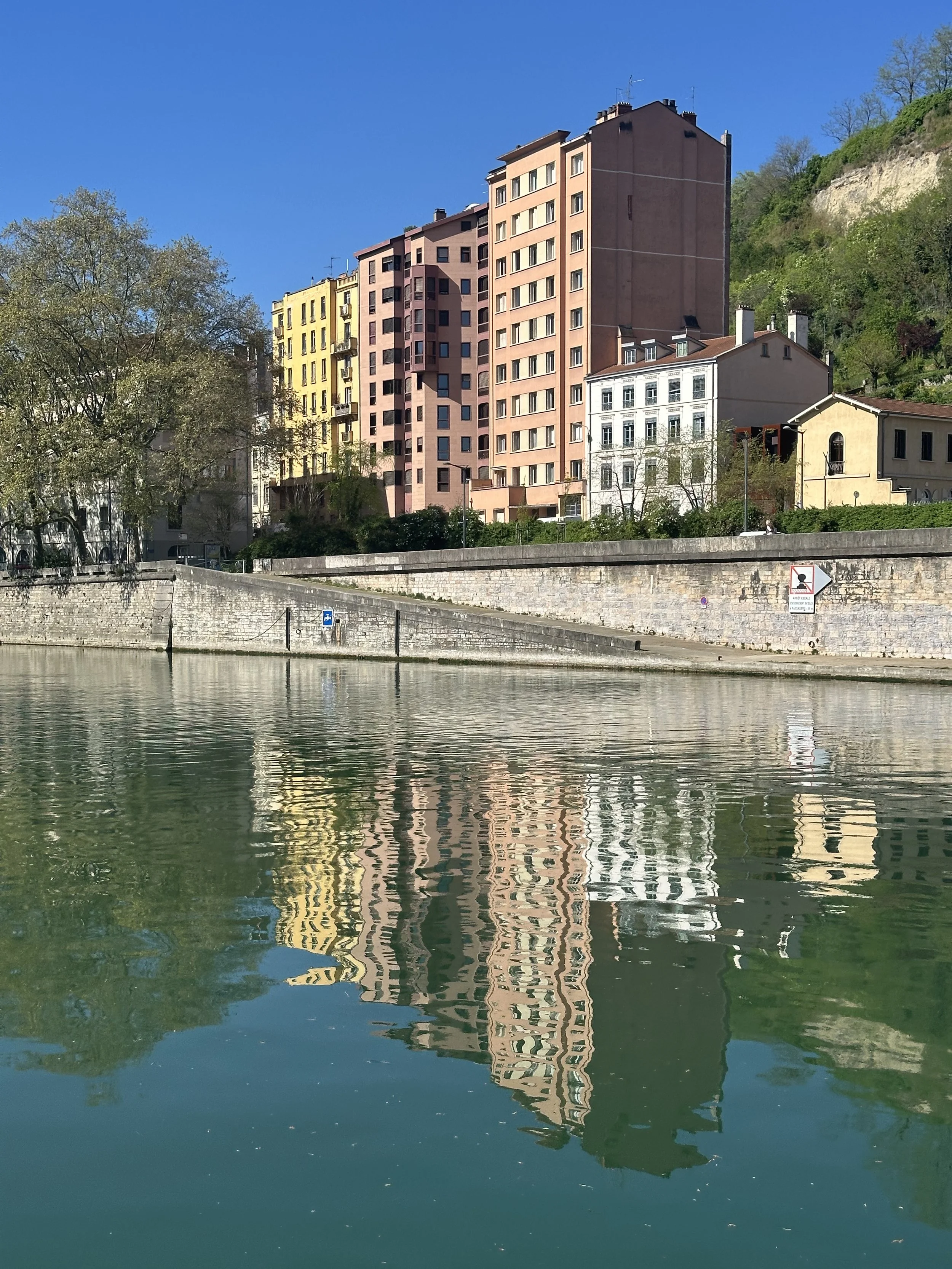
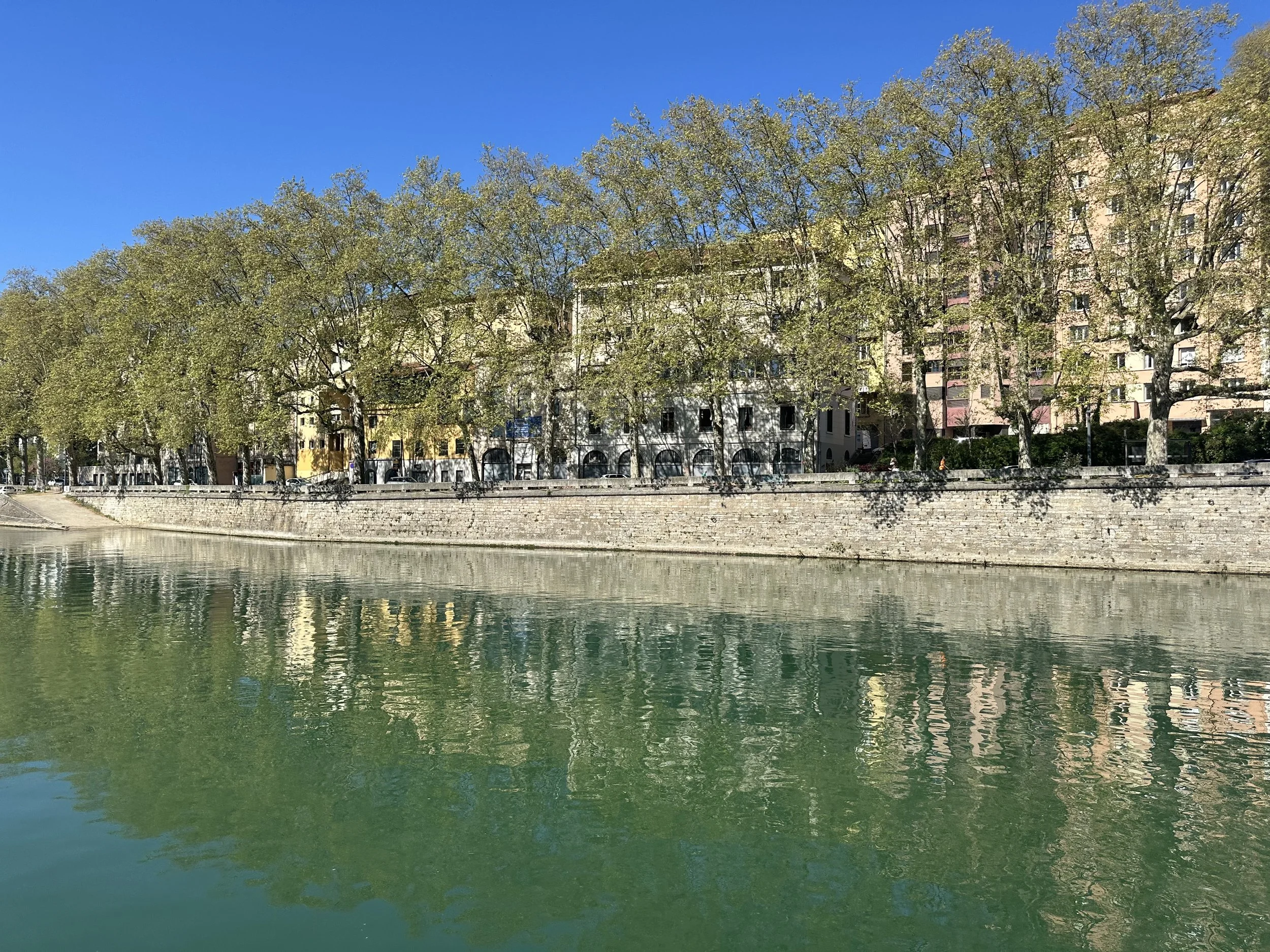
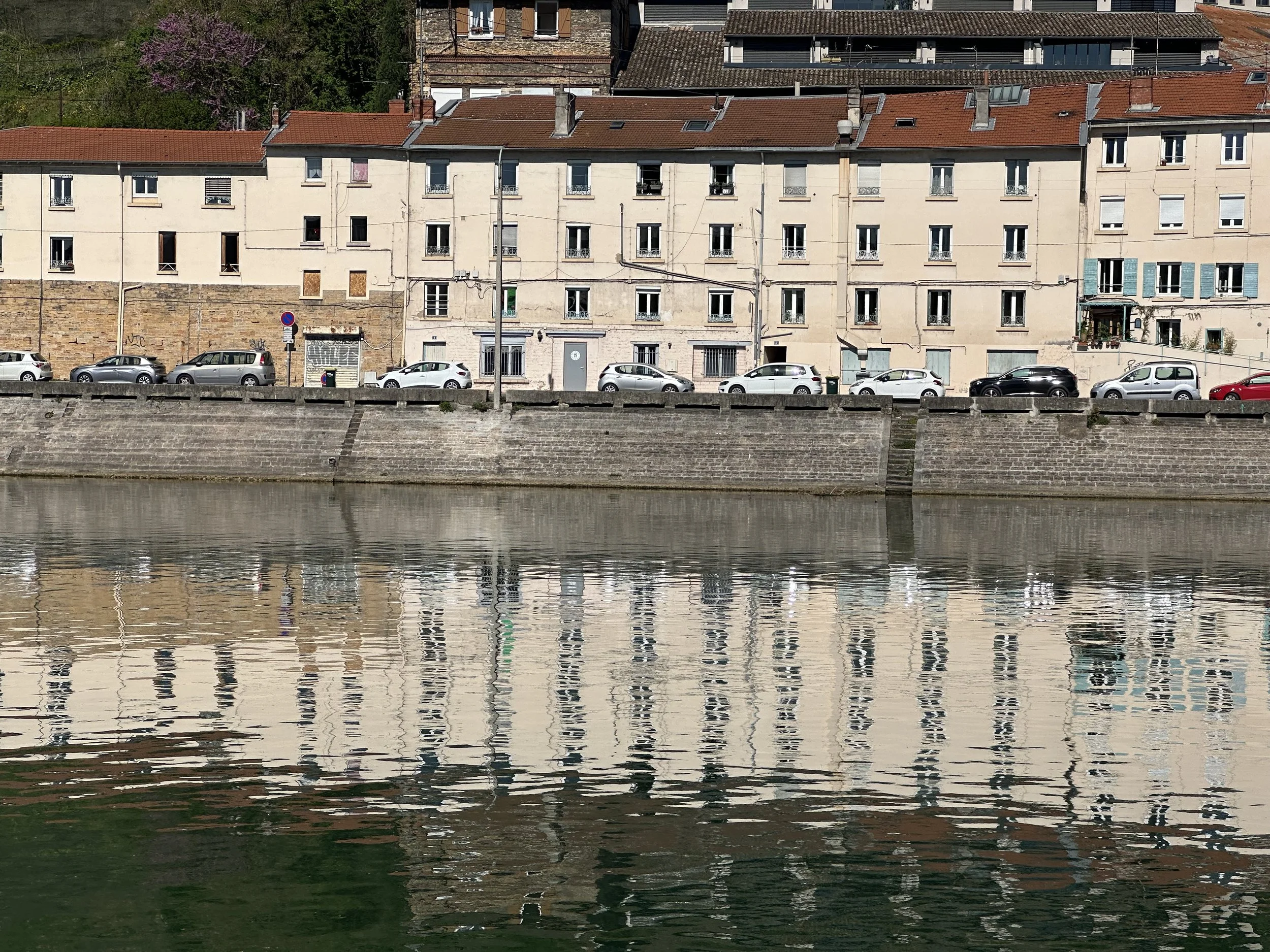
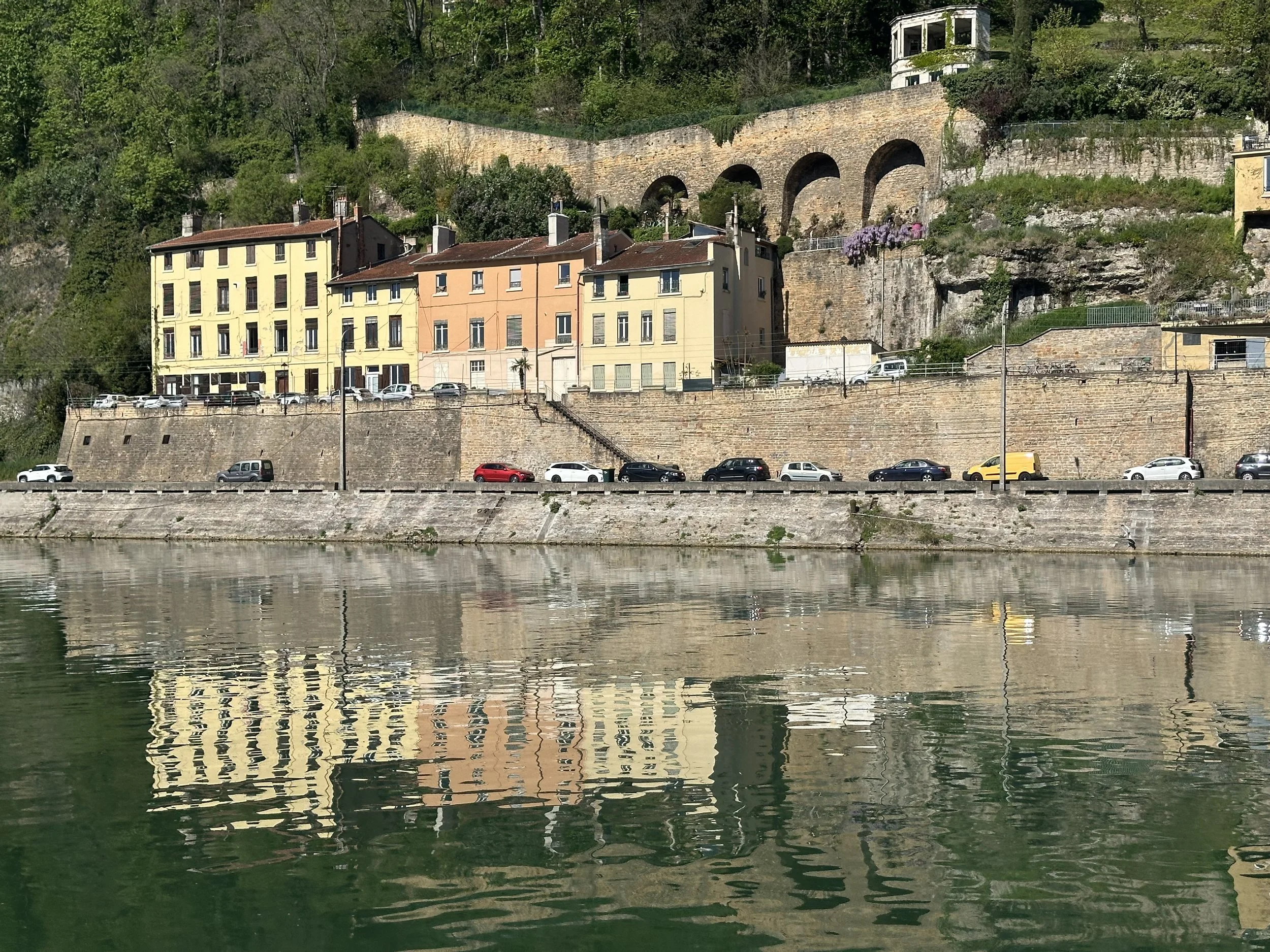
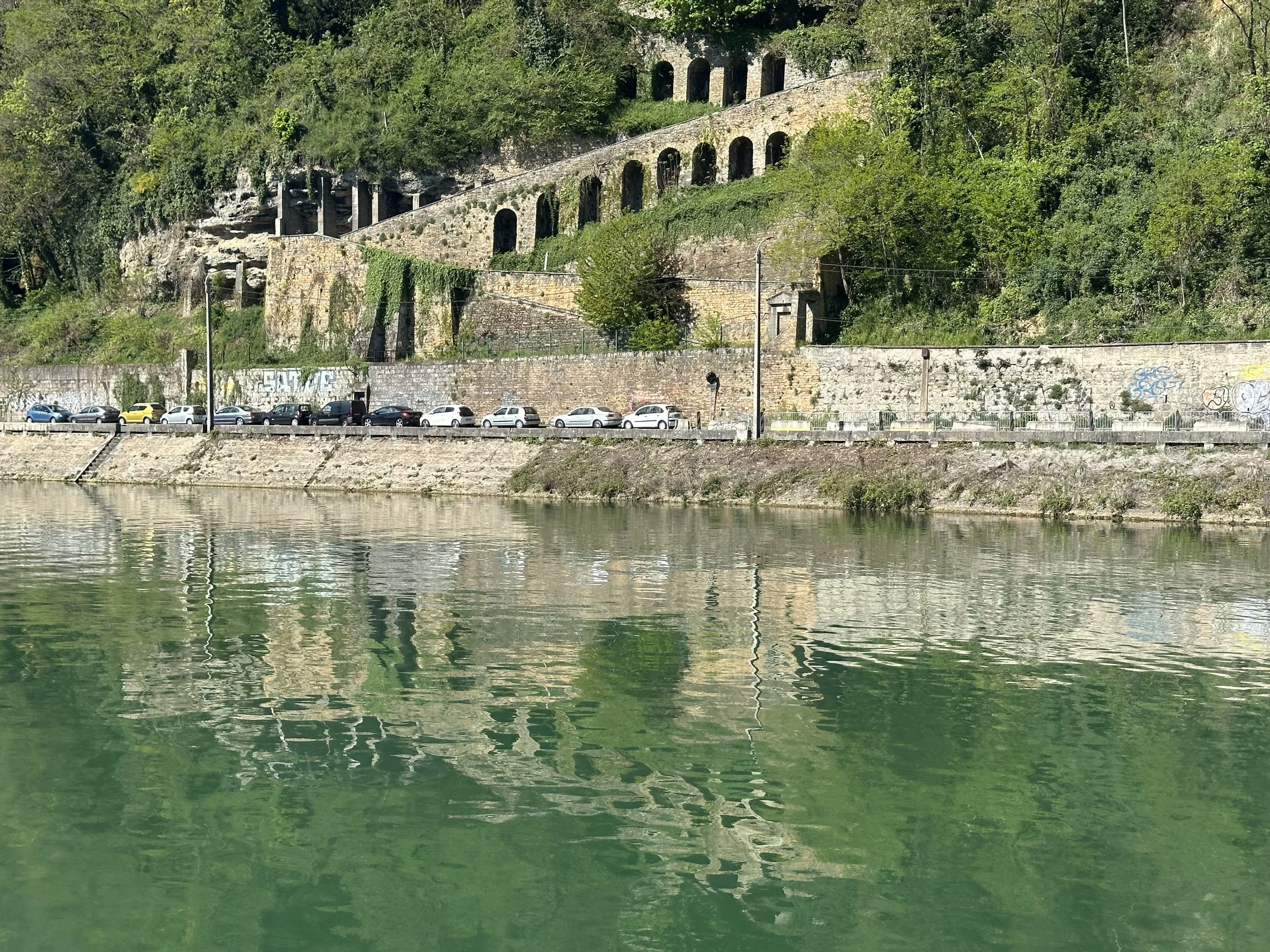
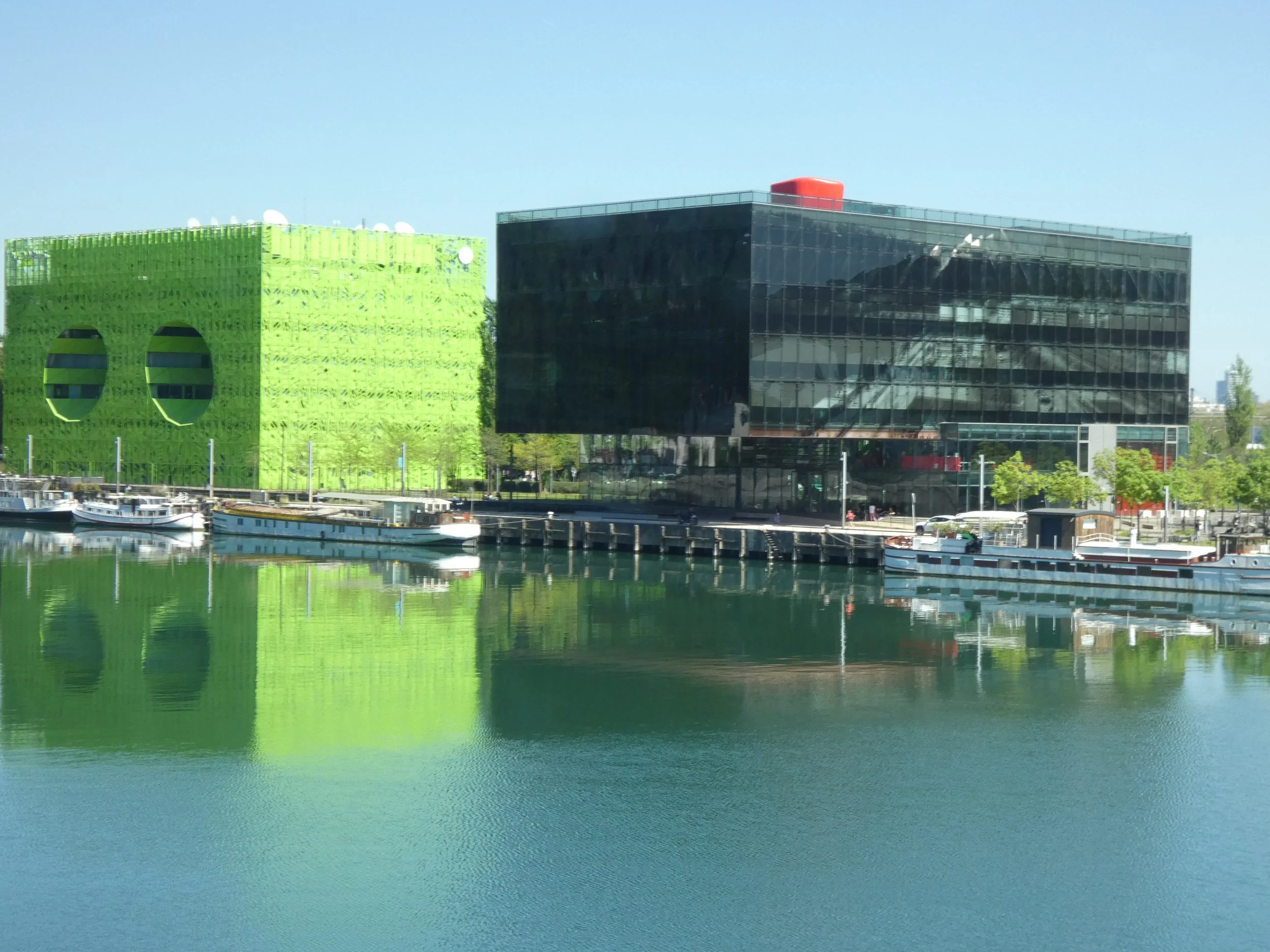
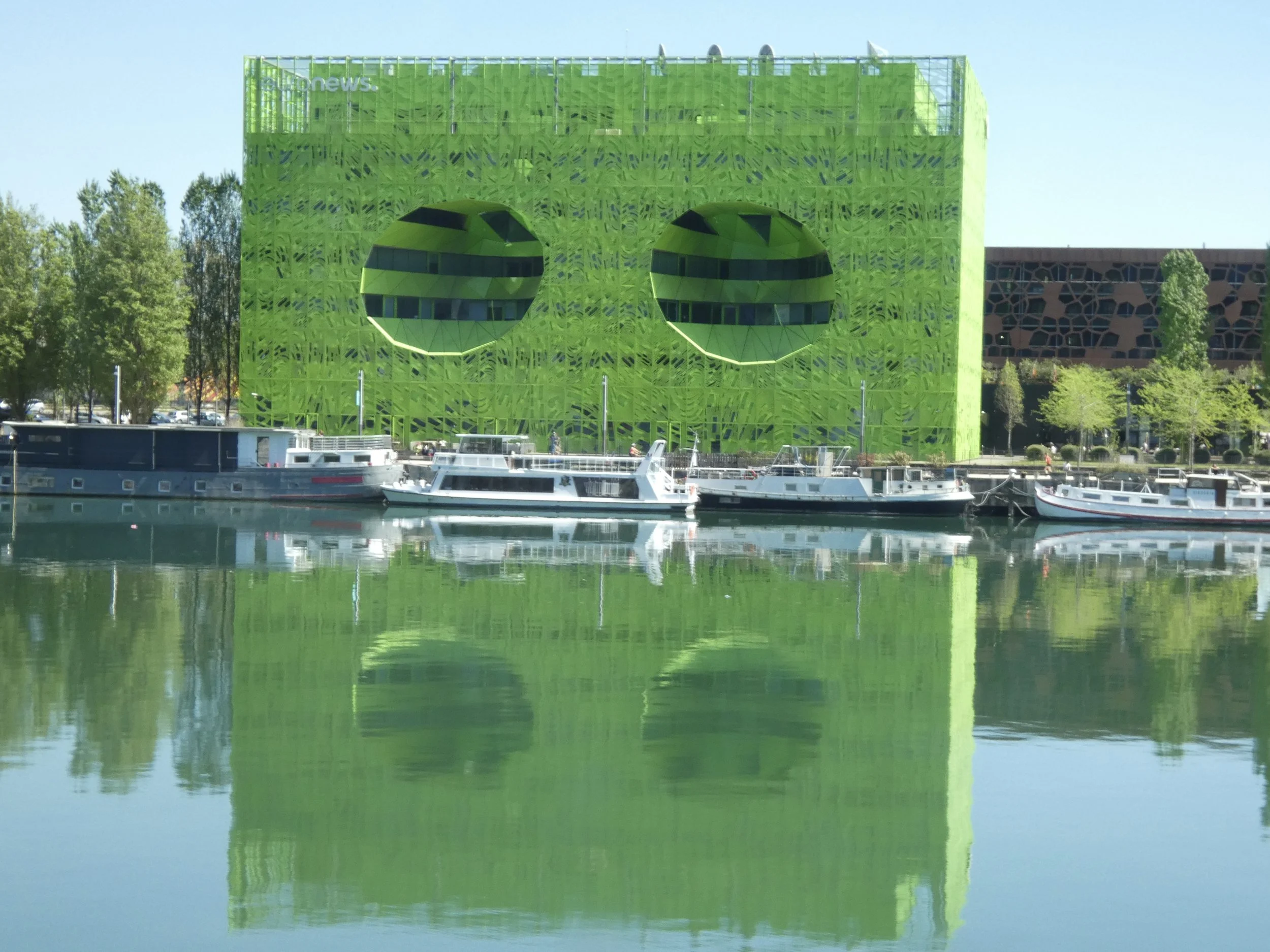
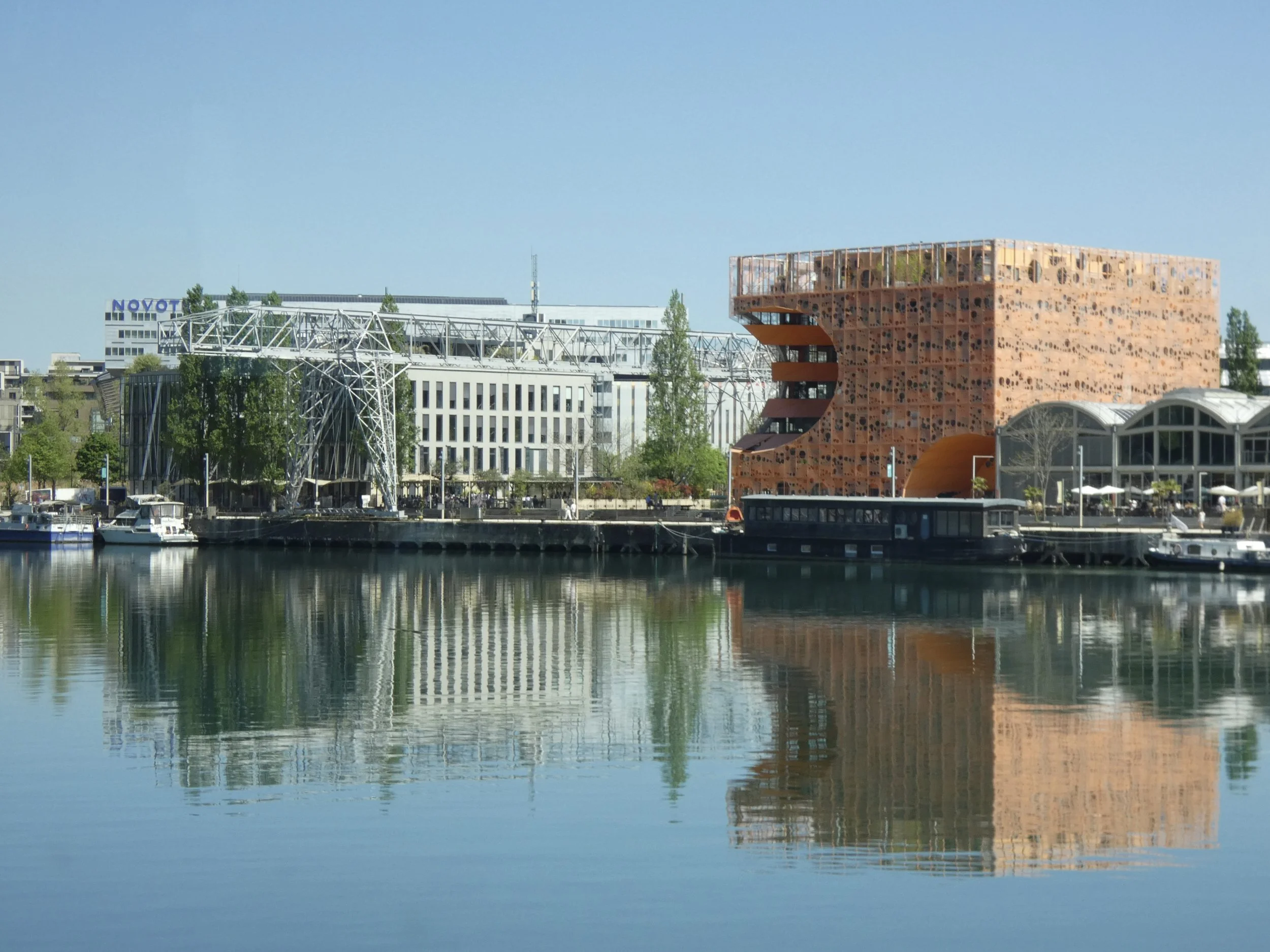
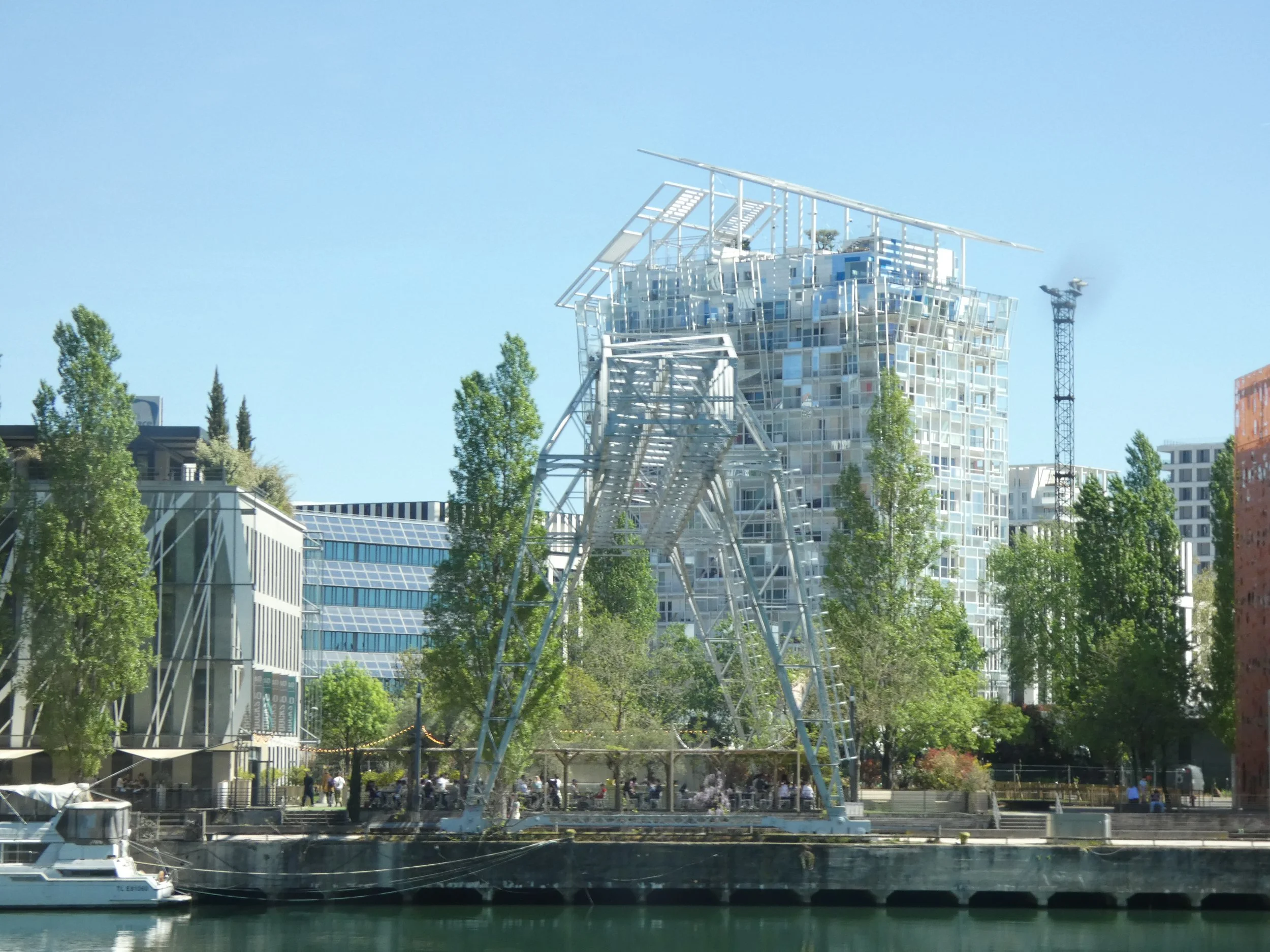
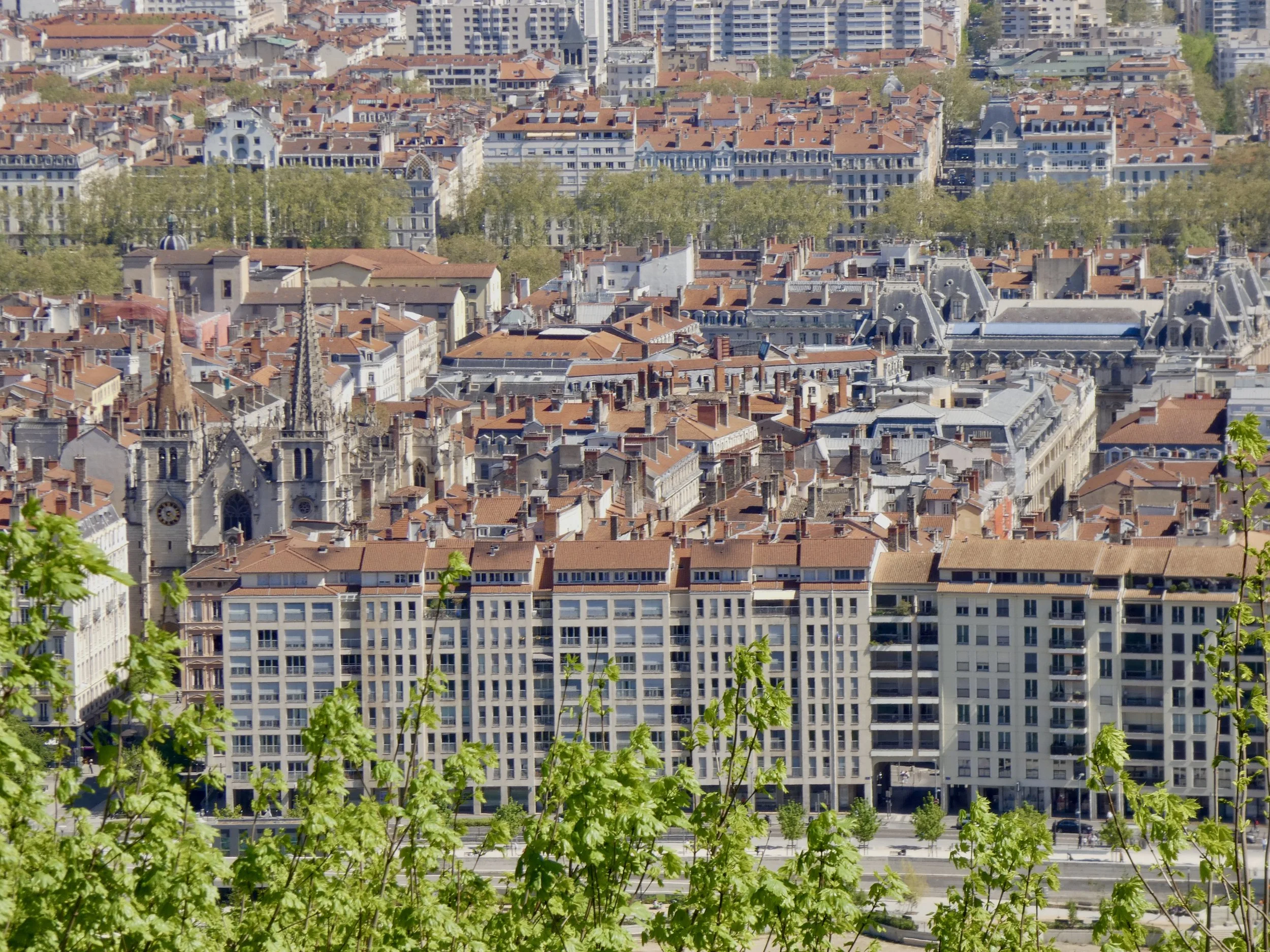
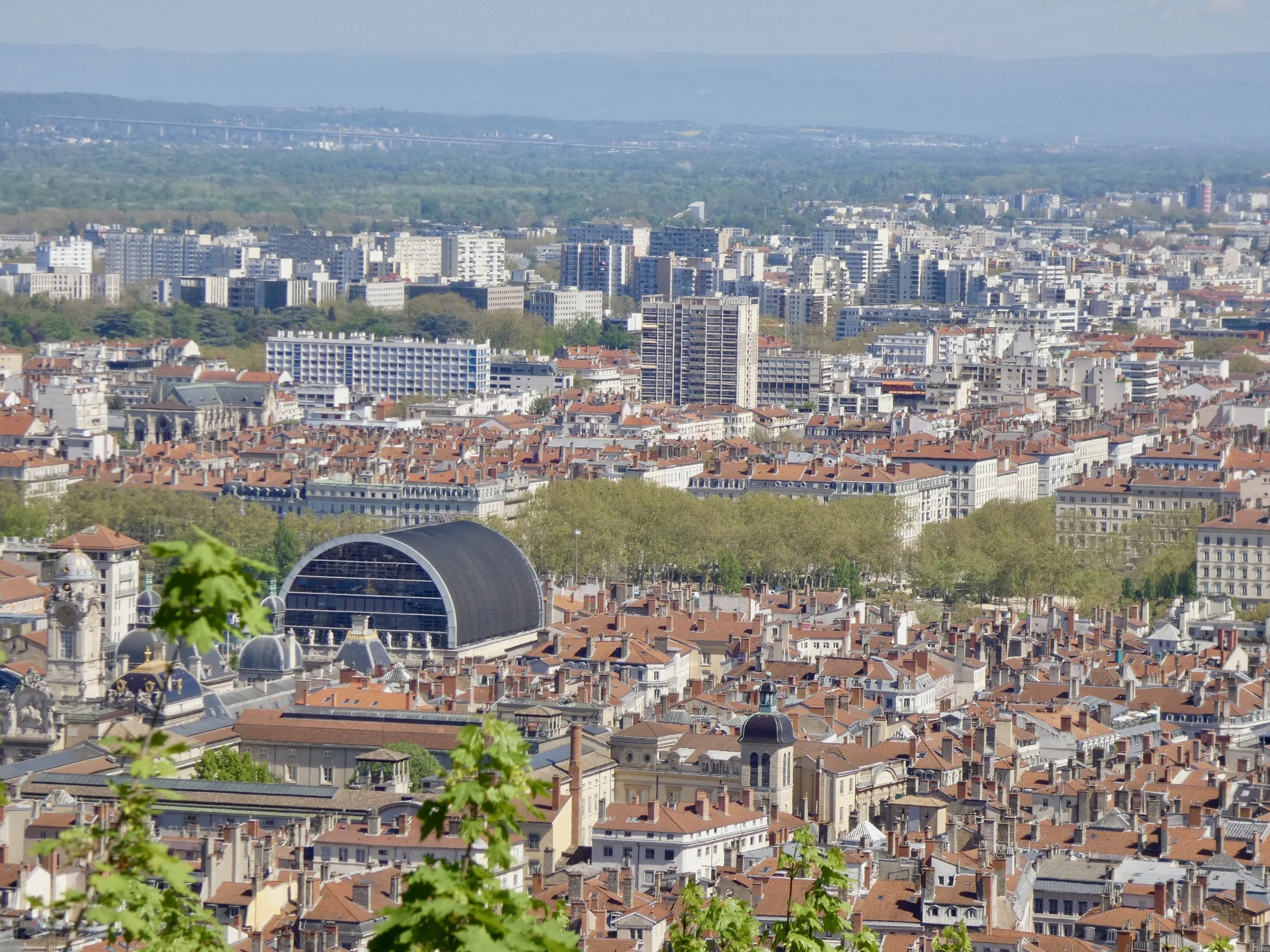
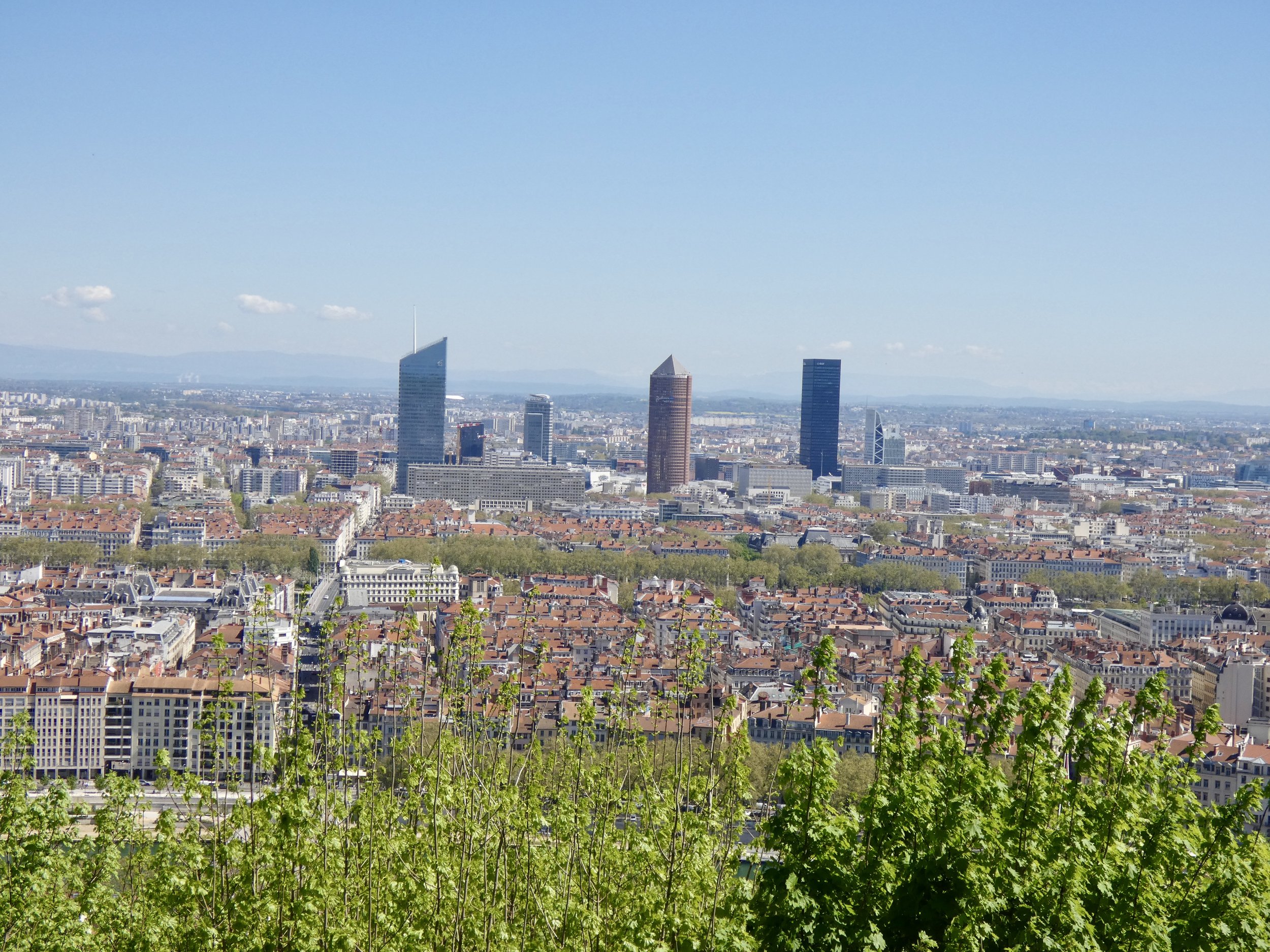
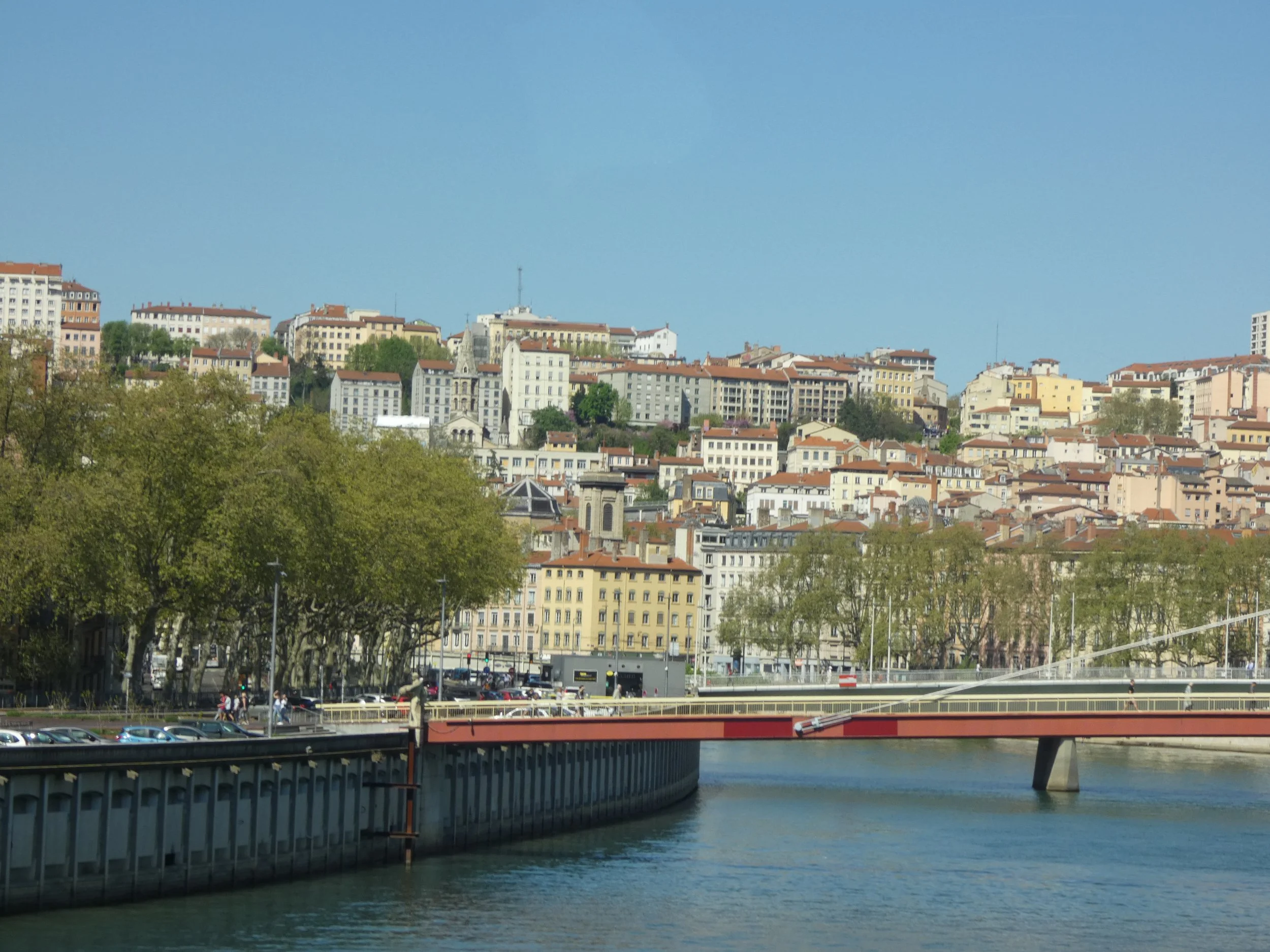
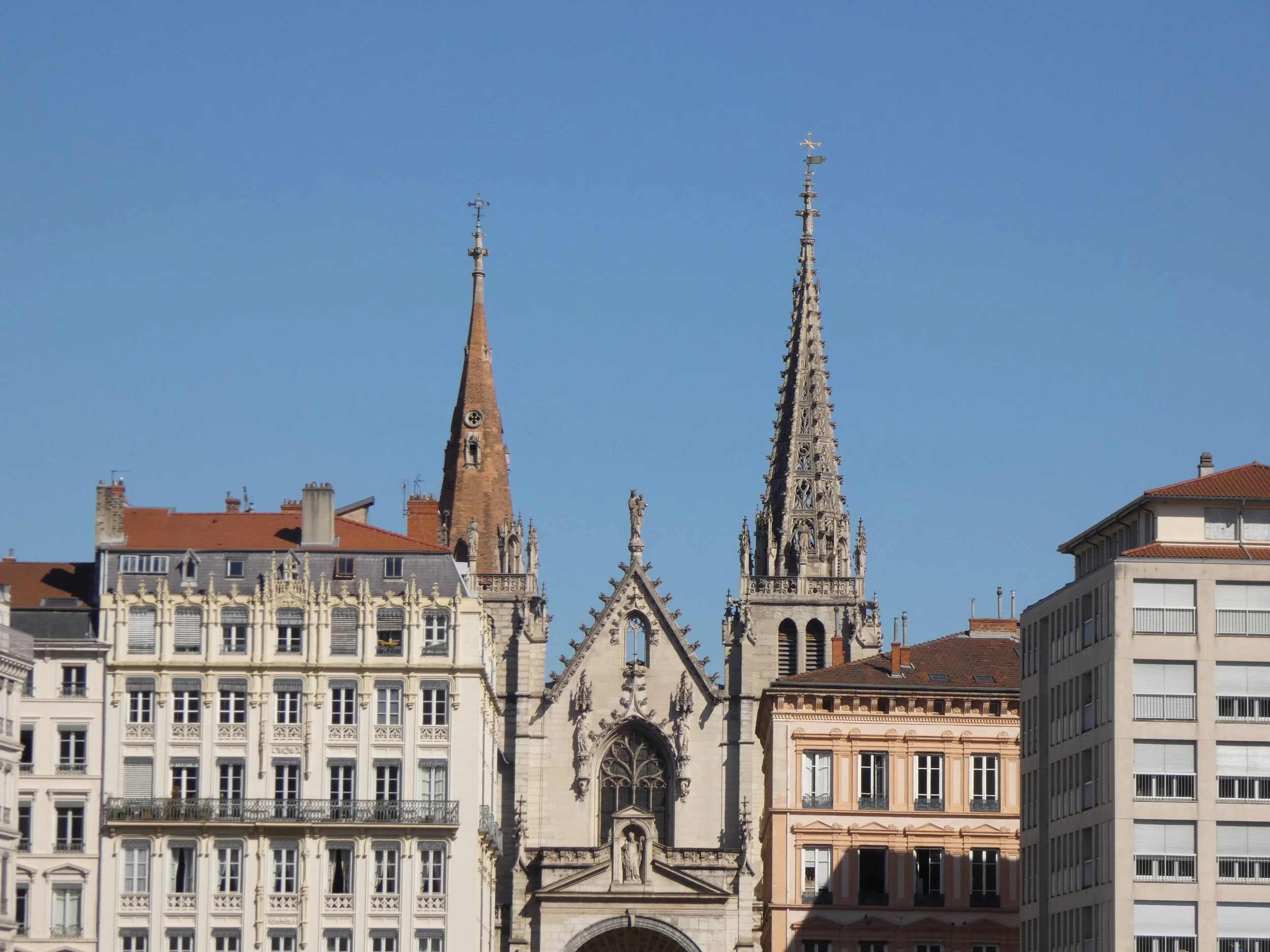
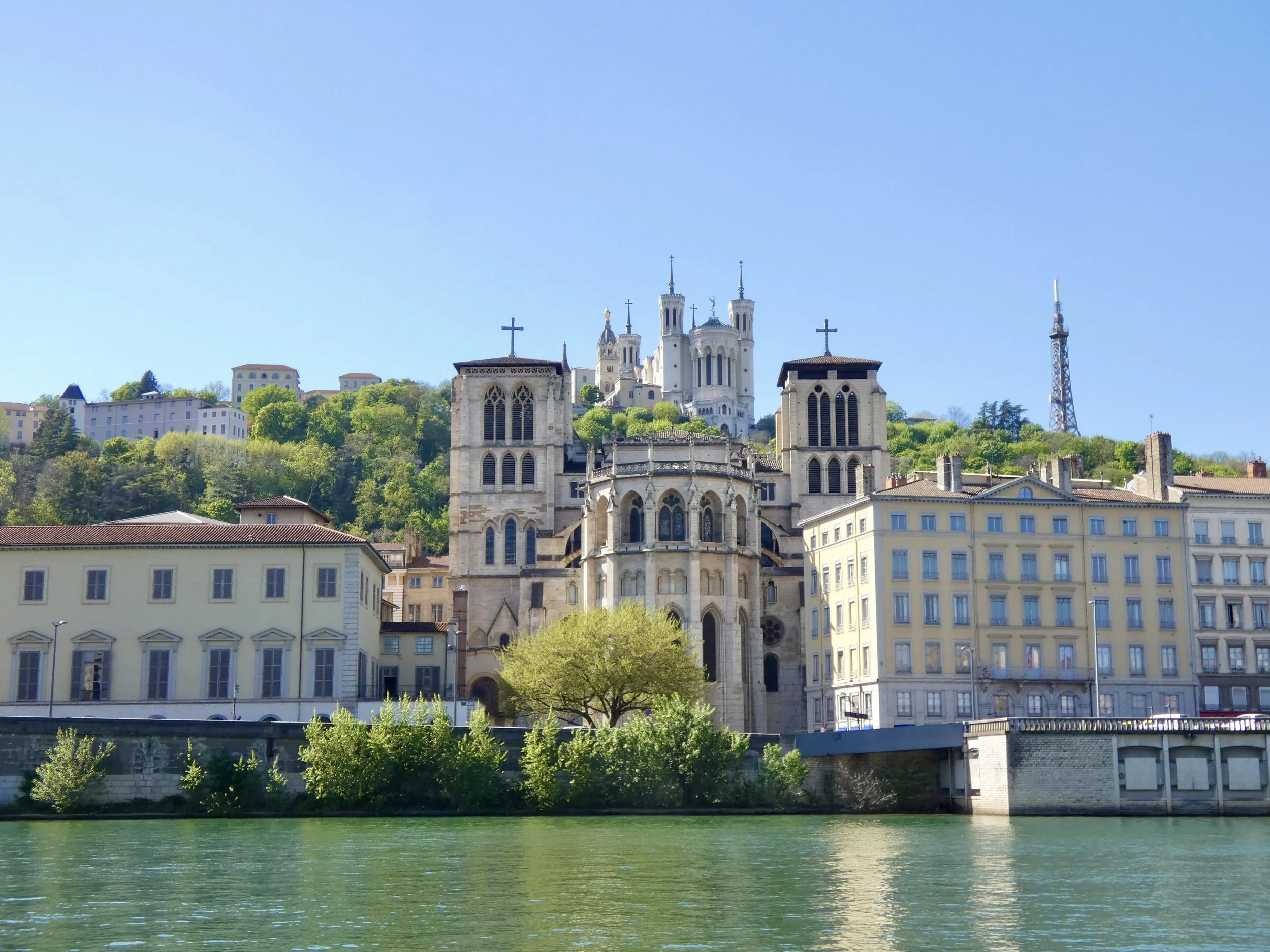
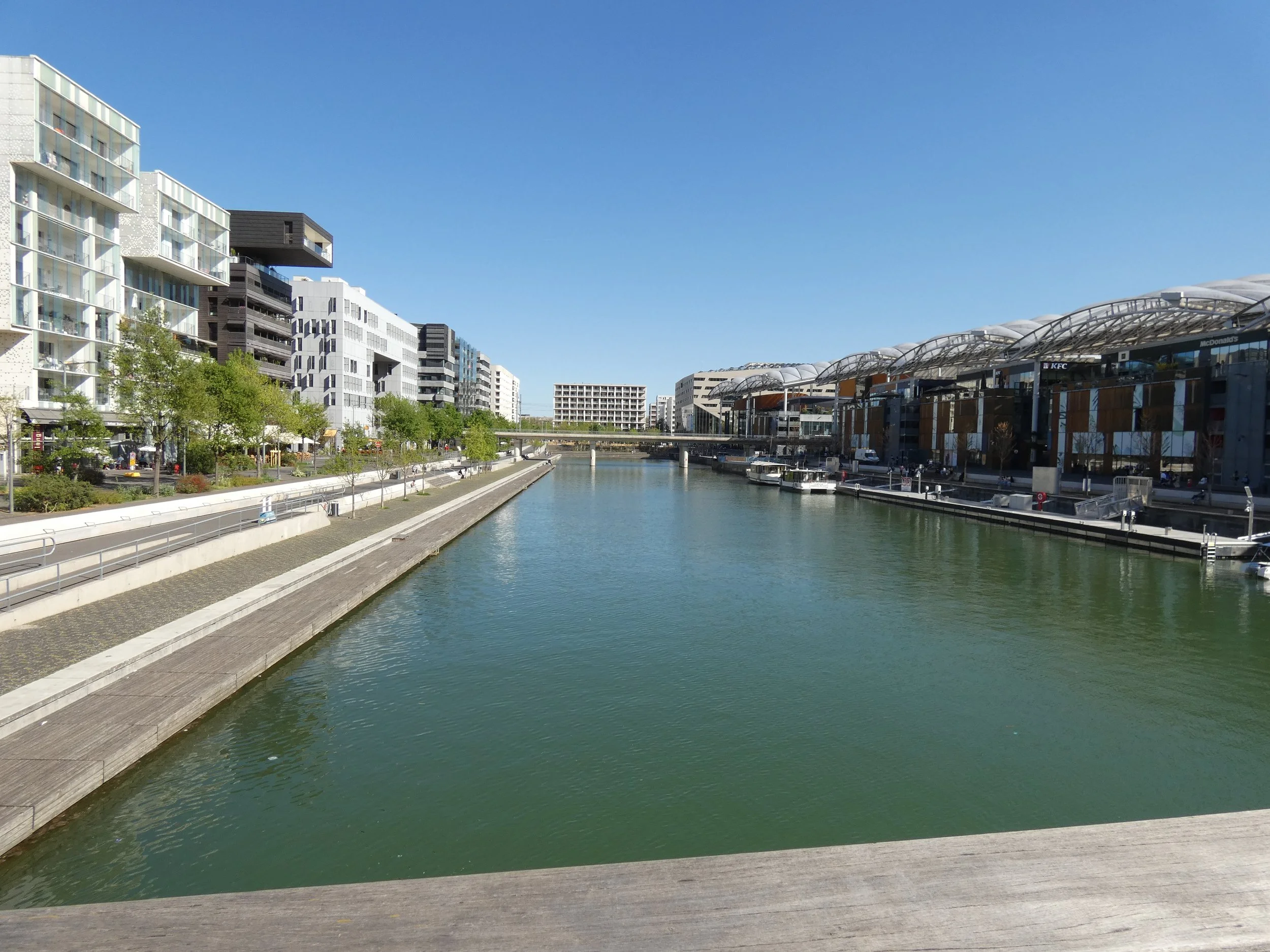
Sailing into Lyon a little before noon was a real treat. The sun was shining, the sky was cloudless and the city was looking its best. The right bank is old; the left bank is new. Some call it France’s second city, after Paris.
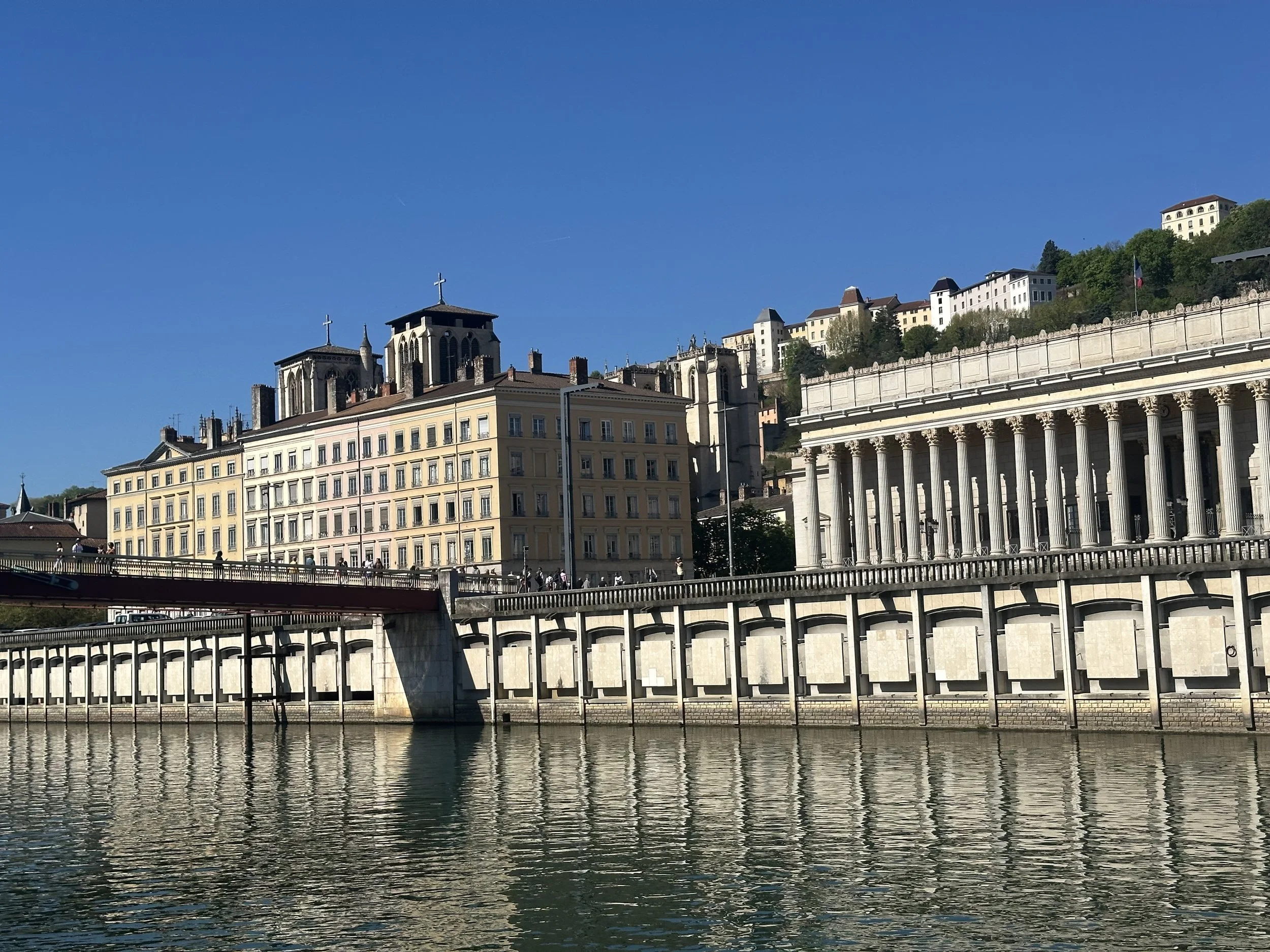
Lyon is also where the Saone meets the Rhone (Saone rhymes with Rone; the a and h are silent). Our boat is parked close to the confluence. The land between the two rivers forms a peninsula. On the right side (as you float downriver) is the Soane and the Old Town. The left bank of the Saone, the peninsula and the city beyond the Rhone is the new city. For many years bridges across the river were few and far between.
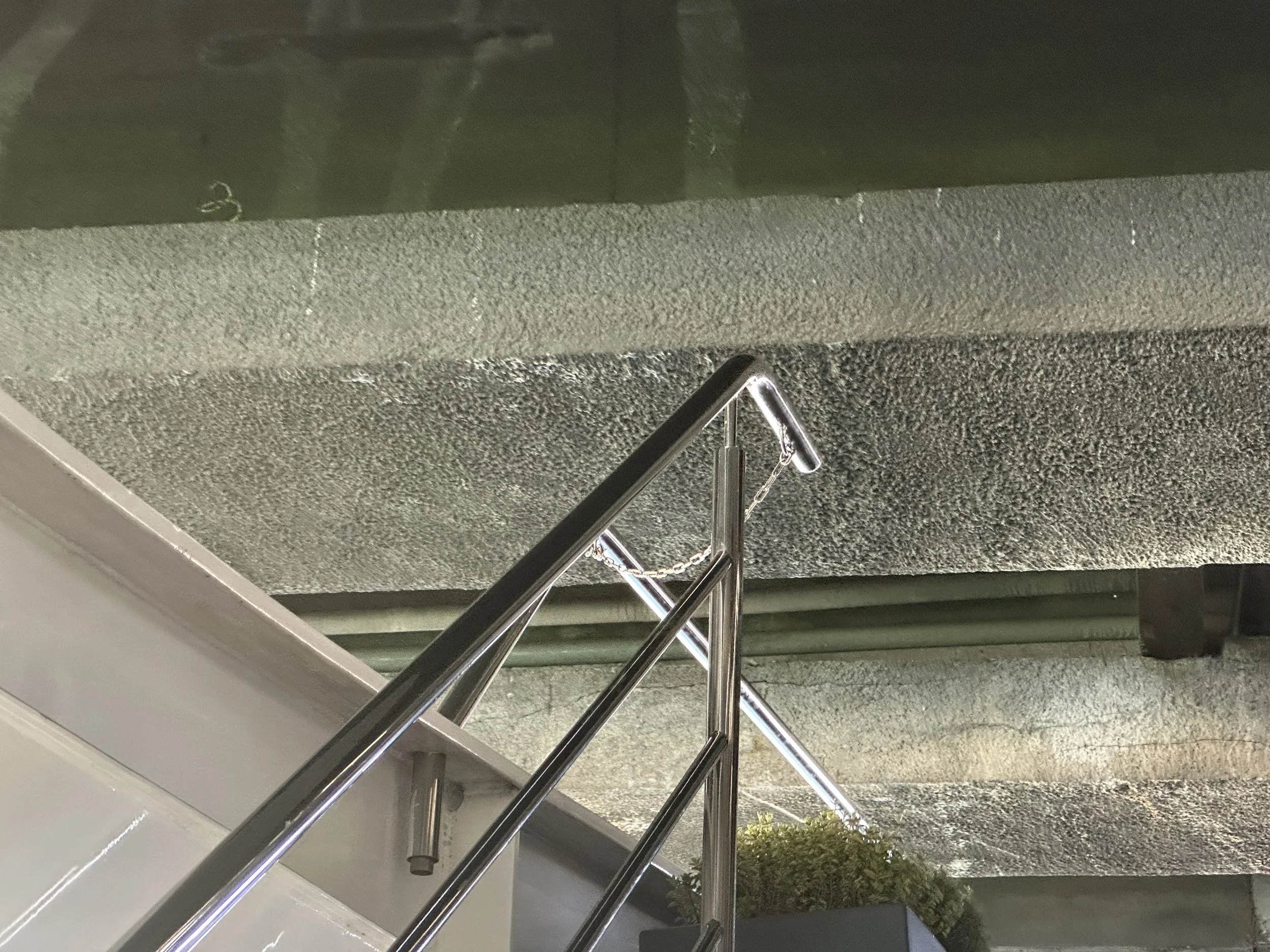
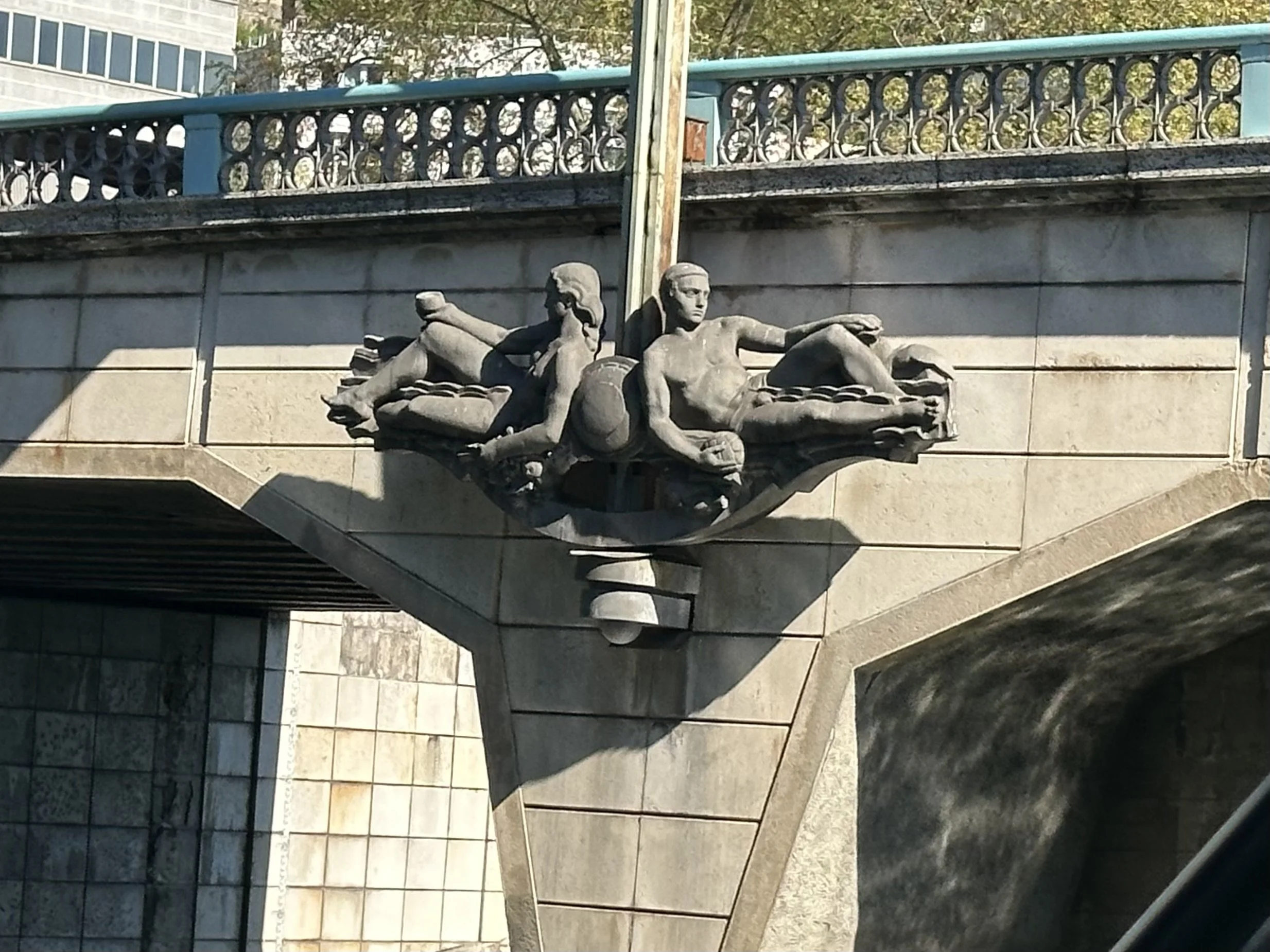
Some of the bridges are pretty low. The crew had to lower the wheelhouse to fit under one. I was nervous, but the crew seemed unconcerned.
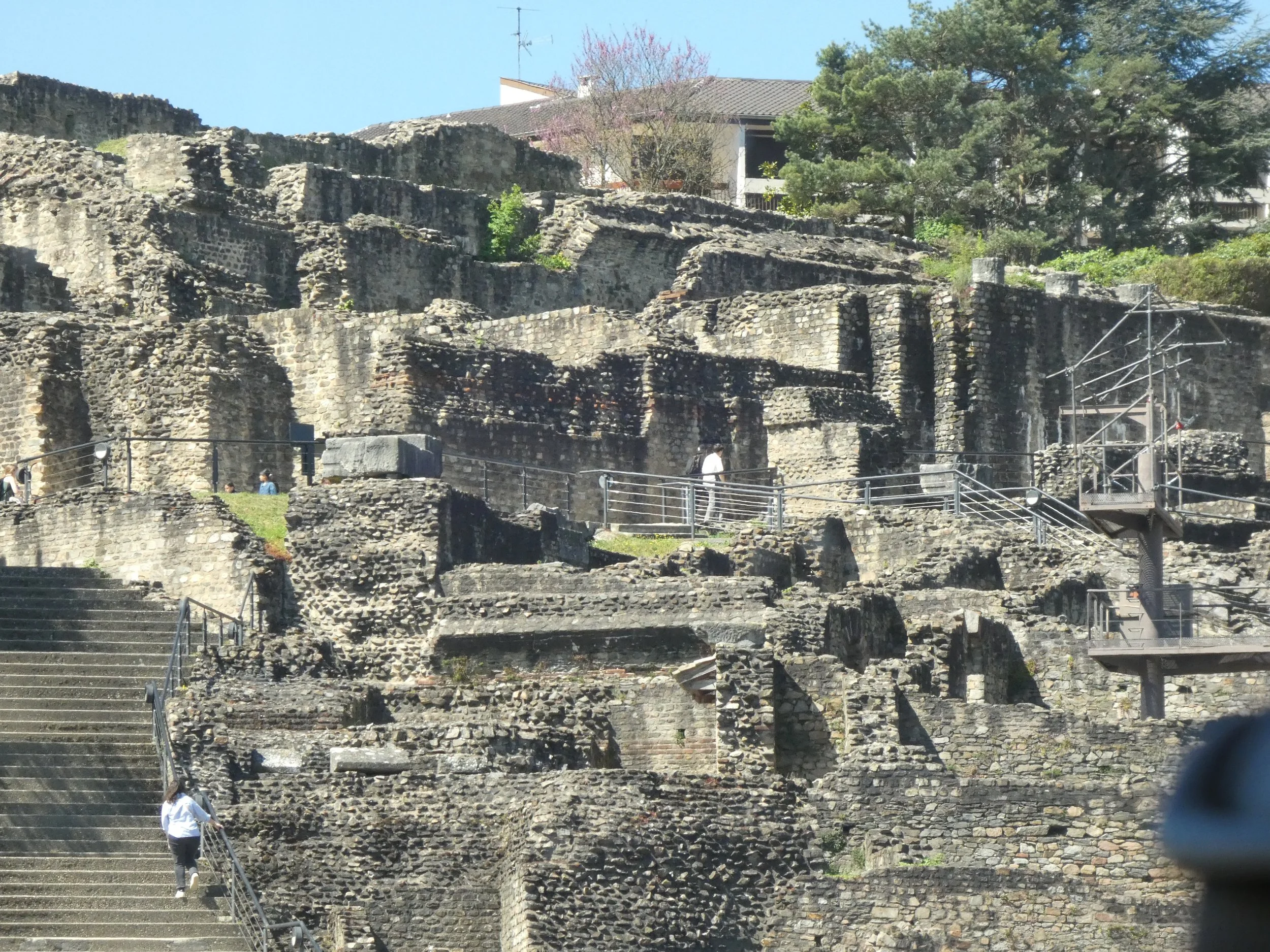
The town was once occupied by the Gauls, and Lyon was its capitol because of its strategic river location. Then came the Romans, initially occupying the land to the east of the Rhone, later moving across the rivers. The history of Lyon closely follows the history of France, of course, but I won’t attempt to recite that here.
Lyon served both as a Nazi base but also a focal point for French resistance fighters during WWII. A speaker this evening gave a detailed account of what went on here and in London where Charles de Gaulle made his famous broadcasts to the resistance in France.
One of Lyon’s heydays was the era of silk production. Tens of thousands of looms operated here. The industry started in 17th century and really picked up steam when the Sun Guy, Louis XIV, popularized linen fabrics and tapestries. The French Revolution interrupted production but Napoleon Bonaparte supported the industry and it came back to life. The end started with introduction of synthetic fabrics in the 1880s and fell completely apart by 1930. Today businesses here print on linen material imported from China and restore old tapestries, etc.
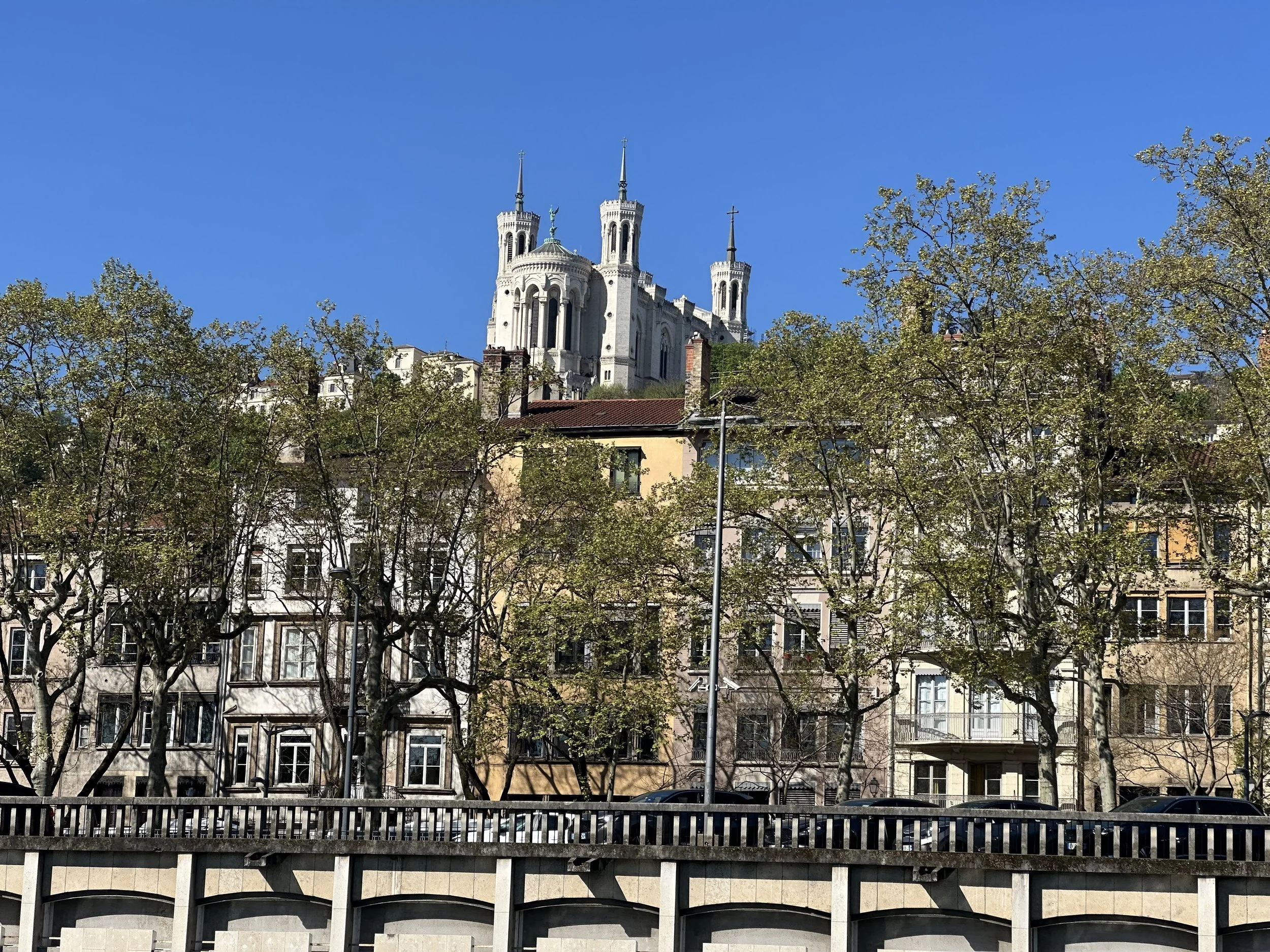
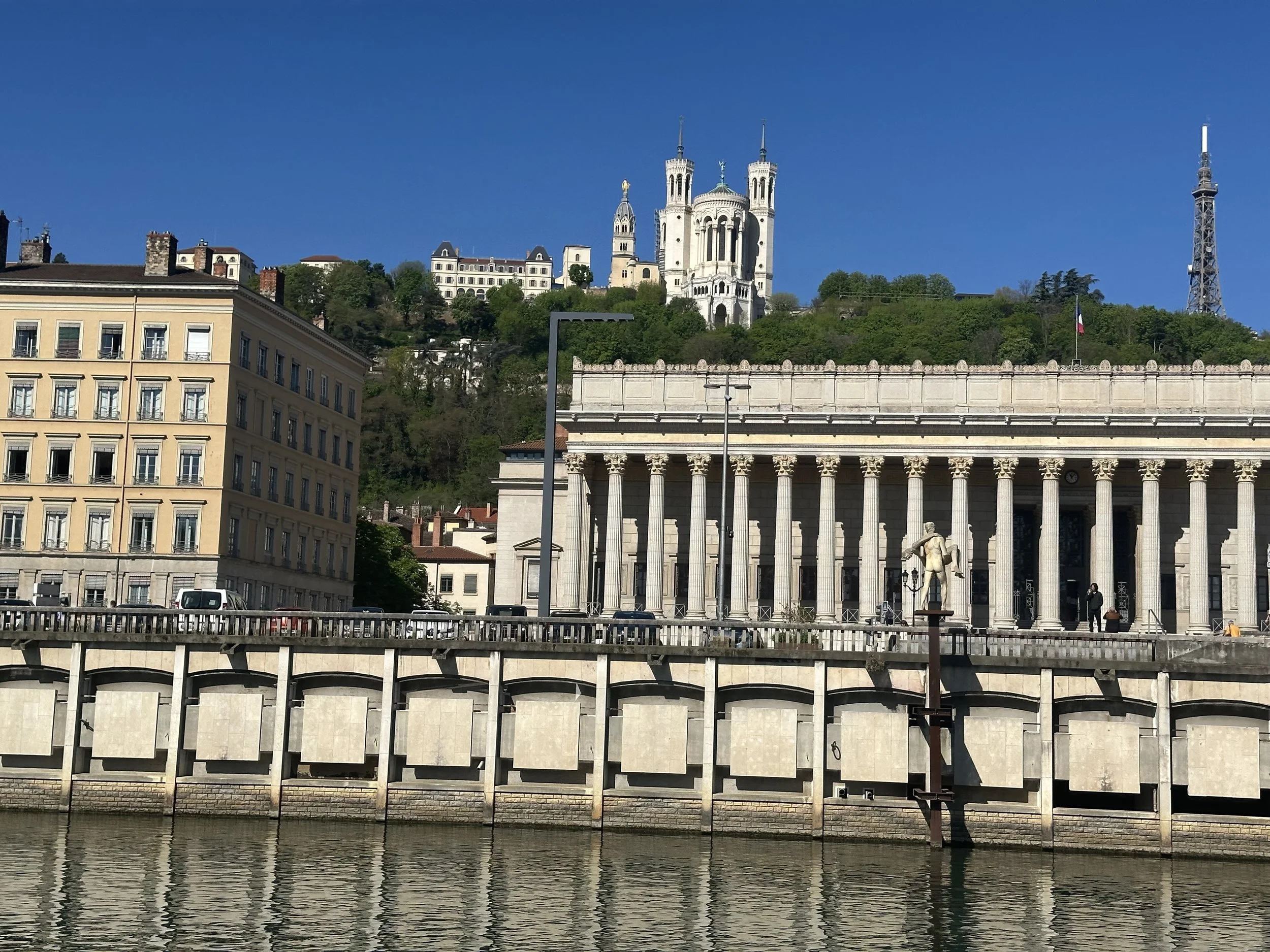
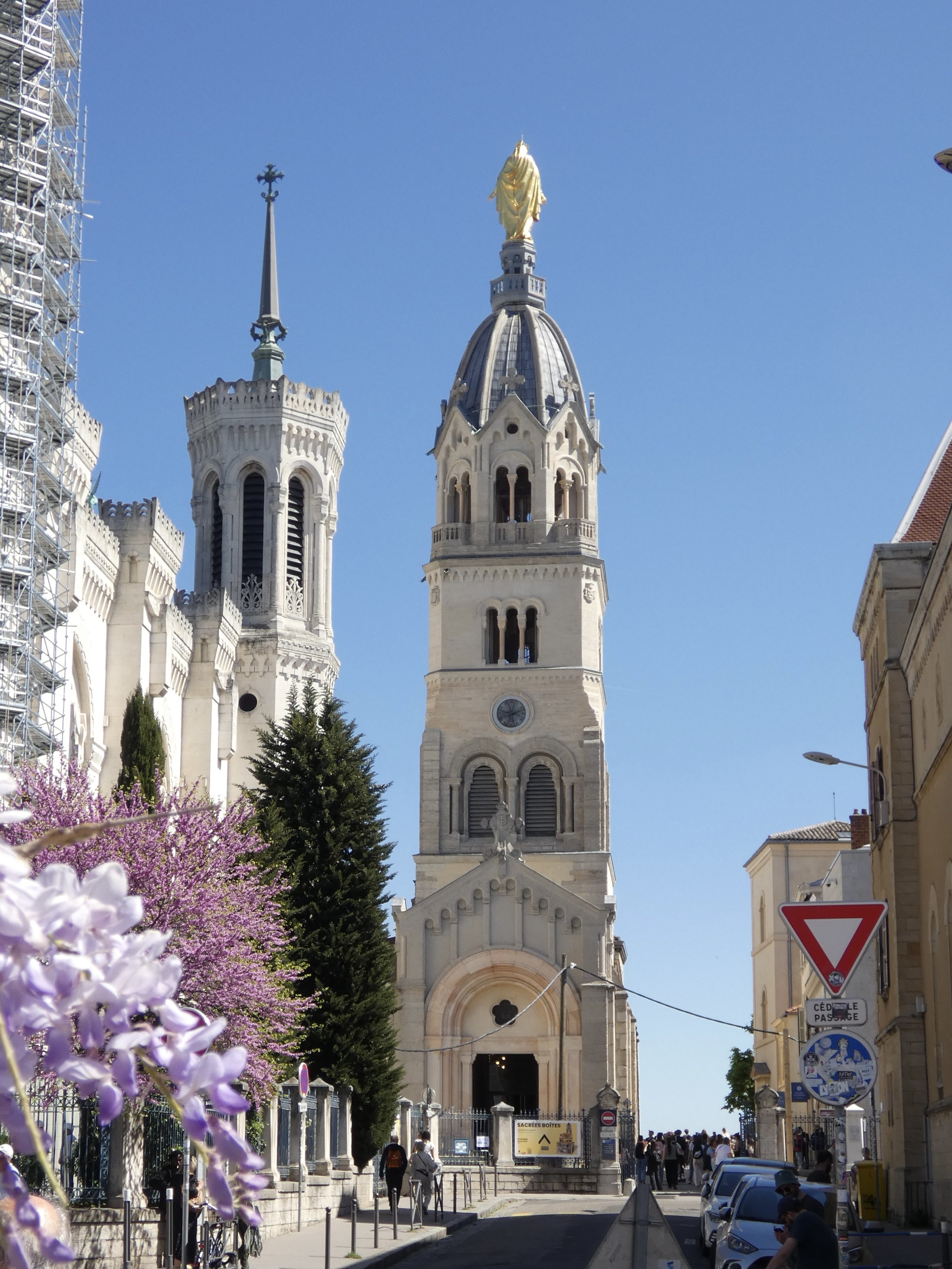
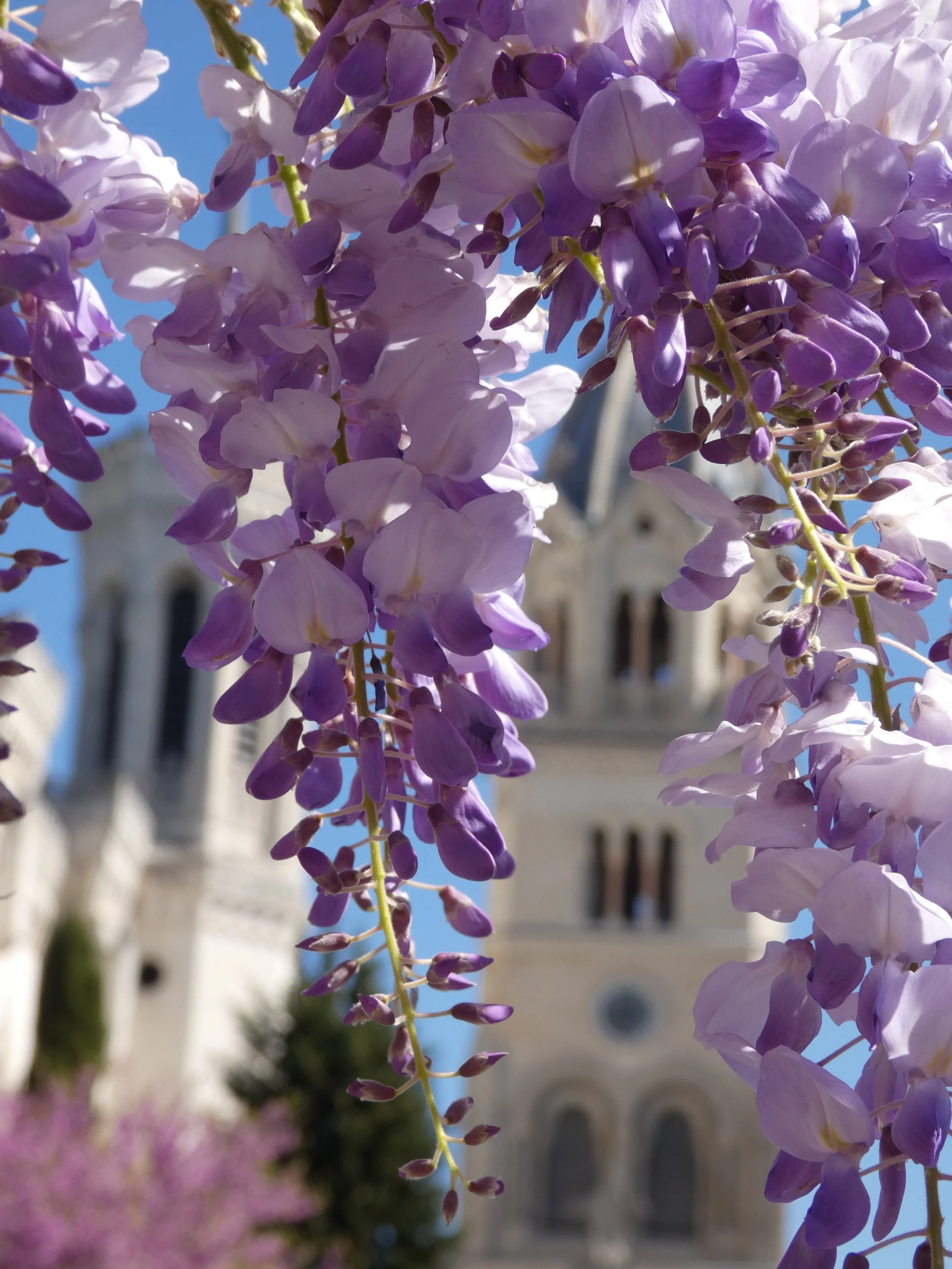
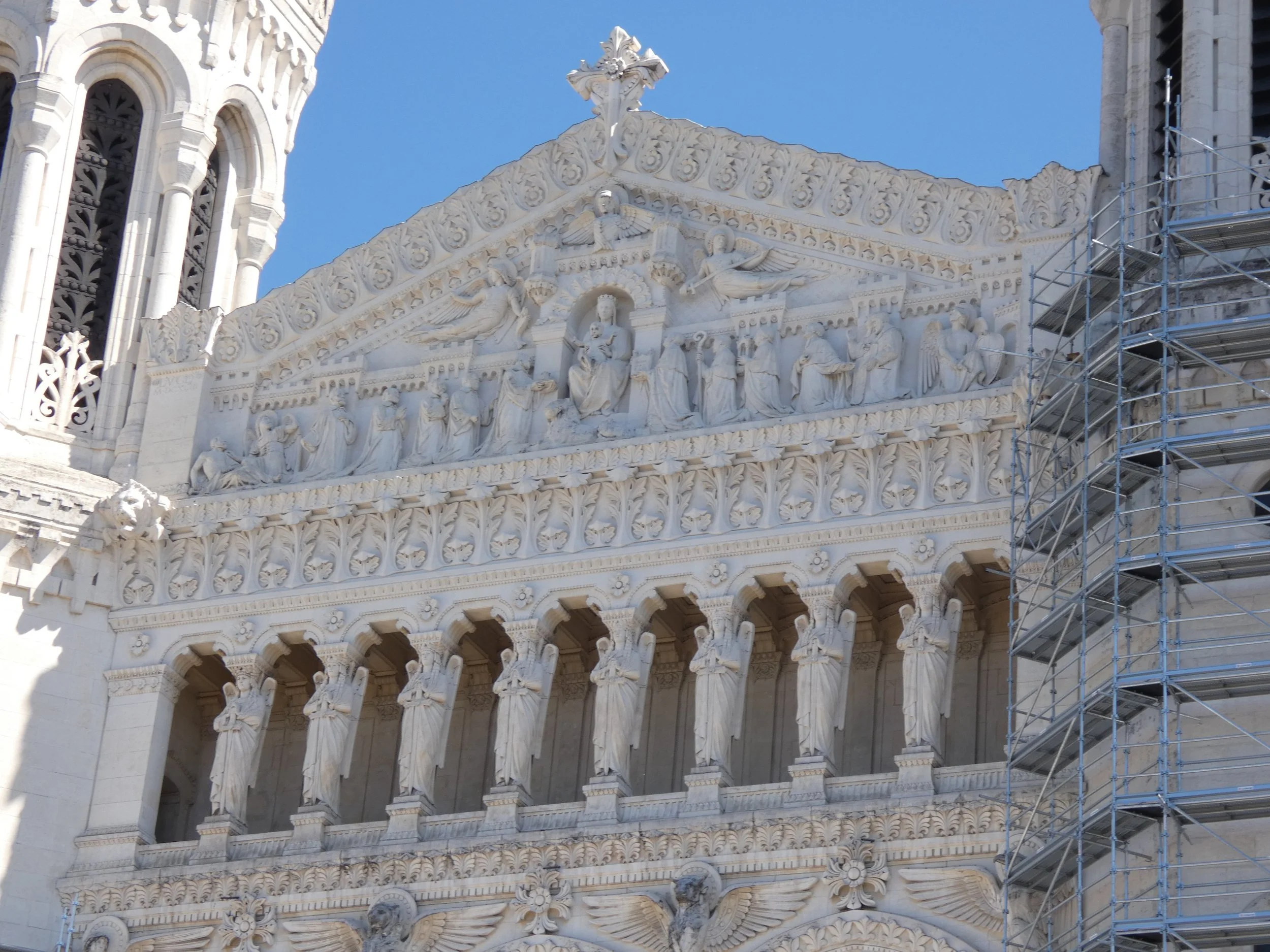
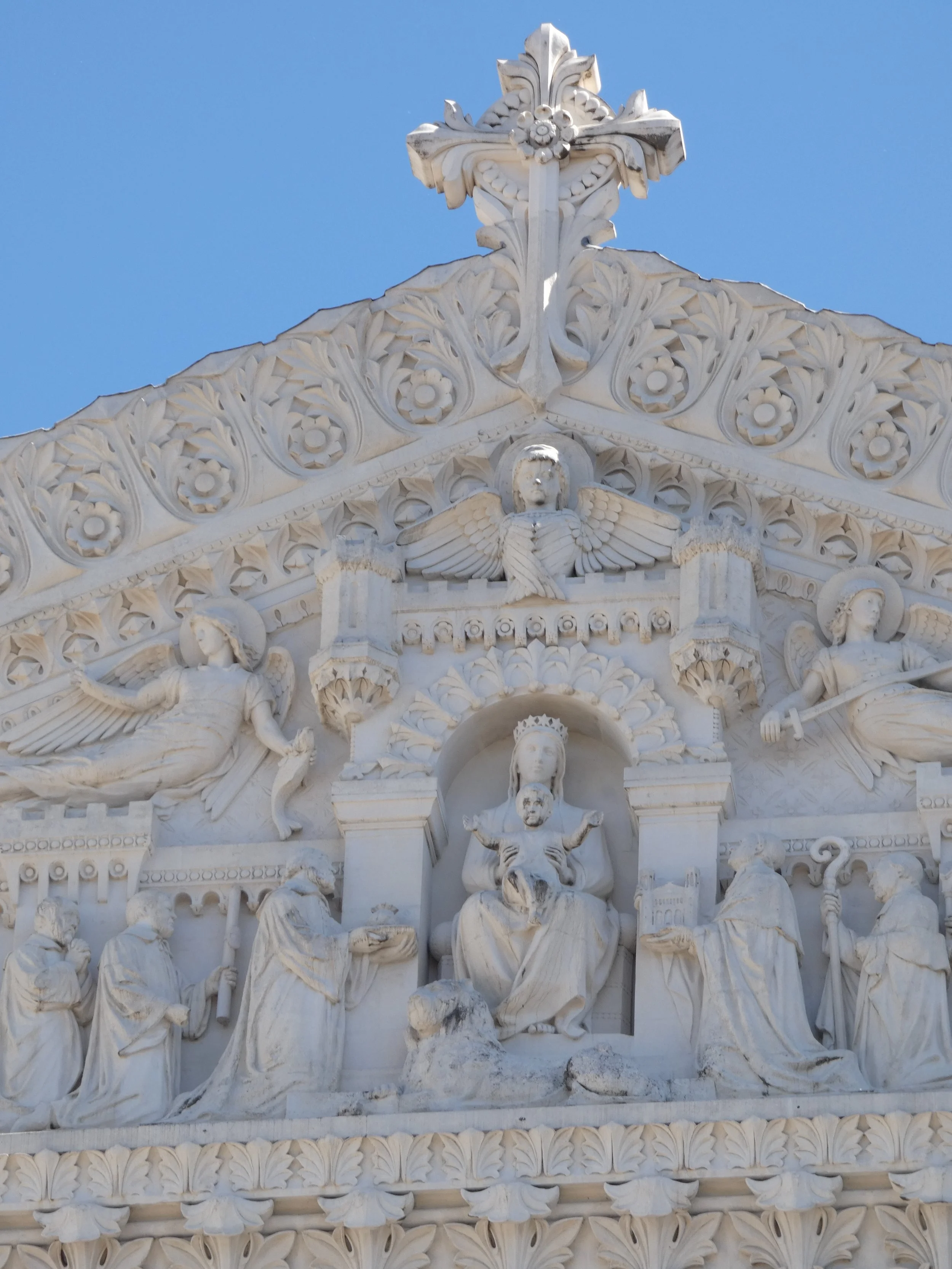
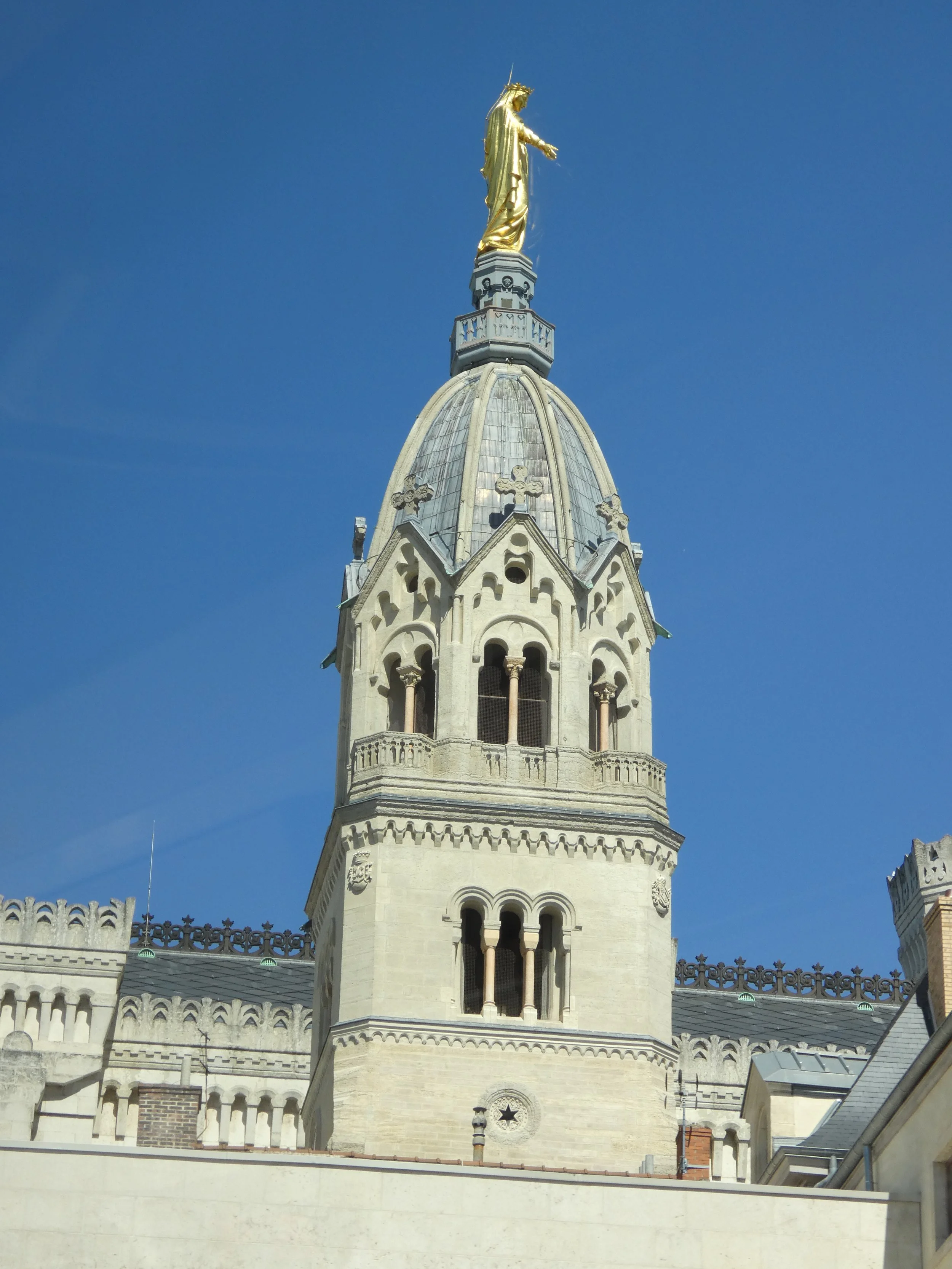
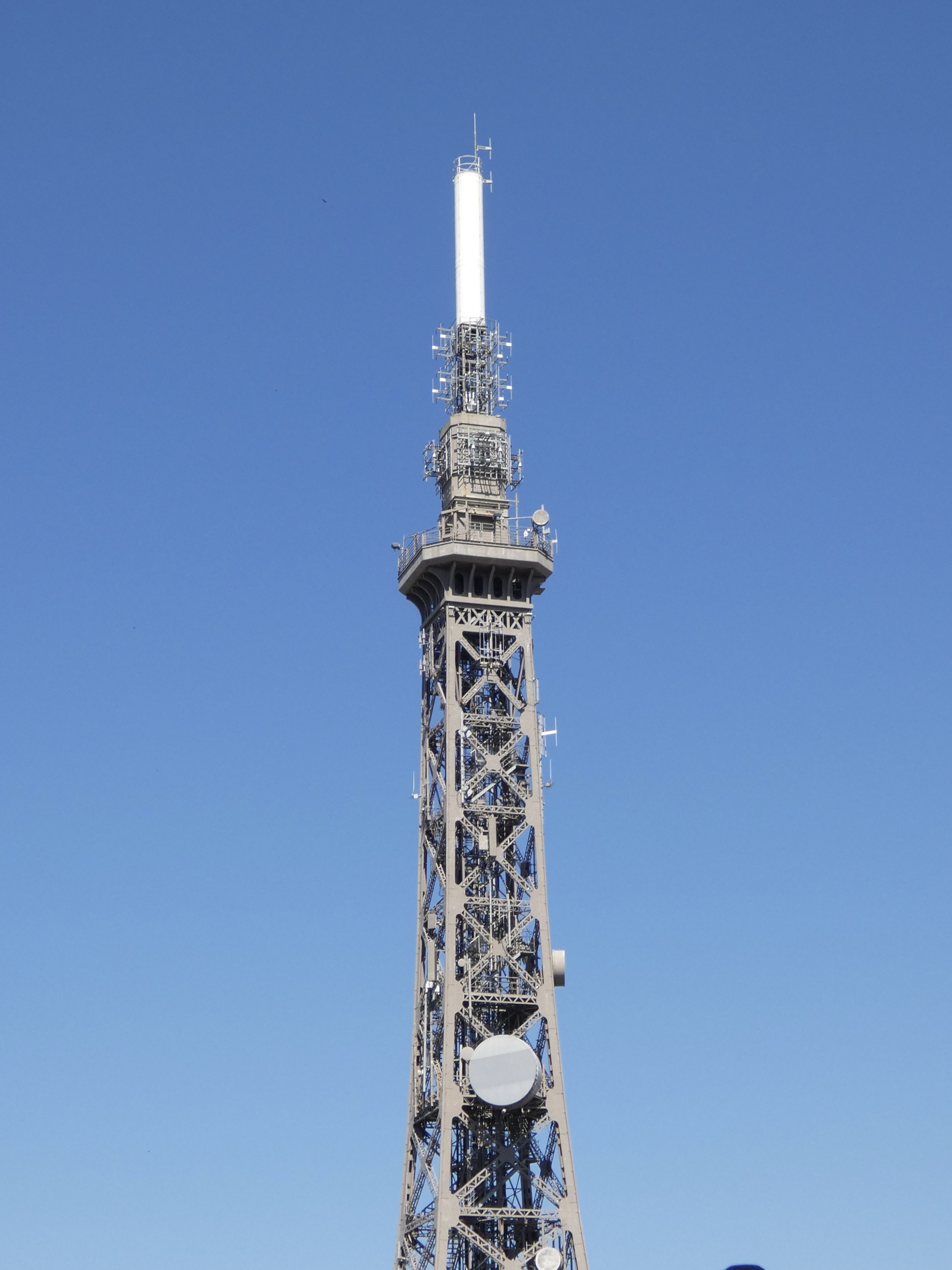
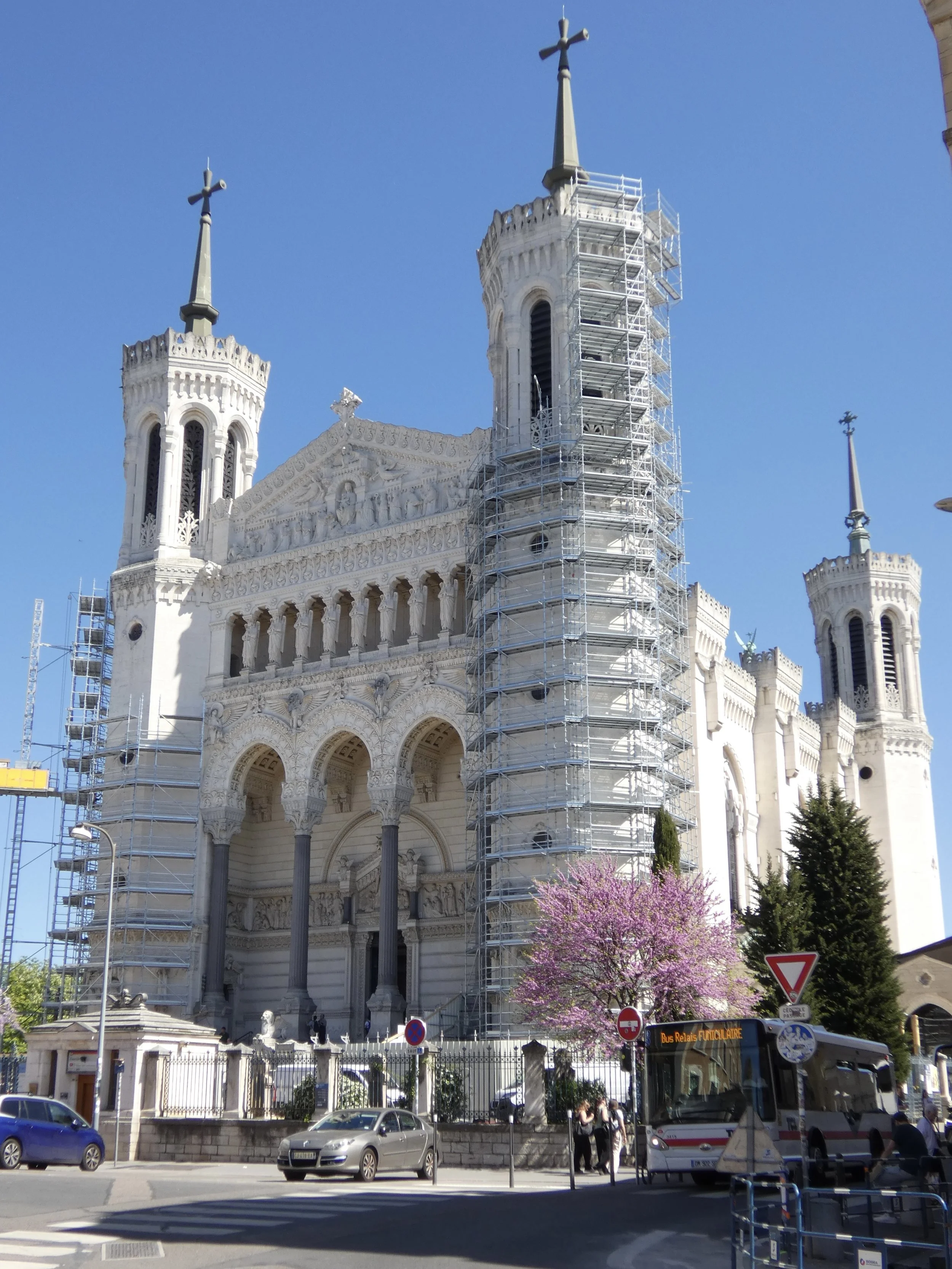
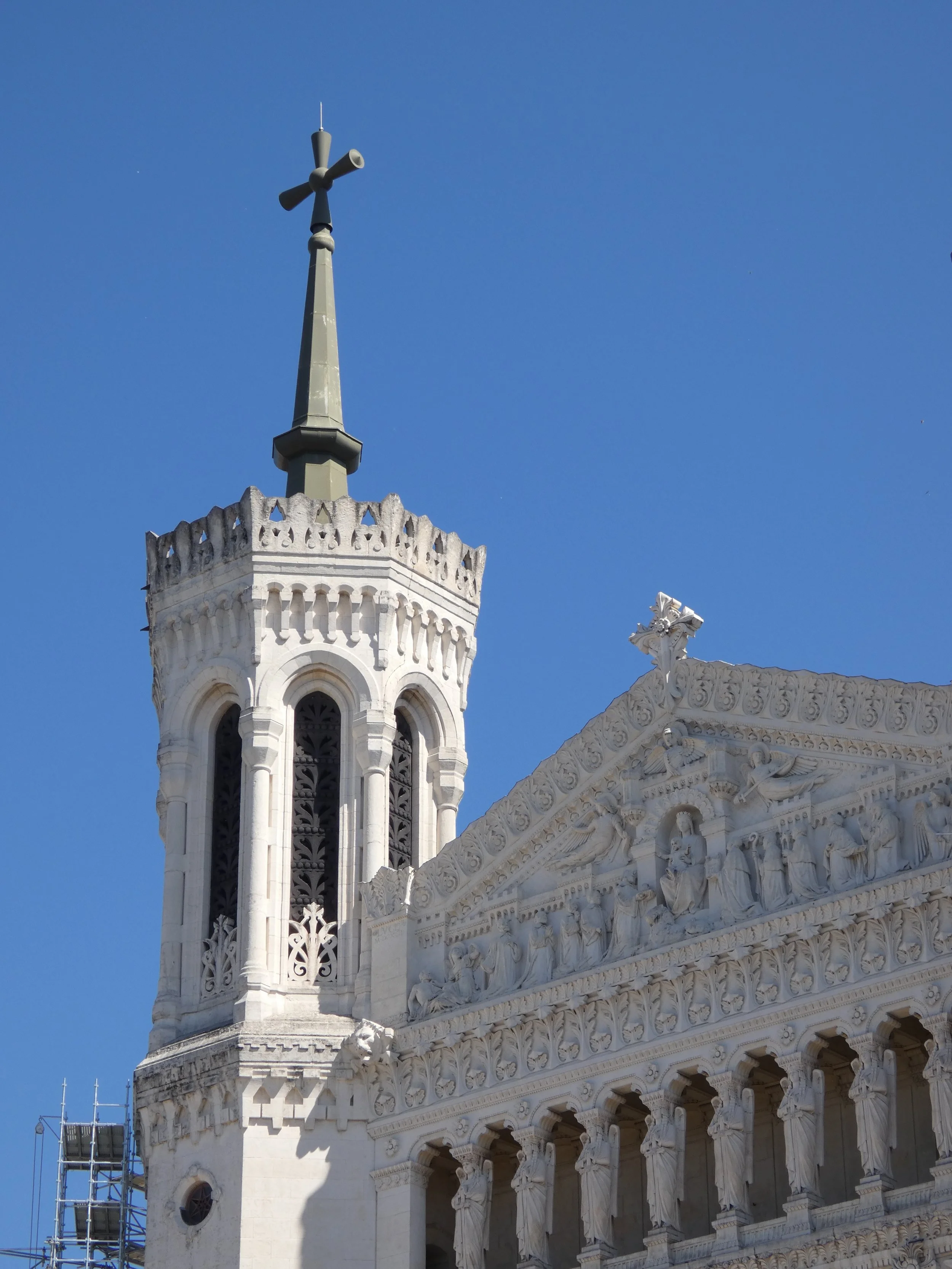
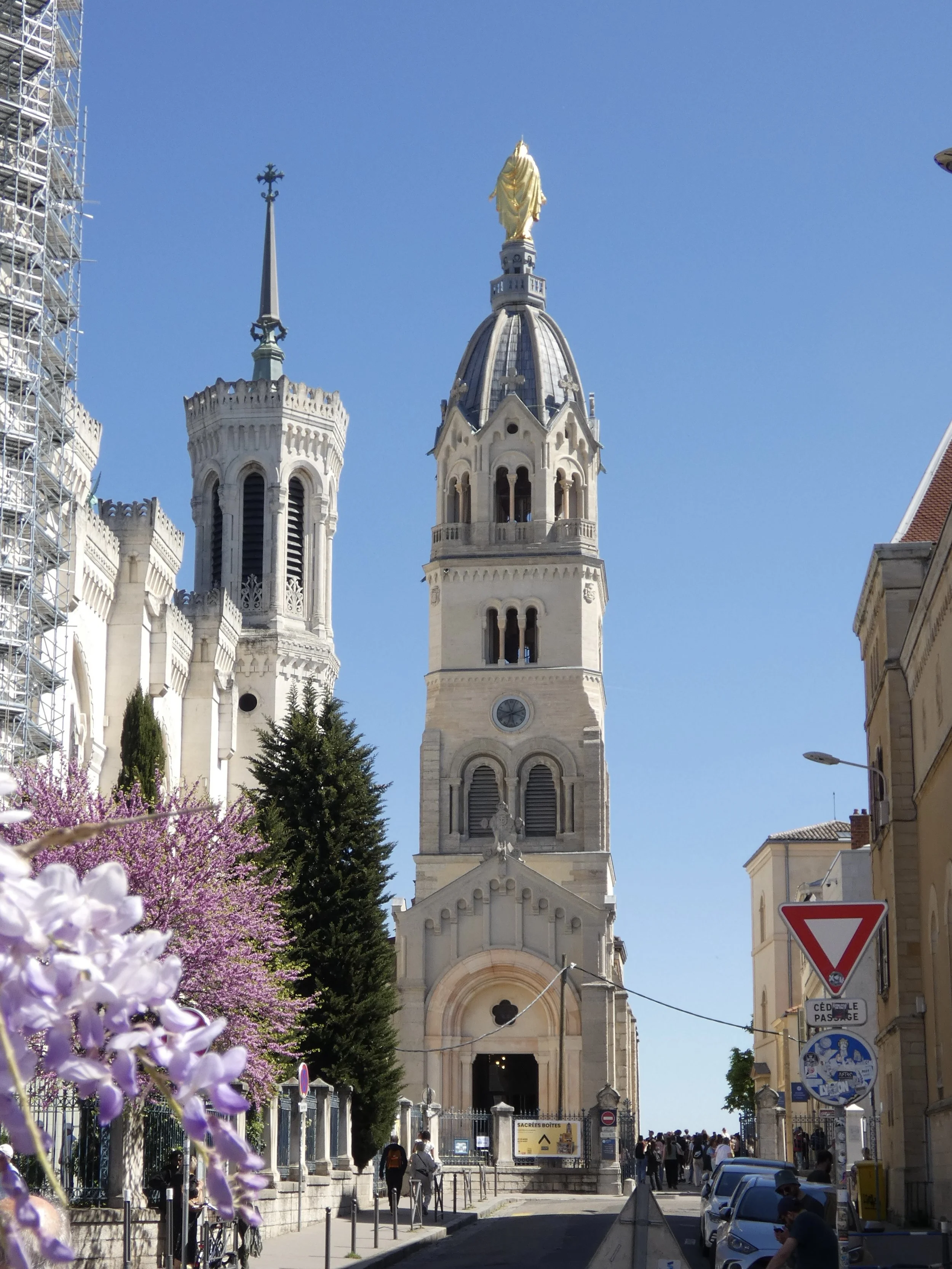
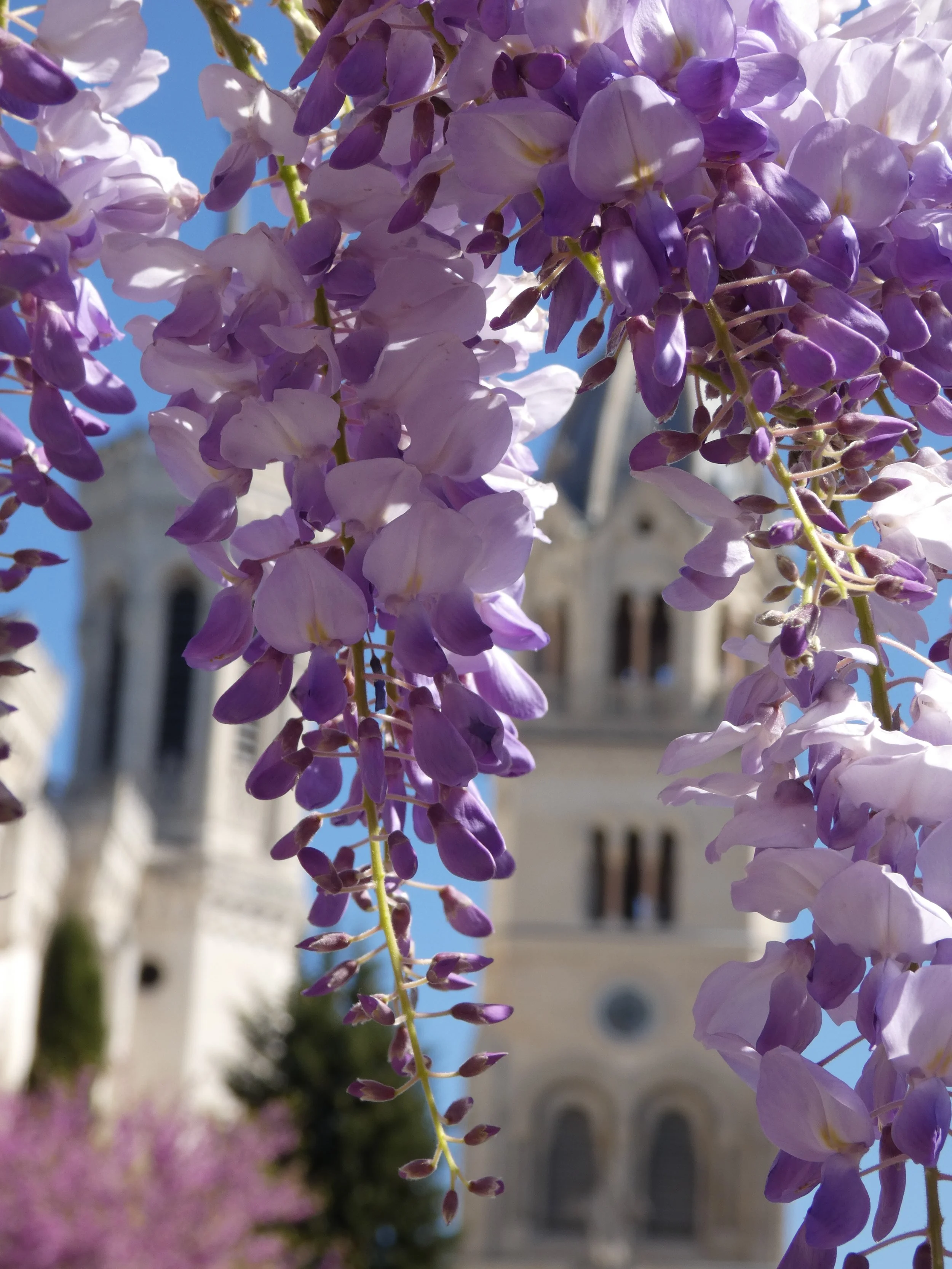
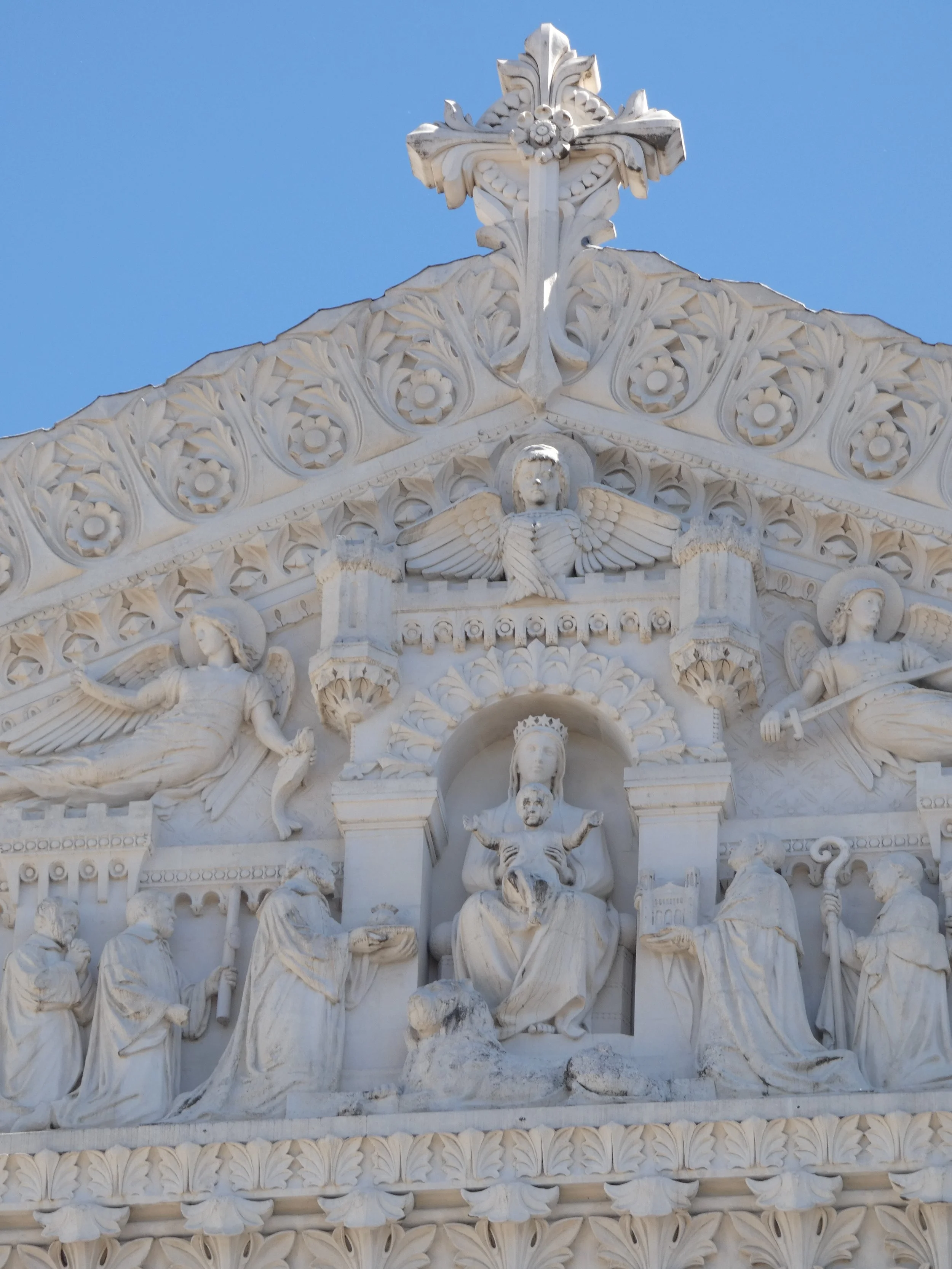
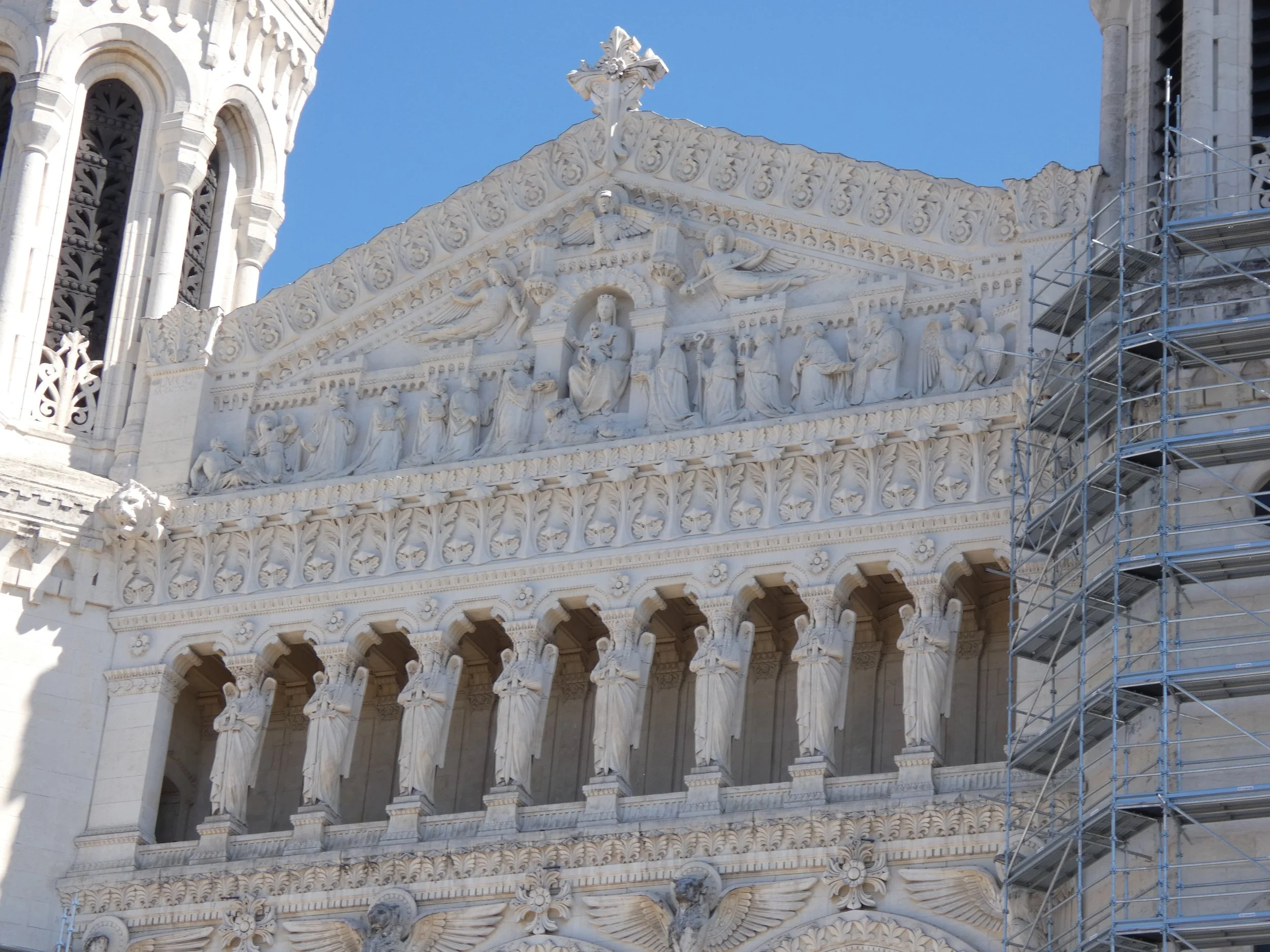
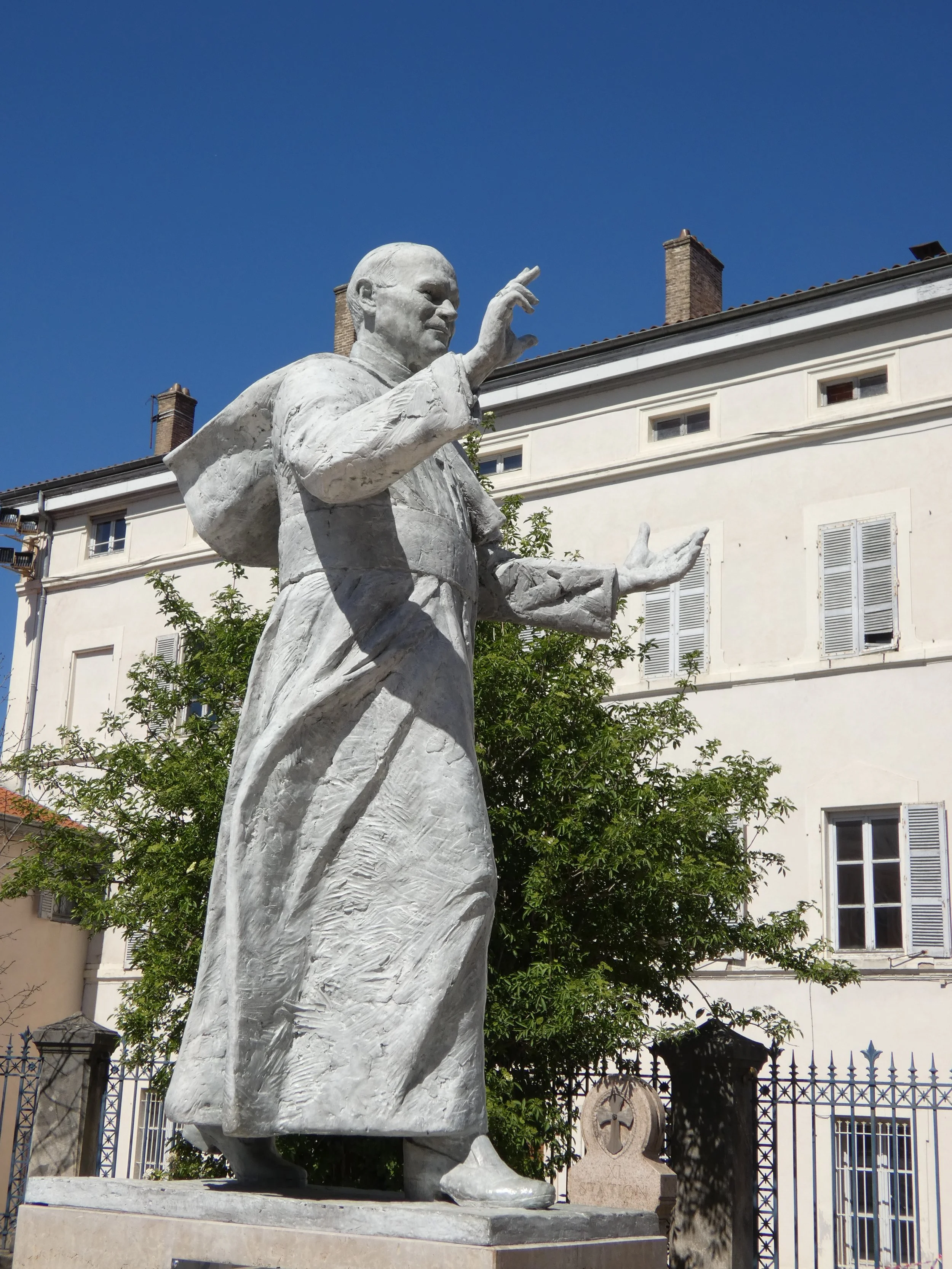
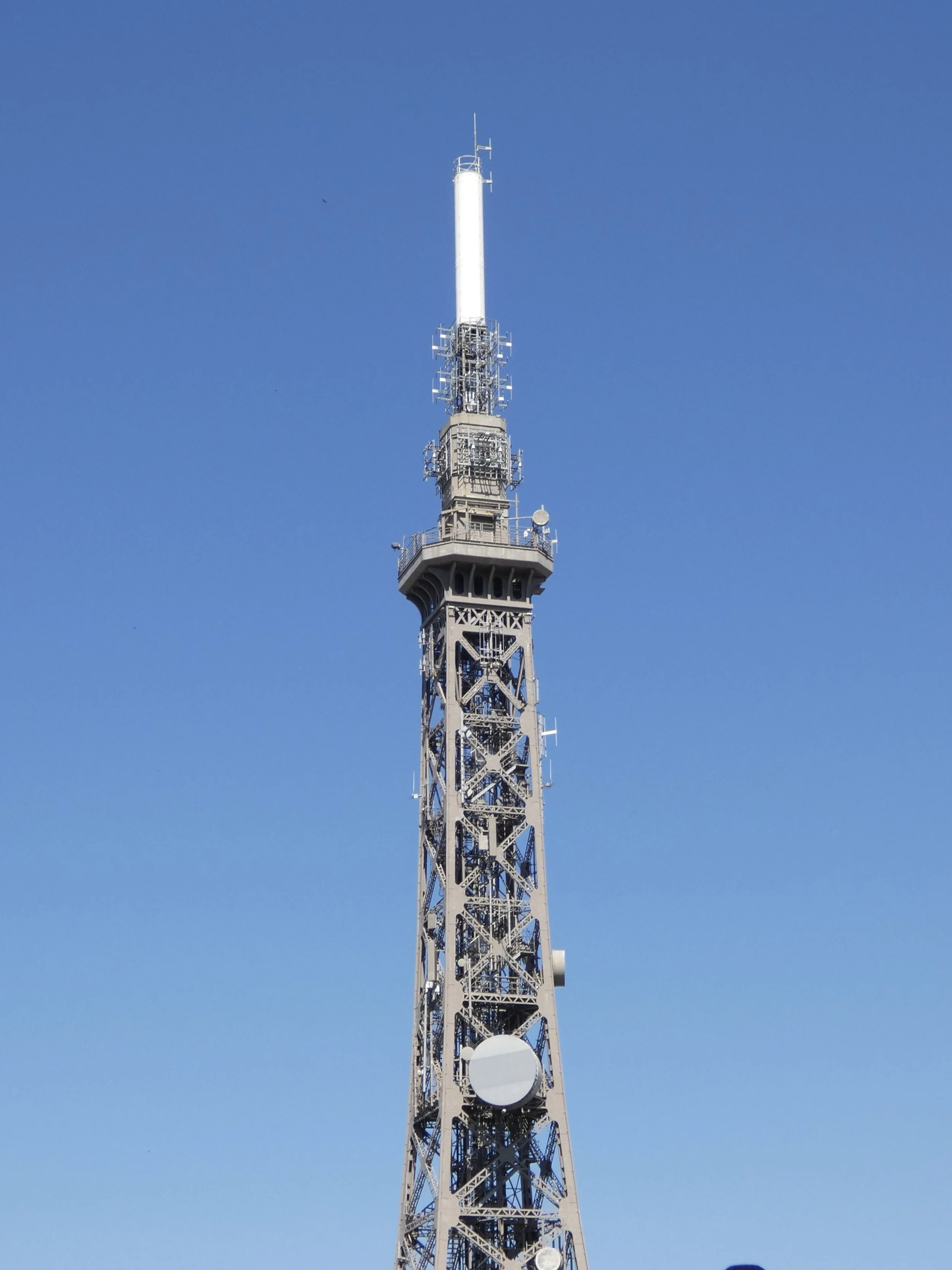
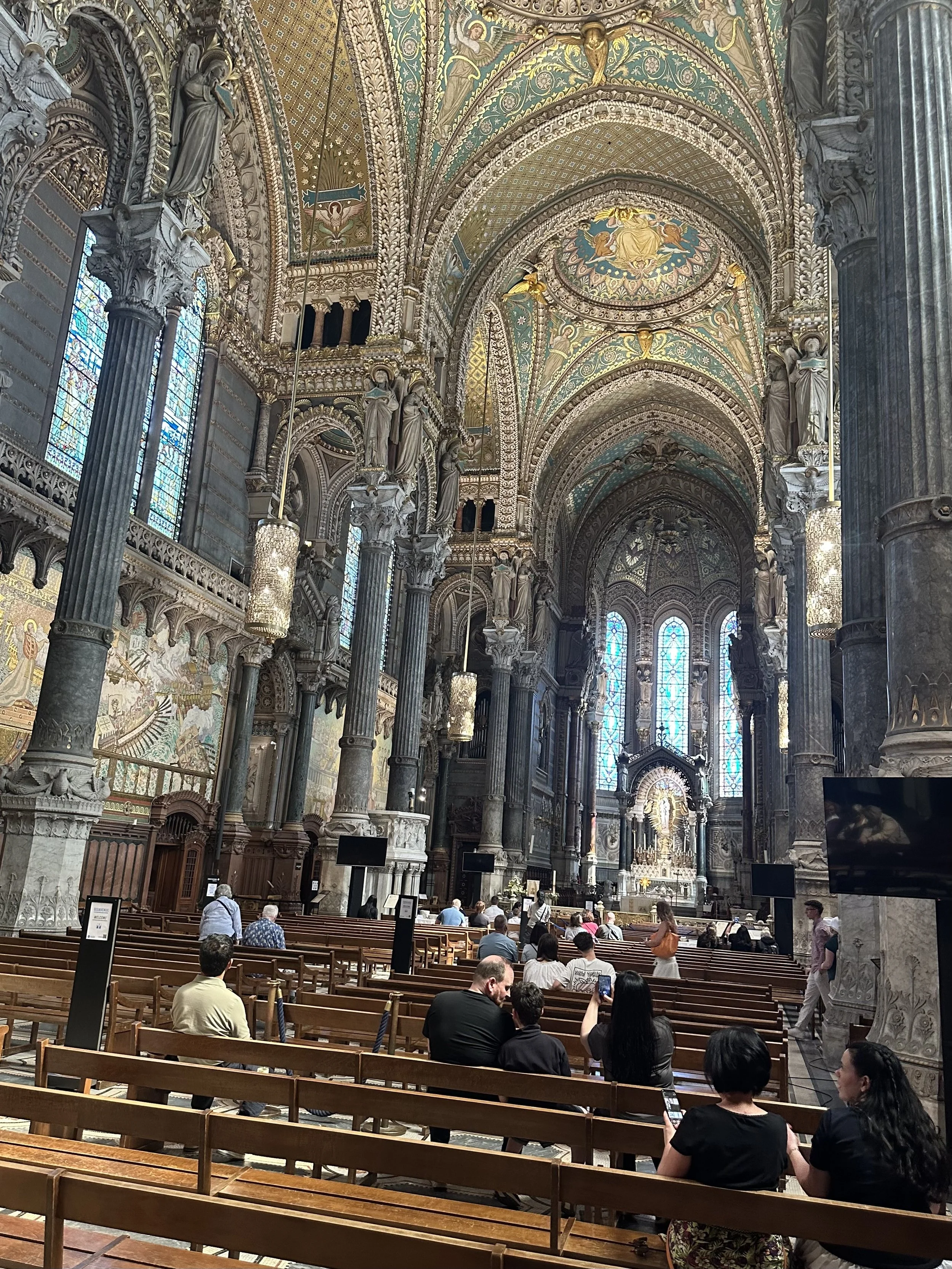
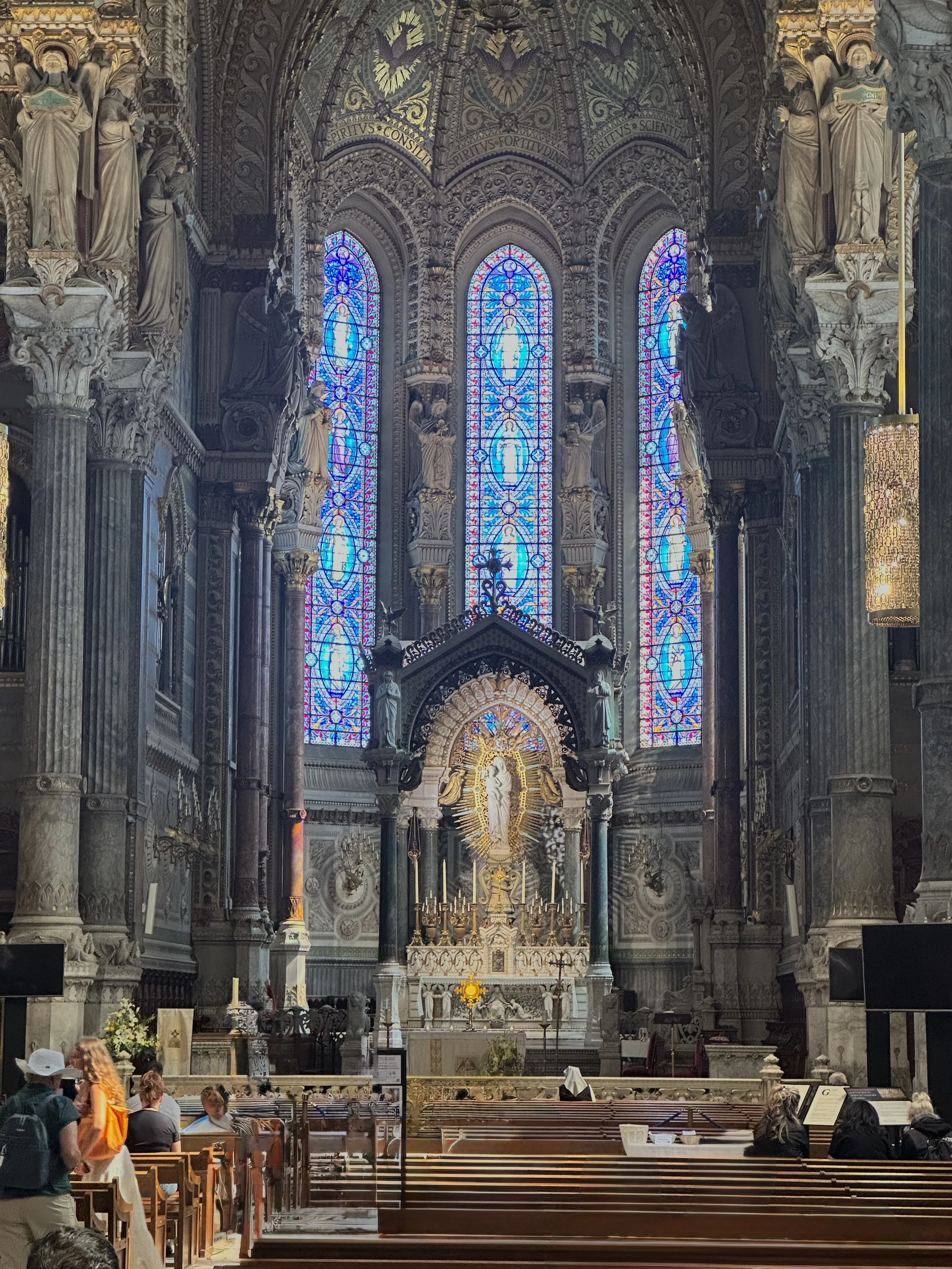
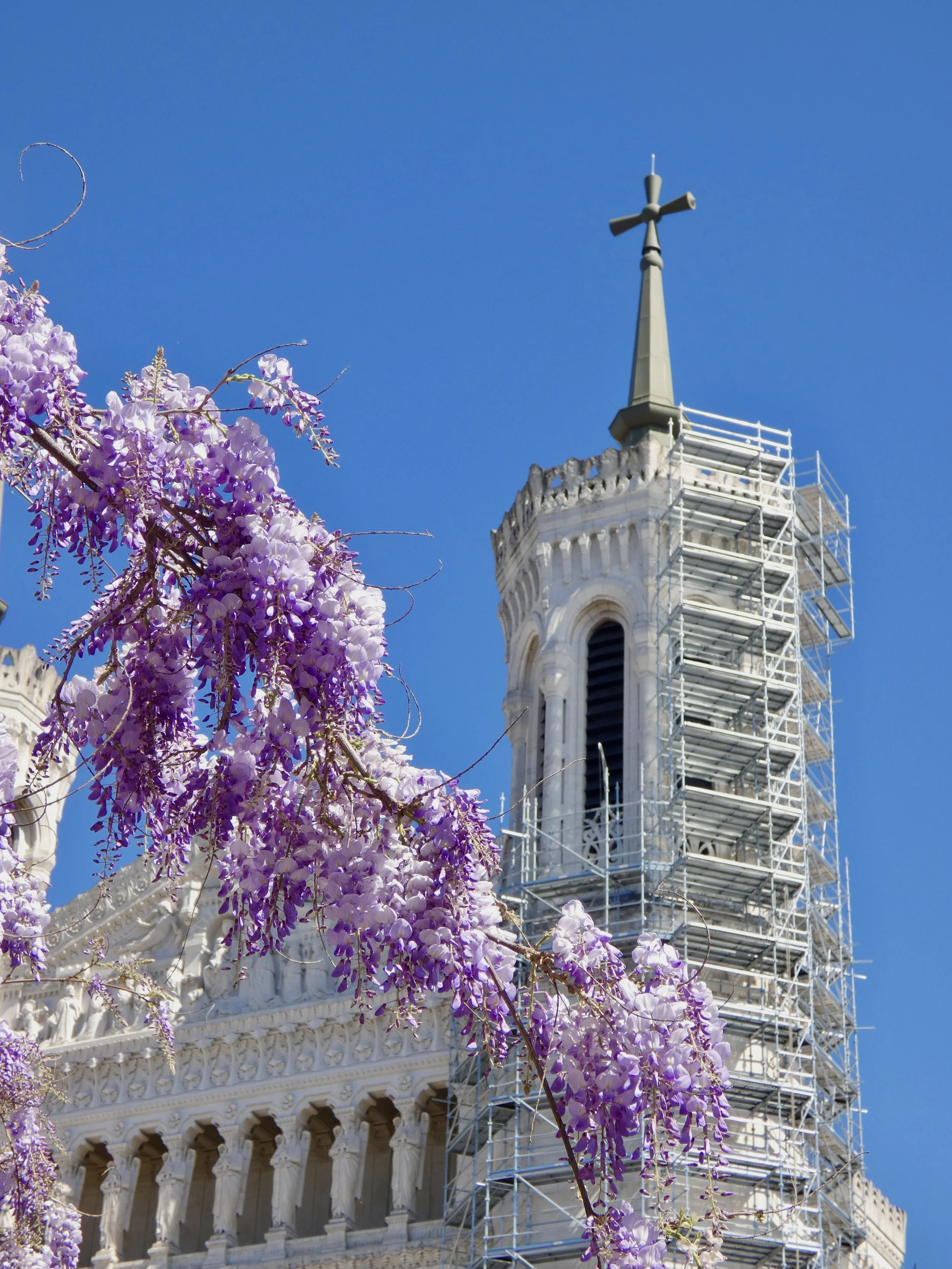
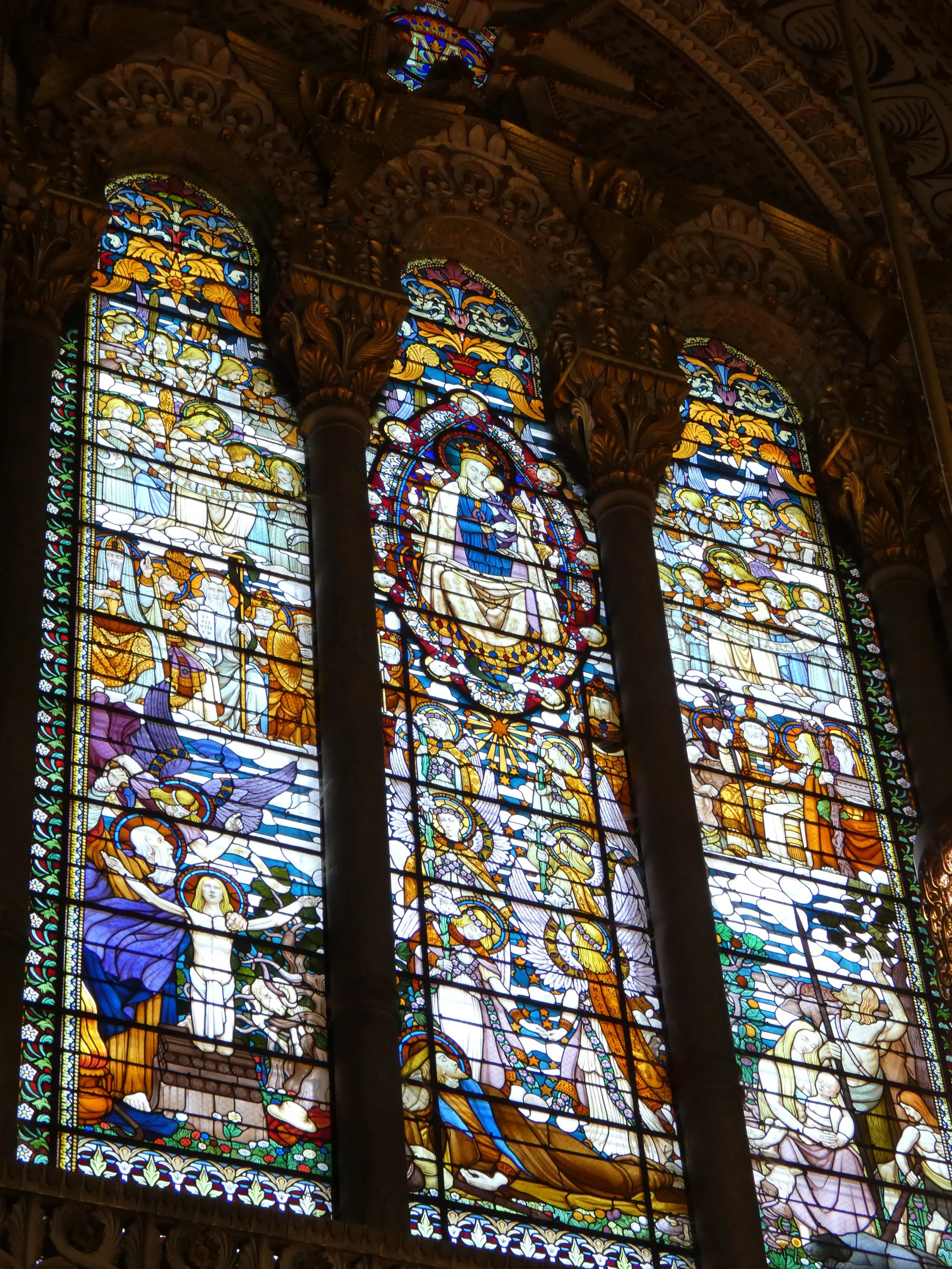
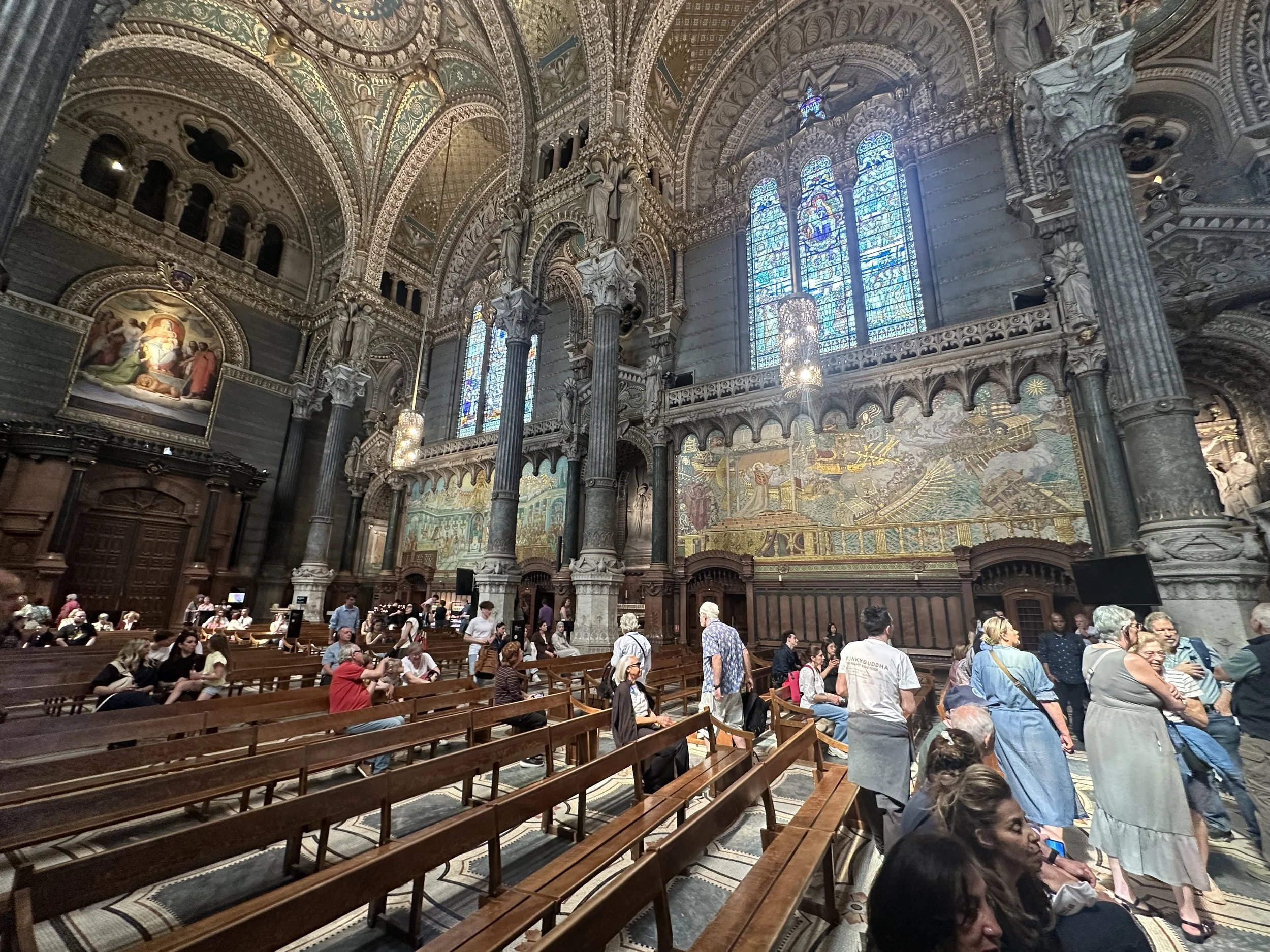
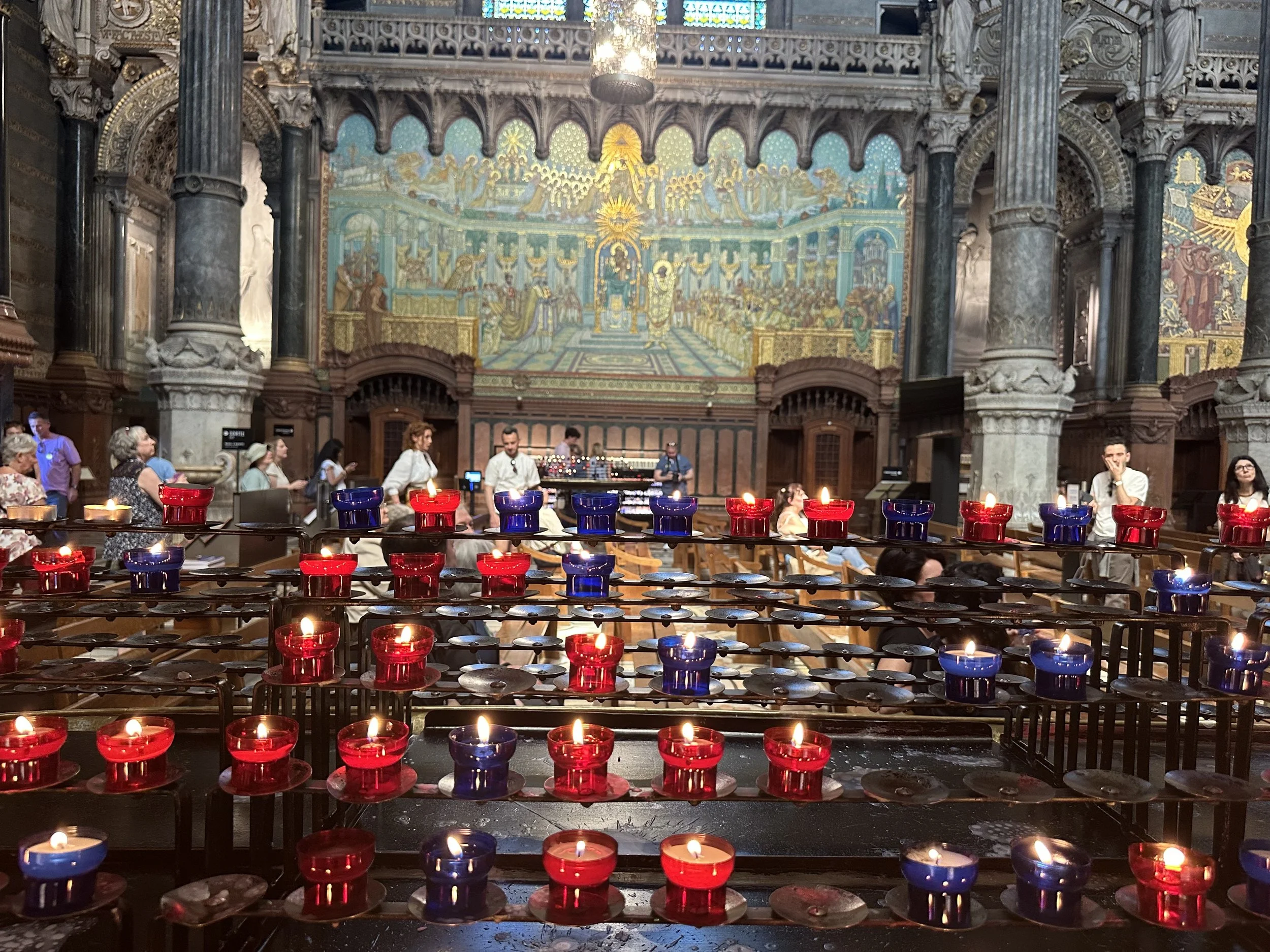
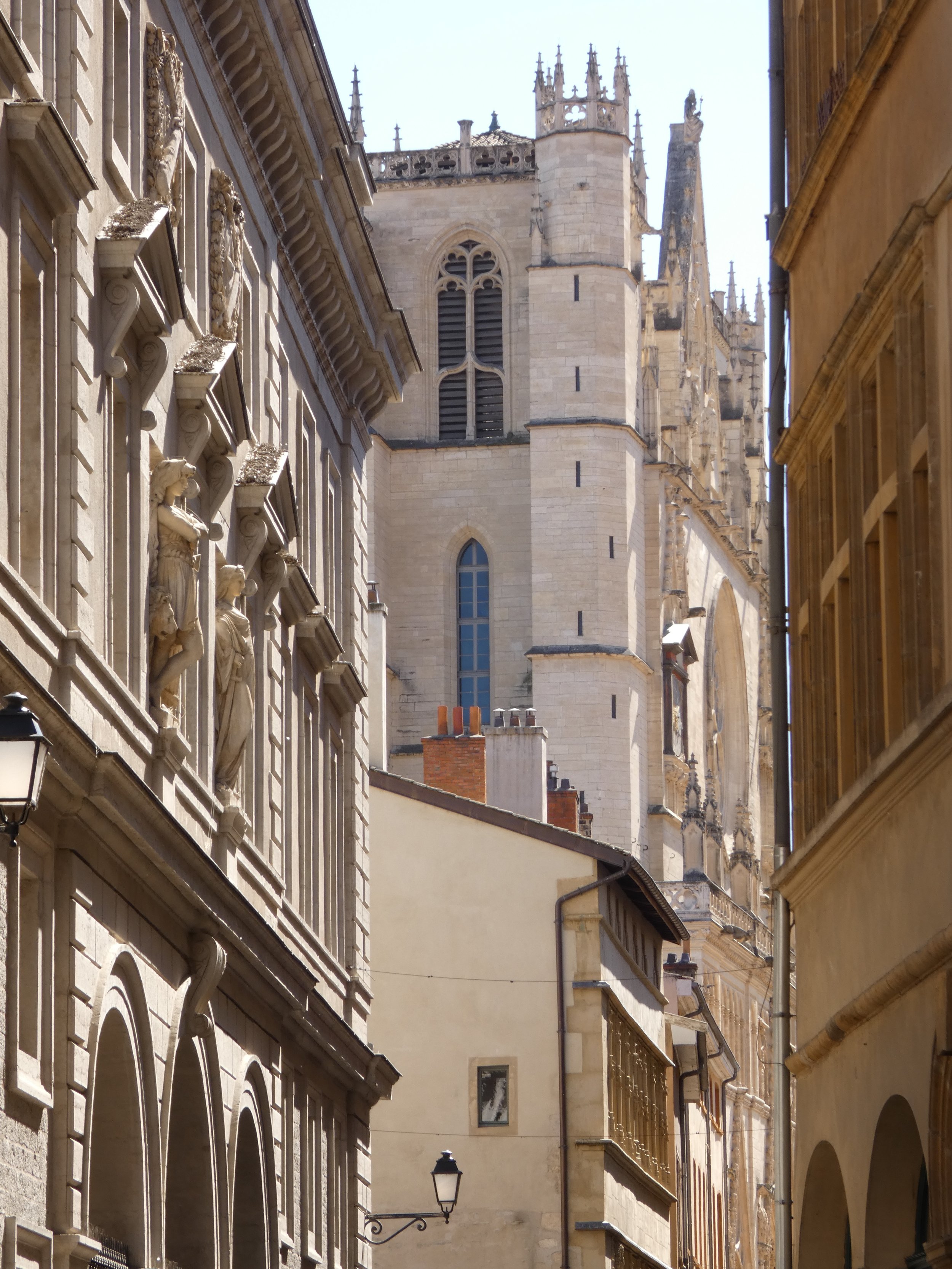
We visited the Basilica de Notre-Dame de Fourviére, perched on top of one of Lyon’s three hills, the hill named Fourviére. The name comes from the Roman forum located on the site, remains of which have just been uncovered.
Fourviére is dedicated to the Virgin Mary who answered the prayers of worshipers two notable times. The first time was when she protected the city from the bubonic plague of 1643. Lyon still lights candles in commemoration every Conception Day in December. The second time was when the Prussian army, having conquered Paris in 1870, was stopped from continuing south to Lyon.
The latter event posed a problem. The bishop had promised the Virgin Mary that if she interceded to protect Lyon from the Prussians, he would build a basilica in her name. Now what? Funds were raised from the public, not the government, and the basilica was built between 1872 and 1896.
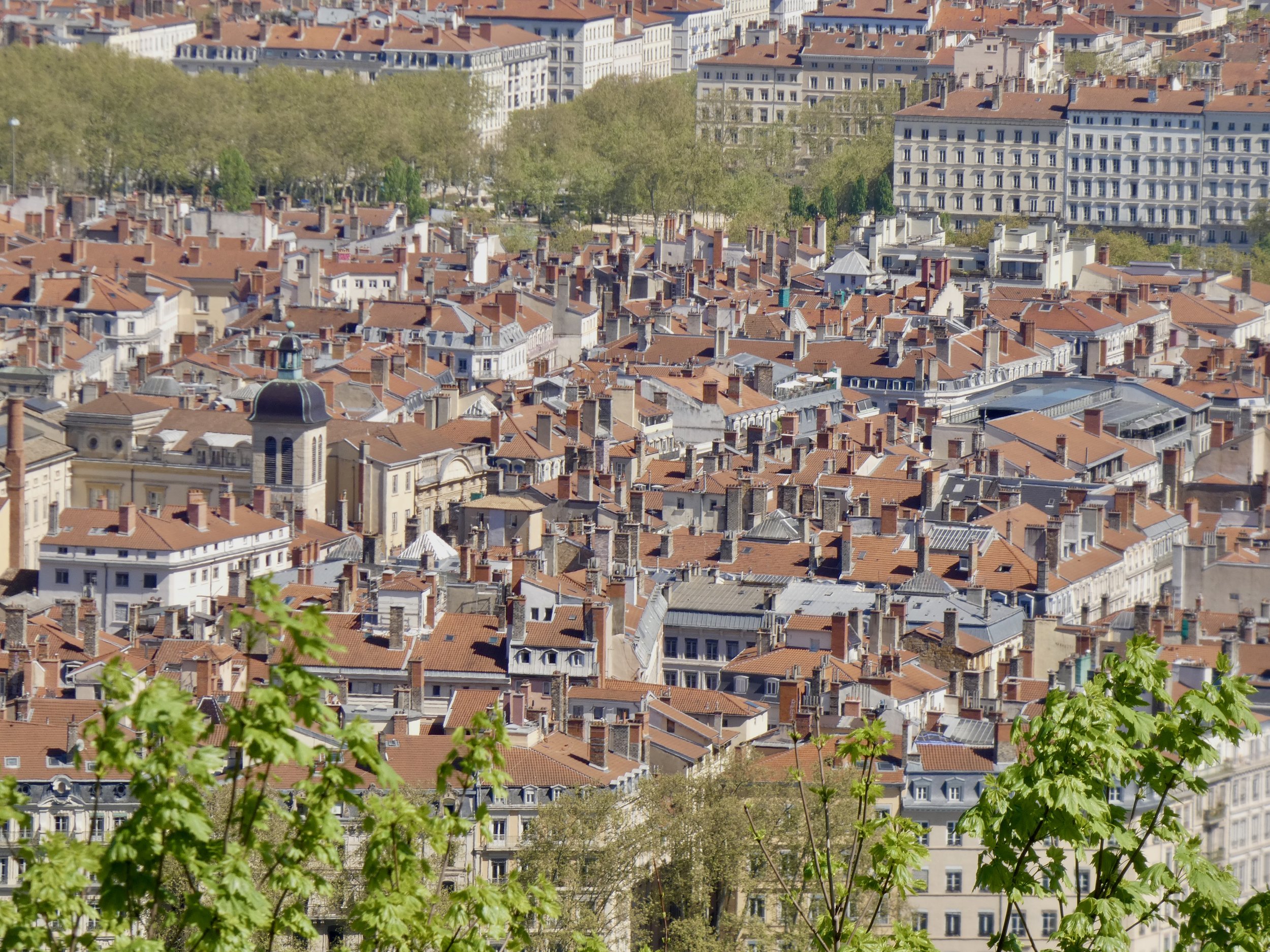
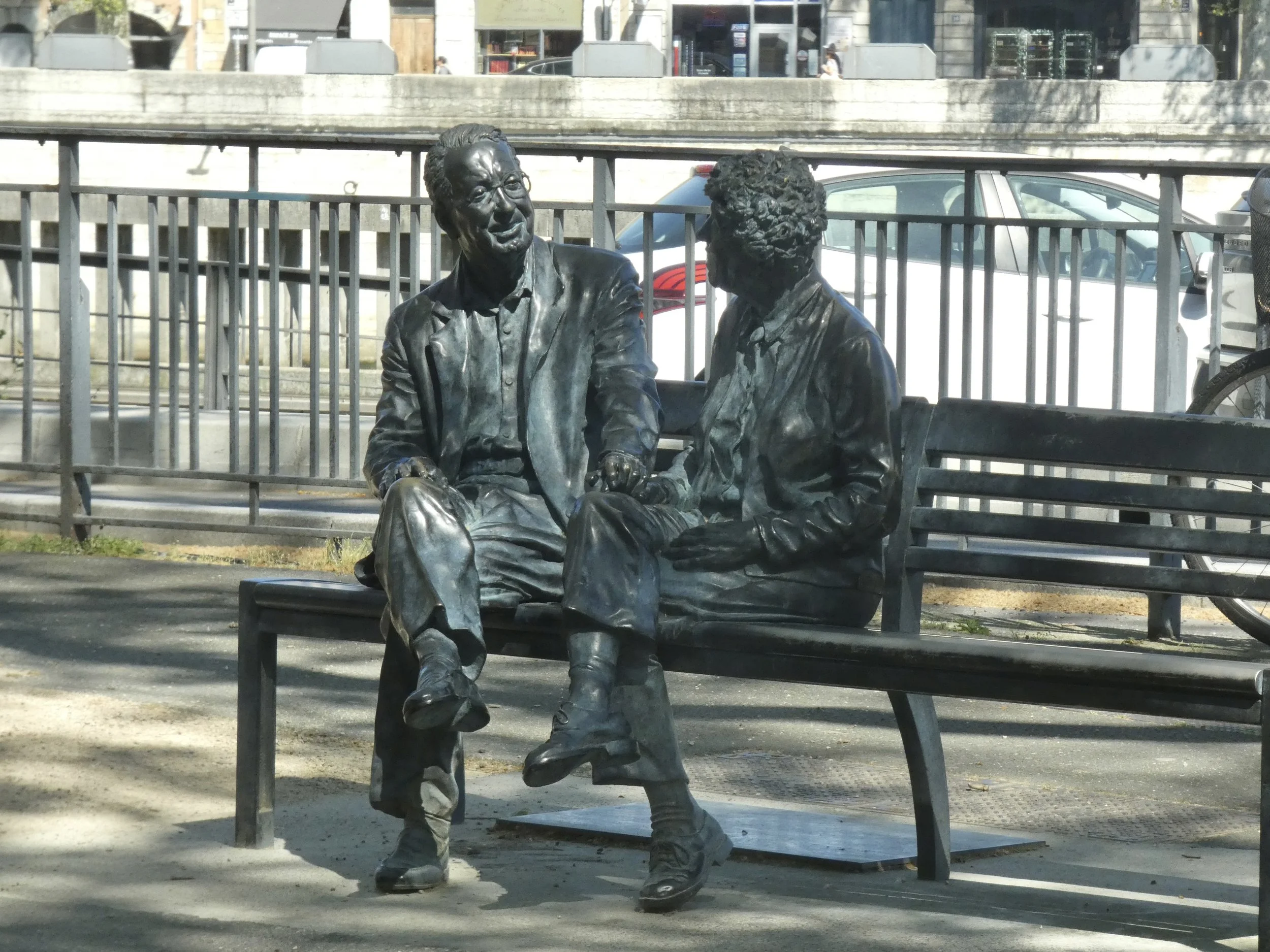
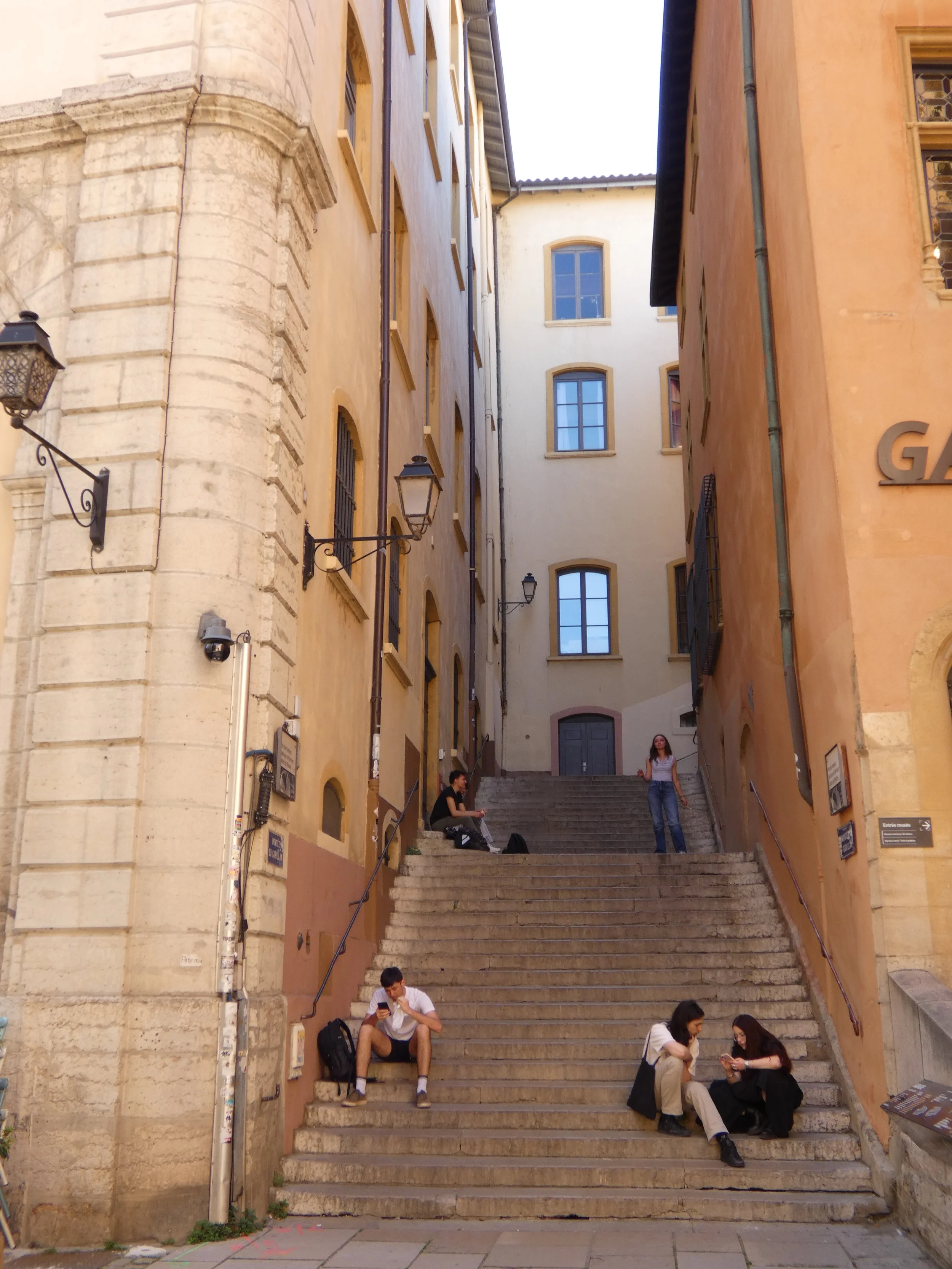
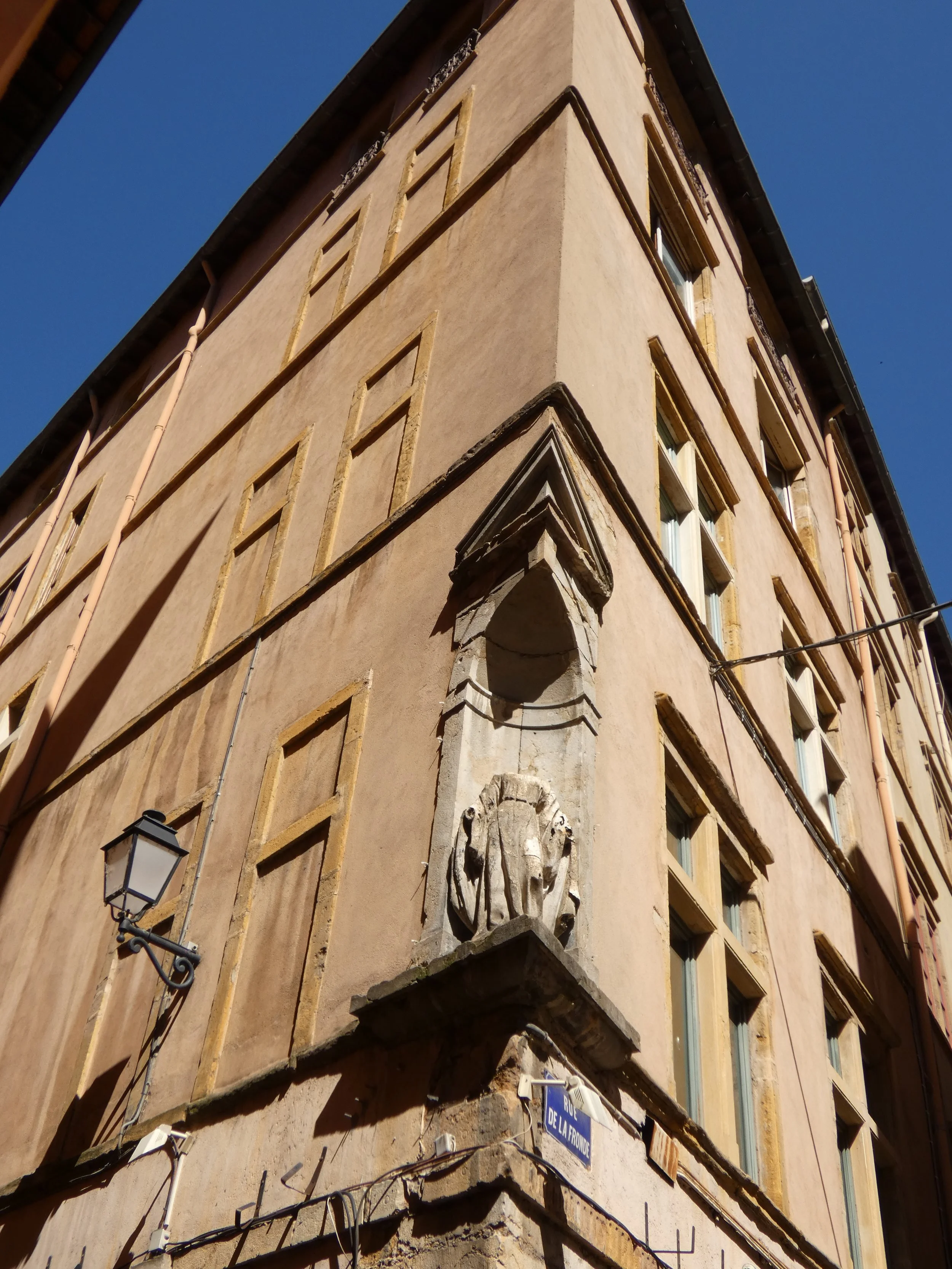
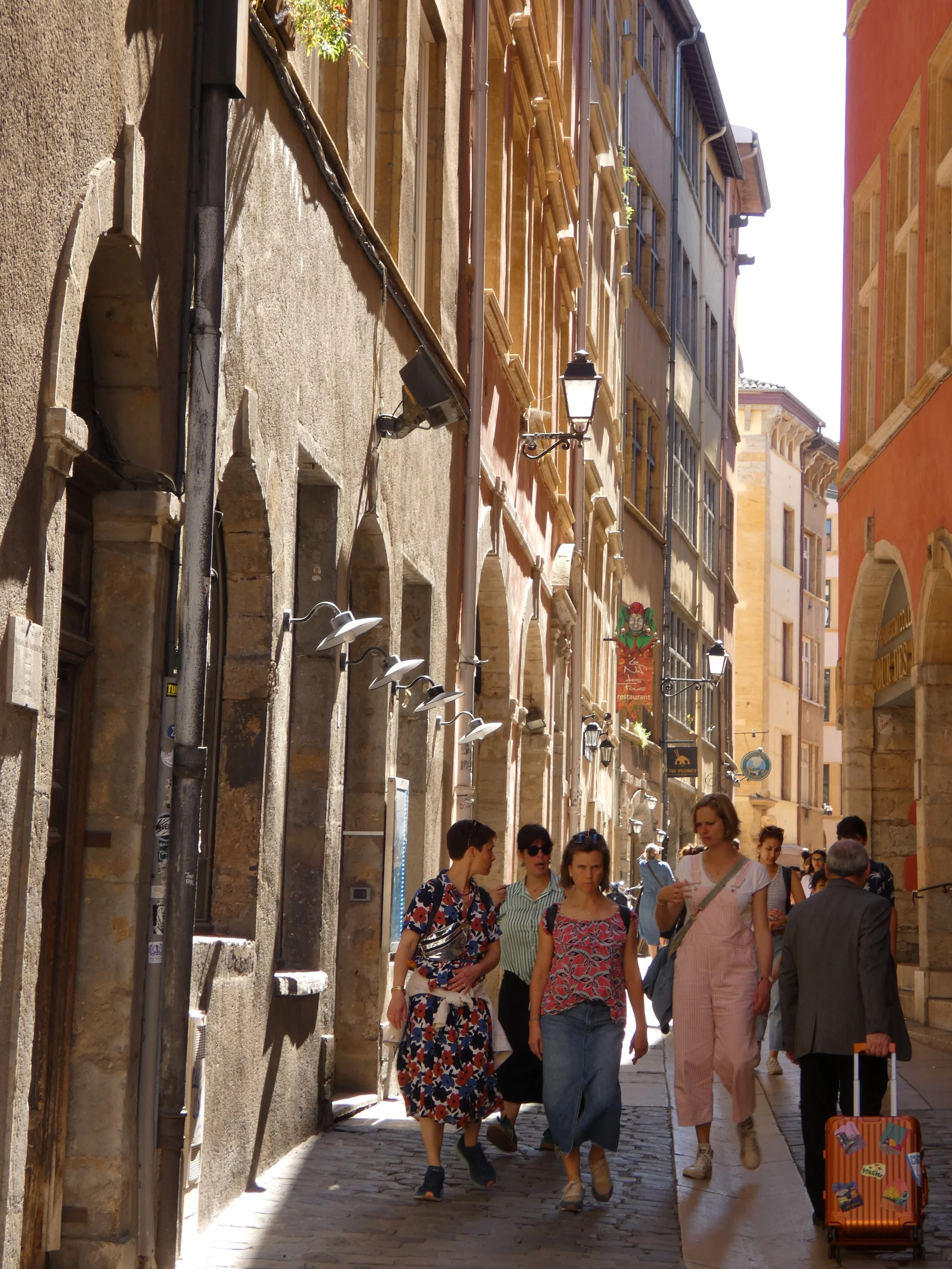
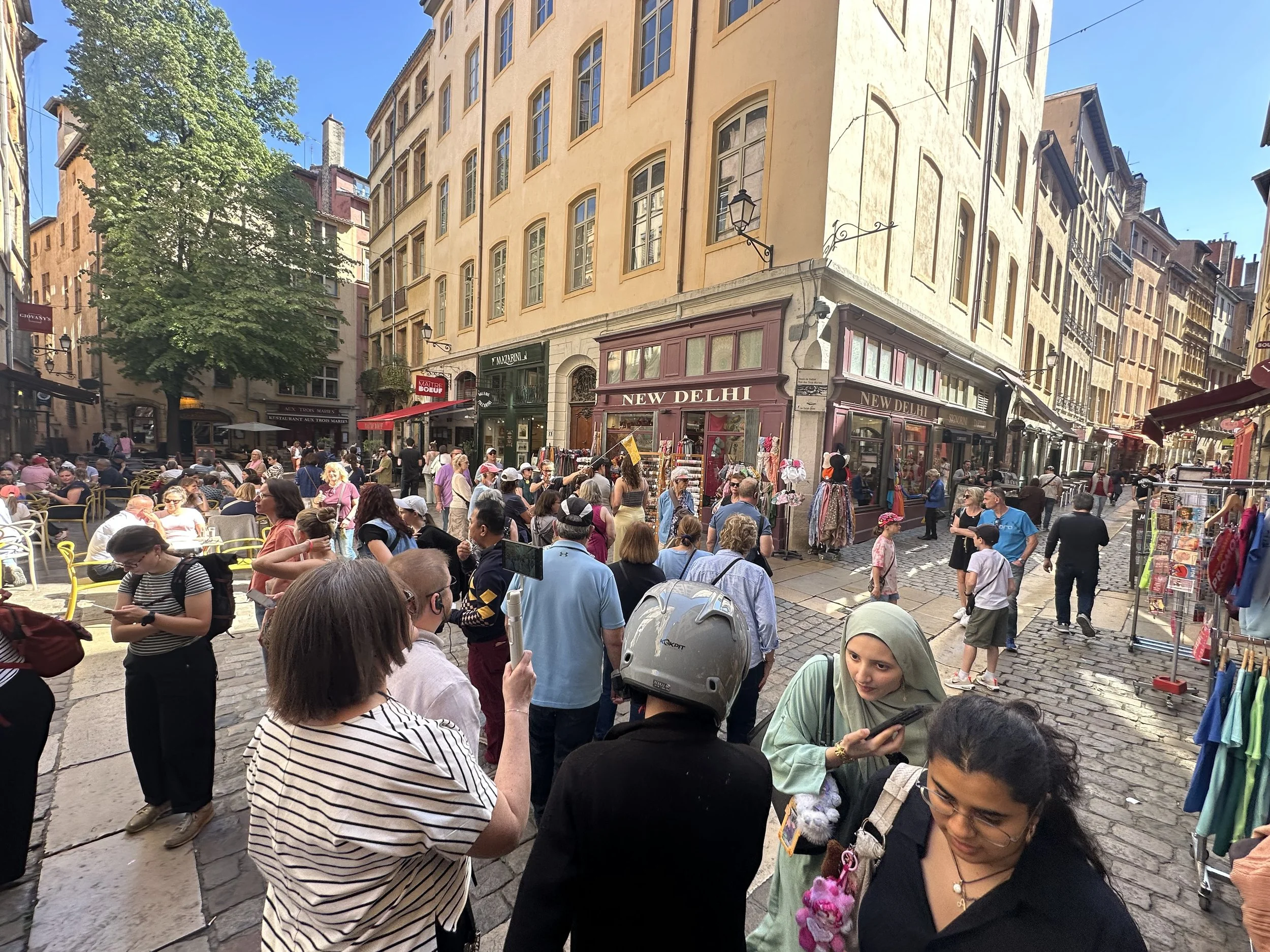
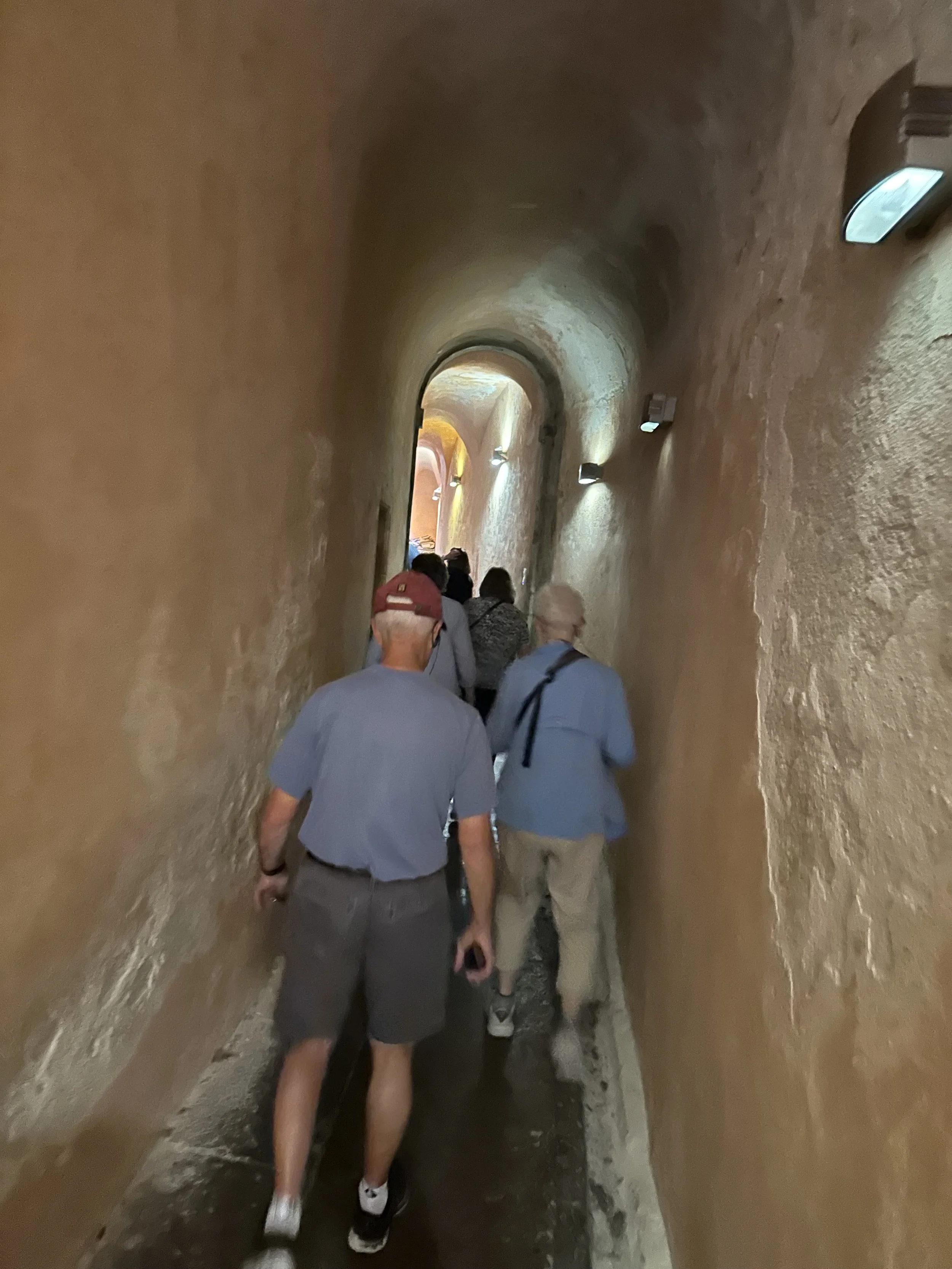
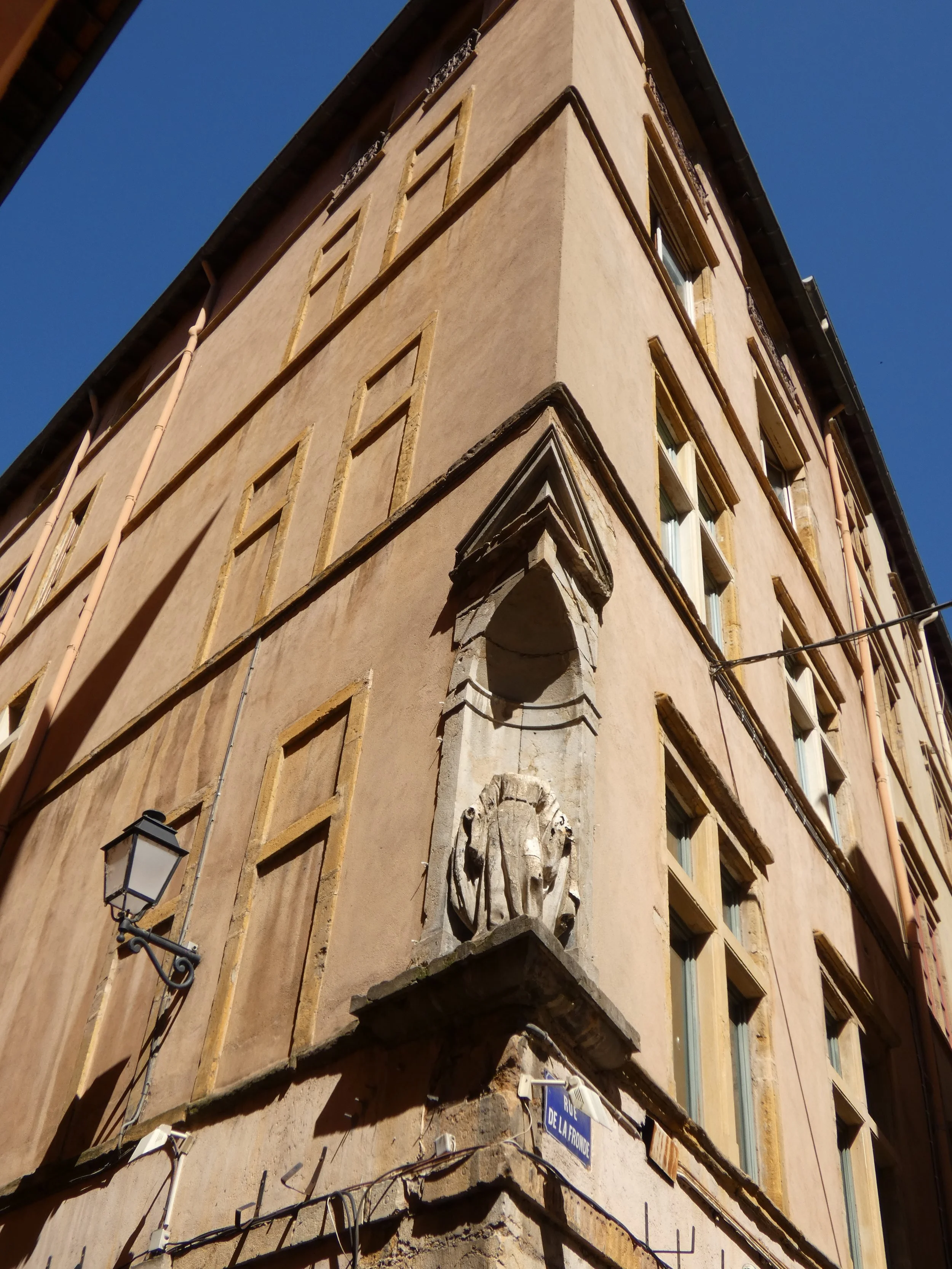
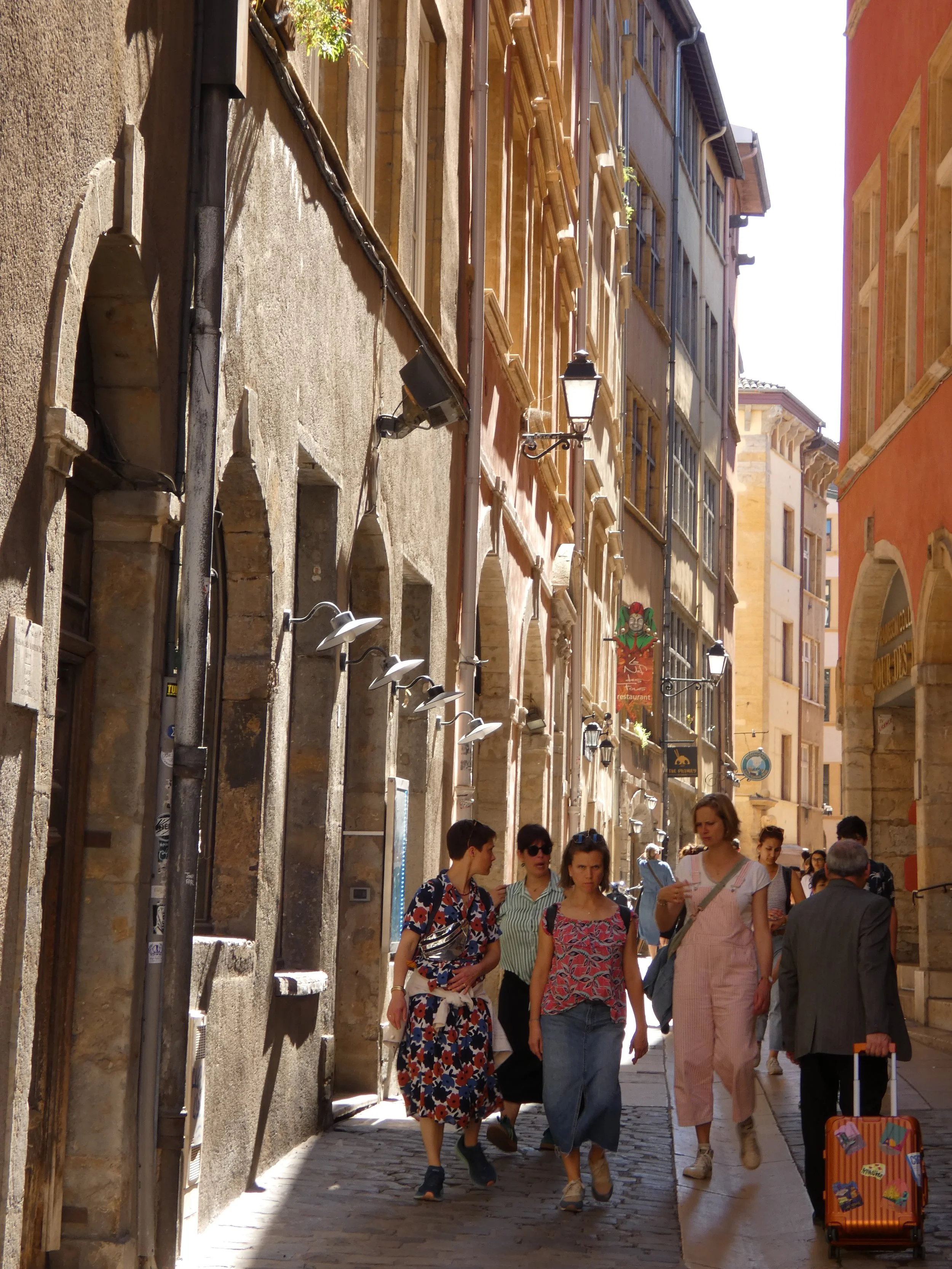
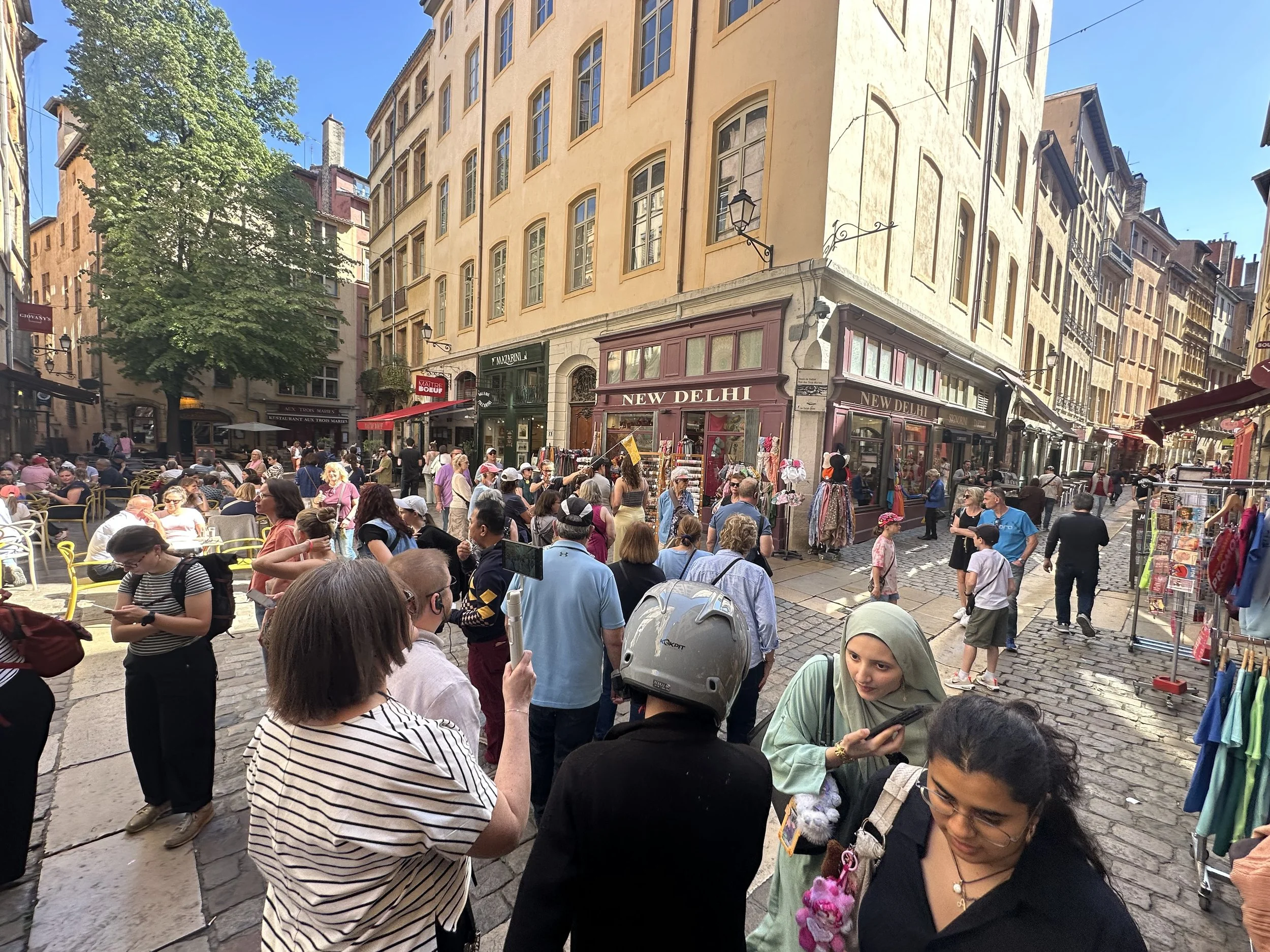
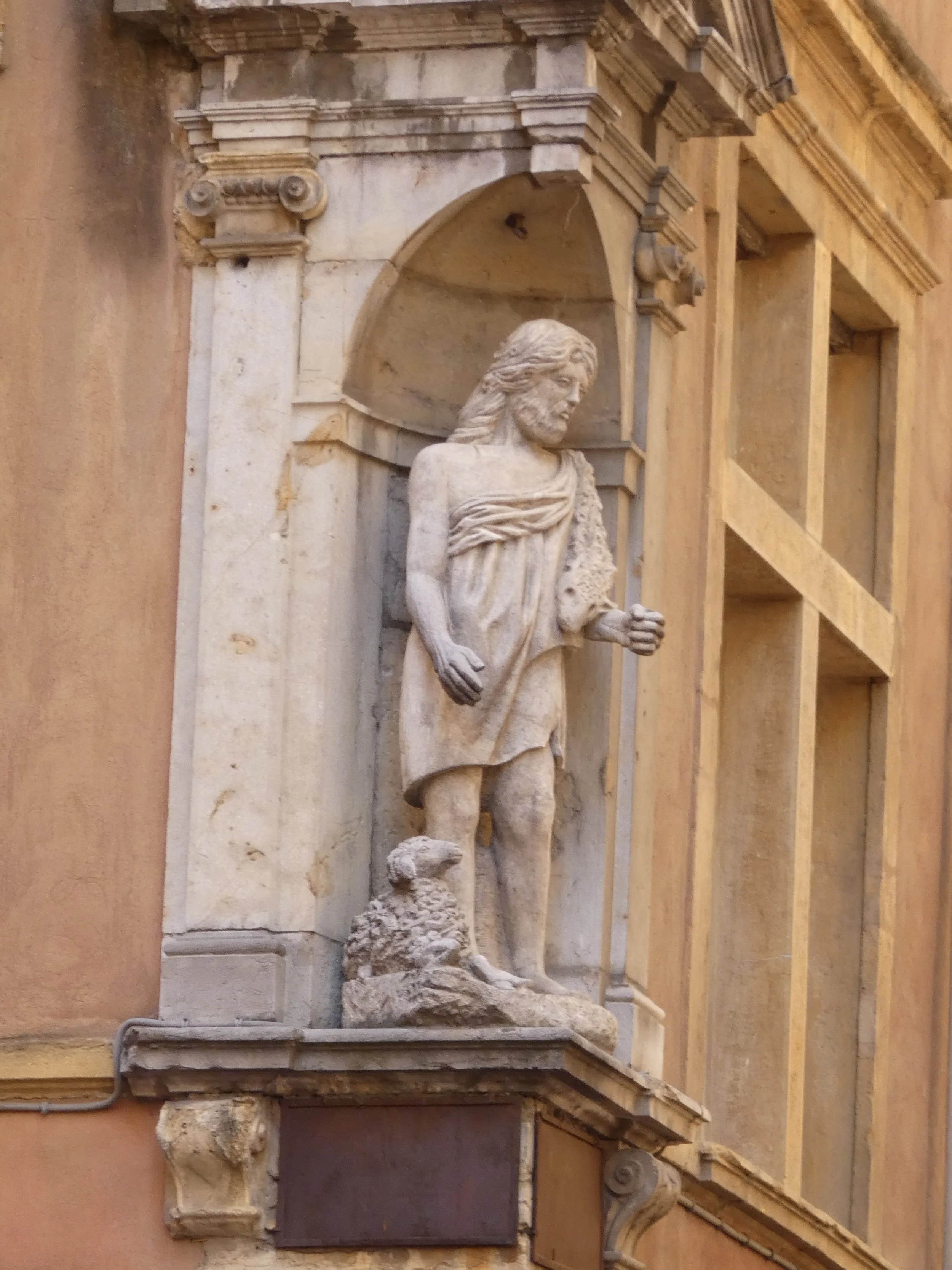
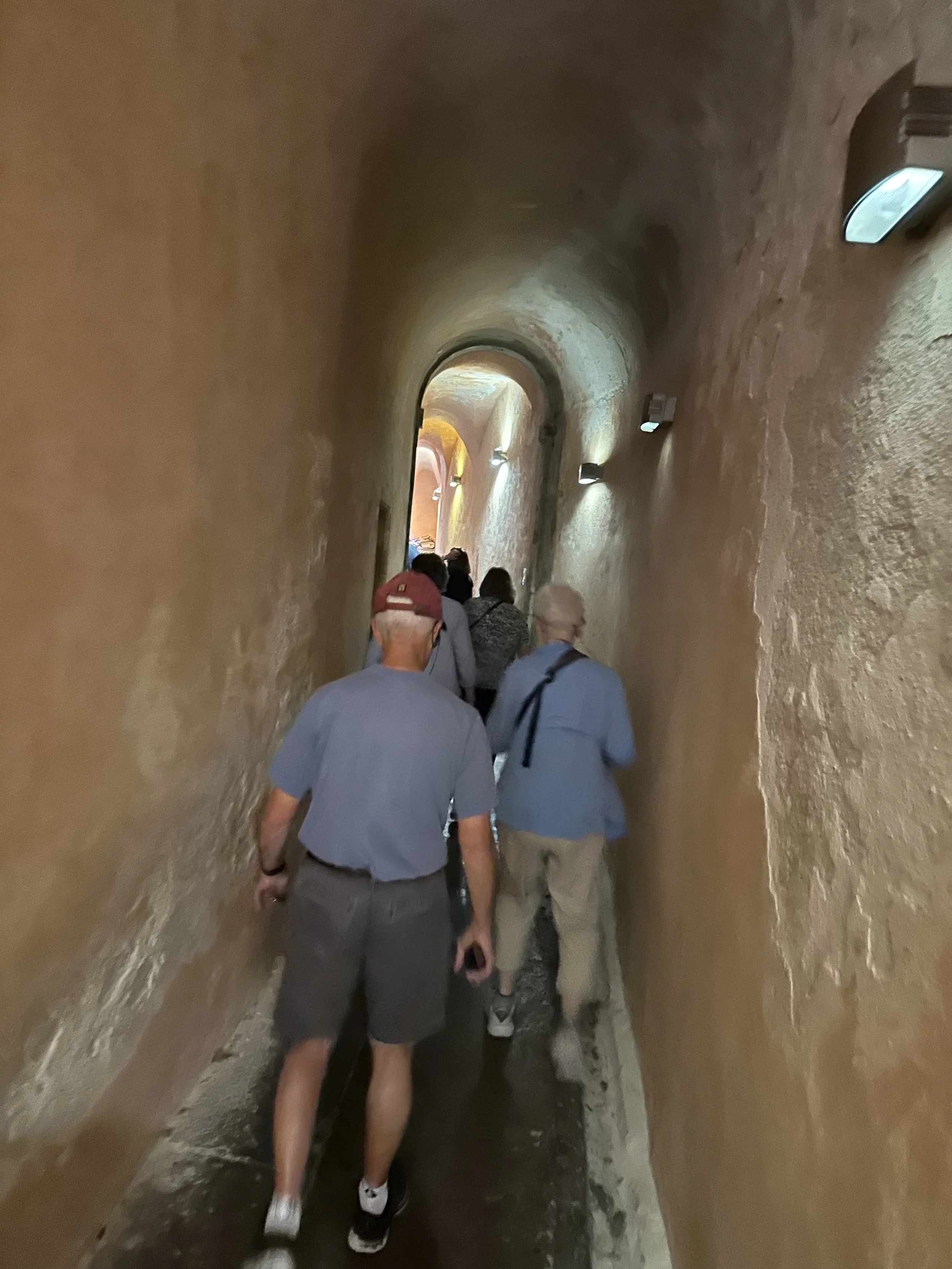
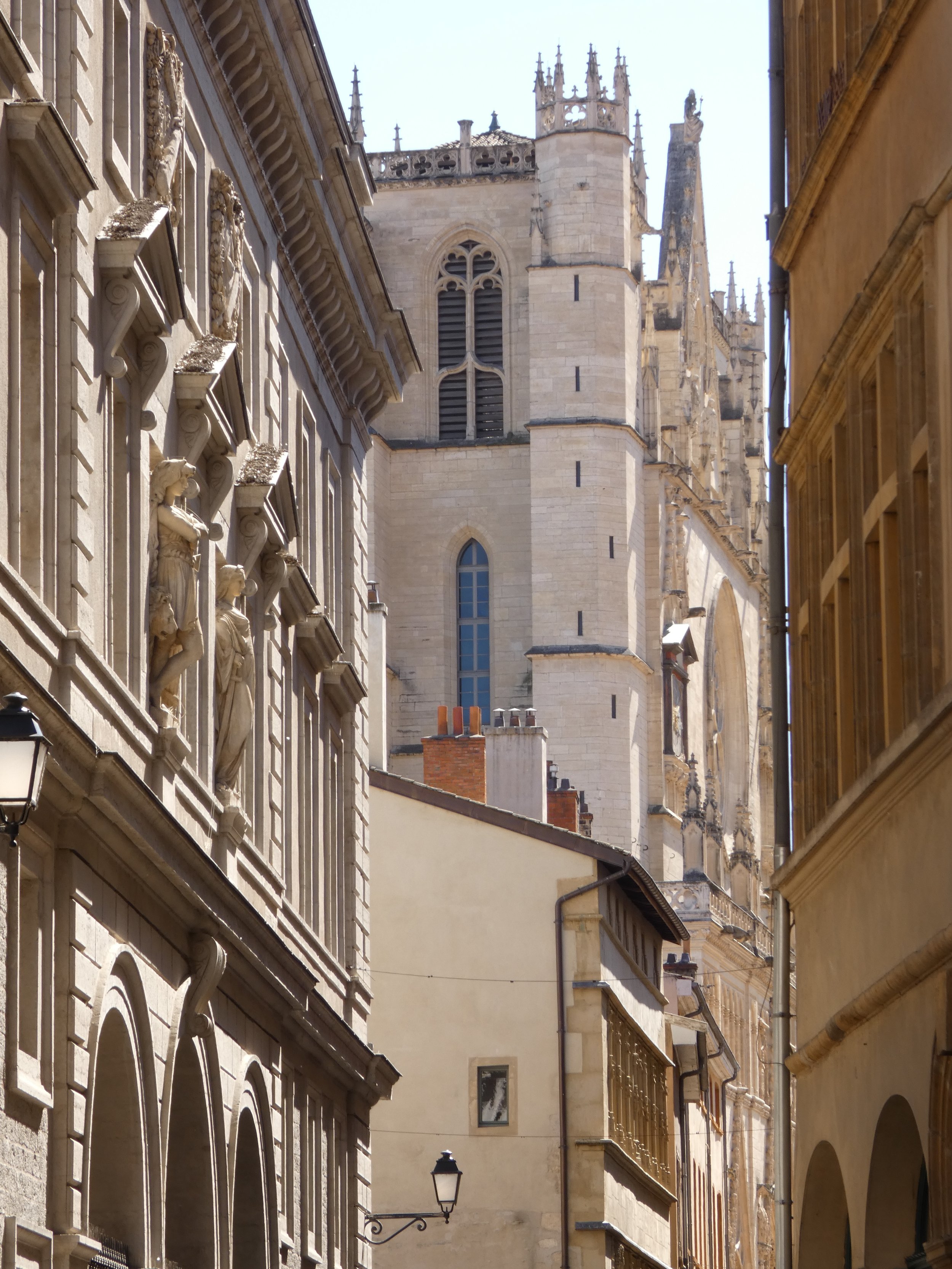
After that visit we descended Fourviére to the old town, which comprises three streets running along the Saone river. It is mostly a shopping experience now, medieval nonetheless.
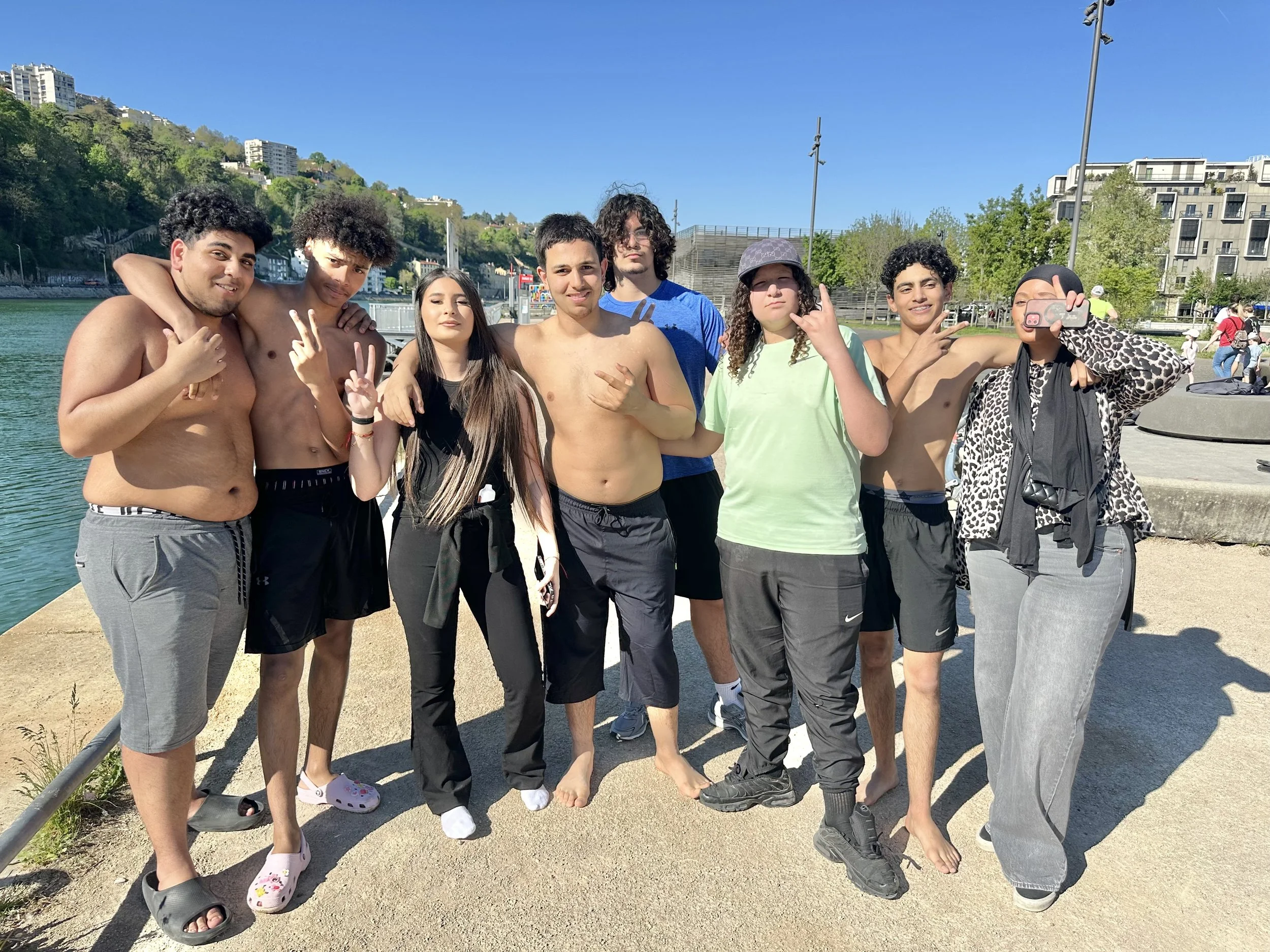
I walked back from Old Town to the ship (Judy took the bus). It was a nice walk along the river. Lots of people out enjoying the sunshine and unseasonably warm temperatures. About two miles in all. Just before reaching the ship I came across a bunch of kids, a few of whom were brave enough to jump the ten feet or more into the river. I stopped, hoping to get a shot of one going over the side, but no luck. Instead, they asked me to take their picture, which I did and airdropped the result to one of the gals. They didn’t speak much English, but we had a blast together anyway.
We had dinner with some interesting people and listened to a jazz trio in the lounge – guitarist, bassist and a scat-style singer who could sing ballads and mimic a trumpet with great accuracy.
Tomorrow we sail to Vivier for more adventures, I’m sure.