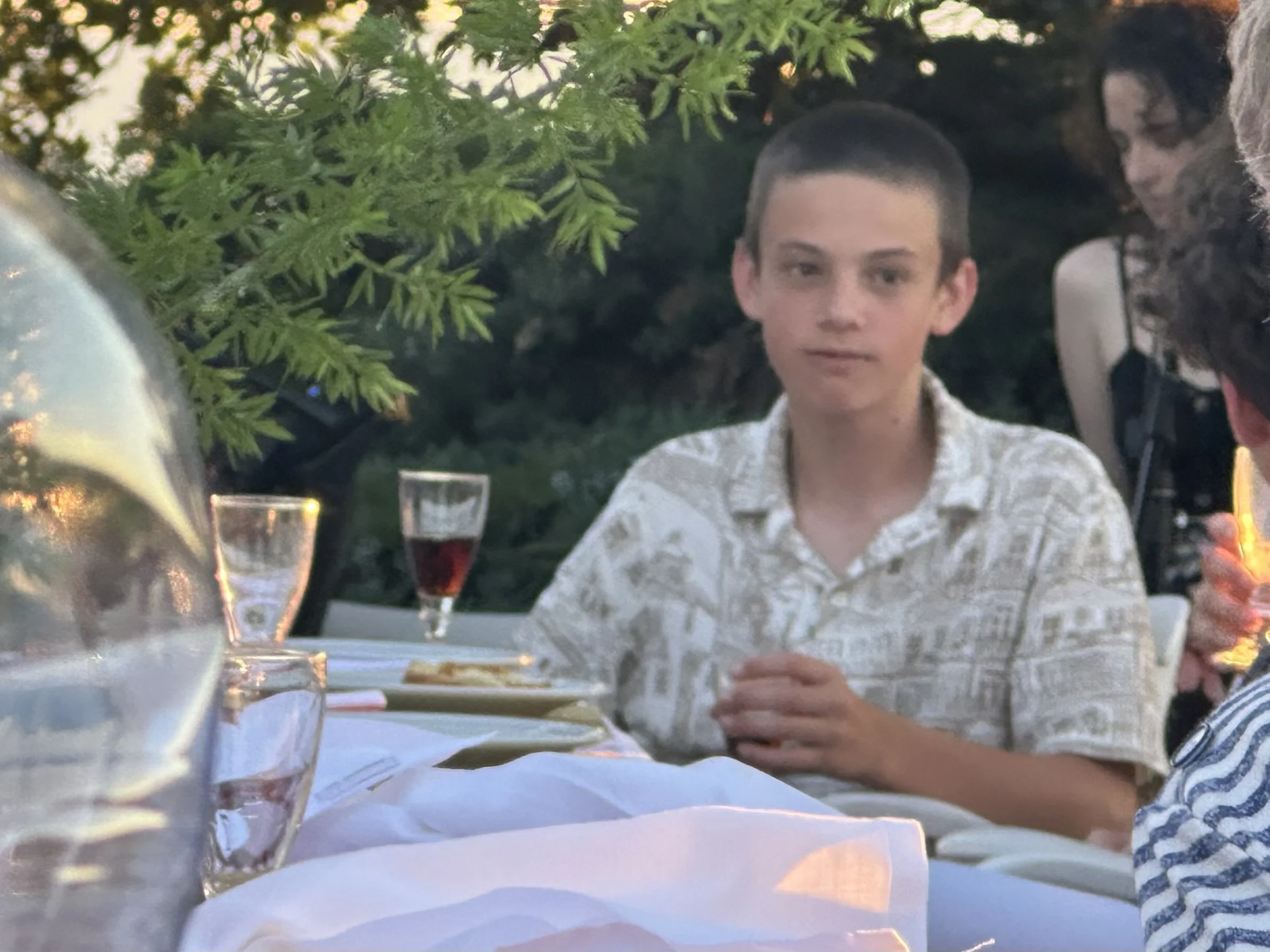
Griffin in Vinci, Italy Day 7, July 3, 2026
We had a lazy morning - reporting to the bus at 10 AM - but managed to pack in a full, fun day of activities.
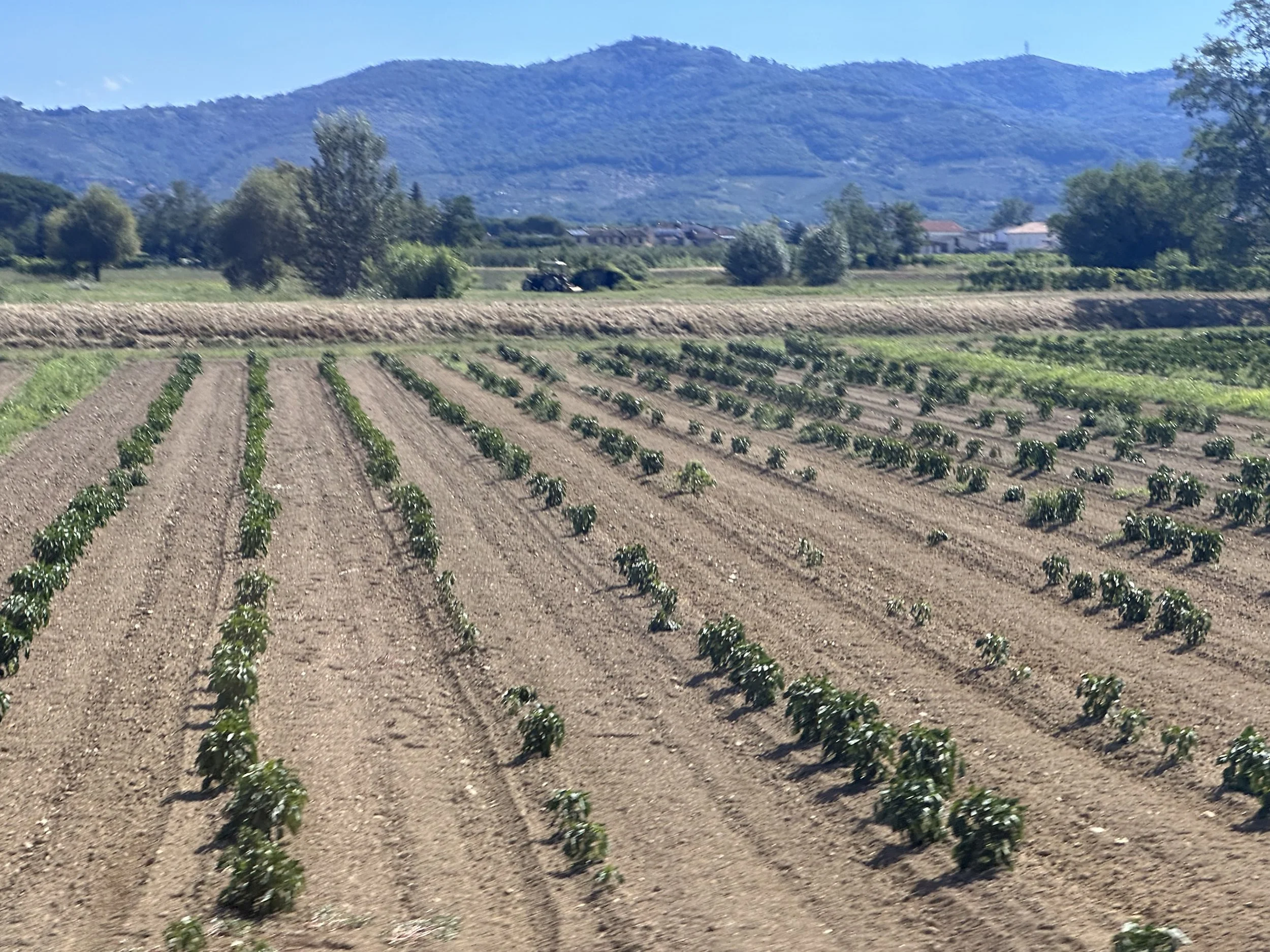
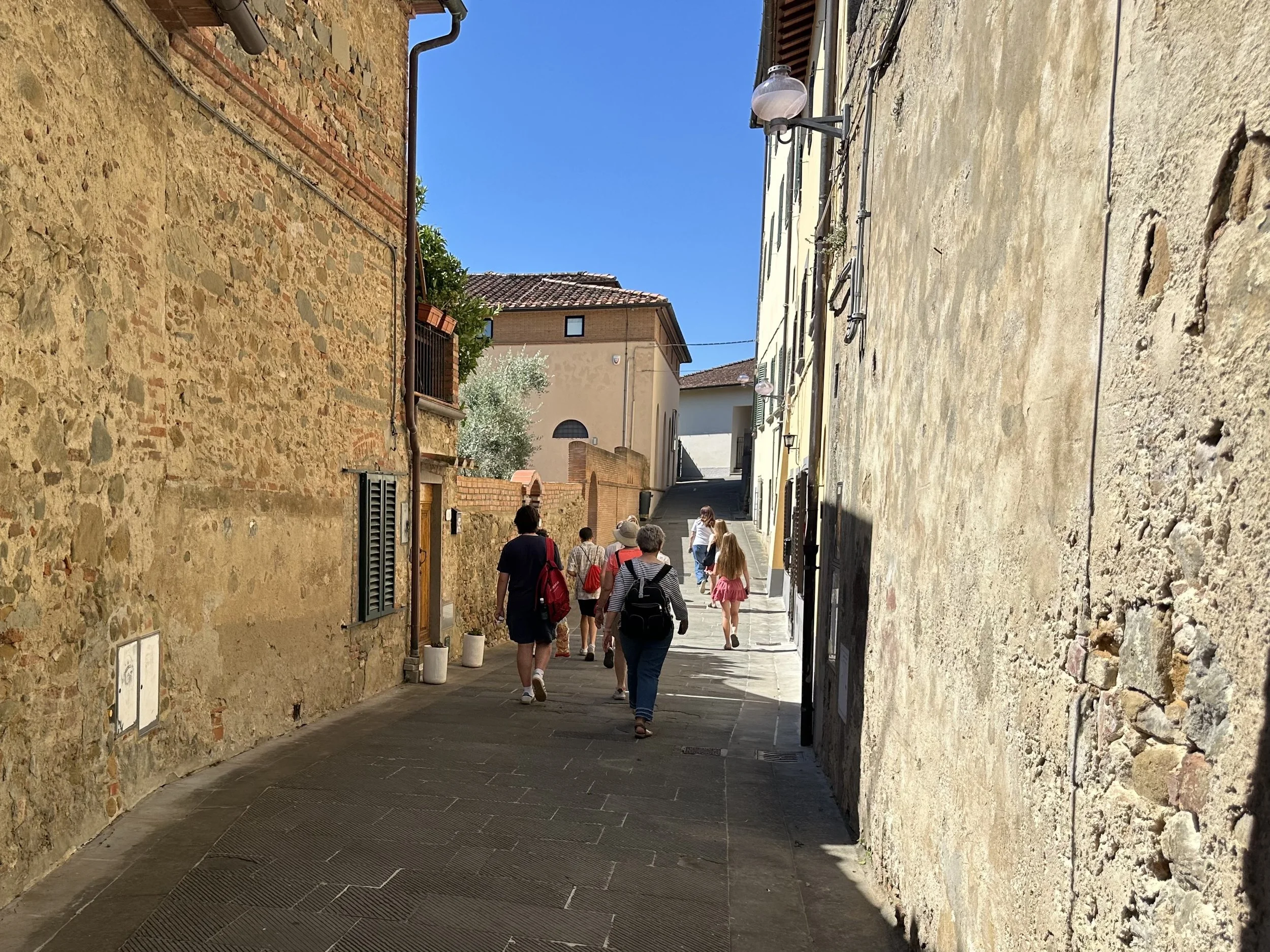
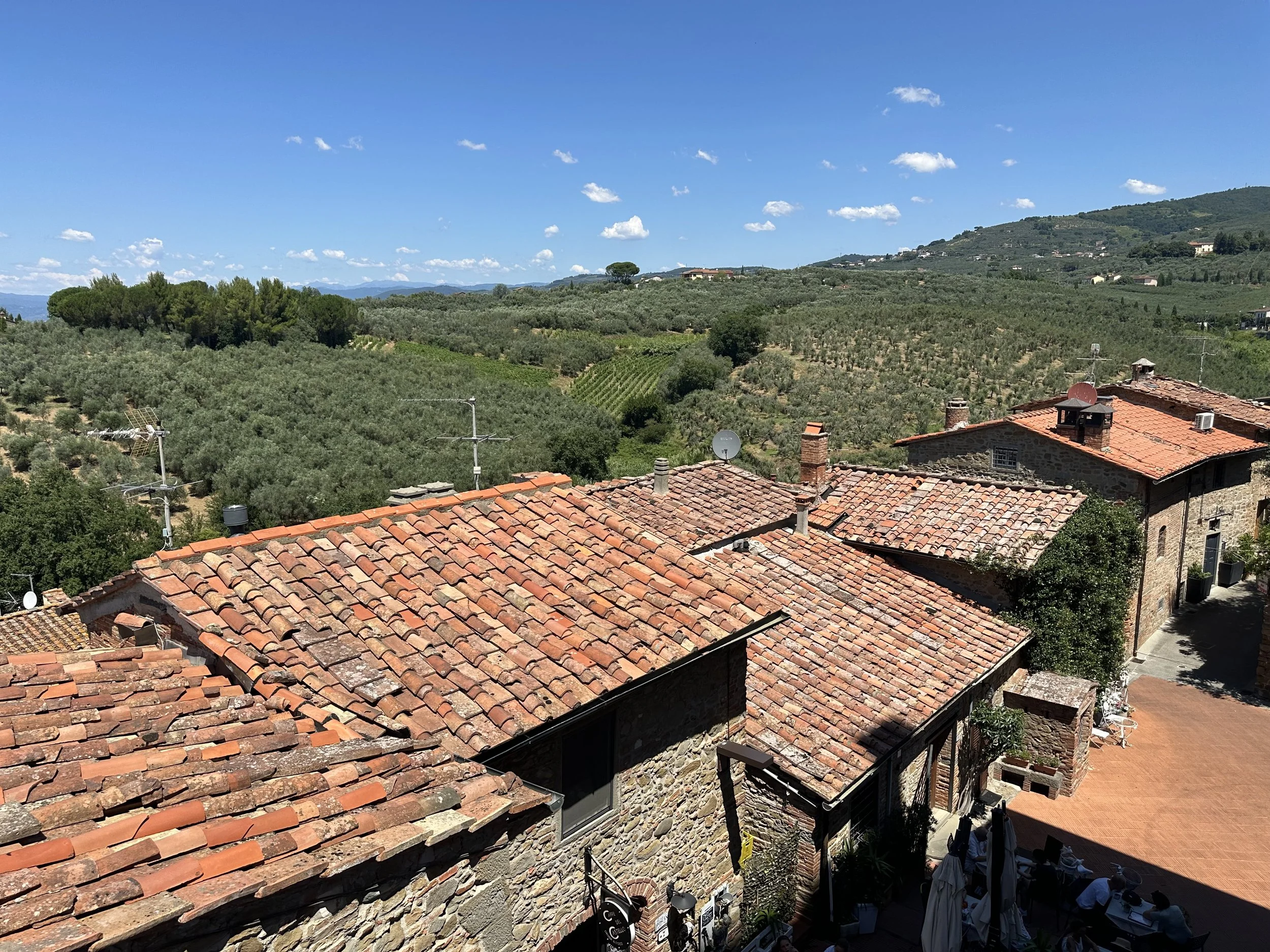
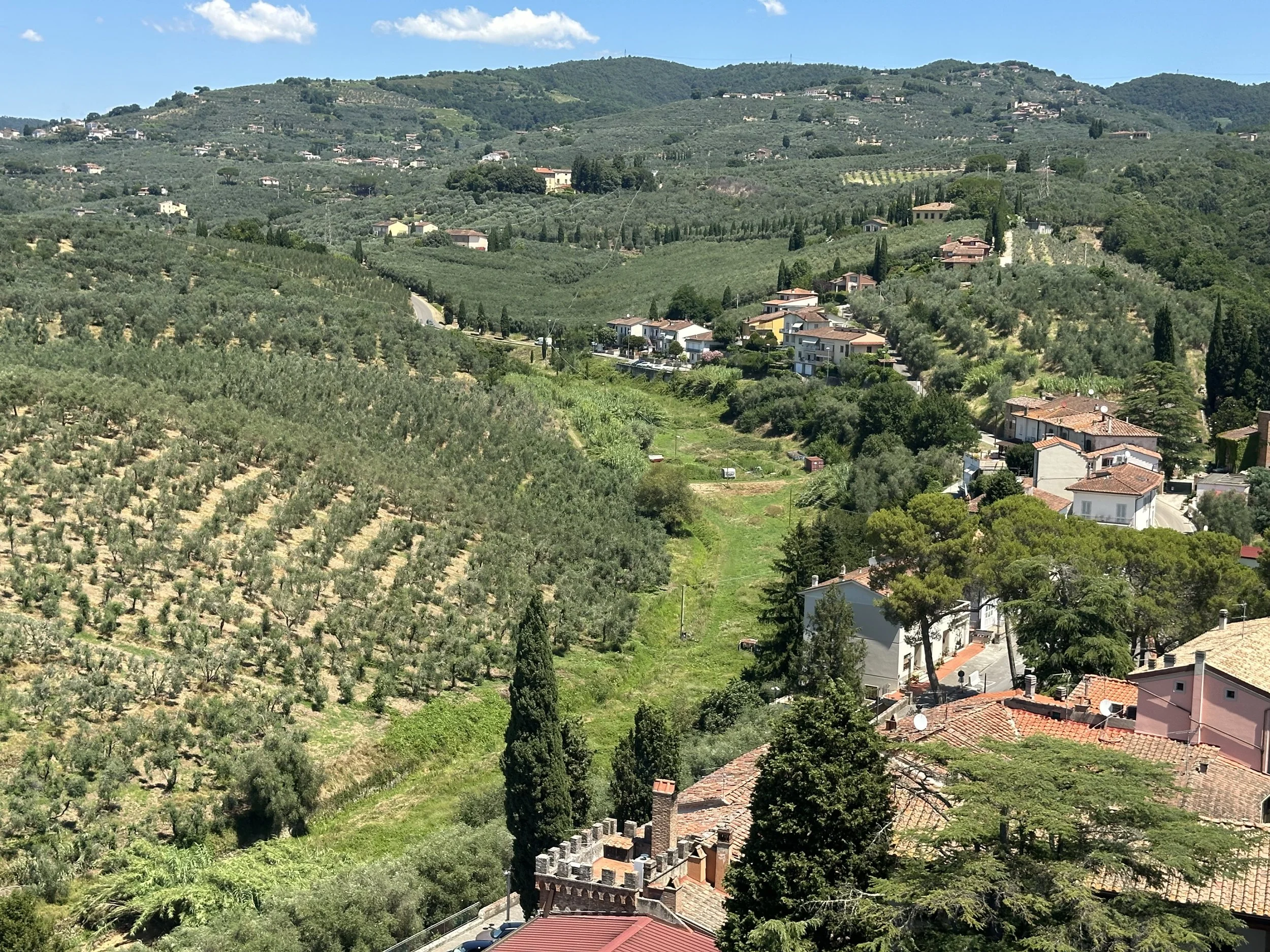
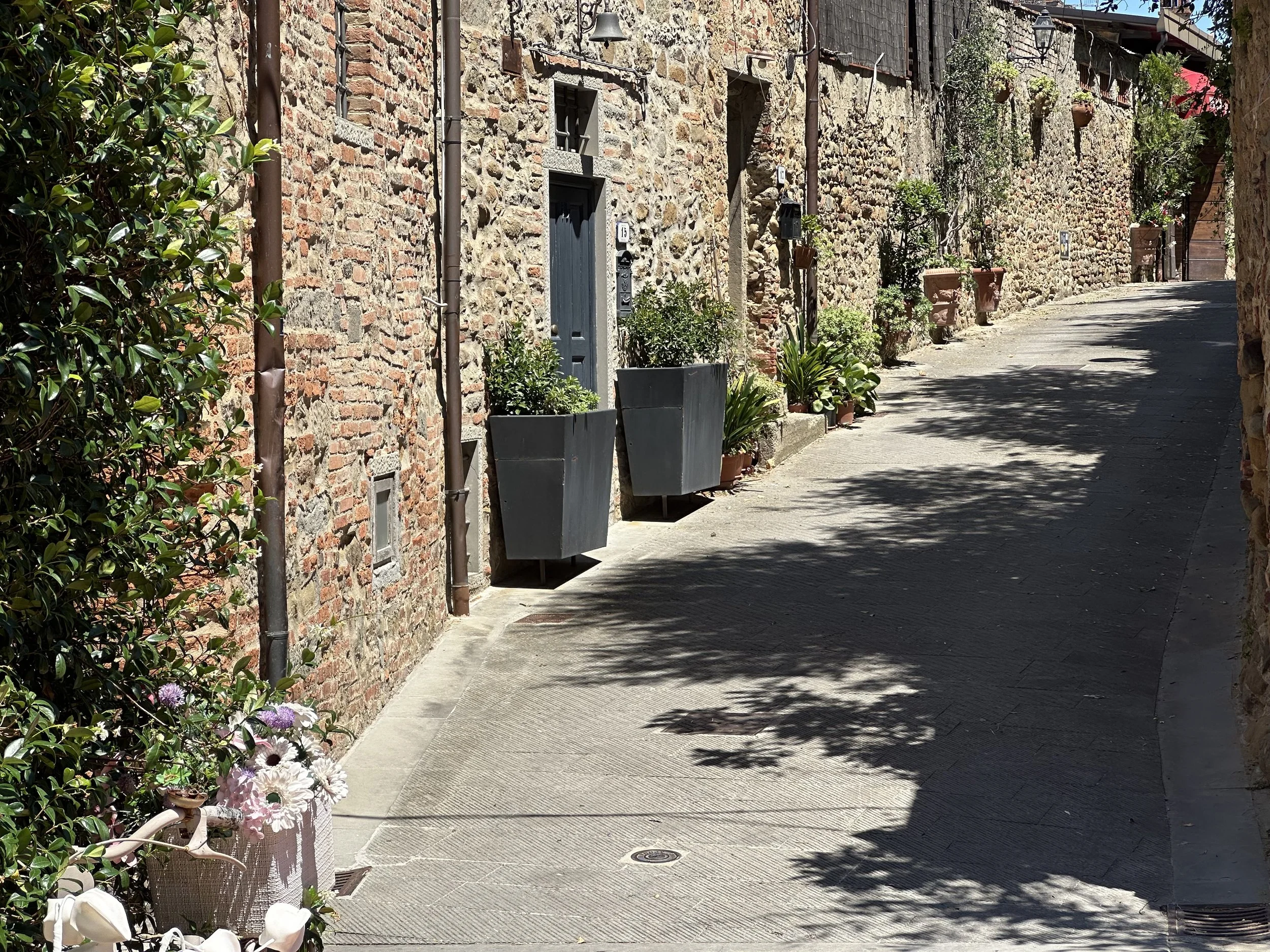
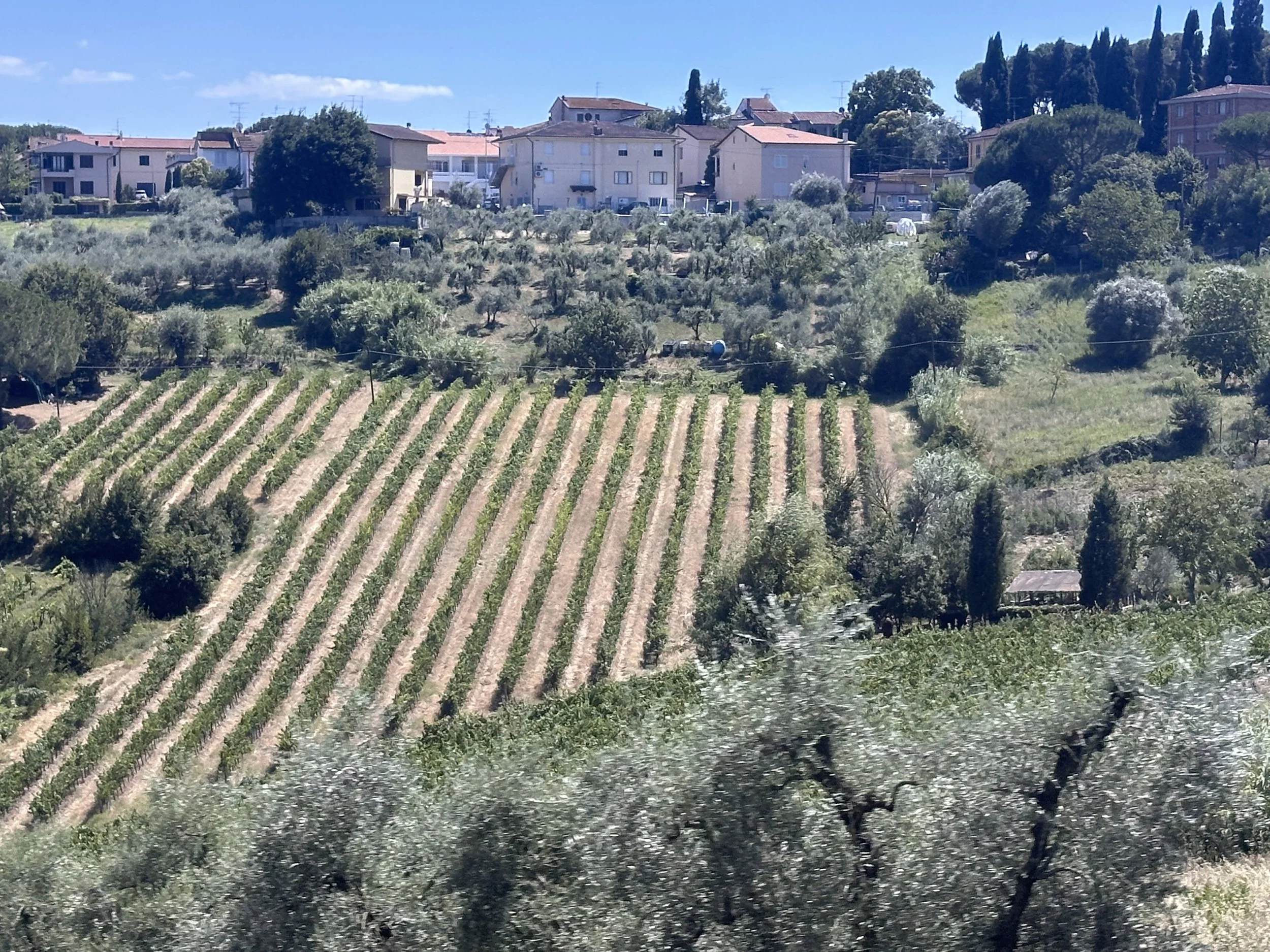
The drive to Vinci is about 45 minutes east and south of Montecatini, passing through countryside and small towns along the way. Lots of vineyards and olive groves with the occasional field of sunflowers being raised for their oil.
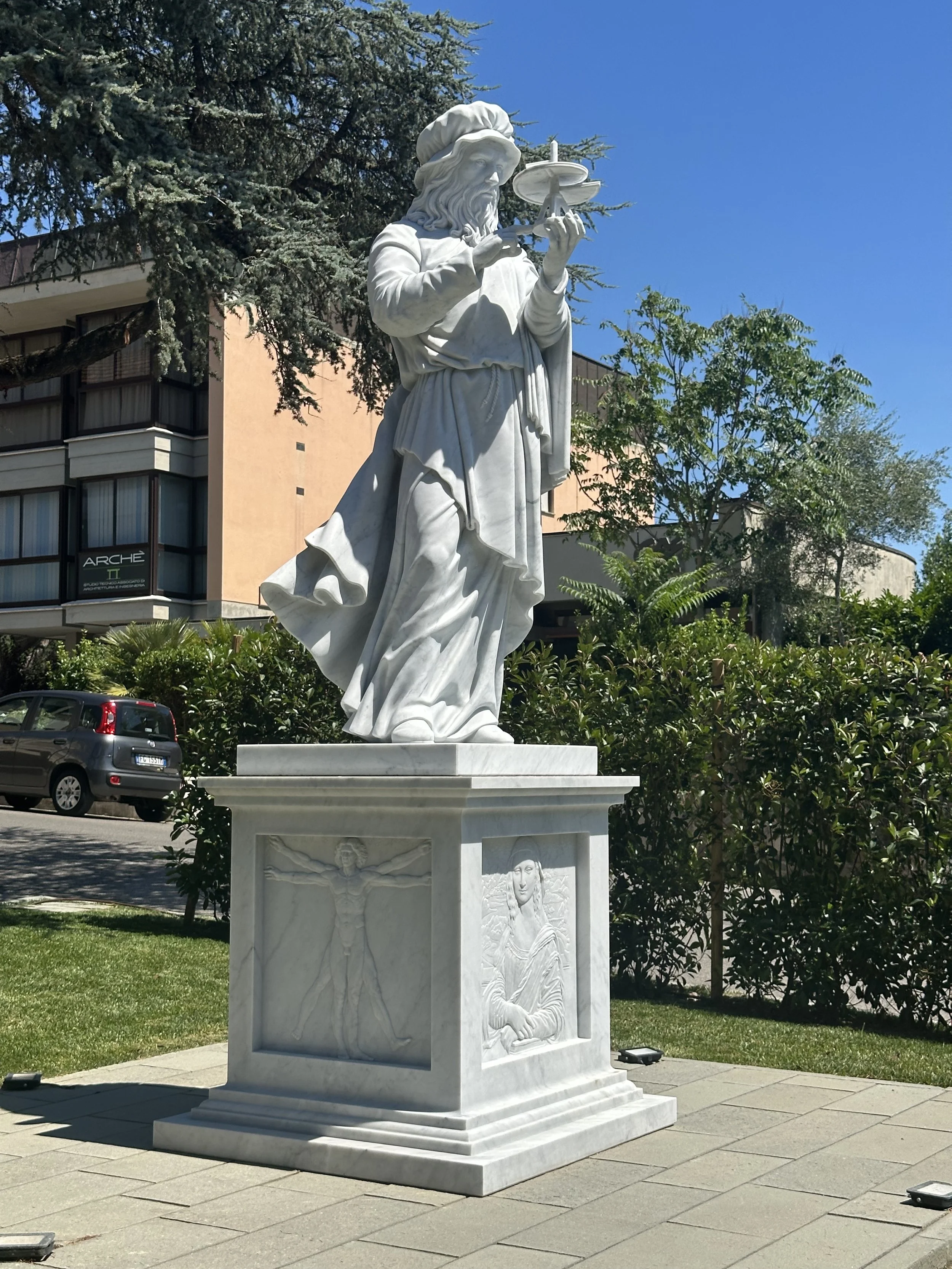
Vinci is the home of Leonardo da Vinci, so called because he was born out of wedlock (a magistrate and a farm girl) and could therefore not take his father’s name. Only much later did his grandfather recognize his lineage and have him baptized in the local church. We’re talking a lifespan of 1452 - 1519, a contemporary of Michaelangelo and smack dab in the beginnings of the Age of Reformation. Lorenzo Medici - Lorenzo the Magnificent (1449 - 2492),, the de facto ruler of Florence, was his benefactor.
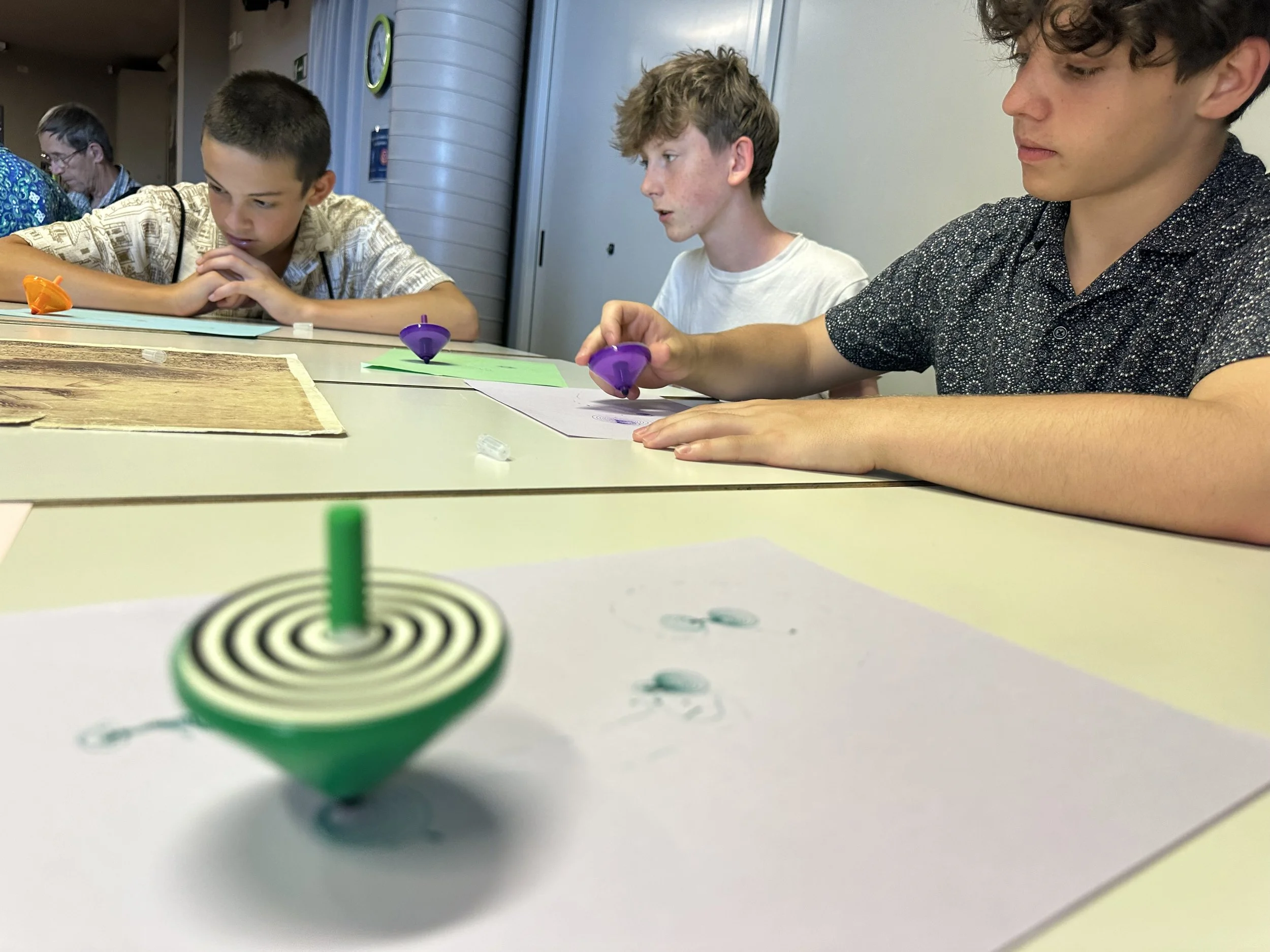
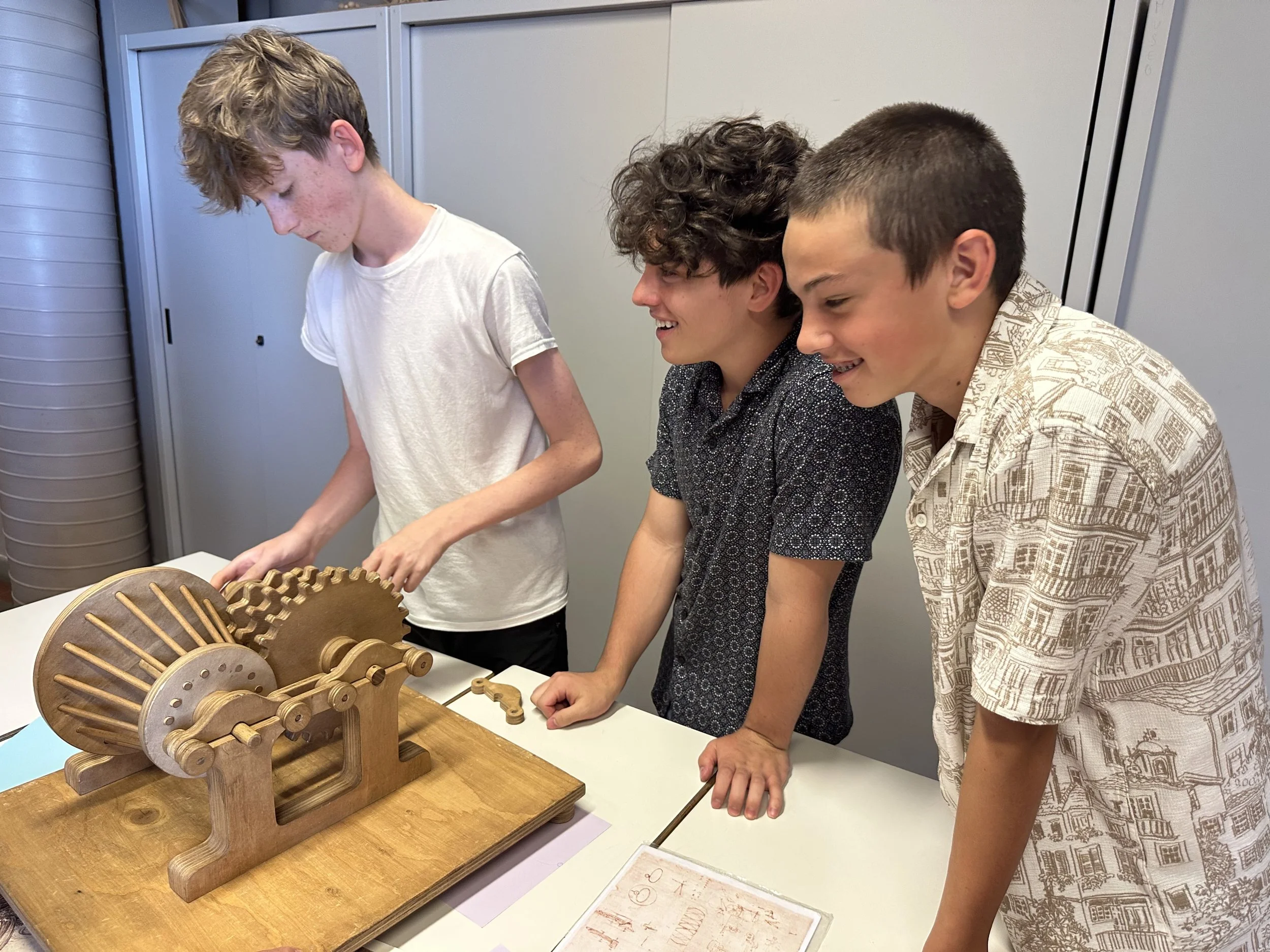
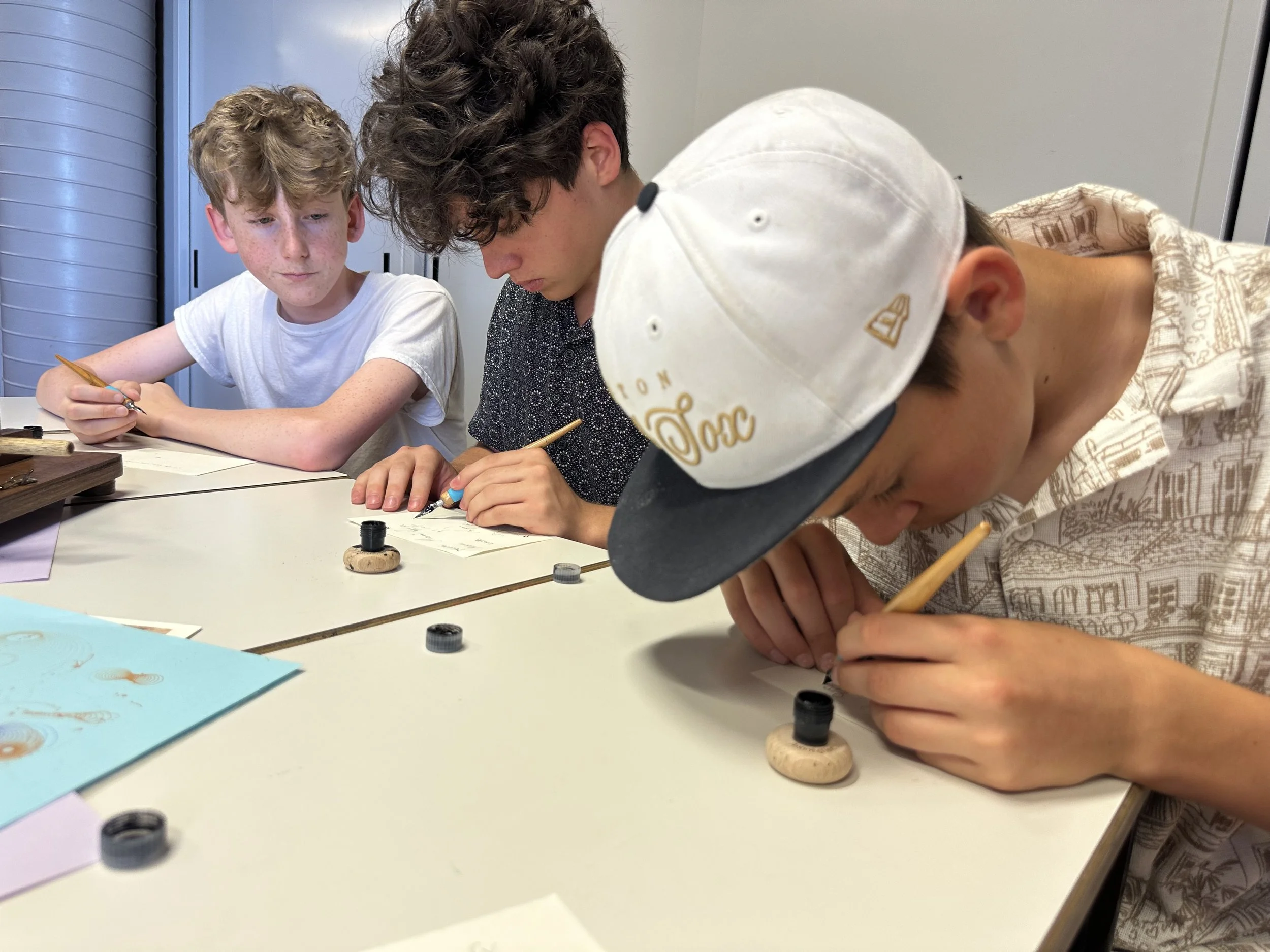
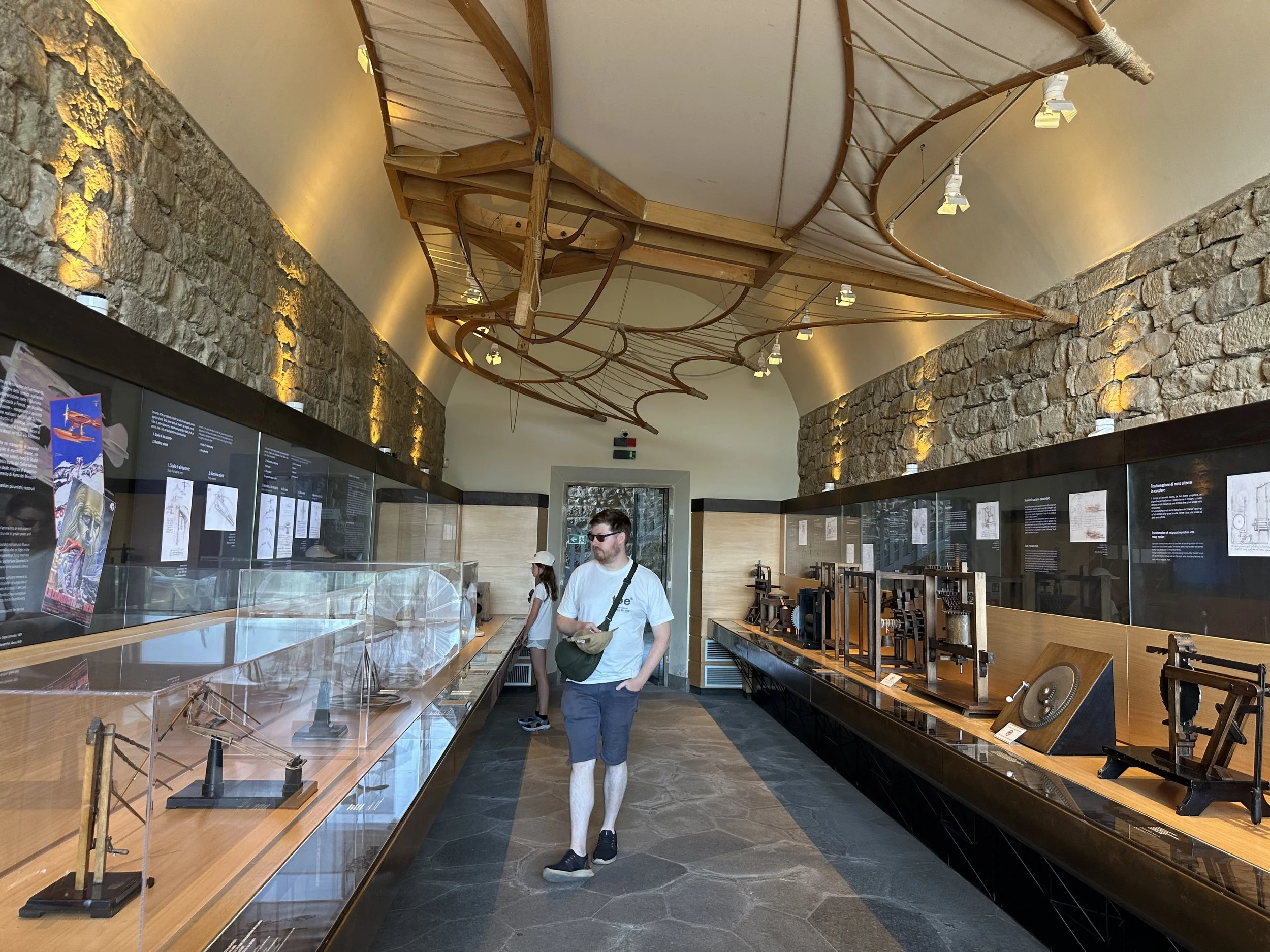
Leonardo was an artist (the Mona Lisa guy), a sculptor, a scientist and an engineer. We visited a museum housing inventions that he described on paper and that have been created to illustrate his ideas. We spent time with museum staff who gave us experiments that demonstrated the concept of a spiral (key to many inventions). There were a series of inventions that the kids had to assemble from Leonardo’s 500 year-old sketches. And they had a chance to write backwards from right to left, as Leonardo did. Why did he write backwards? Because he was left handed and could avoid smudging his writing with quill and ink that would happen if he wrote the normal way.
The museum showed a number of ways Leonardo employed a gear system to solve a problem: move things laterally or up and down, convert circular motion to linear motion and use gears to exert forces greater than what a person could do without the gears (think a 10-speed bike).
That points out in my mind the difference between a scientist and engineer. A scientist studies a subject to figure out how the world works. Dissecting a human body, which Leonardo did as did other artists including Michaelangelo, is an example of scientific discovery. Engineers take scientific principles and apply them to solve a problem. Leonardo did both.
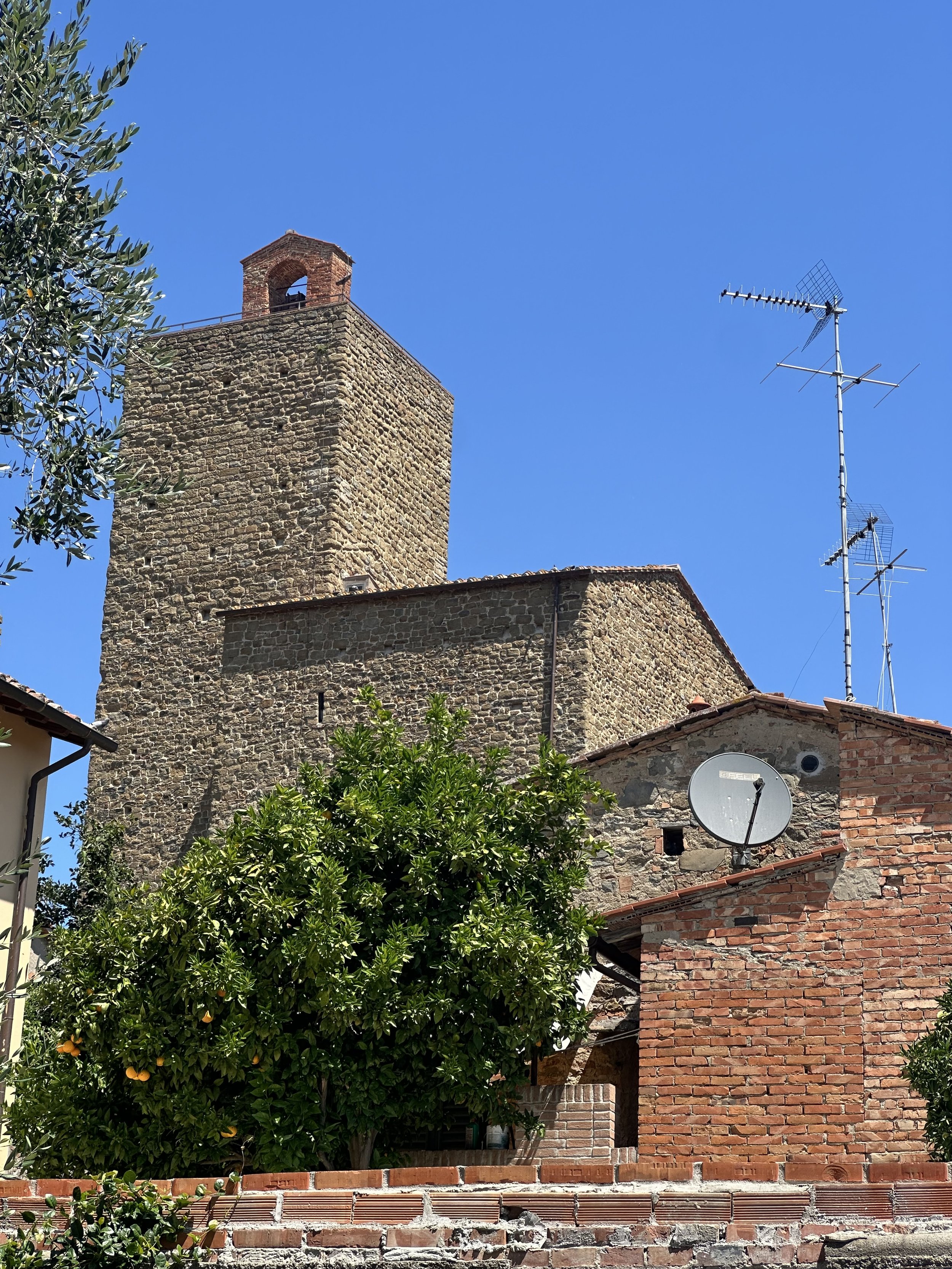
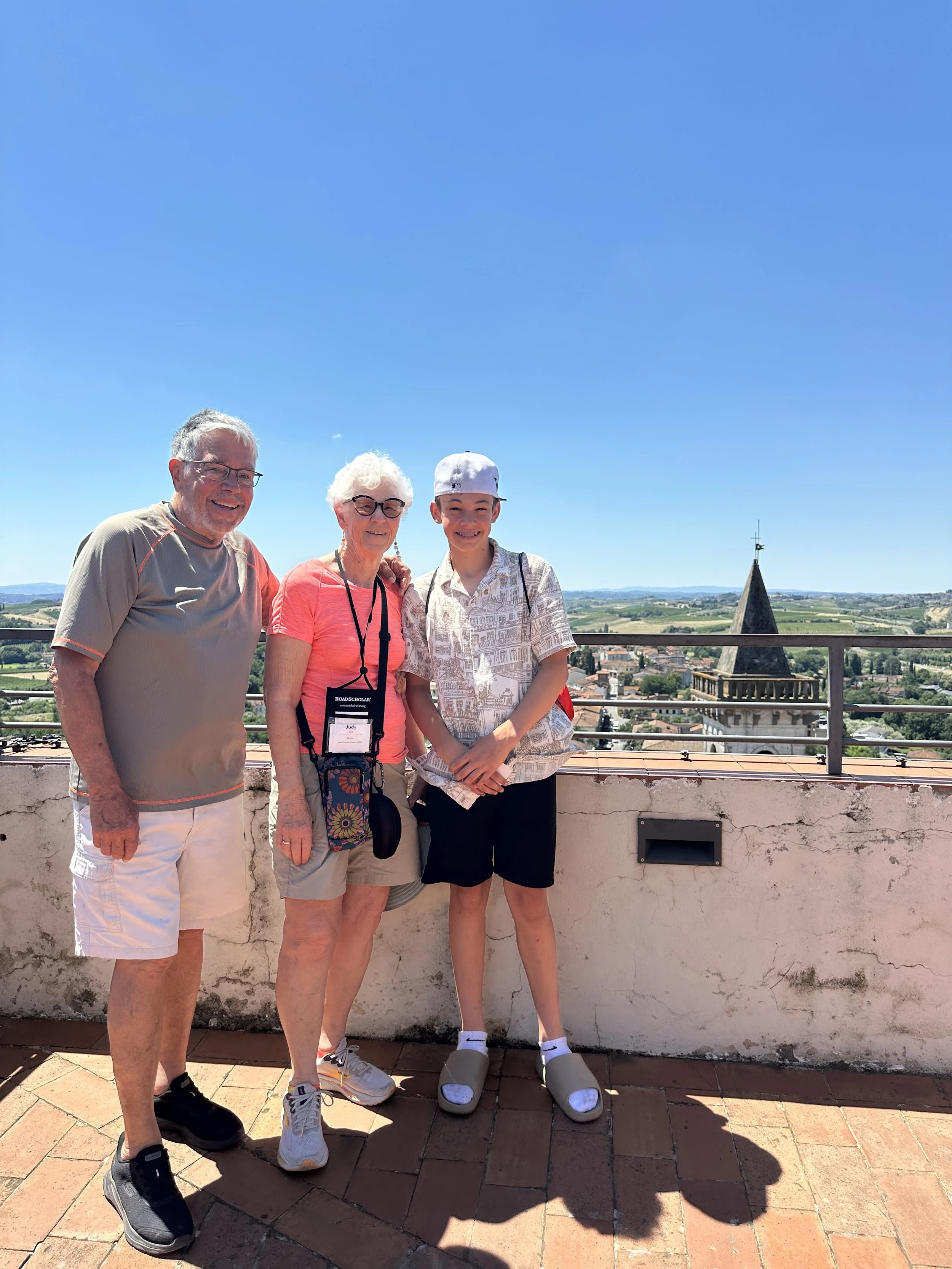
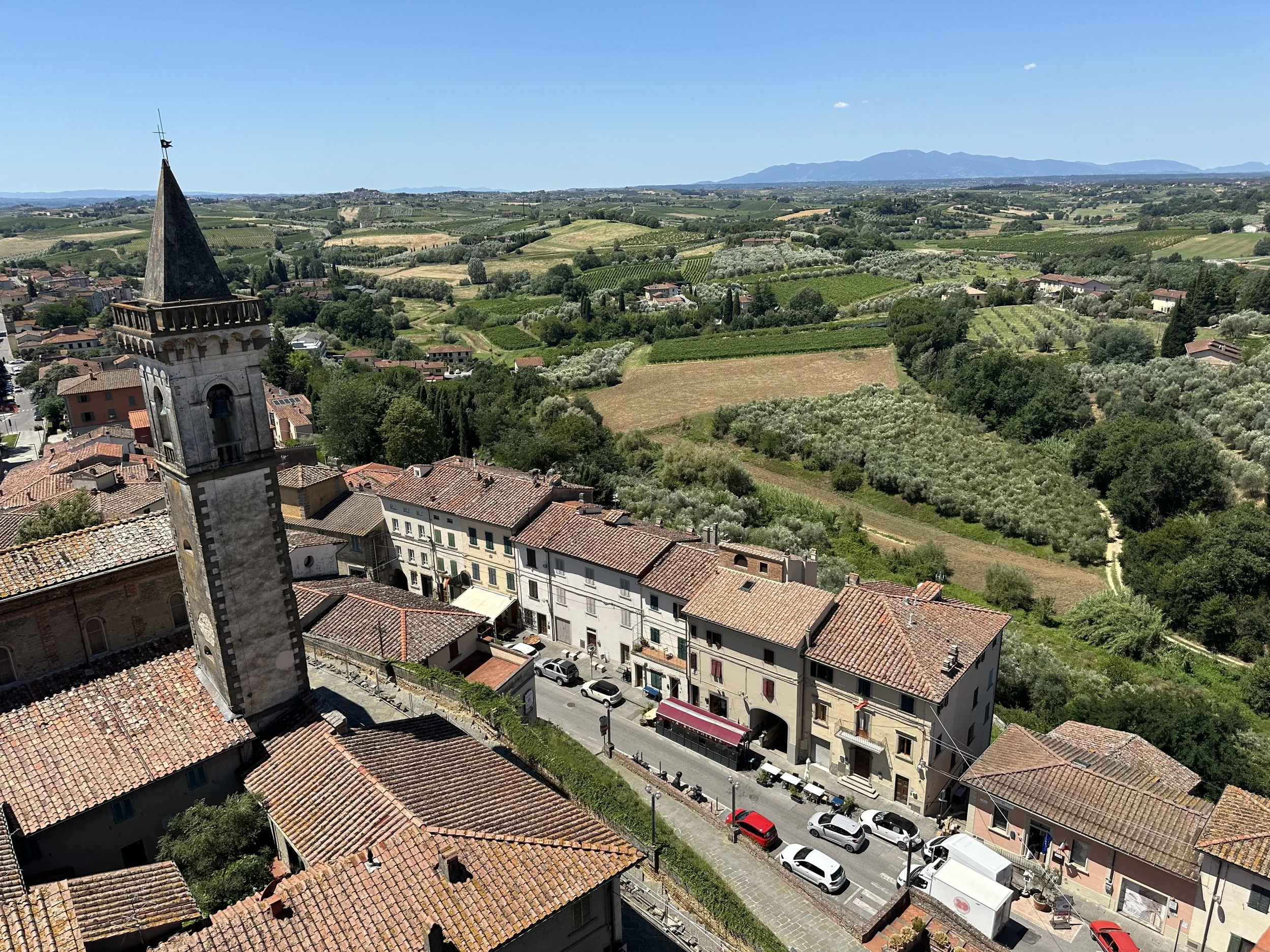
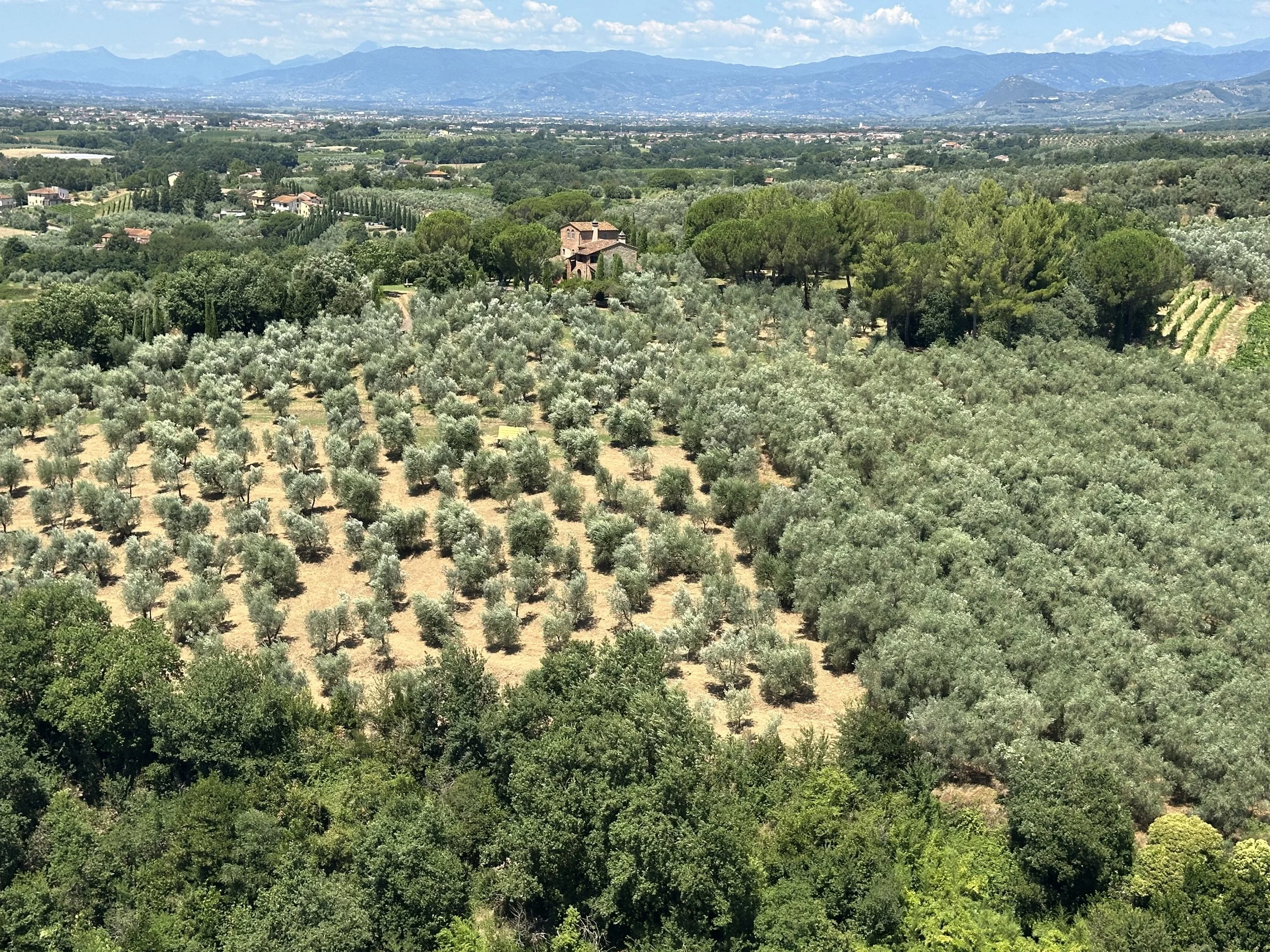
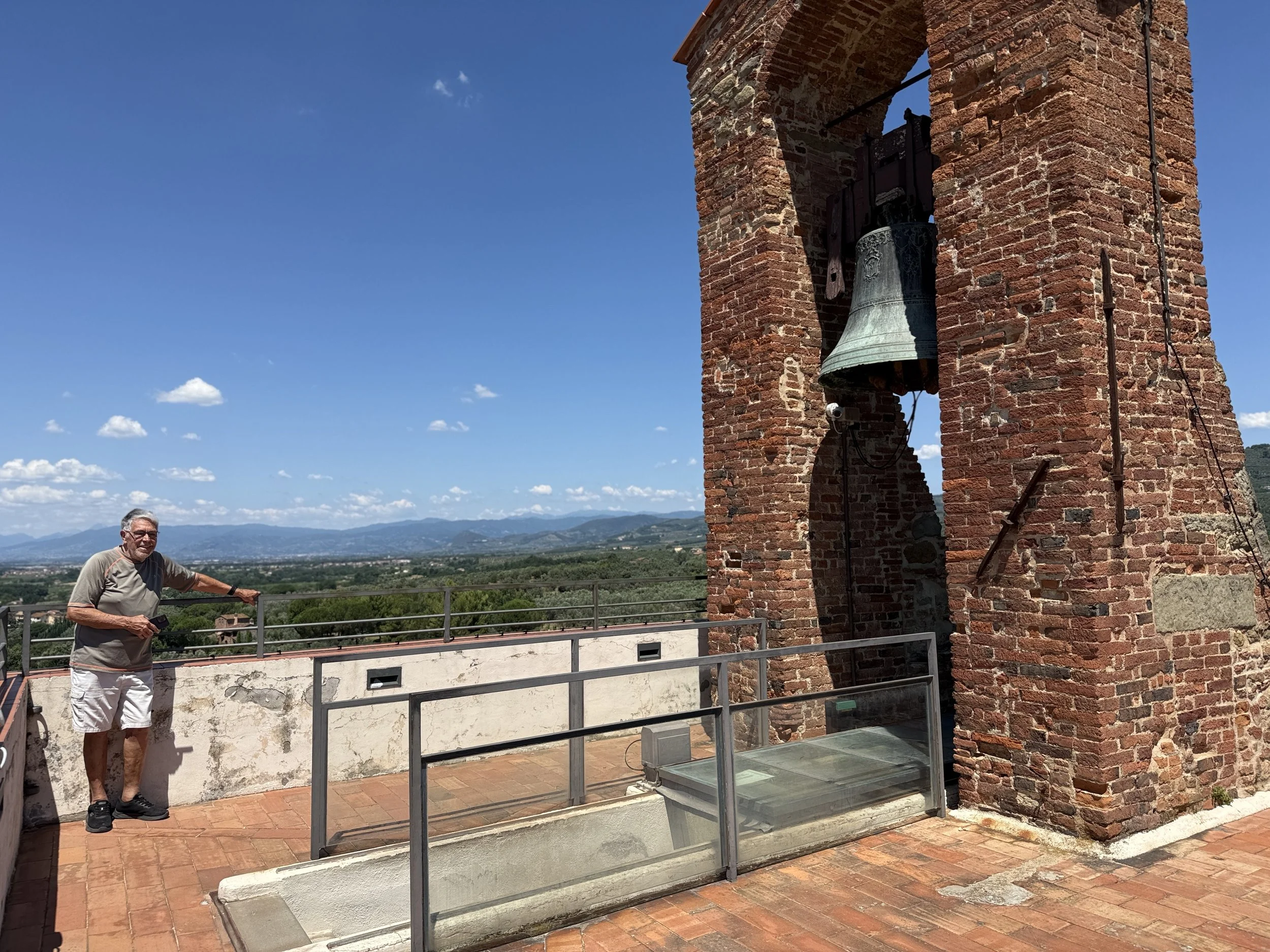
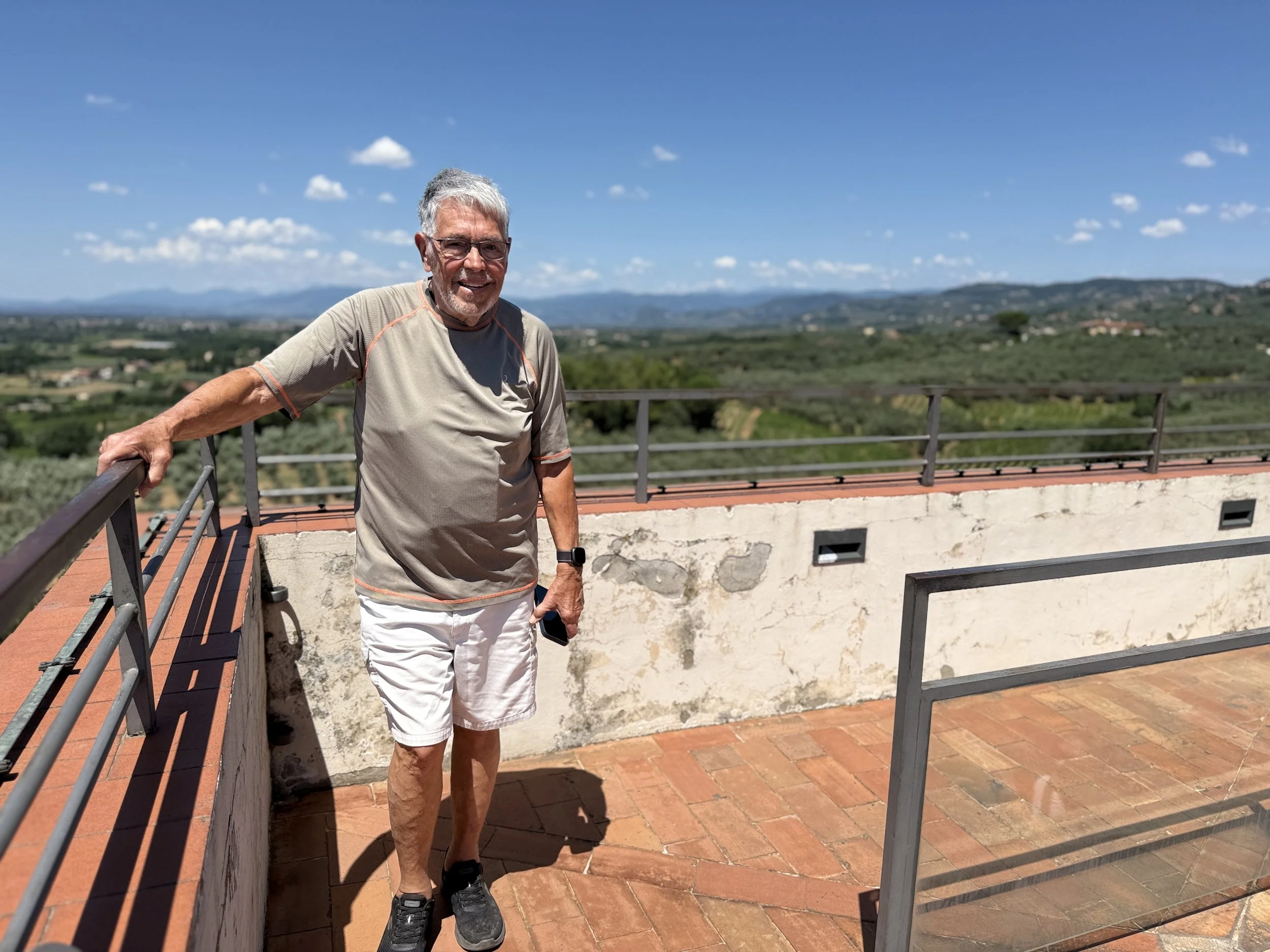
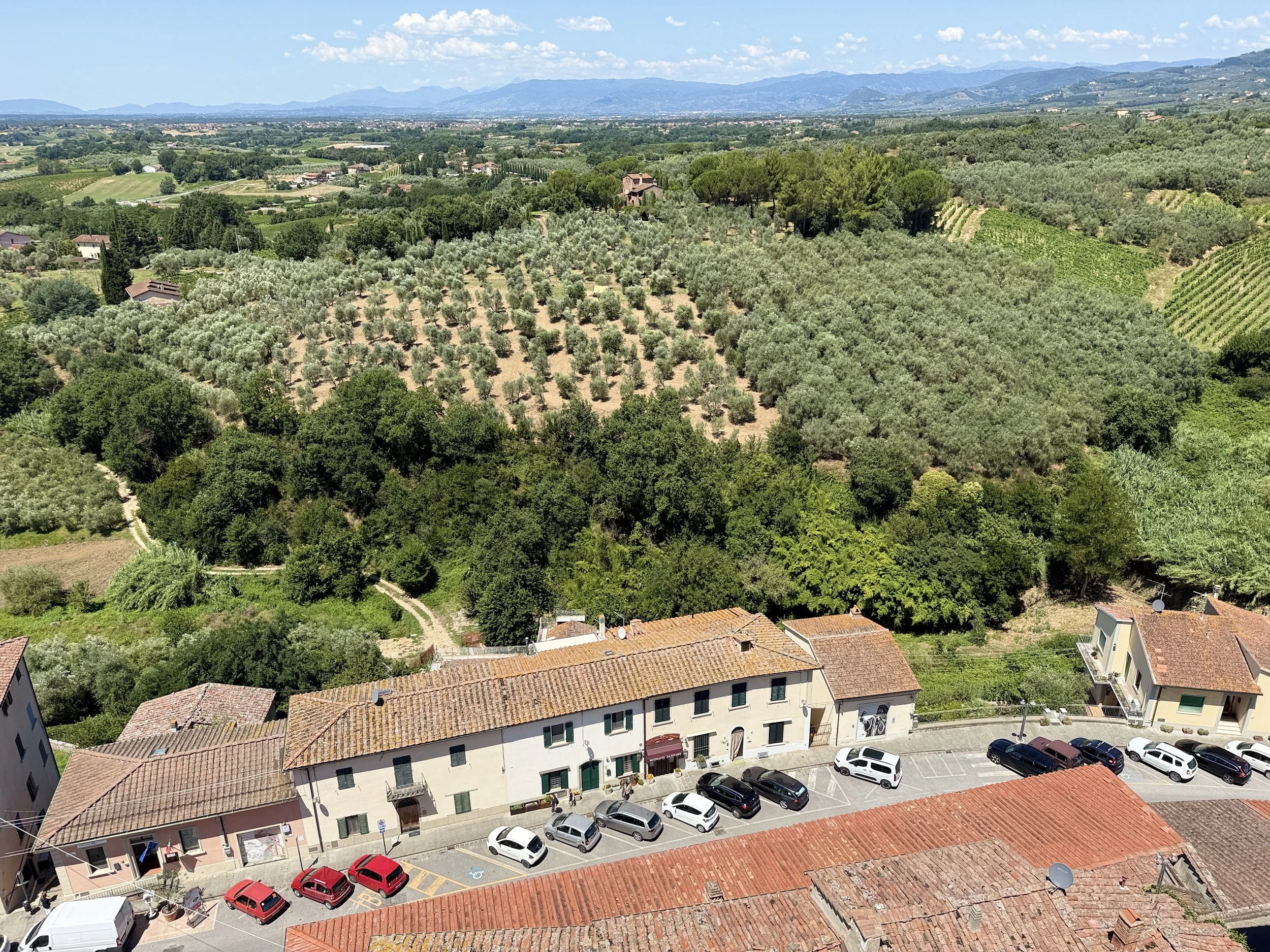
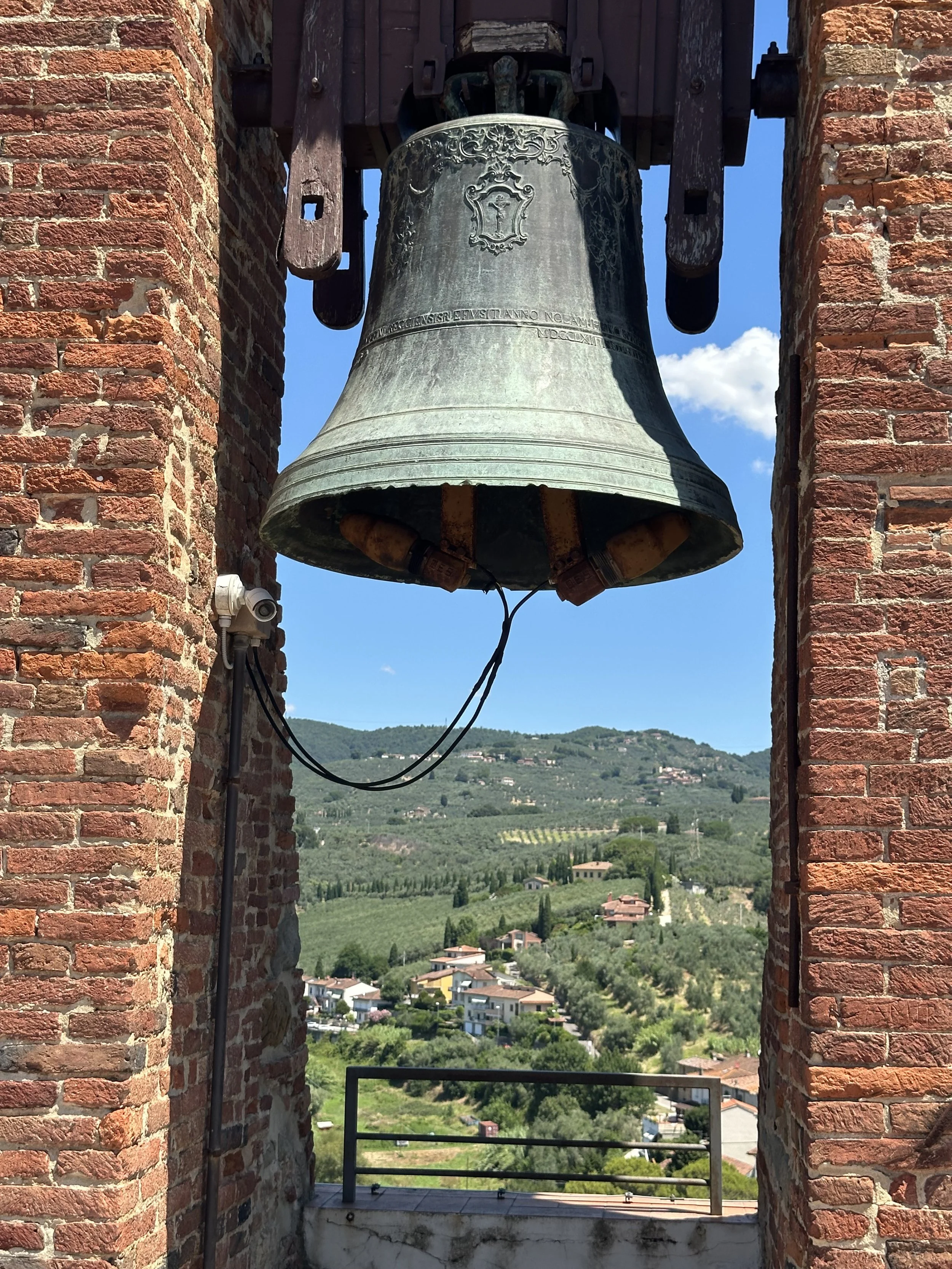
We climbed a bell tower attached to the museum for some really nice views of the Tuscan scenery.
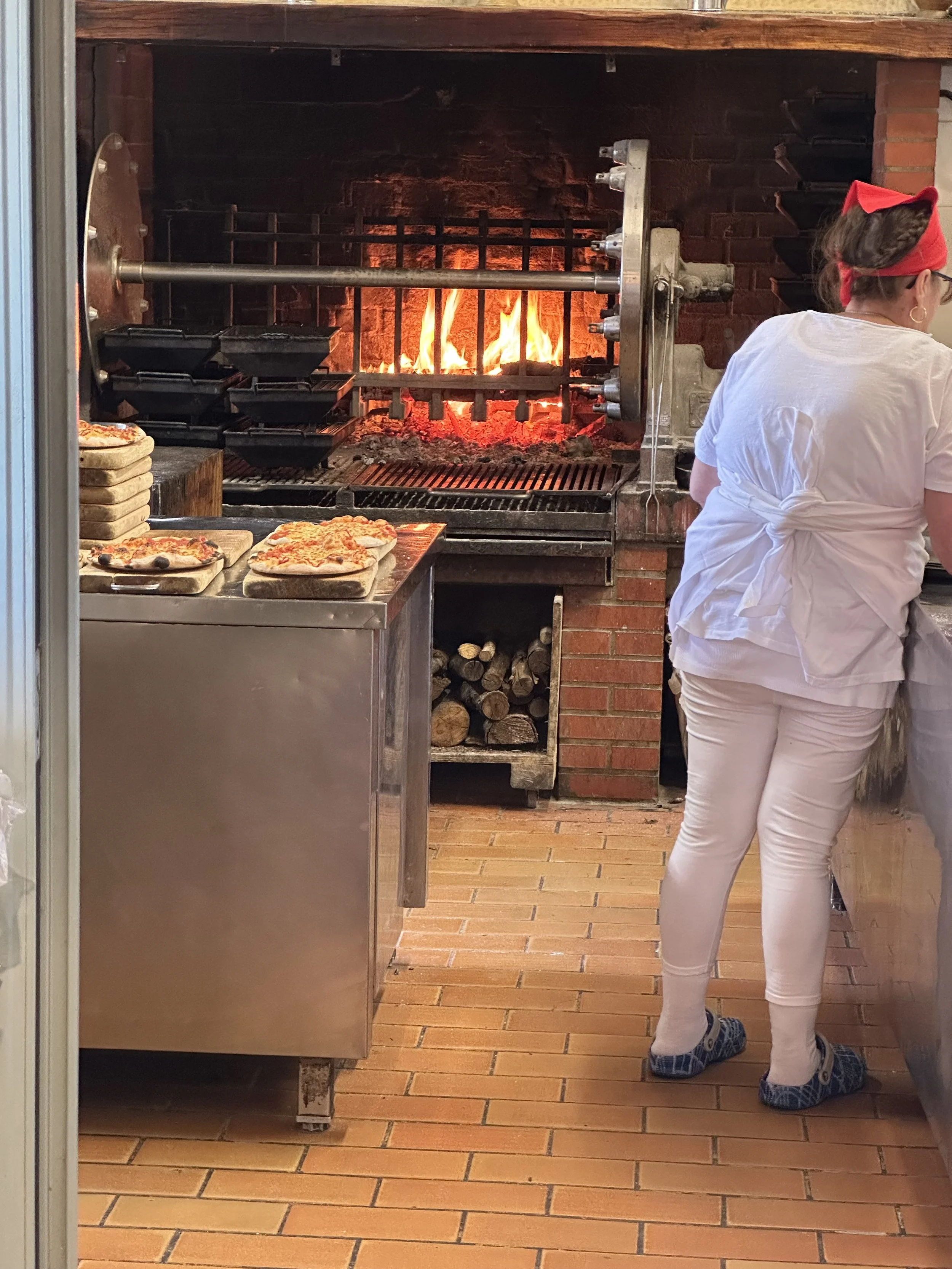
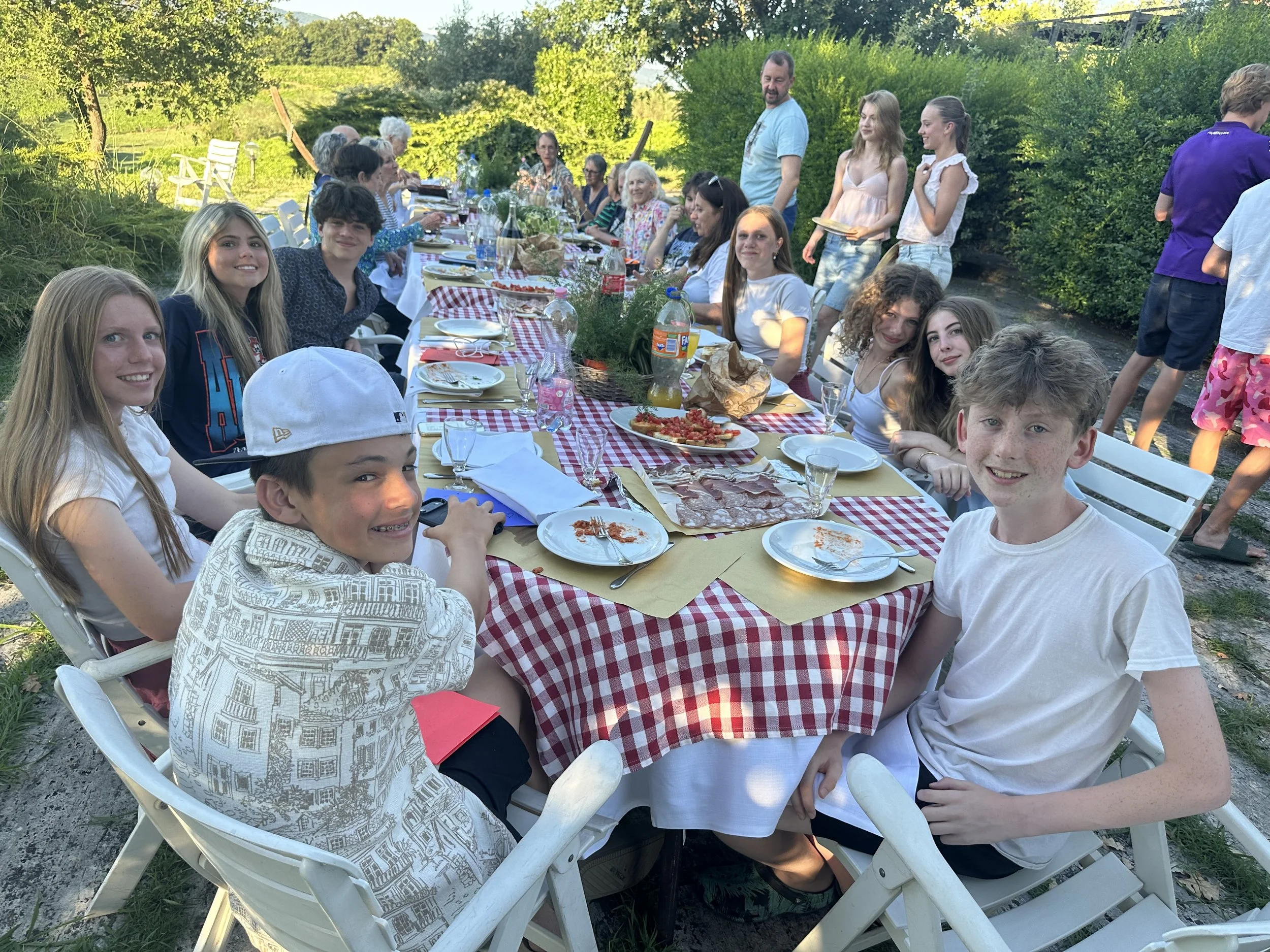
Lunch was a few steps from the museum and was another four-course extravaganza. A whole bunch of appetizers, including bruschetta, tomatoes and basil, a humus made from some part of a chicken I’ve conveniently forgotten, pasta and an Italian dessert.
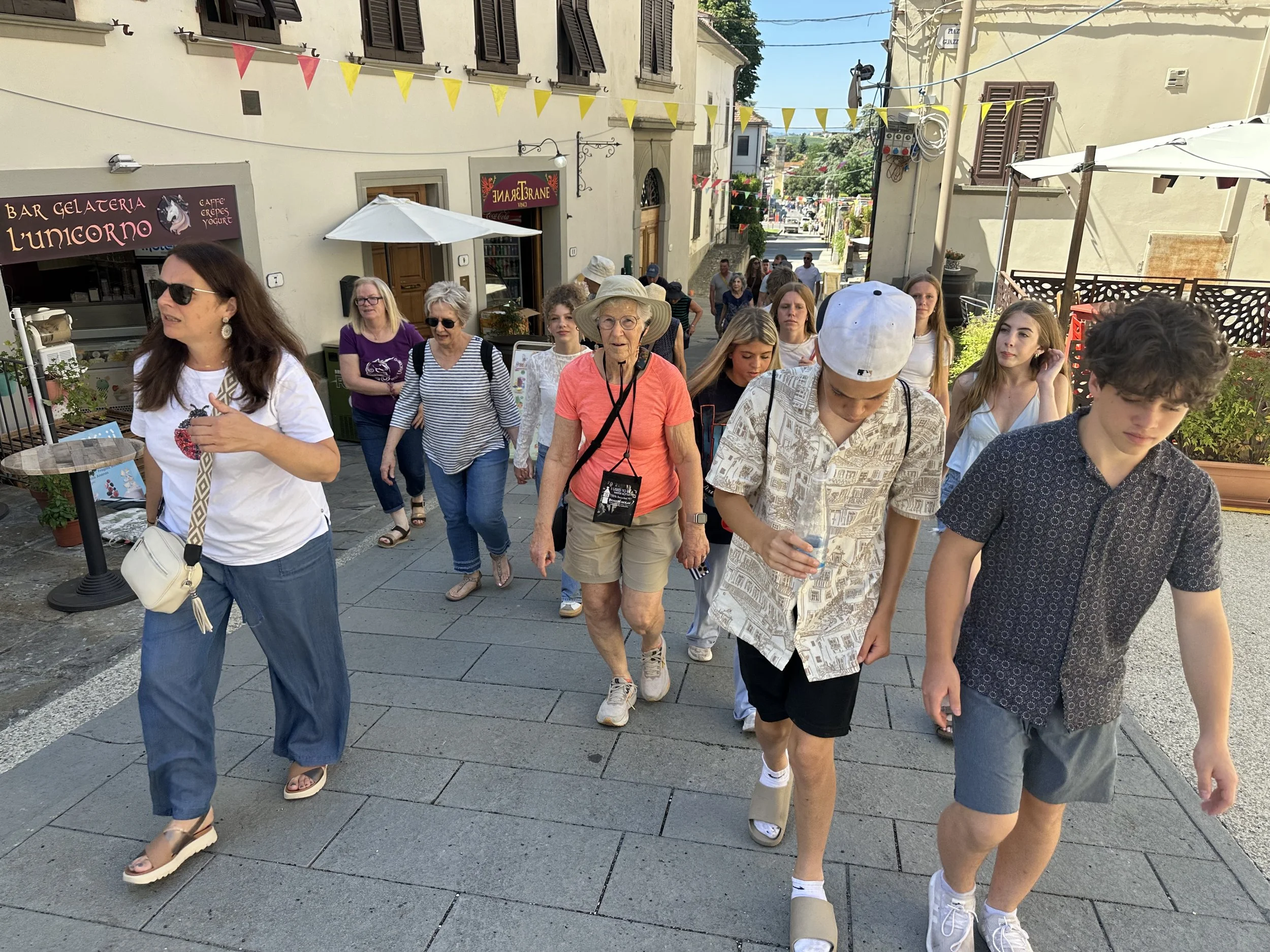
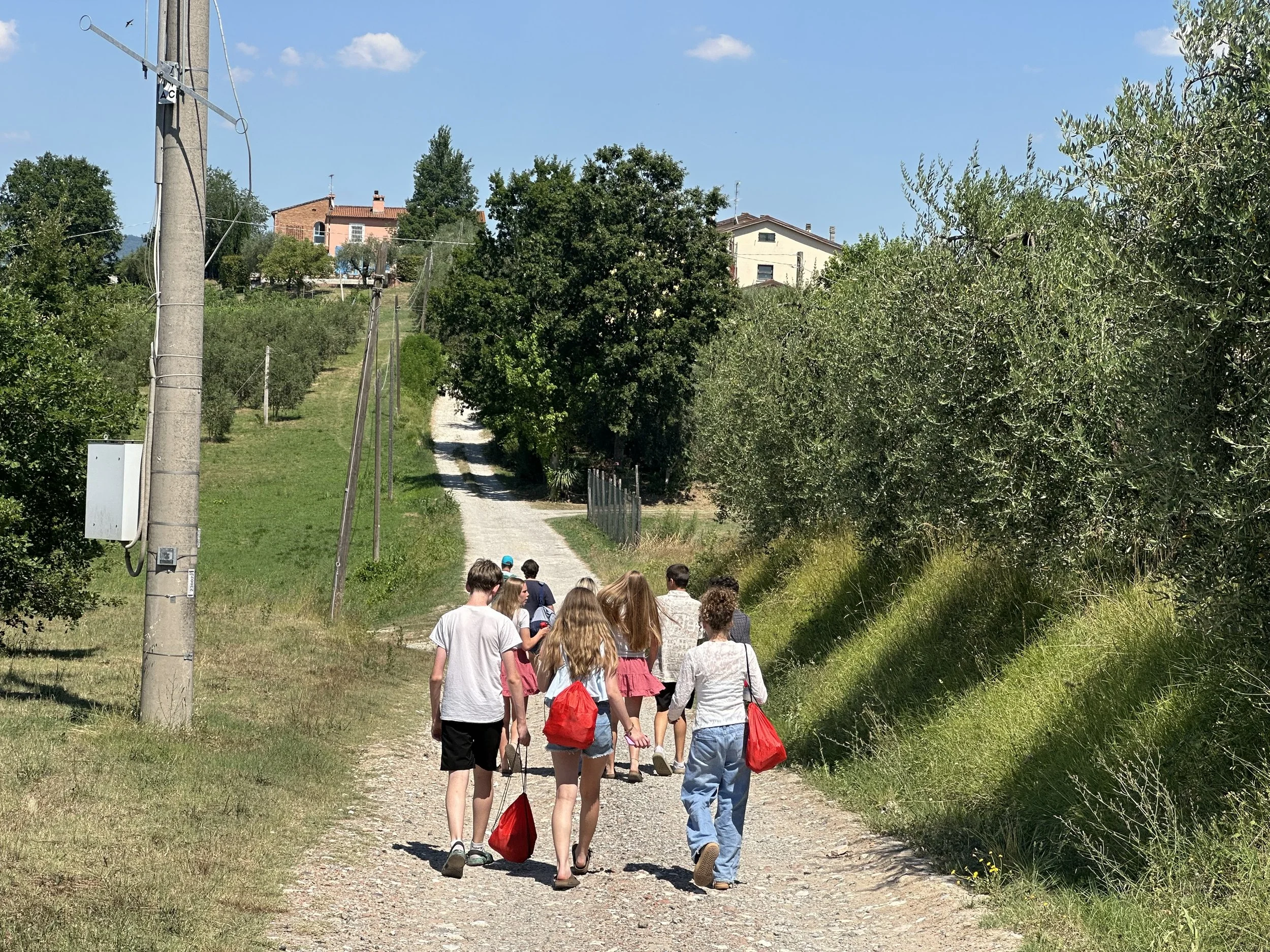
Then a 30-minute bus ride to the farm plus a half-mile dirt road walk for all except those too lazy, who took a minivan.
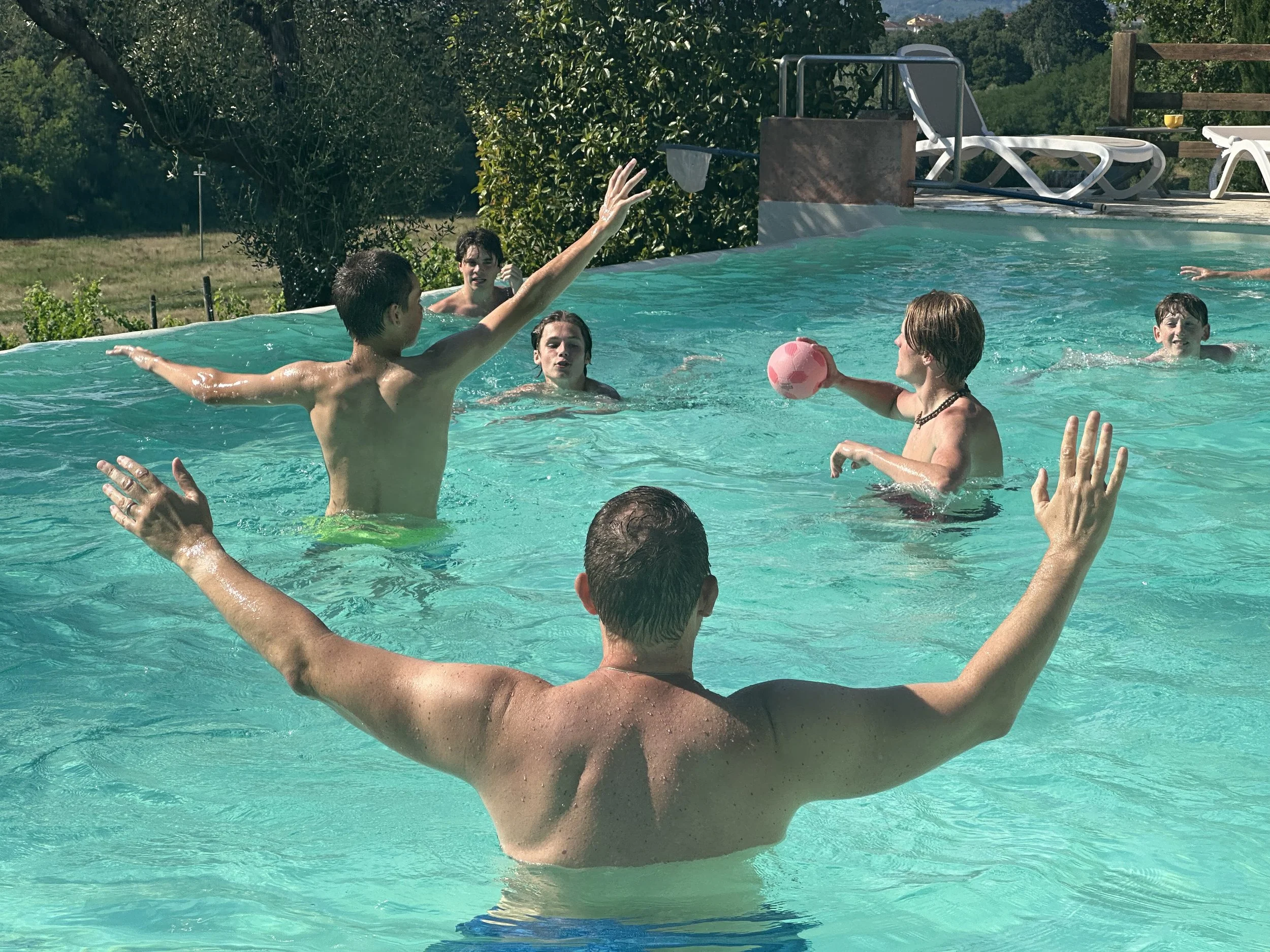
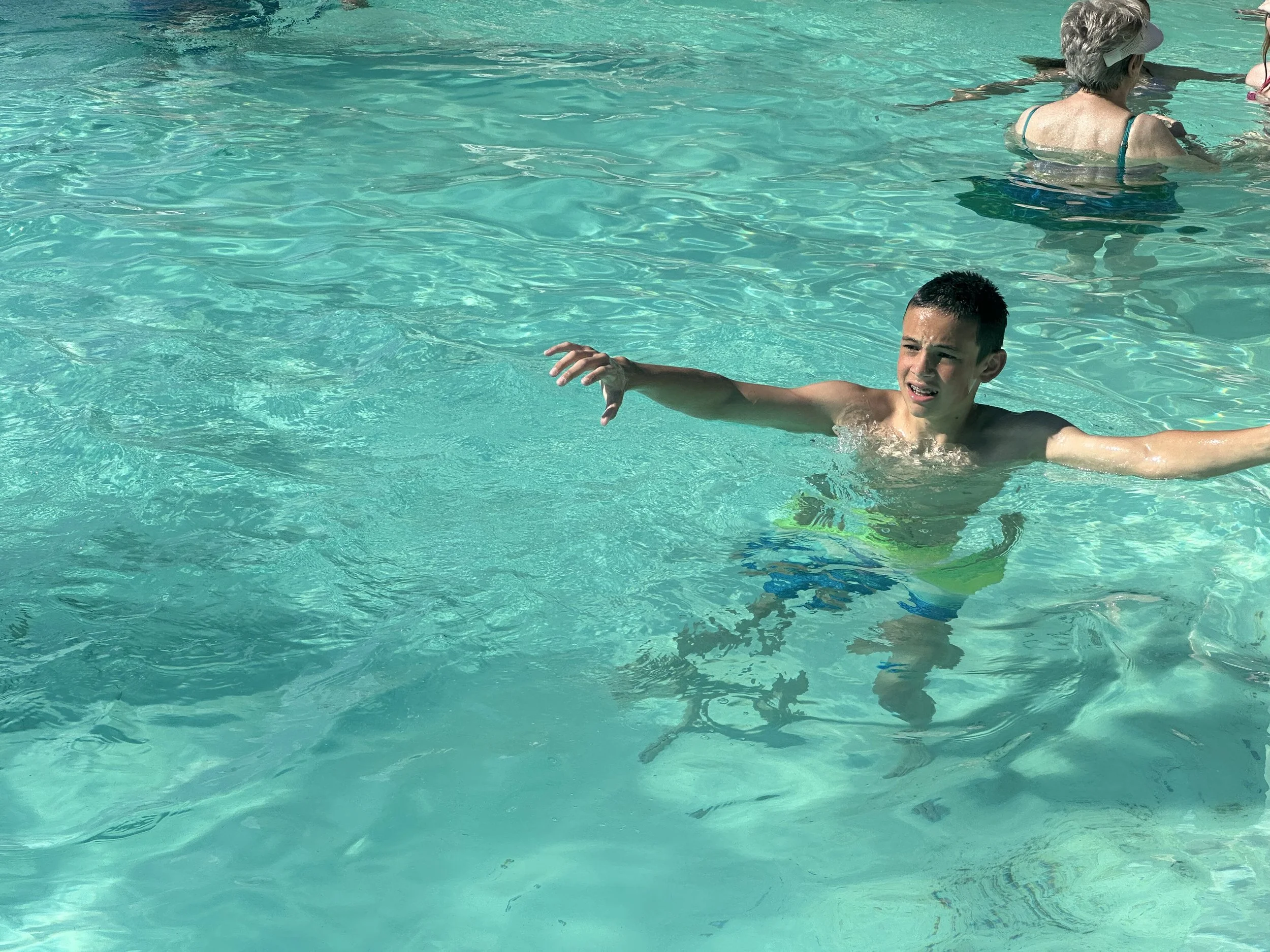
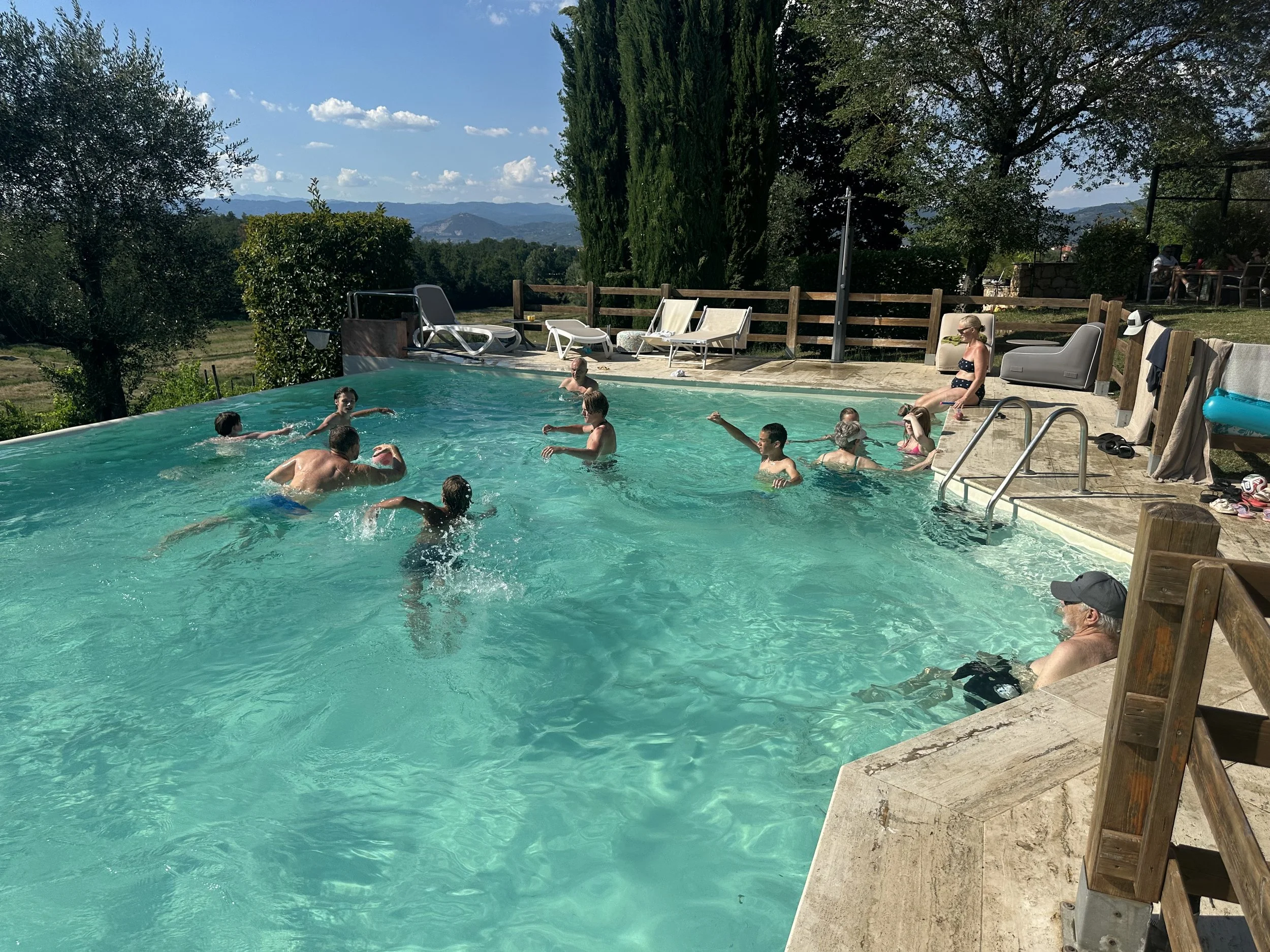
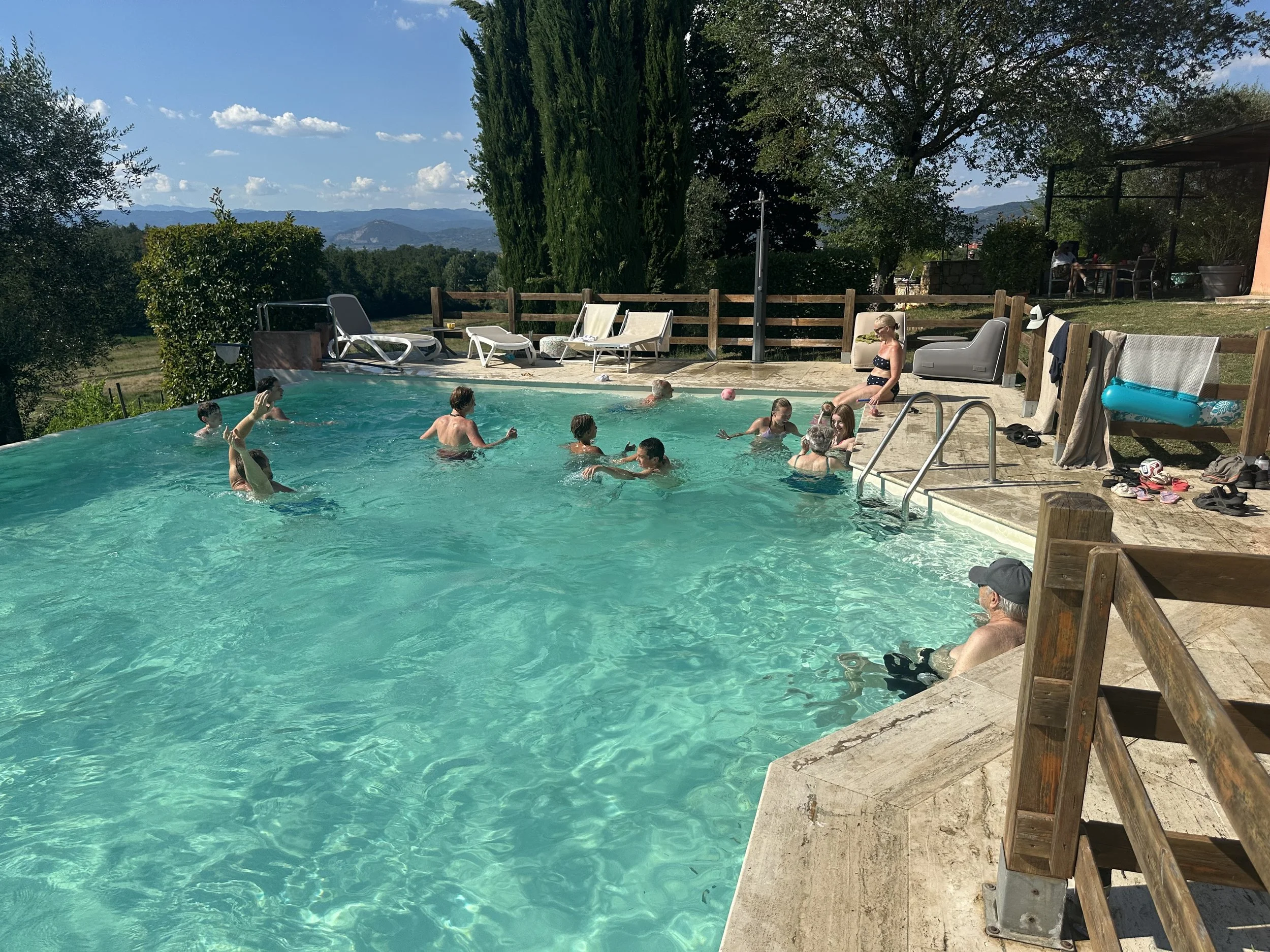
The pool at the farm was an infinity pool with broad views of the vineyards and olive groves. There were three guys and the father from Denmark who were staying at the farm and swimming in the pool. Alessio, our guide, organized a water polo game: Danes against Americans. It was a fun, spirited game that went on for the better part of an hour.
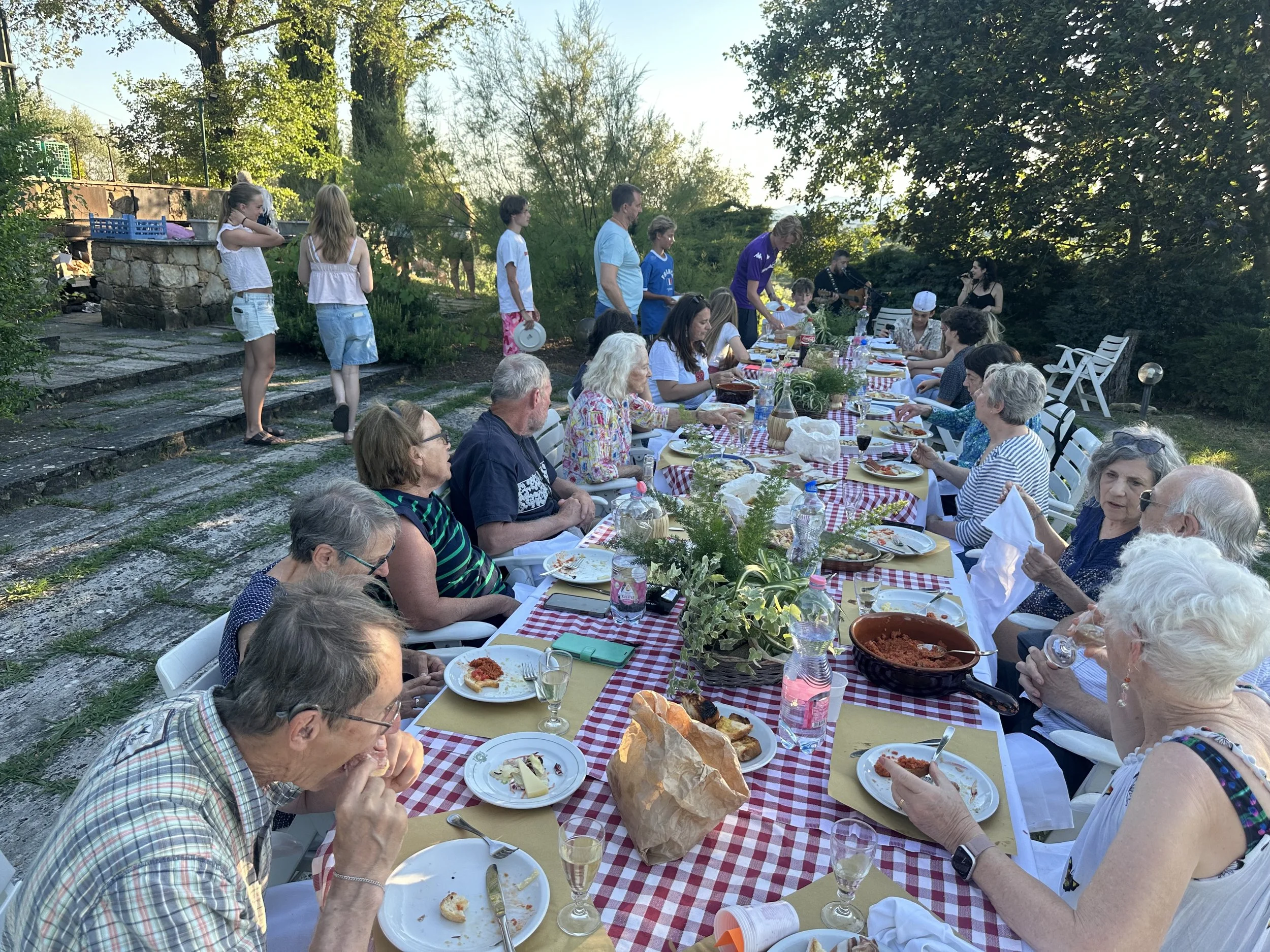
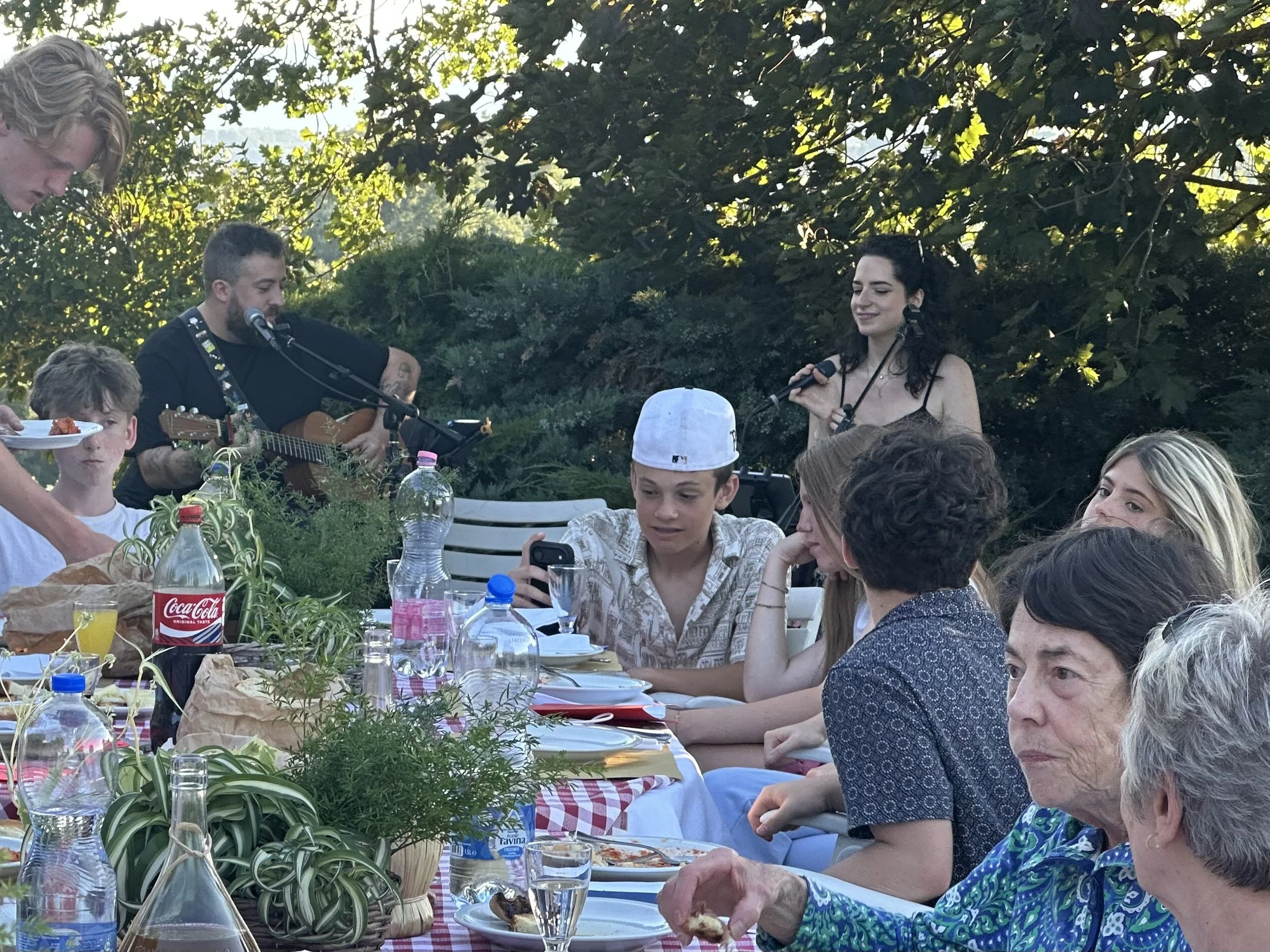
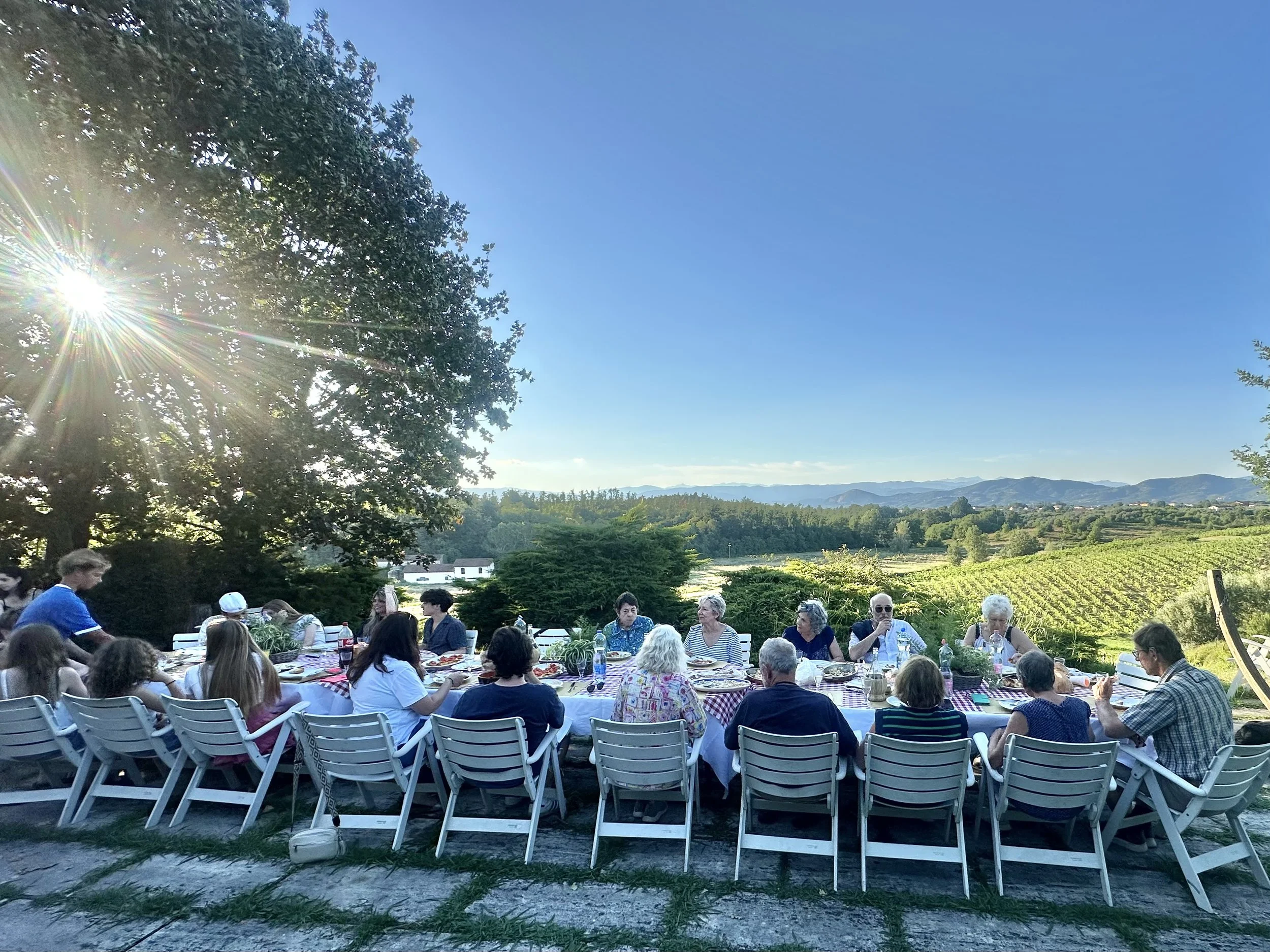
After a while the adults broke off for an hour-long presentation by Chira about food of Tuscany. The basic idea is one of economy. Every part of an animal is consumed: muscles and guts and you name it. And meat is a big part of the diet. Beans are another important part of the diet.. Another feature is salt-free bread, which turns out to be light and airy, perfect for swabbing out the bowl. Stale bread soup is a favorite.
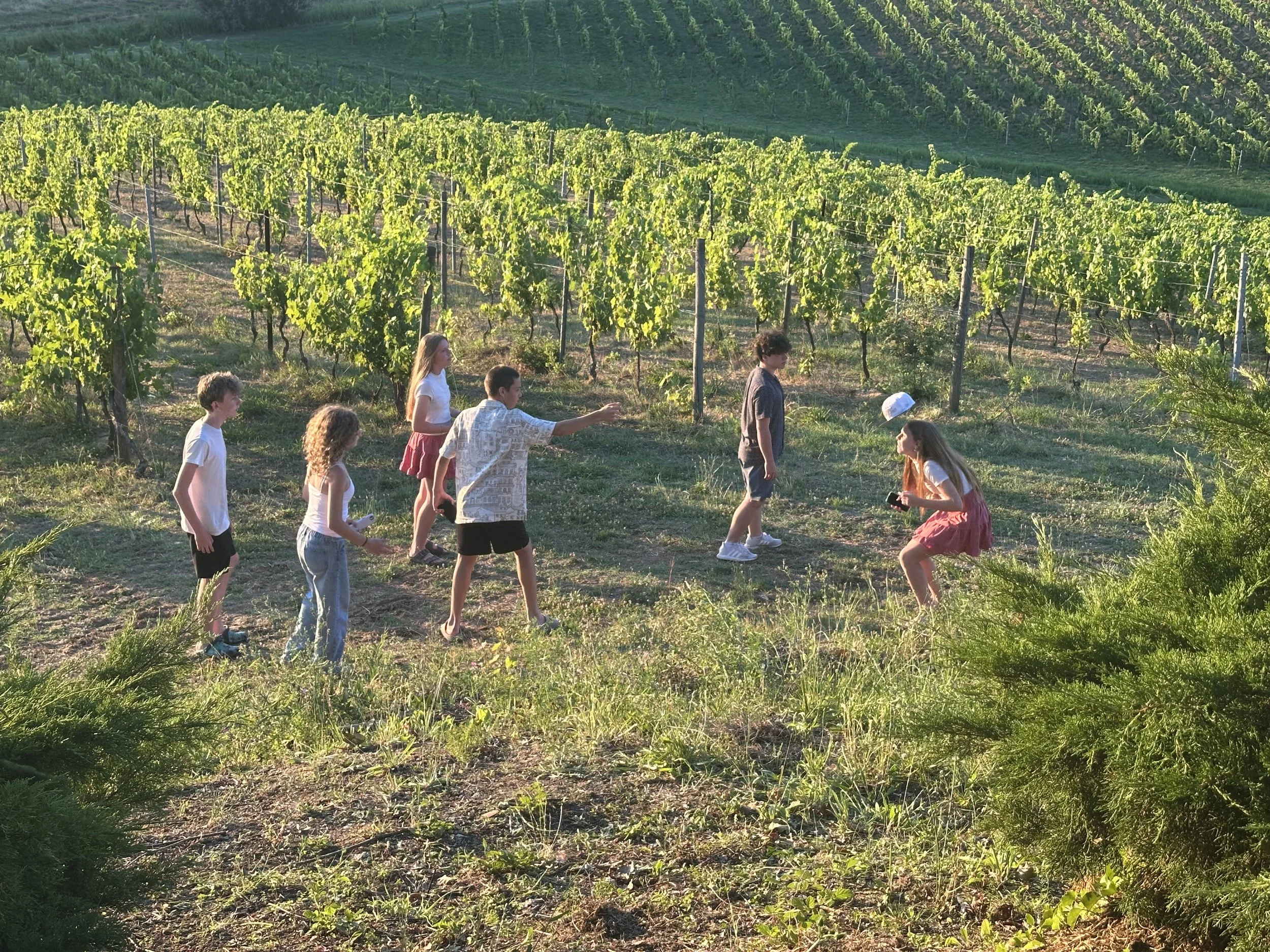
While we were talking the kids were off doing an activity with Ali\essio that will, I presume, be presented to us at tomorrrow’s farewell dinner. Before that, we’re off to the town of Luca by train.