Day 9 - Pond Inlet, Canada August 30, 2026
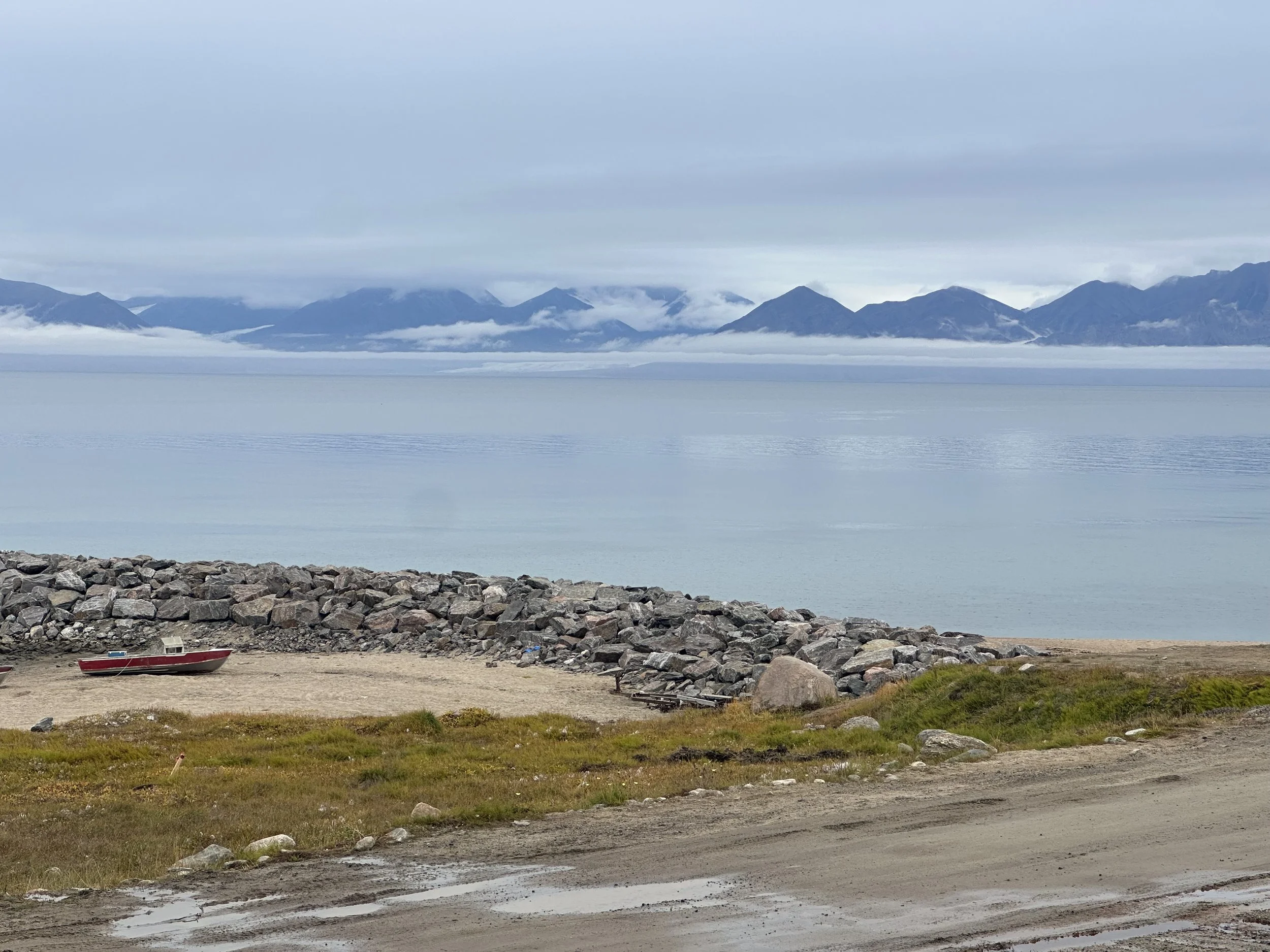
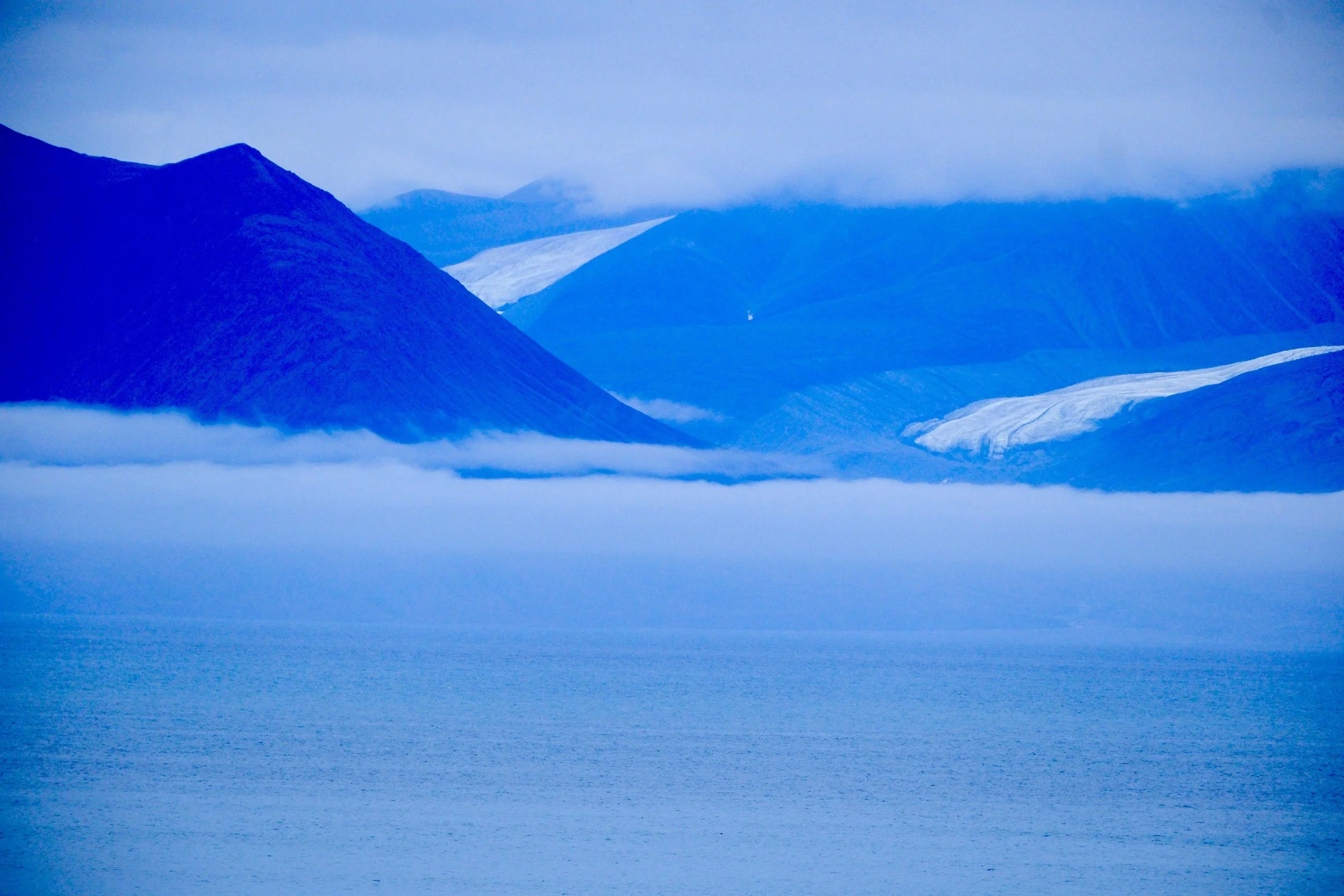
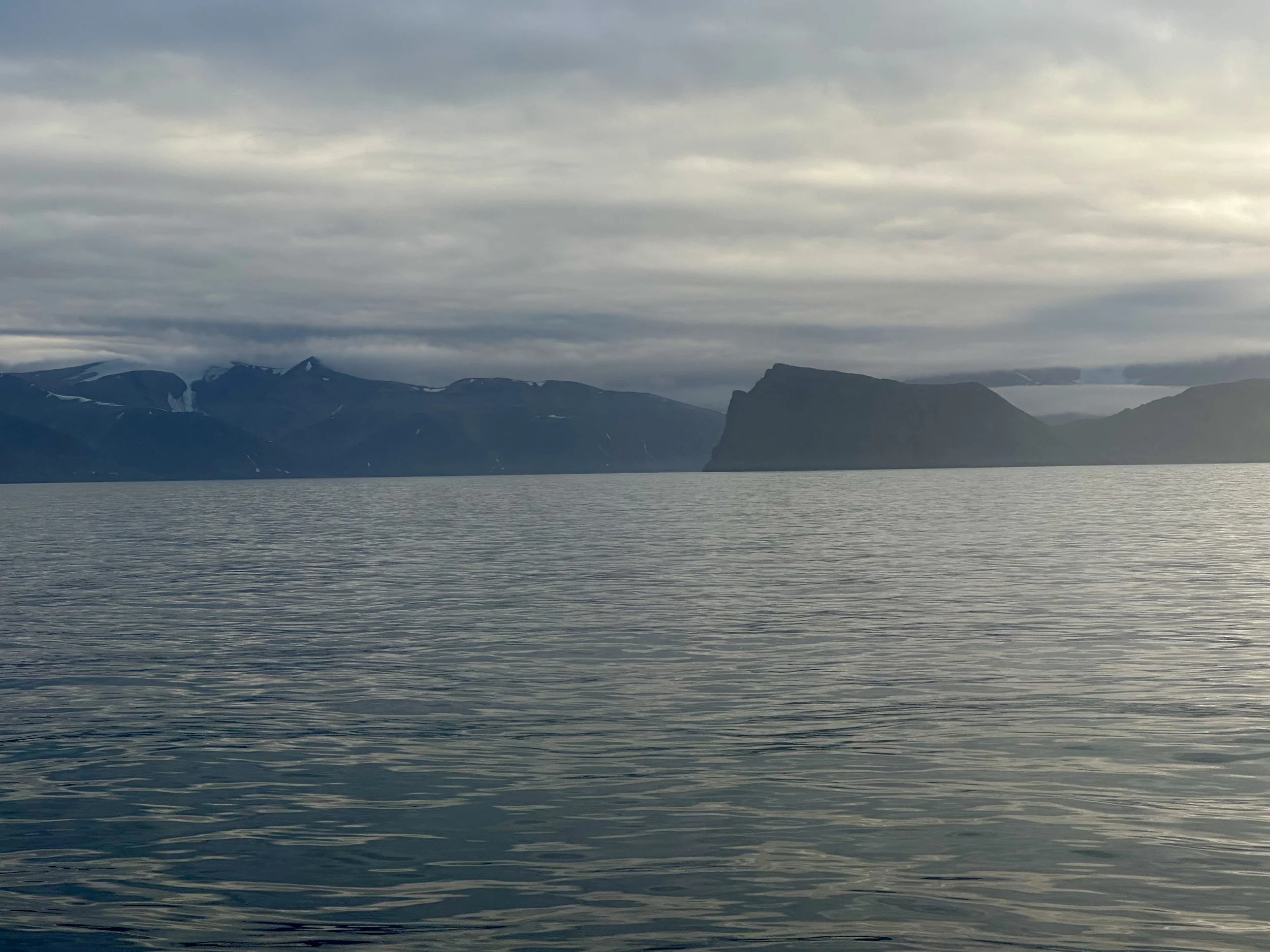
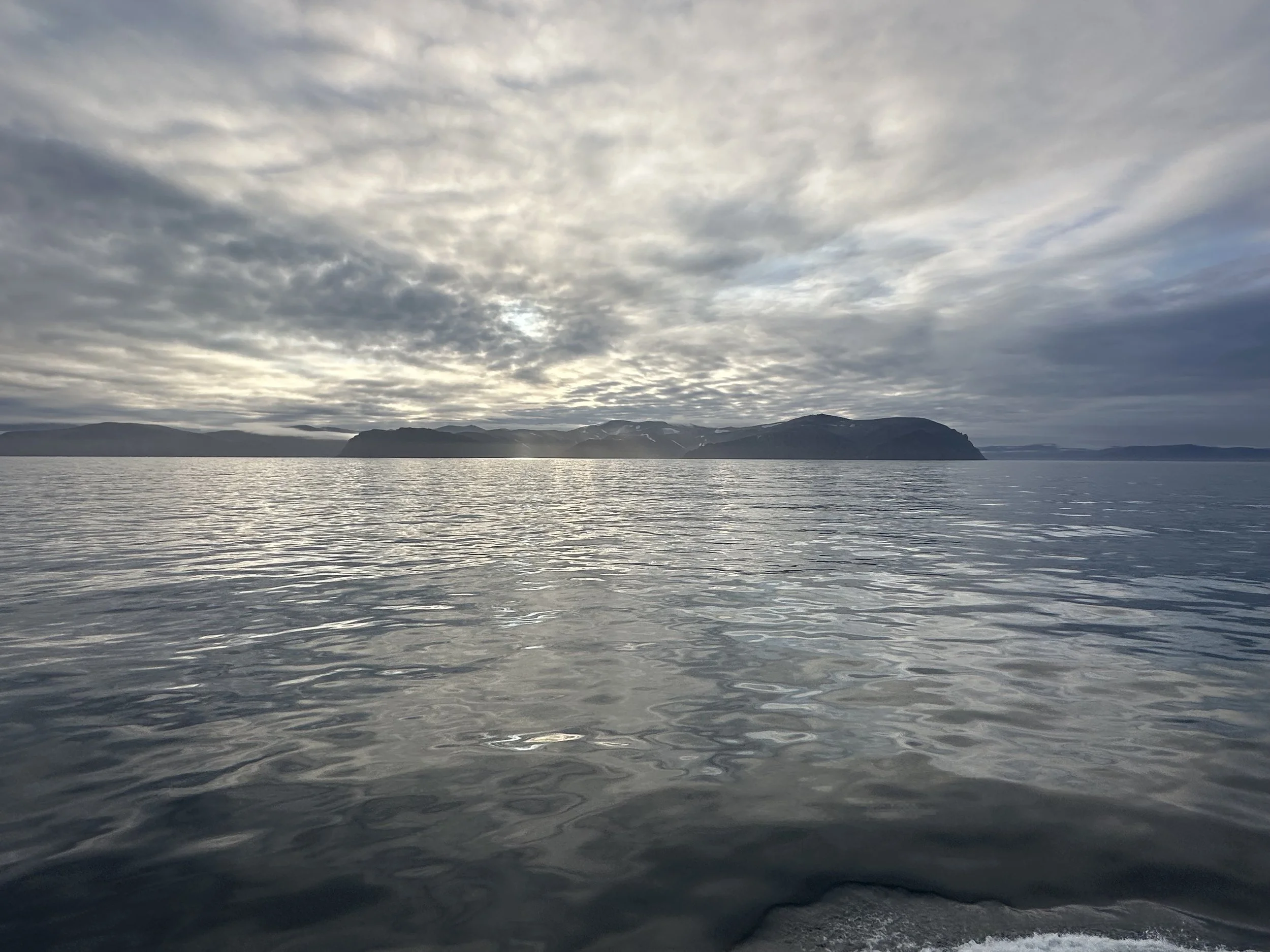
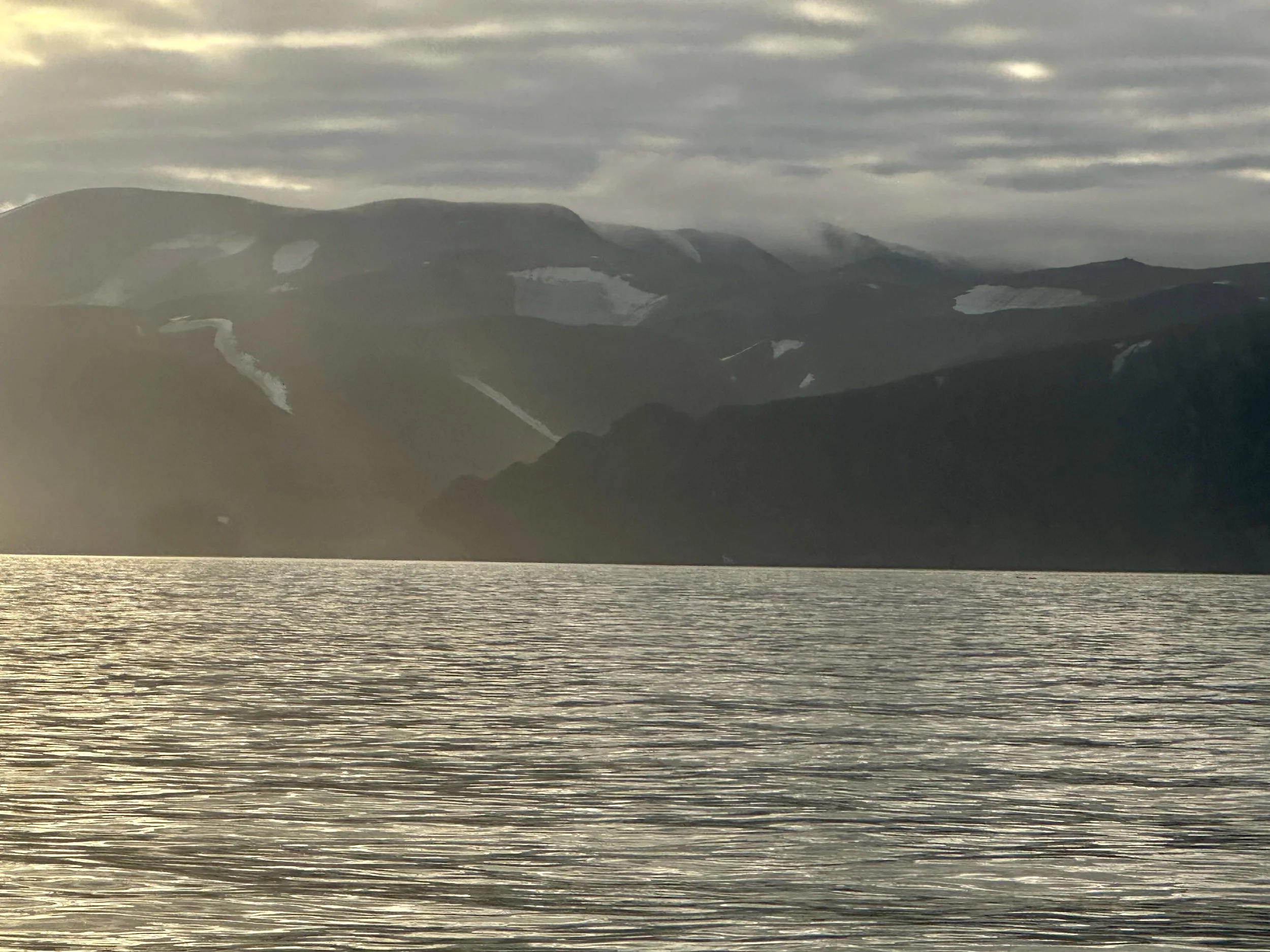
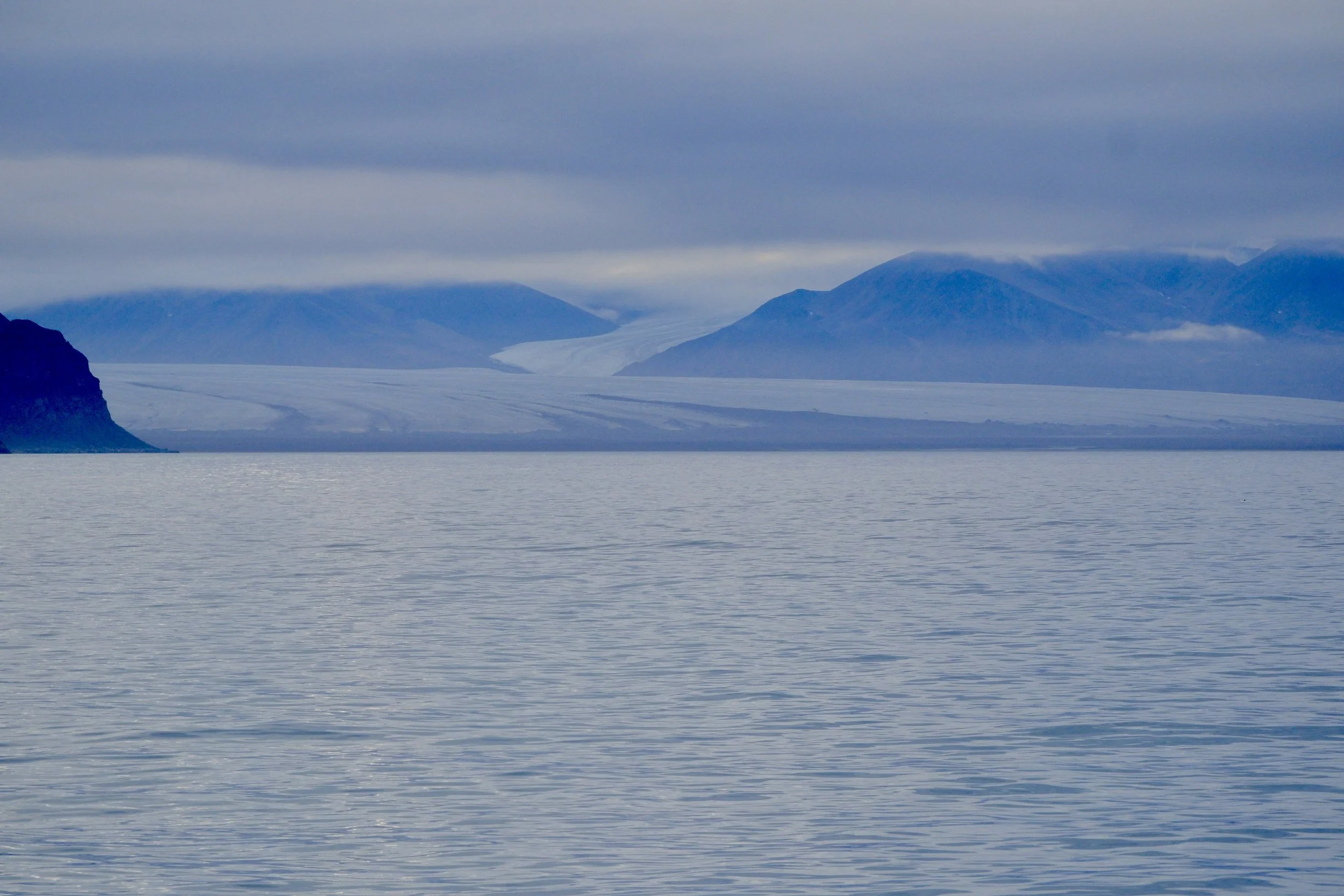
As I write this, we’re cruising up the coast of Bylot Island on our way north from Pond Inlet to tomorrow’s destination: Croker Bay and its glacial head. The mountains and hills we’re passing sport glaciers that come down from the hills to the water’s edge, or nearly so. The mountains are shrouded in a low-lying layer of fog. The occasional iceberg makes an appearance every mile or so. It’s a great sight.
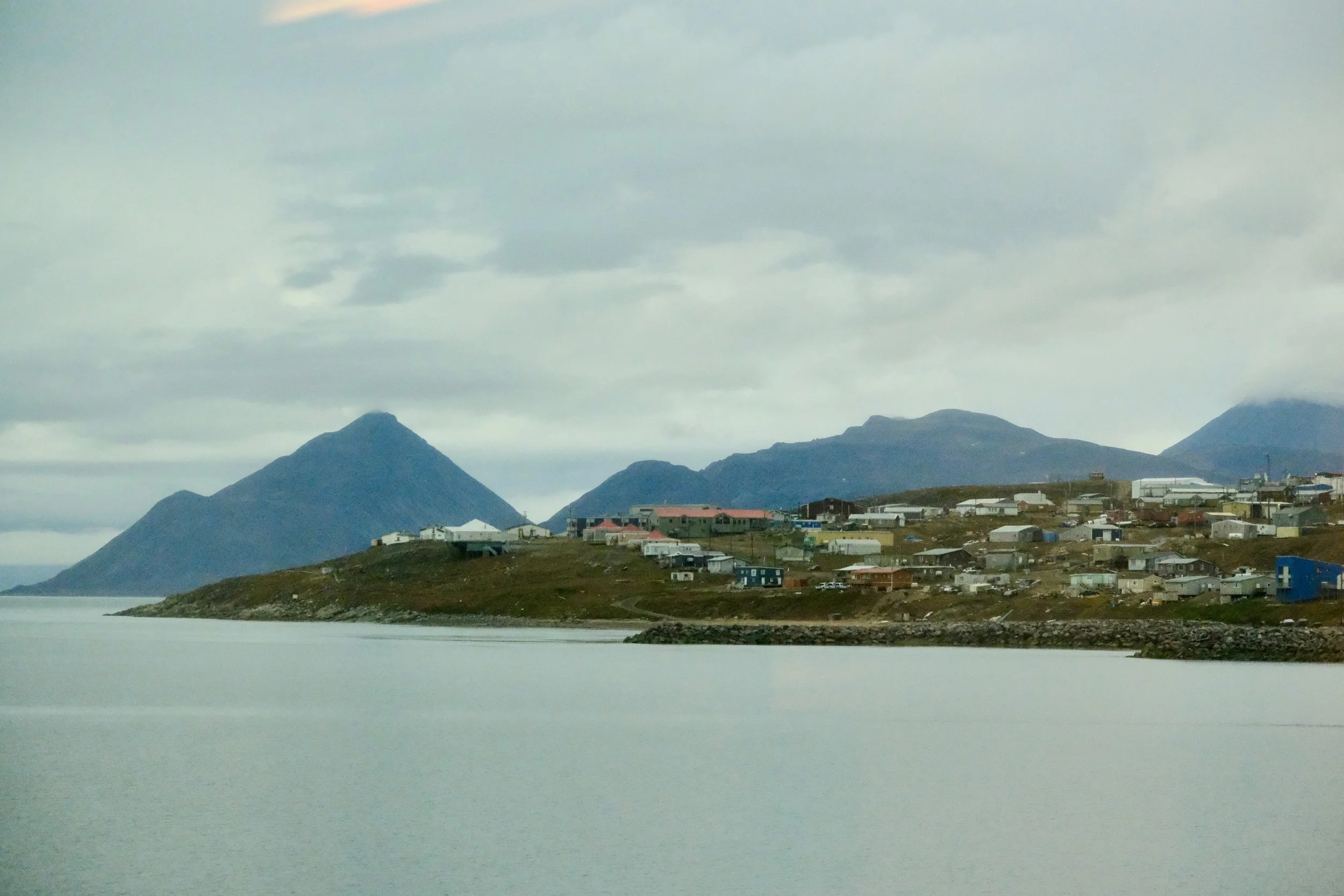
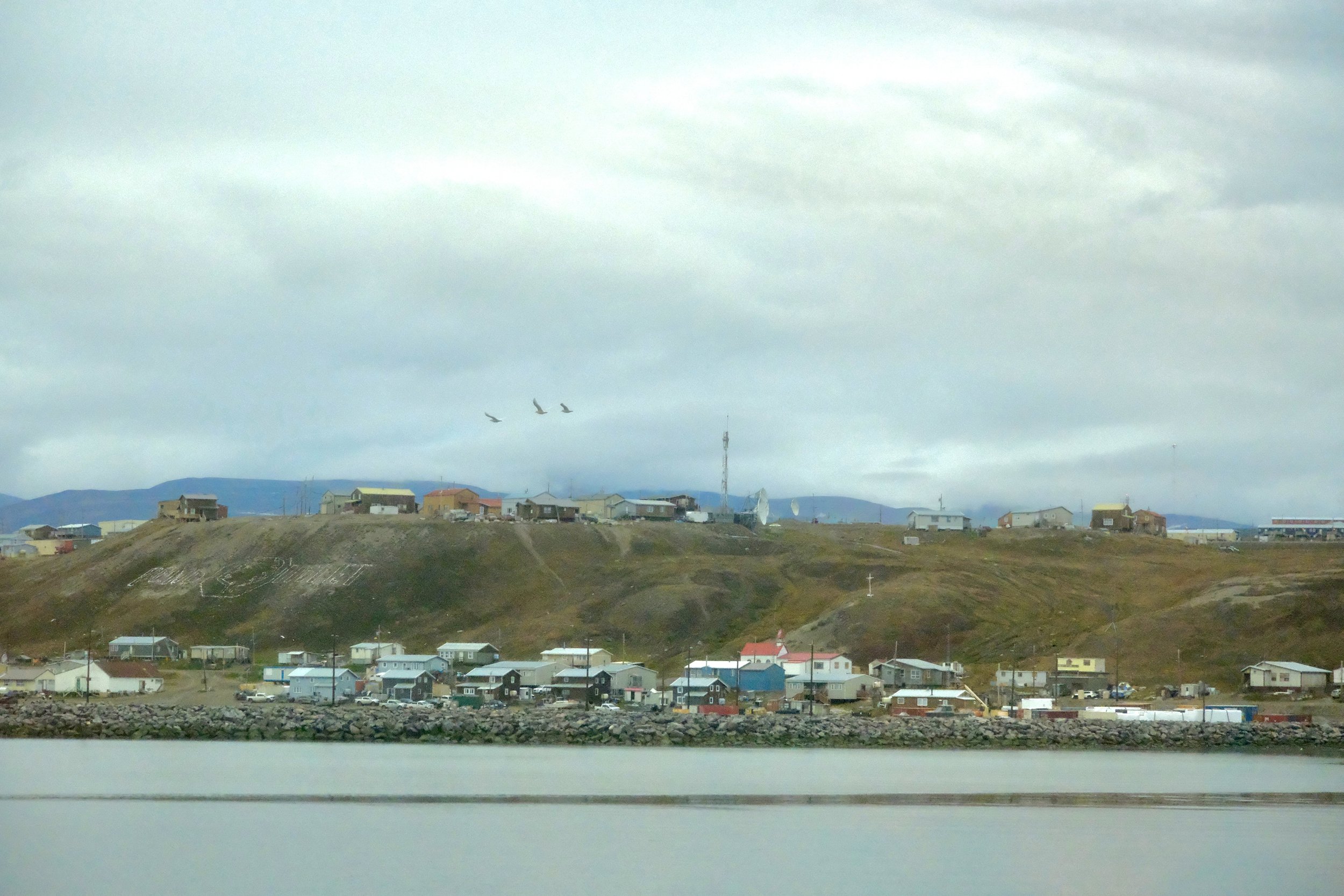
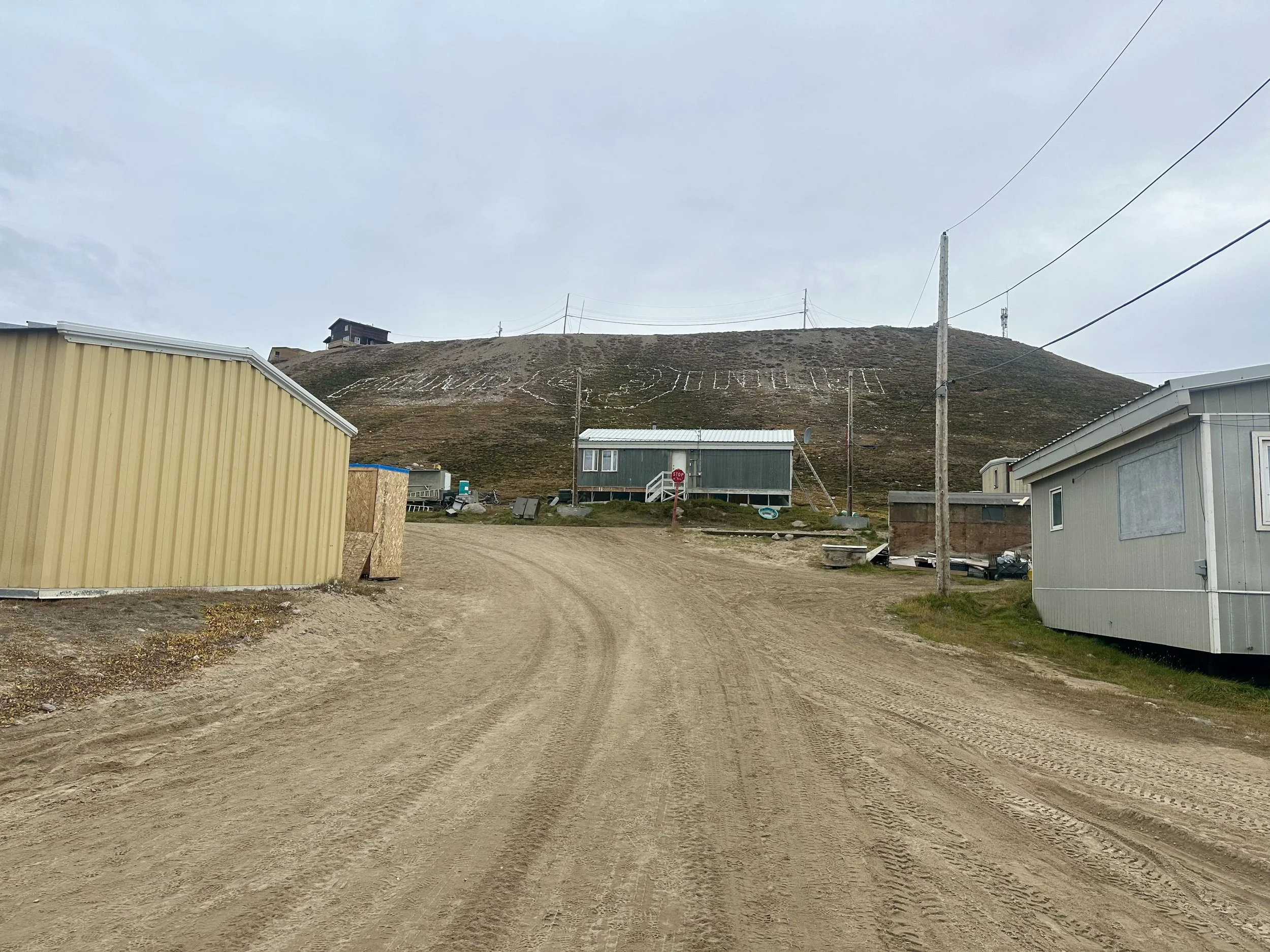
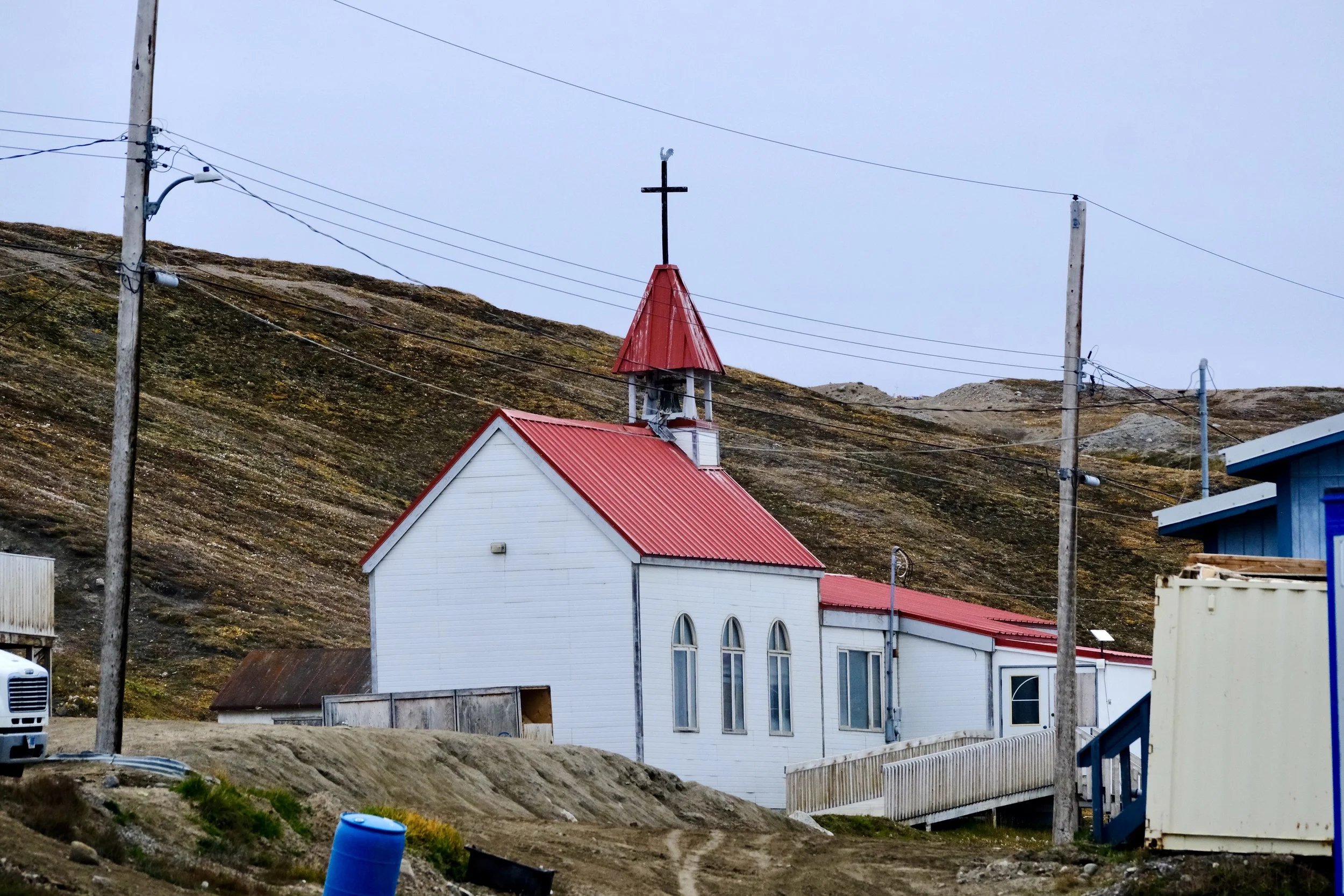
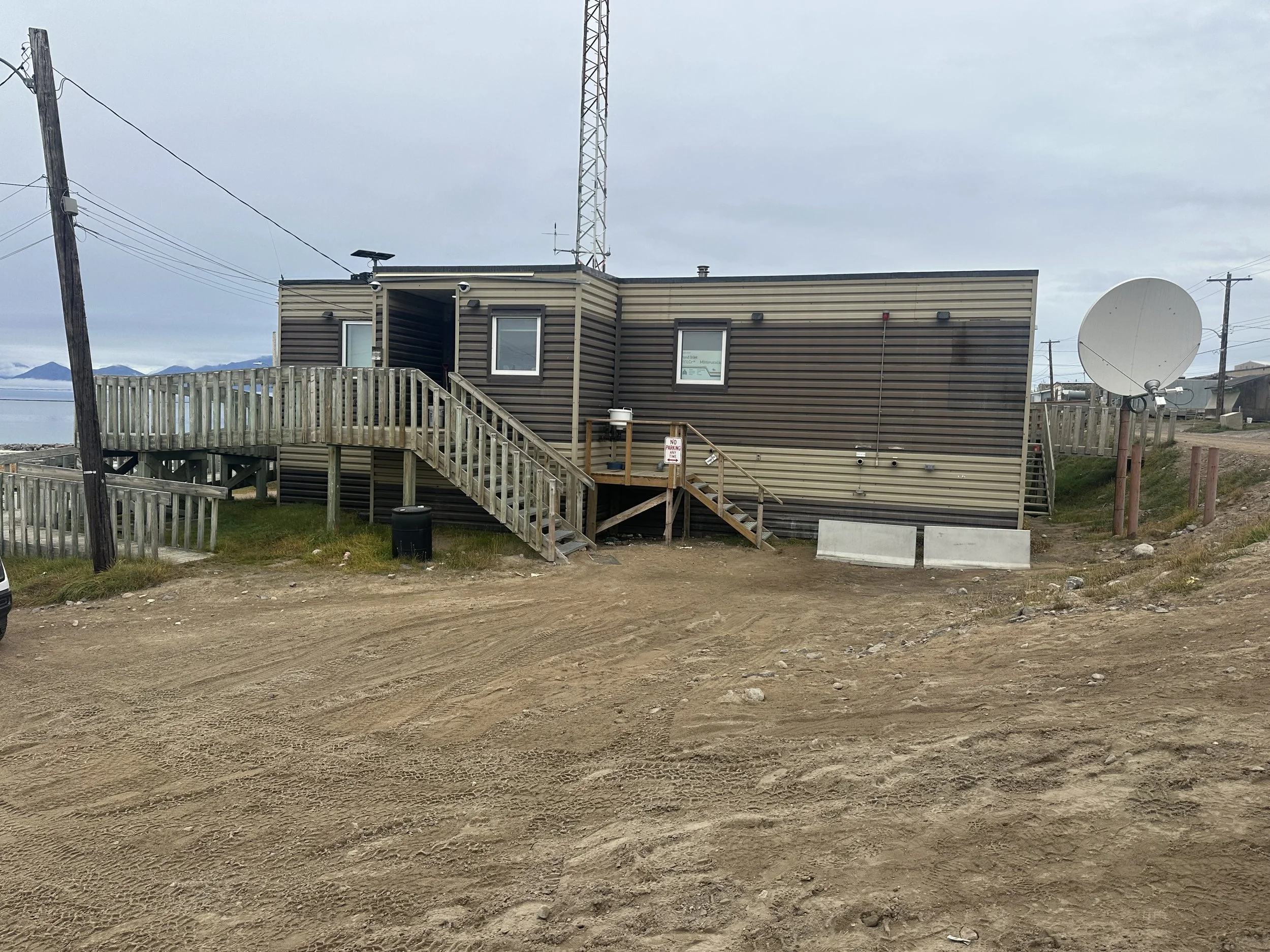
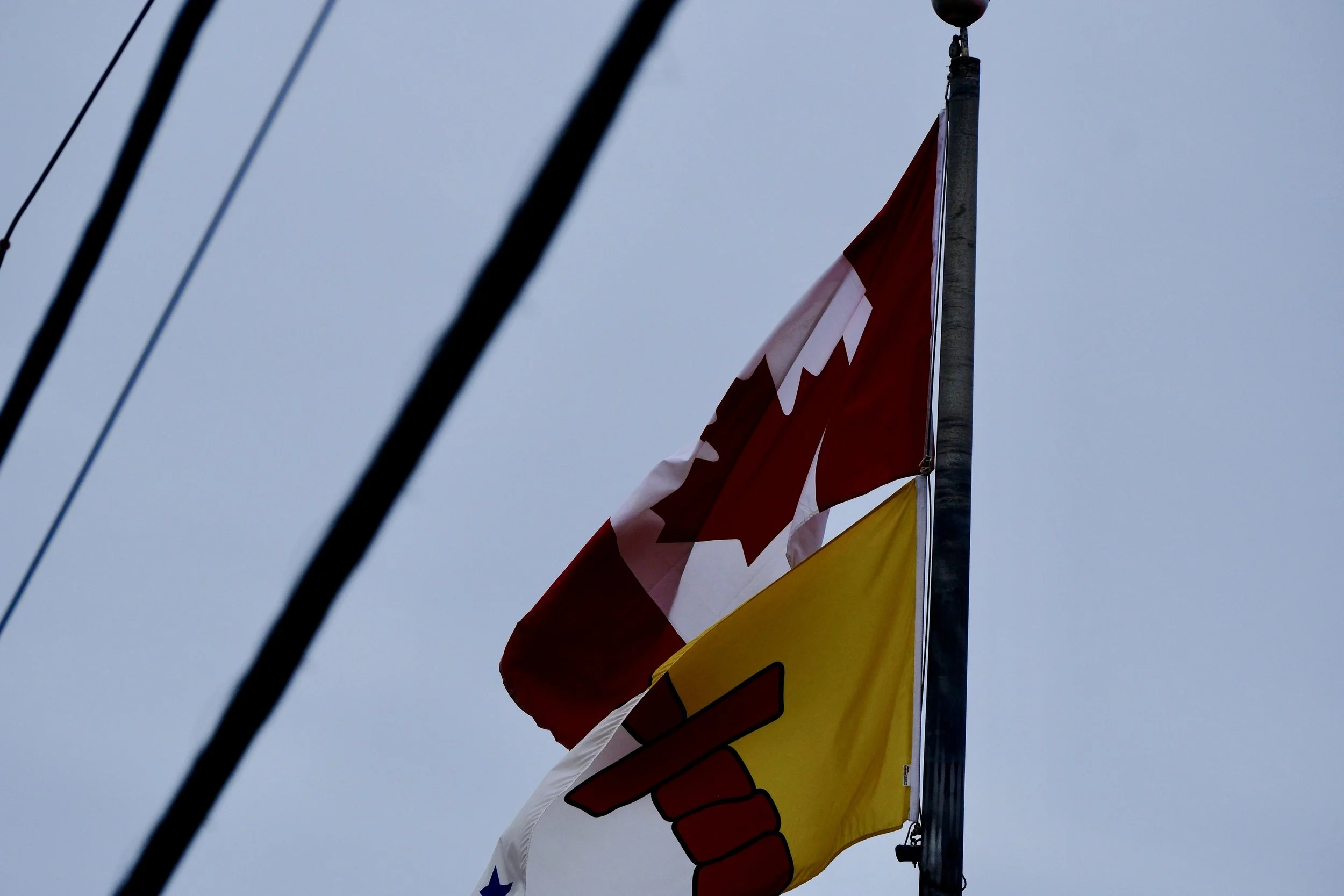
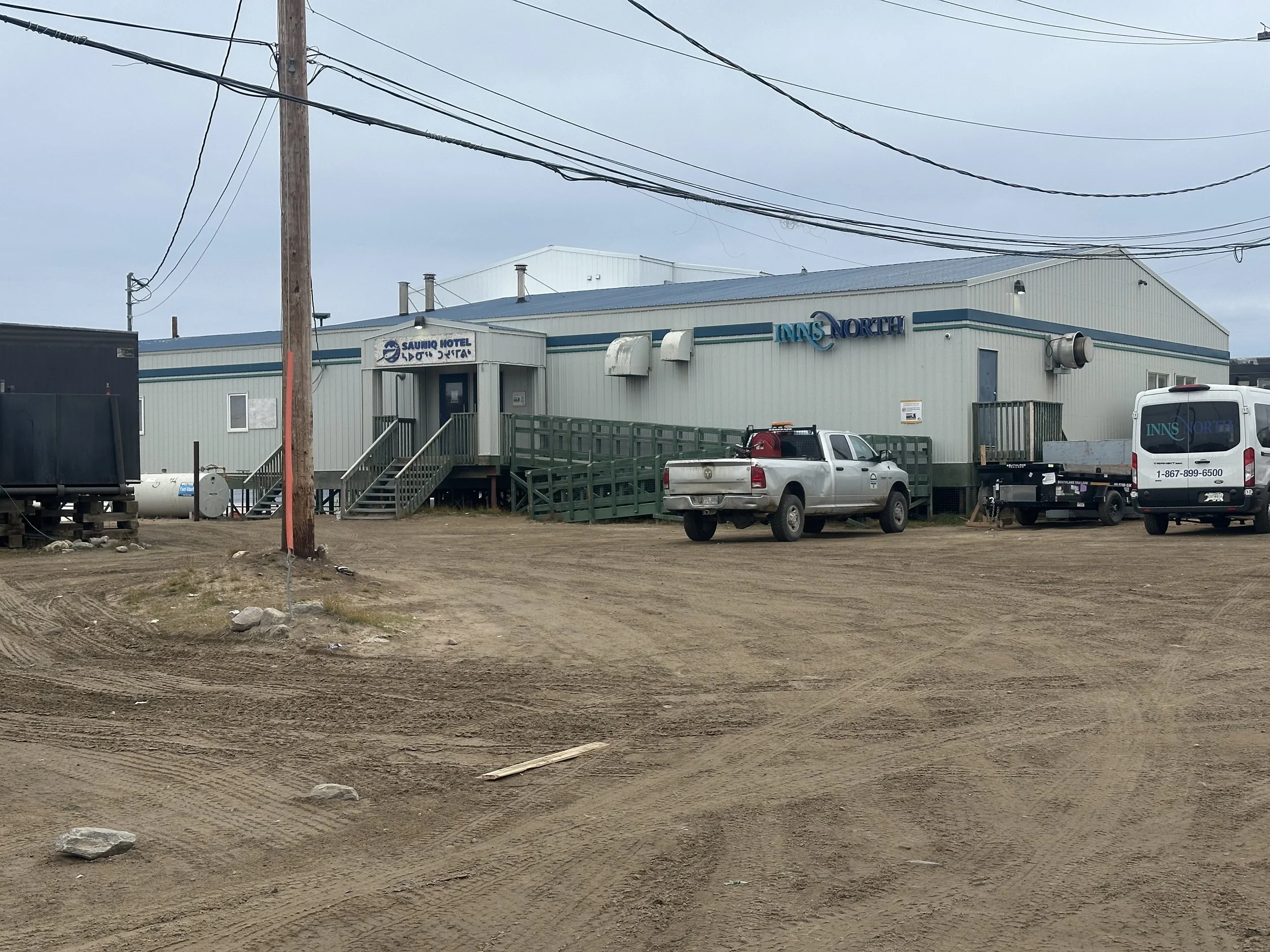
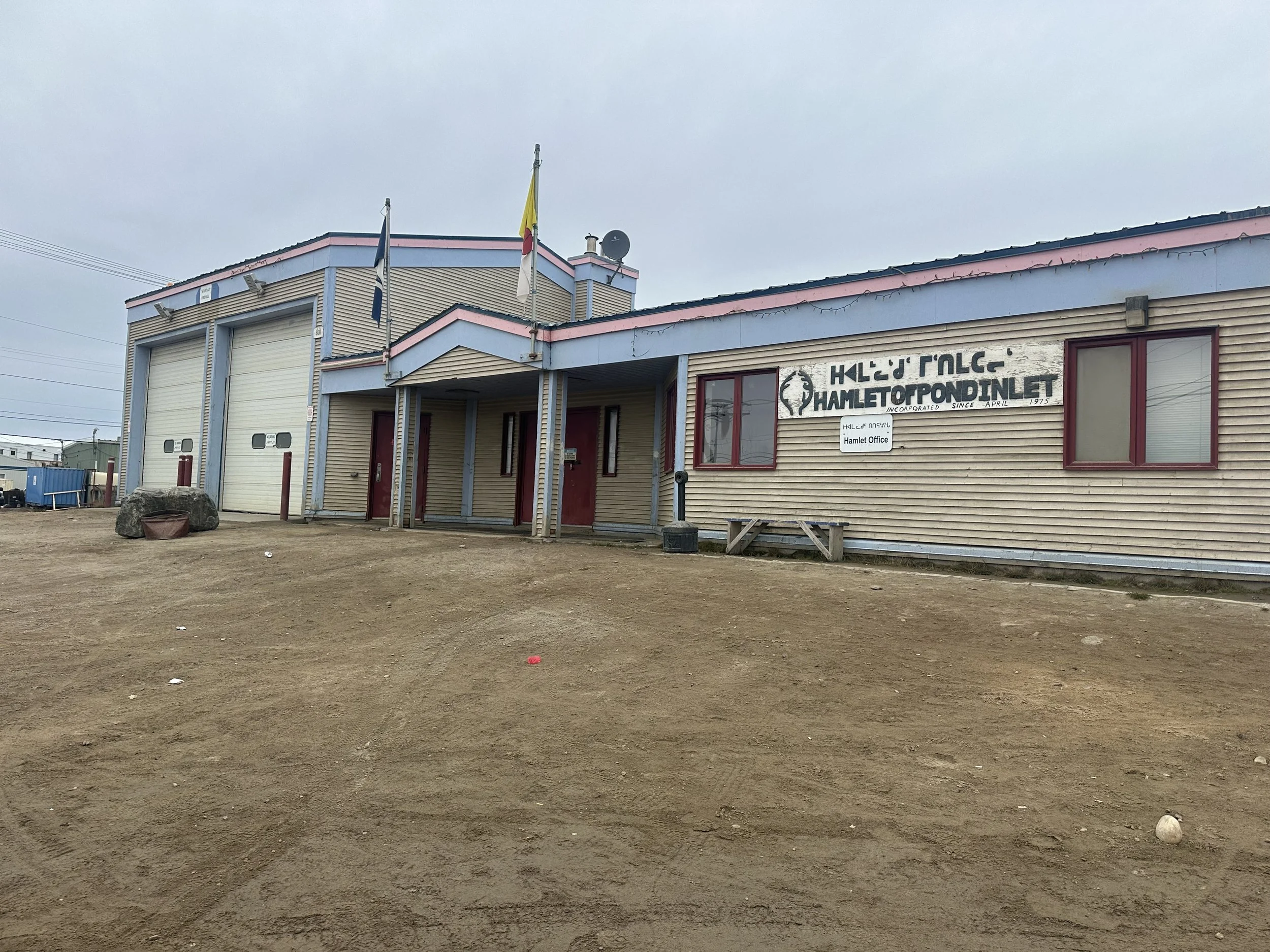
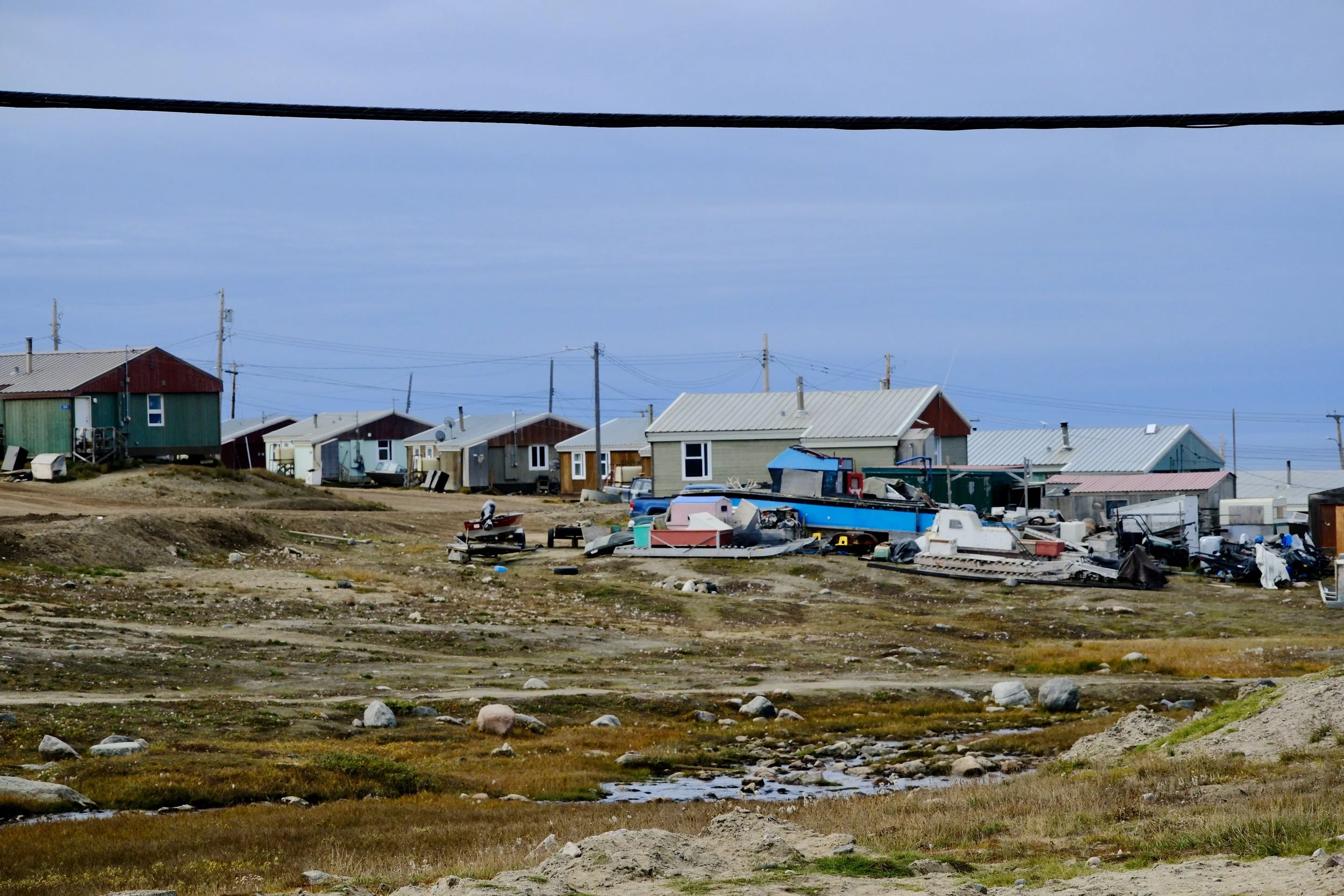
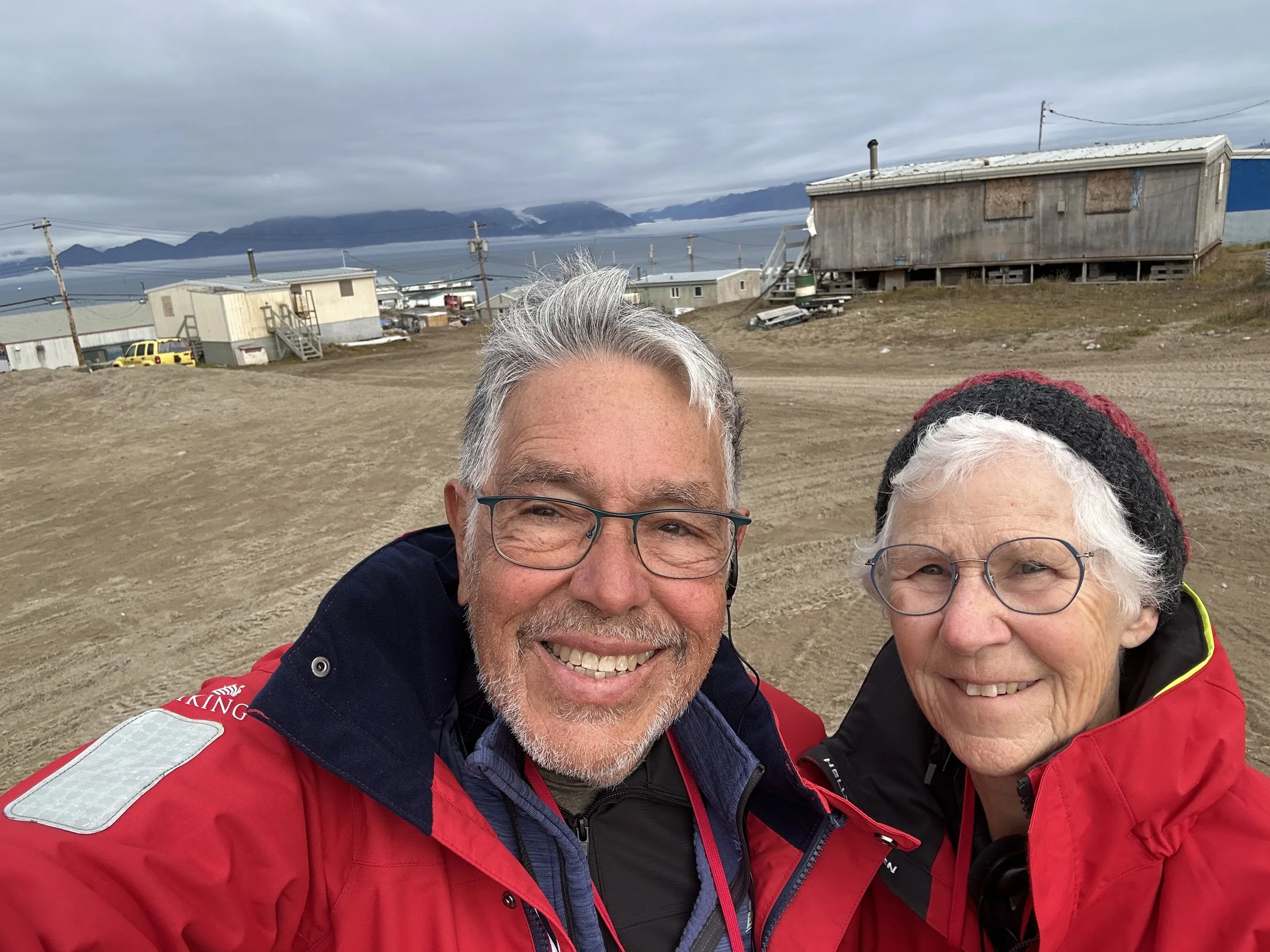
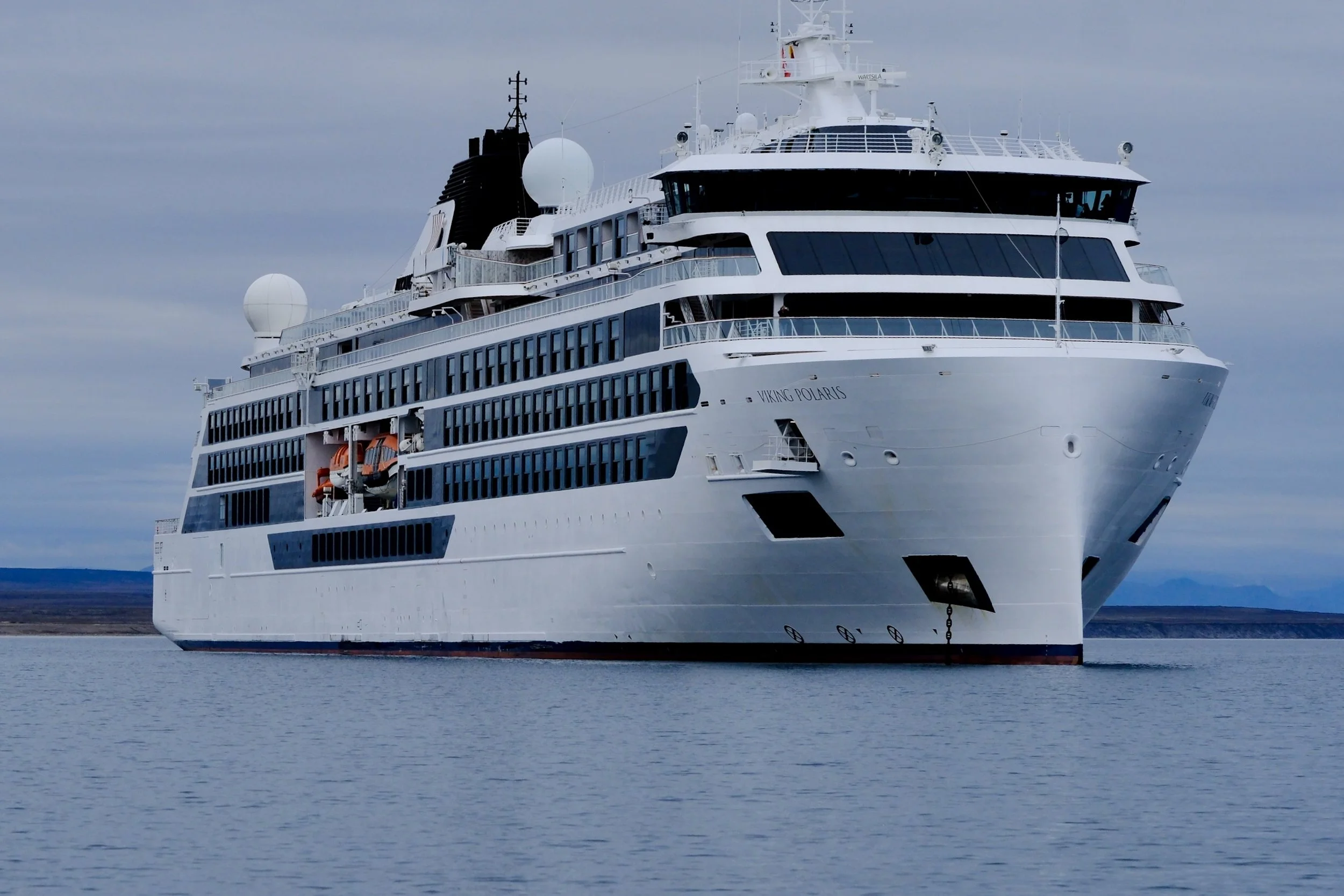
Today’s activity was a visit to the Hamlet of Pond Inlet (Inuktitut: Mittimatalik) our first stop in Canada after a smooth crossing of the Baffin Bay yesterday. We may have seen some three- to five-foot swells but the Polaris’s stabilization system made for a pleasant overnight trip.
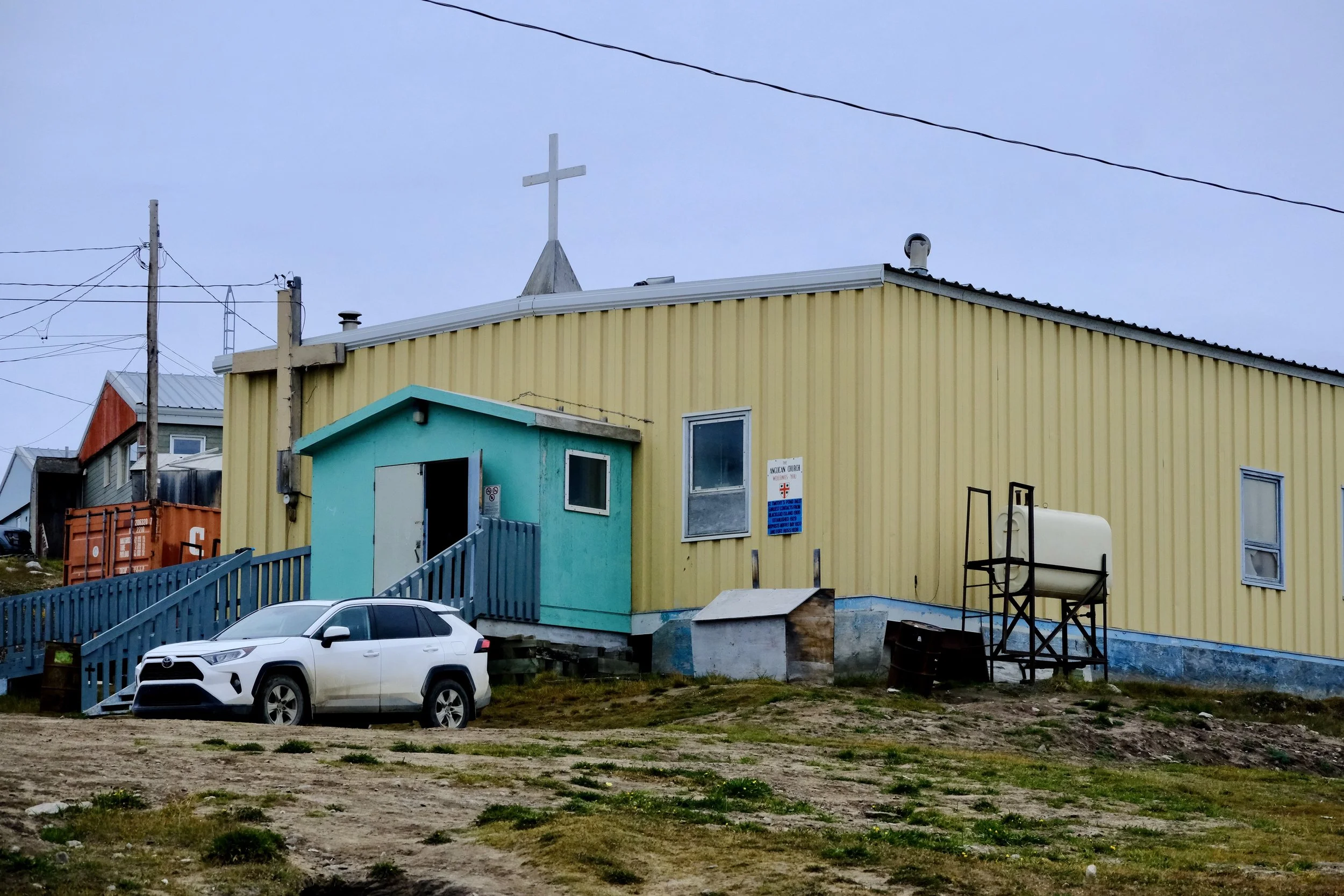
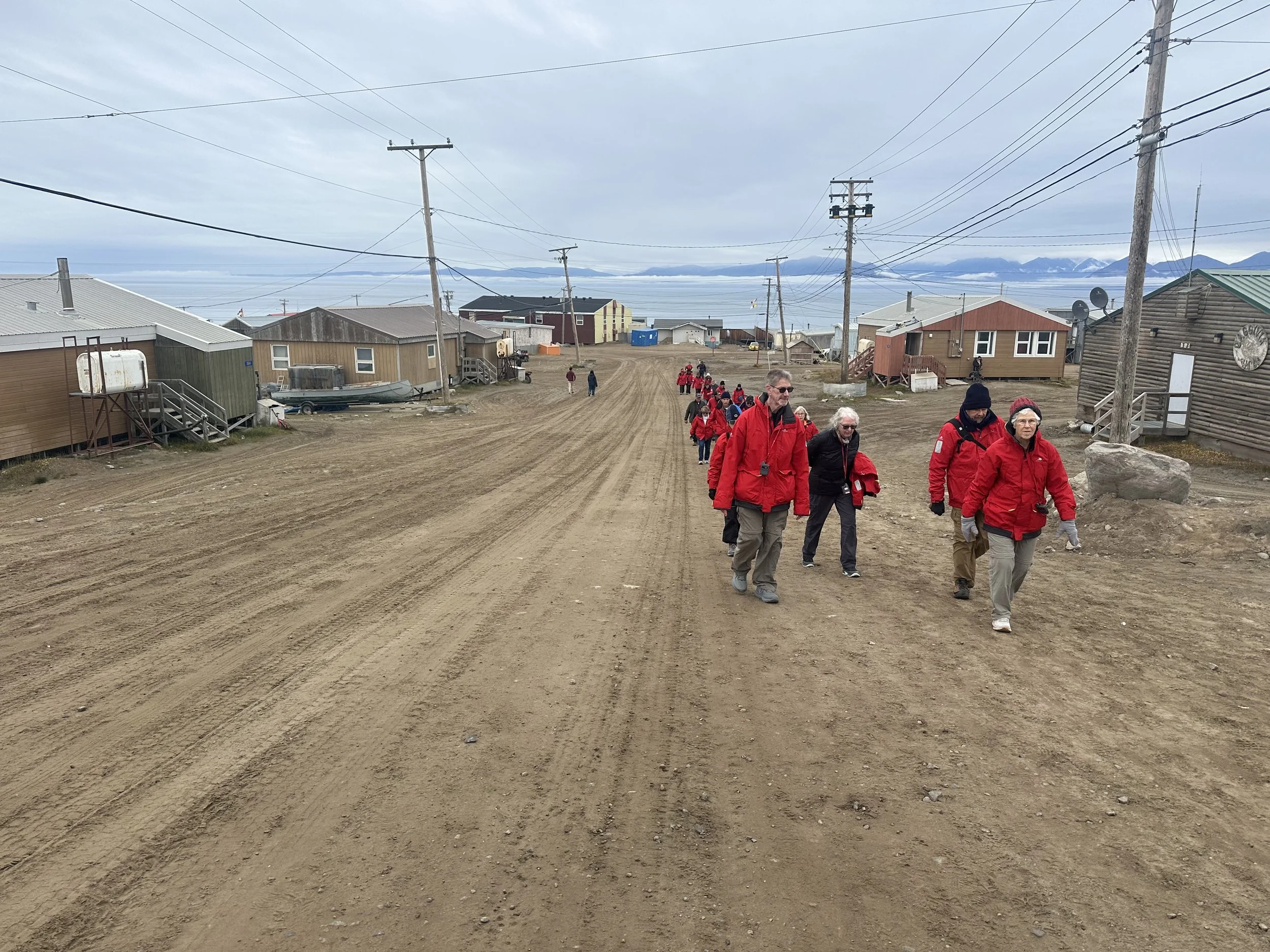
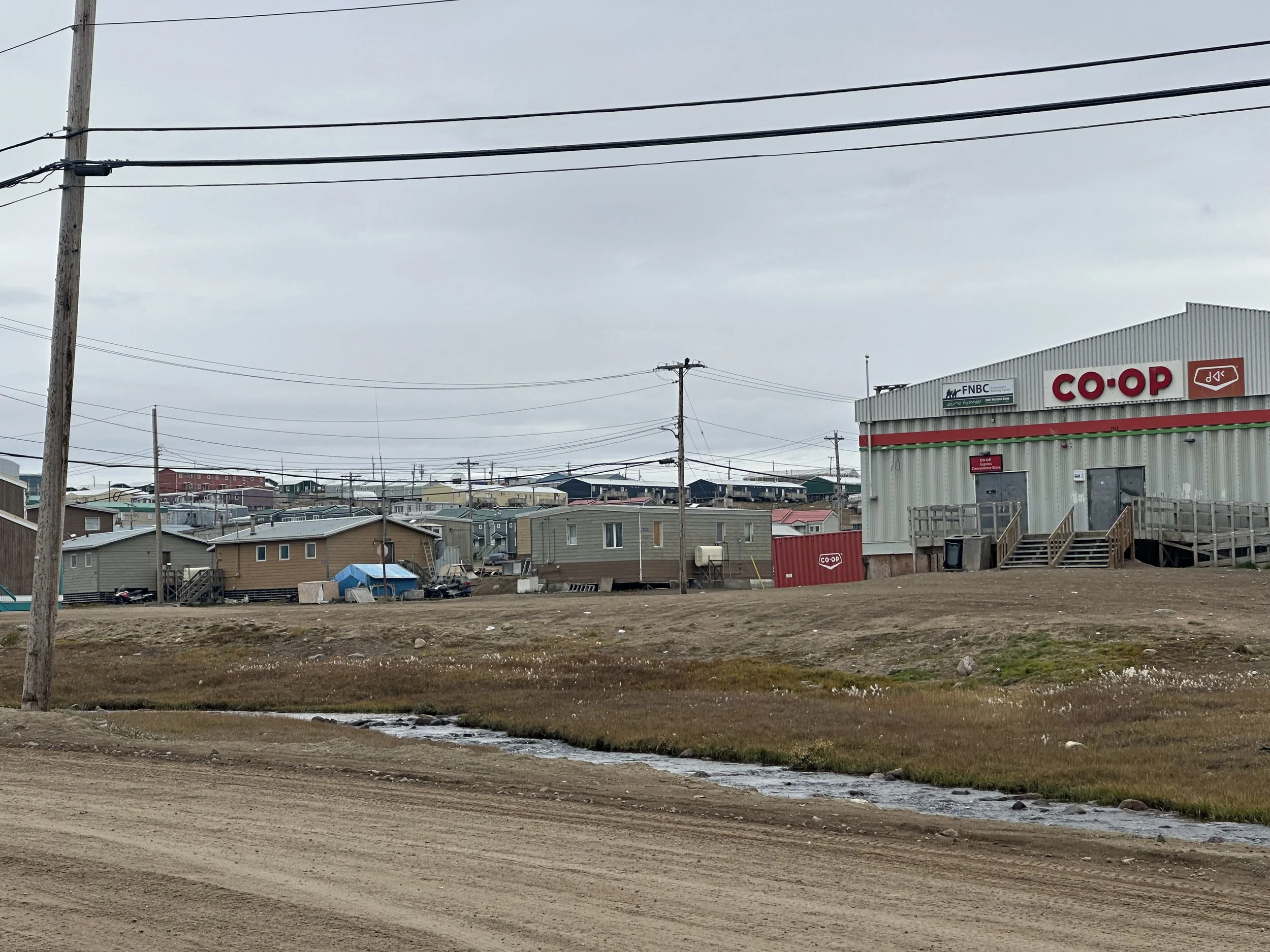
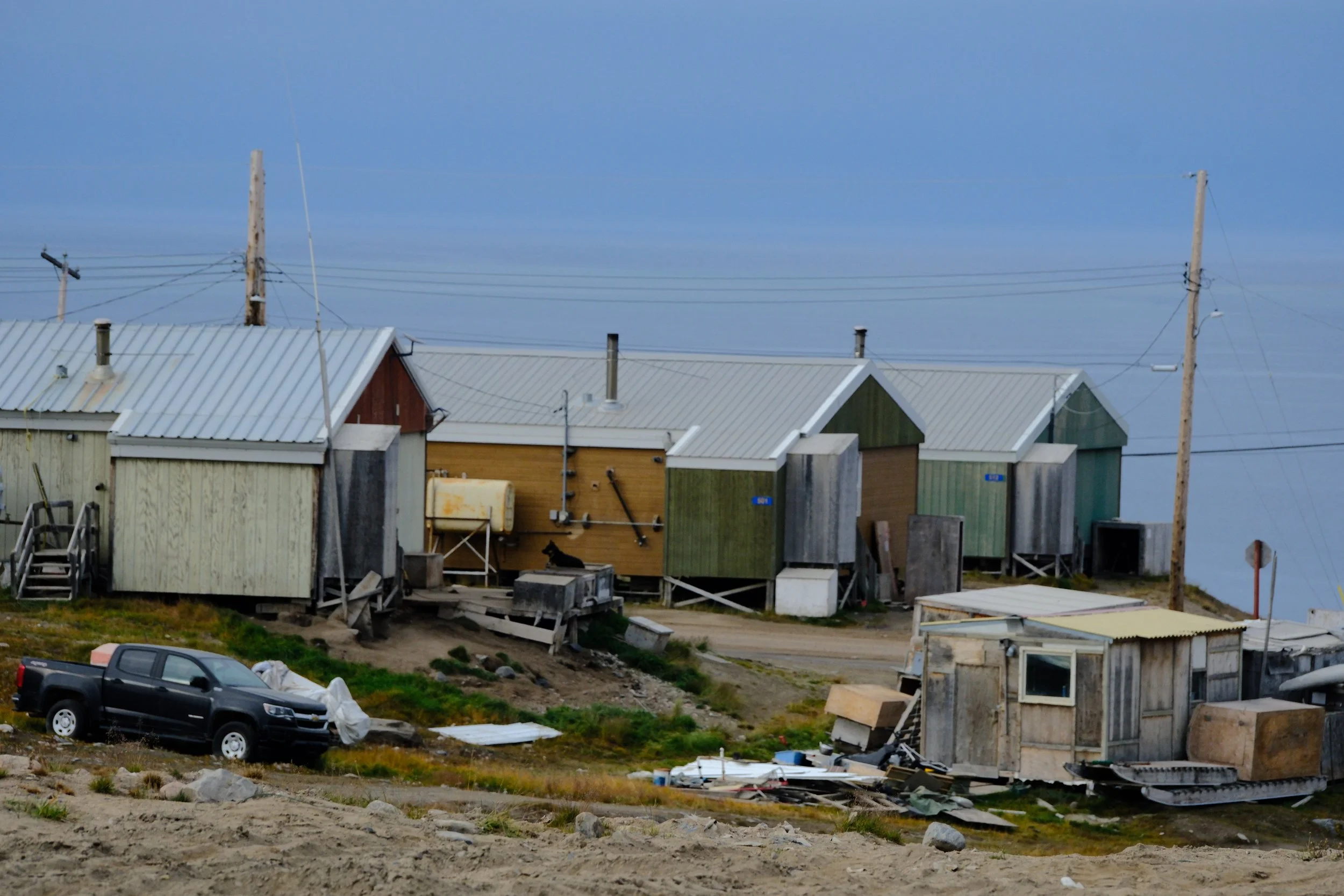
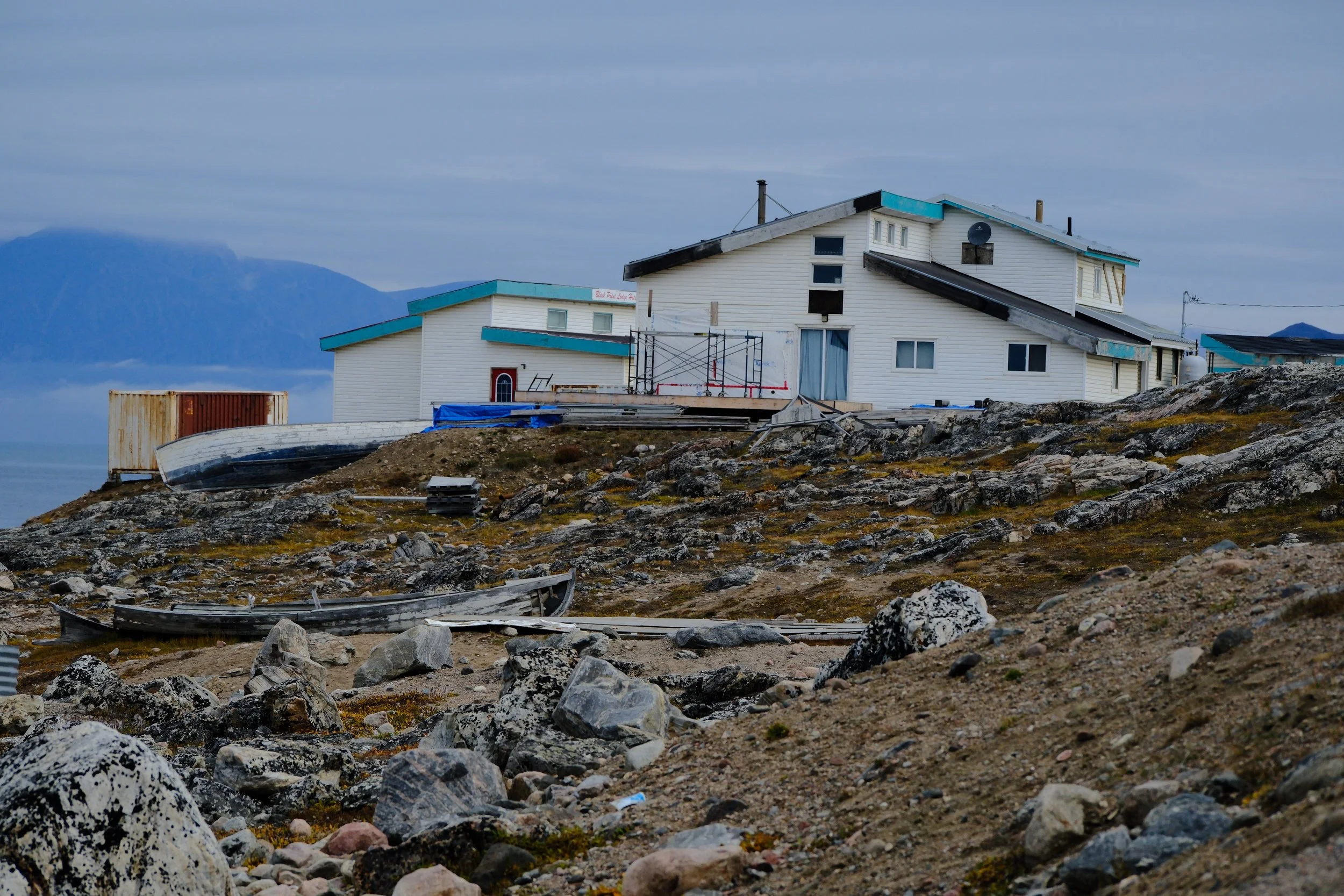
Pond Inlet was declared a Hamlet in 1975. With a population of around 2,000, it appears to be a community with one foot in the traditional Inuit substance economy and the other in the wage-based economy favored by Canadian government policy. That’s my read, not from any official source. But hunting and fishing are still a source of food and there’s a Co-Op grocery store and people obviously have money to spend.
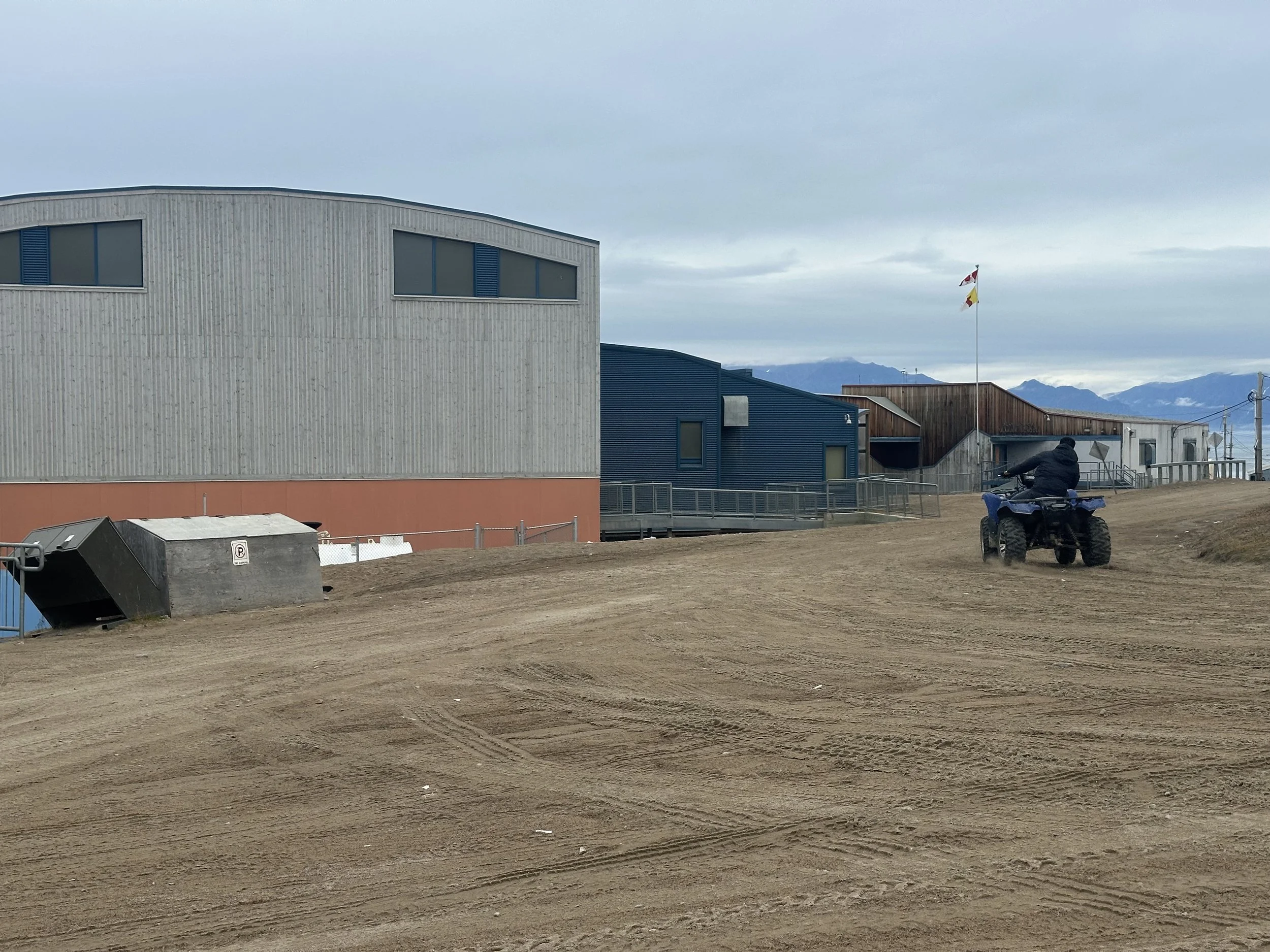
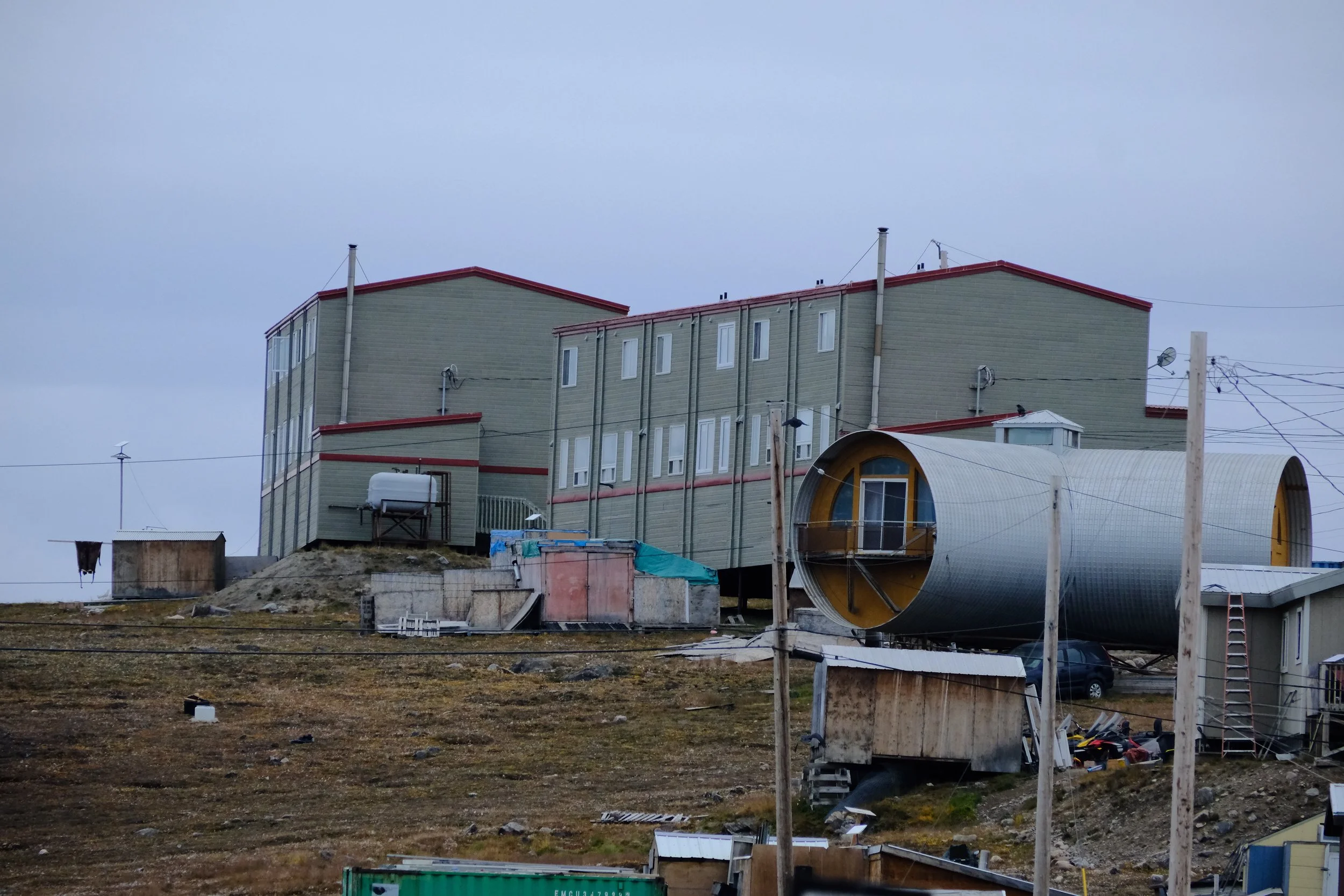
Of the 2,000 residents, 500 are students in the high school and 300 are in the elementary school. Population has grown over the past few years and new housing is under construction, along with a new community center.
The Canadian government is the biggest employer in town. Tourism is also a factor, with a dozen or two cruise ships arriving each season. There’s a major iron ore mine about 100 miles south of Pond Inlet and I’ve got to believe the mine is a potential employer of locals. The government is establishing a vocational school specializing in heavy equipment operation that ought to feed the mine.
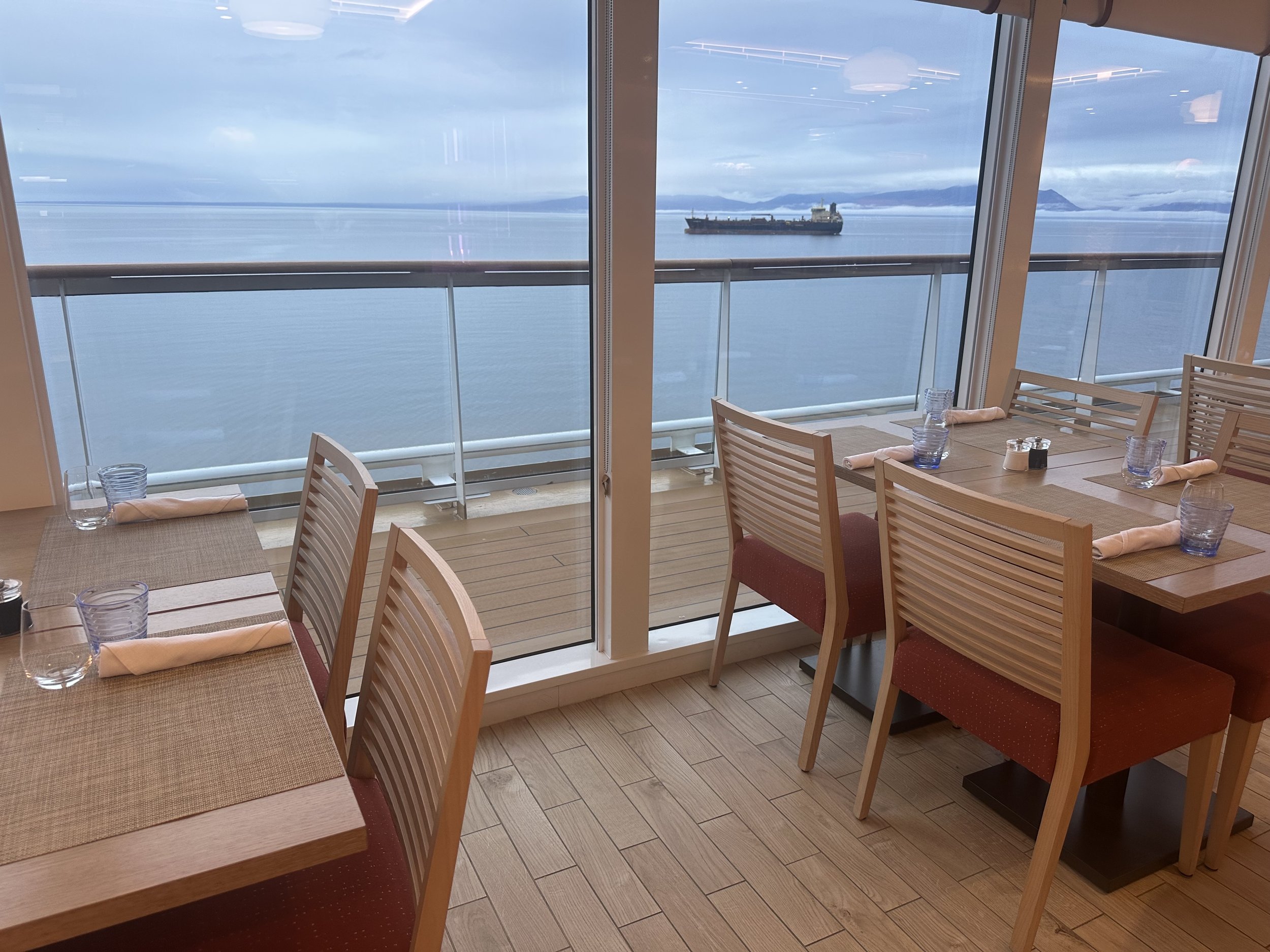
The Mary River Mine has recently been given the go-ahead for a 100 mile rail line from the mine to tidewater that will lead to greater production. Environmental concerns are of course top of mind for many, but the government has approved the project after 15 or more years of debate. We saw a freighter in the harbor that is used today to transport ore brought to Pond Inlet my truck.
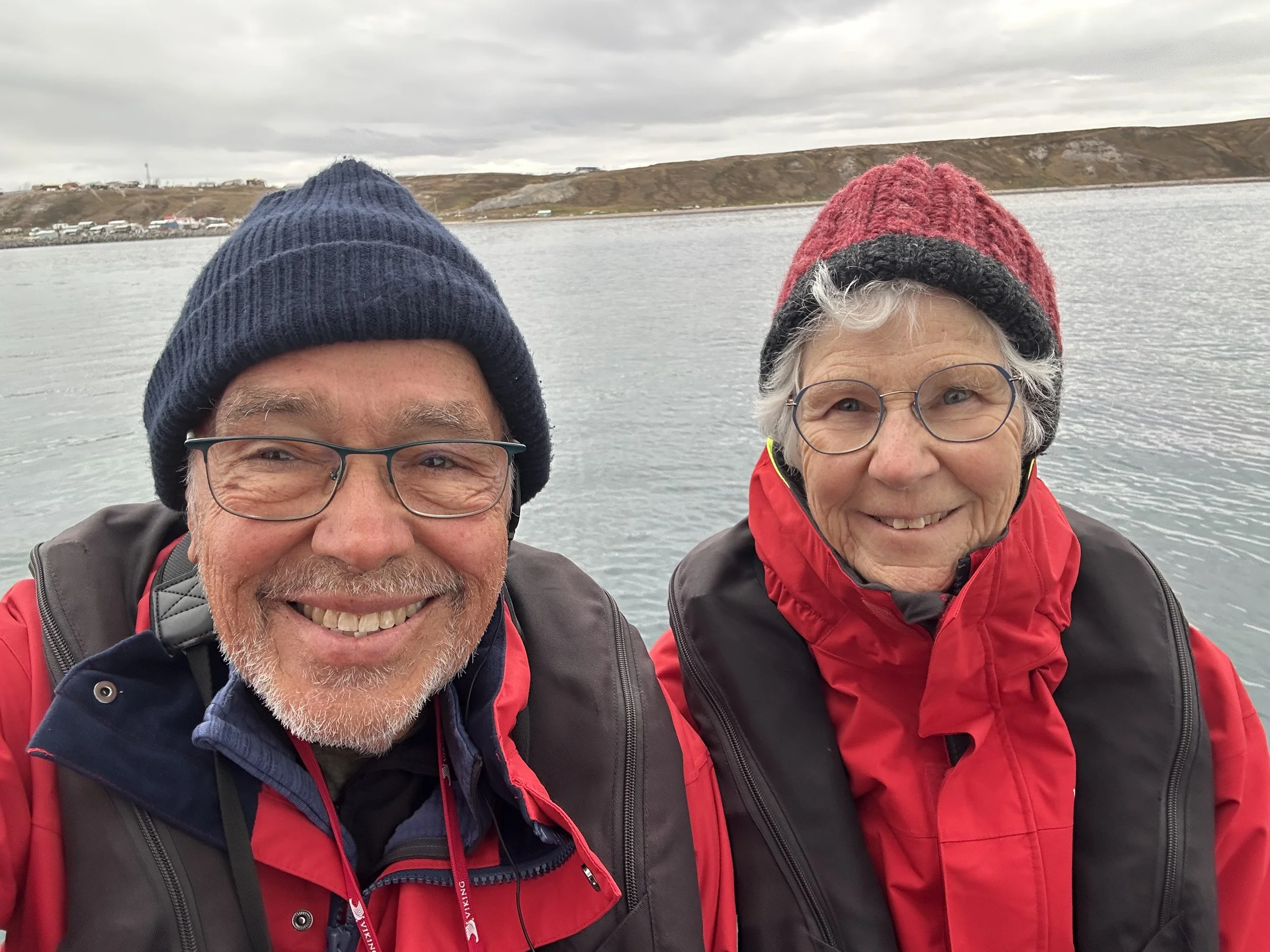
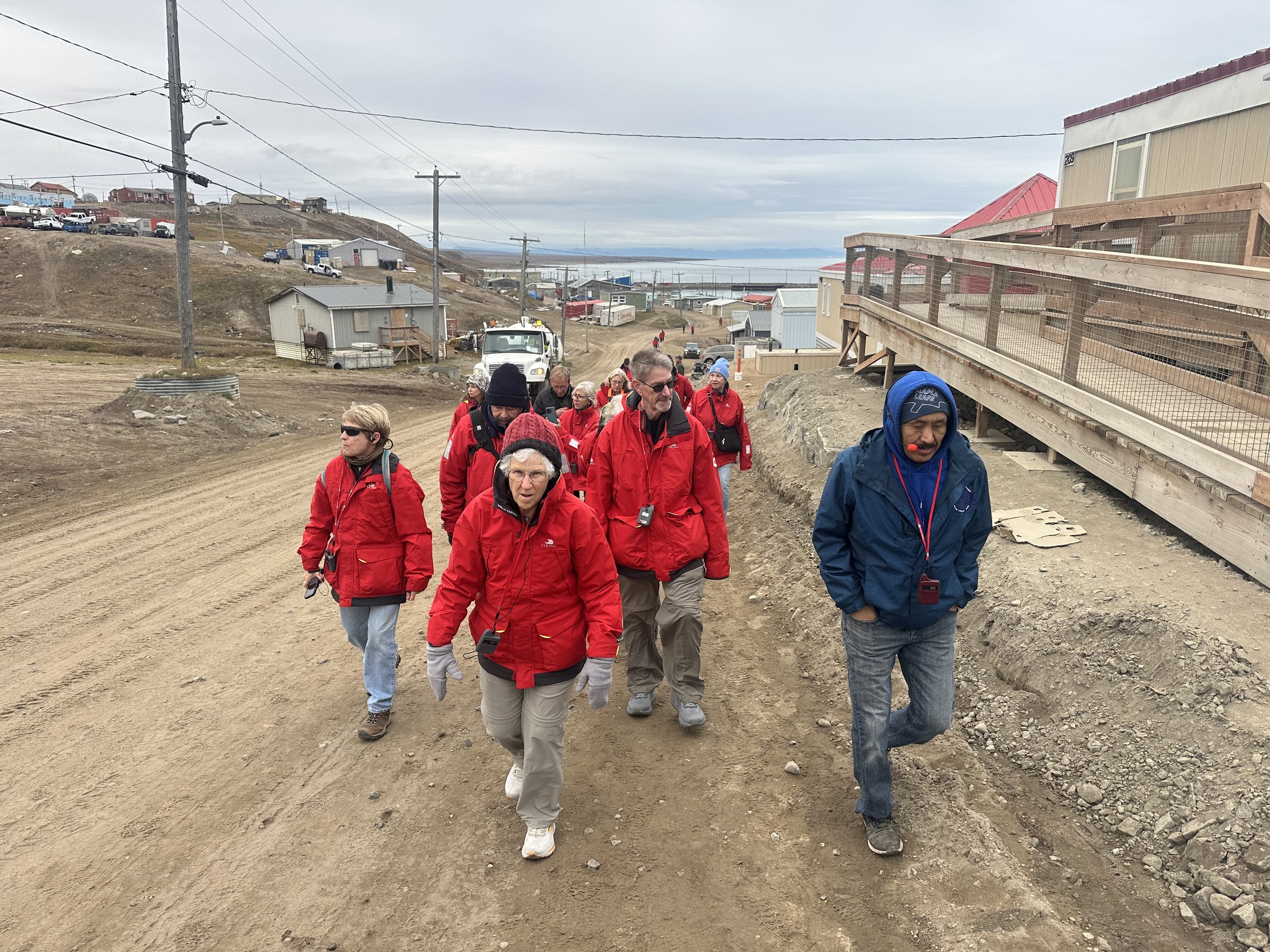
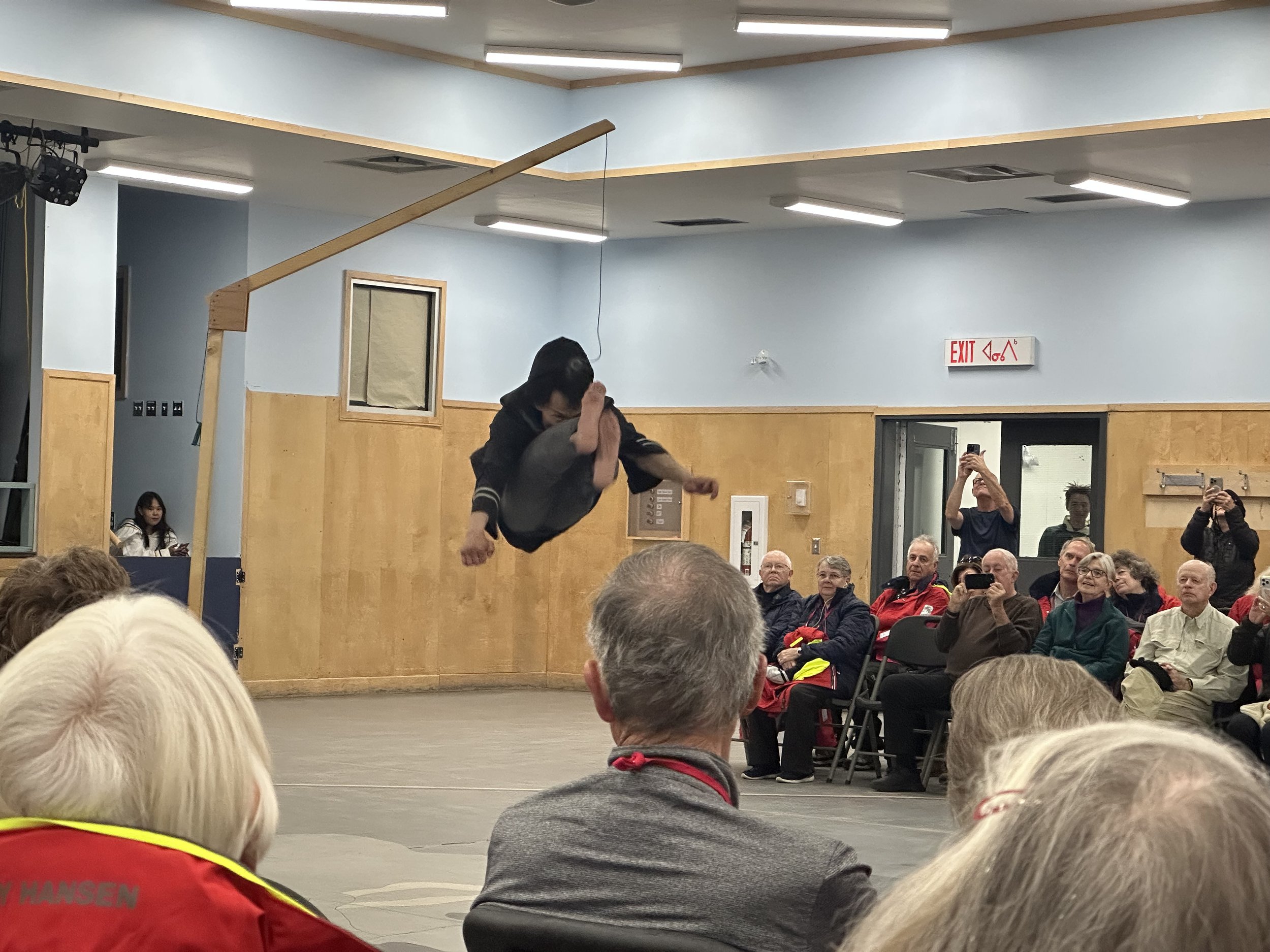
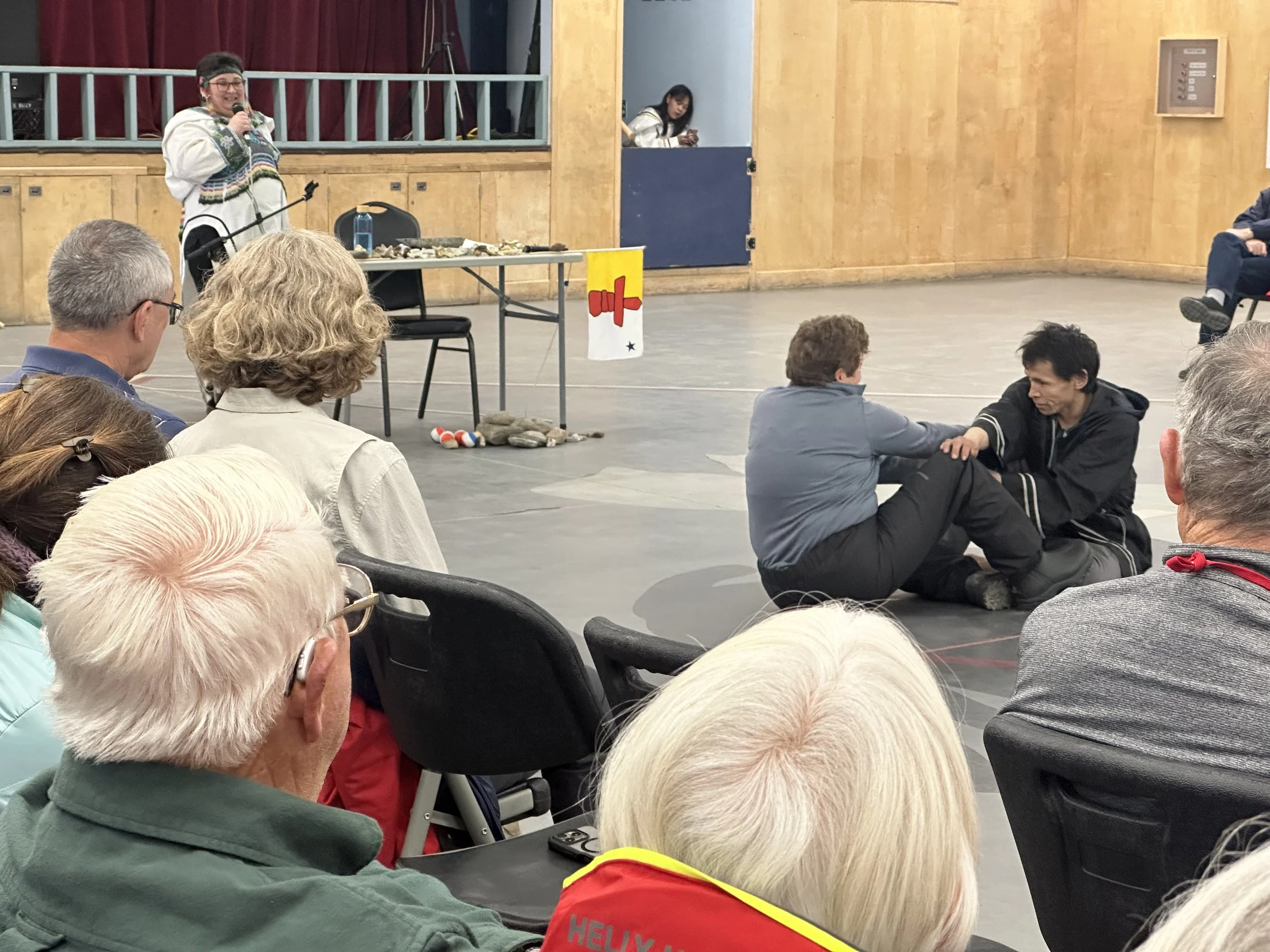
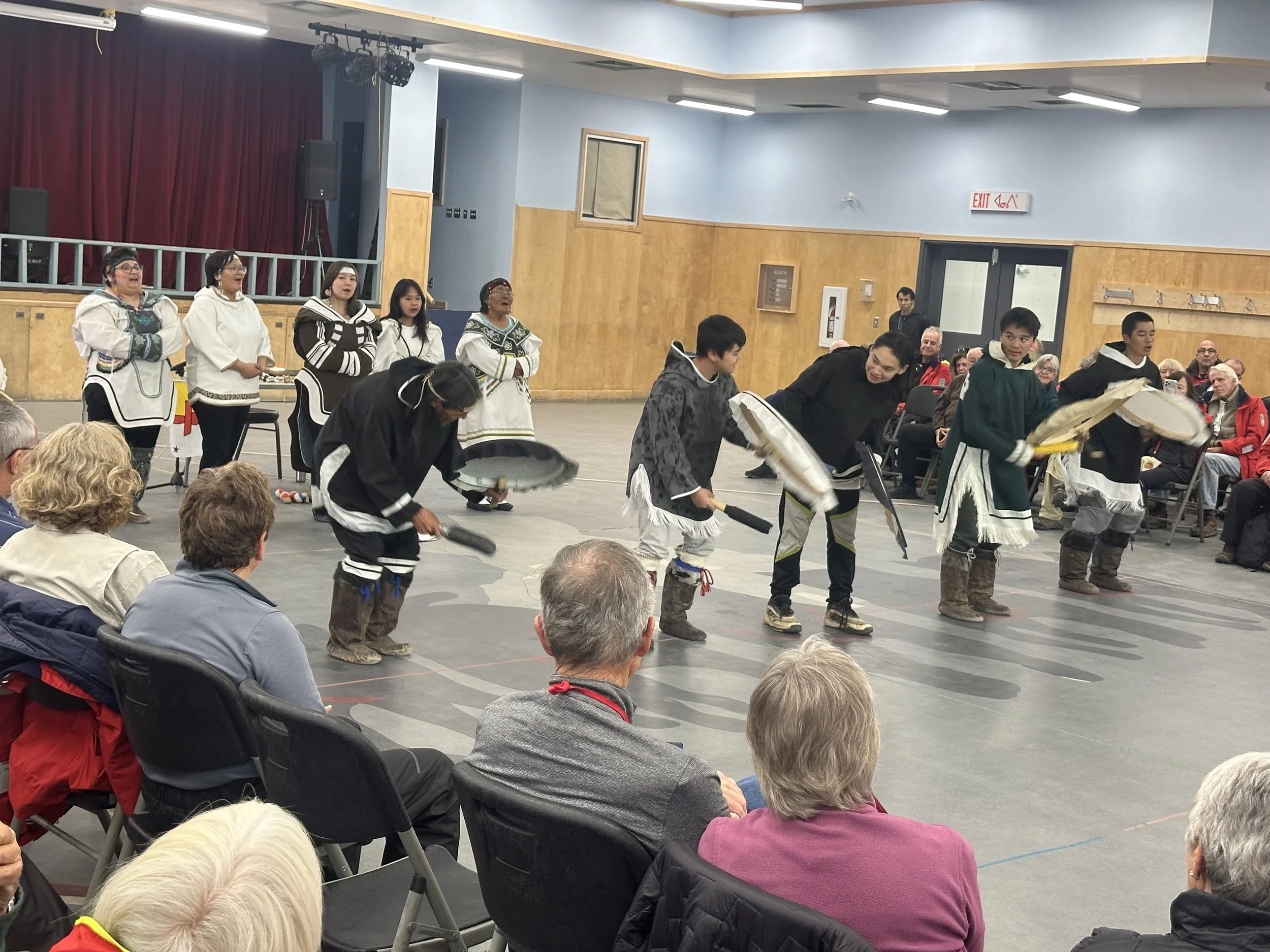
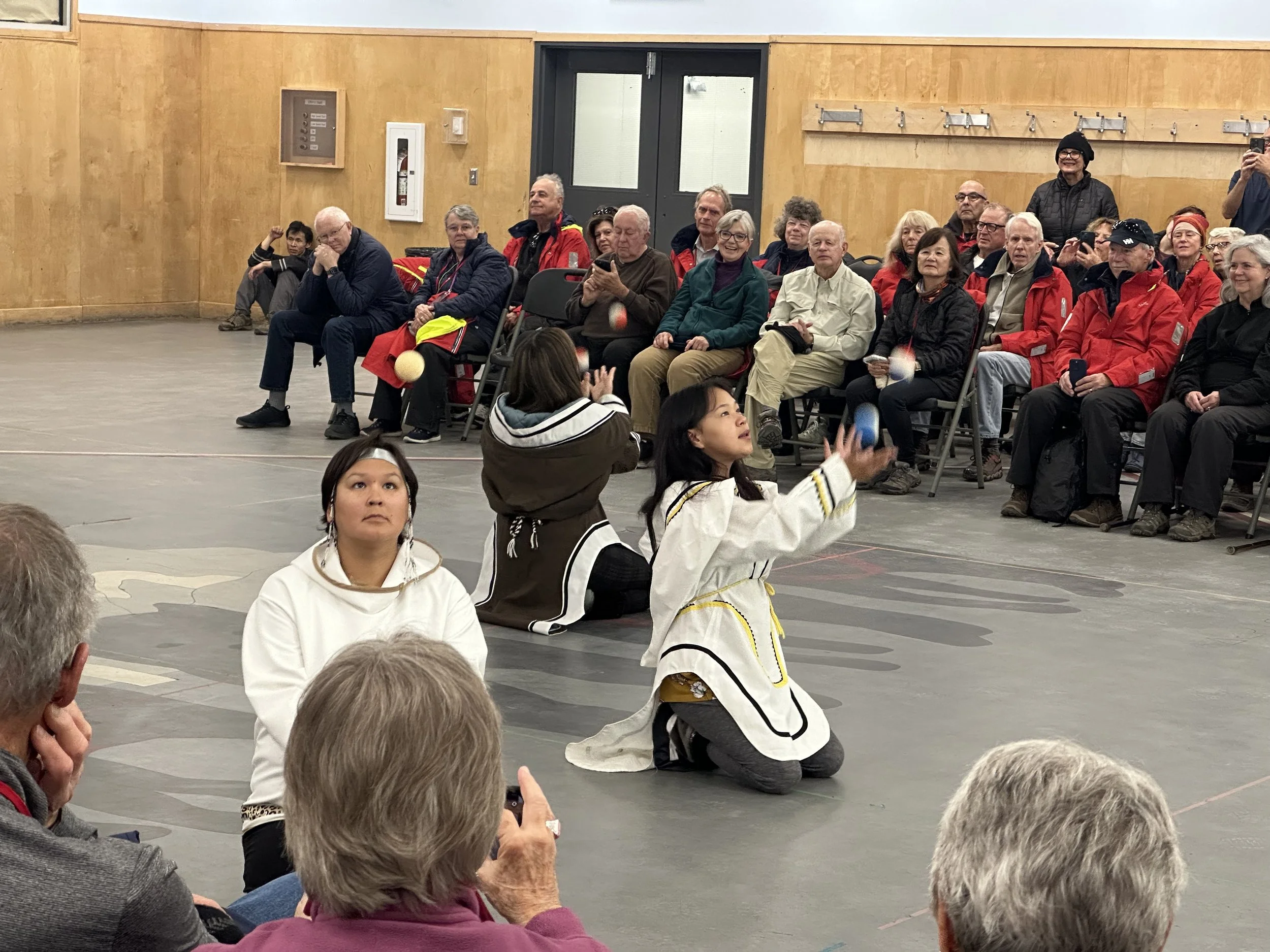
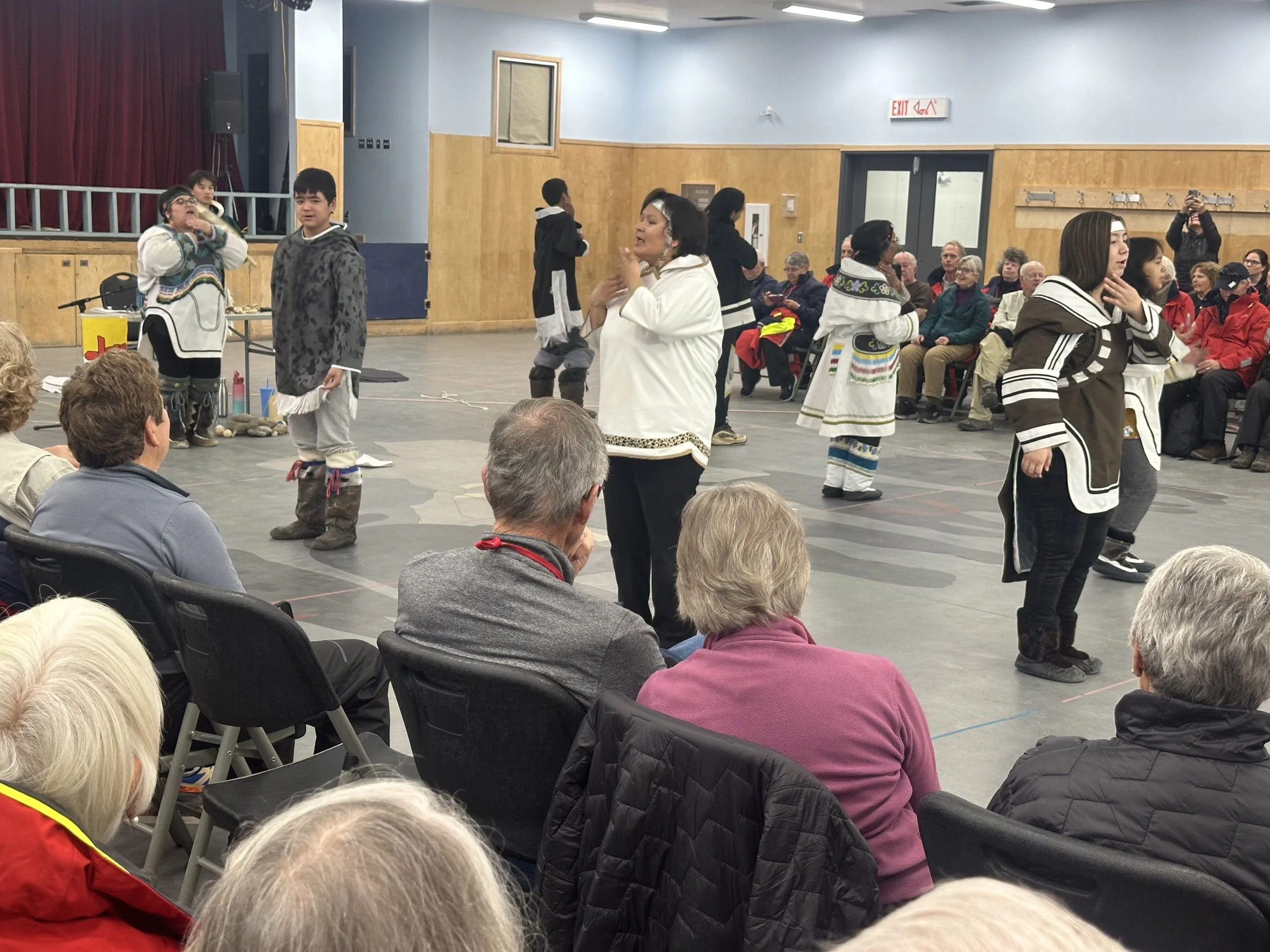
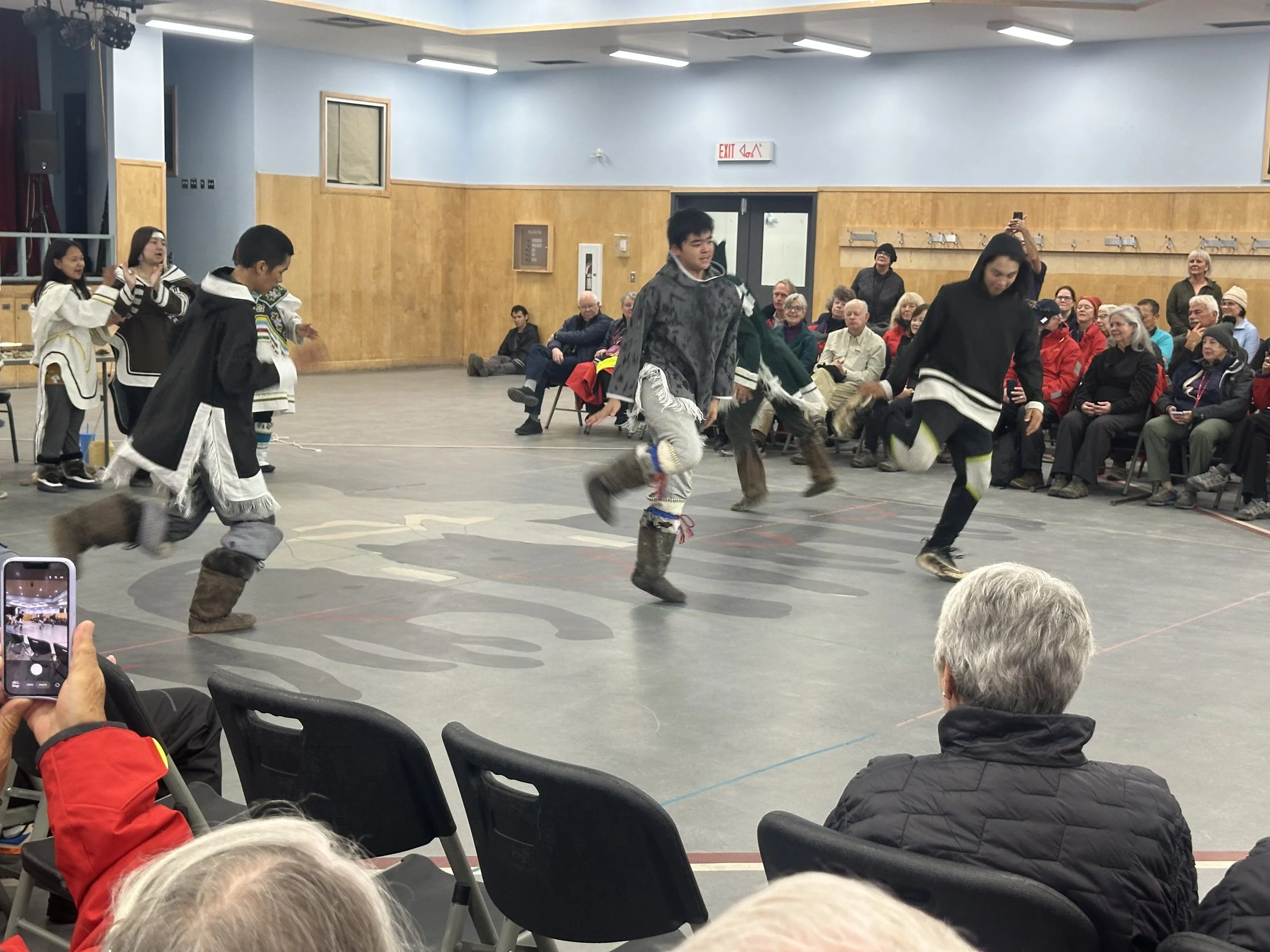
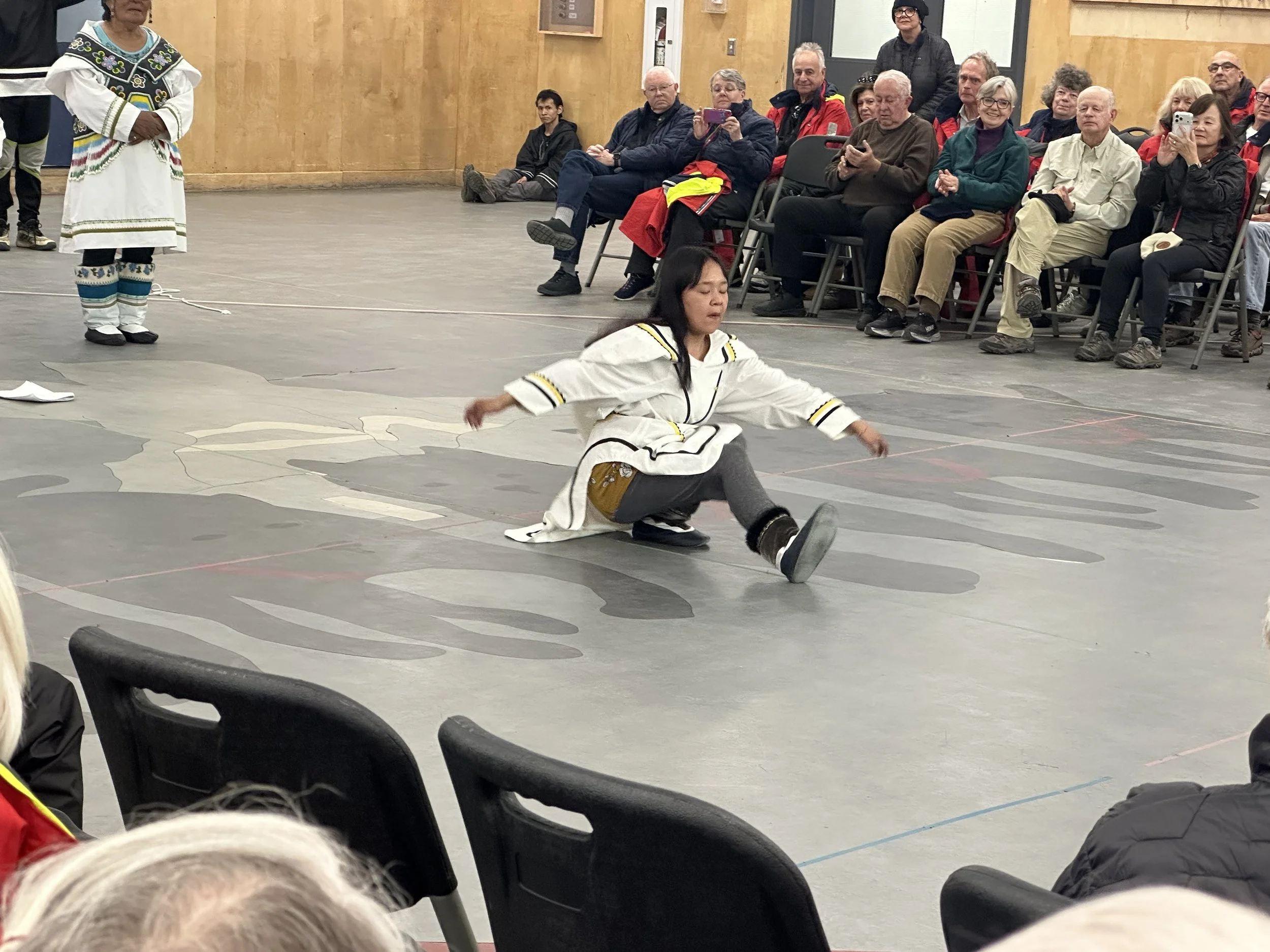
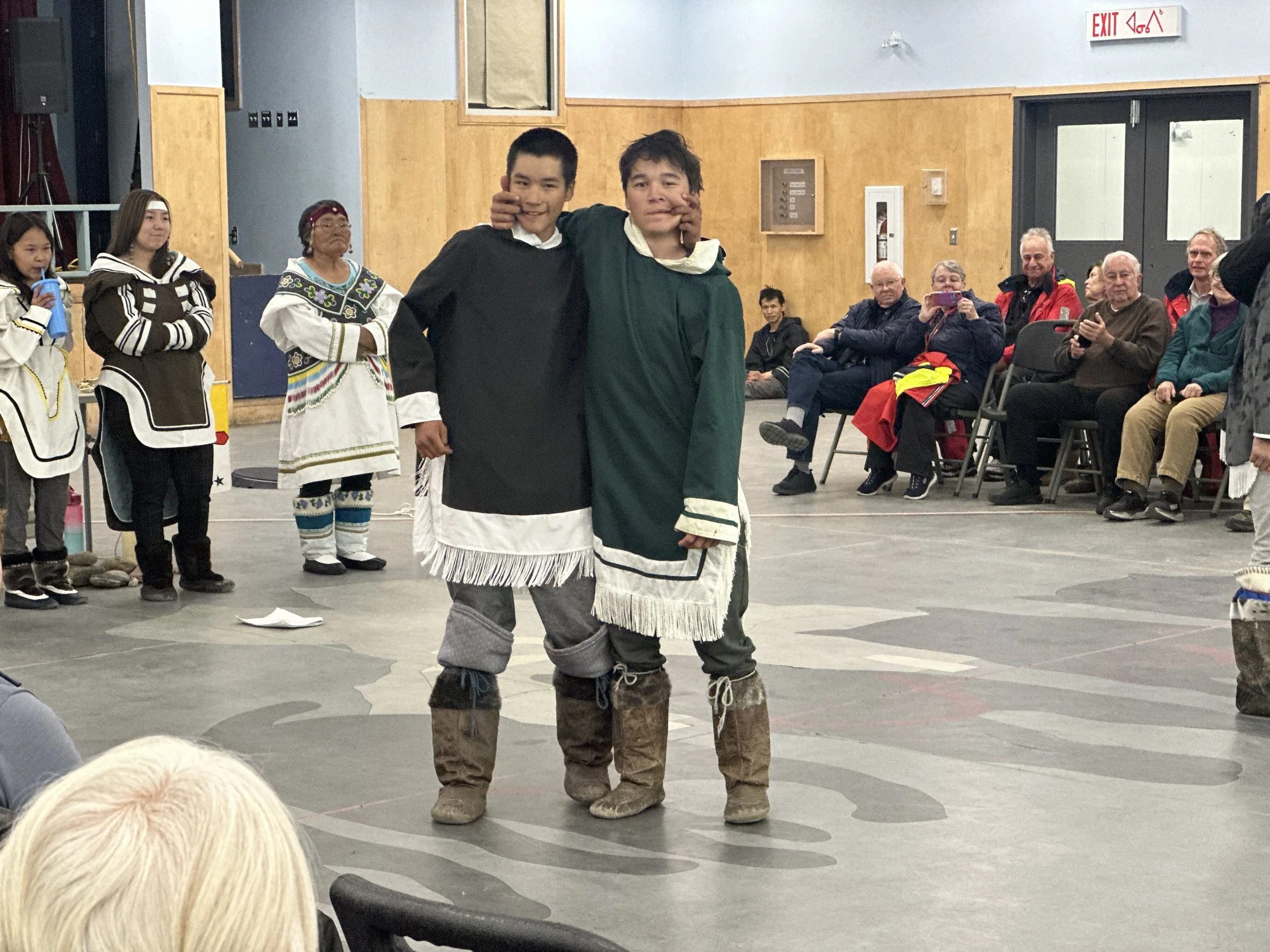
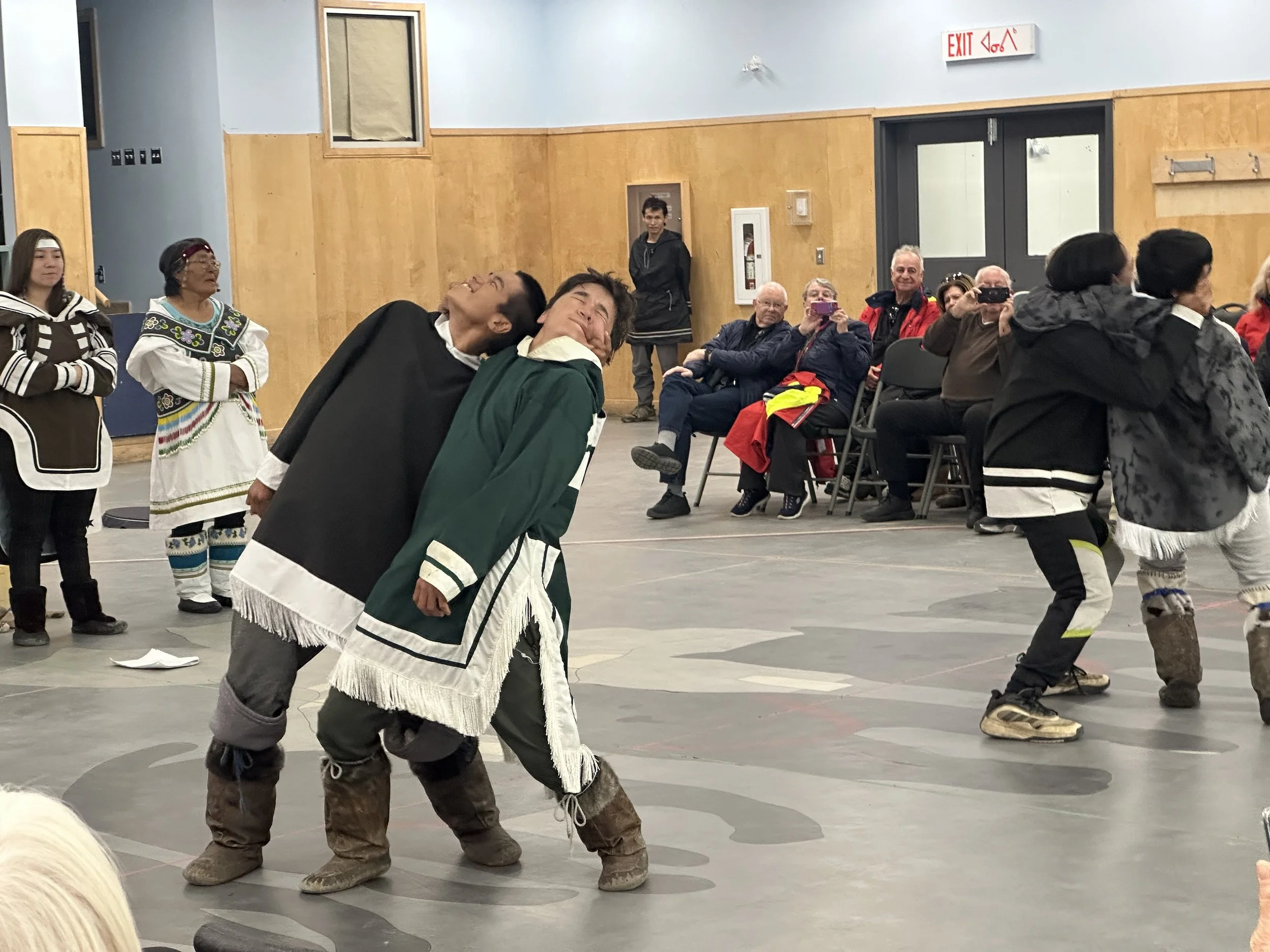
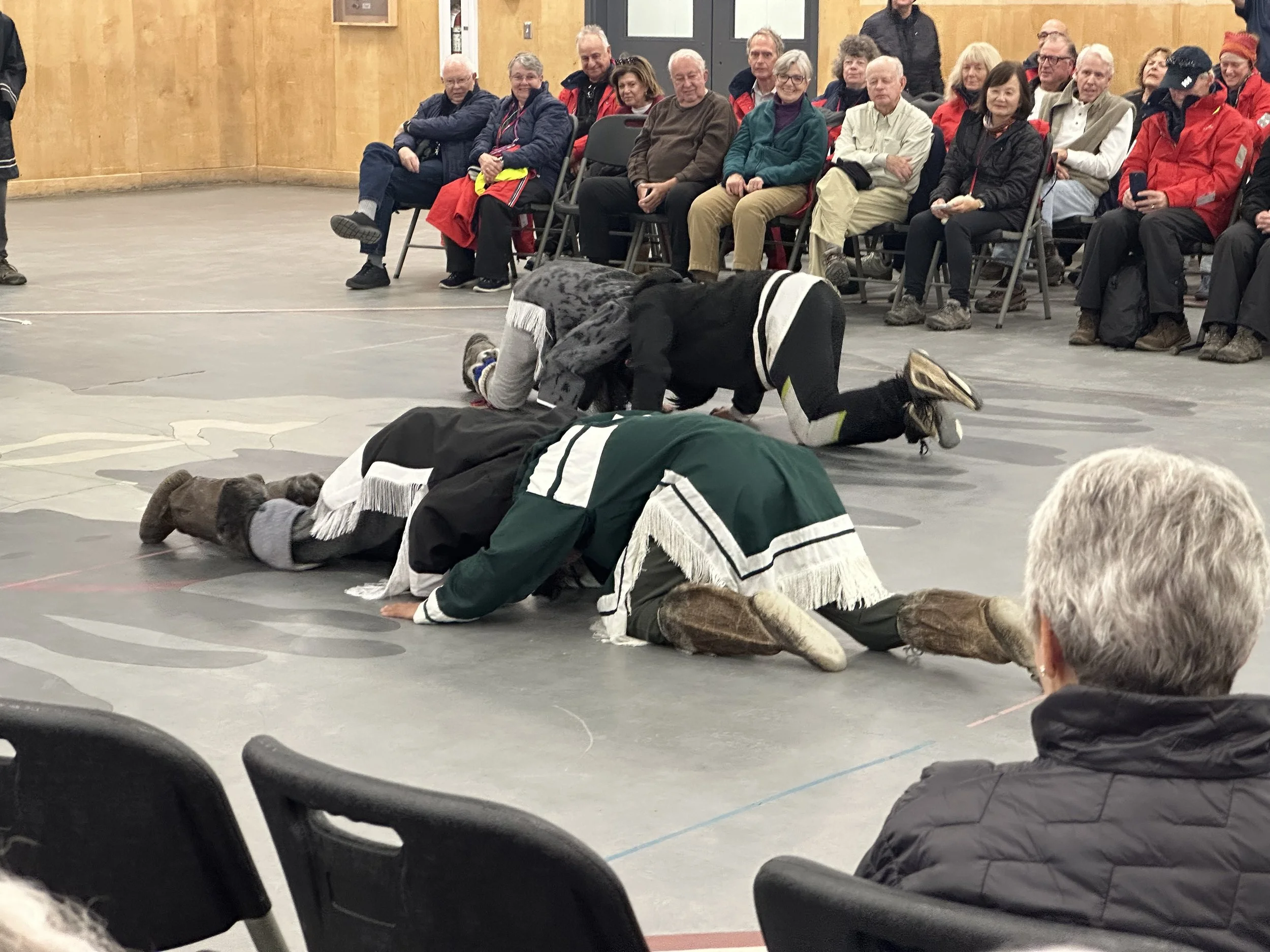
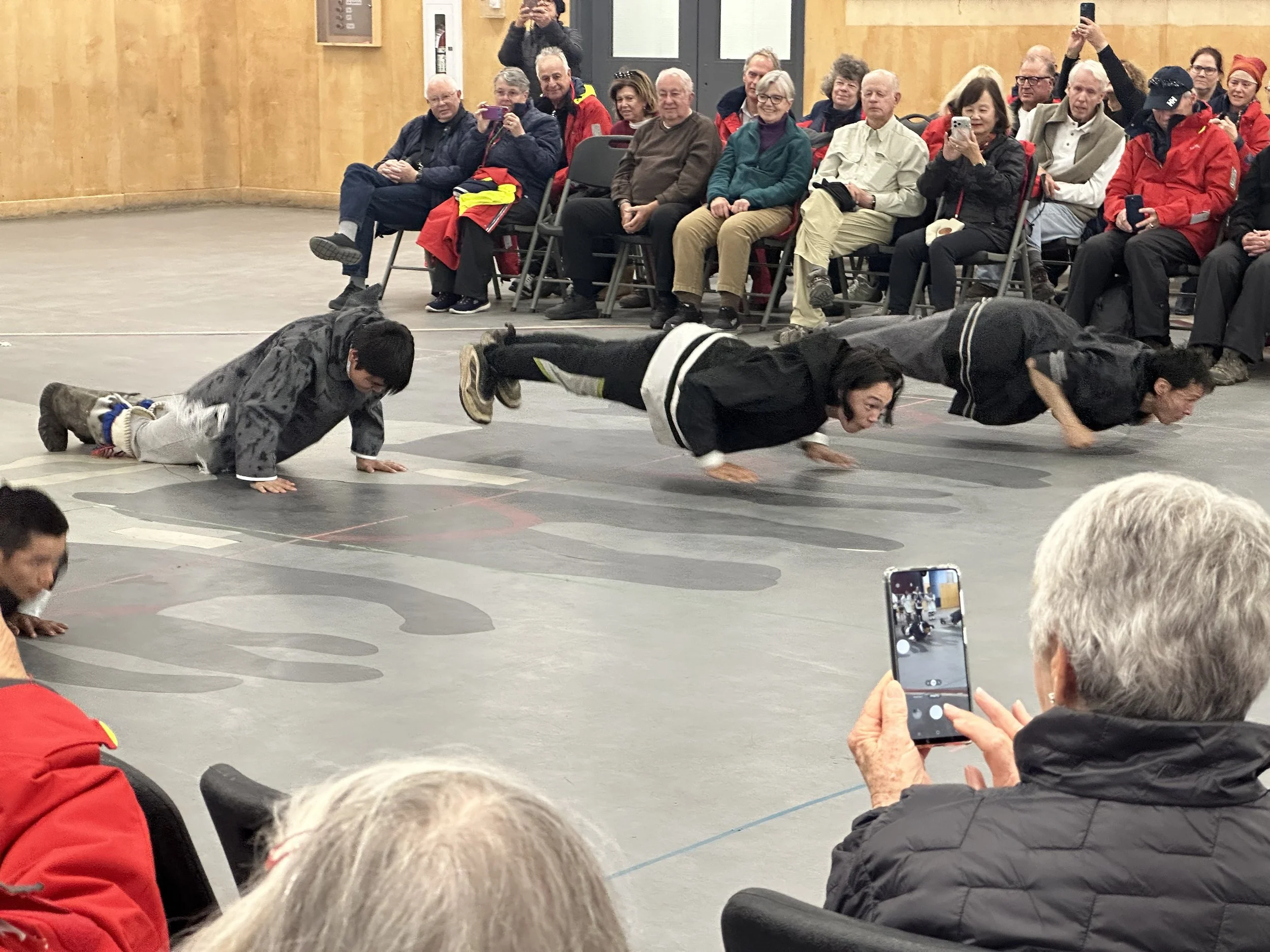
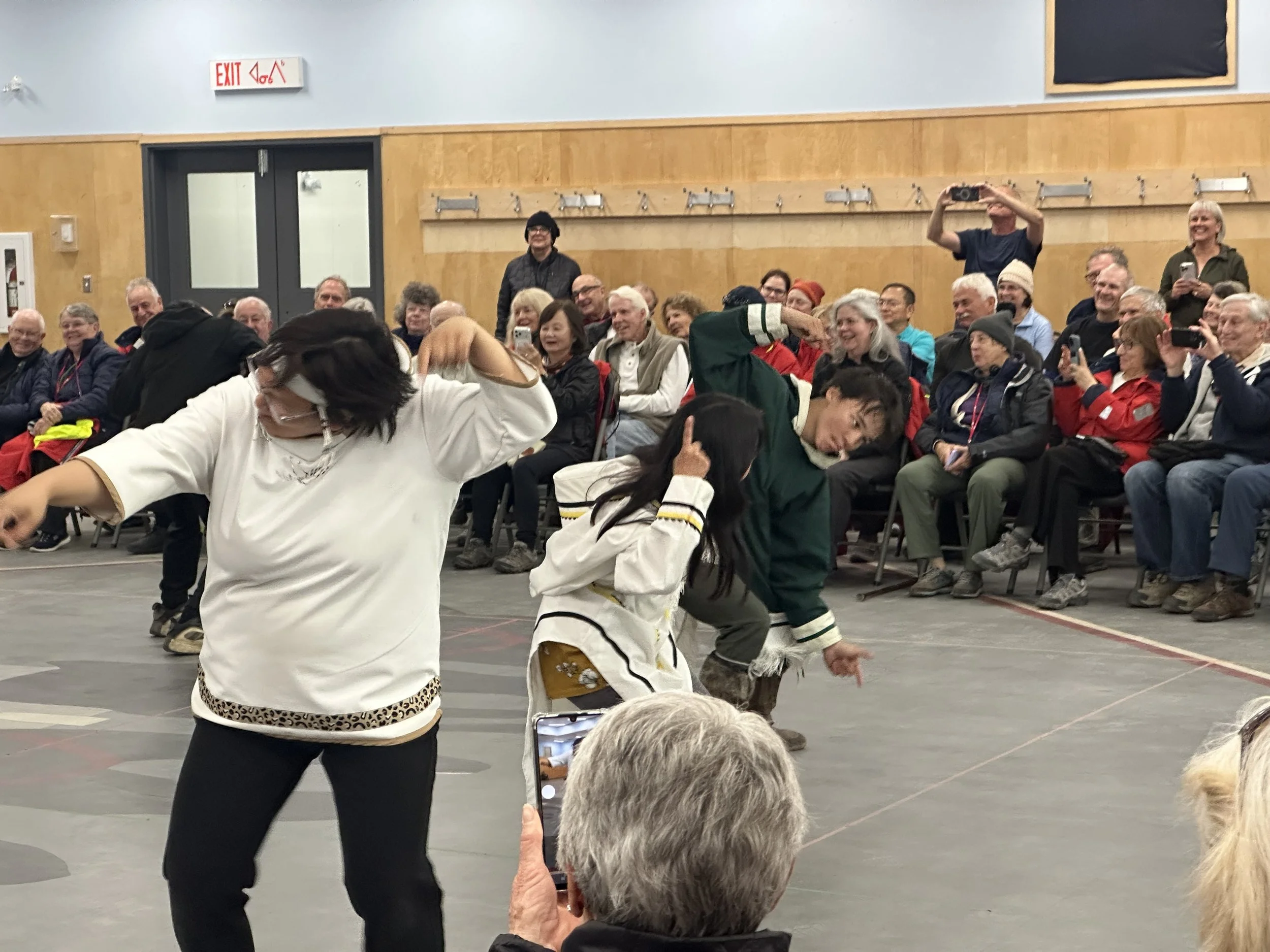
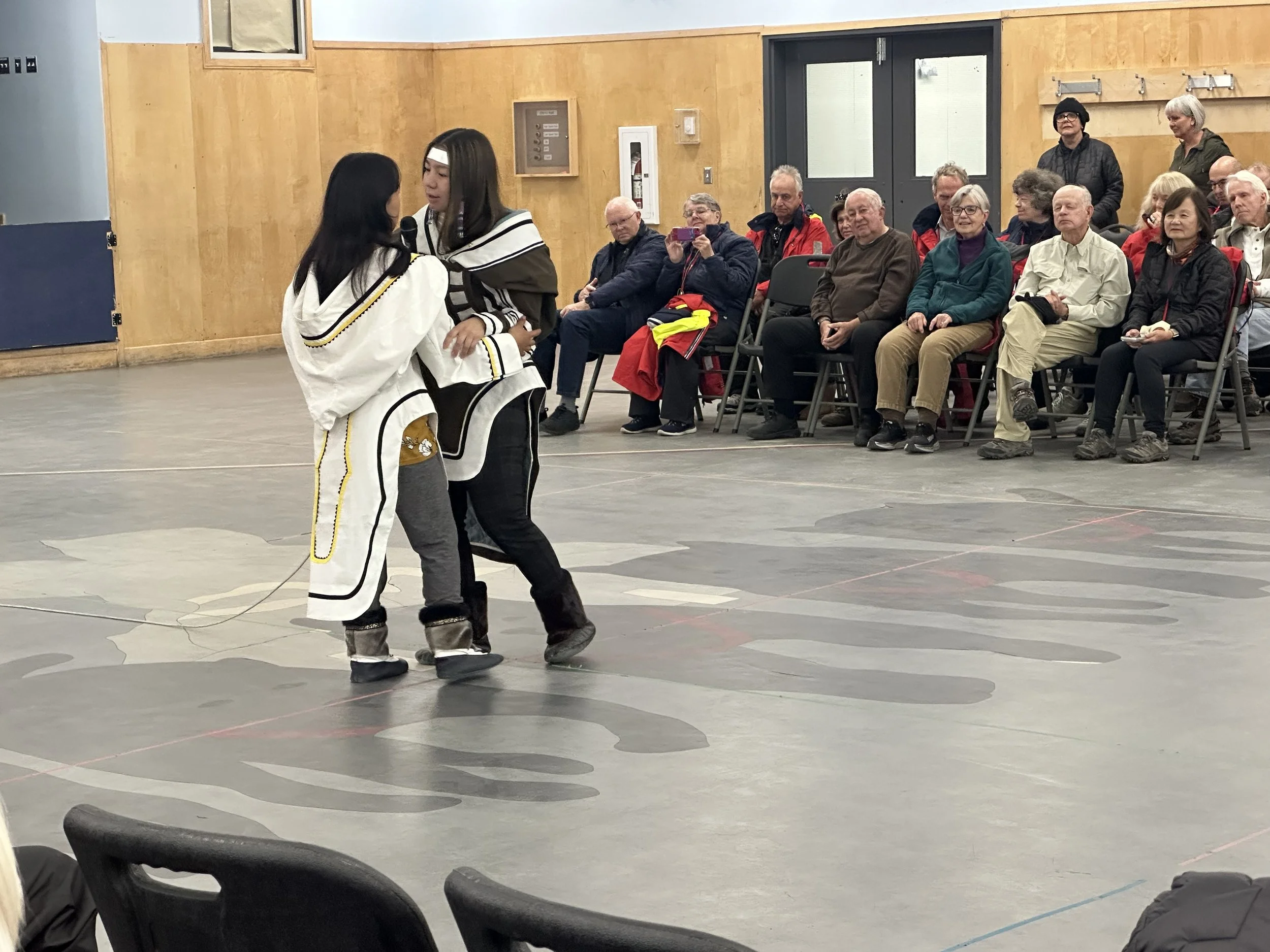
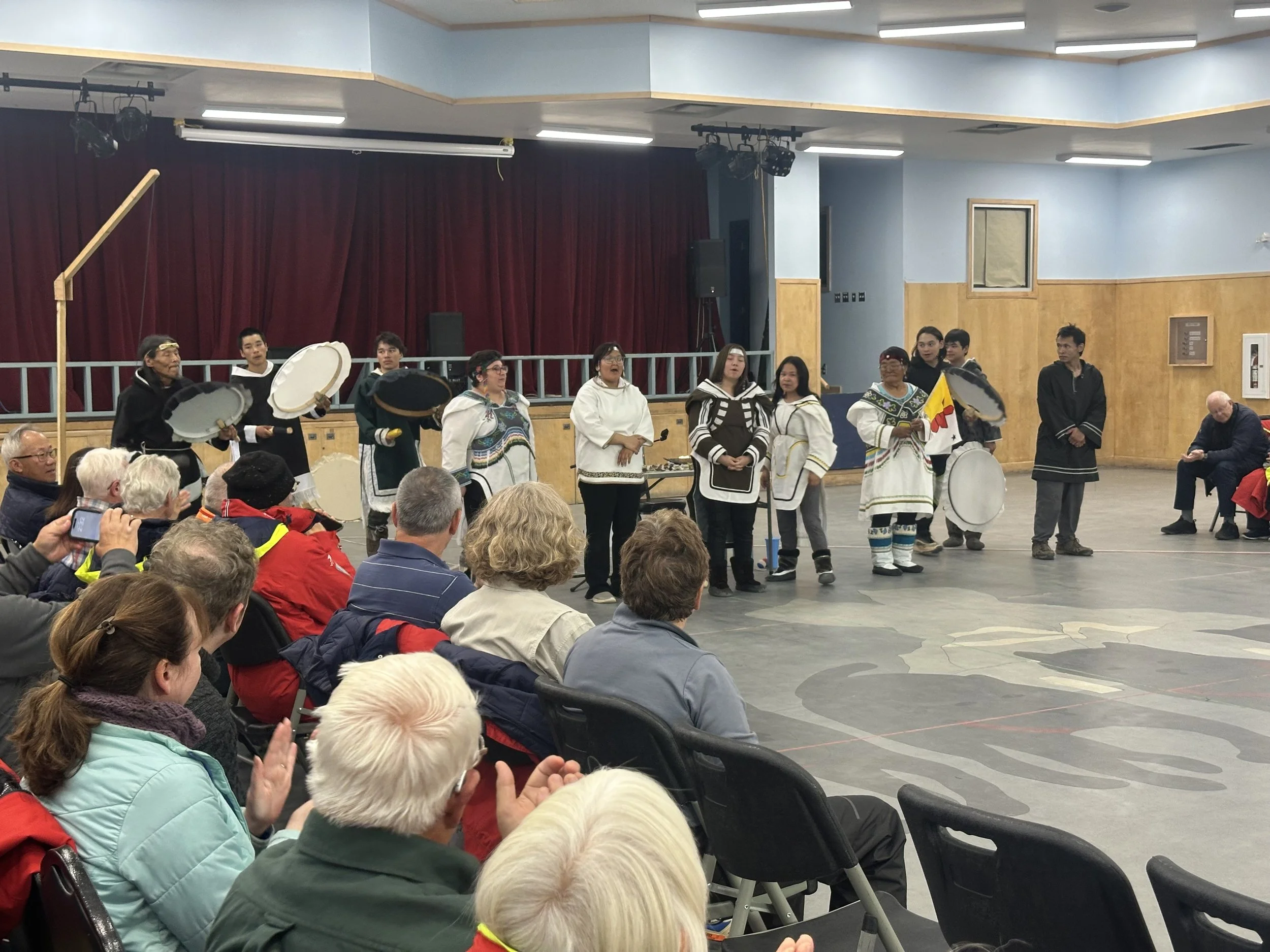
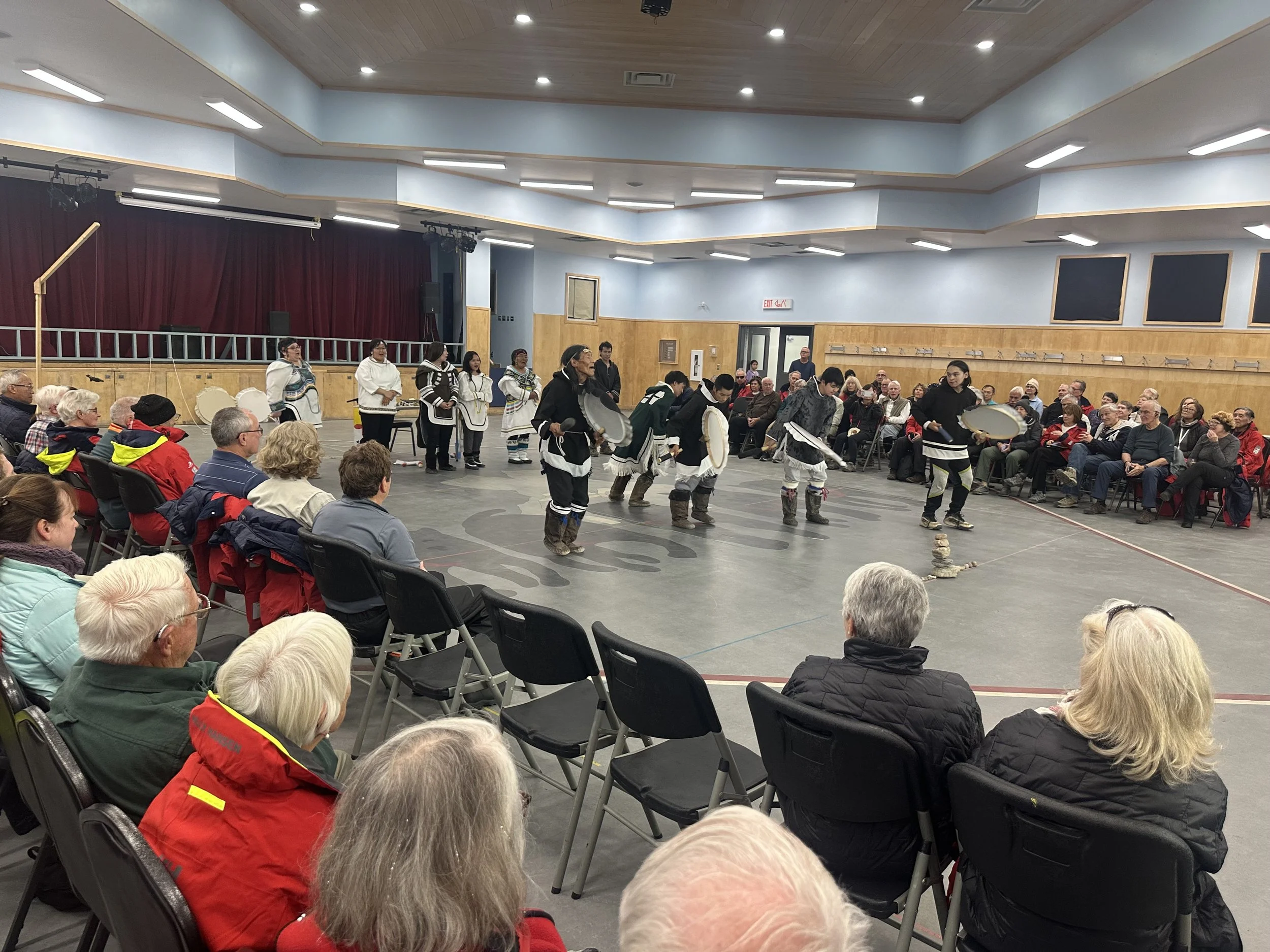
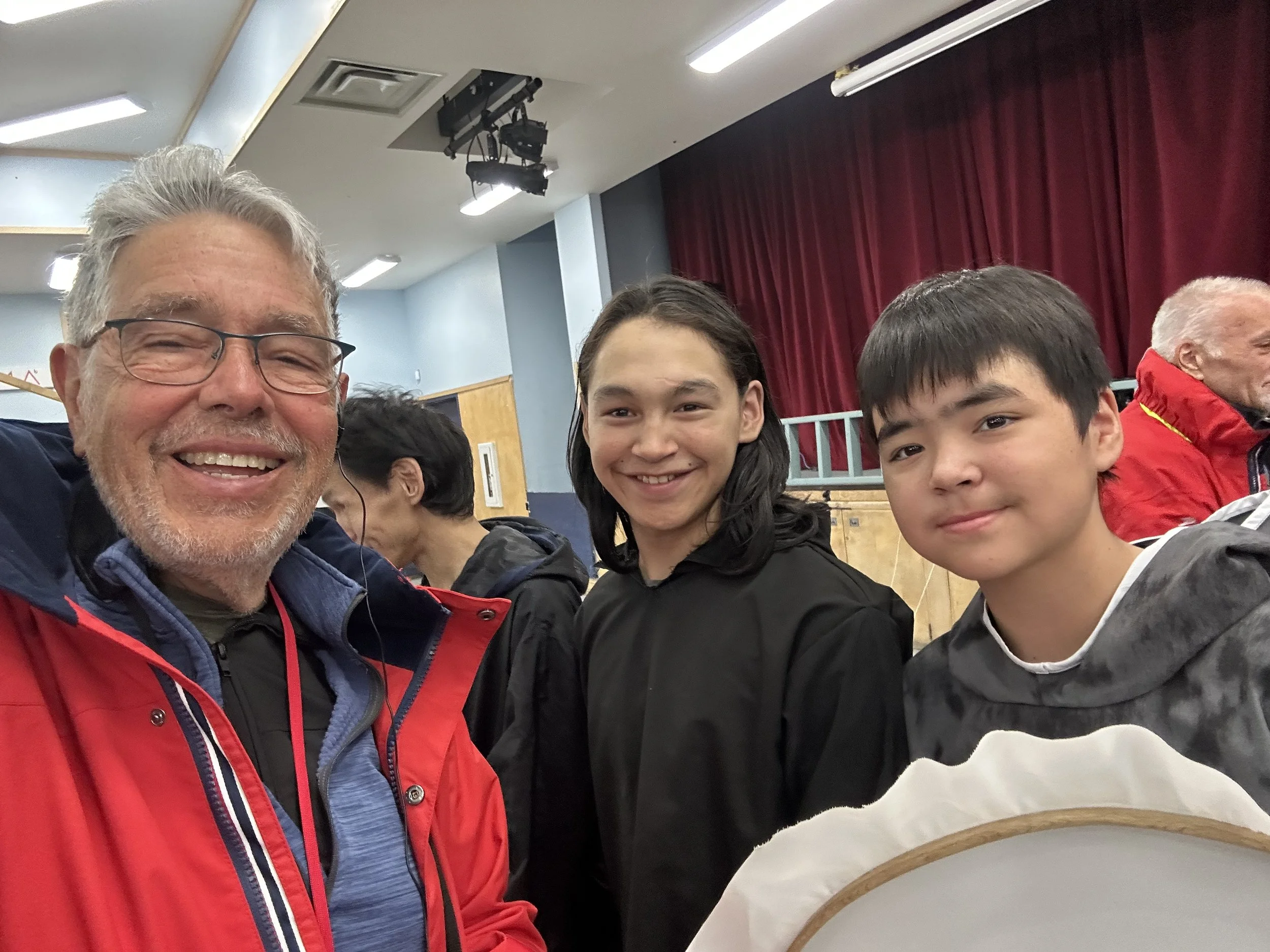
We walked up hill about ¾ of a mile from the dock to the Community Center where a troupe of residents demonstrated a variety of athletic feats, drum dances and games. We were told that these activities are ways the community can foster physical and mental health. The performances were fun for both us and the kids doing the performances. I talked with two afterwards: one was 13 and the other 14 years old.
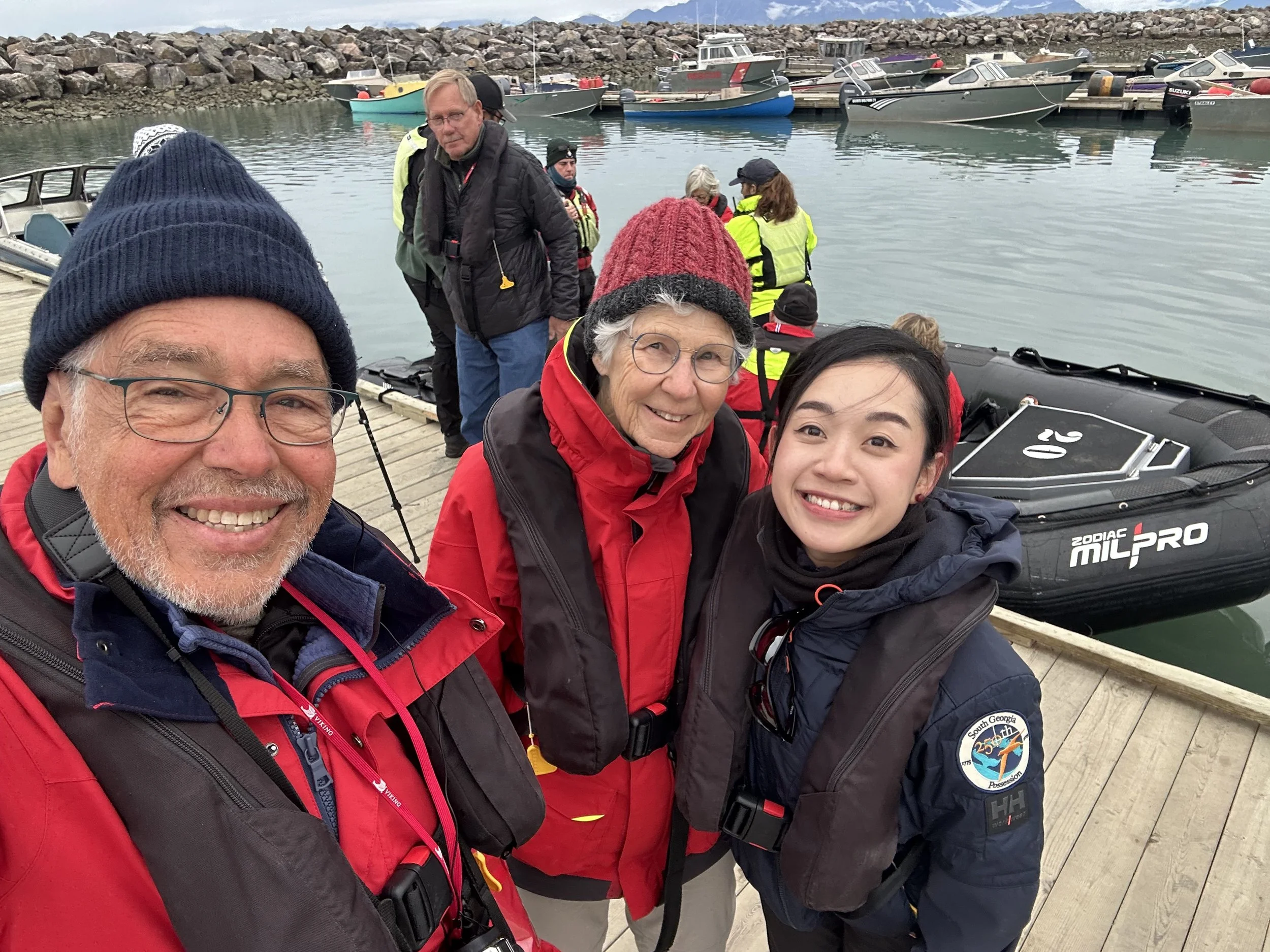
Before our trip ashore, we had presentations by our historian and our chief bear protector.
John, the historian, talked about early aviation in the Arctic. I’ll spare you the details but the bottom line is that the competition between dirigibles and fixed wing flying machines was won by airplanes. Dirigibles, while having some virtue for this application, lost out because they required more ground support than a simple airport and were slower. The Hindenburg disaster spelled an end to dirigibles no matter what the technical issues dictated.
Our expedition leader specializing in polar bears gave a great talk on the life cycle and habits of these huge animals – the largest land-based carnivores on earth. Later, in this evening’s port briefing, we were given the ship’s plan for protecting us from bears while we’re ashore. Basically, a team of scouts is deployed before we land to make sure no bears pose a threat. They are armed with bear spray (high-potency pepper spray) and rifles. They will shoot to kill if they or we, the passengers, are threatened. Of course, everyone hopes we get to see bears, but only at a safe distance.
The main food source for polar bears is seal fat (seal meat is hard for polar bears to digest and doesn’t have much nutritional value for them). Polar bears, like human hunters, do most of their seal harvesting in winter, traveling across the sea ice to grab one when it comes up for air through a breathing hole created by the seal.
I listened to a Parks Canada ranger describe the issue that climate change creates for polar bears and the entire Arctic food chain. Of course, diminishing amounts of sea ice means bears have smaller hunting grounds. But even more important, he said, is the loss of algae and marine plant life that occurs when sea ice is diminished. It seems that in the spring, while the ice is still quite thick (six or seven feet), the returning sunlight sets off algae blooms beneath the ice. This becomes food for krill and other fish that are the food for seals. Fewer seals mean fewer seals to grace the polar bear’s table.
Our plan for tomorrow was to examine the glacier from the comfort of the zodiacs. But the expedition team believes we can safely land on a moraine near the glacier and be able to walk a short distance to see it up close. That’s a great change, in our opinion. We’ll see!